Artificial passenger  to combat drowsiness…..
 
Driver fatigue according to the NHTSA annually causes  100,000 crashes 1,500 fatalities 71,000 injuries which  cause annual cost of $12.5billion. IBM received a patent  for a sleep prevention system for use in automobiles
Artificial Passenger is broadly used to prevent accident. Artificial Passenger device is also used for entertainment such as  it telling jokes and   asking question . Artificial Passenger component establishes interface with other drivers very easily .
Open and close the window of a car automatically and also answer a call for you. If the driver gets a heart attack or he is drunk it will send signals to vehicles nearby about this so driver there become alert. provide a natural dialog car system that understands content of tapes, books and radio programs.
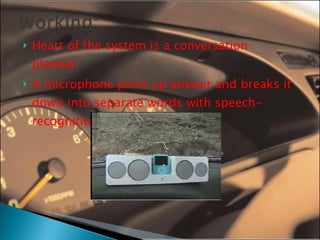
Heart of the system is a conversation planner. A microphone picks up answer and breaks it down into separate words with speech-recognition software.
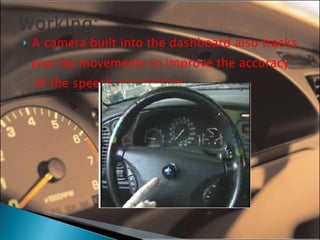
A camera built into the dashboard also tracks your lip movements to improve the accuracy of the speech recognition.
A voice analyzer then looks for signs of tiredness by checking to see if the answer matches your profile. Slow responses and a lack of intonation are signs of fatigue.
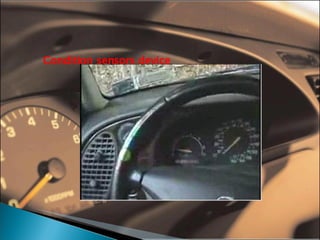
Condition sensors device
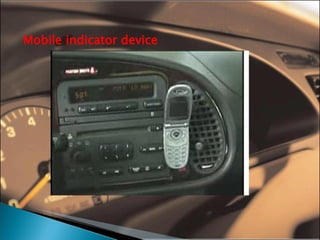
Mobile indicator device
It controls interruption of a dialog between the driver and the car dashboard (for example, interrupting a conversation to deliver an urgent message about traffic conditions on an expected driver route). It will make decisions on whether the driver needs additional stimuli and on what types of stimuli should be provided (e.g. verbal stimuli via speech applications or physical stimuli such as a bright light, loud noise, etc.) and whether to suggest to a driver to stop for rest.
Will provide you with a “shortest-time” routing based on road conditions changing because of weather and traffic, remote diagnostics of your car and cars on your route, destination requirements (your flight has been delayed), and nearby incentives (“e-coupons” for restaurants along your way).
Successful implementation of Artificial passenger  would allow use of various services in cars (like reading e-mail, navigation, downloading music titles , voice games etc.) without compromising a driver safety.
1. L.R. Bahl  2.www.Google.com 3.www.esnips.com  .   4.www.ieee.org . 5.www.Electronicsforu.com .

Artificial Passenger

  • 1.
    Artificial passenger to combat drowsiness…..
  • 2.
  • 3.
    Driver fatigue accordingto the NHTSA annually causes 100,000 crashes 1,500 fatalities 71,000 injuries which cause annual cost of $12.5billion. IBM received a patent for a sleep prevention system for use in automobiles
  • 4.
    Artificial Passenger isbroadly used to prevent accident. Artificial Passenger device is also used for entertainment such as it telling jokes and   asking question . Artificial Passenger component establishes interface with other drivers very easily .
  • 5.
    Open and closethe window of a car automatically and also answer a call for you. If the driver gets a heart attack or he is drunk it will send signals to vehicles nearby about this so driver there become alert. provide a natural dialog car system that understands content of tapes, books and radio programs.
  • 6.
    Heart of thesystem is a conversation planner. A microphone picks up answer and breaks it down into separate words with speech-recognition software.
  • 7.
    A camera builtinto the dashboard also tracks your lip movements to improve the accuracy of the speech recognition.
  • 8.
    A voice analyzerthen looks for signs of tiredness by checking to see if the answer matches your profile. Slow responses and a lack of intonation are signs of fatigue.
  • 9.
  • 10.
  • 11.
    It controls interruptionof a dialog between the driver and the car dashboard (for example, interrupting a conversation to deliver an urgent message about traffic conditions on an expected driver route). It will make decisions on whether the driver needs additional stimuli and on what types of stimuli should be provided (e.g. verbal stimuli via speech applications or physical stimuli such as a bright light, loud noise, etc.) and whether to suggest to a driver to stop for rest.
  • 12.
    Will provide youwith a “shortest-time” routing based on road conditions changing because of weather and traffic, remote diagnostics of your car and cars on your route, destination requirements (your flight has been delayed), and nearby incentives (“e-coupons” for restaurants along your way).
  • 13.
    Successful implementation ofArtificial passenger would allow use of various services in cars (like reading e-mail, navigation, downloading music titles , voice games etc.) without compromising a driver safety.
  • 14.
    1. L.R. Bahl 2.www.Google.com 3.www.esnips.com .   4.www.ieee.org . 5.www.Electronicsforu.com .