ARTIFICIAL INTELLIGENCE
IN EDUCATION
What is AI?
 Artificial intelligence (AI) is the ability of a computer or a robot
controlled by a computer to do tasks that are usually done by
humans because they require human intelligence.
 Artificial intelligence (AI) is the simulation of human intelligence
processes by machines, especially computer systems. Specific
applications of AI include expert systems, natural language
processing (NLP), speech recognition and machine vision.
Benefits of AI in Education
 Artificial Intelligence technology brings a lot of benefits to
various fields, including education. Many researchers
claim that Artificial Intelligence and Machine Learning can
increase the level of education
 The latest innovations allow developers to teach a
computer to do complicated tasks. It leads to the
opportunity to improve the learning processes. However,
it’s impossible to replace the tutor or professor. AI
provides many benefits for students and teachers.
Benefits For Students
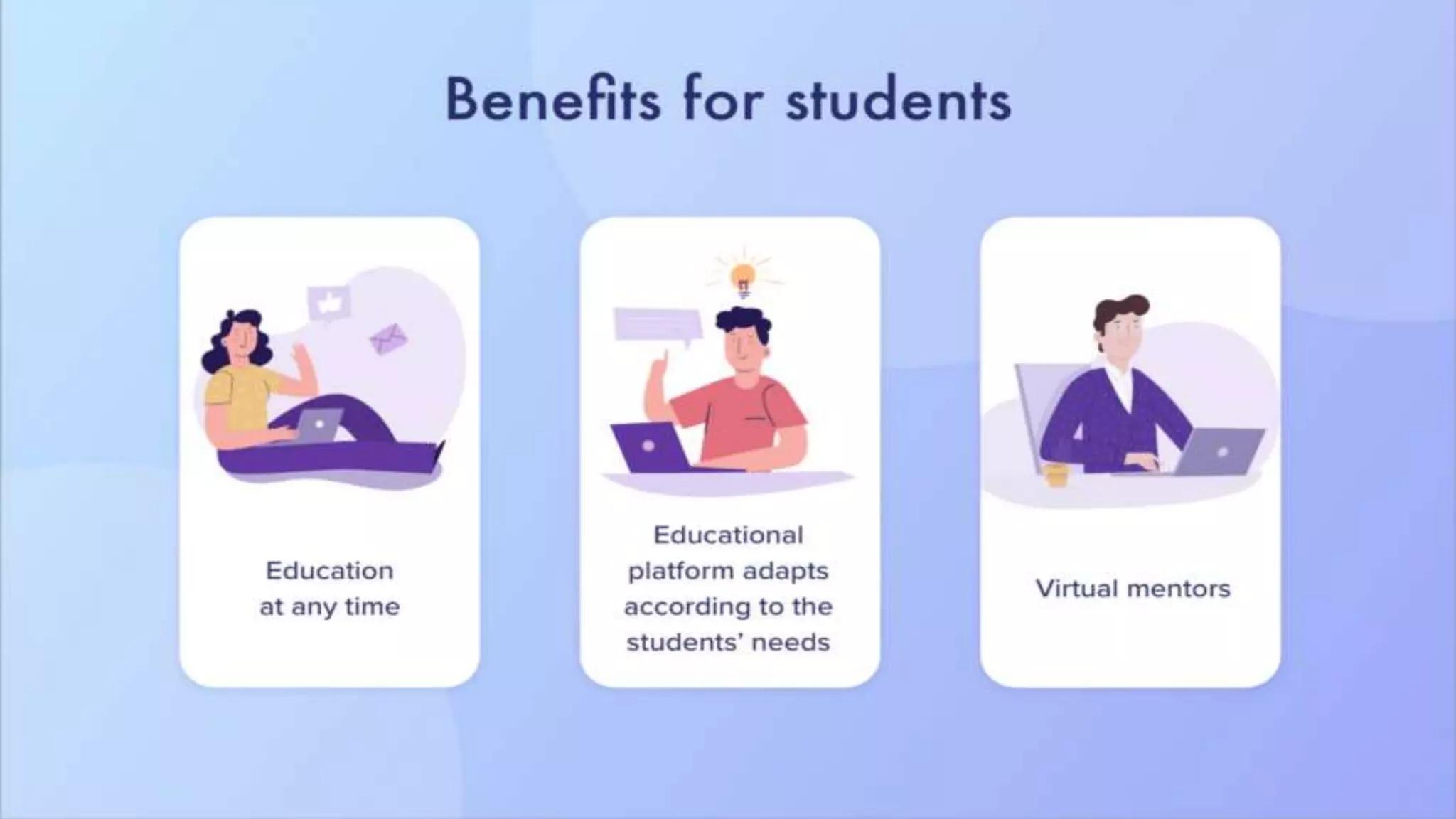
 Education at any time
 Various options due to the students’ needs
 Virtual Mentors
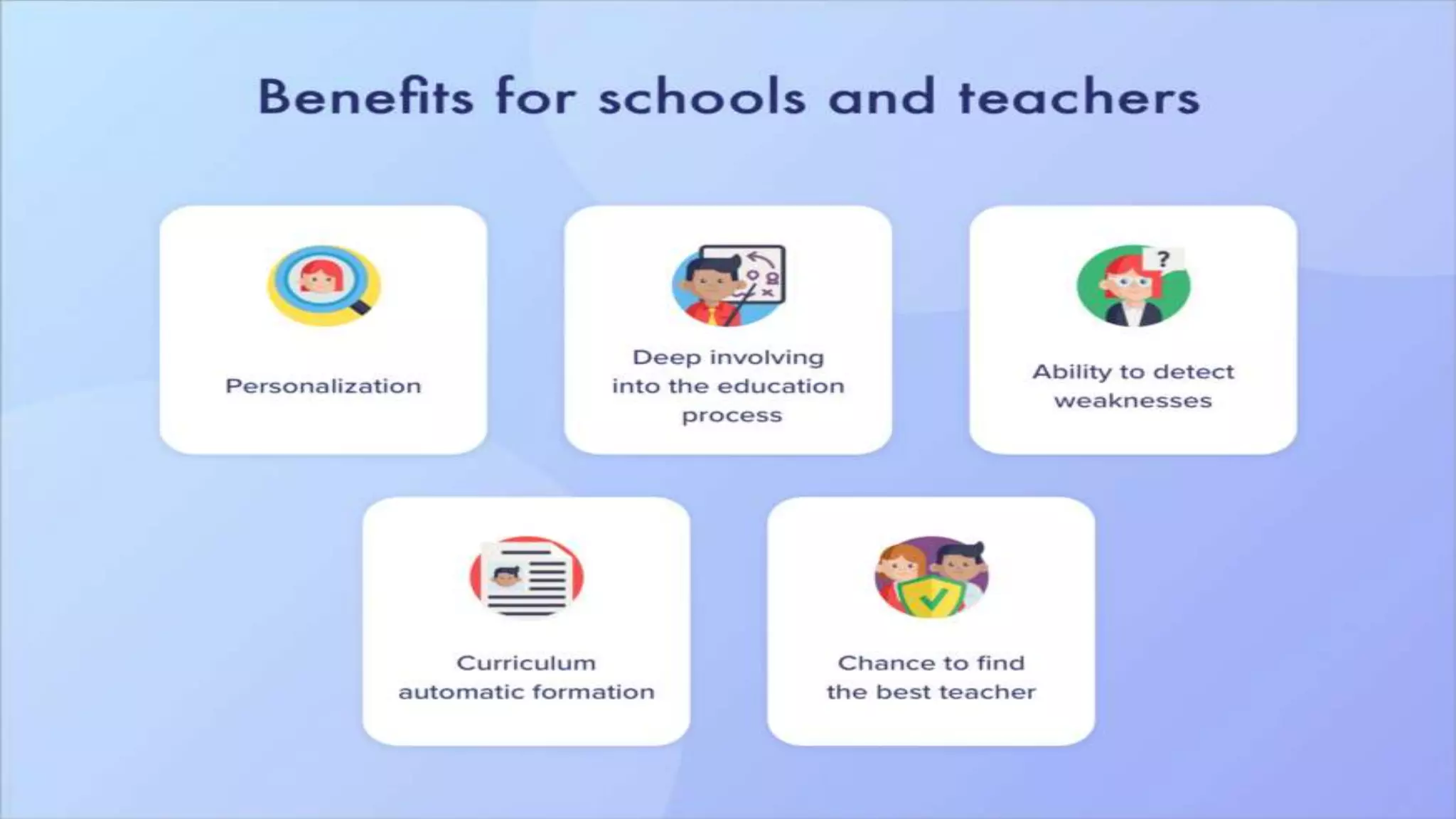
Benefits for teachers and schools
 Opportunity to see weaknesses
 Better engagement
 Curriculum automatic creating
 Opportunity to find a good teacher
How to use AI in Education?
 Individualized Learning
 Voice Assistants
 Smart Content
 Global Learning
Existing AI based Solutions in
Education
 THIRD SPACE LEARNING
 LITTLE DRAGON
 CTI
 BRAINLY
 CARNEGIE LEARNING
 THINKER MATH
How to develop AI-
Enabled platform for
Education
Step #1. Study the Competitors
 Before creating your solution, you need to analyze the competitors
carefully. These days, users are quite spoilt, so you need to offer
them some new features.
 Additionally, knowing the existing platforms, you can generate more
interesting concepts for your project. You can study the tech stack or
design ideas.
Step #2. Consider Interactive and
Useful Content
 Creating a solution for education, you need to offer users’ useful
content.
 For example, you can choose several fields or topics like Math,
Literature, and others. After that, you can cooperate with tutors from
universities or colleges.
 Additionally, you can gather learning materials from various sources
like training programs, courses, and more
Step #3. Set Your Project
Requirements
 Before starting the development, you need to clarify your project
requirements and business goals.
 You should consider the number of required features. For example,
you can create an MVP version of your platform with some basic
features. It allows you to get some feedback from users.
 After that, you can update the system regularly, adding advanced
features.
Step #4. Test the Platform Properly
to Avoid Bugs
 To gain more loyal users, you need to provide an excellent user
experience. Of course, users don’t want to interact with a platform
full of bugs.
 To find and fix bugs before launching the project, you need to
cooperate with qualified Quality Assurance engineers.
Step #5. Release Your Solution and
Get Users’ Feedback
 We’ve already mentioned that it’s better to create an MVP version of
your solution to get feedback.
 Users’ opinions can help you understand what parts of the system
you need to improve. Additionally, students and teachers can tell
about their expectations and requirements for your application
Step #6. Update the System
Regularly
 It’s vital to improve your platform regularly, offering users new
opportunities and exciting features.
 To be competitive in the market, you should stay up-to-date. It’s
better to cooperate with various tutors and offer new training
programs.
Conclusion
As we can see, the education field offers a lot of
opportunities to integrate and use Artificial Intelligence. The
market already has several great solutions for adults,
children, tutors, and even schools. AI-based applications
can analyze an enormous amount of information, offering
users more personalized learning materials.

Artificial intelligence in Today's ERA

  • 1.
  • 2.
    What is AI? Artificial intelligence (AI) is the ability of a computer or a robot controlled by a computer to do tasks that are usually done by humans because they require human intelligence.  Artificial intelligence (AI) is the simulation of human intelligence processes by machines, especially computer systems. Specific applications of AI include expert systems, natural language processing (NLP), speech recognition and machine vision.
  • 3.
    Benefits of AIin Education  Artificial Intelligence technology brings a lot of benefits to various fields, including education. Many researchers claim that Artificial Intelligence and Machine Learning can increase the level of education  The latest innovations allow developers to teach a computer to do complicated tasks. It leads to the opportunity to improve the learning processes. However, it’s impossible to replace the tutor or professor. AI provides many benefits for students and teachers.
  • 4.
    Benefits For Students Education at any time  Various options due to the students’ needs  Virtual Mentors
  • 6.
    Benefits for teachersand schools  Opportunity to see weaknesses  Better engagement  Curriculum automatic creating  Opportunity to find a good teacher
  • 8.
    How to useAI in Education?  Individualized Learning  Voice Assistants  Smart Content  Global Learning
  • 9.
    Existing AI basedSolutions in Education  THIRD SPACE LEARNING  LITTLE DRAGON  CTI  BRAINLY  CARNEGIE LEARNING  THINKER MATH
  • 10.
    How to developAI- Enabled platform for Education
  • 11.
    Step #1. Studythe Competitors  Before creating your solution, you need to analyze the competitors carefully. These days, users are quite spoilt, so you need to offer them some new features.  Additionally, knowing the existing platforms, you can generate more interesting concepts for your project. You can study the tech stack or design ideas.
  • 12.
    Step #2. ConsiderInteractive and Useful Content  Creating a solution for education, you need to offer users’ useful content.  For example, you can choose several fields or topics like Math, Literature, and others. After that, you can cooperate with tutors from universities or colleges.  Additionally, you can gather learning materials from various sources like training programs, courses, and more
  • 13.
    Step #3. SetYour Project Requirements  Before starting the development, you need to clarify your project requirements and business goals.  You should consider the number of required features. For example, you can create an MVP version of your platform with some basic features. It allows you to get some feedback from users.  After that, you can update the system regularly, adding advanced features.
  • 14.
    Step #4. Testthe Platform Properly to Avoid Bugs  To gain more loyal users, you need to provide an excellent user experience. Of course, users don’t want to interact with a platform full of bugs.  To find and fix bugs before launching the project, you need to cooperate with qualified Quality Assurance engineers.
  • 15.
    Step #5. ReleaseYour Solution and Get Users’ Feedback  We’ve already mentioned that it’s better to create an MVP version of your solution to get feedback.  Users’ opinions can help you understand what parts of the system you need to improve. Additionally, students and teachers can tell about their expectations and requirements for your application
  • 16.
    Step #6. Updatethe System Regularly  It’s vital to improve your platform regularly, offering users new opportunities and exciting features.  To be competitive in the market, you should stay up-to-date. It’s better to cooperate with various tutors and offer new training programs.
  • 17.
    Conclusion As we cansee, the education field offers a lot of opportunities to integrate and use Artificial Intelligence. The market already has several great solutions for adults, children, tutors, and even schools. AI-based applications can analyze an enormous amount of information, offering users more personalized learning materials.