ARTIFICIAL INTELLIGENCE: an
introduction
DR. SHREEPAL JAIN
pediatric & fetal cardiologist
b. j. wadia hospital for children, mumbai
What is AI?
artificial intelligence is the science of making
machines do things that would require
intelligence if done by humans
…….Marvin Minsky
history
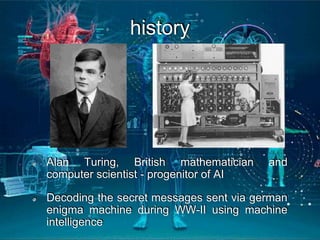
Alan Turing, British mathematician and
computer scientist - progenitor of AI
Decoding the secret messages sent via german
enigma machine during WW-II using machine
intelligence
history
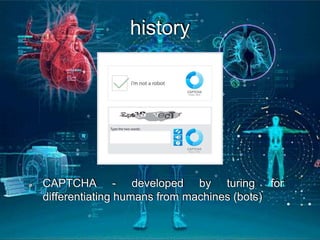
CAPTCHA - developed by turing for
differentiating humans from machines (bots)
history
AI - coined by stanford scientist John McCarthy
at the dartmouth conference in 1956.
Frank Rosenblatt (1958) - the perceptron
a 3-layer structure - early precursor of the
artificial neural network and present day deep
learning
history of ai in medicine
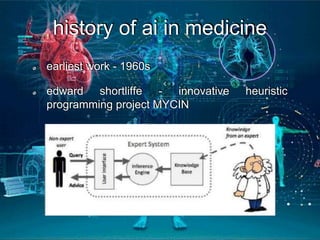
earliest work - 1960s
edward shortliffe - innovative heuristic
programming project MYCIN
history of ai in medicine
Artificial intelligence failure:
lack of favourable work flow logistics
lack of integration to accommodate the
clinicians, and, also
due to expectations that were unrealistically
high but never met.
history of ai in medicine
renewed focus on data mining and machine learning - 1990’s
IBM supercomputer DEEP BLUE defeated Gary Kasparov in
chess (1997)
Three main factors heralding the new AI era:
increasingly large volumes of available data that requires new
computational methodologies (Big Data),
the escalating capability of computational power and cloud
computing
the emergence of machine and deep learning
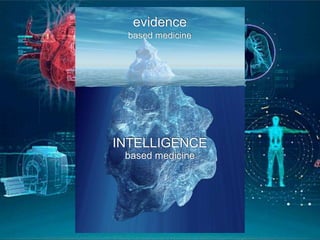
evidence
based medicine
INTELLIGENCE
based medicine
A, B, C, D of AI
Algorithms: sets of steps to accomplish certain
tasks
calculation
data processing
automated reasoning
e.g. NASA’s solar panel operation on ISS
A, B, C, D of AI
Big Data: escalated in such exponential way to make
conventional data processing applications inadequate
4 V’s:
Volume
Variety
Velocity
Veracity
A, B, C, D of AI
Cognitive computing:
machine learning
supervised learning
unsupervised learning
reinforcement learning
A, B, C, D of AI
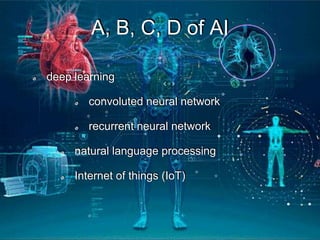
deep learning
convoluted neural network
recurrent neural network
natural language processing
Internet of things (IoT)
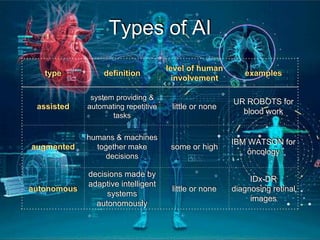
Types of AI
type definition
level of human
involvement
examples
assisted
system providing &
automating repetitive
tasks
little or none
UR ROBOTS for
blood work
augmented
humans & machines
together make
decisions
some or high
IBM WATSON for
oncology
autonomous
decisions made by
adaptive intelligent
systems
autonomously
little or none
IDx-DR
diagnosing retinal
images
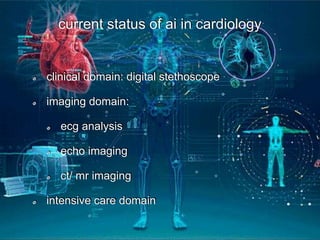
current status of ai in cardiology
clinical domain: digital stethoscope
imaging domain:
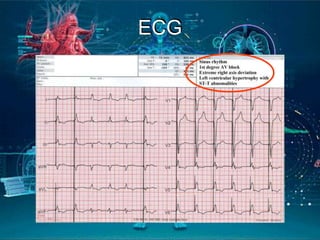
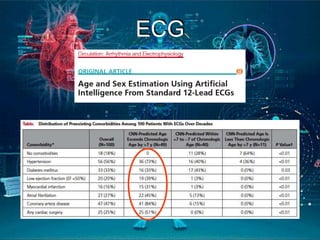
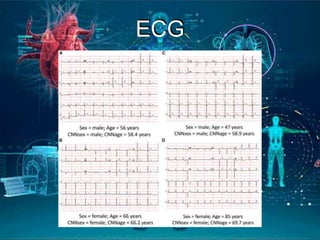
ecg analysis
echo imaging
ct/ mr imaging
intensive care domain
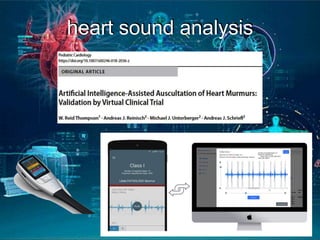
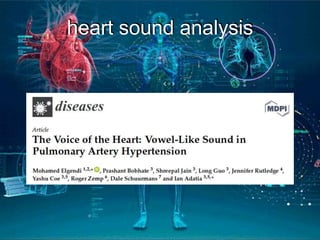
heart sound analysis
ECG
ECG
ECG
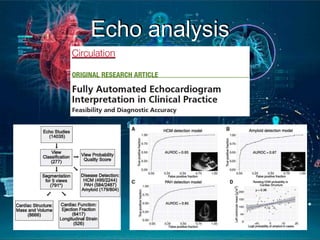
Echo analysis
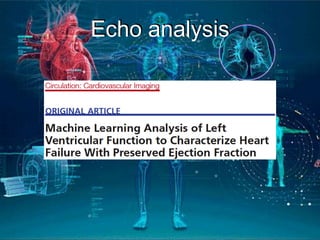
Echo analysis
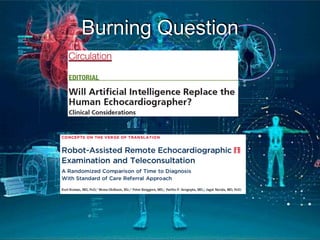
Burning Question
imaging
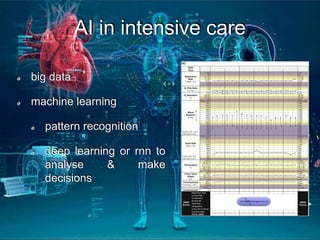
AI in intensive care
big data
machine learning
pattern recognition
deep learning or rnn to
analyse & make
decisions
To conclude
ai is here and we cannot escape it
imaging and data rich fields will be significantly
impacted
ai will take away jobs…..unlikely
innovations need to be accepted early in clinical
practice…..before they make us primitive (e.g.
nokia, kodak)

Artificial intelligence an introduction.pptx

  • 1.
    ARTIFICIAL INTELLIGENCE: an introduction DR.SHREEPAL JAIN pediatric & fetal cardiologist b. j. wadia hospital for children, mumbai
  • 2.
    What is AI? artificialintelligence is the science of making machines do things that would require intelligence if done by humans …….Marvin Minsky
  • 3.
    history Alan Turing, Britishmathematician and computer scientist - progenitor of AI Decoding the secret messages sent via german enigma machine during WW-II using machine intelligence
  • 4.
    history CAPTCHA - developedby turing for differentiating humans from machines (bots)
  • 5.
    history AI - coinedby stanford scientist John McCarthy at the dartmouth conference in 1956. Frank Rosenblatt (1958) - the perceptron a 3-layer structure - early precursor of the artificial neural network and present day deep learning
  • 6.
    history of aiin medicine earliest work - 1960s edward shortliffe - innovative heuristic programming project MYCIN
  • 7.
    history of aiin medicine Artificial intelligence failure: lack of favourable work flow logistics lack of integration to accommodate the clinicians, and, also due to expectations that were unrealistically high but never met.
  • 8.
    history of aiin medicine renewed focus on data mining and machine learning - 1990’s IBM supercomputer DEEP BLUE defeated Gary Kasparov in chess (1997) Three main factors heralding the new AI era: increasingly large volumes of available data that requires new computational methodologies (Big Data), the escalating capability of computational power and cloud computing the emergence of machine and deep learning
  • 9.
  • 10.
    A, B, C,D of AI Algorithms: sets of steps to accomplish certain tasks calculation data processing automated reasoning e.g. NASA’s solar panel operation on ISS
  • 11.
    A, B, C,D of AI Big Data: escalated in such exponential way to make conventional data processing applications inadequate 4 V’s: Volume Variety Velocity Veracity
  • 12.
    A, B, C,D of AI Cognitive computing: machine learning supervised learning unsupervised learning reinforcement learning
  • 13.
    A, B, C,D of AI deep learning convoluted neural network recurrent neural network natural language processing Internet of things (IoT)
  • 14.
    Types of AI typedefinition level of human involvement examples assisted system providing & automating repetitive tasks little or none UR ROBOTS for blood work augmented humans & machines together make decisions some or high IBM WATSON for oncology autonomous decisions made by adaptive intelligent systems autonomously little or none IDx-DR diagnosing retinal images
  • 15.
    current status ofai in cardiology clinical domain: digital stethoscope imaging domain: ecg analysis echo imaging ct/ mr imaging intensive care domain
  • 16.
  • 17.
  • 18.
  • 19.
  • 20.
  • 21.
  • 22.
  • 23.
  • 24.
  • 25.
    AI in intensivecare big data machine learning pattern recognition deep learning or rnn to analyse & make decisions
  • 26.
    To conclude ai ishere and we cannot escape it imaging and data rich fields will be significantly impacted ai will take away jobs…..unlikely innovations need to be accepted early in clinical practice…..before they make us primitive (e.g. nokia, kodak)