Artificial Intelligence
Muhammad Ali Ajaz
SP14/BBA/DDP/016
Awais Khan
Outline
History
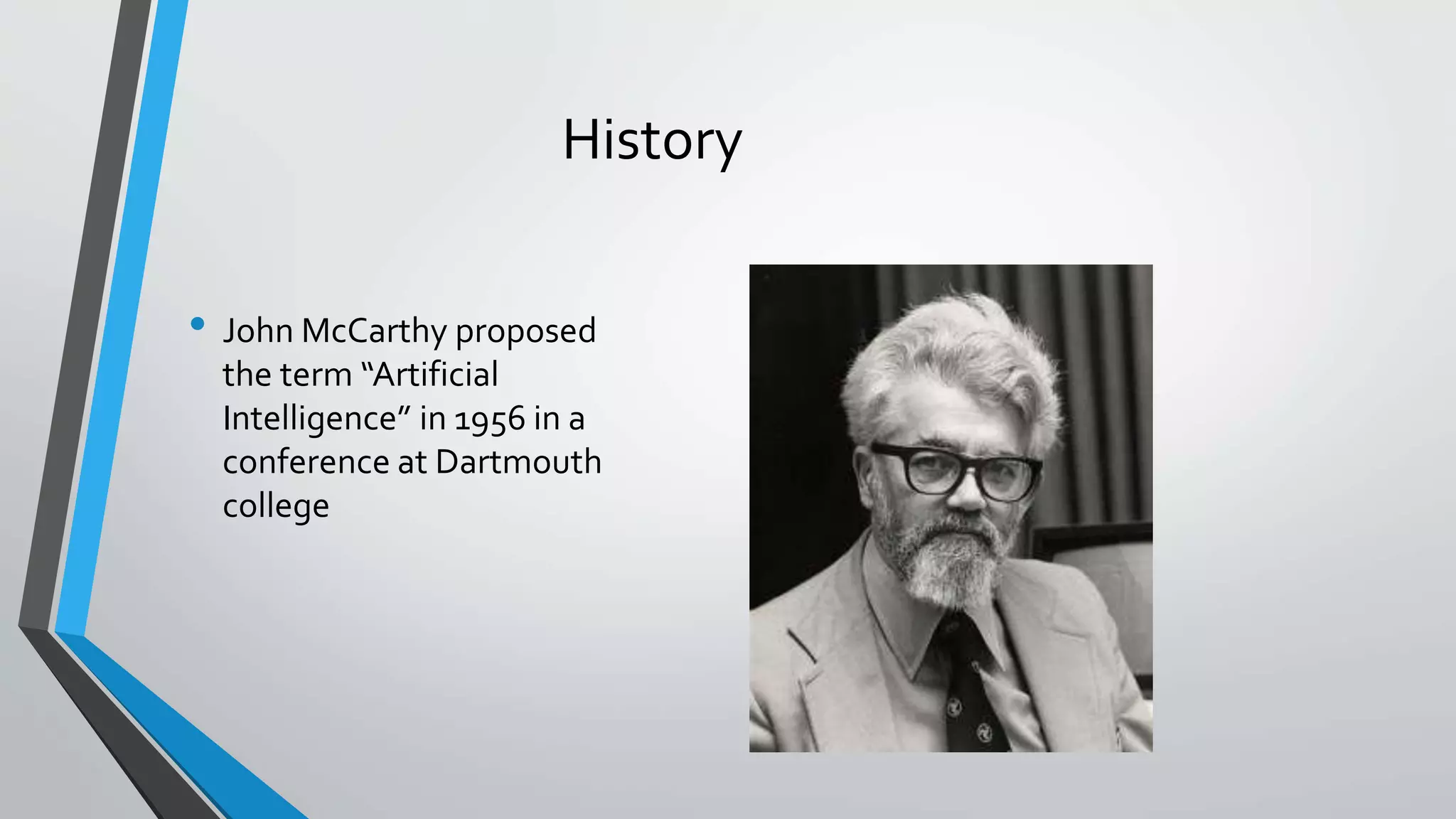
• John McCarthy proposed
the term “Artificial
Intelligence” in 1956 in a
conference at Dartmouth
college
What is Artificial Intelligence?
• Software technologies that make a computer or robot perform
equal to or better than normal human computational ability in
accuracy, capacity, and speed.
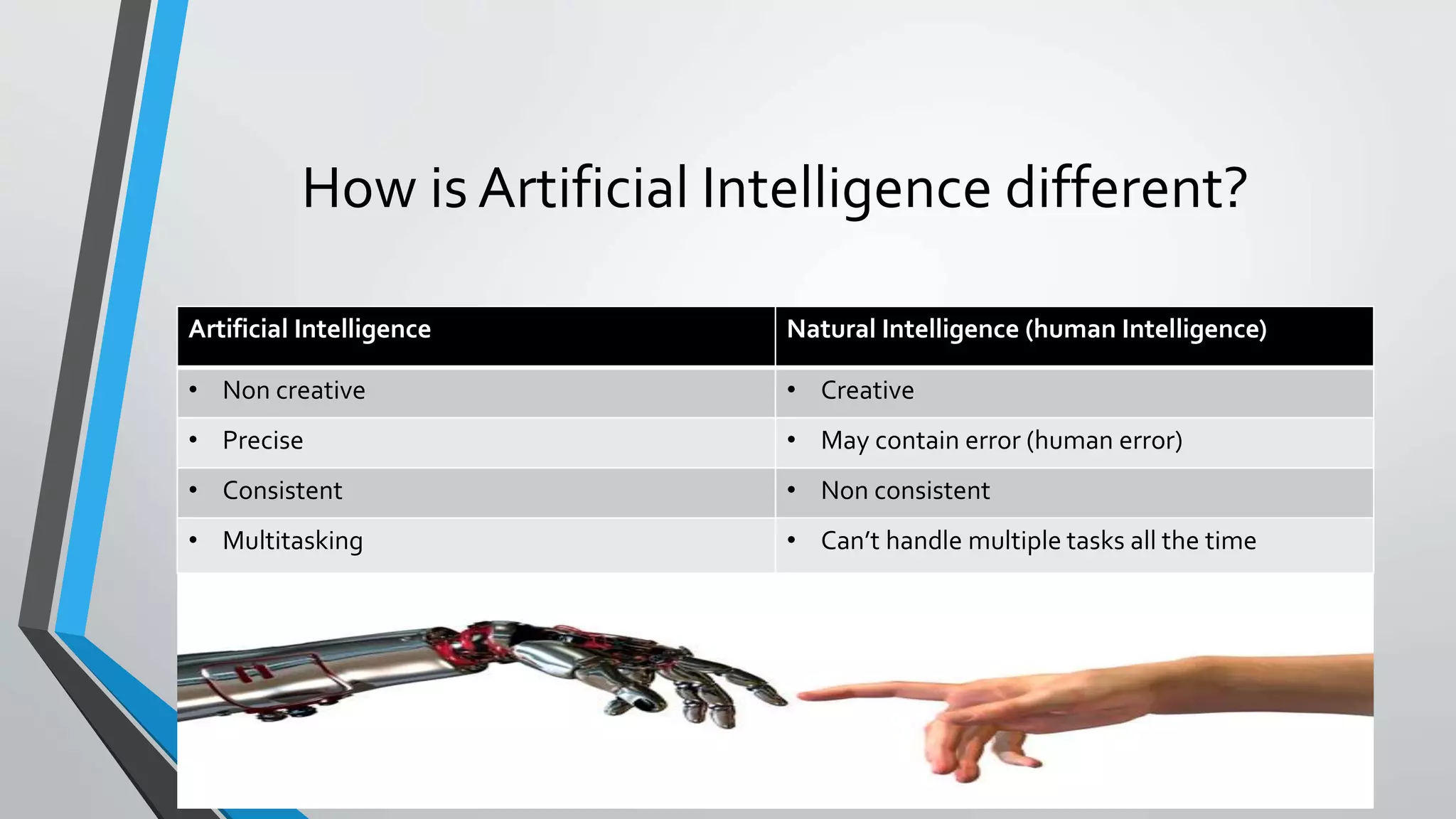
How is Artificial Intelligence different?
Artificial Intelligence Natural Intelligence (human Intelligence)
• Non creative • Creative
• Precise • May contain error (human error)
• Consistent • Non consistent
• Multitasking • Can’t handle multiple tasks all the time
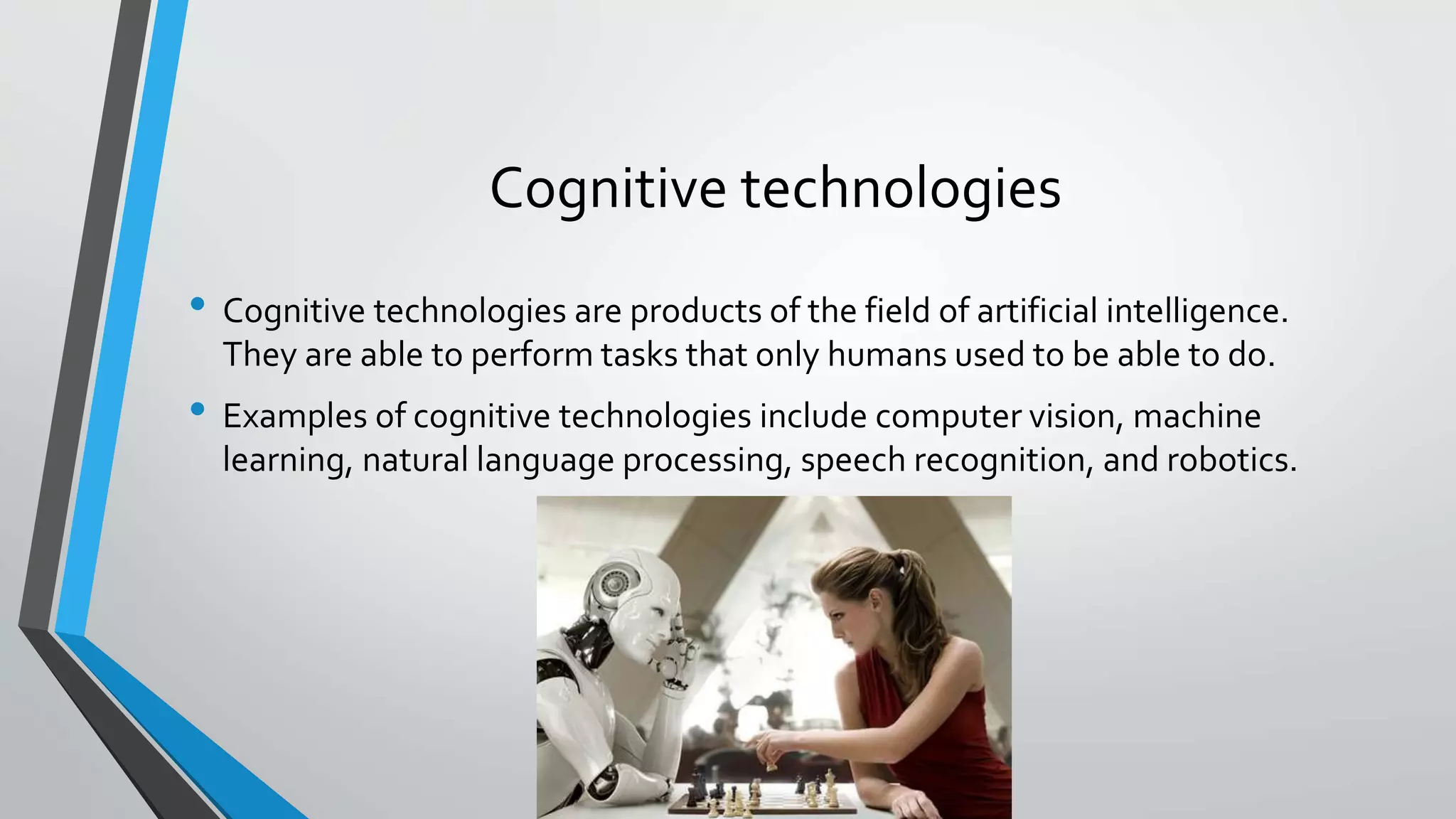
Cognitive technologies
• Cognitive technologies are products of the field of artificial intelligence.
They are able to perform tasks that only humans used to be able to do.
• Examples of cognitive technologies include computer vision, machine
learning, natural language processing, speech recognition, and robotics.
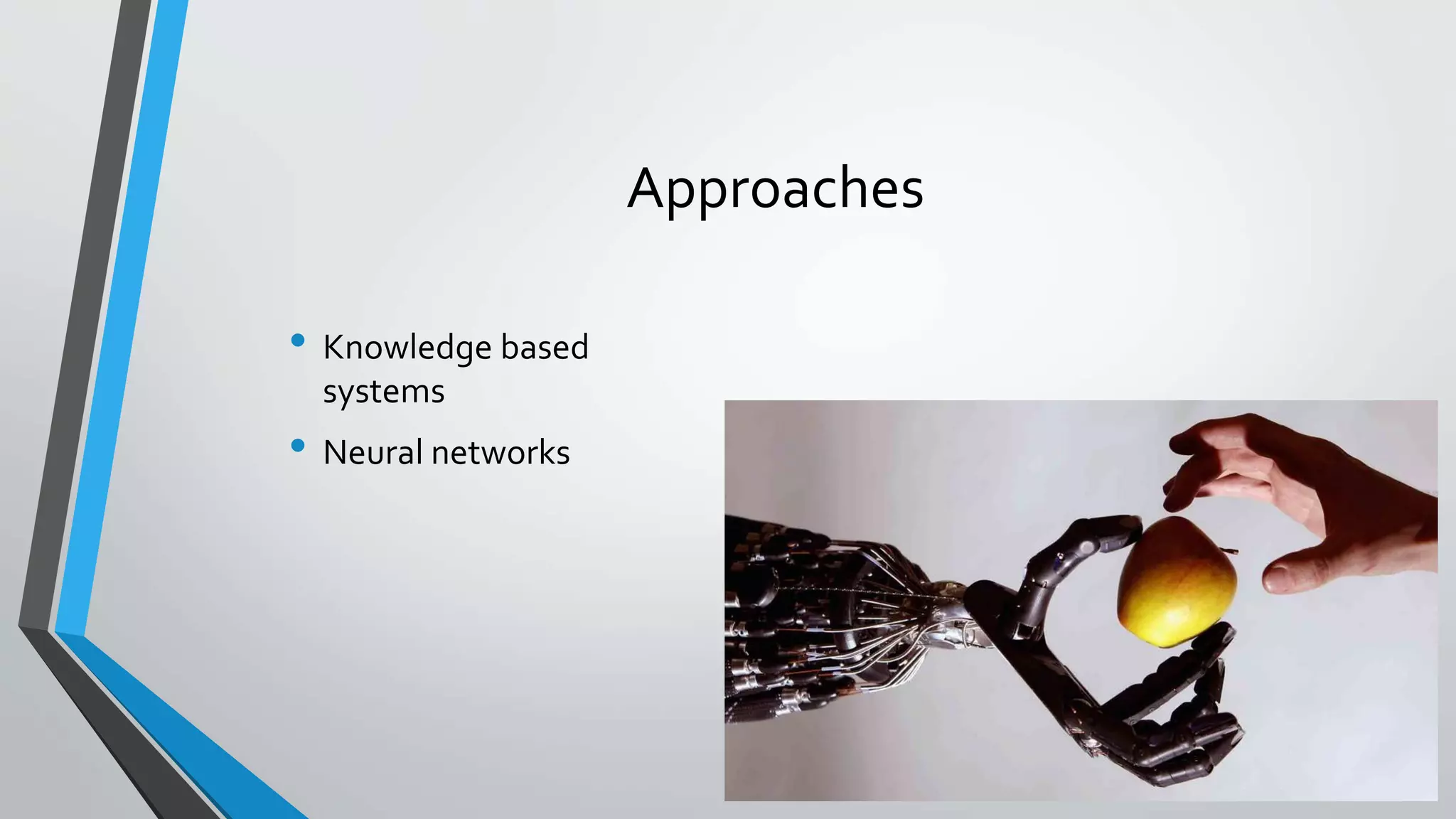
Approaches
• Knowledge based
systems
• Neural networks
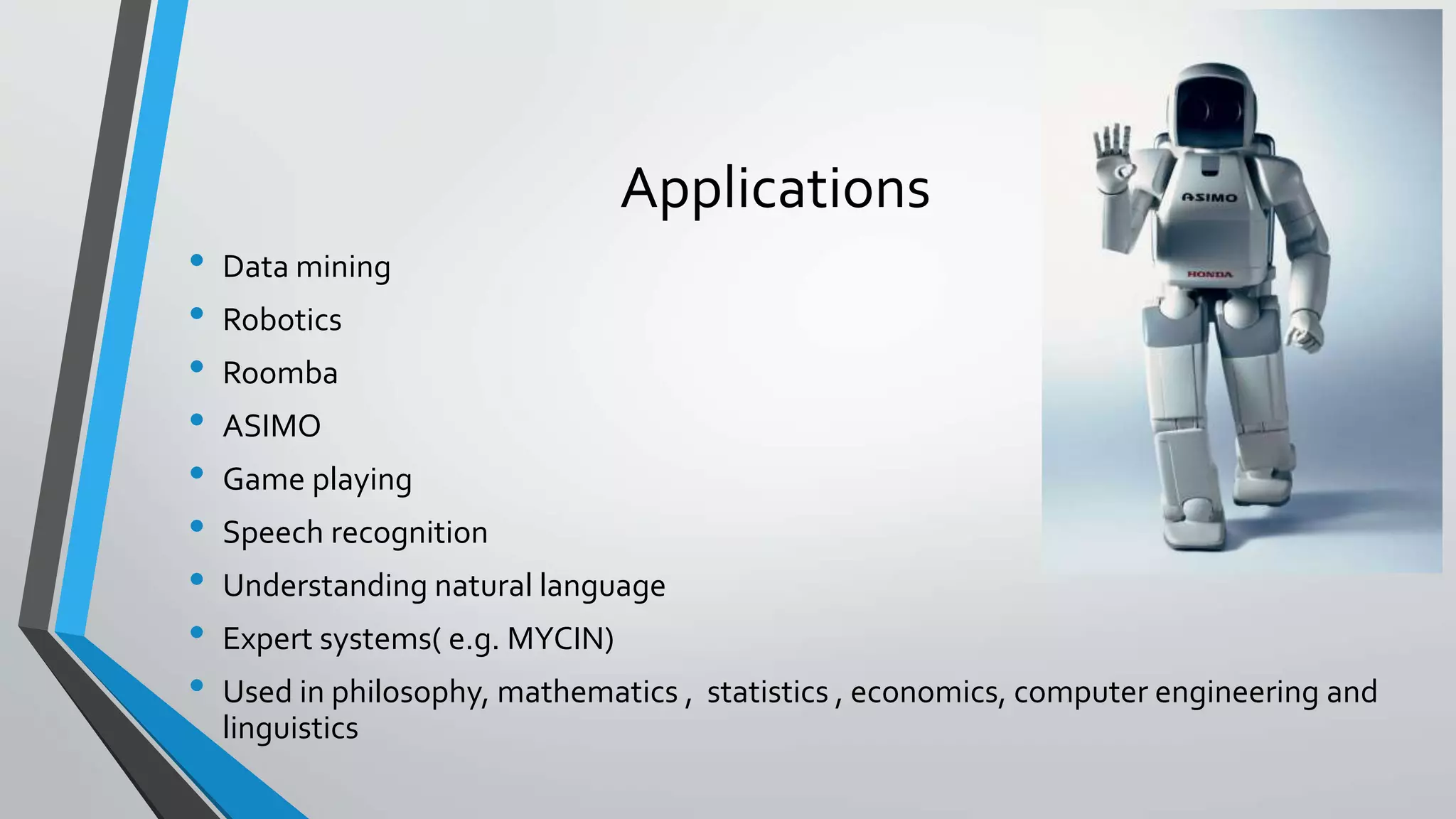
Applications
• Data mining
• Robotics
• Roomba
• ASIMO
• Game playing
• Speech recognition
• Understanding natural language
• Expert systems( e.g. MYCIN)
• Used in philosophy, mathematics , statistics , economics, computer engineering and
linguistics
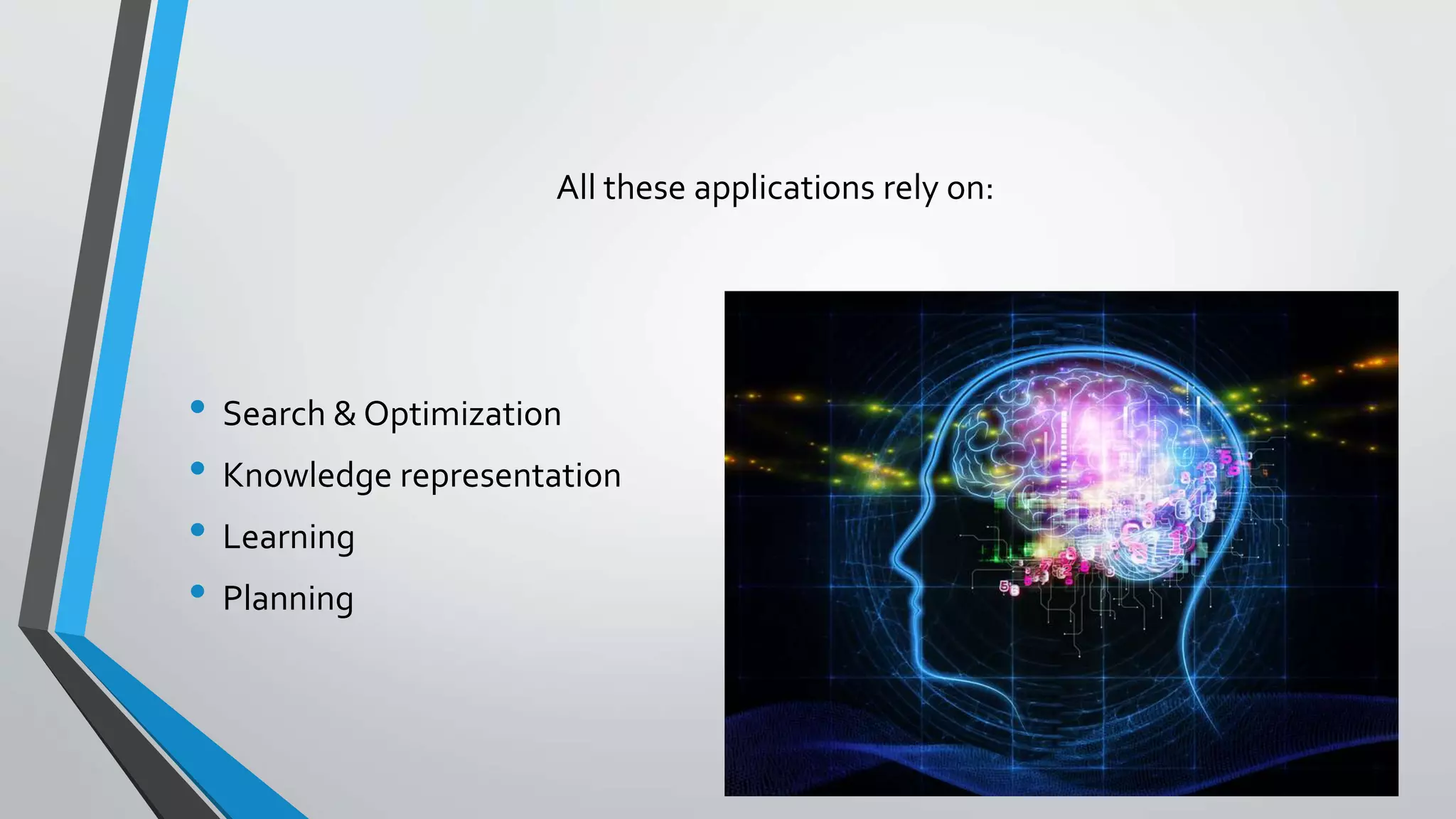
All these applications rely on:
• Search & Optimization
• Knowledge representation
• Learning
• Planning
Why Artificial Intelligence?
• Mechanical computations
• Efficiency and Reliability
• Understanding situations
• Adapting to changes
• Complex tasks
Advantages
• It can help improve our way of life
• Machines will be able to do jobs that require detailed instructions
• Mental alertness and decision making capabilities
• Use robots for heavy construction, military benefits, or even for personal
assistance at private homes
• There will be less injuries and stress to human beings
• UsingArtificial intelligence (AI) help instructional designers to provide creative
solutions , problem solving strategies and more interactivity in the learning .
Drawbacks
• Lacking complete traits of human intelligence
• Limited ability
• Slow real time response
• High cost
• Scientists have been using AI to test theories and notions about how our
brains work
• AI opens up new and exciting avenues for entertainment possibilities.
• AI also makes interactive electronic games more fun by making the
computer controlled characters more realistic and human-like.
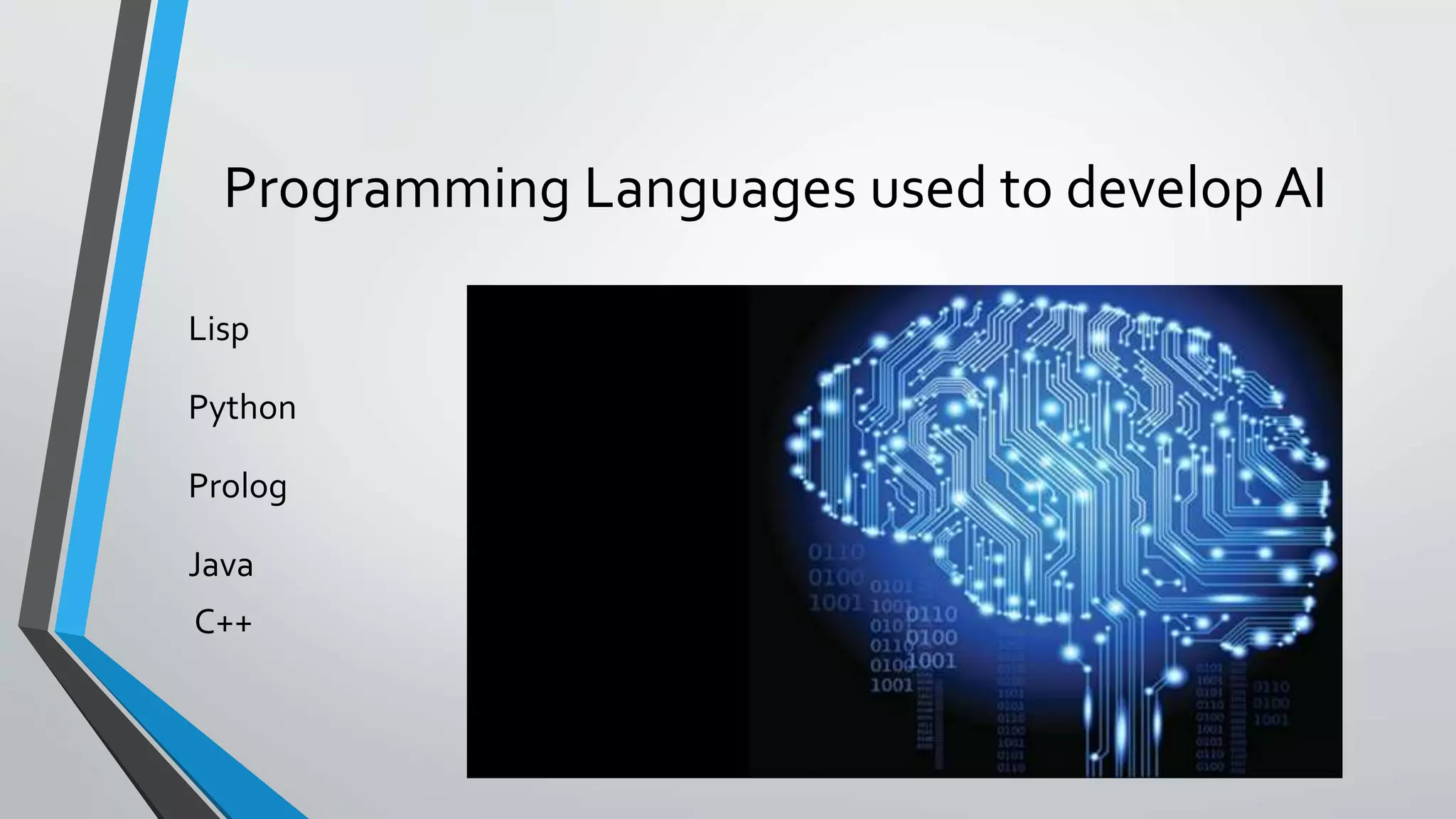
Programming Languages used to develop AI
Lisp
Python
Prolog
Java
C++
Conclusion
• The ultimate goal of institutions and scientists working on
artificial intelligence is to solve majority of the problems or to
achieve the tasks which we (humans) directly can’t accomplish,It
is for sure that development in this field will change the complete
scenario of the world.

Artificial intelligence

  • 1.
    Artificial Intelligence Muhammad AliAjaz SP14/BBA/DDP/016 Awais Khan
  • 2.
  • 3.
    History • John McCarthyproposed the term “Artificial Intelligence” in 1956 in a conference at Dartmouth college
  • 4.
    What is ArtificialIntelligence? • Software technologies that make a computer or robot perform equal to or better than normal human computational ability in accuracy, capacity, and speed.
  • 5.
    How is ArtificialIntelligence different? Artificial Intelligence Natural Intelligence (human Intelligence) • Non creative • Creative • Precise • May contain error (human error) • Consistent • Non consistent • Multitasking • Can’t handle multiple tasks all the time
  • 6.
    Cognitive technologies • Cognitivetechnologies are products of the field of artificial intelligence. They are able to perform tasks that only humans used to be able to do. • Examples of cognitive technologies include computer vision, machine learning, natural language processing, speech recognition, and robotics.
  • 7.
  • 8.
    Applications • Data mining •Robotics • Roomba • ASIMO • Game playing • Speech recognition • Understanding natural language • Expert systems( e.g. MYCIN) • Used in philosophy, mathematics , statistics , economics, computer engineering and linguistics
  • 9.
    All these applicationsrely on: • Search & Optimization • Knowledge representation • Learning • Planning
  • 10.
    Why Artificial Intelligence? •Mechanical computations • Efficiency and Reliability • Understanding situations • Adapting to changes • Complex tasks
  • 11.
    Advantages • It canhelp improve our way of life • Machines will be able to do jobs that require detailed instructions • Mental alertness and decision making capabilities • Use robots for heavy construction, military benefits, or even for personal assistance at private homes • There will be less injuries and stress to human beings • UsingArtificial intelligence (AI) help instructional designers to provide creative solutions , problem solving strategies and more interactivity in the learning .
  • 12.
    Drawbacks • Lacking completetraits of human intelligence • Limited ability • Slow real time response • High cost
  • 13.
    • Scientists havebeen using AI to test theories and notions about how our brains work • AI opens up new and exciting avenues for entertainment possibilities. • AI also makes interactive electronic games more fun by making the computer controlled characters more realistic and human-like.
  • 14.
    Programming Languages usedto develop AI Lisp Python Prolog Java C++
  • 15.
    Conclusion • The ultimategoal of institutions and scientists working on artificial intelligence is to solve majority of the problems or to achieve the tasks which we (humans) directly can’t accomplish,It is for sure that development in this field will change the complete scenario of the world.

Editor's Notes

  • #8  Read more: http://www.businessdictionary.com/definition/artificial-intelligence.html#ixzz3uEQBWPGx