SPANISH COLONIAL
BACKGROUND
When the Spaniards occupied and established the city of Cebu and later
occupied the fort of Soliman in Manila, the wooden palisades and pre-
colonial constructions were replaced and shaped into Spanish cities and
fortifications. Fine example of this one is fort San Pedro in Cebu and
Intramuros in Manila. The early years of occupation, however it was
characterized by wooden settlements and churches to promote the
indoctrination of the natives to their new master and religion but these
easily gave in to fire set by the uprising and rebellion of the natives, the
Chinese Cooleys and the marauding Moros.
BACKGROUND
The Spaniards looked for more fireproof materials to replace wood and
discovered “adobe” or volcanic stuff that was quarried in San Pedro, Makati.
Thus in 1580’s most of the constructions were made from adobe including
dwellings, churches, and fortifications. Fr. Antonio Sedeño, SJ is a priest and
engineer. He trained the natives in the art of building and stones before the
Spaniards commissioned Chinese architects and laborers to do the job.
CHURCHES
The churches’ whole architectural design and construction is based on the
principle of formulation of reducciones, where scattered population of the
natives were brought together in compact communities in the most
favorable areas in an encomienda
CHURCHES
The church became the center of town as well as the adjoining plaza which
were usually made of adobe or bricks and sometimes a combination of
both. Later, the churches succumbed to nature disasters like earthquakes
and thus, the stone churches were provided with buttresses that came in
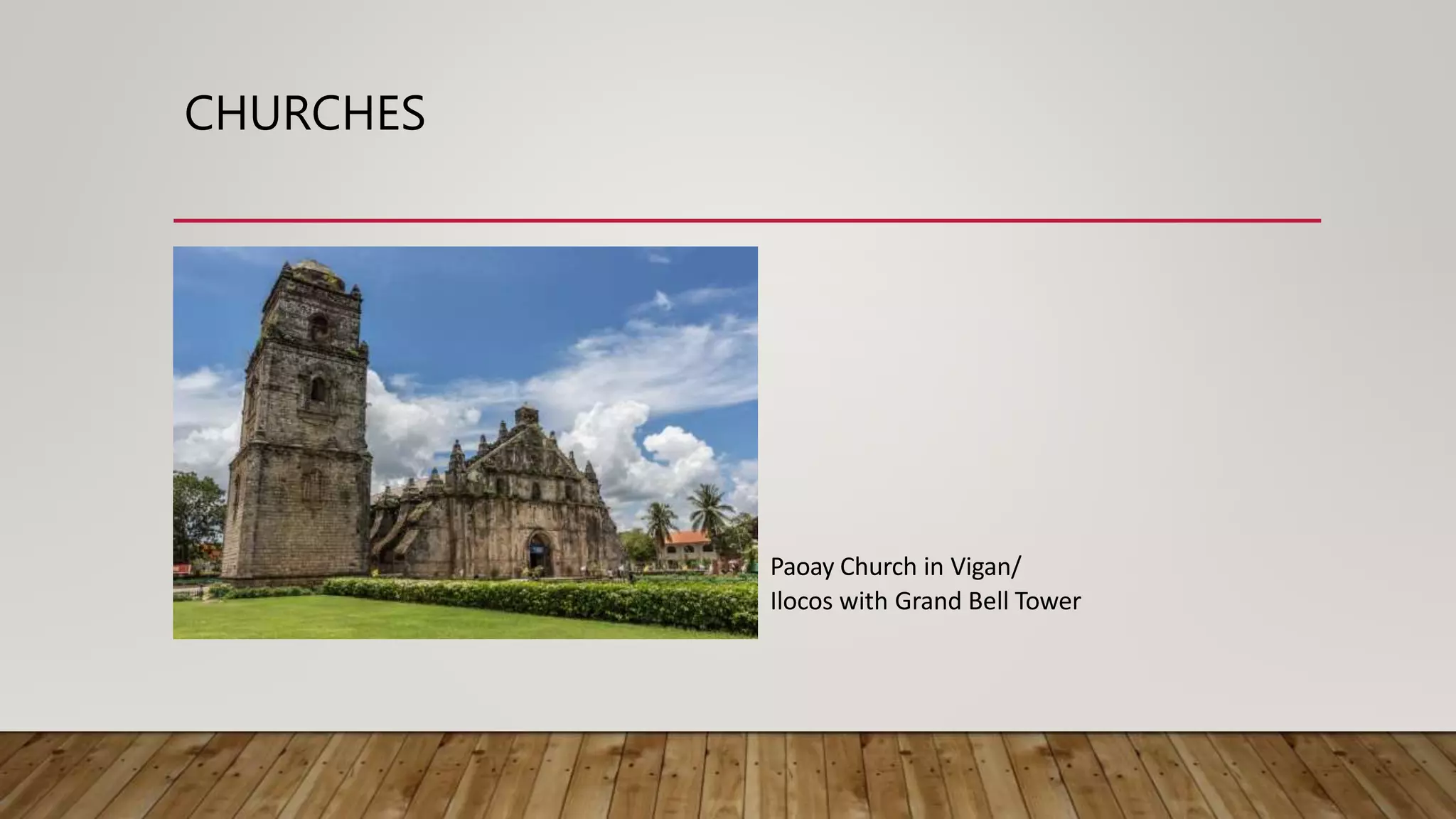
different forms. Most famous of this Paoay church in Ilocos.
CHURCHES
Paoay Church in Vigan/
Ilocos with Grand Bell Tower
CHURCHES
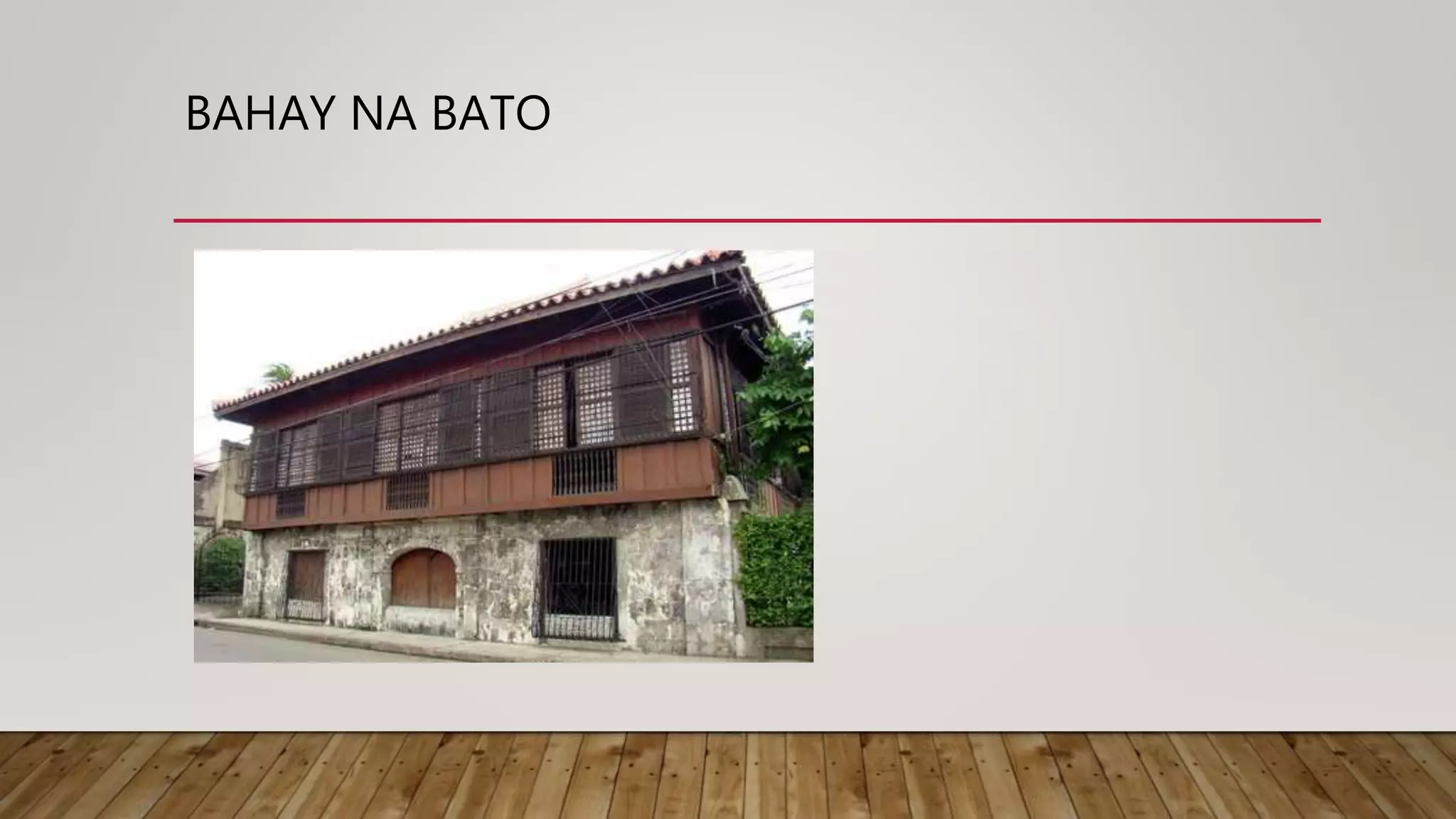
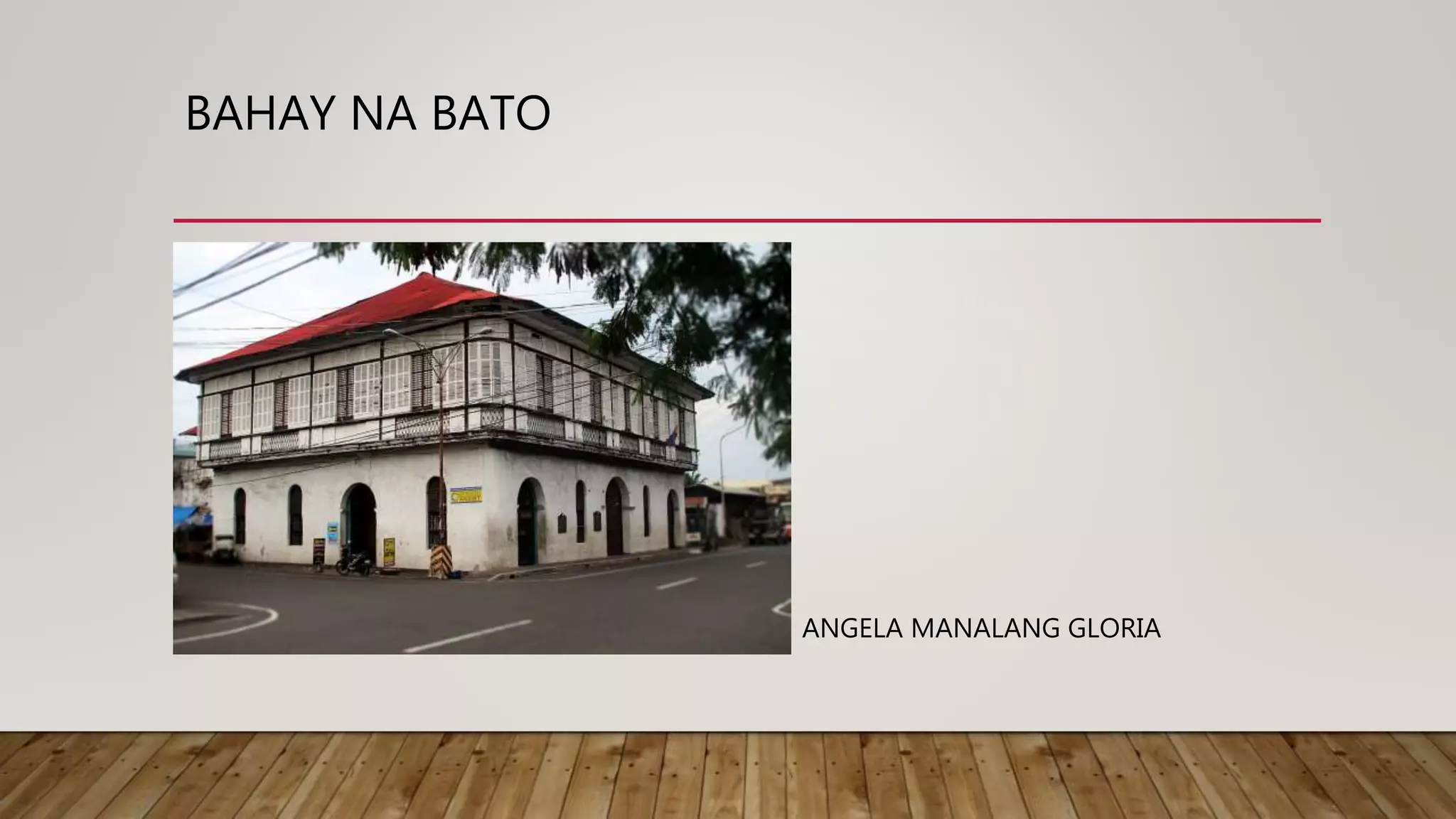
Bahay na bato is perhaps aside from the baroque churches and structures the
most significant imprint of Spanish colonial architecture is the “bahay na
bato”. It is the product of the economic and social development in the colony
due to expansion of commerce and galleon trade which give rise to a new
breed of Ilustrados and Principales. The new upper class’s life style and
aspirations demanded a new type of dwelling that suits their status and
position, which was more noble and elegant and at the same time spacious,
comfortable and in style. The bahay na bato is characterized by the ff:
CHURCHES
Bell towers vary in design as well as in location. In plan, the bell tower may
be square, octagonal, hexagonal or, in rare instances, circular. In height, it
may rise from 3 or 5 stories. It may be at some distance from the church,
adjacent to it, or integrated in the facade. Some churches have 2 towers a
few have 3. when the bell tower is attached to the church, its ground floor
houses the baptistery.
BAHAY NA BATO
1. A house with wooden legs and a stone skirt;
2. The multi-roomed living quarters are on the 2nd floor and reached through and
interior stairways;
3. The “Zaguan”, with its naked stone work, is a grim entrance hall but, with its
abundant space.
BAHAY NA BATO
BAHAY NA BATO
ANGELA MANALANG GLORIA
ARCHITECTS
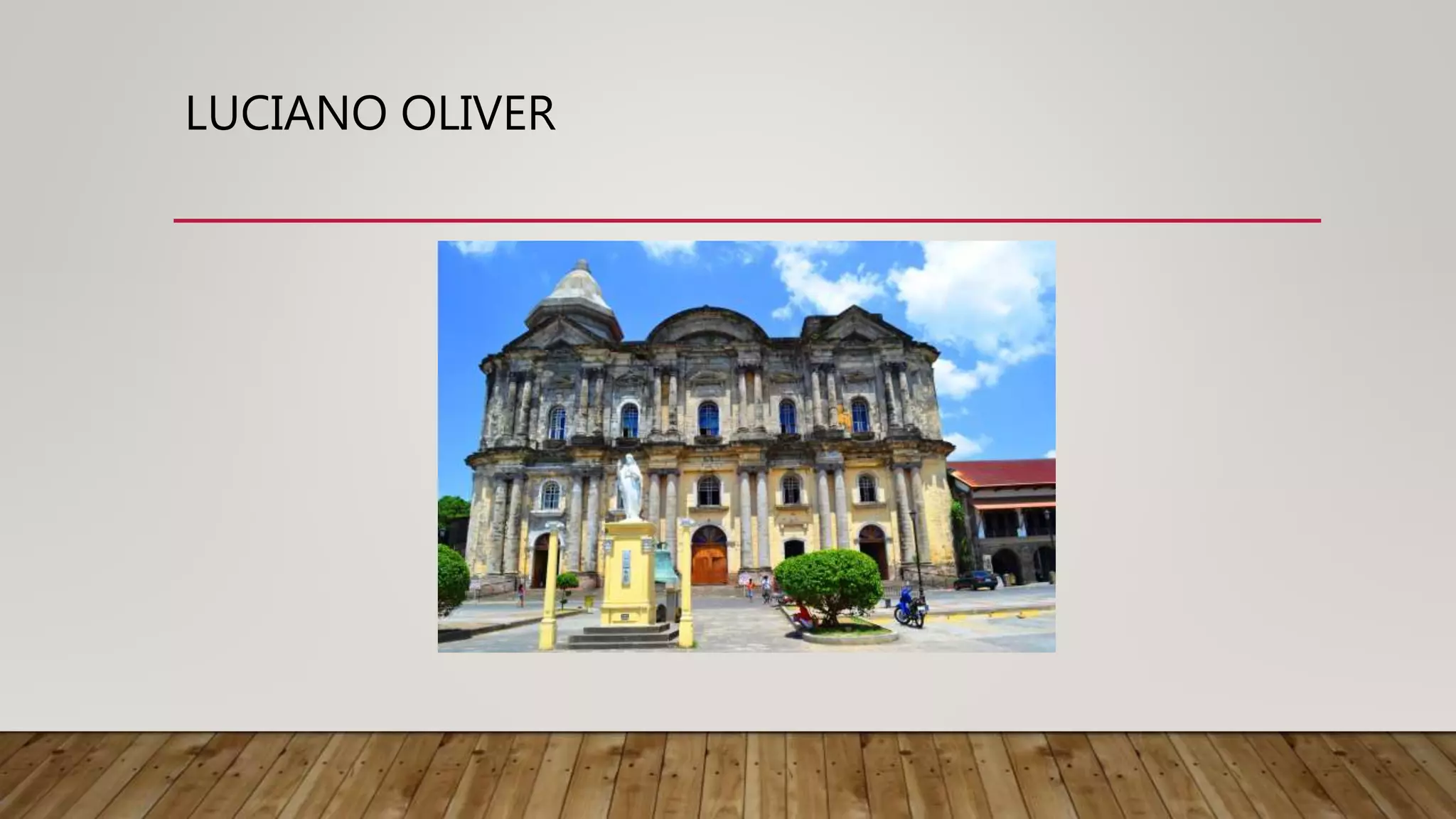
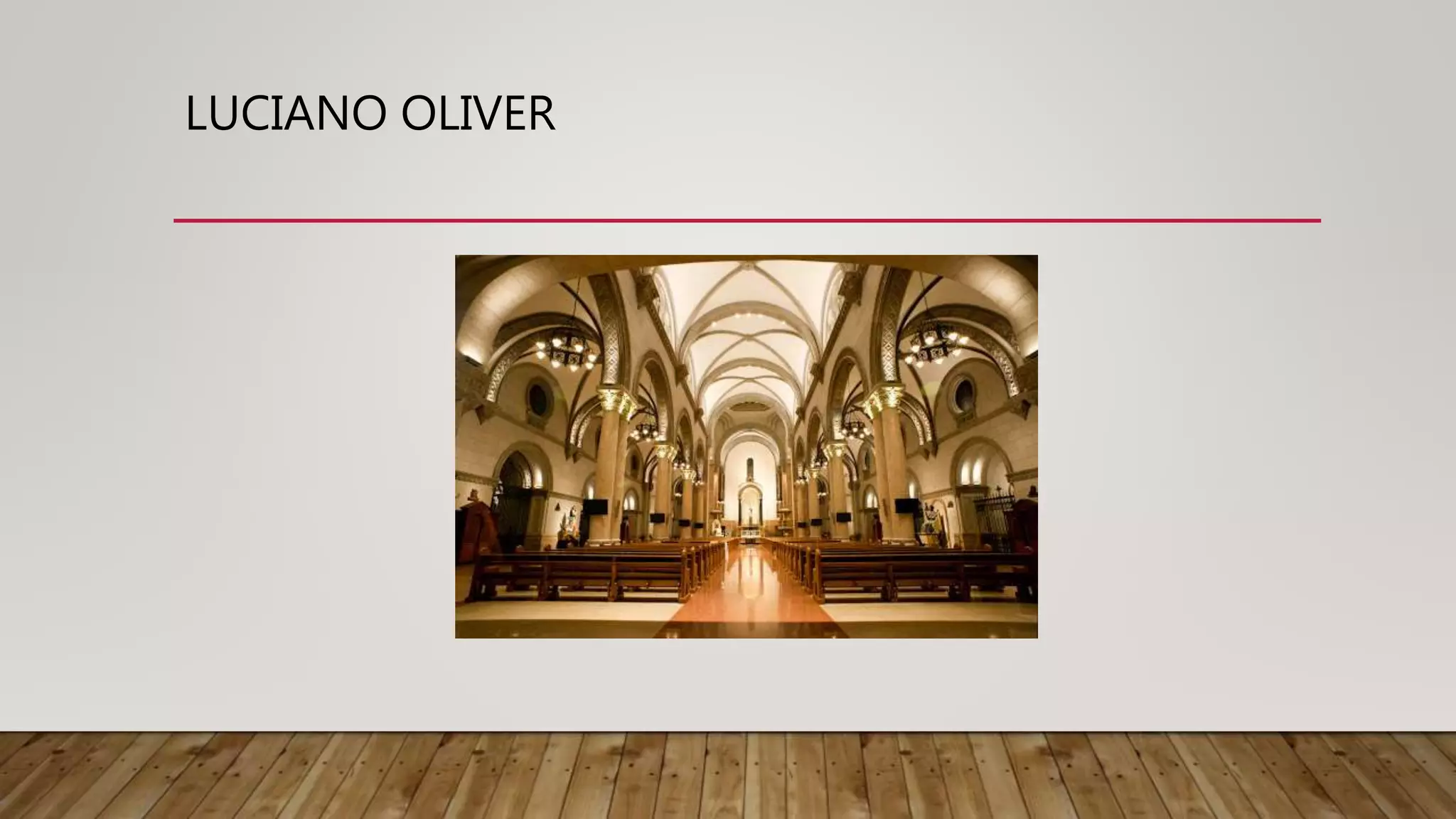
• Luciano Oliver - A Spaniard who designed Taal church, the Malabon
church, and the most significant work in the Manila Cathedral
in1872
LUCIANO OLIVER
LUCIANO OLIVER
LUCIANO OLIVER
LUCIANO OLIVER
LUCIANO OLIVER
LUCIANO OLIVER
FELIX ROJAS SR.
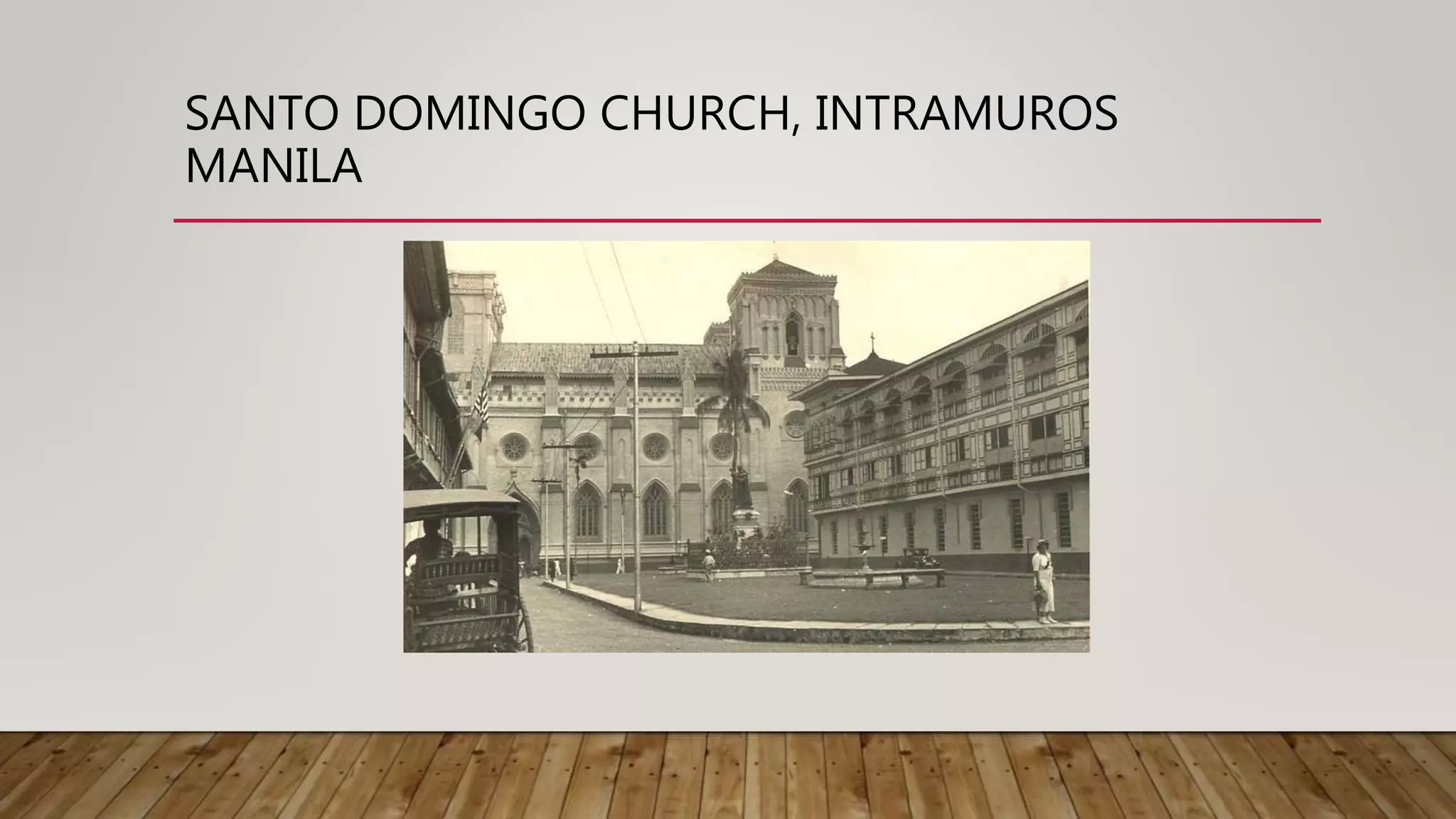
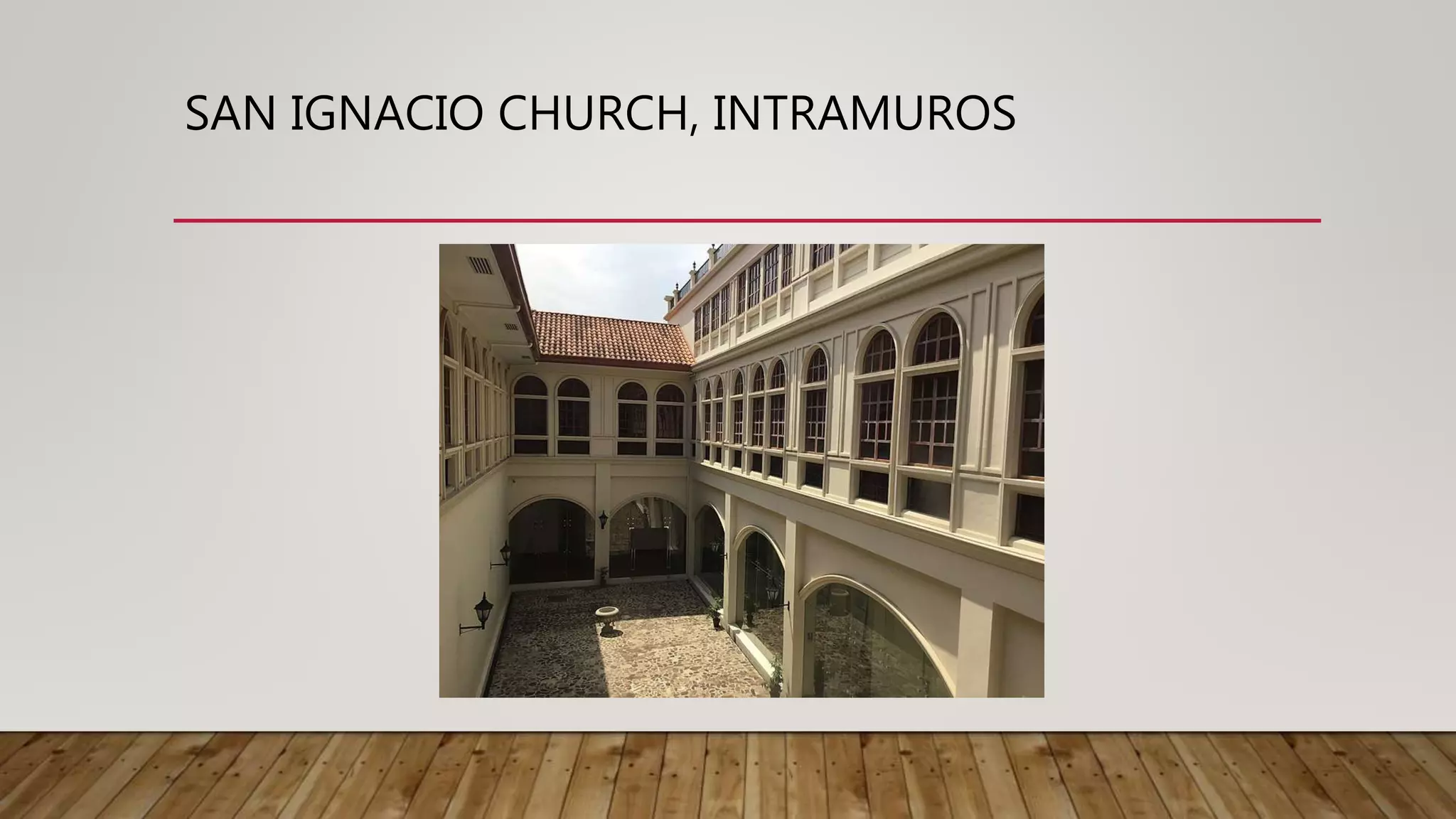
• is considered as the 1st Filipino architect who is popular for his revivalist
style. His works included the neo-gothic Santo Domingo church and the
neo-classic San Ignacio Church which are both located in Intramuros. He
also designed numerous elegant “Bahay na Bato” houses for the upper
class of Maynila
SANTO DOMINGO CHURCH, INTRAMUROS
MANILA
SANTO DOMINGO CHURCH, INTRAMUROS
MANILA
SAN IGNACIO CHURCH, INTRAMUROS
JUAN HERVAS
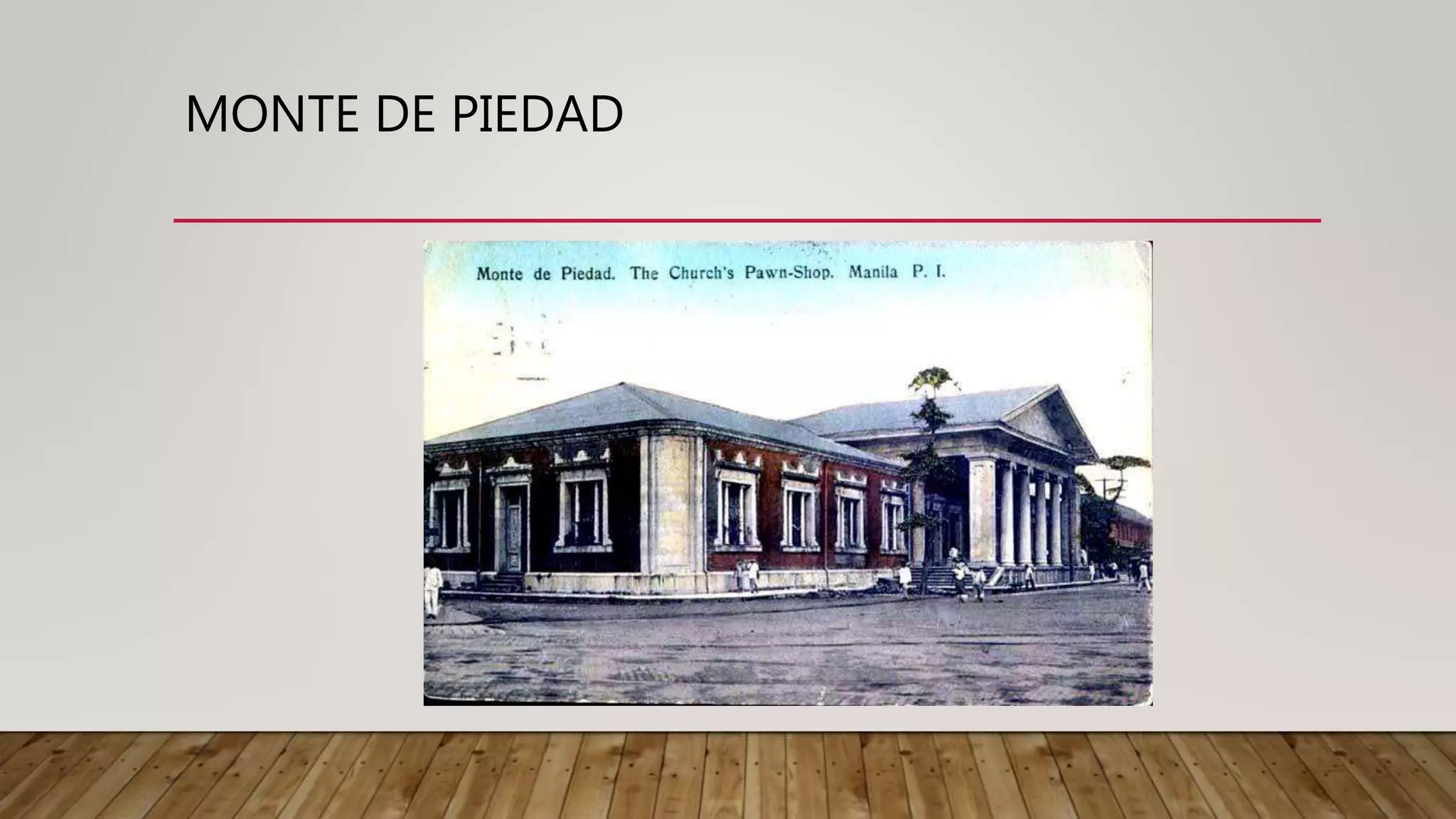
• designed the Tutuban Railroad Station, the Monte de Piedad building, the
Old Assumption Covenant on Herran St. and also a number of “Bahay na
Bato”
TUTUBAN RAILROAD STATION
MONTE DE PIEDAD
OLD ASSUMPTION COVENANT
ARCIADO ARELLANO
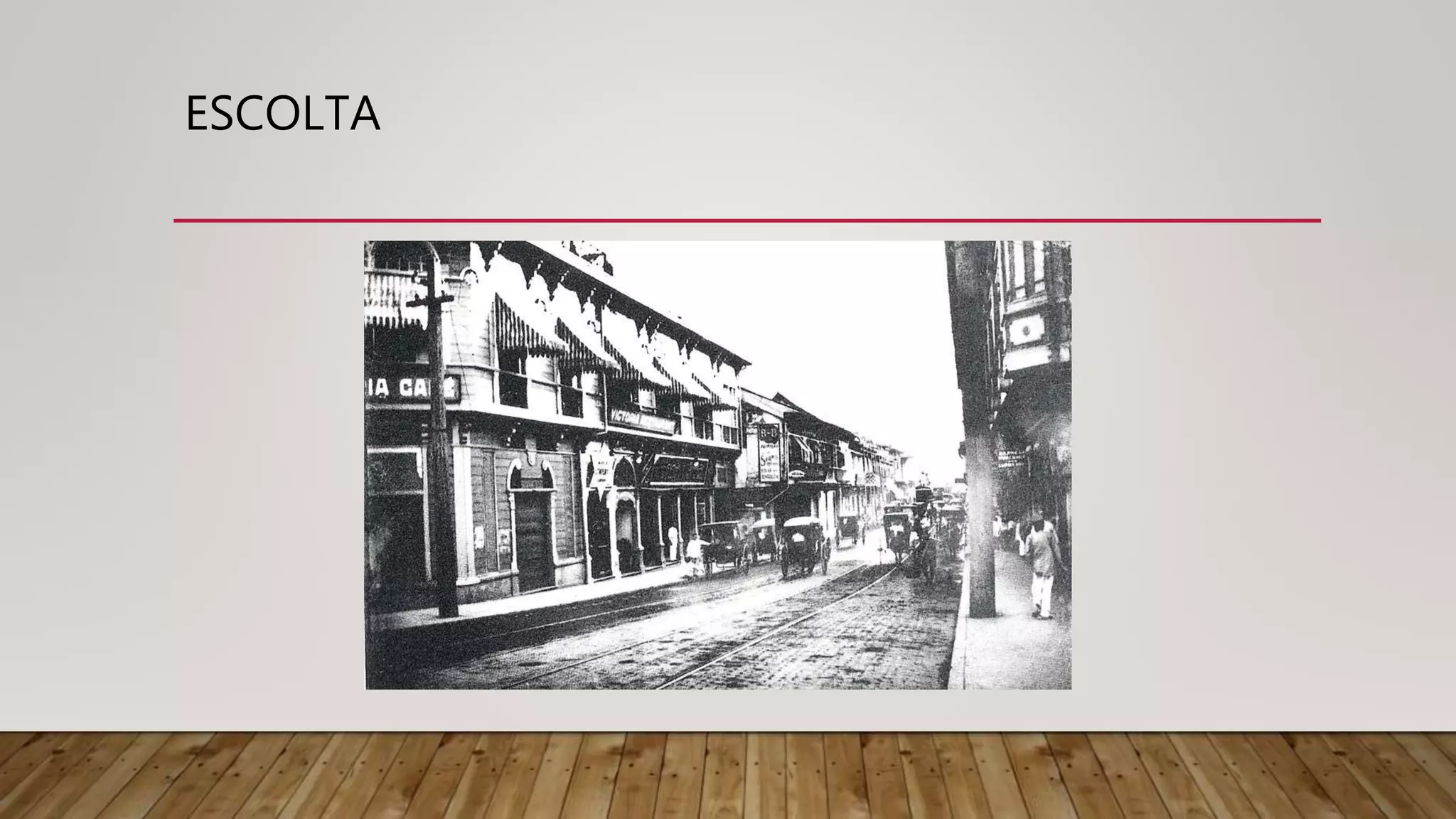
is a master builder gained the confidence of Gov. William Howard Taft and
became general’s architectural adviser in 1901. He also worked on the
houses of Hidalgo family and the Bautista-Nakpil in Quiapo.
ESCOLTA
GENARDO PELACIOS
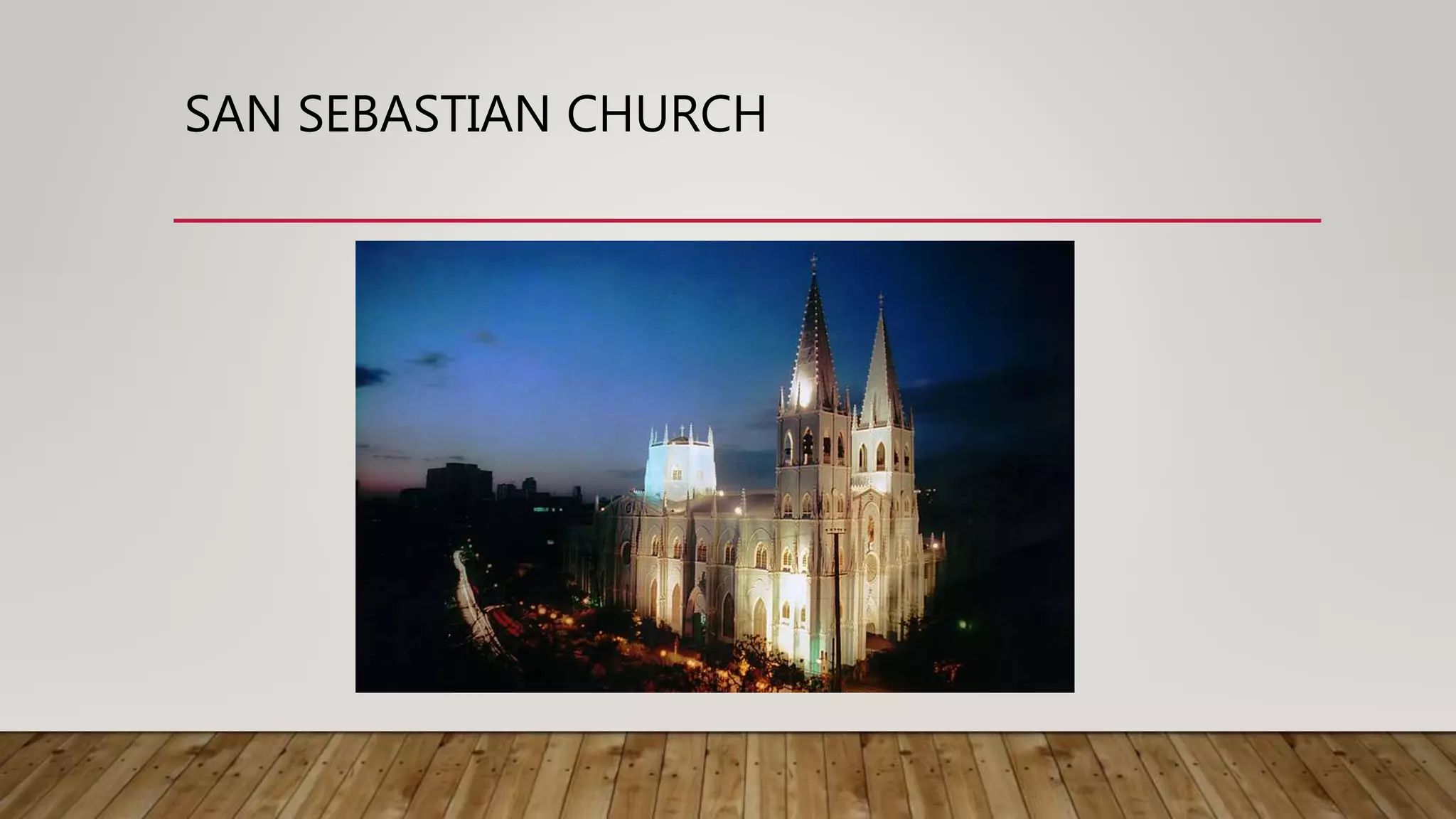
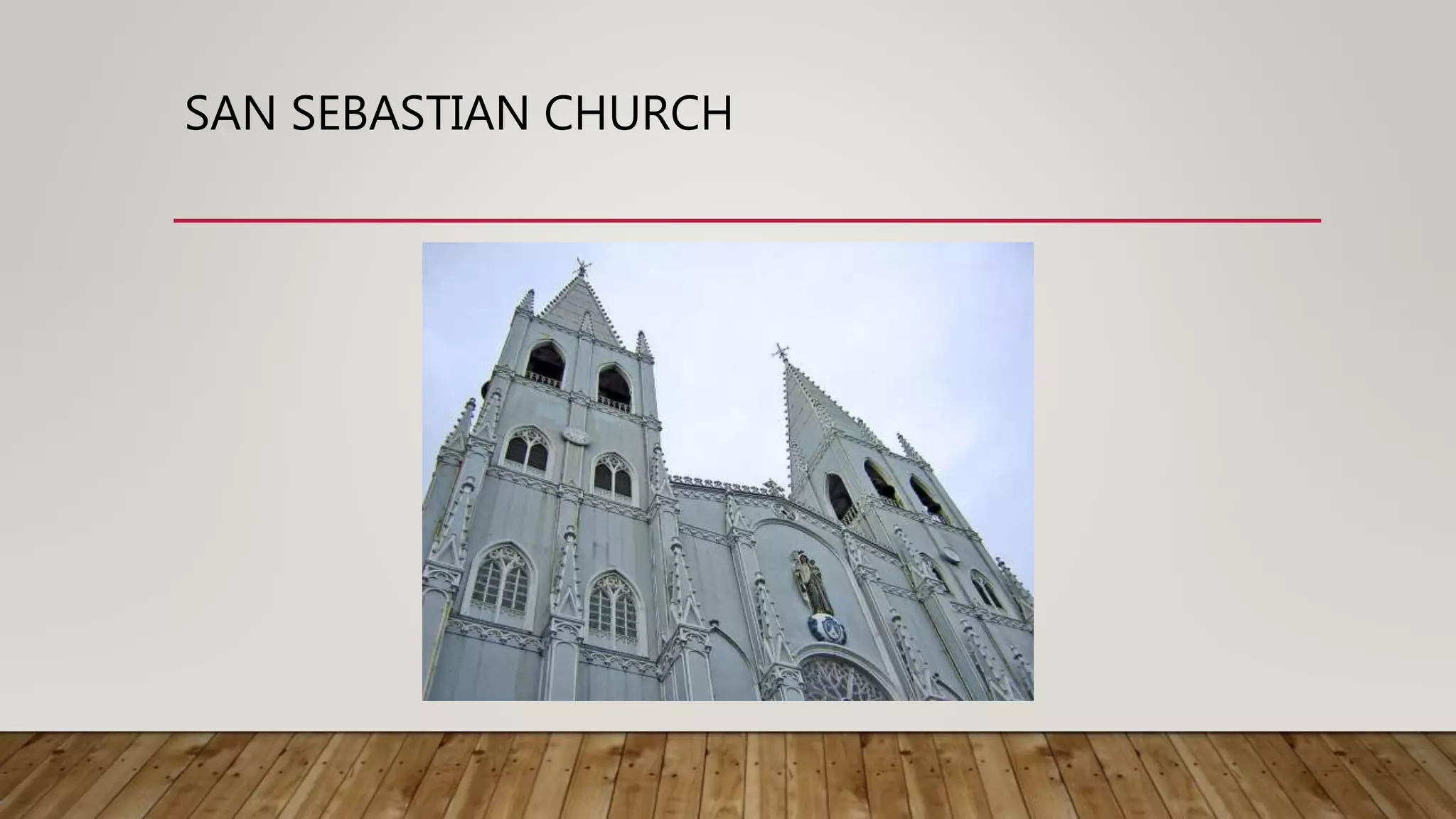
• designed the Gothic and prefabricated all-steel San Sebastian Church in
the 1880s.
SAN SEBASTIAN CHURCH
DID YOU KNOW?
To carry out the project of colonization and Christianization, the natives were
forcibly resettled in towns structured according to the plaza complex.
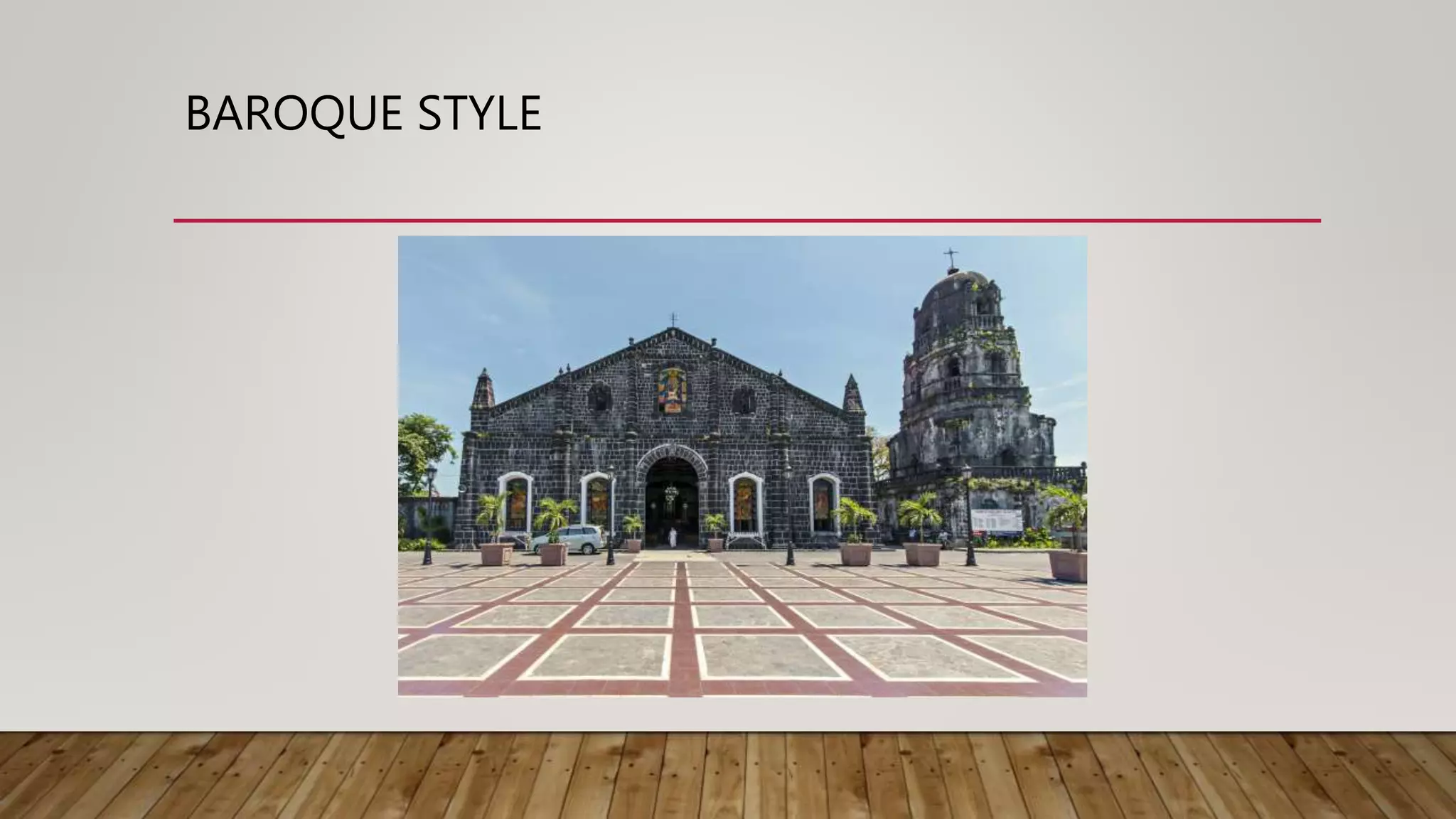
In keeping with the prevailing design if Hispanic churches, the baroque style was
predominantly employed; they were characterized by grandeur, drama, and
elaborate details that purposely appealed to the emotions.
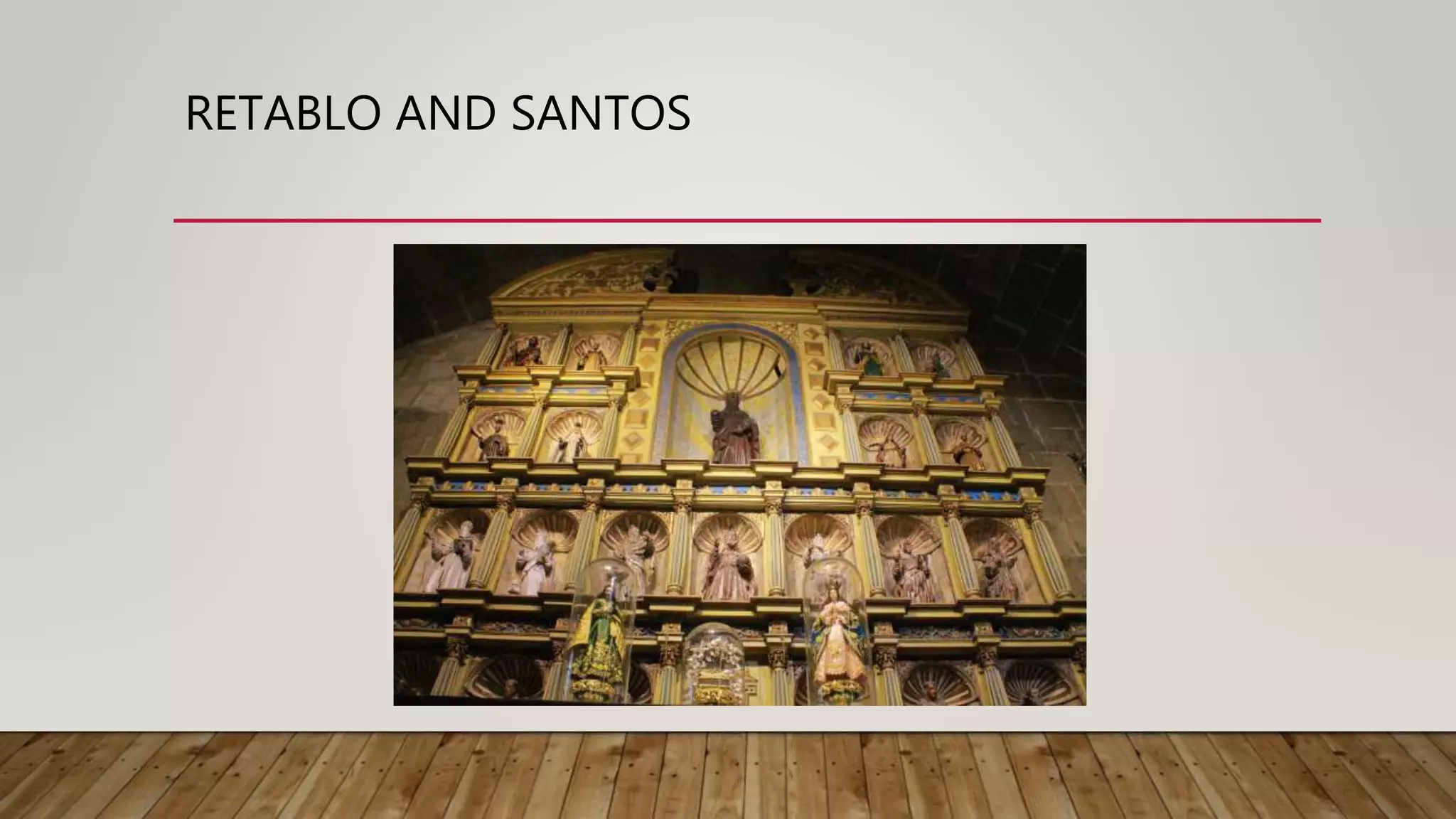
In colonial churches, santos are displayed in a decorative altar niche called the
retablo.
BAROQUE STYLE
RETABLO AND SANTOS
DID YOU KNOW?
Spaniards brought western musical instruments like the pipe organ, the violin, the
guitar, and the piano.
Catholic liturgical music was introduced in 1742 when the then Archbishop of
Manila, Juan Rodirguez Angel, established a singing school at the Manila
Cathedral that taught western church music.
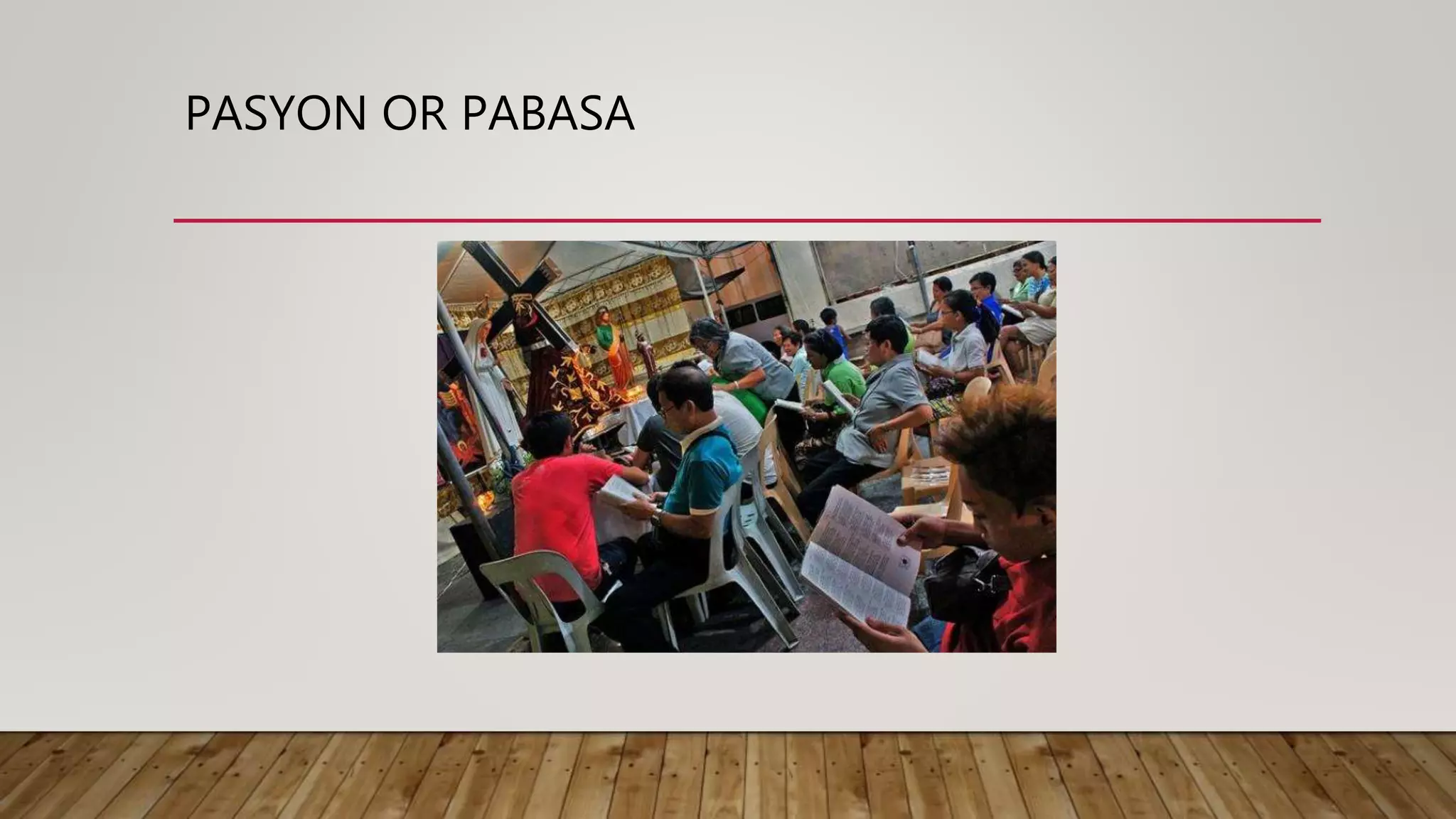
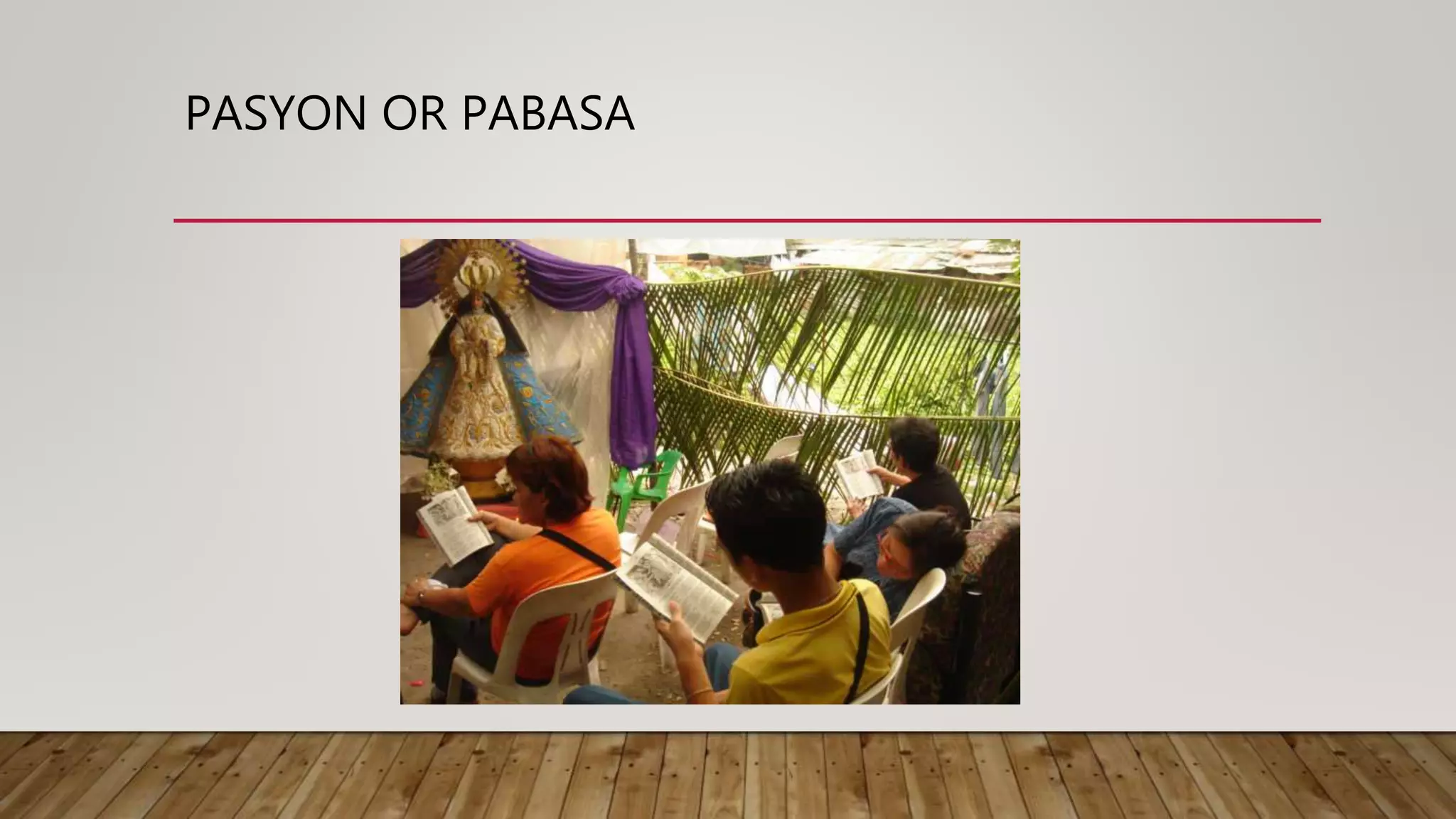
Biblical narration of Christ’s passion chanted in an improvised melody is called
pasyon or pabasa.
PIPE ORGAN
PASYON OR PABASA
PASYON OR PABASA
PASYON OR PABASA
DID YOU KNOW?
Kundiman and balitao are sentimental love song and lullabies that were also
prominent during the occupation.
Bayan Ko is a kundiman which experienced renewed popularity during the EDSA
People Power Revolution of 1986.
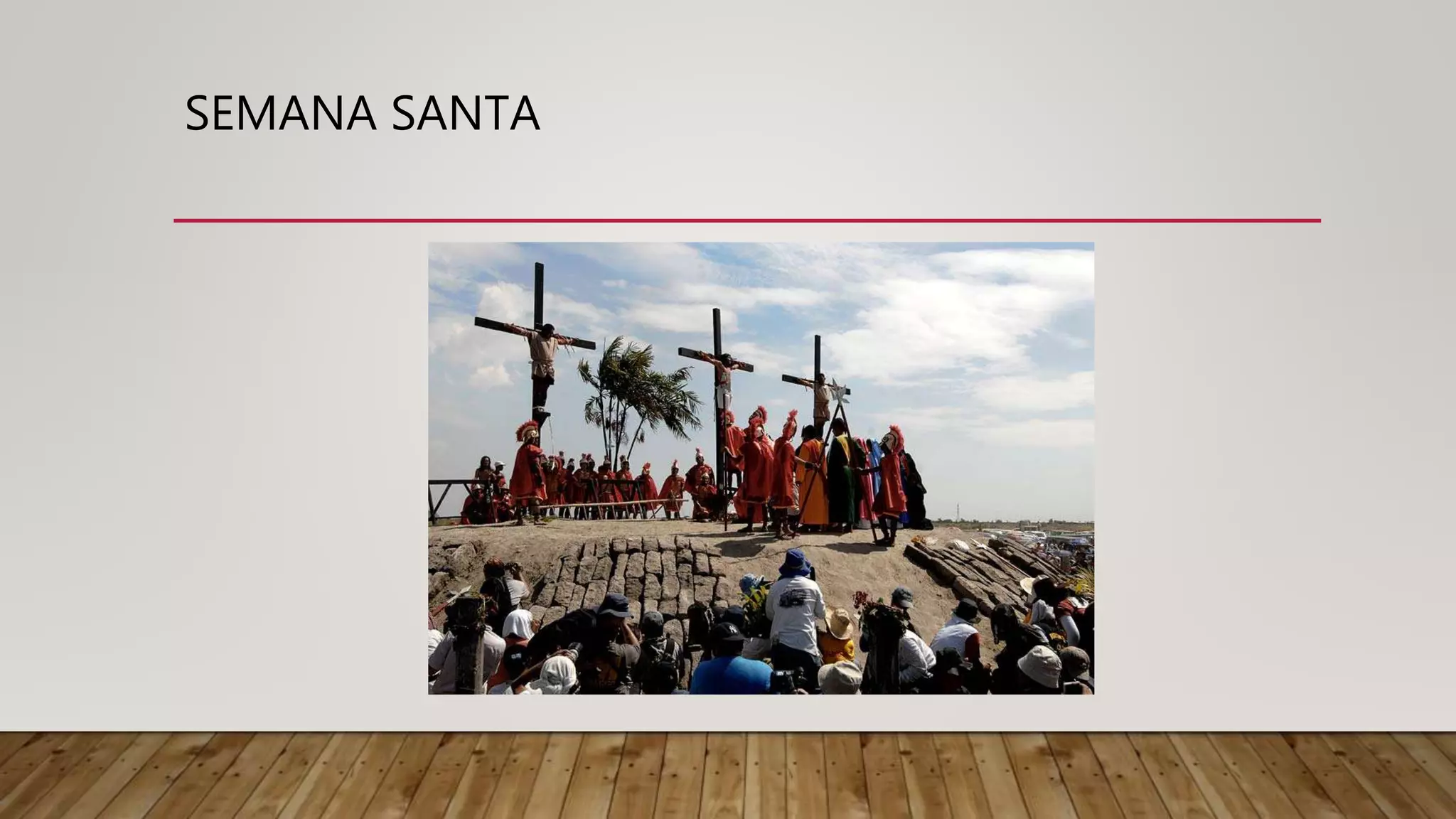
Shamanistic rituals, dances, and chants of pre-colonial Philippines which were
probably the earliest forms of theater: were replaced by the pomp and pageantry
of religious processions.
SEMANA SANTA
SEMANA SANTA
SEMANA SANTA
DID YOU KNOW?
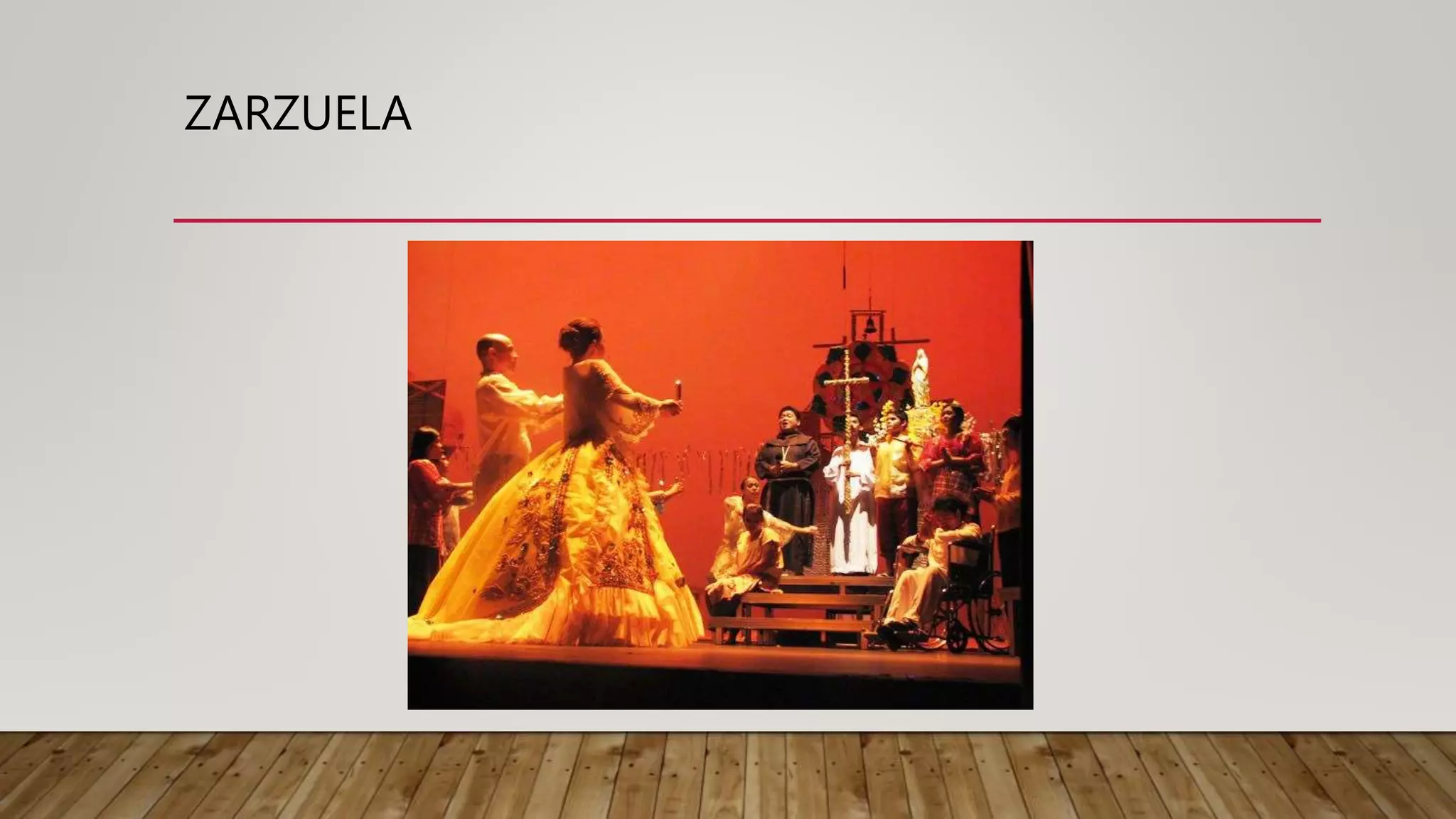
The zarzuela or sarsuwela was an operatta which features singing and dancing
interspersed with prose dialogue which allowed the story to be carried out it a
song.
Severino Reyes and Hermogenes Ilagan, who wrote sarsuwelas in Tagalog were
the most distinguished playwrights of their day with Honorata ‘Atat’ dela Rama.
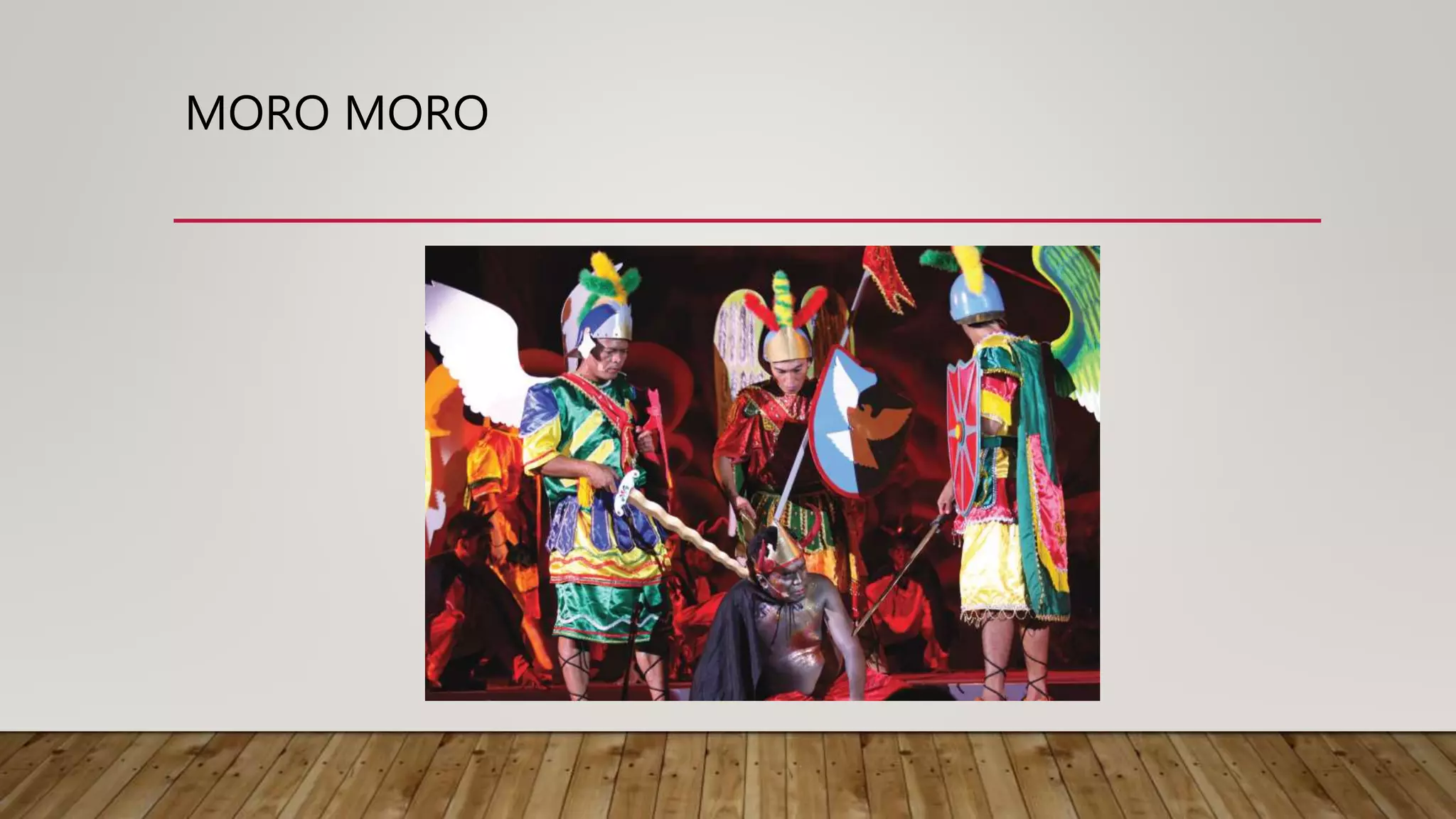
The komedya depicts the conflict between the Muslims and Christians.
There were two main types of the komedya. One type was the komedya de santo
or religious komedya. The second type is the secular komedya. The moro-moro is
a type of secular komedya.
ZARZUELA
ZARZUELA
MORO MORO
DID YOU KNOW?
Folk dances such as the cariñosa, pandanggo or fandango, polka, dansa and the
rigodon carry traces if the habanera, jota, and tango dances from Spain and its
colonies.
Heaven, Earth, and Hell (1850), a mural by Jose Dans in Paete Church, Laguna. A
map of the universe features a terrifying depiction of hell.
Image making during the period generally conformed to the preferences of the
patrons and not just solely the interest and preference if the artist’s.
CARIÑOSA
PANDANGGO SA ILAW
DID YOU KNOW?
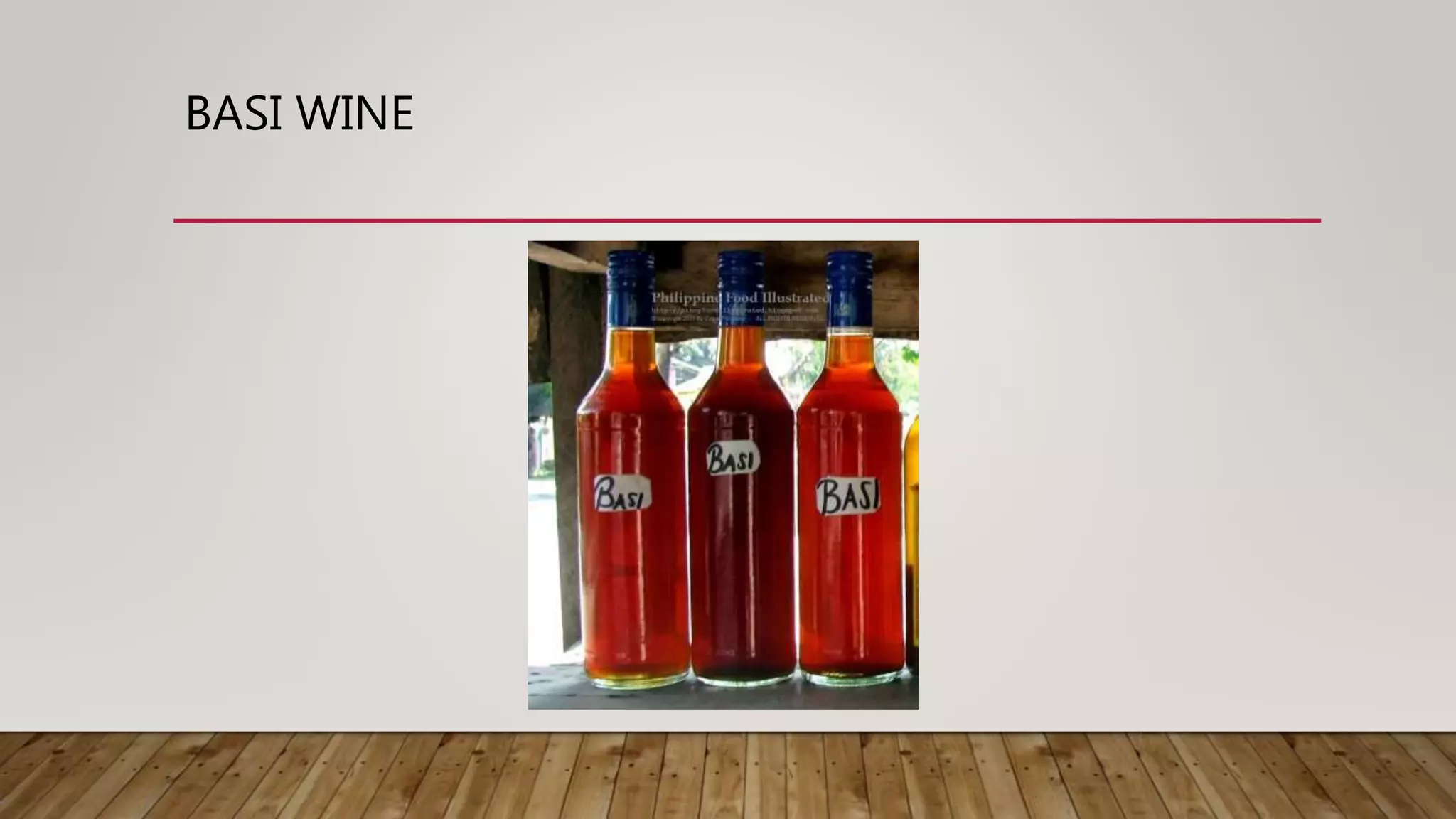
Such relations are at work is the Basi Revolt, a series of 14 paintings by Esteban
Villanueva. It chronicles the defeat of Ilocanos who rebelled against the Spanish
government's monopoly of basi or rice wine in 1821.
Doctrina Christiana (The Teachings’s of Christianity) was printed in 1593 using
xylography or woodcut. Printed in Spanish and in Tagalog by Dominican priests.
Doctrina is the first printed book in the Philippines compiling song lyrics,
commandments, scaraments, and other catechetical material.
BASI WINE
DOCTRINA CHRISTIANA
DOCTRINA CHRISTIANA
DOCTRINA CHRISTIANA
DID YOU KNOW?
• In 1734, the Hesuit priest Fr. Pedro Murillo Velarde collaborated with homegrown
talents, the artist Francisco Suarez and the engraver Nicola de la Cruz Bagay to
produde Carta Hydrograpica y Chorographica de las Yslas Filipinas, the first
scientific map of the Philippines.
• The Augustinian botanist Fr. Manuel Blanco produced an extensive compilation of
Philippine plants in Flora de Filipinas in 1878.
• In 1884, the expateriates Juan Luna and Felix Resurreccion Hidalgo won medals in
the Madrid Exposition. Luna won gold for Spolarium; while Hidalgo garnered a
silver medal for Virgenes Christianas Expuestas Al Populacho.
CARTA HYDROGRAPICA Y CHOROGRAPHICA DE
LAS YSLAS FILIPINAS
CARTA HYDROGRAPICA Y CHOROGRAPHICA DE
LAS YSLAS FILIPINAS
FLORA DE FILIPINAS
FLORA DE FILIPINAS
DID YOU KNOW?
Luna’s alignment with the
Ilustrados’ Propaganda Movement
is evident in the painting España y
Filipinas, 1886 featuring two
women ascending a flight of stairs.
VIRGENES CHRISTIANAS EXPUESTAS AL
POPULACHO
SPOLIARIUM

Art Forms in the Philippines during the Spanish Colonization

  • 1.
  • 2.
    BACKGROUND When the Spaniardsoccupied and established the city of Cebu and later occupied the fort of Soliman in Manila, the wooden palisades and pre- colonial constructions were replaced and shaped into Spanish cities and fortifications. Fine example of this one is fort San Pedro in Cebu and Intramuros in Manila. The early years of occupation, however it was characterized by wooden settlements and churches to promote the indoctrination of the natives to their new master and religion but these easily gave in to fire set by the uprising and rebellion of the natives, the Chinese Cooleys and the marauding Moros.
  • 3.
    BACKGROUND The Spaniards lookedfor more fireproof materials to replace wood and discovered “adobe” or volcanic stuff that was quarried in San Pedro, Makati. Thus in 1580’s most of the constructions were made from adobe including dwellings, churches, and fortifications. Fr. Antonio Sedeño, SJ is a priest and engineer. He trained the natives in the art of building and stones before the Spaniards commissioned Chinese architects and laborers to do the job.
  • 4.
    CHURCHES The churches’ wholearchitectural design and construction is based on the principle of formulation of reducciones, where scattered population of the natives were brought together in compact communities in the most favorable areas in an encomienda
  • 5.
    CHURCHES The church becamethe center of town as well as the adjoining plaza which were usually made of adobe or bricks and sometimes a combination of both. Later, the churches succumbed to nature disasters like earthquakes and thus, the stone churches were provided with buttresses that came in different forms. Most famous of this Paoay church in Ilocos.
  • 6.
    CHURCHES Paoay Church inVigan/ Ilocos with Grand Bell Tower
  • 7.
    CHURCHES Bahay na batois perhaps aside from the baroque churches and structures the most significant imprint of Spanish colonial architecture is the “bahay na bato”. It is the product of the economic and social development in the colony due to expansion of commerce and galleon trade which give rise to a new breed of Ilustrados and Principales. The new upper class’s life style and aspirations demanded a new type of dwelling that suits their status and position, which was more noble and elegant and at the same time spacious, comfortable and in style. The bahay na bato is characterized by the ff:
  • 8.
    CHURCHES Bell towers varyin design as well as in location. In plan, the bell tower may be square, octagonal, hexagonal or, in rare instances, circular. In height, it may rise from 3 or 5 stories. It may be at some distance from the church, adjacent to it, or integrated in the facade. Some churches have 2 towers a few have 3. when the bell tower is attached to the church, its ground floor houses the baptistery.
  • 9.
    BAHAY NA BATO 1.A house with wooden legs and a stone skirt; 2. The multi-roomed living quarters are on the 2nd floor and reached through and interior stairways; 3. The “Zaguan”, with its naked stone work, is a grim entrance hall but, with its abundant space.
  • 10.
  • 11.
    BAHAY NA BATO ANGELAMANALANG GLORIA
  • 12.
    ARCHITECTS • Luciano Oliver- A Spaniard who designed Taal church, the Malabon church, and the most significant work in the Manila Cathedral in1872
  • 13.
  • 14.
  • 15.
  • 16.
  • 17.
  • 18.
  • 19.
    FELIX ROJAS SR. •is considered as the 1st Filipino architect who is popular for his revivalist style. His works included the neo-gothic Santo Domingo church and the neo-classic San Ignacio Church which are both located in Intramuros. He also designed numerous elegant “Bahay na Bato” houses for the upper class of Maynila
  • 20.
    SANTO DOMINGO CHURCH,INTRAMUROS MANILA
  • 21.
    SANTO DOMINGO CHURCH,INTRAMUROS MANILA
  • 22.
  • 23.
  • 24.
    JUAN HERVAS • designedthe Tutuban Railroad Station, the Monte de Piedad building, the Old Assumption Covenant on Herran St. and also a number of “Bahay na Bato”
  • 25.
  • 26.
  • 27.
  • 28.
    ARCIADO ARELLANO is amaster builder gained the confidence of Gov. William Howard Taft and became general’s architectural adviser in 1901. He also worked on the houses of Hidalgo family and the Bautista-Nakpil in Quiapo.
  • 29.
  • 30.
    GENARDO PELACIOS • designedthe Gothic and prefabricated all-steel San Sebastian Church in the 1880s.
  • 31.
  • 32.
  • 33.
  • 34.
    DID YOU KNOW? Tocarry out the project of colonization and Christianization, the natives were forcibly resettled in towns structured according to the plaza complex. In keeping with the prevailing design if Hispanic churches, the baroque style was predominantly employed; they were characterized by grandeur, drama, and elaborate details that purposely appealed to the emotions. In colonial churches, santos are displayed in a decorative altar niche called the retablo.
  • 35.
  • 36.
  • 37.
    DID YOU KNOW? Spaniardsbrought western musical instruments like the pipe organ, the violin, the guitar, and the piano. Catholic liturgical music was introduced in 1742 when the then Archbishop of Manila, Juan Rodirguez Angel, established a singing school at the Manila Cathedral that taught western church music. Biblical narration of Christ’s passion chanted in an improvised melody is called pasyon or pabasa.
  • 38.
  • 39.
  • 40.
  • 41.
  • 42.
    DID YOU KNOW? Kundimanand balitao are sentimental love song and lullabies that were also prominent during the occupation. Bayan Ko is a kundiman which experienced renewed popularity during the EDSA People Power Revolution of 1986. Shamanistic rituals, dances, and chants of pre-colonial Philippines which were probably the earliest forms of theater: were replaced by the pomp and pageantry of religious processions.
  • 43.
  • 44.
  • 45.
  • 46.
    DID YOU KNOW? Thezarzuela or sarsuwela was an operatta which features singing and dancing interspersed with prose dialogue which allowed the story to be carried out it a song. Severino Reyes and Hermogenes Ilagan, who wrote sarsuwelas in Tagalog were the most distinguished playwrights of their day with Honorata ‘Atat’ dela Rama. The komedya depicts the conflict between the Muslims and Christians. There were two main types of the komedya. One type was the komedya de santo or religious komedya. The second type is the secular komedya. The moro-moro is a type of secular komedya.
  • 47.
  • 48.
  • 49.
  • 50.
    DID YOU KNOW? Folkdances such as the cariñosa, pandanggo or fandango, polka, dansa and the rigodon carry traces if the habanera, jota, and tango dances from Spain and its colonies. Heaven, Earth, and Hell (1850), a mural by Jose Dans in Paete Church, Laguna. A map of the universe features a terrifying depiction of hell. Image making during the period generally conformed to the preferences of the patrons and not just solely the interest and preference if the artist’s.
  • 51.
  • 52.
  • 53.
    DID YOU KNOW? Suchrelations are at work is the Basi Revolt, a series of 14 paintings by Esteban Villanueva. It chronicles the defeat of Ilocanos who rebelled against the Spanish government's monopoly of basi or rice wine in 1821. Doctrina Christiana (The Teachings’s of Christianity) was printed in 1593 using xylography or woodcut. Printed in Spanish and in Tagalog by Dominican priests. Doctrina is the first printed book in the Philippines compiling song lyrics, commandments, scaraments, and other catechetical material.
  • 54.
  • 55.
  • 56.
  • 57.
  • 58.
    DID YOU KNOW? •In 1734, the Hesuit priest Fr. Pedro Murillo Velarde collaborated with homegrown talents, the artist Francisco Suarez and the engraver Nicola de la Cruz Bagay to produde Carta Hydrograpica y Chorographica de las Yslas Filipinas, the first scientific map of the Philippines. • The Augustinian botanist Fr. Manuel Blanco produced an extensive compilation of Philippine plants in Flora de Filipinas in 1878. • In 1884, the expateriates Juan Luna and Felix Resurreccion Hidalgo won medals in the Madrid Exposition. Luna won gold for Spolarium; while Hidalgo garnered a silver medal for Virgenes Christianas Expuestas Al Populacho.
  • 59.
    CARTA HYDROGRAPICA YCHOROGRAPHICA DE LAS YSLAS FILIPINAS
  • 60.
    CARTA HYDROGRAPICA YCHOROGRAPHICA DE LAS YSLAS FILIPINAS
  • 61.
  • 62.
  • 63.
    DID YOU KNOW? Luna’salignment with the Ilustrados’ Propaganda Movement is evident in the painting España y Filipinas, 1886 featuring two women ascending a flight of stairs.
  • 64.
  • 65.