
Are Your Hormones Driving You
            Crazy?
             Ronna Sherman MD
               October 26,2011
How the King of Beasts Handles PMS
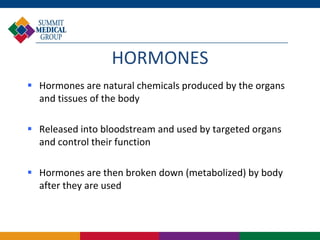
HORMONES
 Hormones are natural chemicals produced by the organs
  and tissues of the body

 Released into bloodstream and used by targeted organs
  and control their function

 Hormones are then broken down (metabolized) by body
  after they are used
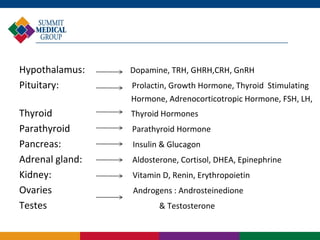
Hypothalamus:    Dopamine, TRH, GHRH,CRH, GnRH
Pituitary:       Prolactin, Growth Hormone, Thyroid Stimulating
                 Hormone, Adrenocorticotropic Hormone, FSH, LH,
Thyroid          Thyroid Hormones
Parathyroid      Parathyroid Hormone
Pancreas:        Insulin & Glucagon
Adrenal gland:   Aldosterone, Cortisol, DHEA, Epinephrine
Kidney:          Vitamin D, Renin, Erythropoietin
Ovaries          Androgens : Androsteinedione
Testes                  & Testosterone
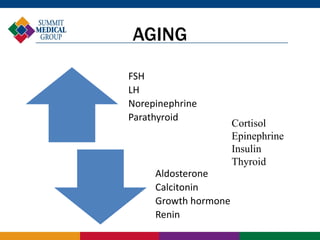
AGING
FSH
LH
Norepinephrine
Parathyroid
                      Cortisol
                      Epinephrine
                      Insulin
                      Thyroid
     Aldosterone
     Calcitonin
     Growth hormone
     Renin
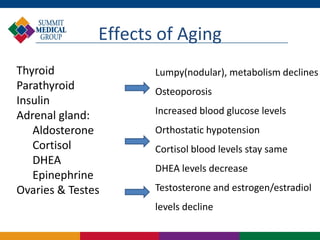
Effects of Aging
Thyroid               Lumpy(nodular), metabolism declines
Parathyroid           Osteoporosis
Insulin
Adrenal gland:        Increased blood glucose levels
   Aldosterone        Orthostatic hypotension
   Cortisol           Cortisol blood levels stay same
   DHEA
                      DHEA levels decrease
   Epinephrine
Ovaries & Testes      Testosterone and estrogen/estradiol
                      levels decline
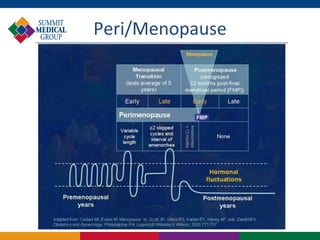
Peri/Menopause

   Weight

  Depression
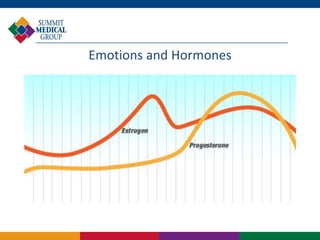
Emotions and Hormones
Peri/Menopause
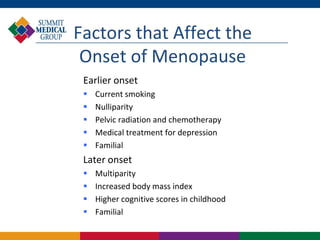
Factors that Affect the
 Onset of Menopause
 Earlier onset
    Current smoking
    Nulliparity
    Pelvic radiation and chemotherapy
    Medical treatment for depression
    Familial
 Later onset
    Multiparity
    Increased body mass index
    Higher cognitive scores in childhood
    Familial
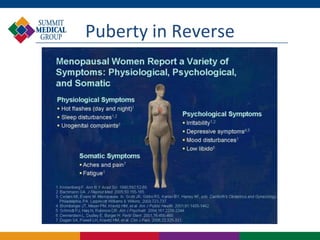
Puberty in Reverse
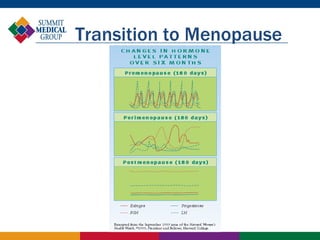
Transition to Menopause
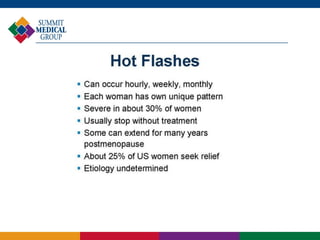
Hot Flashes
   Behavioral Interventions
   Antidepressants : SSRI and SNRI
   Gabapentin
   Complementary and Alternative Therapy
   Short term Hormone Therapy
Sleep and Menopause
 Frequent awakenings
   Difficulty falling back to sleep
   Difficulty falling asleep
   More common in women with surgical menopause
   Those with sleep difficulty are more likely to have
    depressive symptoms
Recommendations
   Low dose OCP
   Medications
   Hormonal Therapy
   OTC
   Vaginal Estrogen
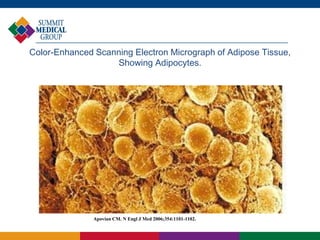
Color-Enhanced Scanning Electron Micrograph of Adipose Tissue,
                   Showing Adipocytes.


               Apovian CM. N Engl J Med 2006;354:1101-1102.
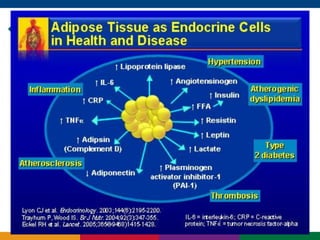
Hormones produced by Adipose
  Leptin
     Stimulates energy expenditure
     Inhibits food intake
     Restores euglycemia

  Adiponectin
     Increased insulin sensitivity
     Energy expenditure
     Reduced production of glucose by liver

  Obesity is associated with Leptin Resistance
Obesity and Inflammation
Adipose (fat) is site of energy storage
As fat cells grow :
      Invaded by Macrophages
       TNF α and IL-6
       Blocks insulin
      Cause inflammation
      Decrease in production of Adiponectin
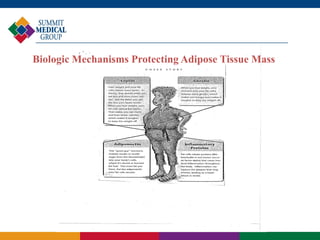
Biologic Mechanisms Protecting Adipose Tissue Mass
Why It’s So Difficult to Lose
and Maintain Your Weight
 Loss of sex hormones
 Disruption of normal insulin function
 Adipose tissue is self preserving
Depression
   Ongoing feelings of sadness, guilt or hopelessness
   Loss of interest in things you once enjoyed
   Significant changes in sleep pattern
   Fatigue or unexplained pain without cause
   Changes in appetite
   Feeling as though life isn’t worth living
Depression and Menopause
   1.3 million women reach menopause annually
   20% experience depression at some point
   Risk is greater in perimenopause
   Estradiol
      decreases the level of enzyme that degrades 5HT and
       Norepinephrine
       increases the level of enzyme that produces serotonin
       and norepinephrine
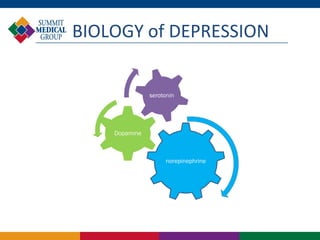
BIOLOGY of DEPRESSION


               serotonin


    Dopamine


                    norepinephrine
Treatment
   Seek assistance
   Medication
   Psychotherapy
   Hormonal therapy
Additional References
• The Endocrine Society www.endo-society.org
• The Hormone Foundation www.hormone.org
• Highlights from the 66th Annual Meeting of the American Society for
  Reproductive Medicine October 2010
• Mayo Clinic Proceedings June 2004
• Wwww.Women’s Health.gov
• Cleveland Clinic Center for Continuing Education
• Women’s Health Initiative: http://www.whiscience.org/
• The Heart and Estrogen/Progestin Replacement Study (HERS)
  http://www.nhlbi.nih.gov

Are your Hormones Driving You Crazy?

  • 1.
    Are Your HormonesDriving You Crazy? Ronna Sherman MD October 26,2011
  • 2.
    How the Kingof Beasts Handles PMS
  • 3.
    HORMONES  Hormones arenatural chemicals produced by the organs and tissues of the body  Released into bloodstream and used by targeted organs and control their function  Hormones are then broken down (metabolized) by body after they are used
  • 4.
    Hypothalamus: Dopamine, TRH, GHRH,CRH, GnRH Pituitary: Prolactin, Growth Hormone, Thyroid Stimulating Hormone, Adrenocorticotropic Hormone, FSH, LH, Thyroid Thyroid Hormones Parathyroid Parathyroid Hormone Pancreas: Insulin & Glucagon Adrenal gland: Aldosterone, Cortisol, DHEA, Epinephrine Kidney: Vitamin D, Renin, Erythropoietin Ovaries Androgens : Androsteinedione Testes & Testosterone
  • 5.
    AGING FSH LH Norepinephrine Parathyroid Cortisol Epinephrine Insulin Thyroid Aldosterone Calcitonin Growth hormone Renin
  • 6.
    Effects of Aging Thyroid Lumpy(nodular), metabolism declines Parathyroid Osteoporosis Insulin Adrenal gland: Increased blood glucose levels Aldosterone Orthostatic hypotension Cortisol Cortisol blood levels stay same DHEA DHEA levels decrease Epinephrine Ovaries & Testes Testosterone and estrogen/estradiol levels decline
  • 7.
    Peri/Menopause Weight Depression
  • 8.
  • 9.
  • 10.
    Factors that Affectthe Onset of Menopause Earlier onset  Current smoking  Nulliparity  Pelvic radiation and chemotherapy  Medical treatment for depression  Familial Later onset  Multiparity  Increased body mass index  Higher cognitive scores in childhood  Familial
  • 11.
  • 12.
  • 14.
    Hot Flashes  Behavioral Interventions  Antidepressants : SSRI and SNRI  Gabapentin  Complementary and Alternative Therapy  Short term Hormone Therapy
  • 16.
    Sleep and Menopause Frequent awakenings  Difficulty falling back to sleep  Difficulty falling asleep  More common in women with surgical menopause  Those with sleep difficulty are more likely to have depressive symptoms
  • 18.
    Recommendations  Low dose OCP  Medications  Hormonal Therapy  OTC  Vaginal Estrogen
  • 19.
    Color-Enhanced Scanning ElectronMicrograph of Adipose Tissue, Showing Adipocytes. Apovian CM. N Engl J Med 2006;354:1101-1102.
  • 20.
    Hormones produced byAdipose Leptin Stimulates energy expenditure Inhibits food intake Restores euglycemia Adiponectin Increased insulin sensitivity Energy expenditure Reduced production of glucose by liver Obesity is associated with Leptin Resistance
  • 21.
    Obesity and Inflammation Adipose(fat) is site of energy storage As fat cells grow :  Invaded by Macrophages  TNF α and IL-6  Blocks insulin  Cause inflammation  Decrease in production of Adiponectin
  • 23.
    Biologic Mechanisms ProtectingAdipose Tissue Mass
  • 24.
    Why It’s SoDifficult to Lose and Maintain Your Weight  Loss of sex hormones  Disruption of normal insulin function  Adipose tissue is self preserving
  • 25.
    Depression  Ongoing feelings of sadness, guilt or hopelessness  Loss of interest in things you once enjoyed  Significant changes in sleep pattern  Fatigue or unexplained pain without cause  Changes in appetite  Feeling as though life isn’t worth living
  • 26.
    Depression and Menopause  1.3 million women reach menopause annually  20% experience depression at some point  Risk is greater in perimenopause  Estradiol  decreases the level of enzyme that degrades 5HT and Norepinephrine  increases the level of enzyme that produces serotonin and norepinephrine
  • 27.
    BIOLOGY of DEPRESSION serotonin Dopamine norepinephrine
  • 28.
    Treatment  Seek assistance  Medication  Psychotherapy  Hormonal therapy
  • 29.
    Additional References • TheEndocrine Society www.endo-society.org • The Hormone Foundation www.hormone.org • Highlights from the 66th Annual Meeting of the American Society for Reproductive Medicine October 2010 • Mayo Clinic Proceedings June 2004 • Wwww.Women’s Health.gov • Cleveland Clinic Center for Continuing Education • Women’s Health Initiative: http://www.whiscience.org/ • The Heart and Estrogen/Progestin Replacement Study (HERS) http://www.nhlbi.nih.gov