Appositives and
Appositive Phrases
Essential Question:
Why do we want to use Appositives and
Appositive Phrases in our writing?
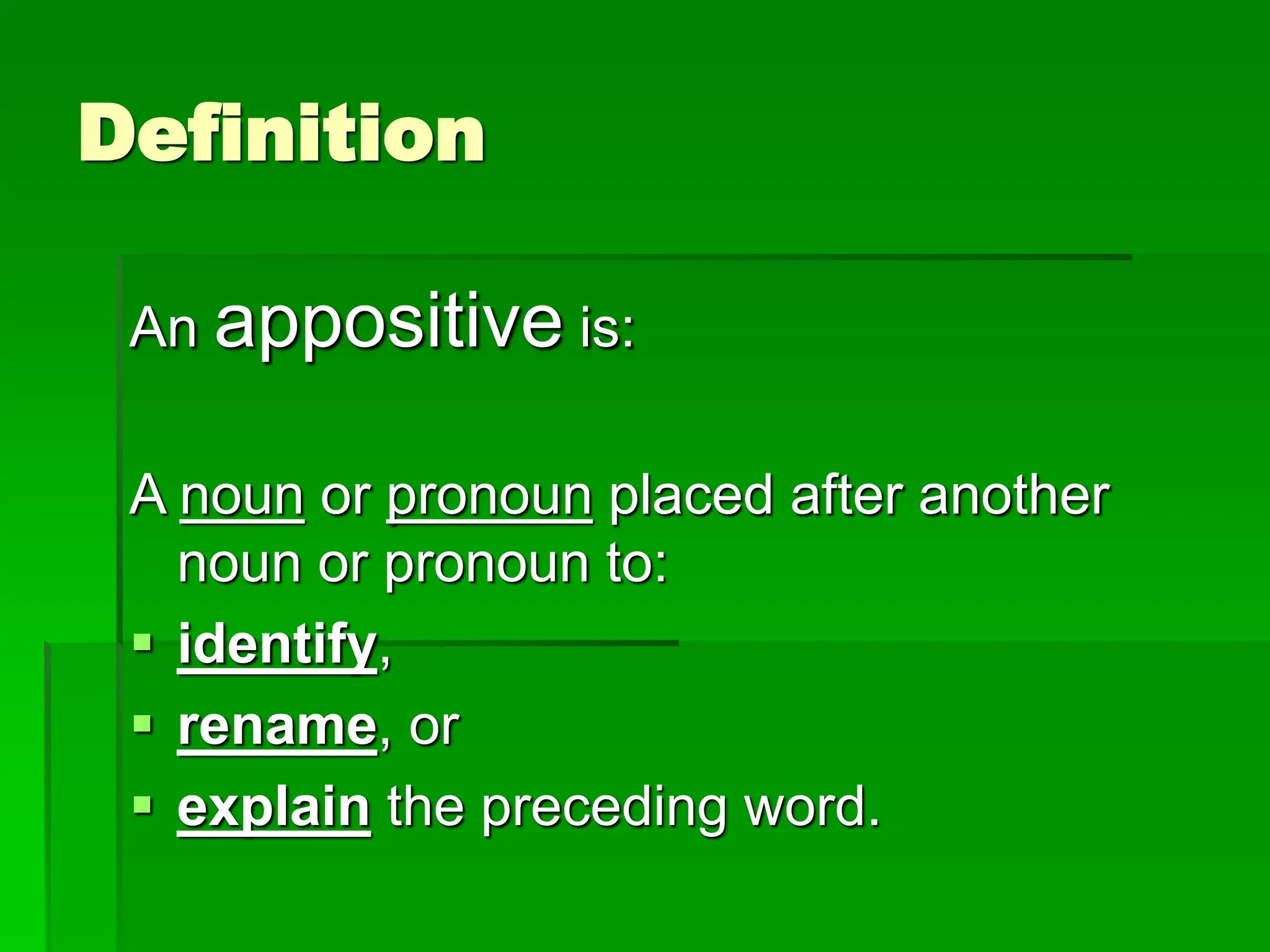
Definition
An appositive is:
A noun or pronoun placed after another
noun or pronoun to:
 identify,
 rename, or
 explain the preceding word.
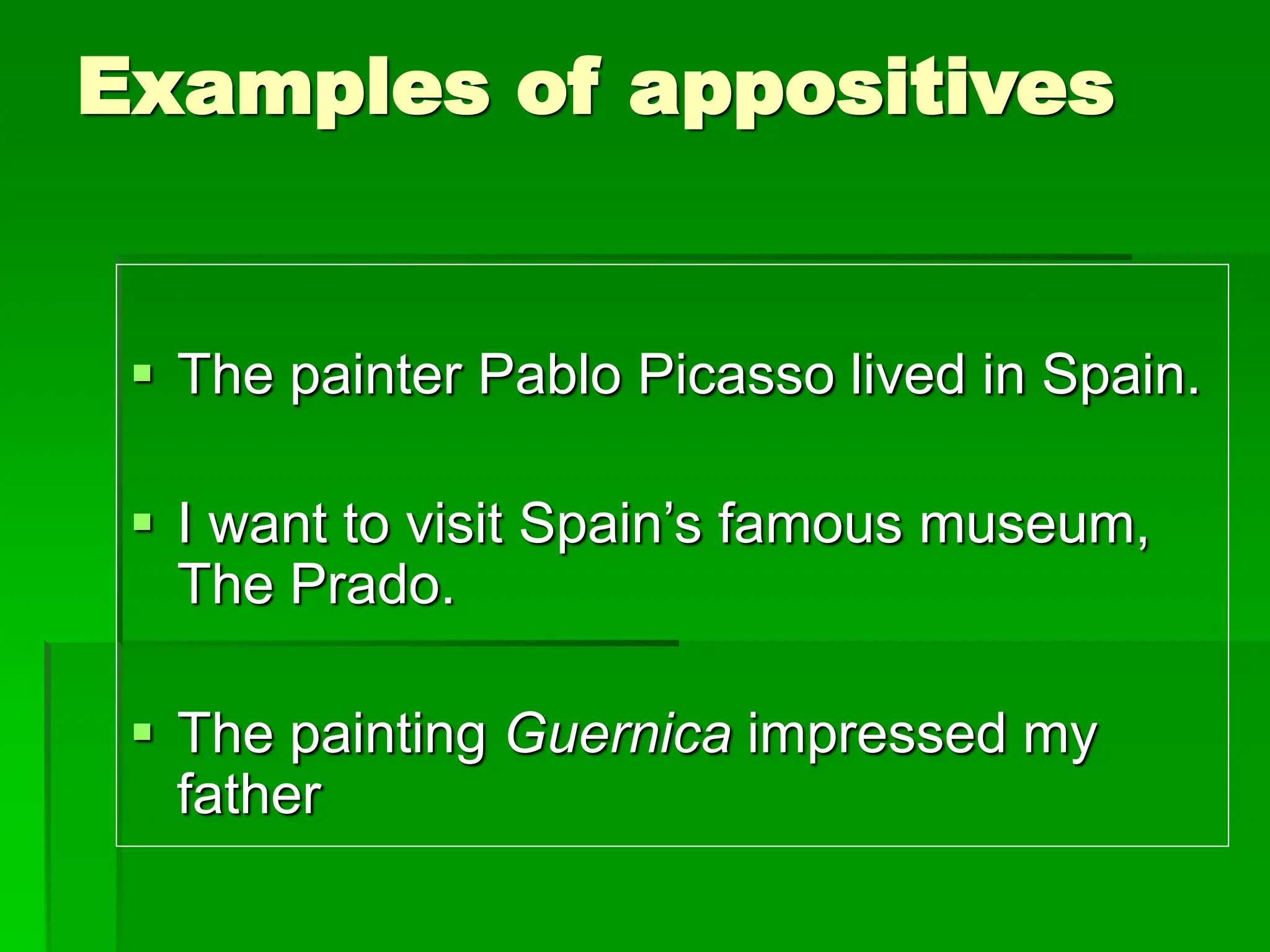
Examples of appositives
 The painter Pablo Picasso lived in Spain.
 I want to visit Spain’s famous museum,
The Prado.
 The painting Guernica impressed my
father
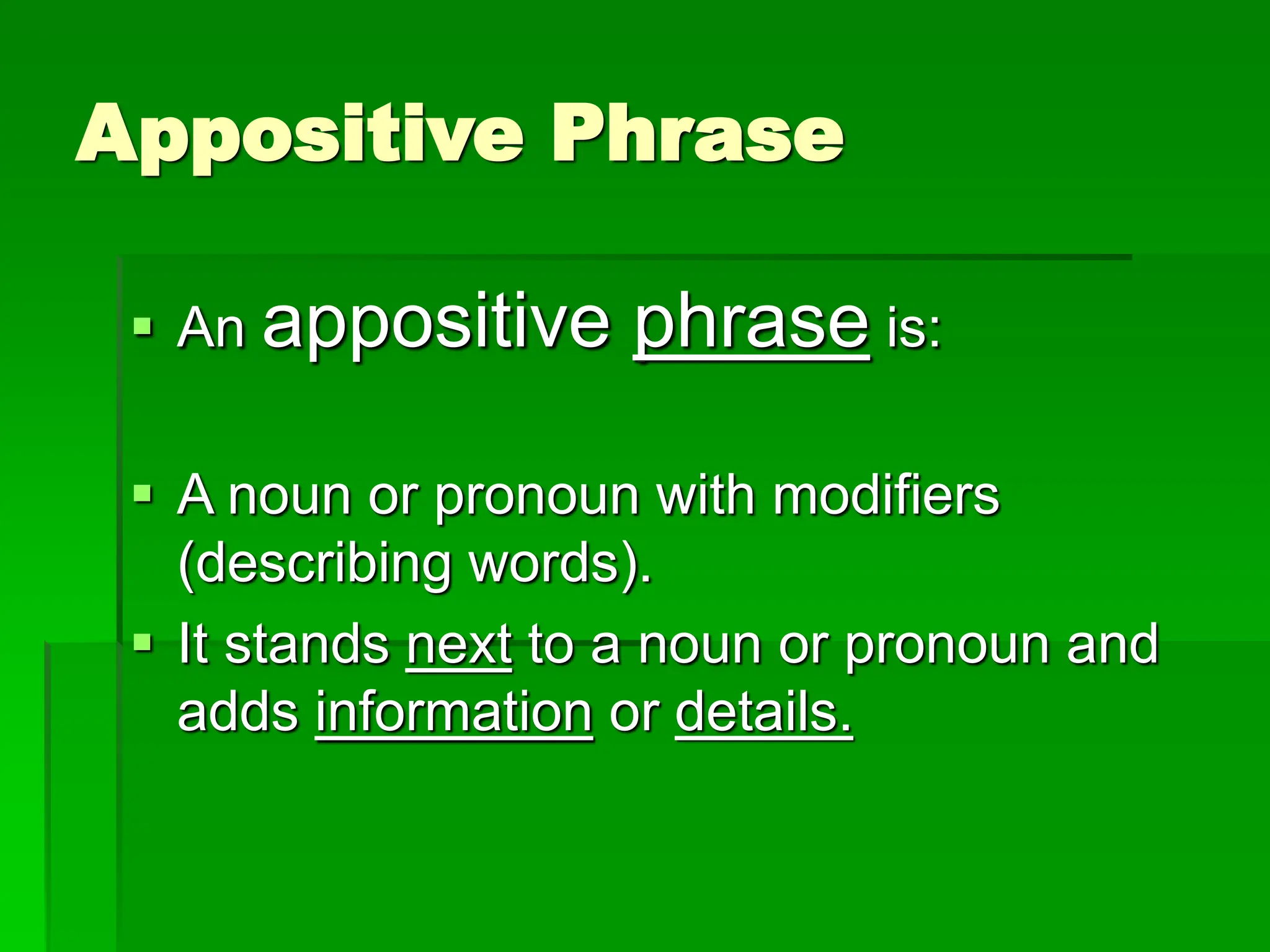
Appositive Phrase
 An appositive phrase is:
 A noun or pronoun with modifiers
(describing words).
 It stands next to a noun or pronoun and
adds information or details.
Examples of appositive
phrases
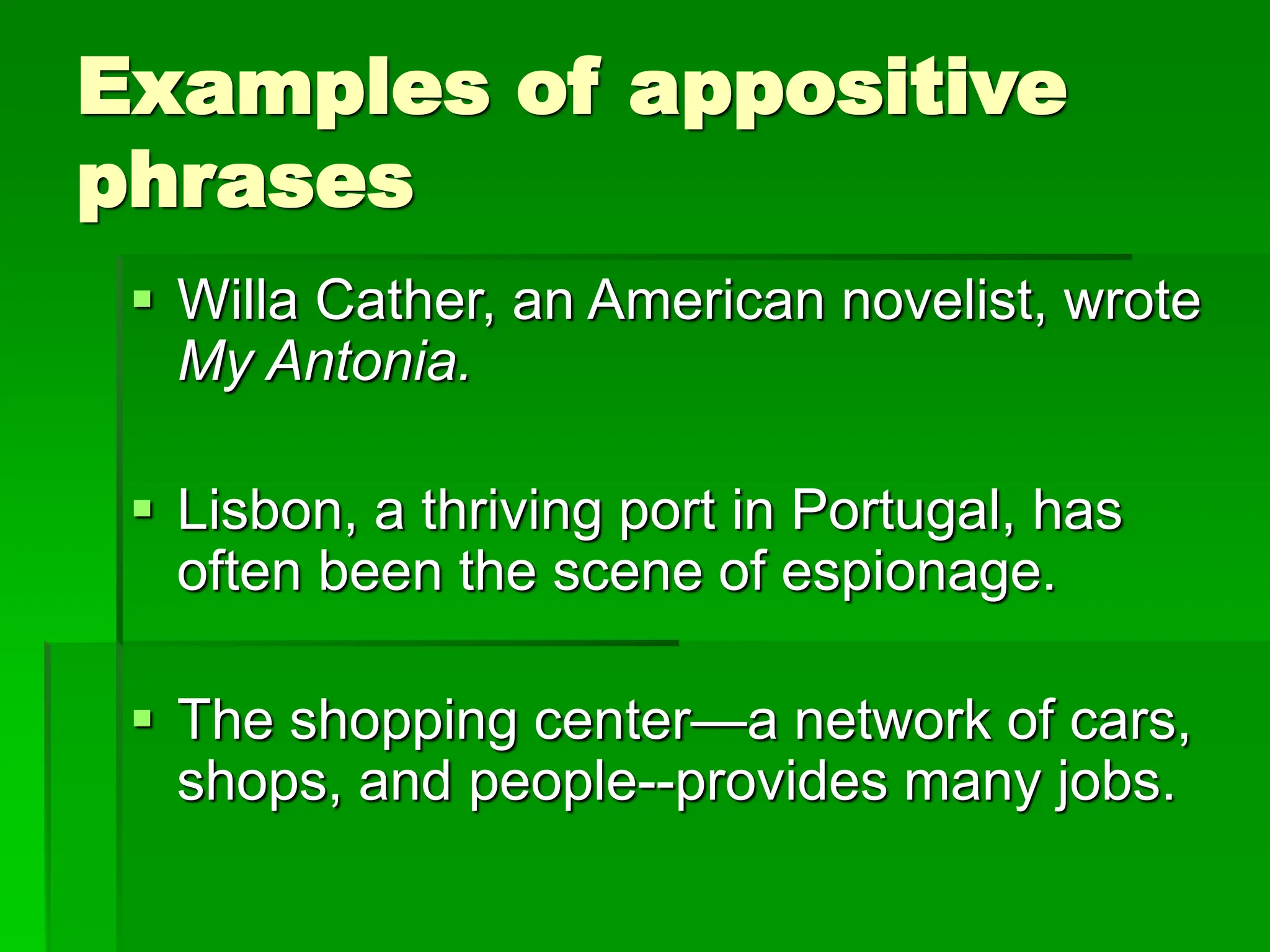
 Willa Cather, an American novelist, wrote
My Antonia.
 Lisbon, a thriving port in Portugal, has
often been the scene of espionage.
 The shopping center—a network of cars,
shops, and people--provides many jobs.
Appositives and appositive
phrases CAN be compound
 The two settings, a city in England and a
city in Russia, are contrasted in the book.
An appositive is NOT a
prepositional phrase
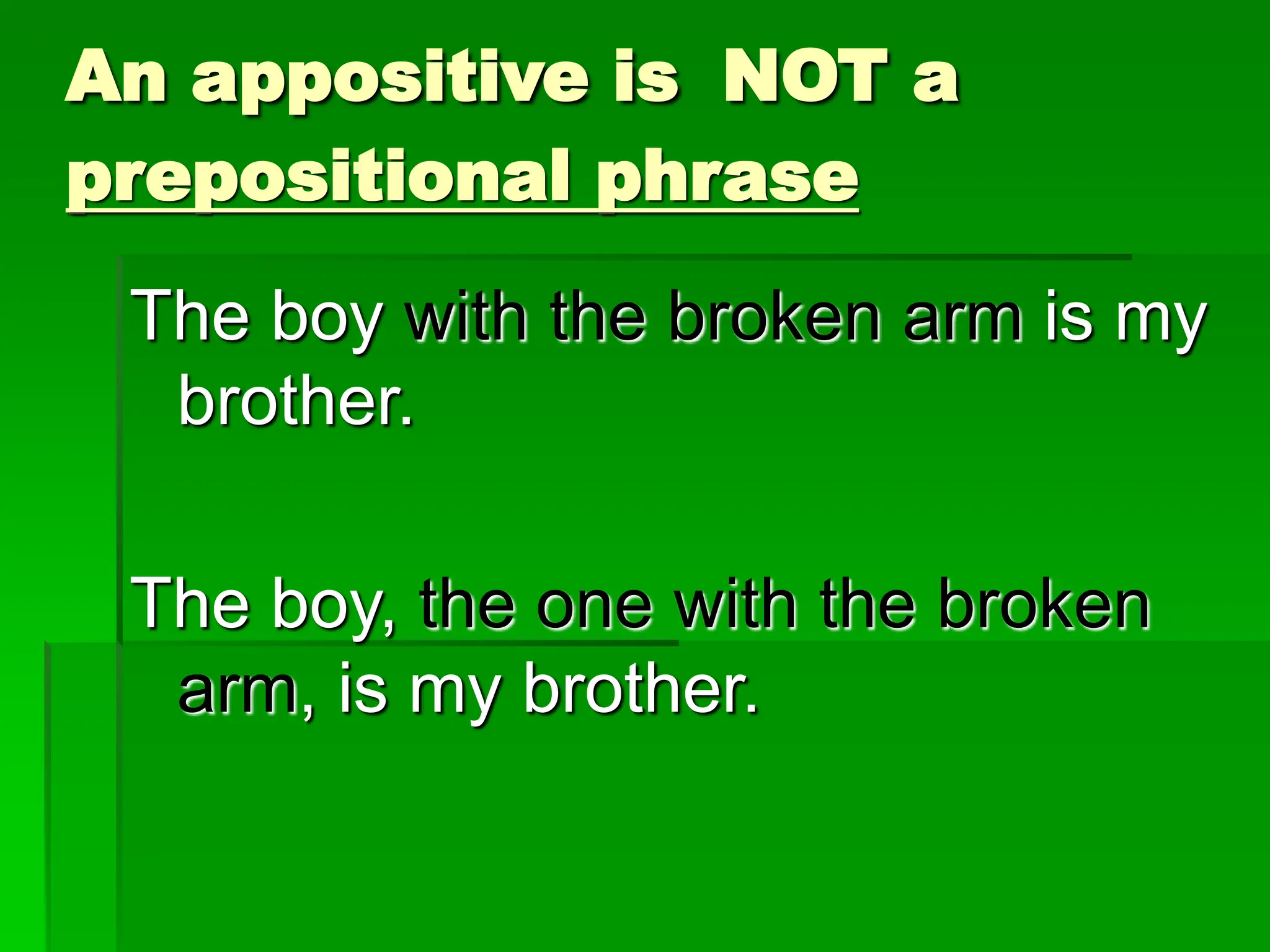
The boy with the broken arm is my
brother.
The boy, the one with the broken
arm, is my brother.
Commas and appositives
 When this word or group of words
interrupts a sentence, it needs commas
on both sides.
 Riley, my dog, is gregarious
 EXCEPTION: If it is one word, name, or
title, NO COMMA IS NEEDED!
 My dog Riley is gregarious.
Commas and appositives
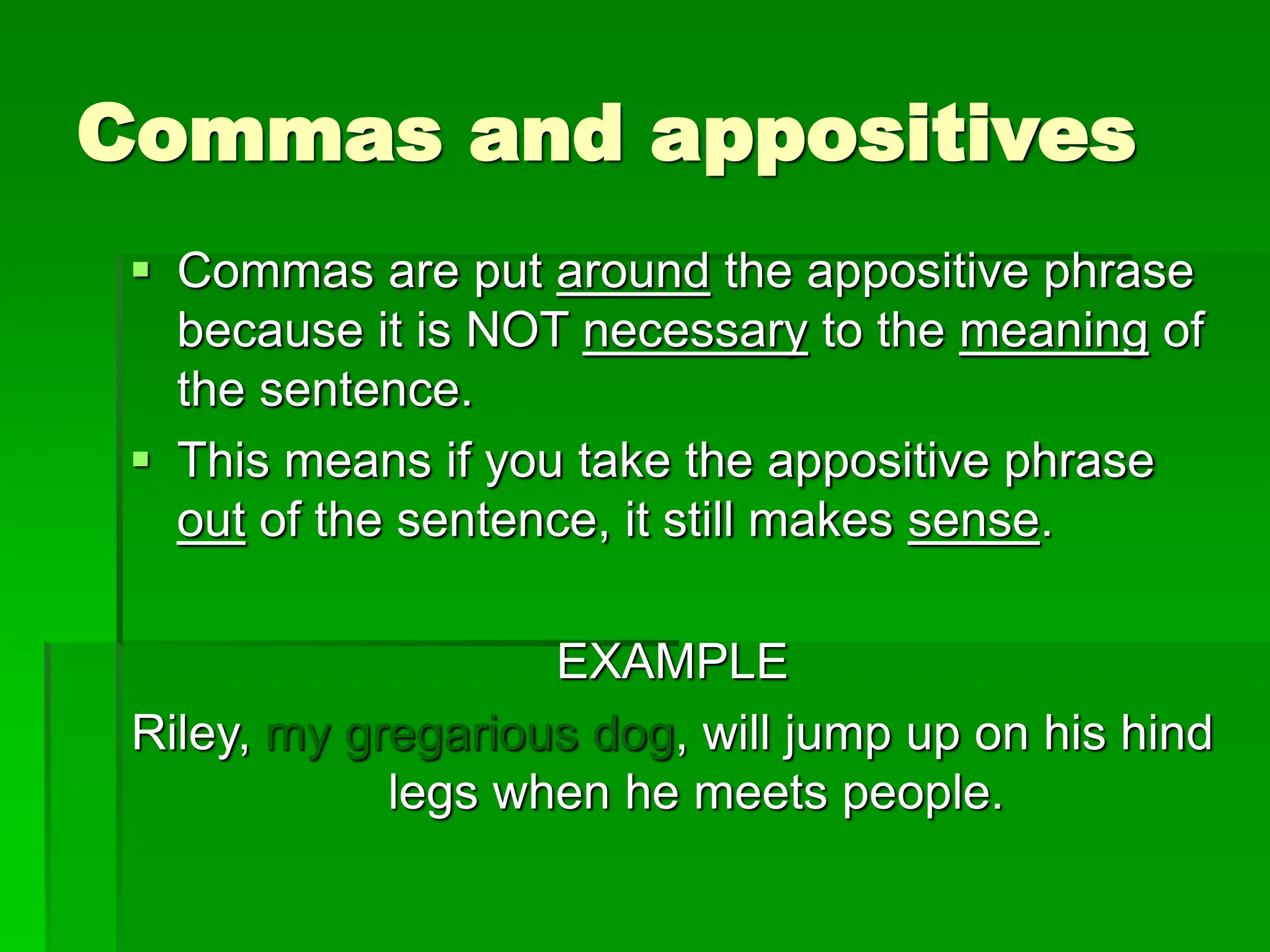
 Commas are put around the appositive phrase
because it is NOT necessary to the meaning of
the sentence.
 This means if you take the appositive phrase
out of the sentence, it still makes sense.
EXAMPLE
Riley, my gregarious dog, will jump up on his hind
legs when he meets people.
Examples from Tuck
Everlasting
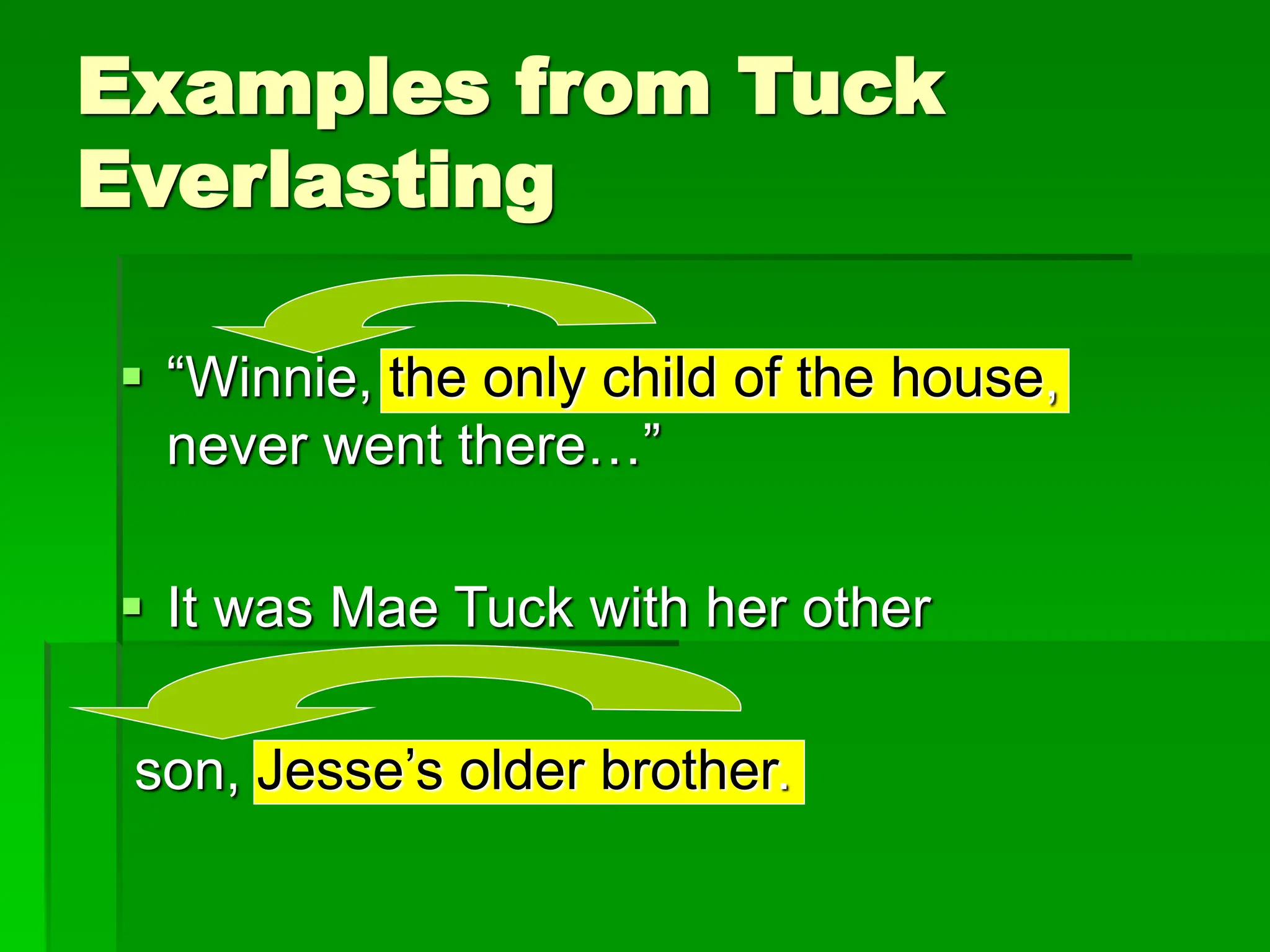
 “Winnie, the only child of the house,
never went there…”
 It was Mae Tuck with her other
son, Jesse’s older brother.

Appositives and Appositive Phrases ppt.ppt

  • 1.
    Appositives and Appositive Phrases EssentialQuestion: Why do we want to use Appositives and Appositive Phrases in our writing?
  • 2.
    Definition An appositive is: Anoun or pronoun placed after another noun or pronoun to:  identify,  rename, or  explain the preceding word.
  • 3.
    Examples of appositives The painter Pablo Picasso lived in Spain.  I want to visit Spain’s famous museum, The Prado.  The painting Guernica impressed my father
  • 4.
    Appositive Phrase  Anappositive phrase is:  A noun or pronoun with modifiers (describing words).  It stands next to a noun or pronoun and adds information or details.
  • 5.
    Examples of appositive phrases Willa Cather, an American novelist, wrote My Antonia.  Lisbon, a thriving port in Portugal, has often been the scene of espionage.  The shopping center—a network of cars, shops, and people--provides many jobs.
  • 6.
    Appositives and appositive phrasesCAN be compound  The two settings, a city in England and a city in Russia, are contrasted in the book.
  • 7.
    An appositive isNOT a prepositional phrase The boy with the broken arm is my brother. The boy, the one with the broken arm, is my brother.
  • 8.
    Commas and appositives When this word or group of words interrupts a sentence, it needs commas on both sides.  Riley, my dog, is gregarious  EXCEPTION: If it is one word, name, or title, NO COMMA IS NEEDED!  My dog Riley is gregarious.
  • 9.
    Commas and appositives Commas are put around the appositive phrase because it is NOT necessary to the meaning of the sentence.  This means if you take the appositive phrase out of the sentence, it still makes sense. EXAMPLE Riley, my gregarious dog, will jump up on his hind legs when he meets people.
  • 10.
    Examples from Tuck Everlasting “Winnie, the only child of the house, never went there…”  It was Mae Tuck with her other son, Jesse’s older brother.