 APPLETS
 JAVA APPLETS
 JAVA APPLICATIONS VS JAVA APPLETS
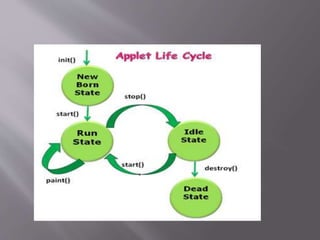
 JAVA LIFE CYCLE
 FEATURES
 ADVANTAGES
 DISADVANTAGES
 A Java applet is a small dynamic Java program that
can be transferred via the Internet and run by a Java-
compatible Web browser.
 Applet is a special type of program that is embedded
in the webpage to generate the dynamic content. It
runs inside the browser and works at client side.
There are two issues with Java applets:
 Security: Java resolves the security issue by
restricting applets to Java’s execution
environment and preventing access to system
resources.
 Portability: Portability is defined as the applet’s
ability to run on different computers and
operating systems.
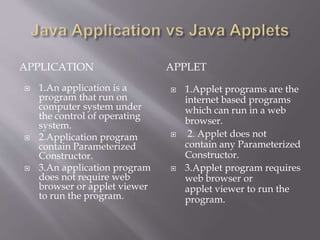
APPLICATION APPLET
 1.An application is a
program that run on
computer system under
the control of operating
system.
 2.Application program
contain Parameterized
Constructor.
 3.An application program
does not require web
browser or applet viewer
to run the program.
 1.Applet programs are the
internet based programs
which can run in a web
browser.
 2. Applet does not
contain any Parameterized
Constructor.
 3.Applet program requires
web browser or
applet viewer to run the
program.
 Speed: Smaller, incremental JRE download and
faster applet startup.
 Stability: Applets run in a separate process to
the browser, and each applet can optionally
run in a separate JVM instance, so one
misbehaving applet cannot affect other applets
or the browser.
 Configuration: Applets can have parameters
passed to them to control behavior, such as
setting a large initial heap size to avoid out of
memory exceptions.
 Draggable applets: Applets can now be
dragged out of the web browser and run as
separate applications.
1. Cross Platform
 Applets are platform independent. This means that
they are designed to work across various platforms.
The same Java applet supporting our Retreat game on
a Windows system can also work on Linux and OSI
systems.
2. Compatibility
 We all have different levels of alertness in keeping our
computers updated. Java applets, however, can work
on any installed version of the Java plug-in that exists
on the computer. The most recent plug-in is not
necessarily required. The user is only forced to do an
update if the Java Runtime Environment (JRE) is
outdated.
3. Quick Execution
 The process of caching is employed by computers to
temporarily store in memory frequently accessed data to
shorten program runtimes. As such, applets are normally
cached, making their execution across web browsers faster.
4. Scalable Work
 The ability for certain functions to be moved from the
server-side to the client-side has enabled application
development to be scalable with the use of applets. If there
was an upgrade on our online game Retreat, which has 2
million subscribers of varying PC specifications, then the
deployment file will be a fraction of its size due to the
burden taken off by the use of applets. This reduces the
installation time on the client-side.
 it requires the Java plug-in, which isn't
available by default on all web browsers
 it can't start up until the Java Virtual Machine
is running, and this may have significant
 startup time the first time it is used
if it is uncased, it must be downloaded
(usually over the internet), and this takes time
 some organizations only allow software
installed by the administrators. As a result,
many users cannot view applets by default.

Applets3

  • 1.
     APPLETS  JAVAAPPLETS  JAVA APPLICATIONS VS JAVA APPLETS  JAVA LIFE CYCLE  FEATURES  ADVANTAGES  DISADVANTAGES
  • 2.
     A Javaapplet is a small dynamic Java program that can be transferred via the Internet and run by a Java- compatible Web browser.  Applet is a special type of program that is embedded in the webpage to generate the dynamic content. It runs inside the browser and works at client side.
  • 3.
    There are twoissues with Java applets:  Security: Java resolves the security issue by restricting applets to Java’s execution environment and preventing access to system resources.  Portability: Portability is defined as the applet’s ability to run on different computers and operating systems.
  • 4.
    APPLICATION APPLET  1.Anapplication is a program that run on computer system under the control of operating system.  2.Application program contain Parameterized Constructor.  3.An application program does not require web browser or applet viewer to run the program.  1.Applet programs are the internet based programs which can run in a web browser.  2. Applet does not contain any Parameterized Constructor.  3.Applet program requires web browser or applet viewer to run the program.
  • 6.
     Speed: Smaller,incremental JRE download and faster applet startup.  Stability: Applets run in a separate process to the browser, and each applet can optionally run in a separate JVM instance, so one misbehaving applet cannot affect other applets or the browser.
  • 7.
     Configuration: Appletscan have parameters passed to them to control behavior, such as setting a large initial heap size to avoid out of memory exceptions.  Draggable applets: Applets can now be dragged out of the web browser and run as separate applications.
  • 8.
    1. Cross Platform Applets are platform independent. This means that they are designed to work across various platforms. The same Java applet supporting our Retreat game on a Windows system can also work on Linux and OSI systems. 2. Compatibility  We all have different levels of alertness in keeping our computers updated. Java applets, however, can work on any installed version of the Java plug-in that exists on the computer. The most recent plug-in is not necessarily required. The user is only forced to do an update if the Java Runtime Environment (JRE) is outdated.
  • 9.
    3. Quick Execution The process of caching is employed by computers to temporarily store in memory frequently accessed data to shorten program runtimes. As such, applets are normally cached, making their execution across web browsers faster. 4. Scalable Work  The ability for certain functions to be moved from the server-side to the client-side has enabled application development to be scalable with the use of applets. If there was an upgrade on our online game Retreat, which has 2 million subscribers of varying PC specifications, then the deployment file will be a fraction of its size due to the burden taken off by the use of applets. This reduces the installation time on the client-side.
  • 10.
     it requiresthe Java plug-in, which isn't available by default on all web browsers  it can't start up until the Java Virtual Machine is running, and this may have significant  startup time the first time it is used if it is uncased, it must be downloaded (usually over the internet), and this takes time  some organizations only allow software installed by the administrators. As a result, many users cannot view applets by default.