Welcome…
Prepared by:
A.K.P. Pubuddi Shamila
University of Ruhuna – Sri Lanka
pubuddishamila@gmail.com
Think different….
Case Summary
Apple iPhone in Japan
 WIRE – LESS
• Despite their superior handset technologies (setting
the pace in almost every industry innovation.)
 CULTURE – FULL
• High context and more emphasis on feelings and
atmosphere
• Aesthetic
Situation analysis
 First released in June 2008 - iPhone 3G to Japan
 The iPhone 3GS is scheduled for release in Japan in June
2009. (Needed to bring out the big guns)
 Japan is a vital market for iPhone.
 As a Low context country based brand to high context
country and there is a “psychic distance”.
 Expectation of personal supervision. (Review the market,
Analysis market, Come out new strategies and Action plan
to new launch)
Target Market and Profit Structure
 Target Market
• Mainstream market and not the smartphone market (While the
iPhone contains numerous features that appeal to specific
segments.)
• Apple is aiming the iPhone at iPod using “technophobes”
who have bought the audio players by the millions.
 Profit structure
• Represents a small share of Apple business revenue, the
profits are huge.
• Apple’s investors have taken big bets on the iPhone.
Softbank Corp
 Japanese telecommunications and media corporation.
 Become Japan’s third-largest cell phone company. ( after bought
Vodafone )
 SoftBank is currently the only official carrier of the iPhone for
Japan.
• Higher Profit
• Co-development and co-branding history
• Branding similarities
• Vodafone and international image
• Aggressive Marketing
Competitive Landscape
 In mid 2008, there were approximately 107.5 million
total subscribers in Japan.
• NTT DoCoMo 50.8%
• au KDDI 28.7%
• SoftBank 19.2%
 Mobile phone carriers need to come up with innovative
strategies.
Japan Market
 Mobile phone categories
• Basic phones US$50–200
• Enhanced phones US$200–400
• Smartphones US$500
 Apple launched the iPhone 3G in Japan against this
“Galapagos” mobile phone market background.
Marketing Mix & A-B-C-D Paradigm
 Unmatched marketing mix to high context country.
• Price
• Promotion
• Product
• Place
 A-B-C-D Paradigm ( Access, Buying behavior, Consumption
characteristics, Disposal)
 Buying behavior and consumption characteristics are
significant to clarify clearly.
Discussion
Using the 4P model explain the iPhones
market entry strategy as presented in the
case.
Discussion: I – 1
4P model
 Price
• Price for new customers to sign up for an iPhone
in Japan was 34,560 yen in Japan and 288 dollars
in America.
• So it seems like they charged a slightly higher
price in Japan, and certainly a higher price than
most other Japanese phones on the market at the
time.
Discussion: I – 1
4P model (Cont.)
 Promotion
• Blend of the clearly recognizable Apple style promotion.
• Softbank run ads which utilized familiar Softbank
characters and style.
 Distribution
• Soft banks small reception areas iPhone was almost by
default targeted mainly at the urban parts of Japan.
Discussion: I – 1
4P model (Cont.)
 Product
• Same handset worldwide, although the default
preferences such as Japanese language support
were tuned to Japan.
• The most technically advanced and stylish
smart phone and music player on the market at
the time as a single product around the world.
Where was the iPhone in terms of
extension/adaptation in the case?
Discussion: I – 2
iPhone in terms of extension
 Apple seems to have extended both their “Product
and their message”.
• Users can purchase applications for their
iPhone from the App Store and connect their
phones to a PC via iTunes for additional
functionality.
Discussion: I – 2
iPhone in terms of adaptation
 SoftBank seems to have adapted before and after
sales service.
• The product Softbank supplies in the deal,
slightly to the Japanese market, and adapted
its marketing as well.
The Japanese are generally
considered to be higher context than
customers in some of Apples other
markets. What effects could this have
had on the iPhones sales ?
 Japan is a high context country.
 Therefore there is psychic distance.
 Sales getting decrease.
 One big issue in a high context culture is trust.
 In Japan because of its lack of customization, its
newness and the paradigm shift required to use it.
Discussion: I – 3
Effects from high context country
 The iPhone may have been viewed more as an
uncomfortably different product, rather than an
excitingly new one.
 Also as small a detail as it is emoji are vital to high
context communication in Japan and the failure of the
iPhone to make its emoji compatible across carriers
may have significantly damaged its sales.
Discussion: I – 3
Effects from high context country
(Cont.)
What was Softbank’s segmentation
strategy in terms of iPhone
marketing?
Discussion: I – 4
Segmenting the market
 Statistical data shows that demographics in United
States are distributed from age of 15 to 50.
 Majority of users are youth at age of 25 to 34 and
mostly male.
 Such as their famous family commercials with a
dog as the head of a family and other celebrities as
the family members appear to be targeted at a
more general audience.
Of the strategies presented which one
would you choose, and why?
Discussion: II – 1
Alternative strategies
 Embrace the B2B segment (akin to blackberry) in Japan Goal:
increase market penetration by tapping into the Japanese
enterprise segment.
 Relinquish the Exclusive Agreement Model Goal: maximize
market permeation and stimulate competition among carriers
Softbank is the sole.
 Entice Customers with Loyalty Reward Programs Goal: retain
customers; build a solid base for long term market position.
 Localize Product
Discussion: II – 1
Selected strategy
Relinquish the Exclusive Agreement Model
Goal: maximize market permeation and
stimulate competition among carriers
Softbank is the sole.
Discussion: II – 1
Reasons to selecting above
strategy
 Of the strategies presented the best one was to
forge alliances with multiple carriers.
 This would allow Apple drive down prices, extend
coverage, and sell more handsets.
Thinking back to what you have learned so far
from class and the case, what kind of strategy
would you support in Japan to increase sales of
the iPhone?
Discussion: II – 2
Strategies for Japanese market
Apple and Softbank do not think any massive
changes are necessary for the success of the
iPhone in Japan.
Much of the sluggishness of sales can be
attributed to the sluggishness of the Japanese
market.
Culturally Japanese are value stability.
Discussion: II – 2
Strategies for iPhone 3GS
 Product
• The unfriendliness of the iPhone design to the
slender and delicate Japanese hand should be
ignored, some of the software, for instance the
compatibility of emoji must be addressed. (in a
high context culture emoji are necessary).
• Apple/Softbank might create a “user-friendly &
simple” product family to target a different
segment, elders in Japan because Japan is
known as “national surplus rich” country, elders
have enough money.
Discussion: II – 2
Strategies for iPhone 3GS (Cont.)
 Price
• The biggest problem is the pricing model.
• Japanese are used to cheaper phones with
very complex pricing plans, and Softbank
needs to give them one.
• Consider on the other side customer are still
interested in buying the Apple I-phone.
Discussion: II – 2
Strategies for iPhone 3GS (Cont.)
 Place
• Specific displays
• Distribution coverage
Discussion: II – 2
Strategies for iPhone 3GS (Cont.)
 Promotion
• To go for a combination of “product
families” and “different positioning” to
target elders in rural areas.
• Promotion could take various forms. Ideal
methods might be door to door sales,
demonstrations in supermarkets, and TV
Commercials showing the face chat function.
Describe this strategy using the 4Ps
model and the extension/adaptation
model.
Discussion: II – 3
Strategy identification
Using the same promotion and the same place, but
modifying the products lightly, and reworking the
price. In other words the product and message
would undergo minor adaptations but the core of
both would simply be extended.
To modify the product to a more elderly friendly
one, the promotion to appeal more to older
Japanese, and the place from urban Japan to rural
Japan.
Discussion: II – 3
When selecting extension
While considering the “Aging population in
Japan” it is in a significant level.
Modifying the product slightly.
Product: Modifying the product to a more
elderly friendly one (multimedia messages,
Emoji, User friendly, Language)
Discussion: II – 3
When selecting extension
(Cont.)
Price: Currant pricing strategy (Japan is known
as “national surplus rich” country and elders
have enough money to continue with the current
price strategy)
Place: Urban Japan to rural area ( Distribution
stores)
Promotion: To appeal more to older Japanese,
Create top of the mind awareness with using
promotional tools
What cultural problems could you see arising
from the implementation of this strategy, and
how could you adapt your plan to meet these
problems?
Discussion: II – 4
Cultural problems (Cont.)
 Japanese are not quick to embrace change.
• Sink a lot of resources into Japan without seeing many
results.
 Japanese despite being “high context”
• The iPhones many bugs, lack of quality camera, bad
reception and other issues may be looked over in other
countries this will be a much bigger hurdle in Japan.
Discussion: II – 4
Cultural problems
 Elder segment could be a strong dislike of change and
of “foreign” type products.
• Adverse to purchasing applications online.
Discussion: II – 4
Adapt the business plan to overcome the
cultural problems
 Creating top of the mind awareness
 Slightly adapt the product.
 Removing ethnocentric ideas
 Provide attractive price catalogues
“A lot of times, people don’t know what they want until
you show it to them.” - Steve Jobs. Comment on what
implications a company culture like this might have on
product marketing.
“A lot of times, people don’t know what
they want until you show it to them.”
- Steve Jobs -
Discussion: III – 1
 Thinking out of the box
• Innovativeness
• Not “me too”
 Time to market
• IPhone 3GS
 Good promotional mix
• Attract new customers
• Create existing one “loyal”
Discussion: III – 1
Implications
 Education
• The benefits
• “How to use”
• Differences from competitors
• Feedback
Discussion: III – 1
Better communication plan
In action, if not word, Apple is striving for universal
design. What implications does this have on how it
markets its products in a global environment?
 “Apple is striving for universal design.”
Discussion: III – 2
Cultural Differences
• Understand
• IPhone 3G, Japanese culture
• Europeans, Middle easts, Japanese,
Asians.
iPhone is an end product
• No room for customization
• Standardization vs. Customization
• Market size
Discussion: III – 2
Discussion: III – 2
 Good research and survey
• Understand requirements
• Identify carriers
• Psychic distance
 CSR policies of other countries
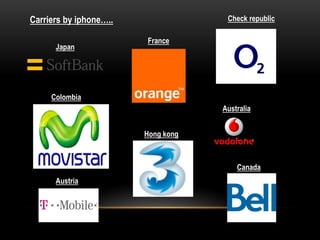
Japan
France
Check republic
Colombia
Hong kong
Australia
Austria
Canada
Carriers by iphone…..
Conclusion
 Apple iPhone 3G in Japan – represent small share.
 Issues in marketing mix which are not tally with
High context country.
 3GS expectation to been best with removing
previous mistakes.
• Factor 1: Time versus Adaptation Trade-off
• Factor 2: Cool Rebirth
 New strategy to been success.
End……
Thank you…..

Apple case study analysis

  • 1.
    Welcome… Prepared by: A.K.P. PubuddiShamila University of Ruhuna – Sri Lanka pubuddishamila@gmail.com
  • 2.
  • 4.
  • 5.
    Apple iPhone inJapan  WIRE – LESS • Despite their superior handset technologies (setting the pace in almost every industry innovation.)  CULTURE – FULL • High context and more emphasis on feelings and atmosphere • Aesthetic
  • 6.
    Situation analysis  Firstreleased in June 2008 - iPhone 3G to Japan  The iPhone 3GS is scheduled for release in Japan in June 2009. (Needed to bring out the big guns)  Japan is a vital market for iPhone.  As a Low context country based brand to high context country and there is a “psychic distance”.  Expectation of personal supervision. (Review the market, Analysis market, Come out new strategies and Action plan to new launch)
  • 8.
    Target Market andProfit Structure  Target Market • Mainstream market and not the smartphone market (While the iPhone contains numerous features that appeal to specific segments.) • Apple is aiming the iPhone at iPod using “technophobes” who have bought the audio players by the millions.  Profit structure • Represents a small share of Apple business revenue, the profits are huge. • Apple’s investors have taken big bets on the iPhone.
  • 9.
    Softbank Corp  Japanesetelecommunications and media corporation.  Become Japan’s third-largest cell phone company. ( after bought Vodafone )  SoftBank is currently the only official carrier of the iPhone for Japan. • Higher Profit • Co-development and co-branding history • Branding similarities • Vodafone and international image • Aggressive Marketing
  • 10.
    Competitive Landscape  Inmid 2008, there were approximately 107.5 million total subscribers in Japan. • NTT DoCoMo 50.8% • au KDDI 28.7% • SoftBank 19.2%  Mobile phone carriers need to come up with innovative strategies.
  • 11.
    Japan Market  Mobilephone categories • Basic phones US$50–200 • Enhanced phones US$200–400 • Smartphones US$500  Apple launched the iPhone 3G in Japan against this “Galapagos” mobile phone market background.
  • 12.
    Marketing Mix &A-B-C-D Paradigm  Unmatched marketing mix to high context country. • Price • Promotion • Product • Place  A-B-C-D Paradigm ( Access, Buying behavior, Consumption characteristics, Disposal)  Buying behavior and consumption characteristics are significant to clarify clearly.
  • 13.
  • 14.
    Using the 4Pmodel explain the iPhones market entry strategy as presented in the case.
  • 15.
    Discussion: I –1 4P model  Price • Price for new customers to sign up for an iPhone in Japan was 34,560 yen in Japan and 288 dollars in America. • So it seems like they charged a slightly higher price in Japan, and certainly a higher price than most other Japanese phones on the market at the time.
  • 16.
    Discussion: I –1 4P model (Cont.)  Promotion • Blend of the clearly recognizable Apple style promotion. • Softbank run ads which utilized familiar Softbank characters and style.  Distribution • Soft banks small reception areas iPhone was almost by default targeted mainly at the urban parts of Japan.
  • 17.
    Discussion: I –1 4P model (Cont.)  Product • Same handset worldwide, although the default preferences such as Japanese language support were tuned to Japan. • The most technically advanced and stylish smart phone and music player on the market at the time as a single product around the world.
  • 18.
    Where was theiPhone in terms of extension/adaptation in the case?
  • 19.
    Discussion: I –2 iPhone in terms of extension  Apple seems to have extended both their “Product and their message”. • Users can purchase applications for their iPhone from the App Store and connect their phones to a PC via iTunes for additional functionality.
  • 20.
    Discussion: I –2 iPhone in terms of adaptation  SoftBank seems to have adapted before and after sales service. • The product Softbank supplies in the deal, slightly to the Japanese market, and adapted its marketing as well.
  • 21.
    The Japanese aregenerally considered to be higher context than customers in some of Apples other markets. What effects could this have had on the iPhones sales ?
  • 22.
     Japan isa high context country.  Therefore there is psychic distance.  Sales getting decrease.  One big issue in a high context culture is trust.  In Japan because of its lack of customization, its newness and the paradigm shift required to use it. Discussion: I – 3 Effects from high context country
  • 23.
     The iPhonemay have been viewed more as an uncomfortably different product, rather than an excitingly new one.  Also as small a detail as it is emoji are vital to high context communication in Japan and the failure of the iPhone to make its emoji compatible across carriers may have significantly damaged its sales. Discussion: I – 3 Effects from high context country (Cont.)
  • 24.
    What was Softbank’ssegmentation strategy in terms of iPhone marketing?
  • 25.
    Discussion: I –4 Segmenting the market  Statistical data shows that demographics in United States are distributed from age of 15 to 50.  Majority of users are youth at age of 25 to 34 and mostly male.  Such as their famous family commercials with a dog as the head of a family and other celebrities as the family members appear to be targeted at a more general audience.
  • 26.
    Of the strategiespresented which one would you choose, and why?
  • 27.
    Discussion: II –1 Alternative strategies  Embrace the B2B segment (akin to blackberry) in Japan Goal: increase market penetration by tapping into the Japanese enterprise segment.  Relinquish the Exclusive Agreement Model Goal: maximize market permeation and stimulate competition among carriers Softbank is the sole.  Entice Customers with Loyalty Reward Programs Goal: retain customers; build a solid base for long term market position.  Localize Product
  • 28.
    Discussion: II –1 Selected strategy Relinquish the Exclusive Agreement Model Goal: maximize market permeation and stimulate competition among carriers Softbank is the sole.
  • 29.
    Discussion: II –1 Reasons to selecting above strategy  Of the strategies presented the best one was to forge alliances with multiple carriers.  This would allow Apple drive down prices, extend coverage, and sell more handsets.
  • 30.
    Thinking back towhat you have learned so far from class and the case, what kind of strategy would you support in Japan to increase sales of the iPhone?
  • 31.
    Discussion: II –2 Strategies for Japanese market Apple and Softbank do not think any massive changes are necessary for the success of the iPhone in Japan. Much of the sluggishness of sales can be attributed to the sluggishness of the Japanese market. Culturally Japanese are value stability.
  • 32.
    Discussion: II –2 Strategies for iPhone 3GS  Product • The unfriendliness of the iPhone design to the slender and delicate Japanese hand should be ignored, some of the software, for instance the compatibility of emoji must be addressed. (in a high context culture emoji are necessary). • Apple/Softbank might create a “user-friendly & simple” product family to target a different segment, elders in Japan because Japan is known as “national surplus rich” country, elders have enough money.
  • 33.
    Discussion: II –2 Strategies for iPhone 3GS (Cont.)  Price • The biggest problem is the pricing model. • Japanese are used to cheaper phones with very complex pricing plans, and Softbank needs to give them one. • Consider on the other side customer are still interested in buying the Apple I-phone.
  • 34.
    Discussion: II –2 Strategies for iPhone 3GS (Cont.)  Place • Specific displays • Distribution coverage
  • 35.
    Discussion: II –2 Strategies for iPhone 3GS (Cont.)  Promotion • To go for a combination of “product families” and “different positioning” to target elders in rural areas. • Promotion could take various forms. Ideal methods might be door to door sales, demonstrations in supermarkets, and TV Commercials showing the face chat function.
  • 36.
    Describe this strategyusing the 4Ps model and the extension/adaptation model.
  • 37.
    Discussion: II –3 Strategy identification Using the same promotion and the same place, but modifying the products lightly, and reworking the price. In other words the product and message would undergo minor adaptations but the core of both would simply be extended. To modify the product to a more elderly friendly one, the promotion to appeal more to older Japanese, and the place from urban Japan to rural Japan.
  • 38.
    Discussion: II –3 When selecting extension While considering the “Aging population in Japan” it is in a significant level. Modifying the product slightly. Product: Modifying the product to a more elderly friendly one (multimedia messages, Emoji, User friendly, Language)
  • 39.
    Discussion: II –3 When selecting extension (Cont.) Price: Currant pricing strategy (Japan is known as “national surplus rich” country and elders have enough money to continue with the current price strategy) Place: Urban Japan to rural area ( Distribution stores) Promotion: To appeal more to older Japanese, Create top of the mind awareness with using promotional tools
  • 40.
    What cultural problemscould you see arising from the implementation of this strategy, and how could you adapt your plan to meet these problems?
  • 41.
    Discussion: II –4 Cultural problems (Cont.)  Japanese are not quick to embrace change. • Sink a lot of resources into Japan without seeing many results.  Japanese despite being “high context” • The iPhones many bugs, lack of quality camera, bad reception and other issues may be looked over in other countries this will be a much bigger hurdle in Japan.
  • 42.
    Discussion: II –4 Cultural problems  Elder segment could be a strong dislike of change and of “foreign” type products. • Adverse to purchasing applications online.
  • 43.
    Discussion: II –4 Adapt the business plan to overcome the cultural problems  Creating top of the mind awareness  Slightly adapt the product.  Removing ethnocentric ideas  Provide attractive price catalogues
  • 44.
    “A lot oftimes, people don’t know what they want until you show it to them.” - Steve Jobs. Comment on what implications a company culture like this might have on product marketing.
  • 45.
    “A lot oftimes, people don’t know what they want until you show it to them.” - Steve Jobs - Discussion: III – 1
  • 46.
     Thinking outof the box • Innovativeness • Not “me too”  Time to market • IPhone 3GS  Good promotional mix • Attract new customers • Create existing one “loyal” Discussion: III – 1 Implications
  • 47.
     Education • Thebenefits • “How to use” • Differences from competitors • Feedback Discussion: III – 1 Better communication plan
  • 48.
    In action, ifnot word, Apple is striving for universal design. What implications does this have on how it markets its products in a global environment?
  • 49.
     “Apple isstriving for universal design.” Discussion: III – 2
  • 50.
    Cultural Differences • Understand •IPhone 3G, Japanese culture • Europeans, Middle easts, Japanese, Asians. iPhone is an end product • No room for customization • Standardization vs. Customization • Market size Discussion: III – 2
  • 51.
    Discussion: III –2  Good research and survey • Understand requirements • Identify carriers • Psychic distance  CSR policies of other countries
  • 52.
  • 53.
    Conclusion  Apple iPhone3G in Japan – represent small share.  Issues in marketing mix which are not tally with High context country.  3GS expectation to been best with removing previous mistakes. • Factor 1: Time versus Adaptation Trade-off • Factor 2: Cool Rebirth  New strategy to been success.
  • 54.