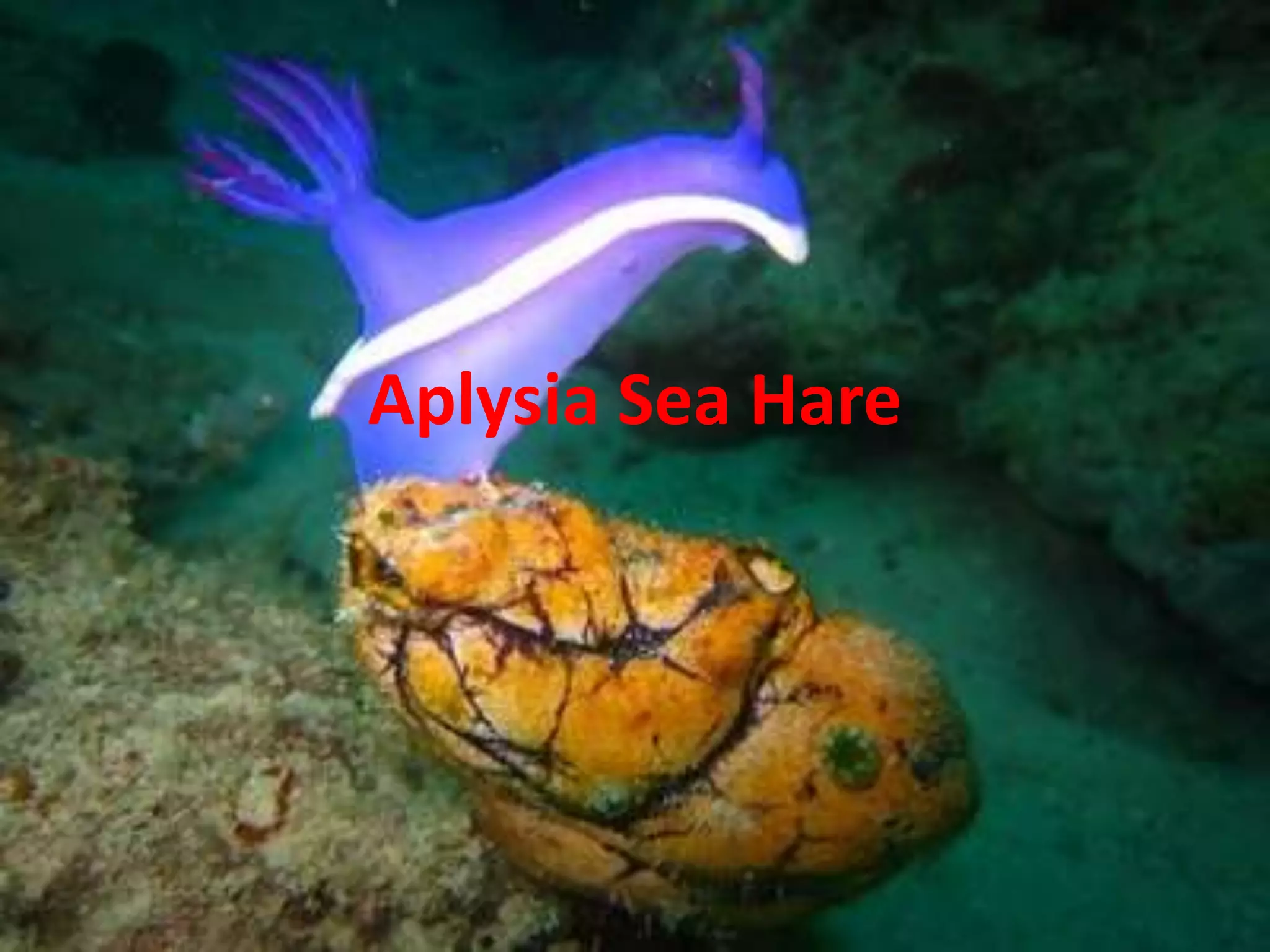
Aplysia Sea Hare
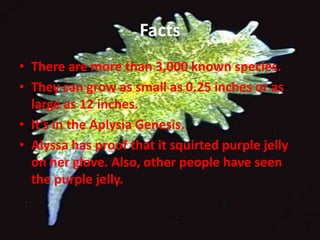
FactsThere are more than 3,000 known species.They can grow as small as 0.25 inches or as large as 12 inches.It’s in the Aplysia Genesis. Alyssa has proof that it squirted purple jelly on her glove. Also, other people have seen the purple jelly.
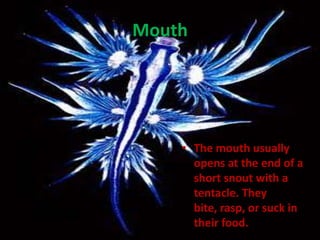
MouthThe mouth usually opens at the end of a short snout with a tentacle. They bite, rasp, or suck in their food.
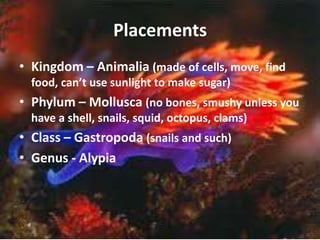
Placements Kingdom – Animalia(made of cells, move, find food, can’t use sunlight to make sugar) Phylum – Mollusca(no bones, smushyunless you have a shell, snails, squid, octopus, clams)Class – Gastropoda(snails and such) Genus - Alypia
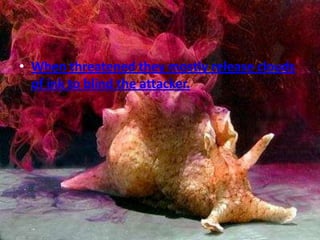
When threatened they mostly release clouds of ink to blind the attacker.
What we observedThe sea hare’s inked all over our gloves. When we put the hare’s in the water they expanded and little spikes came out of them.They went to the surface of the water to get oxygen.They were climbing all over the sides of the glass.
Standards Met8 standards met in this project. How Science works – the scientific process. Here are the steps we did – went to the ocean, caught weird things, held one, they inked, we brought them back and put them in a tank, we watched them, we did research, and we put together our findings. We argued our point with others – people were saying it was a sea slug but we were telling them it was a sea hare.
Standards MetReproduction is essential for the survival species – They eat a lot and lay more eggs. Plants and animals need each other to survive – Sea hares need to eat plants to survive. Human activities and natural events can have major impacts on the environment – the sea hares are washing up on shore more than usual because of the fertilizer that is in the plants goes in the lakes because of rainfall and washes into the ocean.
Standards MetLiving things share similar basic needs – they need oxygen sunlight and water to live just like we do. Living things get energy many different ways – Sunlight, oxygen, when we put them in the tank the water was not rippling like the ocean so the sea hares climbed up the side of the tank and lifted their heads out and got oxygen.
Made By:Alyssa Corchis               Trae Weldon         Hannah Burgtorf      Olivia Garrett
The links of where we got our pictures and informationhttp:\//www.seaslugforum.net/find/headeudohttp://en.wikipedia.org/wiki/Aplysiahttp://animals.nationalgeographic.com/animals/invertebrates/nudibranch/http://www.google.com/imgres?imgurl=http://www.nano-reef.com/gallery/data/500/sea-slug.jpg&imgrefurl=http://www.nano-reef.com/gallery/showphoto.php%3Fphoto%3D47981%26cat%3D500&h=320&w=400&sz=32&tbnid=a1qBXsqmOikbiM:&tbnh=99&tbnw=124&prev=/images%3Fq%3Dsea%2Bslug&zoom=1&q=sea+slug&hl=en&usg=__zmPHQ4oGs_ty-hzNmt6qPB_iNMk=&sa=X&ei=nxGBTOG6HoGC8gbc-dyQAQ&sqi=2&ved=0CBoQ9QEwAA
The links of where we got our pictures and informationhttp://www.google.com/imgres?imgurl=http://impressive.net/people/gerald/2007/02/05/16-18-17-sm.jpg&imgrefurl=http://impressive.net/people/gerald/2007/02/05/16-18-17-sm.html&usg=__tO0qSgjnqrRxbetPrAkR5r0MR7c=&h=300&w=400&sz=70&hl=en&start=103&zoom=1&tbnid=PhgWTsLVrKpHKM:&tbnh=151&tbnw=212&prev=/images%3Fq%3Dnudibranch%26um%3D1%26hl%3Den%26client%3Dsafari%26rls%3Den%26biw%3D1279%26bih%3D657%26tbs%3Disch:10%2C3498&um=1&itbs=1&iact=hc&vpx=570&vpy=216&dur=2456&hovh=194&hovw=259&tx=138&ty=80&ei=CA6BTJjgOcH38AaY6NT4AQ&oei=yw2BTPzGDYP_8AaP_7hS&esq=6&page=7&ndsp=16&ved=1t:429,r:13,s:103&biw=1279&bih=657

Aplysia Sea Hare

  • 1.
  • 2.
    FactsThere are morethan 3,000 known species.They can grow as small as 0.25 inches or as large as 12 inches.It’s in the Aplysia Genesis. Alyssa has proof that it squirted purple jelly on her glove. Also, other people have seen the purple jelly.
  • 3.
    MouthThe mouth usuallyopens at the end of a short snout with a tentacle. They bite, rasp, or suck in their food.
  • 4.
    Placements Kingdom –Animalia(made of cells, move, find food, can’t use sunlight to make sugar) Phylum – Mollusca(no bones, smushyunless you have a shell, snails, squid, octopus, clams)Class – Gastropoda(snails and such) Genus - Alypia
  • 5.
    When threatened theymostly release clouds of ink to blind the attacker.
  • 6.
    What we observedThesea hare’s inked all over our gloves. When we put the hare’s in the water they expanded and little spikes came out of them.They went to the surface of the water to get oxygen.They were climbing all over the sides of the glass.
  • 7.
    Standards Met8 standardsmet in this project. How Science works – the scientific process. Here are the steps we did – went to the ocean, caught weird things, held one, they inked, we brought them back and put them in a tank, we watched them, we did research, and we put together our findings. We argued our point with others – people were saying it was a sea slug but we were telling them it was a sea hare.
  • 8.
    Standards MetReproduction isessential for the survival species – They eat a lot and lay more eggs. Plants and animals need each other to survive – Sea hares need to eat plants to survive. Human activities and natural events can have major impacts on the environment – the sea hares are washing up on shore more than usual because of the fertilizer that is in the plants goes in the lakes because of rainfall and washes into the ocean.
  • 9.
    Standards MetLiving thingsshare similar basic needs – they need oxygen sunlight and water to live just like we do. Living things get energy many different ways – Sunlight, oxygen, when we put them in the tank the water was not rippling like the ocean so the sea hares climbed up the side of the tank and lifted their heads out and got oxygen.
  • 10.
    Made By:Alyssa Corchis Trae Weldon Hannah Burgtorf Olivia Garrett
  • 11.
    The links ofwhere we got our pictures and informationhttp:\//www.seaslugforum.net/find/headeudohttp://en.wikipedia.org/wiki/Aplysiahttp://animals.nationalgeographic.com/animals/invertebrates/nudibranch/http://www.google.com/imgres?imgurl=http://www.nano-reef.com/gallery/data/500/sea-slug.jpg&imgrefurl=http://www.nano-reef.com/gallery/showphoto.php%3Fphoto%3D47981%26cat%3D500&h=320&w=400&sz=32&tbnid=a1qBXsqmOikbiM:&tbnh=99&tbnw=124&prev=/images%3Fq%3Dsea%2Bslug&zoom=1&q=sea+slug&hl=en&usg=__zmPHQ4oGs_ty-hzNmt6qPB_iNMk=&sa=X&ei=nxGBTOG6HoGC8gbc-dyQAQ&sqi=2&ved=0CBoQ9QEwAA
  • 12.
    The links ofwhere we got our pictures and informationhttp://www.google.com/imgres?imgurl=http://impressive.net/people/gerald/2007/02/05/16-18-17-sm.jpg&imgrefurl=http://impressive.net/people/gerald/2007/02/05/16-18-17-sm.html&usg=__tO0qSgjnqrRxbetPrAkR5r0MR7c=&h=300&w=400&sz=70&hl=en&start=103&zoom=1&tbnid=PhgWTsLVrKpHKM:&tbnh=151&tbnw=212&prev=/images%3Fq%3Dnudibranch%26um%3D1%26hl%3Den%26client%3Dsafari%26rls%3Den%26biw%3D1279%26bih%3D657%26tbs%3Disch:10%2C3498&um=1&itbs=1&iact=hc&vpx=570&vpy=216&dur=2456&hovh=194&hovw=259&tx=138&ty=80&ei=CA6BTJjgOcH38AaY6NT4AQ&oei=yw2BTPzGDYP_8AaP_7hS&esq=6&page=7&ndsp=16&ved=1t:429,r:13,s:103&biw=1279&bih=657