OsteoporosisM YannitellOption 4, Module 7
What is osteoporosis?The thinning of bone tissue and loss of bone density over time
Most common type of bone disease
1 out of 5 American women > 50 have osteoporosis
½ of women, at 50 will have a fracture of the hip, wrist, or vertebra
The body fails to form enough new boneFour stagesStage 1- Begins at about age 35 before it is detectableStage 2- Occurs between ages 35 and 55 when osteoporosis becomes detectable with special testsStage 3- Can begin as early as 45 and is characterized by bone fracturesStage 4- May begin as early as age 55 with fractures accompanied by chronic pain and deformity.
Risk factorsAbsence of menstrual periodsDrinking large amounts of alcoholFamily historyHistory of hormone treatment for prostate or breast cancerLow body weightSmokingToo little calcium in 	diet
CausesLeading Cause- Lack of certain hormonesEstrogen – FemalesAndrogen - MalesBeing confined to a bedChronic rheumatoid arthritis, chronic kidney disease, eating disordersTaking corticosteroid medicationsHyperparathyroidismInadequate intake of calcium and vitamin DLack of muscle useBone Cancer
SymptomsBone pain or tendernessFractures with little or no traumaLoss of height over timeLow back pain due to fractures of the spinal bonesNeck pain due to fractures ofthe spinal bonesStooped posture, “dowager’s hump”
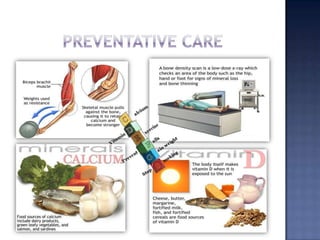
Preventative care

Osteoporosis

  • 1.
  • 2.
    What is osteoporosis?Thethinning of bone tissue and loss of bone density over time
  • 3.
    Most common typeof bone disease
  • 4.
    1 out of5 American women > 50 have osteoporosis
  • 5.
    ½ of women,at 50 will have a fracture of the hip, wrist, or vertebra
  • 6.
    The body failsto form enough new boneFour stagesStage 1- Begins at about age 35 before it is detectableStage 2- Occurs between ages 35 and 55 when osteoporosis becomes detectable with special testsStage 3- Can begin as early as 45 and is characterized by bone fracturesStage 4- May begin as early as age 55 with fractures accompanied by chronic pain and deformity.
  • 7.
    Risk factorsAbsence ofmenstrual periodsDrinking large amounts of alcoholFamily historyHistory of hormone treatment for prostate or breast cancerLow body weightSmokingToo little calcium in diet
  • 8.
    CausesLeading Cause- Lackof certain hormonesEstrogen – FemalesAndrogen - MalesBeing confined to a bedChronic rheumatoid arthritis, chronic kidney disease, eating disordersTaking corticosteroid medicationsHyperparathyroidismInadequate intake of calcium and vitamin DLack of muscle useBone Cancer
  • 9.
    SymptomsBone pain ortendernessFractures with little or no traumaLoss of height over timeLow back pain due to fractures of the spinal bonesNeck pain due to fractures ofthe spinal bonesStooped posture, “dowager’s hump”
  • 10.

Editor's Notes

  • #2 You have noticed recently that your grandmother seems to be walking with a slight stoop to her posture. She mentioned that at her last doctor visit, he told her she had the beginning stages of osteoporosis. What do you know about osteoporosis?A.            Define osteoporosis.B.            What are some of the physiological changes that occur?C.            Who is most likely to be afflicted?D.            What are some of the preventive measures and what type of treatment is available
  • #3 http://www.ncbi.nlm.nih.gov/pubmedhealth/PMH0001400/Define osteoporosis
  • #5   Who is most likely to be afflicted?
  • #7 What are some of the physiological changes that occur?
  • #8 What are some of the preventive measures and what type of treatment is available
  • #9 http://www.pulsemed.org/wiosteoporosis.htm
  • #11 References:http://www.emedicinehealth.com/osteoporosis/page2_em.htmhttp://www.ncbi.nlm.nih.gov/pubmedhealth/PMH0001400/