Download to read offline
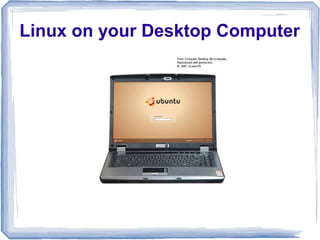
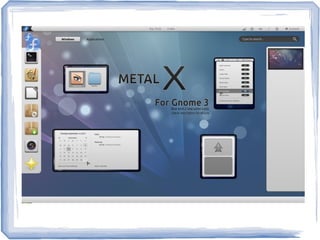
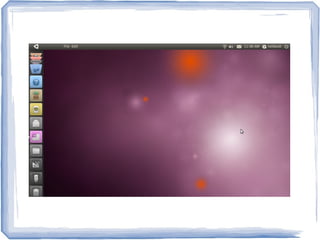
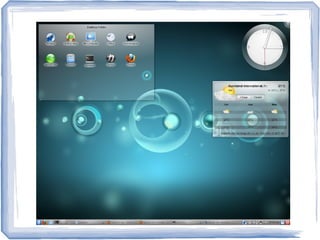

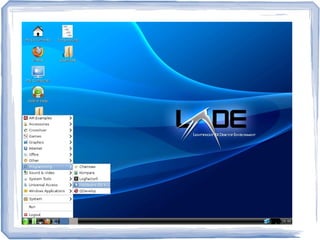
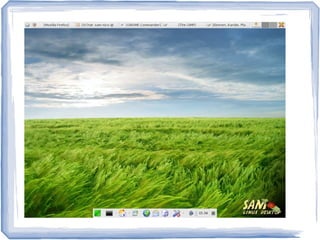
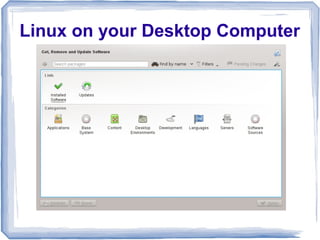
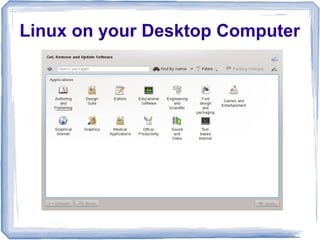
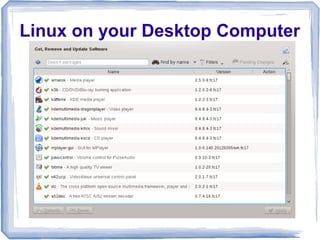
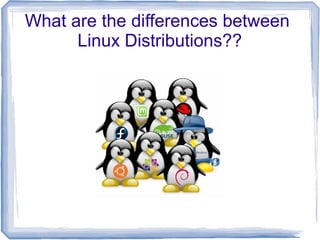
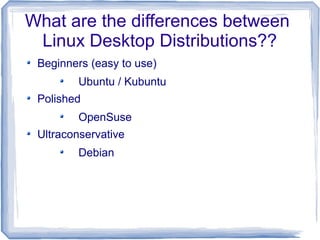
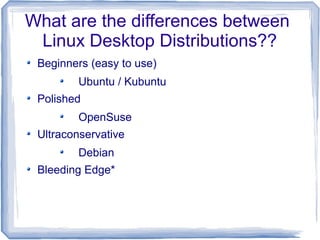
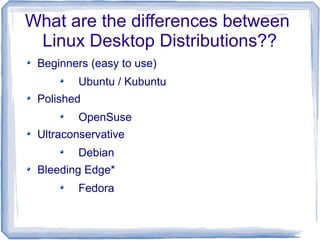
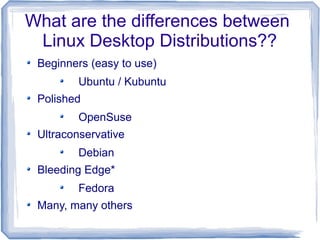
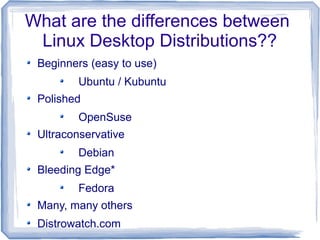

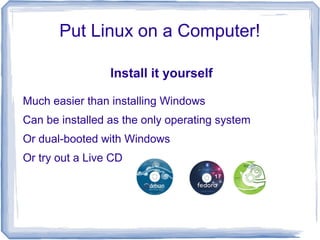
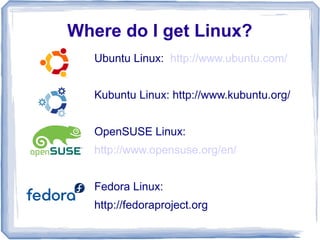


The document discusses using Linux as a desktop operating system. It begins by defining Linux distributions and their core components. It then outlines advantages of using Linux on desktops, such as stability, speed, security, and ease of use. Different desktop environments for Linux like GNOME, KDE, LXDE and XFCE are presented. Distinctions between various Linux distributions for desktops are described, including beginner-friendly, polished, conservative, and bleeding-edge options. Steps for getting started with Linux involve installing it directly or trying a live CD version. Resources for obtaining Linux distributions like Ubuntu, Kubuntu, openSUSE and Fedora are provided.


