Anuloma-Viloma Pranayam Benefits and Technique
Anuloma-Viloma Pranayam ‘ Anuloma’ is a Sanskrit word which means ‘alternate’. Therefore anuloma-Viloma is also called “Alternate Nostril Breathing Technique”. Every body can practice anuloma viloma pranayam including small children, old aged people and patients. It is very easy and significant breathing exercise for everyone . It should be practiced for 3 minutes daily, at least in the beginning or as per body strengths. It can be practiced ideally for about 15-20 minutes per day, maximum. If possible it can be practiced twice daily in the early morning and evening.
“ Benefits of Anuloma-Viloma Pranayam” Anulom Vilom Pranayam is one of the best easy breathing exercises for entire purification of body as well as mind. It completely cures most of the internal body diseases. It vanishes stress of body and mind. It enhances the inner strength of body as well as the divine powers. The anulom-vilom practitioner experiences his life happy and full of brightness. This is also known as Nadi Shodhana   Pranayama .
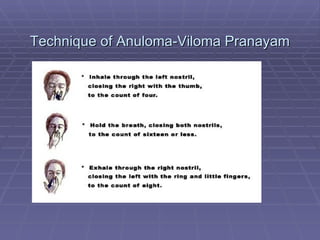
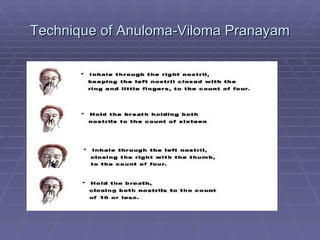
Technique of Anuloma-Viloma Pranayam
Basic requirements for Pranayam The best time for pranayam practice is early morning along with empty stomach. Though it can also be practiced after at least ‘five hours’ of having food, as this gap is enough to digest the consumed food and the stomach gets relaxed. The best place for pranayama is peaceful, holy river bank or some open area like garden with greenery, where atmosphere is full of natural oxygen in early mornings.Pranayam can also be practiced in peaceful, neat and clean rooms with the arrangements of fresh and healthy oxygen. At the time of practicing yoga or pranayama cloths should be loose and comfortable with the body. Pranayams are practiced in anyone of comfortable poses of yogasana like Padmasana, Siddhasana, Vajrasan or Sukhasana sitting on the floor on yoga mat. During this pranayam Spinal cord must be straight. After pranayama, food should NOT be consumed at least for 20 minutes, so as to countdown the body.

Anuloma viloma pranayam

  • 1.
  • 2.
    Anuloma-Viloma Pranayam ‘Anuloma’ is a Sanskrit word which means ‘alternate’. Therefore anuloma-Viloma is also called “Alternate Nostril Breathing Technique”. Every body can practice anuloma viloma pranayam including small children, old aged people and patients. It is very easy and significant breathing exercise for everyone . It should be practiced for 3 minutes daily, at least in the beginning or as per body strengths. It can be practiced ideally for about 15-20 minutes per day, maximum. If possible it can be practiced twice daily in the early morning and evening.
  • 3.
    “ Benefits ofAnuloma-Viloma Pranayam” Anulom Vilom Pranayam is one of the best easy breathing exercises for entire purification of body as well as mind. It completely cures most of the internal body diseases. It vanishes stress of body and mind. It enhances the inner strength of body as well as the divine powers. The anulom-vilom practitioner experiences his life happy and full of brightness. This is also known as Nadi Shodhana Pranayama .
  • 4.
  • 5.
  • 6.
    Basic requirements forPranayam The best time for pranayam practice is early morning along with empty stomach. Though it can also be practiced after at least ‘five hours’ of having food, as this gap is enough to digest the consumed food and the stomach gets relaxed. The best place for pranayama is peaceful, holy river bank or some open area like garden with greenery, where atmosphere is full of natural oxygen in early mornings.Pranayam can also be practiced in peaceful, neat and clean rooms with the arrangements of fresh and healthy oxygen. At the time of practicing yoga or pranayama cloths should be loose and comfortable with the body. Pranayams are practiced in anyone of comfortable poses of yogasana like Padmasana, Siddhasana, Vajrasan or Sukhasana sitting on the floor on yoga mat. During this pranayam Spinal cord must be straight. After pranayama, food should NOT be consumed at least for 20 minutes, so as to countdown the body.