ANTI-MICROBIAL
THERAPY
PRESENTED BY- DR K. ABHILASHA
MODERATED BY- DR SHOBHA
Department of Periodontics, MRADC
1
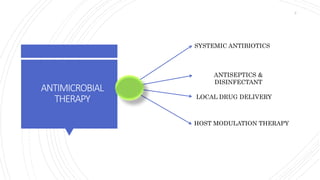
ANTIMICROBIAL
THERAPY
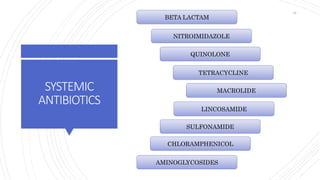
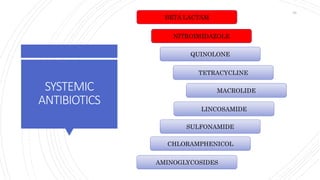
SYSTEMIC ANTIBIOTICS
ANTISEPTICS &
DISINFECTANT
LOCAL DRUG DELIVERY
HOST MODULATION THERAPY
2
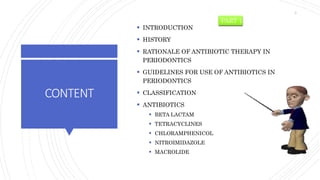
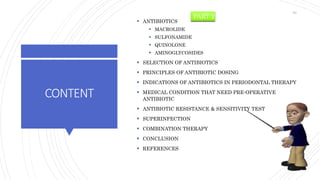
CONTENT
 INTRODUCTION
 HISTORY
 RATIONALE OF ANTIBIOTIC THERAPY IN
PERIODONTICS
 GUIDELINES FOR USE OF ANTIBIOTICS IN
PERIODONTICS
 CLASSIFICATION
 ANTIBIOTICS
 BETA LACTAM
 TETRACYCLINES
 CHLORAMPHENICOL
 NITROIMIDAZOLE
 MACROLIDE
PART 1
3
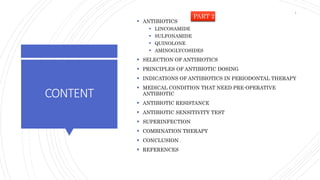
CONTENT
 ANTIBIOTICS
 LINCOSAMIDE
 SULFONAMIDE
 QUINOLONE
 AMINOGLYCOSIDES
 SELECTION OF ANTIBIOTICS
 PRINCIPLES OF ANTIBIOTIC DOSING
 INDICATIONS OF ANTIBIOTICS IN PERIODONTAL THERAPY
 MEDICAL CONDITION THAT NEED PRE-OPERATIVE
ANTIBIOTIC
 ANTIBIOTIC RESISTANCE
 ANTIBIOTIC SENSITIVITY TEST
 SUPERINFECTION
 COMBINATION THERAPY
 CONCLUSION
 REFERENCES
PART 2
4
INTRODUCTION
 Antibiotics- These are substances produced by
microorganisms, which selectively suppress the
growth of or kill other microorganisms at very low
concentrations.
 This definition excludes other natural substances
which also inhibit microorganisms but are produced
by higher forms (e.g. antibodies) or even those
produced by microbes but are needed in high
concentrations (ethanol, lactic acid, H2O2).
 As a class, they are one of the most frequently used
as well as misused drugs.
5
HISTORY
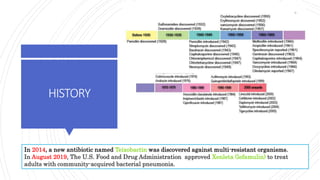
In 2014, a new antibiotic named Teixobactin was discovered against multi-resistant organisms.
In August 2019, The U.S. Food and Drug Administration approved Xenleta (lefamulin) to treat
adults with community-acquired bacterial pneumonia.
6
RATIONALEOF
ANTIBIOTIC
THERAPYIN
PERIODONTICS
 Mechanical and surgical treatment combined with proper
oral hygiene measures can arrest or prevent further
periodontal attachment loss in most individuals by
reducing total supra-subgingival bacterial mass.
 However, despite diligent dental therapy, some
individuals continue to experience periodontal
breakdown, may be due to the ability of major
periodontal pathogens like Porphyromonas
gingivalis, Aggregatibacter actinomycetemcomitans,
Fusobacterium-nucleatum, Treponema denticola,
bacteroids, to invade periodontal tissues or to reside in
furcations or other tooth structures outside the reach of
periodontal instruments, or due to poor host defense
mechanisms.
7
RATIONALEOF
ANTIBIOTIC
THERAPYIN
PERIODONTICS
 Systemic periodontal antibiotic therapy aims to reinforce
mechanical periodontal treatment and to support the host
defense system in overcoming the infection by killing
subgingival pathogens that remain after conventional
mechanical periodontal therapy.
 The susceptibility of bacteria to antibiotics may be the
key to the efficacy of systemic antibiotics in the
treatment of periodontal diseases.
 Few chemotherapeutic agents can also reduce collagen
and bone destruction through their ability to inhibit the
enzyme collagenase.
8
GUIDELINES OF
USAGEIN
PERIODONTAL
DISEASES
THE CLINICAL DIAGNOSIS AND SITUATION dictate
the need for possible antibiotic therapy as an adjunct in
controlling active periodontal disease.
CONTINUING DISEASE ACTIVITY an indication
for periodontal intervention and possible microbial
analysis through plaque sampling.
When used to treat periodontal disease, antibiotics are
selected based on the Patient's Medical And Dental Status,
Current Medications, And Results Of Microbial Analysis, if
performed.
A POOLED SUBGINGIVAL SAMPLE  may provide a
good representation of the range of periodontal pathogens to
be targeted for antibiotic therapy.
9
GUIDELINES OF
USAGEIN
PERIODONTAL
DISEASES
Plaque sampling can be performed at the initial
examination, root planing, reevaluation, or supportive
periodontal therapy appointment.
Antibiotics have also been shown to have value in
reducing the need for periodontal surgery in patients
with chronic periodontitis.
Systemic antibiotic therapy should be an adjunct to a
comprehensive periodontal treatment plan.
An antibiotic strength 500 times greater than the systemic
therapeutic dose may be required to be effective against the
bacteria arranged in the biofilms.
10
GUIDELINES OF
USAGEIN
PERIODONTAL
DISEASES
Slots et al. described a series of steps using
anti-infective agents for enhancing regenerative healing.
They recommend starting antibiotics 1-2 days before surgery and
continuing for a total of atleast 8 days.
However, the value of this regimen has not
been well documented.
Haffajee et al. concluded that data support similar effects for most
antibiotics. Risks and benefits concerning antibiotics as adjuncts to
periodontal therapy must be discussed with the patient before the
antibiotics are used.
11
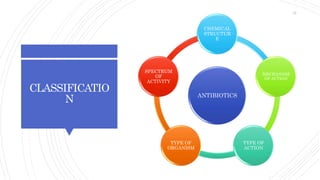
CLASSIFICATIO
N ANTIBIOTICS
CHEMICAL
STRUCTUR
E
MECHANISM
OF ACTION
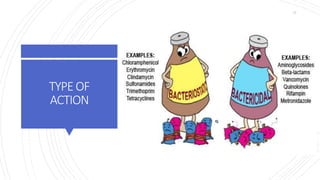
TYPE OF
ACTION
TYPE OF
ORGANISM
SPECTRUM
OF
ACTIVITY
12
CHEMICAL
STRUCTURE
 Sulfonamides and related drugs: Sulfadiazine and others,
Sulfones—Dapsone (DDS), Paraaminosalicylic acid (PAS).
 Diaminopyrimidines: Trimethoprim, Pyrimethamine.
 Quinolones: Nalidixic acid, Norfloxacin, Ciprofloxacin,
Gatifloxacin, etc.
 Beta-Lactam antibiotics: Penicillins, Cephalosporins,
Monobactams, Carbapenems.
 Tetracyclines: Oxytetracycline, Doxycycline, etc.
 Nitrobenzene derivative: Chloramphenicol.
 Aminoglycosides: Streptomycin, Gentamicin, Amikacin,
Neomycin, etc.
 Macrolide antibiotics: Erythromycin, Clarithromycin,
Azithromycin, etc.
 Lincosamide antibiotics: Lincomycin, Clindamycin.
13
CHEMICAL
STRUCTURE
 Glycopeptide antibiotics: Vancomycin, Teicoplanin.
 Oxazolidinone: Linezolid.
 Polypeptide antibiotics: Polymyxin-B, Colistin, Bacitracin,
Tyrothricin.
 Nitrofuran derivatives: Nitrofurantoin, Furazolidone.
 Nitroimidazoles: Metronidazole, Tinidazole, etc.
 Nicotinic acid derivatives: Isoniazid, Pyrazinamide,
Ethionamide.
 Polyene antibiotics: Nystatin, Amphotericin-B, Hamycin.
 Azole derivatives: Miconazole, Clotrimazole, Ketoconazole,
Fluconazole.
 Others: Rifampin, Spectinomycin, Sod. fusidate,
Cycloserine, Viomycin, Ethambutol, Thiacetazone,
Clofazimine, Griseofulvin.
14
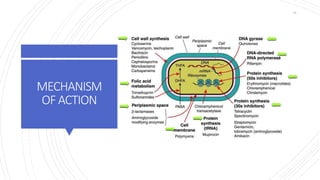
MECHANISM
OFACTION
15
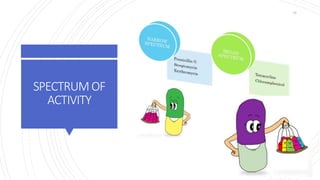
SPECTRUMOF
ACTIVITY
16
TYPEOF
ACTION
17
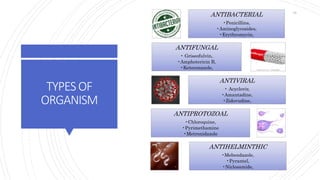
TYPESOF
ORGANISM
ANTIBACTERIAL
•Penicillins,
•Aminoglycosides,
•Erythromycin,
ANTIFUNGAL
• Griseofulvin,
•Amphotericin B,
•Ketoconazole,
ANTIVIRAL
• Acyclovir,
•Amantadine,
•Zidovudine,
ANTIPROTOZOAL
•Chloroquine,
•Pyrimethamine
•Metronidazole
ANTIHELMINTHIC
•Mebendazole,
•Pyrantel,
•Niclosamide,
18
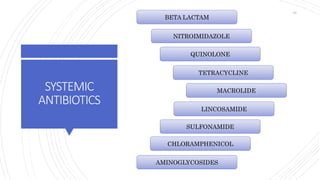
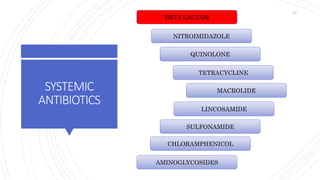
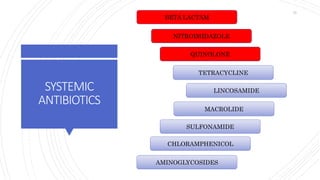
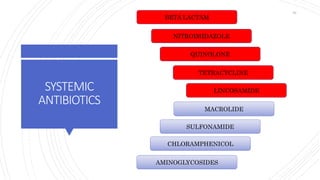
SYSTEMIC
ANTIBIOTICS
BETA LACTAM
NITROIMIDAZOLE
QUINOLONE
TETRACYCLINE
MACROLIDE
SULFONAMIDE
CHLORAMPHENICOL
AMINOGLYCOSIDES
LINCOSAMIDE
19
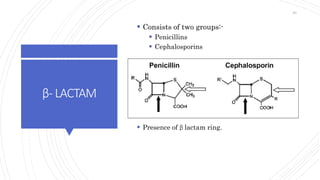
β- LACTAM
 Consists of two groups:-
 Penicillins
 Cephalosporins
 Presence of β lactam ring.
20
PENICILLINS
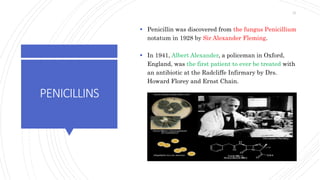
 Penicillin was discovered from the fungus Penicillium
notatum in 1928 by Sir Alexander Fleming.
 In 1941, Albert Alexander, a policeman in Oxford,
England, was the first patient to ever be treated with
an antibiotic at the Radcliffe Infirmary by Drs.
Howard Florey and Ernst Chain.
21
PENICILLINS
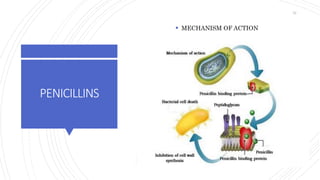
 MECHANISM OF ACTION
22
PENICILLINS
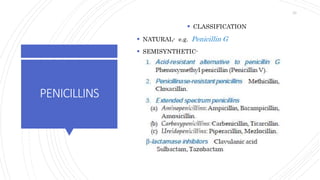
 CLASSIFICATION
 NATURAL- e.g. Penicillin G
 SEMISYNTHETIC-
23
PENICILLING
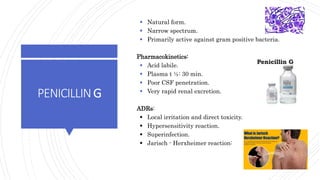
 Natural form.
 Narrow spectrum.
 Primarily active against gram positive bacteria.
Pharmacokinetics:
 Acid labile.
 Plasma t ½: 30 min.
 Poor CSF penetration.
 Very rapid renal excretion.
ADRs:
 Local irritation and direct toxicity.
 Hypersensitivity reaction.
 Superinfection.
 Jarisch - Herxheimer reaction:
24
ACID-RESISTANT
ALTERNATIVETO
PENICILLIN-G
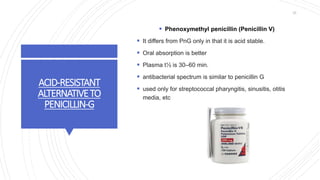
 Phenoxymethyl penicillin (Penicillin V)
 It differs from PnG only in that it is acid stable.
 Oral absorption is better
 Plasma t½ is 30–60 min.
 antibacterial spectrum is similar to penicillin G
 used only for streptococcal pharyngitis, sinusitis, otitis
media, etc
25
PENICILLINASE-
RESISTANT
PENICILLINS
 These congeners have side chains that protect the β-
lactam ring from attack by staphylococcal
Penicillinase.
MRSA:
o These are insensitive to all penicillinase-resistant
penicillins and to other β-lactams as well as to
erythromycin, aminoglycosides, tetracyclines, etc.
o The MRSA have altered PBPs which do not bind
penicillins.
o The drug of choice for these organisms is
vancomycin/linezolid, but ciprofloxacin can also be
used.
26
EXTENDED
SPECTRUM
PENICILLINS:
 These semisynthetic penicillins are active against a
variety of gram-negative bacilli too.
 None is resistant to penicillinase or to other β-
lactamases.
Amoxicillin:
 It is similar to ampicillin in all respects except:
 Oral absorption is better.
 Food does not interfere with absorption.
 Incidence of diarrhoea is lower
The concentration achieved in GCF is 14.05μg/ ml
27
BETA-LACTAMASE
INHIBITORS
 β-lactamases are a family of enzymes produced by many
gram-positive and gram-negative bacteria that inactivate β-
lactam antibiotics by opening the β-lactam ring.
Clavulanic acid:
 Obtained from Streptomyces clavuligerus.
 It has a β-lactam ring but no antibacterial activity of its
own.
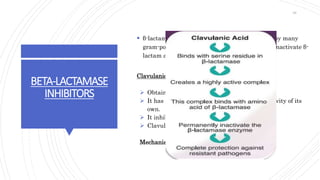
 It inhibits a wide variety of β-lactamases..
 Clavulanic acid is a ‘progressive’ inhibitor
Mechanism Of Action
28
BETA-
LACTAMASE
INHIBITORS
Pharmacokinetics:
 Clavulanic acid has rapid oral absorption.
 T½ = 1 hr.
 Tissue distribution matches amoxicillin, with which it is
combined.
 The concentration achieved in GCF is 0.40 μg /ml (clavulanic
acid).
USES:
 Addition of clavulanic acid re-establishes the
activity of amoxicillin against β-lactamase
producing bacteria.
 Does not potentiate the action of amoxicillin
against strains that are already sensitive to it.
Adverse effects:
 The same as for amoxicillin alone but g.i. tolerance is
poorer - especially in children.
 Candida stomatitis / vaginitis and rashes.
29
CLINICALUSE
 General medical uses:
 Streptococcal infections:pharyngitis, tonsillitis,
otitis media, etc.
 Pneumococcal infection.
 Meningococcal infections.
 Syphilis
 Gonorrhea.
 Periodontal uses:-
1. In the management of patients with aggressive periodontitis, in
both localized and generalized forms. Recommended dosage is
500 mg tid for 8 days.
2. Exhibits high antimicrobial activity at levels that occur in GCF
for all periodontal pathogens except E. corrodens, S.
sputigena and Peptostreptococcus, inhibits the growth of the
gram positive facultative anaerobes.
30
Studies indicate that more than 60% of adult periodontitis patients sampled harboured periodontal plaque
that exhibited β-lactamase activity. For this reason, administration of β-lactamase sensitive penicillins,
including amoxicillin alone, is not generally recommended and, in some cases, may accelerate
periodontal destruction.
Amoxicillin-Clavulanate (Augmentin) - The generally accepted strategy is to administer amoxicillin with
an inhibitor of beta-lactamase such as clavulanic acid. Beta-lactamase-producing strains are generally
sensitive to this preparation. Augmentin may be useful in the management of patients with refractory
or localized aggressive periodontitis patients.
In guided tissue regeneration, systemic amoxicillin-clavulanic acid therapy has been used to
suppress periodontal pathogens and increase the gain of clinical attachment.
Magnusson et al reported, for sites deemed clinically active on average 2mm gain in clinical attachment
3 months post operative therapy and an average decrease of 2.5 mm probing pocket depth 6 months post
therapy. These results were obtained using 10 patients with the refractory periodontal disease following
mechanical debridement and the adjunctive use of augmentin for 2 weeks. Both gain attachment and decrease
in pocket depth were maintained for 1 year.
31
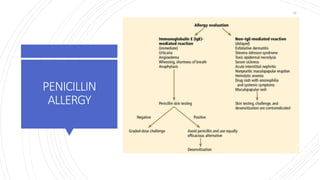
PENICILLIN
ALLERGY
32
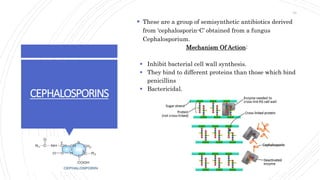
CEPHALOSPORINS
 These are a group of semisynthetic antibiotics derived
from ‘cephalosporin-C’ obtained from a fungus
Cephalosporium.
Mechanism Of Action:
 Inhibit bacterial cell wall synthesis.
 They bind to different proteins than those which bind
penicillins
 Bactericidal.
33
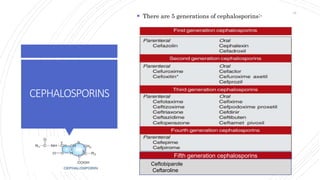
CEPHALOSPORINS
 There are 5 generations of cephalosporins:-
Ceftobiparole
Ceftaroline
Fifth generation cephalosporins
34
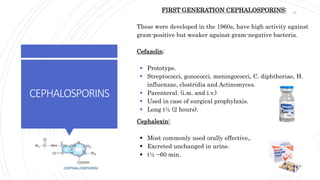
CEPHALOSPORINS
FIRST GENERATION CEPHALOSPORINS:
These were developed in the 1960s, have high activity against
gram-positive but weaker against gram-negative bacteria.
Cefazolin:
 Prototype.
 Streptococci, gonococci, meningococci, C. diphtheriae, H.
influenzae, clostridia and Actinomyces.
 Parenteral. (i.m. and i.v.)
 Used in case of surgical prophylaxis.
 Long t½ (2 hours).
Cephalexin:
 Most commonly used orally effective,.
 Excreted unchanged in urine.
 t½ ~60 min.
35
CEPHALOSPORINS
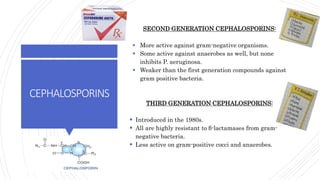
SECOND GENERATION CEPHALOSPORINS:
 More active against gram-negative organisms.
 Some active against anaerobes as well, but none
inhibits P. aeruginosa.
 Weaker than the first generation compounds against
gram positive bacteria.
THIRD GENERATION CEPHALOSPORINS:
 Introduced in the 1980s.
 All are highly resistant to β-lactamases from gram-
negative bacteria.
 Less active on gram-positive cocci and anaerobes.
36
CEPHALOSPORINS
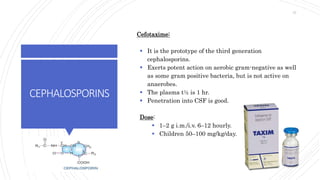
Cefotaxime:
 It is the prototype of the third generation
cephalosporins.
 Exerts potent action on aerobic gram-negative as well
as some gram positive bacteria, but is not active on
anaerobes.
 The plasma t½ is 1 hr.
 Penetration into CSF is good.
Dose:
 1–2 g i.m./i.v. 6–12 hourly.
 Children 50–100 mg/kg/day.
37
CEPHALOSPORINS
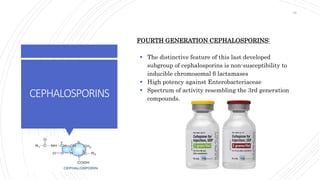
FOURTH GENERATION CEPHALOSPORINS:
 The distinctive feature of this last developed
subgroup of cephalosporins is non-susceptibility to
inducible chromosomal β lactamases
 High potency against Enterobacteriaceae
 Spectrum of activity resembling the 3rd generation
compounds.
38
CEPHALOSPORINS
39
CEPHALOSPORINS
 PERIODONTAL USAGE
 Cephalexin is a cephalosporin available for
administration in an oral dosage form.
1.Achieves high concentrations in GCF
2.Effectively inhibits growth of gram-negative obligate
anaerobes, fails to inhibit the gram-negative
facultative anaerobes.
3.Newer cephalosporins with extended gram-negative
effectiveness could be of value in treatment of
periodontal disease conditions.
No clinical trials in periodontal therapy have been conducted.
40
CEPHALOSPORINS
Adverse effects:
 Pain after i.m. injection.
 Diarrhoea due to alteration of gut ecology or irritative
effect is more common with orally administered
compounds.
 Hypersensitivity reactions are the most important
adverse effects of cephalosporins.
 Nephrotoxicity.
 Bleeding occurs
41
SYSTEMIC
ANTIBIOTICS
BETA LACTAM
NITROIMIDAZOLE
QUINOLONE
TETRACYCLINE
MACROLIDE
SULFONAMIDE
CHLORAMPHENICOL
AMINOGLYCOSIDES
LINCOSAMIDE
42
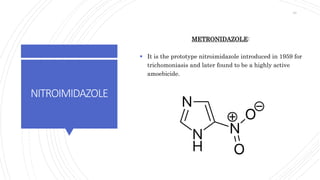
NITROIMIDAZOLE
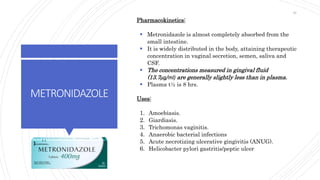
METRONIDAZOLE:
 It is the prototype nitroimidazole introduced in 1959 for
trichomoniasis and later found to be a highly active
amoebicide.
43
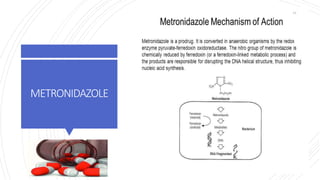
METRONIDAZOLE
44
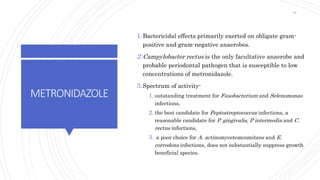
METRONIDAZOLE
1.Bactericidal effects primarily exerted on obligate gram-
positive and gram-negative anaerobes.
2.Campylobacter rectus is the only facultative anaerobe and
probable periodontal pathogen that is susceptible to low
concentrations of metronidazole.
3.Spectrum of activity-
1. outstanding treatment for Fusobacterium and Selenomonas
infections,
2. the best candidate for Peptostreptococcus infections, a
reasonable candidate for P. gingivalis, P intermedia and C.
rectus infections,
3. a poor choice for A. actinomycetemcomitans and E.
corrodens infections, does not substantially suppress growth
beneficial species.
45
METRONIDAZOLE
Pharmacokinetics:
 Metronidazole is almost completely absorbed from the
small intestine.
 It is widely distributed in the body, attaining therapeutic
concentration in vaginal secretion, semen, saliva and
CSF.
 The concentrations measured in gingival fluid
(13.7μg/ml) are generally slightly less than in plasma.
 Plasma t½ is 8 hrs.
Uses:
1. Amoebiasis.
2. Giardiasis.
3. Trichomonas vaginitis.
4. Anaerobic bacterial infections
5. Acute necrotizing ulcerative gingivitis (ANUG).
6. Helicobacter pylori gastritis/peptic ulcer
46
PERIODONTAL
USAGE
1.For treating gingivitis, acute necrotizing ulcerative
gingivitis, chronic periodontitis, and aggressive
periodontitis.
2.As monotherapy, metronidazole is inferior, should be
used in combination with root planing, surgery or with
other antibiotics. The most commonly prescribed
regimen is 250-500 mg tid for 7 days.
According to Liew V et al. (1991),metronidazole can readily attain
effective anti-bacterial concentrations in gingival tissue
and crevicular fluid.
47
METRONIDAZOLE
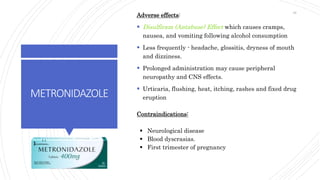
Adverse effects:
 Disulfiram (Antabuse) Effect which causes cramps,
nausea, and vomiting following alcohol consumption
 Less frequently - headache, glossitis, dryness of mouth
and dizziness.
 Prolonged administration may cause peripheral
neuropathy and CNS effects.
 Urticaria, flushing, heat, itching, rashes and fixed drug
eruption
Contraindications:
 Neurological disease
 Blood dyscrasias.
 First trimester of pregnancy
48
Studies by losche et al enrolling adult periodontitis subjects indicated
that metronidazole in conjugation with mechanical debridement decreases
the number of teeth requiring periodontal surgery or extraction due to
Periodontitis.
In a study by Haffajee et al.,sites with initial pocket depth ≥6 mm showed
significantly greater pocket depth reduction and greater attachment gain
in subjects receiving metronidazole or azithromycin than in subjects who
received doxycycline.
49
SYSTEMIC
ANTIBIOTICS
BETA LACTAM
NITROIMIDAZOLE
QUINOLONE
TETRACYCLINE
MACROLIDE
SULFONAMIDE
CHLORAMPHENICOL
AMINOGLYCOSIDES
LINCOSAMIDE
50
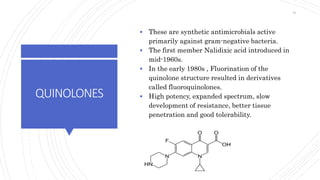
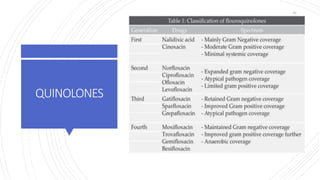
QUINOLONES
 These are synthetic antimicrobials active
primarily against gram-negative bacteria.
 The first member Nalidixic acid introduced in
mid-1960s.
 In the early 1980s , Fluorination of the
quinolone structure resulted in derivatives
called fluoroquinolones.
 High potency, expanded spectrum, slow
development of resistance, better tissue
penetration and good tolerability.
51
QUINOLONES
52
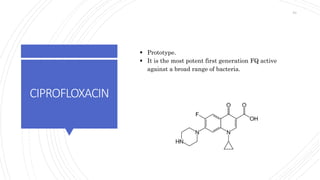
CIPROFLOXACIN
 Prototype.
 It is the most potent first generation FQ active
against a broad range of bacteria.
53
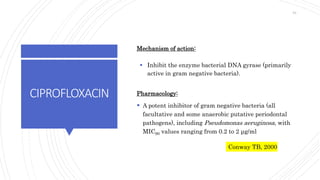
CIPROFLOXACIN
Mechanism of action:
 Inhibit the enzyme bacterial DNA gyrase (primarily
active in gram negative bacteria).
Pharmacology:
 A potent inhibitor of gram negative bacteria (all
facultative and some anaerobic putative periodontal
pathogens), including Pseudomonas aeruginosa, with
MIC90 values ranging from 0.2 to 2 μg/ml
Conway TB, 2000
54
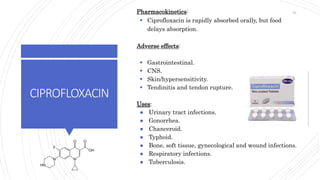
CIPROFLOXACIN
Pharmacokinetics:
 Ciprofloxacin is rapidly absorbed orally, but food
delays absorption.
Adverse effects:
 Gastrointestinal.
 CNS.
 Skin/hypersensitivity.
 Tendinitis and tendon rupture.
Uses:
● Urinary tract infections.
● Gonorrhea.
● Chanceroid.
● Typhoid.
● Bone, soft tissue, gynecological and wound infections.
● Respiratory infections.
● Tuberculosis.
55
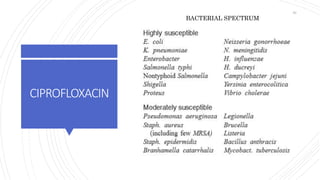
CIPROFLOXACIN
BACTERIAL SPECTRUM
56
PERIODONTAL
USAGE
1. Facilitates the establishment of a microflora associated with
periodontal health, minimal effects on streptococcus species,
which are associated with periodontal health.
2. At present, ciprofloxacin is the only antibiotic in periodontal
therapy to which all strains of A. actinomycetemcomitans are
susceptible.
3. Also used in combination with Nitroimidazoles (metronidazole
and tinidazole).
Kleinfelder et al. (2000), reported that systemic ofloxacin in
conjunction with open flap surgery was able to suppress
A. actinomycetemcomitans below detectable levels in 22 study patients
B. for a period of 12 months.
57
SYSTEMIC
ANTIBIOTICS
BETA LACTAM
NITROIMIDAZOLE
QUINOLONE
TETRACYCLINE
MACROLIDE
SULFONAMIDE
CHLORAMPHENICOL
AMINOGLYCOSIDES
LINCOSAMIDE
58
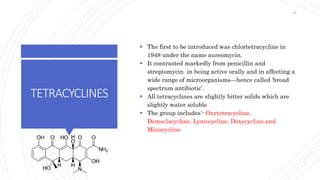
TETRACYCLINES
 The first to be introduced was chlortetracycline in
1948 under the name aureomycin.
 It contrasted markedly from penicillin and
streptomycin in being active orally and in affecting a
wide range of microorganisms—hence called ‘broad
spectrum antibiotic’.
 All tetracyclines are slightly bitter solids which are
slightly water soluble
 The group includes:- Oxytetracycline,
Demeclocycline, Lymecycline, Doxycycline and
Minocycline
59
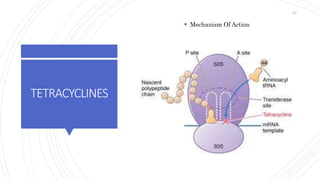
TETRACYCLINES
 Mechanism Of Action
60
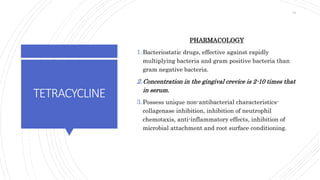
TETRACYCLINE
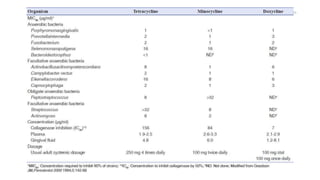
PHARMACOLOGY
1.Bacteriostatic drugs, effective against rapidly
multiplying bacteria and gram positive bacteria than
gram negative bacteria.
2.Concentration in the gingival crevice is 2-10 times that
in serum.
3.Possess unique non-antibacterial characteristics-
collagenase inhibition, inhibition of neutrophil
chemotaxis, anti-inflammatory effects, inhibition of
microbial attachment and root surface conditioning.
61
TETRACYCLINE
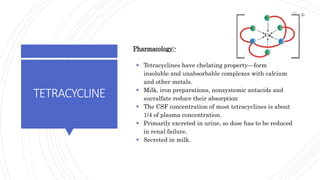
Pharmacology:-
 Tetracyclines have chelating property—form
insoluble and unabsorbable complexes with calcium
and other metals.
 Milk, iron preparations, nonsystemic antacids and
sucralfate reduce their absorption
 The CSF concentration of most tetracyclines is about
1/4 of plasma concentration.
 Primarily excreted in urine, so dose has to be reduced
in renal failure.
 Secreted in milk.
62
TETRACYCLINES
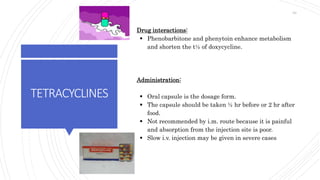
Drug interactions:
 Phenobarbitone and phenytoin enhance metabolism
and shorten the t½ of doxycycline.
Administration:
 Oral capsule is the dosage form.
 The capsule should be taken ½ hr before or 2 hr after
food.
 Not recommended by i.m. route because it is painful
and absorption from the injection site is poor.
 Slow i.v. injection may be given in severe cases
63
TERACYCLINES
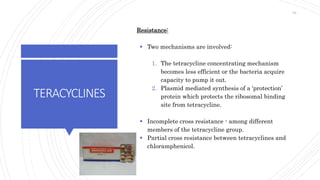
Resistance:
 Two mechanisms are involved:
1. The tetracycline concentrating mechanism
becomes less efficient or the bacteria acquire
capacity to pump it out.
2. Plasmid mediated synthesis of a ‘protection’
protein which protects the ribosomal binding
site from tetracycline.
 Incomplete cross resistance - among different
members of the tetracycline group.
 Partial cross resistance between tetracyclines and
chloramphenicol.
64
TETRACYCLINES
65
TETRACYCLINE
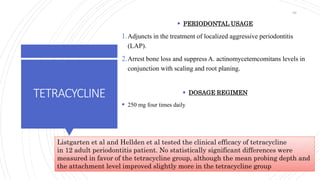
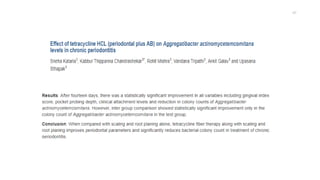
 PERIODONTAL USAGE
1.Adjuncts in the treatment of localized aggressive periodontitis
(LAP).
2.Arrest bone loss and suppress A. actinomycetemcomitans levels in
conjunction with scaling and root planing.
 DOSAGE REGIMEN
 250 mg four times daily
Listgarten et al and Hellden et al tested the clinical efficacy of tetracycline
in 12 adult periodontitis patient. No statistically significant differences were
measured in favor of the tetracycline group, although the mean probing depth and
the attachment level improved slightly more in the tetracycline group
66
67
TETRACYCLINES
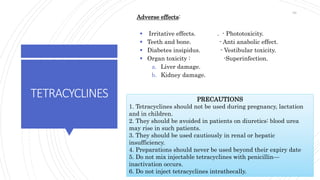
Adverse effects:
 Irritative effects. . - Phototoxicity.
 Teeth and bone. - Anti anabolic effect.
 Diabetes insipidus. - Vestibular toxicity.
 Organ toxicity : -Superinfection.
a. Liver damage.
b. Kidney damage.
PRECAUTIONS
1. Tetracyclines should not be used during pregnancy, lactation
and in children.
2. They should be avoided in patients on diuretics: blood urea
may rise in such patients.
3. They should be used cautiously in renal or hepatic
insufficiency.
4. Preparations should never be used beyond their expiry date
5. Do not mix injectable tetracyclines with penicillin—
inactivation occurs.
6. Do not inject tetracyclines intrathecally.
68
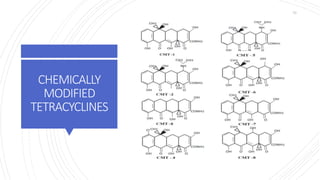
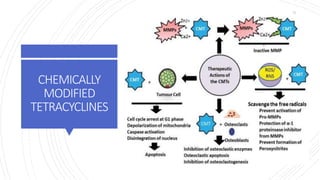
CHEMICALLY
MODIFIED
TETRACYCLINES
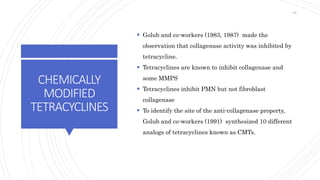
 Golub and co-workers (1983, 1987) made the
observation that collagenase activity was inhibited by
tetracycline.
 Tetracyclines are known to inhibit collagenase and
some MMPS
 Tetracyclines inhibit PMN but not fibroblast
collagenase
 To identify the site of the anti-collagenase property,
Golub and co-workers (1991) synthesized 10 different
analogs of tetracyclines known as CMTs.
69
CHEMICALLY
MODIFIED
TETRACYCLINES
70
CHEMICALLY
MODIFIED
TETRACYCLINES
71
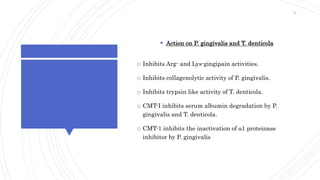
 Action on P. gingivalis and T. denticola
o Inhibits Arg- and Lys-gingipain activities.
o Inhibits collagenolytic activity of P. gingivalis.
o Inhibits trypsin like activity of T. denticola.
o CMT-I inhibits serum albumin degradation by P.
gingivalis and T. denticola.
o CMT-1 inhibits the inactivation of α1 proteinase
inhibitor by P. gingivalis
72
CHEMICALLY
MODIFIED
TETRACYCLINES
 CMT’s potential advantages over conventional
tetracycline:
Oral administration more rapid.
Longer serum half-life than tetracycline.
No resistance.
Can be used for prolonged periods.
73
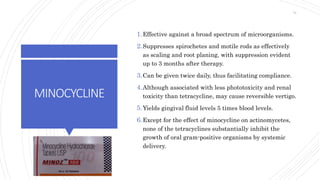
MINOCYCLINE
1.Effective against a broad spectrum of microorganisms.
2.Suppresses spirochetes and motile rods as effectively
as scaling and root planing, with suppression evident
up to 3 months after therapy.
3.Can be given twice daily, thus facilitating compliance.
4.Although associated with less phototoxicity and renal
toxicity than tetracycline, may cause reversible vertigo.
5.Yields gingival fluid levels 5 times blood levels.
6.Except for the effect of minocycline on actinomycetes,
none of the tetracyclines substantially inhibit the
growth of oral gram-positive organisms by systemic
delivery.
74
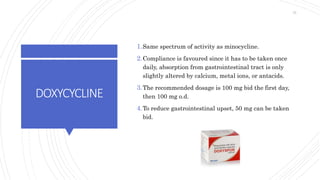
DOXYCYCLINE
1.Same spectrum of activity as minocycline.
2.Compliance is favoured since it has to be taken once
daily, absorption from gastrointestinal tract is only
slightly altered by calcium, metal ions, or antacids.
3.The recommended dosage is 100 mg bid the first day,
then 100 mg o.d.
4.To reduce gastrointestinal upset, 50 mg can be taken
bid.
75
DOXYCYCLINE
PERIOSTAT
It is sub antimicrobial dose of doxycycline hyclate (SDD)
capsule of 20 mg prescribed for patients with chronic
periodontitis twice daily for 3 months, up to a maximum of 9
months of continuous dosing.
The rationale for using SDD is based on the concept of host
modulation
INDICATIONS-
 Patients who have not responded to nonsurgical therapy.
 Patients with generalized recurrent sites of 5 mm or
greater pocket depth that bleed on probing.
 A high susceptibility to rapid periodontal disease
progression.
76
• Ramamurthy et al. (2002) tested doxycycline and five different CMTs to prevent MMP dependent
periodontal tissue breakdown in an adult rat model.
• CMTs were administered orally at conc. 2 mg/day for 7 days, and gingival biopsies were taken.
• All tetracycline inhibited periodontal breakdown in the following order of efficacy:
CMT, 8 > 1 > 3 > doxy >4 > 7.
• Doxycycline 20 mg bid was used in 51 patients with active periodontitis based on pocket
depth and increased collagenase at multiple exams showed no clinical attachment loss over 36 months.
77
78
SYSTEMIC
ANTIBIOTICS
BETA LACTAM
NITROIMIDAZOLE
QUINOLONE
TETRACYCLINE
LINCOSAMIDE
SULFONAMIDE
CHLORAMPHENICOL
AMINOGLYCOSIDES
MACROLIDE
79
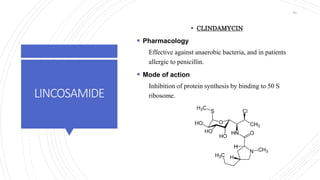
LINCOSAMIDE
 CLINDAMYCIN
 Pharmacology
Effective against anaerobic bacteria, and in patients
allergic to penicillin.
 Mode of action
Inhibition of protein synthesis by binding to 50 S
ribosome.
80
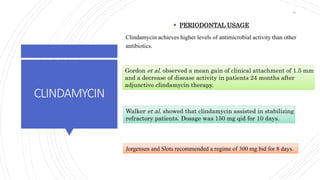
CLINDAMYCIN
 PERIODONTAL USAGE
Clindamycin achieves higher levels of antimicrobial activity than other
antibiotics.
Gordon et al. observed a mean gain of clinical attachment of 1.5 mm
and a decrease of disease activity in patients 24 months after
adjunctive clindamycin therapy.
Walker et al. showed that clindamycin assisted in stabilizing
refractory patients. Dosage was 150 mg qid for 10 days.
Jorgensen and Slots recommended a regime of 300 mg bid for 8 days.
81
SYSTEMIC
ANTIBIOTICS
BETA LACTAM
NITROIMIDAZOLE
QUINOLONE
TETRACYCLINE
LINCOSAMIDE
SULFONAMIDE
CHLORAMPHENICOL
AMINOGLYCOSIDES
MACROLIDE
82
CONTENT
 ANTIBIOTICS
 MACROLIDE
 SULFONAMIDE
 QUINOLONE
 AMINOGLYCOSIDES
 SELECTION OF ANTIBIOTICS
 PRINCIPLES OF ANTIBIOTIC DOSING
 INDICATIONS OF ANTIBIOTICS IN PERIODONTAL THERAPY
 MEDICAL CONDITION THAT NEED PRE-OPERATIVE
ANTIBIOTIC
 ANTIBIOTIC RESISTANCE & SENSITIVITY TEST
 SUPERINFECTION
 COMBINATION THERAPY
 CONCLUSION
 REFERENCES
PART 2
83
84

ANTI-MICROBIAL THERAPY (part 1).pptx

  • 1.
    ANTI-MICROBIAL THERAPY PRESENTED BY- DRK. ABHILASHA MODERATED BY- DR SHOBHA Department of Periodontics, MRADC 1
  • 2.
  • 3.
    CONTENT  INTRODUCTION  HISTORY RATIONALE OF ANTIBIOTIC THERAPY IN PERIODONTICS  GUIDELINES FOR USE OF ANTIBIOTICS IN PERIODONTICS  CLASSIFICATION  ANTIBIOTICS  BETA LACTAM  TETRACYCLINES  CHLORAMPHENICOL  NITROIMIDAZOLE  MACROLIDE PART 1 3
  • 4.
    CONTENT  ANTIBIOTICS  LINCOSAMIDE SULFONAMIDE  QUINOLONE  AMINOGLYCOSIDES  SELECTION OF ANTIBIOTICS  PRINCIPLES OF ANTIBIOTIC DOSING  INDICATIONS OF ANTIBIOTICS IN PERIODONTAL THERAPY  MEDICAL CONDITION THAT NEED PRE-OPERATIVE ANTIBIOTIC  ANTIBIOTIC RESISTANCE  ANTIBIOTIC SENSITIVITY TEST  SUPERINFECTION  COMBINATION THERAPY  CONCLUSION  REFERENCES PART 2 4
  • 5.
    INTRODUCTION  Antibiotics- Theseare substances produced by microorganisms, which selectively suppress the growth of or kill other microorganisms at very low concentrations.  This definition excludes other natural substances which also inhibit microorganisms but are produced by higher forms (e.g. antibodies) or even those produced by microbes but are needed in high concentrations (ethanol, lactic acid, H2O2).  As a class, they are one of the most frequently used as well as misused drugs. 5
  • 6.
    HISTORY In 2014, anew antibiotic named Teixobactin was discovered against multi-resistant organisms. In August 2019, The U.S. Food and Drug Administration approved Xenleta (lefamulin) to treat adults with community-acquired bacterial pneumonia. 6
  • 7.
    RATIONALEOF ANTIBIOTIC THERAPYIN PERIODONTICS  Mechanical andsurgical treatment combined with proper oral hygiene measures can arrest or prevent further periodontal attachment loss in most individuals by reducing total supra-subgingival bacterial mass.  However, despite diligent dental therapy, some individuals continue to experience periodontal breakdown, may be due to the ability of major periodontal pathogens like Porphyromonas gingivalis, Aggregatibacter actinomycetemcomitans, Fusobacterium-nucleatum, Treponema denticola, bacteroids, to invade periodontal tissues or to reside in furcations or other tooth structures outside the reach of periodontal instruments, or due to poor host defense mechanisms. 7
  • 8.
    RATIONALEOF ANTIBIOTIC THERAPYIN PERIODONTICS  Systemic periodontalantibiotic therapy aims to reinforce mechanical periodontal treatment and to support the host defense system in overcoming the infection by killing subgingival pathogens that remain after conventional mechanical periodontal therapy.  The susceptibility of bacteria to antibiotics may be the key to the efficacy of systemic antibiotics in the treatment of periodontal diseases.  Few chemotherapeutic agents can also reduce collagen and bone destruction through their ability to inhibit the enzyme collagenase. 8
  • 9.
    GUIDELINES OF USAGEIN PERIODONTAL DISEASES THE CLINICALDIAGNOSIS AND SITUATION dictate the need for possible antibiotic therapy as an adjunct in controlling active periodontal disease. CONTINUING DISEASE ACTIVITY an indication for periodontal intervention and possible microbial analysis through plaque sampling. When used to treat periodontal disease, antibiotics are selected based on the Patient's Medical And Dental Status, Current Medications, And Results Of Microbial Analysis, if performed. A POOLED SUBGINGIVAL SAMPLE  may provide a good representation of the range of periodontal pathogens to be targeted for antibiotic therapy. 9
  • 10.
    GUIDELINES OF USAGEIN PERIODONTAL DISEASES Plaque samplingcan be performed at the initial examination, root planing, reevaluation, or supportive periodontal therapy appointment. Antibiotics have also been shown to have value in reducing the need for periodontal surgery in patients with chronic periodontitis. Systemic antibiotic therapy should be an adjunct to a comprehensive periodontal treatment plan. An antibiotic strength 500 times greater than the systemic therapeutic dose may be required to be effective against the bacteria arranged in the biofilms. 10
  • 11.
    GUIDELINES OF USAGEIN PERIODONTAL DISEASES Slots etal. described a series of steps using anti-infective agents for enhancing regenerative healing. They recommend starting antibiotics 1-2 days before surgery and continuing for a total of atleast 8 days. However, the value of this regimen has not been well documented. Haffajee et al. concluded that data support similar effects for most antibiotics. Risks and benefits concerning antibiotics as adjuncts to periodontal therapy must be discussed with the patient before the antibiotics are used. 11
  • 12.
    CLASSIFICATIO N ANTIBIOTICS CHEMICAL STRUCTUR E MECHANISM OF ACTION TYPEOF ACTION TYPE OF ORGANISM SPECTRUM OF ACTIVITY 12
  • 13.
    CHEMICAL STRUCTURE  Sulfonamides andrelated drugs: Sulfadiazine and others, Sulfones—Dapsone (DDS), Paraaminosalicylic acid (PAS).  Diaminopyrimidines: Trimethoprim, Pyrimethamine.  Quinolones: Nalidixic acid, Norfloxacin, Ciprofloxacin, Gatifloxacin, etc.  Beta-Lactam antibiotics: Penicillins, Cephalosporins, Monobactams, Carbapenems.  Tetracyclines: Oxytetracycline, Doxycycline, etc.  Nitrobenzene derivative: Chloramphenicol.  Aminoglycosides: Streptomycin, Gentamicin, Amikacin, Neomycin, etc.  Macrolide antibiotics: Erythromycin, Clarithromycin, Azithromycin, etc.  Lincosamide antibiotics: Lincomycin, Clindamycin. 13
  • 14.
    CHEMICAL STRUCTURE  Glycopeptide antibiotics:Vancomycin, Teicoplanin.  Oxazolidinone: Linezolid.  Polypeptide antibiotics: Polymyxin-B, Colistin, Bacitracin, Tyrothricin.  Nitrofuran derivatives: Nitrofurantoin, Furazolidone.  Nitroimidazoles: Metronidazole, Tinidazole, etc.  Nicotinic acid derivatives: Isoniazid, Pyrazinamide, Ethionamide.  Polyene antibiotics: Nystatin, Amphotericin-B, Hamycin.  Azole derivatives: Miconazole, Clotrimazole, Ketoconazole, Fluconazole.  Others: Rifampin, Spectinomycin, Sod. fusidate, Cycloserine, Viomycin, Ethambutol, Thiacetazone, Clofazimine, Griseofulvin. 14
  • 15.
  • 16.
  • 17.
  • 18.
    TYPESOF ORGANISM ANTIBACTERIAL •Penicillins, •Aminoglycosides, •Erythromycin, ANTIFUNGAL • Griseofulvin, •Amphotericin B, •Ketoconazole, ANTIVIRAL •Acyclovir, •Amantadine, •Zidovudine, ANTIPROTOZOAL •Chloroquine, •Pyrimethamine •Metronidazole ANTIHELMINTHIC •Mebendazole, •Pyrantel, •Niclosamide, 18
  • 19.
  • 20.
    β- LACTAM  Consistsof two groups:-  Penicillins  Cephalosporins  Presence of β lactam ring. 20
  • 21.
    PENICILLINS  Penicillin wasdiscovered from the fungus Penicillium notatum in 1928 by Sir Alexander Fleming.  In 1941, Albert Alexander, a policeman in Oxford, England, was the first patient to ever be treated with an antibiotic at the Radcliffe Infirmary by Drs. Howard Florey and Ernst Chain. 21
  • 22.
  • 23.
    PENICILLINS  CLASSIFICATION  NATURAL-e.g. Penicillin G  SEMISYNTHETIC- 23
  • 24.
    PENICILLING  Natural form. Narrow spectrum.  Primarily active against gram positive bacteria. Pharmacokinetics:  Acid labile.  Plasma t ½: 30 min.  Poor CSF penetration.  Very rapid renal excretion. ADRs:  Local irritation and direct toxicity.  Hypersensitivity reaction.  Superinfection.  Jarisch - Herxheimer reaction: 24
  • 25.
    ACID-RESISTANT ALTERNATIVETO PENICILLIN-G  Phenoxymethyl penicillin(Penicillin V)  It differs from PnG only in that it is acid stable.  Oral absorption is better  Plasma t½ is 30–60 min.  antibacterial spectrum is similar to penicillin G  used only for streptococcal pharyngitis, sinusitis, otitis media, etc 25
  • 26.
    PENICILLINASE- RESISTANT PENICILLINS  These congenershave side chains that protect the β- lactam ring from attack by staphylococcal Penicillinase. MRSA: o These are insensitive to all penicillinase-resistant penicillins and to other β-lactams as well as to erythromycin, aminoglycosides, tetracyclines, etc. o The MRSA have altered PBPs which do not bind penicillins. o The drug of choice for these organisms is vancomycin/linezolid, but ciprofloxacin can also be used. 26
  • 27.
    EXTENDED SPECTRUM PENICILLINS:  These semisyntheticpenicillins are active against a variety of gram-negative bacilli too.  None is resistant to penicillinase or to other β- lactamases. Amoxicillin:  It is similar to ampicillin in all respects except:  Oral absorption is better.  Food does not interfere with absorption.  Incidence of diarrhoea is lower The concentration achieved in GCF is 14.05μg/ ml 27
  • 28.
    BETA-LACTAMASE INHIBITORS  β-lactamases area family of enzymes produced by many gram-positive and gram-negative bacteria that inactivate β- lactam antibiotics by opening the β-lactam ring. Clavulanic acid:  Obtained from Streptomyces clavuligerus.  It has a β-lactam ring but no antibacterial activity of its own.  It inhibits a wide variety of β-lactamases..  Clavulanic acid is a ‘progressive’ inhibitor Mechanism Of Action 28
  • 29.
    BETA- LACTAMASE INHIBITORS Pharmacokinetics:  Clavulanic acidhas rapid oral absorption.  T½ = 1 hr.  Tissue distribution matches amoxicillin, with which it is combined.  The concentration achieved in GCF is 0.40 μg /ml (clavulanic acid). USES:  Addition of clavulanic acid re-establishes the activity of amoxicillin against β-lactamase producing bacteria.  Does not potentiate the action of amoxicillin against strains that are already sensitive to it. Adverse effects:  The same as for amoxicillin alone but g.i. tolerance is poorer - especially in children.  Candida stomatitis / vaginitis and rashes. 29
  • 30.
    CLINICALUSE  General medicaluses:  Streptococcal infections:pharyngitis, tonsillitis, otitis media, etc.  Pneumococcal infection.  Meningococcal infections.  Syphilis  Gonorrhea.  Periodontal uses:- 1. In the management of patients with aggressive periodontitis, in both localized and generalized forms. Recommended dosage is 500 mg tid for 8 days. 2. Exhibits high antimicrobial activity at levels that occur in GCF for all periodontal pathogens except E. corrodens, S. sputigena and Peptostreptococcus, inhibits the growth of the gram positive facultative anaerobes. 30
  • 31.
    Studies indicate thatmore than 60% of adult periodontitis patients sampled harboured periodontal plaque that exhibited β-lactamase activity. For this reason, administration of β-lactamase sensitive penicillins, including amoxicillin alone, is not generally recommended and, in some cases, may accelerate periodontal destruction. Amoxicillin-Clavulanate (Augmentin) - The generally accepted strategy is to administer amoxicillin with an inhibitor of beta-lactamase such as clavulanic acid. Beta-lactamase-producing strains are generally sensitive to this preparation. Augmentin may be useful in the management of patients with refractory or localized aggressive periodontitis patients. In guided tissue regeneration, systemic amoxicillin-clavulanic acid therapy has been used to suppress periodontal pathogens and increase the gain of clinical attachment. Magnusson et al reported, for sites deemed clinically active on average 2mm gain in clinical attachment 3 months post operative therapy and an average decrease of 2.5 mm probing pocket depth 6 months post therapy. These results were obtained using 10 patients with the refractory periodontal disease following mechanical debridement and the adjunctive use of augmentin for 2 weeks. Both gain attachment and decrease in pocket depth were maintained for 1 year. 31
  • 32.
  • 33.
    CEPHALOSPORINS  These area group of semisynthetic antibiotics derived from ‘cephalosporin-C’ obtained from a fungus Cephalosporium. Mechanism Of Action:  Inhibit bacterial cell wall synthesis.  They bind to different proteins than those which bind penicillins  Bactericidal. 33
  • 34.
    CEPHALOSPORINS  There are5 generations of cephalosporins:- Ceftobiparole Ceftaroline Fifth generation cephalosporins 34
  • 35.
    CEPHALOSPORINS FIRST GENERATION CEPHALOSPORINS: Thesewere developed in the 1960s, have high activity against gram-positive but weaker against gram-negative bacteria. Cefazolin:  Prototype.  Streptococci, gonococci, meningococci, C. diphtheriae, H. influenzae, clostridia and Actinomyces.  Parenteral. (i.m. and i.v.)  Used in case of surgical prophylaxis.  Long t½ (2 hours). Cephalexin:  Most commonly used orally effective,.  Excreted unchanged in urine.  t½ ~60 min. 35
  • 36.
    CEPHALOSPORINS SECOND GENERATION CEPHALOSPORINS: More active against gram-negative organisms.  Some active against anaerobes as well, but none inhibits P. aeruginosa.  Weaker than the first generation compounds against gram positive bacteria. THIRD GENERATION CEPHALOSPORINS:  Introduced in the 1980s.  All are highly resistant to β-lactamases from gram- negative bacteria.  Less active on gram-positive cocci and anaerobes. 36
  • 37.
    CEPHALOSPORINS Cefotaxime:  It isthe prototype of the third generation cephalosporins.  Exerts potent action on aerobic gram-negative as well as some gram positive bacteria, but is not active on anaerobes.  The plasma t½ is 1 hr.  Penetration into CSF is good. Dose:  1–2 g i.m./i.v. 6–12 hourly.  Children 50–100 mg/kg/day. 37
  • 38.
    CEPHALOSPORINS FOURTH GENERATION CEPHALOSPORINS: The distinctive feature of this last developed subgroup of cephalosporins is non-susceptibility to inducible chromosomal β lactamases  High potency against Enterobacteriaceae  Spectrum of activity resembling the 3rd generation compounds. 38
  • 39.
  • 40.
    CEPHALOSPORINS  PERIODONTAL USAGE Cephalexin is a cephalosporin available for administration in an oral dosage form. 1.Achieves high concentrations in GCF 2.Effectively inhibits growth of gram-negative obligate anaerobes, fails to inhibit the gram-negative facultative anaerobes. 3.Newer cephalosporins with extended gram-negative effectiveness could be of value in treatment of periodontal disease conditions. No clinical trials in periodontal therapy have been conducted. 40
  • 41.
    CEPHALOSPORINS Adverse effects:  Painafter i.m. injection.  Diarrhoea due to alteration of gut ecology or irritative effect is more common with orally administered compounds.  Hypersensitivity reactions are the most important adverse effects of cephalosporins.  Nephrotoxicity.  Bleeding occurs 41
  • 42.
  • 43.
    NITROIMIDAZOLE METRONIDAZOLE:  It isthe prototype nitroimidazole introduced in 1959 for trichomoniasis and later found to be a highly active amoebicide. 43
  • 44.
  • 45.
    METRONIDAZOLE 1.Bactericidal effects primarilyexerted on obligate gram- positive and gram-negative anaerobes. 2.Campylobacter rectus is the only facultative anaerobe and probable periodontal pathogen that is susceptible to low concentrations of metronidazole. 3.Spectrum of activity- 1. outstanding treatment for Fusobacterium and Selenomonas infections, 2. the best candidate for Peptostreptococcus infections, a reasonable candidate for P. gingivalis, P intermedia and C. rectus infections, 3. a poor choice for A. actinomycetemcomitans and E. corrodens infections, does not substantially suppress growth beneficial species. 45
  • 46.
    METRONIDAZOLE Pharmacokinetics:  Metronidazole isalmost completely absorbed from the small intestine.  It is widely distributed in the body, attaining therapeutic concentration in vaginal secretion, semen, saliva and CSF.  The concentrations measured in gingival fluid (13.7μg/ml) are generally slightly less than in plasma.  Plasma t½ is 8 hrs. Uses: 1. Amoebiasis. 2. Giardiasis. 3. Trichomonas vaginitis. 4. Anaerobic bacterial infections 5. Acute necrotizing ulcerative gingivitis (ANUG). 6. Helicobacter pylori gastritis/peptic ulcer 46
  • 47.
    PERIODONTAL USAGE 1.For treating gingivitis,acute necrotizing ulcerative gingivitis, chronic periodontitis, and aggressive periodontitis. 2.As monotherapy, metronidazole is inferior, should be used in combination with root planing, surgery or with other antibiotics. The most commonly prescribed regimen is 250-500 mg tid for 7 days. According to Liew V et al. (1991),metronidazole can readily attain effective anti-bacterial concentrations in gingival tissue and crevicular fluid. 47
  • 48.
    METRONIDAZOLE Adverse effects:  Disulfiram(Antabuse) Effect which causes cramps, nausea, and vomiting following alcohol consumption  Less frequently - headache, glossitis, dryness of mouth and dizziness.  Prolonged administration may cause peripheral neuropathy and CNS effects.  Urticaria, flushing, heat, itching, rashes and fixed drug eruption Contraindications:  Neurological disease  Blood dyscrasias.  First trimester of pregnancy 48
  • 49.
    Studies by loscheet al enrolling adult periodontitis subjects indicated that metronidazole in conjugation with mechanical debridement decreases the number of teeth requiring periodontal surgery or extraction due to Periodontitis. In a study by Haffajee et al.,sites with initial pocket depth ≥6 mm showed significantly greater pocket depth reduction and greater attachment gain in subjects receiving metronidazole or azithromycin than in subjects who received doxycycline. 49
  • 50.
  • 51.
    QUINOLONES  These aresynthetic antimicrobials active primarily against gram-negative bacteria.  The first member Nalidixic acid introduced in mid-1960s.  In the early 1980s , Fluorination of the quinolone structure resulted in derivatives called fluoroquinolones.  High potency, expanded spectrum, slow development of resistance, better tissue penetration and good tolerability. 51
  • 52.
  • 53.
    CIPROFLOXACIN  Prototype.  Itis the most potent first generation FQ active against a broad range of bacteria. 53
  • 54.
    CIPROFLOXACIN Mechanism of action: Inhibit the enzyme bacterial DNA gyrase (primarily active in gram negative bacteria). Pharmacology:  A potent inhibitor of gram negative bacteria (all facultative and some anaerobic putative periodontal pathogens), including Pseudomonas aeruginosa, with MIC90 values ranging from 0.2 to 2 μg/ml Conway TB, 2000 54
  • 55.
    CIPROFLOXACIN Pharmacokinetics:  Ciprofloxacin israpidly absorbed orally, but food delays absorption. Adverse effects:  Gastrointestinal.  CNS.  Skin/hypersensitivity.  Tendinitis and tendon rupture. Uses: ● Urinary tract infections. ● Gonorrhea. ● Chanceroid. ● Typhoid. ● Bone, soft tissue, gynecological and wound infections. ● Respiratory infections. ● Tuberculosis. 55
  • 56.
  • 57.
    PERIODONTAL USAGE 1. Facilitates theestablishment of a microflora associated with periodontal health, minimal effects on streptococcus species, which are associated with periodontal health. 2. At present, ciprofloxacin is the only antibiotic in periodontal therapy to which all strains of A. actinomycetemcomitans are susceptible. 3. Also used in combination with Nitroimidazoles (metronidazole and tinidazole). Kleinfelder et al. (2000), reported that systemic ofloxacin in conjunction with open flap surgery was able to suppress A. actinomycetemcomitans below detectable levels in 22 study patients B. for a period of 12 months. 57
  • 58.
  • 59.
    TETRACYCLINES  The firstto be introduced was chlortetracycline in 1948 under the name aureomycin.  It contrasted markedly from penicillin and streptomycin in being active orally and in affecting a wide range of microorganisms—hence called ‘broad spectrum antibiotic’.  All tetracyclines are slightly bitter solids which are slightly water soluble  The group includes:- Oxytetracycline, Demeclocycline, Lymecycline, Doxycycline and Minocycline 59
  • 60.
  • 61.
    TETRACYCLINE PHARMACOLOGY 1.Bacteriostatic drugs, effectiveagainst rapidly multiplying bacteria and gram positive bacteria than gram negative bacteria. 2.Concentration in the gingival crevice is 2-10 times that in serum. 3.Possess unique non-antibacterial characteristics- collagenase inhibition, inhibition of neutrophil chemotaxis, anti-inflammatory effects, inhibition of microbial attachment and root surface conditioning. 61
  • 62.
    TETRACYCLINE Pharmacology:-  Tetracyclines havechelating property—form insoluble and unabsorbable complexes with calcium and other metals.  Milk, iron preparations, nonsystemic antacids and sucralfate reduce their absorption  The CSF concentration of most tetracyclines is about 1/4 of plasma concentration.  Primarily excreted in urine, so dose has to be reduced in renal failure.  Secreted in milk. 62
  • 63.
    TETRACYCLINES Drug interactions:  Phenobarbitoneand phenytoin enhance metabolism and shorten the t½ of doxycycline. Administration:  Oral capsule is the dosage form.  The capsule should be taken ½ hr before or 2 hr after food.  Not recommended by i.m. route because it is painful and absorption from the injection site is poor.  Slow i.v. injection may be given in severe cases 63
  • 64.
    TERACYCLINES Resistance:  Two mechanismsare involved: 1. The tetracycline concentrating mechanism becomes less efficient or the bacteria acquire capacity to pump it out. 2. Plasmid mediated synthesis of a ‘protection’ protein which protects the ribosomal binding site from tetracycline.  Incomplete cross resistance - among different members of the tetracycline group.  Partial cross resistance between tetracyclines and chloramphenicol. 64
  • 65.
  • 66.
    TETRACYCLINE  PERIODONTAL USAGE 1.Adjunctsin the treatment of localized aggressive periodontitis (LAP). 2.Arrest bone loss and suppress A. actinomycetemcomitans levels in conjunction with scaling and root planing.  DOSAGE REGIMEN  250 mg four times daily Listgarten et al and Hellden et al tested the clinical efficacy of tetracycline in 12 adult periodontitis patient. No statistically significant differences were measured in favor of the tetracycline group, although the mean probing depth and the attachment level improved slightly more in the tetracycline group 66
  • 67.
  • 68.
    TETRACYCLINES Adverse effects:  Irritativeeffects. . - Phototoxicity.  Teeth and bone. - Anti anabolic effect.  Diabetes insipidus. - Vestibular toxicity.  Organ toxicity : -Superinfection. a. Liver damage. b. Kidney damage. PRECAUTIONS 1. Tetracyclines should not be used during pregnancy, lactation and in children. 2. They should be avoided in patients on diuretics: blood urea may rise in such patients. 3. They should be used cautiously in renal or hepatic insufficiency. 4. Preparations should never be used beyond their expiry date 5. Do not mix injectable tetracyclines with penicillin— inactivation occurs. 6. Do not inject tetracyclines intrathecally. 68
  • 69.
    CHEMICALLY MODIFIED TETRACYCLINES  Golub andco-workers (1983, 1987) made the observation that collagenase activity was inhibited by tetracycline.  Tetracyclines are known to inhibit collagenase and some MMPS  Tetracyclines inhibit PMN but not fibroblast collagenase  To identify the site of the anti-collagenase property, Golub and co-workers (1991) synthesized 10 different analogs of tetracyclines known as CMTs. 69
  • 70.
  • 71.
  • 72.
     Action onP. gingivalis and T. denticola o Inhibits Arg- and Lys-gingipain activities. o Inhibits collagenolytic activity of P. gingivalis. o Inhibits trypsin like activity of T. denticola. o CMT-I inhibits serum albumin degradation by P. gingivalis and T. denticola. o CMT-1 inhibits the inactivation of α1 proteinase inhibitor by P. gingivalis 72
  • 73.
    CHEMICALLY MODIFIED TETRACYCLINES  CMT’s potentialadvantages over conventional tetracycline: Oral administration more rapid. Longer serum half-life than tetracycline. No resistance. Can be used for prolonged periods. 73
  • 74.
    MINOCYCLINE 1.Effective against abroad spectrum of microorganisms. 2.Suppresses spirochetes and motile rods as effectively as scaling and root planing, with suppression evident up to 3 months after therapy. 3.Can be given twice daily, thus facilitating compliance. 4.Although associated with less phototoxicity and renal toxicity than tetracycline, may cause reversible vertigo. 5.Yields gingival fluid levels 5 times blood levels. 6.Except for the effect of minocycline on actinomycetes, none of the tetracyclines substantially inhibit the growth of oral gram-positive organisms by systemic delivery. 74
  • 75.
    DOXYCYCLINE 1.Same spectrum ofactivity as minocycline. 2.Compliance is favoured since it has to be taken once daily, absorption from gastrointestinal tract is only slightly altered by calcium, metal ions, or antacids. 3.The recommended dosage is 100 mg bid the first day, then 100 mg o.d. 4.To reduce gastrointestinal upset, 50 mg can be taken bid. 75
  • 76.
    DOXYCYCLINE PERIOSTAT It is subantimicrobial dose of doxycycline hyclate (SDD) capsule of 20 mg prescribed for patients with chronic periodontitis twice daily for 3 months, up to a maximum of 9 months of continuous dosing. The rationale for using SDD is based on the concept of host modulation INDICATIONS-  Patients who have not responded to nonsurgical therapy.  Patients with generalized recurrent sites of 5 mm or greater pocket depth that bleed on probing.  A high susceptibility to rapid periodontal disease progression. 76
  • 77.
    • Ramamurthy etal. (2002) tested doxycycline and five different CMTs to prevent MMP dependent periodontal tissue breakdown in an adult rat model. • CMTs were administered orally at conc. 2 mg/day for 7 days, and gingival biopsies were taken. • All tetracycline inhibited periodontal breakdown in the following order of efficacy: CMT, 8 > 1 > 3 > doxy >4 > 7. • Doxycycline 20 mg bid was used in 51 patients with active periodontitis based on pocket depth and increased collagenase at multiple exams showed no clinical attachment loss over 36 months. 77
  • 78.
  • 79.
  • 80.
    LINCOSAMIDE  CLINDAMYCIN  Pharmacology Effectiveagainst anaerobic bacteria, and in patients allergic to penicillin.  Mode of action Inhibition of protein synthesis by binding to 50 S ribosome. 80
  • 81.
    CLINDAMYCIN  PERIODONTAL USAGE Clindamycinachieves higher levels of antimicrobial activity than other antibiotics. Gordon et al. observed a mean gain of clinical attachment of 1.5 mm and a decrease of disease activity in patients 24 months after adjunctive clindamycin therapy. Walker et al. showed that clindamycin assisted in stabilizing refractory patients. Dosage was 150 mg qid for 10 days. Jorgensen and Slots recommended a regime of 300 mg bid for 8 days. 81
  • 82.
  • 83.
    CONTENT  ANTIBIOTICS  MACROLIDE SULFONAMIDE  QUINOLONE  AMINOGLYCOSIDES  SELECTION OF ANTIBIOTICS  PRINCIPLES OF ANTIBIOTIC DOSING  INDICATIONS OF ANTIBIOTICS IN PERIODONTAL THERAPY  MEDICAL CONDITION THAT NEED PRE-OPERATIVE ANTIBIOTIC  ANTIBIOTIC RESISTANCE & SENSITIVITY TEST  SUPERINFECTION  COMBINATION THERAPY  CONCLUSION  REFERENCES PART 2 83
  • 84.