
Antibody mediated in vivo 
delivery of 
small interfering RNAs 
via cell-surface receptors 
From “nature biotechnology” 
Presented by 
V.Esakki Muthu Lakshmi
Introduction 
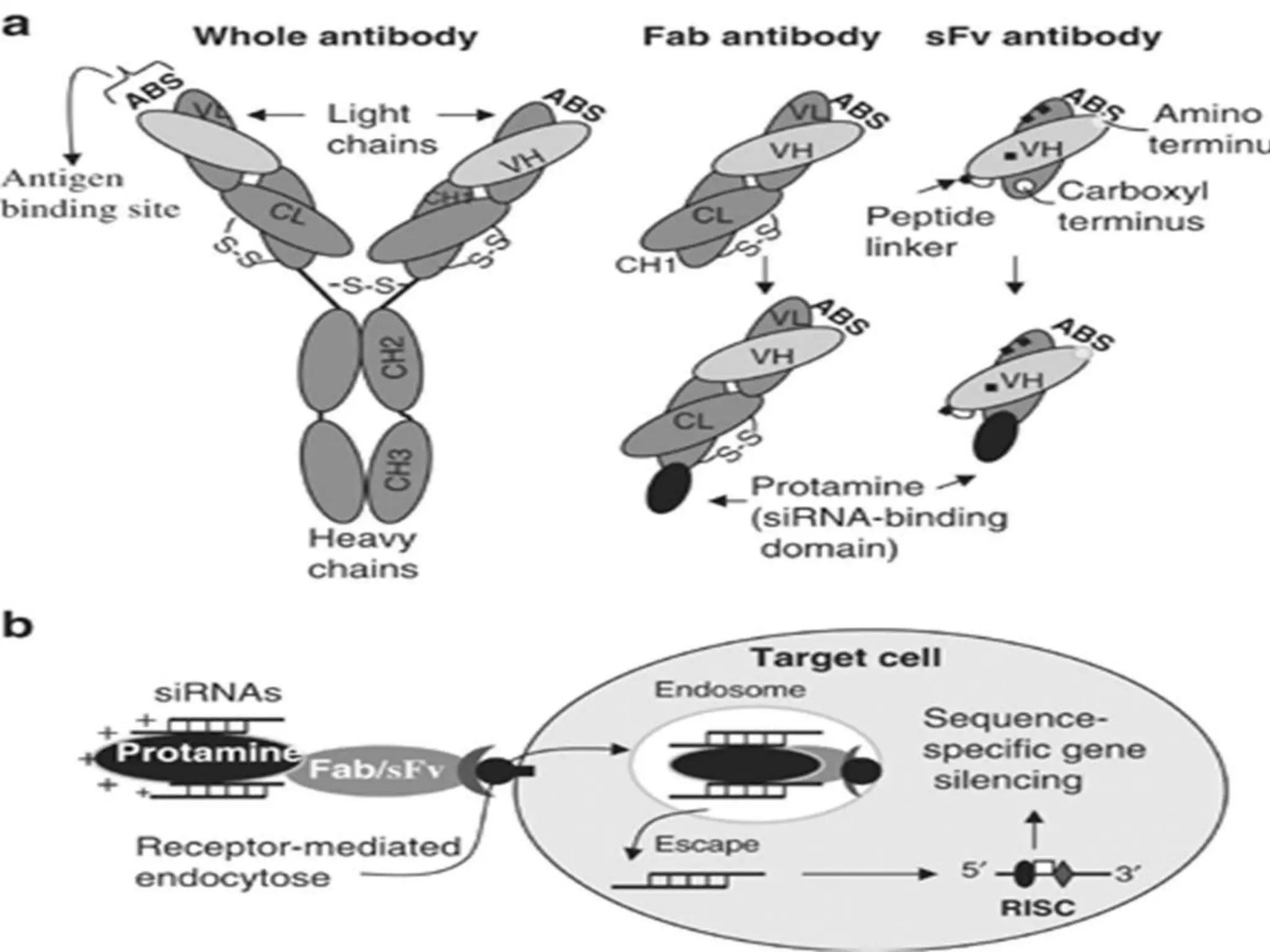
Protamine-antibody fusion(F105-P) 
 Fab fragment 
siRNA delivery 
Gene silencing in target cells 
 HIV env expressing cells 
 Cancer cells
siRNA function 
 19-25 nucleotides long 
 Antiviral defense mechanism 
 Transposon silencing 
 Gene regulation 
 Chromosomal modification
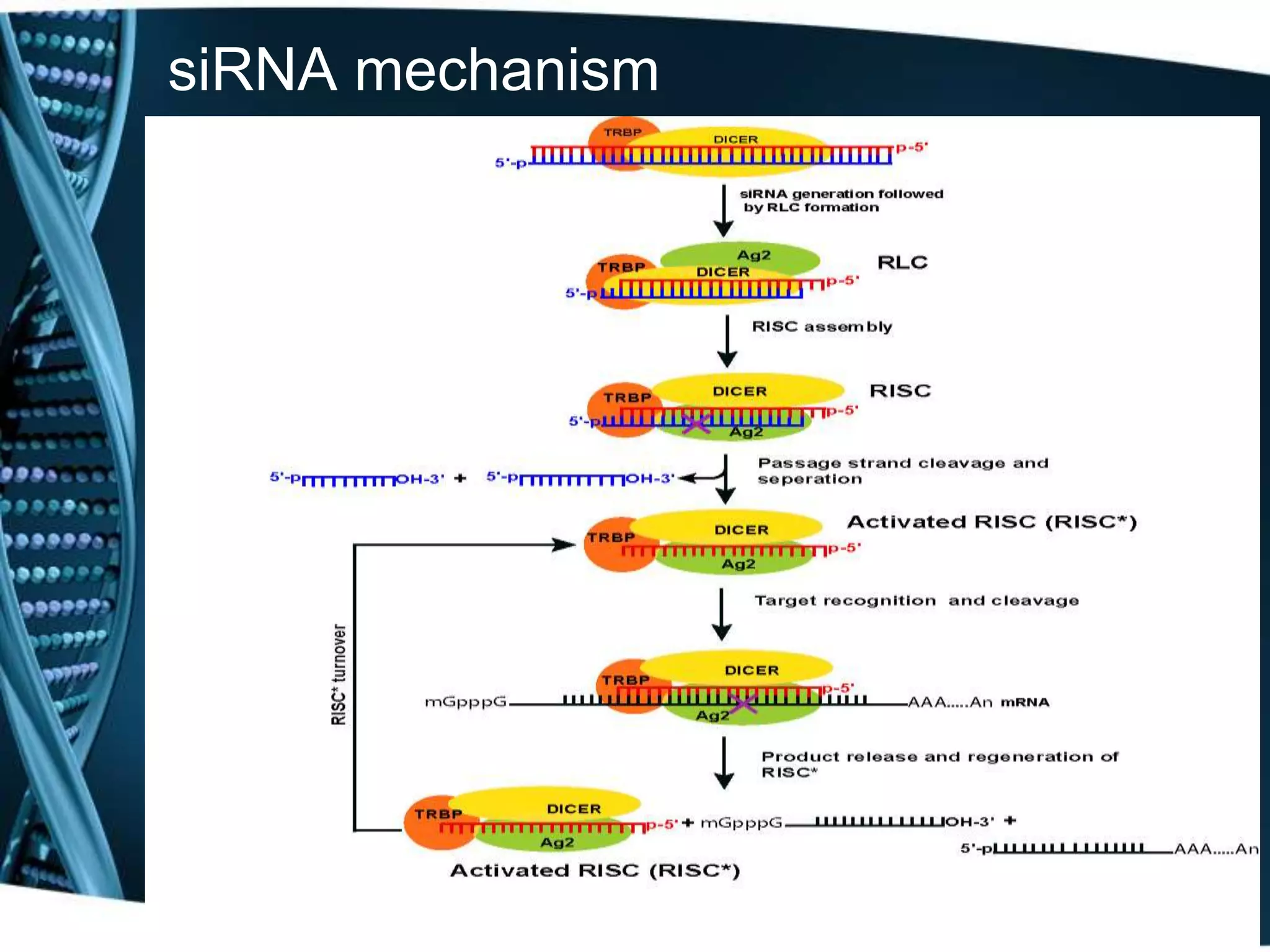
siRNA mechanism
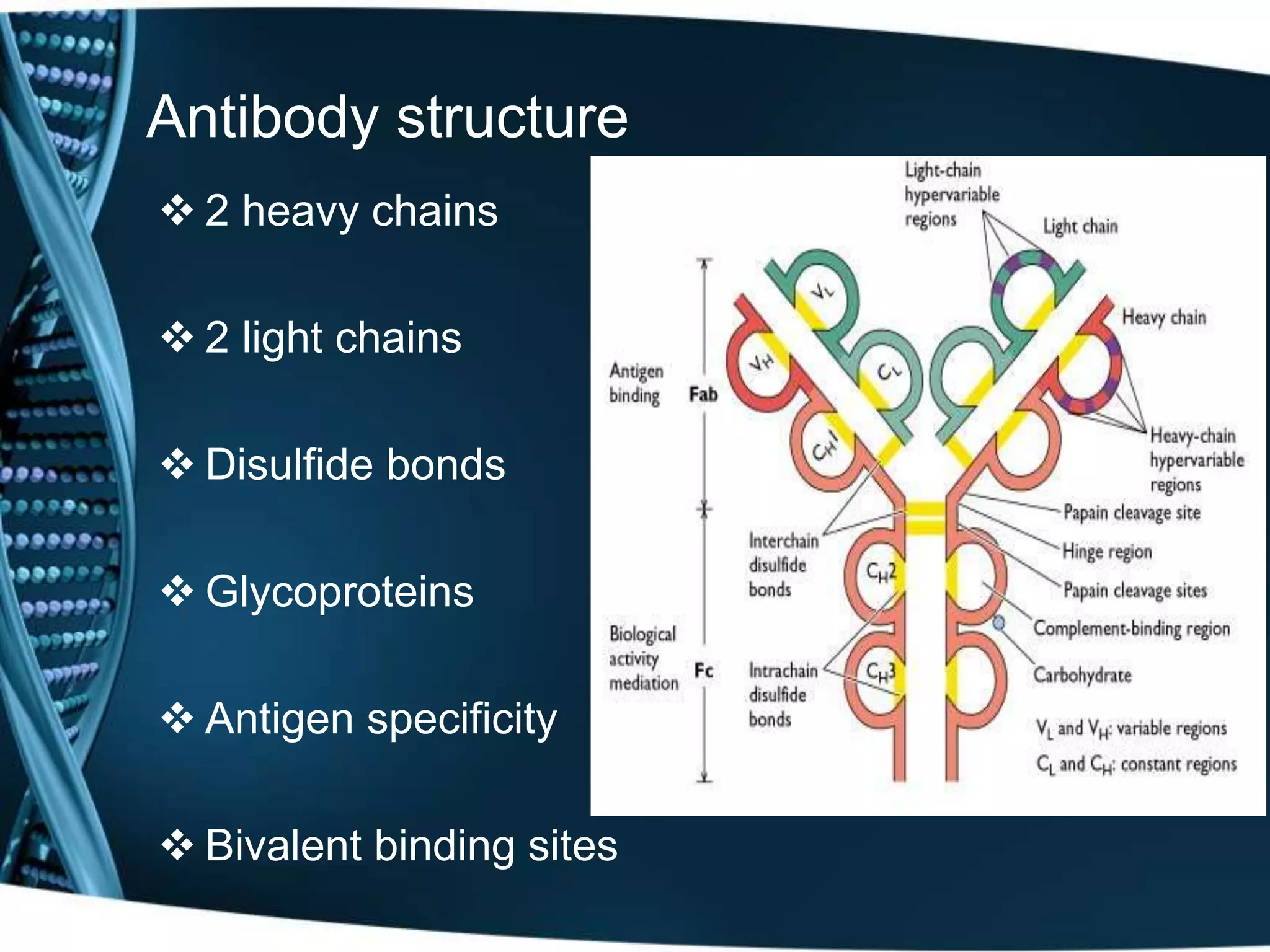
Antibody structure 
 2 heavy chains 
 2 light chains 
 Disulfide bonds 
 Glycoproteins 
 Antigen specificity 
 Bivalent binding sites
Need for protamine-antibody fusion 
 Protamine 
 Cationic peptide 
 Binds to C terminus of Ab 
 Links Ab and siRNA 
 To avoid 
 Nonspecific gene silencing 
 Toxicity in bystander cells
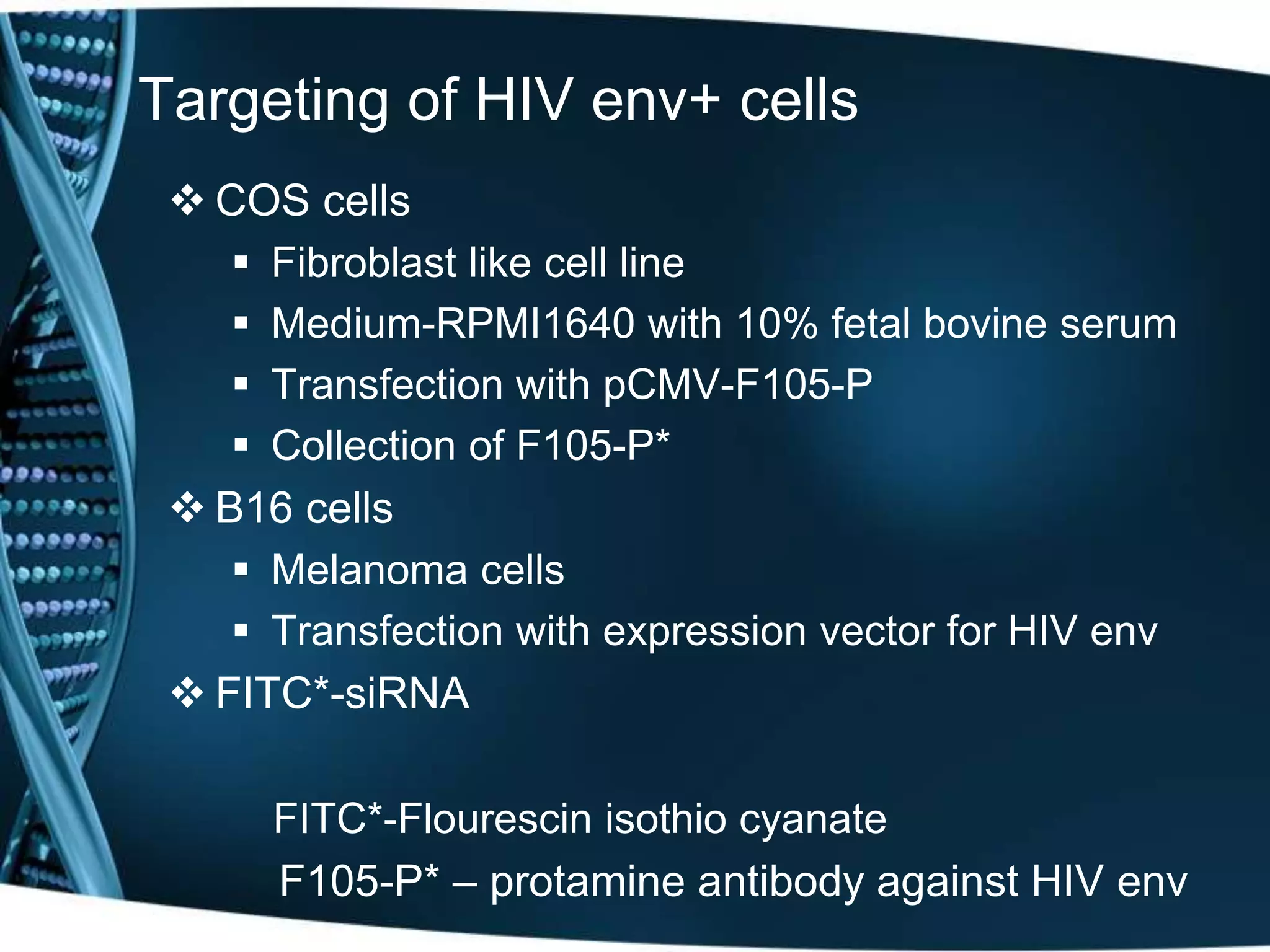
Targeting of HIV env+ cells 
 COS cells 
 Fibroblast like cell line 
 Medium-RPMI1640 with 10% fetal bovine serum 
 Transfection with pCMV-F105-P 
 Collection of F105-P* 
 B16 cells 
 Melanoma cells 
 Transfection with expression vector for HIV env 
 FITC*-siRNA 
FITC*-Flourescin isothio cyanate 
F105-P* – protamine antibody against HIV env
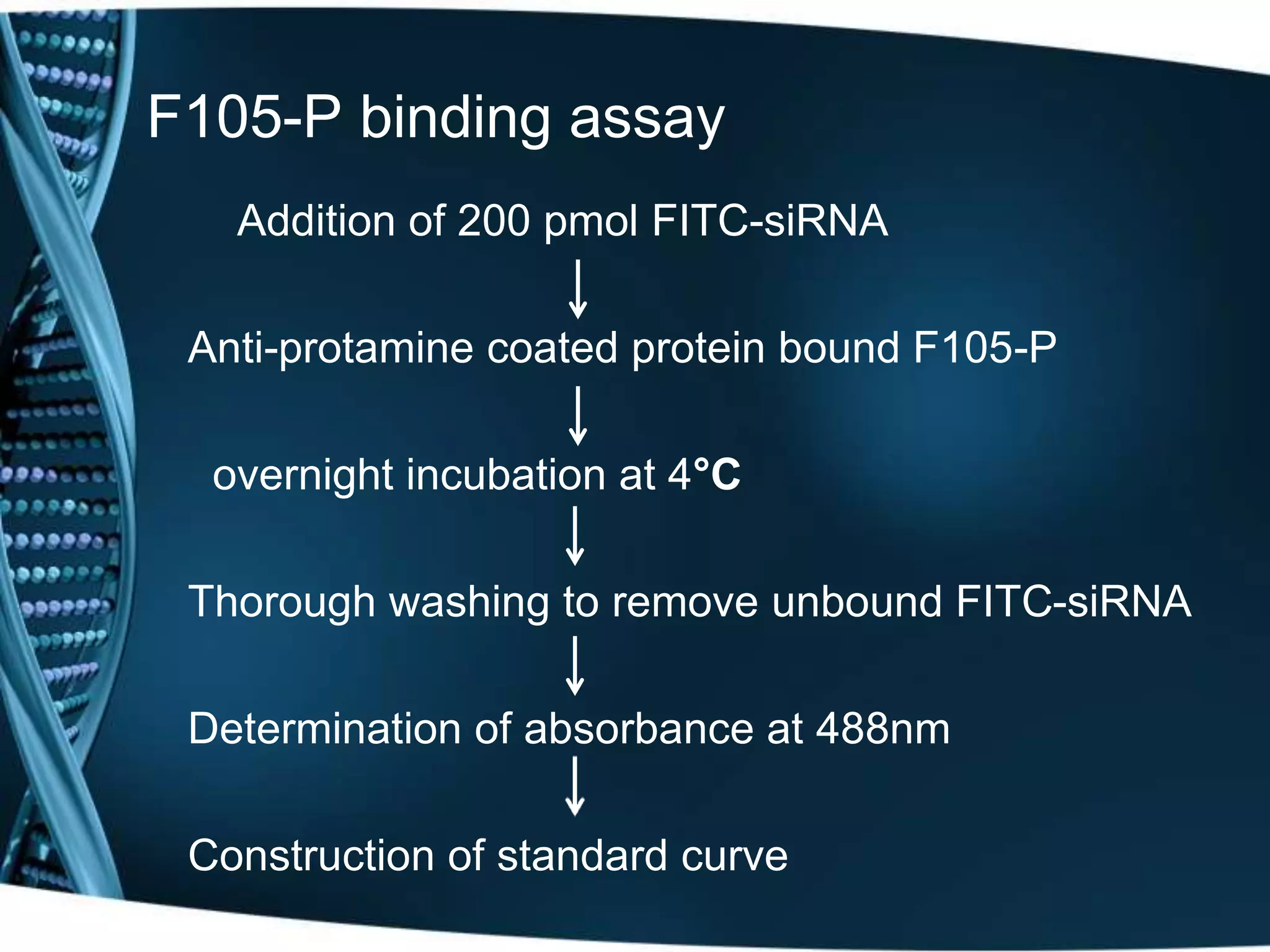
F105-P binding assay 
Addition of 200 pmol FITC-siRNA 
Anti-protamine coated protein bound F105-P 
overnight incubation at 4°C 
Thorough washing to remove unbound FITC-siRNA 
Determination of absorbance at 488nm 
Construction of standard curve
RESULTS 
1 F105-P binds to ~6 siRNA 
molecules
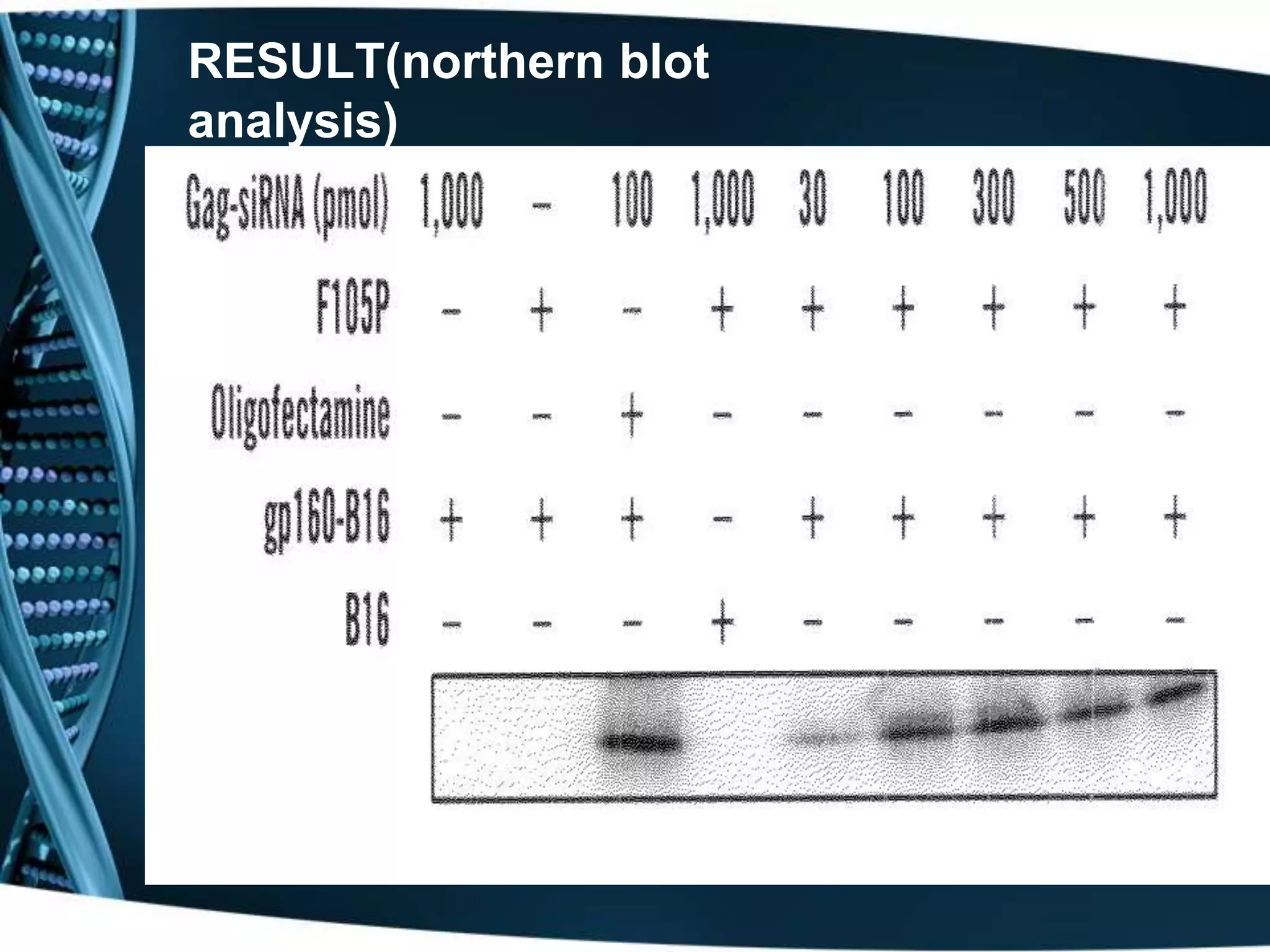
siRNA delivery 
Mixing of F105-P & gag siRNA (6:1) 
Incubation of mixture in PBS at 4°C 
Addition of mixture to cells(B16) 
Transfection of cells with oligofectamine*(control) 
Analysis of gene expression 2days after of siRNA 
delivery 
gag siRNA-gene silencing in HIV env expressing cells 
Oligofectamine*-tranfection reagent
RESULT(northern blot 
analysis)
Analysis of target gene silencing 
Transfection of HeLa* cells with plasmid encoding 
EGFP 
Tranfection of HeLa-GFP with HIV λHXB3 
Treating of culture with F105-p EGFP siRNA 
Analysis of HIV & GFP expression 2d after treatment 
GFP expression by northern blot 
HeLa*-immortal cell line 
EGFP-enhanced green flourescent protein
RESULT 
 Absence of gene silencing 
 untransfected gag p24(-) cells 
 Irrelevant fas siRNA 
 Unmodified F105 in place of F105-P 
Loading 
control
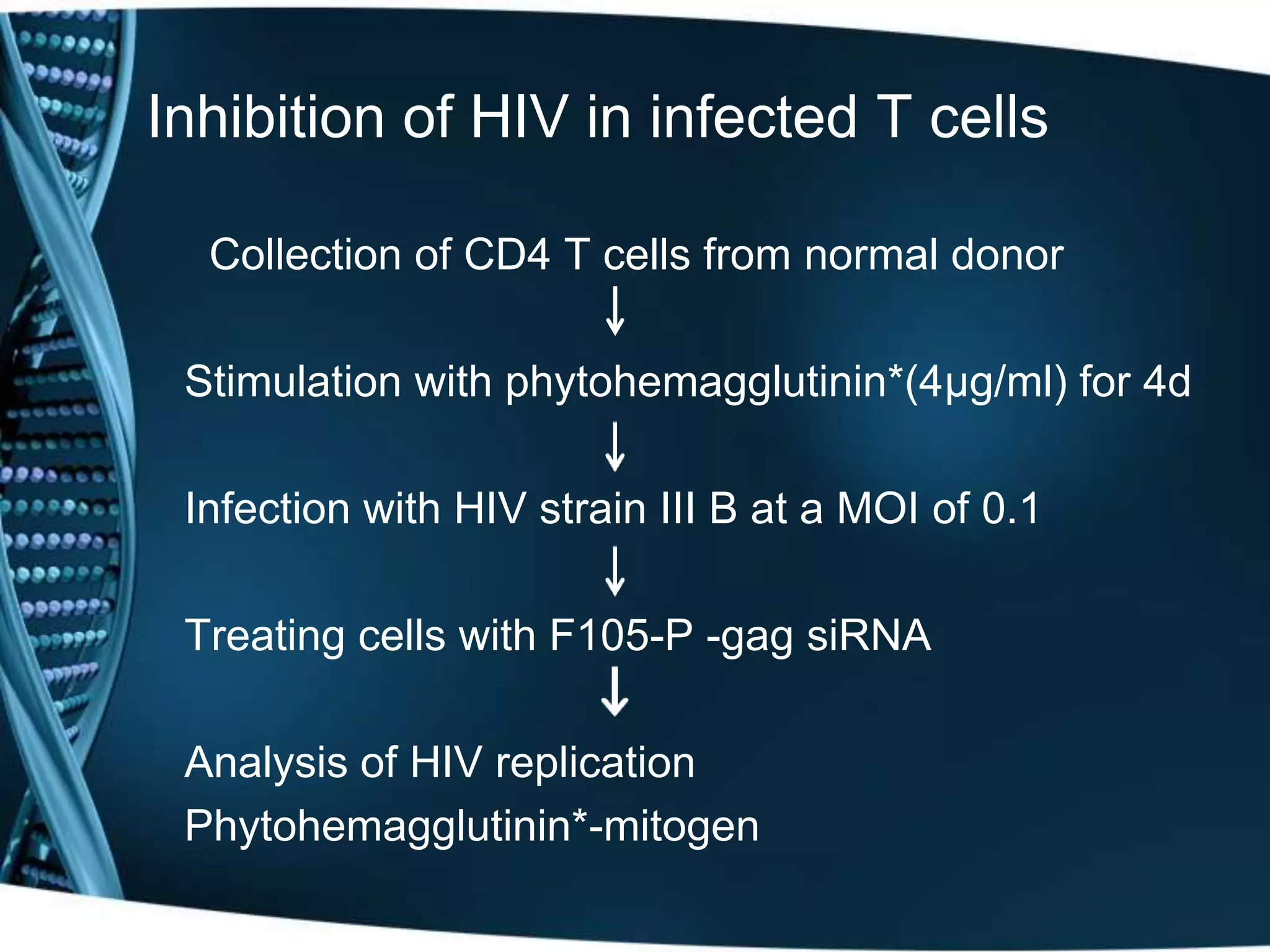
Inhibition of HIV in infected T cells 
Collection of CD4 T cells from normal donor 
Stimulation with phytohemagglutinin*(4μg/ml) for 4d 
Infection with HIV strain III B at a MOI of 0.1 
Treating cells with F105-P -gag siRNA 
Analysis of HIV replication 
Phytohemagglutinin*-mitogen
RESULTS 
 Reduction in infected cells(85%-36%) 
 HIV gag staining-45% 
 ELIZA for HIV p24 
 Concentration of viral particle -170 ng/ml to 
40 ng/ml(100 pmol of siRNA)
HIV gag staining
ELISA for p24 Ag
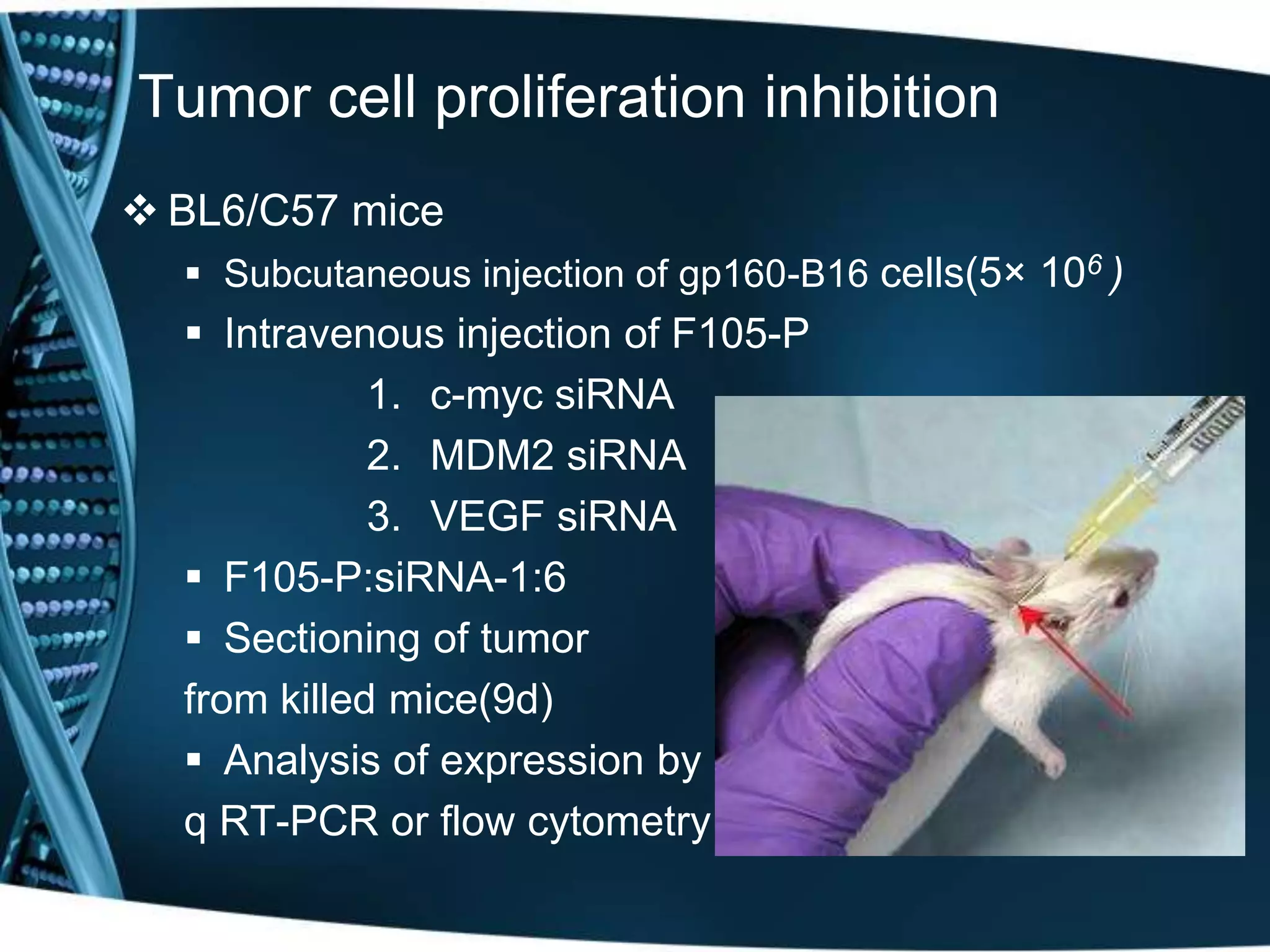
Tumor cell proliferation inhibition 
 BL6/C57 mice 
 Subcutaneous injection of gp160-B16 cells(5× 10⁶ ) 
 Intravenous injection of F105-P 
1. c-myc siRNA 
2. MDM2 siRNA 
3. VEGF siRNA 
 F105-P:siRNA-1:6 
 Sectioning of tumor 
from killed mice(9d) 
 Analysis of expression by 
q RT-PCR or flow cytometry
RESULTS 
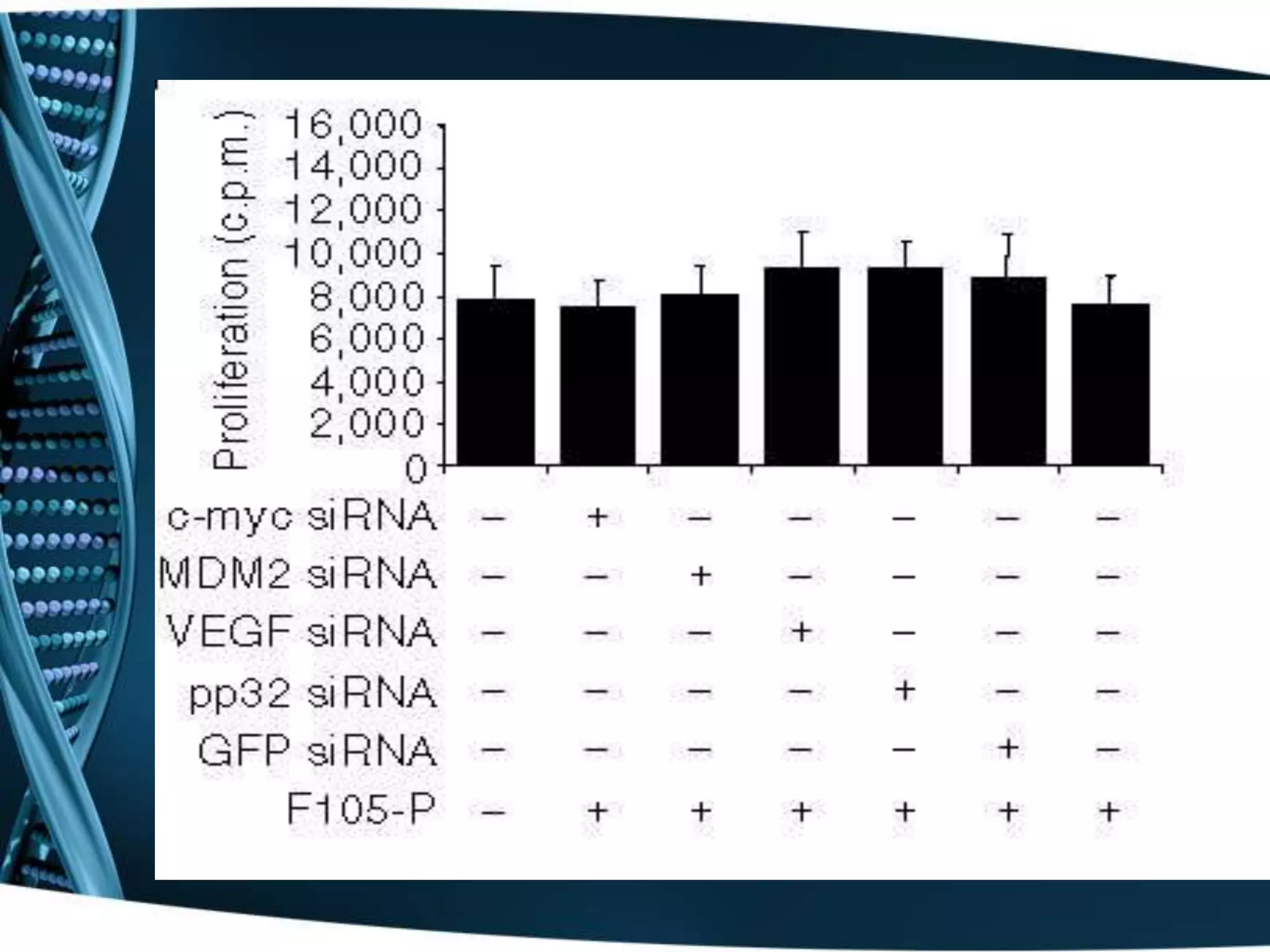
 F105-P-cmyc siRNA 
 Effect on gp160-B16 cells(si RNA conc>100nM) 
 No effect on B16-gp160(-) cells 
F105-P-VEGF siRNA 
 Modest effect 
 Blocking of angiogenesis 
F105-P -GFP siRNA(control) 
 Target tumor suppressor pp32
Contd… 
 F105-p-VEGF,MDM2&c-myc siRNA 
 The greatest effect on gp160-B16 cells
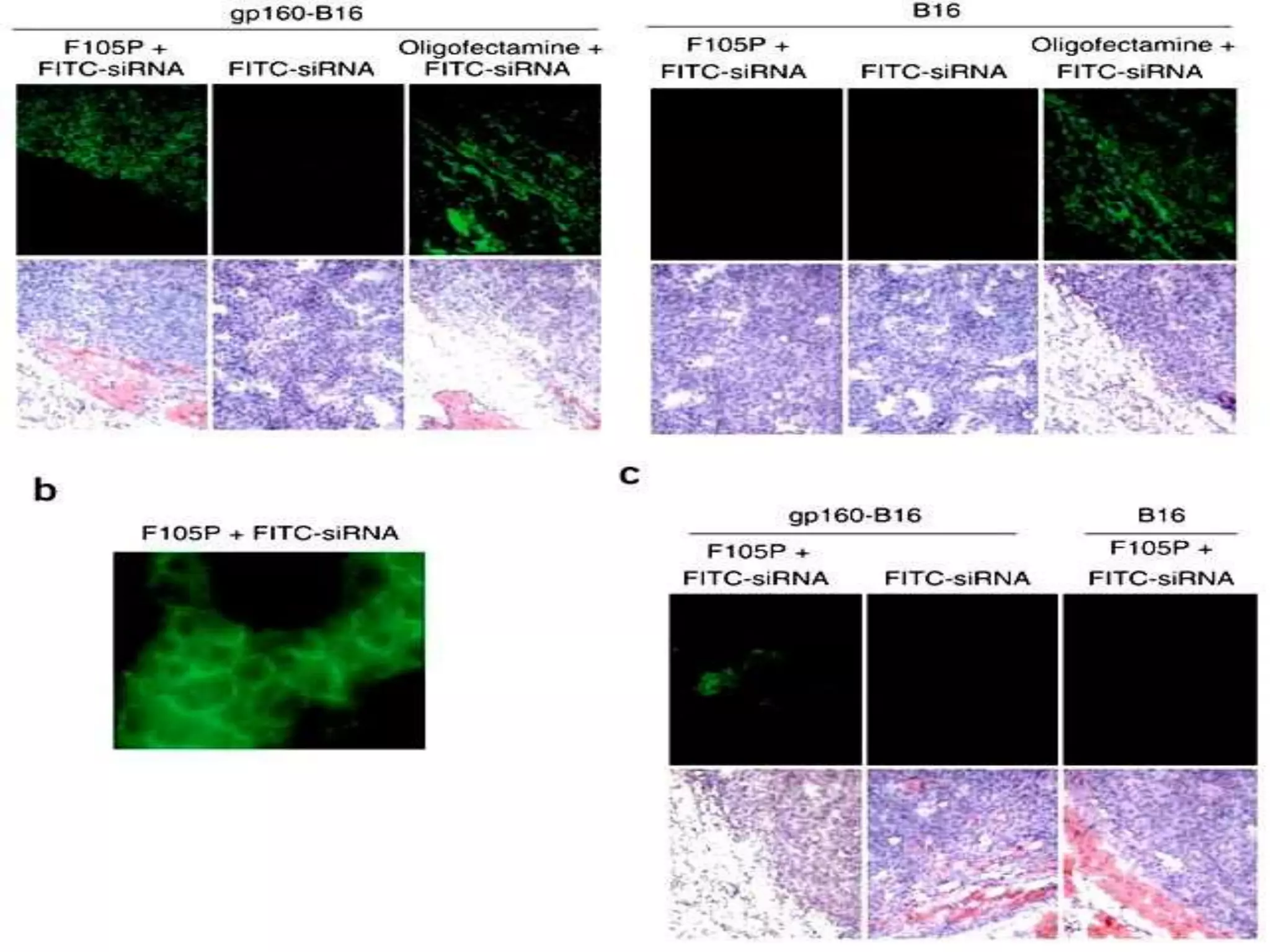
Determination of specificity 
 BL6/C57 mice 
 Subcutaneous injection of gp160-B16 cells(2× 10⁶ ) 
 Intravenous injection of 50μg F105-P-FITC 
siRNA(day 9) 
 Transfection with oligofectamine 
 Cryosectioning of tumor from killed mice(16h) 
OBSERVATION 
 Effect on gp160+ tumor cells 
 Flourescent signal in membrane & cytoplasm,not 
in tumor cell nucleus
Is there any inflammatory responses? 
 Possibilities 
 Trigger an interferon responses 
 Binding of siRNA to TLR* 
q RT-PCR 
 Interferon beta 
 2’,5’-oligoadenylate synthetase 
 Stat-1 
Observation 
 No interferon responses 
TLR*-Toll like receptor
RESULT
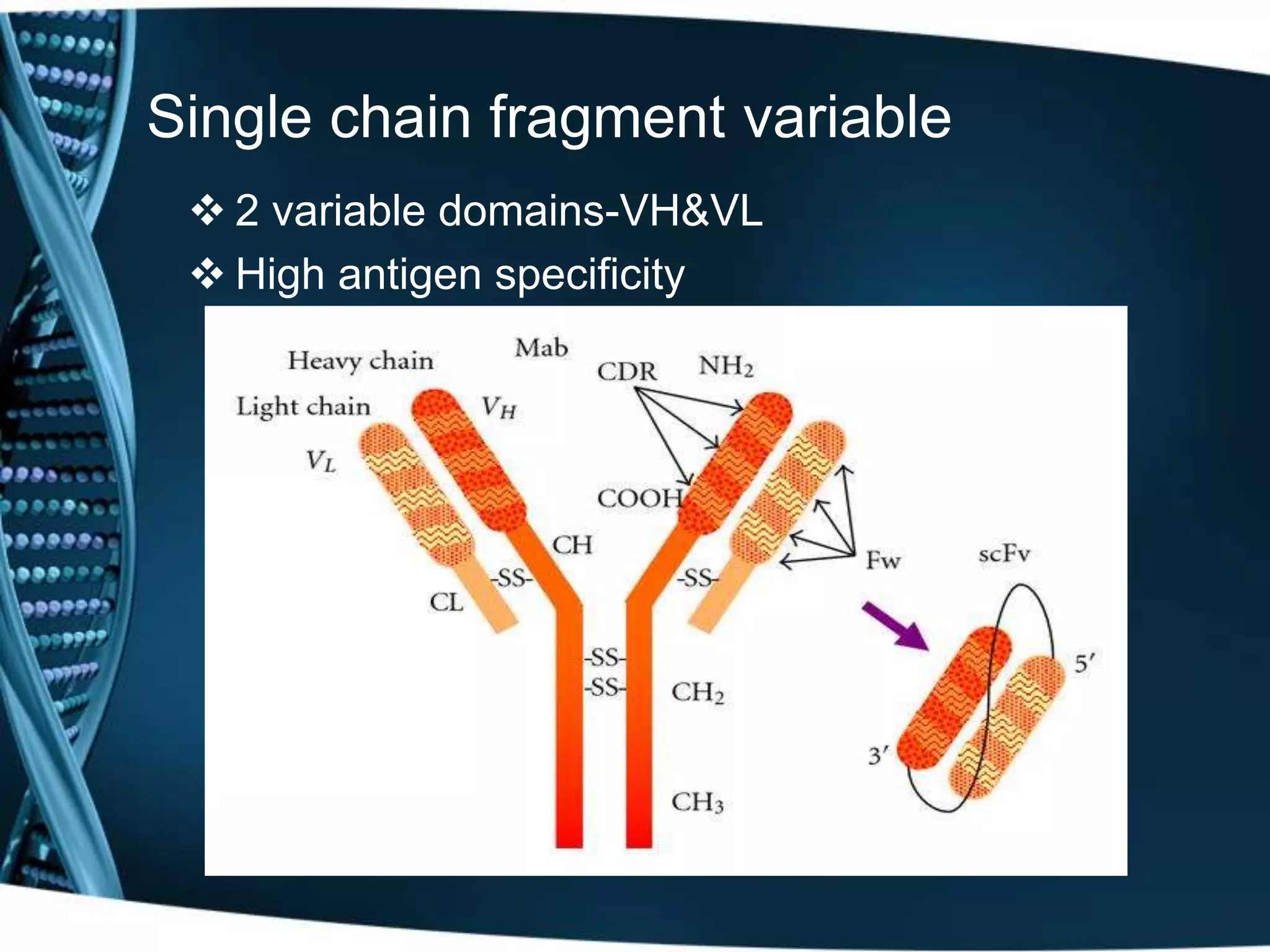
Single chain fragment variable 
 2 variable domains-VH&VL 
 High antigen specificity
Anti ErB2 ML39 scFV production 
Transfection of SF9 cells with virus(ML39 scFV) 
Extraction of ML39 scFV by 6M GuanHCl 
Purification by Ni++ chromatography 
Dialysis with PBS containing 5%glycerol,0.5M 
arginine,1mM EGTA,1mM glutathione 
Final dialysis with PBS containing 5%glycerol
FITC siRNA delivery by ML39 scFV-P 
 Targeting cells 
 ErB2 expressing cells 
 MCF7 breast cancer cells 
 SKBR3 cells 
Observation 
 effect only in ErB2+ cells 
 Ku70 silencing in ErB2+ SKBR3 cells 
 Dose of ML39 scFV-P – 1000pmol
Conclusion 
 Rate limiting factor 
 Short in vivo half-life 
 Filtering of siRNA 
 Prone to Rnase activity 
 Gene silencing enhancement 
 Modified siRNA 
 Cocktails of siRNA 
 Chemokine analog
Antibody mediated in vivo delivery of siRNA via cell surface receptors

Antibody mediated in vivo delivery of siRNA via cell surface receptors

  • 1.
    Antibody mediated invivo delivery of small interfering RNAs via cell-surface receptors From “nature biotechnology” Presented by V.Esakki Muthu Lakshmi
  • 2.
    Introduction Protamine-antibody fusion(F105-P)  Fab fragment siRNA delivery Gene silencing in target cells  HIV env expressing cells  Cancer cells
  • 3.
    siRNA function 19-25 nucleotides long  Antiviral defense mechanism  Transposon silencing  Gene regulation  Chromosomal modification
  • 4.
  • 5.
    Antibody structure 2 heavy chains  2 light chains  Disulfide bonds  Glycoproteins  Antigen specificity  Bivalent binding sites
  • 6.
    Need for protamine-antibodyfusion  Protamine  Cationic peptide  Binds to C terminus of Ab  Links Ab and siRNA  To avoid  Nonspecific gene silencing  Toxicity in bystander cells
  • 8.
    Targeting of HIVenv+ cells  COS cells  Fibroblast like cell line  Medium-RPMI1640 with 10% fetal bovine serum  Transfection with pCMV-F105-P  Collection of F105-P*  B16 cells  Melanoma cells  Transfection with expression vector for HIV env  FITC*-siRNA FITC*-Flourescin isothio cyanate F105-P* – protamine antibody against HIV env
  • 9.
    F105-P binding assay Addition of 200 pmol FITC-siRNA Anti-protamine coated protein bound F105-P overnight incubation at 4°C Thorough washing to remove unbound FITC-siRNA Determination of absorbance at 488nm Construction of standard curve
  • 10.
    RESULTS 1 F105-Pbinds to ~6 siRNA molecules
  • 11.
    siRNA delivery Mixingof F105-P & gag siRNA (6:1) Incubation of mixture in PBS at 4°C Addition of mixture to cells(B16) Transfection of cells with oligofectamine*(control) Analysis of gene expression 2days after of siRNA delivery gag siRNA-gene silencing in HIV env expressing cells Oligofectamine*-tranfection reagent
  • 12.
  • 13.
    Analysis of targetgene silencing Transfection of HeLa* cells with plasmid encoding EGFP Tranfection of HeLa-GFP with HIV λHXB3 Treating of culture with F105-p EGFP siRNA Analysis of HIV & GFP expression 2d after treatment GFP expression by northern blot HeLa*-immortal cell line EGFP-enhanced green flourescent protein
  • 14.
    RESULT  Absenceof gene silencing  untransfected gag p24(-) cells  Irrelevant fas siRNA  Unmodified F105 in place of F105-P Loading control
  • 15.
    Inhibition of HIVin infected T cells Collection of CD4 T cells from normal donor Stimulation with phytohemagglutinin*(4μg/ml) for 4d Infection with HIV strain III B at a MOI of 0.1 Treating cells with F105-P -gag siRNA Analysis of HIV replication Phytohemagglutinin*-mitogen
  • 16.
    RESULTS  Reductionin infected cells(85%-36%)  HIV gag staining-45%  ELIZA for HIV p24  Concentration of viral particle -170 ng/ml to 40 ng/ml(100 pmol of siRNA)
  • 17.
  • 18.
  • 19.
    Tumor cell proliferationinhibition  BL6/C57 mice  Subcutaneous injection of gp160-B16 cells(5× 10⁶ )  Intravenous injection of F105-P 1. c-myc siRNA 2. MDM2 siRNA 3. VEGF siRNA  F105-P:siRNA-1:6  Sectioning of tumor from killed mice(9d)  Analysis of expression by q RT-PCR or flow cytometry
  • 20.
    RESULTS  F105-P-cmycsiRNA  Effect on gp160-B16 cells(si RNA conc>100nM)  No effect on B16-gp160(-) cells F105-P-VEGF siRNA  Modest effect  Blocking of angiogenesis F105-P -GFP siRNA(control)  Target tumor suppressor pp32
  • 21.
    Contd…  F105-p-VEGF,MDM2&c-mycsiRNA  The greatest effect on gp160-B16 cells
  • 24.
    Determination of specificity  BL6/C57 mice  Subcutaneous injection of gp160-B16 cells(2× 10⁶ )  Intravenous injection of 50μg F105-P-FITC siRNA(day 9)  Transfection with oligofectamine  Cryosectioning of tumor from killed mice(16h) OBSERVATION  Effect on gp160+ tumor cells  Flourescent signal in membrane & cytoplasm,not in tumor cell nucleus
  • 26.
    Is there anyinflammatory responses?  Possibilities  Trigger an interferon responses  Binding of siRNA to TLR* q RT-PCR  Interferon beta  2’,5’-oligoadenylate synthetase  Stat-1 Observation  No interferon responses TLR*-Toll like receptor
  • 27.
  • 28.
    Single chain fragmentvariable  2 variable domains-VH&VL  High antigen specificity
  • 29.
    Anti ErB2 ML39scFV production Transfection of SF9 cells with virus(ML39 scFV) Extraction of ML39 scFV by 6M GuanHCl Purification by Ni++ chromatography Dialysis with PBS containing 5%glycerol,0.5M arginine,1mM EGTA,1mM glutathione Final dialysis with PBS containing 5%glycerol
  • 32.
    FITC siRNA deliveryby ML39 scFV-P  Targeting cells  ErB2 expressing cells  MCF7 breast cancer cells  SKBR3 cells Observation  effect only in ErB2+ cells  Ku70 silencing in ErB2+ SKBR3 cells  Dose of ML39 scFV-P – 1000pmol
  • 34.
    Conclusion  Ratelimiting factor  Short in vivo half-life  Filtering of siRNA  Prone to Rnase activity  Gene silencing enhancement  Modified siRNA  Cocktails of siRNA  Chemokine analog