Anthropology
Presented by: Bladimer M. Dadulla
Objectives:
• To be able to understand the essence of the
Anthropology.
Sino
ka?
What is Anthropology
• Anthropologia derived from the combining
forms of the Greek words ánthrōpos (ἄνθρωπος,
"human") and lógos (λόγος, "study")
• Scientific study of humans, human behavior and
societies in the past and present. Social
anthropology studies patterns of behavior and
cultural anthropology studies cultural meaning,
including norms and values. Linguistic
anthropology studies how language influences
social life.
What is anthropology and why is it important?
• Anthropology combines or synthesizes the
knowledge of many disciplines into a coherent study
of what it means to be human. Self-knowledge and
self-exploration through study of an arc of social
sciences and humanities is important in gaining an
understanding of “the bigger picture” of human
culture.
Importance
• For us to be able to understand of who we are and to
understand the present time.
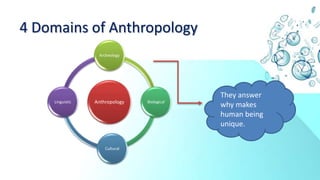
4 Domains of Anthropology
Anthropology
Archeology
Biological
Cultural
Linguistic
They answer
why makes
human being
unique.
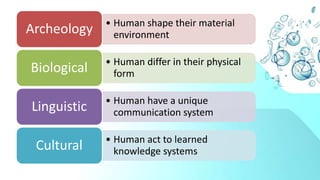
• Human shape their material
environmentArcheology
• Human differ in their physical
formBiological
• Human have a unique
communication systemLinguistic
• Human act to learned
knowledge systemsCultural
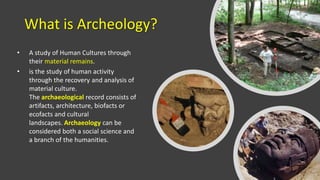
What is Archeology?
• A study of Human Cultures through
their material remains.
• is the study of human activity
through the recovery and analysis of
material culture.
The archaeological record consists of
artifacts, architecture, biofacts or
ecofacts and cultural
landscapes. Archaeology can be
considered both a social science and
a branch of the humanities.
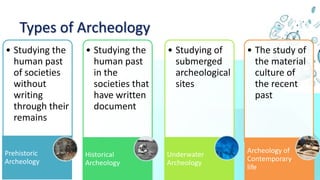
Types of Archeology
• Studying the
human past
of societies
without
writing
through their
remains
Prehistoric
Archeology
• Studying the
human past
in the
societies that
have written
document
Historical
Archeology
• Studying of
submerged
archeological
sites
Underwater
Archeology
• The study of
the material
culture of
the recent
past
Archeology of
Contemporary
life
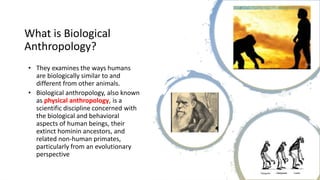
What is Biological
Anthropology?
• They examines the ways humans
are biologically similar to and
different from other animals.
• Biological anthropology, also known
as physical anthropology, is a
scientific discipline concerned with
the biological and behavioral
aspects of human beings, their
extinct hominin ancestors, and
related non-human primates,
particularly from an evolutionary
perspective
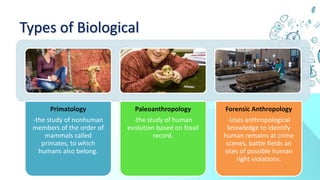
Types of Biological
Primatology
-the study of nonhuman
members of the order of
mammals called
primates, to which
humans also belong.
Paleoanthropology
-the study of human
evolution based on fossil
record.
Forensic Anthropology
-Uses anthropological
knowledge to identify
human remains at crime
scenes, battle fields an
sites of possible human
right violations.
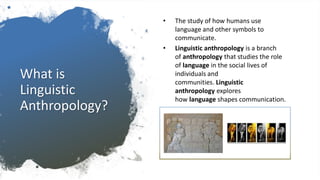
What is
Linguistic
Anthropology?
• The study of how humans use
language and other symbols to
communicate.
• Linguistic anthropology is a branch
of anthropology that studies the role
of language in the social lives of
individuals and
communities. Linguistic
anthropology explores
how language shapes communication.
Linguistic
Anthropology
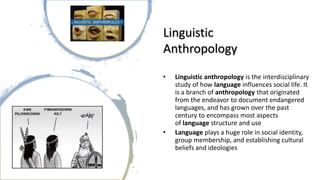
• Linguistic anthropology is the interdisciplinary
study of how language influences social life. It
is a branch of anthropology that originated
from the endeavor to document endangered
languages, and has grown over the past
century to encompass most aspects
of language structure and use
• Language plays a huge role in social identity,
group membership, and establishing cultural
beliefs and ideologies
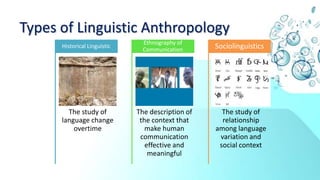
Types of Linguistic Anthropology
The study of
language change
overtime
Historical Linguistic
The description of
the context that
make human
communication
effective and
meaningful
Ethnography of
Communication
The study of
relationship
among language
variation and
social context
Sociolinguistics
Cultural
Anthropology
• Describes and analyze the
beliefs material worlds and
the ways these affect human
action.
• The study of human behavior
that is learned rather than
genetically transmitted, and
that is typically of groups of
people.
Thank
you!

Anthropology

  • 1.
  • 2.
    Objectives: • To beable to understand the essence of the Anthropology.
  • 3.
  • 4.
    What is Anthropology •Anthropologia derived from the combining forms of the Greek words ánthrōpos (ἄνθρωπος, "human") and lógos (λόγος, "study") • Scientific study of humans, human behavior and societies in the past and present. Social anthropology studies patterns of behavior and cultural anthropology studies cultural meaning, including norms and values. Linguistic anthropology studies how language influences social life.
  • 5.
    What is anthropologyand why is it important? • Anthropology combines or synthesizes the knowledge of many disciplines into a coherent study of what it means to be human. Self-knowledge and self-exploration through study of an arc of social sciences and humanities is important in gaining an understanding of “the bigger picture” of human culture.
  • 6.
    Importance • For usto be able to understand of who we are and to understand the present time.
  • 7.
    4 Domains ofAnthropology Anthropology Archeology Biological Cultural Linguistic They answer why makes human being unique.
  • 8.
    • Human shapetheir material environmentArcheology • Human differ in their physical formBiological • Human have a unique communication systemLinguistic • Human act to learned knowledge systemsCultural
  • 9.
    What is Archeology? •A study of Human Cultures through their material remains. • is the study of human activity through the recovery and analysis of material culture. The archaeological record consists of artifacts, architecture, biofacts or ecofacts and cultural landscapes. Archaeology can be considered both a social science and a branch of the humanities.
  • 10.
    Types of Archeology •Studying the human past of societies without writing through their remains Prehistoric Archeology • Studying the human past in the societies that have written document Historical Archeology • Studying of submerged archeological sites Underwater Archeology • The study of the material culture of the recent past Archeology of Contemporary life
  • 11.
    What is Biological Anthropology? •They examines the ways humans are biologically similar to and different from other animals. • Biological anthropology, also known as physical anthropology, is a scientific discipline concerned with the biological and behavioral aspects of human beings, their extinct hominin ancestors, and related non-human primates, particularly from an evolutionary perspective
  • 12.
    Types of Biological Primatology -thestudy of nonhuman members of the order of mammals called primates, to which humans also belong. Paleoanthropology -the study of human evolution based on fossil record. Forensic Anthropology -Uses anthropological knowledge to identify human remains at crime scenes, battle fields an sites of possible human right violations.
  • 13.
    What is Linguistic Anthropology? • Thestudy of how humans use language and other symbols to communicate. • Linguistic anthropology is a branch of anthropology that studies the role of language in the social lives of individuals and communities. Linguistic anthropology explores how language shapes communication.
  • 14.
    Linguistic Anthropology • Linguistic anthropologyis the interdisciplinary study of how language influences social life. It is a branch of anthropology that originated from the endeavor to document endangered languages, and has grown over the past century to encompass most aspects of language structure and use • Language plays a huge role in social identity, group membership, and establishing cultural beliefs and ideologies
  • 15.
    Types of LinguisticAnthropology The study of language change overtime Historical Linguistic The description of the context that make human communication effective and meaningful Ethnography of Communication The study of relationship among language variation and social context Sociolinguistics
  • 16.
    Cultural Anthropology • Describes andanalyze the beliefs material worlds and the ways these affect human action. • The study of human behavior that is learned rather than genetically transmitted, and that is typically of groups of people.
  • 17.

Editor's Notes

  • #10 Ecofacts- it was not modified by humans Biofacts are natural objects found alongside artifacts or features, such as animal bones, charcoal, plants, and pollen
  • #17 They produce Ethnography- specific text work for the specific tribe or group of people example: jungle culture in Phil Ethnology- one step back general study for a group of people example: jungle culture of the world