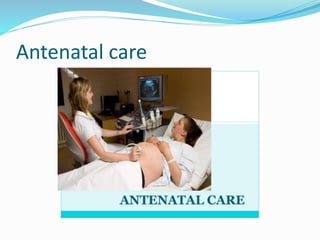
Antenatal care
Definition of Antenatal care
 Antenatal care refers to the care that is given to an
expected mother from time of conception until the
beginning of the labor.
 comprehensive health supervision of a pregnant
woman before delivery
 it is planned examination, observation and guidance
given to the pregnant woman from conception till the
time of labor.
Con…
 The prenatal period is a time of physical and psychological
preparation for birth and parenthood becoming parent is one
of the maturational of adult life .
 it is a time of intensity learning for parent and those close to
them.
 The prenatal period provides unique opportunity for
members of health care teem to influence family health
during this period essentially health women seek regular care
and guidance.
Con…
•Regular prenatal visit ,beginning soon after the
first missed menstrual period , after opportunity
to ensure the health of the expectant mother
and her infant .
Prenatal health care permits diagnosis and
treatment of preexisting maternal disorders and
those may develop during the pregnancy .
Goals of Antenatal Care
 Develop partnership with woman
 Promote awareness of health and nutrition
 Lessen the discomforts of pregnancy
 Monitor and promote fetal wellbeing
 Prepare mothers for birth, providing an environment of
care to have a safe delivery
 Identification of high risk pregnancy
Con…
Antenatal care should be goal-oriented with
interventions that have of proven value. Examples
include: –
 Prevention, detection, and investigation of anemia and
treatment of iron-deficiency anemia
 Prevention of obstructed labor by external cephalic
version
 Immunization against tetanus and promotion of clean
delivery
Identification of High Risk
Pregnancy
 Detection of Anemia, Hypertensive Disorders and
Endocrine Disorders
 Tetanus prevention
 Nutrition treatment if needed
 Fetal complications
 Management of already existing condition
Who Should Give Antenatal Care?
 All health providers specially nurses may manage care,
calling in a midwife or doctor if a specific need arises
How often should the antenatal
visits occur?
 First visit should occur by the 12th week of pregnancy
 Monthly visits during the first and second trimesters
(until 26 weeks) if there are no complications
 Visits every two weeks from 27 to 36 weeks
 Weekly visits from 36 weeks until delivery
History
 Personal history
 Past/present history
 Medical/surgical history
 Obstetric history
 Drug history
 Family history
 Social history
Cont……………
General appearance:
• How is look like.
• Is she well dressed
• pallor.
• Jaundice.
conti
When to go to the hospital
 Sudden gush of fluid (called rupture of membranes)
 Vaginal bleeding
 Blurred vision, double vision, frequent severe headaches
 Persistent vomiting
 Epigastric pain (especially on the left side)
 Dysuria and/or lower abdominal pain
 Decreased fetal movements
Later Visits
 Urine for protein and glucose
 Diabetic testing if at risk
 Blood Pressure
 Fundal Height, lie and movements
 Weight gain
 Tetanus Toxoid vaccinations
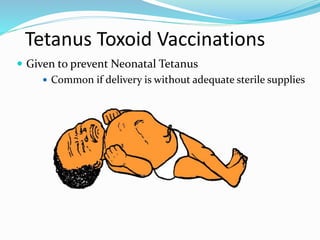
Tetanus Toxoid Vaccinations
 Given to prevent Neonatal Tetanus
 Common if delivery is without adequate sterile supplies
Disease Age Route
Dose SideEffects
Site
Technique
Position
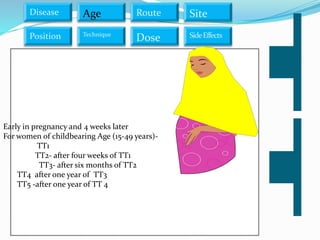
Early in pregnancy and 4 weeks later
For women of childbearing Age (15-49 years)-
TT1
TT2- after four weeks of TT1
TT3- after six months of TT2
TT4 after one year of TT3
TT5 -after one year of TT 4
Disease Age Route
Dose SideEffects
Site
Technique
Position
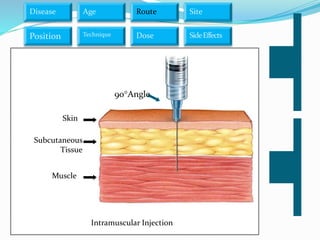
Muscle
Subcutaneous
Tissue
Skin
90°Angle
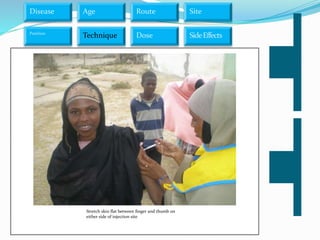
Intramuscular Injection
Disease Age Route
Dose SideEffects
Site
Technique
Position
Stretch skin flat between finger and thumb on
either side of injection site
Summary
 FANC is a method of antenatal care introduced by
WHO in 2002.
 It consists of 4 comprehensive personalised visits
spaced through the pregnancy when information is
gathered, clinical examination done, tests are carried
out, interventions undertaken and advice given.
Cont.
 Facilities providing FANC should encourage pregnant
women to attend on 4 occasions timed as follows:
 1st visit: <16 weeks; 2nd visit: 16-28 weeks; 3rd visit:28-
32 weeks; 4th visit 32-40 weeks.
Cont.
 FANC is designed only for those women who are free
from any medical conditions requiring special care
during pregnancy.
 An assessment is made at the first visit to identify
women unsuitable for FANC and make appropriate
arrangements for them.
Cont.
 At each visit there are prescribed tasks to be
undertaken and these are detailed in the WHO
Manual mentioned above.
 The objectives are:
1. Detection and treatment of problems
2. Prevention of complications using safe, simple,
and cost effective interventions
3. Preparation for birth
4. Promotion of health
cont
 Each woman should have an individual birth plan.
 This should include transport arrangements and
finance in an emergency and the identification of a
person who will be available for help and support.
 The pregnant woman and her family should
understand the danger signs in pregnancy, labour and
after delivery so there are no delays in taking
appropriate action.
Cont..
 FANC encourages husbands to be involved in the
process.
 Clinics should be designed so as to make it easy for
men to accompany their wife to each visit.
Health and Nutrition Education During ANC
Health and nutrition education during ANC must focus on:
 Pregnancy: foetal movement (specially for primigravida)
 labour and common problems
 Diet and Nutrition: extra food, weight gains, fasting and
rest
 Avoiding alcohol, tobacco, and drugs (specially in the first
trimester)
 Personal hygiene
 Delivery preparation
Con…
 Labour signs
 Breast-feeding
 Newborn care
 Family planning
 Traditional beliefs and practices
Weight Gain During Pregnancy
 Pre-pregnancy weight and weight gain in pregnancy
are both critical and additive in their effect on
pregnancy outcome.
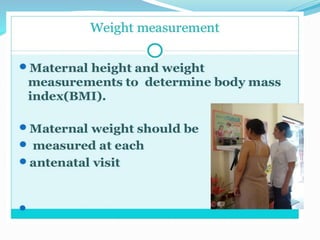
 A pregnant mother has to have weight measurement a
month apart, anytime during the second or third
trimester.
 A gain of less than one kg per month is the danger
signal, with no weight gain or weight loss being even
more severe and calling for immediate action, such as
food supplementation directly for the woman.
Mothers should be weighed and counseling.
Risk Factors Identifiable In ANC
Risk factors identifiable in ANC include:
 Age under 18 or above 35
 Primigravida
 Previous caesarean section, vacuum, or forceps
delivery
 Previous perinatal death, stillbirth
 Previous Post partum hemorrhage
 Previous ante partum hemorrhage
Con…
 More than 6 pregnancies
 Twins
 Hydrominos
 Pre eclampsia Diabetes, cardiac problem, renal disease
etc.
Role of Trained Traditional Birth Attendants
(TTBA’s)
 In general Trained traditional birth attendants are
important and helpful in advising and referring during
pregnancy & delivery. Because TTBA’s can easily
identify problems such as
 Young primigravida
 Previous pregnancy problems
 Short stature (depending on local norms of risk)
 Bleeding before or during labour
 Pre mature rupture of membrane

Antenatal care.pptx

  • 1.
  • 2.
    Definition of Antenatalcare  Antenatal care refers to the care that is given to an expected mother from time of conception until the beginning of the labor.  comprehensive health supervision of a pregnant woman before delivery  it is planned examination, observation and guidance given to the pregnant woman from conception till the time of labor.
  • 3.
    Con…  The prenatalperiod is a time of physical and psychological preparation for birth and parenthood becoming parent is one of the maturational of adult life .  it is a time of intensity learning for parent and those close to them.  The prenatal period provides unique opportunity for members of health care teem to influence family health during this period essentially health women seek regular care and guidance.
  • 4.
    Con… •Regular prenatal visit,beginning soon after the first missed menstrual period , after opportunity to ensure the health of the expectant mother and her infant . Prenatal health care permits diagnosis and treatment of preexisting maternal disorders and those may develop during the pregnancy .
  • 5.
    Goals of AntenatalCare  Develop partnership with woman  Promote awareness of health and nutrition  Lessen the discomforts of pregnancy  Monitor and promote fetal wellbeing  Prepare mothers for birth, providing an environment of care to have a safe delivery  Identification of high risk pregnancy
  • 6.
    Con… Antenatal care shouldbe goal-oriented with interventions that have of proven value. Examples include: –  Prevention, detection, and investigation of anemia and treatment of iron-deficiency anemia  Prevention of obstructed labor by external cephalic version  Immunization against tetanus and promotion of clean delivery
  • 7.
    Identification of HighRisk Pregnancy  Detection of Anemia, Hypertensive Disorders and Endocrine Disorders  Tetanus prevention  Nutrition treatment if needed  Fetal complications  Management of already existing condition
  • 8.
    Who Should GiveAntenatal Care?  All health providers specially nurses may manage care, calling in a midwife or doctor if a specific need arises
  • 9.
    How often shouldthe antenatal visits occur?  First visit should occur by the 12th week of pregnancy  Monthly visits during the first and second trimesters (until 26 weeks) if there are no complications  Visits every two weeks from 27 to 36 weeks  Weekly visits from 36 weeks until delivery
  • 11.
    History  Personal history Past/present history  Medical/surgical history  Obstetric history  Drug history  Family history  Social history
  • 13.
    Cont…………… General appearance: • Howis look like. • Is she well dressed • pallor. • Jaundice.
  • 15.
  • 16.
    When to goto the hospital  Sudden gush of fluid (called rupture of membranes)  Vaginal bleeding  Blurred vision, double vision, frequent severe headaches  Persistent vomiting  Epigastric pain (especially on the left side)  Dysuria and/or lower abdominal pain  Decreased fetal movements
  • 17.
    Later Visits  Urinefor protein and glucose  Diabetic testing if at risk  Blood Pressure  Fundal Height, lie and movements  Weight gain  Tetanus Toxoid vaccinations
  • 18.
    Tetanus Toxoid Vaccinations Given to prevent Neonatal Tetanus  Common if delivery is without adequate sterile supplies
  • 19.
    Disease Age Route DoseSideEffects Site Technique Position Early in pregnancy and 4 weeks later For women of childbearing Age (15-49 years)- TT1 TT2- after four weeks of TT1 TT3- after six months of TT2 TT4 after one year of TT3 TT5 -after one year of TT 4
  • 20.
    Disease Age Route DoseSideEffects Site Technique Position Muscle Subcutaneous Tissue Skin 90°Angle Intramuscular Injection
  • 21.
    Disease Age Route DoseSideEffects Site Technique Position Stretch skin flat between finger and thumb on either side of injection site
  • 23.
    Summary  FANC isa method of antenatal care introduced by WHO in 2002.  It consists of 4 comprehensive personalised visits spaced through the pregnancy when information is gathered, clinical examination done, tests are carried out, interventions undertaken and advice given.
  • 24.
    Cont.  Facilities providingFANC should encourage pregnant women to attend on 4 occasions timed as follows:  1st visit: <16 weeks; 2nd visit: 16-28 weeks; 3rd visit:28- 32 weeks; 4th visit 32-40 weeks.
  • 25.
    Cont.  FANC isdesigned only for those women who are free from any medical conditions requiring special care during pregnancy.  An assessment is made at the first visit to identify women unsuitable for FANC and make appropriate arrangements for them.
  • 26.
    Cont.  At eachvisit there are prescribed tasks to be undertaken and these are detailed in the WHO Manual mentioned above.  The objectives are: 1. Detection and treatment of problems 2. Prevention of complications using safe, simple, and cost effective interventions 3. Preparation for birth 4. Promotion of health
  • 27.
    cont  Each womanshould have an individual birth plan.  This should include transport arrangements and finance in an emergency and the identification of a person who will be available for help and support.  The pregnant woman and her family should understand the danger signs in pregnancy, labour and after delivery so there are no delays in taking appropriate action.
  • 28.
    Cont..  FANC encourageshusbands to be involved in the process.  Clinics should be designed so as to make it easy for men to accompany their wife to each visit.
  • 29.
    Health and NutritionEducation During ANC Health and nutrition education during ANC must focus on:  Pregnancy: foetal movement (specially for primigravida)  labour and common problems  Diet and Nutrition: extra food, weight gains, fasting and rest  Avoiding alcohol, tobacco, and drugs (specially in the first trimester)  Personal hygiene  Delivery preparation
  • 30.
    Con…  Labour signs Breast-feeding  Newborn care  Family planning  Traditional beliefs and practices
  • 31.
    Weight Gain DuringPregnancy  Pre-pregnancy weight and weight gain in pregnancy are both critical and additive in their effect on pregnancy outcome.  A pregnant mother has to have weight measurement a month apart, anytime during the second or third trimester.  A gain of less than one kg per month is the danger signal, with no weight gain or weight loss being even more severe and calling for immediate action, such as food supplementation directly for the woman. Mothers should be weighed and counseling.
  • 32.
    Risk Factors IdentifiableIn ANC Risk factors identifiable in ANC include:  Age under 18 or above 35  Primigravida  Previous caesarean section, vacuum, or forceps delivery  Previous perinatal death, stillbirth  Previous Post partum hemorrhage  Previous ante partum hemorrhage
  • 33.
    Con…  More than6 pregnancies  Twins  Hydrominos  Pre eclampsia Diabetes, cardiac problem, renal disease etc.
  • 34.
    Role of TrainedTraditional Birth Attendants (TTBA’s)  In general Trained traditional birth attendants are important and helpful in advising and referring during pregnancy & delivery. Because TTBA’s can easily identify problems such as  Young primigravida  Previous pregnancy problems  Short stature (depending on local norms of risk)  Bleeding before or during labour  Pre mature rupture of membrane