P R E S E N T E D B Y
M S . A N S H U A R O R A
A S S O C I A T E P R O F E S S O R
D E P A R T M E N T O F M E D I A A N D C U L T U R A L S T U D I E S
G L O C A L U N I V E R S I T Y
Science and Society
and The Need For Organ
Donation
Introduction
 This is an important concern that India is one of the
lowest organ donating countries in the world.
Facts and figures reveal that less than one in a million
their organs .It has been nearly 20 years that The Human
Organ Transplantation Act has been passed but
majority of people are still not aware about organ
donation. The result:
 Since 2005 more than three million people have died in
the country because of non-availability of organs .About
1.5 to 2 lakh people await kidney transplants each year
but only less than 5% get treated as there are not enough
donors available.
Research Methodology
 Extensive literature review undertaken during
September and October 2013.The purpose was to
gather information on the organ donation data
available through information available on websites
and news articles from daily newspapers. The
researcher has tried to cover many aspects related to
organ donation and tried to synthesize this into a
tentative picture
Research Methodology
 Due to the paucity of scientific research the media
reports were identified as significant complementary
resources.
 Articles published in the past one year that were
accessible in both English and Hindi were
examined. For the purpose of this paper, an
additional survey of media reports published up to
15 Oct 2013 was carried out .The material obtained
using these methods was organized into a searchable
database and then was systematically reviewed.
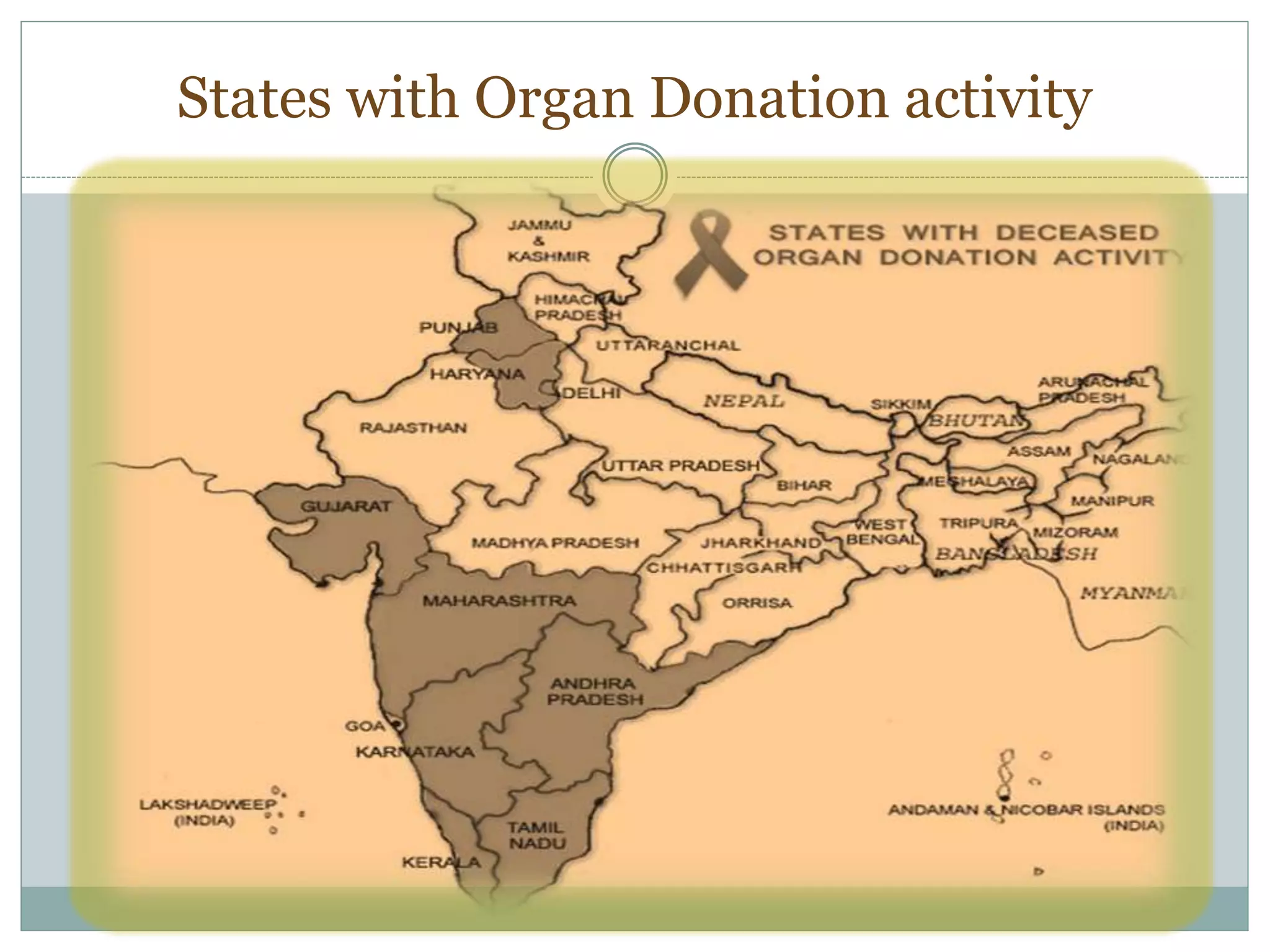
States with Organ Donation activity
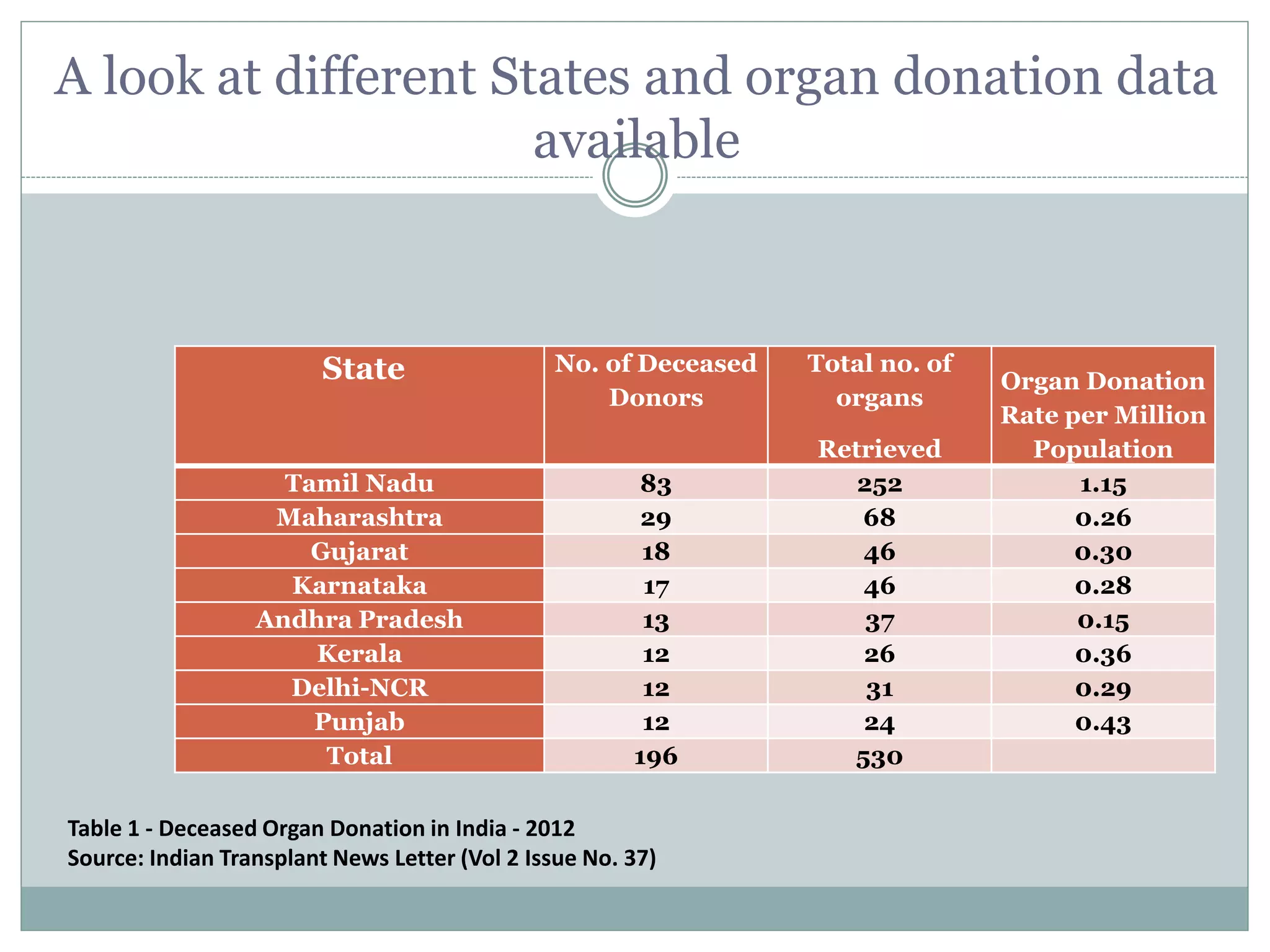
A look at different States and organ donation data
available
State No. of Deceased
Donors
Total no. of
organs
Retrieved
Organ Donation
Rate per Million
Population
Tamil Nadu 83 252 1.15
Maharashtra 29 68 0.26
Gujarat 18 46 0.30
Karnataka 17 46 0.28
Andhra Pradesh 13 37 0.15
Kerala 12 26 0.36
Delhi-NCR 12 31 0.29
Punjab 12 24 0.43
Total 196 530
Table 1 - Deceased Organ Donation in India - 2012
Source: Indian Transplant News Letter (Vol 2 Issue No. 37)
The Indian Experience
 1. People are generally unwilling to donate the
organ(s) of a brain dead relative.
In India, every day we have almost 60 families donating
the eyes of their loved ones. Also, periodically many whole
body donations are taking place to the Anatomy
department for research. Research has found that when a
trained counsellor talks to the relatives of a brain dead
patient and explains the situation, almost 65% will agree to
donate. This is the figure in many states of the country be
it Tamil Nadu, Andhra Pradesh, Maharashtra, Gujarat,
Kerala or Delhi.
The actual problem……..
 The problem lies in the fact not that people do not
want to donate but that there are no mechanisms in
our hospitals to identify and certify brain death.
Also, often, no one informs the relatives of a brain
dead person that they have the option to save lives by
donating the organs of their loved one.
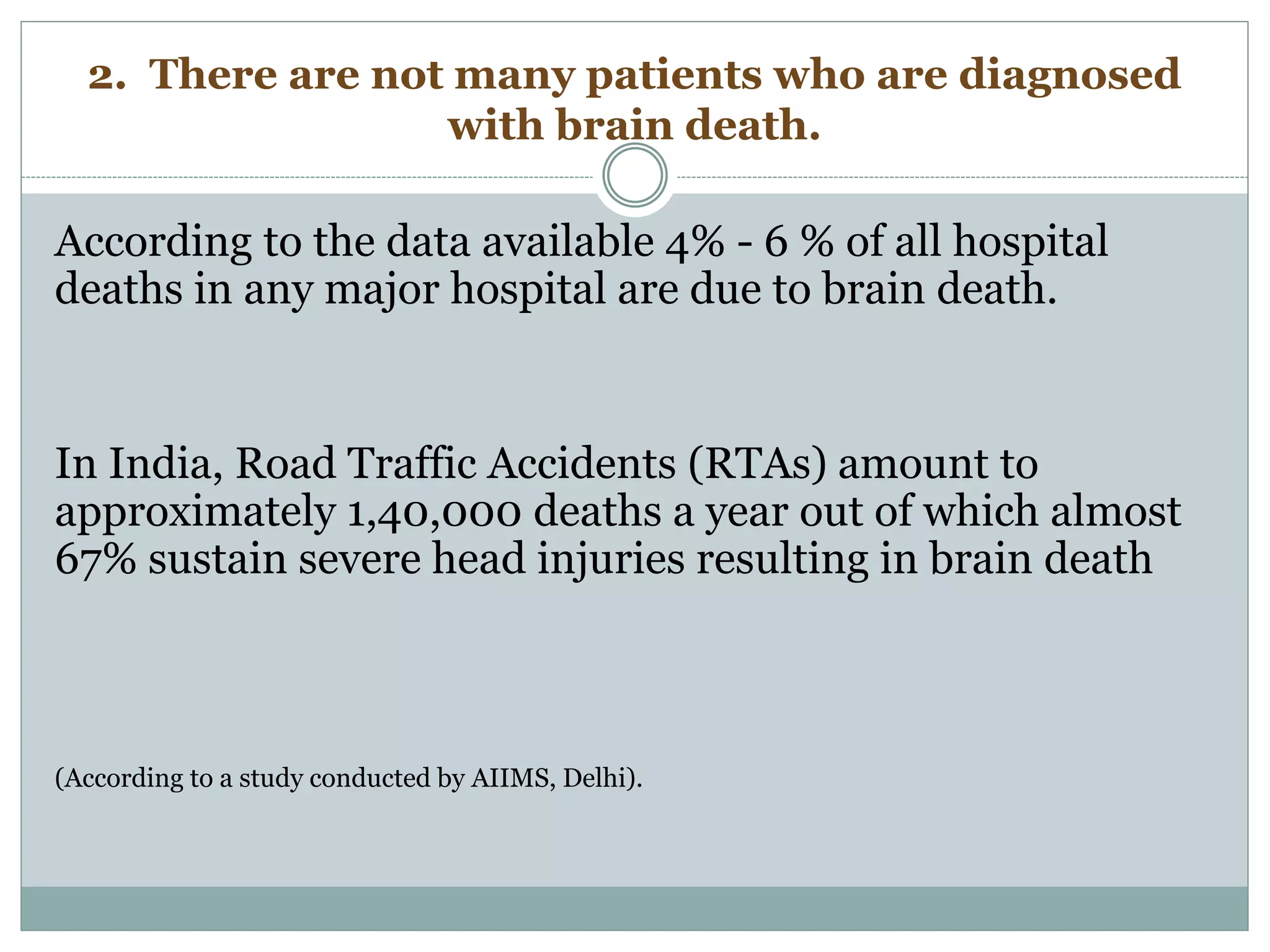
2. There are not many patients who are diagnosed
with brain death.
According to the data available 4% - 6 % of all hospital
deaths in any major hospital are due to brain death.
In India, Road Traffic Accidents (RTAs) amount to
approximately 1,40,000 deaths a year out of which almost
67% sustain severe head injuries resulting in brain death
(According to a study conducted by AIIMS, Delhi).
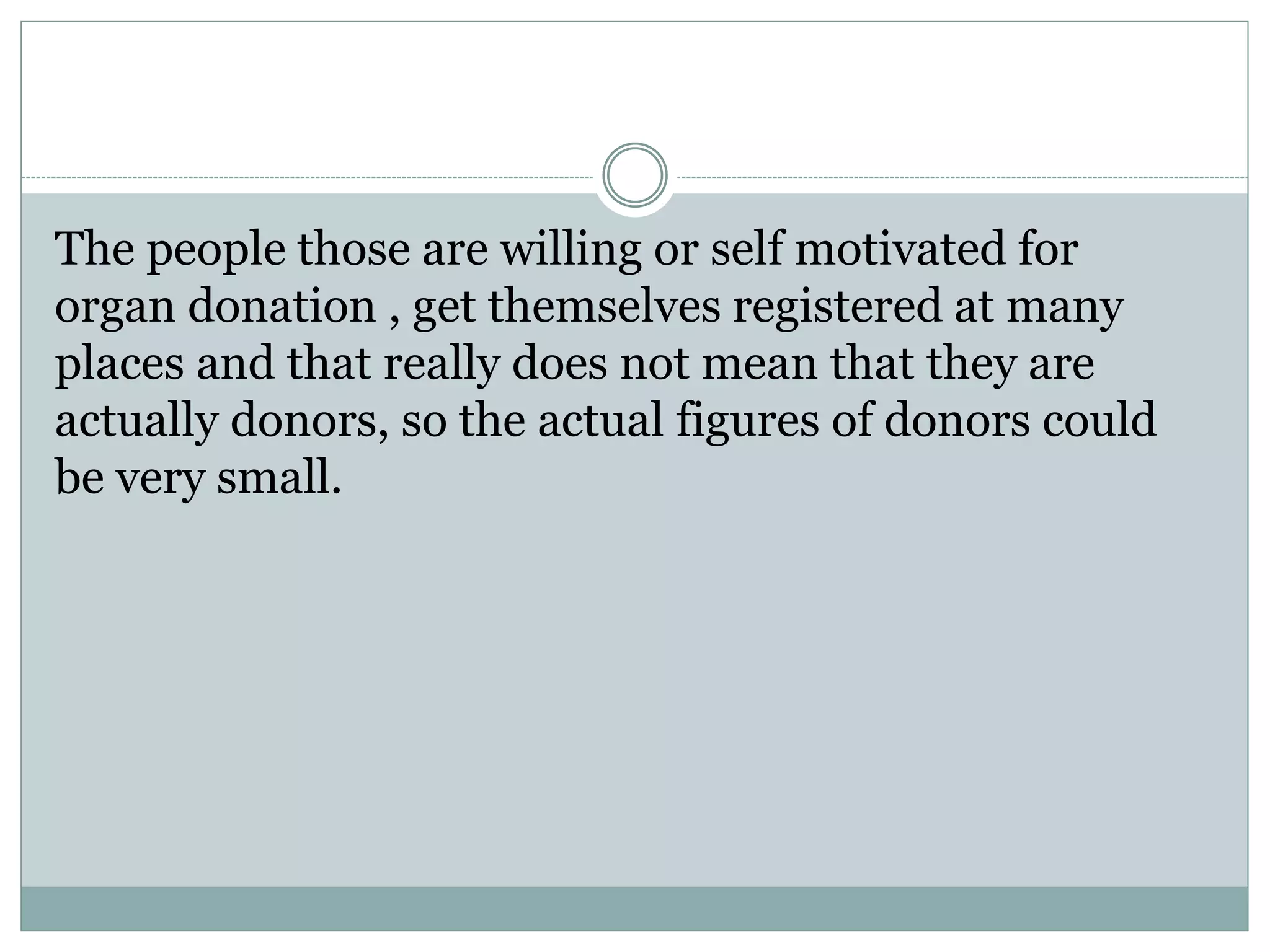
The people those are willing or self motivated for
organ donation , get themselves registered at many
places and that really does not mean that they are
actually donors, so the actual figures of donors could
be very small.
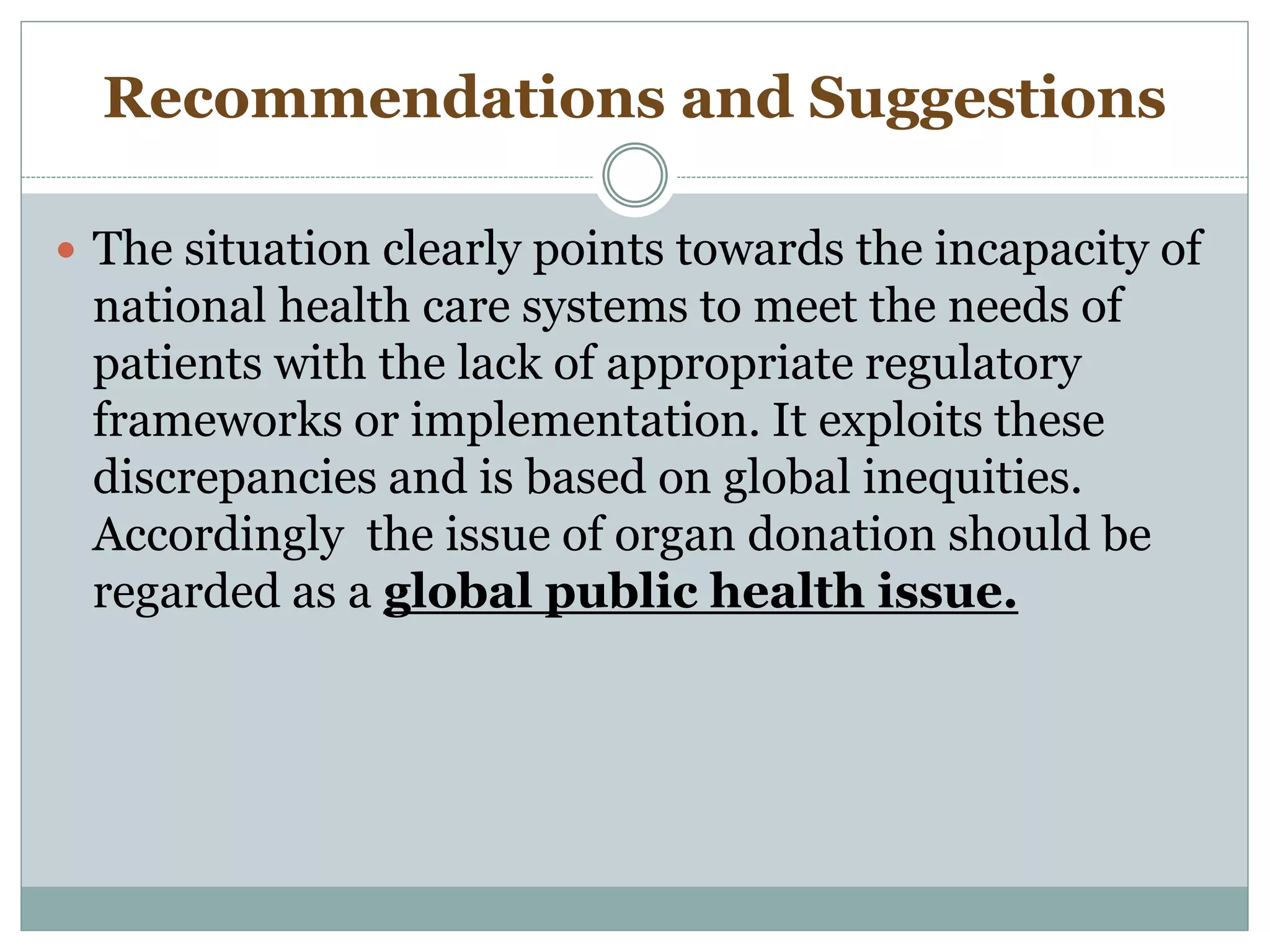
Recommendations and Suggestions
 The situation clearly points towards the incapacity of
national health care systems to meet the needs of
patients with the lack of appropriate regulatory
frameworks or implementation. It exploits these
discrepancies and is based on global inequities.
Accordingly the issue of organ donation should be
regarded as a global public health issue.
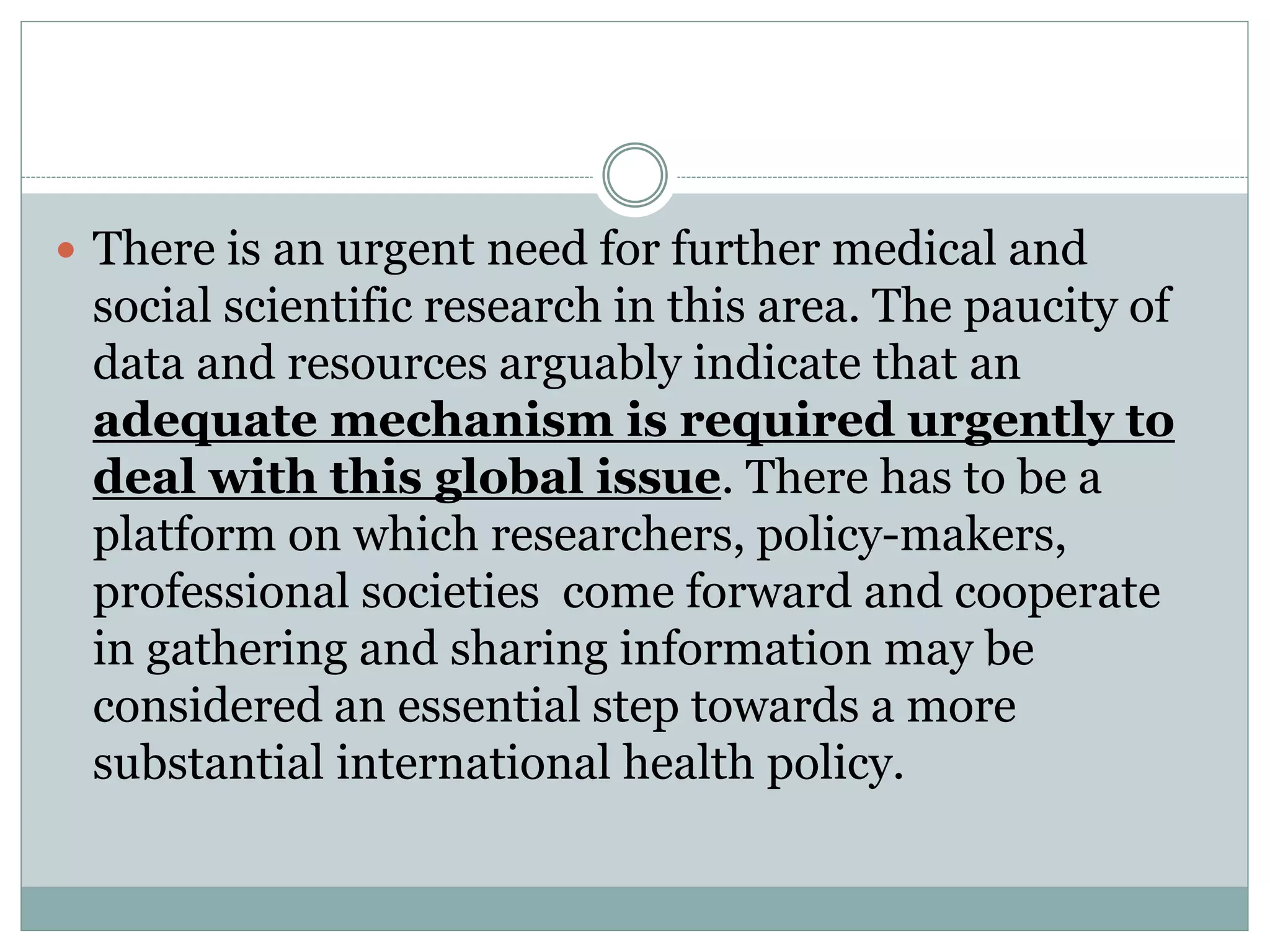
 There is an urgent need for further medical and
social scientific research in this area. The paucity of
data and resources arguably indicate that an
adequate mechanism is required urgently to
deal with this global issue. There has to be a
platform on which researchers, policy-makers,
professional societies come forward and cooperate
in gathering and sharing information may be
considered an essential step towards a more
substantial international health policy.
Role of Media in this area……
 Building a positive public will about organ donation
is paramount and Media –Electronic, print, social
media and even folk media can play a crucial role in
this area. The documentary film is an excellent
medium to reach out to the masses…
Propose to make a documentary film on the topic….
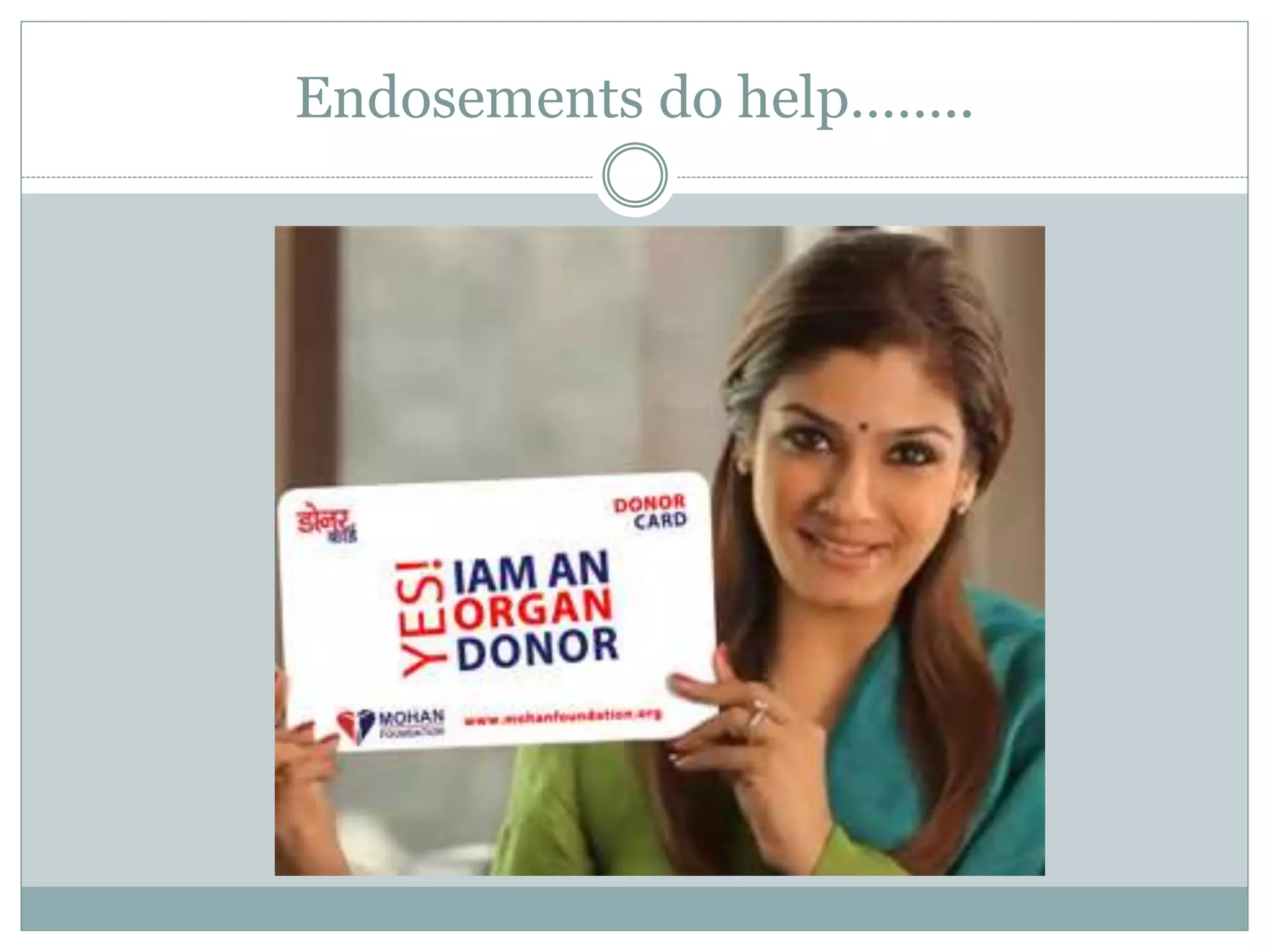
Endosements do help……..
Role of Scientists and Science Communicators
 Science communicators can help in bridging the gap
between science and society.
 Scientists and doctors have an important role to play
in educating and counselling the masses…..
Thank Yourself……….for the gift of life
THANK YOU
The journey goes on………………
 Email –arora1anshu@gmail.com

Anshu arora need for organ donation

  • 1.
    P R ES E N T E D B Y M S . A N S H U A R O R A A S S O C I A T E P R O F E S S O R D E P A R T M E N T O F M E D I A A N D C U L T U R A L S T U D I E S G L O C A L U N I V E R S I T Y Science and Society and The Need For Organ Donation
  • 2.
    Introduction  This isan important concern that India is one of the lowest organ donating countries in the world. Facts and figures reveal that less than one in a million their organs .It has been nearly 20 years that The Human Organ Transplantation Act has been passed but majority of people are still not aware about organ donation. The result:  Since 2005 more than three million people have died in the country because of non-availability of organs .About 1.5 to 2 lakh people await kidney transplants each year but only less than 5% get treated as there are not enough donors available.
  • 3.
    Research Methodology  Extensiveliterature review undertaken during September and October 2013.The purpose was to gather information on the organ donation data available through information available on websites and news articles from daily newspapers. The researcher has tried to cover many aspects related to organ donation and tried to synthesize this into a tentative picture
  • 4.
    Research Methodology  Dueto the paucity of scientific research the media reports were identified as significant complementary resources.  Articles published in the past one year that were accessible in both English and Hindi were examined. For the purpose of this paper, an additional survey of media reports published up to 15 Oct 2013 was carried out .The material obtained using these methods was organized into a searchable database and then was systematically reviewed.
  • 5.
    States with OrganDonation activity
  • 6.
    A look atdifferent States and organ donation data available State No. of Deceased Donors Total no. of organs Retrieved Organ Donation Rate per Million Population Tamil Nadu 83 252 1.15 Maharashtra 29 68 0.26 Gujarat 18 46 0.30 Karnataka 17 46 0.28 Andhra Pradesh 13 37 0.15 Kerala 12 26 0.36 Delhi-NCR 12 31 0.29 Punjab 12 24 0.43 Total 196 530 Table 1 - Deceased Organ Donation in India - 2012 Source: Indian Transplant News Letter (Vol 2 Issue No. 37)
  • 7.
    The Indian Experience 1. People are generally unwilling to donate the organ(s) of a brain dead relative. In India, every day we have almost 60 families donating the eyes of their loved ones. Also, periodically many whole body donations are taking place to the Anatomy department for research. Research has found that when a trained counsellor talks to the relatives of a brain dead patient and explains the situation, almost 65% will agree to donate. This is the figure in many states of the country be it Tamil Nadu, Andhra Pradesh, Maharashtra, Gujarat, Kerala or Delhi.
  • 8.
    The actual problem…….. The problem lies in the fact not that people do not want to donate but that there are no mechanisms in our hospitals to identify and certify brain death. Also, often, no one informs the relatives of a brain dead person that they have the option to save lives by donating the organs of their loved one.
  • 9.
    2. There arenot many patients who are diagnosed with brain death. According to the data available 4% - 6 % of all hospital deaths in any major hospital are due to brain death. In India, Road Traffic Accidents (RTAs) amount to approximately 1,40,000 deaths a year out of which almost 67% sustain severe head injuries resulting in brain death (According to a study conducted by AIIMS, Delhi).
  • 10.
    The people thoseare willing or self motivated for organ donation , get themselves registered at many places and that really does not mean that they are actually donors, so the actual figures of donors could be very small.
  • 11.
    Recommendations and Suggestions The situation clearly points towards the incapacity of national health care systems to meet the needs of patients with the lack of appropriate regulatory frameworks or implementation. It exploits these discrepancies and is based on global inequities. Accordingly the issue of organ donation should be regarded as a global public health issue.
  • 12.
     There isan urgent need for further medical and social scientific research in this area. The paucity of data and resources arguably indicate that an adequate mechanism is required urgently to deal with this global issue. There has to be a platform on which researchers, policy-makers, professional societies come forward and cooperate in gathering and sharing information may be considered an essential step towards a more substantial international health policy.
  • 13.
    Role of Mediain this area……  Building a positive public will about organ donation is paramount and Media –Electronic, print, social media and even folk media can play a crucial role in this area. The documentary film is an excellent medium to reach out to the masses… Propose to make a documentary film on the topic….
  • 14.
  • 15.
    Role of Scientistsand Science Communicators  Science communicators can help in bridging the gap between science and society.  Scientists and doctors have an important role to play in educating and counselling the masses…..
  • 18.
    Thank Yourself……….for thegift of life THANK YOU
  • 19.
    The journey goeson………………  Email –arora1anshu@gmail.com