

Anorexia and 
Bulimia 
Ciudad de los Poetas: Biology 3rdA/B
What do you already 
know about these 
illnesses?
Anorexia nervosa 
• Anorexia nervosa is an eating disorder that makes 
people lose more weight than is considered healthy 
for their age and height. 
• Persons with this disorder may have an intense fear 
of weight gain, even when they are underweight. 
They may diet or exercise too much or use other 
ways to lose weight. 
• Anorexia often begins during the pre-teen or teen 
years. It is more common in females, but may also 
be seen in males. 
Source: Medline Plus (www.nlm.nih.gov)
Anorexia: Causes 
• The exact causes of anorexia nervosa are not 
known. Many factors may be involved, including 
genes, hormones, and social attitudes. 
• Risk factors for anorexia include: 
o Being worried about/ paying more attention to weight and 
shape 
o Having an anxiety disorder or eating problems as a child 
o Having a negative self-image 
o Having certain social or cultural ideas about health and 
beauty 
o Trying to be perfect or overly focused on rules 
Source: Medline Plus (www.nlm.nih.gov)
Anorexia: Symptoms 
• A person with anorexia usually: 
o Has an intense fear of gaining weight or 
becoming fat, even when underweight 
o Refuses to keep weight at what is considered 
normal for age and height (15% or more 
below the normal weight) 
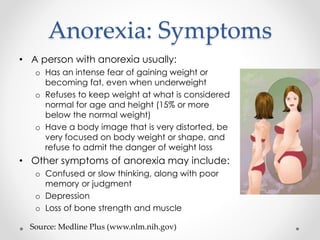
o Have a body image that is very distorted, be 
very focused on body weight or shape, and 
refuse to admit the danger of weight loss 
• Other symptoms of anorexia may include: 
o Confused or slow thinking, along with poor 
memory or judgment 
o Depression 
o Loss of bone strength and muscle 
Source: Medline Plus (www.nlm.nih.gov)
Anorexia: Treatment 
• The biggest challenge in treating anorexia nervosa 
is helping the person recognize that he or she has 
an illness. 
• Different programs have been designed to treat 
anorexia. Sometimes the person can gain weight 
by: 
o Increasing social activity 
o Reducing the amount of physical activity 
o Using schedules for eating 
• Many patients start with a short hospital stay and 
follow-up with a day treatment program. 
• Support groups may also be helpful. 
Source: Medline Plus (www.nlm.nih.gov)
Bulimia nervosa 
• Bulimia is an illness in which a person has regular 
episodes of overeating (bingeing) and feels a loss 
of control. 
• The person then uses different ways, such as 
vomiting, to prevent weight gain (purging). 
• Many people with Bulimia also have Anorexia. 
Source: Medline Plus (www.nlm.nih.gov)
Bulimia: Causes 
• Like Anorexia, the exact causes of Bulimia are 
unknown. Likely it is due to a combination of factors. 
• Again, more women than men have Bulimia, and it 
is especially common among teenage girls. 
Source: Medline Plus (www.nlm.nih.gov)
Bulimia: Symptoms 
• The person often eats large amounts of high-calorie 
foods, usually in secret. 
• Binges lead to self-disgust, which causes purging to 
prevent weight gain and bring a sense of relief. 
Purging may include: 
o Forcing oneself to vomit 
o Excessive exercise 
o Using laxatives 
• People with Bulimia are often at a normal weight, 
but they may see themselves as being overweight. 
Because the person's weight is often normal, other 
people may not notice this eating disorder. 
• Other symptoms may include cavities or gum 
infection, dehydration, and electrolyte imbalance. 
Source: Medline Plus (www.nlm.nih.gov)
Bulimia: Treatment 
• Most often, a stepped approach is used for patients 
with bulimia. 
o Support groups may be helpful for mild bulimia without 
other health problems. 
o Cognitive-behavioral therapy (CBT) and nutritional therapy 
are the first treatments for bulimia that does not respond to 
support groups. 
• CBT helps patients to examine patterns of thinking that 
lead to self-destructive actions, so that they can modify 
those patterns of thinking and thereby change 
negative behaviors. 
o Antidepressants are often used for bulimia. A combination 
of CBT and antidepressants can be effective if CBT does 
not work alone. 
Source: Medline Plus (www.nlm.nih.gov)
Anorexia and Bulimia: 
Prognosis 
• Both Anorexia and Bulimia are serious health issues 
that require medical attention. 
• If the proper medical help is sought, patients can 
live healthy lives. However, weight-management 
may be something that they have to focus on for 
the rest of their lives.

Anorex and Bulimia by Lindsey Rowe

  • 1.
    Anorexia and Bulimia Ciudad de los Poetas: Biology 3rdA/B
  • 2.
    What do youalready know about these illnesses?
  • 3.
    Anorexia nervosa •Anorexia nervosa is an eating disorder that makes people lose more weight than is considered healthy for their age and height. • Persons with this disorder may have an intense fear of weight gain, even when they are underweight. They may diet or exercise too much or use other ways to lose weight. • Anorexia often begins during the pre-teen or teen years. It is more common in females, but may also be seen in males. Source: Medline Plus (www.nlm.nih.gov)
  • 4.
    Anorexia: Causes •The exact causes of anorexia nervosa are not known. Many factors may be involved, including genes, hormones, and social attitudes. • Risk factors for anorexia include: o Being worried about/ paying more attention to weight and shape o Having an anxiety disorder or eating problems as a child o Having a negative self-image o Having certain social or cultural ideas about health and beauty o Trying to be perfect or overly focused on rules Source: Medline Plus (www.nlm.nih.gov)
  • 5.
    Anorexia: Symptoms •A person with anorexia usually: o Has an intense fear of gaining weight or becoming fat, even when underweight o Refuses to keep weight at what is considered normal for age and height (15% or more below the normal weight) o Have a body image that is very distorted, be very focused on body weight or shape, and refuse to admit the danger of weight loss • Other symptoms of anorexia may include: o Confused or slow thinking, along with poor memory or judgment o Depression o Loss of bone strength and muscle Source: Medline Plus (www.nlm.nih.gov)
  • 6.
    Anorexia: Treatment •The biggest challenge in treating anorexia nervosa is helping the person recognize that he or she has an illness. • Different programs have been designed to treat anorexia. Sometimes the person can gain weight by: o Increasing social activity o Reducing the amount of physical activity o Using schedules for eating • Many patients start with a short hospital stay and follow-up with a day treatment program. • Support groups may also be helpful. Source: Medline Plus (www.nlm.nih.gov)
  • 7.
    Bulimia nervosa •Bulimia is an illness in which a person has regular episodes of overeating (bingeing) and feels a loss of control. • The person then uses different ways, such as vomiting, to prevent weight gain (purging). • Many people with Bulimia also have Anorexia. Source: Medline Plus (www.nlm.nih.gov)
  • 8.
    Bulimia: Causes •Like Anorexia, the exact causes of Bulimia are unknown. Likely it is due to a combination of factors. • Again, more women than men have Bulimia, and it is especially common among teenage girls. Source: Medline Plus (www.nlm.nih.gov)
  • 9.
    Bulimia: Symptoms •The person often eats large amounts of high-calorie foods, usually in secret. • Binges lead to self-disgust, which causes purging to prevent weight gain and bring a sense of relief. Purging may include: o Forcing oneself to vomit o Excessive exercise o Using laxatives • People with Bulimia are often at a normal weight, but they may see themselves as being overweight. Because the person's weight is often normal, other people may not notice this eating disorder. • Other symptoms may include cavities or gum infection, dehydration, and electrolyte imbalance. Source: Medline Plus (www.nlm.nih.gov)
  • 10.
    Bulimia: Treatment •Most often, a stepped approach is used for patients with bulimia. o Support groups may be helpful for mild bulimia without other health problems. o Cognitive-behavioral therapy (CBT) and nutritional therapy are the first treatments for bulimia that does not respond to support groups. • CBT helps patients to examine patterns of thinking that lead to self-destructive actions, so that they can modify those patterns of thinking and thereby change negative behaviors. o Antidepressants are often used for bulimia. A combination of CBT and antidepressants can be effective if CBT does not work alone. Source: Medline Plus (www.nlm.nih.gov)
  • 11.
    Anorexia and Bulimia: Prognosis • Both Anorexia and Bulimia are serious health issues that require medical attention. • If the proper medical help is sought, patients can live healthy lives. However, weight-management may be something that they have to focus on for the rest of their lives.

Editor's Notes

  • #2 Ask if there are questions Writing down main points v every word