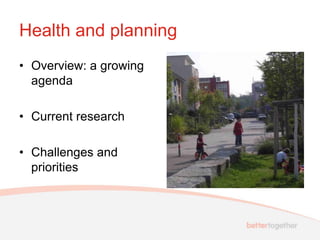
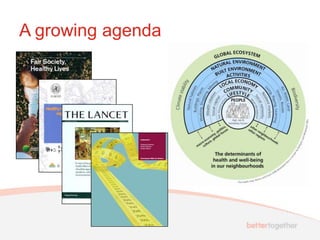
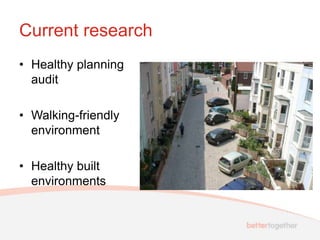

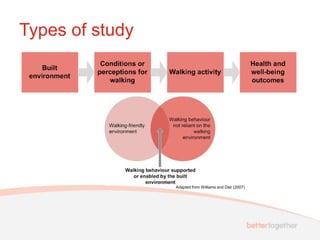
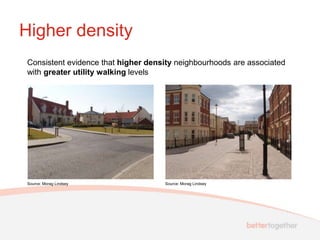
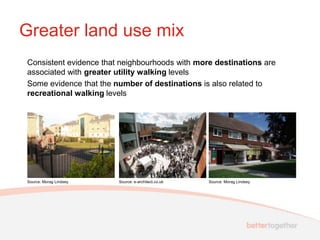
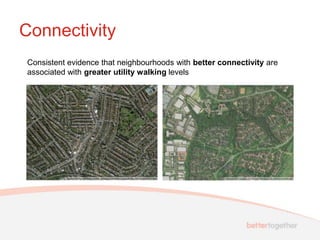
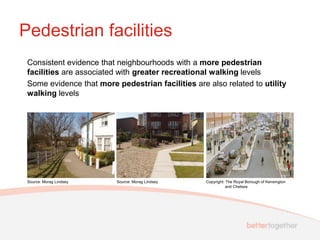
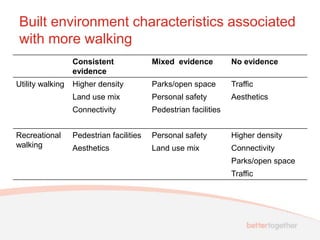
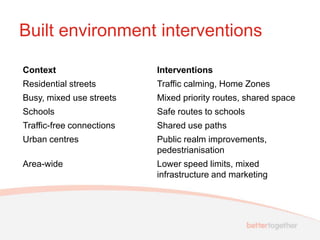
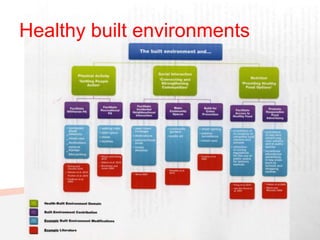
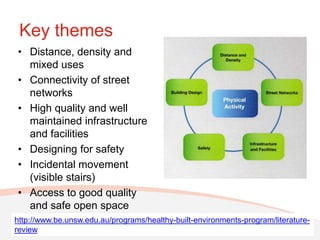


This document discusses the relationship between planning, the built environment, and health. It provides an overview of current research showing that neighborhoods with higher density, a mix of land uses, good connectivity, and pedestrian facilities are associated with increased utility and recreational walking. Interventions like traffic calming, mixed priority routes, and public realm improvements can encourage walking. However, more research is still needed to establish causality and evaluate interventions using consistent methods. The challenges include providing evidence to justify policy changes to support healthier communities through urban planning.


