Animal Facts
10 Interesting animals
Photos by Melissa Morro
Ring-tailed Lemur
Ring-tailed lemurs
are unmistakable
because of their
long, vividly
striped, blackand-white tail.
They are residents
of many zoos.
Lemurs use their
hands and feet to
move through the
trees, but cannot
grip with their tails.
Red Panda

The red panda is
often unknown
because of the
black-and-white
giant that shares its
name. These
pandas typically
grow to the size of
a house
cat, though their
big, bushy tails add
an additional 18
inches. The pandas
use their ringed
tails as
wraparound
blankets in the
chilly mountain
heights.
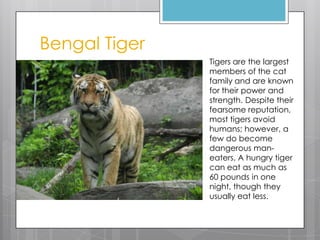
Bengal Tiger
Tigers are the largest
members of the cat
family and are known
for their power and
strength. Despite their
fearsome reputation,
most tigers avoid
humans; however, a
few do become
dangerous maneaters. A hungry tiger
can eat as much as
60 pounds in one
night, though they
usually eat less.
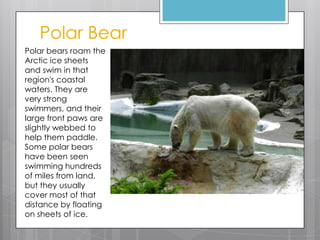
Polar Bear
Polar bears roam the
Arctic ice sheets
and swim in that
region's coastal
waters. They are
very strong
swimmers, and their
large front paws are
slightly webbed to
help them paddle.
Some polar bears
have been seen
swimming hundreds
of miles from land,
but they usually
cover most of that
distance by floating
on sheets of ice.
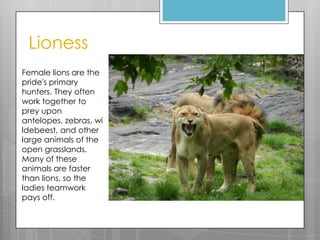
Lioness
Female lions are the
pride's primary
hunters. They often
work together to
prey upon
antelopes, zebras, wi
ldebeest, and other
large animals of the
open grasslands.
Many of these
animals are faster
than lions, so the
ladies teamwork
pays off.
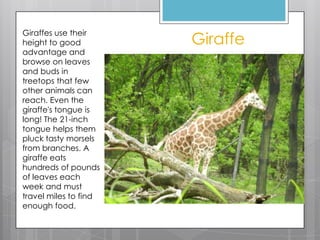
Giraffes use their
height to good
advantage and
browse on leaves
and buds in
treetops that few
other animals can
reach. Even the
giraffe's tongue is
long! The 21-inch
tongue helps them
pluck tasty morsels
from branches. A
giraffe eats
hundreds of pounds
of leaves each
week and must
travel miles to find
enough food.

Giraffe
Orca (Killer Wale)
Orcas, are one of the
world's most powerful
predators. They eat
marine mammals like
seals, sea lions, and
even whales. Their
teeth can be four
inches long. They use
echolocation to
communicate and
hunt, making sounds
that travel
underwater until they
encounter objects,
then bounce back,
revealing their
location, size, and
shape.
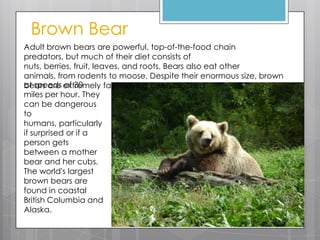
Brown Bear
Adult brown bears are powerful, top-of-the-food chain
predators, but much of their diet consists of
nuts, berries, fruit, leaves, and roots. Bears also eat other
animals, from rodents to moose. Despite their enormous size, brown
at speeds of 30
bears are extremely fast, having been clocked
miles per hour. They
can be dangerous
to
humans, particularly
if surprised or if a
person gets
between a mother
bear and her cubs.
The world's largest
brown bears are
found in coastal
British Columbia and
Alaska.
Baboon
Like other Old World monkeys, baboons do not have gripping tails, so
they spend much of their time on the ground. They can however
climb trees to sleep, eat, or look out for trouble. Males use shows of
physical power to
dominate rivals, and
troop members
spend endless hours
carefully grooming
one another to
remove insects and
dead skin. Baboons
use at least ten
different and unique
vocalizations to
communicate with
other members of
the troop.

Animal Facts

  • 1.
    Animal Facts 10 Interestinganimals Photos by Melissa Morro
  • 2.
    Ring-tailed Lemur Ring-tailed lemurs areunmistakable because of their long, vividly striped, blackand-white tail. They are residents of many zoos. Lemurs use their hands and feet to move through the trees, but cannot grip with their tails.
  • 3.
    Red Panda The redpanda is often unknown because of the black-and-white giant that shares its name. These pandas typically grow to the size of a house cat, though their big, bushy tails add an additional 18 inches. The pandas use their ringed tails as wraparound blankets in the chilly mountain heights.
  • 4.
    Bengal Tiger Tigers arethe largest members of the cat family and are known for their power and strength. Despite their fearsome reputation, most tigers avoid humans; however, a few do become dangerous maneaters. A hungry tiger can eat as much as 60 pounds in one night, though they usually eat less.
  • 5.
    Polar Bear Polar bearsroam the Arctic ice sheets and swim in that region's coastal waters. They are very strong swimmers, and their large front paws are slightly webbed to help them paddle. Some polar bears have been seen swimming hundreds of miles from land, but they usually cover most of that distance by floating on sheets of ice.
  • 6.
    Lioness Female lions arethe pride's primary hunters. They often work together to prey upon antelopes, zebras, wi ldebeest, and other large animals of the open grasslands. Many of these animals are faster than lions, so the ladies teamwork pays off.
  • 7.
    Giraffes use their heightto good advantage and browse on leaves and buds in treetops that few other animals can reach. Even the giraffe's tongue is long! The 21-inch tongue helps them pluck tasty morsels from branches. A giraffe eats hundreds of pounds of leaves each week and must travel miles to find enough food. Giraffe
  • 8.
    Orca (Killer Wale) Orcas,are one of the world's most powerful predators. They eat marine mammals like seals, sea lions, and even whales. Their teeth can be four inches long. They use echolocation to communicate and hunt, making sounds that travel underwater until they encounter objects, then bounce back, revealing their location, size, and shape.
  • 9.
    Brown Bear Adult brownbears are powerful, top-of-the-food chain predators, but much of their diet consists of nuts, berries, fruit, leaves, and roots. Bears also eat other animals, from rodents to moose. Despite their enormous size, brown at speeds of 30 bears are extremely fast, having been clocked miles per hour. They can be dangerous to humans, particularly if surprised or if a person gets between a mother bear and her cubs. The world's largest brown bears are found in coastal British Columbia and Alaska.
  • 10.
    Baboon Like other OldWorld monkeys, baboons do not have gripping tails, so they spend much of their time on the ground. They can however climb trees to sleep, eat, or look out for trouble. Males use shows of physical power to dominate rivals, and troop members spend endless hours carefully grooming one another to remove insects and dead skin. Baboons use at least ten different and unique vocalizations to communicate with other members of the troop.