
Animal Testing: Rationale for
conducting studies, CPCSEA
Guidelines
Presented by:
Vanshika Gupta
1st sem M.Pharm (RA)
MRA104T
Parul Institute Of Pharmacy
Parul University 1
Content
 Animal testing
 Advantages & Disadvantages of Animal Testing
 Animal Welfare Initiatives In Selected Countries In
Asia
 Rationale for conducting studies
 CPCSEA Guideline
 Maintenance of laboratory animals as per CPCSEA
guidelines
2
Animal Testing
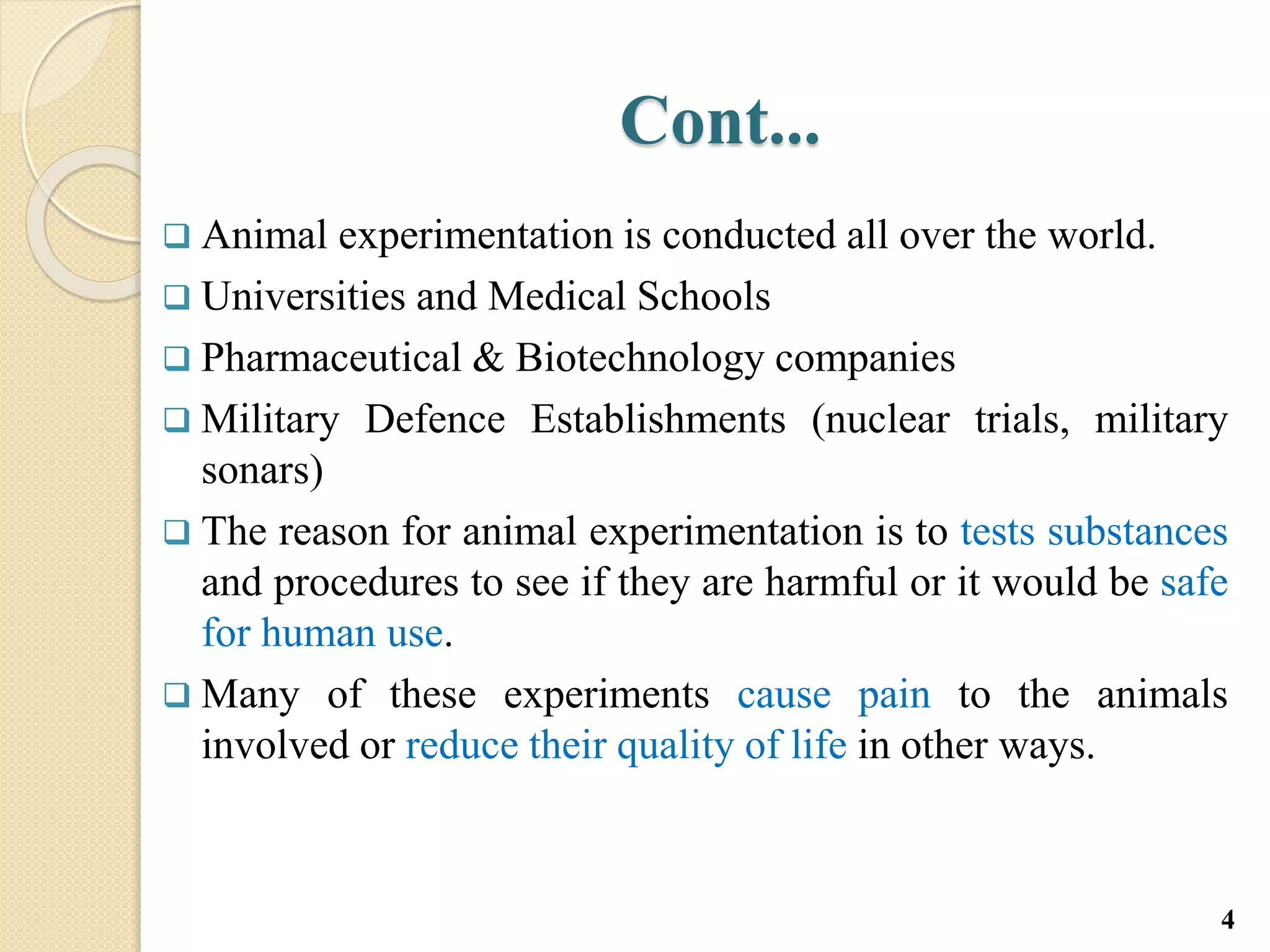
 Animal testing is use to help us understand diseases, for
assessing the safety of a wide range of substances, including
medications, vaccines, food additives, household items,
workplace chemicals, cosmetics, water and air pollutants.
 About 10 million animals around the world are being tested
every year.
 84% are Rodents
 12% are Fish, Amphibians, & Reptiles
 2.1% are Large Mammals
 1.4% are Small Mammals
 0.3% are Dogs & Cats and 0.1% are Primates
3
Cont...
 Animal experimentation is conducted all over the world.
 Universities and Medical Schools
 Pharmaceutical & Biotechnology companies
 Military Defence Establishments (nuclear trials, military
sonars)
 The reason for animal experimentation is to tests substances
and procedures to see if they are harmful or it would be safe
for human use.
 Many of these experiments cause pain to the animals
involved or reduce their quality of life in other ways.
4
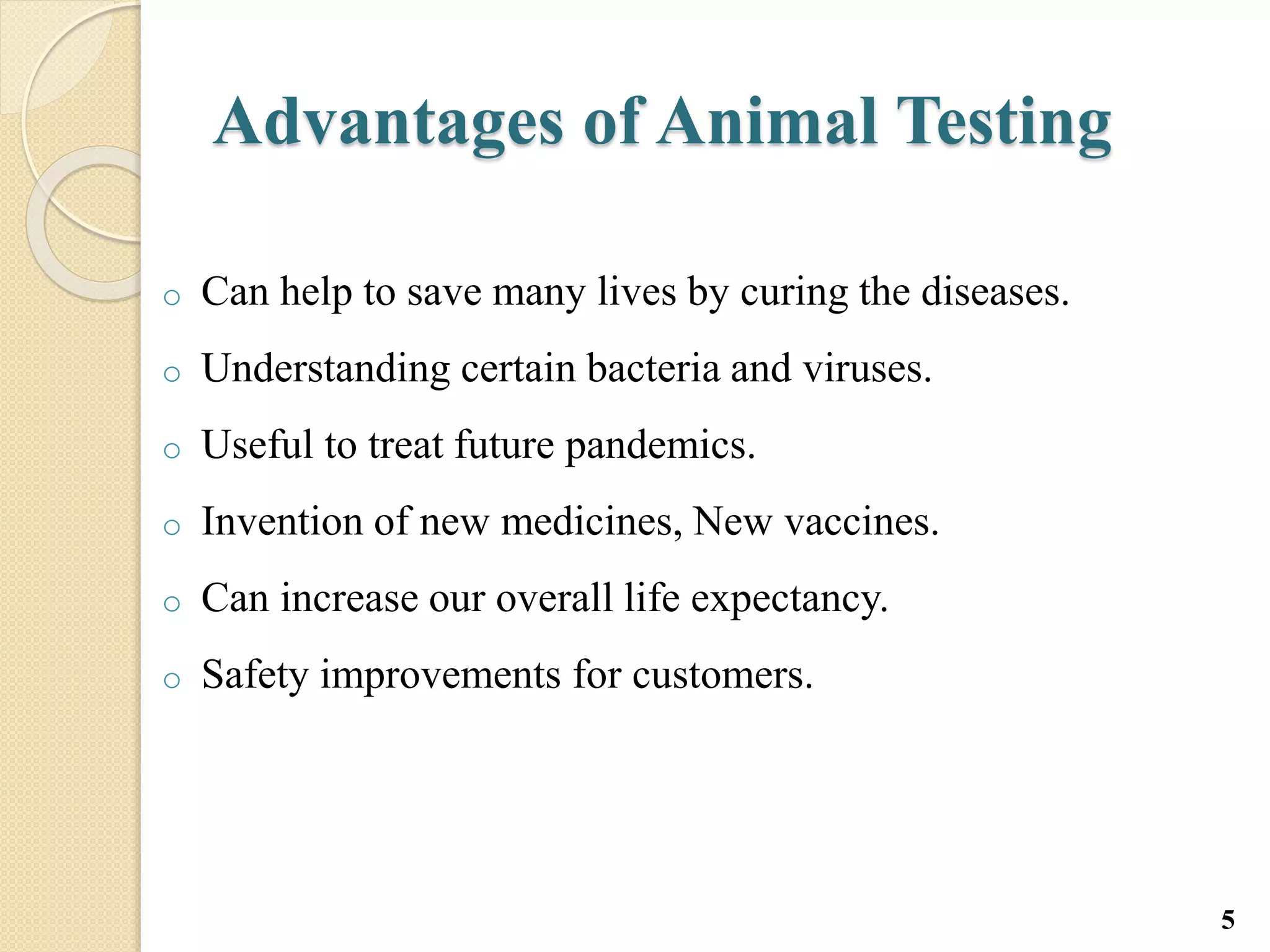
Advantages of Animal Testing
o Can help to save many lives by curing the diseases.
o Understanding certain bacteria and viruses.
o Useful to treat future pandemics.
o Invention of new medicines, New vaccines.
o Can increase our overall life expectancy.
o Safety improvements for customers.
5
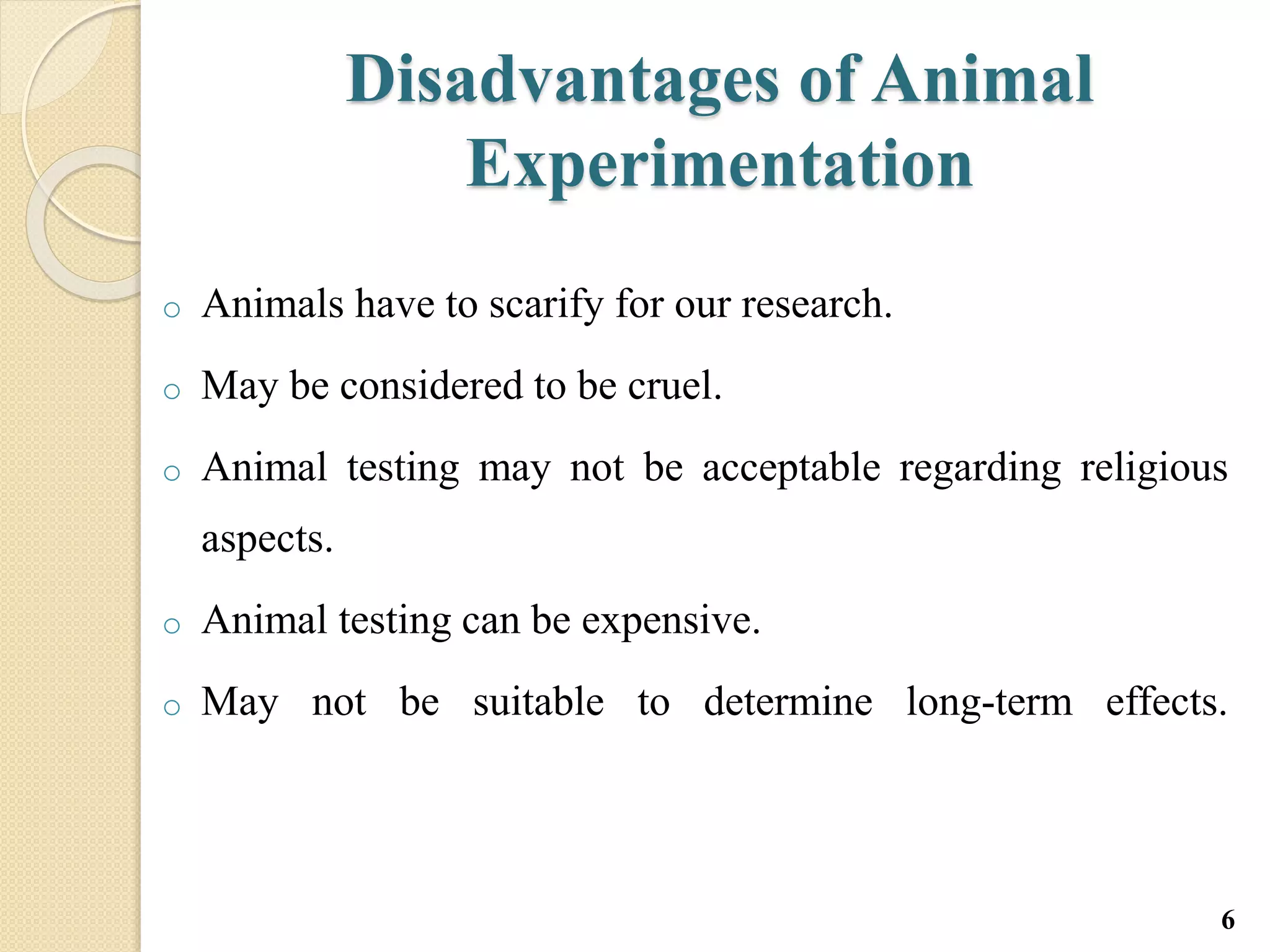
Disadvantages of Animal
Experimentation
o Animals have to scarify for our research.
o May be considered to be cruel.
o Animal testing may not be acceptable regarding religious
aspects.
o Animal testing can be expensive.
o May not be suitable to determine long-term effects.
6
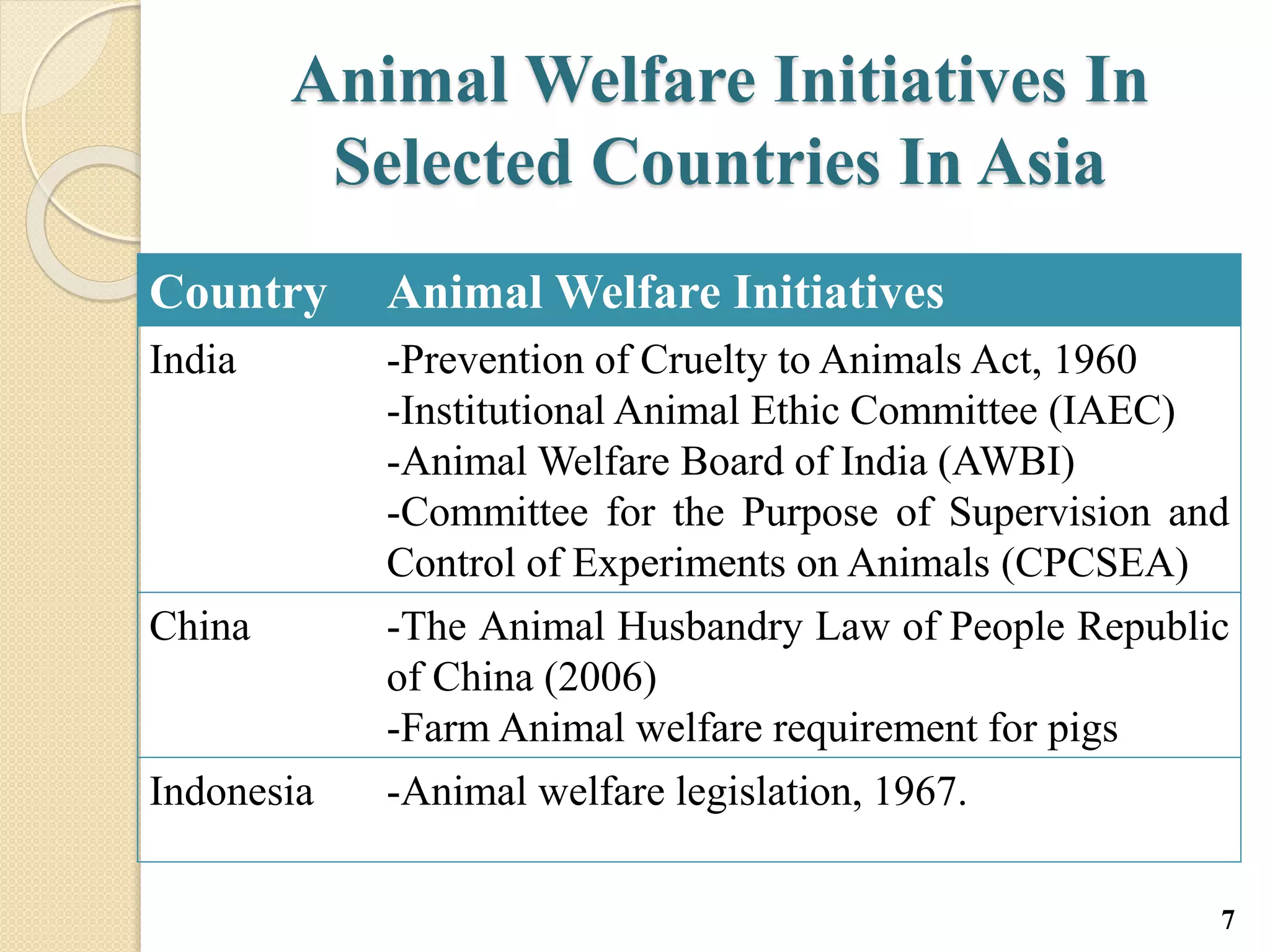
Animal Welfare Initiatives In
Selected Countries In Asia
Country Animal Welfare Initiatives
India -Prevention of Cruelty to Animals Act, 1960
-Institutional Animal Ethic Committee (IAEC)
-Animal Welfare Board of India (AWBI)
-Committee for the Purpose of Supervision and
Control of Experiments on Animals (CPCSEA)
China -The Animal Husbandry Law of People Republic
of China (2006)
-Farm Animal welfare requirement for pigs
Indonesia -Animal welfare legislation, 1967.
7
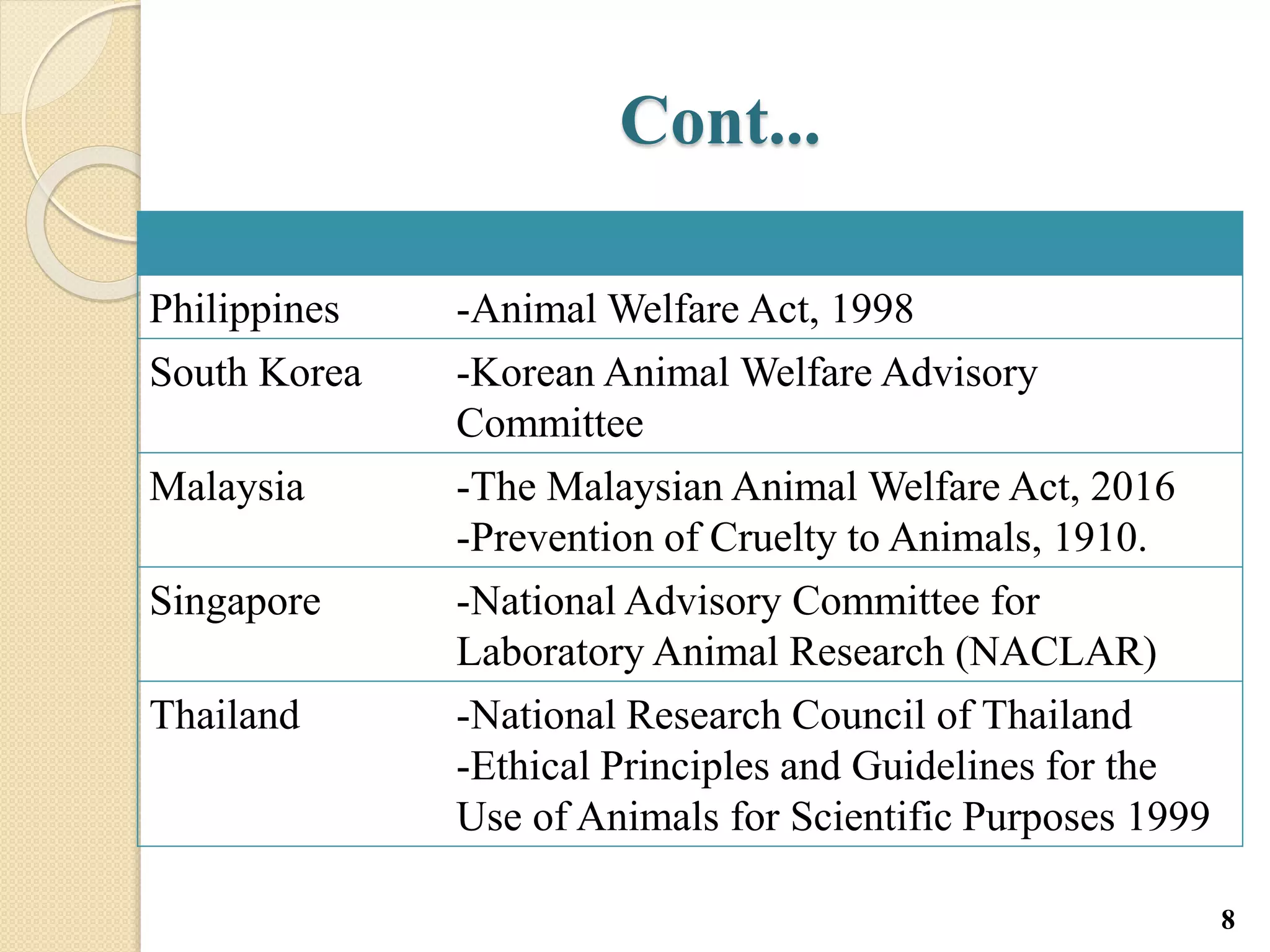
Cont...
Philippines -Animal Welfare Act, 1998
South Korea -Korean Animal Welfare Advisory
Committee
Malaysia -The Malaysian Animal Welfare Act, 2016
-Prevention of Cruelty to Animals, 1910.
Singapore -National Advisory Committee for
Laboratory Animal Research (NACLAR)
Thailand -National Research Council of Thailand
-Ethical Principles and Guidelines for the
Use of Animals for Scientific Purposes 1999
8
Rationale for conducting studies
The use of animals in research is currently an essential
component of the drug discovery process.
Animals help us advance our scientific understanding, serve
as models to study disease, help us develop and test
potential new medicines and therapies.
Animal testing has benefited researchers in understanding
how to treat and prevent various conditions such as high
blood pressure, diabetes, tuberculosis, polio, muscular
dystrophy, and Parkinson's disease.
9
Cont...
Humans are 98% genetically similar to mice.
Animals are susceptible to many of the same health
problems as humans – cancer, diabetes, heart disease, etc.
Research on animal models has advanced the understanding
and development of clinical and medical sciences.
For example, guinea pigs and frogs were heroes in the
process of inventing asthma inhalers.
Meningitis C cases are now rare, going down to 700 cases
per year through the last decade.
10
Cont...
Education:
 Undergraduate teaching to demonstrate effects of various
drugs although this has been phased out in most institutes.
 Postgraduate teaching to demonstrate the effects of various
drugs, to determine the nature of an unknown drug for
bioassay, screening methods and to learn skills e.g.
administering drugs.
11
Cont...
Research:
 A larger number and a greater variety of animals are used in
pure research than in applied research. This usually involves
studies on embryogenesis, developmental biology,
behaviour and breeding in Fruit flies, nematodes, mice and
rats.
i. Cosmetic testing
ii. Toxicology testing
12
CPCSEA
INTRODUCTION
 The motto of Prevention of Cruelty to Animals (PCA) Act
1960 as amended in 1982 is to prevent infliction of
unnecessary pain or suffering on animals.
 The Central Government has constituted a Committee for
the Purpose of Control and Supervision of Experiments on
Animals (CPCSEA), which is duty bound to take all such
measures as may be necessary to ensure that animals are not
subjected to unnecessary pain or suffering before, during or
after the performance of experiments on them.
13
Goals
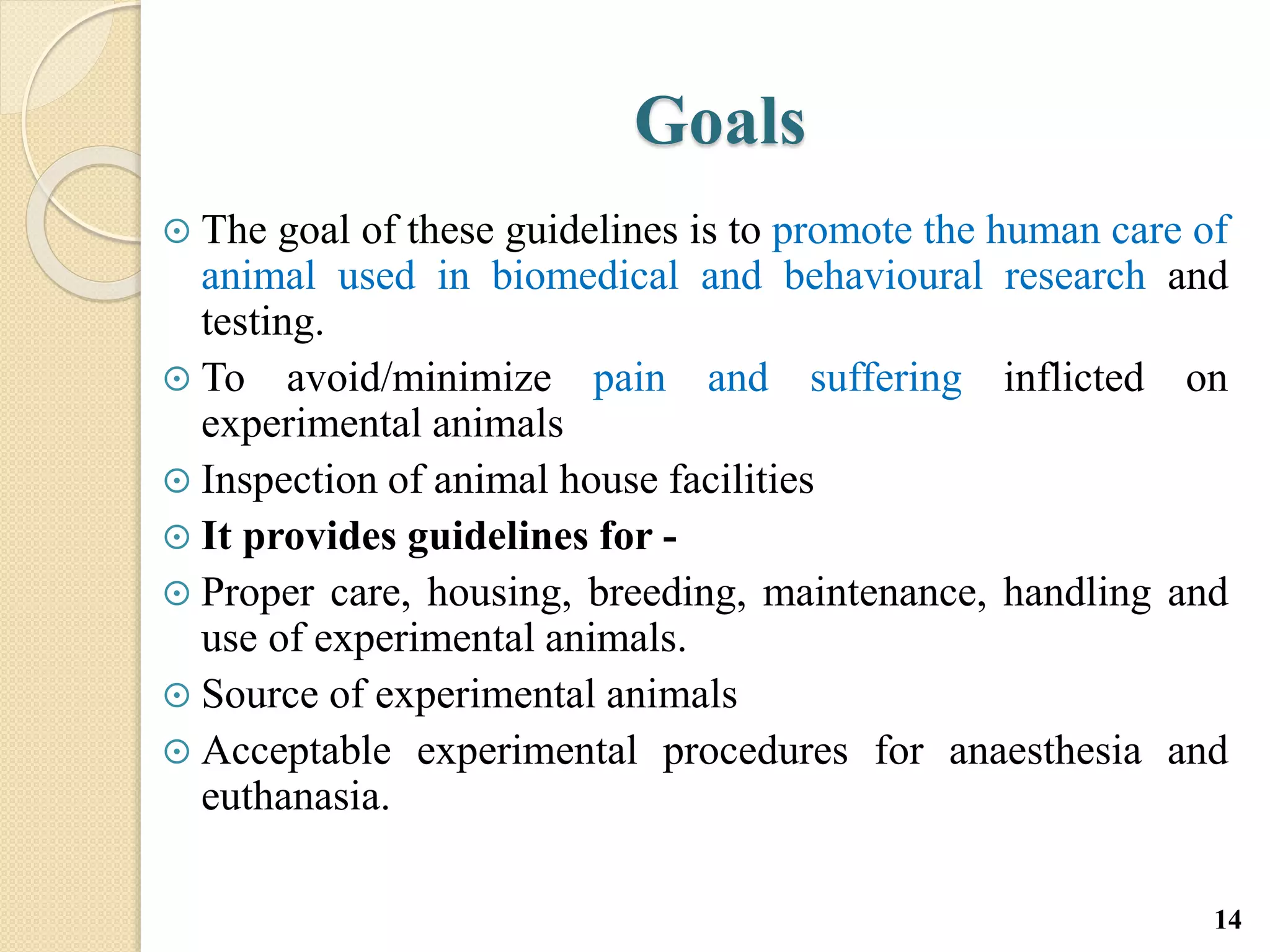
 The goal of these guidelines is to promote the human care of
animal used in biomedical and behavioural research and
testing.
 To avoid/minimize pain and suffering inflicted on
experimental animals
 Inspection of animal house facilities
 It provides guidelines for -
 Proper care, housing, breeding, maintenance, handling and
use of experimental animals.
 Source of experimental animals
 Acceptable experimental procedures for anaesthesia and
euthanasia.
14
Functions of CPCSEA
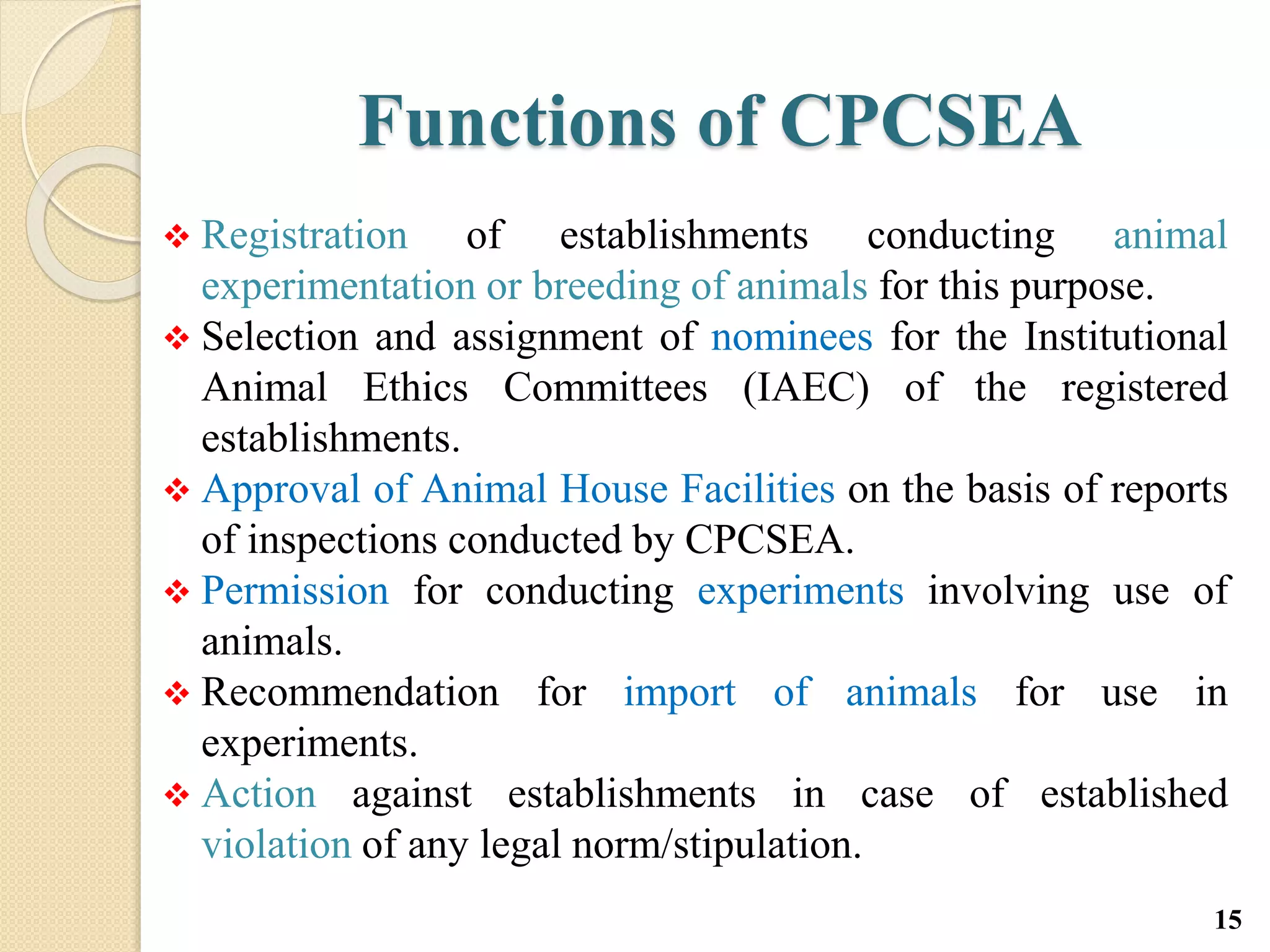
 Registration of establishments conducting animal
experimentation or breeding of animals for this purpose.
 Selection and assignment of nominees for the Institutional
Animal Ethics Committees (IAEC) of the registered
establishments.
 Approval of Animal House Facilities on the basis of reports
of inspections conducted by CPCSEA.
 Permission for conducting experiments involving use of
animals.
 Recommendation for import of animals for use in
experiments.
 Action against establishments in case of established
violation of any legal norm/stipulation.
15
Cont...
 Conduct of Training Programmes for the Nominees of
CPCSEA.
 Conduct/Support of Conference/Workshop on Animal
Ethics.
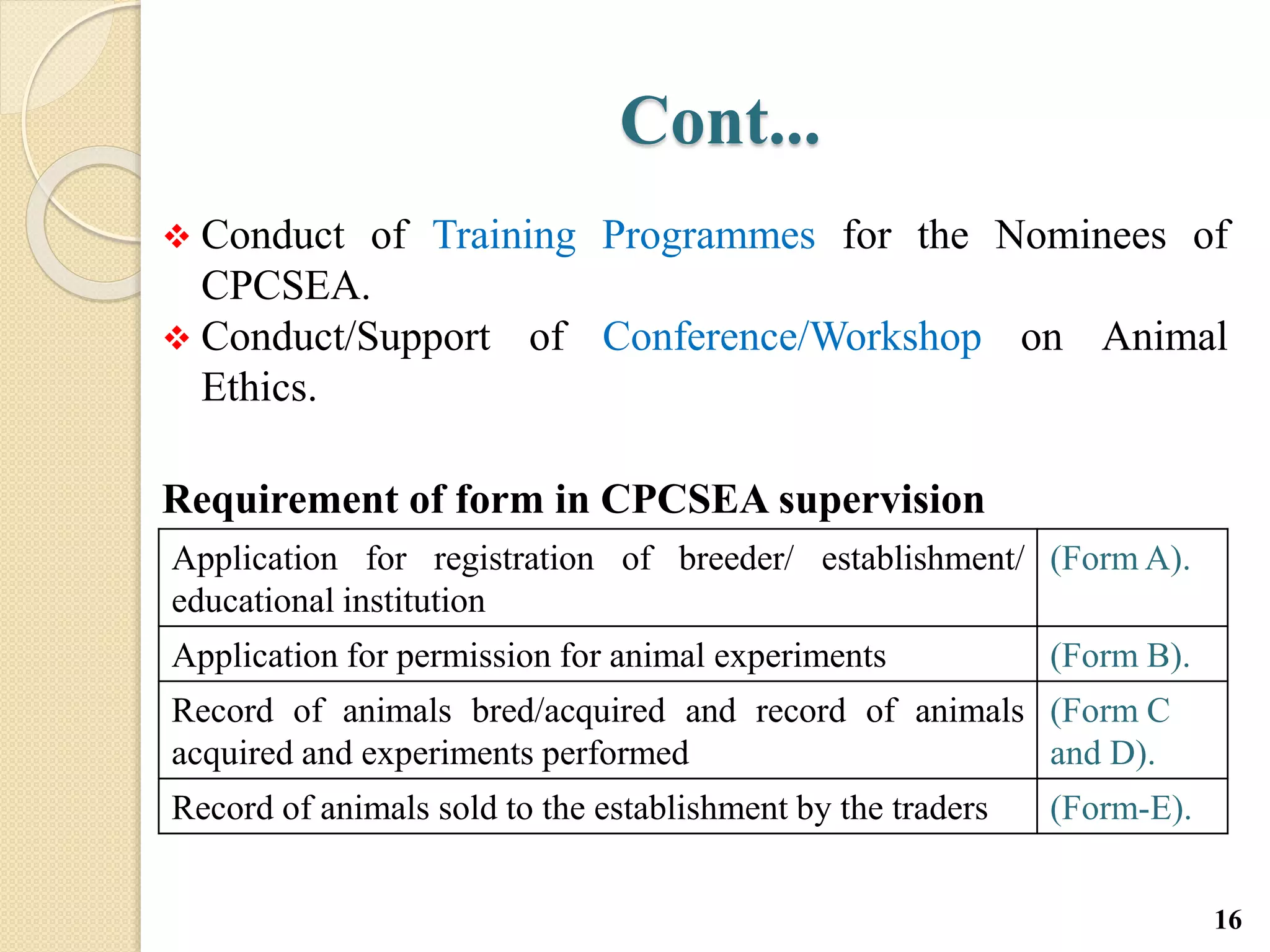
Requirement of form in CPCSEA supervision
16
Application for registration of breeder/ establishment/
educational institution
(Form A).
Application for permission for animal experiments (Form B).
Record of animals bred/acquired and record of animals
acquired and experiments performed
(Form C
and D).
Record of animals sold to the establishment by the traders (Form-E).
Maintenance of laboratory animals
as per CPCSEA guidelines
To assure quality maintenance and safety of animals used
in laboratory studies while conducting biomedical and
behavioural research and testing of products.
Goal: To provide the specification that will enhance animal
wellbeing, quality in the advancement of biological
knowledge that is relevant to humans and animals.
1. Quarantine
2. Personal hygiene
3. Environment
4. Physical facility
5. Animal husbandry
6. Animal disposal
7. Documentation
17
Cont...
1. Veterinary Care:
 A mechanism of direct and frequent communication should
be adopted so that timely and accurate information on
problems in animal health, behaviour, and well being is
conveyed to the attending veterinarian.
 Observed regularly for sign of illness, injury, or abnormal
behaviour.
 Contagious disease - isolated from healthy animal.
18
Cont...
2. Animal Procurement:
 All must be acquired lawfully as per the CPCSEA
guidelines.
 Rodents can be imported from abroad after necessary
licence from Director General of Foreign trade (DGFT) is
obtained for import.
 A health surveillance program for screening incoming
animals should be carried out before purchase to assess
animal quality.
 Each consignment of animals should be inspected for
compliance with procurement specifications
 Animals should be quarantined and stabilized according
to procedures
19
Cont...
3. Quarantine, Stabilization And Separation:
 Quarantine is the separation of newly received animals from
those already in the facility
 Duration at quarantine in small lab animals is from one
week to one month and large animals allowed up to 6
weeks.
 Physical separation of animals by species is recommended
to prevent interspecies disease transmission
20
Cont...
4. Surveillance, Diagnosis, Treatment and Control of
Disease:
 All animals should be observed for signs of illness, injury,
or abnormal behaviour by animal house staff.
 Post-mortem examination and signs of illness, distress, or
other deviations from normal health condition should be
reported promptly.
 Laboratory services should include necropsy,
histopathology, microbiology, clinical pathology, serology,
and parasitological as well as other routine or specialized
laboratory procedures
21
Cont...
5. Animal Care and Technical Personnel:
 Animal care programs require technical and husbandry
support.
 People trained in laboratory animal science or provide for
both formal and on-the- job training
6. Personal Hygiene:
 Clothing suitable for use in the animal facility
 Personnel should not be permitted to eat, drink, smoke or
apply cosmetics and perfumes in animal rooms.
 It is acceptable to use disposable gloves, masks, head
covers, coats, coveralls and shoe covers
22
Cont...
7. Animal Experimentation Involving Hazardous Agents:
 Institutions should have policies governing experimentation
with hazardous agents.
 Since the use of animals in such studies requires special
considerations, the procedures and the facilities to be used
must be reviewed by both the Institutional Bio-safety
committee and Institutional Animal Ethics Committee
(IAEC).
8. Multiple Surgical Procedures On Single Animal:
 Multiple surgical procedures on a single animal for any
testing or experiment are not to be practiced.
 Individual animals should not be used in more than one
experiment.
23
Cont...
9. Durations of Experiments:
 No animal should be used for experimentation for more than
3 years unless adequate justification is provided.
10. Physical Restraint:
 Prolonged restraint of any animal, including the chairing of
non-human primates, should be avoided unless essential to
the research objectives.
 Animals should be handled by competent individuals
trained in methods that cause minimal distress and injury
 Restraint devices cannot be used simply as a convenience in
handling or managing animals
 Provision should be made for observation of the animal at
appropriate intervals.
24
Cont...
11. Location Of Animal Facilities To Laboratories:
 Physical separation of animal facilities from personnel areas
such as offices, break room, training and education room.
 It is important that they shall be housed in an isolated
building located as far away from human habitations as
possible and not exposed to dust, smoke, noise, wild
rodents, insects and birds.
12. Functional Areas:
 Animal housing facilities that are small, maintain few
animals or maintain animals under special conditions.
 Equipment, if hazardous biological, physical, or chemical
agents are to be used Receiving and storage areas for food,
bedding
25
Cont...
13. Physical Facilities
 The design and size of an animal facility depend on the
scope of institutional research activities, animals to be
housed, physical relationship to the rest of the institution,
and geographic location.
 Housing facility should be:
i. Designed and operated to facilitate control of
environmental factors
ii. Kept clean and tidy and operated to achieve maximum
possible hygiene.
iii. Pest control programme to monitor and control vermin.
iv. Adequate and appropriate storage areas for food, bedding
and equipment.
26
References
1. National Research Council (US) Committee to Update
Science, Medicine, and Animals. Science, Medicine, and
Animals. Washington (DC): National Academies Press
(US); 2004. Safety Testing. Available from:
https://www.ncbi.nlm.nih.gov/books/NBK24645
2. Guidelines for Research Ethics in Science and
Technology. Jahrbuch für Wissenschaft und Ethik.
2017;22(1): 439-456.
3. Nizamuddin Q, Rahman SA. Animal Welfare in Asia:
Specific Flaws and Strengths, Future Trends and Objectives
4. CPCSEA guidelines for laboratory animal facility, Indian
Journal of Pharmacology 2003;35:257-
274.https://www.cvsccauaizawl.edu.in/sites/default/files/file
s/iaec/cpcsea_laboratory.pdf
27
Cont...
5. https://www.fondation-droit-animal.org/proceedings-
aw/animal-welfare-in-asia/
6. https://www.bbc.co.uk/ethics/animals/using/experiments_1
.shtml
7. https://environmental-conscience.com/animal-testing-pros-
cons/
8. https://doi.org/10.1515/jwiet-2017-0021
9. https://www.slideshare.net/sau214/standard-operating-
procedure-for-animal-house
10. https://blog.biobide.com/benefits-of-animal-testing-how-
ethical-testing-aids-research
28
29
THANKYOU

Animal Testing: Rationale for conducting studies, CPCSEA Guidelines

  • 1.
    Animal Testing: Rationalefor conducting studies, CPCSEA Guidelines Presented by: Vanshika Gupta 1st sem M.Pharm (RA) MRA104T Parul Institute Of Pharmacy Parul University 1
  • 2.
    Content  Animal testing Advantages & Disadvantages of Animal Testing  Animal Welfare Initiatives In Selected Countries In Asia  Rationale for conducting studies  CPCSEA Guideline  Maintenance of laboratory animals as per CPCSEA guidelines 2
  • 3.
    Animal Testing  Animaltesting is use to help us understand diseases, for assessing the safety of a wide range of substances, including medications, vaccines, food additives, household items, workplace chemicals, cosmetics, water and air pollutants.  About 10 million animals around the world are being tested every year.  84% are Rodents  12% are Fish, Amphibians, & Reptiles  2.1% are Large Mammals  1.4% are Small Mammals  0.3% are Dogs & Cats and 0.1% are Primates 3
  • 4.
    Cont...  Animal experimentationis conducted all over the world.  Universities and Medical Schools  Pharmaceutical & Biotechnology companies  Military Defence Establishments (nuclear trials, military sonars)  The reason for animal experimentation is to tests substances and procedures to see if they are harmful or it would be safe for human use.  Many of these experiments cause pain to the animals involved or reduce their quality of life in other ways. 4
  • 5.
    Advantages of AnimalTesting o Can help to save many lives by curing the diseases. o Understanding certain bacteria and viruses. o Useful to treat future pandemics. o Invention of new medicines, New vaccines. o Can increase our overall life expectancy. o Safety improvements for customers. 5
  • 6.
    Disadvantages of Animal Experimentation oAnimals have to scarify for our research. o May be considered to be cruel. o Animal testing may not be acceptable regarding religious aspects. o Animal testing can be expensive. o May not be suitable to determine long-term effects. 6
  • 7.
    Animal Welfare InitiativesIn Selected Countries In Asia Country Animal Welfare Initiatives India -Prevention of Cruelty to Animals Act, 1960 -Institutional Animal Ethic Committee (IAEC) -Animal Welfare Board of India (AWBI) -Committee for the Purpose of Supervision and Control of Experiments on Animals (CPCSEA) China -The Animal Husbandry Law of People Republic of China (2006) -Farm Animal welfare requirement for pigs Indonesia -Animal welfare legislation, 1967. 7
  • 8.
    Cont... Philippines -Animal WelfareAct, 1998 South Korea -Korean Animal Welfare Advisory Committee Malaysia -The Malaysian Animal Welfare Act, 2016 -Prevention of Cruelty to Animals, 1910. Singapore -National Advisory Committee for Laboratory Animal Research (NACLAR) Thailand -National Research Council of Thailand -Ethical Principles and Guidelines for the Use of Animals for Scientific Purposes 1999 8
  • 9.
    Rationale for conductingstudies The use of animals in research is currently an essential component of the drug discovery process. Animals help us advance our scientific understanding, serve as models to study disease, help us develop and test potential new medicines and therapies. Animal testing has benefited researchers in understanding how to treat and prevent various conditions such as high blood pressure, diabetes, tuberculosis, polio, muscular dystrophy, and Parkinson's disease. 9
  • 10.
    Cont... Humans are 98%genetically similar to mice. Animals are susceptible to many of the same health problems as humans – cancer, diabetes, heart disease, etc. Research on animal models has advanced the understanding and development of clinical and medical sciences. For example, guinea pigs and frogs were heroes in the process of inventing asthma inhalers. Meningitis C cases are now rare, going down to 700 cases per year through the last decade. 10
  • 11.
    Cont... Education:  Undergraduate teachingto demonstrate effects of various drugs although this has been phased out in most institutes.  Postgraduate teaching to demonstrate the effects of various drugs, to determine the nature of an unknown drug for bioassay, screening methods and to learn skills e.g. administering drugs. 11
  • 12.
    Cont... Research:  A largernumber and a greater variety of animals are used in pure research than in applied research. This usually involves studies on embryogenesis, developmental biology, behaviour and breeding in Fruit flies, nematodes, mice and rats. i. Cosmetic testing ii. Toxicology testing 12
  • 13.
    CPCSEA INTRODUCTION  The mottoof Prevention of Cruelty to Animals (PCA) Act 1960 as amended in 1982 is to prevent infliction of unnecessary pain or suffering on animals.  The Central Government has constituted a Committee for the Purpose of Control and Supervision of Experiments on Animals (CPCSEA), which is duty bound to take all such measures as may be necessary to ensure that animals are not subjected to unnecessary pain or suffering before, during or after the performance of experiments on them. 13
  • 14.
    Goals  The goalof these guidelines is to promote the human care of animal used in biomedical and behavioural research and testing.  To avoid/minimize pain and suffering inflicted on experimental animals  Inspection of animal house facilities  It provides guidelines for -  Proper care, housing, breeding, maintenance, handling and use of experimental animals.  Source of experimental animals  Acceptable experimental procedures for anaesthesia and euthanasia. 14
  • 15.
    Functions of CPCSEA Registration of establishments conducting animal experimentation or breeding of animals for this purpose.  Selection and assignment of nominees for the Institutional Animal Ethics Committees (IAEC) of the registered establishments.  Approval of Animal House Facilities on the basis of reports of inspections conducted by CPCSEA.  Permission for conducting experiments involving use of animals.  Recommendation for import of animals for use in experiments.  Action against establishments in case of established violation of any legal norm/stipulation. 15
  • 16.
    Cont...  Conduct ofTraining Programmes for the Nominees of CPCSEA.  Conduct/Support of Conference/Workshop on Animal Ethics. Requirement of form in CPCSEA supervision 16 Application for registration of breeder/ establishment/ educational institution (Form A). Application for permission for animal experiments (Form B). Record of animals bred/acquired and record of animals acquired and experiments performed (Form C and D). Record of animals sold to the establishment by the traders (Form-E).
  • 17.
    Maintenance of laboratoryanimals as per CPCSEA guidelines To assure quality maintenance and safety of animals used in laboratory studies while conducting biomedical and behavioural research and testing of products. Goal: To provide the specification that will enhance animal wellbeing, quality in the advancement of biological knowledge that is relevant to humans and animals. 1. Quarantine 2. Personal hygiene 3. Environment 4. Physical facility 5. Animal husbandry 6. Animal disposal 7. Documentation 17
  • 18.
    Cont... 1. Veterinary Care: A mechanism of direct and frequent communication should be adopted so that timely and accurate information on problems in animal health, behaviour, and well being is conveyed to the attending veterinarian.  Observed regularly for sign of illness, injury, or abnormal behaviour.  Contagious disease - isolated from healthy animal. 18
  • 19.
    Cont... 2. Animal Procurement: All must be acquired lawfully as per the CPCSEA guidelines.  Rodents can be imported from abroad after necessary licence from Director General of Foreign trade (DGFT) is obtained for import.  A health surveillance program for screening incoming animals should be carried out before purchase to assess animal quality.  Each consignment of animals should be inspected for compliance with procurement specifications  Animals should be quarantined and stabilized according to procedures 19
  • 20.
    Cont... 3. Quarantine, StabilizationAnd Separation:  Quarantine is the separation of newly received animals from those already in the facility  Duration at quarantine in small lab animals is from one week to one month and large animals allowed up to 6 weeks.  Physical separation of animals by species is recommended to prevent interspecies disease transmission 20
  • 21.
    Cont... 4. Surveillance, Diagnosis,Treatment and Control of Disease:  All animals should be observed for signs of illness, injury, or abnormal behaviour by animal house staff.  Post-mortem examination and signs of illness, distress, or other deviations from normal health condition should be reported promptly.  Laboratory services should include necropsy, histopathology, microbiology, clinical pathology, serology, and parasitological as well as other routine or specialized laboratory procedures 21
  • 22.
    Cont... 5. Animal Careand Technical Personnel:  Animal care programs require technical and husbandry support.  People trained in laboratory animal science or provide for both formal and on-the- job training 6. Personal Hygiene:  Clothing suitable for use in the animal facility  Personnel should not be permitted to eat, drink, smoke or apply cosmetics and perfumes in animal rooms.  It is acceptable to use disposable gloves, masks, head covers, coats, coveralls and shoe covers 22
  • 23.
    Cont... 7. Animal ExperimentationInvolving Hazardous Agents:  Institutions should have policies governing experimentation with hazardous agents.  Since the use of animals in such studies requires special considerations, the procedures and the facilities to be used must be reviewed by both the Institutional Bio-safety committee and Institutional Animal Ethics Committee (IAEC). 8. Multiple Surgical Procedures On Single Animal:  Multiple surgical procedures on a single animal for any testing or experiment are not to be practiced.  Individual animals should not be used in more than one experiment. 23
  • 24.
    Cont... 9. Durations ofExperiments:  No animal should be used for experimentation for more than 3 years unless adequate justification is provided. 10. Physical Restraint:  Prolonged restraint of any animal, including the chairing of non-human primates, should be avoided unless essential to the research objectives.  Animals should be handled by competent individuals trained in methods that cause minimal distress and injury  Restraint devices cannot be used simply as a convenience in handling or managing animals  Provision should be made for observation of the animal at appropriate intervals. 24
  • 25.
    Cont... 11. Location OfAnimal Facilities To Laboratories:  Physical separation of animal facilities from personnel areas such as offices, break room, training and education room.  It is important that they shall be housed in an isolated building located as far away from human habitations as possible and not exposed to dust, smoke, noise, wild rodents, insects and birds. 12. Functional Areas:  Animal housing facilities that are small, maintain few animals or maintain animals under special conditions.  Equipment, if hazardous biological, physical, or chemical agents are to be used Receiving and storage areas for food, bedding 25
  • 26.
    Cont... 13. Physical Facilities The design and size of an animal facility depend on the scope of institutional research activities, animals to be housed, physical relationship to the rest of the institution, and geographic location.  Housing facility should be: i. Designed and operated to facilitate control of environmental factors ii. Kept clean and tidy and operated to achieve maximum possible hygiene. iii. Pest control programme to monitor and control vermin. iv. Adequate and appropriate storage areas for food, bedding and equipment. 26
  • 27.
    References 1. National ResearchCouncil (US) Committee to Update Science, Medicine, and Animals. Science, Medicine, and Animals. Washington (DC): National Academies Press (US); 2004. Safety Testing. Available from: https://www.ncbi.nlm.nih.gov/books/NBK24645 2. Guidelines for Research Ethics in Science and Technology. Jahrbuch für Wissenschaft und Ethik. 2017;22(1): 439-456. 3. Nizamuddin Q, Rahman SA. Animal Welfare in Asia: Specific Flaws and Strengths, Future Trends and Objectives 4. CPCSEA guidelines for laboratory animal facility, Indian Journal of Pharmacology 2003;35:257- 274.https://www.cvsccauaizawl.edu.in/sites/default/files/file s/iaec/cpcsea_laboratory.pdf 27
  • 28.
    Cont... 5. https://www.fondation-droit-animal.org/proceedings- aw/animal-welfare-in-asia/ 6. https://www.bbc.co.uk/ethics/animals/using/experiments_1 .shtml 7.https://environmental-conscience.com/animal-testing-pros- cons/ 8. https://doi.org/10.1515/jwiet-2017-0021 9. https://www.slideshare.net/sau214/standard-operating- procedure-for-animal-house 10. https://blog.biobide.com/benefits-of-animal-testing-how- ethical-testing-aids-research 28
  • 29.