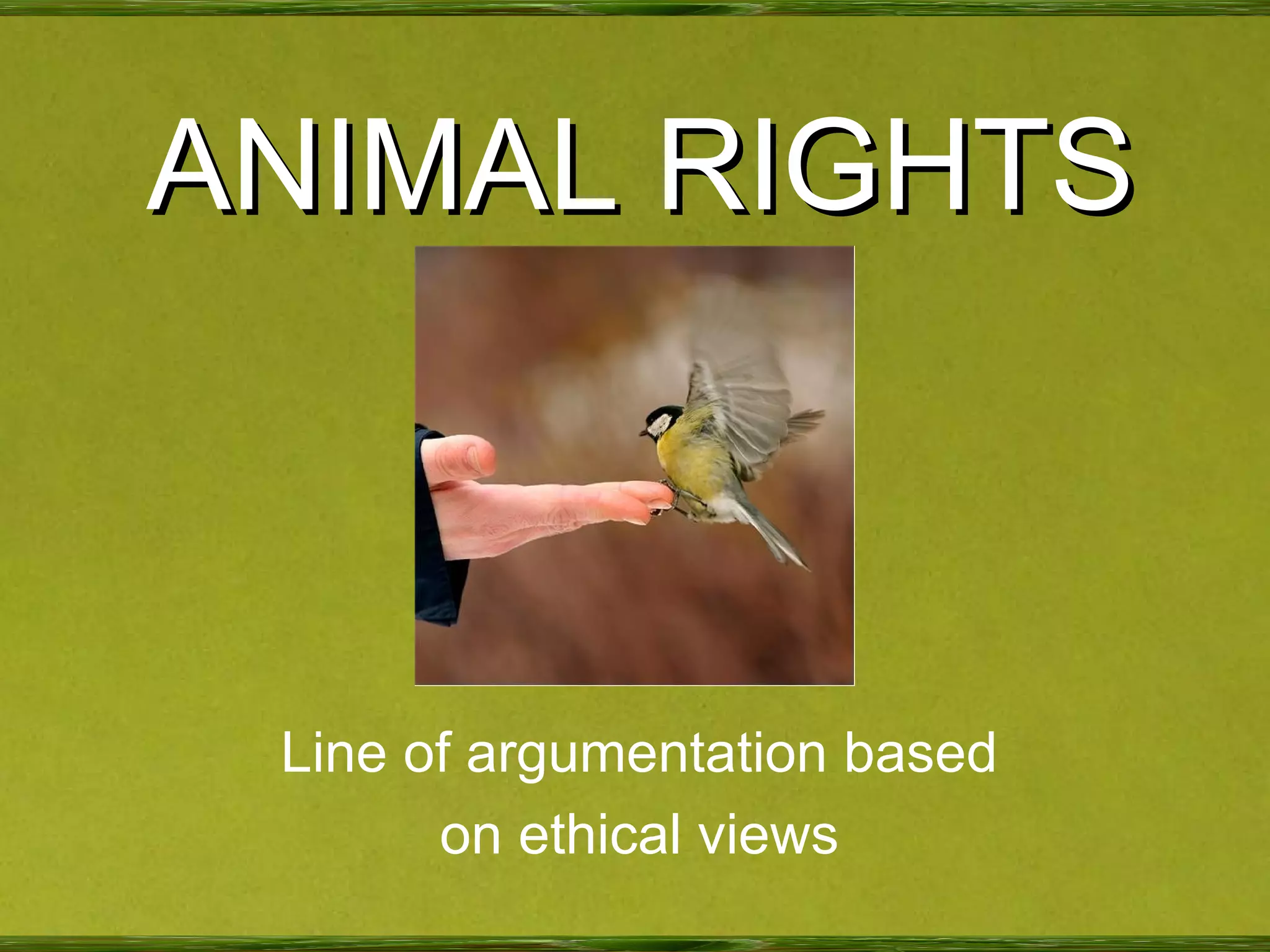
ANIMAL RIGHTS Line of argumentation based on ethical views
Overview: Racism – Speciesism Why Animal Rights? Practices of Speciesism Lawlessness of Animals today Debts of Antispeciesism Animal Rights for a more equitably world
Forms of discrimination
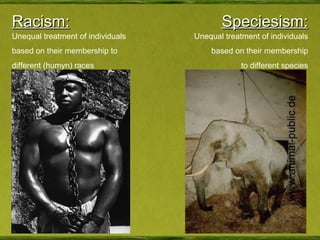
Racism: Speciesism: Unequal treatment of individuals  based on their membership to different (humyn) races Unequal treatment of individuals based on their membership to different species
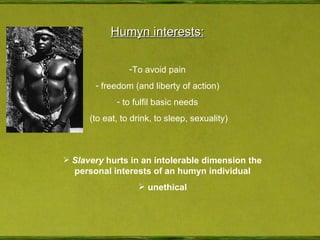
To avoid pain freedom (and liberty of action) to fulfil basic needs (to eat, to drink, to sleep, sexuality) Humyn interests: Slavery  hurts in an intolerable dimension the personal interests of an humyn individual unethical
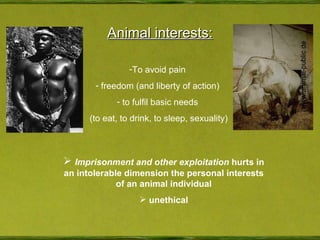
Animal interests: Imprisonment and other exploitation  hurts in an intolerable dimension the personal interests of an animal individual unethical To avoid pain freedom (and liberty of action) to fulfil basic needs (to eat, to drink, to sleep, sexuality)
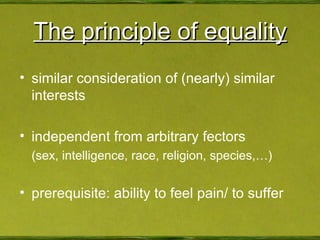
The principle of equality similar consideration of (nearly) similar interests independent from arbitrary fectors (sex, intelligence, race, religion, species,…) prerequisite: ability to feel pain/ to suffer
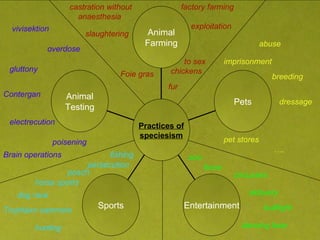
horse sports fishing hunting Trophäen   sammeln poach persecution dog race breeding … . imprisonment dressage abuse pet stores slaughtering castration without anaesthesia  Foie gras exploitation fur factory farming to sex chickens circusses zoo force sklavery bullfight dancing bear electrecution poisening Contergan overdose gluttony vivisektion Brain operations   Animal Testing Sports Entertainment Pets Animal Farming Practices of speciesism
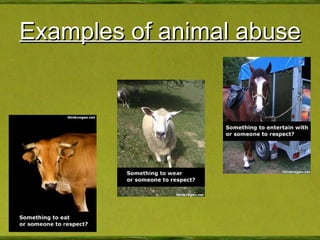
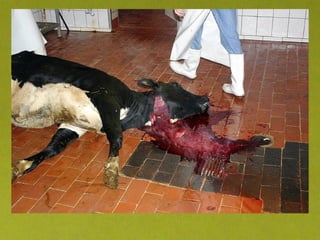
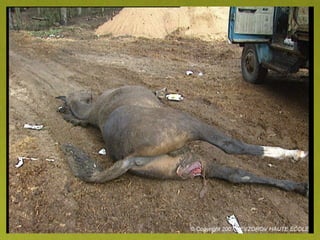
Examples of animal abuse
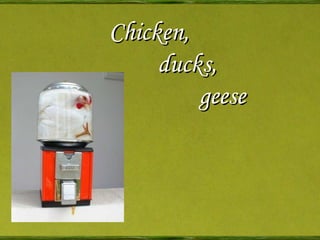
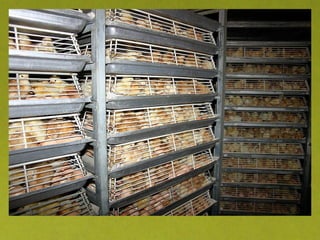
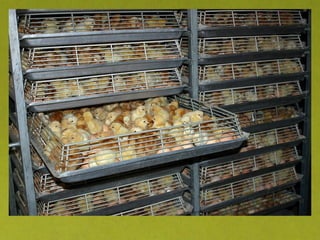
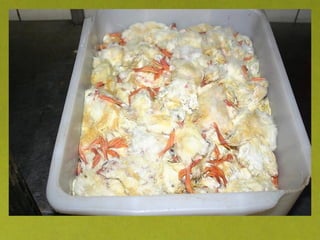
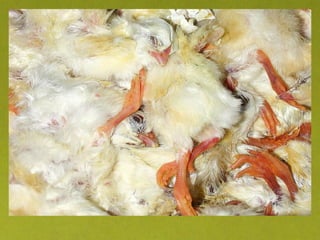
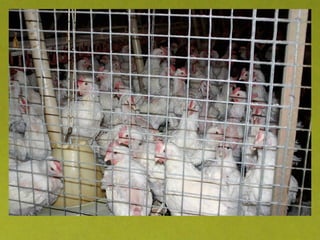
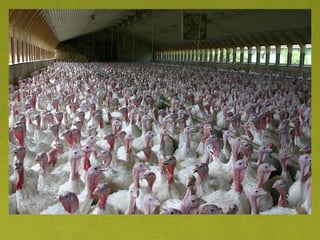
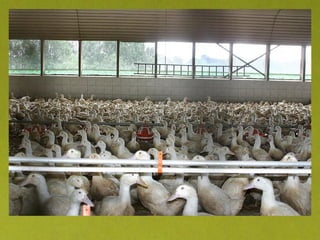
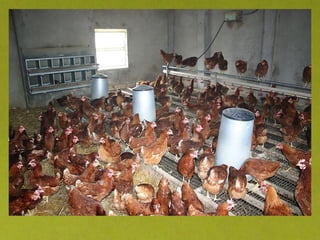
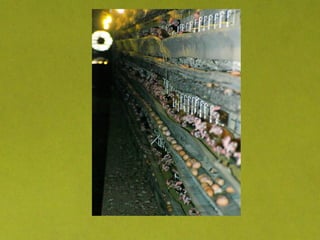
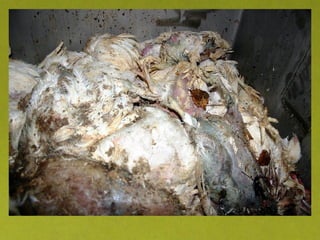
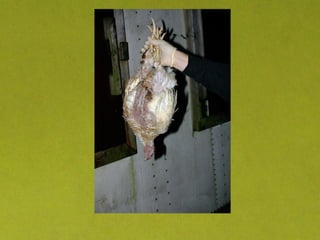
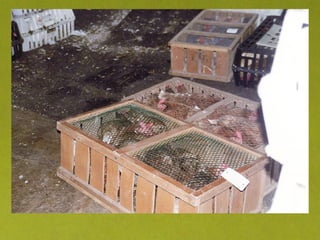
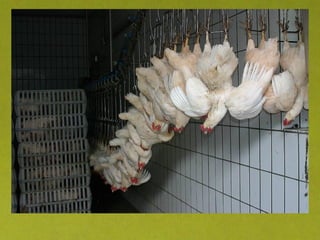
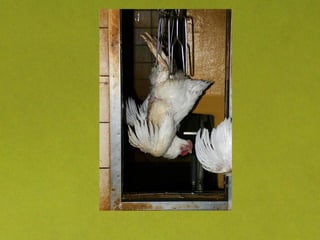
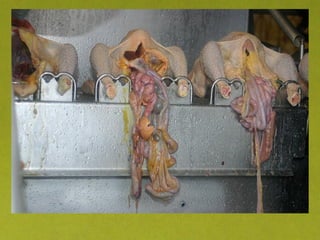
Chicken,    ducks,    geese


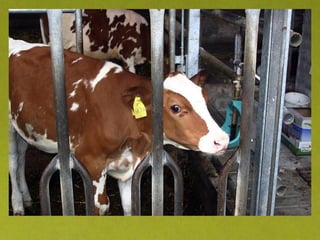
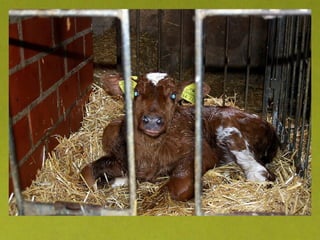
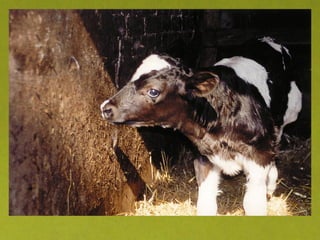
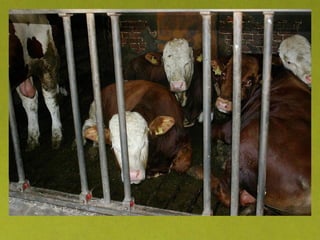
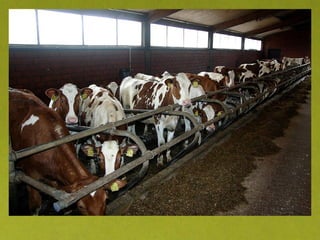
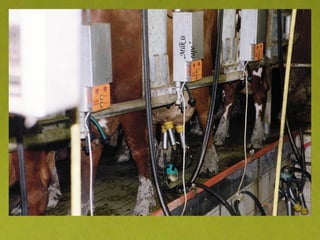
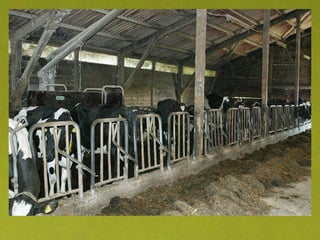
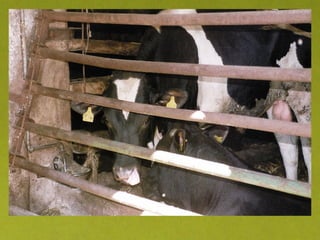
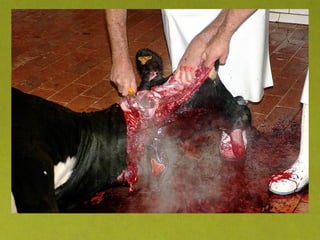
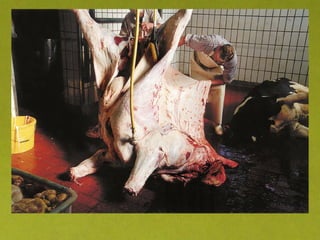
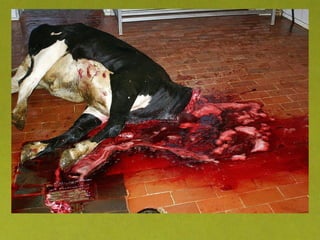
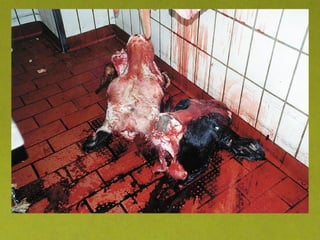
Bovines


„ Milk is rape.“


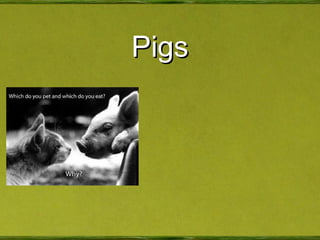
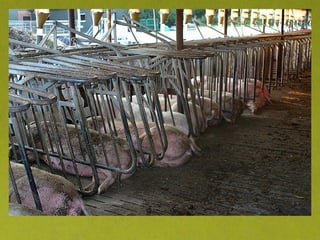
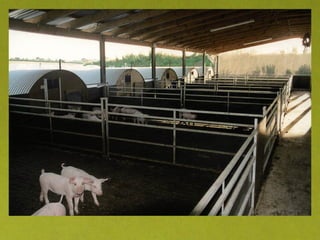
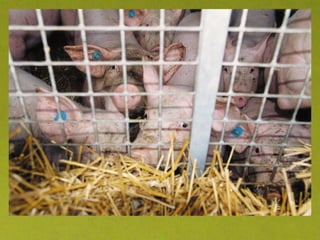
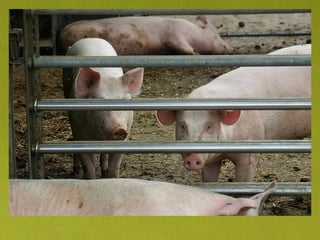
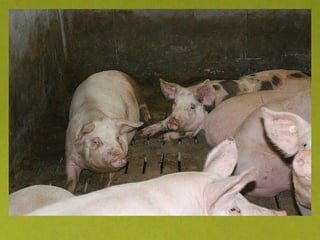
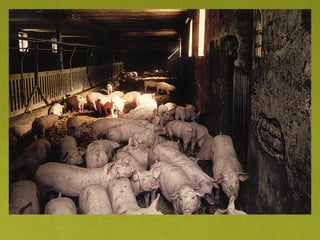
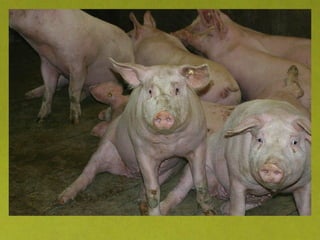
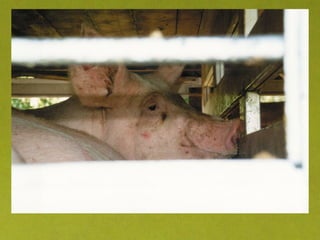
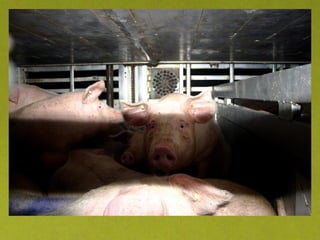
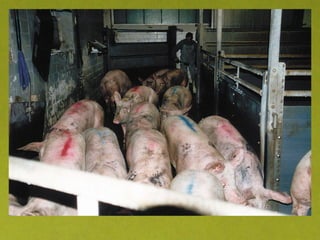
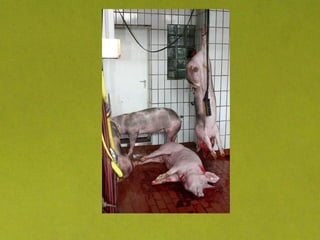
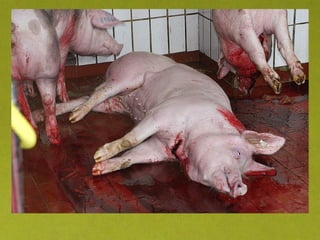
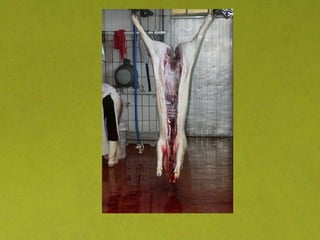
Pigs


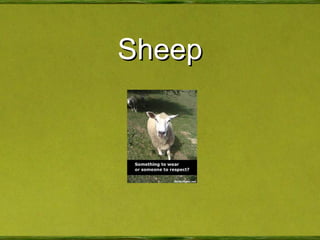
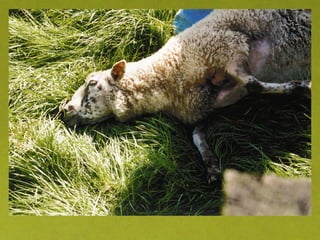
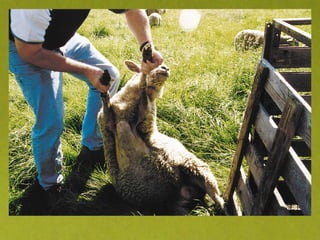
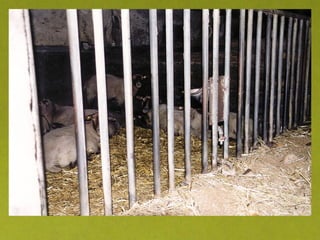
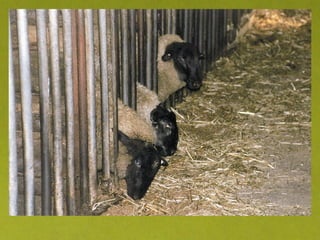
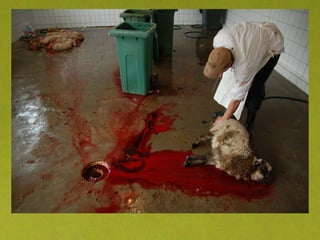
Sheep


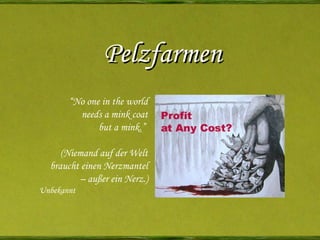
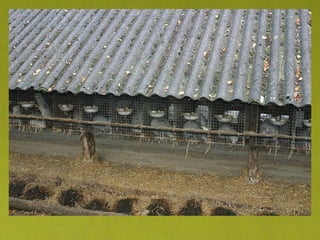
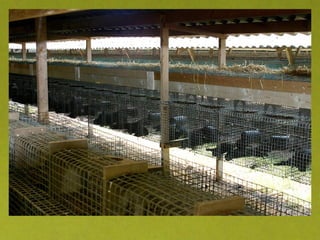
Pelzfarmen “ No one in the world needs a mink coat but a mink.”  (Niemand auf der Welt braucht einen Nerzmantel –  außer ein Nerz.) Unbekannt
 
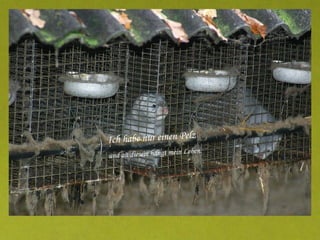
Ich habe nur einen Pelz und an diesem hängt mein Leben.
 
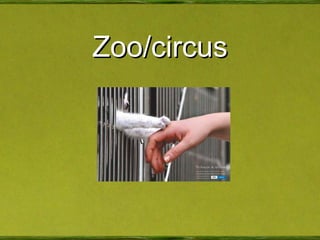
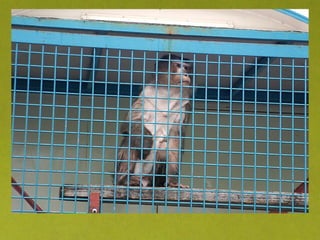
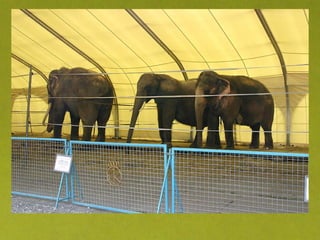
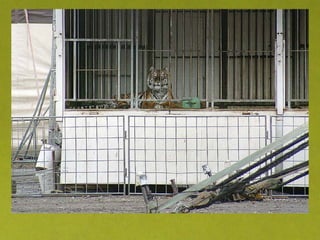
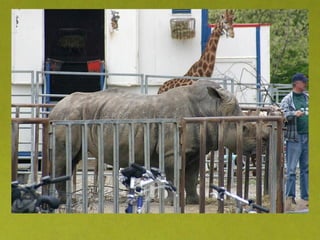
Zoo/circus


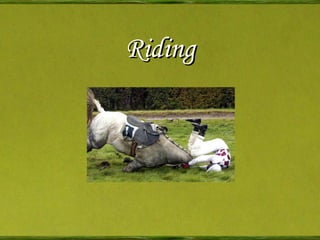
Riding


Debt of Antispeciesism Right of all sentient beings to life , integrity  and freedom (stepwise) abolishment of all forms of animal abuse veganism
Veganism =  to avoid the consumption of animal products ( cruelty products, e.g.:  corpses, milk/dairy, eggs, gelatine, „leather“, „fur“, eiderdowns, bristles, honey, silk, sheep whool,…) Instead of that: cruelty-free, plant (partly also synthetic) alternatives (e.g.: soy products, plant milk, cotton, microfibre,…)  promotion of organic farming, fair trade products, second-hand-clothes, dumpster diving No support of abuse, exploitation, animal factory, violence, environmental destruction (…) advancement of ovo-lacto-vegetarianism/animal welfare/environmental protection
Sources „ Animal Liberation – die Befreiung der Tiere“, Peter Singer „ Vegan. Von der Ethik in der Ernährung und der Notwendigkeit eines Wandels“ Kath Clements  pictures: soylent.network

Animal Rights

  • 1.
    ANIMAL RIGHTS Lineof argumentation based on ethical views
  • 2.
    Overview: Racism –Speciesism Why Animal Rights? Practices of Speciesism Lawlessness of Animals today Debts of Antispeciesism Animal Rights for a more equitably world
  • 3.
  • 4.
    Racism: Speciesism: Unequaltreatment of individuals based on their membership to different (humyn) races Unequal treatment of individuals based on their membership to different species
  • 5.
    To avoid painfreedom (and liberty of action) to fulfil basic needs (to eat, to drink, to sleep, sexuality) Humyn interests: Slavery hurts in an intolerable dimension the personal interests of an humyn individual unethical
  • 6.
    Animal interests: Imprisonmentand other exploitation hurts in an intolerable dimension the personal interests of an animal individual unethical To avoid pain freedom (and liberty of action) to fulfil basic needs (to eat, to drink, to sleep, sexuality)
  • 7.
    The principle ofequality similar consideration of (nearly) similar interests independent from arbitrary fectors (sex, intelligence, race, religion, species,…) prerequisite: ability to feel pain/ to suffer
  • 8.
    horse sports fishinghunting Trophäen sammeln poach persecution dog race breeding … . imprisonment dressage abuse pet stores slaughtering castration without anaesthesia Foie gras exploitation fur factory farming to sex chickens circusses zoo force sklavery bullfight dancing bear electrecution poisening Contergan overdose gluttony vivisektion Brain operations Animal Testing Sports Entertainment Pets Animal Farming Practices of speciesism
  • 9.
  • 10.
    Chicken, ducks, geese
  • 11.
  • 12.
  • 13.
  • 14.
  • 15.
  • 16.
  • 17.
  • 18.
  • 19.
  • 20.
  • 21.
  • 22.
  • 23.
  • 24.
  • 25.
  • 26.
  • 27.
  • 28.
  • 29.
  • 30.
  • 31.
  • 32.
    „ Milk isrape.“
  • 33.
  • 34.
  • 35.
  • 36.
  • 37.
  • 38.
  • 39.
  • 40.
  • 41.
  • 42.
  • 43.
  • 44.
  • 45.
  • 46.
  • 47.
  • 48.
  • 49.
  • 50.
  • 51.
  • 52.
  • 53.
  • 54.
  • 55.
  • 56.
  • 57.
  • 58.
  • 59.
  • 60.
  • 61.
  • 62.
    Pelzfarmen “ Noone in the world needs a mink coat but a mink.” (Niemand auf der Welt braucht einen Nerzmantel – außer ein Nerz.) Unbekannt
  • 63.
  • 64.
    Ich habe nureinen Pelz und an diesem hängt mein Leben.
  • 65.
  • 66.
  • 67.
  • 68.
  • 69.
  • 70.
  • 71.
  • 72.
  • 73.
  • 74.
  • 75.
    Debt of AntispeciesismRight of all sentient beings to life , integrity and freedom (stepwise) abolishment of all forms of animal abuse veganism
  • 76.
    Veganism = to avoid the consumption of animal products ( cruelty products, e.g.: corpses, milk/dairy, eggs, gelatine, „leather“, „fur“, eiderdowns, bristles, honey, silk, sheep whool,…) Instead of that: cruelty-free, plant (partly also synthetic) alternatives (e.g.: soy products, plant milk, cotton, microfibre,…) promotion of organic farming, fair trade products, second-hand-clothes, dumpster diving No support of abuse, exploitation, animal factory, violence, environmental destruction (…) advancement of ovo-lacto-vegetarianism/animal welfare/environmental protection
  • 77.
    Sources „ AnimalLiberation – die Befreiung der Tiere“, Peter Singer „ Vegan. Von der Ethik in der Ernährung und der Notwendigkeit eines Wandels“ Kath Clements pictures: soylent.network