Anesthesia Drugs and Drugs
used in resuscitation
Preanesthetic Medications
• Preanesthetic medications serve to
Calm patients – benzodiazepines
To reduce secretions – anticholinergic
To provide analgesia – opioids
To prevent nausea and vomiting – antiemetics
To prevent acidity – proton pump inhibitors
To prevent allergic reactions – antihistaminics
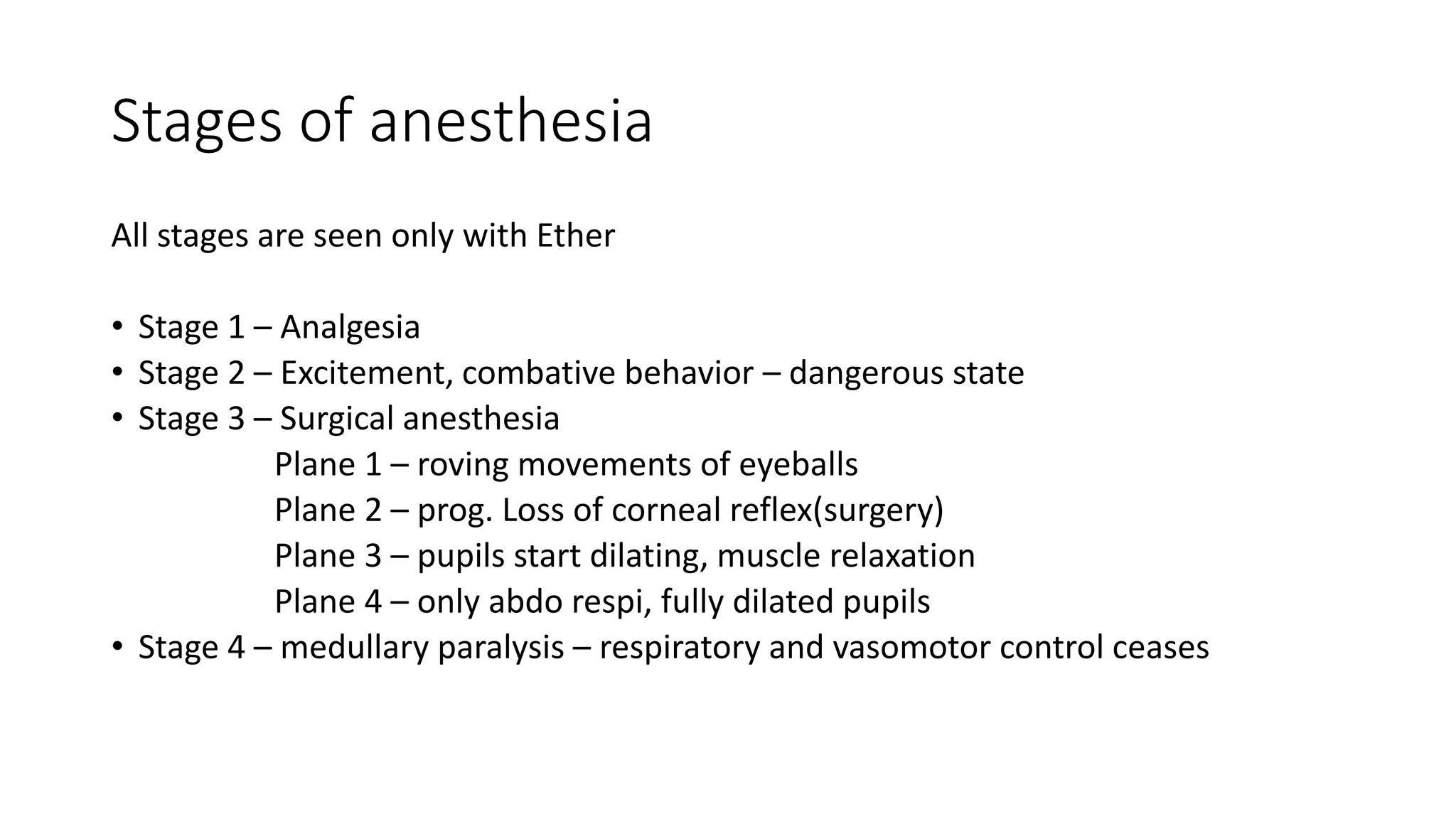
Stages of anesthesia
All stages are seen only with Ether
• Stage 1 – Analgesia
• Stage 2 – Excitement, combative behavior – dangerous state
• Stage 3 – Surgical anesthesia
Plane 1 – roving movements of eyeballs
Plane 2 – prog. Loss of corneal reflex(surgery)
Plane 3 – pupils start dilating, muscle relaxation
Plane 4 – only abdo respi, fully dilated pupils
• Stage 4 – medullary paralysis – respiratory and vasomotor control ceases
Induction agents
• Propofol
Available as white emulsion containing soyabean (10%), glycerol(2.25%)
,purified egg phosptide (1.2%).
Available 1% and 2% propofol solution
Chemically 2, 6, di-isopropyl phenol
Alkyl phenol derivatives
Acts on GABA receptors
Can cause sedation, amnesia does not cause analgesia
Pain on injection
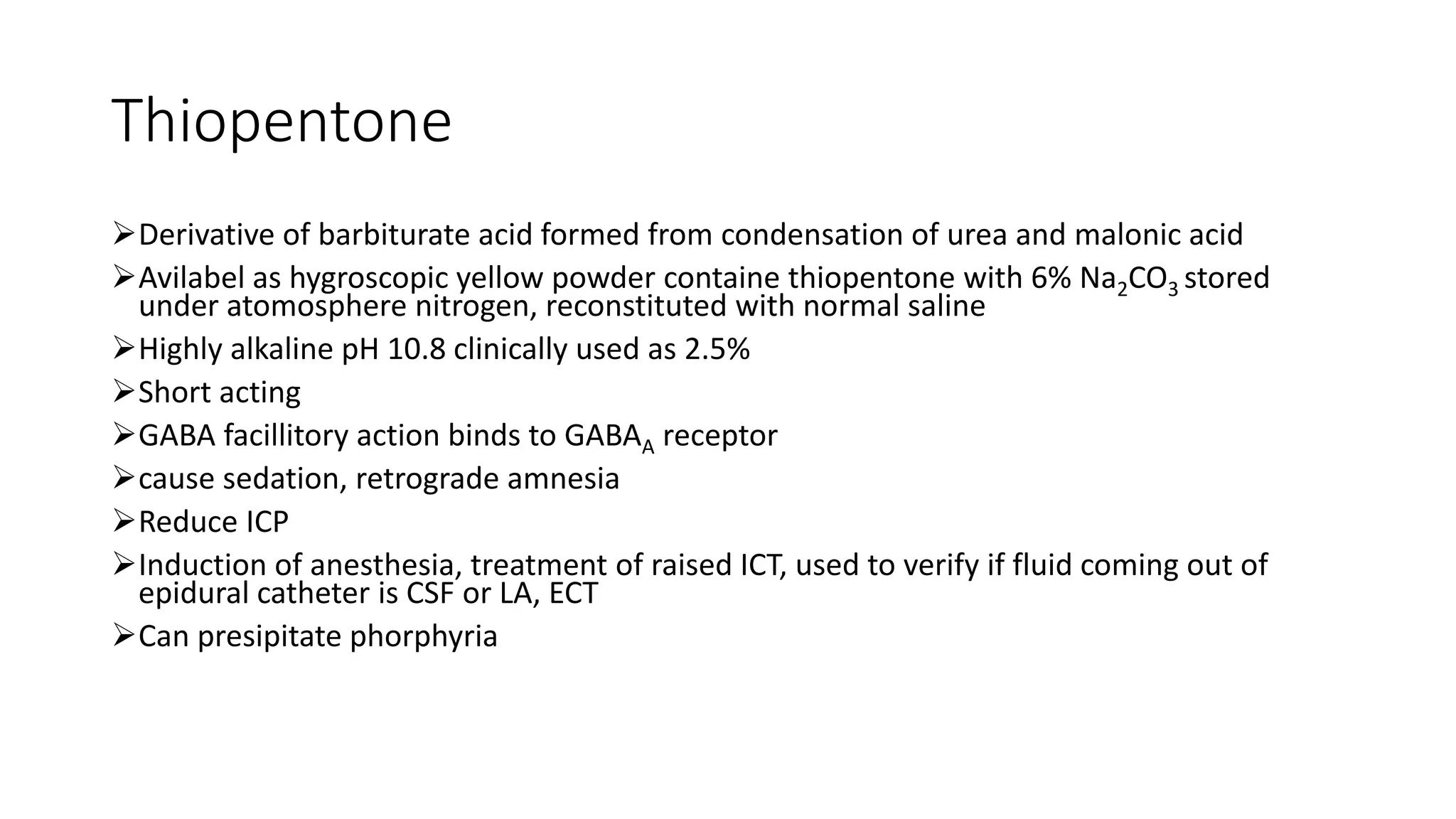
Thiopentone
Derivative of barbiturate acid formed from condensation of urea and malonic acid
Avilabel as hygroscopic yellow powder containe thiopentone with 6% Na2CO3 stored
under atomosphere nitrogen, reconstituted with normal saline
Highly alkaline pH 10.8 clinically used as 2.5%
Short acting
GABA facillitory action binds to GABAA receptor
cause sedation, retrograde amnesia
Reduce ICP
Induction of anesthesia, treatment of raised ICT, used to verify if fluid coming out of
epidural catheter is CSF or LA, ECT
Can presipitate phorphyria
Ketamine
N-methyl-D-aspartate receptor antagonist
Produce dissociative anesthesia
Structural analogue of phencyclidine
Uses – induction of anesthesia, analgesia, neuraxial
analgesia(preservative free)
Emergence delirium – unpleasant dreams, aggressiveness, violence,
sense floating, misinterpretation of visual and auditory stimuli
Cataleptic state – eyes open, nystagmus, salivation lacrimation
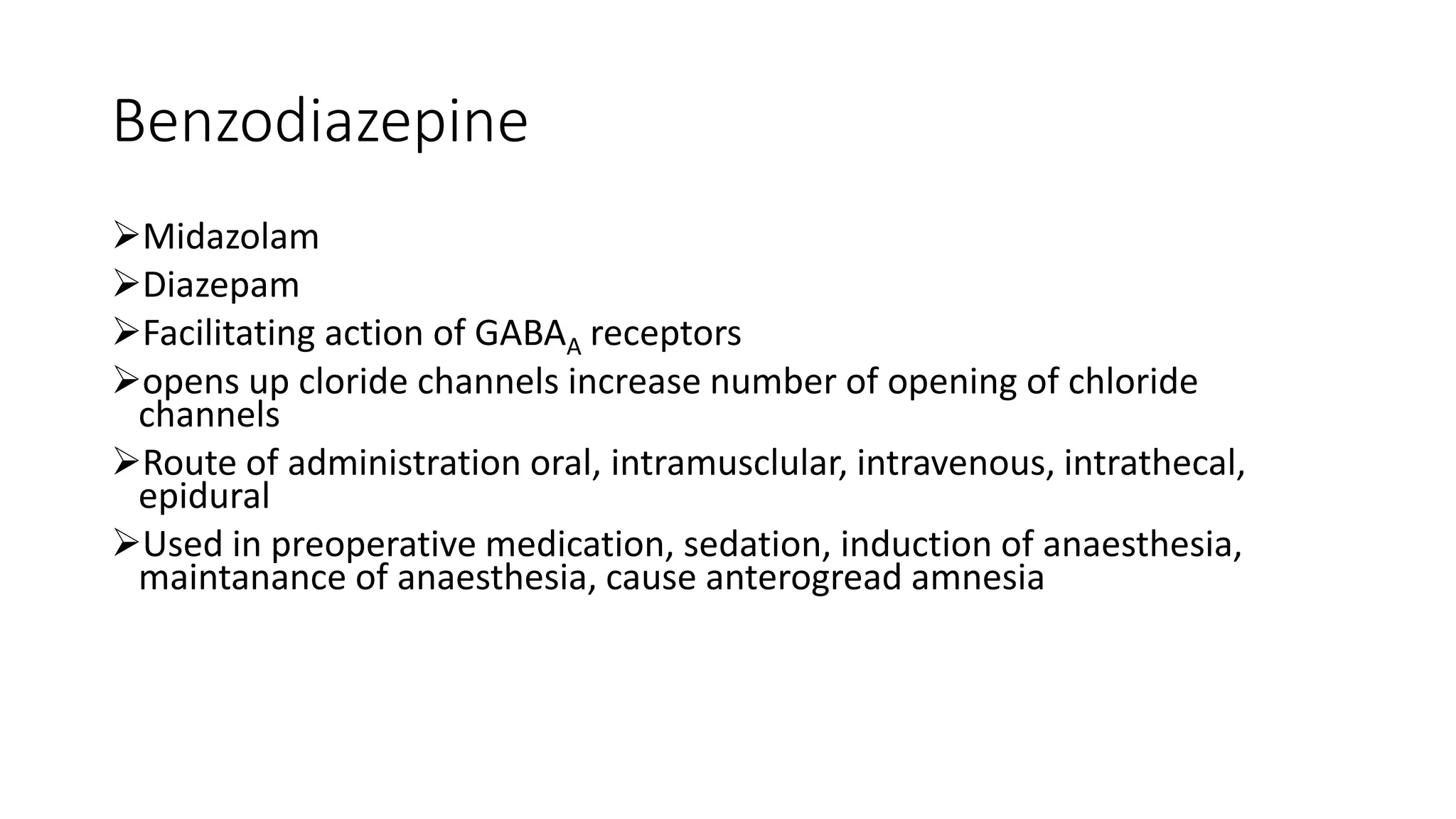
Benzodiazepine
Midazolam
Diazepam
Facilitating action of GABAA receptors
opens up cloride channels increase number of opening of chloride
channels
Route of administration oral, intramusclular, intravenous, intrathecal,
epidural
Used in preoperative medication, sedation, induction of anaesthesia,
maintanance of anaesthesia, cause anterogread amnesia
Etomidate
Carboxylated imidazole
Binds to GABA receptors
Most cardiostable intravenous induction agent
May activate seizure foci in patient with epilepsy this feature used for
mapping of foci in neurosurgery before ablation
Used in induction of anaesthesia
Can cause myoclonus during induction, pain on injection site,
corticosteroid and mineralocorticoid synthesis spression
Neuromuscular Blocking Agents
PHYSIOLOGICAL MECHANISM OF NMBD
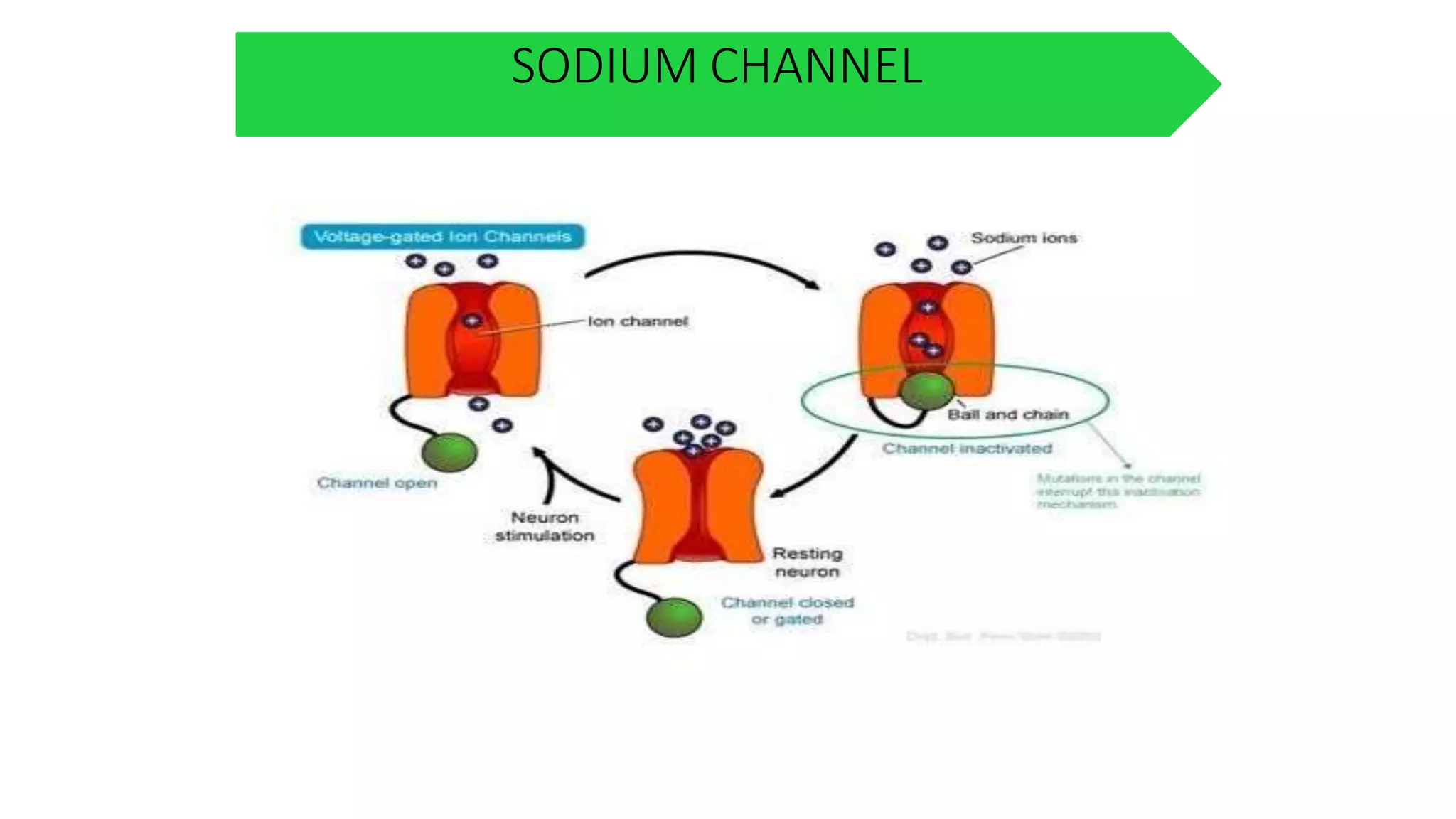
SODIUM CHANNEL
Neuromuscular Blocking Agents
NMBD
Depolarizing agents Nondepolarizing agents
NMBDs interact with the ACh
receptor either by depolarizing
the end plate
by competing with ACh for
binding sites.
• Succinylcholine • Atracurium
• Cisatracurium
• Rocuronium
• Vecuronium
• Doxacurium
• Pancuronium
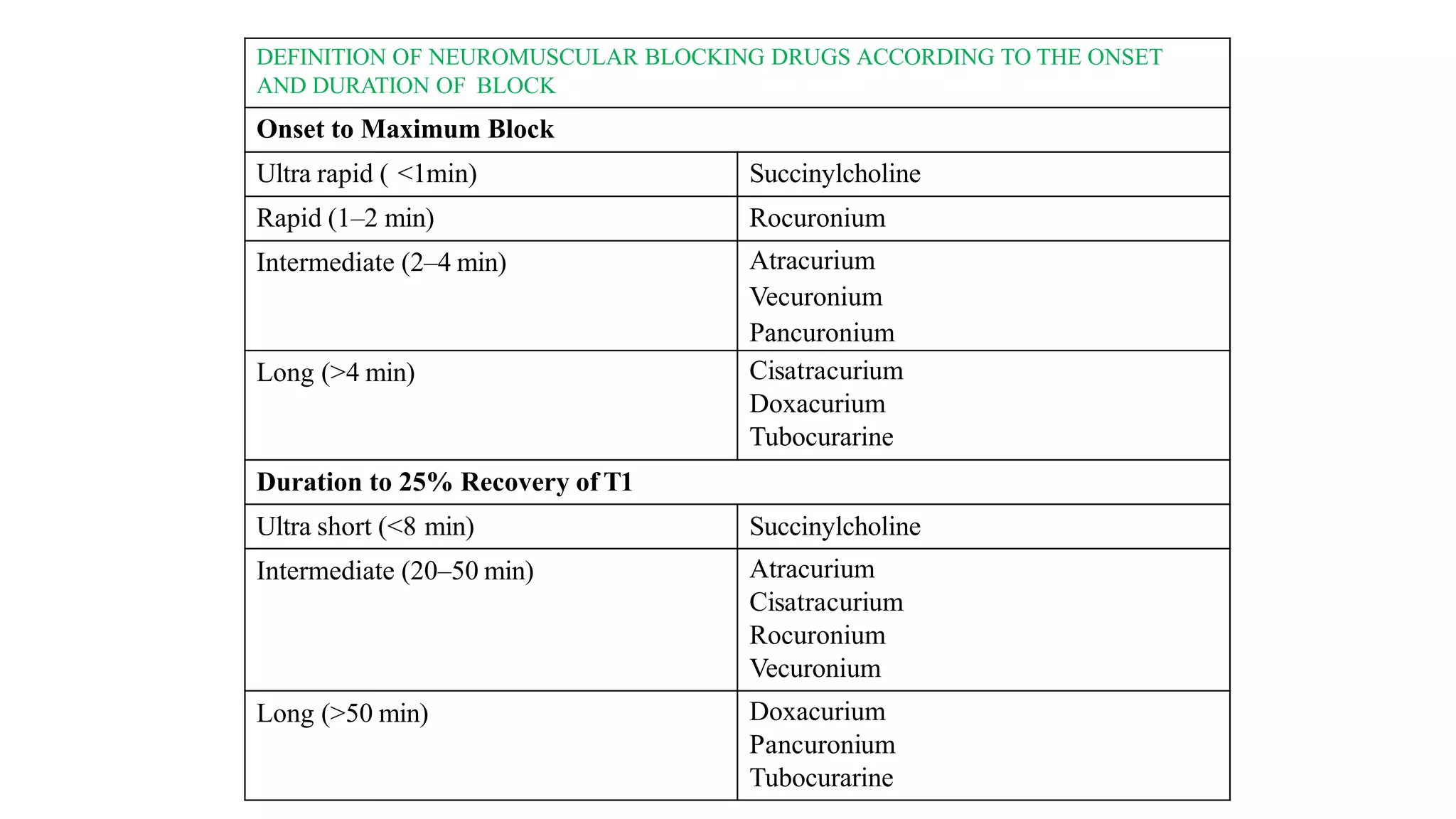
DEFINITION OF NEUROMUSCULAR BLOCKING DRUGS ACCORDING TO THE ONSET
AND DURATION OF BLOCK
Onset to Maximum Block
Ultra rapid ( <1min) Succinylcholine
Rapid (1–2 min) Rocuronium
Intermediate (2–4 min) Atracurium
Vecuronium
Pancuronium
Long (>4 min) Cisatracurium
Doxacurium
Tubocurarine
Duration to 25% Recovery of T1
Ultra short (<8 min) Succinylcholine
Intermediate (20–50 min) Atracurium
Cisatracurium
Rocuronium
Vecuronium
Long (>50 min) Doxacurium
Pancuronium
Tubocurarine
M-cholinergic
receptor
M1
M2
M3
M4
M5
M-cholinergic receptor
• Cholinesterase inhibitors indirectly increase the
amount of acetylcholine available to compete with
the nondepolarizing agent, thereby reestablishing
normal neuromuscular transmission.
Mechanism of Action
Anticholinesterase drugs
Neostigmine
Physostigmine
Edrophonium
Pyridostigmine
Inotropicagents
Adrenergic
Catecholamine
Natural
Adrenaline
Noradrenaline,
Dopamine
Synthetic
Isoprealine,
Dobutamine,
Dopexamine
Noncatecholamine
Directacting
Phenylephrine,
Methoxamine
Direct+Indirectactin
g
Ephedrine
Mephentermine
Non adrenergic
PDEinhibitors
Milrinone
Amrinone
Enoximone
Piroxinone
Miscellaneous
Digoxin
Calcium
Receptors
Receptors
Effects of adrenergic agents
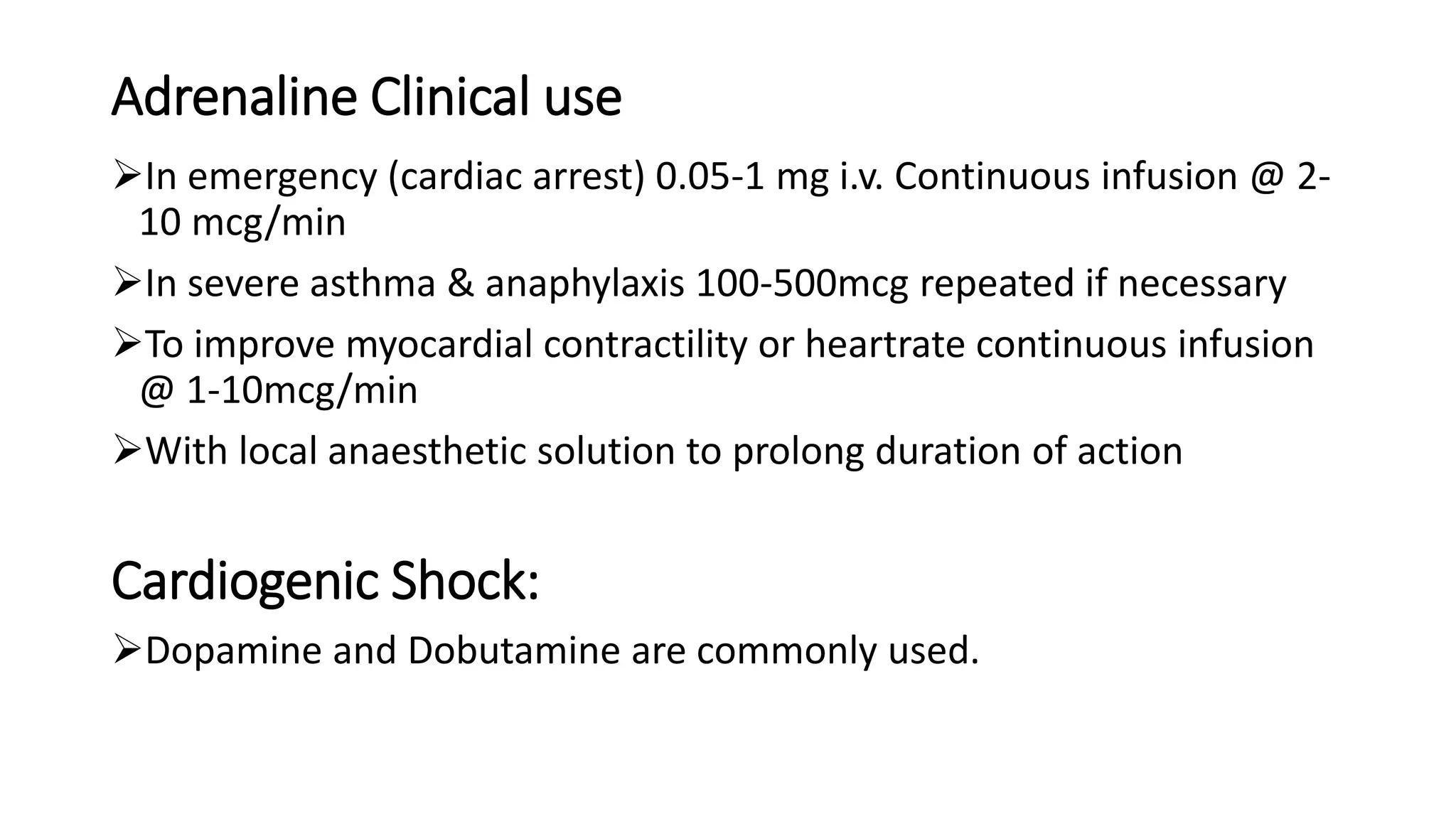
Adrenaline Clinical use
In emergency (cardiac arrest) 0.05-1 mg i.v. Continuous infusion @ 2-
10 mcg/min
In severe asthma & anaphylaxis 100-500mcg repeated if necessary
To improve myocardial contractility or heartrate continuous infusion
@ 1-10mcg/min
With local anaesthetic solution to prolong duration of action
Cardiogenic Shock:
Dopamine and Dobutamine are commonly used.
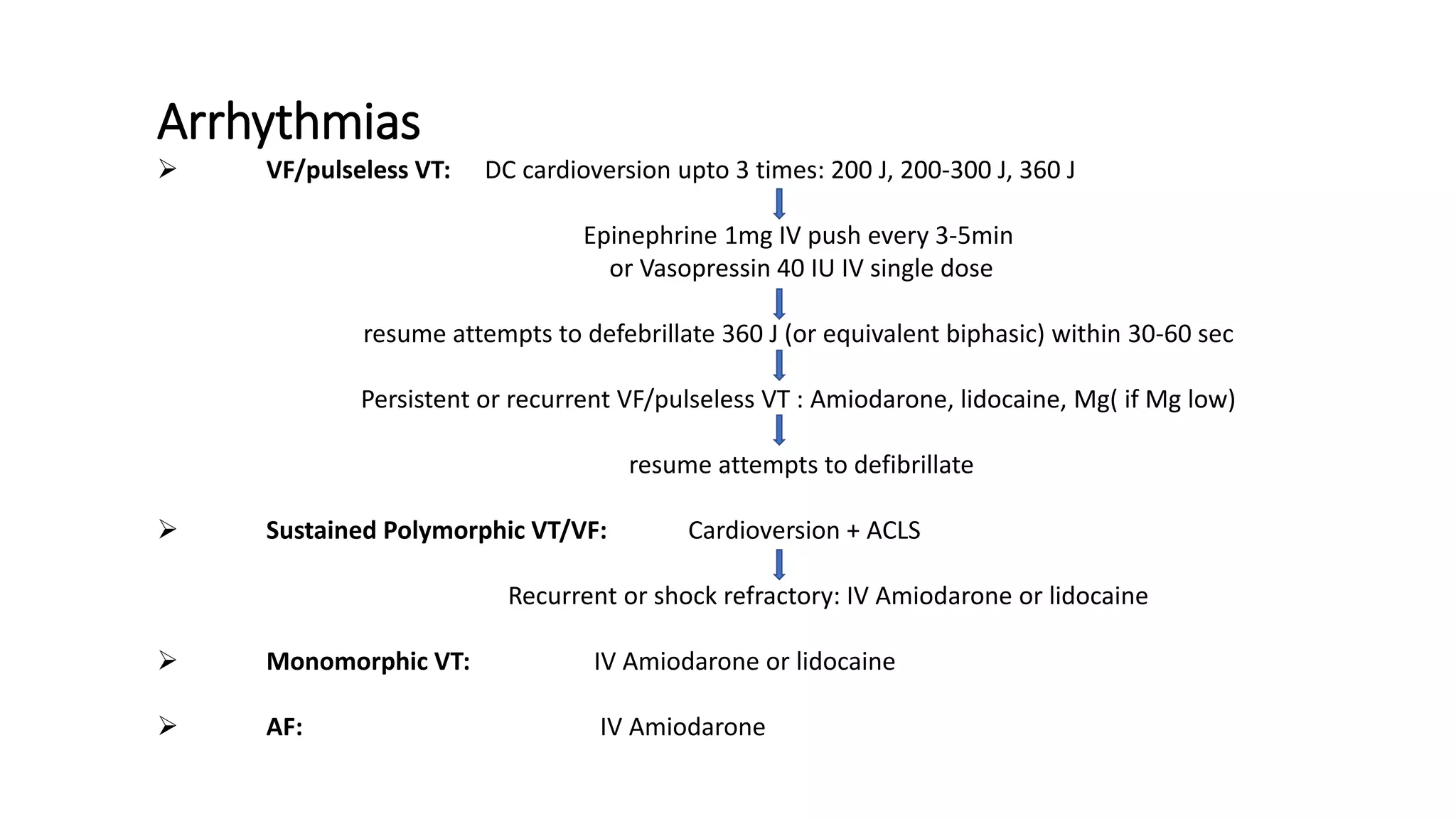
Arrhythmias
 VF/pulseless VT: DC cardioversion upto 3 times: 200 J, 200-300 J, 360 J
Epinephrine 1mg IV push every 3-5min
or Vasopressin 40 IU IV single dose
resume attempts to defebrillate 360 J (or equivalent biphasic) within 30-60 sec
Persistent or recurrent VF/pulseless VT : Amiodarone, lidocaine, Mg( if Mg low)
resume attempts to defibrillate
 Sustained Polymorphic VT/VF: Cardioversion + ACLS
Recurrent or shock refractory: IV Amiodarone or lidocaine
 Monomorphic VT: IV Amiodarone or lidocaine
 AF: IV Amiodarone
THANK YOU

Anesthesia Drugs and Drugs used in resuscitation 1.pptx