Androgenital syndrome
Addison’s disease
Adrenal adenoma
Cortical carcinoma
Dr. Reetu Baral MD (Pathology) (KU)
Department of Pathology
Nobel Medical College
Andrenogenital Syndromes
• Adrenogenital syndromes - caused by:
– Androgen excess:
• Primary gonadal disorders
• Primary adrenal disorders.
• The adrenal cortex secretes two compounds—
– Dehydroepiandrosterone
– Androstenedione—which require conversion to
testosterone in peripheral tissues for their
androgenic effects.
Adrenogenital Syndrome
• ACTH regulates adrenal androgen formation -
excessive secretion can present:
– An isolated syndrome
– Combined with Cushing disease.
• Congenital Adrenal Hyperplasia (CAH):
– Autosomal recessive disorder – hereditary defect in an
enzyme needed in adrenal synthesis particularly
cortisol.
– Decreased cortisol – Increased ACTH secretion – due
to absence of negative feedback – Adrenal hyperplasia
– increased production of cortisol precursor steroids –
synthesis of androgen – virilizing activities.
Congenital Adrenal Hyperplasia (CAH)
• Most common enzyme defect - 21-hydroxylase
deficiency – 90% of cases
• Range from total lack to mild loss – depending on the
mutation
• In adrenal glands cortisol, aldosterone and sex
steroids are synthesized from cholesterol through
various intermediates – 21 – hydroxylase is required
for synthesis of cortisol and aldosterone but not sex
steroids – thus its deficiency reduces cortisol and
aldosterone synthesis – hence shunts the common
precursors into sex steroid precursors.
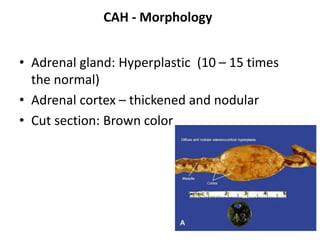
CAH - Morphology
• Adrenal gland: Hyperplastic (10 – 15 times
the normal)
• Adrenal cortex – thickened and nodular
• Cut section: Brown color
CAH Clinical Features
• 21-hydroxylase deficiency: Excessive androgenic
activity:
• Females:
– Masculinization in females
– Clitoral hypertrophy
– Pseudohormaphroditism
– Oligomenorrhea
– Hirsutism
– Acne
• Males:
– Precocious puberty
– Enlargement of external genitalia
– Oligospermia
Adrenal Insufficiency (Addison disease)
• Adrenocortical insufficiency, or hypofunction, may
be caused by:
– Primary adrenal disease (primary hypoadrenalism)
– Secondary hypoadrenalism: Decreased stimulation of the
adrenals resulting from ACTH deficiency
• Primary adrenocortical insufficiency may be:
– Acute (Adrenal crisis)
– Chronic (Addison disease)
Causes of Adrenal Insufficiency
• Acute
– Waterhouse-Friderichsen syndrome:
• N.meningitidis sepsis
– Sudden withdrawal of long-term corticosteroid
– Massive adrenal haemorrhage:
• Anti-coagulant therapy
• DIC
• Pregnancy
– Stress in patients with underlying chronic adrenal
insufficiency
Adrenal crisis
• Stresses such as infections, trauma, or surgical
procedures in affected patients may precipitate an
acute adrenal crisis:
– Profound asthenia (weakness)
– Severe pain in the abdomen, lower back, or legs
– Peripheral vascular collapse
– Renal shutdown with azotemia
In adrenal crisis, a delay in instituting corticosteroid
therapy, particularly if there is hypoglycemia and
hypotension, may be fatal.
Chronic Adrenocortical Insufficiency: Addison disease
• Chronic (Progressive destruction of adrenal cortex)
– Autoimmune adrenalitis (60 – 70%)
– Infections
• Tuberculosis
• Acquired immunodeficiency syndrome
• Fungal infections
– Hemochromatosis
– Sarcoidosis
– Systemic amyloidosis
– Metastatic disease
Clinical features – Addison's disease
• Progressive weakness
• Easy fatigability
• Gastrointestinal disturbances :
– Anorexia
– Nausea
– Vomiting
– Weight loss
– Diarrhea
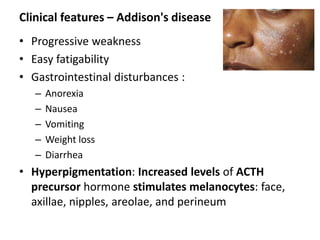
• Hyperpigmentation: Increased levels of ACTH
precursor hormone stimulates melanocytes: face,
axillae, nipples, areolae, and perineum
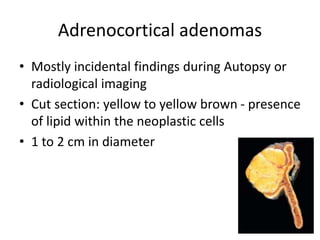
Adrenocortical adenomas
• Mostly incidental findings during Autopsy or
radiological imaging
• Cut section: yellow to yellow brown - presence
of lipid within the neoplastic cells
• 1 to 2 cm in diameter
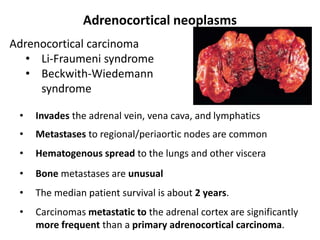
Adrenocortical neoplasms
Adrenocortical carcinoma
• Li-Fraumeni syndrome
• Beckwith-Wiedemann
syndrome
• Invades the adrenal vein, vena cava, and lymphatics
• Metastases to regional/periaortic nodes are common
• Hematogenous spread to the lungs and other viscera
• Bone metastases are unusual
• The median patient survival is about 2 years.
• Carcinomas metastatic to the adrenal cortex are significantly
more frequent than a primary adrenocortical carcinoma.
Next Class
• Multiple Endocrine Neoplasia (MEN)
• Neuroblastoma
• Pheochromocytoma

Androgenital syndrome.ppt

  • 1.
    Androgenital syndrome Addison’s disease Adrenaladenoma Cortical carcinoma Dr. Reetu Baral MD (Pathology) (KU) Department of Pathology Nobel Medical College
  • 2.
    Andrenogenital Syndromes • Adrenogenitalsyndromes - caused by: – Androgen excess: • Primary gonadal disorders • Primary adrenal disorders. • The adrenal cortex secretes two compounds— – Dehydroepiandrosterone – Androstenedione—which require conversion to testosterone in peripheral tissues for their androgenic effects.
  • 3.
    Adrenogenital Syndrome • ACTHregulates adrenal androgen formation - excessive secretion can present: – An isolated syndrome – Combined with Cushing disease. • Congenital Adrenal Hyperplasia (CAH): – Autosomal recessive disorder – hereditary defect in an enzyme needed in adrenal synthesis particularly cortisol. – Decreased cortisol – Increased ACTH secretion – due to absence of negative feedback – Adrenal hyperplasia – increased production of cortisol precursor steroids – synthesis of androgen – virilizing activities.
  • 4.
    Congenital Adrenal Hyperplasia(CAH) • Most common enzyme defect - 21-hydroxylase deficiency – 90% of cases • Range from total lack to mild loss – depending on the mutation • In adrenal glands cortisol, aldosterone and sex steroids are synthesized from cholesterol through various intermediates – 21 – hydroxylase is required for synthesis of cortisol and aldosterone but not sex steroids – thus its deficiency reduces cortisol and aldosterone synthesis – hence shunts the common precursors into sex steroid precursors.
  • 5.
    CAH - Morphology •Adrenal gland: Hyperplastic (10 – 15 times the normal) • Adrenal cortex – thickened and nodular • Cut section: Brown color
  • 6.
    CAH Clinical Features •21-hydroxylase deficiency: Excessive androgenic activity: • Females: – Masculinization in females – Clitoral hypertrophy – Pseudohormaphroditism – Oligomenorrhea – Hirsutism – Acne • Males: – Precocious puberty – Enlargement of external genitalia – Oligospermia
  • 7.
    Adrenal Insufficiency (Addisondisease) • Adrenocortical insufficiency, or hypofunction, may be caused by: – Primary adrenal disease (primary hypoadrenalism) – Secondary hypoadrenalism: Decreased stimulation of the adrenals resulting from ACTH deficiency • Primary adrenocortical insufficiency may be: – Acute (Adrenal crisis) – Chronic (Addison disease)
  • 8.
    Causes of AdrenalInsufficiency • Acute – Waterhouse-Friderichsen syndrome: • N.meningitidis sepsis – Sudden withdrawal of long-term corticosteroid – Massive adrenal haemorrhage: • Anti-coagulant therapy • DIC • Pregnancy – Stress in patients with underlying chronic adrenal insufficiency
  • 9.
    Adrenal crisis • Stressessuch as infections, trauma, or surgical procedures in affected patients may precipitate an acute adrenal crisis: – Profound asthenia (weakness) – Severe pain in the abdomen, lower back, or legs – Peripheral vascular collapse – Renal shutdown with azotemia In adrenal crisis, a delay in instituting corticosteroid therapy, particularly if there is hypoglycemia and hypotension, may be fatal.
  • 10.
    Chronic Adrenocortical Insufficiency:Addison disease • Chronic (Progressive destruction of adrenal cortex) – Autoimmune adrenalitis (60 – 70%) – Infections • Tuberculosis • Acquired immunodeficiency syndrome • Fungal infections – Hemochromatosis – Sarcoidosis – Systemic amyloidosis – Metastatic disease
  • 11.
    Clinical features –Addison's disease • Progressive weakness • Easy fatigability • Gastrointestinal disturbances : – Anorexia – Nausea – Vomiting – Weight loss – Diarrhea • Hyperpigmentation: Increased levels of ACTH precursor hormone stimulates melanocytes: face, axillae, nipples, areolae, and perineum
  • 12.
    Adrenocortical adenomas • Mostlyincidental findings during Autopsy or radiological imaging • Cut section: yellow to yellow brown - presence of lipid within the neoplastic cells • 1 to 2 cm in diameter
  • 13.
    Adrenocortical neoplasms Adrenocortical carcinoma •Li-Fraumeni syndrome • Beckwith-Wiedemann syndrome • Invades the adrenal vein, vena cava, and lymphatics • Metastases to regional/periaortic nodes are common • Hematogenous spread to the lungs and other viscera • Bone metastases are unusual • The median patient survival is about 2 years. • Carcinomas metastatic to the adrenal cortex are significantly more frequent than a primary adrenocortical carcinoma.
  • 14.
    Next Class • MultipleEndocrine Neoplasia (MEN) • Neuroblastoma • Pheochromocytoma