Responsible
Prescribing Practices
         April 10-12, 2012
  Walt Disney World Swan Resort
Learning Objectives:
1. Describe how cautious, evidence-based
prescribing practices can lower opioid-related
overdose deaths while maintaining appropriate
access for medically needed treatment of chronic
pain.
2. Identify “best practice” strategies that can be
used by clinicians for pain management treatment.
3. Explain evidence-based practice and policies for
provider education and patient education
programs being utilized across the US.
Disclosure Statement
•  All presenters for this session, Dr. Rollin
   M. Gallagher, Dr. Andrew Kolodny, and
   Robert Sproul, have disclosed no
   relevant, real or apparent personal or
   professional financial relationships.
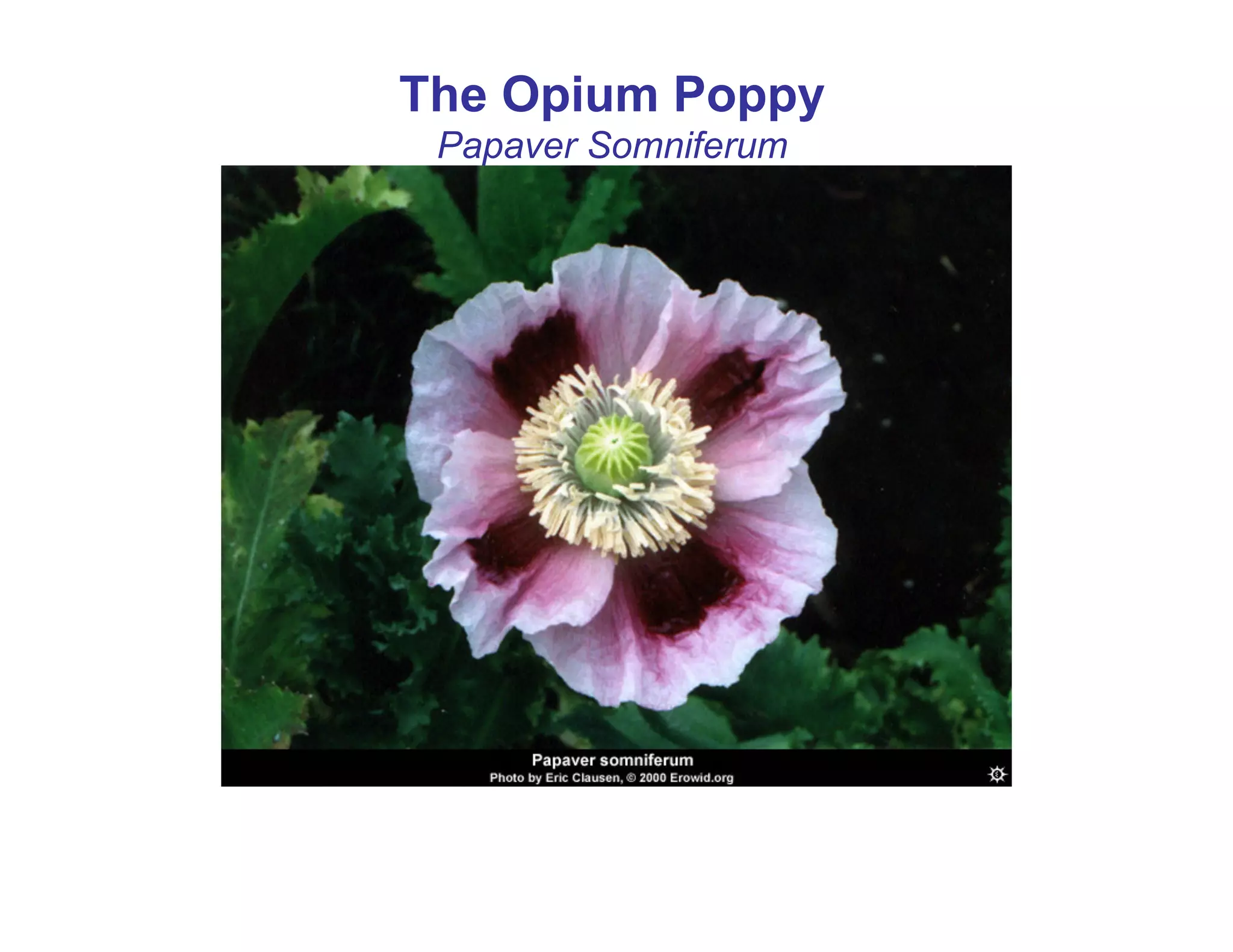
The Opium Poppy
 Papaver Somniferum
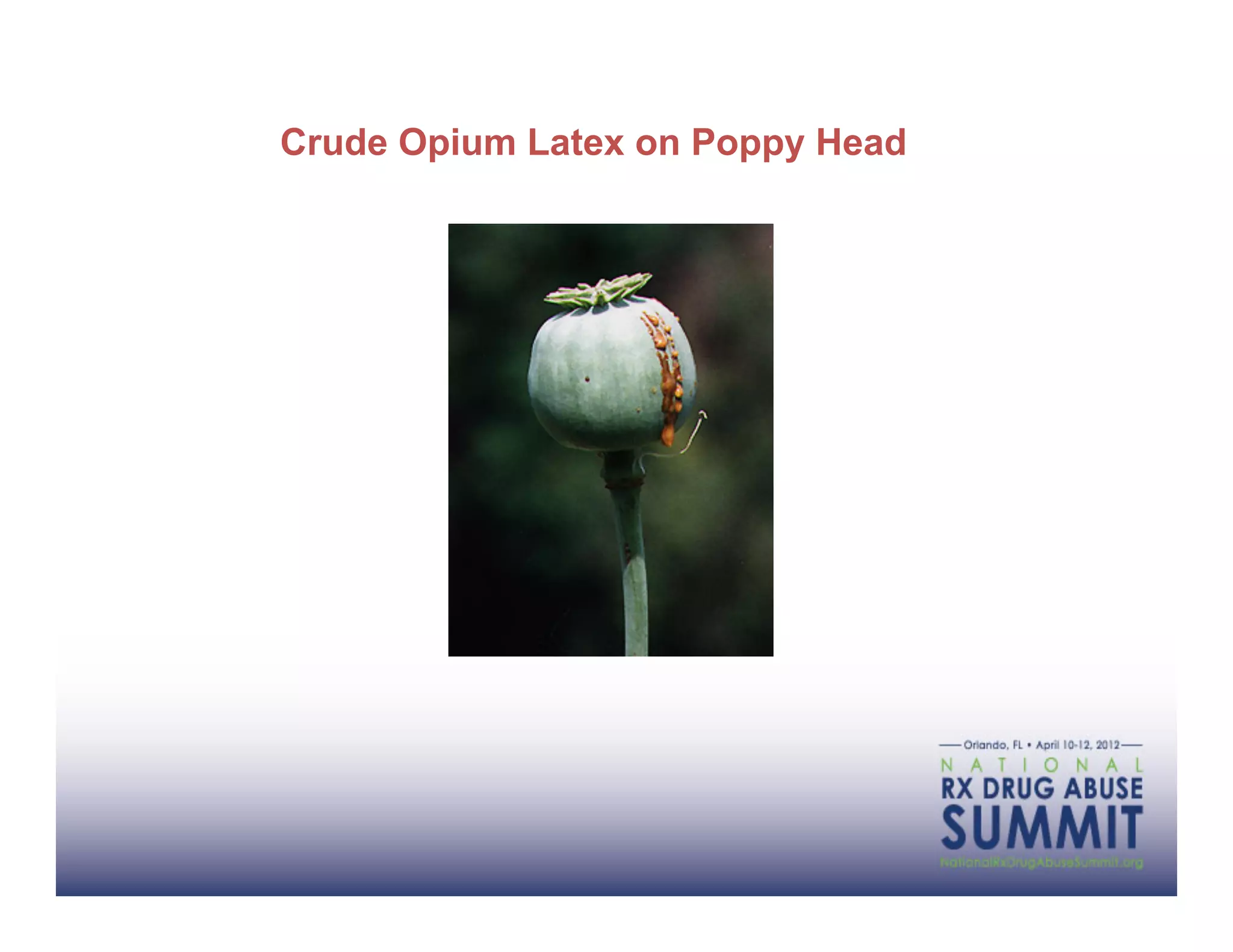
Crude Opium Latex on Poppy Head
Opioids
•    Morphine
•    Codeine
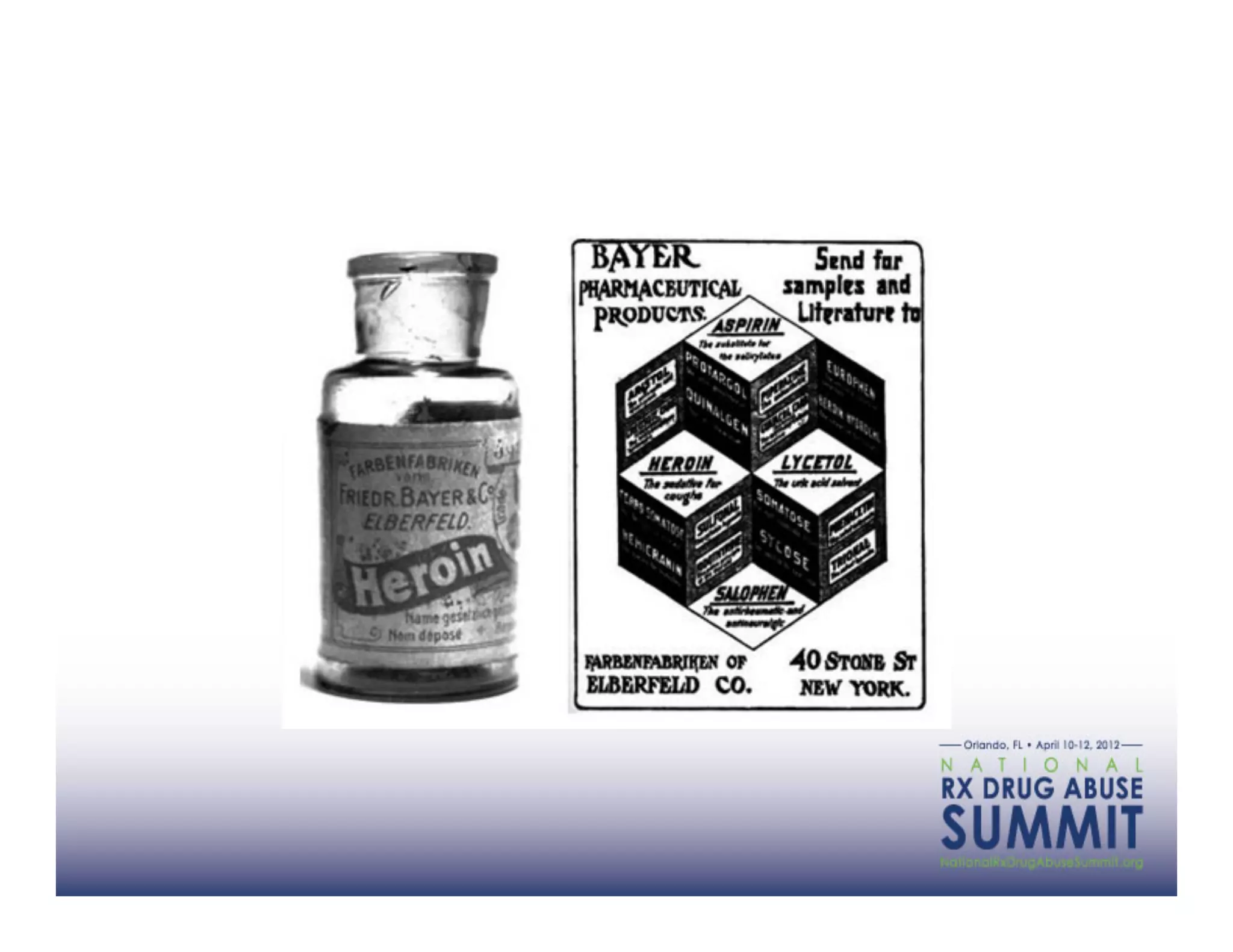
•    Heroin
•    Hydrocodone (Vicodin, Lortab)
•    Methadone
•    Oxycodone (Percodan, Oxycontin)
•    Hydromorphone (Dilaudid)
•    Meperidine (Demerol)
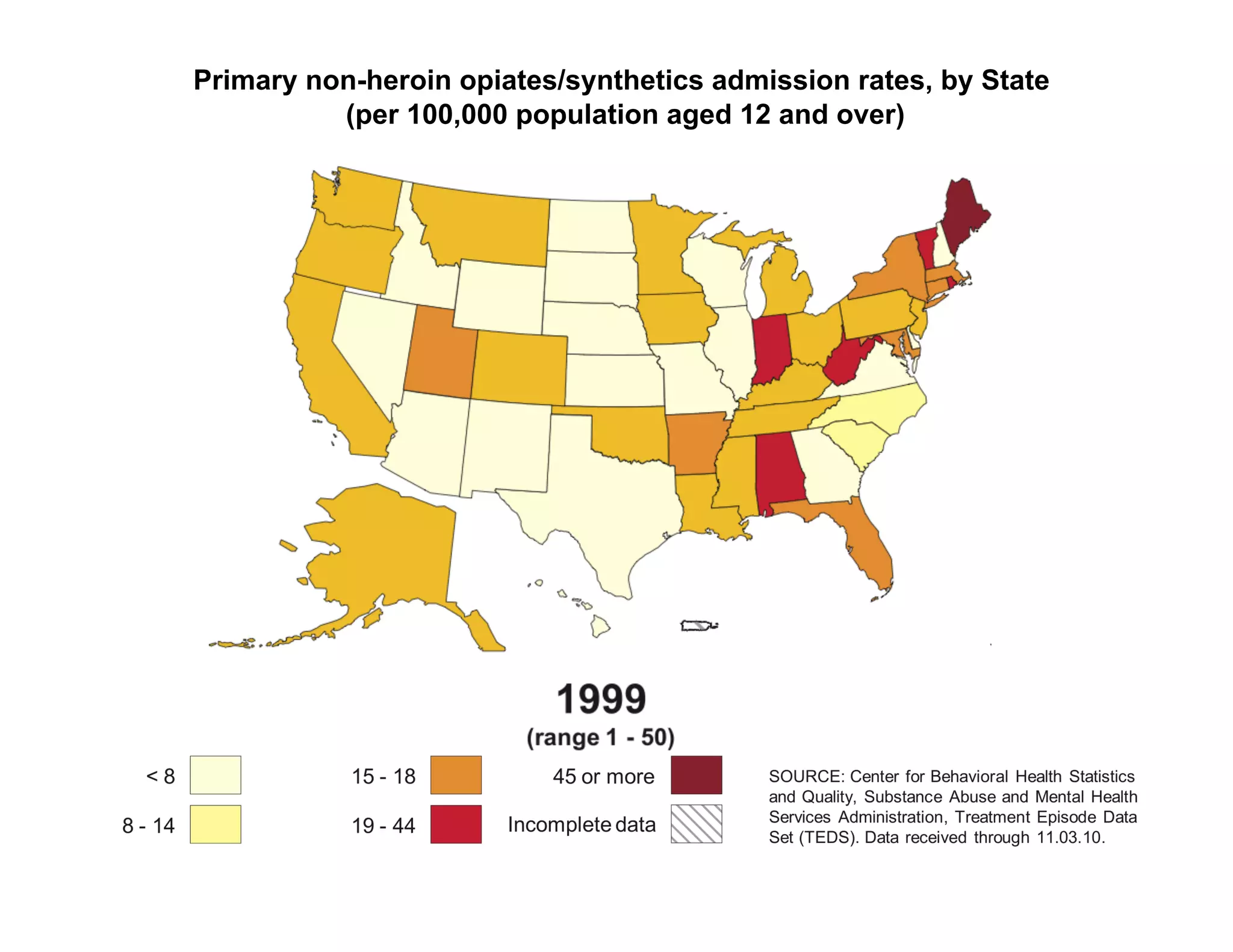
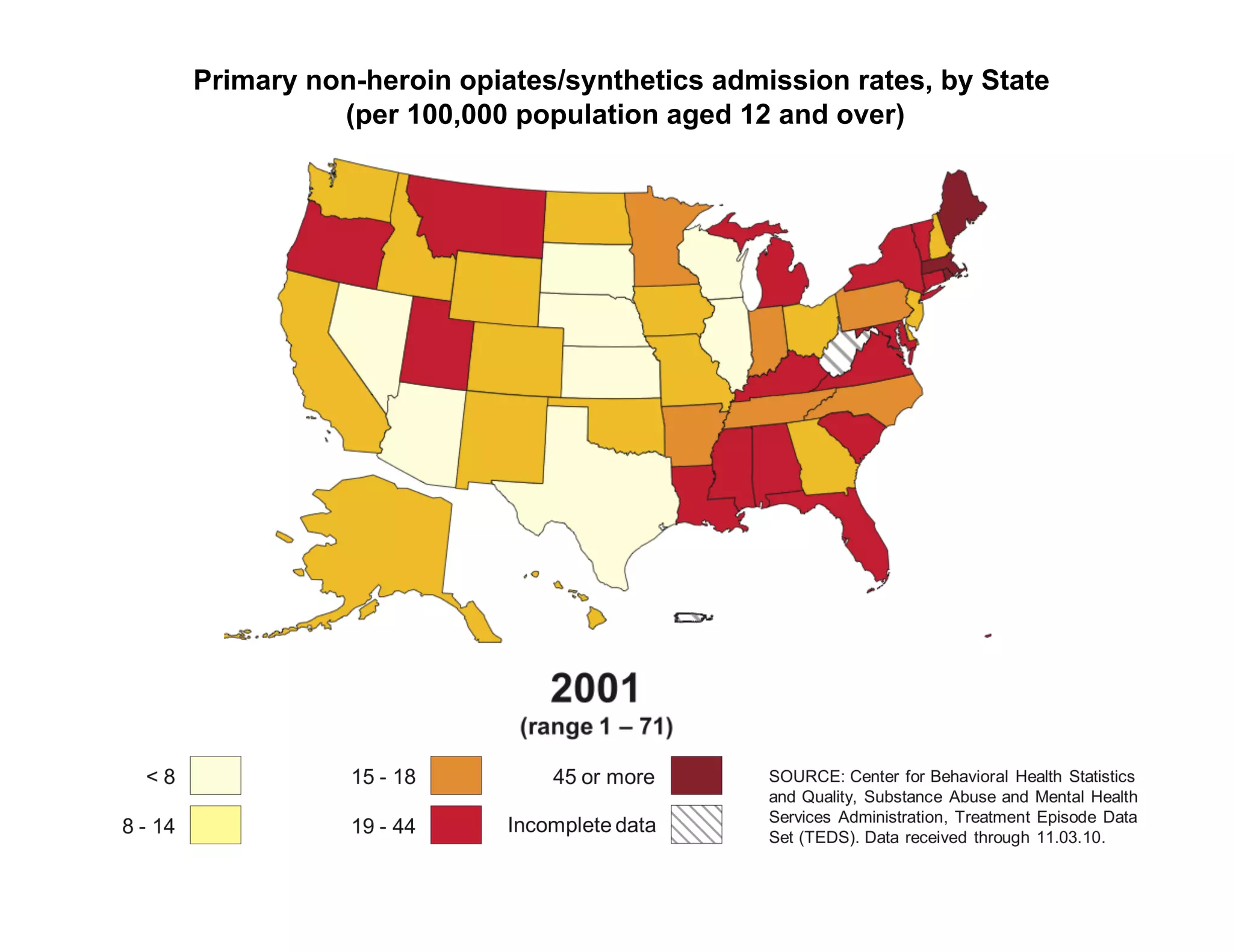
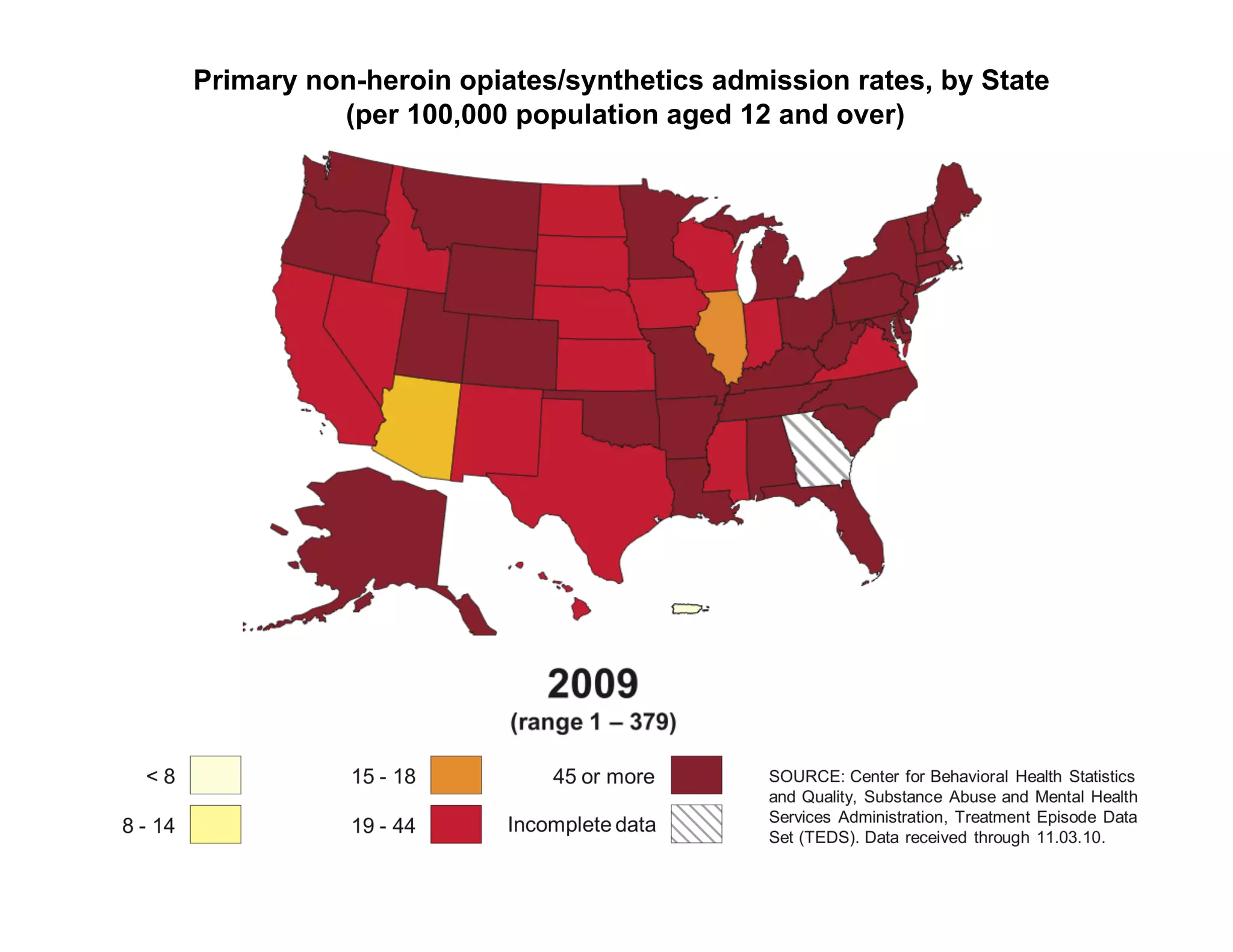
Primary non-heroin opiates/synthetics admission rates, by State
          (per 100,000 population aged 12 and over)
Primary non-heroin opiates/synthetics admission rates, by State
          (per 100,000 population aged 12 and over)
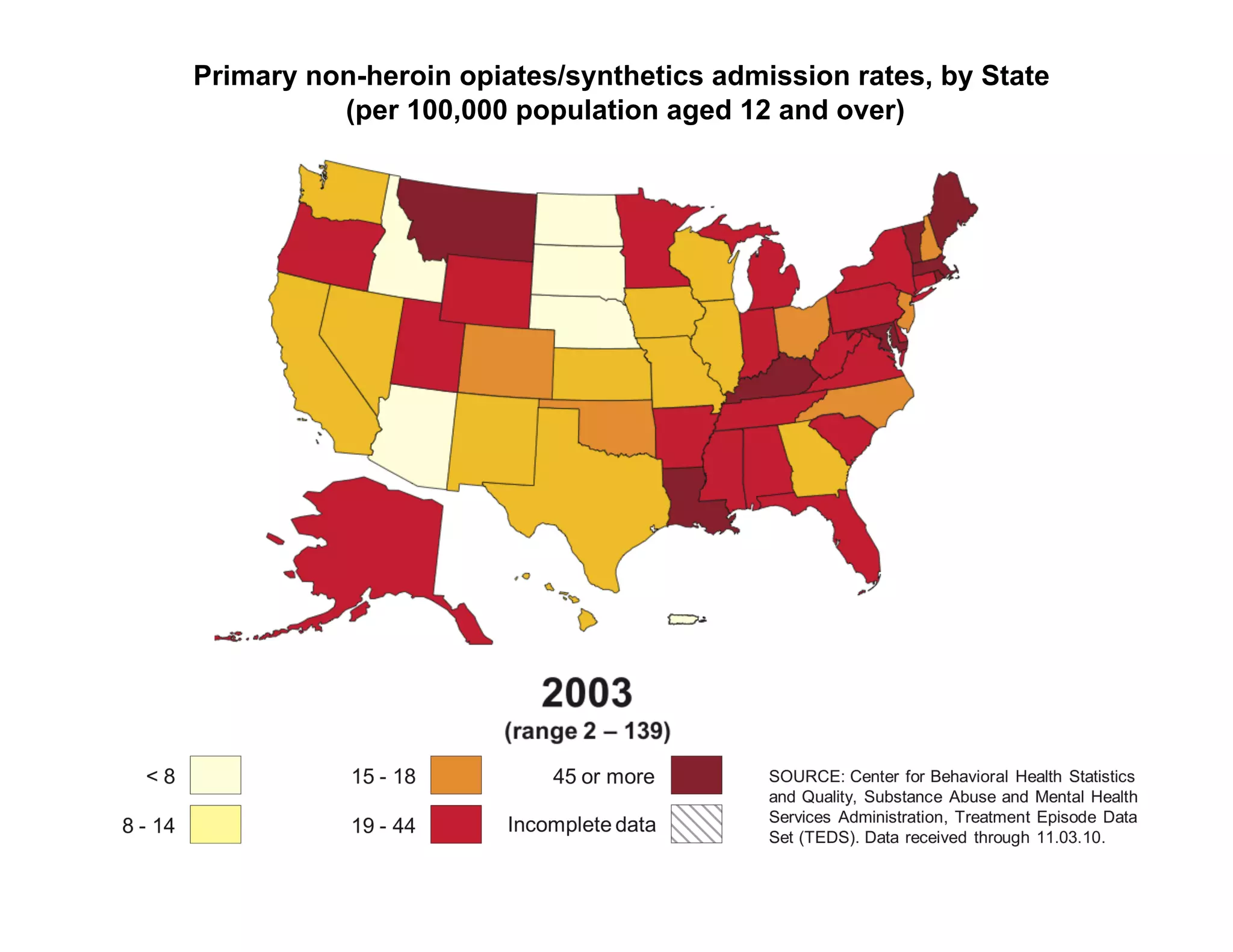
Primary non-heroin opiates/synthetics admission rates, by State
          (per 100,000 population aged 12 and over)
Primary non-heroin opiates/synthetics admission rates, by State
          (per 100,000 population aged 12 and over)
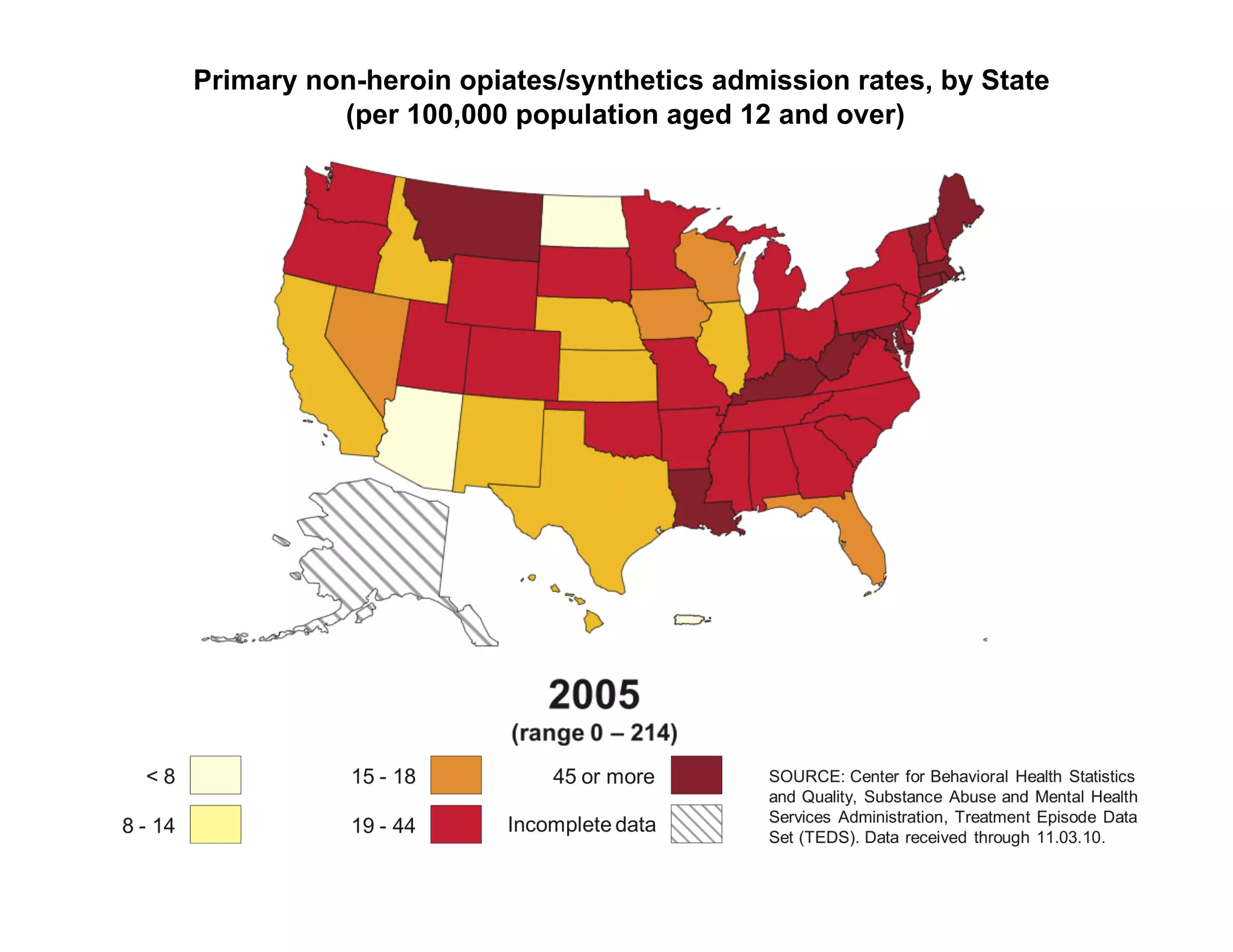
Primary non-heroin opiates/synthetics admission rates, by State
          (per 100,000 population aged 12 and over)
Primary non-heroin opiates/synthetics admission rates, by State
          (per 100,000 population aged 12 and over)
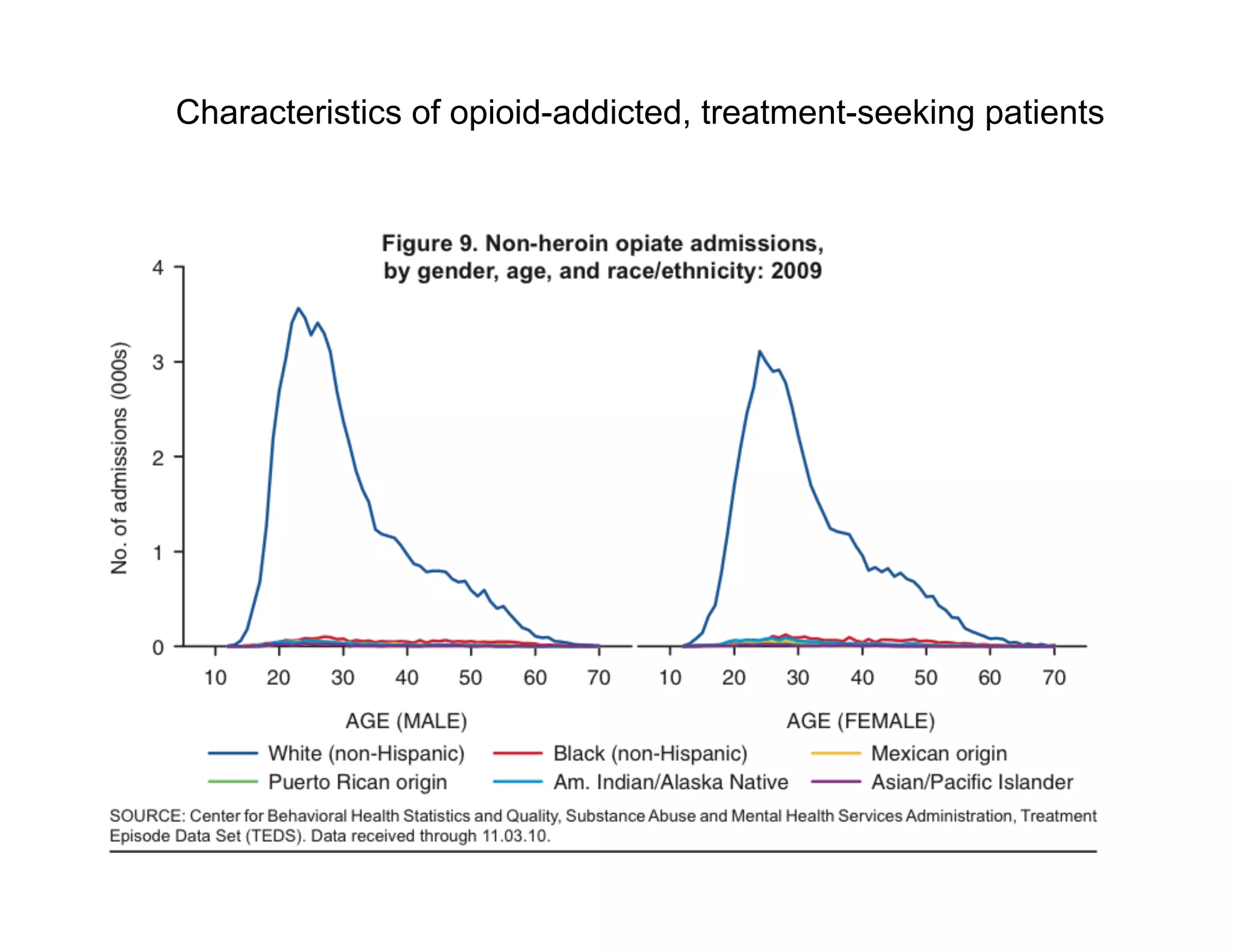
Characteristics of opioid-addicted, treatment-seeking patients
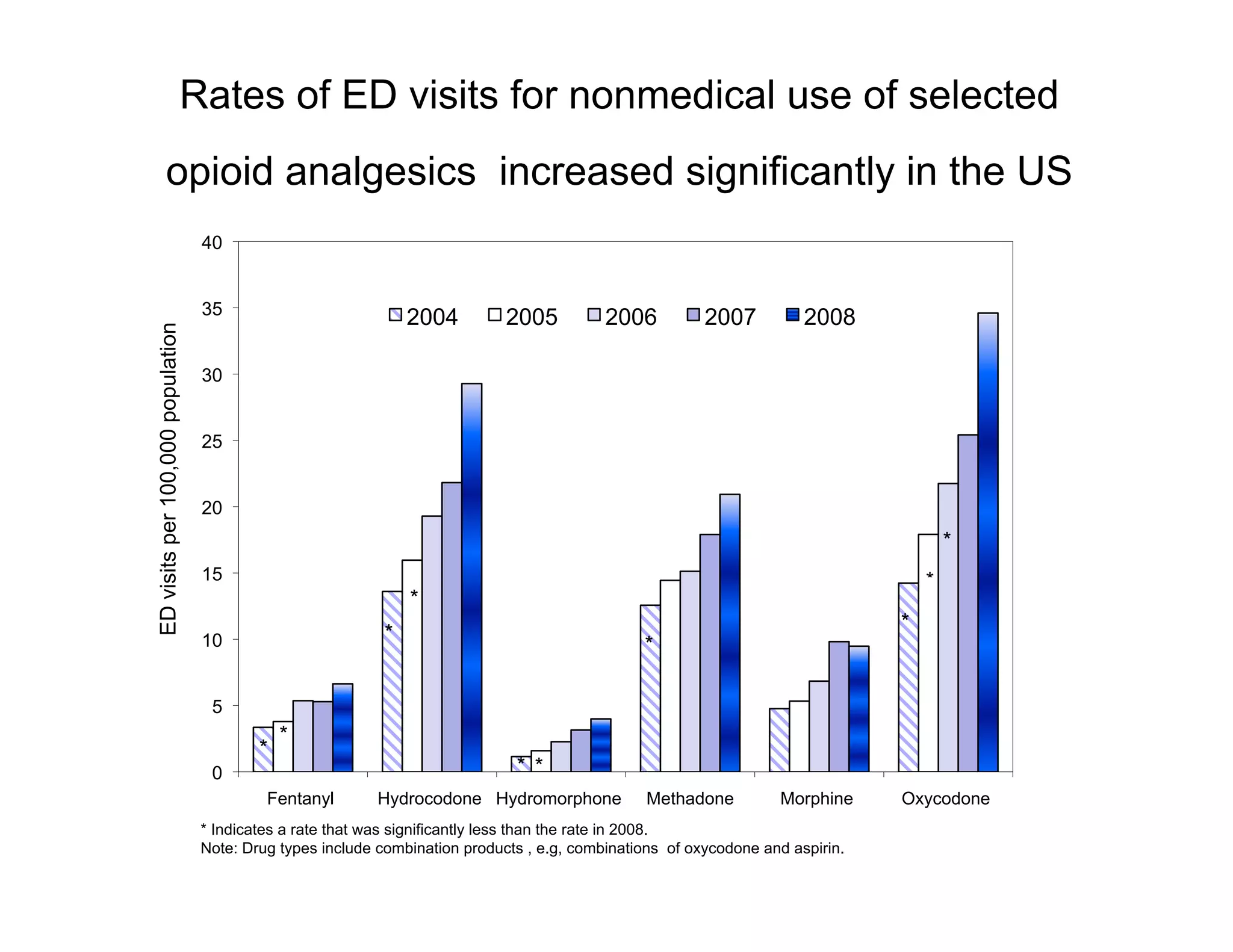
Rates of ED visits for nonmedical use of selected
             opioid analgesics increased significantly in the US
                                   40


                                   35
                                                                 2004         2005          2006          2007          2008
ED visits per 100,000 population


                                   30


                                   25


                                   20
                                                                                                                                         *
                                   15                                                                                                *
                                                                 *
                                                             *                                                                   *
                                   10                                                            *

                                    5
                                               *
                                           *
                                    0                                          * *
                                            Fentanyl        Hydrocodone Hydromorphone             Methadone         Morphine     Oxycodone
                                   * Indicates a rate that was significantly less than the rate in 2008.
                                   Note: Drug types include combination products , e.g, combinations of oxycodone and aspirin.
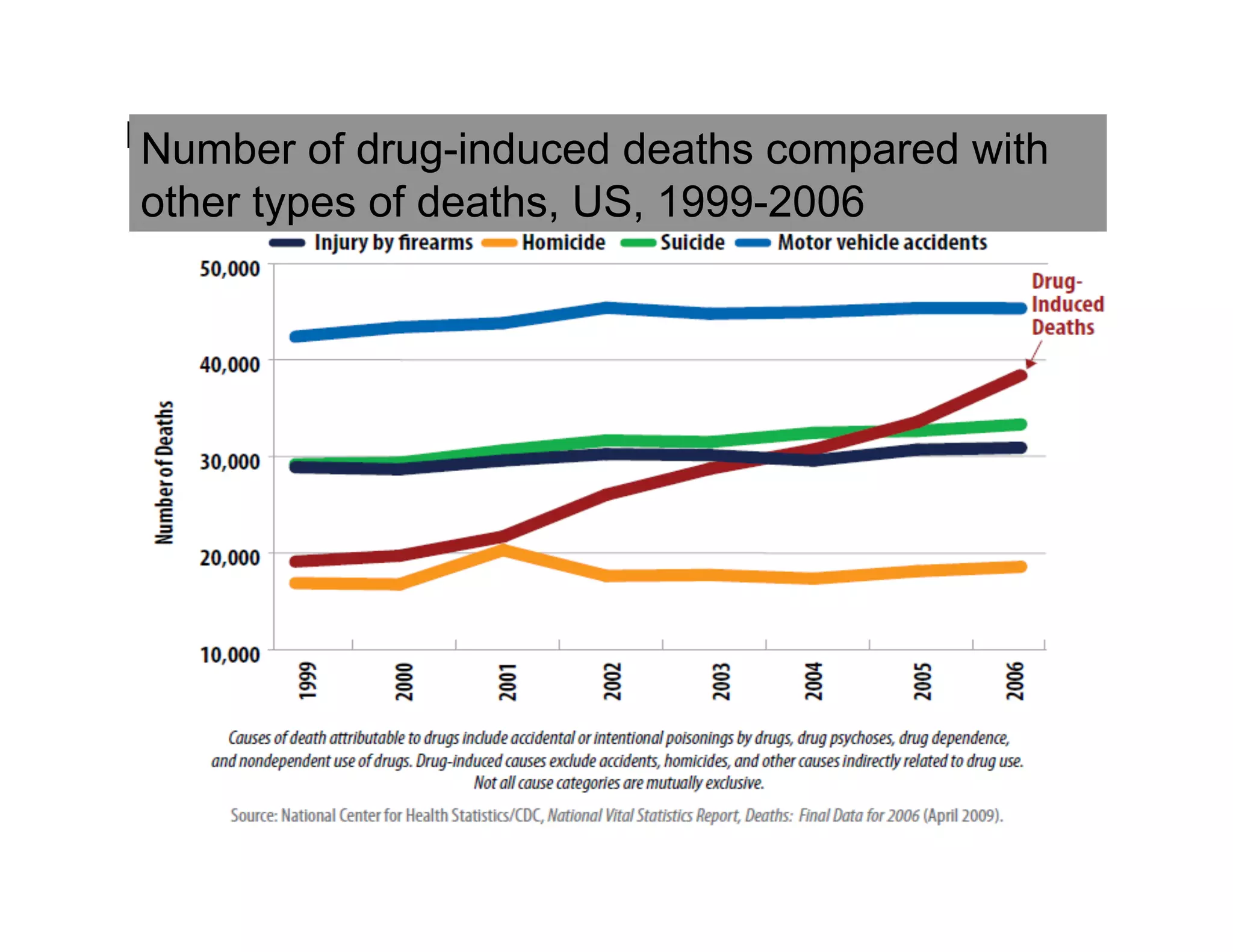
Number of of drug-induced deaths compared with
 Number drug-induced deaths compared with other types
               of deaths, US, 1999-2006
other types of deaths, US, 1999-2006
Unintentional Drug Overdose Deaths
                    United States, 1970–2007

                                 36,450 drug overdose deaths in 2008


                                                               Cocaine
                     Heroin


                                                               Year

     National Vital Statistics System, http://wonder.cdc.gov


25
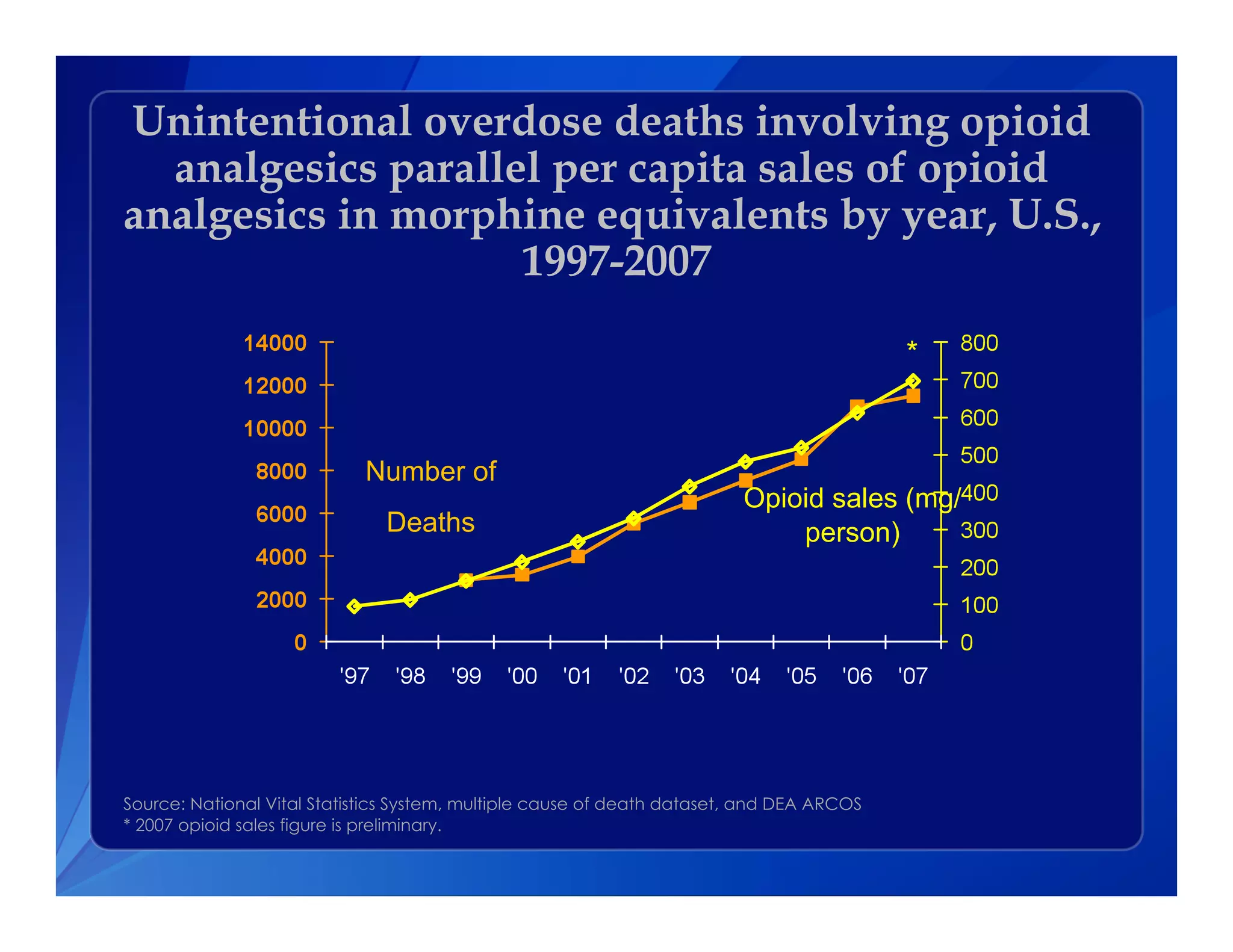
Unintentional overdose deaths involving opioid
  analgesics parallel per capita sales of opioid
analgesics in morphine equivalents by year, U.S.,
                    1997-2007

                                                                                           *


                            Number of
                                                                         Opioid sales (mg/
                               Deaths                                        person)


Source: National Vital Statistics System, multiple cause of death dataset, and DEA ARCOS
* 2007 opioid sales figure is preliminary.
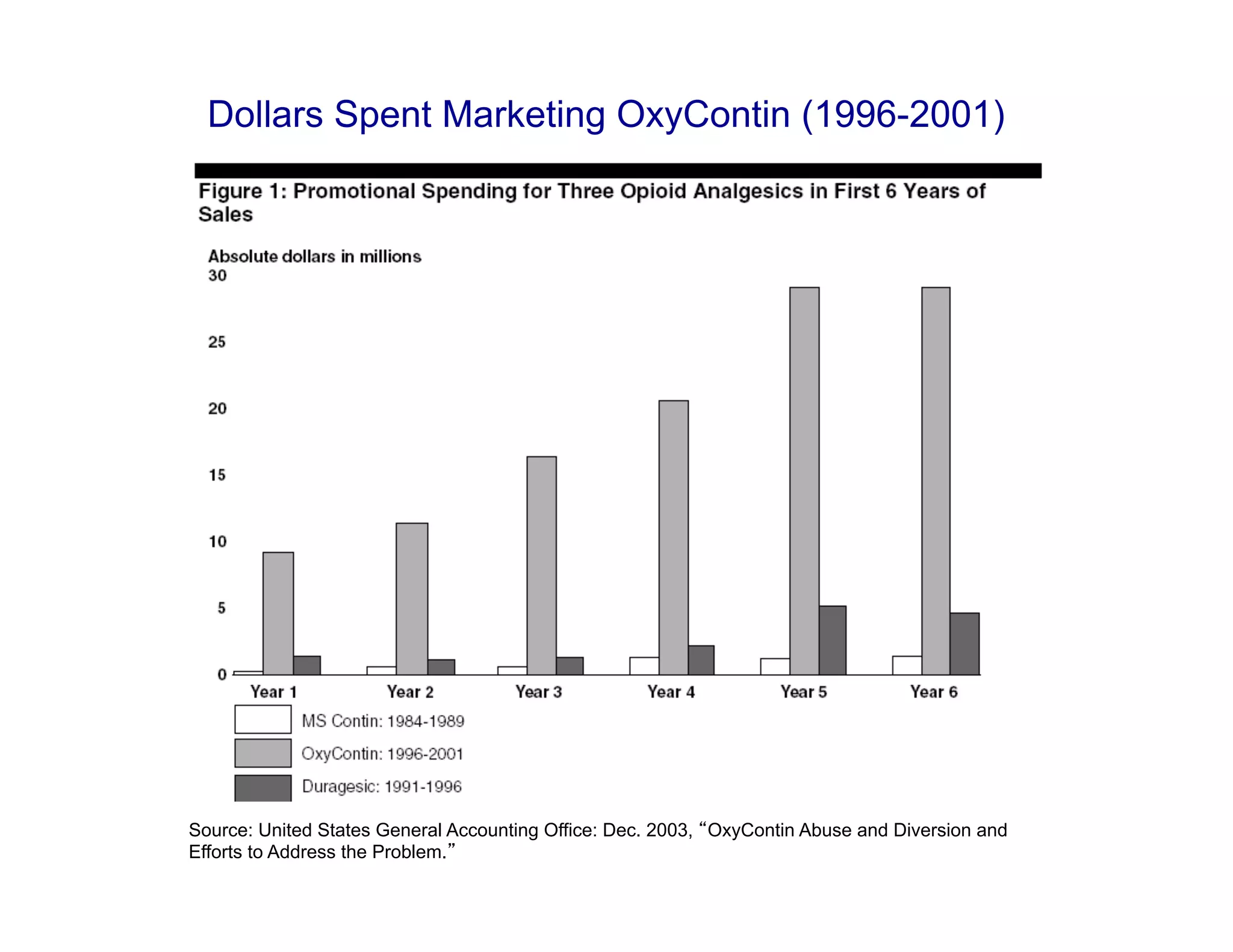
Dollars Spent Marketing OxyContin (1996-2001)


Source: United States General Accounting Office: Dec. 2003, OxyContin Abuse and Diversion and
Efforts to Address the Problem.
Industry-influenced Education on Opioids
for Chronic Non-Cancer Pain Emphasizes:
•  Opioid addiction is rare in pain patients.

•  Physicians are needlessly allowing patients to
   suffer because of opiophobia.

•  Opioids are safe and effective for chronic pain.

•  Opioid therapy can be easily discontinued.
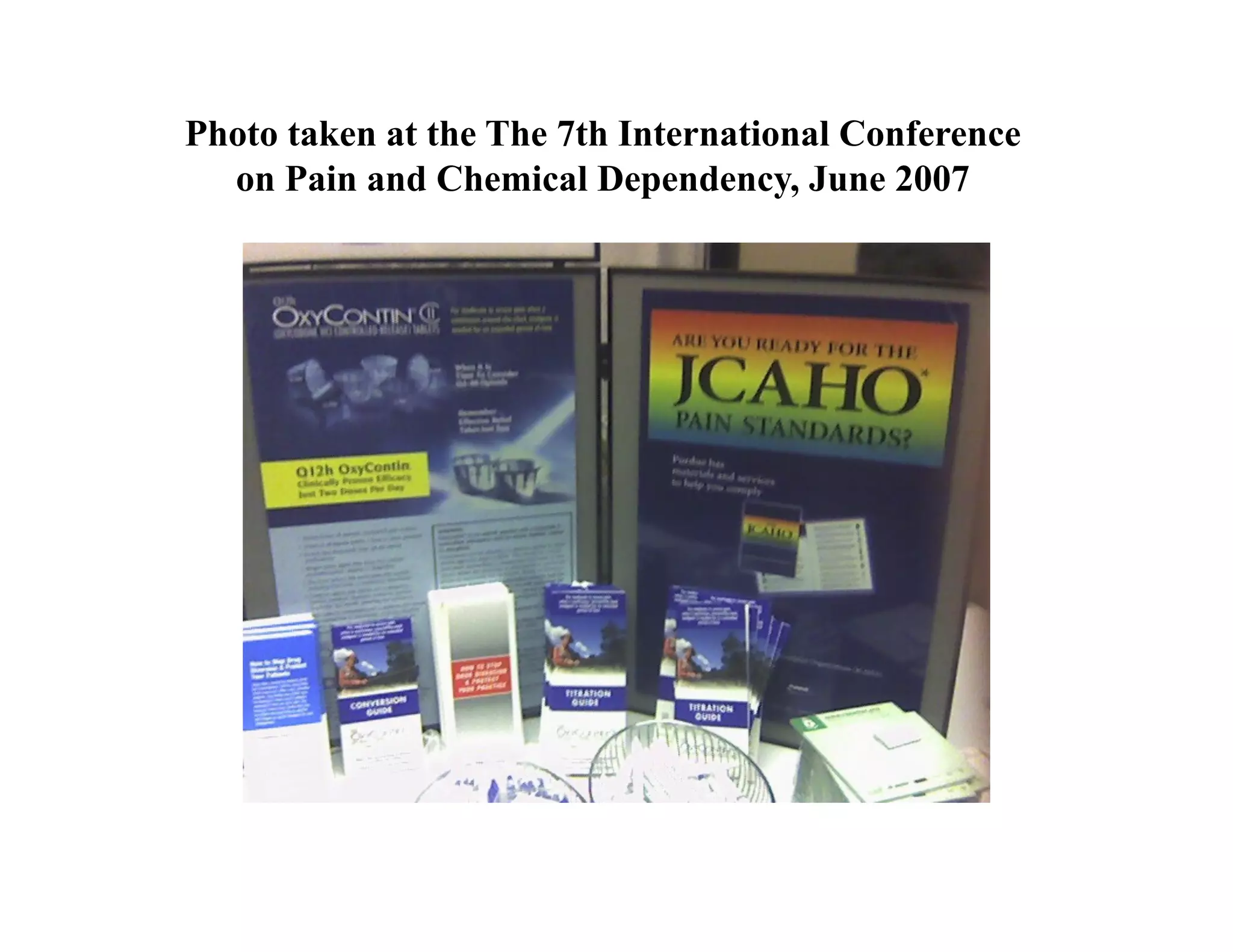
Photo taken at the The 7th International Conference
  on Pain and Chemical Dependency, June 2007
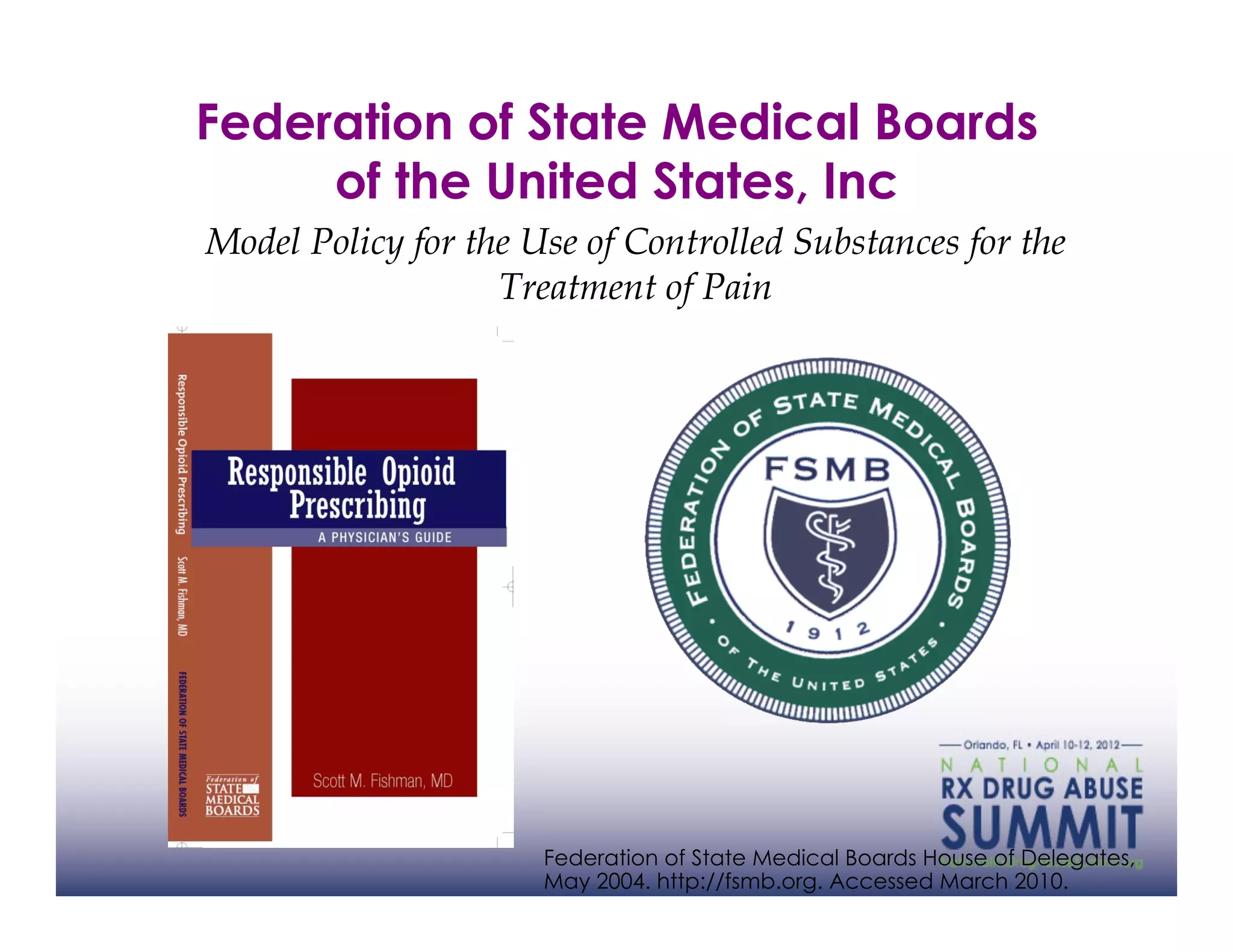
Federation of State Medical Boards
     of the United States, Inc
Model Policy for the Use of Controlled Substances for the
                   Treatment of Pain


                      Federation of State Medical Boards House of Delegates,
                      May 2004. http://fsmb.org. Accessed March 2010.
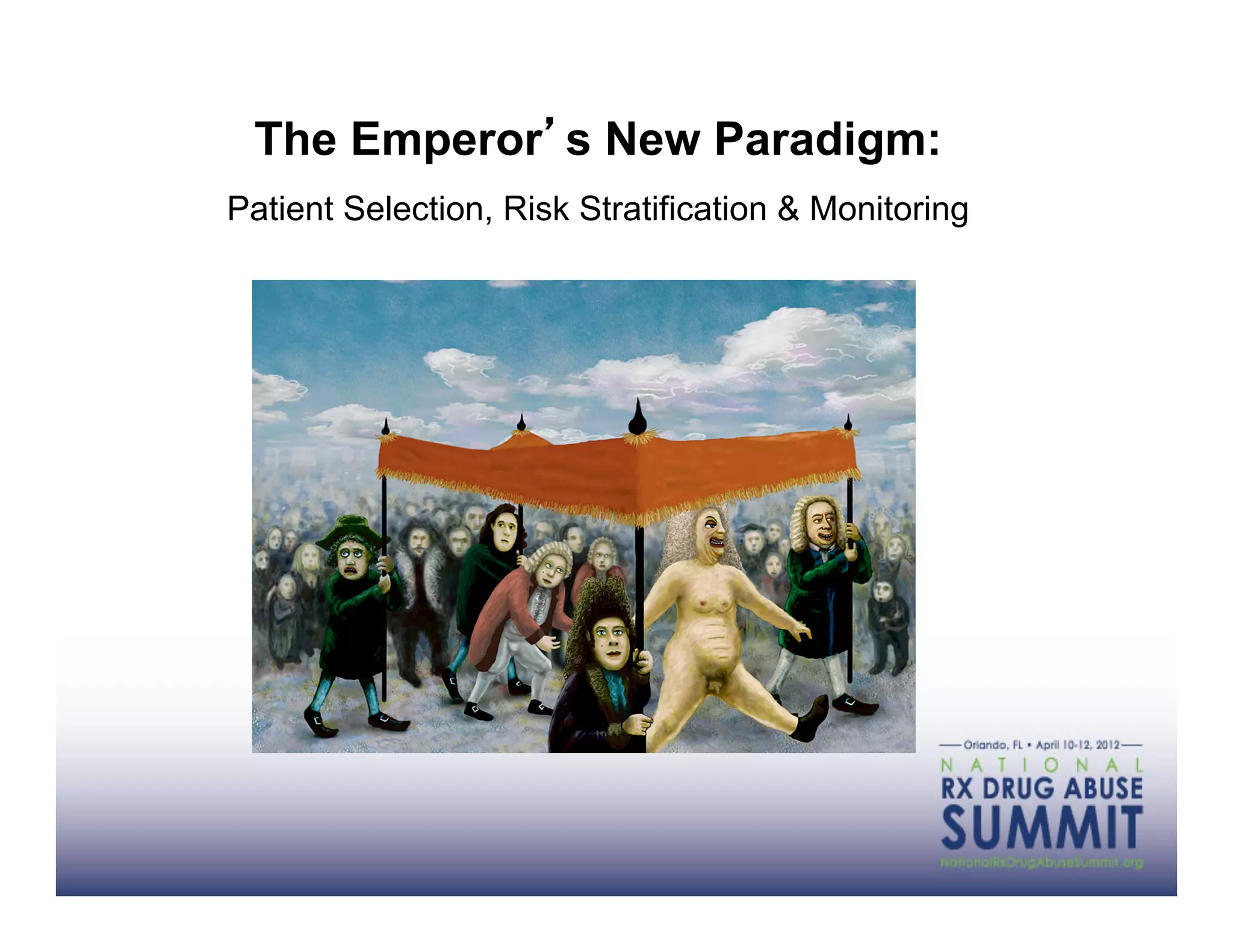
The Emperor s New Paradigm:
Patient Selection, Risk Stratification & Monitoring
?
           Chronic Opioid Therapy Guidelines

                                     Trial of Opioid Therapy


                                      Patient Reassessment


                 Continue Opioid
                                                               Implement Exit Strategy
                    Therapy
Chou R, et al. J Pain. 2009;10:113-130.
*Clinician accepting primary responsibility for a patient s overall medical care.
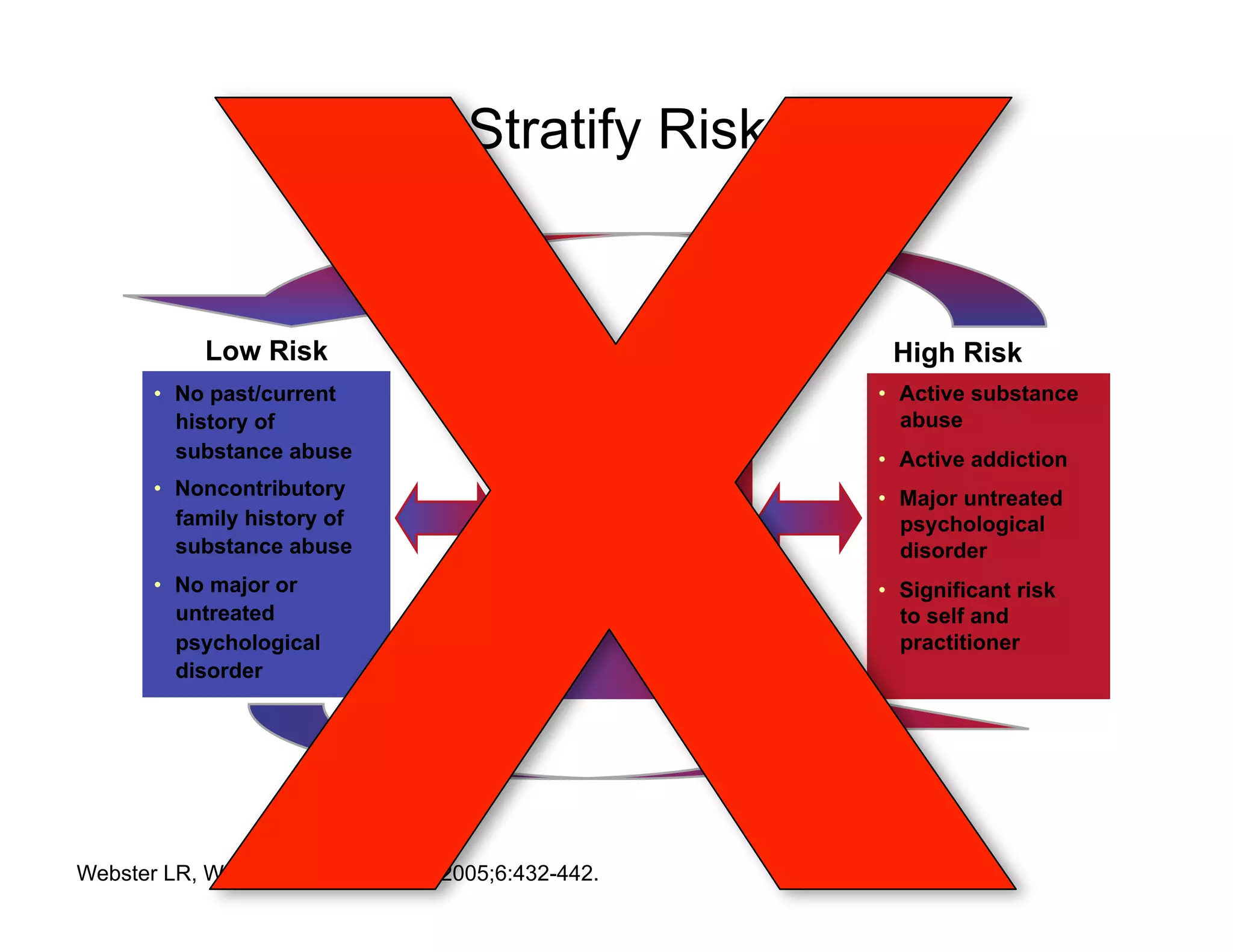
Stratify Risk


            Low Risk                       Moderate Risk          High Risk
       •  No past/current                •  History of treated   •  Active substance
          history of                        substance abuse         abuse
          substance abuse                •  Significant family   •  Active addiction
       •  Noncontributory                   history of
                                                                 •  Major untreated
          family history of                 substance abuse
                                                                    psychological
          substance abuse                •  Past/comorbid           disorder
       •  No major or                       psychological
                                                                 •  Significant risk
                                            disorder
          untreated                                                 to self and
          psychological                                             practitioner
          disorder


Webster LR, Webster RM. Pain Med. 2005;6:432-442.
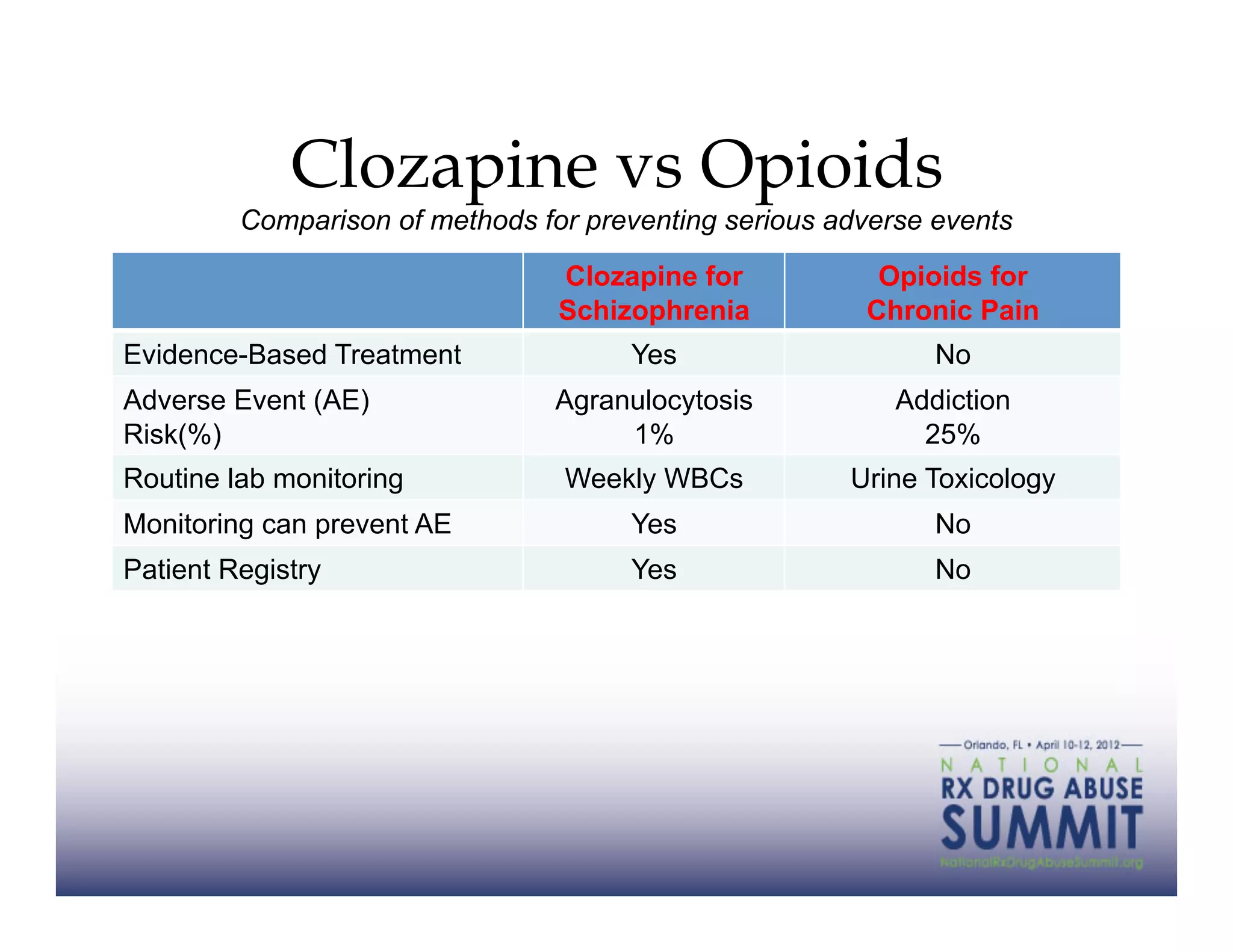
Clozapine vs Opioids
         Comparison of methods for preventing serious adverse events
                                 Clozapine for           Opioids for
                                 Schizophrenia          Chronic Pain
Evidence-Based Treatment              Yes                     No
Adverse Event (AE)               Agranulocytosis           Addiction
Risk(%)                               1%                     25%
Routine lab monitoring           Weekly WBCs           Urine Toxicology
Monitoring can prevent AE             Yes                     No
Patient Registry                      Yes                     No
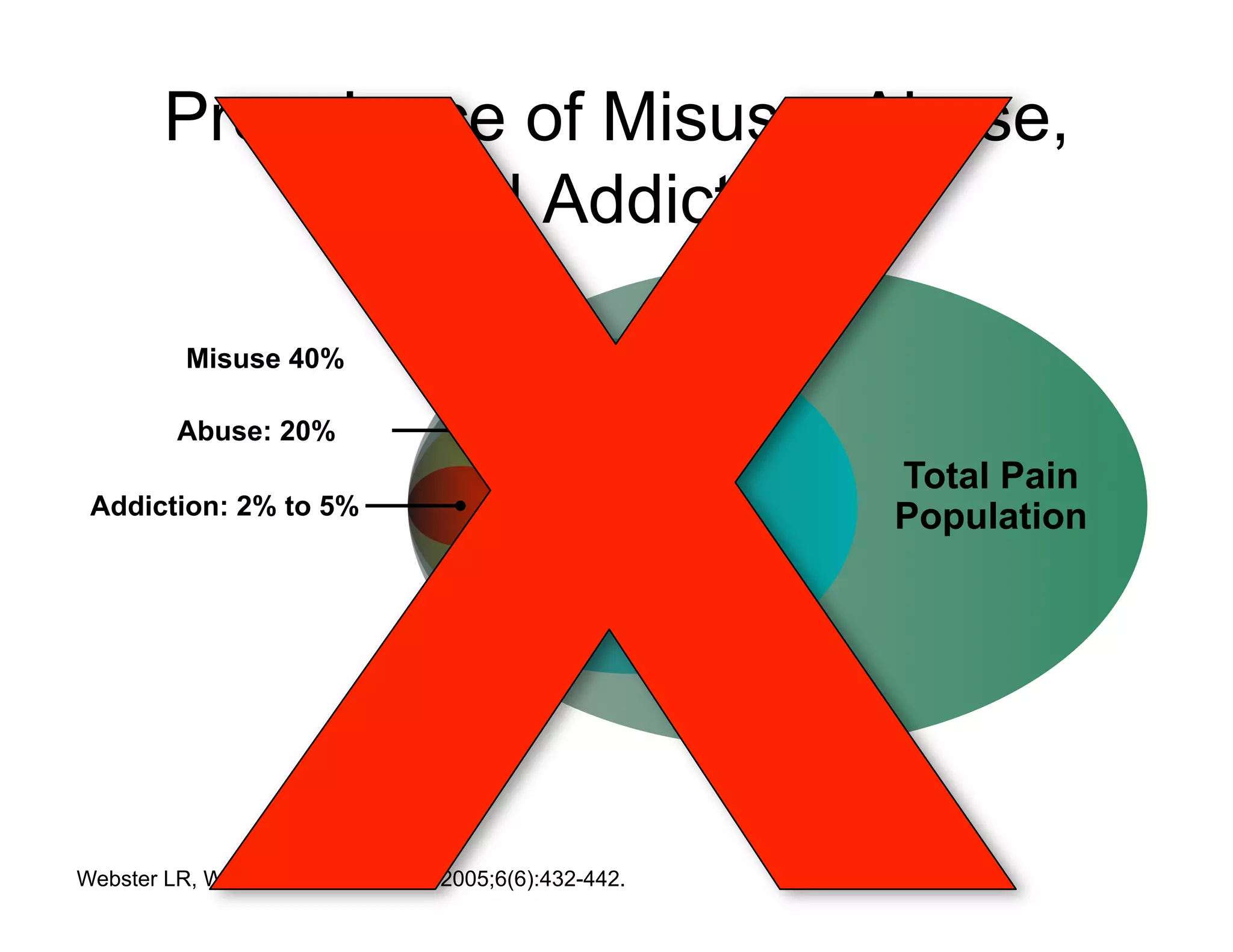
Prevalence of Misuse, Abuse,
               and Addiction

          Misuse 40%

         Abuse: 20%
                                                       Total Pain
 Addiction: 2% to 5%                                   Population


Webster LR, Webster RM. Pain Med. 2005;6(6):432-442.
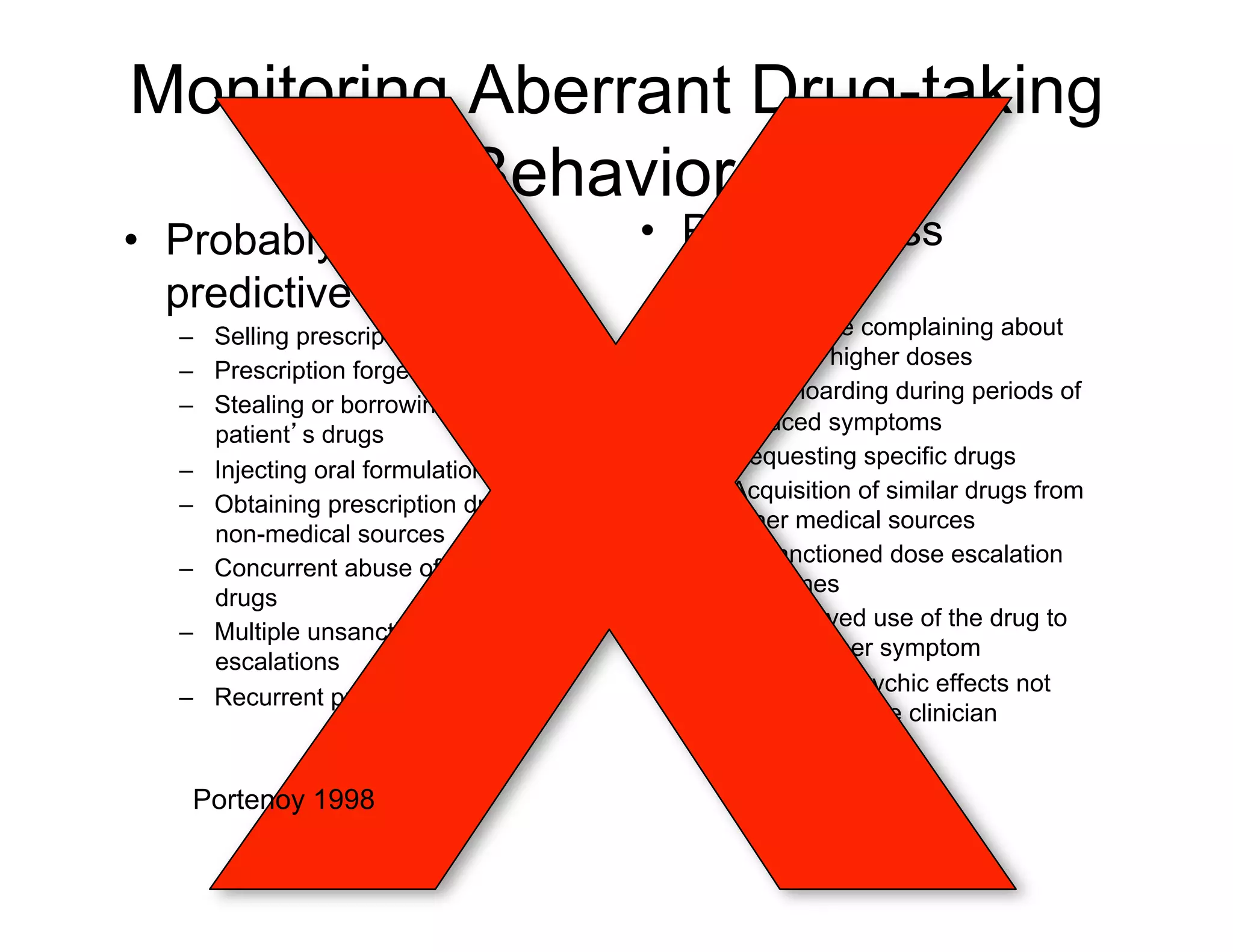
Monitoring Aberrant Drug-taking
           Behaviors
•  Probably more                              •  Probably less
   predictive                                    predictive
     –  Selling prescription drugs              –  Aggressive complaining about
                                                   need for higher doses
     –  Prescription forgery
                                                –  Drug hoarding during periods of
     –  Stealing or borrowing another
                                                   reduced symptoms
        patient s drugs
                                                –  Requesting specific drugs
     –  Injecting oral formulation
                                                –  Acquisition of similar drugs from
     –  Obtaining prescription drugs from
                                                   other medical sources
        non-medical sources
                                                –  Unsanctioned dose escalation
     –  Concurrent abuse of related illicit
                                                   1–2 times
        drugs
                                                –  Unapproved use of the drug to
     –  Multiple unsanctioned dose
                                                   treat another symptom
        escalations
                                                –  Reporting psychic effects not
     –  Recurrent prescription losses
                                                   intended by the clinician


       Portenoy 1998
Passik and Portenoy, 1998.
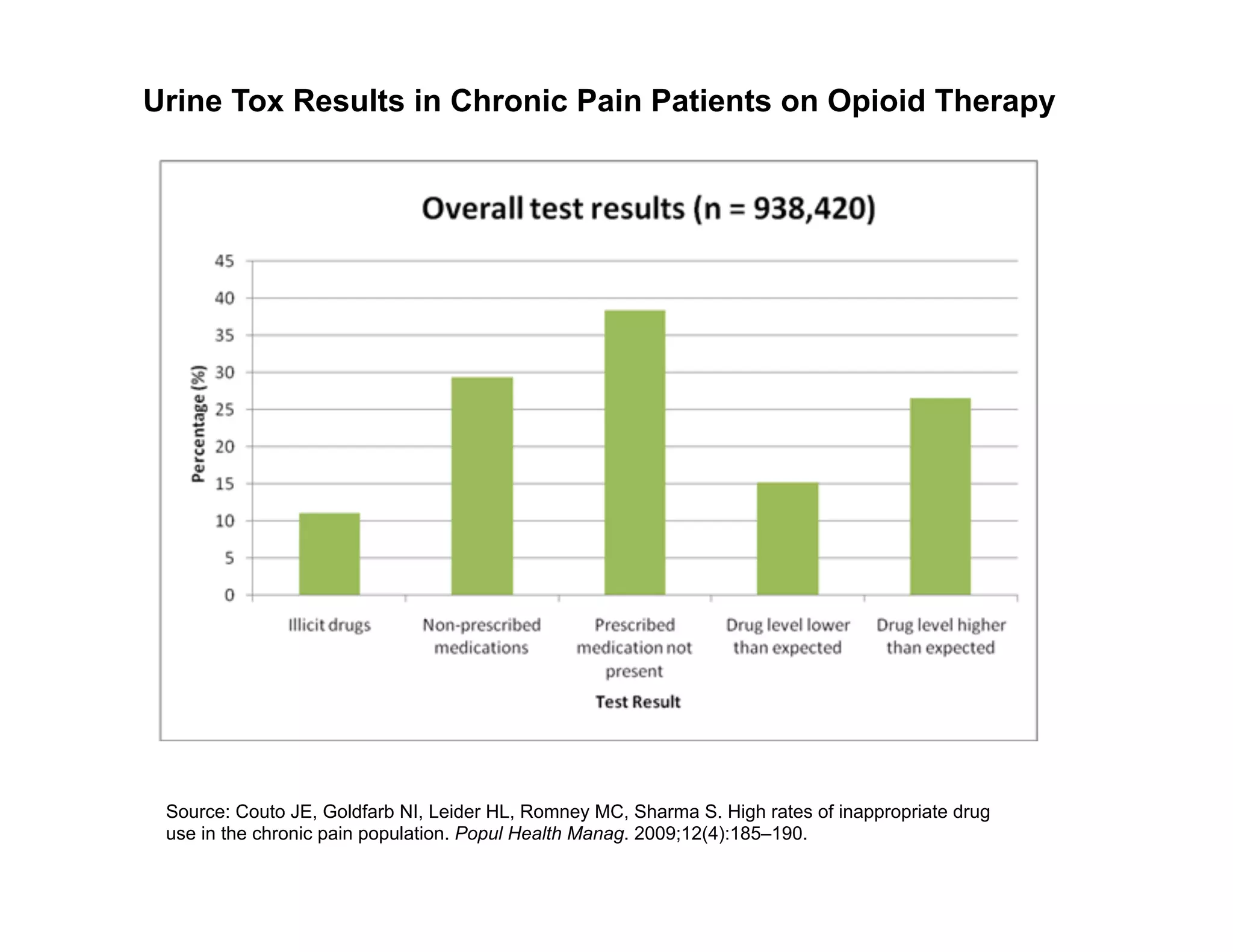
Urine Tox Results in Chronic Pain Patients on Opioid Therapy


 Source: Couto JE, Goldfarb NI, Leider HL, Romney MC, Sharma S. High rates of inappropriate drug
 use in the chronic pain population. Popul Health Manag. 2009;12(4):185–190.
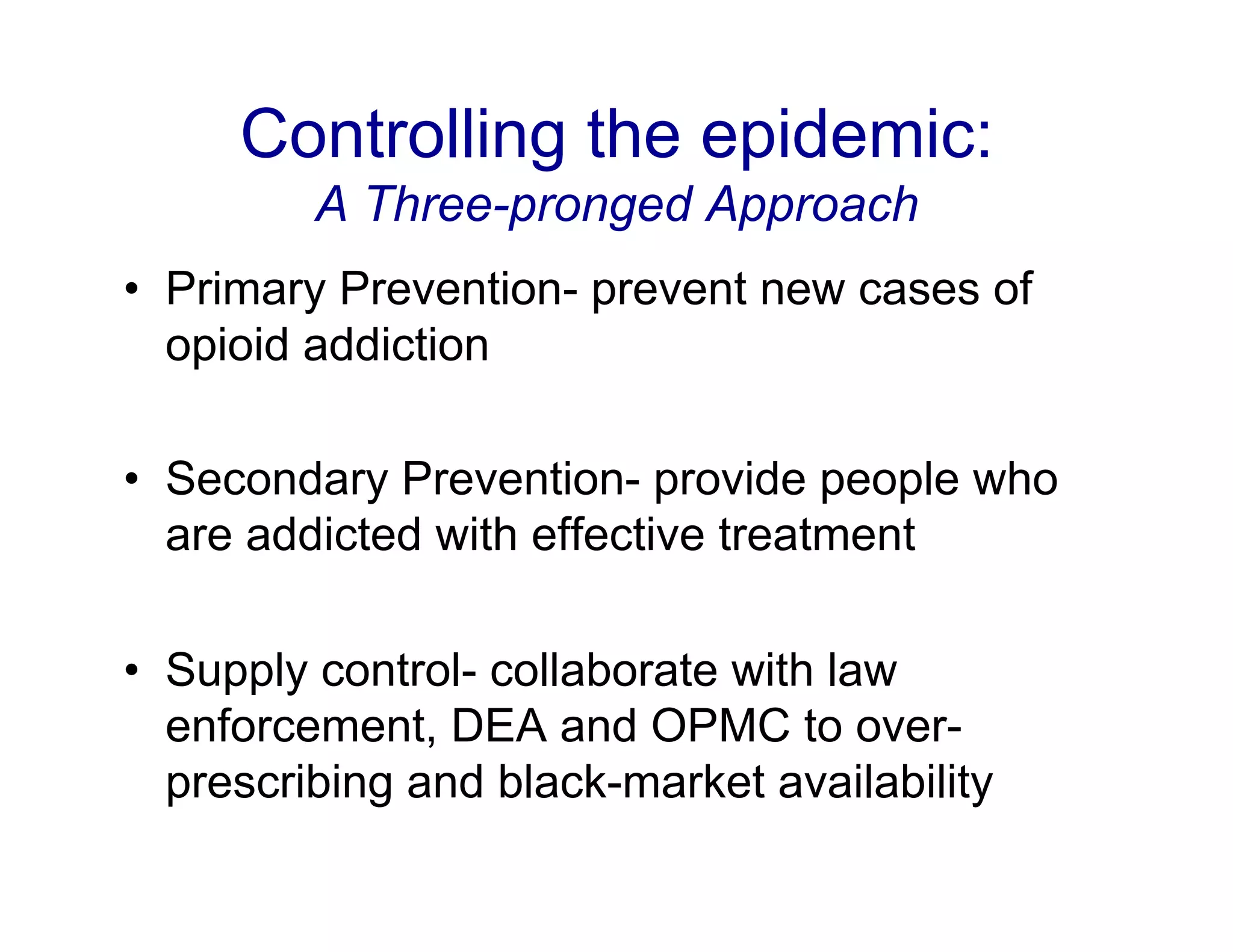
Controlling the epidemic:
         A Three-pronged Approach
•  Primary Prevention- prevent new cases of
   opioid addiction

•  Secondary Prevention- provide people who
   are addicted with effective treatment

•  Supply control- collaborate with law
   enforcement, DEA and OPMC to over-
   prescribing and black-market availability
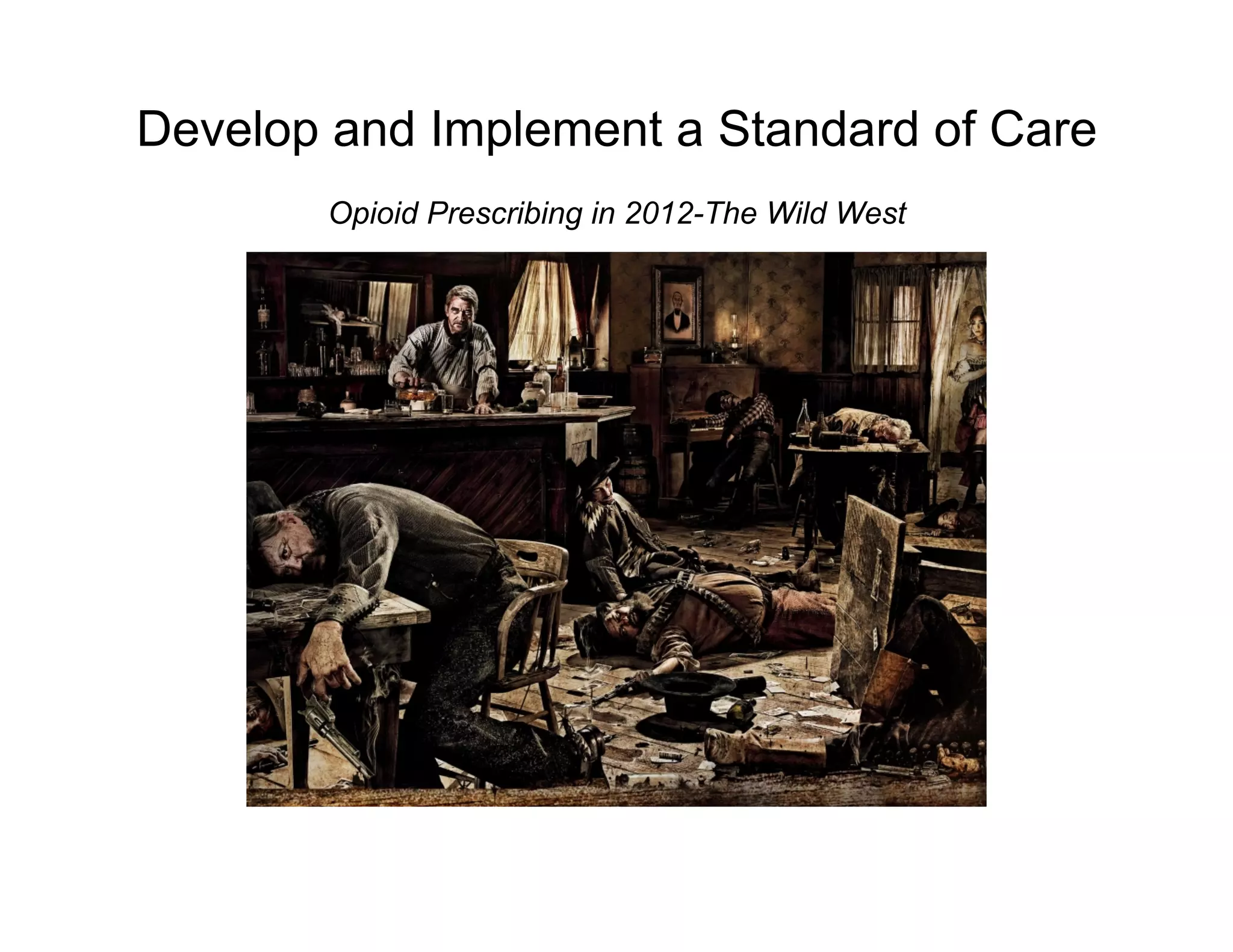
Develop and Implement a Standard of Care
       Opioid Prescribing in 2012-The Wild West
Opioid Prescribing Rules
• Require urine toxicology for all patients receiving long-
term opioid therapy

• Require a physical exam and documentation that
alternative treatments have failed

• Set dosing limits to prevent high dose prescribing

• Require screening for addiction before & during
treatment

• Require screening for depression before initiating
therapy

• Mandate training in pain and addiction
Limit Pharma Influence
•  Prohibit drug rep detailing for opioids
•  Consider legal action against opioid
   manufacturers
•  Advocacy with FDA:
  –  to limit approval of new opioids
  –  Up-schedule hydrocodone combos
     (Vicodin)
  –  Label changes for all opioids
Summary
•  The United States is facing a public health crisis
   fueled by overprescribing of opioids.


•  Prescribers and the public need to be better
   informed about risks of opioid use/misuse

•  Interventions to bring this epidemic under control
   are within our grasp.
Questions?

Andrew Kolodny

  • 1.
    Responsible Prescribing Practices April 10-12, 2012 Walt Disney World Swan Resort
  • 2.
    Learning Objectives: 1. Describehow cautious, evidence-based prescribing practices can lower opioid-related overdose deaths while maintaining appropriate access for medically needed treatment of chronic pain. 2. Identify “best practice” strategies that can be used by clinicians for pain management treatment. 3. Explain evidence-based practice and policies for provider education and patient education programs being utilized across the US.
  • 3.
    Disclosure Statement •  Allpresenters for this session, Dr. Rollin M. Gallagher, Dr. Andrew Kolodny, and Robert Sproul, have disclosed no relevant, real or apparent personal or professional financial relationships.
  • 4.
    The Opium Poppy Papaver Somniferum
  • 5.
    Crude Opium Latexon Poppy Head
  • 6.
    Opioids •  Morphine •  Codeine •  Heroin •  Hydrocodone (Vicodin, Lortab) •  Methadone •  Oxycodone (Percodan, Oxycontin) •  Hydromorphone (Dilaudid) •  Meperidine (Demerol)
  • 9.
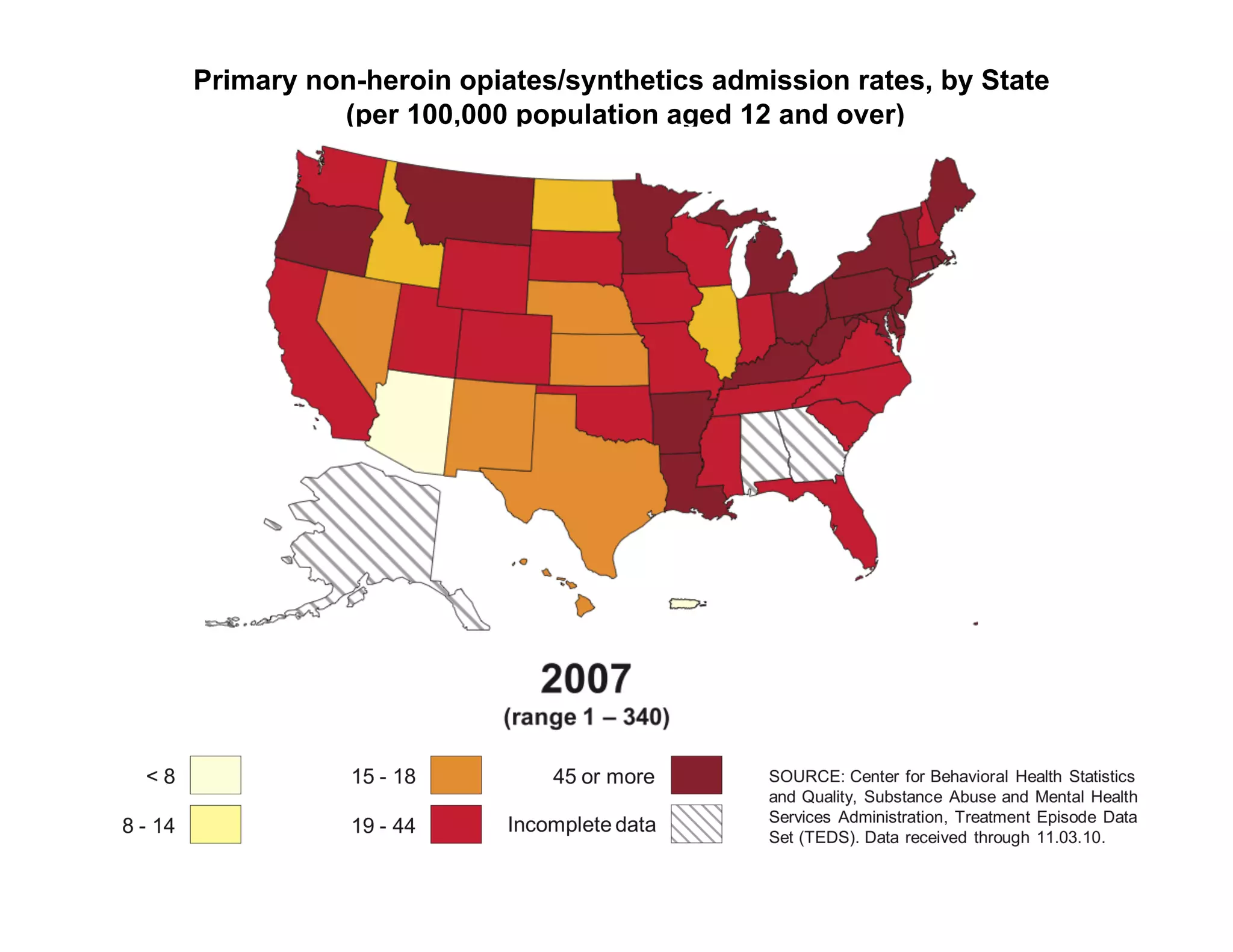
    Primary non-heroin opiates/syntheticsadmission rates, by State (per 100,000 population aged 12 and over)
  • 10.
    Primary non-heroin opiates/syntheticsadmission rates, by State (per 100,000 population aged 12 and over)
  • 11.
    Primary non-heroin opiates/syntheticsadmission rates, by State (per 100,000 population aged 12 and over)
  • 12.
    Primary non-heroin opiates/syntheticsadmission rates, by State (per 100,000 population aged 12 and over)
  • 13.
    Primary non-heroin opiates/syntheticsadmission rates, by State (per 100,000 population aged 12 and over)
  • 14.
    Primary non-heroin opiates/syntheticsadmission rates, by State (per 100,000 population aged 12 and over)
  • 15.
    Characteristics of opioid-addicted,treatment-seeking patients
  • 16.
    Rates of EDvisits for nonmedical use of selected opioid analgesics increased significantly in the US 40 35 2004 2005 2006 2007 2008 ED visits per 100,000 population 30 25 20 * 15 * * * * 10 * 5 * * 0 * * Fentanyl Hydrocodone Hydromorphone Methadone Morphine Oxycodone * Indicates a rate that was significantly less than the rate in 2008. Note: Drug types include combination products , e.g, combinations of oxycodone and aspirin.
  • 17.
    Number of ofdrug-induced deaths compared with Number drug-induced deaths compared with other types of deaths, US, 1999-2006 other types of deaths, US, 1999-2006
  • 25.
    Unintentional Drug OverdoseDeaths United States, 1970–2007 36,450 drug overdose deaths in 2008 Cocaine Heroin Year National Vital Statistics System, http://wonder.cdc.gov 25
  • 27.
    Unintentional overdose deathsinvolving opioid analgesics parallel per capita sales of opioid analgesics in morphine equivalents by year, U.S., 1997-2007 * Number of Opioid sales (mg/ Deaths person) Source: National Vital Statistics System, multiple cause of death dataset, and DEA ARCOS * 2007 opioid sales figure is preliminary.
  • 30.
    Dollars Spent MarketingOxyContin (1996-2001) Source: United States General Accounting Office: Dec. 2003, OxyContin Abuse and Diversion and Efforts to Address the Problem.
  • 31.
    Industry-influenced Education onOpioids for Chronic Non-Cancer Pain Emphasizes: •  Opioid addiction is rare in pain patients. •  Physicians are needlessly allowing patients to suffer because of opiophobia. •  Opioids are safe and effective for chronic pain. •  Opioid therapy can be easily discontinued.
  • 32.
    Photo taken atthe The 7th International Conference on Pain and Chemical Dependency, June 2007
  • 33.
    Federation of StateMedical Boards of the United States, Inc Model Policy for the Use of Controlled Substances for the Treatment of Pain Federation of State Medical Boards House of Delegates, May 2004. http://fsmb.org. Accessed March 2010.
  • 35.
    The Emperor sNew Paradigm: Patient Selection, Risk Stratification & Monitoring
  • 36.
    ? Chronic Opioid Therapy Guidelines Trial of Opioid Therapy Patient Reassessment Continue Opioid Implement Exit Strategy Therapy Chou R, et al. J Pain. 2009;10:113-130. *Clinician accepting primary responsibility for a patient s overall medical care.
  • 37.
    Stratify Risk Low Risk Moderate Risk High Risk •  No past/current •  History of treated •  Active substance history of substance abuse abuse substance abuse •  Significant family •  Active addiction •  Noncontributory history of •  Major untreated family history of substance abuse psychological substance abuse •  Past/comorbid disorder •  No major or psychological •  Significant risk disorder untreated to self and psychological practitioner disorder Webster LR, Webster RM. Pain Med. 2005;6:432-442.
  • 38.
    Clozapine vs Opioids Comparison of methods for preventing serious adverse events Clozapine for Opioids for Schizophrenia Chronic Pain Evidence-Based Treatment Yes No Adverse Event (AE) Agranulocytosis Addiction Risk(%) 1% 25% Routine lab monitoring Weekly WBCs Urine Toxicology Monitoring can prevent AE Yes No Patient Registry Yes No
  • 39.
    Prevalence of Misuse,Abuse, and Addiction Misuse 40% Abuse: 20% Total Pain Addiction: 2% to 5% Population Webster LR, Webster RM. Pain Med. 2005;6(6):432-442.
  • 40.
    Monitoring Aberrant Drug-taking Behaviors •  Probably more •  Probably less predictive predictive –  Selling prescription drugs –  Aggressive complaining about need for higher doses –  Prescription forgery –  Drug hoarding during periods of –  Stealing or borrowing another reduced symptoms patient s drugs –  Requesting specific drugs –  Injecting oral formulation –  Acquisition of similar drugs from –  Obtaining prescription drugs from other medical sources non-medical sources –  Unsanctioned dose escalation –  Concurrent abuse of related illicit 1–2 times drugs –  Unapproved use of the drug to –  Multiple unsanctioned dose treat another symptom escalations –  Reporting psychic effects not –  Recurrent prescription losses intended by the clinician Portenoy 1998 Passik and Portenoy, 1998.
  • 41.
    Urine Tox Resultsin Chronic Pain Patients on Opioid Therapy Source: Couto JE, Goldfarb NI, Leider HL, Romney MC, Sharma S. High rates of inappropriate drug use in the chronic pain population. Popul Health Manag. 2009;12(4):185–190.
  • 42.
    Controlling the epidemic: A Three-pronged Approach •  Primary Prevention- prevent new cases of opioid addiction •  Secondary Prevention- provide people who are addicted with effective treatment •  Supply control- collaborate with law enforcement, DEA and OPMC to over- prescribing and black-market availability
  • 43.
    Develop and Implementa Standard of Care Opioid Prescribing in 2012-The Wild West
  • 44.
    Opioid Prescribing Rules • Requireurine toxicology for all patients receiving long- term opioid therapy • Require a physical exam and documentation that alternative treatments have failed • Set dosing limits to prevent high dose prescribing • Require screening for addiction before & during treatment • Require screening for depression before initiating therapy • Mandate training in pain and addiction
  • 45.
    Limit Pharma Influence • Prohibit drug rep detailing for opioids •  Consider legal action against opioid manufacturers •  Advocacy with FDA: –  to limit approval of new opioids –  Up-schedule hydrocodone combos (Vicodin) –  Label changes for all opioids
  • 46.
    Summary •  The UnitedStates is facing a public health crisis fueled by overprescribing of opioids. •  Prescribers and the public need to be better informed about risks of opioid use/misuse •  Interventions to bring this epidemic under control are within our grasp.
  • 47.