The role of primary care
workers in occupational health
 Connecting Health and Labour: What
   Role for Occupational Health in
        Primary Health Care?

 WHO-TNO-Government of the Netherlands
       The Hague, Netherlands
          29 November 2011
Richard G. Roberts, MD, JD
Wonca President 2010-2013
Professor of Family Medicine, University of Wisconsin
TEL: +1 608 263 3598 Email: richard.roberts@fammed.wisc.edu
Primary Care & Health Care
• The best health systems are based
    on primary care.
•   Most health care – including
    occupational health – can, should
    and does happen in primary care.
•   Primary care is especially concerned
    with knowing the person and
    context.
•   People do best when primary care
    and occupational health care
    professionals work well together.
The best health systems are
  based on primary care.
“A world that is greatly out of
balance in matters of health is
neither stable nor secure. . . “

 “Primary health care brings
 balance back to health care,
 and puts families and
 communities at the hub of
 the health system. “


“Primary health care also offers the best way of
coping with the ills of life in the 21st century: the
globalization of unhealthy lifestyles, rapid unplanned
urbanization, and the ageing of populations.”

    Dr Margaret Chan, Director General, WHO - 2008
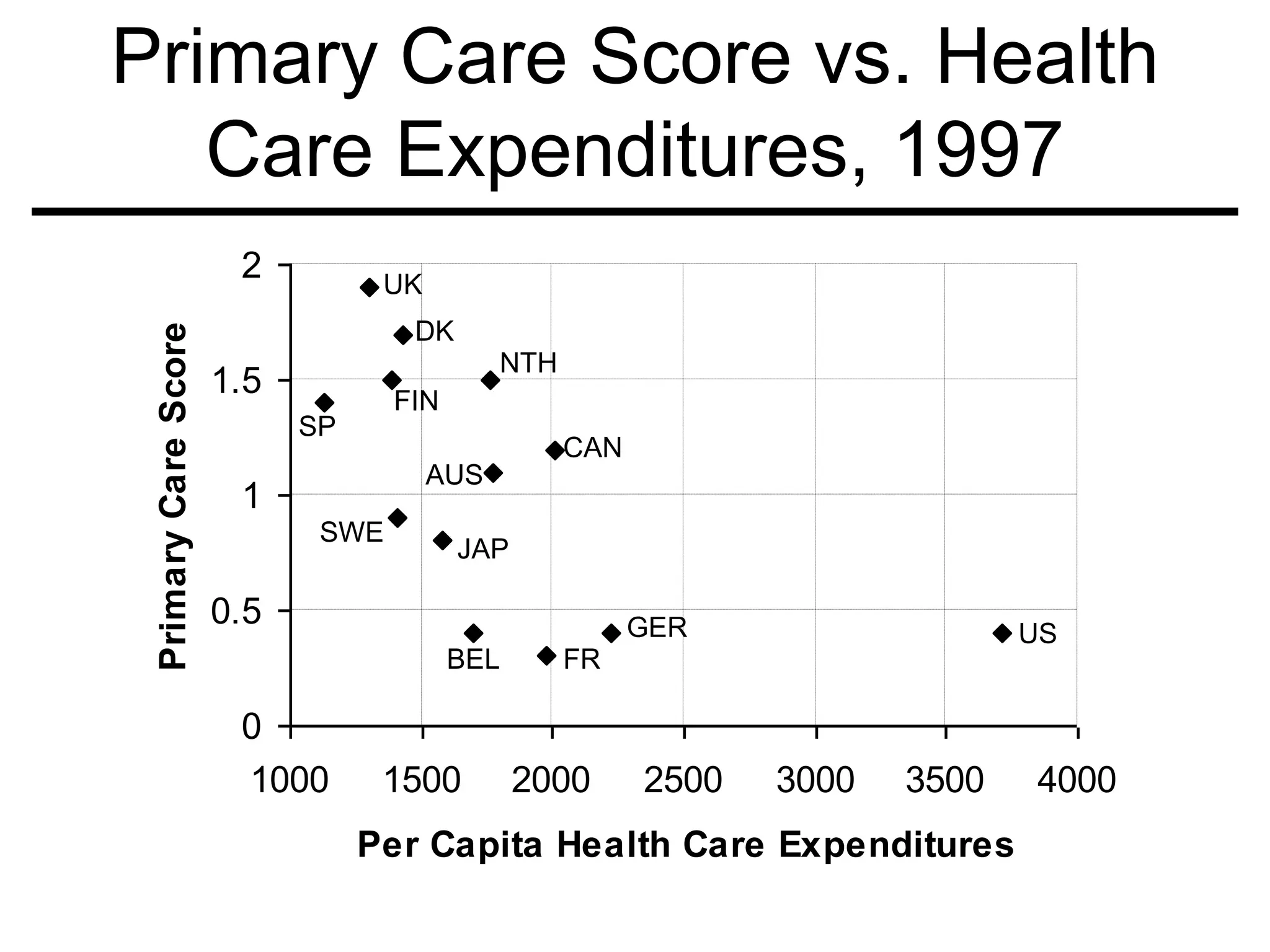
Primary Care Score vs. Health
   Care Expenditures, 1997
                       2          UK
                                    DK
 Primary Care Score


                                             NTH
                      1.5          FIN
                            SP
                                                   CAN
                                       AUS
                       1
                             SWE
                                         JAP

                      0.5                                GER                  US
                                         BEL       FR

                       0
                       1000       1500         2000      2500   3000   3500   4000
                                 Per Capita Health Care Expenditures
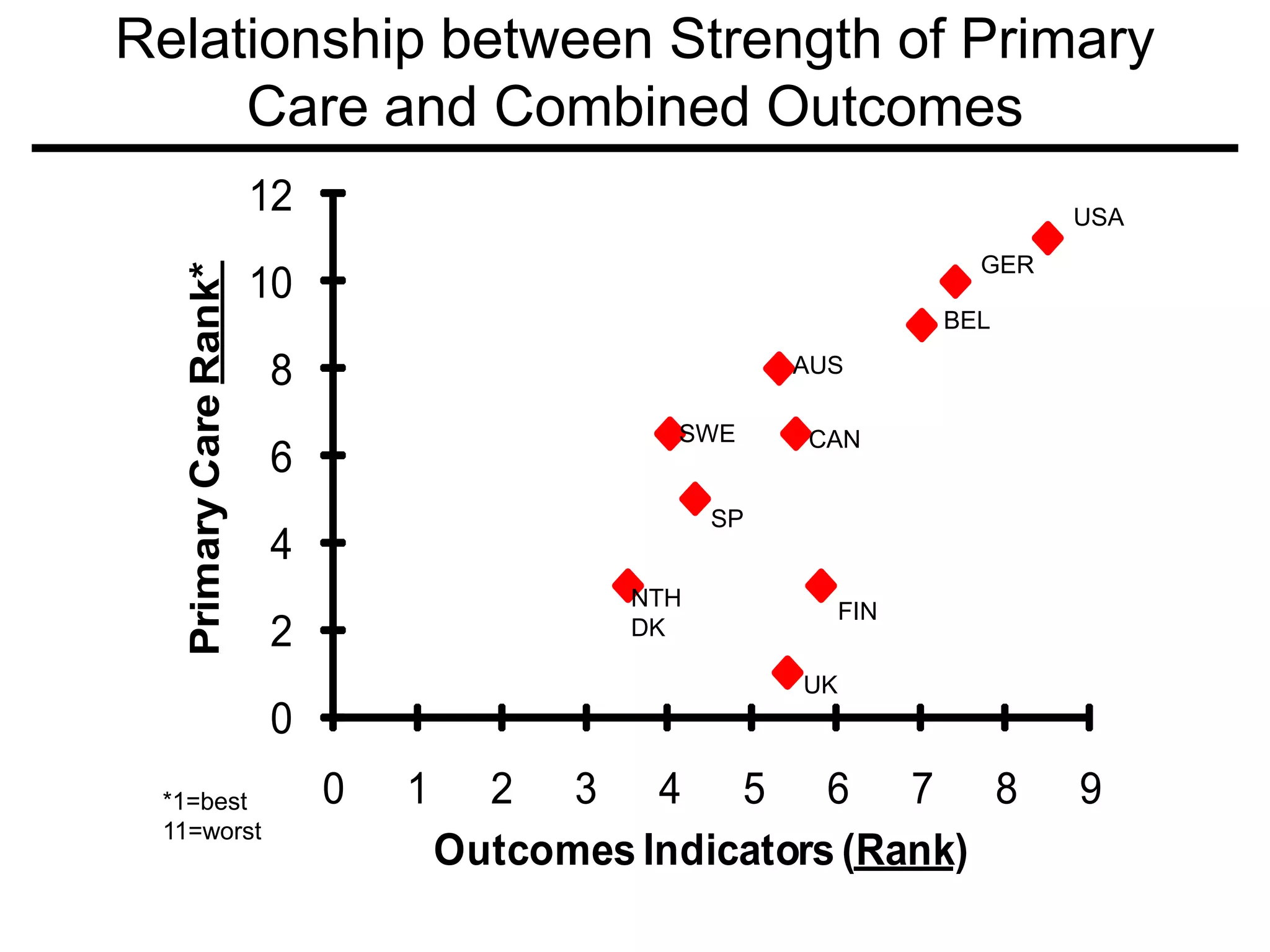
Relationship between Strength of Primary
     Care and Combined Outcomes
                        12                                                 USA
                                                                     GER
   Primary Care Rank*
                        10
                                                                   BEL

                        8                               AUS

                                               SWE      CAN
                        6
                                                   SP
                        4
                                             NTH
                                                             FIN
                        2                    DK

                                                        UK
                        0
 *1=best                     0   1     2 3 4 5 6 7 8                       9
 11=worst
                                     Outcomes Indicators (Rank)
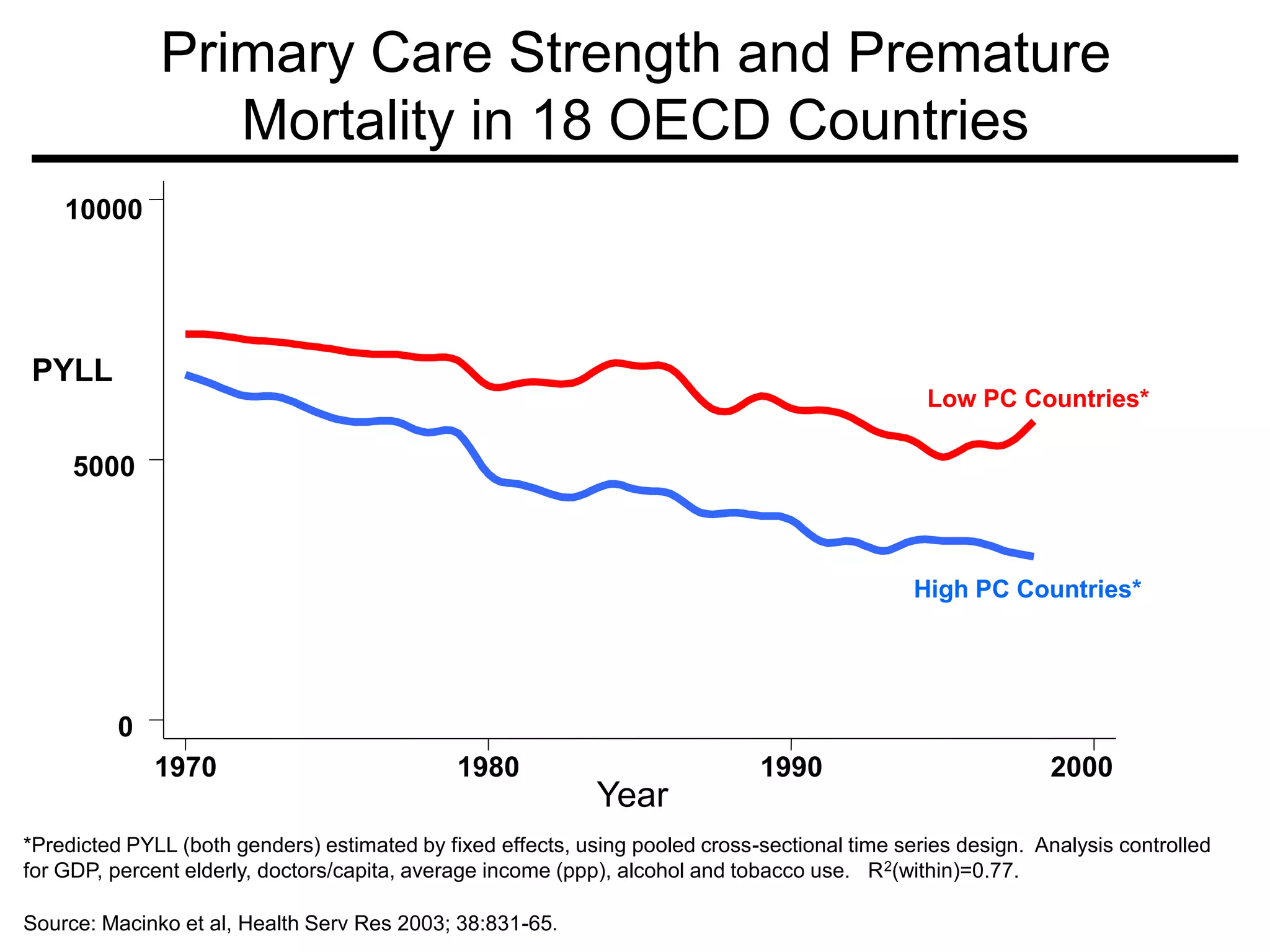
Primary Care Strength and Premature
                 Mortality in 18 OECD Countries
    10000


PYLL
                                                                                                Low PC Countries*

     5000


                                                                                               High PC Countries*


          0
              1970                            1980                            1990                           2000
                                                             Year
*Predicted PYLL (both genders) estimated by fixed effects, using pooled cross-sectional time series design. Analysis controlled
for GDP, percent elderly, doctors/capita, average income (ppp), alcohol and tobacco use. R 2(within)=0.77.

Source: Macinko et al, Health Serv Res 2003; 38:831-65.
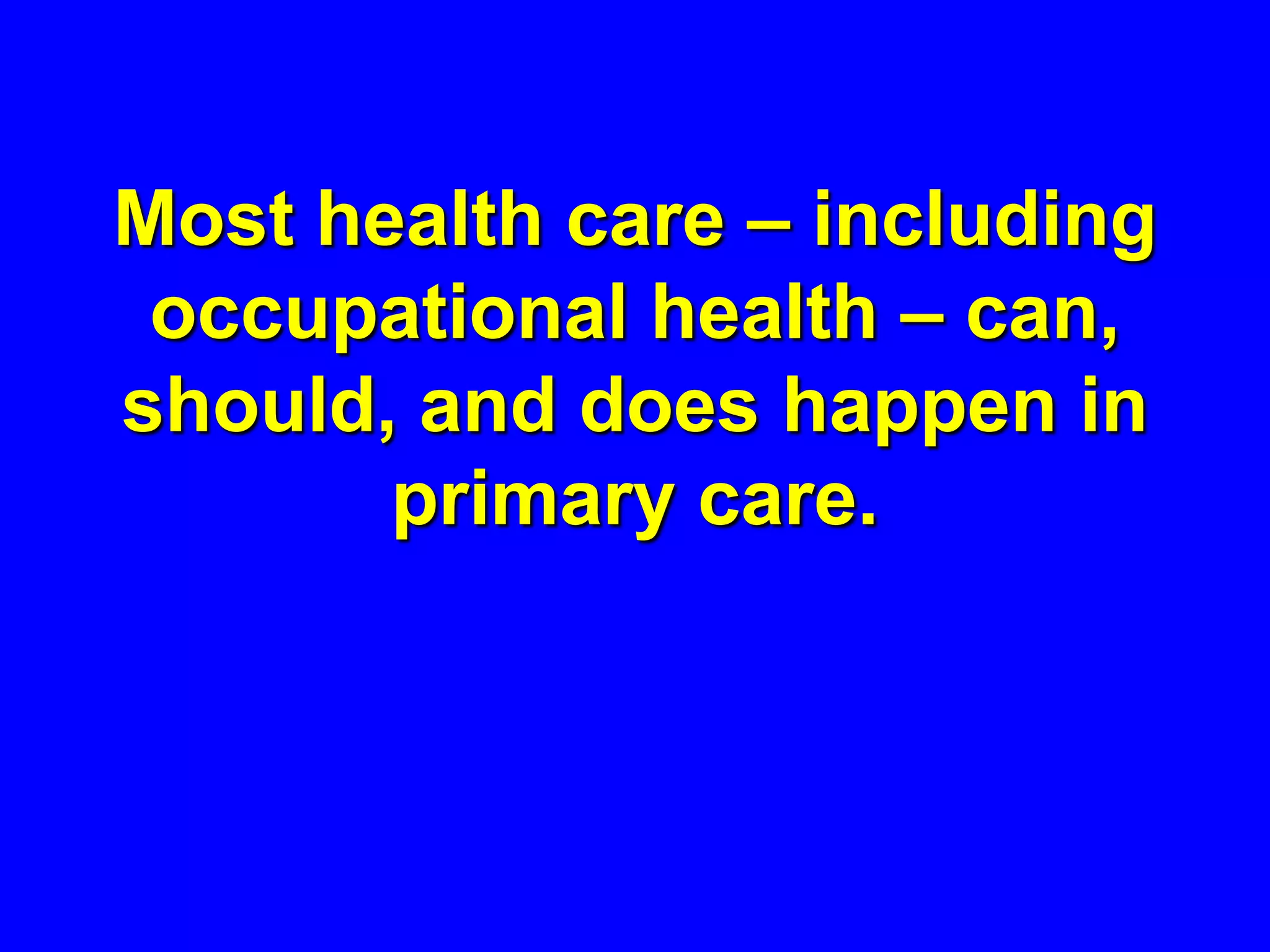
Most health care – including
 occupational health – can,
should, and does happen in
       primary care.
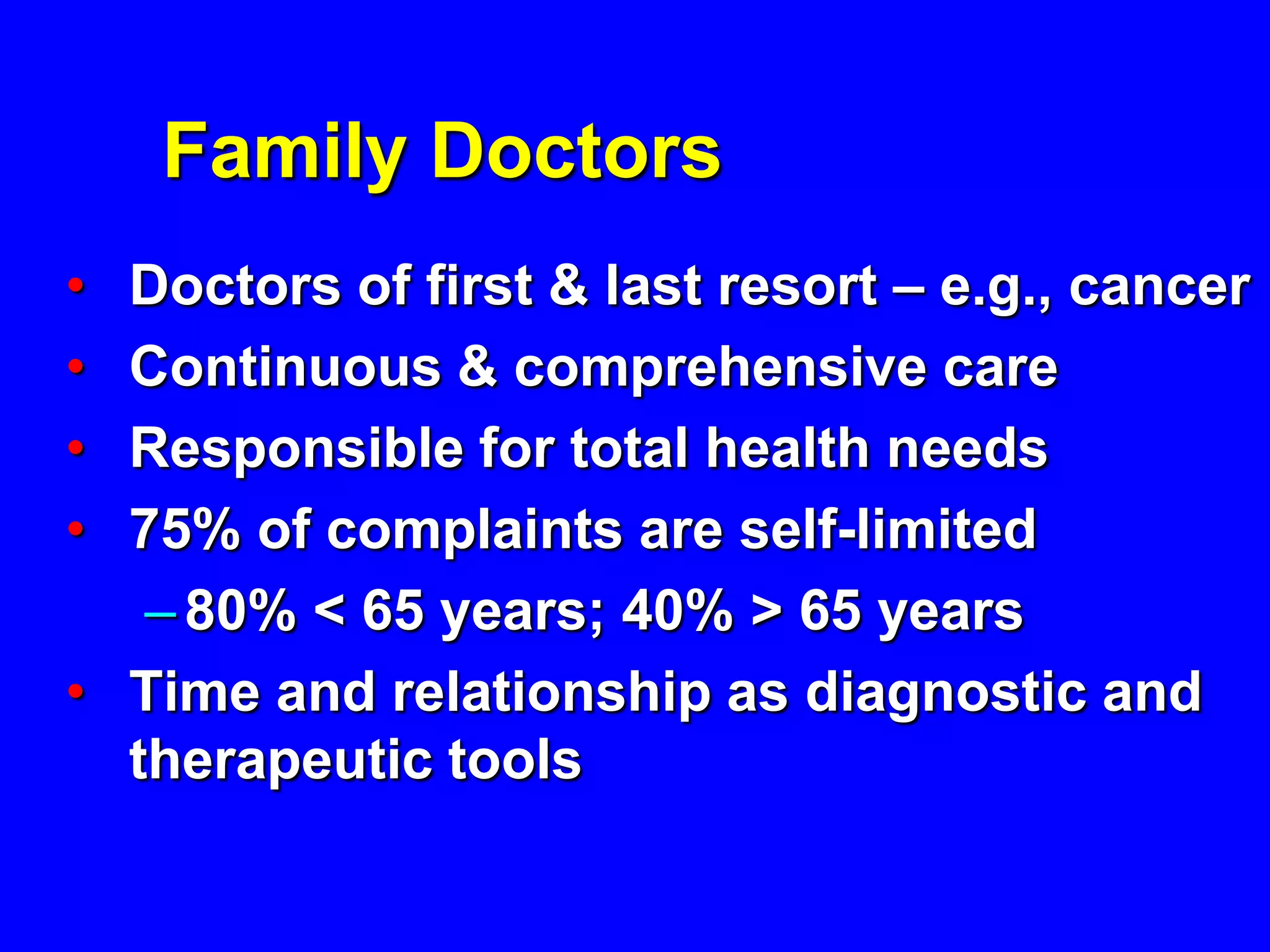
Family Doctors
• Doctors of first & last resort – e.g., cancer
• Continuous & comprehensive care
• Responsible for total health needs
• 75% of complaints are self-limited
   – 80% < 65 years; 40% > 65 years
• Time and relationship as diagnostic and
  therapeutic tools
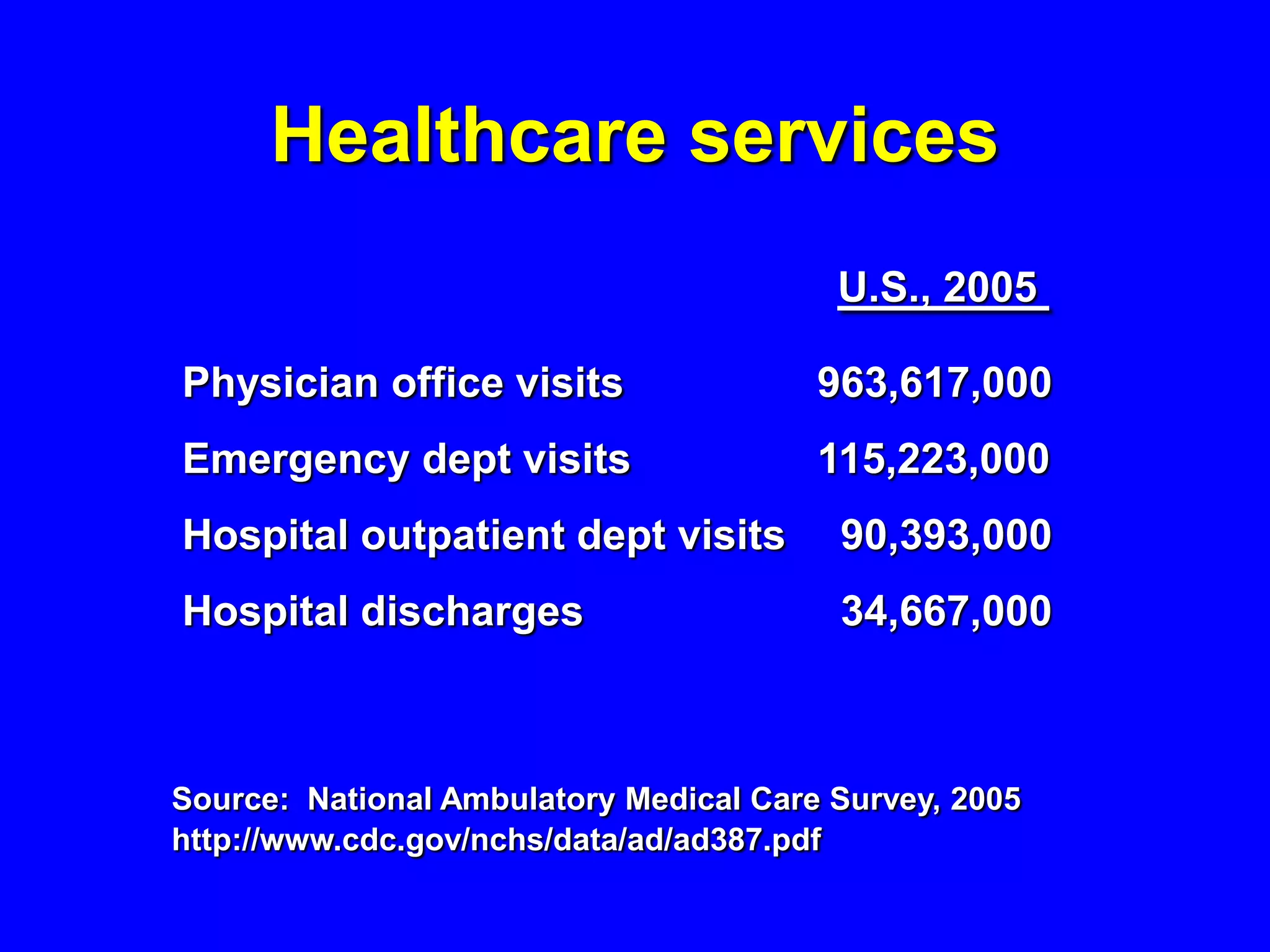
Healthcare services
                                         U.S., 2005

Physician office visits                 963,617,000
Emergency dept visits                   115,223,000
Hospital outpatient dept visits          90,393,000
Hospital discharges                      34,667,000


Source: National Ambulatory Medical Care Survey, 2005
http://www.cdc.gov/nchs/data/ad/ad387.pdf
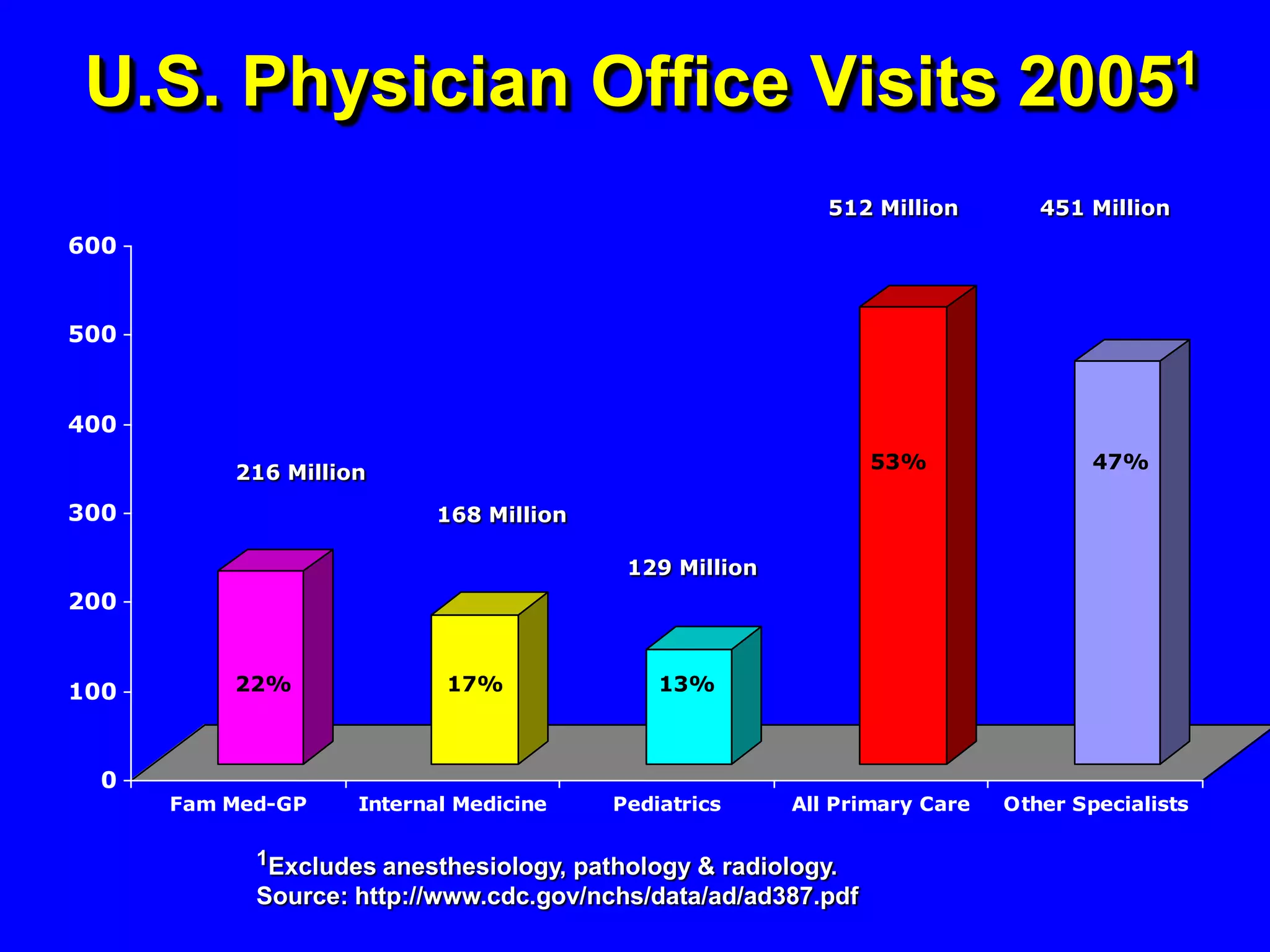
U.S. Physician Office Visits 20051
                                                           512 Million        451 Million
600


500


400
                                                                53%                47%
          216 Million
300                        168 Million

                                          129 Million
200


100       22%              17%               13%


  0
      Fam Med-GP    Internal Medicine    Pediatrics     All Primary Care   Other Specialists

            1Excludes anesthesiology, pathology & radiology.
            Source: http://www.cdc.gov/nchs/data/ad/ad387.pdf
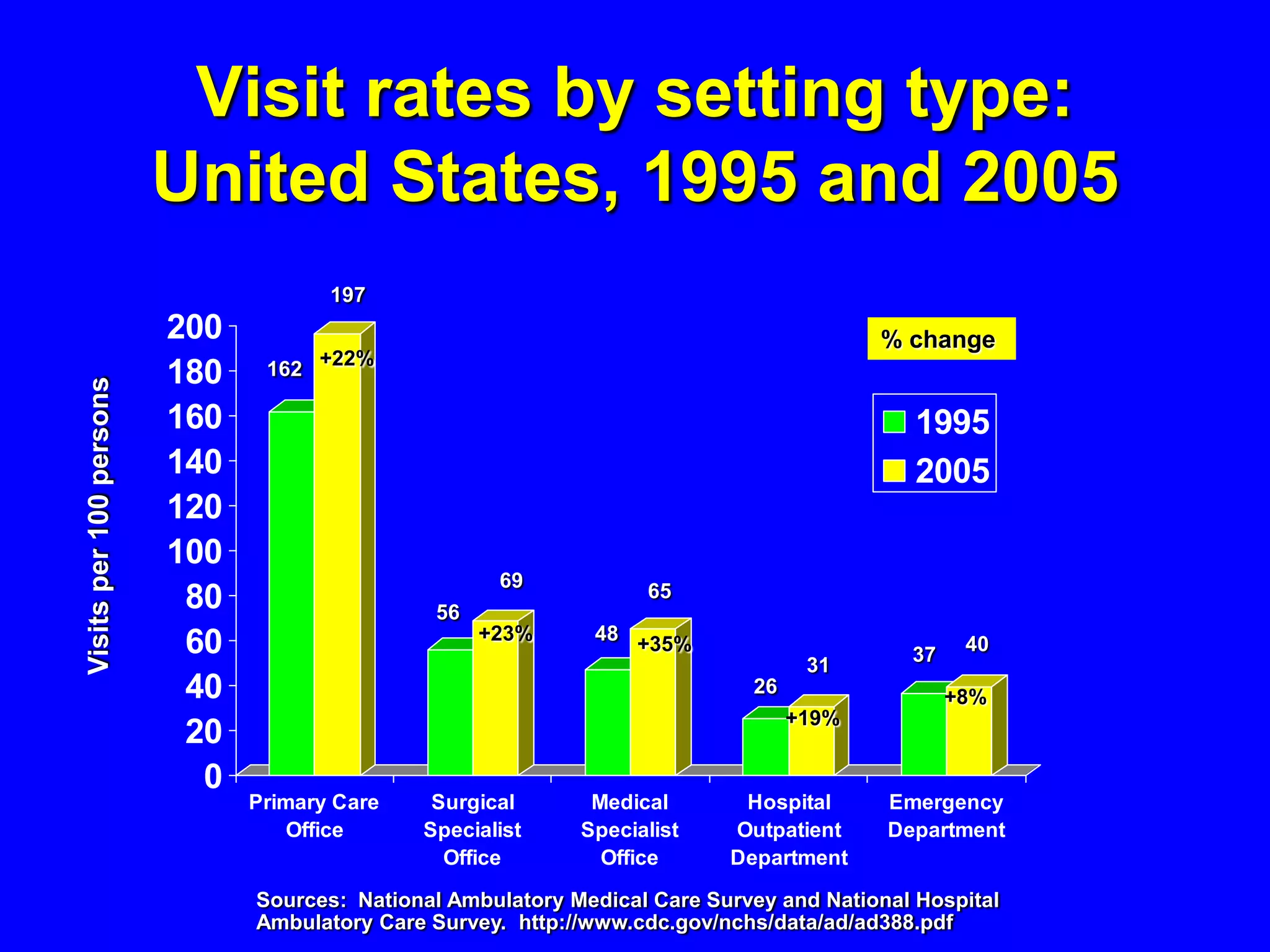
Visit rates by setting type:
                         United States, 1995 and 2005
                                      197
                         200                                                             % change
                         180    162 +22%
Visits per 100 persons


                         160                                                                 1995
                         140                                                                 2005
                         120
                         100
                                                     69
                          80                                       65
                                               56
                                                    +23%      48 +35%
                          60                                                                37    40
                                                                                   31
                          40                                                 26                  +8%
                                                                                  +19%
                          20
                           0
                               Primary Care    Surgical       Medical       Hospital      Emergency
                                   Office     Specialist     Specialist    Outpatient     Department
                                                Office         Office      Department

                               Sources: National Ambulatory Medical Care Survey and National Hospital
                               Ambulatory Care Survey. http://www.cdc.gov/nchs/data/ad/ad388.pdf
Primary care is especially
concerned with knowing the
    person and context.
Aims & Assets
 of Primary Health Care
• Continuity
• Comprehensive
More important
than knowing the disease
is knowing the person
with the dis-ease.
It’s the

RELATIONSHIP!
People do best when
   primary care and
occupational health care
professionals work well
       together.
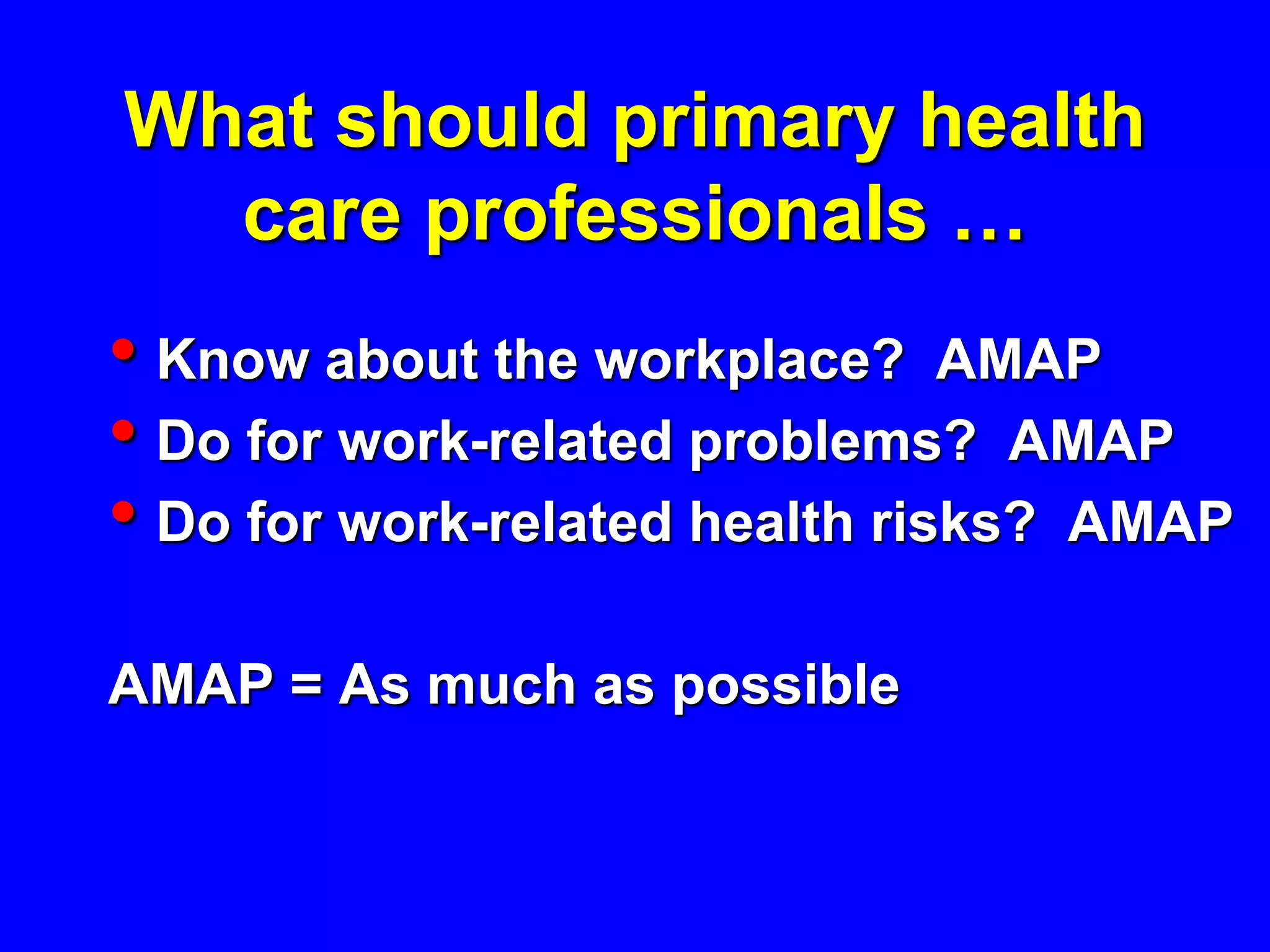
What should primary health
  care professionals …
• Know about the workplace? AMAP
• Do for work-related problems? AMAP
• Do for work-related health risks? AMAP
AMAP = As much as possible
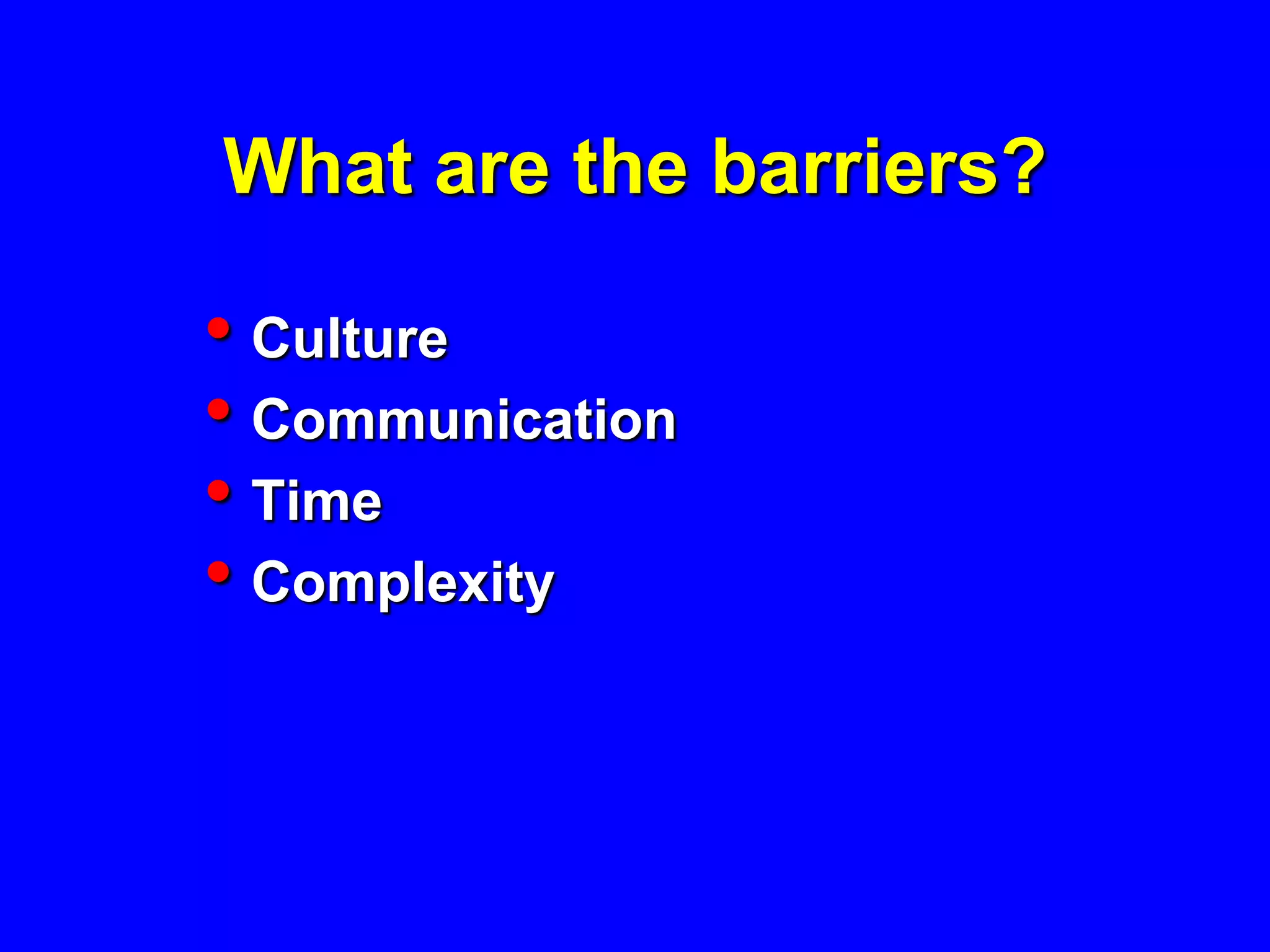
What are the barriers?

• Culture
• Communication
• Time
• Complexity
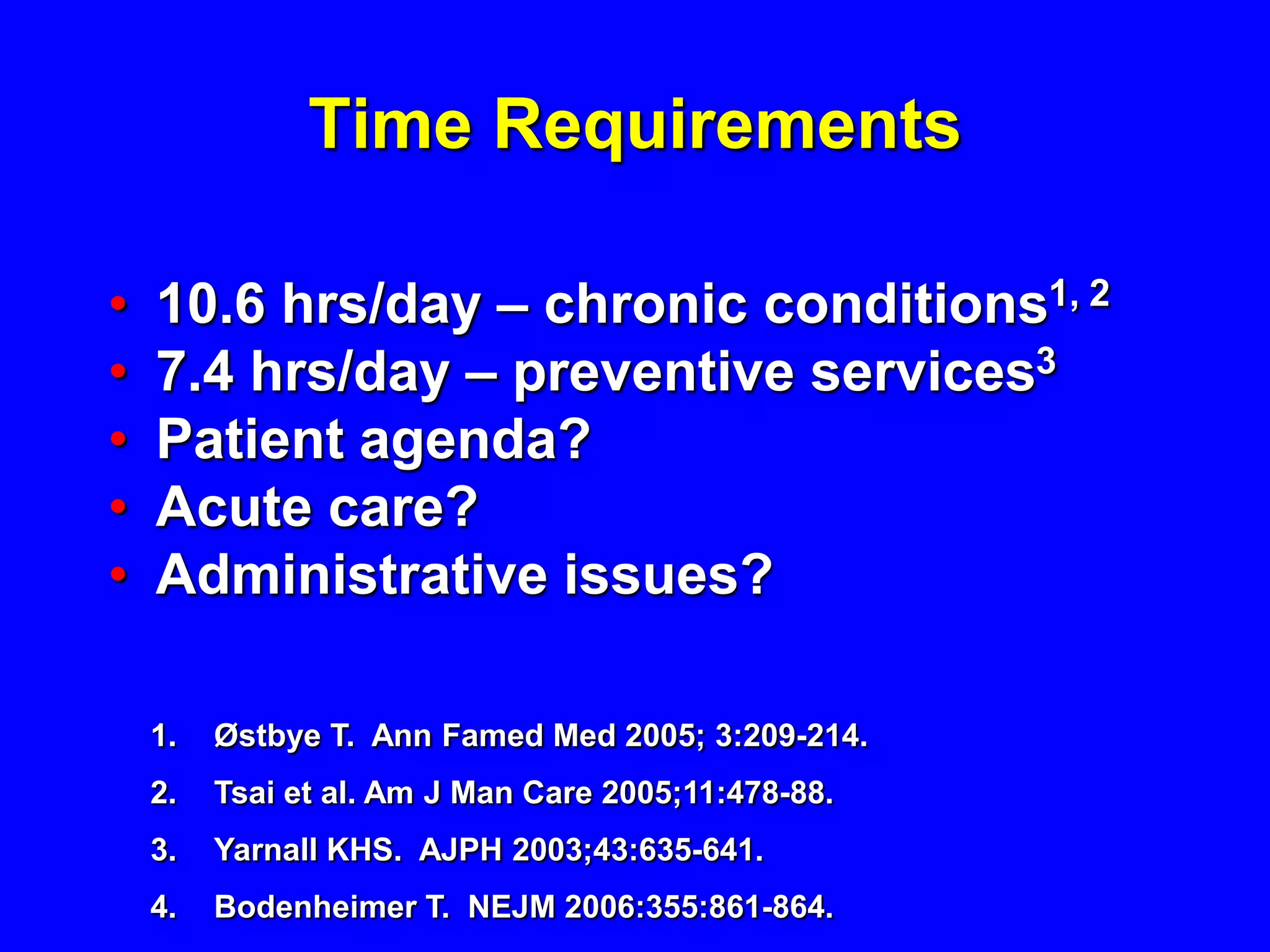
Time Requirements

•   10.6 hrs/day – chronic conditions1, 2
•   7.4 hrs/day – preventive services3
•   Patient agenda?
•   Acute care?
•   Administrative issues?

    1.   Østbye T. Ann Famed Med 2005; 3:209-214.
    2.   Tsai et al. Am J Man Care 2005;11:478-88.
    3.   Yarnall KHS. AJPH 2003;43:635-641.
    4.   Bodenheimer T. NEJM 2006:355:861-864.
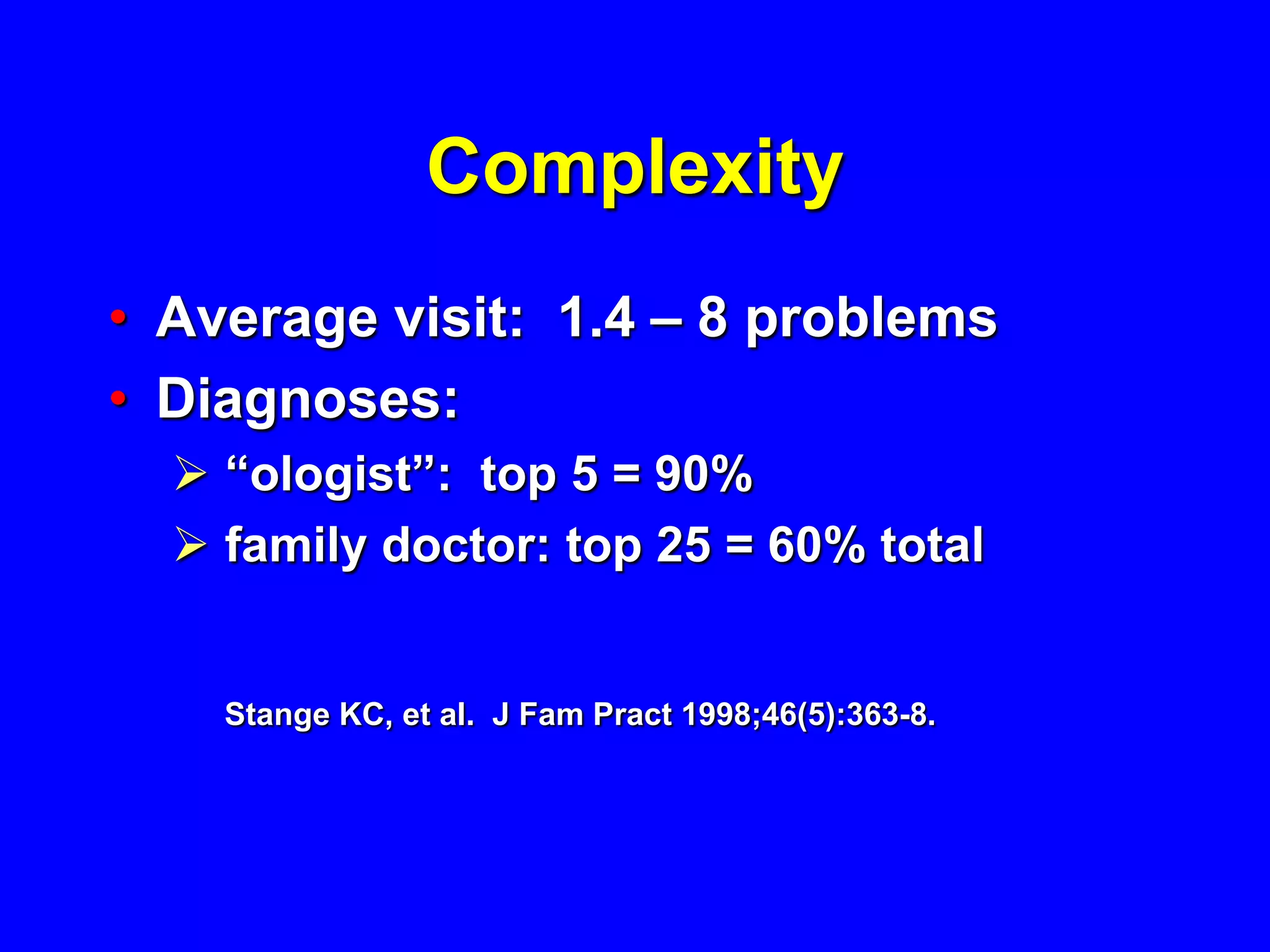
Complexity
• Average visit: 1.4 – 8 problems
• Diagnoses:
   “ologist”: top 5 = 90%
   family doctor: top 25 = 60% total


    Stange KC, et al. J Fam Pract 1998;46(5):363-8.
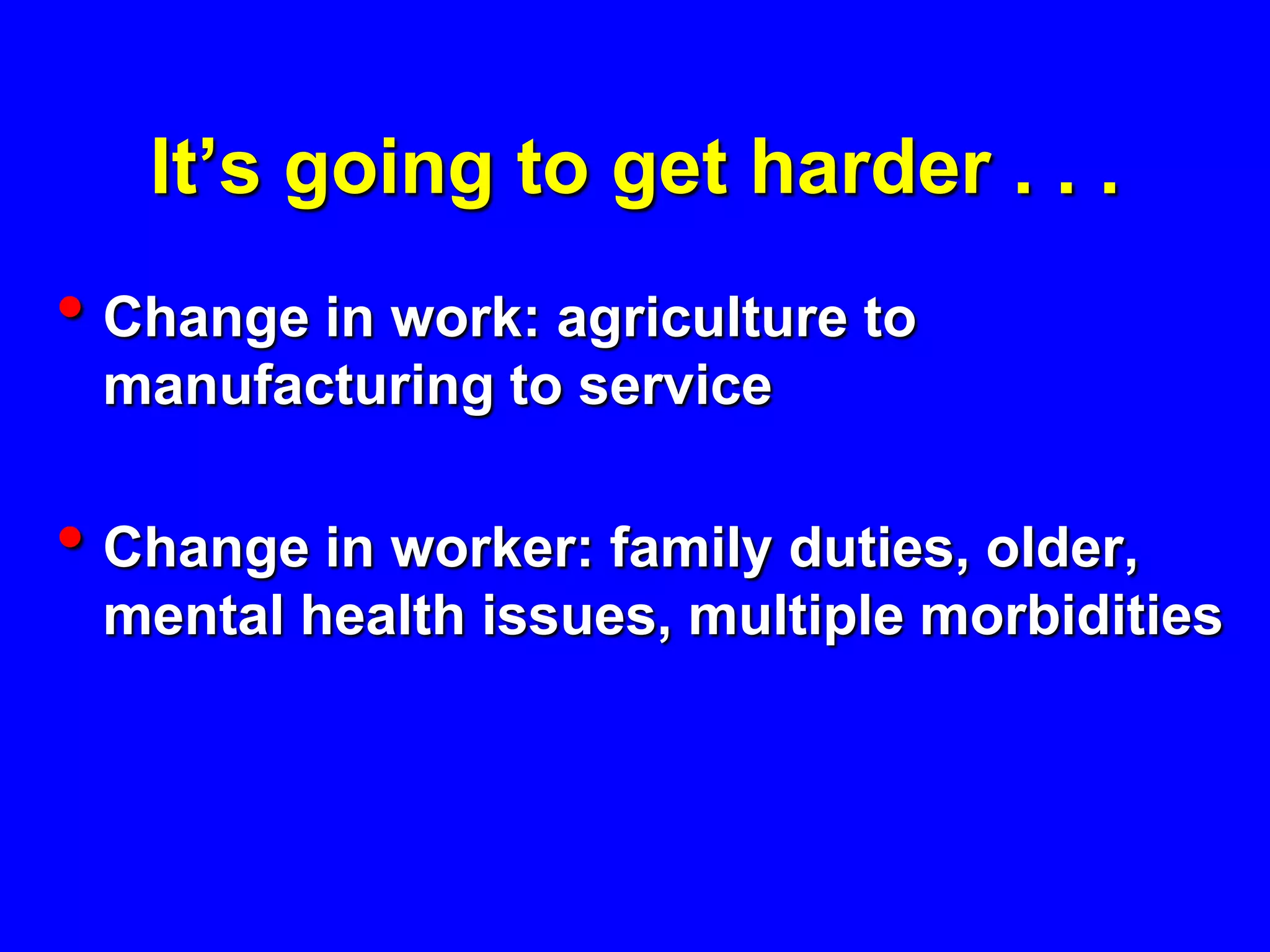
It’s going to get harder . . .
• Change in work: agriculture to
 manufacturing to service

• Change in worker: family duties, older,
 mental health issues, multiple morbidities

The role of primary care providers in occupational health

  • 1.
    The role ofprimary care workers in occupational health Connecting Health and Labour: What Role for Occupational Health in Primary Health Care? WHO-TNO-Government of the Netherlands The Hague, Netherlands 29 November 2011 Richard G. Roberts, MD, JD Wonca President 2010-2013 Professor of Family Medicine, University of Wisconsin TEL: +1 608 263 3598 Email: richard.roberts@fammed.wisc.edu
  • 2.
    Primary Care &Health Care • The best health systems are based on primary care. • Most health care – including occupational health – can, should and does happen in primary care. • Primary care is especially concerned with knowing the person and context. • People do best when primary care and occupational health care professionals work well together.
  • 3.
    The best healthsystems are based on primary care.
  • 4.
    “A world thatis greatly out of balance in matters of health is neither stable nor secure. . . “ “Primary health care brings balance back to health care, and puts families and communities at the hub of the health system. “ “Primary health care also offers the best way of coping with the ills of life in the 21st century: the globalization of unhealthy lifestyles, rapid unplanned urbanization, and the ageing of populations.” Dr Margaret Chan, Director General, WHO - 2008
  • 5.
    Primary Care Scorevs. Health Care Expenditures, 1997 2 UK DK Primary Care Score NTH 1.5 FIN SP CAN AUS 1 SWE JAP 0.5 GER US BEL FR 0 1000 1500 2000 2500 3000 3500 4000 Per Capita Health Care Expenditures
  • 6.
    Relationship between Strengthof Primary Care and Combined Outcomes 12 USA GER Primary Care Rank* 10 BEL 8 AUS SWE CAN 6 SP 4 NTH FIN 2 DK UK 0 *1=best 0 1 2 3 4 5 6 7 8 9 11=worst Outcomes Indicators (Rank)
  • 7.
    Primary Care Strengthand Premature Mortality in 18 OECD Countries 10000 PYLL Low PC Countries* 5000 High PC Countries* 0 1970 1980 1990 2000 Year *Predicted PYLL (both genders) estimated by fixed effects, using pooled cross-sectional time series design. Analysis controlled for GDP, percent elderly, doctors/capita, average income (ppp), alcohol and tobacco use. R 2(within)=0.77. Source: Macinko et al, Health Serv Res 2003; 38:831-65.
  • 8.
    Most health care– including occupational health – can, should, and does happen in primary care.
  • 9.
    Family Doctors • Doctorsof first & last resort – e.g., cancer • Continuous & comprehensive care • Responsible for total health needs • 75% of complaints are self-limited – 80% < 65 years; 40% > 65 years • Time and relationship as diagnostic and therapeutic tools
  • 10.
    Healthcare services U.S., 2005 Physician office visits 963,617,000 Emergency dept visits 115,223,000 Hospital outpatient dept visits 90,393,000 Hospital discharges 34,667,000 Source: National Ambulatory Medical Care Survey, 2005 http://www.cdc.gov/nchs/data/ad/ad387.pdf
  • 11.
    U.S. Physician OfficeVisits 20051 512 Million 451 Million 600 500 400 53% 47% 216 Million 300 168 Million 129 Million 200 100 22% 17% 13% 0 Fam Med-GP Internal Medicine Pediatrics All Primary Care Other Specialists 1Excludes anesthesiology, pathology & radiology. Source: http://www.cdc.gov/nchs/data/ad/ad387.pdf
  • 12.
    Visit rates bysetting type: United States, 1995 and 2005 197 200 % change 180 162 +22% Visits per 100 persons 160 1995 140 2005 120 100 69 80 65 56 +23% 48 +35% 60 37 40 31 40 26 +8% +19% 20 0 Primary Care Surgical Medical Hospital Emergency Office Specialist Specialist Outpatient Department Office Office Department Sources: National Ambulatory Medical Care Survey and National Hospital Ambulatory Care Survey. http://www.cdc.gov/nchs/data/ad/ad388.pdf
  • 13.
    Primary care isespecially concerned with knowing the person and context.
  • 14.
    Aims & Assets of Primary Health Care • Continuity • Comprehensive
  • 15.
    More important than knowingthe disease is knowing the person with the dis-ease.
  • 16.
  • 17.
    People do bestwhen primary care and occupational health care professionals work well together.
  • 18.
    What should primaryhealth care professionals … • Know about the workplace? AMAP • Do for work-related problems? AMAP • Do for work-related health risks? AMAP AMAP = As much as possible
  • 19.
    What are thebarriers? • Culture • Communication • Time • Complexity
  • 20.
    Time Requirements • 10.6 hrs/day – chronic conditions1, 2 • 7.4 hrs/day – preventive services3 • Patient agenda? • Acute care? • Administrative issues? 1. Østbye T. Ann Famed Med 2005; 3:209-214. 2. Tsai et al. Am J Man Care 2005;11:478-88. 3. Yarnall KHS. AJPH 2003;43:635-641. 4. Bodenheimer T. NEJM 2006:355:861-864.
  • 21.
    Complexity • Average visit:1.4 – 8 problems • Diagnoses:  “ologist”: top 5 = 90%  family doctor: top 25 = 60% total Stange KC, et al. J Fam Pract 1998;46(5):363-8.
  • 22.
    It’s going toget harder . . . • Change in work: agriculture to manufacturing to service • Change in worker: family duties, older, mental health issues, multiple morbidities