What were the legal 
traditions? 
• Ancient Egyptian Law was governed by 
religious principles 
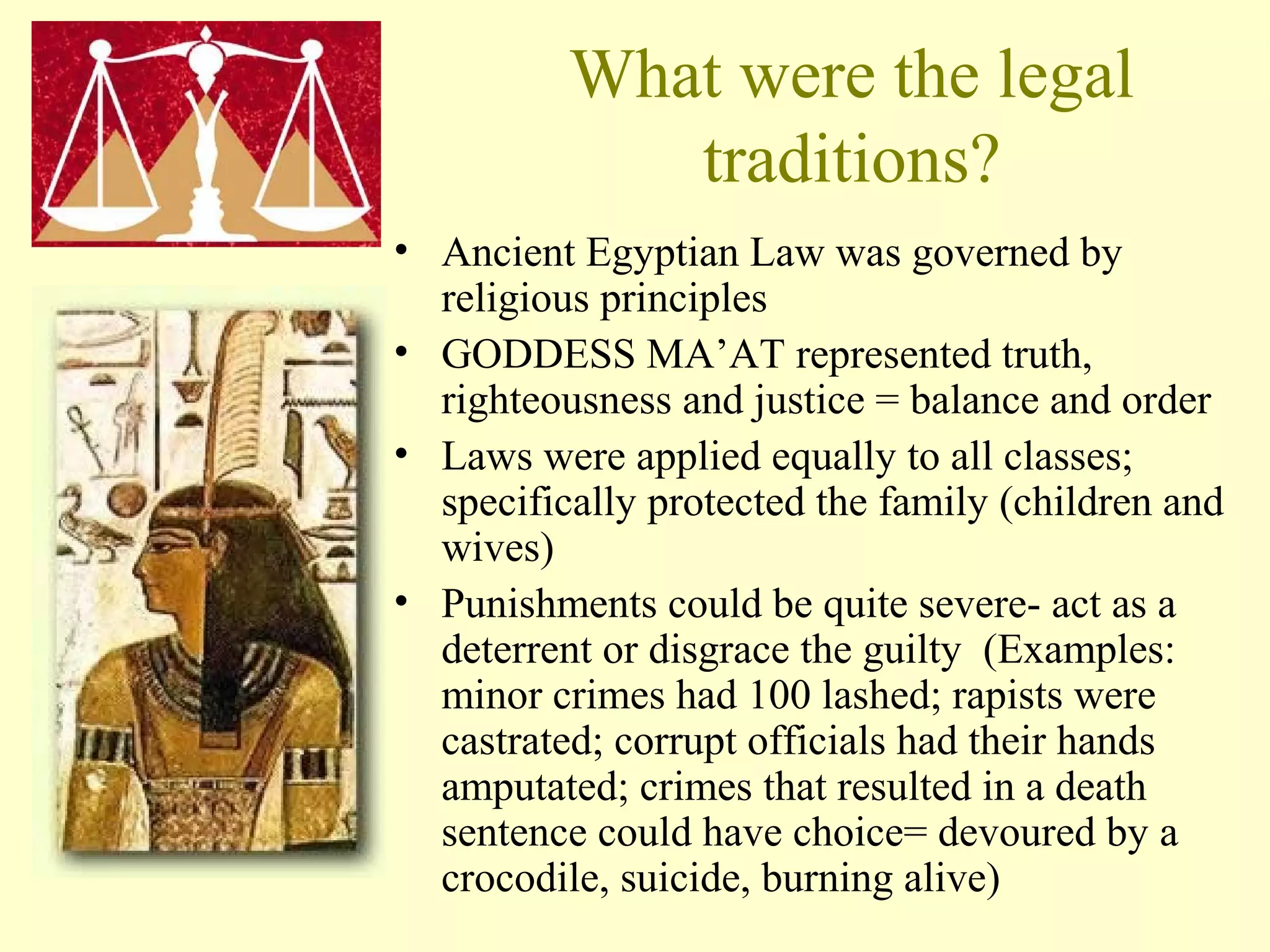
• GODDESS MA’AT represented truth, 
righteousness and justice = balance and order 
• Laws were applied equally to all classes; 
specifically protected the family (children and 
wives) 
• Punishments could be quite severe- act as a 
deterrent or disgrace the guilty (Examples: 
minor crimes had 100 lashed; rapists were 
castrated; corrupt officials had their hands 
amputated; crimes that resulted in a death 
sentence could have choice= devoured by a 
crocodile, suicide, burning alive)
Social Roles 
Role of Women 
• Well treated and had 
considerable legal rights 
compared to other 
civilizations 
• Same legal rights as men (land, 
property, divorce) 
• Left women to be economically 
independent 
• Primary role was in domestic life 
• Common title for a married 
women in ancient Egypt was 
“nebet per” meaning “the lady of 
the house” 
• Bear and raise children 
Role of Men 
• Head of the family 
• Men could have numerous wives 
but economically men had only 1 
wife 
• Labourers, craftsmen 
• Jobs were hereditary 
Jobs 
• Labour required for construction 
projects and was mostly filled by 
poor, serfs 
• Stability of Egypt thrived as 
skilled trades were passed from 
father to son 
• Children always learned the trade 
from parents; seldom could choose 
occupation
Education 
• Contributed to stability and continuity of Egypt 
• All children, regardless of social class, received some 
education 
• Followed a moral and ethical guide “Instructions in 
Wisdom” 
• Goal for education was to ensure youth exhibited self 
control and good manners 
• At 14, young boys followed fathers in jobs, and girls 
learned from mothers in the household 
• Children of priests were schooled more formally 
• Literacy was stressed for government jobs 
• Education respected for creating a well rounded 
individual
Hieroglyphics/Language
• History of Writing: 
1) pictograms (sun= sun) 
2) ideograms (sun = sun, daylight, 
warmth, light) 
3) phonograms: symbols that suggest a 
particular sound; related ideas and also 
sound (Sun = sun, son, Sunday) 
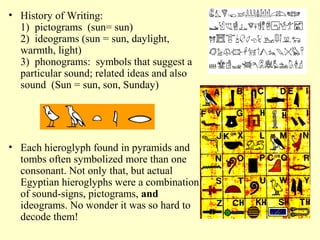
• Each hieroglyph found in pyramids and 
tombs often symbolized more than one 
consonant. Not only that, but actual 
Egyptian hieroglyphs were a combination 
of sound-signs, pictograms, and 
ideograms. No wonder it was so hard to 
decode them!
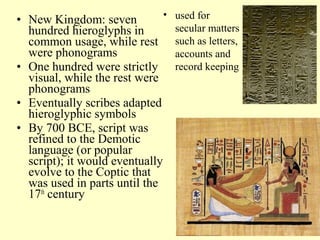
• New Kingdom: seven 
hundred hieroglyphs in 
common usage, while rest 
were phonograms 
• One hundred were strictly 
visual, while the rest were 
phonograms 
• Eventually scribes adapted 
hieroglyphic symbols 
• By 700 BCE, script was 
refined to the Demotic 
language (or popular 
script); it would eventually 
evolve to the Coptic that 
was used in parts until the 
17th century 
• used for 
secular matters 
such as letters, 
accounts and 
record keeping
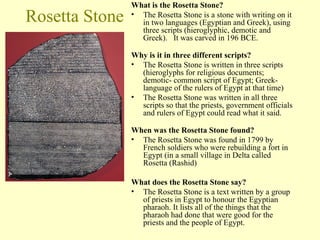
Rosetta Stone What is the Rosetta Stone? 
• The Rosetta Stone is a stone with writing on it 
in two languages (Egyptian and Greek), using 
three scripts (hieroglyphic, demotic and 
Greek). It was carved in 196 BCE. 
Why is it in three different scripts? 
• The Rosetta Stone is written in three scripts 
(hieroglyphs for religious documents; 
demotic- common script of Egypt; Greek-language 
of the rulers of Egypt at that time) 
• The Rosetta Stone was written in all three 
scripts so that the priests, government officials 
and rulers of Egypt could read what it said. 
When was the Rosetta Stone found? 
• The Rosetta Stone was found in 1799 by 
French soldiers who were rebuilding a fort in 
Egypt (in a small village in Delta called 
Rosetta (Rashid) 
What does the Rosetta Stone say? 
• The Rosetta Stone is a text written by a group 
of priests in Egypt to honour the Egyptian 
pharaoh. It lists all of the things that the 
pharaoh had done that were good for the 
priests and the people of Egypt.
Life and Death 
• Life and death was measured in accordance to Ma’at: the goddess 
and symbol of equilibrium of the universe and the king had to rule 
according to her principles 
Death viewed as a new beginning 
• Afterlife common to all, regardless of social status 
(preparation varied as well as goods stored in tombs) 
• 2 Common Principles: 
1) body preservation in a lifelike form 
2) the deceased must have items necessary for life in the afterworld 
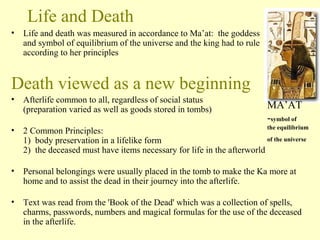
MA’AT 
-symbol of 
the equilibrium 
of the universe 
• Personal belongings were usually placed in the tomb to make the Ka more at 
home and to assist the dead in their journey into the afterlife. 
• Text was read from the 'Book of the Dead' which was a collection of spells, 
charms, passwords, numbers and magical formulas for the use of the deceased 
in the afterlife.
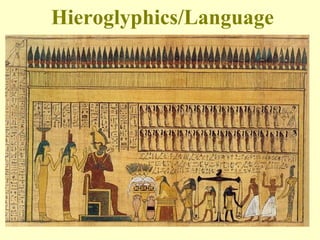
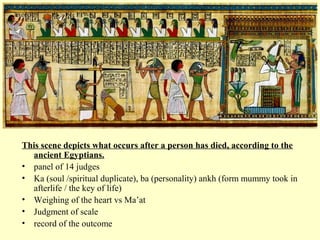
This scene depicts what occurs after a person has died, according to the 
ancient Egyptians. 
• panel of 14 judges 
• Ka (soul /spiritual duplicate), ba (personality) ankh (form mummy took in 
afterlife / the key of life) 
• Weighing of the heart vs Ma’at 
• Judgment of scale 
• record of the outcome
• Mummification focused Mummification 
on Egyptian belief of the 
importance of 
preserving the body 
• Afterlife would be spent 
enjoying best of life 
experiences 
• Body covered with 
natron and dried for up 
to 70 days 
• Body wrapped in linen 
coated with resins and 
oils 
• Middle Kingdom 
became customary to 
place a mask over the 
face 
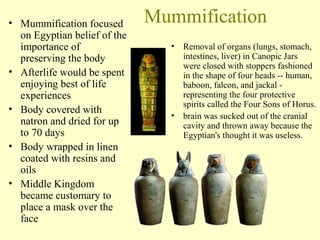
• Removal of organs (lungs, stomach, 
intestines, liver) in Canopic Jars 
were closed with stoppers fashioned 
in the shape of four heads -- human, 
baboon, falcon, and jackal - 
representing the four protective 
spirits called the Four Sons of Horus. 
• brain was sucked out of the cranial 
cavity and thrown away because the 
Egyptian's thought it was useless.
Ancient Egypt’s Economy 
What made Ancient Egypt wealthy? 
• Food Supply made up most of Egypt’s wealth 
(grain, vegetables, fruit, cattle, goats, pigs 
and fowl). 
• Storing and Managing the Food Supply: 
this measured an Egyptian dynasty’s wealth; 
having full granaries, plenty of wildlife and fish, 
and thriving herds were the signs of prosperity. 
(These were the images used in the tombs of the 
Pharaohs to illustrate the wealth of their reigns). 
What else made up the Ancient Egyptian Economy? 
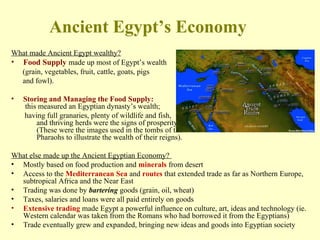
• Mostly based on food production and minerals from desert 
• Access to the Mediterranean Sea and routes that extended trade as far as Northern Europe, 
subtropical Africa and the Near East 
• Trading was done by bartering goods (grain, oil, wheat) 
• Taxes, salaries and loans were all paid entirely on goods 
• Extensive trading made Egypt a powerful influence on culture, art, ideas and technology (ie. 
Western calendar was taken from the Romans who had borrowed it from the Egyptians) 
• Trade eventually grew and expanded, bringing new ideas and goods into Egyptian society

Ancient egyp part 2

  • 1.
    What were thelegal traditions? • Ancient Egyptian Law was governed by religious principles • GODDESS MA’AT represented truth, righteousness and justice = balance and order • Laws were applied equally to all classes; specifically protected the family (children and wives) • Punishments could be quite severe- act as a deterrent or disgrace the guilty (Examples: minor crimes had 100 lashed; rapists were castrated; corrupt officials had their hands amputated; crimes that resulted in a death sentence could have choice= devoured by a crocodile, suicide, burning alive)
  • 2.
    Social Roles Roleof Women • Well treated and had considerable legal rights compared to other civilizations • Same legal rights as men (land, property, divorce) • Left women to be economically independent • Primary role was in domestic life • Common title for a married women in ancient Egypt was “nebet per” meaning “the lady of the house” • Bear and raise children Role of Men • Head of the family • Men could have numerous wives but economically men had only 1 wife • Labourers, craftsmen • Jobs were hereditary Jobs • Labour required for construction projects and was mostly filled by poor, serfs • Stability of Egypt thrived as skilled trades were passed from father to son • Children always learned the trade from parents; seldom could choose occupation
  • 3.
    Education • Contributedto stability and continuity of Egypt • All children, regardless of social class, received some education • Followed a moral and ethical guide “Instructions in Wisdom” • Goal for education was to ensure youth exhibited self control and good manners • At 14, young boys followed fathers in jobs, and girls learned from mothers in the household • Children of priests were schooled more formally • Literacy was stressed for government jobs • Education respected for creating a well rounded individual
  • 4.
  • 5.
    • History ofWriting: 1) pictograms (sun= sun) 2) ideograms (sun = sun, daylight, warmth, light) 3) phonograms: symbols that suggest a particular sound; related ideas and also sound (Sun = sun, son, Sunday) • Each hieroglyph found in pyramids and tombs often symbolized more than one consonant. Not only that, but actual Egyptian hieroglyphs were a combination of sound-signs, pictograms, and ideograms. No wonder it was so hard to decode them!
  • 6.
    • New Kingdom:seven hundred hieroglyphs in common usage, while rest were phonograms • One hundred were strictly visual, while the rest were phonograms • Eventually scribes adapted hieroglyphic symbols • By 700 BCE, script was refined to the Demotic language (or popular script); it would eventually evolve to the Coptic that was used in parts until the 17th century • used for secular matters such as letters, accounts and record keeping
  • 7.
    Rosetta Stone Whatis the Rosetta Stone? • The Rosetta Stone is a stone with writing on it in two languages (Egyptian and Greek), using three scripts (hieroglyphic, demotic and Greek). It was carved in 196 BCE. Why is it in three different scripts? • The Rosetta Stone is written in three scripts (hieroglyphs for religious documents; demotic- common script of Egypt; Greek-language of the rulers of Egypt at that time) • The Rosetta Stone was written in all three scripts so that the priests, government officials and rulers of Egypt could read what it said. When was the Rosetta Stone found? • The Rosetta Stone was found in 1799 by French soldiers who were rebuilding a fort in Egypt (in a small village in Delta called Rosetta (Rashid) What does the Rosetta Stone say? • The Rosetta Stone is a text written by a group of priests in Egypt to honour the Egyptian pharaoh. It lists all of the things that the pharaoh had done that were good for the priests and the people of Egypt.
  • 8.
    Life and Death • Life and death was measured in accordance to Ma’at: the goddess and symbol of equilibrium of the universe and the king had to rule according to her principles Death viewed as a new beginning • Afterlife common to all, regardless of social status (preparation varied as well as goods stored in tombs) • 2 Common Principles: 1) body preservation in a lifelike form 2) the deceased must have items necessary for life in the afterworld MA’AT -symbol of the equilibrium of the universe • Personal belongings were usually placed in the tomb to make the Ka more at home and to assist the dead in their journey into the afterlife. • Text was read from the 'Book of the Dead' which was a collection of spells, charms, passwords, numbers and magical formulas for the use of the deceased in the afterlife.
  • 9.
    This scene depictswhat occurs after a person has died, according to the ancient Egyptians. • panel of 14 judges • Ka (soul /spiritual duplicate), ba (personality) ankh (form mummy took in afterlife / the key of life) • Weighing of the heart vs Ma’at • Judgment of scale • record of the outcome
  • 10.
    • Mummification focusedMummification on Egyptian belief of the importance of preserving the body • Afterlife would be spent enjoying best of life experiences • Body covered with natron and dried for up to 70 days • Body wrapped in linen coated with resins and oils • Middle Kingdom became customary to place a mask over the face • Removal of organs (lungs, stomach, intestines, liver) in Canopic Jars were closed with stoppers fashioned in the shape of four heads -- human, baboon, falcon, and jackal - representing the four protective spirits called the Four Sons of Horus. • brain was sucked out of the cranial cavity and thrown away because the Egyptian's thought it was useless.
  • 11.
    Ancient Egypt’s Economy What made Ancient Egypt wealthy? • Food Supply made up most of Egypt’s wealth (grain, vegetables, fruit, cattle, goats, pigs and fowl). • Storing and Managing the Food Supply: this measured an Egyptian dynasty’s wealth; having full granaries, plenty of wildlife and fish, and thriving herds were the signs of prosperity. (These were the images used in the tombs of the Pharaohs to illustrate the wealth of their reigns). What else made up the Ancient Egyptian Economy? • Mostly based on food production and minerals from desert • Access to the Mediterranean Sea and routes that extended trade as far as Northern Europe, subtropical Africa and the Near East • Trading was done by bartering goods (grain, oil, wheat) • Taxes, salaries and loans were all paid entirely on goods • Extensive trading made Egypt a powerful influence on culture, art, ideas and technology (ie. Western calendar was taken from the Romans who had borrowed it from the Egyptians) • Trade eventually grew and expanded, bringing new ideas and goods into Egyptian society

Editor's Notes

  • #6 Hmmm. Some birds, a half moon, a feather, and a oval. Or maybe that half moon is a stone sticking out of the ground. And maybe the oval is really a hole in the ground. Maybe what it means is that two birds standing by a rock have a hole to jump in if trouble happens by. That might make sense, but it's not quite right. The pictures simply mean "water."Say what? How could that possibly mean water, you ask? Good question. Want to know more? Look at more hieroglyphs and see if you can crack the code.
  • #9 Ka (one’s own spiritual duplicate; stored in heart and at death was separated from body. The ka would inhabit the tomb to be near the body) Ba (non physical element unique to each person such as one’s personality) Akh (form that the mummy takes to exist in afterworld) Ma’at (truth, order and justice- essential to achieve harmony with gods and entry to the aftelife) Book of Dead was intended to guide the dead through the various trials that they would encounter before reaching the underworld. Knowledge of the appropriate spells was considered essential to achieving happiness after death
  • #10 This scene depicts what occurs after a person has died, according to the ancient Egyptians. Beginning with the upper left-hand corner, the deceased appears before a panel of 14 judges to make an accounting for his deeds during life. The ankh, the key of life, appears in the hands of some of the judges. Next, below, the jackal god Anubis who represents the underworld and mummification leads the deceased before the scale. In his hand, Anubis holds the ankh. Anubis then weighs the heart of the deceased (left tray) against the feather of Ma'at, goddess of truth and justice (right tray). In some drawings, the full goddess Ma'at, not just her feather, is shown seated on the tray. Note that Ma'at's head, crowned by the feather, also appears atop the fulcrum of the scale. If the heart of the deceased outweighs the feather, then the deceased has a heart which has been made heavy with evil deeds. In that event, Ammit the god with the crocodile head and hippopotamus legs will devour the heart, condemning the deceased to oblivion for eternity. But if the feather outweighs the heart, and then the deceased has led a righteous life and may be presented before Osiris to join the afterlife. Thoth, the ibis-headed god of wisdom stands at the ready to record the outcome. Horus, the god with the falcon head, then leads the deceased to Osiris. Note the ankh in Horus' hand. Horus represents the personification of the Pharaoh during life, and his father Osiris represents the personification of the Pharaoh after death. Osiris, lord of the underworld, sits on his throne, represented as a mummy. On his head is the white crown of Lower Egypt (the north). He holds the symbols of Egyptian kingship in his hands: the shepherd's crook to symbolize his role as shepherd of mankind, and the flail, to represent his ability to separate the wheat from the chaff. Behind him stand his wife Isis and her sister Nephthys. Isis is the one in red, and Nephthys is the one in green. Together, Osiris, Isis, and Nephthys welcome the deceased to the underworld. The tomb-owner would continue after death the occupations of this life and so everything required was packed in the tomb along with the body. Writing materials were often supplied along with clothing, wigs, and hairdressing supplies and assorted tools, depending on the occupation of the deceased. Often model tools rather than full size ones would be placed in the tomb; models were cheaper and took up less space and in the after-life would be magically transformed into the real thing. Things might include a headrest, glass vessels which may have contained perfume and a slate palette for grinding make-up. Food was provided for the deceased and should the expected regular offerings of the descendants cease, food depicted on the walls of the tomb would be magically transformed to supply the needs of the dead. Images on tombs might include a triangular shaped piece of bread (part of the food offerings from a tomb). Other images might represent food items that the tomb owner would have eaten in his lifetime and hoped to eat in the after-life. Life was dominated by Ma'at, or the concept of justice and order. Egyptians believed there were different levels of goodness and evil. Egyptians believed that part of the personality, called the Ka, remained in the tomb. Thus elaborate and complex burial practices developed. The removed internal organs were separately treated and, during much of Egyptian history, placed in jars of clay or stone. These so-called Canopic Jars were closed with stoppers fashioned in the shape of four heads -- human, baboon, falcon, and jackal - representing the four protective spirits called the Four Sons of Horus.