ANALYTICAL EXPOSITION
Adib Muhammad Wildan Lazuardi
Mochammad Irfan Fadli
Muhammad Rahman Arief
Naufal As Shiddiq
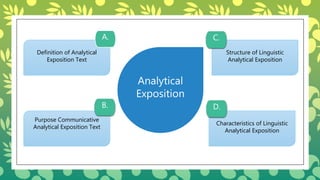
Analytical
Exposition
Definition of Analytical
Exposition Text
Purpose Communicative
Analytical Exposition Text
Structure of Linguistic
Analytical Exposition
Characteristics of Linguistic
Analytical Exposition
C.A.
D.B.
Analytical exposition text is a kind of text that
belong to the type of Argumentation Text where
the text contains a detailed idea about the author
of an event or events that are around.
A. Definition of Analytical Exposition Text
Communicative purposes of analytical exposition
text is to convince the reader that the topic is
presented is an important topic to discuss or get
attention by providing arguments or opinions that
support the main idea or topic.
B. Purpose Communicative Analytical
Exposition Text
Analytical exposition text linguistic structure
consists of three parts:
a) Thesis
b) Argument
c) Reiteration
C. Structure of Linguistic Analytical Exposition
a) Thesis
In the thesis, the author introduces the topic
or main idea will be discussed. Thesis is always
in the first paragraph of analytical exposition text.
C. Structure of Linguistic Analytical Exposition
b) Argument
In this section the author presents
arguments or opinions that support the main idea
of ​​the author of the text. Usually in an analytical
exposition text there are more than two
arguments. The more arguments displayed, making
the reader believe that the topics covered by the
authors is a very important topic or needs
attention.
C. Structure of Linguistic Analytical Exposition
c) Reiteration
This section is the concluding part of
an analytical exposition text is always located at
the end of the paragraph. Reiteration contain the
rewriting or redeployment of the main ideas
contained in the first paragraph. Reiteration is also
commonly called the conclusion or conclusions.
C. Structure of Linguistic Analytical Exposition
In an analytical exposition text, there are some
characteristics of language such as the following,
namely:
- using simple present
- reltional using process
- uses internally conjunction
- using casual conjuction
D. Characteristics of Linguistic Analytical
Exposition
Cars Should Be Banned
(Thesis)
Cars should be banned in the city. As we all know, cars create pollution, and cause a lot of
road deaths and other accidents.
(Argument 1)
Firstly, cars, as we all know, give contribution to the most of the pollution in the world. Cars
emit deadly gas that causes illness such as bronchitis, lung cancer, and ‘triggers’ off asthma. Some
of these illnesses are so bad that people can die from them.
(Argument 2)
Secondly, the city is very busy. Pedestrians wander everywhere and cars commonly hit
pedestrains in the city, which causes them to die. Cars today are our roads biggest killers.
(Argument 3)
Thirdly, cars are very noisy. If you live in the city, you may find it hard to sleep at night, or
to concentrate on your homework, and especially when you talk to someone.
(Reiteration)
In conclusion, cars should be banned from the city for the reason listed.
EXAMPLE
Analytical Hortority
Thesis Thesis
Argument Argument
Conclusion/Reiteration Recommendation
Analytical

Analytical

  • 1.
  • 2.
    Adib Muhammad WildanLazuardi Mochammad Irfan Fadli Muhammad Rahman Arief Naufal As Shiddiq
  • 3.
    Analytical Exposition Definition of Analytical ExpositionText Purpose Communicative Analytical Exposition Text Structure of Linguistic Analytical Exposition Characteristics of Linguistic Analytical Exposition C.A. D.B.
  • 4.
    Analytical exposition textis a kind of text that belong to the type of Argumentation Text where the text contains a detailed idea about the author of an event or events that are around. A. Definition of Analytical Exposition Text
  • 5.
    Communicative purposes ofanalytical exposition text is to convince the reader that the topic is presented is an important topic to discuss or get attention by providing arguments or opinions that support the main idea or topic. B. Purpose Communicative Analytical Exposition Text
  • 6.
    Analytical exposition textlinguistic structure consists of three parts: a) Thesis b) Argument c) Reiteration C. Structure of Linguistic Analytical Exposition
  • 7.
    a) Thesis In thethesis, the author introduces the topic or main idea will be discussed. Thesis is always in the first paragraph of analytical exposition text. C. Structure of Linguistic Analytical Exposition
  • 8.
    b) Argument In thissection the author presents arguments or opinions that support the main idea of ​​the author of the text. Usually in an analytical exposition text there are more than two arguments. The more arguments displayed, making the reader believe that the topics covered by the authors is a very important topic or needs attention. C. Structure of Linguistic Analytical Exposition
  • 9.
    c) Reiteration This sectionis the concluding part of an analytical exposition text is always located at the end of the paragraph. Reiteration contain the rewriting or redeployment of the main ideas contained in the first paragraph. Reiteration is also commonly called the conclusion or conclusions. C. Structure of Linguistic Analytical Exposition
  • 10.
    In an analyticalexposition text, there are some characteristics of language such as the following, namely: - using simple present - reltional using process - uses internally conjunction - using casual conjuction D. Characteristics of Linguistic Analytical Exposition
  • 11.
    Cars Should BeBanned (Thesis) Cars should be banned in the city. As we all know, cars create pollution, and cause a lot of road deaths and other accidents. (Argument 1) Firstly, cars, as we all know, give contribution to the most of the pollution in the world. Cars emit deadly gas that causes illness such as bronchitis, lung cancer, and ‘triggers’ off asthma. Some of these illnesses are so bad that people can die from them. (Argument 2) Secondly, the city is very busy. Pedestrians wander everywhere and cars commonly hit pedestrains in the city, which causes them to die. Cars today are our roads biggest killers. (Argument 3) Thirdly, cars are very noisy. If you live in the city, you may find it hard to sleep at night, or to concentrate on your homework, and especially when you talk to someone. (Reiteration) In conclusion, cars should be banned from the city for the reason listed. EXAMPLE
  • 12.
    Analytical Hortority Thesis Thesis ArgumentArgument Conclusion/Reiteration Recommendation