THIS PRESENTATION IS 
FOR THE ANALYSIS OF A 
PROFESSIONAL MUSIC 
MAGAZINE FRONT 
COVER
Masthead 
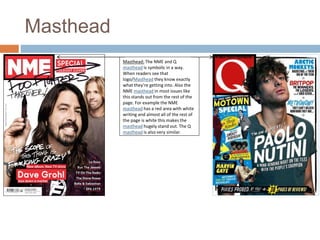
Masthead: The NME and Q 
masthead is symbolic in a way. 
When readers see that 
logo/Masthead they know exactly 
what they’re getting into. Also the 
NME masthead in most issues like 
this stands out from the rest of the 
page. For example the NME 
masthead has a red area with white 
writing and almost all of the rest of 
the page is white this makes the 
masthead hugely stand out. The Q 
masthead is also very similar.
Main Coverline 
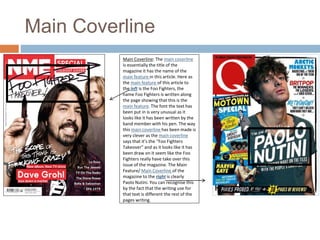
Main Coverline: The main coverline 
is essentially the title of the 
magazine it has the name of the 
main feature in this article. Here as 
the main feature of this article to 
the left is the Foo Fighters, the 
name Foo Fighters is written along 
the page showing that this is the 
main feature. The font the text has 
been put in is very unusual as it 
looks like it has been written by the 
band member with his pen. The way 
this main coverline has been made is 
very clever as the main coverline 
says that it’s the “Foo Fighters 
Takeover” and as it looks like it has 
been draw on it seem like the Foo 
Fighters really have take over this 
issue of the magazine. The Main 
Feature/ Main Coverline of the 
magazine to the right is clearly 
Paolo Nutini. You can recognise this 
by the fact that the writing use for 
that text is different the rest of the 
pages writing.
Coverlines 
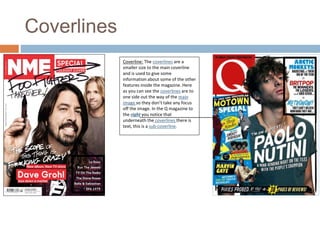
Coverline: The coverlines are a 
smaller size to the main coverline 
and is used to give some 
information about some of the other 
features inside the magazine. Here 
as you can see the coverlines are to 
one side out the way of the main 
image so they don’t take any focus 
off the image. In the Q magazine to 
the right you notice that 
underneath the coverlines there is 
text, this is a sub-coverline.
Image 
Image: The main image here is an 
image of band members [The Foo 
Fights] this is the big draw for the 
target audience of the magazine. 
When people see the front cover of 
the magazine and see an image of 
the Foo Fighters in the middle and 
supposing they are a fan it will grab 
their attention which is the whole 
point of having the main image to 
get the attention of the right people 
for the magazine. The main image is 
usually an image of the main 
feature; here for example it is The 
Foo Fighters so readers know the 
main feature of the magazine is 
going to be about them. The Q 
magazine does practically the same 
thing it shows a main image of Paolo 
Nutini also drawing in his target 
audience and also, like the NME 
magazine, shows you what the main 
feature will be about.
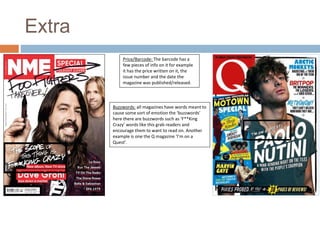
Extra 
Price/Barcode: The barcode has a 
few pieces of info on it for example 
it has the price written on it, the 
issue number and the date the 
magazine was published/released. 
Buzzwords: all magazines have words meant to 
cause some sort of emotion the ‘buzzwords’ 
here there are buzzwords such as ‘F**King 
Crazy’ words like this grab readers and 
encourage them to want to read on. Another 
example is one the Q magazine ‘I’m on a 
Quest’.

Analysis of a Professional Front Cover

  • 1.
    THIS PRESENTATION IS FOR THE ANALYSIS OF A PROFESSIONAL MUSIC MAGAZINE FRONT COVER
  • 2.
    Masthead Masthead: TheNME and Q masthead is symbolic in a way. When readers see that logo/Masthead they know exactly what they’re getting into. Also the NME masthead in most issues like this stands out from the rest of the page. For example the NME masthead has a red area with white writing and almost all of the rest of the page is white this makes the masthead hugely stand out. The Q masthead is also very similar.
  • 3.
    Main Coverline MainCoverline: The main coverline is essentially the title of the magazine it has the name of the main feature in this article. Here as the main feature of this article to the left is the Foo Fighters, the name Foo Fighters is written along the page showing that this is the main feature. The font the text has been put in is very unusual as it looks like it has been written by the band member with his pen. The way this main coverline has been made is very clever as the main coverline says that it’s the “Foo Fighters Takeover” and as it looks like it has been draw on it seem like the Foo Fighters really have take over this issue of the magazine. The Main Feature/ Main Coverline of the magazine to the right is clearly Paolo Nutini. You can recognise this by the fact that the writing use for that text is different the rest of the pages writing.
  • 4.
    Coverlines Coverline: Thecoverlines are a smaller size to the main coverline and is used to give some information about some of the other features inside the magazine. Here as you can see the coverlines are to one side out the way of the main image so they don’t take any focus off the image. In the Q magazine to the right you notice that underneath the coverlines there is text, this is a sub-coverline.
  • 5.
    Image Image: Themain image here is an image of band members [The Foo Fights] this is the big draw for the target audience of the magazine. When people see the front cover of the magazine and see an image of the Foo Fighters in the middle and supposing they are a fan it will grab their attention which is the whole point of having the main image to get the attention of the right people for the magazine. The main image is usually an image of the main feature; here for example it is The Foo Fighters so readers know the main feature of the magazine is going to be about them. The Q magazine does practically the same thing it shows a main image of Paolo Nutini also drawing in his target audience and also, like the NME magazine, shows you what the main feature will be about.
  • 6.
    Extra Price/Barcode: Thebarcode has a few pieces of info on it for example it has the price written on it, the issue number and the date the magazine was published/released. Buzzwords: all magazines have words meant to cause some sort of emotion the ‘buzzwords’ here there are buzzwords such as ‘F**King Crazy’ words like this grab readers and encourage them to want to read on. Another example is one the Q magazine ‘I’m on a Quest’.