ANALOG MODELS OF BLOOD
FLOW
Gilu Francis
Mechanical Models (Windkessel)
• Suggested by Otto Frank (1899)
• The aorta and large blood vessels are represented
by a linear compliant air-cell
• Peripheral vessels are replaced by a rigid tube
with a linear resistance
• V= C. P
• Qout =P/R
• where V, P, and C = volume, pressure, and compliance of the
air-cell and are linearly related
• Qout = outflow of the air-cell
• R = linear resistance of the rigid tube
• Pvenous = 0
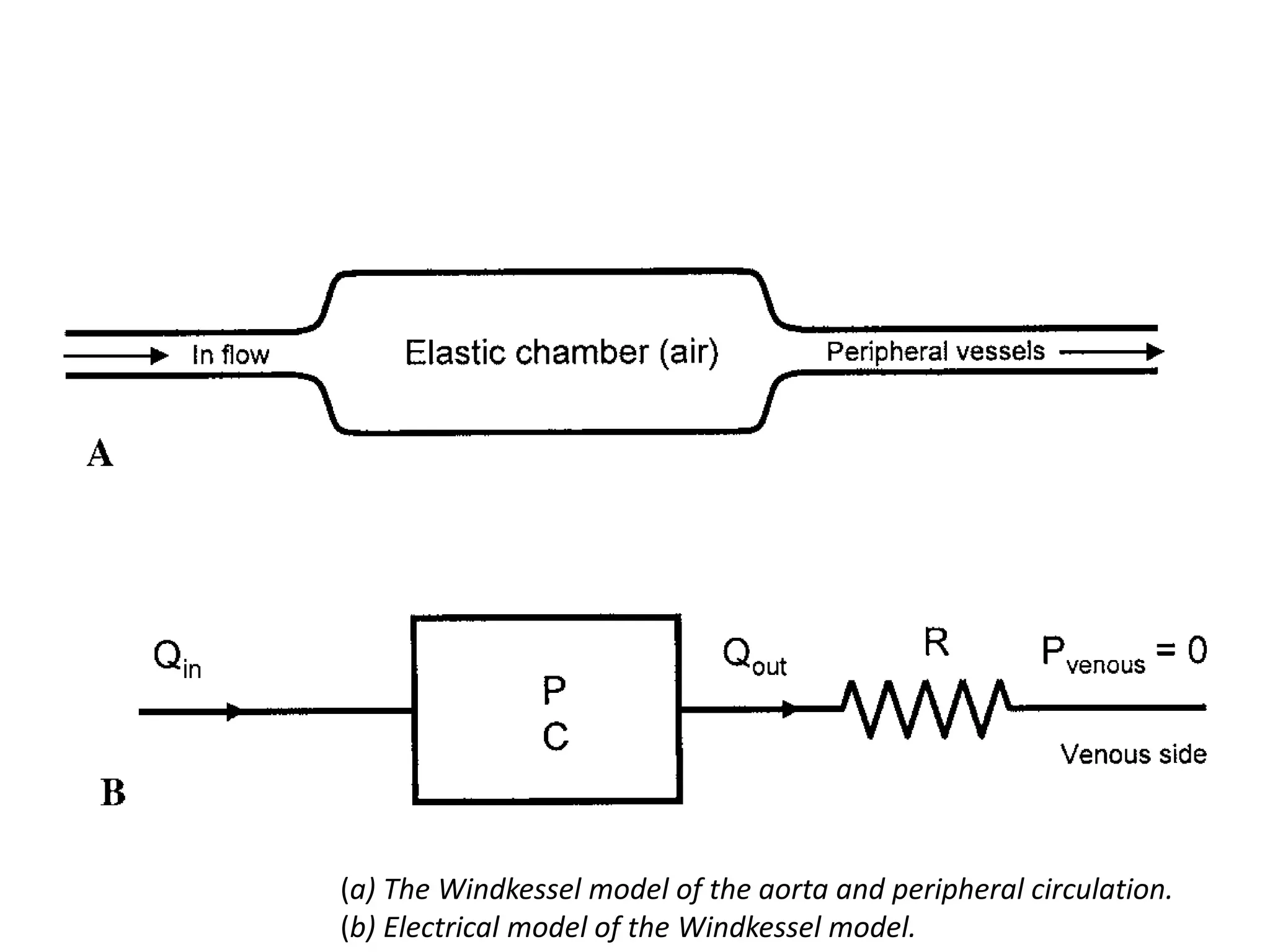
(a) The Windkessel model of the aorta and peripheral circulation.
(b) Electrical model of the Windkessel model.
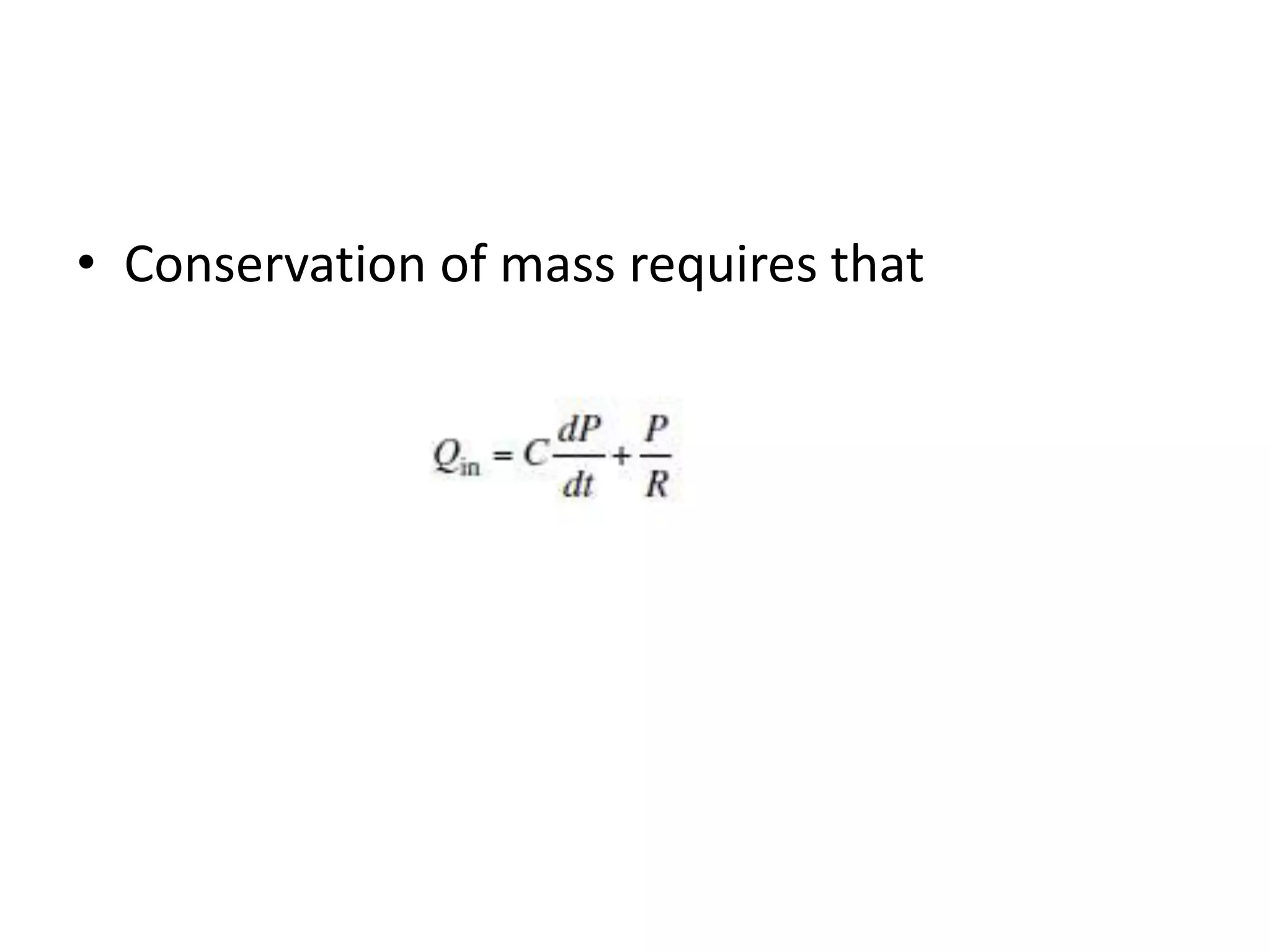
• Conservation of mass requires that
Electrical Models
• In order to investigate linear approximations of
complex blood flow phenomena, electrical analogs,
which result in analogous linear differential equations,
were developed (Dinnar, 1981).
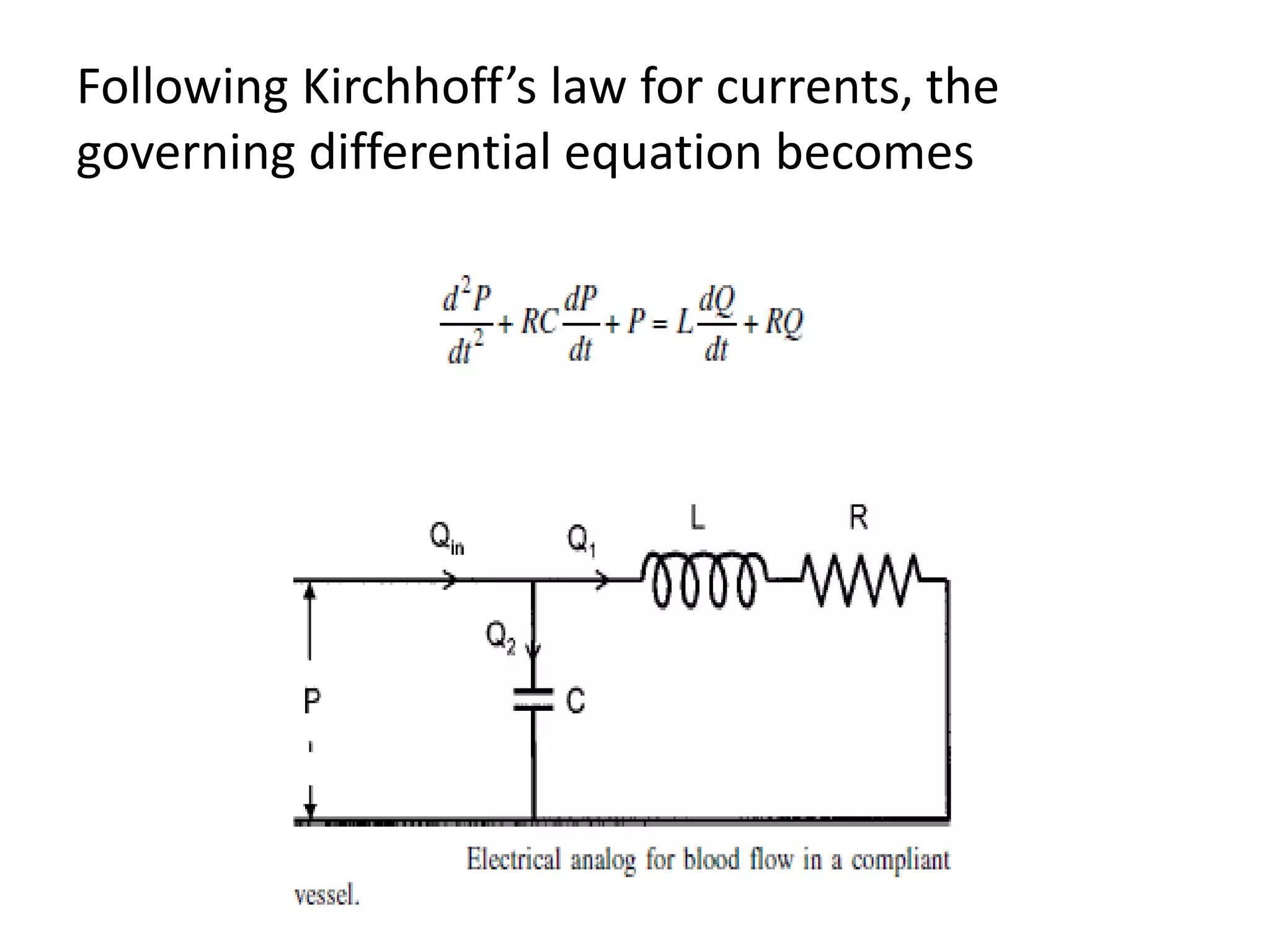
• In these models the vessel resistance to blood flow is
represented by a resistor R, the tube compliance by a
capacitor C, and blood inertia by an inductance L.
Assuming that blood flow and pressure are analogous
to the electrical current and voltage, respectively,
blood flow through a compliant vessel (e.g., artery or
vein) may be represented by an electrical scheme.
Following Kirchhoff’s law for currents, the
governing differential equation becomes
Analog models of blood flow

Analog models of blood flow

  • 1.
    ANALOG MODELS OFBLOOD FLOW Gilu Francis
  • 2.
    Mechanical Models (Windkessel) •Suggested by Otto Frank (1899) • The aorta and large blood vessels are represented by a linear compliant air-cell • Peripheral vessels are replaced by a rigid tube with a linear resistance • V= C. P • Qout =P/R • where V, P, and C = volume, pressure, and compliance of the air-cell and are linearly related • Qout = outflow of the air-cell • R = linear resistance of the rigid tube • Pvenous = 0
  • 3.
    (a) The Windkesselmodel of the aorta and peripheral circulation. (b) Electrical model of the Windkessel model.
  • 4.
    • Conservation ofmass requires that
  • 5.
    Electrical Models • Inorder to investigate linear approximations of complex blood flow phenomena, electrical analogs, which result in analogous linear differential equations, were developed (Dinnar, 1981). • In these models the vessel resistance to blood flow is represented by a resistor R, the tube compliance by a capacitor C, and blood inertia by an inductance L. Assuming that blood flow and pressure are analogous to the electrical current and voltage, respectively, blood flow through a compliant vessel (e.g., artery or vein) may be represented by an electrical scheme.
  • 6.
    Following Kirchhoff’s lawfor currents, the governing differential equation becomes