FAST
FOOD!
Namashevi public school
Presenter:Ani
Liparteliani
Namashevi.mess.gov.ge
WHAT IS FAST FOOD?
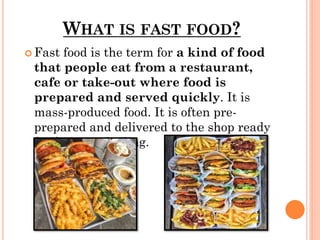
 Fast food is the term for a kind of food
that people eat from a restaurant,
cafe or take-out where food is
prepared and served quickly. It is
mass-produced food. It is often pre-
prepared and delivered to the shop ready
for frying or boiling.
WHO INVENTED FAST FOOD?
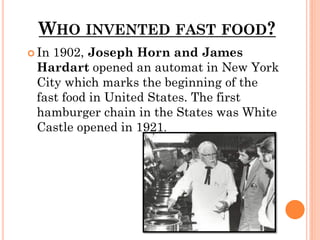
 In 1902, Joseph Horn and James
Hardart opened an automat in New York
City which marks the beginning of the
fast food in United States. The first
hamburger chain in the States was White
Castle opened in 1921.
WHAT ARE THE TYPES OF
FAST FOOD?
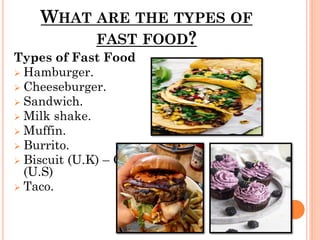
Types of Fast Food
 Hamburger.
 Cheeseburger.
 Sandwich.
 Milk shake.
 Muffin.
 Burrito.
 Biscuit (U.K) – Cookie
(U.S)
 Taco.
WHAT IS THE FAST FOOD
INDUSTRY?
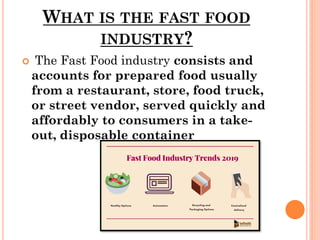
 The Fast Food industry consists and
accounts for prepared food usually
from a restaurant, store, food truck,
or street vendor, served quickly and
affordably to consumers in a take-
out, disposable container
WHY IS IT CALLED FAST FOOD?
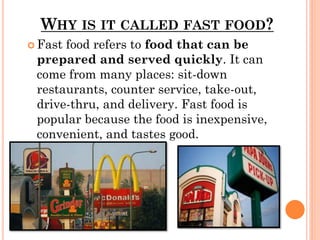
 Fast food refers to food that can be
prepared and served quickly. It can
come from many places: sit-down
restaurants, counter service, take-out,
drive-thru, and delivery. Fast food is
popular because the food is inexpensive,
convenient, and tastes good.
WHY DO PEOPLE EAT FAST
FOOD?
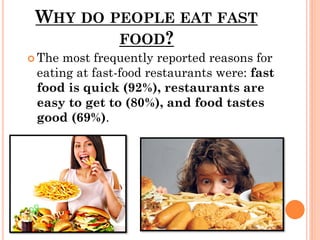
 The most frequently reported reasons for
eating at fast-food restaurants were: fast
food is quick (92%), restaurants are
easy to get to (80%), and food tastes
good (69%).
DISADVANTAGES OF FAST
FOOD?
Fast Food Pros.
 Some fast foods can
actually be healthy
 Fast food is pretty
convenient
 You don't have to do
the dishes.
 You don't have cook
Fast Food Cros.
 Eating fast food can
lower your fitness
level
 Plenty of saturated
fats
 May not saturate too
long
WHO BENEFITS FROM FAST
FOOD?
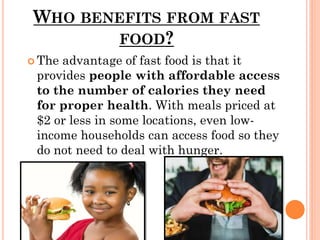
 The advantage of fast food is that it
provides people with affordable access
to the number of calories they need
for proper health. With meals priced at
$2 or less in some locations, even low-
income households can access food so they
do not need to deal with hunger.
THANKS FOR YOUR
ATTENTION!

ana.fast food.pdf.pdf

  • 1.
  • 2.
    WHAT IS FASTFOOD?  Fast food is the term for a kind of food that people eat from a restaurant, cafe or take-out where food is prepared and served quickly. It is mass-produced food. It is often pre- prepared and delivered to the shop ready for frying or boiling.
  • 3.
    WHO INVENTED FASTFOOD?  In 1902, Joseph Horn and James Hardart opened an automat in New York City which marks the beginning of the fast food in United States. The first hamburger chain in the States was White Castle opened in 1921.
  • 4.
    WHAT ARE THETYPES OF FAST FOOD? Types of Fast Food  Hamburger.  Cheeseburger.  Sandwich.  Milk shake.  Muffin.  Burrito.  Biscuit (U.K) – Cookie (U.S)  Taco.
  • 5.
    WHAT IS THEFAST FOOD INDUSTRY?  The Fast Food industry consists and accounts for prepared food usually from a restaurant, store, food truck, or street vendor, served quickly and affordably to consumers in a take- out, disposable container
  • 6.
    WHY IS ITCALLED FAST FOOD?  Fast food refers to food that can be prepared and served quickly. It can come from many places: sit-down restaurants, counter service, take-out, drive-thru, and delivery. Fast food is popular because the food is inexpensive, convenient, and tastes good.
  • 7.
    WHY DO PEOPLEEAT FAST FOOD?  The most frequently reported reasons for eating at fast-food restaurants were: fast food is quick (92%), restaurants are easy to get to (80%), and food tastes good (69%).
  • 8.
    DISADVANTAGES OF FAST FOOD? FastFood Pros.  Some fast foods can actually be healthy  Fast food is pretty convenient  You don't have to do the dishes.  You don't have cook Fast Food Cros.  Eating fast food can lower your fitness level  Plenty of saturated fats  May not saturate too long
  • 9.
    WHO BENEFITS FROMFAST FOOD?  The advantage of fast food is that it provides people with affordable access to the number of calories they need for proper health. With meals priced at $2 or less in some locations, even low- income households can access food so they do not need to deal with hunger.
  • 10.