Company 
LOGO 
Anaemia and its Prevention/ 
WIFS in J&K 
Dr Meenakshi Verma 
Associate Programme Manager, 
STATE HEALTH SOCIETY, 
NRHM, J&K
Contents 
2 UNDERSTANDING ANAEMIA 
13 IRON DEFICIENCY ANAEMIA 
2 ANAEMIA IN ADOLESCENTS 
3 ROLE OF TEACHERS 
4 MONITORING
ANAEMIA FACTS….. 
Anaemia: 
Is a blood disorder….critical public health 
problem in India. 
Means reduced levels of haemoglobin in 
the blood. 
A manifestation of under-nutrition and 
poor intake of iron.
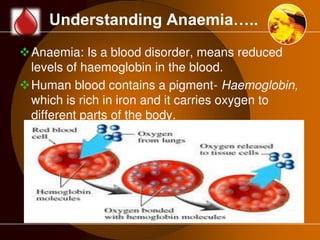
Understanding Anaemia….. 
Anaemia: Is a blood disorder, means reduced 
levels of haemoglobin in the blood. 
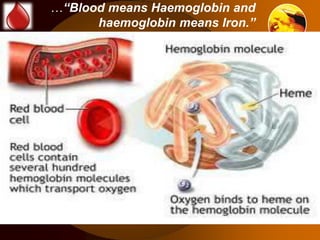
Human blood contains a pigment- Haemoglobin, 
which is rich in iron and it carries oxygen to 
different parts of the body.
…“Blood means Haemoglobin and 
haemoglobin means Iron.”
IMPORTANCE OF IRON….. 
Iron is a vital part in the production and 
performance of haemoglobin and gives 
red corpuscles their colour. If iron is not 
there in blood in sufficient amount, 
insufficient supply of oxygen will occur and 
will produce sensations of fatigue, 
headaches and shortness of breath.
ANAEMIA….. 
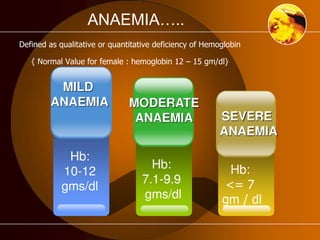
Defined as qualitative or quantitative deficiency of Hemoglobin 
{ Normal Value for female : hemoglobin 12 – 15 gm/dl} 
MILD 
ANAEMIA 
Hb: 
10-12 
gms/dl 
SEVERE 
ANAEMIA 
Hb: 
<= 7 
gm / dl 
MODERATE 
ANAEMIA 
Hb: 
7.1-9.9 
gms/dl
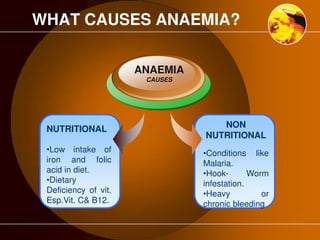
WHAT CAUSES ANAEMIA? 
NON 
NUTRITIONAL 
•Conditions like 
Malaria. 
•Hook- Worm 
infestation. 
•Heavy or 
chronic bleeding 
NUTRITIONAL 
•Low intake of 
iron and folic 
acid in diet. 
•Dietary 
Deficiency of vit. 
Esp.Vit. C& B12. 
ANAEMIA 
CAUSES
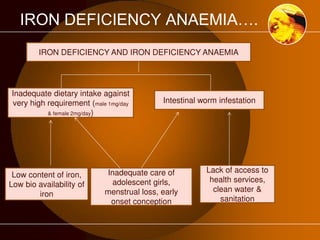
IRON DEFICIENCY ANAEMIA…. 
IRON DEFICIENCY AND IRON DEFICIENCY ANAEMIA 
Inadequate dietary intake against 
very high requirement (male 1mg/day 
& female 2mg/day) 
Intestinal worm infestation 
Low content of iron, 
Low bio availability of 
iron 
Inadequate care of 
adolescent girls, 
menstrual loss, early 
onset conception 
Lack of access to 
health services, 
clean water & 
sanitation
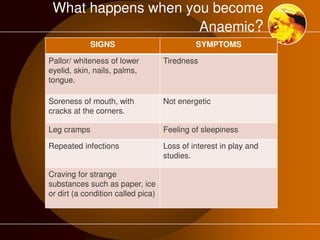
What happens when you become 
Anaemic? 
SIGNS SYMPTOMS 
Pallor/ whiteness of lower 
eyelid, skin, nails, palms, 
tongue. 
Tiredness 
Soreness of mouth, with 
cracks at the corners. 
Not energetic 
Leg cramps Feeling of sleepiness 
Repeated infections Loss of interest in play and 
studies. 
Craving for strange 
substances such as paper, ice 
or dirt (a condition called pica)
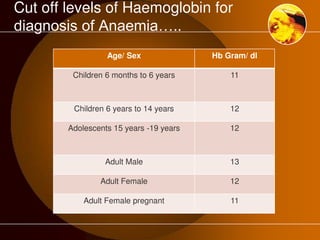
Cut off levels of Haemoglobin for 
diagnosis of Anaemia….. 
Age/ Sex Hb Gram/ dl 
Children 6 months to 6 years 11 
Children 6 years to 14 years 12 
Adolescents 15 years -19 years 12 
Adult Male 13 
Adult Female 12 
Adult Female pregnant 11
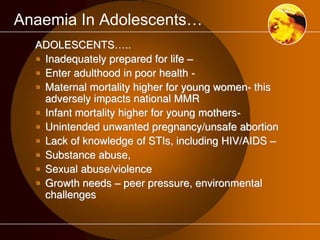
Anaemia In Adolescents… 
ADOLESCENTS….. 
 Inadequately prepared for life – 
 Enter adulthood in poor health - 
 Maternal mortality higher for young women- this 
adversely impacts national MMR 
 Infant mortality higher for young mothers- 
 Unintended unwanted pregnancy/unsafe abortion 
 Lack of knowledge of STIs, including HIV/AIDS – 
 Substance abuse, 
 Sexual abuse/violence 
 Growth needs – peer pressure, environmental 
challenges
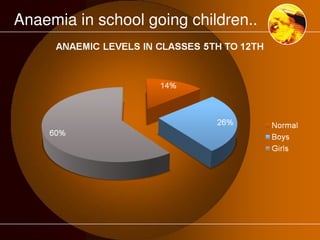
Anaemia in school going children..
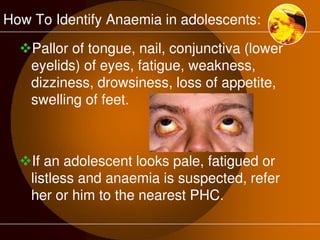
How To Identify Anaemia in adolescents: 
Pallor of tongue, nail, conjunctiva (lower 
eyelids) of eyes, fatigue, weakness, 
dizziness, drowsiness, loss of appetite, 
swelling of feet. 
If an adolescent looks pale, fatigued or 
listless and anaemia is suspected, refer 
her or him to the nearest PHC.
Prevention and control of anaemia in 
adolescents: 
Balanced diet rich in iron, vitamins and 
minerals. 
Foods rich in iron (certainly should be a part of 
the meals served in schools and Aganwadi 
centres)- 
I. green vegetables and fruits, grains (wheat, 
jowar, bajra, sprouted pulses, ground nut, 
sesame, jaggery, dried fruits). 
II. Liver, egg, fish, meat. 
III. Vitamin C rich foods (amla, apple, pear, 
oranges, lemon) help in absorption of iron.
Contd….. 
Iron supplementation: 
Anaemia in adolescents can be prevented 
by regular consumption of iron and folic 
acid tablets once a week, ideally 52 tablets 
in a year… this is the basis of the WIFS 
Programme.
Contd….. 
Additional interventions: 
Prevention of malaria: Clean 
surroundings, use of insecticide treated 
mosquito net while sleeping helps keep 
malaria mosquitoes away from people and 
greatly reduces malaria. 
Prevention and treatment of hookworm 
infestation: De- worming reduces worm 
load and blood loss and prevents anemia.
Contd….. 
Maintenance/ Promotion of Hygiene: 
Personal hygiene and sanitation, food hygiene. 
Use of clean drinking water can help protect 
from various infections and diseases. 
Washing hands with soap water before cooking, 
consuming food, after defecation and after 
discarding faecal matter of a child is essential to 
prevent entry of germs into our abdomen 
Keeping personal hygiene 
Preparing and consuming hygienically treated or 
prepared food.
Contd….. 
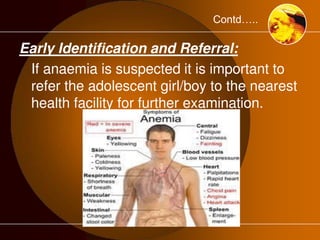
Early Identification and Referral: 
If anaemia is suspected it is important to 
refer the adolescent girl/boy to the nearest 
health facility for further examination.
Role of Teachers…. 
 Ensure that all adolescent boys and girls in their 
respective classes are given a tablet of IFA once a 
week and Albendazole twice a year for de-worming. 
 To inform adolescent boys and girls of the correct 
dietary practices for increasing iron intake. 
 To inform adolescents of the significance of 
preventing worm infestation and encourage 
adoption of correct hygiene practices, including use 
of footwear to prevent worm infestation. 
Screening of target groups for moderate/severe 
anaemia and referring these cases to an 
appropriate health facility.
MONITORING…… 
The nodal teachers would consolidate all 
the information from the class reporting 
formats on the monthly school-reporting 
format (Annexure- 3) and submit it to the 
school principal. The school principal will 
review the information in the monthly 
school reporting format, counter sign it and 
submit it to the block level officials on a 
monthly basis. A copy of this monthly 
school report will also be sent to the ANM.
Company 
LOGO iron ki ek khurak, 
tandrusti ki phuhar 
Dr Meenakshi Verma 
Associate Programme Manager, 
STATE HEALTH SOCIETY, 
NRHM, J&K

Anaemia & its prevention

  • 1.
    Company LOGO Anaemiaand its Prevention/ WIFS in J&K Dr Meenakshi Verma Associate Programme Manager, STATE HEALTH SOCIETY, NRHM, J&K
  • 2.
    Contents 2 UNDERSTANDINGANAEMIA 13 IRON DEFICIENCY ANAEMIA 2 ANAEMIA IN ADOLESCENTS 3 ROLE OF TEACHERS 4 MONITORING
  • 3.
    ANAEMIA FACTS….. Anaemia: Is a blood disorder….critical public health problem in India. Means reduced levels of haemoglobin in the blood. A manifestation of under-nutrition and poor intake of iron.
  • 4.
    Understanding Anaemia….. Anaemia:Is a blood disorder, means reduced levels of haemoglobin in the blood. Human blood contains a pigment- Haemoglobin, which is rich in iron and it carries oxygen to different parts of the body.
  • 5.
    …“Blood means Haemoglobinand haemoglobin means Iron.”
  • 6.
    IMPORTANCE OF IRON….. Iron is a vital part in the production and performance of haemoglobin and gives red corpuscles their colour. If iron is not there in blood in sufficient amount, insufficient supply of oxygen will occur and will produce sensations of fatigue, headaches and shortness of breath.
  • 7.
    ANAEMIA….. Defined asqualitative or quantitative deficiency of Hemoglobin { Normal Value for female : hemoglobin 12 – 15 gm/dl} MILD ANAEMIA Hb: 10-12 gms/dl SEVERE ANAEMIA Hb: <= 7 gm / dl MODERATE ANAEMIA Hb: 7.1-9.9 gms/dl
  • 8.
    WHAT CAUSES ANAEMIA? NON NUTRITIONAL •Conditions like Malaria. •Hook- Worm infestation. •Heavy or chronic bleeding NUTRITIONAL •Low intake of iron and folic acid in diet. •Dietary Deficiency of vit. Esp.Vit. C& B12. ANAEMIA CAUSES
  • 9.
    IRON DEFICIENCY ANAEMIA…. IRON DEFICIENCY AND IRON DEFICIENCY ANAEMIA Inadequate dietary intake against very high requirement (male 1mg/day & female 2mg/day) Intestinal worm infestation Low content of iron, Low bio availability of iron Inadequate care of adolescent girls, menstrual loss, early onset conception Lack of access to health services, clean water & sanitation
  • 10.
    What happens whenyou become Anaemic? SIGNS SYMPTOMS Pallor/ whiteness of lower eyelid, skin, nails, palms, tongue. Tiredness Soreness of mouth, with cracks at the corners. Not energetic Leg cramps Feeling of sleepiness Repeated infections Loss of interest in play and studies. Craving for strange substances such as paper, ice or dirt (a condition called pica)
  • 11.
    Cut off levelsof Haemoglobin for diagnosis of Anaemia….. Age/ Sex Hb Gram/ dl Children 6 months to 6 years 11 Children 6 years to 14 years 12 Adolescents 15 years -19 years 12 Adult Male 13 Adult Female 12 Adult Female pregnant 11
  • 12.
    Anaemia In Adolescents… ADOLESCENTS…..  Inadequately prepared for life –  Enter adulthood in poor health -  Maternal mortality higher for young women- this adversely impacts national MMR  Infant mortality higher for young mothers-  Unintended unwanted pregnancy/unsafe abortion  Lack of knowledge of STIs, including HIV/AIDS –  Substance abuse,  Sexual abuse/violence  Growth needs – peer pressure, environmental challenges
  • 13.
    Anaemia in schoolgoing children..
  • 14.
    How To IdentifyAnaemia in adolescents: Pallor of tongue, nail, conjunctiva (lower eyelids) of eyes, fatigue, weakness, dizziness, drowsiness, loss of appetite, swelling of feet. If an adolescent looks pale, fatigued or listless and anaemia is suspected, refer her or him to the nearest PHC.
  • 15.
    Prevention and controlof anaemia in adolescents: Balanced diet rich in iron, vitamins and minerals. Foods rich in iron (certainly should be a part of the meals served in schools and Aganwadi centres)- I. green vegetables and fruits, grains (wheat, jowar, bajra, sprouted pulses, ground nut, sesame, jaggery, dried fruits). II. Liver, egg, fish, meat. III. Vitamin C rich foods (amla, apple, pear, oranges, lemon) help in absorption of iron.
  • 16.
    Contd….. Iron supplementation: Anaemia in adolescents can be prevented by regular consumption of iron and folic acid tablets once a week, ideally 52 tablets in a year… this is the basis of the WIFS Programme.
  • 17.
    Contd….. Additional interventions: Prevention of malaria: Clean surroundings, use of insecticide treated mosquito net while sleeping helps keep malaria mosquitoes away from people and greatly reduces malaria. Prevention and treatment of hookworm infestation: De- worming reduces worm load and blood loss and prevents anemia.
  • 18.
    Contd….. Maintenance/ Promotionof Hygiene: Personal hygiene and sanitation, food hygiene. Use of clean drinking water can help protect from various infections and diseases. Washing hands with soap water before cooking, consuming food, after defecation and after discarding faecal matter of a child is essential to prevent entry of germs into our abdomen Keeping personal hygiene Preparing and consuming hygienically treated or prepared food.
  • 19.
    Contd….. Early Identificationand Referral: If anaemia is suspected it is important to refer the adolescent girl/boy to the nearest health facility for further examination.
  • 20.
    Role of Teachers….  Ensure that all adolescent boys and girls in their respective classes are given a tablet of IFA once a week and Albendazole twice a year for de-worming.  To inform adolescent boys and girls of the correct dietary practices for increasing iron intake.  To inform adolescents of the significance of preventing worm infestation and encourage adoption of correct hygiene practices, including use of footwear to prevent worm infestation. Screening of target groups for moderate/severe anaemia and referring these cases to an appropriate health facility.
  • 21.
    MONITORING…… The nodalteachers would consolidate all the information from the class reporting formats on the monthly school-reporting format (Annexure- 3) and submit it to the school principal. The school principal will review the information in the monthly school reporting format, counter sign it and submit it to the block level officials on a monthly basis. A copy of this monthly school report will also be sent to the ANM.
  • 22.
    Company LOGO ironki ek khurak, tandrusti ki phuhar Dr Meenakshi Verma Associate Programme Manager, STATE HEALTH SOCIETY, NRHM, J&K