WHITESHARK
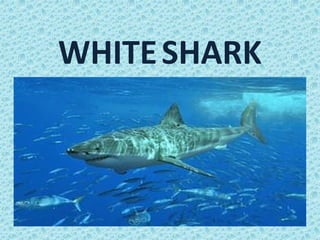
• The great white shark (Carcharodon carcharias) is 
a species of shark. They are world's largest 
living predatory fish. Mature sharks may grow up to 
6.4 m in length. There also have been a few reports of 
great white sharks measuring over 8 m, and 3,324 kg in 
weight). This shark reaches its sexual maturity around 15 
years of age. The lifespan of great white shark may be as 
long as 70 years or more. Great white sharks can 
accelerate to speeds over 56 km/h.
• Great white sharks have about 300 teeth,
arranged in many rows. The first two rows of
the teeth are used for grabbing and cutting the
animals they eat, while the other teeth in the
last rows replace the front teeth when they are
broken, worn down, or when they fall out. The
teeth have the shape of a triangle with jags on
the edges. Great white sharks eat fish and
other animals, for example seals and sea lions.
• The great white shark has no natural predators
other than the Orca. This makes them apex
predators. Some orcas have discovered they
can paralyse the shark by flipping it upside-down.
Then they hold the shark still with their mouth,
and that suffocates it (sharks get oxygen by
moving through the water).
• Of all shark species, the great white shark has the
largest number of fatal unprovoked attacks on
humans.
Thank you!
Thank you!

White shark david

  • 1.
  • 2.
    • The great whiteshark (Carcharodon carcharias) is  a species of shark. They are world's largest  living predatory fish. Mature sharks may grow up to  6.4 m in length. There also have been a few reports of  great white sharks measuring over 8 m, and 3,324 kg in  weight). This shark reaches its sexual maturity around 15  years of age. The lifespan of great white shark may be as  long as 70 years or more. Great white sharks can  accelerate to speeds over 56 km/h.
  • 3.
    • Great whitesharks have about 300 teeth, arranged in many rows. The first two rows of the teeth are used for grabbing and cutting the animals they eat, while the other teeth in the last rows replace the front teeth when they are broken, worn down, or when they fall out. The teeth have the shape of a triangle with jags on the edges. Great white sharks eat fish and other animals, for example seals and sea lions.
  • 4.
    • The greatwhite shark has no natural predators other than the Orca. This makes them apex predators. Some orcas have discovered they can paralyse the shark by flipping it upside-down. Then they hold the shark still with their mouth, and that suffocates it (sharks get oxygen by moving through the water). • Of all shark species, the great white shark has the largest number of fatal unprovoked attacks on humans.
  • 5.
  • 6.

Editor's Notes

  • #2 <number>
  • #3 El gran tiburón blanco (Carcharodon carcharias) es una especie de tiburón. Son los peces predadores más grande del mundo. tiburones maduros pueden crecer hasta 6,4 m de longitud. También ha habido algunos informes de los tiburones blancos que miden más de 8 m, y 3.324 kg de peso). Este tiburón alcanza su madurez alrededor de los 15 años de edad. La vida útil de gran tiburón blanco puede ser de 70 años o más. Los grandes tiburones blancos pueden acelerar a velocidades de más de 56 km / h. <number>
  • #4 Los grandes tiburones blancos tienen cerca de 300 dientes, dispuestos en varias filas. Las dos primeras filas de los dientes se utilizan para sujetar y cortar los animales que comen, mientras que los otros dientes en las últimas filas reemplazan a los dientes delanteros cuando se rompen, desgastan, o cuando se caen. Los dientes tienen la forma de un triángulo con púas en los bordes. Los grandes tiburones blancos se alimentan de peces y otros animales, por ejemplo focas y leones marinos. <number>
  • #5 El gran tiburón blanco no tiene depredadores naturales distintos de la Orca. Esto los convierte en depredadores. Algunas orcas han descubierto que pueden paralizar el tiburón poniéndolo al revés. A continuación, sujetan al tiburón sigue con su boca, y este se ahoga (los tiburones respiran moviéndose por del agua). De todas las especies de tiburones, el tiburón blanco tiene el mayor número de ataques no provocados mortales en los seres humanos. <number>