
THE ROMANTIC AGE 
1760 – 1837 
William Blake 
William Wordsworth 
Samuel Taylor Coleridge
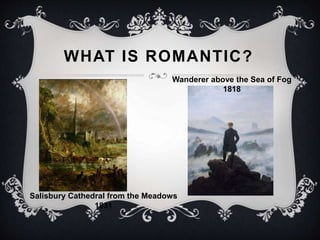
WHAT IS ROMANTIC? 
Wanderer above the Sea of Fog 
1818 
Salisbury Cathedral from the Meadows 
1831
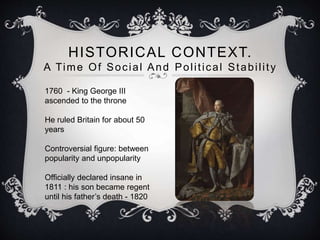
HISTORICAL CONTEXT. 
A Time Of Social And Pol i t ical Stabi l i t y 
1760 - King George III 
ascended to the throne 
He ruled Britain for about 50 
years 
Controversial figure: between 
popularity and unpopularity 
Officially declared insane in 
1811 : his son became regent 
until his father’s death - 1820
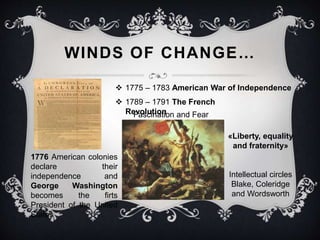
WINDS OF CHANGE… 
 1775 – 1783 American War of Independence 
 1789 – 1791 The French 
1776 American colonies 
declare their 
independence and 
George Washington 
becomes the firts 
President of the United 
States 
Revolution 
«Liberty, equality 
and fraternity» 
Intellectual circles 
Blake, Coleridge 
and Wordsworth 
Fascination and Fear
1760 - 1850 
INDUSTRIAL REVOLUTION 
 Coal and steam as sources of 
power 
 Steam-powered machines 
 Mass production  Enclosures Acts: 
common lands were closed and 
assigned to landowners 
 People moving from the 
country to the city 
 Exploitation of workers >> 
Luddite Riots 1811-12 
 Critical living conditions in 
cities 
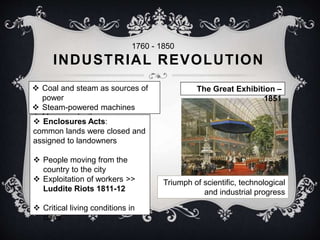
The Great Exhibition – 
1851 
Triumph of scientific, technological 
and industrial progress
BRITISH POLITICS 
Domestic Affairs 
• 1783 – 1801 + 1804 – 
1806 
• William Pitt the Younger 
Prime Minister 
• Reformism and 
Conservativism (esp. 
after the French 
Revolution) 
• Repression of protests 
• 1801 Act of Union 
Financial ability 
moral integrity 
Loyalist 
Propaganda 
Nationalism 
against France 
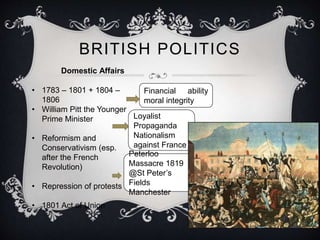
Peterloo 
Massacre 1819 
@St Peter’s 
Fields 
Manchester
BRITISH POLITICS 
Foreign Affairs 
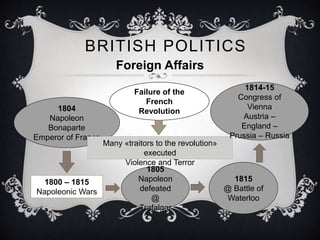
Failure of the 
French 
1804 Revolution 
Napoleon 
Bonaparte 
Emperor of France 
1800 – 1815 
Napoleonic Wars 
Many «traitors to the revolution» 
executed 
Violence and Terror 
1805 
Napoleon 
defeated 
@ 
Trafalgar 
1814-15 
Congress of 
Vienna 
Austria – 
England – 
Prussia – Russia 
1815 
@ Battle of 
Waterloo
AFTER GEORGE I I I 
Some important facts and 
achievements 
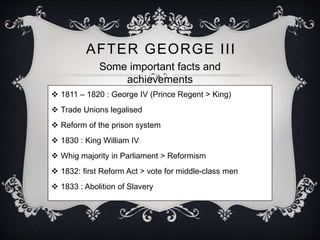
 1811 – 1820 : George IV (Prince Regent > King) 
 Trade Unions legalised 
 Reform of the prison system 
 1830 : King William IV 
 Whig majority in Parliament > Reformism 
 1832: first Reform Act > vote for middle-class men 
 1833 : Abolition of Slavery
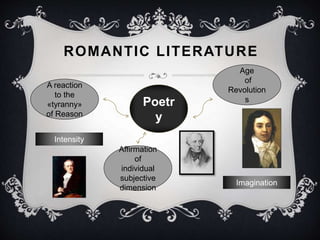
ROMANTIC LITERATURE 
Poetr 
y 
A reaction 
to the 
«tyranny» 
of Reason 
Age 
of 
Revolution 
s 
Affirmation 
of 
individual 
subjective 
dimension 
Intensity 
Imagination
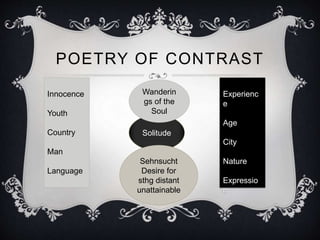
POETRY OF CONTRAST 
Innocence 
Youth 
Country 
Man 
Language 
Experienc 
e 
Age 
City 
Nature 
Expressio 
n 
Wanderin 
gs of the 
Soul 
Solitude 
Sehnsucht 
Desire for 
sthg distant 
unattainable
An introduction to "The romantic age"

An introduction to "The romantic age"

  • 1.
    THE ROMANTIC AGE 1760 – 1837 William Blake William Wordsworth Samuel Taylor Coleridge
  • 2.
    WHAT IS ROMANTIC? Wanderer above the Sea of Fog 1818 Salisbury Cathedral from the Meadows 1831
  • 4.
    HISTORICAL CONTEXT. ATime Of Social And Pol i t ical Stabi l i t y 1760 - King George III ascended to the throne He ruled Britain for about 50 years Controversial figure: between popularity and unpopularity Officially declared insane in 1811 : his son became regent until his father’s death - 1820
  • 5.
    WINDS OF CHANGE…  1775 – 1783 American War of Independence  1789 – 1791 The French 1776 American colonies declare their independence and George Washington becomes the firts President of the United States Revolution «Liberty, equality and fraternity» Intellectual circles Blake, Coleridge and Wordsworth Fascination and Fear
  • 6.
    1760 - 1850 INDUSTRIAL REVOLUTION  Coal and steam as sources of power  Steam-powered machines  Mass production  Enclosures Acts: common lands were closed and assigned to landowners  People moving from the country to the city  Exploitation of workers >> Luddite Riots 1811-12  Critical living conditions in cities The Great Exhibition – 1851 Triumph of scientific, technological and industrial progress
  • 7.
    BRITISH POLITICS DomesticAffairs • 1783 – 1801 + 1804 – 1806 • William Pitt the Younger Prime Minister • Reformism and Conservativism (esp. after the French Revolution) • Repression of protests • 1801 Act of Union Financial ability moral integrity Loyalist Propaganda Nationalism against France Peterloo Massacre 1819 @St Peter’s Fields Manchester
  • 8.
    BRITISH POLITICS ForeignAffairs Failure of the French 1804 Revolution Napoleon Bonaparte Emperor of France 1800 – 1815 Napoleonic Wars Many «traitors to the revolution» executed Violence and Terror 1805 Napoleon defeated @ Trafalgar 1814-15 Congress of Vienna Austria – England – Prussia – Russia 1815 @ Battle of Waterloo
  • 9.
    AFTER GEORGE II I Some important facts and achievements  1811 – 1820 : George IV (Prince Regent > King)  Trade Unions legalised  Reform of the prison system  1830 : King William IV  Whig majority in Parliament > Reformism  1832: first Reform Act > vote for middle-class men  1833 : Abolition of Slavery
  • 10.
    ROMANTIC LITERATURE Poetr y A reaction to the «tyranny» of Reason Age of Revolution s Affirmation of individual subjective dimension Intensity Imagination
  • 11.
    POETRY OF CONTRAST Innocence Youth Country Man Language Experienc e Age City Nature Expressio n Wanderin gs of the Soul Solitude Sehnsucht Desire for sthg distant unattainable