Information and Communication Managementfor Rural and Agricultural Developmentin Near East and North Africa Region(AARINENA.RAIS):Outputs and Lessons LearnedMagdi LatifFAO Knowledge and Capacity For Development DivisionKnowledge Exchange, Research and Extension Office
AARINENA RAISNERAKIN Initiative: Immediate Objective (2007)To strengthen the capacity of the Ministries of Agriculture and agricultural and rural research institutions for effective information management and knowledge exchange in support of rural and agricultural development in the regionContributing and Supporting Partners: AARINENA, GFAR, FAO, CGIAR“The regional initiative will add value in a coherent way to national system/networks, not substitute them.”“Build infrastructure tonetwork all ARC agricultural institutions through a regional portal as well as through national portals.”
NERAKIN Initiative: Development ObjectiveTo enhance rural and agricultural development in Near East and North Africa through strengthening information and knowledge access and exchange, providing mechanisms to:strengthen, coordinate, and add value to national and regional agricultural initiatives
improve performance of farmers and agrarian businesses. NERAKIN Phase I Outputs: 20071- A pilot NERAKIN Regional System for content management and information exchange. 2- Identification of technical institutions committed to capacity building in IKM.3-Selected national technical staff sensitized on how to use NERAKIN Regional System.4- Pilot national knowledge and information management systems/networks (i.e. Egypt, Jordan, Oman, etc.).
NERAKIN Phase II Outputs: 2008/9Development of the regional collaborative network based on partnerships for enhanced knowledge-sharing and learning at nationallevel
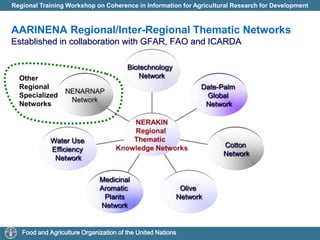
Development of the regional thematic knowledge networks (Starting with Biotechnology Network).
Official launch of NERAKIN regional portal
Training of selected national technical staff to contribute to NERAKIN system
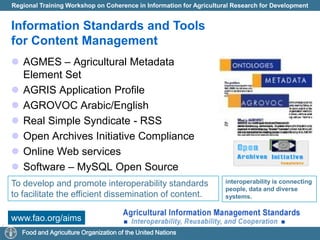
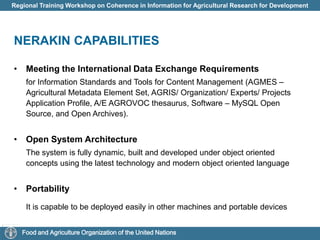
Securing active commitment from stakeholders to develop national IKM systems/networksInformation Standards and Toolsfor Content ManagementAGMES – Agricultural Metadata Element Set
AGRIS Application Profile
AGROVOC Arabic/English
Real Simple Syndicate - RSS
Open Archives Initiative Compliance
Online Web services
Software – MySQL Open SourceTo develop and promote interoperability standards to facilitate the efficient dissemination of content.interoperability is connecting people, data and diverse systems.www.fao.org/aims
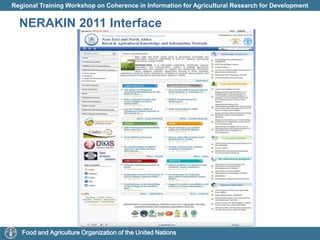
NERAKIN 2011 Interface
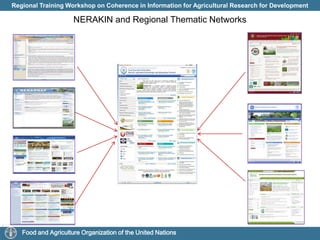
OutputsRegional Thematic Networks (from 2008 – present)Regional Agricultural Biotechnology Network Near East and North AfricaNear East Plant Protection NetworkRegional Aquaculture Information systemPreventive Desert Locust Management Network (EMPRES) and Commission for Controlling the Desert Locust in the Central Region (CRC) Regional Network];Near East and North Africa Regional Network for Agricultural Policies.
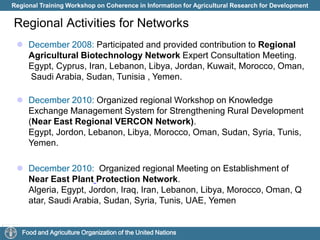
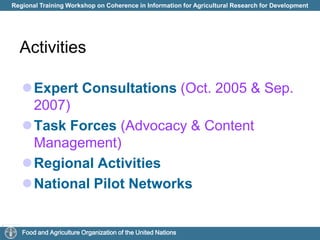
Regional Activities for NetworksDecember 2008: Participated and provided contribution to Regional Agricultural Biotechnology Network Expert Consultation Meeting. Egypt, Cyprus, Iran, Lebanon, Libya, Jordan, Kuwait, Morocco, Oman, Saudi Arabia, Sudan, Tunisia , Yemen.
December 2010: Organized regional Workshop on Knowledge Exchange Management System for Strengthening Rural Development (Near East Regional VERCON Network). Egypt, Jordon, Lebanon, Libya, Morocco, Oman, Sudan, Syria, Tunis, Yemen.
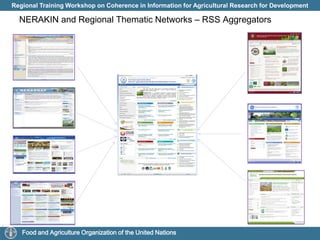
December 2010:  Organized regional Meeting on Establishment of Near East PlantProtection Network. Algeria, Egypt, Jordon, Iraq, Iran, Lebanon, Libya, Morocco, Oman, Qatar, Saudi Arabia, Sudan, Syria, Tunis, UAE, YemenNERAKIN and Regional Thematic Networks
Regional involvement in national activitiesCountries in the Region can now take advantage of a full range of conceptual models and networks that give stakeholders access to all major research on agricultural science and technology. These fall into three broad categories.projects designed to build capacity for developing effective information management systems based on stakeholders’ needs to manage, disseminate and share relevant information and knowledge relating to agricultural development and food security policies
initiatives developed to help organizations active in agricultural science to publish and disseminate the results of their work
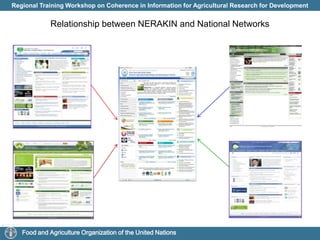
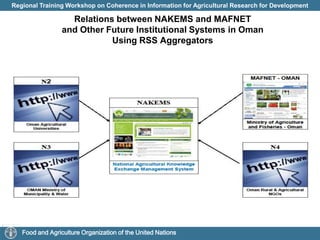
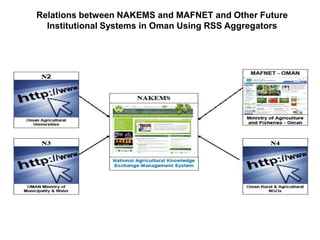
facilitating access to scientific literature in agriculture appearing in peer-reviewed learned journals, published commercially and sold at prices which are unaffordable in many countriesRegional involvement in national activitiesNational and Institutional Information and Knowledge NetworksNational networksEgypt – NARIMS Jordan – NAIS Oman – MAFNET/NAKEMSTools for institution and country levels - Agricultural Information System (AIS), WebAgris and Web-DIMSAccess to Global Online Research in Agriculture (AGORA)Rural Information and Knowledge NetworksEgypt – Virtual Extension Research Communication NetworkEgypt – Rural and Agricultural Development Communication Network
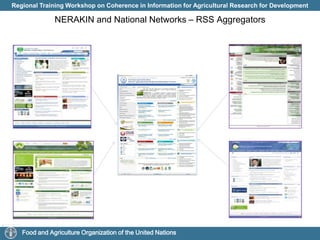
Relationship between NERAKIN and National Networks
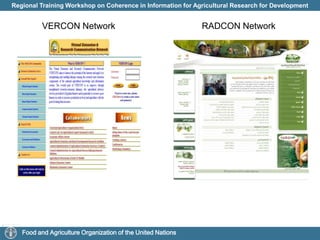
VERCON NetworkRADCON Network
Regional Activities for NINPsMay 2007 in Egypt: Regional training workshop on “Information Systems for Agricultural Research for Development” in collaboration with AARINENA, GFAR, FAO, ICARDA, NARIC. Participation: Egypt, Iran, Jordan, Lebanon, Oman, Qatar, Morocco, Sudan and Yemen.
January 2008 in Oman: Regional Workshop for Strengthening National ICM Focal Units in Near East Region for strengthening and developing the agricultural information systems and Identifying stakeholders and beneficiaries of IS, and their needs. Participation: Egypt, Jordan, Morocco , Lebanon ,Libya ,Oman, Sudan, Syria, Tunisia, Yemen
October 2008 in Syria:  Official launch of Near East and North Africa Rural and Agricultural Knowledge and Information (Nerakin-RAIS)
May 2009 in Egypt: Regional Training Workshop "Building National Capacities in Information and Knowledge In Support of Agricultural Research for Development in Near East Region“ - AARINENA, FAO, GFAR, and ICARDA. Participation: Cyprus, Egypt, Iran, Iraq, Jordan, Lebanon, Morocco, Oman, Sudan, Syria, Tunisia, and YemenLessons LearnedENABLING ENVIRONMENT: The need to create an enabling environment that recognizes the value of connectivity;
PEOPLE, NOT ONLY TECHNOLOGY:Networks depend on and work with people and not on technology alone;
Institutionalization of networks;
Acquiring knowledge-sharing culture that is based on collaborative methods and exchange mechanisms;
Network Facilitation: The significance need to network facilitation with face-to-face meetings; and
Sustainability: The need to ensure sustainability and self-financing. Thank You For Your Attention
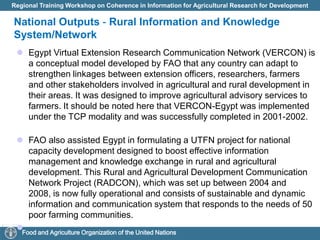
National Outputs - Rural Information and Knowledge System/NetworkEgypt Virtual Extension Research Communication Network (VERCON) is a conceptual model developed by FAO that any country can adapt to strengthen linkages between extension officers, researchers, farmers and other stakeholders involved in agricultural and rural development in their areas. It was designed to improve agricultural advisory services to farmers. It should be noted here that VERCON-Egypt was implemented under the TCP modality and was successfully completed in 2001-2002.
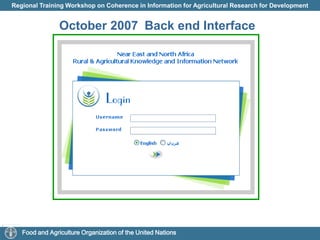
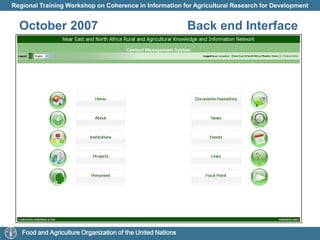
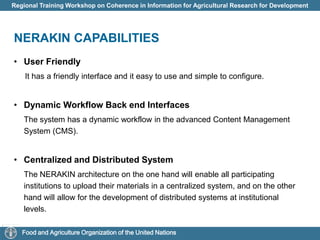
FAO also assisted Egypt in formulating a UTFN project for national capacity development designed to boost effective information management and knowledge exchange in rural and agricultural development. This Rural and Agricultural Development Communication Network Project (RADCON), which was set up between 2004 and 2008, is now fully operational and consists of sustainable and dynamic information and communication system that responds to the needs of 50 poor farming communities. October 2007Back end Interface
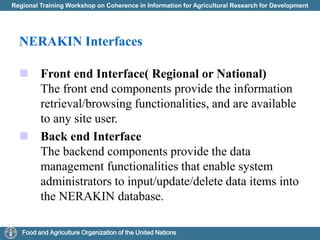
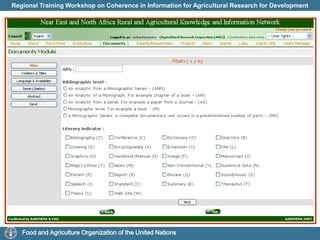
October 2007Back end Interface
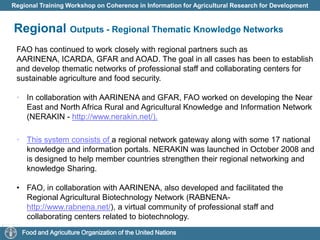
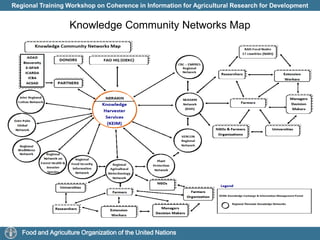
Regional Outputs- Regional Thematic Knowledge NetworksFAO has continued to work closely with regional partners such as AARINENA, ICARDA, GFAR and AOAD. The goal in all cases has been to establish and develop thematic networks of professional staff and collaborating centers for sustainable agriculture and food security. In collaboration with AARINENA and GFAR, FAO worked on developing the Near East and North Africa Rural and Agricultural Knowledge and Information Network (NERAKIN - http://www.nerakin.net/).
This system consists of a regional network gateway along with some 17 national knowledge and information portals. NERAKIN was launched in October 2008 and is designed to help member countries strengthen their regional networking and knowledge Sharing.

Amman icm workshop october 2011

  • 1.
    Information and CommunicationManagementfor Rural and Agricultural Developmentin Near East and North Africa Region(AARINENA.RAIS):Outputs and Lessons LearnedMagdi LatifFAO Knowledge and Capacity For Development DivisionKnowledge Exchange, Research and Extension Office
  • 2.
    AARINENA RAISNERAKIN Initiative:Immediate Objective (2007)To strengthen the capacity of the Ministries of Agriculture and agricultural and rural research institutions for effective information management and knowledge exchange in support of rural and agricultural development in the regionContributing and Supporting Partners: AARINENA, GFAR, FAO, CGIAR“The regional initiative will add value in a coherent way to national system/networks, not substitute them.”“Build infrastructure tonetwork all ARC agricultural institutions through a regional portal as well as through national portals.”
  • 3.
    NERAKIN Initiative: DevelopmentObjectiveTo enhance rural and agricultural development in Near East and North Africa through strengthening information and knowledge access and exchange, providing mechanisms to:strengthen, coordinate, and add value to national and regional agricultural initiatives
  • 4.
    improve performance offarmers and agrarian businesses. NERAKIN Phase I Outputs: 20071- A pilot NERAKIN Regional System for content management and information exchange. 2- Identification of technical institutions committed to capacity building in IKM.3-Selected national technical staff sensitized on how to use NERAKIN Regional System.4- Pilot national knowledge and information management systems/networks (i.e. Egypt, Jordan, Oman, etc.).
  • 5.
    NERAKIN Phase IIOutputs: 2008/9Development of the regional collaborative network based on partnerships for enhanced knowledge-sharing and learning at nationallevel
  • 6.
    Development of theregional thematic knowledge networks (Starting with Biotechnology Network).
  • 7.
    Official launch ofNERAKIN regional portal
  • 8.
    Training of selectednational technical staff to contribute to NERAKIN system
  • 9.
    Securing active commitmentfrom stakeholders to develop national IKM systems/networksInformation Standards and Toolsfor Content ManagementAGMES – Agricultural Metadata Element Set
  • 10.
  • 11.
  • 12.
  • 13.
  • 14.
  • 15.
    Software – MySQLOpen SourceTo develop and promote interoperability standards to facilitate the efficient dissemination of content.interoperability is connecting people, data and diverse systems.www.fao.org/aims
  • 16.
  • 17.
    OutputsRegional Thematic Networks(from 2008 – present)Regional Agricultural Biotechnology Network Near East and North AfricaNear East Plant Protection NetworkRegional Aquaculture Information systemPreventive Desert Locust Management Network (EMPRES) and Commission for Controlling the Desert Locust in the Central Region (CRC) Regional Network];Near East and North Africa Regional Network for Agricultural Policies.
  • 18.
    Regional Activities forNetworksDecember 2008: Participated and provided contribution to Regional Agricultural Biotechnology Network Expert Consultation Meeting. Egypt, Cyprus, Iran, Lebanon, Libya, Jordan, Kuwait, Morocco, Oman, Saudi Arabia, Sudan, Tunisia , Yemen.
  • 19.
    December 2010: Organizedregional Workshop on Knowledge Exchange Management System for Strengthening Rural Development (Near East Regional VERCON Network). Egypt, Jordon, Lebanon, Libya, Morocco, Oman, Sudan, Syria, Tunis, Yemen.
  • 20.
    December 2010: Organized regional Meeting on Establishment of Near East PlantProtection Network. Algeria, Egypt, Jordon, Iraq, Iran, Lebanon, Libya, Morocco, Oman, Qatar, Saudi Arabia, Sudan, Syria, Tunis, UAE, YemenNERAKIN and Regional Thematic Networks
  • 21.
    Regional involvement innational activitiesCountries in the Region can now take advantage of a full range of conceptual models and networks that give stakeholders access to all major research on agricultural science and technology. These fall into three broad categories.projects designed to build capacity for developing effective information management systems based on stakeholders’ needs to manage, disseminate and share relevant information and knowledge relating to agricultural development and food security policies
  • 22.
    initiatives developed tohelp organizations active in agricultural science to publish and disseminate the results of their work
  • 23.
    facilitating access toscientific literature in agriculture appearing in peer-reviewed learned journals, published commercially and sold at prices which are unaffordable in many countriesRegional involvement in national activitiesNational and Institutional Information and Knowledge NetworksNational networksEgypt – NARIMS Jordan – NAIS Oman – MAFNET/NAKEMSTools for institution and country levels - Agricultural Information System (AIS), WebAgris and Web-DIMSAccess to Global Online Research in Agriculture (AGORA)Rural Information and Knowledge NetworksEgypt – Virtual Extension Research Communication NetworkEgypt – Rural and Agricultural Development Communication Network
  • 24.
    Relationship between NERAKINand National Networks
  • 25.
  • 26.
    Regional Activities forNINPsMay 2007 in Egypt: Regional training workshop on “Information Systems for Agricultural Research for Development” in collaboration with AARINENA, GFAR, FAO, ICARDA, NARIC. Participation: Egypt, Iran, Jordan, Lebanon, Oman, Qatar, Morocco, Sudan and Yemen.
  • 27.
    January 2008 inOman: Regional Workshop for Strengthening National ICM Focal Units in Near East Region for strengthening and developing the agricultural information systems and Identifying stakeholders and beneficiaries of IS, and their needs. Participation: Egypt, Jordan, Morocco , Lebanon ,Libya ,Oman, Sudan, Syria, Tunisia, Yemen
  • 28.
    October 2008 inSyria: Official launch of Near East and North Africa Rural and Agricultural Knowledge and Information (Nerakin-RAIS)
  • 29.
    May 2009 inEgypt: Regional Training Workshop "Building National Capacities in Information and Knowledge In Support of Agricultural Research for Development in Near East Region“ - AARINENA, FAO, GFAR, and ICARDA. Participation: Cyprus, Egypt, Iran, Iraq, Jordan, Lebanon, Morocco, Oman, Sudan, Syria, Tunisia, and YemenLessons LearnedENABLING ENVIRONMENT: The need to create an enabling environment that recognizes the value of connectivity;
  • 30.
    PEOPLE, NOT ONLYTECHNOLOGY:Networks depend on and work with people and not on technology alone;
  • 31.
  • 32.
    Acquiring knowledge-sharing culturethat is based on collaborative methods and exchange mechanisms;
  • 33.
    Network Facilitation: Thesignificance need to network facilitation with face-to-face meetings; and
  • 34.
    Sustainability: The needto ensure sustainability and self-financing. Thank You For Your Attention
  • 35.
    National Outputs -Rural Information and Knowledge System/NetworkEgypt Virtual Extension Research Communication Network (VERCON) is a conceptual model developed by FAO that any country can adapt to strengthen linkages between extension officers, researchers, farmers and other stakeholders involved in agricultural and rural development in their areas. It was designed to improve agricultural advisory services to farmers. It should be noted here that VERCON-Egypt was implemented under the TCP modality and was successfully completed in 2001-2002.
  • 36.
    FAO also assistedEgypt in formulating a UTFN project for national capacity development designed to boost effective information management and knowledge exchange in rural and agricultural development. This Rural and Agricultural Development Communication Network Project (RADCON), which was set up between 2004 and 2008, is now fully operational and consists of sustainable and dynamic information and communication system that responds to the needs of 50 poor farming communities. October 2007Back end Interface
  • 37.
  • 38.
    Regional Outputs- RegionalThematic Knowledge NetworksFAO has continued to work closely with regional partners such as AARINENA, ICARDA, GFAR and AOAD. The goal in all cases has been to establish and develop thematic networks of professional staff and collaborating centers for sustainable agriculture and food security. In collaboration with AARINENA and GFAR, FAO worked on developing the Near East and North Africa Rural and Agricultural Knowledge and Information Network (NERAKIN - http://www.nerakin.net/).
  • 39.
    This system consistsof a regional network gateway along with some 17 national knowledge and information portals. NERAKIN was launched in October 2008 and is designed to help member countries strengthen their regional networking and knowledge Sharing.