Media Campaign Launch: The State of Homelessness in America January 5, 2011
Introductory Logistics Lines are muted to facilitate this call. Submit Questions! If you have questions during the webinar, submit them in the question box on your control panel. We will answer as many as possible at the end of the webinar. A recording of the webinar will be posted online this week.
Agenda Introduction Report: Overview and Major Findings Media: Key Messages and Suggested Strategies Questions
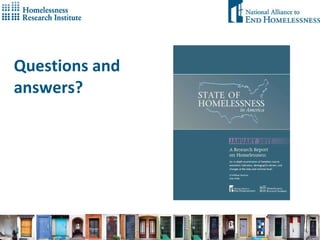
State of Homelessness in America A Research Report on Homelessness
State of Homelessness webinar Contents Homeless counts Economic indicators Demographic drivers Major findings Other findings Notes on data analysis
Homeless counts Overall homeless population Chronic population People in families Unsheltered population
Economic indicators Severe housing cost burdened households Unemployed people Income of working poor people Foreclosed properties
Demographic drivers Doubled up population People discharged from prison Young adults aged out of foster care Uninsured population
Major findings Homeless counts Overall homelessness up 3 percent Family homelessness up 4 percent Chronic homeless change was stagnant 4 out of 10 people were unsheltered
Major findings, continued Economic indicators 72 percent of poor households are severely housing cost burdened Unemployment increased by 60 percent Income of working poor people decreased by 2 percent Foreclosures increased by over 20 percent
Major findings, continued Demographic drivers Odds of experiencing homelessness All of U.S.  = 1 in 200 In poverty  = 1 in 25 Veteran  = 1 in 10 Doubled up person = 1 in 10 Discharged prisoner = 1 in 11 Aged out of foster care = 1 in 6 Doubled up increased by 12 percent
Other findings Examination of places where multiple risk factors exist for worsening homelessness
Notes on data analysis Changes are 2008 to 2009 Veterans and youth counts Data sources Data adjustments were necessary (see Appendix) Our numbers differ from HUD’s AHAR
Questions and  answers?
Opportunities Homelessness Counts Economic Indicators Unemployment Foreclosure Real income Severe housing cost burden Demographic Drivers Doubling up Aging out of foster care Release from incarceration Uninsurance
Talking Points Maximize the impact and efficacy of federal resources by targeting strategically and implementing proven strategies. Bolster ongoing local plans to end homelessness by turning the goals and strategies of the federal plan into implementable programs and policies. Prevent homelessness before it starts by building the proper interventions into our state institutions, including jails and foster care programs. As states face further budget cuts and need among people experiencing homelessness rises, funding for key federal programs will become ever more critical.
Strategies Letters to the editor Easier to get published 150 words or less Op-ed submissions Harder to get published Between 250 – 500 words Pitch emails/phone calls to reporters  Follow up
Tip: Do Your Homework! READ  the paper: get a sense of what they cover and who their readership is. Identify  the reporters that cover homelessness, poverty, and social issues – they are most likely to take your call seriously. Find  instructions for letters/editorials online (or call the paper). Follow  those instructions - make sure to STICK to those parameters – no exceptions!  Follow  up!
More Tips Be local Be specific Be brief Be relevant Be actionable
Embargoed Our report is embargoed until  Wednesday, Jan. 12.  You will receive the report on  Monday, Jan. 10.
Next Steps January 5: Sample materials sent via email January 10: Embargoed copy of the report sent via email January 12: Official, public release of the report Questions? Contact Amanda Krusemark [email_address]

Alliance Media Campaign Launch

  • 1.
    Media Campaign Launch:The State of Homelessness in America January 5, 2011
  • 2.
    Introductory Logistics Linesare muted to facilitate this call. Submit Questions! If you have questions during the webinar, submit them in the question box on your control panel. We will answer as many as possible at the end of the webinar. A recording of the webinar will be posted online this week.
  • 3.
    Agenda Introduction Report:Overview and Major Findings Media: Key Messages and Suggested Strategies Questions
  • 4.
    State of Homelessnessin America A Research Report on Homelessness
  • 5.
    State of Homelessnesswebinar Contents Homeless counts Economic indicators Demographic drivers Major findings Other findings Notes on data analysis
  • 6.
    Homeless counts Overallhomeless population Chronic population People in families Unsheltered population
  • 7.
    Economic indicators Severehousing cost burdened households Unemployed people Income of working poor people Foreclosed properties
  • 8.
    Demographic drivers Doubledup population People discharged from prison Young adults aged out of foster care Uninsured population
  • 9.
    Major findings Homelesscounts Overall homelessness up 3 percent Family homelessness up 4 percent Chronic homeless change was stagnant 4 out of 10 people were unsheltered
  • 10.
    Major findings, continuedEconomic indicators 72 percent of poor households are severely housing cost burdened Unemployment increased by 60 percent Income of working poor people decreased by 2 percent Foreclosures increased by over 20 percent
  • 11.
    Major findings, continuedDemographic drivers Odds of experiencing homelessness All of U.S. = 1 in 200 In poverty = 1 in 25 Veteran = 1 in 10 Doubled up person = 1 in 10 Discharged prisoner = 1 in 11 Aged out of foster care = 1 in 6 Doubled up increased by 12 percent
  • 12.
    Other findings Examinationof places where multiple risk factors exist for worsening homelessness
  • 13.
    Notes on dataanalysis Changes are 2008 to 2009 Veterans and youth counts Data sources Data adjustments were necessary (see Appendix) Our numbers differ from HUD’s AHAR
  • 14.
  • 15.
    Opportunities Homelessness CountsEconomic Indicators Unemployment Foreclosure Real income Severe housing cost burden Demographic Drivers Doubling up Aging out of foster care Release from incarceration Uninsurance
  • 16.
    Talking Points Maximizethe impact and efficacy of federal resources by targeting strategically and implementing proven strategies. Bolster ongoing local plans to end homelessness by turning the goals and strategies of the federal plan into implementable programs and policies. Prevent homelessness before it starts by building the proper interventions into our state institutions, including jails and foster care programs. As states face further budget cuts and need among people experiencing homelessness rises, funding for key federal programs will become ever more critical.
  • 17.
    Strategies Letters tothe editor Easier to get published 150 words or less Op-ed submissions Harder to get published Between 250 – 500 words Pitch emails/phone calls to reporters Follow up
  • 18.
    Tip: Do YourHomework! READ the paper: get a sense of what they cover and who their readership is. Identify the reporters that cover homelessness, poverty, and social issues – they are most likely to take your call seriously. Find instructions for letters/editorials online (or call the paper). Follow those instructions - make sure to STICK to those parameters – no exceptions! Follow up!
  • 19.
    More Tips Belocal Be specific Be brief Be relevant Be actionable
  • 20.
    Embargoed Our reportis embargoed until Wednesday, Jan. 12. You will receive the report on Monday, Jan. 10.
  • 21.
    Next Steps January5: Sample materials sent via email January 10: Embargoed copy of the report sent via email January 12: Official, public release of the report Questions? Contact Amanda Krusemark [email_address]