Heinrich Hertz
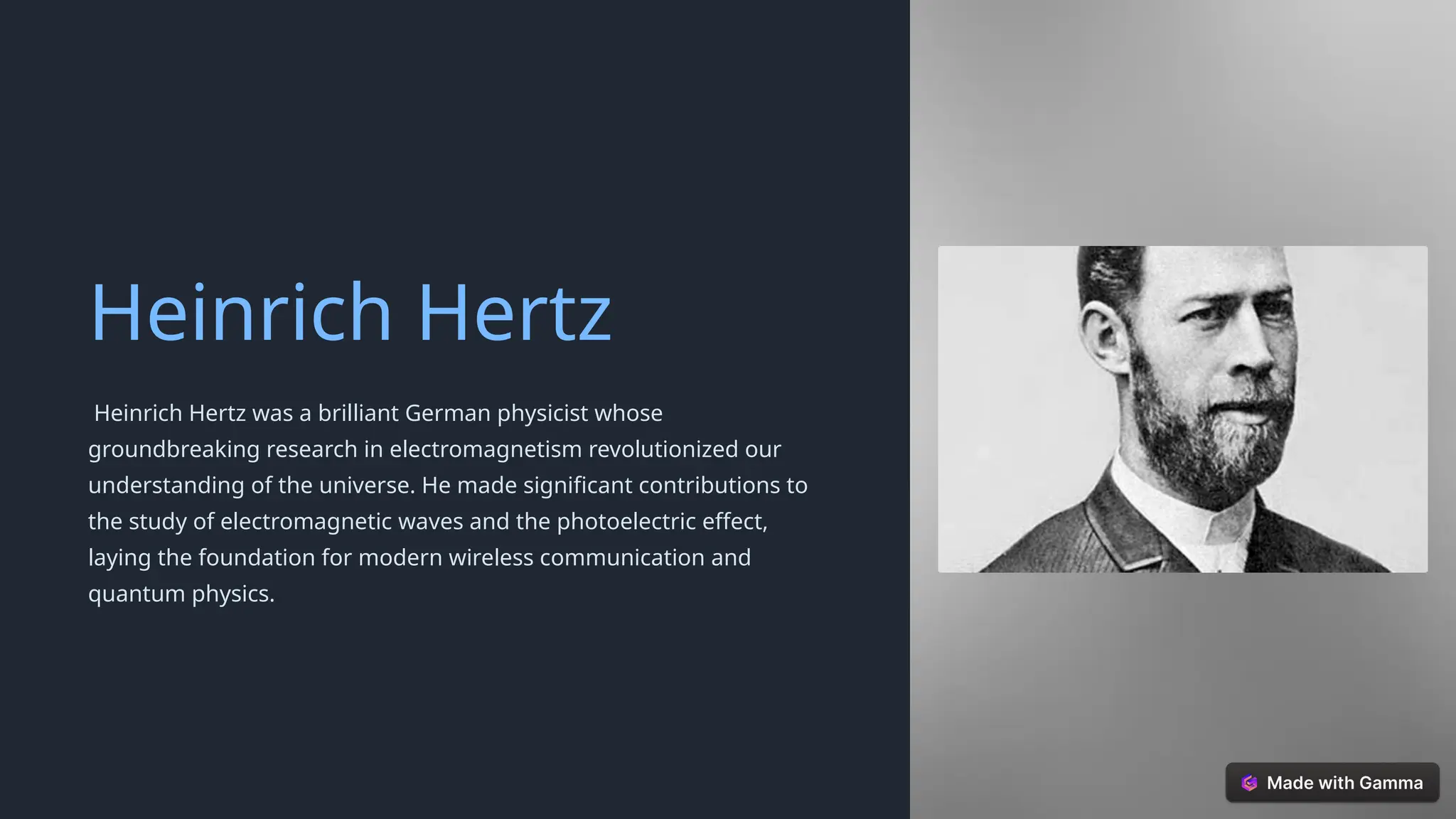
Heinrich Hertz was a brilliant German physicist whose
groundbreaking research in electromagnetism revolutionized our
understanding of the universe. He made significant contributions to
the study of electromagnetic waves and the photoelectric effect,
laying the foundation for modern wireless communication and
quantum physics.
Hertz's Early Life and Education
Early Life
Heinrich Rudolf Hertz was born on
February 22, 1857, in Hamburg,
Germany. He was a bright and
curious child who excelled in his
studies. He was particularly
interested in physics and
mathematics.
Education
Hertz studied physics at the
University of Berlin, where he was
influenced by the renowned
physicist Hermann von Helmholtz.
He later earned his doctorate from
the University of Munich in 1880.
Academic Career
After completing his doctorate,
Hertz worked as an assistant at the
University of Berlin. In 1883, he
became a professor of physics at
the Karlsruhe Polytechnic.
Hertz's Discovery of the
Photoelectric Effect
Ultraviolet Light
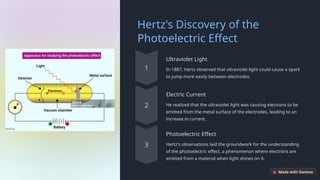
In 1887, Hertz observed that ultraviolet light could cause a spark
to jump more easily between electrodes.
Electric Current
He realized that the ultraviolet light was causing electrons to be
emitted from the metal surface of the electrodes, leading to an
increase in current.
Photoelectric Effect
Hertz's observations laid the groundwork for the understanding
of the photoelectric effect, a phenomenon where electrons are
emitted from a material when light shines on it.
Explanation of the Photoelectric
Effect
1 Photon Energy
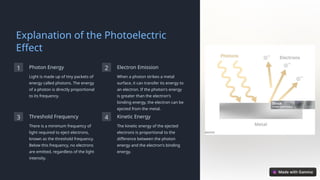
Light is made up of tiny packets of
energy called photons. The energy
of a photon is directly proportional
to its frequency.
2 Electron Emission
When a photon strikes a metal
surface, it can transfer its energy to
an electron. If the photon's energy
is greater than the electron's
binding energy, the electron can be
ejected from the metal.
3 Threshold Frequency
There is a minimum frequency of
light required to eject electrons,
known as the threshold frequency.
Below this frequency, no electrons
are emitted, regardless of the light
intensity.
4 Kinetic Energy
The kinetic energy of the ejected
electrons is proportional to the
difference between the photon
energy and the electron's binding
energy.
Significance of Hertz's Work in Physics
Confirmation of Maxwell's Theory
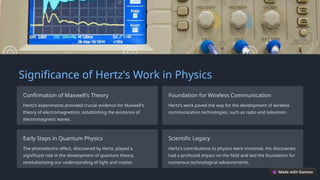
Hertz's experiments provided crucial evidence for Maxwell's
theory of electromagnetism, establishing the existence of
electromagnetic waves.
Foundation for Wireless Communication
Hertz's work paved the way for the development of wireless
communication technologies, such as radio and television.
Early Steps in Quantum Physics
The photoelectric effect, discovered by Hertz, played a
significant role in the development of quantum theory,
revolutionizing our understanding of light and matter.
Scientific Legacy
Hertz's contributions to physics were immense. His discoveries
had a profound impact on the field and laid the foundation for
numerous technological advancements.
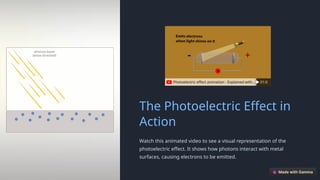
The Photoelectric Effect in
Action
Watch this animated video to see a visual representation of the
photoelectric effect. It shows how photons interact with metal
surfaces, causing electrons to be emitted.

all about Heinrich-Hertz. .presentation

  • 1.
    Heinrich Hertz Heinrich Hertzwas a brilliant German physicist whose groundbreaking research in electromagnetism revolutionized our understanding of the universe. He made significant contributions to the study of electromagnetic waves and the photoelectric effect, laying the foundation for modern wireless communication and quantum physics.
  • 2.
    Hertz's Early Lifeand Education Early Life Heinrich Rudolf Hertz was born on February 22, 1857, in Hamburg, Germany. He was a bright and curious child who excelled in his studies. He was particularly interested in physics and mathematics. Education Hertz studied physics at the University of Berlin, where he was influenced by the renowned physicist Hermann von Helmholtz. He later earned his doctorate from the University of Munich in 1880. Academic Career After completing his doctorate, Hertz worked as an assistant at the University of Berlin. In 1883, he became a professor of physics at the Karlsruhe Polytechnic.
  • 3.
    Hertz's Discovery ofthe Photoelectric Effect Ultraviolet Light In 1887, Hertz observed that ultraviolet light could cause a spark to jump more easily between electrodes. Electric Current He realized that the ultraviolet light was causing electrons to be emitted from the metal surface of the electrodes, leading to an increase in current. Photoelectric Effect Hertz's observations laid the groundwork for the understanding of the photoelectric effect, a phenomenon where electrons are emitted from a material when light shines on it.
  • 4.
    Explanation of thePhotoelectric Effect 1 Photon Energy Light is made up of tiny packets of energy called photons. The energy of a photon is directly proportional to its frequency. 2 Electron Emission When a photon strikes a metal surface, it can transfer its energy to an electron. If the photon's energy is greater than the electron's binding energy, the electron can be ejected from the metal. 3 Threshold Frequency There is a minimum frequency of light required to eject electrons, known as the threshold frequency. Below this frequency, no electrons are emitted, regardless of the light intensity. 4 Kinetic Energy The kinetic energy of the ejected electrons is proportional to the difference between the photon energy and the electron's binding energy.
  • 5.
    Significance of Hertz'sWork in Physics Confirmation of Maxwell's Theory Hertz's experiments provided crucial evidence for Maxwell's theory of electromagnetism, establishing the existence of electromagnetic waves. Foundation for Wireless Communication Hertz's work paved the way for the development of wireless communication technologies, such as radio and television. Early Steps in Quantum Physics The photoelectric effect, discovered by Hertz, played a significant role in the development of quantum theory, revolutionizing our understanding of light and matter. Scientific Legacy Hertz's contributions to physics were immense. His discoveries had a profound impact on the field and laid the foundation for numerous technological advancements.
  • 6.
    The Photoelectric Effectin Action Watch this animated video to see a visual representation of the photoelectric effect. It shows how photons interact with metal surfaces, causing electrons to be emitted.