Download to read offline



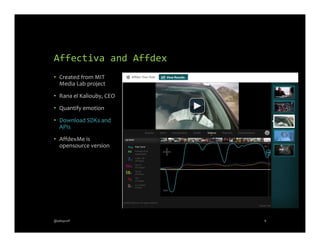


Emotive analytics and affective processing use big data, machine learning, and neural networks to analyze inputs like voice, visual cues, and biometrics to predictively understand and respond to human emotions. Current applications include apps that analyze speech to detect disease, robots that teach social skills to children with autism, and humanoid robots created for entertainment, education, and memorial purposes. As content professionals, we will be affected through opportunities in content creation, usability, customer experience, service, and building brand loyalty that are tailored based on emotional analytics. However, there are also risks to consider regarding privacy and how this technology could potentially be misused. The future applications of these techniques are still emerging.


![Wordnet-Affect [IIT-Bombay]](https://cdn.slidesharecdn.com/ss_thumbnails/03wordnet-affect-140308024211-phpapp01-thumbnail.jpg?width=640&height=640&fit=bounds)


