Download to read offline
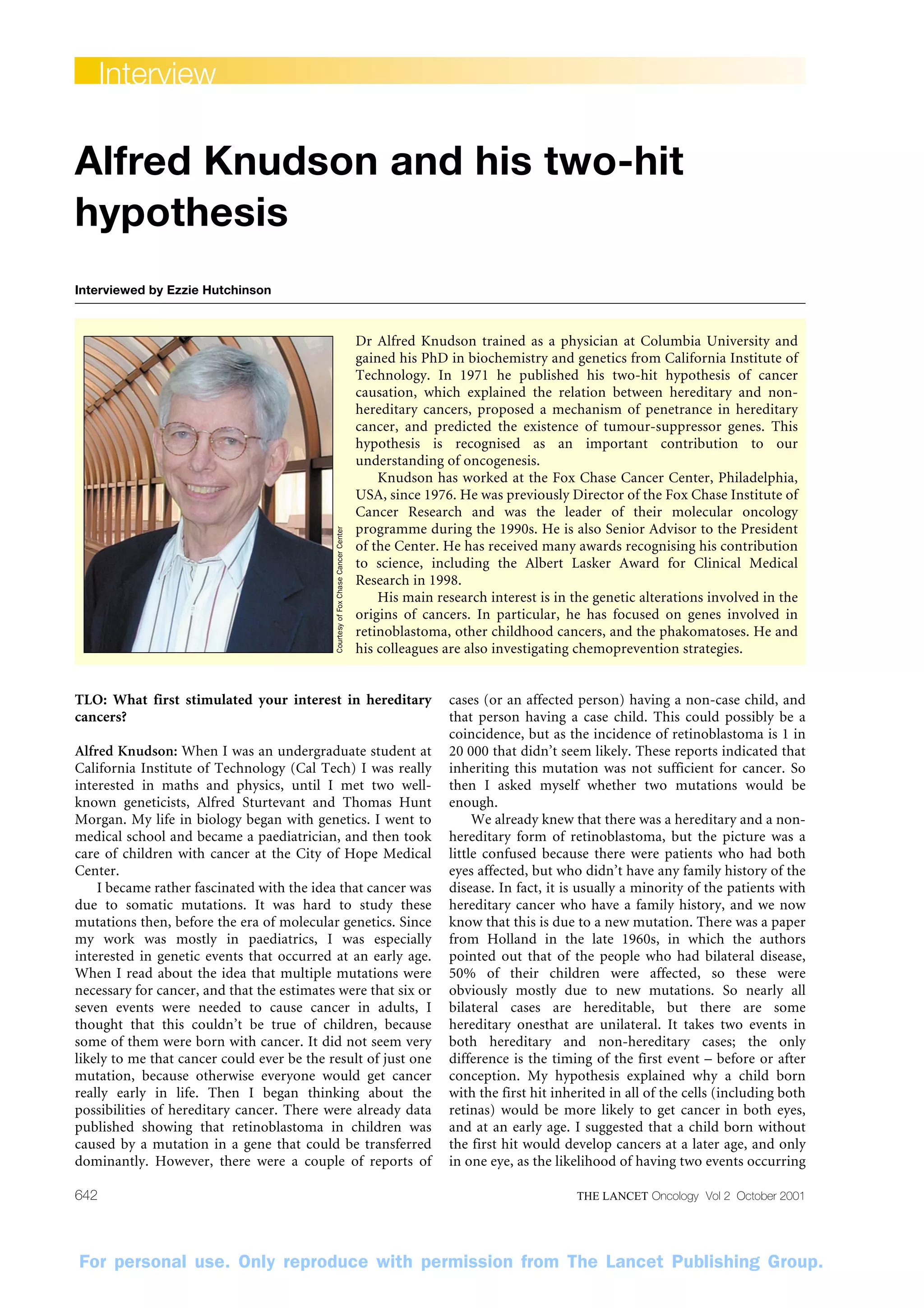
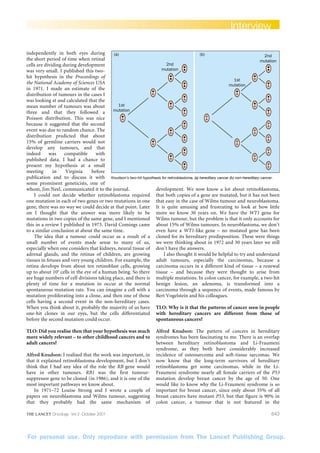

Alfred Knudson developed the two-hit hypothesis for cancer causation in 1971 to explain hereditary and non-hereditary retinoblastoma. The hypothesis proposed that cancer results from two mutations, with hereditary cancer requiring one mutation inherited in all cells and non-hereditary cancer requiring two spontaneous mutations. This anticipated the discovery of tumor suppressor genes. Later work extended the two-hit model to other childhood cancers and carcinomas. Currently, Knudson's research focuses on using knowledge of hereditary cancers to develop chemoprevention strategies by targeting early somatic events in high-risk individuals.


![谷歌留痕技术 [ 𝙩𝙤𝙥 𝟮𝟯𝟯. 𝙘 𝙤𝙢 ]](https://cdn.slidesharecdn.com/ss_thumbnails/top233-260130174328-3833018c-thumbnail.jpg?width=640&height=640&fit=bounds)
