Alcohol trends
A look at some key trends impacting the alcohol market including, developments in craft drinks, low
and no alcohol options and consideration of whether attitudes to drinking are changing
Emily Beardshaw, Consumer Insight Analyst, AHDB
July 2018
AHDB Retail and Consumer Insight Snapshot
1
Key alcohol market facts
The Grocer reports that people are trading up for their alcohol
purchases, buying a lower volume of top brands overall, but spending
more
£13.2 billion was spent on alcohol in GB grocery retail in the year ending 15
July 2018 according to Kantar Worldpanel.
Spend up
4.6% in
value terms
YOY
According to Mintel, beer remained the largest segment of the alcohol
market in the UK in 2017
82% of UK adults say that they had drunk alcoholic drinks in the 3 months
ending November 2017. (Mintel)
Sources: Mintel, Alcoholic drinks review 2018; Kantar Worldpanel, 52 w/e 15 Jul 2018,
Alcohol free – a tiny but growing part of the
market
Are young people’s attitudes toward
alcohol changing?
According to research by the Foresight Factory:
• GB teetotallers are more likely to be female
• Younger people are more likely to be teetotal than older
generations.
• Young people (16-24) were found to be less inclined to
drink regularly, however, when they do drink they are
more likely to binge drink.
…And the market is growing
Although a small part of the beer, spirits and wine grocery
retail market (approx. 0.2% spend), Kantar Worldpanel data
shows that non-alcoholic beer has seen a dramatic increase in
volume sold through GB retail of 43% in the last year.
This has contributed to a total spend of over £25 million in the
52 week period to Jul 18.
Sources: Foresight Factory; Kantar Worldpanel, 52 w/e 15 Jul 2018,
Low and no alcohol options are expanding…
• Retailers have begun to create low and no alcohol areas
and aisles in store (Foresight Factory)
• Major brands have released new lines to meet this need
across beer, wine and spirits
Craft alcohols have grown in popularity
Sources: The Grocer
What is a craft beer or cider?
Craft isn’t a specialist term and there isn’t a widely
accepted definition. Generally it seems craft drinks are
produced for maximum flavour. They can’t really be
defined by production method, packaging type or
business size because these all vary.
In the US the Brewers’ Association define craft brewers
as small, independent and traditional.
In the UK, SIBA the Society of Independent Brewers
represent craft brewers run an ‘Assured British craft
brewer’ initiative, which brewers that meet certain
conditions and size thresholds can be a part of.
As craft beers, ciders and spirits have become more
popular, retailers have responded by adapting their
alcohol ranges in store.
This trend is driving premiumisation of products.
For example, in July 2018 the convenience retailer
Costcutter introduced 30 craft beers and ciders into
their stocked ranges
Craft examples – new brands, innovations and new
flavours are appearing across cider, beer and spirits
Sources: The Grocer,Toast ale website
Toast ale launched in the UK in 2016 – an ale brewed using
surplus fresh bread from sandwich makers and bakeries
along with malted barley, hops, yeast and water.
The wasted bread used replaces one third of the malting
barley which would have otherwise been used.
Mainstream alcohol brands are also tapping
into the trend
They are doing this by launching limited edition
and new taste lines of key brands or investing in
successful craft companies.
Heineken bought a significant stake in North
London brewery Beavertown this summer and are
investing £40m into a new brewery for it.
Camden Town Brewery was sold to AB InBev in
2015
Brewdog – started in Scotland in 2007. They now own and
operate two eco-friendly breweries, one in Ellon, Scotland
and one in Columbus, Ohio.
According to the Grocer it is the UK’s biggest craft beer
brand and also the 13th largest UK beer brand generally
Spirits brands Smirnoff and Jack Daniel’s have both
successfully entered the cider market.
“Gin-novations”
Gin has experienced a huge resurgence in popularity in recent years and in
2017 gin re-entered the ONS UK inflation basket.
There has also been an explosion of craft gins hitting the market at
high price points and a range of innovations featuring gin – everything
from gin advent calendars and Christmas tree decorations through to
different coloured gins.
Further bolstered by the increasing popularity of premium tonic brand
Fever-Tree, gin has seen a revival of core brands and an explosion of
new flavour combinations and its appeal doesn’t appear to be showing
signs of slowing yet.
Alcohol is consumed at many different occasions and
retailers are looking for new ways to engage with their
shoppers
Everyday dinners
Lidl in Germany have released a virtual chat bot named Margot to help
consumers find the perfect wine pairing for their meal (Foresight
Factory).
Weddings
Aldi have this year launched a wedding wines service to help consumers
choose wines that suit their tastes and budget
Sporting Events
The early part of this year’s world cup competition coincided with a CO2
shortage in the UK which spread fear of a lack of availability for some
drinks across the country.
Despite this, the Grocer reports that early indications from retail data
suggest that the World Cup has accompanied boosted alcohol sales. It
may, of course, also have been impacted by the warm weather.
Sources: Foresight Factory 2018, The Grocer
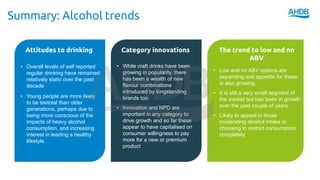
Summary: Alcohol trends
Attitudes to drinking
• Overall levels of self reported
regular drinking have remained
relatively static over the past
decade
• Young people are more likely
to be teetotal than older
generations, perhaps due to
being more conscious of the
impacts of heavy alcohol
consumption, and increasing
interest in leading a healthy
lifestyle
Innovation Opportunities
• Low and no ABV options are
expanding and appetite for these
is also growing.
• It is still a very small segment of
the market but has been in growth
over the past couple of years.
• Likely to appeal to those
moderating alcohol intake or
choosing to restrict consumption
completely.
Category innovations
• While craft drinks have been
growing in popularity, there
has been a wealth of new
flavour combinations
introduced by longstanding
brands too.
• Innovation and NPD are
important in any category to
drive growth and so far these
appear to have capitalised on
consumer willingness to pay
more for a new or premium
product
The trend to low and no
ABV
www.ahdb.org.uk/consumerinsight
If you would like more
information then please
sign up to the consumer
insight newsletter at the
link above.
Whilst we would love you to use our work, please contact us first so we can secure the relevant permissions
Version: 16:9/2017-11-30a
© Agriculture and Horticulture Development Board 2018 | All Rights Reserved
10

Alcohol trends

  • 1.
    Alcohol trends A lookat some key trends impacting the alcohol market including, developments in craft drinks, low and no alcohol options and consideration of whether attitudes to drinking are changing Emily Beardshaw, Consumer Insight Analyst, AHDB July 2018 AHDB Retail and Consumer Insight Snapshot 1
  • 2.
    Key alcohol marketfacts The Grocer reports that people are trading up for their alcohol purchases, buying a lower volume of top brands overall, but spending more £13.2 billion was spent on alcohol in GB grocery retail in the year ending 15 July 2018 according to Kantar Worldpanel. Spend up 4.6% in value terms YOY According to Mintel, beer remained the largest segment of the alcohol market in the UK in 2017 82% of UK adults say that they had drunk alcoholic drinks in the 3 months ending November 2017. (Mintel) Sources: Mintel, Alcoholic drinks review 2018; Kantar Worldpanel, 52 w/e 15 Jul 2018,
  • 3.
    Alcohol free –a tiny but growing part of the market Are young people’s attitudes toward alcohol changing? According to research by the Foresight Factory: • GB teetotallers are more likely to be female • Younger people are more likely to be teetotal than older generations. • Young people (16-24) were found to be less inclined to drink regularly, however, when they do drink they are more likely to binge drink. …And the market is growing Although a small part of the beer, spirits and wine grocery retail market (approx. 0.2% spend), Kantar Worldpanel data shows that non-alcoholic beer has seen a dramatic increase in volume sold through GB retail of 43% in the last year. This has contributed to a total spend of over £25 million in the 52 week period to Jul 18. Sources: Foresight Factory; Kantar Worldpanel, 52 w/e 15 Jul 2018, Low and no alcohol options are expanding… • Retailers have begun to create low and no alcohol areas and aisles in store (Foresight Factory) • Major brands have released new lines to meet this need across beer, wine and spirits
  • 4.
    Craft alcohols havegrown in popularity Sources: The Grocer What is a craft beer or cider? Craft isn’t a specialist term and there isn’t a widely accepted definition. Generally it seems craft drinks are produced for maximum flavour. They can’t really be defined by production method, packaging type or business size because these all vary. In the US the Brewers’ Association define craft brewers as small, independent and traditional. In the UK, SIBA the Society of Independent Brewers represent craft brewers run an ‘Assured British craft brewer’ initiative, which brewers that meet certain conditions and size thresholds can be a part of. As craft beers, ciders and spirits have become more popular, retailers have responded by adapting their alcohol ranges in store. This trend is driving premiumisation of products. For example, in July 2018 the convenience retailer Costcutter introduced 30 craft beers and ciders into their stocked ranges
  • 5.
    Craft examples –new brands, innovations and new flavours are appearing across cider, beer and spirits Sources: The Grocer,Toast ale website Toast ale launched in the UK in 2016 – an ale brewed using surplus fresh bread from sandwich makers and bakeries along with malted barley, hops, yeast and water. The wasted bread used replaces one third of the malting barley which would have otherwise been used. Mainstream alcohol brands are also tapping into the trend They are doing this by launching limited edition and new taste lines of key brands or investing in successful craft companies. Heineken bought a significant stake in North London brewery Beavertown this summer and are investing £40m into a new brewery for it. Camden Town Brewery was sold to AB InBev in 2015 Brewdog – started in Scotland in 2007. They now own and operate two eco-friendly breweries, one in Ellon, Scotland and one in Columbus, Ohio. According to the Grocer it is the UK’s biggest craft beer brand and also the 13th largest UK beer brand generally Spirits brands Smirnoff and Jack Daniel’s have both successfully entered the cider market.
  • 6.
    “Gin-novations” Gin has experienceda huge resurgence in popularity in recent years and in 2017 gin re-entered the ONS UK inflation basket. There has also been an explosion of craft gins hitting the market at high price points and a range of innovations featuring gin – everything from gin advent calendars and Christmas tree decorations through to different coloured gins. Further bolstered by the increasing popularity of premium tonic brand Fever-Tree, gin has seen a revival of core brands and an explosion of new flavour combinations and its appeal doesn’t appear to be showing signs of slowing yet.
  • 7.
    Alcohol is consumedat many different occasions and retailers are looking for new ways to engage with their shoppers Everyday dinners Lidl in Germany have released a virtual chat bot named Margot to help consumers find the perfect wine pairing for their meal (Foresight Factory). Weddings Aldi have this year launched a wedding wines service to help consumers choose wines that suit their tastes and budget Sporting Events The early part of this year’s world cup competition coincided with a CO2 shortage in the UK which spread fear of a lack of availability for some drinks across the country. Despite this, the Grocer reports that early indications from retail data suggest that the World Cup has accompanied boosted alcohol sales. It may, of course, also have been impacted by the warm weather. Sources: Foresight Factory 2018, The Grocer
  • 8.
    Summary: Alcohol trends Attitudesto drinking • Overall levels of self reported regular drinking have remained relatively static over the past decade • Young people are more likely to be teetotal than older generations, perhaps due to being more conscious of the impacts of heavy alcohol consumption, and increasing interest in leading a healthy lifestyle Innovation Opportunities • Low and no ABV options are expanding and appetite for these is also growing. • It is still a very small segment of the market but has been in growth over the past couple of years. • Likely to appeal to those moderating alcohol intake or choosing to restrict consumption completely. Category innovations • While craft drinks have been growing in popularity, there has been a wealth of new flavour combinations introduced by longstanding brands too. • Innovation and NPD are important in any category to drive growth and so far these appear to have capitalised on consumer willingness to pay more for a new or premium product The trend to low and no ABV
  • 9.
    www.ahdb.org.uk/consumerinsight If you wouldlike more information then please sign up to the consumer insight newsletter at the link above. Whilst we would love you to use our work, please contact us first so we can secure the relevant permissions
  • 10.
    Version: 16:9/2017-11-30a © Agricultureand Horticulture Development Board 2018 | All Rights Reserved 10