Coca-Cola WarsSofia KjellströmLu LeiAnna MononenLukas RoseRomainAubert
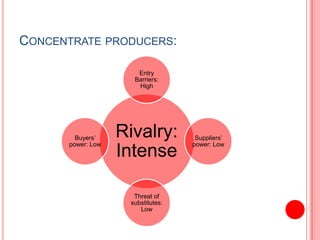
Concentrate producers:
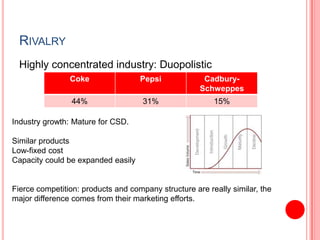
RivalryHighly concentrated industry: DuopolisticIndustry growth: Mature for CSD.Similar products Low-fixed cost Capacity could be expanded easilyFierce competition: products and company structure are really similar, the major difference comes from their marketing efforts.
Threats of substituteFor the concentrate producers, the threat is low because cost of switching are high for bottlers, but increasing due to changes in end-consumer taste. Low
New EntrantsVery high entrance costs to develop distribution and sign contractual agreements unequal distribution channel access. Even for 3rd and 4th place of CSD, producers are still very large companies. Brand equity is extremely high. Bottlersare really affiliated to one of two giants.Current players have enormous financial power. Barriers are high
Suppliers’ power (Artificial sweeteners, Caramel, Citric acid, Natural flavors. Caffeine...)More suppliers than producers.Relatively undifferentiated supplies. Suppliers power is quite low.
Power of buyers:Territory exclusivity strengthens their positionHigh market concentrationLimited choice of concentrate producersTight margins: volume requirement Fountains: high bargaining power – contractual transactionsMajority of bottling business is owned by Coca Cola and PepsiCo Low power
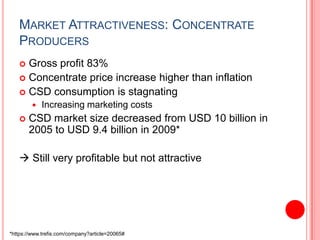
Market Attractiveness: Concentrate ProducersGross profit 83%Concentrate price increase higher than inflation CSD consumption is stagnatingIncreasing marketing costsCSD market size decreased from USD 10 billion in 2005 to USD 9.4 billion in 2009* Still very profitable but not attractive*https://www.trefis.com/company?article=20065#
Bottlers
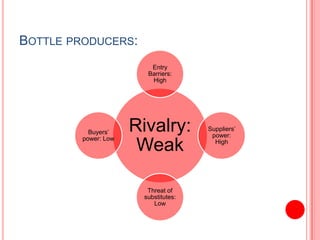
Bottle producers:
RivalryTerritorial exclusivityMarket consolidation: CCE represents 70% of Coke’s North America business, PBG represents 54% of PepsiCo’s North America bottling business Weak rivalry
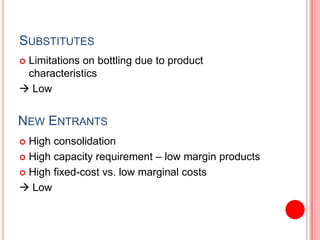
SubstitutesLimitations on bottling due to product characteristics LowNew EntrantsHigh consolidation High capacity requirement – low margin products High fixed-cost vs. low marginal costs Low
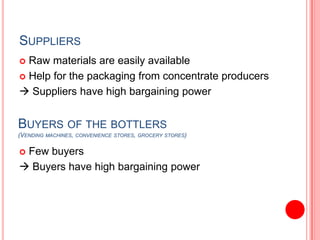
SuppliersRaw materials are easily availableHelp for the packaging from concentrate producers Suppliers have high bargaining powerBuyers of the bottlers(Vending machines, convenience stores, grocery stores)Few buyers Buyers have high bargaining power
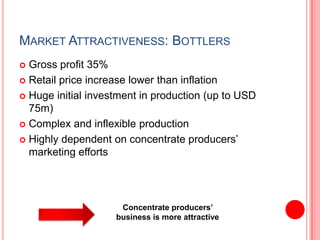
Market Attractiveness: BottlersGross profit 35%Retail price increase lower than inflation Huge initial investment in production (up to USD 75m)Complex and inflexible productionHighly dependent on concentrate producers’ marketing effortsConcentrate producers’ business is more attractive
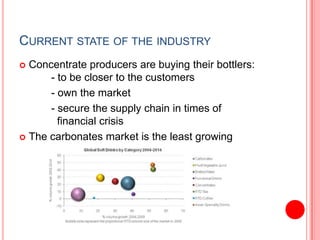
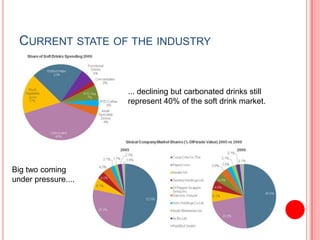
Current state of the industryConcentrate producers are buying their bottlers: 	- to be closer to the customers 		- own the market		- secure the supply chain in times of 		  financial crisisThe carbonates market is the least growing
Current state of the industry... declining but carbonated drinks still represent 40% of the soft drink market.Big two coming under pressure....
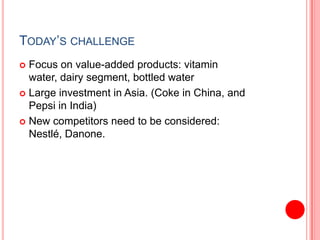
Today’s challengeFocus on value-added products: vitamin water, dairy segment, bottled waterLarge investment in Asia. (Coke in China, and Pepsi in India)New competitors need to be considered: Nestlé, Danone.
Q&A
Sourceshttp://www.pr-inside.com/the-pepsi-bottling-group-inc-pbg-r2347878.htmhttp://www.ajc.com/business/the-pepsi-challenge-for-446766.htmlhttp://www.slideshare.net/xiaoyiliu/sse-cola-wars-group5?src=related_normal&rel=2947405http://www.slideshare.net/guest89fff/sse-cola-wars-group8-presentationhttp://www.slideshare.net/akula77/sse-cola-wars-group3-2-presentationhttp://www.slideshare.net/SSEGroup9/cola-wars-2946604Euromonitor International :Global Soft Drinks: Corporate Strategies – Diversification Drives Market DynamicsSoft Drinks Global Trends and Opportunities

Sse cola wars_group2b_2011

Editor's Notes

  • #4 No real exit barrier
  • #8 CCE: Coca Cola Enterprises; PBC Pepsi Bottling Company
  • #9 CCE: Coca Cola Enterprises; PBC Pepsi Bottling Company
  • #15 CCE: Coca Cola Enterprises; PBC Pepsi Bottling Company