Salbutamol
Albuterol Sulfate is a beta2- 
adrenergic agonist . 
Binding of Albuterol to beta2- 
receptors in the lungs results 
in relaxation of bronchial 
smooth muscles.
Albuterol Sulfate is a 
bronchodilator witch used For 
symptomatic relief and 
prevention of bronchospasm.
Prevent or treat bronchospasm in 
patient with reversible obstructive 
air way disease such as: asthma, 
bronchitis, chronic obstructive 
pulmonary disease , Cystic fibrosis. 
Prevent exercise-induced asthma. 
Hyperkalemia.
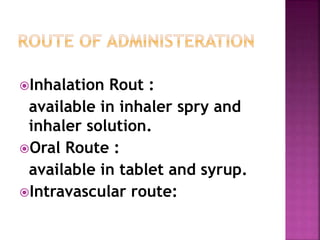
Inhalation Rout : 
available in inhaler spry and 
inhaler solution. 
Oral Route : 
available in tablet and syrup. 
Intravascular route:
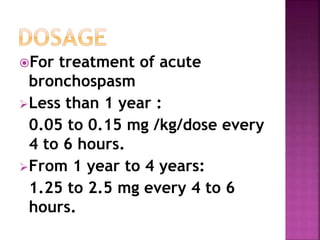
For treatment of acute 
bronchospasm 
Less than 1 year : 
0.05 to 0.15 mg /kg/dose every 
4 to 6 hours. 
From 1 year to 4 years: 
1.25 to 2.5 mg every 4 to 6 
hours.
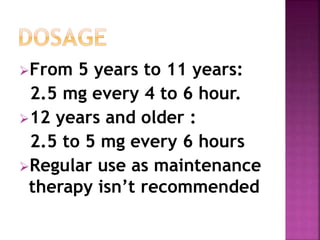
From 5 years to 11 years: 
2.5 mg every 4 to 6 hour. 
12 years and older : 
2.5 to 5 mg every 6 hours 
Regular use as maintenance 
therapy isn’t recommended
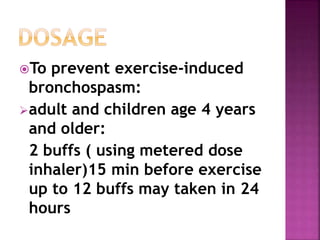
To prevent exercise-induced 
bronchospasm: 
adult and children age 4 years 
and older: 
2 buffs ( using metered dose 
inhaler)15 min before exercise 
up to 12 buffs may taken in 24 
hours
CNS: tremors, anxiety, 
insomnia, headache, 
dizziness, restlessness, 
hallucination, flushing, 
irritability. 
CV: palpation, tachycardia, 
hypertension, angina, 
hypotension, arrhythmia .
ENT: dry and irritation of 
nose and throat 
GI: heartburn, nausea, 
vomiting, 
 MS: muscle cramps. 
RESP: cough, dyspnea,
Albuterol interact with 
other adrenergic, 
antidepressants, Steroids, 
diuretics, 
B-blockers inhibit the 
action of Albuterol
Albuterol increase the 
action of CNS stimulants and 
decrease the digoxin level . 
Albuterol increase the 
caffeine stimulation.
Sing and symptoms: 
Exaggeration of adverse 
reaction, seizures, angina, 
hypotension, hypokalemia. 
Treatment: 
Administration of B1 adrenergic 
blocker.
Assess: 
respiratory function ;vital 
capacity, forced expiratory 
volume, ABGs,lung sound hart 
rate and rhythm, BP, sputum, 
patient ability to self medicate 
evidence of allergic reaction, 
paradoxical bronchospasm.
Perform /provide: 
storage in light resistance 
container, don’t expose to 
temperatures over 86 F (30 C). 
Evaluate : 
therapeutic response; 
absence of dyspnea, 
wheezing after one hour, 
improve air way exchange .
 Teach patient /family: 
to use exactly as prescribed; take 
missed dose when remembered, 
alter dosing schedule . 
not to use OTC medication ; 
excess stimulation may occur. 
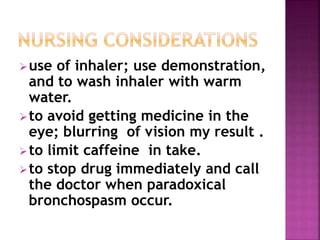
use of inhaler; use demonstration, 
and to wash inhaler with warm 
water .
use of inhaler; use demonstration, 
and to wash inhaler with warm 
water. 
to avoid getting medicine in the 
eye; blurring of vision my result . 
to limit caffeine in take. 
to stop drug immediately and call 
the doctor when paradoxical 
bronchospasm occur.
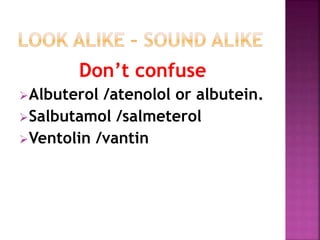
Don’t confuse 
Albuterol /atenolol or albutein. 
Salbutamol /salmeterol 
Ventolin /vantin

Albutarol

  • 1.
  • 2.
    Albuterol Sulfate isa beta2- adrenergic agonist . Binding of Albuterol to beta2- receptors in the lungs results in relaxation of bronchial smooth muscles.
  • 3.
    Albuterol Sulfate isa bronchodilator witch used For symptomatic relief and prevention of bronchospasm.
  • 4.
    Prevent or treatbronchospasm in patient with reversible obstructive air way disease such as: asthma, bronchitis, chronic obstructive pulmonary disease , Cystic fibrosis. Prevent exercise-induced asthma. Hyperkalemia.
  • 5.
    Inhalation Rout : available in inhaler spry and inhaler solution. Oral Route : available in tablet and syrup. Intravascular route:
  • 6.
    For treatment ofacute bronchospasm Less than 1 year : 0.05 to 0.15 mg /kg/dose every 4 to 6 hours. From 1 year to 4 years: 1.25 to 2.5 mg every 4 to 6 hours.
  • 7.
    From 5 yearsto 11 years: 2.5 mg every 4 to 6 hour. 12 years and older : 2.5 to 5 mg every 6 hours Regular use as maintenance therapy isn’t recommended
  • 8.
    To prevent exercise-induced bronchospasm: adult and children age 4 years and older: 2 buffs ( using metered dose inhaler)15 min before exercise up to 12 buffs may taken in 24 hours
  • 9.
    CNS: tremors, anxiety, insomnia, headache, dizziness, restlessness, hallucination, flushing, irritability. CV: palpation, tachycardia, hypertension, angina, hypotension, arrhythmia .
  • 10.
    ENT: dry andirritation of nose and throat GI: heartburn, nausea, vomiting,  MS: muscle cramps. RESP: cough, dyspnea,
  • 11.
    Albuterol interact with other adrenergic, antidepressants, Steroids, diuretics, B-blockers inhibit the action of Albuterol
  • 12.
    Albuterol increase the action of CNS stimulants and decrease the digoxin level . Albuterol increase the caffeine stimulation.
  • 13.
    Sing and symptoms: Exaggeration of adverse reaction, seizures, angina, hypotension, hypokalemia. Treatment: Administration of B1 adrenergic blocker.
  • 14.
    Assess: respiratory function;vital capacity, forced expiratory volume, ABGs,lung sound hart rate and rhythm, BP, sputum, patient ability to self medicate evidence of allergic reaction, paradoxical bronchospasm.
  • 15.
    Perform /provide: storagein light resistance container, don’t expose to temperatures over 86 F (30 C). Evaluate : therapeutic response; absence of dyspnea, wheezing after one hour, improve air way exchange .
  • 16.
     Teach patient/family: to use exactly as prescribed; take missed dose when remembered, alter dosing schedule . not to use OTC medication ; excess stimulation may occur. use of inhaler; use demonstration, and to wash inhaler with warm water .
  • 17.
    use of inhaler;use demonstration, and to wash inhaler with warm water. to avoid getting medicine in the eye; blurring of vision my result . to limit caffeine in take. to stop drug immediately and call the doctor when paradoxical bronchospasm occur.
  • 18.
    Don’t confuse Albuterol/atenolol or albutein. Salbutamol /salmeterol Ventolin /vantin