A Presentation made by Tom Peters at
the ALA PR Forum at the ALA Annual
Conference, Anaheim CA 6/24/12
   IT expert? Sorta
   PR expert? Nyet
   Librarian for 25 years
     Yes, I’d do it all over again
   Library user for 54 years
   In 4 years, I will have been a librarian
    for half my life.
www.SlideShare.com/
   Not this: Generalities peppered with a
    few examples.

   But this: Examine a couple of very
    successful library technology services
     How did they happen?
     What role did PR play?
     What can be concluded from these instances?
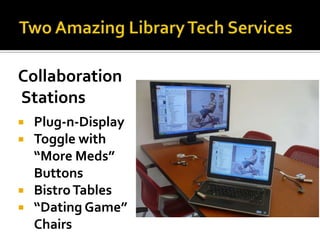
Collaboration
Stations
   Plug-n-Display
   Toggle with
    “More Meds”
    Buttons
   Bistro Tables
   “Dating Game”
    Chairs
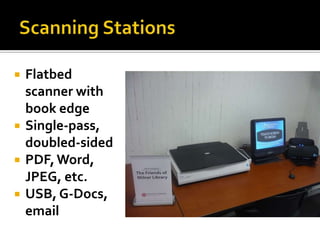
   Flatbed
    scanner with
    book edge
   Single-pass,
    doubled-sided
   PDF, Word,
    JPEG, etc.
   USB, G-Docs,
    email
 These technologies have been
 around for awhile

 Real adoption and diffusion is
 much more interesting than
 cutting edge tech
 Neither of
 these info tech
 successes are
 Cutting Edge
 Technologies
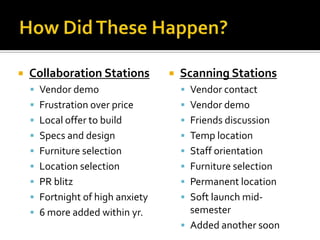
   Collaboration Stations           Scanning Stations
     Vendor demo                      Vendor contact
     Frustration over price           Vendor demo
     Local offer to build             Friends discussion
     Specs and design                 Temp location
     Furniture selection              Staff orientation
     Location selection               Furniture selection
     PR blitz                         Permanent location
     Fortnight of high anxiety        Soft launch mid-
     6 more added within yr.           semester
                                       Added another soon
   Obvious needs
   Built and improved upon known user
    behavior
   Tied to current pedagogical styles and
    curricular goals
   Easy to use with obvious benefits
   Located thoughtfully within the library
   Good promotion, with help from users
Doug Smith, Classroom Technology Support
   Years of experience
   Both a thinker/visionary and a builder
   Maintains current knowledge about Tech
   Cost conscious
   An keen eye for durability and the
    point of quickest failure or obsolescence
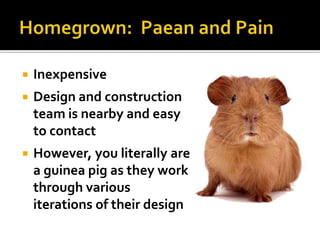
   Inexpensive
   Design and construction
    team is nearby and easy
    to contact
   However, you literally are
    a guinea pig as they work
    through various
    iterations of their design
   Mathews, Brian. 2012. “The Library is [Just]
    a Philosophy (it’s not about chairs)”
    Chronicle of Higher Education (June 19).
     Available at http://bit.ly/LJ2YQ0
     The library is a belief system, an application of a
      philosophy translated into a tangible form.
     Space should be designed for intentions,
      not for users.
     What do the chairs enable users to do?
   Figure out the why before you figure out the
    what and how.
   It takes a lot of villages and neighborhoods
    [i.e., use/experience zones] to make a library.
   What are the intentions of the library?
       Academic Support?
       Preservation?
       Knowledge Creation?
       Instruction?
“…consider the best means for
making those intentions tangible,
rather than just the current means.”
“If you build it, he [they] will come.”
 The phrase appeals to our lack of
 PR prowess.

 It’s generally false, especially
 when it comes to library
 information technology.
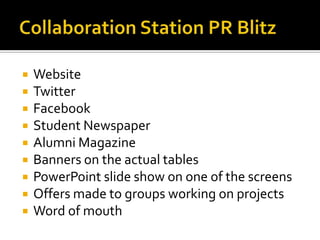
   Website
   Twitter
   Facebook
   Student Newspaper
   Alumni Magazine
   Banners on the actual tables
   PowerPoint slide show on one of the screens
   Offers made to groups working on projects
   Word of mouth
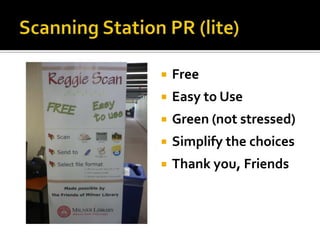
   Free
   Easy to Use
   Green (not stressed)
   Simplify the choices
   Thank you, Friends
   “Word-of-mouth marketing is the most
    powerful form of marketing these days.
    And, libraries can afford it.”
   Don’t wait for word-of-mouth marketing
    to just happen.
   Encourage people to tell their friends.
     Peggy Barber (June 23, 2012) at a session of the
     ALA Annual Conference in Anaheim CA
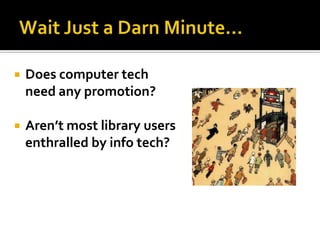
   Does computer tech
    need any promotion?

   Aren’t most library users
    enthralled by info tech?
No, Technology Services Require
some Planning, Thought, Study,
and Imagination
   How do you imagine each
    service being used?

   Think like a potential user.
    What will be the benefits for them?

   How will this tech service improve
    their information lives?
   Some students just like the collaboration
    station furniture. They ignore the tech.

   One student used a station for several
    hours alone, because he had dropped his
    laptop and the screen had cracked.
Locate the service where users can find it.
Locate the service where users will like using it.

   Collaboration Stations in the large, open study
   areas within the library
    ▪ Collaboration Station in a group study room isn’t used
      as much (but users asked for it!)
   Scanning Stations in “Copier Row” – a high-traffic
   area on the main floor
   9 out of 10 users are actively using portable
    devices (laptops and/or phones, mainly)
   Lots of small-group work with two or more
    laptops open and being shared
   Lots of people making paper-to-paper
    copies
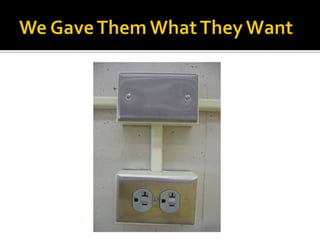
…neither of these highly successful
library tech services was suggested
or requested by users.
 More Specifically:
                   When asked,
 people have a hard time imagining
 and articulating what they want.
  Crisis of Imagination in Librarianship?

 When presented with something
 useful, people will use it.
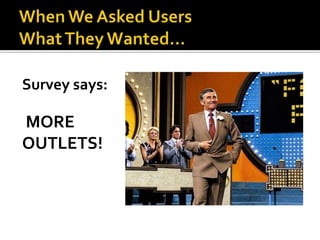
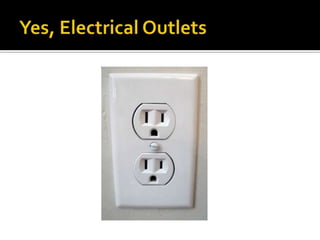
Survey says:

MORE
OUTLETS!
 Exits

 Emotional Outlets

 Outlet Malls
   Risk management concerns about
    anonymous emailing from the scanning
    stations
   Systems concerns about ongoing support
   Apple dongles for the collaboration stations
    left everyone dazed and confused
   Rapid roll-out and mid-semester
    deployment concerned some librarians
1.   Personalities
2.   Politics
3.   Pecunia (money)
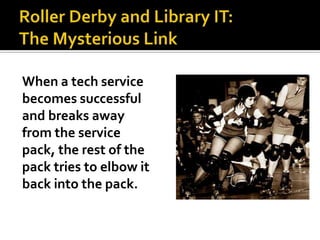
When a tech service
becomes successful
and breaks away
from the service
pack, the rest of the
pack tries to elbow it
back into the pack.
   They say: If we offer a
    scanning station as a free
    service, our photocopying
    revenue will decline.
   I respond: Scanning
    stations are desired by
    users, are much easier
    and cheaper to operate,
    are greener, etc.
   Don’t refuse to innovate because it might
    harm existing revenue streams.
   Don’t do it!
   That way lies madness and obsolescence
   (Pass the hat)
   7 collaboration stations added in one
    academic year for less than the price of a
    single vendor-supplied station

   Too soon to tell about any decline of
    photocopying (and that revenue rivulet)
 When possible, construct with
 local talent and materials
 Just do it

 A wildly popular service trumps
 frugal fiscal management
   Now expected by
    most library users.
   One of the most
    heavily used library
    services
   Biggest challenge:
    Avoiding negative PR
    when the wireless
    network teeters
   Because good wireless access is now just
    assumed, the only PR possible with
    wireless is now negative PR
     Poor coverage
     Limited capacity
     Device problems
     User ignorance
     Often never gets reported to librarians
     What halo effect does this negative PR have?
No, not in this instance
   We should have promoted the heck out of
    the scanning stations when we first
    deployed them

   Perils of a Soft Launch:
     Confuses and angers users (Why didn’t the
      library tell us about this great service sooner?)
     Confuses and sends mixed msg to library
      workers (soft launch = tepid commitment)
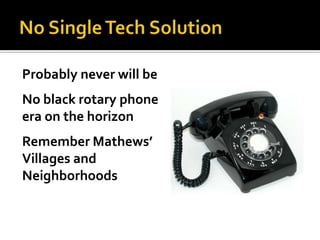
Probably never will be
No black rotary phone
era on the horizon
Remember Mathews’
Villages and
Neighborhoods
   Launch and promote
   Then watch and learn
   Then modify/expand
    as appropriate
   Be happy with success
   Lather, Rinse, and
    Repeat
Tom Peters
   Today: Assistant Dean for Strategic Technology
   Initiatives, Milner Library, Illinois State University
   As of Aug. 1: Dean of Library Services,
   Missouri State University
   Phone (probably until I die) 309-660-3648

   Email tpeters@tapinformation.com

Ala pr forum talk peters 2012 06e

  • 1.
    A Presentation madeby Tom Peters at the ALA PR Forum at the ALA Annual Conference, Anaheim CA 6/24/12
  • 3.
    IT expert? Sorta  PR expert? Nyet  Librarian for 25 years  Yes, I’d do it all over again  Library user for 54 years  In 4 years, I will have been a librarian for half my life.
  • 4.
  • 7.
    Not this: Generalities peppered with a few examples.  But this: Examine a couple of very successful library technology services  How did they happen?  What role did PR play?  What can be concluded from these instances?
  • 8.
    Collaboration Stations  Plug-n-Display  Toggle with “More Meds” Buttons  Bistro Tables  “Dating Game” Chairs
  • 9.
    Flatbed scanner with book edge  Single-pass, doubled-sided  PDF, Word, JPEG, etc.  USB, G-Docs, email
  • 10.
     These technologieshave been around for awhile  Real adoption and diffusion is much more interesting than cutting edge tech
  • 11.
     Neither of these info tech successes are Cutting Edge Technologies
  • 12.
    Collaboration Stations  Scanning Stations  Vendor demo  Vendor contact  Frustration over price  Vendor demo  Local offer to build  Friends discussion  Specs and design  Temp location  Furniture selection  Staff orientation  Location selection  Furniture selection  PR blitz  Permanent location  Fortnight of high anxiety  Soft launch mid-  6 more added within yr. semester  Added another soon
  • 13.
    Obvious needs  Built and improved upon known user behavior  Tied to current pedagogical styles and curricular goals  Easy to use with obvious benefits  Located thoughtfully within the library  Good promotion, with help from users
  • 14.
    Doug Smith, ClassroomTechnology Support  Years of experience  Both a thinker/visionary and a builder  Maintains current knowledge about Tech  Cost conscious  An keen eye for durability and the point of quickest failure or obsolescence
  • 15.
    Inexpensive  Design and construction team is nearby and easy to contact  However, you literally are a guinea pig as they work through various iterations of their design
  • 17.
    Mathews, Brian. 2012. “The Library is [Just] a Philosophy (it’s not about chairs)” Chronicle of Higher Education (June 19).  Available at http://bit.ly/LJ2YQ0  The library is a belief system, an application of a philosophy translated into a tangible form.  Space should be designed for intentions, not for users.  What do the chairs enable users to do?
  • 18.
    Figure out the why before you figure out the what and how.  It takes a lot of villages and neighborhoods [i.e., use/experience zones] to make a library.  What are the intentions of the library?  Academic Support?  Preservation?  Knowledge Creation?  Instruction?
  • 19.
    “…consider the bestmeans for making those intentions tangible, rather than just the current means.”
  • 21.
    “If you buildit, he [they] will come.”
  • 22.
     The phraseappeals to our lack of PR prowess.  It’s generally false, especially when it comes to library information technology.
  • 23.
    Website  Twitter  Facebook  Student Newspaper  Alumni Magazine  Banners on the actual tables  PowerPoint slide show on one of the screens  Offers made to groups working on projects  Word of mouth
  • 24.
    Free  Easy to Use  Green (not stressed)  Simplify the choices  Thank you, Friends
  • 26.
    “Word-of-mouth marketing is the most powerful form of marketing these days. And, libraries can afford it.”  Don’t wait for word-of-mouth marketing to just happen.  Encourage people to tell their friends.  Peggy Barber (June 23, 2012) at a session of the ALA Annual Conference in Anaheim CA
  • 27.
    Does computer tech need any promotion?  Aren’t most library users enthralled by info tech?
  • 28.
    No, Technology ServicesRequire some Planning, Thought, Study, and Imagination
  • 29.
    How do you imagine each service being used?  Think like a potential user. What will be the benefits for them?  How will this tech service improve their information lives?
  • 30.
    Some students just like the collaboration station furniture. They ignore the tech.  One student used a station for several hours alone, because he had dropped his laptop and the screen had cracked.
  • 31.
    Locate the servicewhere users can find it. Locate the service where users will like using it.  Collaboration Stations in the large, open study areas within the library ▪ Collaboration Station in a group study room isn’t used as much (but users asked for it!)  Scanning Stations in “Copier Row” – a high-traffic area on the main floor
  • 32.
    9 out of 10 users are actively using portable devices (laptops and/or phones, mainly)  Lots of small-group work with two or more laptops open and being shared  Lots of people making paper-to-paper copies
  • 33.
    …neither of thesehighly successful library tech services was suggested or requested by users.
  • 34.
     More Specifically: When asked, people have a hard time imagining and articulating what they want.  Crisis of Imagination in Librarianship?  When presented with something useful, people will use it.
  • 35.
  • 36.
     Exits  EmotionalOutlets  Outlet Malls
  • 40.
    Risk management concerns about anonymous emailing from the scanning stations  Systems concerns about ongoing support  Apple dongles for the collaboration stations left everyone dazed and confused  Rapid roll-out and mid-semester deployment concerned some librarians
  • 41.
    1. Personalities 2. Politics 3. Pecunia (money)
  • 42.
    When a techservice becomes successful and breaks away from the service pack, the rest of the pack tries to elbow it back into the pack.
  • 44.
    They say: If we offer a scanning station as a free service, our photocopying revenue will decline.  I respond: Scanning stations are desired by users, are much easier and cheaper to operate, are greener, etc.
  • 45.
    Don’t refuse to innovate because it might harm existing revenue streams.  Don’t do it!  That way lies madness and obsolescence  (Pass the hat)
  • 46.
    7 collaboration stations added in one academic year for less than the price of a single vendor-supplied station  Too soon to tell about any decline of photocopying (and that revenue rivulet)
  • 47.
     When possible,construct with local talent and materials  Just do it  A wildly popular service trumps frugal fiscal management
  • 49.
    Now expected by most library users.  One of the most heavily used library services  Biggest challenge: Avoiding negative PR when the wireless network teeters
  • 51.
    Because good wireless access is now just assumed, the only PR possible with wireless is now negative PR  Poor coverage  Limited capacity  Device problems  User ignorance  Often never gets reported to librarians  What halo effect does this negative PR have?
  • 52.
    No, not inthis instance
  • 54.
    We should have promoted the heck out of the scanning stations when we first deployed them  Perils of a Soft Launch:  Confuses and angers users (Why didn’t the library tell us about this great service sooner?)  Confuses and sends mixed msg to library workers (soft launch = tepid commitment)
  • 55.
    Probably never willbe No black rotary phone era on the horizon Remember Mathews’ Villages and Neighborhoods
  • 56.
    Launch and promote  Then watch and learn  Then modify/expand as appropriate  Be happy with success  Lather, Rinse, and Repeat
  • 57.
    Tom Peters  Today: Assistant Dean for Strategic Technology Initiatives, Milner Library, Illinois State University  As of Aug. 1: Dean of Library Services, Missouri State University  Phone (probably until I die) 309-660-3648  Email tpeters@tapinformation.com