Effect of Air Entrained
Concrete on
Compressive Strength of
Concrete
Group Supervisor:
ENGR. FAHAD
JALAL KHAN
BCTF14E016
M. SOHAIL AKRAM
BCTF14E019
SAQIB RIAZ
BCTF14E009
ASIM MAHMOOD
BCTF14E053
FARYAD ALI
BCTF14E010
FIRDOUS JAMAL
BCTF14E056
JAMIL AHMED
BCTF14E034
INTRODUCTION
• Air-entrained concrete contains billions of microscopic air cells per
cubic foot. These air pockets relieve internal pressure on the concrete
by providing tiny chambers for water to expand into when it freezes.
Air-entrained concrete is produced using air-entraining Portland
cement, or by the introduction of air-entraining agents, under careful
engineering supervision, as the concrete is mixed on the job.
• The amount of entrained air is usually between four to seven percent
of the volume of the concrete, but may be varied as required by special
conditions.
History
• The modern usage of air entrainers stems from the accidental
discovery of their benefits in the USA in the 1930s. It was noted that
certain sections of road that had better frost durability had been made
with cement which had been contaminated by crusher oil or from works
where beef tallow was used as a grinding aid. The improved durability
was linked to the air-entraining effect of the oil or tallow and this
initiated experiments which led to the adoption of deliberate air
entrainment to improve the resistance of roads and bridges to freezing
and thawing and to the effects of de-icing salts.
Properties
• Durability:
• The main usage of air entrainment is to enhance the durability of
concrete against cycles of climatic freezing and thawing and against
the effects of de-icing salts.
• Bleeding & Segregation:
• A major benefit of air entrainment is a reduced tendency for concrete to
bleed, segregate, and suffer from plastic cracking.
Properties:
• Freeze-thaw Resistance:
• Air entrainment increases the resistance of concrete to change of
volume due to freezing and thawing.
Significance:
• Normal concrete will have small capillaries produced by the evaporation of
the water in the concrete. These capillaries are invaded by water from the
environment and the freezing of this water can cause a lot of stress in
concrete because of the expansion in volume that accompanies the freezing.
This causes further cracks and continued deterioration in the concrete. Air
entrained concrete allows the expansion to take place without causing any
further stresses, as the air bubbles are capable of being compressed. The
bubbles also contribute to the workability of the concrete
• Air entriment is the deliberate creation of bubbles of air in concrete. The
number of such air cells per cubic foot of concrete can be measured in the
billions. This is done by addition of agents that entrain air and are generally
chemicals. The air bubbles are produced when the concrete is mixed and
continue to be a part of the concrete even after it hardens
Objectives:
• Comparison b/w Portland Cement Concrete & Air Entrained Concrete.
• Determine the Compressive Strength of Air Entrained Concrete Using the
Different Quantity of materials.
• Determine the compressive Strength of Portland Cement Concrete.
Methodology:
• First of all, Collection of material.
• we prepared different samples of concrete with different proportions of
ingredients.
• Prepare different samples of concrete Blocks and Cylinders by using
different types of aggregates which are more suitable for Portland
Cement Concrete.
• We will also prepare the sample of concrete by using different type of
admixture for Air Entrained Concrete.
Cont…
• Test on samples after 7 days.
• Test on samples after 14 days
• Test on samples after 28 days
• Submit test Results and Report
• Submit Final Report on Project
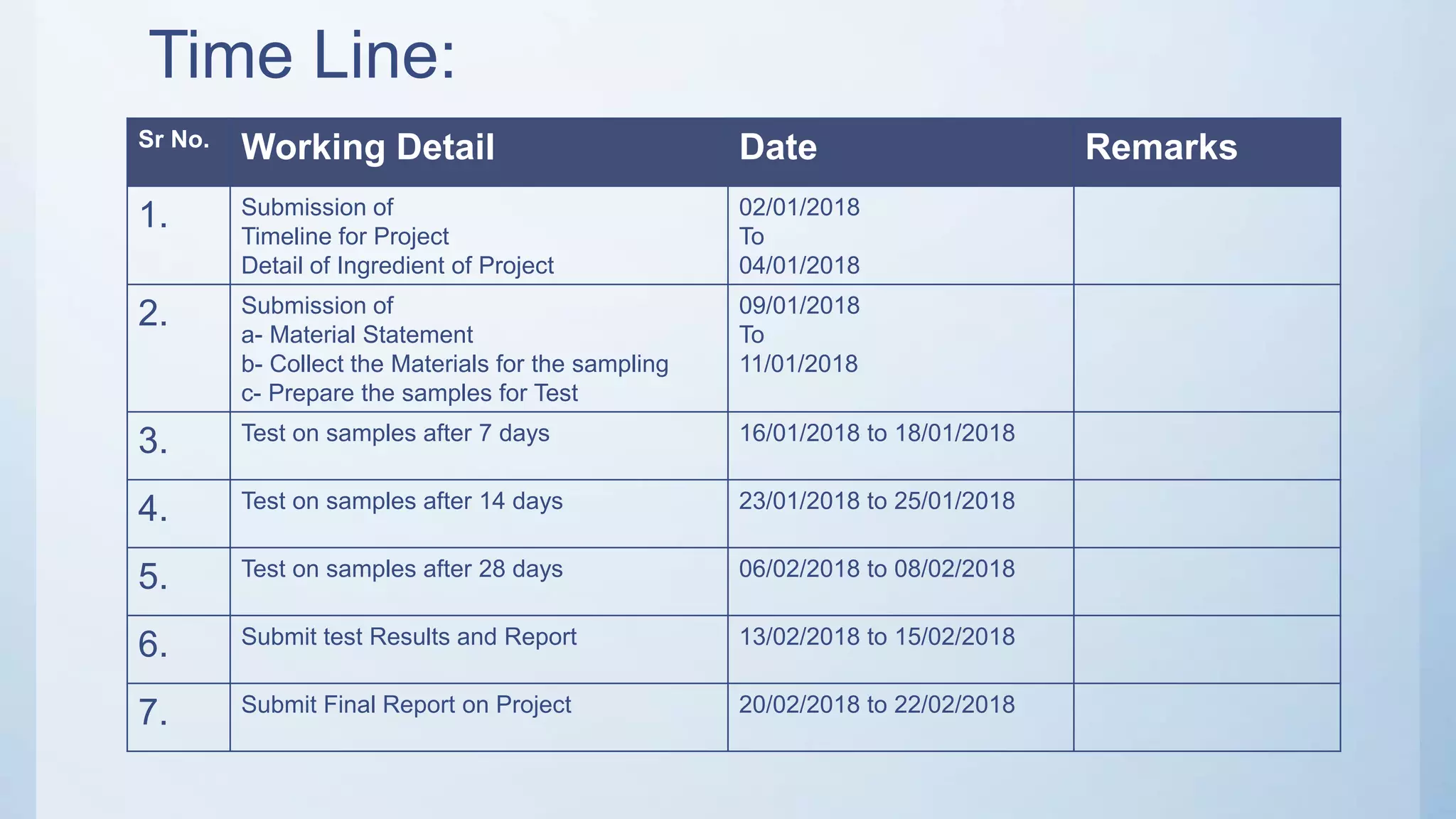
Time Line:
Sr No. Working Detail Date Remarks
1. Submission of
Timeline for Project
Detail of Ingredient of Project
02/01/2018
To
04/01/2018
2. Submission of
a- Material Statement
b- Collect the Materials for the sampling
c- Prepare the samples for Test
09/01/2018
To
11/01/2018
3. Test on samples after 7 days 16/01/2018 to 18/01/2018
4. Test on samples after 14 days 23/01/2018 to 25/01/2018
5. Test on samples after 28 days 06/02/2018 to 08/02/2018
6. Submit test Results and Report 13/02/2018 to 15/02/2018
7. Submit Final Report on Project 20/02/2018 to 22/02/2018
Air Entrained Concrete

Air Entrained Concrete

  • 2.
    Effect of AirEntrained Concrete on Compressive Strength of Concrete
  • 3.
    Group Supervisor: ENGR. FAHAD JALALKHAN BCTF14E016 M. SOHAIL AKRAM BCTF14E019 SAQIB RIAZ BCTF14E009 ASIM MAHMOOD BCTF14E053 FARYAD ALI BCTF14E010 FIRDOUS JAMAL BCTF14E056 JAMIL AHMED BCTF14E034
  • 4.
    INTRODUCTION • Air-entrained concretecontains billions of microscopic air cells per cubic foot. These air pockets relieve internal pressure on the concrete by providing tiny chambers for water to expand into when it freezes. Air-entrained concrete is produced using air-entraining Portland cement, or by the introduction of air-entraining agents, under careful engineering supervision, as the concrete is mixed on the job. • The amount of entrained air is usually between four to seven percent of the volume of the concrete, but may be varied as required by special conditions.
  • 5.
    History • The modernusage of air entrainers stems from the accidental discovery of their benefits in the USA in the 1930s. It was noted that certain sections of road that had better frost durability had been made with cement which had been contaminated by crusher oil or from works where beef tallow was used as a grinding aid. The improved durability was linked to the air-entraining effect of the oil or tallow and this initiated experiments which led to the adoption of deliberate air entrainment to improve the resistance of roads and bridges to freezing and thawing and to the effects of de-icing salts.
  • 6.
    Properties • Durability: • Themain usage of air entrainment is to enhance the durability of concrete against cycles of climatic freezing and thawing and against the effects of de-icing salts. • Bleeding & Segregation: • A major benefit of air entrainment is a reduced tendency for concrete to bleed, segregate, and suffer from plastic cracking.
  • 7.
    Properties: • Freeze-thaw Resistance: •Air entrainment increases the resistance of concrete to change of volume due to freezing and thawing.
  • 8.
    Significance: • Normal concretewill have small capillaries produced by the evaporation of the water in the concrete. These capillaries are invaded by water from the environment and the freezing of this water can cause a lot of stress in concrete because of the expansion in volume that accompanies the freezing. This causes further cracks and continued deterioration in the concrete. Air entrained concrete allows the expansion to take place without causing any further stresses, as the air bubbles are capable of being compressed. The bubbles also contribute to the workability of the concrete • Air entriment is the deliberate creation of bubbles of air in concrete. The number of such air cells per cubic foot of concrete can be measured in the billions. This is done by addition of agents that entrain air and are generally chemicals. The air bubbles are produced when the concrete is mixed and continue to be a part of the concrete even after it hardens
  • 9.
    Objectives: • Comparison b/wPortland Cement Concrete & Air Entrained Concrete. • Determine the Compressive Strength of Air Entrained Concrete Using the Different Quantity of materials. • Determine the compressive Strength of Portland Cement Concrete.
  • 10.
    Methodology: • First ofall, Collection of material. • we prepared different samples of concrete with different proportions of ingredients. • Prepare different samples of concrete Blocks and Cylinders by using different types of aggregates which are more suitable for Portland Cement Concrete. • We will also prepare the sample of concrete by using different type of admixture for Air Entrained Concrete.
  • 11.
    Cont… • Test onsamples after 7 days. • Test on samples after 14 days • Test on samples after 28 days • Submit test Results and Report • Submit Final Report on Project
  • 12.
    Time Line: Sr No.Working Detail Date Remarks 1. Submission of Timeline for Project Detail of Ingredient of Project 02/01/2018 To 04/01/2018 2. Submission of a- Material Statement b- Collect the Materials for the sampling c- Prepare the samples for Test 09/01/2018 To 11/01/2018 3. Test on samples after 7 days 16/01/2018 to 18/01/2018 4. Test on samples after 14 days 23/01/2018 to 25/01/2018 5. Test on samples after 28 days 06/02/2018 to 08/02/2018 6. Submit test Results and Report 13/02/2018 to 15/02/2018 7. Submit Final Report on Project 20/02/2018 to 22/02/2018