AIDS
(HIV)
A.SUMATHI
M.SC MICROBIOLOGY
SYNOPSIS
• Introduction
• Epidemiology
• Risk factors
• Diagonasis
• Causes
• Symptom
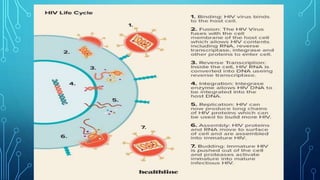
• Life cycle
• Pathogenesis
• Treatment
• Prevention
INTRODUCTION
• HIV stands for HUMAN IMMUNODEFICIENCY VIRUS.
• AIDS stands for ACQUIRED IMMUNODEFICIENCY SYNDROME.
• The first reported case of AIDS occurred in united states in 1981.
• HIV/AIDS is classified RETRO VIRUS a RNA TUMOR virus.
• A RETRO virus has an unique enzyme called REVERSE TRANSCRIPTION
which can go from RNA to DNA hybrid.
• Anyone can get AIDS: young or old, male (or) female, homo sexual (or)
heterosexual
EPIDEMIOLOGY
• People living with HIV :
There were approximately 36.7 million people living with HIV at the end of
2015
• People on ANTIRETRO VIRAL THERAPY:
Including 2million people who started treatment in 2015
• Mother to child transmission:
7 out of 10 pregnant women living with HIV received anti retro viral
treatment
• 77% of all pregnant women living with HIV globally received medicine that
prevents transmission to their babies in 2015
RISK FACTORS
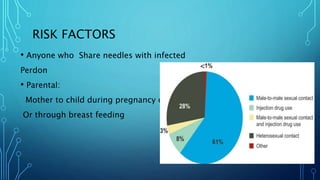
• Anyone who Share needles with infected
Perdon
• Parental:
Mother to child during pregnancy or birth
Or through breast feeding
DIAGONASIS
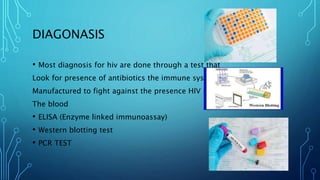
• Most diagnosis for hiv are done through a test that
Look for presence of antibiotics the immune system
Manufactured to fight against the presence HIV in
The blood
• ELISA (Enzyme linked immunoassay)
• Western blotting test
• PCR TEST
CAUSES
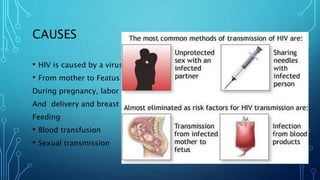
• HIV is caused by a virus.
• From mother to Featus i.e
During pregnancy, labor
And delivery and breast
Feeding
• Blood transfusion
• Sexual transmission
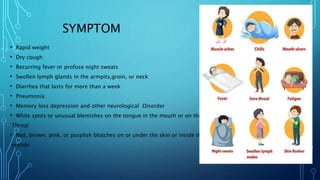
SYMPTOM
• Rapid weight
• Dry cough
• Recurring fever or profuse night sweats
• Swollen lymph glands in the armpits,groin, or neck
• Diarrhea that lasts for more than a week
• Pneumonia
• Memory loss depression and other neurological Disorder
• White spots or unusual blemishes on the tongue in the mouth or on the
Throat
• Red, brown, pink, or purplish blotches on or under the skin or inside the mouth nose or
eyelids
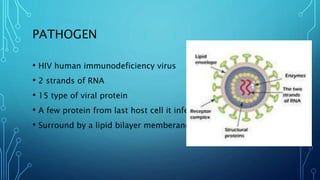
PATHOGEN
• HIV human immunodeficiency virus
• 2 strands of RNA
• 15 type of viral protein
• A few protein from last host cell it infected
• Surround by a lipid bilayer memberane
TREATMENT
• HIV treatment involves taking medicine that reduces the amount of
HIV in your body.
• HIV medicine is called antiretroviral therapy (ART).
• There is no effective cure for HIV. But with proper medical care, you
can control HIV.
• Most people can get the virus under control within six months.
• Taking HIV medicine does not prevent transmission of other sexually
transmitted diseases.
PREVENTION
• Avoid multiple sex partners (use of condoms)
• Confirm that partner is HIV tested before relationship
• Never share needle
• Avoid unnecessary blood transfusion. Never buy blood from
professional donar
• All pregnant women should be tested to HIV
Aids.pptx

Aids.pptx

  • 1.
  • 2.
    SYNOPSIS • Introduction • Epidemiology •Risk factors • Diagonasis • Causes • Symptom • Life cycle • Pathogenesis • Treatment • Prevention
  • 3.
    INTRODUCTION • HIV standsfor HUMAN IMMUNODEFICIENCY VIRUS. • AIDS stands for ACQUIRED IMMUNODEFICIENCY SYNDROME. • The first reported case of AIDS occurred in united states in 1981. • HIV/AIDS is classified RETRO VIRUS a RNA TUMOR virus. • A RETRO virus has an unique enzyme called REVERSE TRANSCRIPTION which can go from RNA to DNA hybrid. • Anyone can get AIDS: young or old, male (or) female, homo sexual (or) heterosexual
  • 4.
    EPIDEMIOLOGY • People livingwith HIV : There were approximately 36.7 million people living with HIV at the end of 2015 • People on ANTIRETRO VIRAL THERAPY: Including 2million people who started treatment in 2015 • Mother to child transmission: 7 out of 10 pregnant women living with HIV received anti retro viral treatment • 77% of all pregnant women living with HIV globally received medicine that prevents transmission to their babies in 2015
  • 5.
    RISK FACTORS • Anyonewho Share needles with infected Perdon • Parental: Mother to child during pregnancy or birth Or through breast feeding
  • 6.
    DIAGONASIS • Most diagnosisfor hiv are done through a test that Look for presence of antibiotics the immune system Manufactured to fight against the presence HIV in The blood • ELISA (Enzyme linked immunoassay) • Western blotting test • PCR TEST
  • 7.
    CAUSES • HIV iscaused by a virus. • From mother to Featus i.e During pregnancy, labor And delivery and breast Feeding • Blood transfusion • Sexual transmission
  • 8.
    SYMPTOM • Rapid weight •Dry cough • Recurring fever or profuse night sweats • Swollen lymph glands in the armpits,groin, or neck • Diarrhea that lasts for more than a week • Pneumonia • Memory loss depression and other neurological Disorder • White spots or unusual blemishes on the tongue in the mouth or on the Throat • Red, brown, pink, or purplish blotches on or under the skin or inside the mouth nose or eyelids
  • 10.
    PATHOGEN • HIV humanimmunodeficiency virus • 2 strands of RNA • 15 type of viral protein • A few protein from last host cell it infected • Surround by a lipid bilayer memberane
  • 11.
    TREATMENT • HIV treatmentinvolves taking medicine that reduces the amount of HIV in your body. • HIV medicine is called antiretroviral therapy (ART). • There is no effective cure for HIV. But with proper medical care, you can control HIV. • Most people can get the virus under control within six months. • Taking HIV medicine does not prevent transmission of other sexually transmitted diseases.
  • 12.
    PREVENTION • Avoid multiplesex partners (use of condoms) • Confirm that partner is HIV tested before relationship • Never share needle • Avoid unnecessary blood transfusion. Never buy blood from professional donar • All pregnant women should be tested to HIV