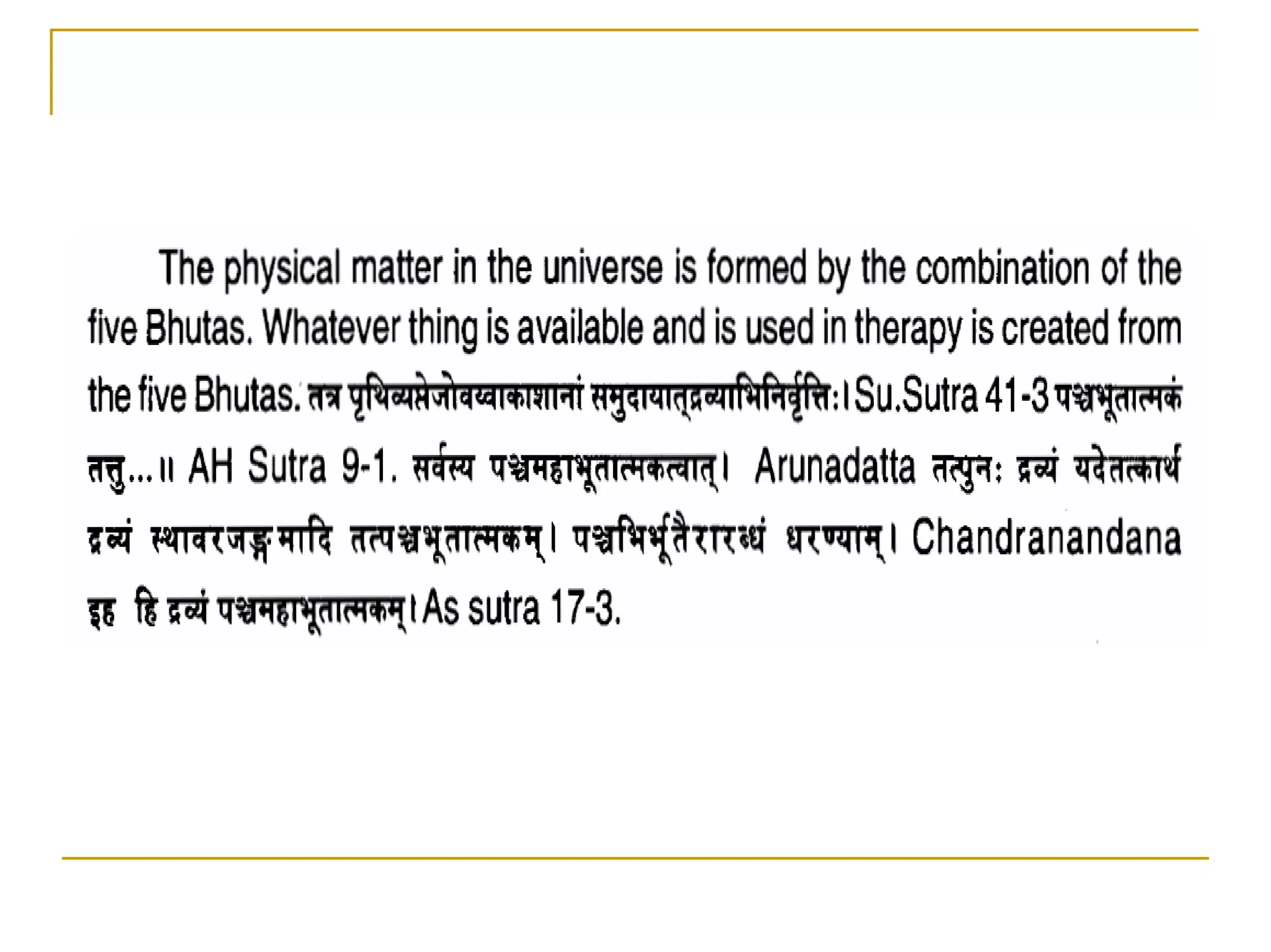
Chikitsa Interpretation of Agni


  Dr. K. Shiva Rama Prasad
              Professor & Head
        Department of Kayachikitsa
         Amrita School of Ayurveda
      Amrita Viswavidyapeetham, Kerala
A technoayurveda.wordpress.com presents


  In association with –
  ayurvedaonline.wordpress.com
  & ayurvedapadakosham.wordpress.com
  & HAVE Knowledge ……………………….
Life is directly proportional to AGNI

 Extinguishing the Agni is
 DEATH
 The biological fire – heat     zÉÉliÉÉæÅalÉåÍqÉërÉiÉå – cÉ ÍcÉ 15/4
 expression is Life
 The temperature –
 pressure – mass triad of
 physical represents the
 Pitta – Vata – Kapha
 The External (Sun) and
 Internal (Pitta) Heat is the
 basis of Life
Definition

 Agni is defined as Nayate
 Parin`aamayateeti
 That is the one which brings about the
 transformation of consumed Aahaara
 Vihaaraadi Dravya of Vijaateeya
 (incompatible) origin to Sajaateeya
 (homogeneous) nature.
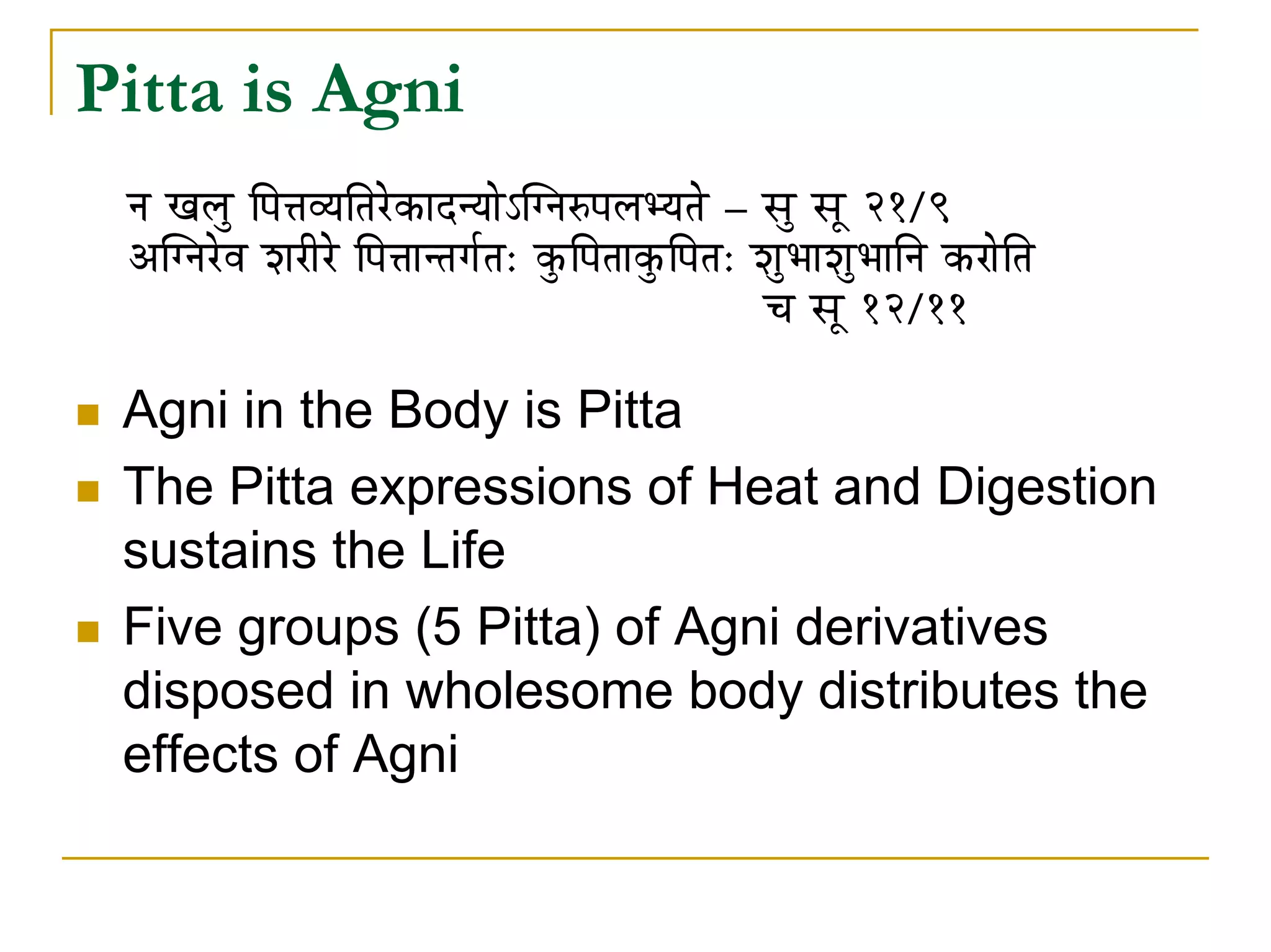
Pitta is Agni
 lÉ ZÉsÉÑ ÌmɨÉurÉÌiÉUåMüÉSlrÉÉåÅÎalÉÂmÉsÉprÉiÉå – xÉÑ xÉÔ 21/9
 AÎalÉUåuÉ zÉUÏUå ÌmɨÉÉliÉaÉïiÉ: MÑüÌmÉiÉÉMÑüÌmÉiÉ: zÉÑpÉÉzÉÑpÉÉÌlÉ MüUÉåÌiÉ
                                                      cÉ xÉÔ 12/11

 Agni in the Body is Pitta
 The Pitta expressions of Heat and Digestion
 sustains the Life
 Five groups (5 Pitta) of Agni derivatives
 disposed in wholesome body distributes the
 effects of Agni
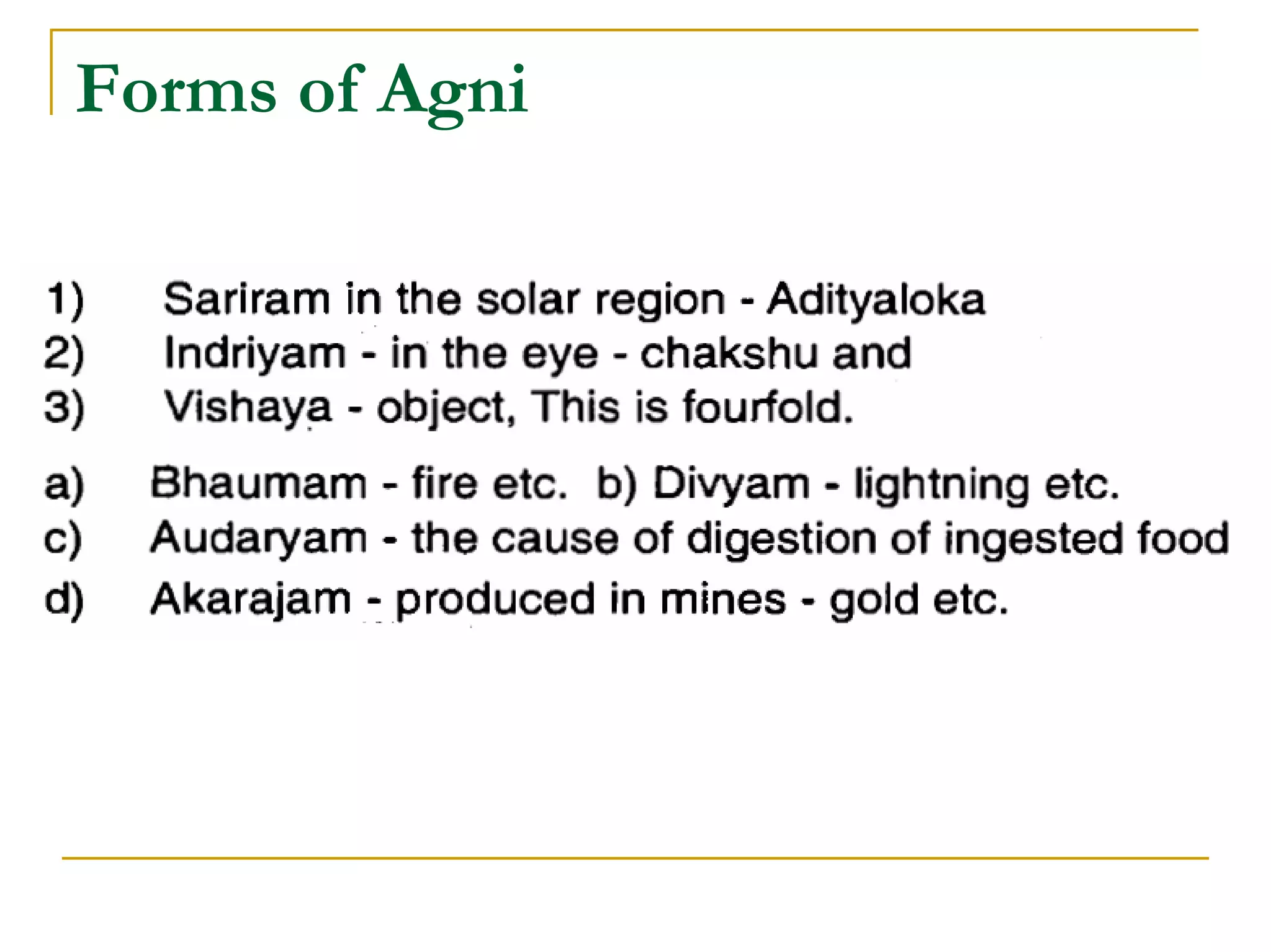
Forms of Agni
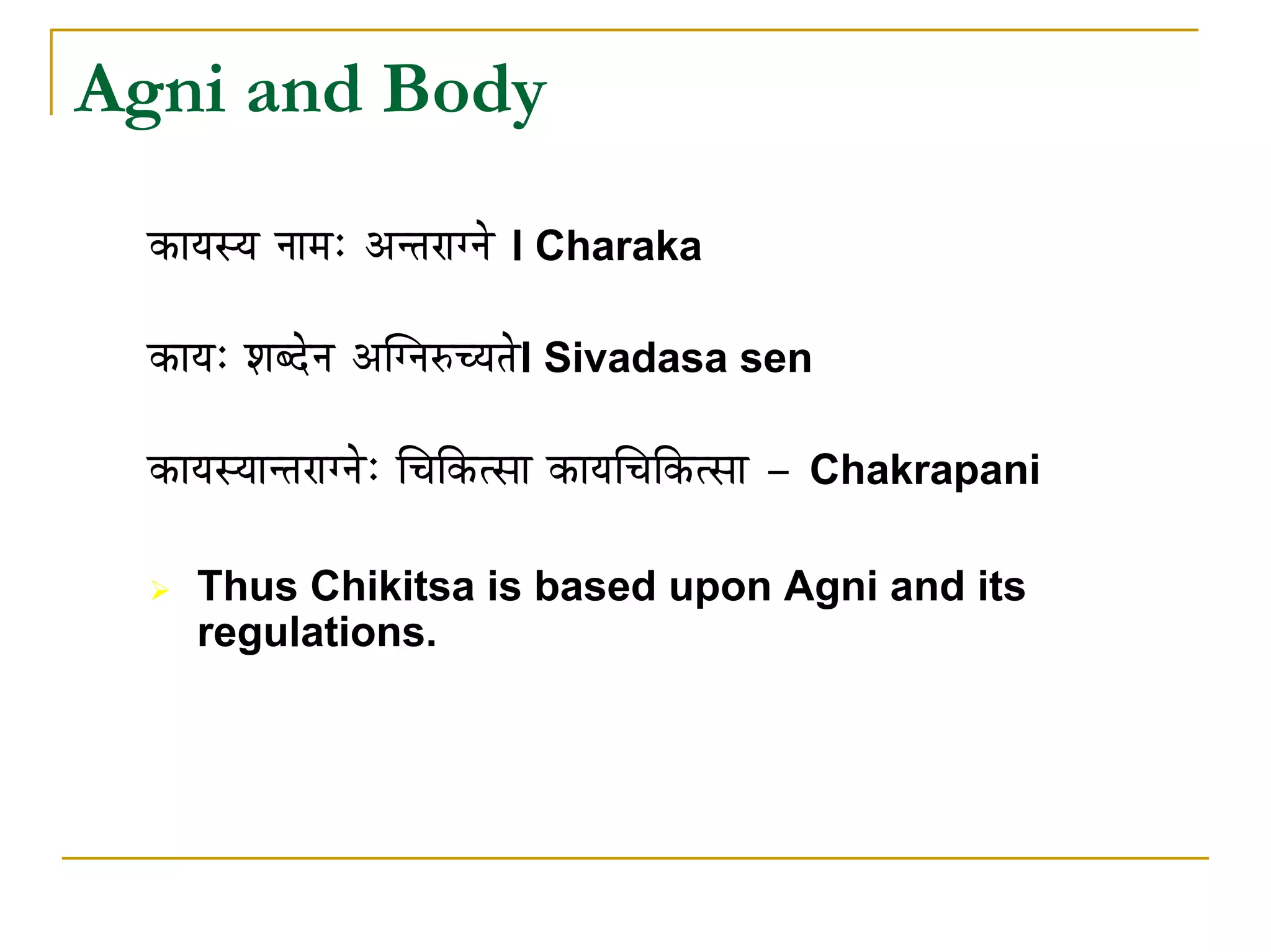
Agni and Body
  MüÉrÉxrÉ lÉÉqÉÈ AliÉUÉalÉå l Charaka

  MüÉrÉÈ vÉoSålÉ AÎalÉÂcrÉiÉål Sivadasa sen

  MüÉrÉxrÉÉliÉUÉalÉåÈ ÍcÉÌMüixÉÉ MüÉrÉÍcÉÌMüixÉÉ - Chakrapani

     Thus Chikitsa is based upon Agni and its
     regulations.
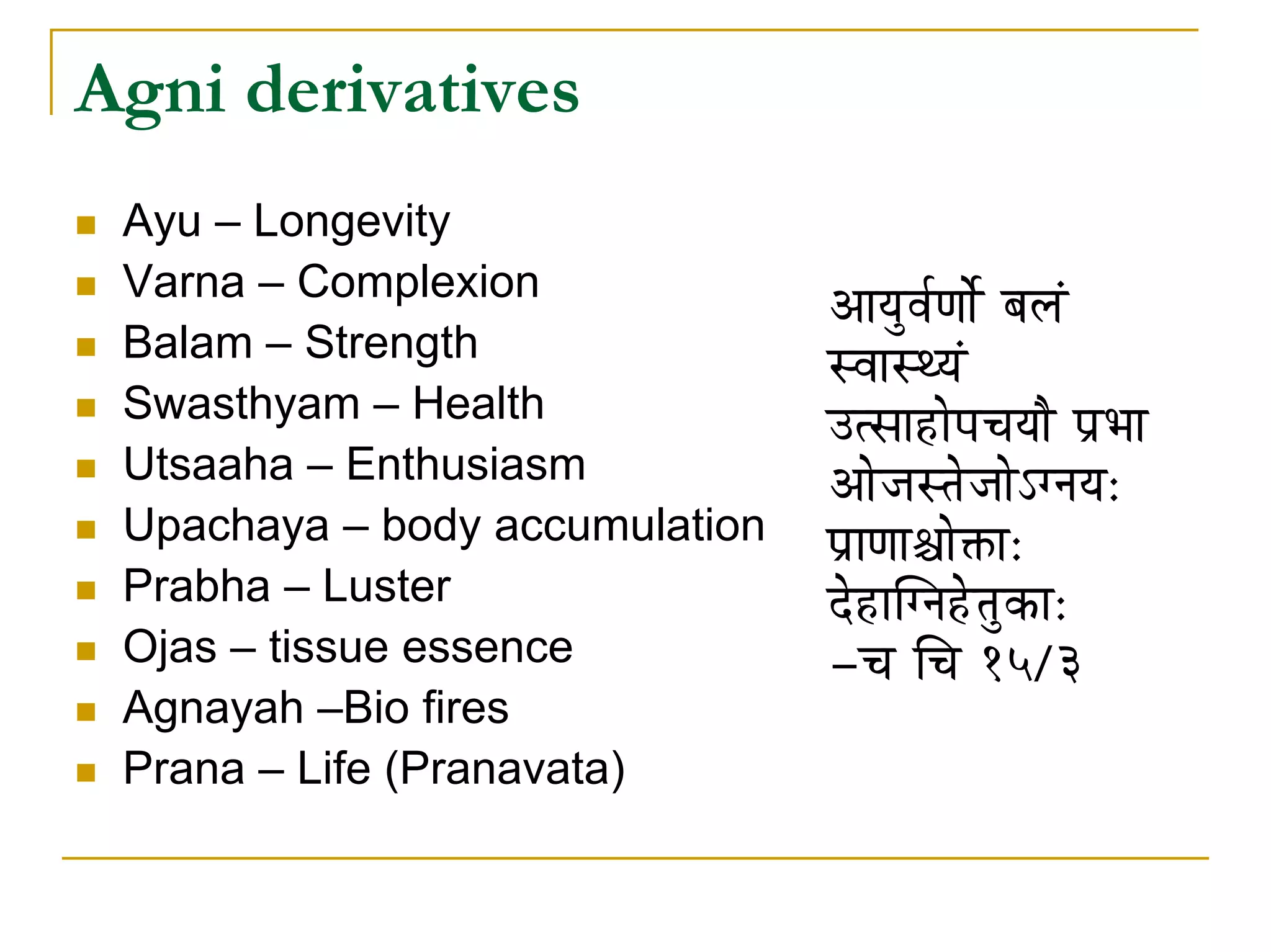
Agni derivatives
 Ayu – Longevity
 Varna – Complexion
                                AÉrÉÑuÉïhÉÉåï oÉsÉÇ
 Balam – Strength
                                xuÉÉxjrÉÇ
 Swasthyam – Health
                                EixÉÉWûÉåmÉcÉrÉÉæ mÉëpÉÉ
 Utsaaha – Enthusiasm           AÉåeÉxiÉåeÉÉåÅalÉrÉ:
 Upachaya – body accumulation   mÉëÉhÉɶÉÉå£üÉ:
 Prabha – Luster                SåWûÉÎalÉWåûiÉÑMüÉ:
 Ojas – tissue essence          -cÉ ÍcÉ 15/3
 Agnayah –Bio fires
 Prana – Life (Pranavata)
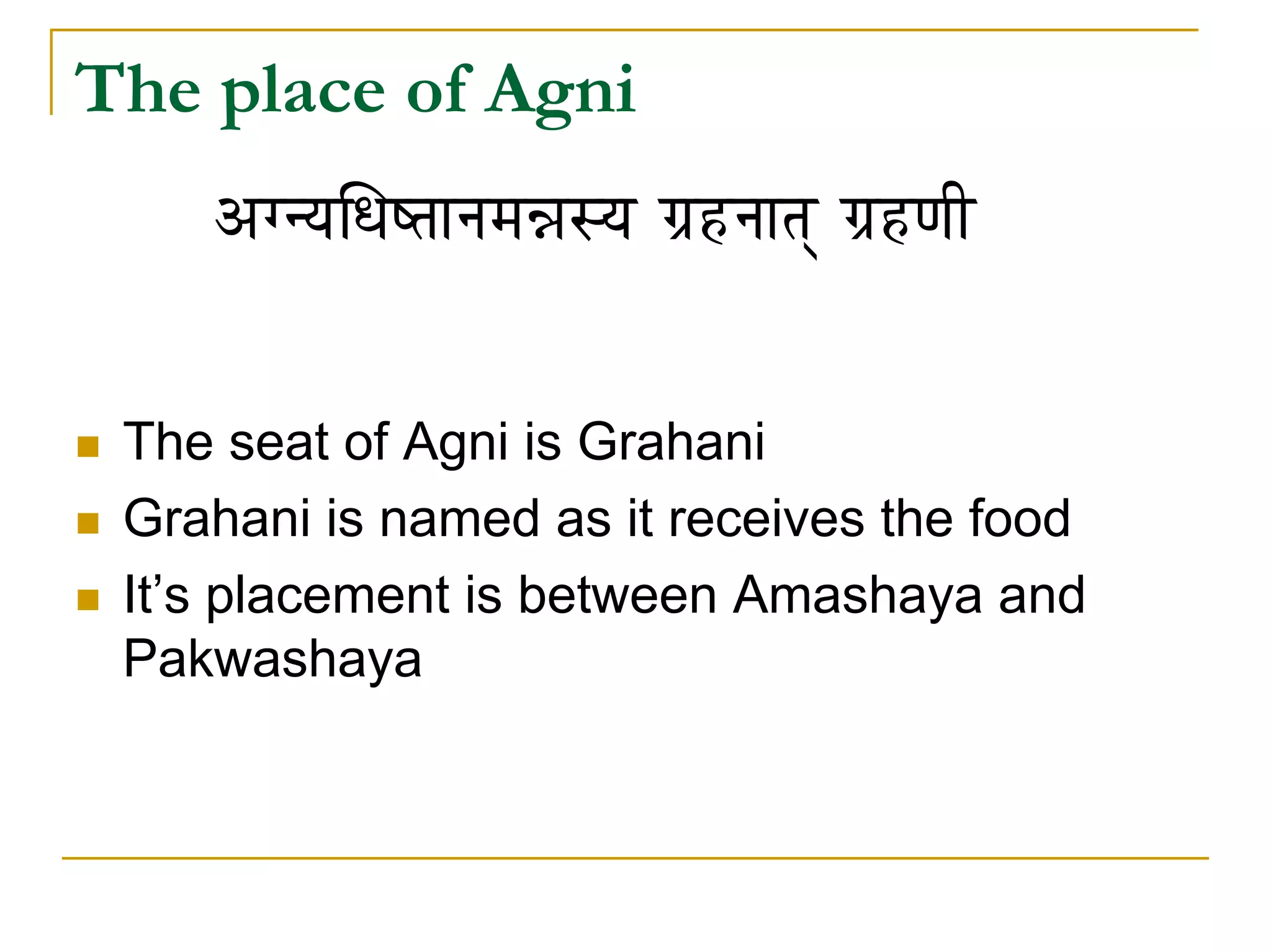
The place of Agni
    AalrÉÍkÉwiÉÉlÉqɳÉxrÉ aÉëWûlÉÉiÉç aÉëWûhÉÏ


 The seat of Agni is Grahani
 Grahani is named as it receives the food
 It’s placement is between Amashaya and
 Pakwashaya
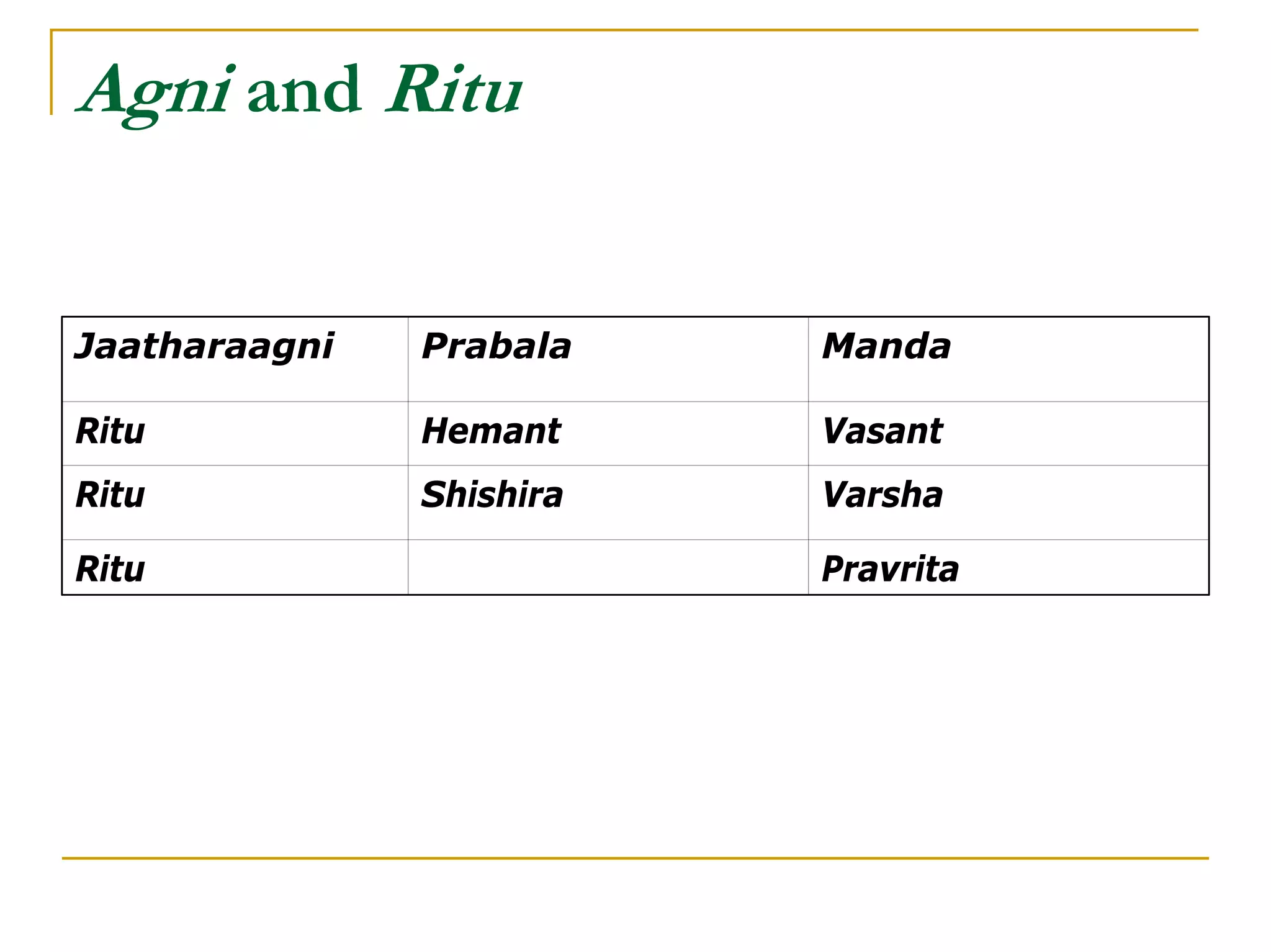
Agni and Ritu


Jaatharaagni   Prabala    Manda

Ritu           Hemant     Vasant
Ritu           Shishira   Varsha

Ritu                      Pravrita
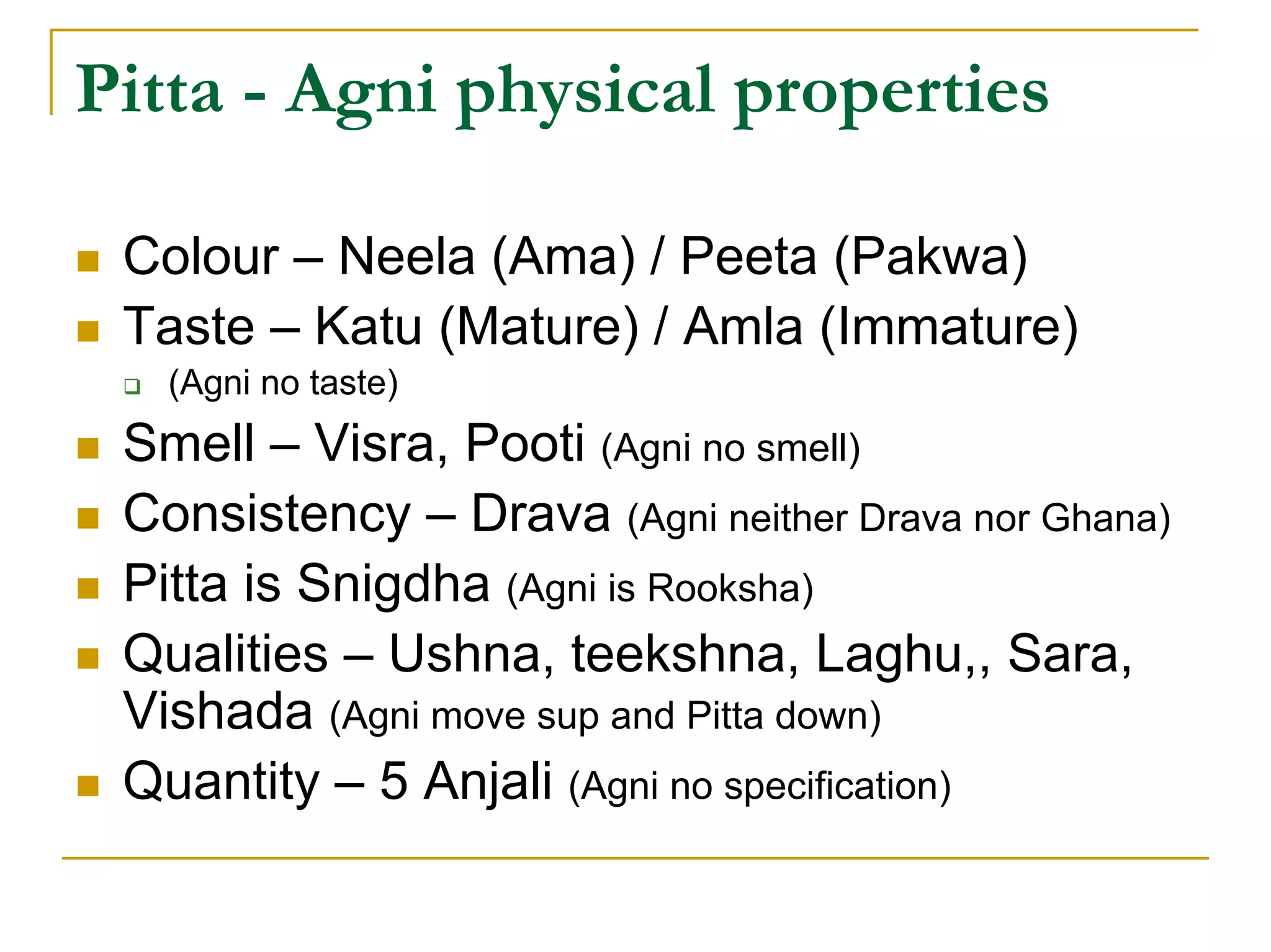
Pitta - Agni physical properties

 Colour – Neela (Ama) / Peeta (Pakwa)
 Taste – Katu (Mature) / Amla (Immature)
   (Agni no taste)
 Smell – Visra, Pooti (Agni no smell)
 Consistency – Drava (Agni neither Drava nor Ghana)
 Pitta is Snigdha (Agni is Rooksha)
 Qualities – Ushna, teekshna, Laghu,, Sara,
 Vishada (Agni move sup and Pitta down)
 Quantity – 5 Anjali (Agni no specification)
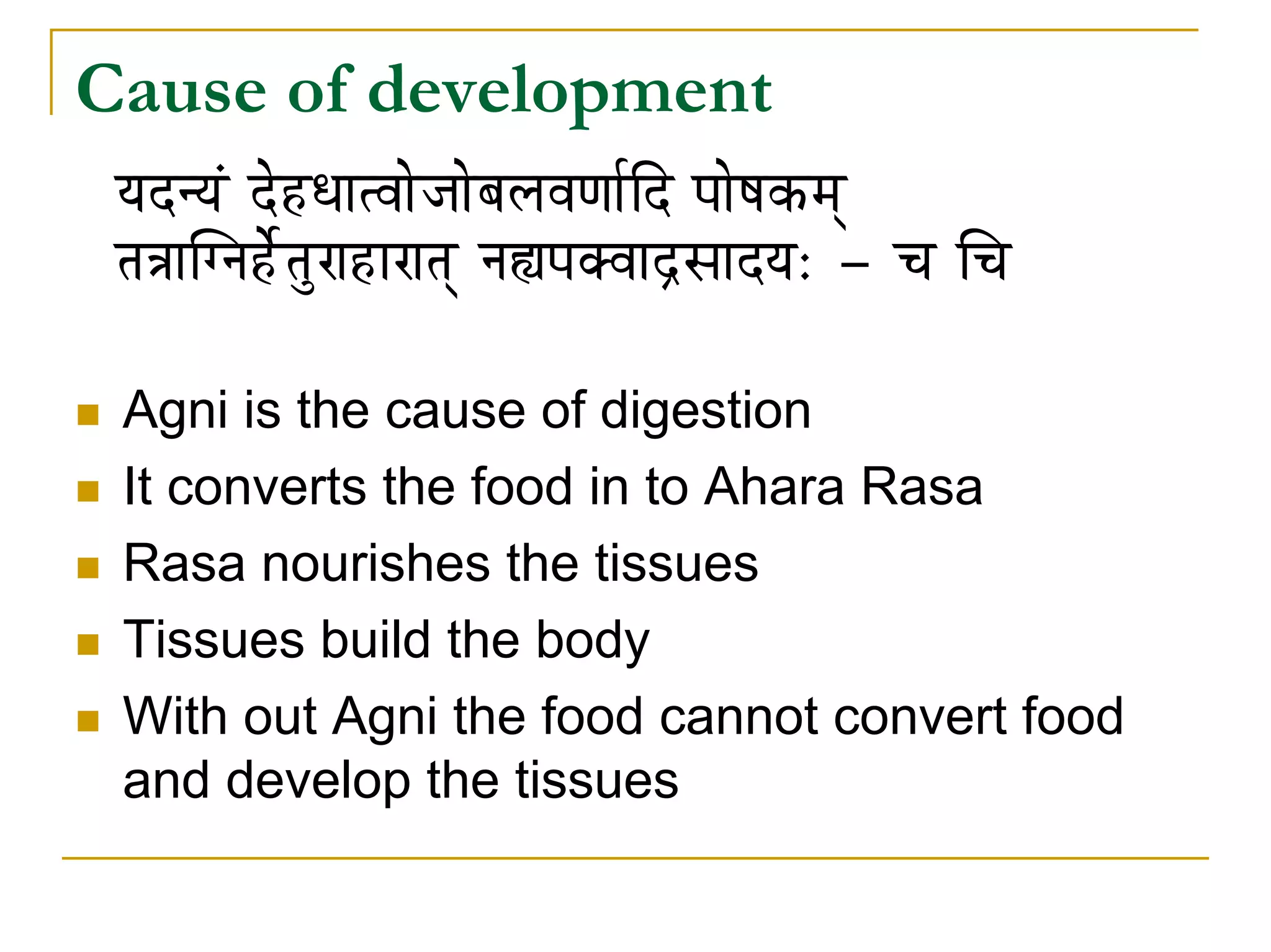
Cause of development
 rÉSlrÉÇ SåWûkÉÉiuÉÉåeÉÉåoÉsÉuÉhÉÉïÌS mÉÉåwÉMüqÉç
 iɧÉÉÎalÉWåïûiÉÑUÉWûÉUÉiÉç lɽmÉYuÉÉSìxÉÉSrÉ: - cÉ ÍcÉ

 Agni is the cause of digestion
 It converts the food in to Ahara Rasa
 Rasa nourishes the tissues
 Tissues build the body
 With out Agni the food cannot convert food
 and develop the tissues
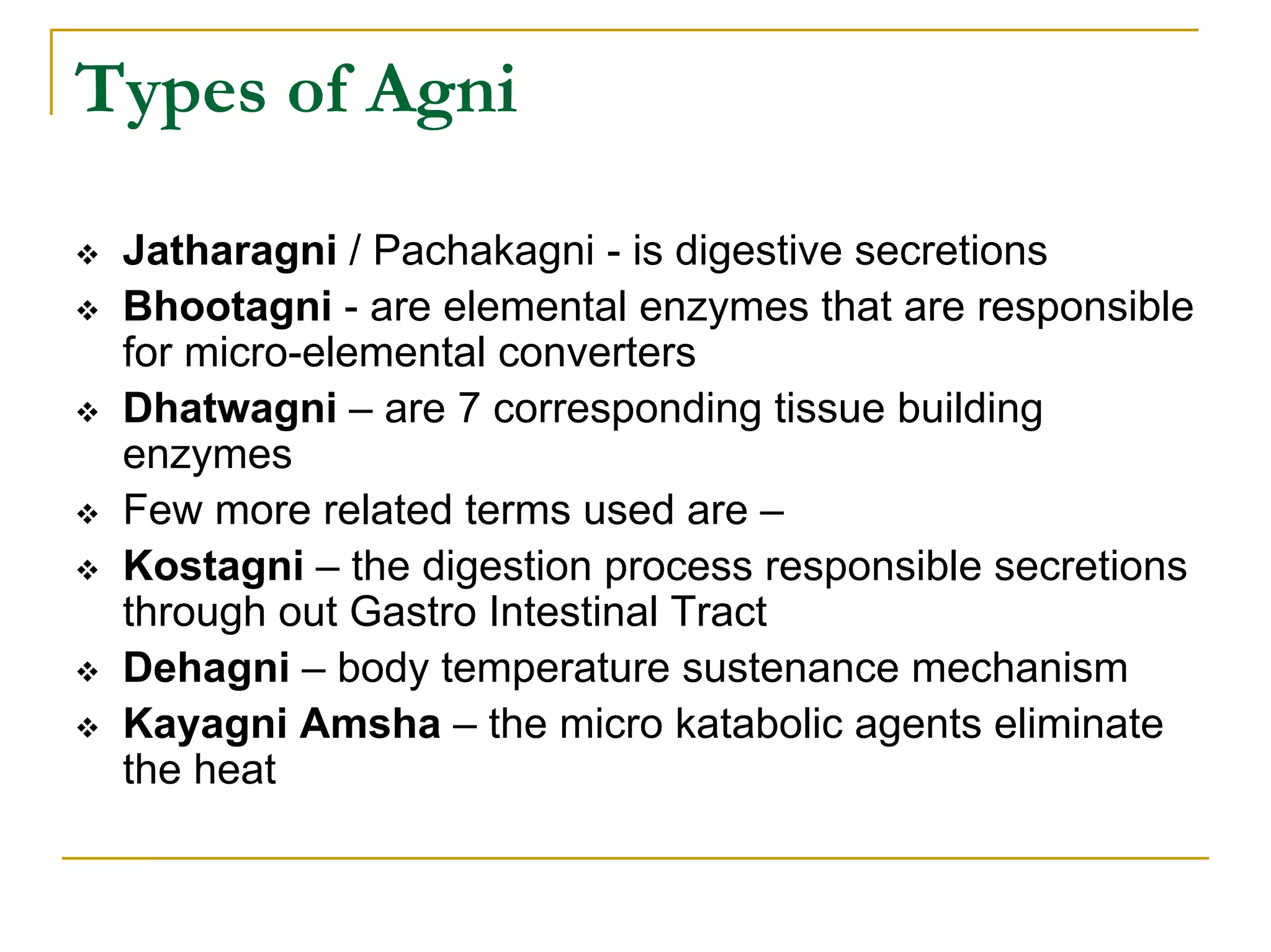
Types of Agni

 Jatharagni / Pachakagni - is digestive secretions
 Bhootagni - are elemental enzymes that are responsible
 for micro-elemental converters
 Dhatwagni – are 7 corresponding tissue building
 enzymes
 Few more related terms used are –
 Kostagni – the digestion process responsible secretions
 through out Gastro Intestinal Tract
 Dehagni – body temperature sustenance mechanism
 Kayagni Amsha – the micro katabolic agents eliminate
 the heat
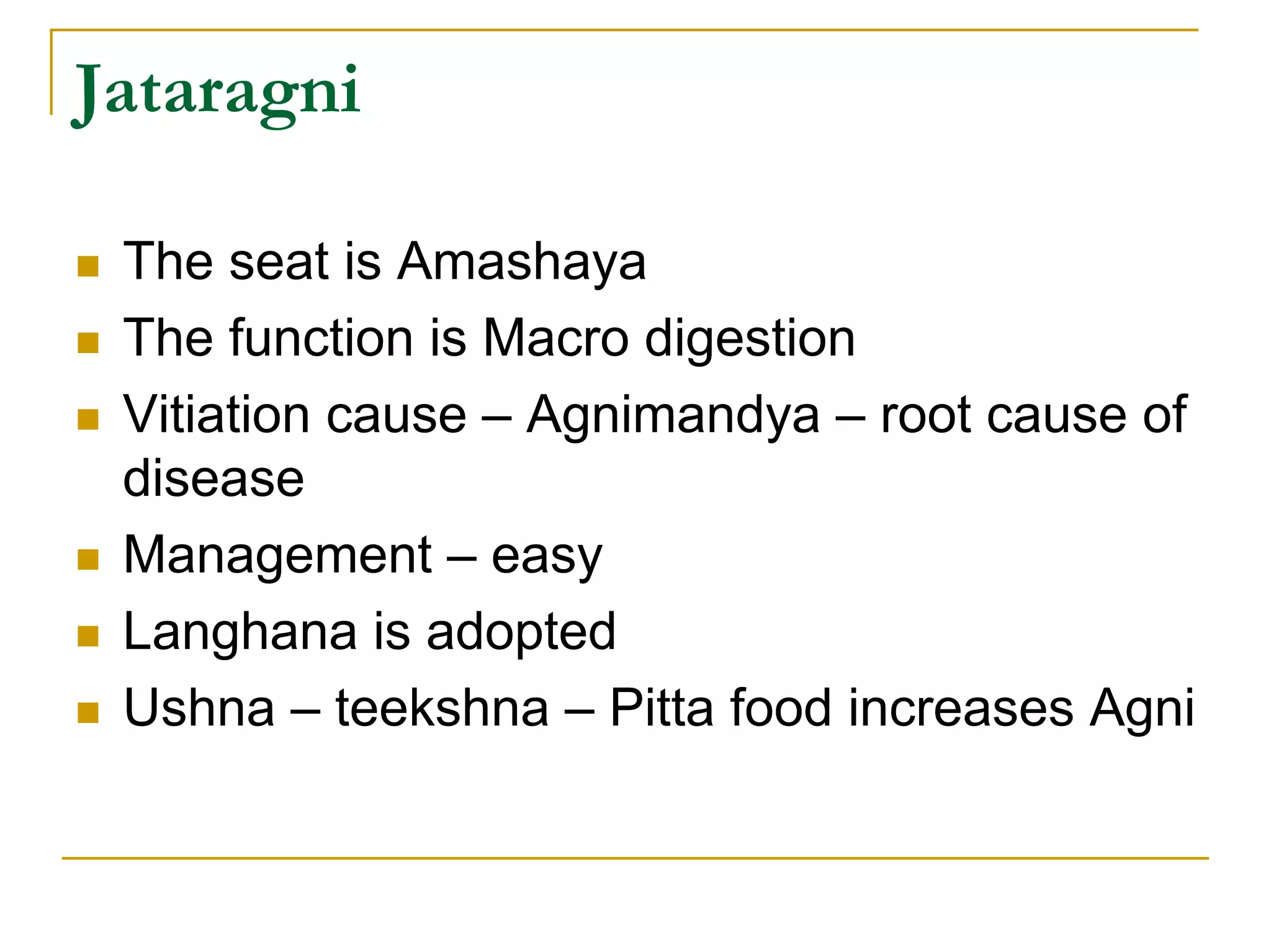
Jataragni

 The seat is Amashaya
 The function is Macro digestion
 Vitiation cause – Agnimandya – root cause of
 disease
 Management – easy
 Langhana is adopted
 Ushna – teekshna – Pitta food increases Agni
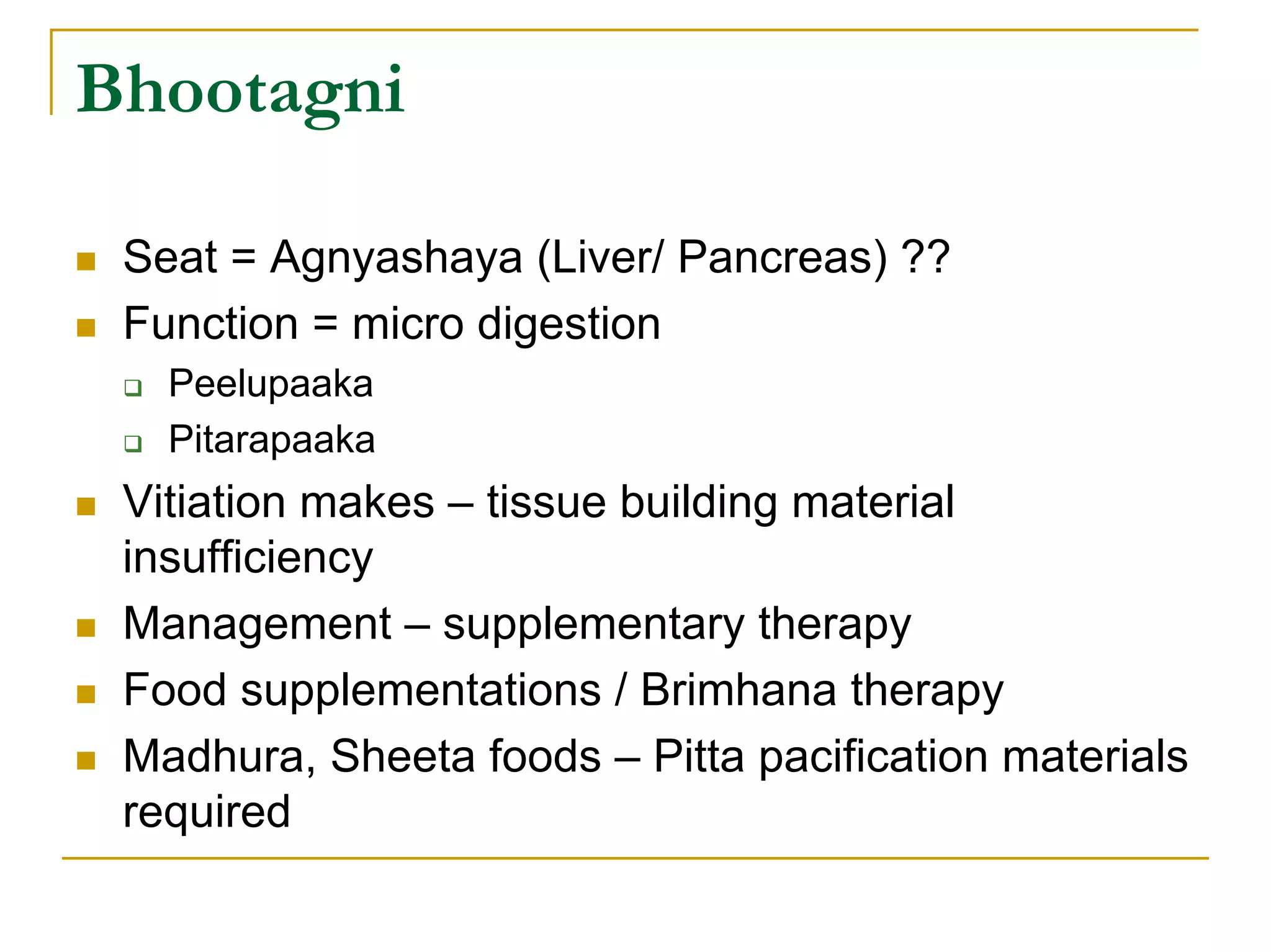
Bhootagni

 Seat = Agnyashaya (Liver/ Pancreas) ??
 Function = micro digestion
   Peelupaaka
   Pitarapaaka
 Vitiation makes – tissue building material
 insufficiency
 Management – supplementary therapy
 Food supplementations / Brimhana therapy
 Madhura, Sheeta foods – Pitta pacification materials
 required
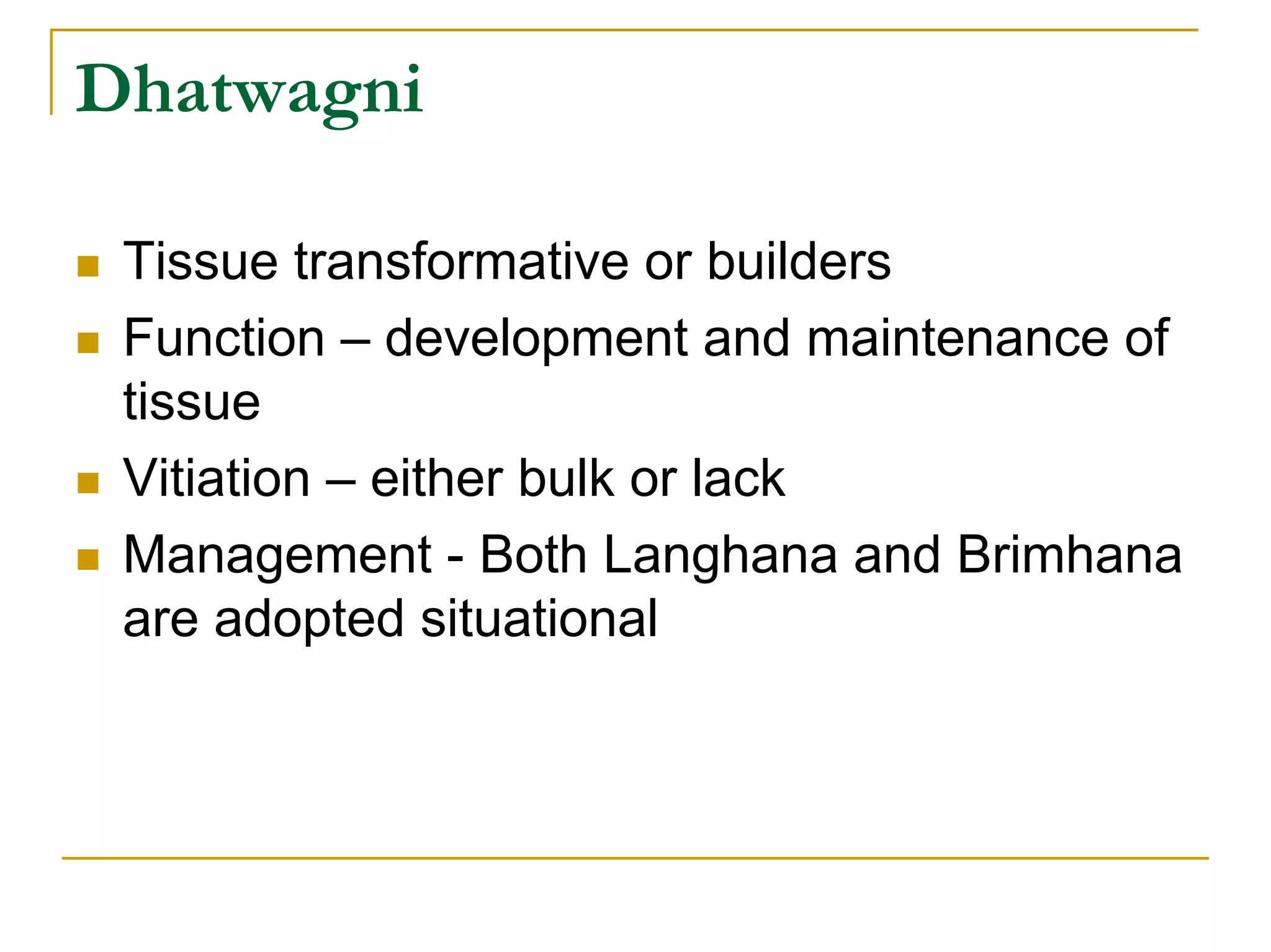
Dhatwagni

 Tissue transformative or builders
 Function – development and maintenance of
 tissue
 Vitiation – either bulk or lack
 Management - Both Langhana and Brimhana
 are adopted situational
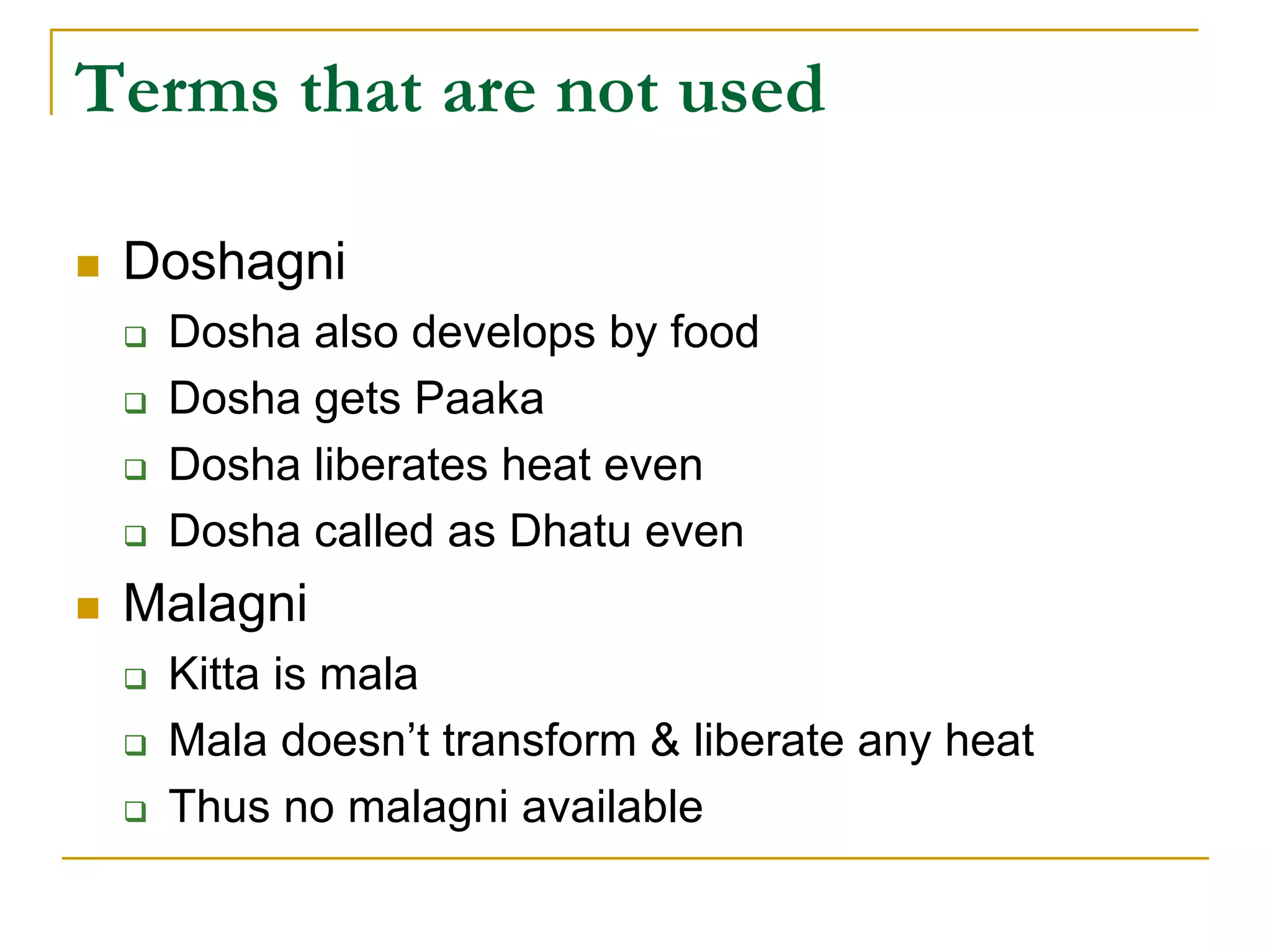
Terms that are not used

 Doshagni
  Dosha also develops by food
  Dosha gets Paaka
  Dosha liberates heat even
  Dosha called as Dhatu even
 Malagni
  Kitta is mala
  Mala doesn’t transform & liberate any heat
  Thus no malagni available
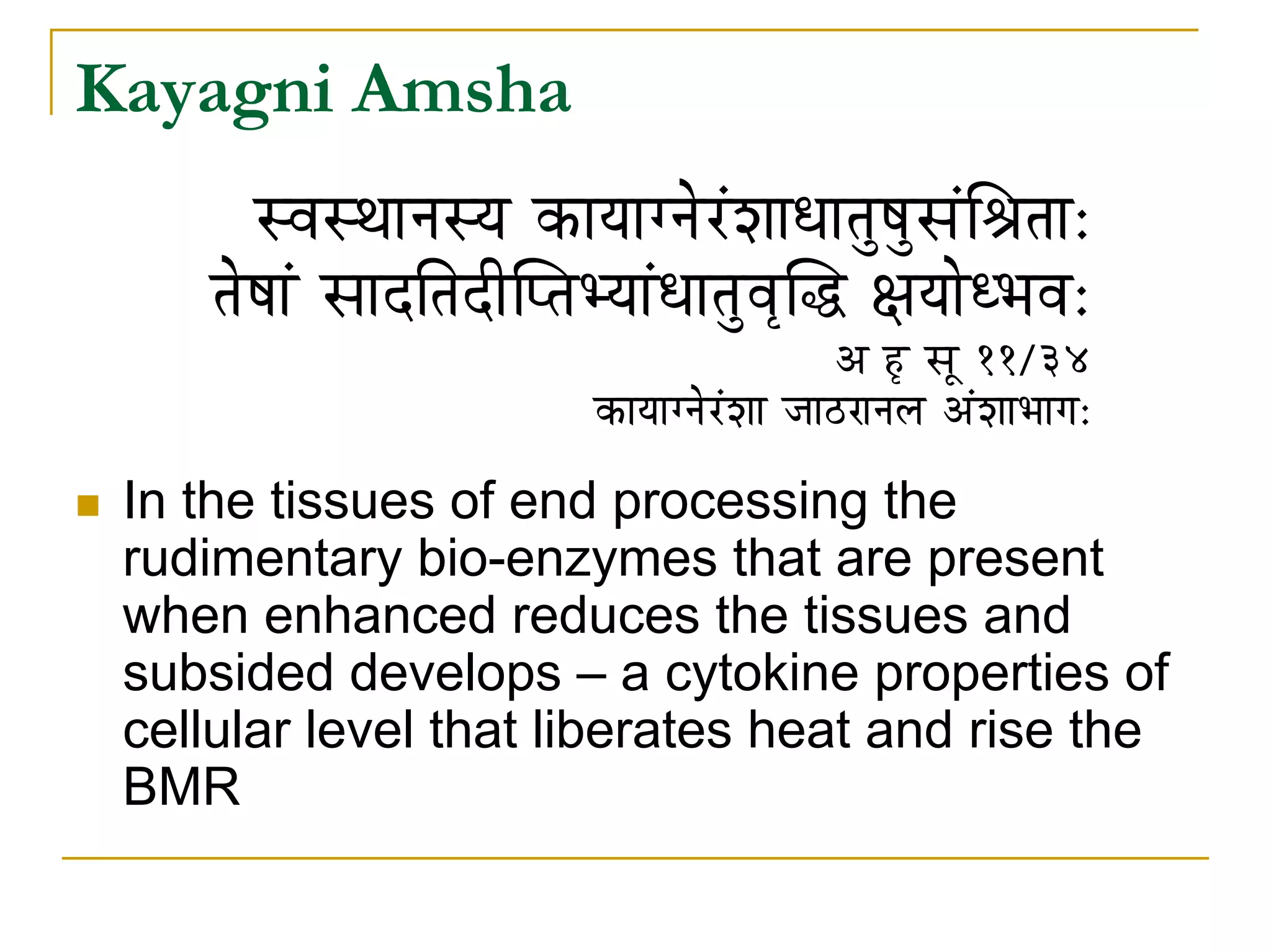
Kayagni Amsha
        xuÉxjÉÉlÉxrÉ MüÉrÉÉalÉåUÇzÉÉkÉÉiÉÑwÉÑxÉÇÍ´ÉiÉÉ:
     iÉåwÉÉÇ xÉÉSÌiÉSÏÎmiÉprÉÉÇkÉÉiÉÑuÉ×ή ¤ÉrÉÉåkpÉuÉ:
                                             A WØû xÉÔ 11/34
                          MüÉrÉÉalÉåUÇzÉÉ eÉÉPûUÉlÉsÉ AÇzÉÉpÉÉaÉ:

 In the tissues of end processing the
 rudimentary bio-enzymes that are present
 when enhanced reduces the tissues and
 subsided develops – a cytokine properties of
 cellular level that liberates heat and rise the
 BMR
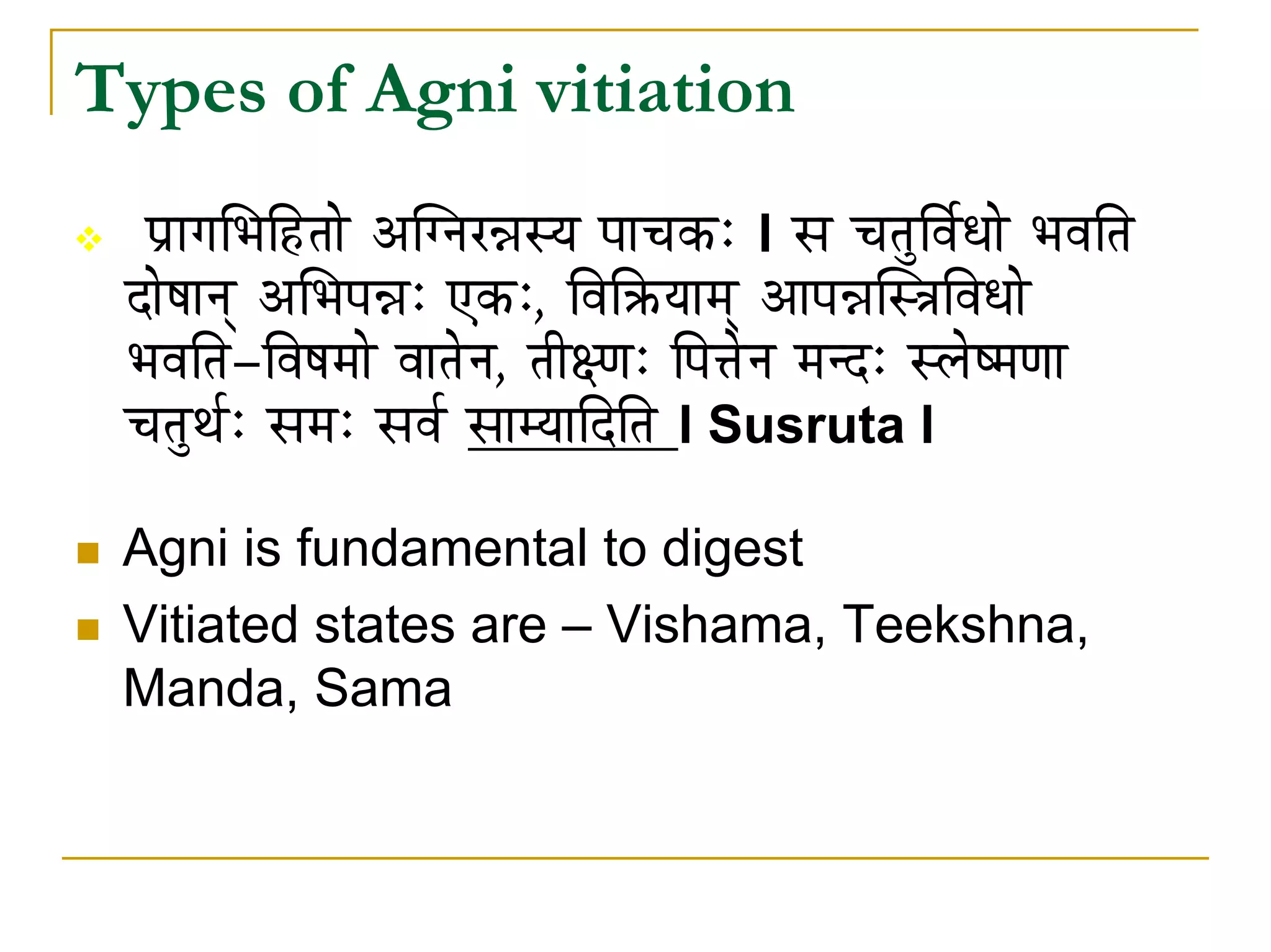
Types of Agni vitiation
  mÉëÉaÉÍpÉÌWûiÉÉå AÎalÉU³ÉxrÉ mÉÉcÉMüÈ l xÉ cÉiÉÑÌuÉïkÉÉå pÉuÉÌiÉ
 SÉåwÉÉlÉç AÍpÉmɳÉÈ LMüÈ, ÌuÉÌ¢ürÉÉqÉç AÉmɳÉÎx§ÉÌuÉkÉÉå
 pÉuÉÌiÉ-ÌuÉwÉqÉÉå uÉÉiÉålÉ, iÉϤhÉÈ ÌmɨÉålÉ qÉlSÈ xsÉåwqÉhÉÉ
 cÉiÉÑjÉïÈ xÉqÉÈ xÉuÉï xÉÉqrÉÉÌSÌiÉ l Susruta l

 Agni is fundamental to digest
 Vitiated states are – Vishama, Teekshna,
 Manda, Sama
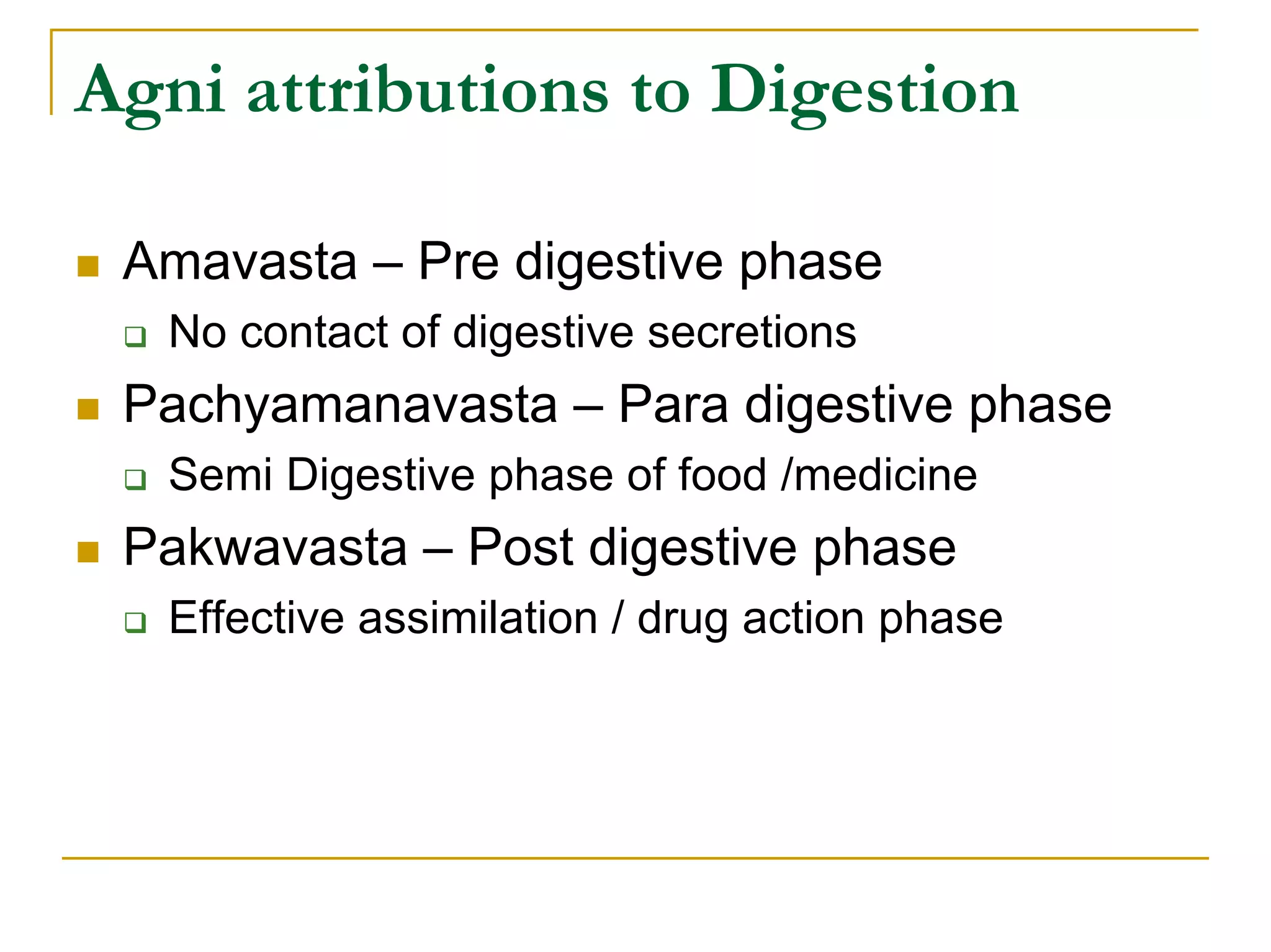
Agni attributions to Digestion

 Amavasta – Pre digestive phase
  No contact of digestive secretions
 Pachyamanavasta – Para digestive phase
  Semi Digestive phase of food /medicine
 Pakwavasta – Post digestive phase
  Effective assimilation / drug action phase
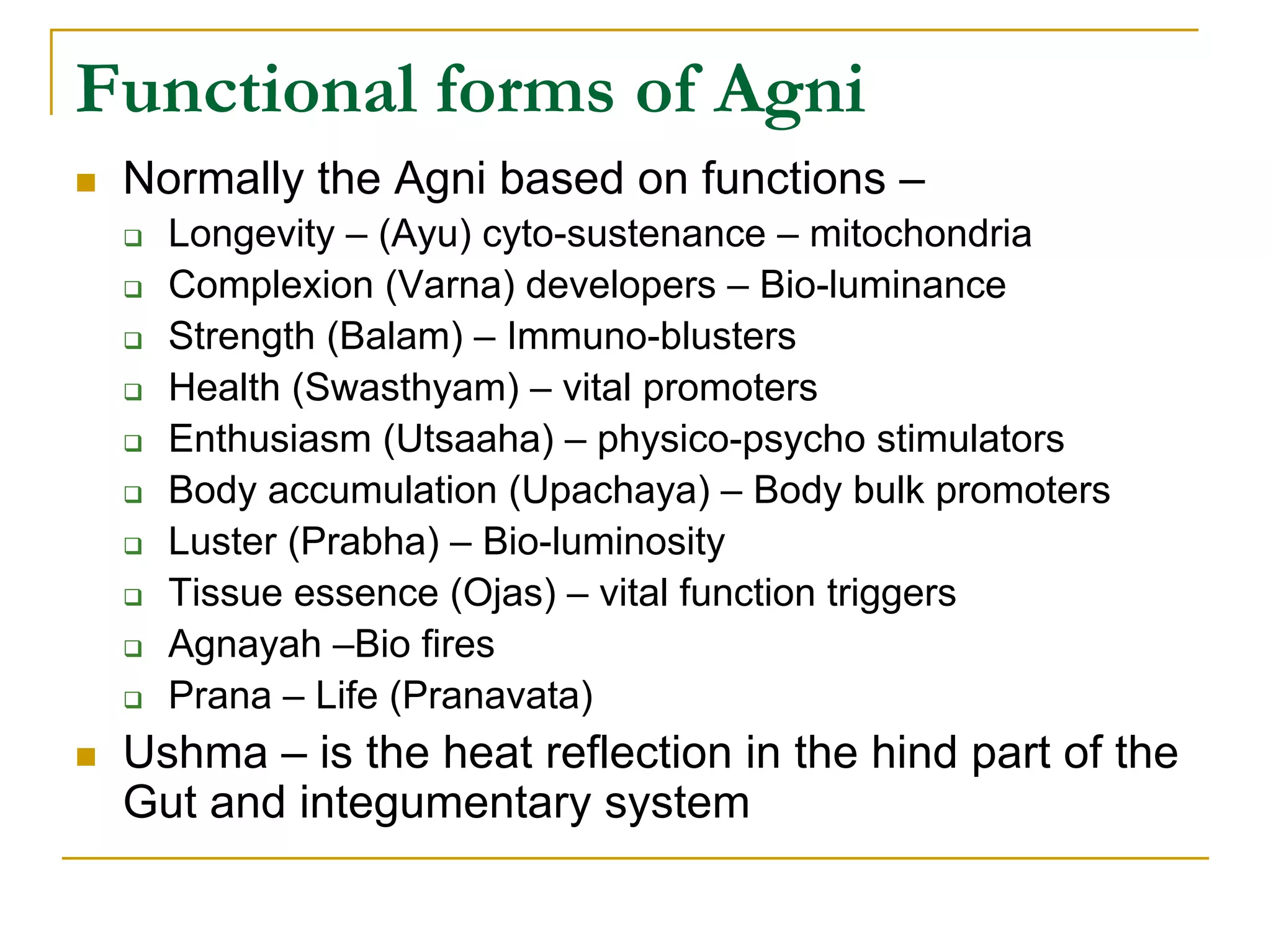
Functional forms of Agni
 Normally the Agni based on functions –
   Longevity – (Ayu) cyto-sustenance – mitochondria
   Complexion (Varna) developers – Bio-luminance
   Strength (Balam) – Immuno-blusters
   Health (Swasthyam) – vital promoters
   Enthusiasm (Utsaaha) – physico-psycho stimulators
   Body accumulation (Upachaya) – Body bulk promoters
   Luster (Prabha) – Bio-luminosity
   Tissue essence (Ojas) – vital function triggers
   Agnayah –Bio fires
   Prana – Life (Pranavata)
 Ushma – is the heat reflection in the hind part of the
 Gut and integumentary system
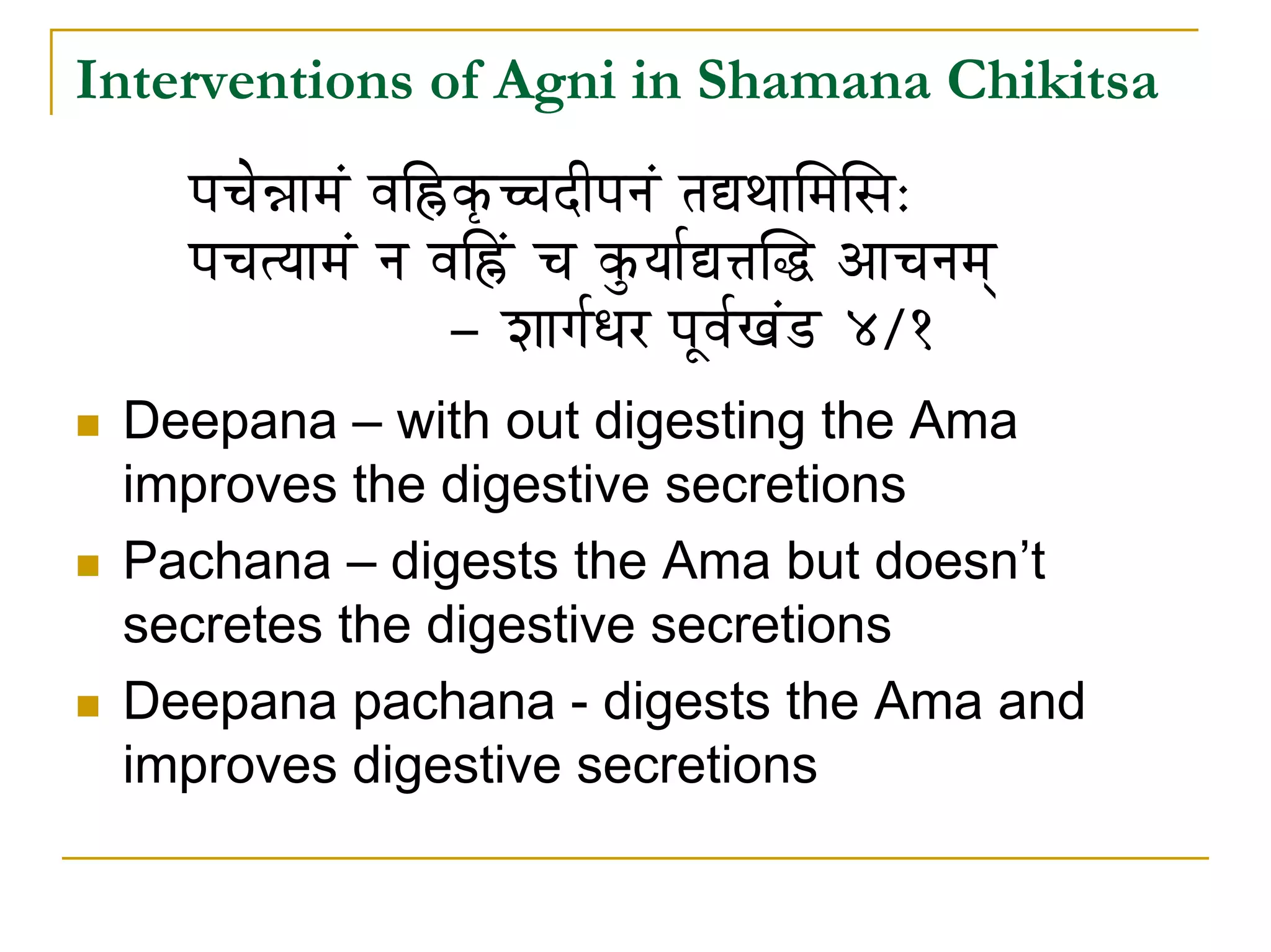
Interventions of Agni in Shamana Chikitsa
    mÉcÉå³ÉÉqÉÇ uÉÌ»ûM×üŠSÏmÉlÉÇ iɱjÉÉÍqÉÍxÉ:
    mÉcÉirÉÉqÉÇ lÉ uÉÌ»Çû cÉ MÑürÉÉﱨÉή AÉcÉlÉqÉç
                    - zÉÉaÉïkÉU mÉÔuÉïZÉÇQû 4/1
 Deepana – with out digesting the Ama
 improves the digestive secretions
 Pachana – digests the Ama but doesn’t
 secretes the digestive secretions
 Deepana pachana - digests the Ama and
 improves digestive secretions
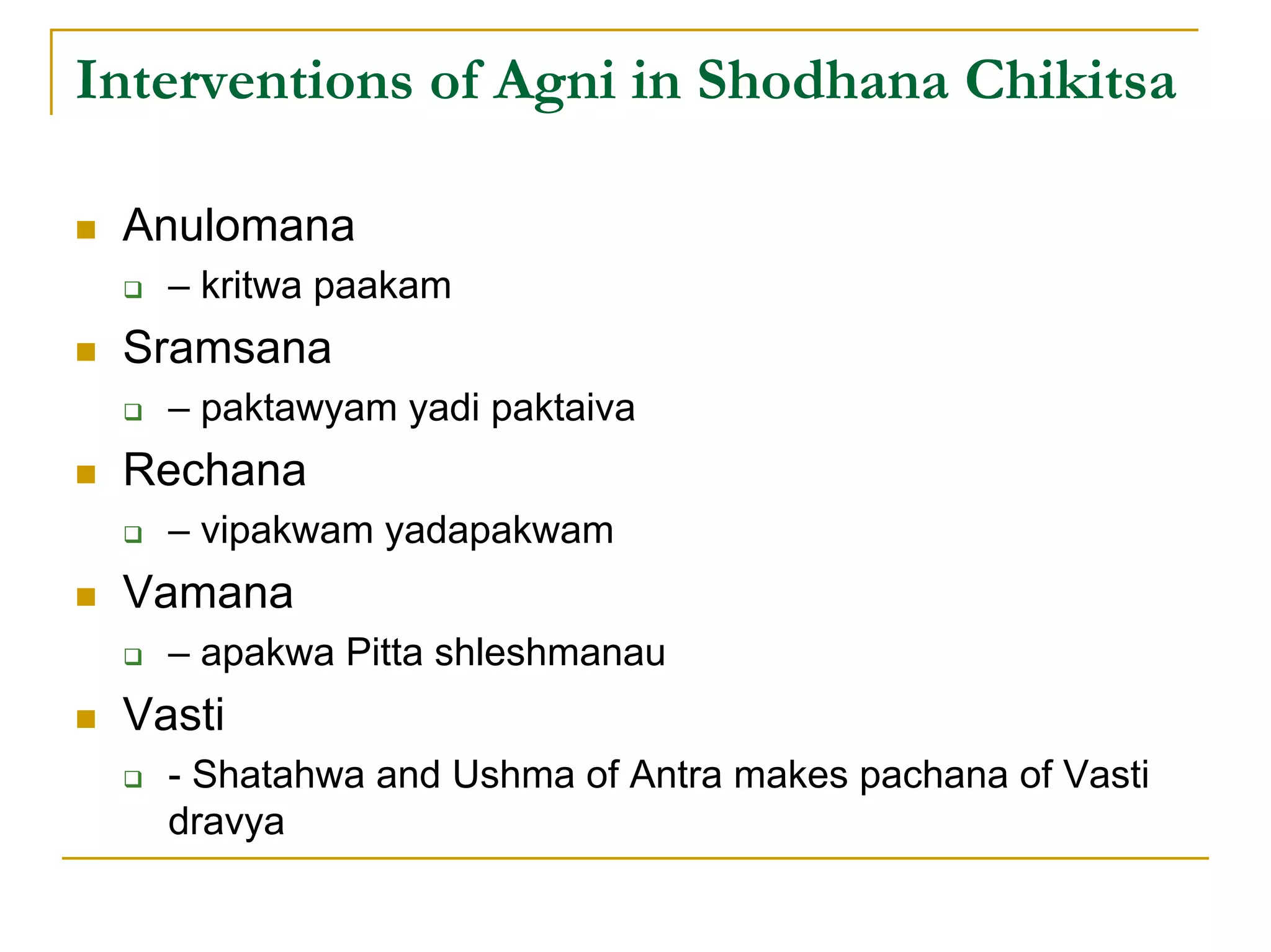
Interventions of Agni in Shodhana Chikitsa

 Anulomana
   – kritwa paakam
 Sramsana
   – paktawyam yadi paktaiva
 Rechana
   – vipakwam yadapakwam
 Vamana
   – apakwa Pitta shleshmanau
 Vasti
   - Shatahwa and Ushma of Antra makes pachana of Vasti
   dravya
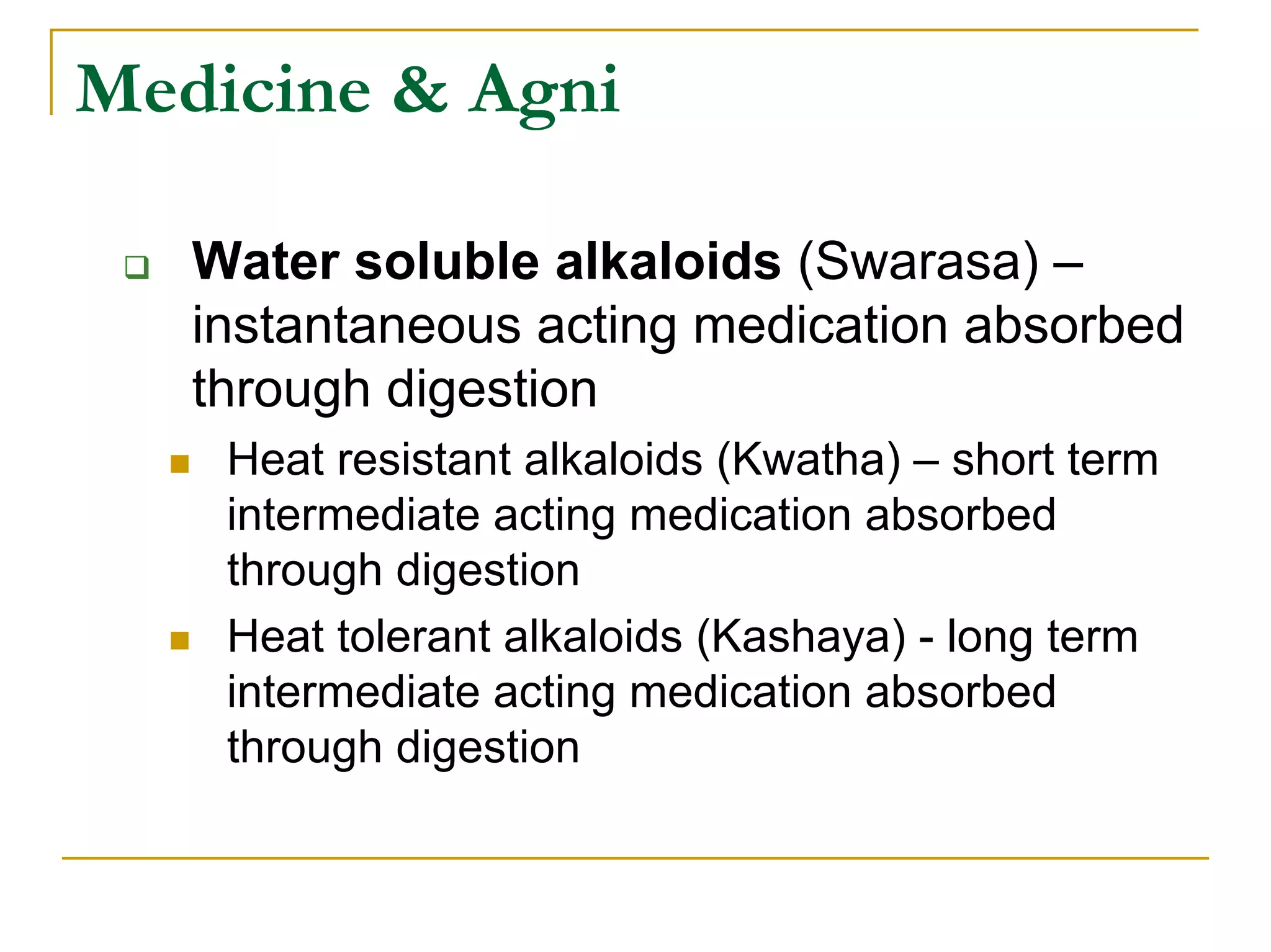
Medicine & Agni

   Water soluble alkaloids (Swarasa) –
   instantaneous acting medication absorbed
   through digestion
    Heat resistant alkaloids (Kwatha) – short term
    intermediate acting medication absorbed
    through digestion
    Heat tolerant alkaloids (Kashaya) - long term
    intermediate acting medication absorbed
    through digestion
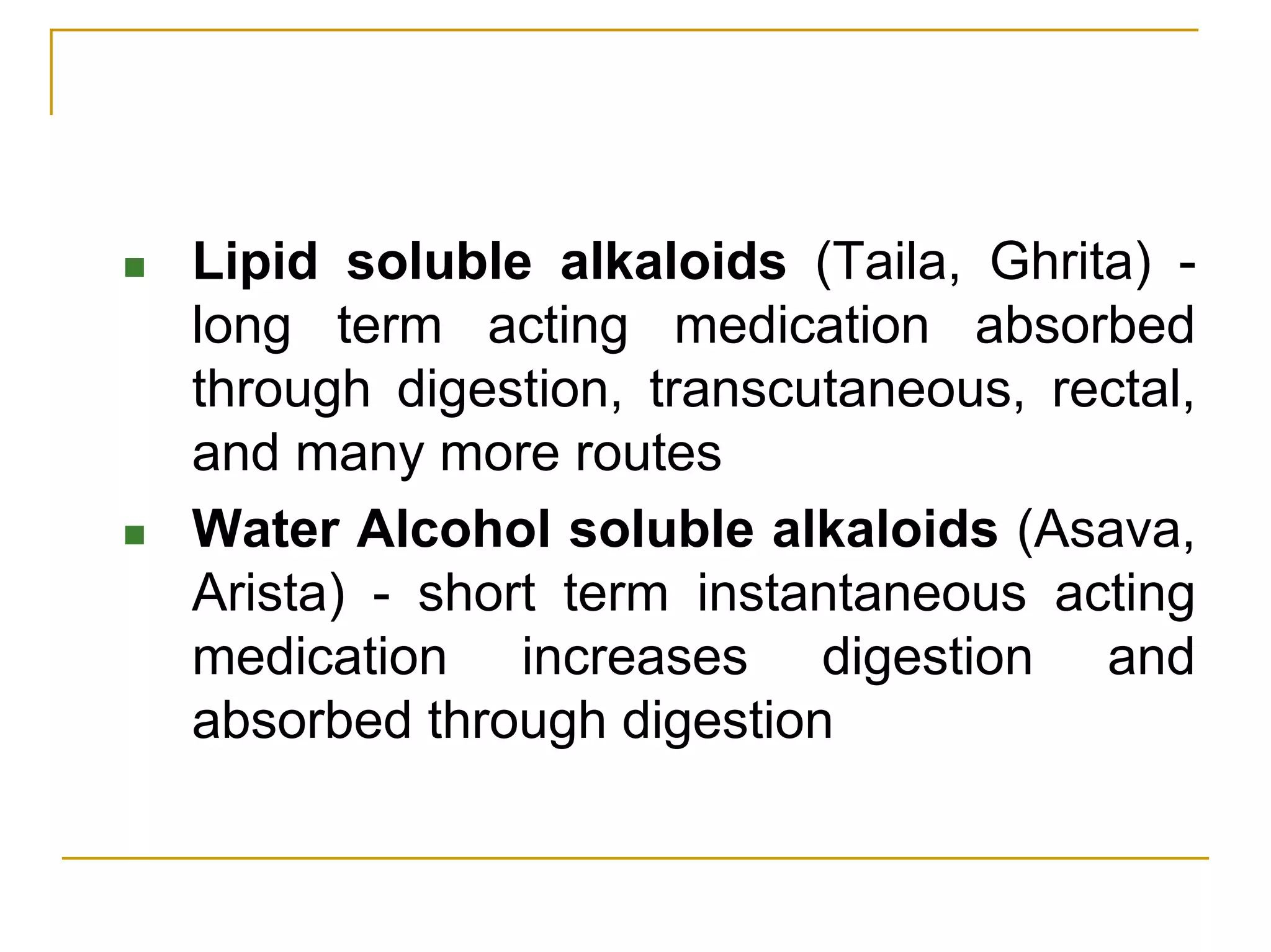
Lipid soluble alkaloids (Taila, Ghrita) -
long term acting medication absorbed
through digestion, transcutaneous, rectal,
and many more routes
Water Alcohol soluble alkaloids (Asava,
Arista) - short term instantaneous acting
medication increases digestion and
absorbed through digestion
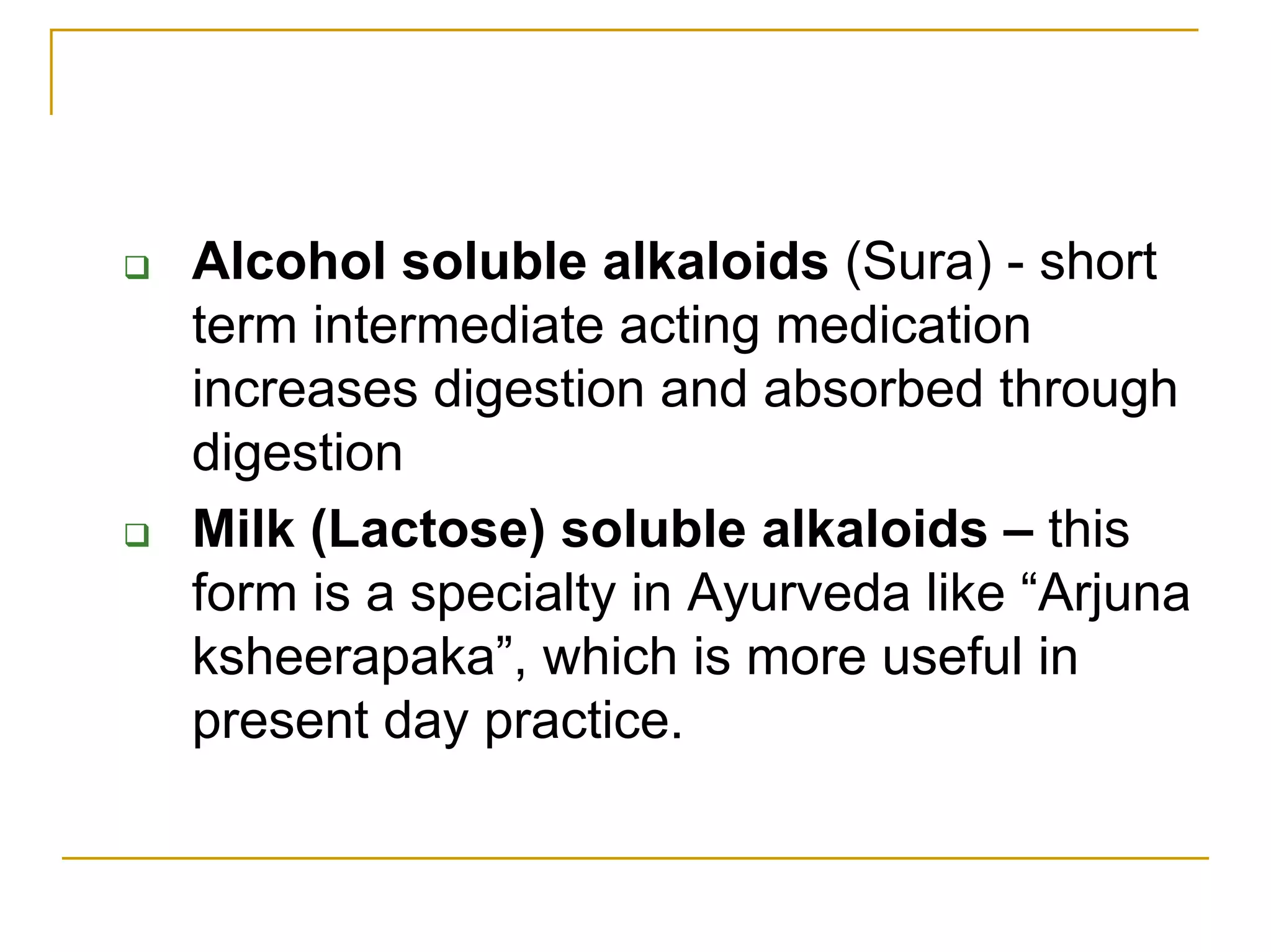
Alcohol soluble alkaloids (Sura) - short
term intermediate acting medication
increases digestion and absorbed through
digestion
Milk (Lactose) soluble alkaloids – this
form is a specialty in Ayurveda like “Arjuna
ksheerapaka”, which is more useful in
present day practice.
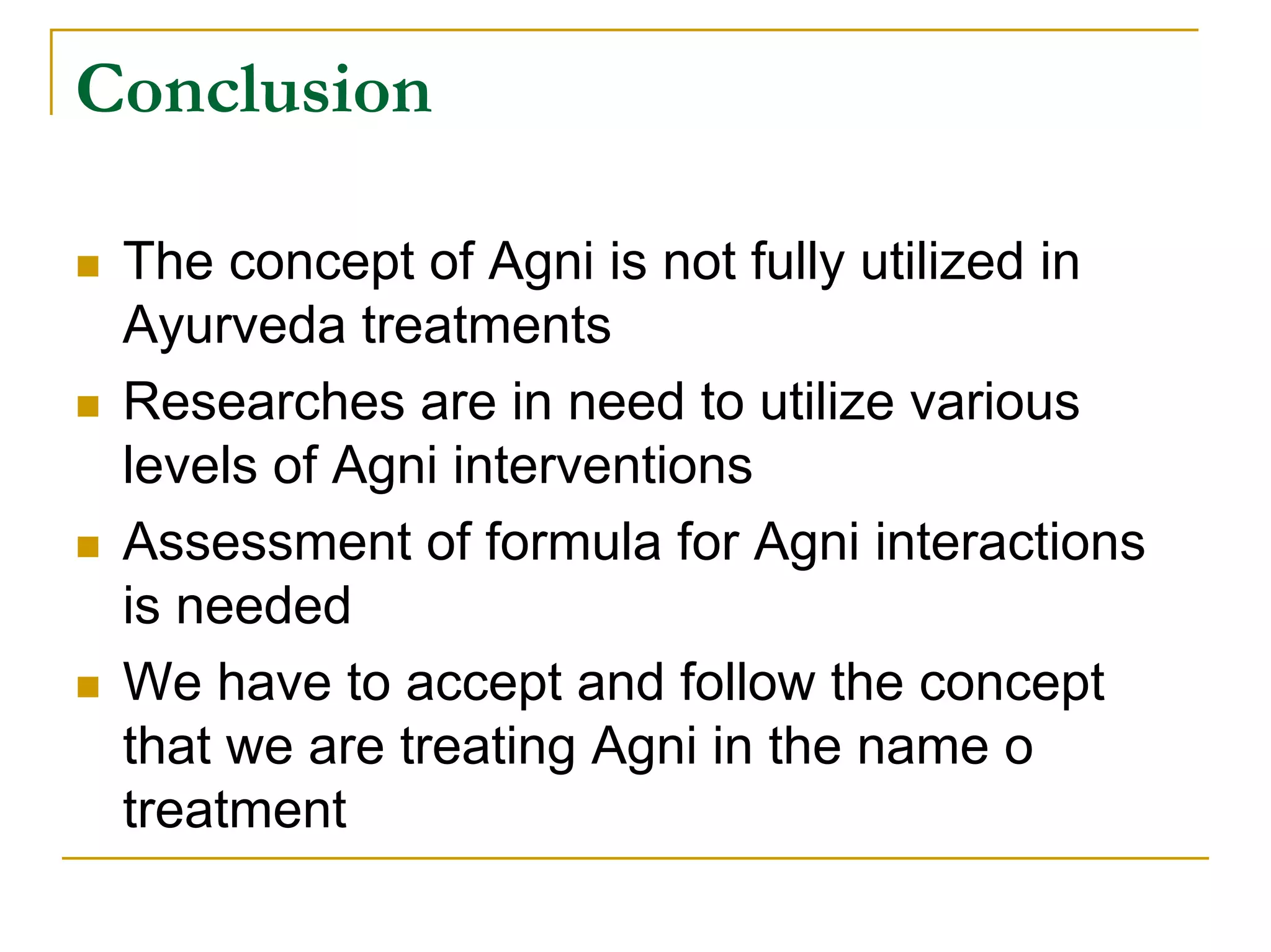
Conclusion

 The concept of Agni is not fully utilized in
 Ayurveda treatments
 Researches are in need to utilize various
 levels of Agni interventions
 Assessment of formula for Agni interactions
 is needed
 We have to accept and follow the concept
 that we are treating Agni in the name o
 treatment
It’s from        HAVE                               Knowledge


             •An association of …
             technoayurveda.wordpress.com
             ayurvedaonline.wordpress.com
             ayurvedapadakosham.wordpress.com
             doctorksrprasad@gmail.com / technoayurveda@gmail.com
23/02/2008                  doctorksrprasad@gmail.com /               29
                               doctorksrprasad@aol.in

Chikitsa Interpretation of Agni

  • 1.
    Chikitsa Interpretation ofAgni Dr. K. Shiva Rama Prasad Professor & Head Department of Kayachikitsa Amrita School of Ayurveda Amrita Viswavidyapeetham, Kerala
  • 2.
    A technoayurveda.wordpress.com presents In association with – ayurvedaonline.wordpress.com & ayurvedapadakosham.wordpress.com & HAVE Knowledge ……………………….
  • 3.
    Life is directlyproportional to AGNI Extinguishing the Agni is DEATH The biological fire – heat zÉÉliÉÉæÅalÉåÍqÉërÉiÉå – cÉ ÍcÉ 15/4 expression is Life The temperature – pressure – mass triad of physical represents the Pitta – Vata – Kapha The External (Sun) and Internal (Pitta) Heat is the basis of Life
  • 4.
    Definition Agni isdefined as Nayate Parin`aamayateeti That is the one which brings about the transformation of consumed Aahaara Vihaaraadi Dravya of Vijaateeya (incompatible) origin to Sajaateeya (homogeneous) nature.
  • 5.
    Pitta is Agni lÉ ZÉsÉÑ ÌmɨÉurÉÌiÉUåMüÉSlrÉÉåÅÎalÉÂmÉsÉprÉiÉå – xÉÑ xÉÔ 21/9 AÎalÉUåuÉ zÉUÏUå ÌmɨÉÉliÉaÉïiÉ: MÑüÌmÉiÉÉMÑüÌmÉiÉ: zÉÑpÉÉzÉÑpÉÉÌlÉ MüUÉåÌiÉ cÉ xÉÔ 12/11 Agni in the Body is Pitta The Pitta expressions of Heat and Digestion sustains the Life Five groups (5 Pitta) of Agni derivatives disposed in wholesome body distributes the effects of Agni
  • 6.
  • 7.
    Agni and Body MüÉrÉxrÉ lÉÉqÉÈ AliÉUÉalÉå l Charaka MüÉrÉÈ vÉoSålÉ AÎalÉÂcrÉiÉål Sivadasa sen MüÉrÉxrÉÉliÉUÉalÉåÈ ÍcÉÌMüixÉÉ MüÉrÉÍcÉÌMüixÉÉ - Chakrapani Thus Chikitsa is based upon Agni and its regulations.
  • 8.
    Agni derivatives Ayu– Longevity Varna – Complexion AÉrÉÑuÉïhÉÉåï oÉsÉÇ Balam – Strength xuÉÉxjrÉÇ Swasthyam – Health EixÉÉWûÉåmÉcÉrÉÉæ mÉëpÉÉ Utsaaha – Enthusiasm AÉåeÉxiÉåeÉÉåÅalÉrÉ: Upachaya – body accumulation mÉëÉhÉɶÉÉå£üÉ: Prabha – Luster SåWûÉÎalÉWåûiÉÑMüÉ: Ojas – tissue essence -cÉ ÍcÉ 15/3 Agnayah –Bio fires Prana – Life (Pranavata)
  • 9.
    The place ofAgni AalrÉÍkÉwiÉÉlÉqɳÉxrÉ aÉëWûlÉÉiÉç aÉëWûhÉÏ The seat of Agni is Grahani Grahani is named as it receives the food It’s placement is between Amashaya and Pakwashaya
  • 10.
    Agni and Ritu Jaatharaagni Prabala Manda Ritu Hemant Vasant Ritu Shishira Varsha Ritu Pravrita
  • 11.
    Pitta - Agniphysical properties Colour – Neela (Ama) / Peeta (Pakwa) Taste – Katu (Mature) / Amla (Immature) (Agni no taste) Smell – Visra, Pooti (Agni no smell) Consistency – Drava (Agni neither Drava nor Ghana) Pitta is Snigdha (Agni is Rooksha) Qualities – Ushna, teekshna, Laghu,, Sara, Vishada (Agni move sup and Pitta down) Quantity – 5 Anjali (Agni no specification)
  • 12.
    Cause of development rÉSlrÉÇ SåWûkÉÉiuÉÉåeÉÉåoÉsÉuÉhÉÉïÌS mÉÉåwÉMüqÉç iɧÉÉÎalÉWåïûiÉÑUÉWûÉUÉiÉç lɽmÉYuÉÉSìxÉÉSrÉ: - cÉ ÍcÉ Agni is the cause of digestion It converts the food in to Ahara Rasa Rasa nourishes the tissues Tissues build the body With out Agni the food cannot convert food and develop the tissues
  • 13.
    Types of Agni Jatharagni / Pachakagni - is digestive secretions Bhootagni - are elemental enzymes that are responsible for micro-elemental converters Dhatwagni – are 7 corresponding tissue building enzymes Few more related terms used are – Kostagni – the digestion process responsible secretions through out Gastro Intestinal Tract Dehagni – body temperature sustenance mechanism Kayagni Amsha – the micro katabolic agents eliminate the heat
  • 14.
    Jataragni The seatis Amashaya The function is Macro digestion Vitiation cause – Agnimandya – root cause of disease Management – easy Langhana is adopted Ushna – teekshna – Pitta food increases Agni
  • 15.
    Bhootagni Seat =Agnyashaya (Liver/ Pancreas) ?? Function = micro digestion Peelupaaka Pitarapaaka Vitiation makes – tissue building material insufficiency Management – supplementary therapy Food supplementations / Brimhana therapy Madhura, Sheeta foods – Pitta pacification materials required
  • 16.
    Dhatwagni Tissue transformativeor builders Function – development and maintenance of tissue Vitiation – either bulk or lack Management - Both Langhana and Brimhana are adopted situational
  • 17.
    Terms that arenot used Doshagni Dosha also develops by food Dosha gets Paaka Dosha liberates heat even Dosha called as Dhatu even Malagni Kitta is mala Mala doesn’t transform & liberate any heat Thus no malagni available
  • 18.
    Kayagni Amsha xuÉxjÉÉlÉxrÉ MüÉrÉÉalÉåUÇzÉÉkÉÉiÉÑwÉÑxÉÇÍ´ÉiÉÉ: iÉåwÉÉÇ xÉÉSÌiÉSÏÎmiÉprÉÉÇkÉÉiÉÑuÉ×ή ¤ÉrÉÉåkpÉuÉ: A WØû xÉÔ 11/34 MüÉrÉÉalÉåUÇzÉÉ eÉÉPûUÉlÉsÉ AÇzÉÉpÉÉaÉ: In the tissues of end processing the rudimentary bio-enzymes that are present when enhanced reduces the tissues and subsided develops – a cytokine properties of cellular level that liberates heat and rise the BMR
  • 19.
    Types of Agnivitiation mÉëÉaÉÍpÉÌWûiÉÉå AÎalÉU³ÉxrÉ mÉÉcÉMüÈ l xÉ cÉiÉÑÌuÉïkÉÉå pÉuÉÌiÉ SÉåwÉÉlÉç AÍpÉmɳÉÈ LMüÈ, ÌuÉÌ¢ürÉÉqÉç AÉmɳÉÎx§ÉÌuÉkÉÉå pÉuÉÌiÉ-ÌuÉwÉqÉÉå uÉÉiÉålÉ, iÉϤhÉÈ ÌmɨÉålÉ qÉlSÈ xsÉåwqÉhÉÉ cÉiÉÑjÉïÈ xÉqÉÈ xÉuÉï xÉÉqrÉÉÌSÌiÉ l Susruta l Agni is fundamental to digest Vitiated states are – Vishama, Teekshna, Manda, Sama
  • 20.
    Agni attributions toDigestion Amavasta – Pre digestive phase No contact of digestive secretions Pachyamanavasta – Para digestive phase Semi Digestive phase of food /medicine Pakwavasta – Post digestive phase Effective assimilation / drug action phase
  • 21.
    Functional forms ofAgni Normally the Agni based on functions – Longevity – (Ayu) cyto-sustenance – mitochondria Complexion (Varna) developers – Bio-luminance Strength (Balam) – Immuno-blusters Health (Swasthyam) – vital promoters Enthusiasm (Utsaaha) – physico-psycho stimulators Body accumulation (Upachaya) – Body bulk promoters Luster (Prabha) – Bio-luminosity Tissue essence (Ojas) – vital function triggers Agnayah –Bio fires Prana – Life (Pranavata) Ushma – is the heat reflection in the hind part of the Gut and integumentary system
  • 23.
    Interventions of Agniin Shamana Chikitsa mÉcÉå³ÉÉqÉÇ uÉÌ»ûM×üŠSÏmÉlÉÇ iɱjÉÉÍqÉÍxÉ: mÉcÉirÉÉqÉÇ lÉ uÉÌ»Çû cÉ MÑürÉÉﱨÉή AÉcÉlÉqÉç - zÉÉaÉïkÉU mÉÔuÉïZÉÇQû 4/1 Deepana – with out digesting the Ama improves the digestive secretions Pachana – digests the Ama but doesn’t secretes the digestive secretions Deepana pachana - digests the Ama and improves digestive secretions
  • 24.
    Interventions of Agniin Shodhana Chikitsa Anulomana – kritwa paakam Sramsana – paktawyam yadi paktaiva Rechana – vipakwam yadapakwam Vamana – apakwa Pitta shleshmanau Vasti - Shatahwa and Ushma of Antra makes pachana of Vasti dravya
  • 25.
    Medicine & Agni Water soluble alkaloids (Swarasa) – instantaneous acting medication absorbed through digestion Heat resistant alkaloids (Kwatha) – short term intermediate acting medication absorbed through digestion Heat tolerant alkaloids (Kashaya) - long term intermediate acting medication absorbed through digestion
  • 26.
    Lipid soluble alkaloids(Taila, Ghrita) - long term acting medication absorbed through digestion, transcutaneous, rectal, and many more routes Water Alcohol soluble alkaloids (Asava, Arista) - short term instantaneous acting medication increases digestion and absorbed through digestion
  • 27.
    Alcohol soluble alkaloids(Sura) - short term intermediate acting medication increases digestion and absorbed through digestion Milk (Lactose) soluble alkaloids – this form is a specialty in Ayurveda like “Arjuna ksheerapaka”, which is more useful in present day practice.
  • 28.
    Conclusion The conceptof Agni is not fully utilized in Ayurveda treatments Researches are in need to utilize various levels of Agni interventions Assessment of formula for Agni interactions is needed We have to accept and follow the concept that we are treating Agni in the name o treatment
  • 29.
    It’s from HAVE Knowledge •An association of … technoayurveda.wordpress.com ayurvedaonline.wordpress.com ayurvedapadakosham.wordpress.com doctorksrprasad@gmail.com / technoayurveda@gmail.com 23/02/2008 doctorksrprasad@gmail.com / 29 doctorksrprasad@aol.in