
Applying Agile Concepts to 
Process Improvement 
If it works for them, why wouldn’t it 
work for us? 
©Q:PIT Ltd 2014 1
Implementation 
• Applying the philosophy of Agile development to process 
improvement means: 
– Accepting that the process needs and structure will have to 
change even before it is finalized 
– Seeking to deliver real benefits rapidly and regularly 
– Focusing on the simple common stuff rather than trying to 
solve everyone’s problems before they occur 
– Focus on communications and flexibility; make sure things 
are done once 
– Team work, allowing the process users and process specialists 
to work together 
– Continuous reviews of what is being done 
– Learning lessons – actually learning them 
– Ensure that the process responds to the need 
©Q:PIT Ltd 2014 2
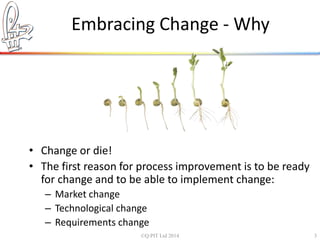
Embracing Change - Why 
• Change or die! 
• The first reason for process improvement is to be ready 
for change and to be able to implement change: 
– Market change 
– Technological change 
– Requirements change 
©Q:PIT Ltd 2014 3
Embracing Change - How 
• Continuous process 
improvement means 
working very closely with 
your customers: 
– The people using the process 
will identify the weaknesses 
– They may be willing to try the 
process, they will probably be 
willing to tell you why it does 
not work 
• Work with your customers 
(process users), listen to 
them, take their changes 
into account 
©Q:PIT Ltd 2014 4
Fast Cycle / Frequent Delivery – Why? 
• Large changes are not easy 
to accept or assimilate 
• Big “how-to” manuals are 
never read 
• Infrequent news means 
people forget you, therefore 
do not see why you are 
telling them to change 
• “I told them this did not 
work and they just ignored 
me and said ‘later’” 
©Q:PIT Ltd 2014 5
Fast Cycle / Frequent Delivery – How? 
• Make sure you respond 
every request within 24 
hours 
• Plan on making a real, 
measurable 
improvement available 
every month (“sprint”) 
©Q:PIT Ltd 2014 6
Simple Design – Why? 
• Complex is difficult to 
change 
• Complex is difficult to 
understand 
• Don’t try to solve all 
your problems in one go 
©Q:PIT Ltd 2014 7
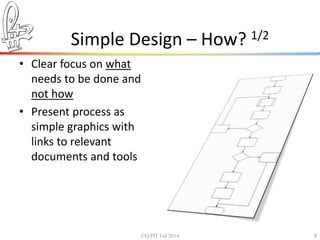
Simple Design – How? 1/2 
• Clear focus on what 
needs to be done and 
not how 
• Present process as 
simple graphics with 
links to relevant 
documents and tools 
©Q:PIT Ltd 2014 8
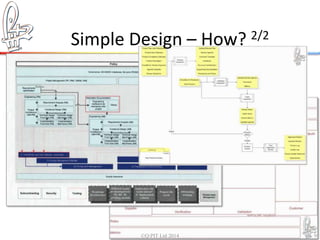
Simple Design – How? 2/2 
©Q:PIT Ltd 2014 9
Refactoring 
• Wikipedia definition: 
– “Code refactoring is the process of changing a 
computer programme's source code without 
modifying its external functional behaviour in order 
to improve some of the non-functional attributes of 
the software. Advantages include improved code 
readability and reduced complexity to improve the 
maintainability of the source code, as well as a more 
expressive internal architecture or object model to 
improve extensibility.” 
©Q:PIT Ltd 2014 10
Refactoring – Why? 
• Update the process without modifying its usage 
and behaviour to 
– Improve non-functional attributes of the process 
– Improve process usability 
– Reduce complexity 
– Improve the maintainability 
– Improve process architecture 
– Improve extensibility 
©Q:PIT Ltd 2014 11
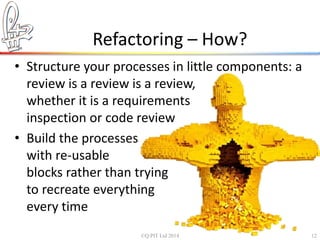
Refactoring – How? 
• Structure your processes in little components: a 
review is a review is a review, 
whether it is a requirements 
inspection or code review 
• Build the processes 
with re-usable 
blocks rather than trying 
to recreate everything 
every time 
©Q:PIT Ltd 2014 12
Pair Programming – Why? 
• Reviews are the cheapest and most efficient 
quality check methodology that exist 
• Collaboration between the functional / technical 
specialist and the process specialist are key to 
success 
• Integrated teams are 
even better… 
©Q:PIT Ltd 2014 13
Retrospective 
• If you don’t understand 
the need and benefit of 
learning and applying 
lessons after each 
sprint, you need to go 
back to the beginning of 
the process 
improvement 
principles! 
©Q:PIT Ltd 2014 14
Tacit Knowledge 
• Use the people who 
know, the people who 
understand what you 
are trying to do 
• Make sure the SEPG 
people focus on the 
principles of process 
rather than on the 
functional content 
©Q:PIT Ltd 2014 15
Test-driven Development 
• If the resulting process does not work for the 
process improvement people, don’t expect it 
to work for anyone else! 
©Q:PIT Ltd 2014 16
Q & A 
24/09/2014 ©Q:PIT Ltd 2014 17
Contact Information 
• Peter Leeson 
– Q:PIT Ltd 
PO Box 6066 
Milton Keynes 
MK1 9BH 
United Kingdom 
– Tel: +44 (0)20 8433 4120 
– Fax: +44 (0)7006 010 575 
– Mobile/Cell: +44 (0)773 998 98 67 
– E Mail: Peter@qpit.ltd.uk 
– Skype: qpitpjl 
– Internet: http://www.qpit.net 
– Blog: http://www.qpit.net/Blog 
©Q:PIT Ltd 2014 18

Agile for process improvement

  • 1.
    Applying Agile Conceptsto Process Improvement If it works for them, why wouldn’t it work for us? ©Q:PIT Ltd 2014 1
  • 2.
    Implementation • Applyingthe philosophy of Agile development to process improvement means: – Accepting that the process needs and structure will have to change even before it is finalized – Seeking to deliver real benefits rapidly and regularly – Focusing on the simple common stuff rather than trying to solve everyone’s problems before they occur – Focus on communications and flexibility; make sure things are done once – Team work, allowing the process users and process specialists to work together – Continuous reviews of what is being done – Learning lessons – actually learning them – Ensure that the process responds to the need ©Q:PIT Ltd 2014 2
  • 3.
    Embracing Change -Why • Change or die! • The first reason for process improvement is to be ready for change and to be able to implement change: – Market change – Technological change – Requirements change ©Q:PIT Ltd 2014 3
  • 4.
    Embracing Change -How • Continuous process improvement means working very closely with your customers: – The people using the process will identify the weaknesses – They may be willing to try the process, they will probably be willing to tell you why it does not work • Work with your customers (process users), listen to them, take their changes into account ©Q:PIT Ltd 2014 4
  • 5.
    Fast Cycle /Frequent Delivery – Why? • Large changes are not easy to accept or assimilate • Big “how-to” manuals are never read • Infrequent news means people forget you, therefore do not see why you are telling them to change • “I told them this did not work and they just ignored me and said ‘later’” ©Q:PIT Ltd 2014 5
  • 6.
    Fast Cycle /Frequent Delivery – How? • Make sure you respond every request within 24 hours • Plan on making a real, measurable improvement available every month (“sprint”) ©Q:PIT Ltd 2014 6
  • 7.
    Simple Design –Why? • Complex is difficult to change • Complex is difficult to understand • Don’t try to solve all your problems in one go ©Q:PIT Ltd 2014 7
  • 8.
    Simple Design –How? 1/2 • Clear focus on what needs to be done and not how • Present process as simple graphics with links to relevant documents and tools ©Q:PIT Ltd 2014 8
  • 9.
    Simple Design –How? 2/2 ©Q:PIT Ltd 2014 9
  • 10.
    Refactoring • Wikipediadefinition: – “Code refactoring is the process of changing a computer programme's source code without modifying its external functional behaviour in order to improve some of the non-functional attributes of the software. Advantages include improved code readability and reduced complexity to improve the maintainability of the source code, as well as a more expressive internal architecture or object model to improve extensibility.” ©Q:PIT Ltd 2014 10
  • 11.
    Refactoring – Why? • Update the process without modifying its usage and behaviour to – Improve non-functional attributes of the process – Improve process usability – Reduce complexity – Improve the maintainability – Improve process architecture – Improve extensibility ©Q:PIT Ltd 2014 11
  • 12.
    Refactoring – How? • Structure your processes in little components: a review is a review is a review, whether it is a requirements inspection or code review • Build the processes with re-usable blocks rather than trying to recreate everything every time ©Q:PIT Ltd 2014 12
  • 13.
    Pair Programming –Why? • Reviews are the cheapest and most efficient quality check methodology that exist • Collaboration between the functional / technical specialist and the process specialist are key to success • Integrated teams are even better… ©Q:PIT Ltd 2014 13
  • 14.
    Retrospective • Ifyou don’t understand the need and benefit of learning and applying lessons after each sprint, you need to go back to the beginning of the process improvement principles! ©Q:PIT Ltd 2014 14
  • 15.
    Tacit Knowledge •Use the people who know, the people who understand what you are trying to do • Make sure the SEPG people focus on the principles of process rather than on the functional content ©Q:PIT Ltd 2014 15
  • 16.
    Test-driven Development •If the resulting process does not work for the process improvement people, don’t expect it to work for anyone else! ©Q:PIT Ltd 2014 16
  • 17.
    Q & A 24/09/2014 ©Q:PIT Ltd 2014 17
  • 18.
    Contact Information •Peter Leeson – Q:PIT Ltd PO Box 6066 Milton Keynes MK1 9BH United Kingdom – Tel: +44 (0)20 8433 4120 – Fax: +44 (0)7006 010 575 – Mobile/Cell: +44 (0)773 998 98 67 – E Mail: Peter@qpit.ltd.uk – Skype: qpitpjl – Internet: http://www.qpit.net – Blog: http://www.qpit.net/Blog ©Q:PIT Ltd 2014 18