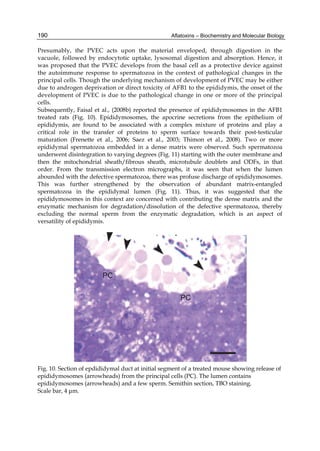
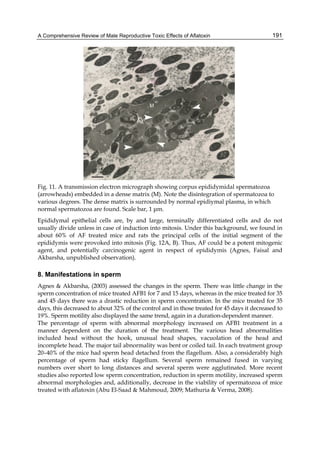
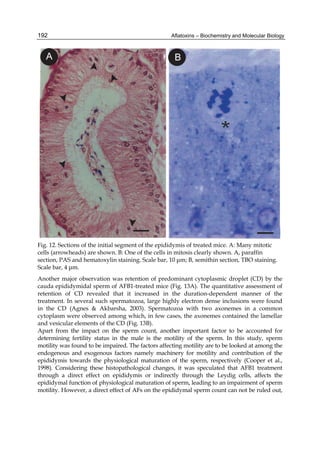
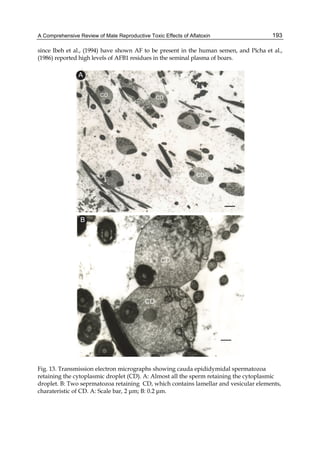
AFLATOXINS – 
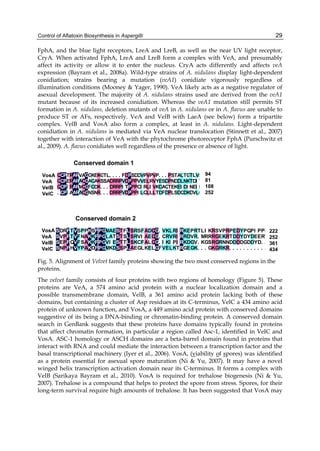
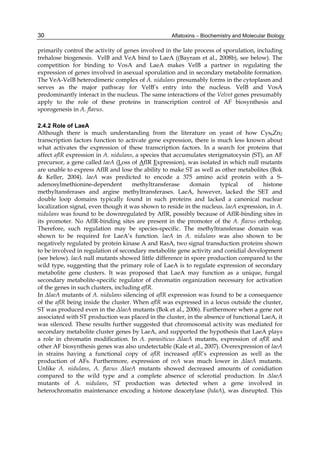
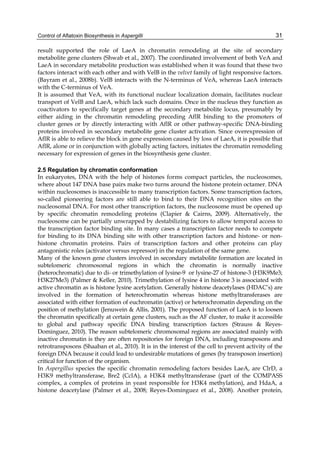
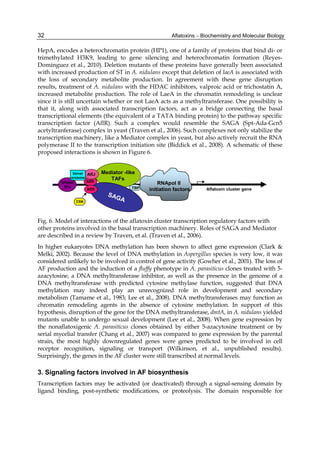
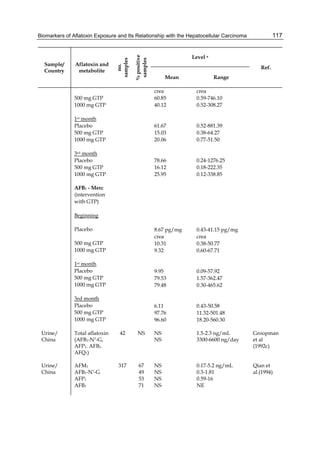
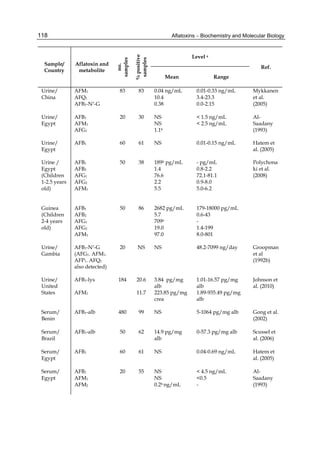
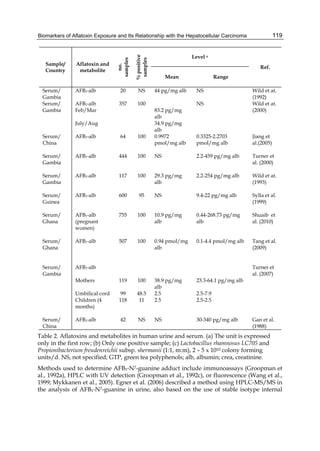
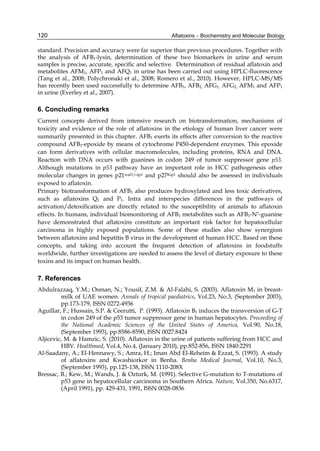
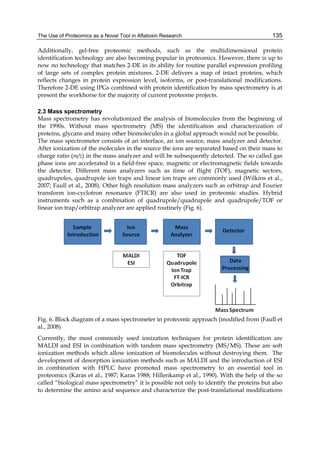
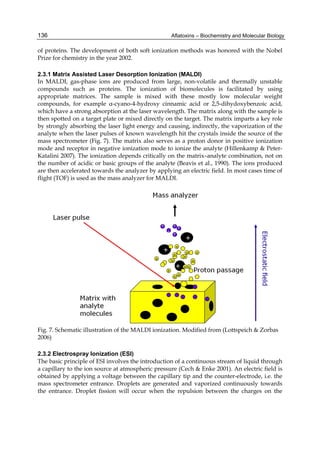
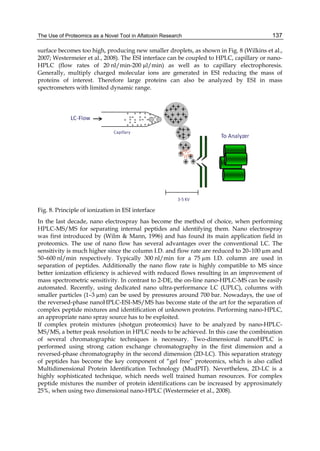
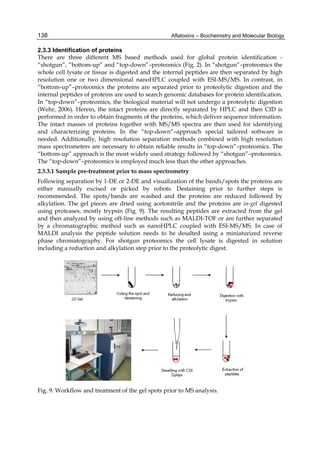
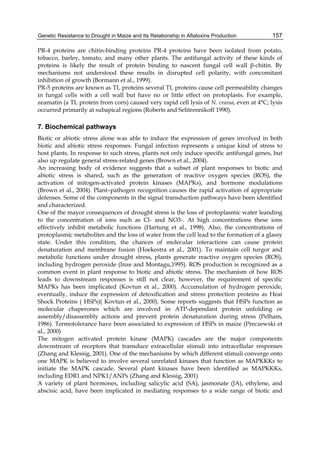
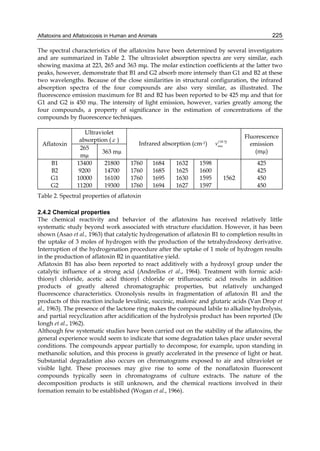
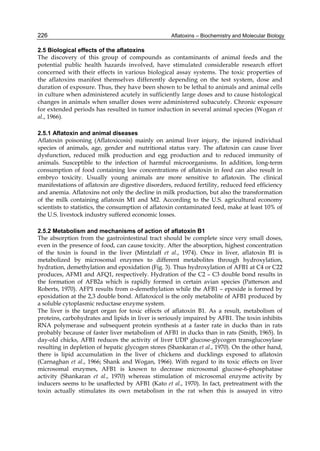
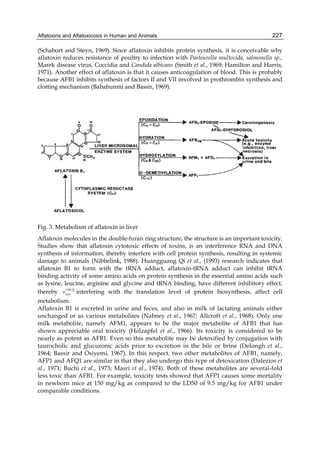
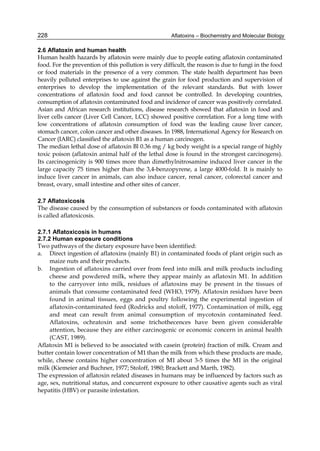
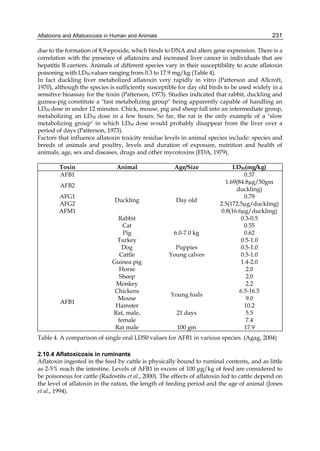
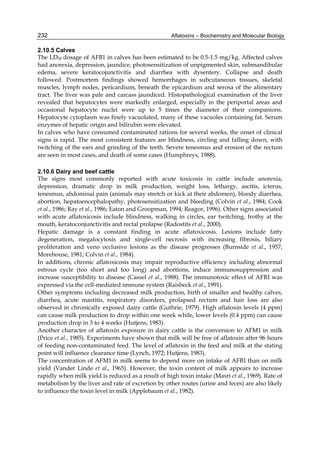
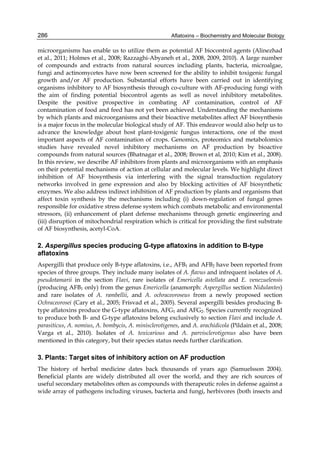
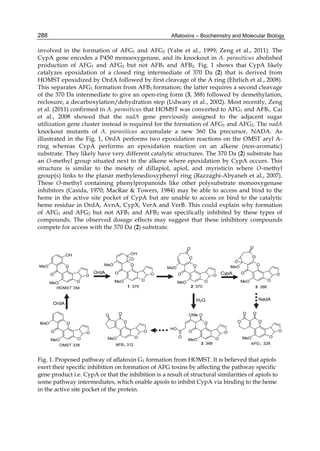
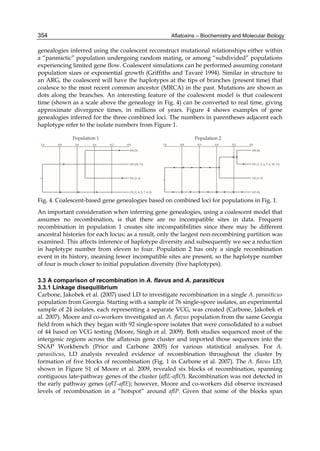
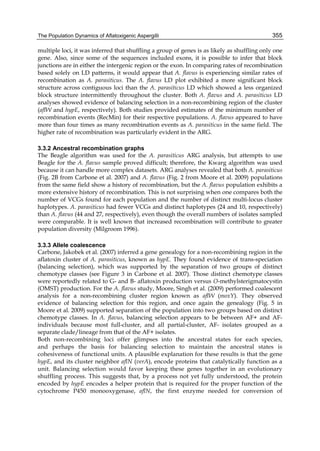
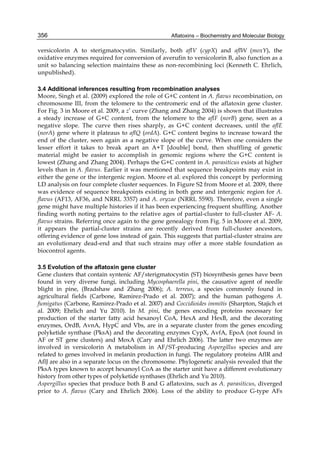
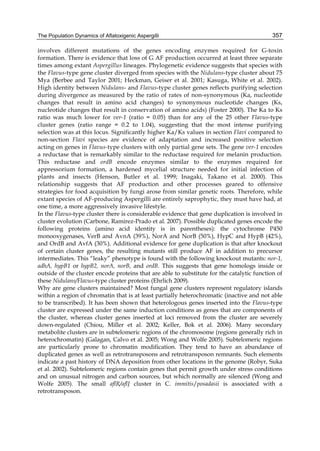
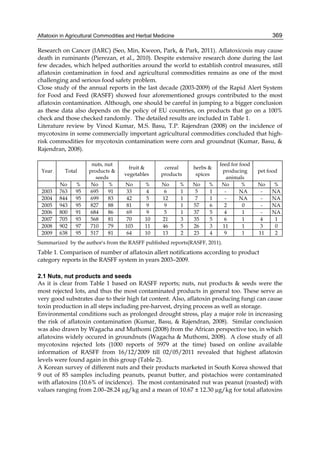
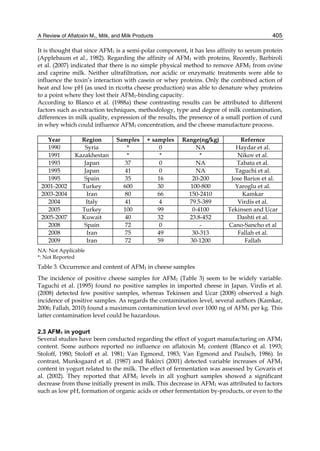
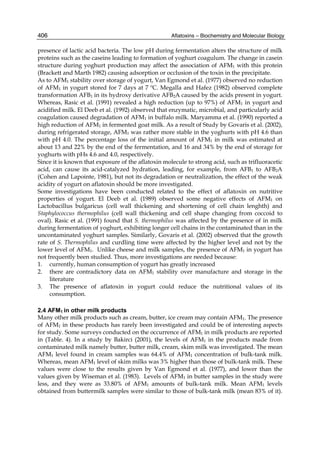
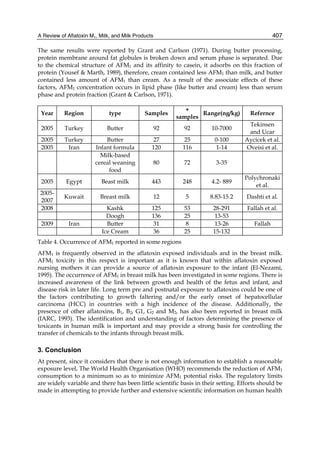
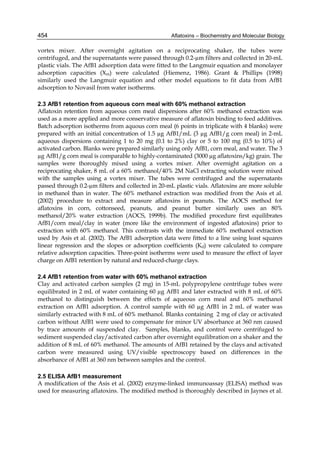
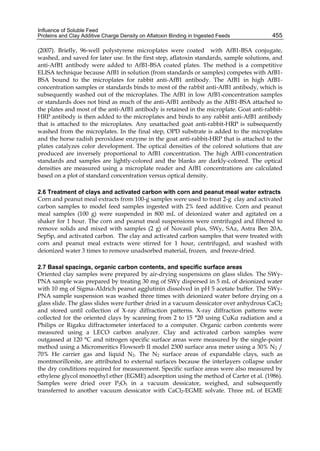
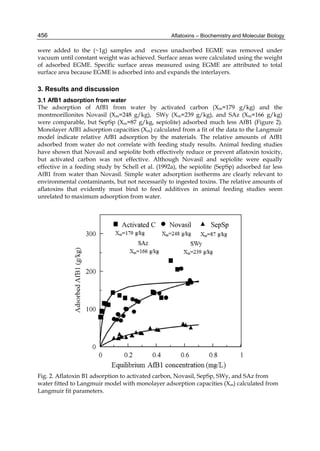
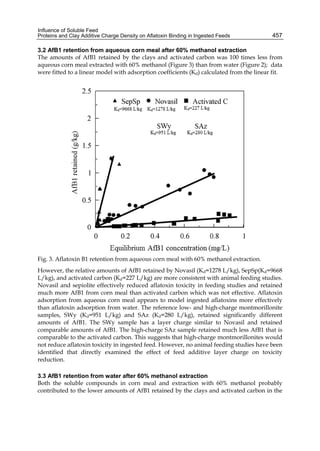
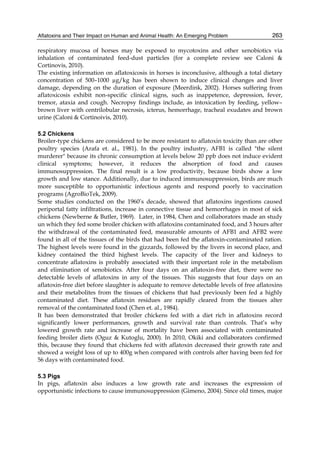
BIOCHEMISTRY AND 
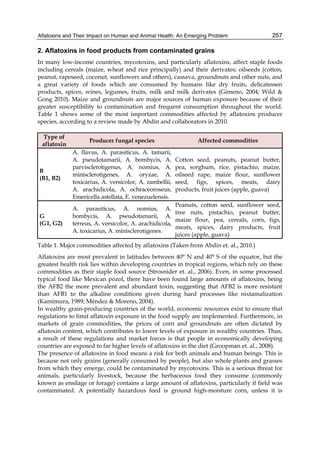
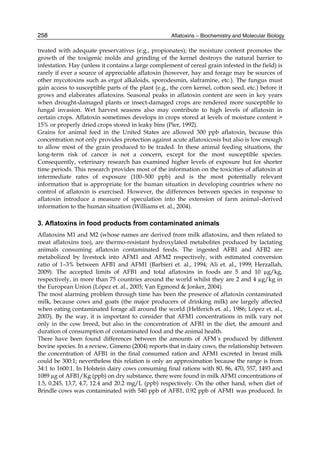
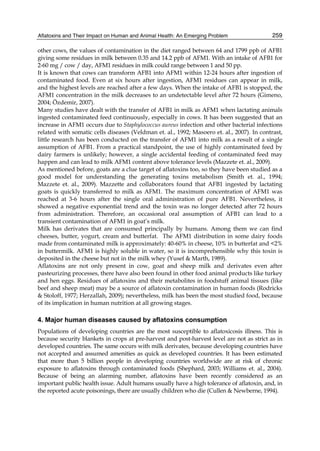
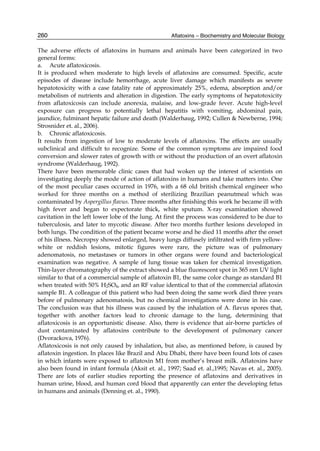
MOLECULAR BIOLOGY 
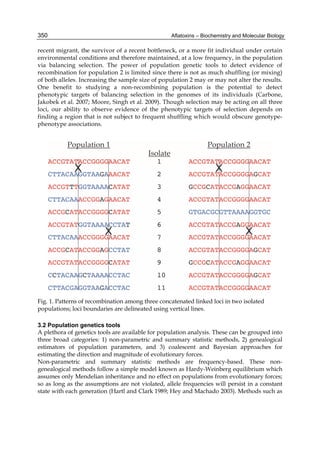
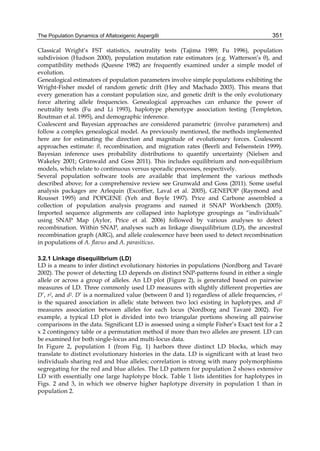
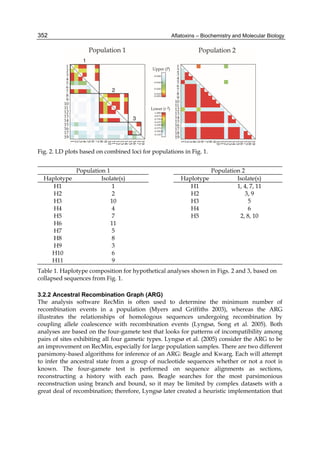
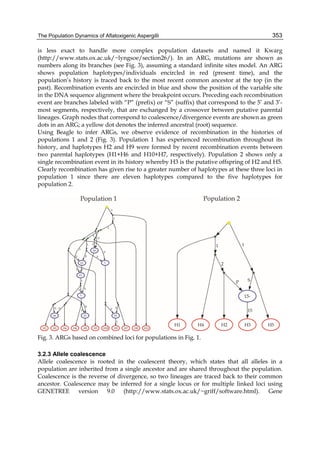
Edited by Ramón Gerardo Guevara-González
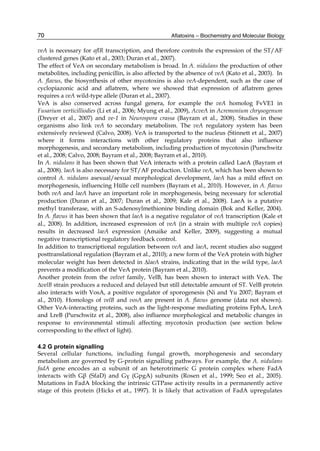
Aflatoxins – Biochemistry and Molecular Biology 
Edited by Ramón Gerardo Guevara-González 
Published by InTech 
Janeza Trdine 9, 51000 Rijeka, Croatia 
Copyright © 2011 InTech 
All chapters are Open Access articles distributed under the Creative Commons 
Non Commercial Share Alike Attribution 3.0 license, which permits to copy, 
distribute, transmit, and adapt the work in any medium, so long as the original 
work is properly cited. After this work has been published by InTech, authors 
have the right to republish it, in whole or part, in any publication of which they 
are the author, and to make other personal use of the work. Any republication, 
referencing or personal use of the work must explicitly identify the original source. 
Statements and opinions expressed in the chapters are these of the individual contributors 
and not necessarily those of the editors or publisher. No responsibility is accepted 
for the accuracy of information contained in the published articles. The publisher 
assumes no responsibility for any damage or injury to persons or property arising out 
of the use of any materials, instructions, methods or ideas contained in the book. 
Publishing Process Manager Petra Nenadic 
Technical Editor Teodora Smiljanic 
Cover Designer Jan Hyrat 
Image Copyright Juan Gaertner, 2010. Used under license from Shutterstock.com 
First published September, 2011 
Printed in Croatia 
A free online edition of this book is available at www.intechopen.com 
Additional hard copies can be obtained from orders@intechweb.org 
Aflatoxins – Biochemistry and Molecular Biology, 
Edited by Ramón Gerardo Guevara-González 
p. cm. 
ISBN 978-953-307-395-8
free online editions of InTech 
Books and Journals can be found at 
www.intechopen.com
Contents 
Preface IX 
Part 1 Biosynthesis and Biotransformation 1 
Chapter 1 Biotransformation of Aflatoxin B1 and Its 
Relationship with the Differential Toxicological 
Response to Aflatoxin in Commercial Poultry Species 3 
Gonzalo J. Diaz and Hansen W. Murcia 
Chapter 2 Control of Aflatoxin Biosynthesis in Aspergilli 21 
Kenneth C. Ehrlich, Perng-Kuang Chang, Jiujiang Yu, 
Jeffrey W. Cary and Deepak Bhatnagar 
Chapter 3 Aflatoxin Biosynthetic Pathway and Pathway Genes 41 
Jiujiang Yu and Kenneth C. Ehrlich 
Chapter 4 Conserved Regulatory Mechanisms 
Controlling Aflatoxin and Sterigmatocystin Biosynthesis 67 
Ana M. Calvo and Sourabh Dhingra 
Part 2 Biomarkers and Breeding 89 
Chapter 5 Identification of 
Gene Markers in Aflatoxin-Resistant 
Maize Germplasm for Marker-Assisted Breeding 91 
Robert L. Brown, Abebe Menkir, Zhi-Yuan Chen, 
Meng Luo and Deepak Bhatnagar 
Chapter 6 Biomarkers of Aflatoxin Exposure and 
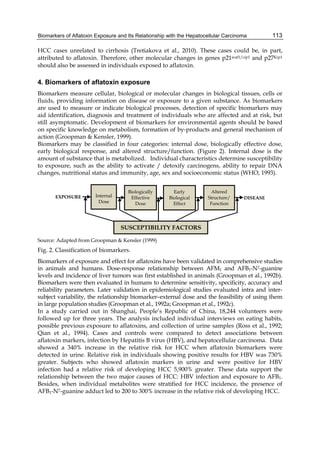
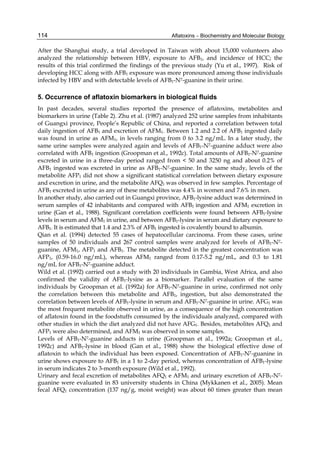
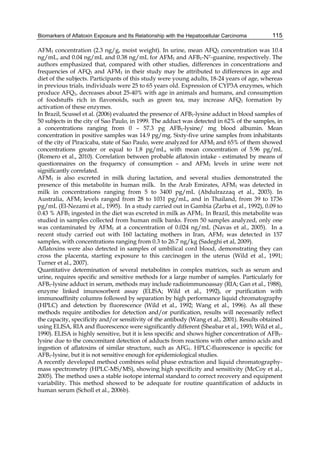
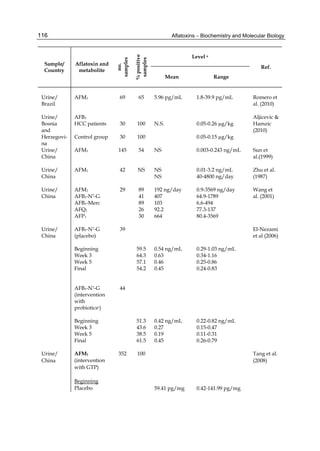
Its Relationship with the Hepatocellular Carcinoma 107 
Alessandra Vincenzi Jager, Fernando Silva Ramalho, 
Leandra Náira Zambelli and Carlos Augusto Fernandes Oliveira 
Chapter 7 The Use of Proteomics as a 
Novel Tool in Aflatoxin Research 127 
E. Razzazi-Fazeli, M. Rizwan, C. Mayrhofer and K. Nöbauer
VI Contents 
Chapter 8 Genetic Resistance to Drought in 
Maize and Its Relationship in Aflatoxins Production 151 
Ramón Gerardo Guevara-González, Angela María Chapa-Oliver, 
Laura Mejía-Teniente, Irineo Torres-Pacheco, 
Moises Alejandro Vazquez-Cruz, Juan Jesús Cervantes-Landaverde, 
Ricardo Ernesto Preciado-Ortiz and Ernesto Moreno- Martinez 
Part 3 Pathogenesis and Toxicology 161 
Chapter 9 The Molecular Pathogenesis of Aflatoxin with 
Hepatitis B Virus-Infection in Hepatocellular Carcinoma 163 
Hai-Xia Cao and Jian-Gao Fan 
Chapter 10 A Comprehensive Review of Male 
Reproductive Toxic Effects of Aflatoxin 177 
Mohammad A. Akbarsha, Faisal Kunnathodi and Ali A. Alshatwi 
Chapter 11 Aflatoxicosis in Layer and Breeder Hens 203 
Milad Manafi 
Chapter 12 Aflatoxins and Aflatoxicosis in Human and Animals 221 
D. Dhanasekaran, S. Shanmugapriya, 
N. Thajuddin and A. Panneerselvam 
Chapter 13 Aflatoxins and Their Impact on 
Human and Animal Health: An Emerging Problem 255 
Eva G. Lizárraga-Paulín, 
Ernesto Moreno-Martínez and Susana P. Miranda-Castro 
Part 4 Miscellaneous 283 
Chapter 14 Aflatoxins: Mechanisms of 
Inhibition by Antagonistic Plants and Microorganisms 285 
Mehdi Razzaghi-Abyaneh, 
Masoomeh Shams-Ghahfarokhi and Perng-Kuang Chang 
Chapter 15 The Evolutionary Dynamics in the Research 
on Aflatoxins During the 2001-2010 Decade 305 
Martín G. Theumer and Héctor R. Rubinstein 
Chapter 16 Binding of Aflatoxin B1 to Lactic Acid Bacteria 
and Saccharomyces cerevisiae in vitro: A Useful 
Model to Determine the Most Efficient Microorganism 323 
Romina P. Pizzolitto, Dante J. Bueno, María R. Armando, 
Lilia Cavaglieri, Ana M. Dalcero and Mario A. Salvano 
Chapter 17 The Population Dynamics of Aflatoxigenic Aspergilli 347 
Geromy G. Moore, Shannon B. Beltz, 
Ignazio Carbone, Kenneth C. Ehrlich and Bruce W. Horn
Contents VII 
Chapter 18 Aflatoxin in Agricultural 
Commodities and Herbal Medicine 367 
Mehrdad Tajkarimi, Mohammad Hossein Shojaee, 
Hassan Yazdanpanah and Salam A. Ibrahim 
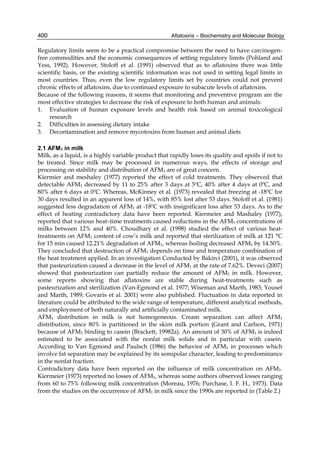
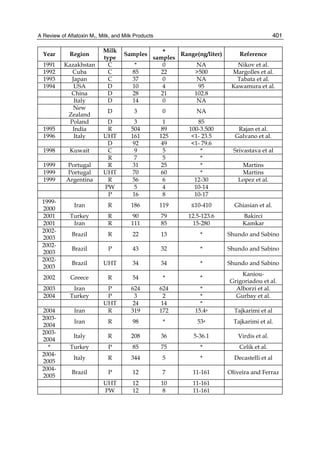
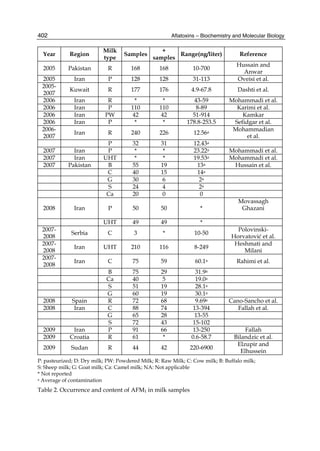
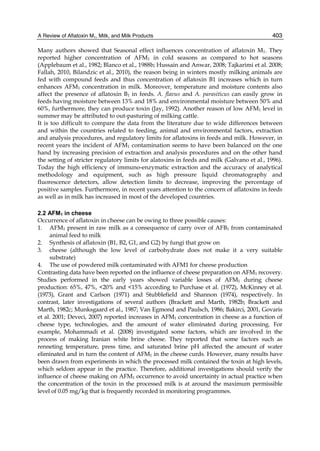
Chapter 19 A Review of Aflatoxin M1, Milk, and Milk Products 397 
Hamid Mohammadi 
Chapter 20 Aflatoxins: Contamination, Analysis and Control 415 
Giniani Carla Dors, Sergiane Souza Caldas, 
Vivian Feddern, Renata Heidtmann Bemvenuti, 
Helen Cristina dos Santos Hackbart, Michele Moraes de Souza, 
Melissa dos Santos Oliveira, Jaqueline Garda-Buffon, 
Ednei Gilberto Primel and Eliana Badiale-Furlong 
Chapter 21 Estimated Daily Intake of Aflatoxin M1 in Thailand 439 
Nongluck Ruangwises, Piyawat Saipan and Suthep Ruangwises 
Chapter 22 Influence of Soluble Feed 
Proteins and Clay Additive Charge 
Density on Aflatoxin Binding in Ingested Feeds 447 
William F. Jaynes and Richard E. Zartman
Preface 
Aflatoxins are produced by Aspergillus flavi group species and are thought to be one 
of the most cancerous natural substances known. Economically and biologically the 
most important fungal species able to produce the aflatoxins are Aspergillus flavus 
and Aspergillus parasiticus. The biosynthesis of aflatoxins, as all secondary 
metabolites, is strongly dependent on growth conditions such as substrate 
composition or physical factors like pH, water activity, temperature or modified 
atmospheres. Depending on the particular combination of external growth parameters 
the biosynthesis of aflatoxin can either be completely inhibited, albeit normal growth 
is still possible or the biosynthesis pathway can be fully activated. Knowledge about 
these relationships enables an assessment of which parameter combinations can 
control aflatoxin biosynthesis or which are conducive to phenotypic aflatoxin 
production. All these aspects are fascinating and strongly growing in knowledge 
based on the work of excellent researchers as those invited to write every chapter 
presented in this book. Finally, this book is an attempt to provide a wide and current 
approach of top studies in aflatoxins biochemistry and molecular biology, as well as 
some general aspects to researchers interested in this field. 
Dr. Ramon Gerardo Guevara-Gonzalez 
Professor 
Biosystems Engineering Group 
School of Engineering 
Queretaro Autonomous University 
Queretaro, Qro, Mexico
Part 1 
Biosynthesis and Biotransformation
1 
Biotransformation of Aflatoxin B1 
and Its Relationship with the Differential 
Toxicological Response to Aflatoxin in 
Commercial Poultry Species 
Gonzalo J. Diaz and Hansen W. Murcia 
Facultad de Medicina Veterinaria y de Zootecnia 
Universidad Nacional de Colombia, Bogotá D.C., 
Colombia 
1. Introduction 
Aflatoxin B1 (AFB1) is a highly toxic compound (LD50 = 1-50 mg/kg) for most animal 
species, although it is extremely toxic (LD50 < 1 mg/kg) for some highly susceptible species 
such as pigs, dogs, cats, rainbow trouts, and ducklings. The toxic effects of AFB1 are both 
dose and time dependent and two distinct forms of aflatoxicosis, namely acute and chronic, 
can be distinguished depending on the level and length of time of aflatoxin exposure. In 
many species acute poisoning is characterized by an acute hepatotoxic disease that 
manifests itself with depression, anorexia, icterus, and hemorrhages. Histologic hepatic 
lesions include periportal necrosis associated with bile duct proliferation and oval cell 
hyperplasia. Chronic aflatoxicosis resulting from regular low-level dietary intake of 
aflatoxins causes unspecific signs such as reduced weight gain, reduced feed intake, and 
reduced feed conversion in pigs and poultry, and reduced milk yield in cows. Another effect 
of chronic exposure is aflatoxin-induced hepatocellular carcinoma, bile duct hyperplasia and 
hepatic steatosis (fatty liver). However, these effects are species-specific and not all animals 
exposed to aflatoxin develop liver cancer. For example, the only poultry species that 
develops hepatocellular carcinoma after AFB1 exposure is the duck. 
Differences in the susceptibility to acute and chronic AFB1 toxicosis have been observed 
among animals of different species. Animals having the highest sensitivity are the duckling, 
piglet, rabbit, dog and cat, while chickens, mice, hamsters, and chinchillas are relatively 
resistant. Further, mature animals are generally more resistant to AFB1 than young ones and 
females are more resistant than males. In general, in commercial poultry species, intake of 
feed contaminated with AFB1 results primarily in liver damage (the target organ of AFB1 is 
the liver), associated with immunosuppression, poor performance, and even mortality when 
the dietary levels are high enough. However, there is wide variability in specific species 
sensitivity to AFB1 and the susceptibility ranges from ducklings > turkey poults > goslings 
> pheasant chicks > quail chicks > chicks (Leeson et al., 1995). Even though there is still no 
clear explanation for this differential sensitivity, differences in susceptibility could be due to 
differences in AFB1 biotransformation pathways among species. The aim of the present 
chapter is to review the current knowledge on AFB1 biotransformation, with emphasis on
4 
commercial poultry species, and to correlate this information with the in vivo susceptibility 
to AFB1 in these species. 
2. Biotransformation of aflatoxin B1 
In general, the metabolism or biotransformation of xenobiotics (chemicals foreign to the 
organism) is a process aimed at converting the original molecules into more hydrophilic 
compounds readily excretable in the urine (by the kidney) or in the bile (by the liver). It has 
traditionally been conceptualized that this process occurs in two phases known as Phase I and 
Phase II, although some authors argue that this classification is no longer tenable and should 
be eliminated (Josephy et al., 2005). Phase I metabolism consists mainly of enzyme-mediated 
hydrolysis, reduction and oxidation reactions, while Phase II metabolism involves conjugation 
reactions of the original compound or the compound modified by a previous Phase I reaction. 
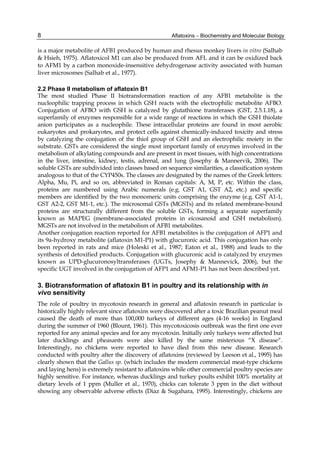
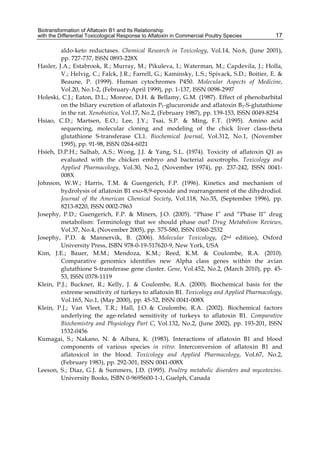
The current state of knowledge on the metabolism of AFB1 in different avian and mammalian 
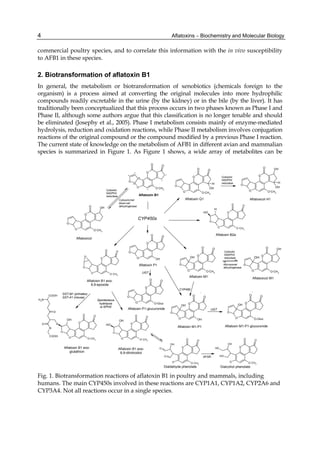
species is summarized in Figure 1. As Figure 1 shows, a wide array of metabolites can be 
Aflatoxins – Biochemistry and Molecular Biology 
5 
4 
O 
3 
2 
O 
9 
8 
O 
O O 
O CH3 
OH 
O 
O 
O 
O O 
O CH3 
O 
O 
O 
O 
O O 
OH 
O CH3 
H 
O 
O 
O 
O O 
O CH3 
HO 
H 
Aflatoxin B1 
O 
O 
O 
O O 
OH 
O 
O 
O 
O 
O CH3 
O 
O 
O 
UGT 
O O 
O CH3 
OH 
HO 
N 
COOH 
H N 2 
O 
O S O 
O 
O 
O O 
O CH3 
OH 
COOH 
O 
O 
O 
O OH 
OH 
O CH3 
H 
O 
O 
O 
O OH 
O CH3 
O OH 
O 
O 
O O 
O CH3 
OH 
O 
O 
O 
O O 
OH 
OH 
O 
O 
O 
O O 
O CH3 
OH 
O O 
O 
HO 
O O 
O CH3 
OH 
HO 
O 
O 
O 
O O 
O-Gluc 
OH 
O 
O 
O 
O O 
O-Gluc 
Aflatoxin B1 exo- 
8,9-epoxide 
Aflatoxin Q1 
Aflatoxin B2a 
Aflatoxin M1 
Aflatoxin P1 
Aflatoxicol 
CYP450s 
Aflatoxin B1 exo- 
8,9-dihidrodiol 
Aflatoxin B1 exo-glutathion 
Spontaneous 
hydrolysis 
or EPHX 
GST-M1 (primates) 
GST-A1 (mouse) 
Cytosolic 
NADPH2 
reductase 
Aflatoxicol H1 
Aflatoxicol M1 
CYP450 
Aflatoxin M1-P1 
AFAR 
Dialdehyde phenolate Dialcohol phenolate 
9a 
6a 
Aflatoxin M1-P1-glucuronide 
Aflatoxin P1-glucuronide 
UGT 
Cytosolic/red 
blood cell 
dehydrogenase 
Cytosolic 
NADPH2 
reductase 
Cytosolic 
NADPH2 
reductase 
Microsomal 
dehydrogenase 
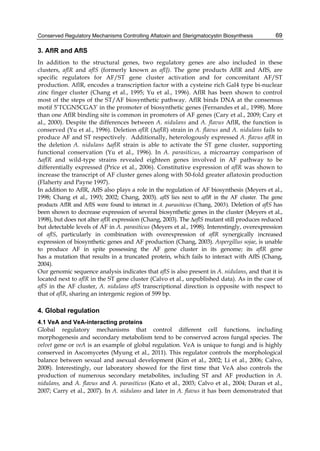
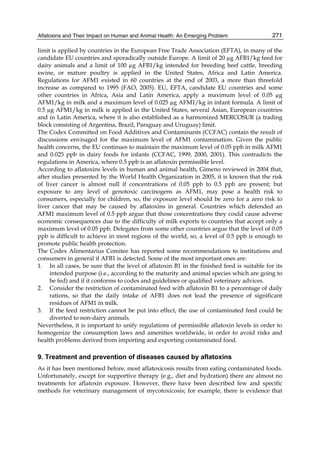
Fig. 1. Biotransformation reactions of aflatoxin B1 in poultry and mammals, including 
humans. The main CYP450s involved in these reactions are CYP1A1, CYP1A2, CYP2A6 and 
CYP3A4. Not all reactions occur in a single species.
Biotransformation of Aflatoxin B1 and Its Relationship 
with the Differential Toxicological Response to Aflatoxin in Commercial Poultry Species 
5 
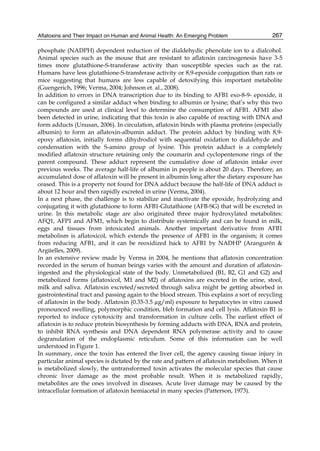
produced directly from AFB1 (by oxidation and reduction reactions) or indirectly by further 
biotransformation of the metabolites formed. However, not all of these reactions occur in a 
single species and, in fact, only a few of them have been reported in poultry. Most AFB1 Phase 
I reactions are oxidations catalyzed by cytochrome P450 (CYP450) enzymes, but one reaction is 
catalyzed by a cytosolic reductase, corresponding to the reduction of AFB1 to aflatoxicol 
(AFL). Phase II reactions are limited to conjugation of the metabolite AFB1-exo-8,9-epoxide 
(AFBO) with glutathione (GSH, γ-glutamyl-cysteinyl-glycine), and conjugation of aflatoxins P1 
and M1-P1 with glucuronic acid. Conjugation of AFBO with GSH is a nucleophilic trapping 
process catalyzed by specific glutathione transferase (GST) enzymes. The AFBO may also be 
hydrolyzed by an epoxide hydrolase (EPHX) to form AFB1-exo-8,9-dihydrodiol, although this 
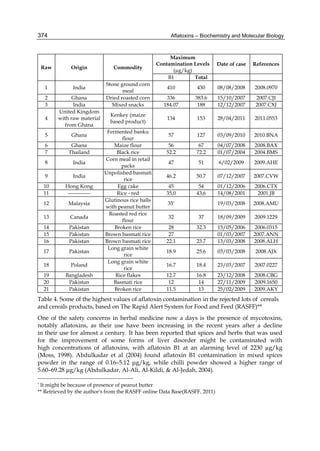
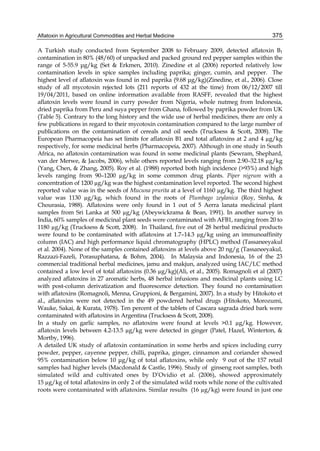
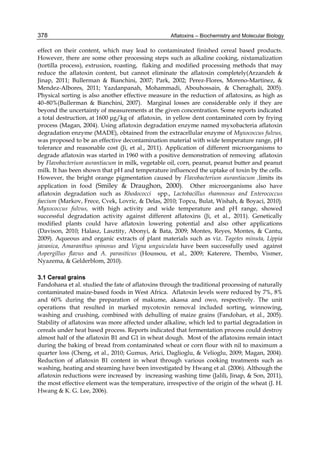
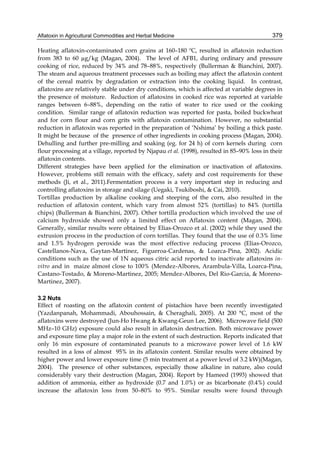
reaction may also occur spontaneously. The dihydrodiol is in equilibrium with the dialdehyde 
phenolate form, which can be reduced by AFB1 aldehyde reductase (AFAR), an enzyme that 
catalyzes the NADPH-dependent reduction of the dialdehyde to dialcohol phenolate 
(Guengerich et al., 2001). 
The translocation of xenobiotics across cell membranes by specific proteins known as 
transporters has been termed by some as “Phase III” metabolism. However, this process 
does not involve any modification of the xenobiotic structure and therefore it cannot be 
termed metabolism. This process, however, may have important implications on the toxic 
effect of a xenobiotic, particularly if the specific transporter involved in the translocation of 
the compound is not expressed normally, presents a genetic abnormality or becomes 
saturated. One transporter that has been identified as responsible for the translocation of a 
mycotoxin from the sinusoidal hepatic space into the hepatocyte is OATP (organic anion 
transporter polypeptide), which transports ochratoxin A (Diaz, 2000). However, no 
transporters for AFB1 have yet been described. 
2.1 Phase I metabolism of aflatoxin B1 
As mentioned before, the Phase I metabolism of AFB1 is carried out mainly by members of the 
CYP450 superfamily of enzymes. Their name comes from the absorption maximum at 450 nm 
when the reduced form complexes with carbon monoxide (Omura & Sato, 1964). CYP450s are 
membrane bound enzymes that can be isolated in the so-called microsomal fraction which is 
formed from endoplasmic reticulum when the cell is homogenized and fractionated by 
differential ultracentrifugation; microsomal vesicles are mainly fragments of the endoplasmic 
reticulum in which most of the enzyme activity is retained. The highest concentration of 
CYP450s involved in xenobiotic biotransformation is found in the endoplasmic reticulum of 
hepatocytes but CYP450s are present in virtually every tissue. CYP450s are classified into 
families identified by a number (e.g., 1, 2, 3, and 4), subfamilies identified by a letter (e.g., 2A, 
2B, 2D, and 2E), and individual members identified by another number (e.g. CYP2A6, 
CYP2E1). Collectively, CYP450 enzymes participate in a variety of oxidative reactions with 
lipophilic xenobiotics and endogenous substrates including hydroxylation of an aliphatic or 
aromatic carbon, epoxidation of a double bond, heteroatom (S-, N- and I-) oxygenation and N-hydroxylation, 
heteroatom (O-, S-, and N-) dealkylation, oxidative group transfer, cleavage of 
esters, and dehydrogenation (Parkinson & Ogilvie, 2008). In regards to AFB1, CYP450s can 
hydroxylate, hydrate, O-demethylate, and epoxidate the molecule. 
2.1.1 Hydroxylation and hydration of aflatoxin B1 
CYP450s can produce at least three monohydroxylated metabolites from AFB1, namely 
aflatoxins M1 (AFM1), Q1 (AFQ1), and B2a (AFB2a) (Fig. 1). AFM1 was first isolated from the
6 
milk of cows and rats fed AFB1-contaminated peanut meal and it was initially termed “milk 
toxin” (de Iongh et al., 1964). It was later discovered that AFM1 is not a metabolite exclusive 
of mammals and, in fact, it is produced by crude or isolated microsomal liver preparations 
from many non-mammalian species. For example, AFM1 was found in most tissues of 
chickens receiving a diet containing 2,057 ppb AFB1 for 35 days (Chen et al., 1984); the 
highest level was found in the liver and kidneys, which relates to the important role of these 
organs in the biotransformation and elimination of xenobiotics, respectively. 
AFQ1 results from the 3α-hydroxylation of AFB1 and it was first discovered as a major 
metabolite of AFB1 from monkey liver microsomal incubations (Masri et al., 1974). The 
predominant enzyme responsible for AFQ1 formation in human liver microsomes is 
CYP3A4 (Raney et al., 1992b) and AFQ1 is considered to be a major metabolite of AFB1 in 
humans and monkeys in vitro (Hsieh et al., 1974). Although AFQ1 has been detected as a 
minor metabolite of chicken and duck microsomal preparations (Leeson et al., 1995) it is 
considered to be a significant detoxication pathway of AFB1 (Raney et al., 1992b). In fact, 
AFQ1 is about 18 times less toxic for chicken embryos than AFB1 and it is not mutagenic in 
the Salmonella typhimurium TA 1538 test (Hsieh et al., 1974). 
The hydration of the vinyl ether double bond (C8-C9) of AFB1 produces the 8-hydroxy 
derivative or hemiacetal, also known as AFB2a. This metabolite was discovered in 1966 and, 
interestingly, it can be produced enzymatically (by both higher organisms and microbial 
metabolism), by photochemical degradation of AFB1, and by the treatment of AFB1 with 
acid (Lillehoj & Ciegler, 1969). The formation of the hemiacetal is difficult to assess in vitro 
because of strong protein binding, which probably involves the formation of Schiff bases 
with free amino groups (Patterson & Roberts, 1972). The ability of certain species to 
metabolize AFB1 into its hemiacetal at higher rates than others constitutes an important 
aspect of the resistance to the toxin, since the toxicity of AFB2a is much lower than that of the 
parent compound. For instance, AFB2a has been shown to be not toxic to chicken embryos at 
levels 100 times the LD50 of AFB1 (Leeson et al., 1995), and the administration of 1.2 mg of 
AFB2a to one-day-old ducklings does not produce the adverse effects caused by the same 
dose of AFB1 (Lillehoj & Ciegler, 1969). 
It has been generally considered that the monohydroxylated metabolites of AFB1 are 
“detoxified” forms of the toxin, which is probably the case for aflatoxins B2a and Q1; 
however, AFM1 cannot be considered a detoxication product of AFB1. AFM1 is cytotoxic 
and carcinogenic in several experimental models and in ducklings its acute toxicity is 
similar to that of AFB1 (12 and 16 μg/duckling for AFB1 and AFM1, respectively). Also in 
ducklings, both AFB1 and AFM1 induce similar liver lesions; however, AFB1 induces only 
mild degenerative changes in the renal convoluted tubules whereas AFM1 causes both 
degenerative changes and necrosis of the tubules (Purchase, 1967). 
Aflatoxins – Biochemistry and Molecular Biology 
2.1.2 O-Demethylation of aflatoxin B1 
Another CYP450-mediated reaction of rat, mouse, guinea pig and rabbit livers is the 4-O-demethylation 
of AFB1. The phenolic product formed was initially isolated from monkey 
urine (Dalezios et al., 1971) and named aflatoxin P1 (the P comes from the word primate). 
AFP1 can be hydroxylated at the 9a position to form 4,9a-dihydroxyaflatoxin B1 (AFM1-P1, 
see Fig. 1), although this compound can also originate from AFM1 (Eaton et al., 1988). AFP1 
is generally considered a detoxication product, mainly because it is efficiently conjugated 
with glucuronic acid (Holeski et al., 1987). There is no evidence that AFP1 or its 9a-hydroxy 
derivative are produced by any avian species (Leeson et al., 1995).
Biotransformation of Aflatoxin B1 and Its Relationship 
with the Differential Toxicological Response to Aflatoxin in Commercial Poultry Species 
7 
2.1.3 Epoxidation of aflatoxin B1 
Another metabolic pathway of the vinyl ether double bond present in the AFB1 furofuran 
ring is its epoxidation. The resultant product, AFB1-exo-8,9-epoxide (AFBO), is an unstable, 
highly reactive compound, with a half-life of about one second in neutral aqueous buffer 
(Johnson et al., 1996), that exerts its toxic effects by binding with cellular components, 
particularly protein, DNA and RNA nucleophilic sites. AFBO is considered to be the active 
form responsible for the carcinogenicity and mutagenicity of AFB1 (Guengerich et al., 1998). 
The endo-8,9-epoxide of AFB1 can also be formed by rat and human microsomes (Raney et 
al., 1992a), but this form of the epoxide is not reactive. Once AFBO is formed it may be 
hydrolyzed, either catalytically or spontaneously, to form AFB1-8,9-dihydrodiol (AFB1-dhd) 
or it may be trapped with GSH. If AFB1-dhd is formed it may suffer a base-catalyzed 
furofuran ring opening to a dialdehyde (AFB1 α-hydroxydialdehyde), which is able to bind 
to lysine residues in proteins. The enzyme AFAR (see section 2) can protect against the 
dialdehyde by catalyzing its reduction to a dialcohol which is excreted in the urine either as 
the dialcohol itself or as a monoalcohol (Guengerich et al., 2001). AFAR activity, however, 
does not correlate with in vivo sensitivity to AFB1 in selected mammalian models (hamster, 
mouse, rat and pig) as it was demonstrated by Tulayakul et al. (2005). AFAR has been 
evidenced by immunoblot in the liver of turkeys (Klein et al., 2002) but its activity has not 
been investigated in this or any other avian species. 
2.1.4 Reduction of aflatoxin B1 
The C1 carbonyl group present in the cyclopentanone function of AFB1 can be reduced to a 
hydroxy group to form the corresponding cyclopentol AFL (Fig. 1). This reaction is not 
catalyzed by microsomal enzymes but by a cytosolic NADPH-dependent enzyme that in the 
case of the chicken has an estimated molecular weight of 46.5 KDa and is inhibited by the 
17-ketosteroids androsterone, dehydroisoandrosterone and estrone (Chen et al., 1981). 
Formation of AFL was first reported in chicken, duck, turkey and rabbit liver cytosol 
(Patterson & Roberts, 1971), and it also occurs in quail (Lozano & Diaz, 2006). However, 
little or no activity has been observed in guinea pig, mouse or rat liver cytosol (Patterson & 
Roberts, 1971). AFL can be oxidized back to AFB1 by liver cytosol (Patterson & Roberts, 
1972) and by red blood cells from several species (Kumagai et al., 1983). For this reason, AFL 
is considered to be a "storage" form of AFB1. The ratio of AFB1 reductase activity to AFL 
dehydrogenase activity in vitro has been observed to be higher in species that are extremely 
sensitive to acute aflatoxicosis (Wong & Hsieh, 1978), but the significance of this finding in 
poultry species remains to be determined. AFL cannot be considered a detoxified product of 
AFB1 since it is carcinogenic and mutagenic, it is acutely toxic to rabbits and it is correlated 
with susceptibility to AFB1 in some species (Kumagai et al., 1983). Further, AFL has the 
ability of inducing DNA adduct formation because the double bond between C–8 and C–9 is 
still present in this metabolite (Loveland et al., 1987). Conjugation of AFL with either 
glucuronic acid or sulfate would potentially be a true detoxication reaction because this step 
would prevent AFL from being reconverted to AFB1. 
2.1.5 Reduction of aflatoxin B1 metabolites 
The hydroxylated metabolites AFM1 and AFQ1 can also undergo the cytosolic reduction of 
the C1 carbonyl group in a reaction analogous to the reduction of AFB1 to AFL. The reduced 
metabolites of AFM1 and AFQ1 have been named aflatoxicol M1 (Salhab et al., 1977; 
Loveland et al., 1983) and aflatoxicol H1 (Salhab & Hsieh, 1975), respectively. Aflatoxicol H1
8 
is a major metabolite of AFB1 produced by human and rhesus monkey livers in vitro (Salhab 
& Hsieh, 1975). Aflatoxicol M1 can also be produced from AFL and it can be oxidized back 
to AFM1 by a carbon monoxide-insensitive dehydrogenase activity associated with human 
liver microsomes (Salhab et al., 1977). 
2.2 Phase II metabolism of aflatoxin B1 
The most studied Phase II biotransformation reaction of any AFB1 metabolite is the 
nucleophilic trapping process in which GSH reacts with the electrophilic metabolite AFBO. 
Conjugation of AFBO with GSH is catalyzed by glutathione transferases (GST, 2.5.1.18), a 
superfamily of enzymes responsible for a wide range of reactions in which the GSH thiolate 
anion participates as a nucleophile. These intracellular proteins are found in most aerobic 
eukaryotes and prokaryotes, and protect cells against chemically-induced toxicity and stress 
by catalyzing the conjugation of the thiol group of GSH and an electrophilic moiety in the 
substrate. GSTs are considered the single most important family of enzymes involved in the 
metabolism of alkylating compounds and are present in most tissues, with high concentrations 
in the liver, intestine, kidney, testis, adrenal, and lung (Josephy & Mannervik, 2006). The 
soluble GSTs are subdivided into classes based on sequence similarities, a classification system 
analogous to that of the CYP450s. The classes are designated by the names of the Greek letters: 
Alpha, Mu, Pi, and so on, abbreviated in Roman capitals: A, M, P, etc. Within the class, 
proteins are numbered using Arabic numerals (e.g. GST A1, GST A2, etc.) and specific 
members are identified by the two monomeric units comprising the enzyme (e.g. GST A1-1, 
GST A2-2, GST M1-1, etc.). The microsomal GSTs (MGSTs) and its related membrane-bound 
proteins are structurally different from the soluble GSTs, forming a separate superfamily 
known as MAPEG (membrane-associated proteins in eicosanoid and GSH metabolism). 
MGSTs are not involved in the metabolism of AFB1 metabolites. 
Another conjugation reaction reported for AFB1 metabolites is the conjugation of AFP1 and 
its 9a-hydroxy metabolite (aflatoxin M1-P1) with glucuronic acid. This conjugation has only 
been reported in rats and mice (Holeski et al., 1987; Eaton et al., 1988) and leads to the 
synthesis of detoxified products. Conjugation with glucuronic acid is catalyzed by enzymes 
known as UPD-glucuronosyltransferases (UGTs, Josephy & Mannevick, 2006), but the 
specific UGT involved in the conjugation of AFP1 and AFM1-P1 has not been described yet. 
3. Biotransformation of aflatoxin B1 in poultry and its relationship with in 
vivo sensitivity 
The role of poultry in mycotoxin research in general and aflatoxin research in particular is 
historically highly relevant since aflatoxins were discovered after a toxic Brazilian peanut meal 
caused the death of more than 100,000 turkeys of different ages (4-16 weeks) in England 
during the summer of 1960 (Blount, 1961). This mycotoxicosis outbreak was the first one ever 
reported for any animal species and for any mycotoxin. Initially only turkeys were affected but 
later ducklings and pheasants were also killed by the same misterious “X disease“. 
Interestingly, no chickens were reported to have died from this new disease. Research 
conducted with poultry after the discovery of aflatoxins (reviewed by Leeson et al., 1995) has 
clearly shown that the Gallus sp. (which includes the modern commercial meat-type chickens 
and laying hens) is extremely resistant to aflatoxins while other commercial poultry species are 
highly sensitive. For instance, whereas ducklings and turkey poults exhibit 100% mortality at 
dietary levels of 1 ppm (Muller et al., 1970), chicks can tolerate 3 ppm in the diet without 
showing any observable adverse effects (Diaz & Sugahara, 1995). Interestingly, chickens are 
Aflatoxins – Biochemistry and Molecular Biology
Biotransformation of Aflatoxin B1 and Its Relationship 
with the Differential Toxicological Response to Aflatoxin in Commercial Poultry Species 
9 
not only highly resistant to the adverse effects of AFB1 but some studies have reported a 
modest enhancement in the body weight of chickens exposed to dietary aflatoxins, a finding 
that has been characterized as an hormetic-type dose-response relationship (Diaz et al., 2008). 
At the molecular level, at least four mechanisms of action could potentially play a role in the 
resistance to AFB1: low formation of the putative reactive metabolite (AFBO) and/or AFL, 
high detoxication of the AFBO and/or AFL formed, intestinal biotransformation of AFB1 
before it can reach the liver (“first-pass action”), and increased AFB1 (or toxic metabolites) 
efflux from the cells. It is important to note that translocation of xenobiotics and their 
metabolites from the hepatocytes (efflux) mediated by specific basolateral and canalicular 
transporters (Diaz, 2000) -a process sometimes referred to as Phase III metabolism-, has not 
been investigated for AFB1 in any species. However, both Phase I and Phase II metabolism 
appear to have a profound effect on the differential in vivo response to AFB1 in commercial 
poultry species. The formation of AFBO (by CYP450s) and AFL (by a cytosolic reductase) as 
well as the scarce information available about detoxication of AFBO through nucleophilic 
trapping with GSH in poultry will be discussed below. 
3.1 Phase I metabolism of aflatoxin B1 in commercial poultry species 
Research conducted by our group (Lozano & Diaz, 2006) showed that the microsomal and 
cytosolic biotransformation of AFB1 in chickens, quail, ducks and turkeys results in the 
formation of two major metabolites: AFBO (microsomes) and AFL (cytosol). The relative in 
vivo sensitivity to AFB1 in these species corresponds to ducks > turkeys > quail > chicken, 
and the aim of this work was to try to correlate the toxicological biochemical findings with 
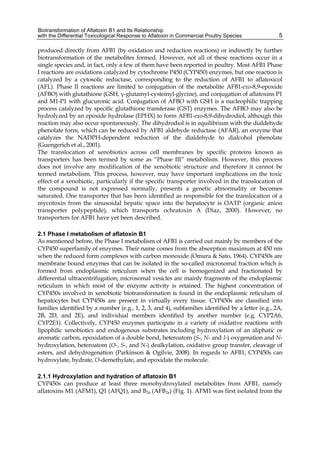
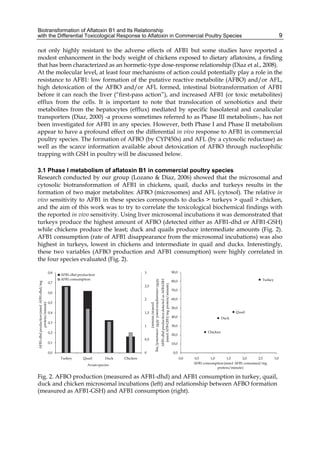
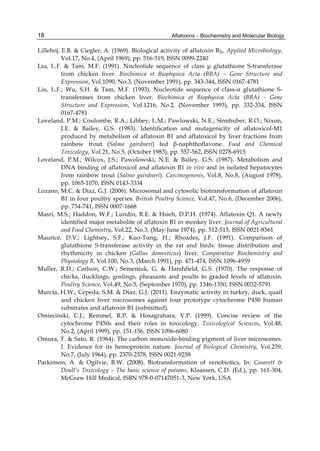
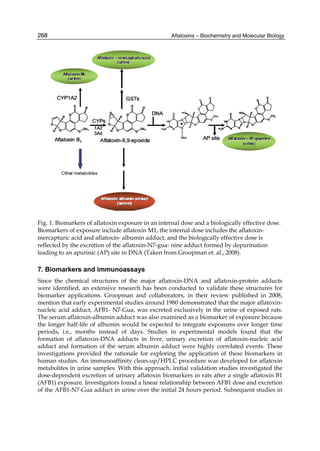
the reported in vivo sensitivity. Using liver microsomal incubations it was demonstrated that 
turkeys produce the highest amount of AFBO (detected either as AFB1-dhd or AFB1-GSH) 
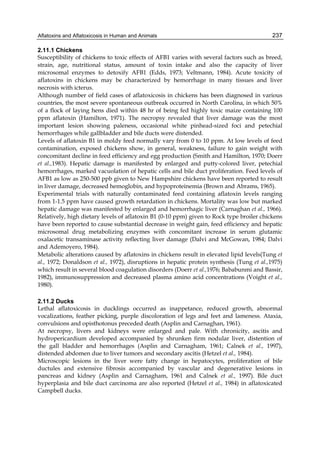
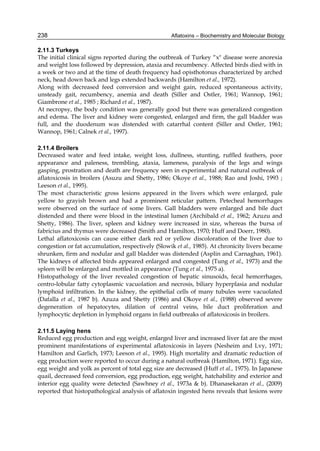
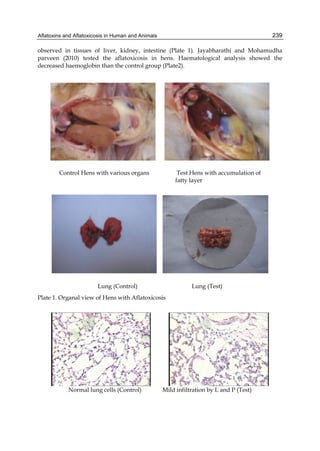
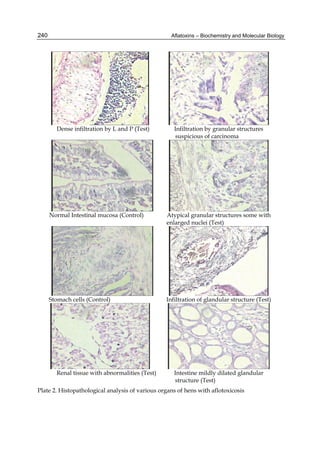
while chickens produce the least; duck and quails produce intermediate amounts (Fig. 2). 
AFB1 consumption (rate of AFB1 disappearance from the microsomal incubations) was also 
highest in turkeys, lowest in chickens and intermediate in quail and ducks. Interestingly, 
these two variables (AFBO production and AFB1 consumption) were highly correlated in 
the four species evaluated (Fig. 2). 
3 
90,0 
AFB1-dhd production 
AFB1 consumption Turkey 
2,5 
2 
1,5 
1 
0,5 
0 
0,8 
0,7 
0,6 
0,5 
0,4 
0,3 
0,2 
0,1 
0,0 
Turkey Quail Duck Chicken 
AFB1 consumption (nmol AFB1 consumed/mg 
protein/minute) 
AFB1-dhd production (nmol AFB1-dhd/mg 
protein/minute) 
Avian species 
Quail 
Duck 
Chicken 
80,0 
70,0 
60,0 
50,0 
40,0 
30,0 
20,0 
10,0 
0,0 
0,0 0,5 1,0 1,5 2,0 2,5 3,0 
AFB1-dhd production detected as AFB-GSH 
(nmol AFB-GSH/mg protein/minute) 
AFB1 consumption (nmol AFB1 consumed/mg 
protein/minute) 
Fig. 2. AFBO production (measured as AFB1-dhd) and AFB1 consumption in turkey, quail, 
duck and chicken microsomal incubations (left) and relationship between AFBO formation 
(measured as AFB1-GSH) and AFB1 consumption (right).
10 
Both biotransformation variables (AFBO formation and AFB1 disappearance) correlate well 
with the in vivo sensitivity observed for turkeys, quail and chickens (turkeys being highly 
sensitive, chickens being the most resistant and quail having intermediate sensitivity). 
However, other factor(s) besides AFBO formation and AFB1 consumption must play a role 
in the extraordinary high sensitivity of ducks to AFB1 because these biochemical variables 
did not correlate with the in vivo sensitivity for this particular species [ducks exhibit the 
highest in vivo sensitivity to AFB1 among these poultry species, not turkeys, as Rawal et al. 
(2010a) affirm]. 
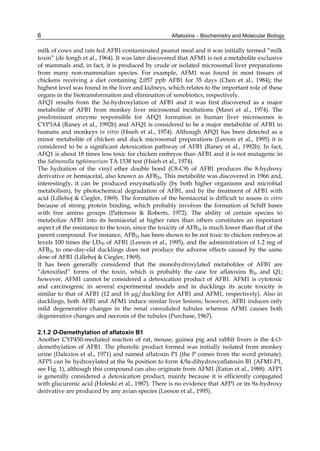
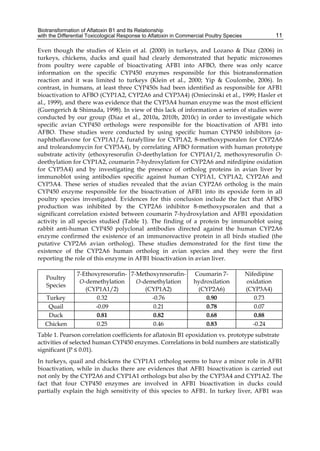
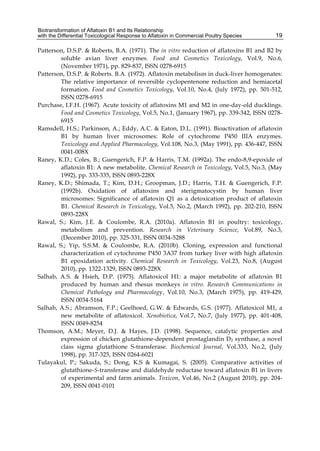
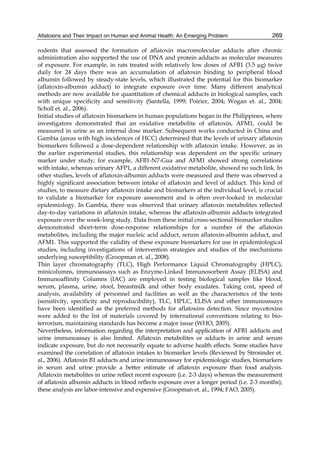
The cytosolic metabolism of AFB1 in the same four poultry species shows a different trend 
compared with the microsomal metabolism (Fig. 3). Turkeys are again the largest producers 
of the cytosolic metabolite AFL but are followed by ducks, chickens and quail (instead of 
quail, ducks and chickens as it is observed for microsomal metabolism). As discussed before 
(see section 2.1.4), AFL is a toxic metabolite of AFB1 and it cannot be considered a 
detoxication product; therefore, it would be expected that sensitive species produce more 
AFL than resistant ones. However, no correlation between AFL production and in vivo 
sensitivity was observed. For instance, quail produced the lowest amount of AFL and it 
exhibits intermediate sensitivity to AFB1, while ducks, which are the most sensitive species, 
produced much less AFL than turkeys. AFB1 consumption by cytosol (rate of AFB1 
disappearance from cytosolic incubations) was highest for the chicken, followed by turkeys, 
ducks and quail and there was no correlation between AFL formation and AFB1 
consumption (Fig. 3). Further, as it was observed for AFL formation, there was no 
correlation between AFB1 disappearance from cytosol and in vivo sensitivity to AFB1. 
Investigation of the potential conjugation reactions of AFL might clarify the role of AFL 
formation on the in vivo sensitivity to AFB1 in poultry. It is possible that the high resistance 
of chickens to AFB1 might be due to an efficient reduction of AFB1 to AFL followed by 
conjugation and elimination of the AFL conjugate. Interestingly, it has been demonstrated 
that chick liver possesses much higher AFB1 reductase activity than duckling or rat liver 
(Chen et al., 1981). 
Aflatoxins – Biochemistry and Molecular Biology 
0,7 
0,6 
0,5 
0,4 
0,3 
0,2 
0,1 
0 
0,25 
0,20 
0,15 
0,10 
0,05 
0,00 
AFL production 
AFB1 consumption 
Turkey Quail Duck Chicken 
AFB1 consumption (nmol AFB1 consumed/mg 
proten/minute) 
AFL production (nmol AFL/mg protein/minute) 
Avian species 
Turkey 
Quail 
Duck 
Chicken 
0,25 
0,20 
0,15 
0,10 
0,05 
0,00 
0,0 0,1 0,2 0,3 0,4 0,5 0,6 0,7 
AFL production (nmol AFL/mg protein/minute) 
AFB1 consumption (nmol AFB1 consumed/mg 
protein/minute) 
Fig. 3. AFL production and AFB1 consumption in turkey, quail, duck and chicken 
cytosolic incubations (left) and relationship between AFL formation and AFB1 
consumption (right).
Biotransformation of Aflatoxin B1 and Its Relationship 
with the Differential Toxicological Response to Aflatoxin in Commercial Poultry Species 
11 
Even though the studies of Klein et al. (2000) in turkeys, and Lozano & Diaz (2006) in 
turkeys, chickens, ducks and quail had clearly demonstrated that hepatic microsomes 
from poultry were capable of bioactivating AFB1 into AFBO, there was only scarce 
information on the specific CYP450 enzymes responsible for this biotransformation 
reaction and it was limited to turkeys (Klein et al., 2000; Yip & Coulombe, 2006). In 
contrast, in humans, at least three CYP450s had been identified as responsible for AFB1 
bioactivation to AFBO (CYP1A2, CYP2A6 and CYP3A4) (Omiecinski et al., 1999; Hasler et 
al., 1999), and there was evidence that the CYP3A4 human enzyme was the most efficient 
(Guengerich & Shimada, 1998). In view of this lack of information a series of studies were 
conducted by our group (Diaz et al., 2010a, 2010b, 2010c) in order to investigate which 
specific avian CYP450 orthologs were responsible for the bioactivation of AFB1 into 
AFBO. These studies were conducted by using specific human CYP450 inhibitors (α- 
naphthoflavone for CYP1A1/2, furafylline for CYP1A2, 8-methoxypsoralen for CYP2A6 
and troleandomycin for CYP3A4), by correlating AFBO formation with human prototype 
substrate activity (ethoxyresorufin O-deethylation for CYP1A1/2, methoxyresorufin O-deethylation 
for CYP1A2, coumarin 7-hydroxylation for CYP2A6 and nifedipine oxidation 
for CYP3A4) and by investigating the presence of ortholog proteins in avian liver by 
immunoblot using antibodies specific against human CYP1A1, CYP1A2, CYP2A6 and 
CYP3A4. These series of studies revealed that the avian CYP2A6 ortholog is the main 
CYP450 enzyme responsible for the bioactivation of AFB1 into its epoxide form in all 
poultry species investigated. Evidences for this conclusion include the fact that AFBO 
production was inhibited by the CYP2A6 inhibitor 8-methoxypsoralen and that a 
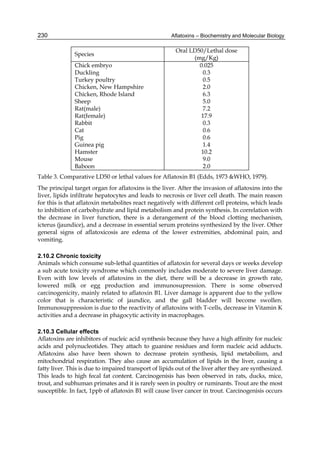
significant correlation existed between coumarin 7-hydroxylation and AFB1 epoxidation 
activity in all species studied (Table 1). The finding of a protein by immunoblot using 
rabbit anti-human CYP450 polyclonal antibodies directed against the human CYP2A6 
enzyme confirmed the existence of an immunoreactive protein in all birds studied (the 
putative CYP2A6 avian ortholog). These studies demonstrated for the first time the 
existence of the CYP2A6 human ortholog in avian species and they were the first 
reporting the role of this enzyme in AFB1 bioactivation in avian liver. 
Poultry 
Species 
7-Ethoxyresorufin- 
O-demethylation 
(CYP1A1/2) 
7-Methoxyresorufin- 
O-demethylation 
(CYP1A2) 
Coumarin 7- 
hydroxilation 
(CYP2A6) 
Nifedipine 
oxidation 
(CYP3A4) 
Turkey 0.32 -0.76 0.90 0.73 
Quail -0.09 0.21 0.78 0.07 
Duck 0.81 0.82 0.68 0.88 
Chicken 0.25 0.46 0.83 -0.24 
Table 1. Pearson correlation coefficients for aflatoxin B1 epoxidation vs. prototype substrate 
activities of selected human CYP450 enzymes. Correlations in bold numbers are statistically 
significant (P ≤ 0.01). 
In turkeys, quail and chickens the CYP1A1 ortholog seems to have a minor role in AFB1 
bioactivation, while in ducks there are evidences that AFB1 bioactivation is carried out 
not only by the CYP2A6 and CYP1A1 orthologs but also by the CYP3A4 and CYP1A2. The 
fact that four CYP450 enzymes are involved in AFB1 bioactivation in ducks could 
partially explain the high sensitivity of this species to AFB1. In turkey liver, AFB1 was
12 
reported to be activated to AFBO by a CYP 1A ortholog (Klein et al., 2000) that later was 
identified as the turkey CYP1A5 on the basis of its 94.7% sequence identity to the CYP1A5 
from chicken liver (Yip & Coulombe, 2006). This enzyme was suggested to correspond to 
the human ortholog CYP1A2 (Yip & Coulombe, 2006). However, using human prototype 
substrates and inhibitors, Diaz et al. (2010a) found evidence for AFB1 bioactivation by 
CYP1A1 but not by CYP1A2 in turkey liver microsomes. Interestingly, the turkey CYP1A5 
has a high amino acid sequence homology not only with the human CYP1A2 (62%) but 
also with the human CYP1A1 (61%) as reported by the UniProtKB database 
(http://www.uniprot.org) and the National Center for Biotechnology Information 
database (http://www.ncbi.nlm.nih.gov). It is possible that the turkey CYP1A5 enzyme 
cloned by Yip & Coulombe (2006) may in fact correspond to the human CYP1A1 ortholog 
or, even more interesting, to both the CYP1A1 and 1A2 human orthologs. Murcia et al. 
(2011) found a very high correlation between EROD (CYP1A1/2) and MROD (CYP1A2) 
activities in turkey liver microsomes (r=0.88, P<0.01) a finding that suggests that CYP1A1 
and CYP1A2 activities in turkey liver are catalyzed by the same enzyme (i.e., the avian 
CYP1A5). The role of CYP1A5 turkey activity on the bioactivation of AFB1 in turkeys is 
further supported by the work of Guarisco et al. (2008) who found that dietary 
supplementation of the antioxidant butylated hydroxytoluene (BHT) partially protected 
against the adverse effects of AFB1, an effect that was accompanied by a reduction in 
EROD and MROD activities in the liver. 
In regards to CYP3A4, Klein et al. (2000) found that this enzyme plays a minor role in the 
bioactivation of AFB1 in turkeys. This finding, however, could not be substantiated by Diaz 
et al. (2010a) who found no correlation between nifedipine oxidation (an indicator of 
CYP3A4 activity) and AFBO formation, and no effect on AFBO formation when the 
prototype inhibitor of human CYP3A4 activity troleandomycin was used. Induction of 
CYP3A4 activity by BHT in turkeys (as evidenced by increased nifedipine oxidation) was 
correlated with decreased in vivo adverse effects of AFB1 (Guarisco et al., 2008), which 
further supports the notion that CYP3A4 is not involved in AFB1 bioactivation in turkeys. 
This finding is of interest since CYP3A4 has been shown to be an activator of aflatoxins B1 
and G1 in humans and other species (Parkinson & Ogilvie, 2008); however, in humans, 
CYP3A enzymes can form the AFBO only at relatively high substrate concentrations 
(Ramsdell et al., 1991). In contrast with turkeys, however, CYP3A4 does appear to play a 
role on AFB1 bioactivation in ducks (Diaz et al., 2010b). Duck microsomes show a high 
correlation between nifedipine oxidation and AFB1 epoxidation (Table 1) but the use of the 
specific human CYP3A4 inhibitor troleandomycin did not reduce AFBO production (Diaz et 
al., 2010b). A recent study reports the cloning of a turkey CYP3A37 expressed in E. coli able 
to biotransform AFB1 into AFQ1 (and to a lesser extent to AFBO) with an amino acid 
sequence homology of 76% compared with the human CYP3A4 (Rawal et al., 2010b). In this 
study the use of the inhibitors erythromycin (specific for human CYP3A1/4) and 17α- 
ethynylestradiol (specific for human CYP3A4) completely inhibited the production of 
AFBO. The results of the studies conducted with the CYP3A4 turkey ortholog indicate that 
the turkey enzyme is not sensitive to the CYP3A4 human inhibitor troleandomycin but that 
it is sensitive to erythromycin and 17α-ethynylestradiol. If this lack of sensitivity to 
troleandomycin also applies for the duck CYP3A4 ortholog, this could explain the results of 
Diaz et al. (2010b) previously described. In regards to the findings of Rawal et al. (2010b), it 
is important to note that the fact that a cloned gene expressed in a heterologous system (e.g. 
Aflatoxins – Biochemistry and Molecular Biology
Biotransformation of Aflatoxin B1 and Its Relationship 
with the Differential Toxicological Response to Aflatoxin in Commercial Poultry Species 
13 
E. coli) biotransforms AFB1 does not necessarily mean that this is a reflection of the situation 
in a biological system. Heterologously expressed enzymes typically exhibit a much different 
behavior than native ones. For instance, the enzyme affinity for nifedipine oxidation activity 
in turkey liver microsomes is much higher than that of the heterologously expressed turkey 
CYP3A37 (KM values of 21 and 98 μM, respectively) (Murcia et al., 2011; Rawal et al., 2010b). 
Both in vivo studies and in vitro hepatic microsomal metabolism suggest that the turkey 
ortholog of the human CYP3A4 is most likely not involved in AFB1 bioactivation. 
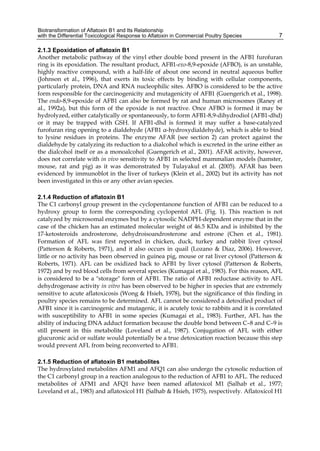
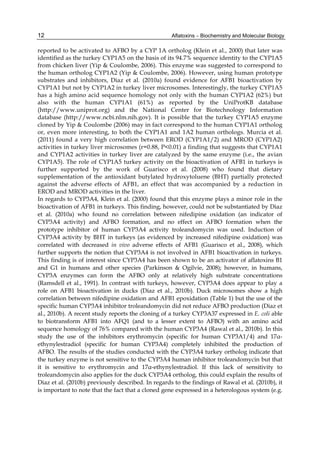
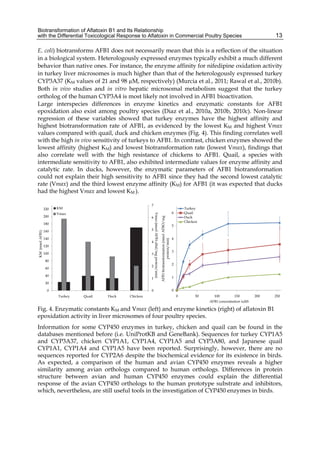
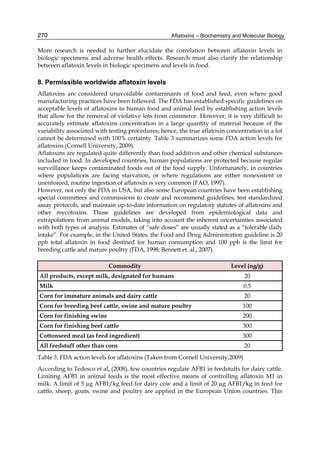
Large interspecies differences in enzyme kinetics and enzymatic constants for AFB1 
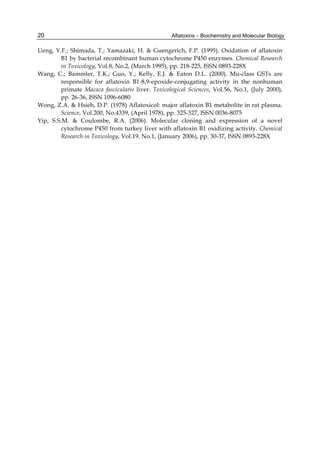
epoxidation also exist among poultry species (Diaz et al., 2010a, 2010b, 2010c). Non-linear 
regression of these variables showed that turkey enzymes have the highest affinity and 
highest biotransformation rate of AFB1, as evidenced by the lowest KM and highest Vmax 
values compared with quail, duck and chicken enzymes (Fig. 4). This finding correlates well 
with the high in vivo sensitivity of turkeys to AFB1. In contrast, chicken enzymes showed the 
lowest affinity (highest KM) and lowest biotransformation rate (lowest Vmax), findings that 
also correlate well with the high resistance of chickens to AFB1. Quail, a species with 
intermediate sensitivity to AFB1, also exhibited intermediate values for enzyme affinity and 
catalytic rate. In ducks, however, the enzymatic parameters of AFB1 biotransformation 
could not explain their high sensitivity to AFB1 since they had the second lowest catalytic 
rate (Vmax) and the third lowest enzyme affinity (KM) for AFB1 (it was expected that ducks 
had the highest Vmax and lowest KM ). 
7 
6 
5 
4 
3 
2 
1 
0 
220 
200 
180 
160 
140 
120 
100 
80 
60 
40 
20 
0 
Turkey Quail Duck Chicken Vmax (nmol AFB1-dhd/mg protein/min) 
KM (nmol AFB1) 
KM 
Vmax 
6 
5 
4 
3 
2 
1 
0 
0 50 100 150 200 250 
AFB1 biotransformation (nmol AFBO/mg 
protein/min) 
AFB1 concentration (M) 
Turkey 
Quail 
Duck 
Chicken 
Fig. 4. Enzymatic constants KM and Vmax (left) and enzyme kinetics (right) of aflatoxin B1 
epoxidation activity in liver microsomes of four poultry species. 
Information for some CYP450 enzymes in turkey, chicken and quail can be found in the 
databases mentioned before (i.e. UniProtKB and GeneBank). Sequences for turkey CYP1A5 
and CYP3A37, chicken CYP1A1, CYP1A4, CYP1A5 and CYP3A80, and Japanese quail 
CYP1A1, CYP1A4 and CYP1A5 have been reported. Surprisingly, however, there are no 
sequences reported for CYP2A6 despite the biochemical evidence for its existence in birds. 
As expected, a comparison of the human and avian CYP450 enzymes reveals a higher 
similarity among avian orthologs compared to human orthologs. Differences in protein 
structure between avian and human CYP450 enzymes could explain the differential 
response of the avian CYP450 orthologs to the human prototype substrate and inhibitors, 
which, nevertheless, are still useful tools in the investigation of CYP450 enzymes in birds.
14 
3.2 Trapping and conjugation of aflatoxin B1 metabolites in commercial poultry 
species 
Even though the ability to bioactivate AFB1 into AFBO is critical in the toxicological 
response to AFB1, in some species it is the ability to trap AFBO with GSH which 
ultimately determines the degree of AFB1-induced liver damage. For instance, both rats 
and mice exhibit high bioactivation rates of AFB1; however, mice are resistant to the 
hepatic carcinogenic effects of AFB1 while rats develop hepatocellular carcinoma. The 
reason for this differential response lies in the constitutive expression of high levels of an 
Alpha-class GST that catalyzes the trapping of AFBO in the mouse that is only expressed 
at low levels in the rat (Esaki & Kumagai, 2002). In fact, the induction of this enzyme in 
the rat leads to resistance to the development of hepatic carcinoma. Interestingly, in non-human 
Aflatoxins – Biochemistry and Molecular Biology 
primates it is Mu-class GSTs the ones responsible for AFBO trapping with GSH 
(Wang et al., 2000). 
Turkeys are the only poultry species in which the role of GST-mediated trapping of AFBO 
with GSH has been investigated (Klein et al., 2000; 2002). At least six Alpha-class GSTs have 
been isolated, amplified and fully characterized from turkey, which exhibit similarities in 
sequence with human Alpha-class GSTs ranging from 53% to 90% (Kim et al., 2010). 
However, no soluble GST activity towards microsomally activated AFB1 has been found in 
liver cytosol from one-month old male turkeys (Klein et al., 2000), a finding that was later 
confirmed in male turkeys 9, 41, and 65 days of age (Klein et al., 2002). GSTs from the liver 
of one-day-old chicks (Chang et al., 1990) and nucleotide sequences of Alpha-class (Liu et 
al., 1993), Mu-class (Liu & Tam, 1991), Theta-class (Hsiao et al., 1995) and Sigma-class 
(Thomson et al., 1998) GSTs from chicken liver have been characterized, but there are no 
reports for their role in AFBO trapping with GSH. 
The role of other conjugation reactions on AFB1 metabolism in poultry is still uncertain. 
Liver UGT activity and sulphotransferase (SULT) activity have been reported in bobwhite 
quail (Maurice et al., 1991), and in chickens, ducks and geese (Bartlet & Kirinya, 1976). 
However, no research on glucuronic acid conjugation or sulfate conjugation of AFB1 
metabolites has been conducted in any commercial poultry species. 
4. Concluding remarks 
Research conducted recently has shown that there are clear differences in 
oxidative/reductive AFB1 metabolism that could explain the differential responses to 
AFB1 observed in vivo among turkeys, quail and chickens, but not ducks. The existence of 
a clear toxicological biochemical pattern that explains AFB1 sensitivity in three out of four 
species may be related to their different phylogenetic origins: Turkeys, quail and chickens 
are phylogenetically close to each other (all belong to the order Galliformes, family 
Phasianidae), but distant from ducks (order Anseriformes, family Anatidae). It is also 
interesting to note that while CYP2A6 (and to a lesser extent CYP1A1) is the major 
enzyme responsible for AFB1 bioactivation in the Galliformes studied, four enzymes 
(CYP1A1, 1A2, 2A6 and 3A4 ortholog activities) appear to be responsible for AFB1 
bioactivation in ducks. 
In regards to conjugation reactions, it has been demonstrated that turkeys do not express 
the GSTs responsible for AFBO trapping. However, the role of AFBO trapping by GSH 
has not been investigated in other poultry species and no information on the possible 
conjugation reactions of AFL has been reported for any avian species, either. Another
Biotransformation of Aflatoxin B1 and Its Relationship 
with the Differential Toxicological Response to Aflatoxin in Commercial Poultry Species 
15 
pathway of AFBO metabolism that has not been investigated in poultry is the formation 
of AFB1-dhd and dialcohol (Fig. 1). Formation of AFB1-dhd may occur either 
spontaneously or through the action of a microsomal epoxide hydrolase (EPHX) and the 
possible role of EPHX in AFB1 biotransformation in birds is still unknown. The alternative 
pathway for AFB1-dhd, that is, the formation of an aflatoxin dialcohol through the action 
of the cytosolic enzyme AFAR, has not been investigated either. This topic is important to 
investigate since the dialcohol does not bind with proteins and therefore constitutes a true 
detoxication product. 
Extra-hepatic localization of enzymes responsible for the biotransformation of AFB1 may 
also play a role in the differential response to AFB1 in birds. For instance, in humans 
CYP3A4 is the major enzyme involved in AFB1 bioactivation (Ueng et al., 1995) and this 
enzyme is highly expressed not only in the liver but also in the gastrointestinal tract. This 
“first-pass” effect may affect the absorption of unaltered AFB1 and therefore its ability to 
reach its target organ in humans. Finally, the so-called Phase III metabolism (basolateral and 
canalicular transport of xenobiotics) has been shown to determine sensitivity or resistance to 
xenobiotics in several experimental models. For instance, collie dogs are extremely sensitive 
to ivermectin due to the low expression of the transporter protein MDR1 (Diaz, 2000). The 
role of the translocation of AFB1 and its metabolites on AFB1 sensitivity/resistance needs to 
be investigated. 
5. Acknowledgment 
Thanks are due to the International Foundation for Science (Stockholm, Sweden) for partial 
funding of our research on in vitro metabolism of aflatoxin B1, to all people that have 
collaborated with this work (particularly Sandra Milena Cepeda and Amparo Cortés) and to 
the National University of Colombia in Bogotá, our second home. 
6. References 
Bartlet, A.L. & Kirinya, L.M. (1976). Activities of mixed function oxidases, UDP-glucuronyl 
transferase and sulphate conjugation enzymes in Galliformes and 
Anseriformes. Quarterly Journal of Experimental Physiology and Cognate Medical 
Sciences, Vol.61, No.2, (April 1976), pp. 105-119, ISSN 0033-5541 
Blount, W.P. (1961). Turkey "X" disease. Turkeys, (March-April 1961), pp. 52-61 
Chang, L.H.; Chuang, L.F.; Tsai, C.P.; Tu, C.P.D. & Tam, M.F. (1990). Characterization of 
glutathione S-transferases from day-old chick livers. Biochemistry, Vol.29, No.3, 
(January 1990), pp. 744-750, ISSN 0006-2960 
Chen, S.C.G.; Wei, R.D. & Hsieh, D.P.H. (1981). Purification and some properties of 
chicken-liver aflatoxin B1 reductase. Food and Cosmetics Toxicology, Vol.19, pp. 19- 
24, ISSN 0278-6915 
Chen, C.; Pearson, A.M.; Coleman, T.H.; Gray, J.I.; Pestka, J.J. & Aust, S.D. (1984). Tissue 
deposition and clearance of aflatoxins from broiler chickens fed a contaminated 
diet. Food and Chemical Toxicology, Vol.22, No.6, (June 1984), pp. 447-451, ISSN 
0278-6915
16 
Dalezios, J.; Wogan, G.N. & Weinreb, S.M. (1971). Aflatoxin P-1: a new aflatoxin 
Aflatoxins – Biochemistry and Molecular Biology 
metabolite in monkeys. Science, Vol.171, No.3971, (February 1971), pp. 584-585, 
ISSN 0036-8075 
De Iongh, H.; Vles, R.O. & Van Pelt, J.G. (1964). Milk of mammals fed an aflatoxin-containing 
diet. Nature, Vol.202 , (May 1964), pp. 466-467, ISSN 0028-0836 
Diaz, G.J. & Sugahara, M. (1995). Individual and combined effects of aflatoxin and 
gizzerosine in broiler chickens. British Poultry Science, Vol.36, No.5, (December 
1995), pp. 729-736, ISSN 0007-1668 
Diaz, G.J. (2000). Basolateral and canalicular transport of xenobiotics in the hepatocyte : a 
review. Cytotechnology, Vol.34, No.3, (November 2000), pp. 225-236, ISSN 0920- 
9069 
Diaz, G.J.; Calabrese, E. & Blain, R. (2008). Aflatoxicosis in chickens (Gallus gallus): An 
example of hormesis?. Poultry Science, Vol.87, No.4, (April 2008), pp. 727-732, 
ISSN 0032-5791 
Diaz, G.J.; Murcia, H.W. & Cepeda, S.M. (2010a). Bioactivation of aflatoxin B1 by turkey 
liver microsomes: responsible P450 enzymes. British Poultry Science, Vol.51, No.6, 
(December 2010), pp. 828-837, ISSN 0007-1668 
Diaz, G.J.; Murcia, H.W. & Cepeda, S.M. (2010b). Cytochrome P450 enzymes involved in 
the metabolism of aflatoxin B1 in chickens and quail. Poultry Science, Vol.89, 
No.11, (November 2010), pp. 2461-2469, ISSN 0032-5791 
Diaz, G.J.; Murcia, H.W. & Cepeda, S.M. (2010c). The role of selected cytochrome P450 
enzymes on the bioactivation of aflatoxin B1 by duck liver microsomes. Avian 
Pathology, Vol.39, No.4, (August 2010), pp. 279-285, ISSN 0307-9457 
Eaton, D.L.; Monroe, D.H.; Bellamy, G. & Kalman, D.A. (1988). Identification of a novel 
metabolite of aflatoxin B1 produced in vitro and in vivo in rats and mice. Chemical 
Research in Toxicology, Vol.1, No.2, (March 1988), pp. 108-114, ISSN 0893-228X 
Esaki, H. & Kumagai, S. (2002). Glutathione-S-transferase activity towards aflatoxin 
epoxide in livers of mastomys and other rodents. Toxicon, Vol.40, No.7, (July 
2002), pp. 941-945, ISSN 0041-0101 
Guarisco, J.A.; Hall, J.O. & Coulombe, R.A. (2008). Mechanisms of butylated 
hydroxytoluene chemoprevention of aflatoxicosis – inhibition of aflatoxin B1 
metabolism. Toxicology and Applied Pharmacology, Vol.227, No.3, (March 2008), pp. 
339-346, ISSN 0041-008X 
Guengerich, F.P. & Shimada, T. (1998). Activation of procarcinogens by human 
cytochrome P450 Enzymes. Mutation Research/Fundamental and Molecular 
Mechanismsof Mutagenesis, Vol.400, No.1-2, (May 1998), pp. 201-213, ISSN 0027- 
5107 
Guengerich, F.P.; Jonhson, W.W.; Shimada, T.; Ueng, Y.F.; Yamazaki, H. & Langouet, S. 
(1998). Activation and detoxication of aflatoxin B1. Mutatation 
Research/Fundamental and Molecular Mechanisms of Mutagenesis, Vol.402, No.1-2, 
(June 1998), pp. 121-128, ISSN 0027-5107 
Guengerich, F.P.; Cai, H.; McMahon, M.; Hayes, J.D.; Sutter, T.R.; Groopman, J.D.; Deng, 
Z. & Harris, T.M. (2001). Reduction of aflatoxin B1 dialdehyde by rat and human
Biotransformation of Aflatoxin B1 and Its Relationship 
with the Differential Toxicological Response to Aflatoxin in Commercial Poultry Species 
17 
aldo-keto reductases. Chemical Research in Toxicology, Vol.14, No.6, (June 2001), 
pp. 727-737, ISSN 0893-228X 
Hasler, J.A.; Estabrook, R.; Murray, M.; Pikuleva, I.; Waterman, M.; Capdevila, J.; Holla, 
V.; Helvig, C.; Falck, J.R.; Farrell, G.; Kaminsky, L.S.; Spivack, S.D.; Boitier, E. & 
Beaune, P. (1999). Human cytochromes P450. Molecular Aspects of Medicine, 
Vol.20, No.1-2, (February-April 1999), pp. 1-137, ISSN 0098-2997 
Holeski, C.J.; Eaton, D.L.; Monroe, D.H. & Bellamy, G.M. (1987). Effect of phenobarbital 
on the biliary excretion of aflatoxin P1-glucuronide and aflatoxin B1-S-glutathione 
in the rat. Xenobiotica, Vol.17, No.2, (February 1987), pp. 139-153, ISSN 0049-8254 
Hsiao, C.D.; Martsen, E.O.; Lee, J.Y.; Tsai, S.P. & Ming, F.T. (1995). Amino acid 
sequencing, molecular cloning and modeling of the chick liver class-theta 
glutathione S-transferase CL1. Biochemical Journal, Vol.312, No.1, (November 
1995), pp. 91-98, ISSN 0264-6021 
Hsieh, D.P.H.; Salhab, A.S.; Wong, J.J. & Yang, S.L. (1974). Toxicity of aflatoxin Q1 as 
evaluated with the chicken embryo and bacterial auxotrophs. Toxicology and 
Applied Pharmacology, Vol.30, No.2, (November 1974), pp. 237-242, ISSN 0041- 
008X 
Johnson, W.W.; Harris, T.M. & Guengerich, F.P. (1996). Kinetics and mechanism of 
hydrolysis of aflatoxin B1 exo-8,9-epoxide and rearrangement of the dihydrodiol. 
Journal of the American Chemical Society, Vol.118, No.35, (September 1996), pp. 
8213-8220, ISSN 0002-7863 
Josephy, P.D.; Guengerich, F.P. & Miners, J.O. (2005). “Phase I” and “Phase II” drug 
metabolism: Terminology that we should phase out? Drug Metabolism Reviews, 
Vol.37, No.4, (November 2005), pp. 575-580, ISSN 0360-2532 
Josephy, P.D. & Mannervik, B. (2006). Molecular Toxicology, (2nd edition), Oxford 
University Press, ISBN 978-0-19-517620-9, New York, USA 
Kim, J.E.; Bauer, M.M.; Mendoza, K.M.; Reed, K.M. & Coulombe, R.A. (2010). 
Comparative genomics identifies new Alpha class genes within the avian 
glutathione S-transferase gene cluster. Gene, Vol.452, No.2, (March 2010), pp. 45- 
53, ISSN 0378-1119 
Klein, P.J.; Buckner, R.; Kelly, J. & Coulombe, R.A. (2000). Biochemical basis for the 
extreme sensitivity of turkeys to aflatoxin B1. Toxicology and Applied Pharmacology, 
Vol.165, No.1, (May 2000), pp. 45-52, ISSN 0041-008X 
Klein, P.J.; Van Vleet, T.R.; Hall, J.O. & Coulombe, R.A. (2002). Biochemical factors 
underlying the age-related sensitivity of turkeys to aflatoxin B1. Comparative 
Biochemistry and Physiology Part C, Vol.132, No.2, (June 2002), pp. 193-201, ISSN 
1532-0456 
Kumagai, S.; Nakano, N. & Aibara, K. (1983). Interactions of aflatoxin B1 and blood 
components of various species in vitro: Interconversion of aflatoxin B1 and 
aflatoxicol in the blood. Toxicology and Applied Pharmacology, Vol.67, No.2, 
(February 1983), pp. 292-301, ISSN 0041-008X 
Leeson, S.; Diaz, G.J. & Summers, J.D. (1995). Poultry metabolic disorders and mycotoxins. 
University Books, ISBN 0-9695600-1-1, Guelph, Canada
18 
Lillehoj, E.B. & Ciegler, A. (1969). Biological activity of aflatoxin B2a. Applied Microbiology, 
Aflatoxins – Biochemistry and Molecular Biology 
Vol.17, No.4, (April 1969), pp. 516-519, ISSN 0099-2240 
Liu, L.F. & Tam, M.F. (1991). Nucleotide sequence of class μ glutathione S-transferase 
from chicken liver. Biochimica et Biophysica Acta (BBA) – Gene Structure and 
Expression, Vol.1090, No.3, (November 1991), pp. 343-344, ISSN 0167-4781 
Liu, L.F.; Wu, S.H. & Tam, M.F. (1993). Nucleotide sequence of class-α glutathione S-transferases 
from chicken liver. Biochimica et Biophysica Acta (BBA) - Gene 
Structure and Expression, Vol.1216, No.2, (November 1993), pp. 332-334, ISSN 
0167-4781 
Loveland, P.M.; Coulombe, R.A.; Libbey, L.M.; Pawlowski, N.E.; Sinnhuber, R.O.; Nixon, 
J.E. & Bailey, G.S. (1983). Identification and mutagenicity of aflatoxicol-M1 
produced by metabolism of aflatoxin B1 and aflatoxicol by liver fractions from 
rainbow trout (Salmo gairdneri) fed β-naphthoflavone. Food and Chemical 
Toxicology, Vol.21, No.5, (October 1983), pp. 557-562, ISSN 0278-6915 
Loveland, P.M.; Wilcox, J.S.; Pawolowski, N.E. & Bailey, G.S. (1987). Metabolism and 
DNA binding of aflatoxicol and aflatoxin B1 in vivo and in isolated hepatocytes 
from rainbow trout (Salmo gairdneri). Carcinogenesis, Vol.8, No.8, (August 1978), 
pp. 1065-1070, ISSN 0143-3334 
Lozano, M.C. & Diaz, G.J. (2006). Microsomal and cytosolic biotransformation of aflatoxin 
B1 in four poultry species. British Poultry Science, Vol.47, No.6, (December 2006), 
pp. 734-741, ISSN 0007-1668 
Masri, M.S.; Haddon, W.F.; Lundin, R.E. & Hsieh, D.P.H. (1974). Aflatoxin Q1. A newly 
identified major metabolite of aflatoxin B1 in monkey liver. Journal of Agricultural 
and Food Chemistry, Vol.22, No.3, (May-June 1974), pp. 512-515, ISSN 0021-8561 
Maurice, D.V.; Lightsey, S.F.; Kuo-Tung, H.; Rhoades, J.F. (1991). Comparison of 
glutathione S-transferase activity in the rat and birds: tissue distribution and 
rhythmicity in chicken (Gallus domesticus) liver. Comparative Biochemistry and 
Physiology B, Vol.100, No.3, (March 1991), pp. 471-474, ISSN 1096-4959 
Muller, R.D.; Carlson, C.W.; Semeniuk, G. & Harshfield, G.S. (1970). The response of 
chicks, ducklings, goslings, pheasants and poults to graded levels of aflatoxin. 
Poultry Science, Vol.49, No.5, (September 1970), pp. 1346-1350, ISSN 0032-5791 
Murcia, H.W.; Cepeda, S.M. & Diaz, G.J. (2011). Enzymatic activity in turkey, duck, quail 
and chicken liver microsomes against four prototype cytochrome P450 human 
substrates and aflatoxin B1 (submitted). 
Omiecinski, C.J.; Remmel, R.P. & Hosagrahara, V.P. (1999). Concise review of the 
cytochrome P450s and their roles in toxicology. Toxicological Sciences, Vol.48, 
No.2, (April 1999), pp. 151-156, ISSN 1096-6080 
Omura, T. & Sato, R. (1964). The carbon monoxide-binding pigment of liver microsomes. 
I. Evidence for its hemoprotein nature. Journal of Biological Chemistry, Vol.239, 
No.7, (July 1964), pp. 2370-2378, ISSN 0021-9258 
Parkinson, A. & Ogilvie, B.W. (2008). Biotransformation of xenobiotics, In: Casarett & 
Doull’s Toxicology – The basic science of poisons, Klaassen, C.D. (Ed.), pp. 161-304, 
McGraw Hill Medical, ISBN 978-0-07147051-3, New York, USA
Biotransformation of Aflatoxin B1 and Its Relationship 
with the Differential Toxicological Response to Aflatoxin in Commercial Poultry Species 
19 
Patterson, D.S.P. & Roberts, B.A. (1971). The in vitro reduction of aflatoxins B1 and B2 by 
soluble avian liver enzymes. Food and Cosmetics Toxicology, Vol.9, No.6, 
(November 1971), pp. 829-837, ISSN 0278-6915 
Patterson, D.S.P. & Roberts. B.A. (1972). Aflatoxin metabolism in duck-liver homogenates: 
The relative importance of reversible cyclopentenone reduction and hemiacetal 
formation. Food and Cosmetics Toxicology, Vol.10, No.4, (July 1972), pp. 501-512, 
ISSN 0278-6915 
Purchase, I.F.H. (1967). Acute toxicity of aflatoxins M1 and M2 in one-day-old ducklings. 
Food and Cosmetics Toxicology, Vol.5, No.1, (January 1967), pp. 339-342, ISSN 0278- 
6915 
Ramsdell, H.S.; Parkinson, A.; Eddy, A.C. & Eaton, D.L. (1991). Bioactivation of aflatoxin 
B1 by human liver microsomes: Role of cytochrome P450 IIIA enzymes. 
Toxicology and Applied Pharmacology, Vol.108, No.3, (May 1991), pp. 436-447, ISSN 
0041-008X 
Raney, K.D.; Coles, B.; Guengerich, F.P. & Harris, T.M. (1992a). The endo-8,9-epoxide of 
aflatoxin B1: A new metabolite. Chemical Research in Toxicology, Vol.5, No.3, (May 
1992), pp. 333-335, ISSN 0893-228X 
Raney, K.D.; Shimada, T.; Kim, D.H.; Groopman, J.D.; Harris, T.H. & Guengerich, F.P. 
(1992b). Oxidation of aflatoxins and sterigmatocystin by human liver 
microsomes: Significance of aflatoxin Q1 as a detoxication product of aflatoxin 
B1. Chemical Research in Toxicology, Vol.5, No.2, (March 1992), pp. 202-210, ISSN 
0893-228X 
Rawal, S.; Kim, J.E. & Coulombe, R.A. (2010a). Aflatoxin B1 in poultry: toxicology, 
metabolism and prevention. Research in Veterinary Science, Vol.89, No.3, 
(December 2010), pp. 325-331, ISSN 0034-5288 
Rawal, S.; Yip, S.S.M. & Coulombe, R.A. (2010b). Cloning, expression and functional 
characterization of cytochrome P450 3A37 from turkey liver with high aflatoxin 
B1 epoxidation activity. Chemical Research in Toxicology, Vol.23, No.8, (August 
2010), pp. 1322-1329, ISSN 0893-228X 
Salhab, A.S. & Hsieh, D.P. (1975). Aflatoxicol H1: a major metabolite of aflatoxin B1 
produced by human and rhesus monkeys in vitro. Research Communications in 
Chemical Pathology and Pharmacology, Vol.10, No.3, (March 1975), pp. 419-429, 
ISSN 0034-5164 
Salhab, A.S.; Abramson, F.P.; Geelhoed, G.W. & Edwards, G.S. (1977). Aflatoxicol M1, a 
new metabolite of aflatoxicol. Xenobiotica, Vol.7, No.7, (July 1977), pp. 401-408, 
ISSN 0049-8254 
Thomson, A.M.; Meyer, D.J. & Hayes, J.D. (1998). Sequence, catalytic properties and 
expression of chicken glutathione-dependent prostaglandin D2 synthase, a novel 
class sigma glutathione S-transferase. Biochemical Journal, Vol.333, No.2, (July 
1998), pp. 317-325, ISSN 0264-6021 
Tulayakul, P.; Sakuda, S.; Dong, K.S & Kumagai, S. (2005). Comparative activities of 
glutathione-S-transferase and dialdehyde reductase toward aflatoxin B1 in livers 
of experimental and farm animals. Toxicon, Vol.46, No.2 (August 2010), pp. 204- 
209, ISSN 0041-0101
20 
Ueng, Y.F.; Shimada, T.; Yamazaki, H. & Guengerich, F.P. (1995). Oxidation of aflatoxin 
Aflatoxins – Biochemistry and Molecular Biology 
B1 by bacterial recombinant human cytochrome P450 enzymes. Chemical Research 
in Toxicology, Vol.8, No.2, (March 1995), pp. 218-225, ISSN 0893-228X 
Wang, C.; Bammler, T.K.; Guo, Y.; Kelly, E.J. & Eaton D.L. (2000). Mu-class GSTs are 
responsible for aflatoxin B1-8,9-epoxide-conjugating activity in the nonhuman 
primate Macaca fascicularis liver. Toxicological Sciences, Vol.56, No.1, (July 2000), 
pp. 26-36, ISSN 1096-6080 
Wong, Z.A. & Hsieh, D.P. (1978) Aflatoxicol: major aflatoxin B1 metabolite in rat plasma. 
Science, Vol.200, No.4339, (April 1978), pp. 325-327, ISSN 0036-8075 
Yip, S.S.M. & Coulombe, R.A. (2006). Molecular cloning and expression of a novel 
cytochrome P450 from turkey liver with aflatoxin B1 oxidizing activity. Chemical 
Research in Toxicology, Vol.19, No.1, (January 2006), pp. 30-37, ISSN 0893-228X
2 
Control of Aflatoxin 
Biosynthesis in Aspergilli 
Kenneth C. Ehrlich, Perng-Kuang Chang, Jiujiang Yu, 
Jeffrey W. Cary and Deepak Bhatnagar 
Southern Regional Research Center, New Orleans, Louisiana 
USA 
1. Introduction 
Aflatoxins (AFs) are bisfurans that are polyketide-derived, toxic, and carcinogenic 
secondary metabolites produced by Aspergillus flavus on corn, peanuts, cottonseed, and tree 
nuts (Payne & Yu, 2010). While biosynthesis of these toxins has been extensively studied in 
vitro, much less is known about what causes the fungi to produce AFs under certain 
environmental conditions and only on certain plants. It is not yet known why wheat, 
soybean, and sorghum are resistant to AF contamination in the field whereas, under 
laboratory conditions A. flavus is able to colonize these plant tissues and produce AFs 
(Cleveland et al., 2009). 
AF biosynthesis is a complicated process involving many levels of transcriptional and 
post-transcriptional control (Abbas et al., 2009; Chanda et al., 2009; Georgianna & Payne, 
2009; Schmidt-Heydt et al., 2009). In this review we provide an overview of what is 
currently known about how environmental and nutritional factors stimulate or inhibit AF 
production. Environmental and nutritional signals interact directly with cell surface 
receptors or transport proteins. Usually the interaction sets up a cascade of cellular 
responses including activation of heat shock proteins or other chaperonin-like messengers 
as well as protein kinases or other protein modifying enzymes. These, in turn, activate 
transcription factors residing in the cytoplasm to allow them to cross the nuclear 
membrane boundary or, in some cases, to activate a DNA-binding protein already in the 
nucleus. The DNA-binding protein then has to find the correct location in the targeted 
gene’s promoter and the region of chromatin containing the gene has to be in a 
transcriptionally competent (euchromatic) as opposed to an incompetent heterochromatic 
condensed state. Finding the correct location requires transcription-activating factors 
(TAFs) which either bind to chromatin and recruit the transcription factor to the DNA or 
bind to the transcription factor and guide it to the correct location. The stability of the 
transcription factor in the cell is another level of control of the transcriptional process. 
This stability is mediated by modification (ubiquitination or neddylation) (Busch et al., 
2003). Recently, AF biosynthesis was shown to occur in dedicated peroxisomal vesicles 
(Roze et al., 2011). The ability to form and stabilize such vesicles could be critical to the 
coordination of the biosynthetic steps leading to AF formation. All of these processes are 
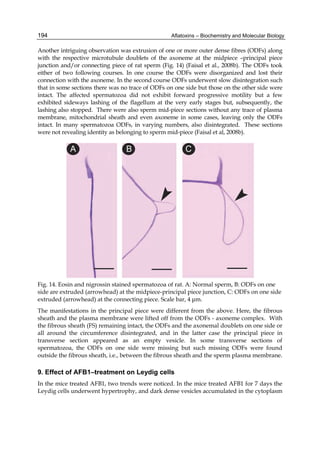
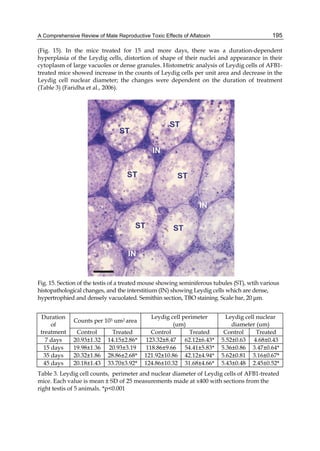
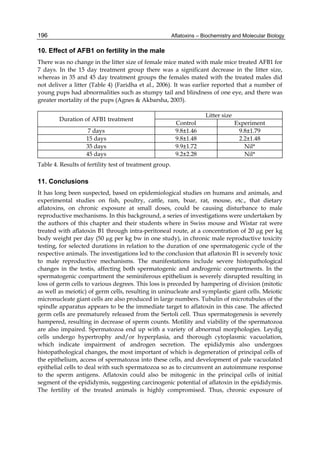
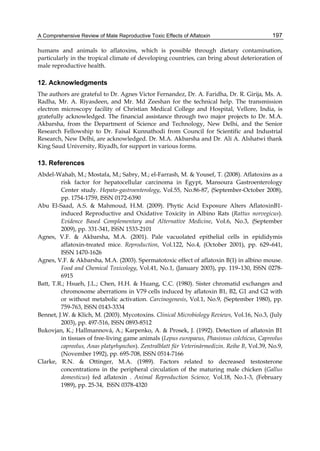
illustrated in Figure 1 and are discussed in more detail below.
Aflatoxins – Biochemistry and Molecular Biology 
22 
Environmental and nutritional stimuli 
Receptor 
Proteins Import proteins 
TF activation or inactivation 
NsdC, D; EsdC; HLH-DBP 
Conidiophore development 
Transporters 
VelB 
VeA 
LaeA 
PKs 
HSPs 
Aflatoxisome 
AF Gene cluster 
AflR 
AflJ 
TAFs 
HdaA 
SET domain 
proteins 
Stabilization 
factors 
Activation of AflR 
CSN 
Proteolysis 
Aflatoxin prdn 
LaeA-VosA 
like 
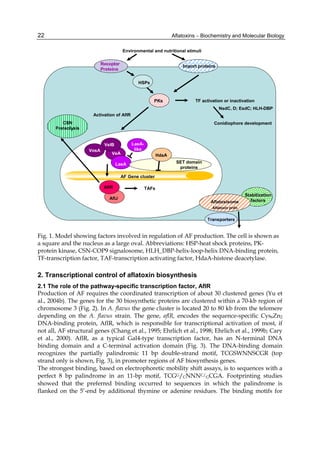
Fig. 1. Model showing factors involved in regulation of AF production. The cell is shown as 
a square and the nucleus as a large oval. Abbreviations: HSP-heat shock proteins, PK-protein 
kinase, CSN-COP9 signalosome, HLH_DBP-helix-loop-helix DNA-binding protein, 
TF-transcription factor, TAF-transcription activating factor, HdaA-histone deacetylase. 
2. Transcriptional control of aflatoxin biosynthesis 
2.1 The role of the pathway-specific transcription factor, AflR 
Production of AF requires the coordinated transcription of about 30 clustered genes (Yu et 
al., 2004b). The genes for the 30 biosynthetic proteins are clustered within a 70-kb region of 
chromosome 3 (Fig. 2). In A. flavus the gene cluster is located 20 to 80 kb from the telomere 
depending on the A. flavus strain. The gene, aflR, encodes the sequence-specific Cys6Zn2 
DNA-binding protein, AflR, which is responsible for transcriptional activation of most, if 
not all, AF structural genes (Chang et al., 1995; Ehrlich et al., 1998; Ehrlich et al., 1999b; Cary 
et al., 2000). AflR, as a typical Gal4-type transcription factor, has an N-terminal DNA 
binding domain and a C-terminal activation domain (Fig. 3). The DNA-binding domain 
recognizes the partially palindromic 11 bp double-strand motif, TCGSWNNSCGR (top 
strand only is shown, Fig. 3), in promoter regions of AF biosynthesis genes. 
The strongest binding, based on electrophoretic mobility shift assays, is to sequences with a 
perfect 8 bp palindrome in an 11-bp motif, TCGG/CNNNC/GCGA. Footprinting studies 
showed that the preferred binding occurred to sequences in which the palindrome is 
flanked on the 5’-end by additional thymine or adenine residues. The binding motifs for
Control of Aflatoxin Biosynthesis in Aspergilli 
23 
AflR almost always are within 200 bp of the gene’s translational start site. In the pksA 
promoter region an additional AflR-binding site was found to be the AflR binding site for a 
short gene hypC (formerly hypB1), which encodes an enzyme necessary for oxidation of the 
AF precursor metabolite, norsolorinic acid anthrone. 
omtB 
aflT 
moxY 
adhA 
norA 
ver-1 
verA 
hypA 
ordB 
avfA 
vbs 
hypB2 - 
hexB 
hexA 
estA 
avnA 
aflJ 
aflR 
nor-1 
pksA 
norB 
cypA 
ordA 
omtA 
cypX 
nadA 
hypB1 
verB 
F U T C D A B R S H J E M N G L I O P Q K V W X Y 
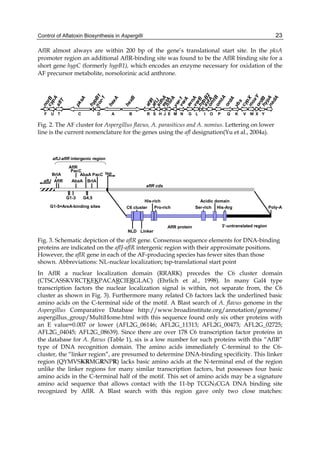
Fig. 2. The AF cluster for Aspergillus flavus, A. parasiticus and A. nomius. Lettering on lower 
line is the current nomenclature for the genes using the afl designation(Yu et al., 2004a). 
His-rich Acidic domain 
C6 cluster His-Arg 
PacC 
PacC 
G1-3 G4,5 
Pro-rich 
aflJ 
tsp 
AflR 
AbaA 
BrlA 
Ser-rich 
3’-untranslated region 
Poly-A 
AbaA 
BrlA 
AflR 
NLD Linker 
G1-5=AreA-binding sites 
AflR protein 
aflR cds 
aflJ-aflR intergenic region 
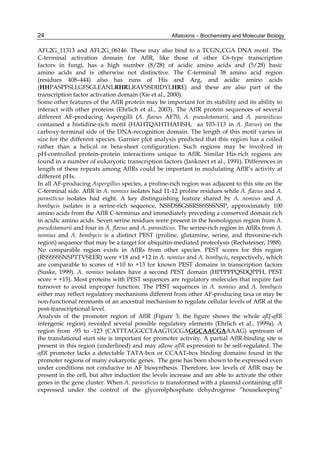
Fig. 3. Schematic depiction of the aflR gene. Consensus sequence elements for DNA-binding 
proteins are indicated on the aflJ-aflR intergenic region with their approximate positions. 
However, the aflR gene in each of the AF-producing species has fewer sites than those 
shown. Abbreviations: NL-nuclear localization; tsp-translational start point 
In AflR a nuclear localization domain (RRARK) precedes the C6 cluster domain 
(CTSCASSKVRCTKEKPACARCIERGLAC) (Ehrlich et al., 1998). In many Gal4 type 
transcription factors the nuclear localization signal is within, not separate from, the C6 
cluster as shown in Fig. 3). Furthermore many related C6 factors lack the underlined basic 
amino acids on the C-terminal side of the motif. A Blast search of A. flavus genome in the 
Aspergillus Comparative Database http://www.broadinstitute.org/annotation/genome/ 
aspergillus_group/MultiHome.html with this sequence found only six other proteins with 
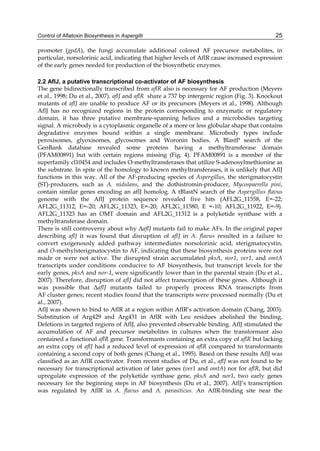
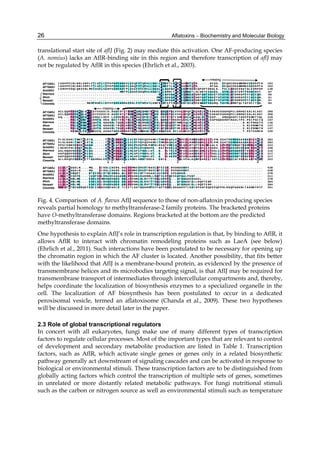
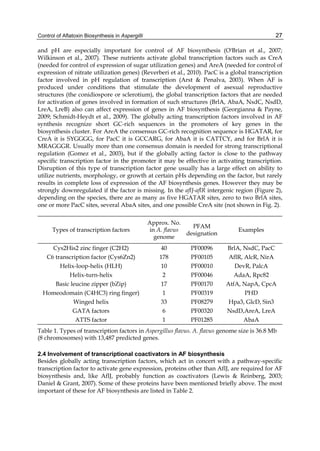
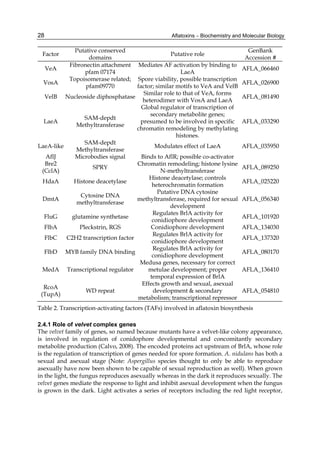
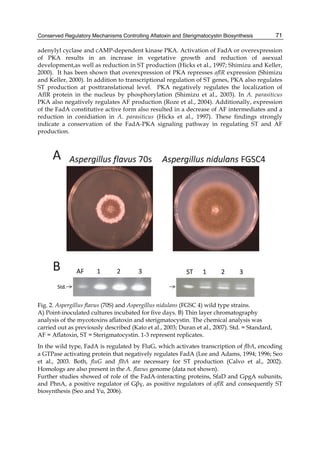
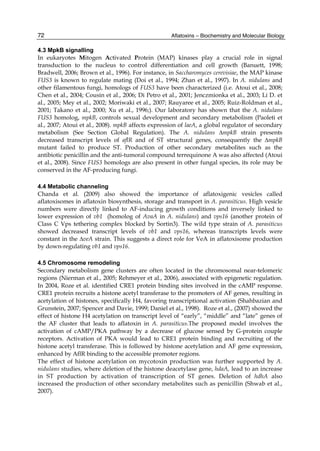
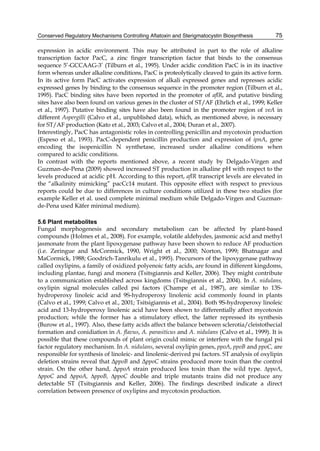
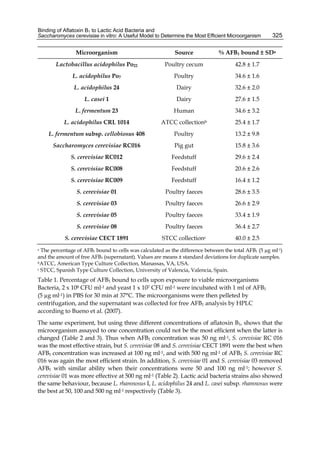
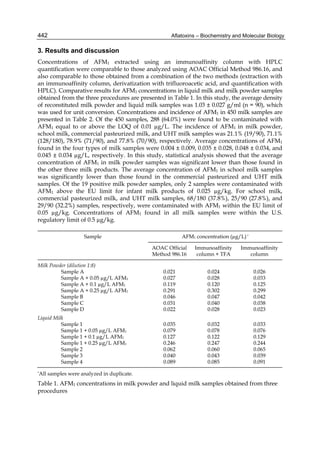
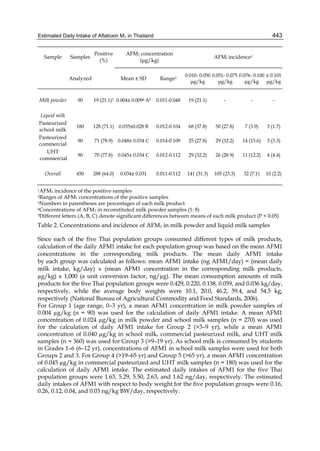
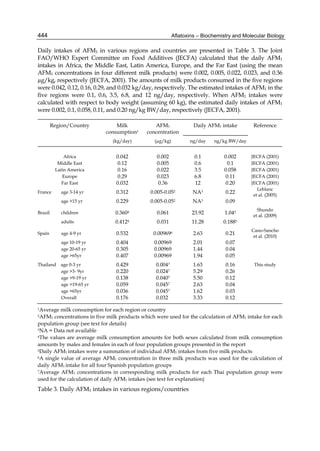
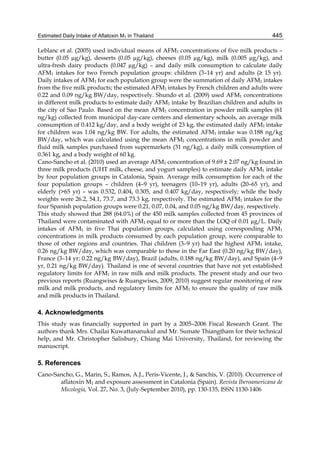
an E value=0.007 or lower (AFL2G_06146; AFL2G_11313; AFL2G_00473; AFL2G_02725; 
AFL2G_04045; AFL2G_08639). Since there are over 178 C6 transcription factor proteins in 
the database for A. flavus (Table 1), six is a low number for such proteins with this “AflR” 
type of DNA recognition domain. The amino acids immediately C-terminal to the C6- 
cluster, the “linker region”, are presumed to determine DNA-binding specificity. This linker 
region (QYMVSKRMGRNPR) lacks basic amino acids at the N-terminal end of the region 
unlike the linker regions for many similar transcription factors, but possesses four basic 
amino acids in the C-terminal half of the motif. This set of amino acids may be a signature 
amino acid sequence that allows contact with the 11-bp TCGN5CGA DNA binding site 
recognized by AflR. A Blast search with this region gave only two close matches:
24 
AFL2G_11313 and AFL2G_06146. These may also bind to a TCGNxCGA DNA motif. The 
C-terminal activation domain for AflR, like those of other C6-type transcription 
factors in fungi, has a high number (8/28) of acidic amino acids and (5/28) basic 
amino acids and is otherwise not distinctive. The C-terminal 38 amino acid region 
(residues 408–444) also has runs of His and Arg, and acidic amino acids 
(HHPASPFSLLGFSGLEANLRHRLRAVSSDIIDYLHRE) and these are also part of the 
transcription factor activation domain (Xie et al., 2000). 
Some other features of the AflR protein may be important for its stability and its ability to 
interact with other proteins (Ehrlich et al., 2003). The AflR protein sequences of several 
different AF-producing Aspergilli (A. flavus AF70, A. pseudotamarii, and A. parasiticus 
contained a histidine-rich motif (HAHTQAHTHAHSH, aa 103-113 in A. flavus) on the 
carboxy-terminal side of the DNA-recognition domain. The length of this motif varies in 
size for the different species. Garnier plot analysis predicted that this region has a coiled 
rather than a helical or beta-sheet configuration. Such regions may be involved in 
pH-controlled protein-protein interactions unique to AflR. Similar His-rich regions are 
found in a number of eukaryotic transcription factors (Janknect et al., 1991). Differences in 
length of these repeats among AflRs could be important in modulating AflR’s activity at 
different pHs. 
In all AF-producing Aspergillus species, a proline-rich region was adjacent to this site on the 
C-terminal side. AflR in A. nomius isolates had 11-12 proline residues while A. flavus and A. 
parasiticus isolates had eight. A key distinguishing feature shared by A. nomius and A. 
bombycis isolates is a serine-rich sequence, NSSDSSGSSRSSSSSSNSP, approximately 100 
amino acids from the AflR C-terminus and immediately preceding a conserved domain rich 
in acidic amino acids. Seven serine residues were present in the homologous region from A. 
pseudotamarii and four in A. flavus and A. parasiticus. The serine-rich region in AflRs from A. 
nomius and A. bombycis is a distinct PEST (proline, glutamine, serine, and threonine-rich 
region) sequence that may be a target for ubiquitin-mediated proteolysis (Rechsteiner, 1988). 
No comparable region exists in AflRs from other species. PEST scores for this region 
(RSSSSSSNSPTTVSEER) were +18 and +12 in A. nomius and A. bombycis, respectively, which 
are comparable to scores of +10 to +13 for known PEST domains in transcription factors 
(Suske, 1999). A. nomius isolates have a second PEST domain (HPPPPPQSDQPPH, PEST 
score = +15). Most proteins with PEST sequences are regulatory molecules that require fast 
turnover to avoid improper function. The PEST sequences in A. nomius and A. bombycis 
either may reflect regulatory mechanisms different from other AF-producing taxa or may be 
non-functional remnants of an ancestral mechanism to regulate cellular levels of AflR at the 
post-transcriptional level. 
Analysis of the promoter region of AflR (Figure 3; the figure shows the whole aflJ-aflR 
intergenic region) revealed several possible regulatory elements (Ehrlich et al., 1999a). A 
region from -93 to -123 (CATTTAGGCCTAAGTGCGAGGCAACGAAAAG) upstream of 
the translational start site is important for promoter activity. A partial AflR-binding site is 
present in this region (underlined) and may allow aflR expression to be self-regulated. The 
aflR promoter lacks a detectable TATA-box or CCAAT-box binding domains found in the 
promoter regions of many eukaryotic genes. The gene has been shown to be expressed even 
under conditions not conducive to AF biosynthesis. Therefore, low levels of AflR may be 
present in the cell, but after induction the levels increase and are able to activate the other 
genes in the gene cluster. When A. parasiticus is transformed with a plasmid containing aflR 
expressed under the control of the glycerolphosphate dehydrogense “housekeeping” 
Aflatoxins – Biochemistry and Molecular Biology
Control of Aflatoxin Biosynthesis in Aspergilli 
25 
promoter (gpdA), the fungi accumulate additional colored AF precursor metabolites, in 
particular, norsolorinic acid, indicating that higher levels of AflR cause increased expression 
of the early genes needed for production of the biosynthetic enzymes. 
2.2 AflJ, a putative transcriptional co-activator of AF biosynthesis 
The gene bidirectionally transcribed from aflR also is necessary for AF production (Meyers 
et al., 1998; Du et al., 2007). aflJ and aflR share a 737 bp intergenic region (Fig. 3). Knockout 
mutants of aflJ are unable to produce AF or its precursors (Meyers et al., 1998). Although 
AflJ has no recognized regions in the protein corresponding to enzymatic or regulatory 
domain, it has three putative membrane-spanning helices and a microbodies targeting 
signal. A microbody is a cytoplasmic organelle of a more or less globular shape that contains 
degradative enzymes bound within a single membrane. Microbody types include 
peroxisomes, glyoxisomes, glycosomes and Woronin bodies. A BlastP search of the 
GenBank database revealed some proteins having a methyltransferase domain 
(PFAM00891) but with certain regions missing (Fig. 4). PFAM00891 is a member of the 
superfamily cl10454 and includes O-methyltransferases that utilize S-adenosylmethionine as 
the substrate. In spite of the homology to known methyltransferases, it is unlikely that AflJ 
functions in this way. All of the AF-producing species of Aspergillus, the sterigmatocystin 
(ST)-producers, such as A. nidulans, and the dothistromin-producer, Mycospaerella pini, 
contain similar genes encoding an aflJ homolog. A tBlastN search of the Aspergillus flavus 
genome with the AflJ protein sequence revealed five hits (AFL2G_11558, E=-22; 
AFL2G_11312, E=-20; AFL2G_11323, E=-20; AFL2G_11580, E =-10; AFL2G_11922, E=-9). 
AFL2G_11323 has an OMT domain and AFL2G_11312 is a polyketide synthase with a 
methyltransferase domain. 
There is still controversy about why ΔaflJ mutants fail to make AFs. In the original paper 
describing aflJ it was found that disruption of aflJ in A. flavus resulted in a failure to 
convert exogenously added pathway intermediates norsolorinic acid, sterigmatocystin, 
and O-methylsterigmatocystin to AF, indicating that these biosynthesis proteins were not 
made or were not active. The disrupted strain accumulated pksA, nor1, ver1, and omtA 
transcripts under conditions conducive to AF biosynthesis, but transcript levels for the 
early genes, pksA and nor-1, were significantly lower than in the parental strain (Du et al., 
2007). Therefore, disruption of aflJ did not affect transcription of these genes. Although it 
was possible that ΔaflJ mutants failed to properly process RNA transcripts from 
AF cluster genes; recent studies found that the transcripts were processed normally (Du et 
al., 2007). 
AflJ was shown to bind to AflR at a region within AflR’s activation domain (Chang, 2003). 
Substitution of Arg429 and Arg431 in AflR with Leu residues abolished the binding. 
Deletions in targeted regions of AflJ, also prevented observable binding. AflJ stimulated the 
accumulation of AF and precursor metabolites in cultures when the transformant also 
contained a functional aflR gene. Transformants containing an extra copy of aflR but lacking 
an extra copy of aflJ had a reduced level of expression of aflR compared to transformants 
containing a second copy of both genes (Chang et al., 1995). Based on these results AflJ was 
classified as an AflR coactivator. From recent studies of Du, et al., aflJ was not found to be 
necessary for transcriptional activation of later genes (ver1 and omtA) nor for aflR, but did 
upregulate expression of the polyketide synthase gene, pksA and nor1, two early genes 
necessary for the beginning steps in AF biosynthesis (Du et al., 2007). AflJ’s transcription 
was regulated by AflR in A. flavus and A. parasiticus. An AflR-binding site near the
Aflatoxins – Biochemistry and Molecular Biology 
26 
translational start site of aflJ (Fig. 2) may mediate this activation. One AF-producing species 
(A. nomius) lacks an AflR-binding site in this region and therefore transcription of aflJ may 
not be regulated by AflR in this species (Ehrlich et al., 2003). 
192 
192 
138 
67 
50 
51 
51 
84 
AAP..... 
FF 
DT 
RRRS 
QQQQ 
V 
PPP 
SS 
RREEET 
DDDCCCCI 
SSE 
AAAAF 
GGL 
DFFF 
D 
VV 
GRYFFF 
AATFFFF 
A 
MMAT 
PPPT 
NNRR 
DDDL 
WWSS 
RRR 
Q 
AAET 
HHHT 
N 
DDD 
M 
A 
SSS 
DDRFFFF 
EE 
AAAAAA 
AAI 
LIII 
L 
QQL 
NNNNN 
V 
YYYY 
S 
AAAAA 
EE 
P 
SS 
.... 
TTTT 
.... 
DGG. 
Q 
AASSTTT 
N 
GGL 
EEEE 
FF 
GASSS 
G 
RRRAAAAA 
.. 
DS 
VVVV 
.. 
YETTTT 
.. 
PT 
DDDD 
.. 
DR 
GGGG 
W 
GFFF 
P 
.. 
.. 
QL 
RRRK 
RRC 
HGGGE 
TTTL 
TTTT 
QQST 
AAAA 
TT 
RSSSSE 
GGP 
AAAAS 
MMMMMMMF 
QQQQK 
K 
AA 
SSLLLLL 
S 
AAAAAAAA 
V 
a 
SS 
ASTTT 
PPPPPPPP 
M 
p 
AAVT 
AAA 
LL 
AI 
AAAY 
RSSSF 
V 
NDDDE 
TT 
Q 
EE 
SS 
AS 
AAAT 
MMLLLLL 
M 
FFFFFFFF 
f 
LLLL 
MMMR 
II 
AT. 
MMT 
W 
AAAA... 
DDDD... 
G 
LLL 
R... 
L 
Y 
LLLL... 
AAE 
S... 
A 
PPPP... 
P 
N 
QQE 
Q... 
TTT 
G... 
T 
VVV 
G... 
V 
FFFF... 
F 
QQS 
A... 
L 
KKA 
G... 
R 
SSSS... 
S 
V 
LLLL... 
A 
VVPP... 
N 
SSTT... 
HHHH... 
H 
AAA 
M... 
A 
VVV.... 
V 
HHH.... 
H 
GGG.... 
G 
PPS.... 
P 
V 
SS 
P.... 
PP 
R.... 
P 
EEE.... 
E 
CCS.... 
C 
LLL.... 
L 
FFF.... 
F 
N 
GGG.... 
R 
II 
A.... 
TTT.... 
T 
M 
FF 
V.... 
LL 
M.... 
A 
M 
PPL.... 
RRR..... 
VVV..... 
LL 
V..... 
RRR..... 
RR 
Q..... 
LLL..... 
RR 
Q..... 
CC 
D..... 
EE 
V..... 
PPP..... 
VVV..... 
GG 
N..... 
AAS..... 
III..... 
290 
290 
229 
157 
126 
127 
127 
159 
QH 
NNR 
L 
II 
SS 
QI 
TTT 
C 
N 
AAYI 
SSS 
GG 
WWG 
T 
LL 
KKVP 
NNNV 
LL 
WI 
PPPT 
AASSIII 
E 
SS 
PP 
RRRP 
II 
E..... 
GGS 
AVVT 
V 
HHGP.... 
NNTT.... 
DDI 
L.... 
LL 
PS.... 
CC 
GA.... 
PPS 
R.... 
QQQT.... 
HHG 
D.... 
GG 
NH.... 
GGGA.... 
SS. 
D.... 
EE. 
Q.... 
AA. 
D.... 
KKPP.... 
AAS 
G.... 
EE 
SS.... 
D 
TTTL 
EEE 
QQQQQQQQ 
q 
VVI 
VVVVI 
LL 
VVIIII 
FFL 
FFFFF 
RR 
QR 
HHHS 
LL 
ALLLLL 
SS 
AA 
MMMA 
PPPPPPPP 
p 
FF 
GY 
HHHY 
QQLLLLL 
S 
QQQE 
A 
K 
PP 
AAAS 
DAAA 
LLI 
LLLLL 
AA 
MV 
MII 
A 
VV 
GR 
MMMI 
VVI 
ATTT 
C 
RVVVV 
T 
LL 
SSST 
SSS. 
N 
PPTT 
QQQ 
G 
SSSSSSS 
QQP 
QQQP 
R 
AAP 
APPP 
A 
GG 
HGGGGG 
D 
.... 
LII 
VVI 
VVVI 
S 
HHDEEEE 
H 
VVVVVVVV 
v 
VVII 
VVVV 
TTT 
CCCCL 
AAAS 
AVV 
MMP 
A 
NNNK 
R 
GGGG 
NDDG 
M 
LLI 
LLLL 
NNA 
NNNA 
H 
QQGAFFF 
E 
WWWWWWWW 
w 
NNDDDDDD 
MMVL 
VVVY 
D 
RRL 
RRRR 
AAA 
V 
TT 
RT 
S 
LLLLLLL 
TT 
VVVVVV 
DDEE 
QQQH 
EE 
DT 
QRRK 
VVVI 
TTT 
V 
N 
GGASLLL 
AAL 
DDDDT 
.... 
RSS 
A 
DDP 
DAAA 
R 
DDDS 
E 
S 
II 
SS 
DDGGGA 
SSL..... 
Q 
SSI 
GGGG 
VV 
GTTTT 
V 
NHHHG 
QQQK 
M 
R 
YY 
A 
R 
SS 
LLLLLLL 
YYYYYYYY 
y 
AAAAAAAA 
a 
GGAI 
SSSS 
WWWWF 
F 
LL 
QQQQRRRL 
RRRRRRRR 
r 
KK 
QH 
QQQG 
W 
VVVLLLL 
KKKKKKKE 
R 
PPPPPPP 
RR...... 
QQ...... 
QQ...... 
LL...... 
CC 
Q..... 
AAA..... 
383 
383 
322 
248 
216 
217 
217 
252 
SSST 
SSST 
DDDDDDDD 
SS 
RR 
HHHR 
LLL 
VLLL 
Y 
SS 
RRRRRR 
A 
VVVC 
VVV 
AA 
MMSSSL 
G 
AAS 
AT 
AA 
RREEEEEE 
D 
AAT 
VVVV 
AAEE 
RTT 
V 
AA 
QRAAAI 
DD 
NHDDDG 
MMVVVVVI 
SST 
AAAS 
S 
RR 
GGGGGG 
TT 
PPPPPP 
AAS 
KKKE 
P 
SS 
PPPPPP 
SSLLLLLL 
.... 
LLLL 
MMVVLLL 
T 
D 
GGG 
R 
PPL 
LL 
AAA 
GGV 
TT 
ATTTTI 
LLI 
ALLLL 
II 
MIIIII 
R 
LLLLLLL 
RRRV 
MTT 
A 
AAS 
AAAAS 
RRP 
N 
DDT 
S 
C 
SS 
PPSSS 
NNQ 
NNNNQ 
NNT 
K 
AAA 
S 
RRRS 
AAAL 
A 
LLLLLLL 
VVVVVVVP 
EE 
QDSSS 
V 
VVL 
MFFFL 
N 
AAAAAAAA 
KK 
QQRRR. 
LLLLL 
VV. 
AAEEEEE. 
QQ 
MKT 
AA. 
AAVVLLL. 
VVT 
VVVVL 
RR 
QI... 
I 
MMSS... 
R 
TT 
RRSSSS 
II 
L..... 
EE 
K..... 
MMT 
STTT 
A 
AA 
WPSSSE 
D 
PPPSLLL 
SSL 
NI 
VV 
D 
QQ 
MAAAAT 
HHHH 
N 
V 
PPP 
SSSS 
PPP 
H 
PPPLLLL 
FF 
SS 
PPPL 
PPPP 
GGGV 
M 
III 
LLLL 
NNNR 
R 
H 
SS 
II 
VLLLLL 
LLIIIII 
L 
YYYYYYYY 
V 
y 
VVVVIII 
D 
AAAAAAA 
AAP 
AAAAA 
N 
LLLL 
RRRT 
VVVVVVVV 
RRRT 
QQQQQQQQ 
APPPP 
E 
P 
TT 
....... 
L 
....... 
A 
....... 
R 
....... 
H 
....... 
A 
....... 
AAAL 
GGGA 
TT 
GGGGGT 
SS 
ALLLL 
T 
NEEEI 
G 
LL 
RRRRRRRR 
K 
r 
TT 
STI 
VV 
QQQQR 
H 
GG 
WWVVVVVV 
N 
TT 
SSSSS 
II 
VI 
RRRE 
RRR 
HVVVP 
AA 
NP 
DDD 
RRS 
Q 
QQQS 
Y 
LLI 
NH 
QQR 
HHSEL 
PPL 
DAAAL 
G 
P 
LL 
PPPL 
AAA 
q 
PPT 
P 
v 
DDG 
DDDD 
a 
HHHHHHH 
d 
LL 
MFLLL 
M 
438 
438 
378 
311 
278 
284 
284 
351 
F 
....... 
Y 
....... 
K 
....... 
Y 
....... 
S 
....... 
M 
....... 
G 
....... 
A 
....... 
T 
....... 
L 
....... 
N 
....... 
K 
....... 
G 
....... 
G 
....... 
P 
....... 
Q 
....... 
G 
....... 
R 
....... 
L 
....... 
D 
....... 
P 
....... 
P 
....... 
Q 
....... 
P 
....... 
S 
....... 
K 
..... 
PP 
..... 
NNQ 
R 
..... 
EE 
..... 
TTF 
A 
..... 
PP 
QQK 
L 
DDP 
.... 
S 
.... 
.... 
KLL 
A 
ALL 
F 
T 
A 
... 
... 
SSSS 
... 
SSII 
YY. 
S 
DDDI 
P 
RR. 
GGGT 
L 
NNHA 
HHHV 
DDK 
GGGGV 
DDRPFFF 
G 
NNAAAAA 
G 
DDSS... 
A 
R 
VVP 
V... 
RREE... 
L 
... 
QQQQR 
H 
YYYYYYY 
QQRK 
RKK 
R 
II 
VL 
VVVT 
GGGP 
G 
V 
EEE 
FFL 
FLLL 
AA 
GAAAAF 
III 
VVVVY 
VV 
AL 
TTT 
S 
AAAL 
TTTT 
M 
NNS 
NTTT 
A 
PPT 
RPPP 
A 
G 
SST 
ALLL 
RR 
HR 
HHHH 
VVI 
LLLL 
T 
RRRA 
K 
NNNA 
EEE 
D 
RRR 
MMT 
AVVVL 
VVVVVVVT 
VVVV 
AVVE 
LLLLLLLI 
GGC 
RRRRI 
DDGGGGGT 
... 
A.... 
SS 
GGVVVV 
RRS 
GSSSL 
SS 
DA 
DDDK 
G 
RRRE 
KKK 
LLI 
VVVVE 
LL 
GA 
GGGG 
DDT 
NHHHD 
RRVVVVVS 
MLL 
L 
III 
A 
EEE 
DEEE 
K 
N 
DDDD 
V 
I 
E 
MMKVEEEE 
F 
....... 
E 
....... 
Q 
....... 
R 
....... 
NNT 
EEEE 
D 
LL 
PP 
MMMR 
GGR 
HRRRK 
GGEE 
DDDT 
NNNNNNNN 
TT 
ST 
AAAF 
V 
LLLLLLL 
QQQQQQQE 
LLL 
MLLL 
M 
M 
LLLLLLL 
n 
SS 
QELLL 
E 
GGT 
A 
.. 
DEEEI 
.. 
FLLLL 
.. 
DVVV 
TT 
NC 
HHR 
AF13AflJ 
AF70AflJ 
AnidAflJ 
Aterreus 
Afum 
Neosart 
Cimmitis 
missing 
AF13AflJ 
AF70AflJ 
AnidAflJ 
Aterreus 
Afum 
Neosart 
Cimmitis 
AF13AflJ 
AF70AflJ 
AnidAflJ 
Aterreus 
Afum 
Neosart 
Cimmitis 
AF13AflJ 
AF70AflJ 
AnidAflJ 
Aterreus 
Afum 
Neosart 
Cimmitis 
missing 
Fig. 4. Comparison of A. flavus AflJ sequence to those of non-aflatoxin producing species 
reveals partial homology to methyltransferase-2 family proteins. The bracketed proteins 
have O-methyltransferase domains. Regions bracketed at the bottom are the predicted 
methyltransferase domains. 
One hypothesis to explain AflJ’s role in transcription regulation is that, by binding to AflR, it 
allows AflR to interact with chromatin remodeling proteins such as LaeA (see below) 
(Ehrlich et al., 2011). Such interactions have been postulated to be necessary for opening up 
the chromatin region in which the AF cluster is located. Another possibility, that fits better 
with the likelihood that AflJ is a membrane-bound protein, as evidenced by the presence of 
transmembrane helices and its microbodies targeting signal, is that AflJ may be required for 
transmembrane transport of intermediates through intercellular compartments and, thereby, 
helps coordinate the localization of biosynthesis enzymes to a specialized organelle in the 
cell. The localization of AF biosynthesis has been postulated to occur in a dedicated 
peroxisomal vesicle, termed an aflatoxisome (Chanda et al., 2009). These two hypotheses 
will be discussed in more detail later in the paper. 
2.3 Role of global transcriptional regulators 
In concert with all eukaryotes, fungi make use of many different types of transcription 
factors to regulate cellular processes. Most of the important types that are relevant to control 
of development and secondary metabolite production are listed in Table 1. Transcription 
factors, such as AflR, which activate single genes or genes only in a related biosynthetic 
pathway generally act downstream of signaling cascades and can be activated in response to 
biological or environmental stimuli. These transcription factors are to be distinguished from 
globally acting factors which control the transcription of multiple sets of genes, sometimes 
in unrelated or more distantly related metabolic pathways. For fungi nutritional stimuli 
such as the carbon or nitrogen source as well as environmental stimuli such as temperature
Control of Aflatoxin Biosynthesis in Aspergilli 
27 
and pH are especially important for control of AF biosynthesis (O'Brian et al., 2007; 
Wilkinson et al., 2007). These nutrients activate global transcription factors such as CreA 
(needed for control of expression of sugar utilization genes) and AreA (needed for control of 
expression of nitrate utilization genes) (Reverberi et al., 2010). PacC is a global transcription 
factor involved in pH regulation of transcription (Arst & Penalva, 2003). When AF is 
produced under conditions that stimulate the development of asexual reproductive 
structures (the conidiospore or sclerotium), the global transcription factors that are needed 
for activation of genes involved in formation of such structures (BrlA, AbaA, NsdC, NsdD, 
LreA, LreB) also can affect expression of genes in AF biosynthesis (Georgianna & Payne, 
2009; Schmidt-Heydt et al., 2009). The globally acting transcription factors involved in AF 
synthesis recognize short GC-rich sequences in the promoters of key genes in the 
biosynthesis cluster. For AreA the consensus GC-rich recognition sequence is HGATAR, for 
CreA it is SYGGGG, for PacC it is GCCARG, for AbaA it is CATTCY, and for BrlA it is 
MRAGGGR. Usually more than one consensus domain is needed for strong transcriptional 
regulation (Gomez et al., 2003), but if the globally acting factor is close to the pathway 
specific transcription factor in the promoter it may be effective in activating transcription. 
Disruption of this type of transcription factor gene usually has a large effect on ability to 
utilize nutrients, morphology, or growth at certain pHs depending on the factor, but rarely 
results in complete loss of expression of the AF biosynthesis genes. However they may be 
strongly downregulated if the factor is missing. In the aflJ-aflR intergenic region (Figure 2), 
depending on the species, there are as many as five HGATAR sites, zero to two BrlA sites, 
one or more PacC sites, several AbaA sites, and one possible CreA site (not shown in Fig. 2). 
Types of transcription factors 
Approx. No. 
in A. flavus 
genome 
PFAM 
designation Examples 
Cys2His2 zinc finger (C2H2) 40 PF00096 BrlA, NsdC, PacC 
C6 transcription factor (Cys6Zn2) 178 PF00105 AflR, AlcR, NirA 
Helix-loop-helix (HLH) 10 PF00010 DevR, PalcA 
Helix-turn-helix 2 PF00046 AdaA, Rpc82 
Basic leucine zipper (bZip) 17 PF00170 AtfA, NapA, CpcA 
Homeodomain (C4HC3) ring finger) 1 PF00319 PHD 
Winged helix 33 PF08279 Hpa3, GlcD, Sin3 
GATA factors 6 PF00320 NsdD,AreA, LreA 
ATTS factor 1 PF01285 AbaA 
Table 1. Types of transcription factors in Aspergillus flavus. A. flavus genome size is 36.8 Mb 
(8 chromosomes) with 13,487 predicted genes. 
2.4 Involvement of transcriptional coactivators in AF biosynthesis 
Besides globally acting transcription factors, which act in concert with a pathway-specific 
transcription factor to activate gene expression, proteins other than AflJ, are required for AF 
biosynthesis and, like AflJ, probably function as coactivators (Lewis & Reinberg, 2003; 
Daniel & Grant, 2007). Some of these proteins have been mentioned briefly above. The most 
important of these for AF biosynthesis are listed in Table 2.
Aflatoxins – Biochemistry and Molecular Biology 
28 
Factor Putative conserved 
domains Putative role GenBank 
Accession # 
VeA Fibronectin attachment 
pfam 07174 
Mediates AF activation by binding to 
LaeA AFLA_066460 
VosA Topoisomerase related; 
pfam09770 
Spore viability, possible transcription 
factor; similar motifs to VeA and VelB AFLA_026900 
VelB Nucleoside diphosphatase Similar role to that of VeA, forms 
heterodimer with VosA and LaeA AFLA_081490 
LaeA SAM-depdt 
Methyltransferase 
Global regulator of transcription of 
secondary metabolite genes; 
presumed to be involved in specific 
chromatin remodeling by methylating 
histones. 
AFLA_033290 
LaeA-like SAM-depdt 
Methyltransferase Modulates effect of LaeA AFLA_035950 
AflJ Microbodies signal Binds to AflR; possible co-activator 
Bre2 
(CclA) SPRY Chromatin remodeling; histone lysine 
N-methyltransferase AFLA_089250 
HdaA Histone deacetylase Histone deacetylase; controls 
heterochromatin formation AFLA_025220 
DmtA Cytosine DNA 
methyltransferase 
Putative DNA cytosine 
methyltransferase, required for sexual 
development 
AFLA_056340 
FluG glutamine synthetase Regulates BrlA activity for 
conidiophore development AFLA_101920 
FlbA Pleckstrin, RGS Conidiophore development AFLA_134030 
FlbC C2H2 transcription factor Regulates BrlA activity for 
conidiophore development AFLA_137320 
FlbD MYB family DNA binding Regulates BrlA activity for 
conidiophore development AFLA_080170 
MedA Transcriptional regulator 
Medusa genes, necessary for correct 
metulae development; proper 
temporal expression of BrlA 
AFLA_136410 
RcoA 
(TupA) WD repeat 
Effects growth and sexual, asexual 
development & secondary 
metabolism; transcriptional repressor 
AFLA_054810 
Table 2. Transcription-activating factors (TAFs) involved in aflatoxin biosynthesis 
2.4.1 Role of velvet complex genes 
The velvet family of genes, so named because mutants have a velvet-like colony appearance, 
is involved in regulation of conidophore developmental and concomitantly secondary 
metabolite production (Calvo, 2008). The encoded proteins act upstream of BrlA, whose role 
is the regulation of transcription of genes needed for spore formation. A. nidulans has both a 
sexual and asexual stage (Note: Aspergillus species thought to only be able to reproduce 
asexually have now been shown to be capable of sexual reproduction as well). When grown 
in the light, the fungus reproduces asexually whereas in the dark it reproduces sexually. The 
velvet genes mediate the response to light and inhibit asexual development when the fungus 
is grown in the dark. Light activates a series of receptors including the red light receptor,
Control of Aflatoxin Biosynthesis in Aspergilli 
29 
FphA, and the blue light receptors, LreA and LreB, as well as the near UV light receptor, 
CryA. When activated FphA, LreA and LreB form a complex with VeA, and presumably 
affect its activity or allow it to enter the nucleus. CryA acts differently and affects veA 
expression (Bayram et al., 2008a). Wild-type strains of A. nidulans display light-dependent 
conidiation; strains bearing a mutation (veA1) conidiate vigorously regardless of 
illumination conditions (Mooney & Yager, 1990). VeA likely acts as a negative regulator of 
asexual development. The majority of A. nidulans strains used are derived from the veA1 
mutant because of its increased conidiation. Whereas the veA1 mutation still permits ST 
formation in A. nidulans, deletion mutants of veA in A. nidulans or in A. flavus are unable to 
produce ST or AFs, respectively. VeA and VelB with LaeA (see below) form a tripartite 
complex. VelB and VosA also form a complex, at least in A. nidulans. Light-dependent 
conidiation in A. nidulans is mediated via VeA nuclear translocation (Stinnett et al., 2007) 
together with interaction of VeA with the phytochrome photoreceptor FphA (Purschwitz et 
al., 2009). A. flavus conidiates well regardless of the presence or absence of light. 
VosA 
VeA 
VelB 
VelC 
VosA 
VeA 
VelB 
VelC 
QQQ. 
QQQQ 
PPPP 
T 
RRRA 
EII 
AAAA 
RRRR 
V 
A 
ACCC 
MA 
GGGG 
GAF 
K 
GGS 
N 
E 
KKKR 
ADN 
GS.. 
T 
L 
S.. 
. 
A.. 
. 
DDD 
. 
RRR 
. 
RRR 
F 
PPP 
DDT 
VI 
V 
PPPP 
D 
SPPP 
DPPP 
DV 
CI 
VVI 
PE 
R 
Q 
L 
VLLL 
P 
VVVL 
RI 
L 
PY 
KT 
. 
E 
. 
S 
DD 
. 
D 
AF 
PPT 
QD 
S 
NEL 
P 
T 
ADE 
DKS 
LLI 
D 
T 
NDD 
Q 
GKI 
TT 
ND 
K 
L 
VII 
DEV 
ST 
D 
Q 
L 
94 
81 
108 
252 
222 
252 
361 
434 
Conserved domain 1 
Conserved domain 2 
SSSS 
DVE 
RPPP 
N 
FFFF 
TT 
QH 
VVVV 
SFF 
Y 
P 
P 
NSP 
KKKK 
AAA 
S 
FFFF 
KKD 
PPPP 
GGGG 
ML 
AAI 
V 
M 
ET 
E 
D 
K 
SSSS 
TTT 
S 
F 
ST 
P 
LLLL 
SSS 
RRKE 
A 
SV 
FI 
FL 
C 
G 
AAAK 
DEL 
E 
QQQL 
GGGG 
... 
F 
V 
CI 
V 
KRKE 
L 
VI 
L 
RRP 
III 
K 
T 
RRRR 
KRK 
E 
DDE 
G 
PV 
GG 
RRV 
T... 
K 
L 
I 
R 
MK. 
KRS 
G. 
RRRK 
G 
S 
GGG VE 
RR P 
RRNR 
KNK 
PT 
D. 
E 
DDD. 
DD. 
YY 
D. 
P 
D 
QY 
D. 
G. 
P 
I 
DD. 
EY. 
PE 
D. 
P 
RV.. 
R.. 
Fig. 5. Alignment of Velvet family proteins showing the two most conserved regions in the 
proteins. 
The velvet family consists of four proteins with two regions of homology (Figure 5). These 
proteins are VeA, a 574 amino acid protein with a nuclear localization domain and a 
possible transmembrane domain, VelB, a 361 amino acid protein lacking both of these 
domains, but containing a cluster of Asp residues at its C-terminus, VelC a 434 amino acid 
protein of unknown function, and VosA, a 449 amino acid protein with conserved domains 
suggestive of its being a DNA-binding or chromatin-binding protein. A conserved domain 
search in GenBank suggests that these proteins have domains typically found in proteins 
that affect chromatin formation, in particular a region called Asc-1, identified in VelC and 
VosA. ASC-1 homology or ASCH domains are a beta-barrel domain found in proteins that 
interact with RNA and could mediate the interaction between a transcription factor and the 
basal transcriptional machinery (Iyer et al., 2006). VosA, (viability of spores) was identified 
as a protein essential for asexual spore maturation (Ni & Yu, 2007). It may have a novel 
winged helix transcription activation domain near its C-terminus. It forms a complex with 
VelB (Sarikaya Bayram et al., 2010). VosA is required for trehalose biogenesis (Ni & Yu, 
2007). Trehalose is a compound that helps to protect the spore from stress. Spores, for their 
long-term survival require high amounts of trehalose. It has been suggested that VosA may
30 
primarily control the activity of genes involved in the late process of sporulation, including 
trehalose biogenesis. VelB and VeA bind to LaeA ((Bayram et al., 2008b), see below). The 
competition for binding to VosA and LaeA makes VelB a partner in regulating the 
expression of genes involved in asexual sporulation and in secondary metabolite formation. 
The VeA-VelB heterodimeric complex of A. nidulans presumably forms in the cytoplasm and 
serves as the major pathway for VelB’s entry into the nucleus. VelB and VosA 
predominantly interact in the nucleus. The same interactions of the Velvet genes presumably 
apply to the role of these proteins in transcription control of AF biosynthesis and 
sporogenesis in A. flavus. 
Aflatoxins – Biochemistry and Molecular Biology 
2.4.2 Role of LaeA 
Although there is much understanding from the literature on yeast of how Cys6Zn2 
transcription factors function to activate gene expression, there is much less known about 
what activates the expression of these transcription factors. In a search for proteins that 
affect aflR expression in A. nidulans, a species that accumulates sterigmatocysin (ST), an AF 
precursor, a gene called laeA (Loss of AflR Expression), was isolated in which null mutants 
are unable to express AflR and lose the ability to make ST as well as other metabolites (Bok 
& Keller, 2004). laeA was predicted to encode a 375 amino acid protein with a S-adenosylmethionine- 
dependent methyltransferase domain typical of histone 
methyltansferases and argine methyltransferases. LaeA, however, lacked the SET and 
double loop domains typically found in such proteins and lacked a canonical nuclear 
localization signal, even though it was shown to reside in the nucleus. laeA expression, in A. 
nidulans was found to be downregulated by AflR, possibly because of AflR-binding sites in 
its promoter. No AflR-binding sites are present in the promoter of the A. flavus ortholog. 
Therefore, such regulation may be species-specific. The methyltransferase domain was 
shown to be required for LaeA’s function. laeA in A. nidulans was also shown to be 
negatively regulated by protein kinase A and RasA, two signal transduction proteins shown 
to be involved in regulation of secondary metabolite gene activity and conidial development 
(see below). laeA null mutants showed little difference in spore production compared to the 
wild type, suggesting that the primary role of LaeA is to regulate expression of secondary 
metabolite gene clusters. It was proposed that LaeA may function as a unique, fungal 
secondary metabolite-specific regulator of chromatin organization necessary for activation 
of the genes in such clusters, including aflR. 
In ΔlaeA mutants of A. nidulans silencing of aflR expression was found to be a consequence 
of the aflR being inside the cluster. When aflR was expressed in a locus outside the cluster, 
ST was produced even in the ΔlaeA mutants (Bok et al., 2006). Furthermore when a gene not 
associated with ST production was placed in the cluster, in the absence of functional LaeA, it 
was silenced. These results further suggested that chromosomal activity was mediated for 
secondary metabolite cluster genes by LaeA, and supported the hypothesis that LaeA plays 
a role in chromatin modification. In A. parasiticus ΔlaeA mutants, expression of aflR and 
other AF biosynthesis genes was also undetectable (Kale et al., 2007). Overexpression of laeA 
in strains having a functional copy of aflR increased aflR’s expression as well as the 
production of AFs. Furthermore, expression of veA was much lower in ΔlaeA mutants. 
Unlike A. nidulans, A. flavus ΔlaeA mutants showed decreased amounts of conidiation 
compared to the wild type and a complete absence of sclerotial production. In ΔlaeA 
mutants of A. nidulans, ST production was detected when a gene involved in 
heterochromatin maintenance encoding a histone deacetylase (hdaA), was disrupted. This
Control of Aflatoxin Biosynthesis in Aspergilli 
31 
result supported the role of LaeA in chromatin remodeling at the site of secondary 
metabolite gene clusters (Shwab et al., 2007). The coordinated involvement of both VeA and 
LaeA in secondary metabolite production was established when it was found that these two 
factors interact with each other and with VelB in the velvet family of light responsive factors. 
(Bayram et al., 2008b). VelB interacts with the N-terminus of VeA, whereas LaeA interacts 
with the C-terminus of VeA. 
It is assumed that VeA, with its functional nuclear localization domain, facilitates nuclear 
transport of VelB and LaeA, which lack such domains. Once in the nucleus they function as 
coactivators to specifically target genes at the secondary metabolite locus, presumably by 
either aiding in the chromatin remodeling preceding AflR binding to the promoters of 
cluster genes or by directly interacting with AflR or other pathway-specific DNA-binding 
proteins involved in secondary metabolite gene cluster activation. Since overexpression of 
AflR is able to relieve the block in gene expression caused by loss of LaeA, it is possible that 
AflR, alone or in conjunction with globally acting factors, initiates the chromatin remodeling 
necessary for expression of genes in the biosynthesis gene cluster. 
2.5 Regulation by chromatin conformation 
In eukaryotes, DNA with the help of histones forms compact particles, the nucleosomes, 
where about 147 DNA base pairs make two turns around the histone protein octamer. DNA 
within nucleosomes is inaccessible to many transcription factors. Some transcription factors, 
so-called pioneering factors are still able to bind to their DNA recognition sites on the 
nucleosomal DNA. For most other transcription factors, the nucleosome must be opened up 
by specific chromatin remodeling proteins (Clapier & Cairns, 2009). Alternatively, the 
nucleosome can be partially unwrapped by destabilizing factors to allow temporal access to 
the transcription factor binding site. In many cases a transcription factor needs to compete 
for binding to its DNA binding site with other transcription factors and histone- or non-histone 
chromatin proteins. Pairs of transcription factors and other proteins can play 
antagonistic roles (activator versus repressor) in the regulation of the same gene. 
Many of the known gene clusters involved in secondary metabolite formation are located in 
subtelomeric chromosomal regions in which the chromatin is normally inactive 
(heterochromatic) due to di- or trimethylation of lysine-9 or lysine-27 of histone-3 (H3K9Me3; 
H3K27Me3) (Palmer & Keller, 2010). Trimethylation of lysine 4 in histone 3 is associated with 
active chromatin as is histone lysine acetylation. Generally histone deacetylases (HDAC’s) are 
involved in the formation of heterochromatin whereas histone methyltransferases are 
associated with either formation of euchromatin (active) or heterochromatin depending on the 
position of methylation (Jenuwein & Allis, 2001). The proposed function of LaeA is to loosen 
the chromatin specifically at certain gene clusters, such as the AF cluster, to make it accessible 
to global and pathway specific DNA binding transcription factors (Strauss & Reyes- 
Dominguez, 2010). The reason subtelomeric chromosomal regions are associated mainly with 
inactive chromatin is they are often repositories for foreign DNA, including transposons and 
retrotransposons (Shaaban et al., 2010). It is in the interest of the cell to prevent activity of the 
foreign DNA because it could lead to undesirable mutations of genes (by transposon insertion) 
critical for function of the organism. 
In Aspergillus species the specific chromatin remodeling factors besides LaeA, are ClrD, a 
H3K9 methyltransferase, Bre2 (CclA), a H3K4 methyltransferase (part of the COMPASS 
complex, a complex of proteins in yeast responsible for H3K4 methylation), and HdaA, a 
histone deacetylase (Palmer et al., 2008; Reyes-Dominguez et al., 2008). Another protein,
32 
HepA, encodes a heterochromatin protein (HP1), one of a family of proteins that bind di- or 
trimethylated H3K9, leading to gene silencing and heterochromatin formation (Reyes- 
Dominguez et al., 2010). Deletion mutants of these proteins have generally been associated 
with increased production of ST in A. nidulans except that deletion of laeA is associated with 
the loss of secondary metabolite production. In agreement with these gene disruption 
results, treatment of A. nidulans with the HDAC inhibitors, valproic acid or trichostatin A, 
increased metabolite production. The role of LaeA in the chromatin remodeling is unclear 
since it is still uncertain whether or not LaeA acts as a methyltransferase. One possibility is 
that it, along with associated transcription factors, act as a bridge connecting the basal 
transcriptional elements (the equivalent of a TATA binding protein) to the pathway specific 
transcription factor (AflR). Such a complex would resemble the SAGA (Spt-Ada-Gcn5 
acetyltranferase) complex in yeast (Traven et al., 2006). Such complexes not only stabilize the 
transcription machinery, like a Mediator complex in yeast, but also actively recruit the RNA 
polymerase II to the transcription initiation site (Biddick et al., 2008). A schematic of these 
proposed interactions is shown in Figure 6. 
Aflatoxins – Biochemistry and Molecular Biology 
Mediator -like 
TAFs 
SAGA 
AflJ 
Aflatoxin cluster gene 
AflR 
AflR 
RNApol II 
TBP initiation factors 
Velvet 
proteins 
Global 
TFs 
CSN 
Fig. 6. Model of interactions of the aflatoxin cluster transcription regulatory factors with 
other proteins involved in the basal transcription machinery. Roles of SAGA and Mediator 
are described in a review by Traven, et al. (Traven et al., 2006). 
In higher eukaryotes DNA methylation has been shown to affect gene expression (Clark & 
Melki, 2002). Because the level of DNA methylation in Aspergillus species is very low, it was 
considered unlikely to be involved in control of gene activity (Gowher et al., 2001). The loss of 
AF production and the induction of a fluffy phenotype in A. parasiticus clones treated with 5- 
azacytosine, a DNA methyltransferase inhibitor, as well as the presence in the genome of a 
DNA methyltransferase with predicted cytosine methylase function, suggested that DNA 
methylation may indeed play an unrecognized role in development and secondary 
metabolism (Tamame et al., 1983; Lee et al., 2008). DNA methyltransferases may function as 
chromatin remodeling agents in the absence of cytosine methylation. In support of this 
hypothesis, disruption of the gene for the DNA methyltransferase, dmtA, in A. nidulans yielded 
mutants unable to undergo sexual development (Lee et al., 2008). When gene expression by 
the nonaflatoxigenic A. parasiticus clones obtained by either 5-azacytosine treatment or by 
serial mycelial transfer (Chang et al., 2007) was compared to gene expression by the parental 
strain, the most highly downregulated genes were genes predicted to be involved in cell 
receptor recognition, signaling or transport (Wilkinson, et al., unpublished results). 
Surprisingly, the genes in the AF cluster were still transcribed at normal levels. 
3. Signaling factors involved in AF biosynthesis 
Transcription factors may be activated (or deactivated) through a signal-sensing domain by 
ligand binding, post-synthetic modifications, or proteolysis. The domain responsible for
Control of Aflatoxin Biosynthesis in Aspergilli 
33 
binding to a hormone or an elicitor is called the ligand binding domain (LBD) (Gomperts et al., 
2009). This domain participates in several activities including hormone binding, homo- and/or 
heterodimerization, formation of a complex with a heat-shock protein, and transcriptional 
activation and repression. The binding of the ligand may affect the conformation and 
concomitantly the transcription factor’s ability to activate gene expression. Ligand binding and 
postsynthetic modifications, such as phosphorylation, myristylation, acetylation, also can 
influence where a transcription factor is located within a cell and whether the transcription 
factor is in its active state and is capable of binding to DNA, coregulatory proteins, or to other 
transcription factors, possibly as homo- or hetero-dimers. 
3.1 Cell surface receptors –environmental signaling 
A large number of organic compounds either produced by plants or derived from other 
sources, such as antimicrobial agents, pesticides, and herbicides have been shown to either 
induce or inhibit AF production by various mechanisms, some still only poorly understood. 
An extensive list of inhibitors has been given in an early review (Zaika & Buchanan, 1987). 
The list of inhibitors compiled today is considerable longer (Holmes et al., 2008). Plant 
metabolites, such as gallic acid, neem leaf and fruit extracts, certain spice oils , anthocyanins, 
and related flavonoids have been shown to be inhibitory to fungal toxin production. Low-molecular- 
weight aldehydes, ketones, and alcohols from cotton leaf, corn, and soybean are 
also inhibitory. These plant metabolites probably affect the activity or biosynthesis of key 
developmental regulatory proteins. The plant oxylipins, 13-hydroperoxylinoleic acid and 9- 
hydroperoxy linoleic acid, affect development and toxin synthesis, likely through 
conversion of these molecules into psi factor (Tsitsigiannis et al., 2005). Most of these 
inhibitors directly impact the cellular signaling and regulatory networks necessary for 
activation of genes required for growth, development and AF production. 
3.2 G protein signaling and protein kinases 
Development and secondary metabolism in fungi occurs in response to nutrient availability, 
light, oxidative stimuli, osmotic conditions or salt concentrations. These environmental 
signals are usually sensed at the cell surface and the signal transmitted to the nucleus by a 
series of secondary messengers such as diacylglycerol, inositol phosphates, divalent 
calcium, cyclicAMP or cyclic GMP, and chaperonins (heat shock factors that rapidly 
transmit stress signals). The secondary messenger transduces the signal from the membrane 
to cellular targets to mediate morphological changes necessary for reproduction or survival 
and production of secondary metabolites. Transduction of the activating or inhibiting signal 
depends on G-protein signaling. 
A G-protein-mediated signaling cascade in A. nidulans was found to regulate both asexual 
sporulation and sterigmatocystin (ST) production (Yu & Keller, 2005; Brodhagen & Keller, 
2006). FadA, a subunit of a heterotrimeric G-protein involved in developmental regulation, 
promotes vegetative growth and represses both sexual/asexual development and ST 
production in A. nidulans, as well as AF production in A. flavus and A. parasiticus. (Calvo et 
al., 2002). Inhibition of FadA involves FlbA, a regulator of G-protein signaling (RGS). FlbA 
acts as a positive regulator of ST production (Hicks et al., 1997). FlbA appears to act 
upstream of AflR because AflR is unable to activate ST or AF biosynthesis in a ΔflbA mutant 
(Shimizu et al., 2003). 
The cAMP-dependent protein kinase PkaA functions downstream of FadA in this same 
signaling pathway. PkaA possibly prevents ST production in A. nidulans by inhibiting aflR
34 
expression and as well as inactivating AflR (Shimizu & Keller, 2001; Shimizu et al., 2003). FluG 
is another protein in the fluffy protein family that is involved in control of asexual sporulation 
and ST production (Lee & Adams, 1994b; Lee & Adams, 1994a; Lee & Adams, 1996). The signal 
produced by FluG activates ST biosynthesis indirectly by activating flbA which represses FadA 
signaling (Seo et al., 2003; Seo et al., 2006). Another signaling protein involved in ST 
production is the GTP-binding protein RasA. RasA inhibits ST biosynthesis presumably by 
repression of aflR expression, although the molecular details of this repression are still 
unknown (Shimizu et al., 2003). Regulation of AflR by RasA may be at the post-transcriptional 
level and may be mediated by PkaA phosphorylation (Shimizu et al., 2003). A number of other 
protein kinases have been implicated in transduction of the environmental signals including 
the TOR kinase and MAP kinases. The TOR kinase, characterized in yeast as responsible for 
regulating nutrient mediated growth signaling, has recently been implicated in the 
biosynthesis of a fungal secondary metabolite (Teichert et al., 2006). 
Nutrient regulation of AF and ST biosynthesis may be mediated by cAMP levels. cAMP has 
been shown to influence secondary metabolism in a number of species (Roze et al., 2004). 
Glucose and simple sugars in the growth medium act as inducers of AF biosynthesis, 
possibly by regulating levels of cAMP, and possibly by induction of the global transcription 
factor, CreA. Hormone-like signaling molecules, known as oxylipins, also contribute to 
regulation of secondary metabolites (Tsitsigiannis & Keller, 2006). These oxygenated lipid 
molecules mediate the balance of sexual to asexual spore production in aspergilli and are 
produced by fatty acid oxygenases encoded by ppo genes (Tsitsigiannis et al., 2004). 
4. Specialized vesicles may be required for AF biosynthesis 
AF and most secondary metabolites are hydrophobic organic compounds. 
Compartmentalization of hydrophobic substrates has been seen as a common feature of 
secondary metabolite production (Sirikantaramas et al., 2009). Recently, evidence has been 
obtained that the enzymes involved in AF biosynthesis are organized into a specialized 
peroxisomal vesicle where different oxidative steps occur after formation of the polyketide 
(Chanda et al., 2009). Development of aflatoxisomes was enhanced by conditions known to 
induce AF biosynthesis. Formation of the vesicle was inversely correlated with 
downregulation of a gene (avaA) required for vacuole formation (Ohsumi et al., 2002). 
Coordination of vesicle development was shown to be, in part, mediated by VeA and possibly 
by other proteins of the Velvet family. The organization and stability of such an organelle, 
obviously, is important for production of AF even if all of the biosynthetic genes are correctly 
transcribed, processed, and translated into proteins. The role of dedicated vesicles in the 
formation of AF could explain why in some cases, where the genes for AF biosynthesis are 
expressed and presumably the enzymes are made, no AF or precursor metabolites are formed. 
An example of this possibility is given below. 
Previous research showed that 5-AC treatment and serial mycelial transfer in the absence of 
conidiation produced mutants with altered conidiophore development (a fluffy phenotype) 
(Tamame et al., 1983; Kale et al., 1994; Kale et al., 1996). Although these mutants were unable 
to produce AFs or precursor metabolites, as in some previous studies (Kale et al., 2007) they 
showed normal expression of most AF biosynthetic genes as well as normal expression of 
the aforementioned laeA and veA. A comparison of gene expression between these non-aflatoxigenic 
Aflatoxins – Biochemistry and Molecular Biology 
mutants and the parental strain by microarray analysis revealed that the most 
highly dysregulated genes were predicted to encode proteins targeted to cell membranes.
Control of Aflatoxin Biosynthesis in Aspergilli 
35 
Among these are genes predicted to encode a protein kinase, an opsin homolog [a protein 
that may bind a photoreactive chromophore (Shichida & Matsuyama, 2009)], an integrin-repeat 
protein, and a calcium-binding protein. Since mycelial growth is unaffected in these 
mutants it is possible that the treatments affect proper formation of the vesicles necessary 
for AF biogenesis. Furthermore, other genes predicted to encode membrane-bound proteins 
are proteins involved in transport or exocytosis: a GPI (glycosylphosphatidylinositol)- 
anchored protein a GABA permease, a MFS transporter. Downregulation of expression of 
genes encoding membrane-bound proteins described above could explain the loss of normal 
development of asexual structures required for proper conidial formation and this 
phenotypic change in the mutant cells could prevent the formation of the vesicle needed for 
AF biogenesis (Chanda et al., 2009). 
5. Protein turnover and its effect on AF biosynthesis 
Another form of regulation that takes place post-translationally is control of transcription 
factor abundance by targeted degradation. Obviously if a transcription factor critical for a 
particular function is targeted for degradation, it no longer would be available for regulation 
of expression. As alluded to previously, some of the AflR proteins made by some Aspergillus 
species have PEST domains that may make these proteins destined for ubiquitin-mediated 
degradation (Rechsteiner, 1988). Ubiquitination is controlled by specialized ubiquitin ligases 
that reside in organelles called proteasomes. Another organelle related to the proteasome is 
called the COP9 Signalosome (CSN) (Busch et al., 2003). This multiprotein complex can both 
stabilize or destabilize other proteins by attaching or detaching a small protein (Nedd8) in a 
process called neddylation or deneddylation at the protein’s ubiquitination site. The CSN 
complex also contains kinases that affect the activity of other regulatory factors. 
In A. nidulans the COP9 signalosome was found to be a key regulator of light-dependent 
signaling and asexual and sexual development (Busch et al., 2003; He et al., 2005). The 
Aspergillus COP9 signalosome may control the abundance of the transcription factors that 
regulate these processes. Mutation of genes encoding csnD and csnE (components of CSN) 
(Busch et al., 2003) affects normal development in A. nidulans and pigmentation. In these 
mutants the abnormal mycelial pigmentation suggests that CSN regulates processes in both 
fungal development and secondary metabolism. When LaeA was used as the bait in a yeast 
two-hybrid assay with an A. parasiticus cDNA expression library as the prey, among the 
proteins binding to LaeA was COP9 signalosome complex subunit 5 (XM_001211499) (K. 
Ehrlich and B. M. Mack, unpublished data). This further suggests that the activity of LaeA 
may be modulated by specific interactions with CSN. 
6. Conclusions 
Expression of the genes in the AF biosynthesis cluster is mainly controlled by the pathway 
specific Cys6Zn2 DNA binding protein, AflR. While AflR appears to be necessary for the 
activation, a number of coactivators are important for fine-tuning of the timing of AflR’s 
activity. These proteins, AflJ, LaeA, VeA, VelB and VosA, may form a complex in the nucleus 
to not only position AflR at the AF cluster genes but also alter the chromatin conformation in 
this locus in order to allow AflR and global transcriptional regulatory proteins to make contact 
with the basal transcription machinery. They may do this concomitantly with AflR binding or 
act to recruit AflR to the cluster. AflR expression is induced by simple sugars and inhibited by 
certain organic acids and aldehydes. Globally acting DNA-binding proteins are involved in
36 
transmitting the nutritional or environmental signal to the activation of the AF gene cluster. A 
signaling cascade involving cAMP-dependent protein kinase A plays a role in the activation. 
The regulatory models shown in Figures 1 and 6 resemble that for expression of 
developmentally regulated genes in yeast and other fungi. 
7. References 
Abbas, H.K., Wilkinson, J.R., Zablotowicz, R.M., Accinelli, C., Abel, C.A., Bruns, H.A. & 
Aflatoxins – Biochemistry and Molecular Biology 
Weaver, M.A. (2009). Ecology of Aspergillus flavus, regulation of aflatoxin production, 
and management strategies to reduce aflatoxin contamination of corn, Toxin Reviews 
28, 142-153. 
Arst, H.N. & Penalva, M.A. (2003). pH regulation in Aspergillus and parallels with higher 
eukaryotic regulatory systems, Trends Genet 19, 224-231. 
Bayram, O., Biesemann, C., Krappmann, S., Galland, P. & Braus, G.H. (2008a). More than a 
repair enzyme: Aspergillus nidulans photolyase-like CryA is a regulator of sexual 
development, Mol Biol Cell 19, 3254-3262. 
Bayram, O., Krappmann, S., Ni, M., Bok, J.W., Helmstaedt, K., Valerius, O., Braus-Stromeyer, 
S., Kwon, N.J., Keller, N.P., Yu, J.H. & Braus, G.H. (2008b). VelB/VeA/LaeA complex 
coordinates light signal with fungal development and secondary metabolism, Science 
320, 1504-1506. 
Biddick, R.K., Law, G.L. & Young, E.T. (2008). Adr1 and Cat8 mediate coactivator recruitment 
and chromatin remodeling at glucose-regulated genes, PLoS One 3, e1436. 
Bok, J.W. & Keller, N.P. (2004). LaeA, a regulator of secondary metabolism in Aspergillus spp., 
Eukaryot. Cell. 3, 527-535. 
Bok, J.W., Noordermeer, D., Kale, S.P. & Keller, N.P. (2006). Secondary metabolic gene cluster 
silencing in Aspergillus nidulans, Mol. Microbiol. 61, 1636-1645. 
Brodhagen, M. & Keller, N.P. (2006). Signaling pathways connecting mycotoxin production 
and sporulation, Mol Plant Pathology 7, 285-301. 
Busch, S., Eckert, S.E., Krappmann, S. & Braus, G.H. (2003). The COP9 signalosome is an 
essential regulator of development in the filamentous fungus Aspergillus nidulans, Mol 
Microbiol 49, 717-730. 
Calvo, A.M. (2008). The VeA regulatory system and its role in morphological and chemical 
development in fungi, Fungal Genet Biol 45, 1053-1061. 
Calvo, A.M., Wilson, R.A., Bok, J.W. & Keller, N.P. (2002). Relationship between secondary 
metabolism and fungal development, Microbiol Mol Biol Rev 66, 447-459. 
Cary, J.W., Ehrlich, K.C., Wright, M., Chang, P.-K. & Bhatnagar, D. (2000). Generation of aflR 
disruption mutants of A. parasiticus, Appl. Microbiol. Biotechnol. 53, 680-684. 
Chanda, A., Roze, L.V., Kang, S., Artymovich, K.A., Hicks, G.R., Raikhel, N.V., Calvo, A.M. & 
Linz, J.E. (2009). A key role for vesicles in fungal secondary metabolism, Proc Natl 
Acad Sci U S A 106, 19533-19538. 
Chang, P.-K., Ehrlich, K.C., Yu, J., Bhatnagar, D. & Cleveland, T.E. (1995). Increased expression 
of Aspergillus parasiticus aflR, encoding a sequence-specific DNA-binding protein, 
relieves nitrate inhibition of aflatoxin biosynthesis, Appl. Environ. Microbiol. 61, 2372- 
2377. 
Chang, P.K. (2003). The Aspergillus parasiticus protein AFLJ interacts with the aflatoxin 
pathway-specific regulator AFLR, Mol. Genet. Genomics 268, 711-719.
Control of Aflatoxin Biosynthesis in Aspergilli 
37 
Chang, P.K., Wilkinson, J.R., Horn, B.W., Yu, J., Bhatnagar, D. & Cleveland, T.E. (2007). Genes 
differentially expressed by Aspergillus flavus strains after loss of aflatoxin production 
by serial transfers, Appl Microbiol Biotechnol 77, 917-925. 
Clapier, C.R. & Cairns, B.R. (2009). The biology of chromatin remodeling complexes, Annu Rev 
Biochem 78, 273-304. 
Clark, S.J. & Melki, J. (2002). DNA methylation and gene silencing in cancer: which is the 
guilty party?, Oncogene 21, 5380-5387. 
Cleveland, T.E., Carter-Wientjes, C.H., De Lucca, A.J. & Boue, S.M. (2009). Effect of soybean 
volatile compounds on Aspergillus flavus growth and aflatoxin production, J Food Sci 
74, H83-87. 
Daniel, J.A. & Grant, P.A. (2007). Multi-tasking on chromatin with the SAGA coactivator 
complexes, Mutat Res 618, 135-148. 
Du, W., Obrian, G.R. & Payne, G.A. (2007). Function and regulation of aflJ in the accumulation 
of aflatoxin early pathway intermediate in Aspergillus flavus, Food Addit Contam 24, 
1043-1050. 
Ehrlich, K.C., Cary, J.W. & Montalbano, B.G. (1999a). Characterization of the promoter for the 
gene encoding the aflatoxin biosynthetic pathway regulatory protein AFLR, Biochim. 
Biophys. Acta. 1444, 412-417. 
Ehrlich, K.C., Mack, B.M., Cary, J.W., Bhatnagar, D. & Kale, S.P. (2011). A hypothesis to explain 
how LaeA specifically regulates certain secondary metabolite biosynthesis gene 
clusters, World Mycotoxin Journal 4, 53-58. 
Ehrlich, K.C., Montalbano, B.G., Bhatnagar, D. & Cleveland, T.E. (1998). Alteration of different 
domains in AFLR affects aflatoxin pathway metabolism in Aspergillus parasiticus 
transformants, Fungal Genet. Biol. 23, 279-287. 
Ehrlich, K.C., Montalbano, B.G. & Cary, J.W. (1999b). Binding of the C6-zinc cluster protein, 
AFLR, to the promoters of aflatoxin pathway biosynthesis genes in Aspergillus 
parasiticus, Gene 230, 249-257. 
Ehrlich, K.C., Montalbano, B.G. & Cotty, P.J. (2003). Sequence comparison of aflR from 
different Aspergillus species provides evidence for variability in regulation of aflatoxin 
production, Fungal Genet. Biol. 38, 63-74. 
Georgianna, D.R. & Payne, G.A. (2009). Genetic regulation of aflatoxin biosynthesis: from gene 
to genome, Fungal Genet Biol 46, 113-125. 
Gomez, D., Garcia, I., Scazzocchio, C. & Cubero, B. (2003). Multiple GATA sites: protein 
binding and physiological relevance for the regulation of the proline transporter gene 
of Aspergillus nidulans, Mol. Microbiol. 50, 277-289. 
Gomperts, B.D., Tatham, P.E.R. & Kramer, L.M. Signal transduction, 2nd ed. Academic Press, 
San Diego, 2009. 
Gowher, H., Ehrlich, K.C. & Jeltsch, A. (2001). DNA from Aspergillus flavus contains 5- 
methylcytosine, FEMS Microbiol. Lett. 205, 151-155. 
He, Q., Cheng, P., He, Q. & Liu, Y. (2005). The COP9 signalosome regulates the Neurospora 
circadian clock by controlling the stability of the SCFFWD-1 complex, Genes Dev 19, 
1518-1531. 
Hicks, J.K., Yu, J.H., Keller, N.P. & Adams, T.H. (1997). Aspergillus sporulation and mycotoxin 
production both require inactivation of the FadA G alpha protein-dependent 
signaling pathway, EMBO J. 16, 4916-4923.
38 
Holmes, R.A., Boston, R.S. & Payne, G.A. (2008). Diverse inhibitors of aflatoxin biosynthesis, 
Aflatoxins – Biochemistry and Molecular Biology 
Appl Microbiol Biotechnol 78, 559-572. 
Iyer, L.M., Burroughs, A.M. & Aravind, L. (2006). The ASCH superfamily: novel domains with 
a fold related to the PUA domain and a potential role in RNA metabolism, 
Bioinformatics 22, 257-263. 
Janknect, R., Sander, C. & Pongs, O. (1991). (HX)n repeats: a pH-controlled protein-protein 
interaction motif of eukaryotic transcription factors?, FEBS Lett. 295, 1-2. 
Jenuwein, T. & Allis, C.D. (2001). Translating the histone code, Science 293, 1074-1080. 
Kale, S.P., Bhatnagar, D. & Bennett, J.W. (1994). Isolation and characterization of 
morphological variants of Aspergillus parasiticus deficient in secondary metabolism 
production, Mycol. Res. 98, 645-652. 
Kale, S.P., Cary, J.W., Bhatnagar, D. & Bennett, J.W. (1996). Characterization of experimentally 
induced, nonaflatoxigenic variant strains of Aspergillus parasiticus, Appl. Environ. 
Microbiol. 62, 3399-3404. 
Kale, S.P., Cary, J.W., Hollis, N., Wilkinson, J.R., Bhatnagar, D., Yu, J., Cleveland, T.E. & 
Bennett, J.W. (2007). Analysis of aflatoxin regulatory factors in serial-transfer-induced 
non-aflatoxigenic Aspergillus parasiticus, Food Addit. Contam. 24, 1061-1069. 
Lee, B.N. & Adams, T.H. (1994a). The Aspergillus nidulans fluG gene is required for production 
of an extracellular developmental signal and is related to prokaryotic glutamine 
synthetase, Genes Dev 8, 641-651. 
Lee, B.N. & Adams, T.H. (1994b). Overexpression of flbA, an early regulator of Aspergillus 
asexual sporulation, leads to activation of brlA and premature initiation of 
development, Mol. Microbiol. 14, 323-334. 
Lee, B.N. & Adams, T.H. (1996). FluG and flbA function interdependently to initiate 
conidiophore development in Aspergillus nidulans through brlA beta activation, 
EMBO J. 15, 299-309. 
Lee, D.W., Freitag, M., Selker, E.U. & Aramayo, R. (2008). A cytosine methyltransferase 
homologue is essential for sexual development in Aspergillus nidulans, PLoS One 3, 
e2531. 
Lewis, B.A. & Reinberg, D. (2003). The mediator coactivator complex: functional and physical 
roles in transcriptional regulation, J Cell Sci 116, 3667-3675. 
Meyers, D.M., Obrian, G., Du, W.L., Bhatnagar, D. & Payne, G.A. (1998). Characterization of 
aflJ, a gene required for conversion of pathway intermediates to aflatoxin, Appl. 
Environ. Microbiol. 64, 3713-3717. 
Mooney, J.L. & Yager, L.N. (1990). Light is required for conidiation in Aspergillus nidulans, 
Genes Dev. 4, 1473-1482. 
Ni, M. & Yu, J.H. (2007). A novel regulator couples sporogenesis and trehalose biogenesis in 
Aspergillus nidulans, PLoS One 2, e970. doi:910.1371/journal.pone.0000970. 
O'Brian, G.R., Georgianna, D.R., Wilkinson, J.R., Yu, J., Abbas, H.K., Bhatnagar, D., Cleveland, 
T.E., Nierman, W. & Payne, G.A. (2007). The effect of elevated temperature on gene 
transcription and aflatoxin biosynthesis, Mycologia 99, 232-239. 
Ohsumi, K., Arioka, M., Nakajima, H. & Kitamoto, K. (2002). Cloning and characterization of a 
gene (avaA) from Aspergillus nidulans encoding a small GTPase involved in vacuolar 
biogenesis, Gene 291, 77-84. 
Palmer, J.M. & Keller, N.P. (2010). Secondary metabolism in fungi: does chromosomal location 
matter?, Curr Opin Microbiol 13, 431-436.
Control of Aflatoxin Biosynthesis in Aspergilli 
39 
Palmer, J.M., Perrin, R.M., Dagenais, T.R. & Keller, N.P. (2008). H3K9 methylation regulates 
growth and development in Aspergillus fumigatus, Eukaryot Cell 7, 2052-2060. 
Payne, G.A. & Yu, J. (2010). Ecology, development and gene regulation in Aspergillus flavus. In: 
Masayuki, M. & Gomi, K. (Eds.), Aspergillus: Molecular Biology and Genomics. Caister 
Academic Press, Norfolk, UK, pp. 157-171. 
Purschwitz, J., Muller, S. & Fischer, R. (2009). Mapping the interaction sites of Aspergillus 
nidulans phytochrome FphA with the global regulator VeA and the White Collar 
protein LreB, Molecular Genetics and Genomics 281, 35-42. 
Rechsteiner, M. (1988). Regulation of enzyme levels by proteolysis: the role of PEST regions, 
Adv. Enzyme Regulation 27, 135-151. 
Reverberi, M., Ricelli, A., Zjalic, S., Fabbri, A.A. & Fanelli, C. (2010). Natural functions of 
mycotoxins and control of their biosynthesis in fungi, Applied Microbiology and 
Biotechnology 87, 899-911. 
Reyes-Dominguez, Y., Bok, J.W., Berger, H., Shwab, E.K., Basheer, A., Gallmetzer, A., 
Scazzocchio, C., Keller, N. & Strauss, J. (2010). Heterochromatic marks are associated 
with the repression of secondary metabolism clusters in Aspergillus nidulans, Mol 
Microbiol 76, 1376-1386. 
Reyes-Dominguez, Y., Narendja, F., Berger, H., Gallmetzer, A., Fernandez-Martin, R., Garcia, 
I., Scazzocchio, C. & Strauss, J. (2008). Nucleosome positioning and histone H3 
acetylation are independent processes in the Aspergillus nidulans prnD-prnB 
bidirectional promoter, Eukaryot Cell 7, 656-663. 
Roze, L.V., Beaudry, R.M., Keller, N.P. & Linz, J.E. (2004). Regulation of aflatoxin synthesis by 
FadA/cAMP/protein kinase A signaling in Aspergillus parasiticus, Mycopathologia 158, 
219-232. 
Roze, L.V., Chanda, A. & Linz, J.E. (2011). Compartmentalization and molecular traffic in 
secondary metabolism: A new understanding of established cellular processes, Fungal 
Genet Biol 48, 35-48. 
Sarikaya Bayram, O., Bayram, O., Valerius, O., Park, H.S., Irniger, S., Gerke, J., Ni, M., Han, 
K.H., Yu, J.H. & Braus, G.H. (2010). LaeA control of velvet family regulatory proteins 
for light-dependent development and fungal cell-type specificity, PLoS Genet 6, 
e1001226. 
Schmidt-Heydt, M., Abdel-Hadi, A., Magan, N. & Geisen, R. (2009). Complex regulation of the 
aflatoxin biosynthesis gene cluster of Aspergillus flavus in relation to various 
combinations of water activity and temperature, Int J Food Microbiol 135, 231-237. 
Seo, J.A., Guan, Y. & Yu, J.H. (2003). Suppressor mutations bypass the requirement of fluG for 
asexual sporulation and sterigmatocystin production in Aspergillus nidulans., Genetics 
165, 1083-1093. 
Seo, J.A., Guan, Y. & Yu, J.H. (2006). FluG-dependent asexual development in Aspergillus 
nidulans occurs via derepression, Genetics 172, 1535-1544. 
Shaaban, M., Palmer, J.M., El-Naggar, W.A., El-Sokkary, M.A., Habib, E.E. & Keller, N.P. 
(2010). Involvement of transposon-like elements in penicillin gene cluster regulation, 
Fungal Genetics and Biology 47, 423-432. 
Shichida, Y. & Matsuyama, T. (2009). Evolution of opsins and phototransduction, Philos Trans 
R Soc Lond B Biol Sci 364, 2881-2895.
40 
Shimizu, K., Hicks, J.K., Huang, T.P. & Keller, N.P. (2003). Pka, Ras and RGS protein 
Aflatoxins – Biochemistry and Molecular Biology 
interactions regulate activity of AflR, a Zn(II)2Cys6 transcription factor in Aspergillus 
nidulans, Genetics. 165, 1095-1104. 
Shimizu, K. & Keller, N.P. (2001). Genetic involvement of a cAMP-dependent protein kinase in 
a G protein signaling pathway regulating morphological and chemical transitions in 
Aspergillus nidulans, Genetics. 157, 591-600. 
Sirikantaramas, S., Yamazaki, M. & Saito, K. (2009). A survival strategy: the coevolution of the 
camptothecin biosynthetic pathway and self-resistance mechanism, Phytochemistry 70, 
1894-1898. 
Stinnett, S.M., Espeso, E.A., Cobeno, L., Araujo-Bazan, L. & Calvo, A.M. (2007). Aspergillus 
nidulans VeA subcellular localization is dependent on the importin A carrier and on 
light, Mol. Microbiol. 63, 242-255. 
Strauss, J. & Reyes-Dominguez, Y. (2010). Regulation of secondary metabolism by chromatin 
structure and epigenetic codes, Fungal Genet Biol 48, 62-69. 
Tamame, M., Antequera, F., Villanueva, J.R. & Santos, T. (1983). High-frequency conversion to 
a "fluffy" developmental phenotype in Aspergillus spp. by 5-azacytidine treatment: 
evidence for involvement of a single nuclear gene, Mol Cell Biol 3, 2287-2297. 
Teichert, S., Wottawa, M., Schonig, B. & Tudzynski, B. (2006). Role of the Fusarium fujikuroi 
TOR kinase in nitrogen regulation and secondary metabolism, Eukaryot Cell 5, 1807- 
1819. 
Traven, A., Jelicic, B. & Sopta, M. (2006). Yeast Gal4: a transcriptional paradigm revisited, 
EMBO Reports 7, 496-499. 
Tsitsigiannis, D., Kowieski, T.M., Zarnowski, R. & Keller, N.P. (2004). Endogenous lipogenic 
regulators of spore balance in Aspergillus nidulans, Eukaryotic Cell 3, 1398-1411. 
Tsitsigiannis, D.I. & Keller, N.P. (2006). Oxylipins act as determinants of natural product 
biosynthesis and seed colonization in Aspergillus nidulans, Mol Microbiol 59, 882-892. 
Tsitsigiannis, D.I., Kowieski, T.M., Zarnowski, R. & Keller, N.P. (2005). Three putative oxylipin 
biosynthetic genes integrate sexual and asexual development in Aspergillus nidulans, 
Microbiology-Sgm 151, 1809-1821. 
Wilkinson, J.R., Yu, J., Abbas, H.K., Scheffler, B.E., Kim, H.S., Nierman, W.C., Bhatnagar, D. & 
Cleveland, T.E. (2007). Aflatoxin formation and gene expression in response to carbon 
source media shift in Aspergillus parasiticus, Food Addit Contam. 24, 1051-1060. 
Xie, Y., Denison, C., Yang, S.H., Fancy, D.A. & Kodadek, T. (2000). Biochemical 
characterization of the TATA-binding protein-Gal4 activation domain complex, J. 
Biol. Chem. 275, 31914-31920. 
Yu, J., Bhatnagar, D. & Cleveland, T.E. (2004a). Completed sequence of the aflatoxin pathway 
gene cluster in Aspergillus parasiticus, FEBS Lett. 564, 126-130. 
Yu, J., Chang, P.K., Ehrlich, K.C., Cary, J.W., Bhatnagar, D., Cleveland, T.E., Payne, G.A., Linz, 
J.E., Woloshuk, C.P. & Bennett, J.W. (2004b). Clustered pathway genes in aflatoxin 
biosynthesis, Appl Environ Microbiol 70, 1253-1262. 
Yu, J.H. & Keller, N. (2005). Regulation of secondary metabolism in filamentous fungi, Annual 
Review of Phytopathology 43, 437-458. 
Zaika, L.L. & Buchanan, R.L. (1987). Review of compounds affecting the synthesis or 
bioregulation of aflatoxins, J. Food Protection 50, 691-708.
3 
Aflatoxin Biosynthetic 
Pathway and Pathway Genes 
Jiujiang Yu and Kenneth C. Ehrlich 
USDA/ARS, Southern Regional Research Center, New Orleans, Louisiana 
USA 
1. Introduction 
Among the over 185 known species within the genus Aspergillus, Aspergillus flavus is the 
most economically important because it produces the toxic and carcinogenic aflatoxins. Its 
non-aflatoxigenic relative A. oryzae is used extensively for food fermentations (Jelinek et al., 
1989). It is one of the most abundant soil-borne molds on earth. A. flavus fungus is a saprobe 
mold that is capable of surviving on many organic nutrient sources like plant debris, tree 
leaves, decaying wood, animal fodder, cotton, compost piles, dead insects and animal 
carcasses, stored grains, and even immunocompromised humans and animals (Klich, 1998). 
It has the ability to survive temperatures ranging from 12°C to 48°C, but the optimal growth 
temperature ranges from 28°C to 37°C. Its ability to grow at relatively high temperatures 
contributes to its pathogenicity toward humans and other warm blooded animals. For most 
of its lifecycle, the fungus exists in the form of mycelium or asexual spores known as 
conidia. Under adverse conditions such as lack of adequated nutrients or water, the fungal 
mycelium will transform to resistant structures called sclerotia which can survive extremely 
harsh environmental conditions. The fungus overwinters either as spores, sclerotia, or as 
mycelium in debris. When conditions become favorable the sclerotia germinate directly to 
produce new colonies or conidiophores with conidia (Bennett et al., 1986; Cotty, 1988; 
Chang et al., 2002). 
Aflatoxins were first identified as the cause of a severe animal poisoning incident in 
England in 1960 called the Turkey X disease (Allcroft et al., 1961; Lancaster et al., 1961). A. 
flavus produces aflatoxin B1 and B2 whereas A. parasiticus, produces aflatoxins B1, B2, G1, and 
G2. These four major aflatoxins are named based on their blue (B) or green (G) fluorescence 
under ultraviolet light, and their relative mobility by thin-layer chromatography on silica 
gel. Aflatoxin M1 is a hydroxylated derivative metabolized from aflatoxin B1 by cows and 
secreted in milk (Van Egmond, 1989). In addition to aflatoxins B1 and B2, A. flavus also 
produces many other mycotoxins such as cyclopiazonic acid, kojic acid, beta-nitropropionic 
acid, aspertoxin, aflatrem and aspergillic acid (Goto et al., 1996). 
The disease caused by ingestion of aflatoxins in contaminated food or feed is called 
aflatoxicosis. Acute aflatoxicosis occurs when aflatoxins are consumed at moderate to high 
levels. Depending on the level and duration of exposure, aflatoxins possess both hepatotoxic 
and carcinogenic properties. Symptoms in humans include vomiting, abdominal pain, 
alteration in digestion, limb and pulmonary edema, convulsions, rapid progressive jaundice,
42 
swollen liver, high fever, coma, and death. The predominant damage is to the liver (Scholl & 
Groopman, 1995); (Fung & Clark, 2004; Lewis et al., 2005), but acute damage to the kidneys 
and heart have been found (Richard & Payne, 2003). In liver aflatoxins irreversibly bind to 
protein and DNA to form adducts such as aflatoxin B1-lysine in albumin and a guanyl-N7 
adduct in DNA (Skipper & Tannenbaum, 1990). Disruption of the proteins and DNA bases in 
hepatocytes causes the toxicity (Tandon et al., 1978; Azziz-Baumgartner et al., 2005). Major 
outbreaks of acute aflatoxicosis from contaminated food in humans were reported in 
developing countries (Centers for Disease Control and Prevention, 2004; Lewis et al., 2005). For 
example, in western India in 1974, 108 persons died among 397 people affected with aflatoxin 
poisoning in more than 150 villages (Krishnamachari et al., 1975). A more recent incident of 
aflatoxin poisoning occurred in Kenya in July 2004 leading to the death of 125 people among 
317 reported with illness due to consumption of aflatoxin contaminated maize (corn) (Centers 
for Disease Control and Prevention, 2004; Lewis et al., 2005). Acute toxicosis is not the only 
concern. World health authorities warn that low doses and long term dietary exposure to 
aflatoxins is also a major risk as chronic exposure can lead to hepatocellular carcinoma 
(Bressac et al., 1991; Hsu et al., 1991; Wogan, 1992; Fung & Clark, 2004). 
Among the four major types of aflatoxins, aflatoxin B1 is the most toxic and the most potent 
carcinogen in humans and animals including nonhuman primates, birds, fish, and rodents. 
Chronic exposure can result in suppressed immune response, malnutrition, proliferation of 
the bile duct, centrilobular necrosis and fatty infiltration of the liver, hepatic lesions, and 
even hepatomas. In animal models, aflatoxin B1 is modified into a more toxic and 
carcinogenic by-product during detoxification by a cytochrome P450 monooxygenase in 
liver (Ngindu et al., 1982; Hsieh, 1989; Eaton & Gallagher, 1994; Lewis et al., 2005). The 
epoxide form of aflatoxin binds to guanine residues in DNA, forms guanyl-N7 adducts, and 
induces mutations. One mutation, a G to T transversion (Baertschi et al., 1989; Bressac et al., 
1991) at the third base of codon 249, a mutation hot spot of the p53 tumor suppressor gene, 
is generally believed to be the mechanism for initiating hepatocarcinoma formation (Busby 
& Wogan, 1981; Hsu et al., 1991; Ozturk, 1991; Coursaget et al., 1993). The p53 gene encodes 
a transcription factor involved in cell cycle regulation. It is commonly mutated in human 
liver cancers (Groopman et al., 1994). Aflatoxin B1 is also a potential immunosuppressive 
agent (Raisuddin et al., 1993). Chronic low level exposure of growing vertebrates to 
aflatoxins may enhance their susceptibility to infection and tumorigenesis (Raisuddin et al., 
1993). AFB1 also affects other organs and tissues, such as the lungs and the entire respiratory 
system (Kelly et al., 1997). Human hepatocarcinomas are also associated with hepatitis B 
virus (HBV) and C virus (HCV) infections (Peers et al., 1987; Hsieh, 1989; Wild et al., 1992). 
Together with aflatoxins these viruses significantly increased the risk of hepatoma in 
hepatitis patients (Chen et al., 1996a; Chen et al., 1996b; McGlynn et al., 2003; Arsura & 
Cavin, 2005). In developing countries, many children are exposed to aflatoxin before birth 
(Turner et al., 2007), while nursing (Polychronaki et al., 2007) and after weaning (Gong et al., 
2004). An association of hepatocellular carcinoma and dietary exposure with aflatoxins has 
been established from patients living in high-risk areas of China, Kenya, Mozambique, 
Phillippines, Swaziland, Thailand, Transkei of South Africa (Lancaster et al., 1961; 
Zuckerman et al., 1967; Wong et al., 1977; Hsieh et al., 1985; Zhu et al., 1987; Huang & Hsieh, 
1988; Wilson, 1989; Wogan, 1992; Eaton & Gallagher, 1994; Lewis et al., 2005). 
Aspergillus flavus can grow in immunocompromised warm blooded mammals and can cause 
invasive and non-invasive aspergillosis in humans and animals (Denning et al., 1991; 
Denning, 1998; Mori et al., 1998; Denning et al., 2003). A. flavus is the second leading cause of 
Aflatoxins – Biochemistry and Molecular Biology
Aflatoxin Biosynthetic Pathway and Pathway Genes 
43 
aspergillosis slightly behind A. fumigatus. The incidence of aspergillosis caused by Aspergilli 
is rising due to the increase of immunocompromised patients in the population due to HIV 
infection (Denning, 1998; Nierman et al., 2005; Ronning et al., 2005). 
A. flavus is a weak and opportunistic plant pathogen, affecting many agricultural crops such 
as maize (corn), cotton, groundnuts (peanuts), as well as tree nuts such as Brazil nuts, 
pecans, pistachio nuts, and walnuts. Preharvest contamination of these crops with aflatoxins 
is common. A. flavus also causes the spoilage of post harvest grains during storage. Because 
A. flavus lacks host specificity (St Leger et al., 2000) and can attack seeds of both monocots 
and dicots, and seeds produced both above ground (corn) as well as below the ground 
(peanuts). Under weather conditions favorable for its growth, A. flavus can cause ear rot on 
maize, resulting in significant economic losses to farmers (Robens, 2001; Richard & Payne, 
2003; Robens & Cardwell, 2005). 
2. Economic significance 
Due to the toxic and carcinogenic properties of aflatoxins, only extremely low levels of 
aflatoxins in foods and feeds is allowed (Council for Agricultural Science and Technology, 
2003; Fung & Clark, 2004). The International Agency for Research on Cancer (IARC) has 
designated aflatoxin as a human liver carcinogen (Van Egmond, 1989; van Egmond & 
Jonker, 2005; van Egmond et al., 2007). To minimize potential exposure to aflatoxins, 
maximum levels of aflatoxins in many commodities have been set at levels below 20 ppb by 
most countries (Van Egmond, 1989; van Egmond & Jonker, 2005; van Egmond et al., 2007). 
Regulatory guidelines of the U.S. Food and Drug Administration (FDA) specifically prevent 
the sale of commodities if contamination by aflatoxins exceeds 20 ppb total aflatoxins for 
interstate commerce of food and feedstuff and 0.5 ppb aflatoxin M1 in milk. The European 
Commission has set the limits on groundnuts subject to further processing at 15 ppb for total 
aflatoxins and 8 ppb for aflatoxin B1, and for nuts and dried fruits subject to further 
processing at 10 ppb for total aflatoxins and 5 ppb for aflatoxin B1. The aflatoxin standards 
for cereals, dried fruits, and nuts intended for direct human consumption are even more 
stringent, and the limit for total aflatoxins is 4 ppb and 2 ppb for aflatoxin B1 (van Egmond 
& Jonker, 2005). 
Aflatoxin contamination of agricultural commodities poses a potential risk to livestock and 
human health (Lancaster et al., 1961; Bennett & Lee, 1979; Bennett, 1987; Jelinek et al., 1989; 
Cleveland & Bhatnagar, 1992; Eaton & Groopman, 1994; Hall & Wild, 1994; Bhatnagar et al., 
2002; Bennett & Klich, 2003; Richard & Payne, 2003). It is not only a serious food safety 
concern, but it has significant economic implications for the agricultural industry worldwide 
because of restrictions limiting the trade of contaminated crops. 
Since its discovery, extensive efforts have been made and expense incurred worldwide to 
monitor aflatoxin occurrence and to develop control strategies (Bennett, 1970; Bennett & 
Goldblatt, 1973; Bennett et al., 1976b; Papa, 1976; Papa, 1979; Papa, 1984). The hallmark 
discovery of a color mutant that accumulates the brick-red pigment, norsolorinic acid 
(NOR), in A. parasiticus marked a milestone in the understanding the chemistry of aflatoxin 
biosynthesis (Bennett et al., 1971; Bennett et al., 1976a; Bennett, 1979; Bennett et al., 1983). 
Since NOR is the earliest and the first stable aflatoxin precursor in the aflatoxin biosynthetic 
pathway (Hsieh et al., 1976; Dutton, 1988; Bennett et al., 1997), this discovery led to the 
identification of other key aflatoxin intermediates and established the primary metabolites 
in the aflatoxin pathway. It provided the opportunity to isolate the first aflatoxin pathway
44 
gene that encodes a reductase for the conversion from NOR to eventually aflatoxins (Hsieh 
& Mateles, 1970; Hsieh et al., 1973; Hsieh et al., 1976; Chang et al., 1992)Dutton, 1982 
#357;Dutton, 1985 #313}. After the cloning of several important aflatoxin pathway genes, a 
75 kb aflatoxin pathway gene cluster was established in A. parasiticus and A. flavus (Yu et al., 
1995a). Discovery of the cluster promoted renewed interest in understanding aflatoxin 
biosynthesis by scientists all over the world. Significant progress has been made in 
elucidating the biosynthetic pathway, the pathway intermediates, genes, corresponding 
enzymes, and regulatory mechanisms (Bennett & Lee, 1979; Bennett et al., 1981; Cleveland et 
al., 1987; Bennett & Papa, 1988; Bhatnagar et al., 1992; Chang et al., 1993; Keller et al., 1993; 
Chang et al., 1995a; Chang et al., 1999a; Ehrlich et al., 1999a; Bennett & Klich, 2003; Chang, 
2004; Yu et al., 2004c; Crawford et al., 2008a; Ehrlich, 2009; Ehrlich & Yu, 2009). At least 27 
enzymatic steps have been characterized or proposed to be involved in bioconversion of 
aflatoxin intermediates to aflatoxins (Ehrlich, 2009). In this chapter, we focus on the aflatoxin 
biosynthetic pathway and the function of aflatoxin cluster genes. For detailed historical 
information on the aflatoxin pathway genes and gene cluster discovery, please refer to 
previous reviews (Yabe & Nakajima, 2004; Yu et al., 2004a; Yu et al., 2004c; Yu et al., 2011). 
3. Aflatoxin biosynthetic pathway and genes involved 
Attempts to decipher the aflatoxin biosynthetic pathway began shortly after the 
determination of the structure of these toxins (Goldblatt, 1969; Singh & Hsieh, 1977; FAO, 
1995). The discovery of a colored mutant in A. parasiticus that accumulates norsolorinic acid 
(NOR) (Bennett et al., 1971; Lee et al., 1971; Bennett et al., 1997) paved the road for the 
establishment of aflatoxin biosynthetic pathway. With the rapid gene cloning and enzyme 
characterization, the enzymatic steps for biosynthesis of the 15 structurally defined aflatoxin 
pathway intermediates have been identified (Cleveland & Bhatnagar, 1987; Bhatnagar et al., 
1989; Cleveland & Bhatnagar, 1990; Bhatnagar & Cleveland, 1991; Cleveland & Bhatnagar, 
1991; Bhatnagar et al., 1992; Trail et al., 1995a; Yu et al., 1995a; Minto & Townsend, 1997; 
Townsend, 1997; Yu et al., 1997; Yu et al., 1998; Keller et al., 2000; Yu et al., 2004b; Crawford 
et al., 2008b). There are estimated to be 27 enzymatic steps in the aflatoxin biosynthesis 
(Ehrlich, 2009). As many as 30 genes are potentially involved in aflatoxin biosynthesis 
(Figure 1). The genes and corresponding enzymes have been extensively studied (Bennett et 
al., 1971; Lee et al., 1971; Yabe & Nakajima, 2004; Yu et al., 2004a; Yu et al., 2004c). In A. 
flavus and A. parasiticus the aflatoxin pathway genes are clustered within a 75-kb region of 
the fungal genome on chromosome III roughly 80 kb away from telomere (Wilson, 1989; 
Trail et al., 1995a; Trail et al., 1995b; Yu et al., 1995a; Townsend, 1997; Yu et al., 2004a; Yu et 
al., 2004c; Chang et al., 2005). 
3.1 Acetate to norsolorinic acid (NOR) 
Norsolorinic acid (NOR) was confirmed to be the first stable aflatoxin precursor (Bennett et 
al., 1971; Bennett, 1981; Bennett et al., 1983). A hexanoyl starter unit is the initial substrate for 
aflatoxin formation (Hsieh & Mateles, 1970). Two fatty acid synthases (FAS) and a 
polyketide synthase (NR-PKS, PksA) are involved in the synthesis of the polyketide from a 
hexanoyl starter unit. Seven iterative, malonyl-derived ketide extensions are required to 
produce norsolorinic acid anthrone (noranthrone) (Wilson, 1989; Trail et al., 1995a; Trail et 
al., 1995b; Brown et al., 1996a; Brown et al., 1996b; Watanabe et al., 1996; Watanabe & 
Townsend, 2002; Yabe & Nakajima, 2004; Crawford et al., 2006; Crawford et al., 2008a; 
Aflatoxins – Biochemistry and Molecular Biology
Aflatoxin Biosynthetic Pathway and Pathway Genes 
45 
Crawford et al., 2008b). Mahanti et al. (Mahanti et al., 1996) cloned, by genetic 
complementation, a 7.5-kb large transcript which is required for NOR formation in a 
blocked A. parasiticus mutant. Its protein has high degree of similarity (67%) and identity 
(48%) to the beta-subunit of FASs (FAS1) of Saccharomyces cerevisiae and Yarrowia lipolytica. 
Metabolite feeding and gene disruption experiments further confirmed that uvm8 encodes a 
subunit of a novel fatty acid synthase (FAS) directly involved in the backbone formation of 
the polyketide precursor of NOR during aflatoxin biosynthesis, therefore, on the basis of its 
function, the uvm8 gene was renamed fas-1A. In the revised naming scheme, the fas-1A gene 
was renamed as fas-1, it encodes fatty acid synthase-1 in the aflatoxin biosynthetic pathway 
gene cluster (Figure 1). Another large transcript (fas-2A) which encodes an alpha-subunit of 
fatty acid synthase in the aflatoxin gene cluster was reported (Mahanti et al., 1996). The gene 
fas-1A and fas-2A were renamed fas-1 and fas-2. They encode two fatty acid synthases (FASα 
and FASβ) (Payne, 1998). In A. nidulans the involvement of FASs in sterigmatocystin (ST) 
biosynthesis was also confirmed and were named stcJ and stcK in the ST cluster (Brown et 
al., 1996a; Brown et al., 1996b). The biochemical evidence for the role of a fatty acid synthase 
and a polyketide synthase (PKS) in the biosynthesis of aflatoxin was demonstrated 
(Watanabe & Townsend, 1996). Further details on the early stage of aflatoxin biosynthesis 
involving fatty acid synthases and polyketide synthases were reported (Watanabe et al., 
1996; Hitchman et al., 2001; Watanabe & Townsend, 2002; Crawford et al., 2006). The N-acetylcysteamine 
thioester of hexanoic acid was incorporated into NOR in a fas-1 disrupted 
transformant. A polyketide synthase gene (pksA) in A. parasiticus was demonstrated by gene 
disruption to be required for aflatoxin biosynthesis (Chang et al., 1995a). The predicted 
amino acid sequences of these PKSs contain the typical four conserved domains commonly 
found in other known PKS proteins: -ketoacyl synthase (KS), acyltransferase (AT), acyl 
carrier protein (ACP), and thioesterase (TE) (Chang et al., 1995a). Townsend’s group has 
dissected the functional domains of the PKS for aflatoxin biosynthesis (Crawford et al., 
2008a; Crawford et al., 2008b; Crawford et al., 2008c). These include domains for the starter 
unit acyl transferase (SAT) which recognizes hexanoyl CoA and the N-acetylcysteamine 
thioester of hexanoic acid, the acyl carrier protein (ACP) , ketosynthase (KS), malonyl- 
CoA:ACP transacylase (MAT), product template (PT) allowing the iterative steps in forming 
the polyketide, and a thioesterase/Claisen-like cyclase (TE/CLC) (Crawford et al., 2008a). 
The predicted product converted by PksA is noranthrone. The conversion of noranthrone to 
NOR, the first stable intermediate in the pathway (Bennett et al., 1971; Lee et al., 1971; Papa, 
1979; Bennett et al., 1981; Papa, 1982; Bennett et al., 1994; Bennett et al., 1997), is poorly 
defined, but it has been proposed to be catalyzed by a noranthrone oxidase, a 
monooxygenase, or to occur spontaneously (Dutton, 1988). Sequence analysis and enzymatic 
studies supports the contention that the hypC (a gene in the intergenic region of pksA and 
nor-1) gene product is the required noranthrone oxidase involved in the catalysis of the 
orxidation of norsolorinic acid anthrone to NOR (Ehrlich, 2009) The fas-1, fas-2, and pksA 
genes were renamed as aflA, aflB and aflC respectively (Wilson, 1989; Yu et al., 2004a; Yu et 
al., 2004c) (Figure 1). The aflA, aflB and aflC gene homologues in A. nidulans are stcJ, stcK, 
and stcA, respectively (Brown et al., 1996b). 
3.2 Norsolorinic acid (NOR) to averantin (AVN) 
The first stable AF intermediate was identified as NOR produced in A. parasiticus uv-generated 
disruption mutants (Bennett et al., 1971; Lee et al., 1971; Detroy et al., 1973;
46 
Bennett et al., 1981) and in A. flavus (Papa, 1979; Papa, 1982) The NOR-accumulating 
mutants are leaky mutants whose aflatoxin biosynthesis is not completely blocked. By 
genetic complementation, the gene, aflD (nor-1), encoding a reductase was cloned (Chang et 
al., 1992). A recombinant Nor-1 protein expressed in E. coli catalyzed the reduction of NOR. 
Therefore, aflD (nor-1) encodes the ketoreductase needed for the conversion of the 1'-keto 
group in NOR to the 1'-hydroxyl group of AVN (Zhou & Linz, 1999). Disruption of the aflD 
(nor-1) gene also confirmed its involvement in conversion of NOR to AVN in aflatoxin 
biosynthesis (Trail et al., 1994). The aflD (nor-1) homologous gene in A. nidulans is stcE 
(Brown et al., 1996b). Genes homologous to aflD (nor-1), in the AF cluster, such as aflE (norA) 
and aflF (norB) are predicted to encode short chain aryl alcohol dehydrogenases. These 
proteins may also be able to catalyze the reduction of NOR to AVN depending on the 
reductive environment of the cell and may explain the leakiness of the nor-1 mutation if they 
are able to complement Nor-1’s function (Cary et al., 1996), 
Aflatoxins – Biochemistry and Molecular Biology 
3.3 Averantin (AVN) to 5'-hydroxyaverantin (HAVN) 
Radioisotope incorporation experiments established the earliest evidence for the conversion 
of AVN to HAVN (Bennett et al., 1980; McCormick et al., 1987). In these studies, three 
enzymatic steps can account for the conversion of NOR to averufin (AVF) (Yabe et al., 
1991a). They are (i) NOR to AVN catalyzed by a reductase, (ii) NOR to HAVN catalyzed by 
a monooxygenase, and (iii) HAVN to AVF catalyzed by a second dehydrogenase. It was also 
proposed that the oxidation reactions are reversible and that NADPH was the preferred 
cofactor (Yabe et al., 1991b). The gene previously named ord-1 encoding a P-450 
monooxygenase was cloned and disrupted (Yu et al., 1997). Substrate feeding studies of the 
ord-1 mutant confirmed that HAVN is the intermediate in the conversion of AVN to AVF. 
The ord-1 gene, which has a high degree of sequence similarity to A. nidulans stcF (Brown et 
al., 1996b), was renamed aflG (avnA). 
3.4 5'-Hydroxyaverantin (HAVN) to oxoaverantin (OAVN), and averufin (AVF) 
Numerous studies have established averufin as one of the key intermediates in aflatoxin 
formation (Lee et al., 1971; Hsieh, 1973; Lin & Hsieh, 1973; Lin et al., 1973; Fitzell et al., 1975; 
Singh & Hsieh, 1977; Keller et al., 2000). Several intermediates were reported to be involved 
in the conversion from AVN to AVF (Lin & Hsieh, 1973; Bhatnagar et al., 1992). One of these 
averufanin (AVNN), based on later studies was considered a shunt metabolite and not a 
genuine aflatoxin intermediate (Sakuno et al., 2003; Yabe & Nakajima, 2004). Chang et al. 
(Lee et al., 1971; Lin & Hsieh, 1973; Chang et al., 2000) characterized the cluster gene aflH 
(adhA) in A. parasiticus which encodes an alcohol dehydrogenase. It was showed that adhA 
deletion mutants accumulated predominantly HAVN and after prolonged growth the 
mutants were able to produce small amounts of AVNN consistant with AVNN being a 
shunt metabolite. Thus, HAVN might be converted directly to AVF or indirectly to AVF by 
an additional cytosolic enzyme. Sakuno et al. (Sakuno et al., 2003) characterized two 
cytosolic enzymes and a new aflatoxin intermediate named 5'-oxoaverantin (OAVN) as an 
intermediate between HAVN and AVF. The enzyme for the conversion from HAVN to 
OAVN is encoded by the aflH (adhA) gene. The adhA gene deletion mutant is leaky 
indicating that additional enzyme(s) or gene(s) may be involved in the conversion from 
OAVN to AVF. The enzymatic steps for aflatoxin biosynthesis and the possible involvement 
of additional enzymes have also been described (Townsend, 1997; Ehrlich, 2009; Ehrlich et
Aflatoxin Biosynthetic Pathway and Pathway Genes 
47 
al., 2010). Woloshuk and Payne (Woloshuk & Payne, 1994) identified an alcohol 
dehydrogenase gene, adh1, in A. flavus, expressed concurrently with aflatoxin pathway 
genes. No further report is made on the role of A. flavus adh1 gene in aflatoxin synthesis. The 
aflH (adhA) gene in A. flavus and the adhA gene in A. parasiticus share no significant 
homology at either the DNA or the amino acid level. 
3.5 Averufin (AVF) to versiconal hemiacetal acetate (VHA) 
VHA was identified as an aflatoxin precursor formed by oxidation of AVF (Fitzell et al., 
1977). The conversion of AVF to VHA involves the cytochrome P450 monooxidase, CypX, 
and another gene, aflI (avfA). Although aflI is required for the conversion, its oxidative role is 
unclear (Yu et al., 2000b). A. nidulans also has an aflI gene homolog (stcO) (Brown et al., 
1996b; Yu et al., 2000b). Complementation of an averufin-accumulating mutant, A. 
parasiticus SRRC 165, with the aflI gene of A. flavus restored the strain’s ability to convert 
AVF to VHA and to produce aflatoxins (Yu et al., 2000b). It is likely that the aflI (avfA) 
encoded protein along with CypX gene product is involved in the ring-closure step in the 
formation of hydroxyversicolorone. It is possible that the avfA gene product is assocated 
with the P450 monooxygenase to carry out the conversion as no additional intermediates 
other that AVF result from the disruption of either gene. 
3.6 Versiconal hemiacetal acetate (VHA) to versiconal (VHOH, also abbreviated 
as VAL) 
Several research groups have demonstrated that an esterase is involvement in the 
conversion of VHA to VHOH (VAL) (Schroeder et al., 1974; Yao & Hsieh, 1974; Bennett et 
al., 1976b; Fitzell et al., 1977; Hsieh et al., 1989; Yabe et al., 1991a; Yabe et al., 1991b; 
Kusumoto & Hsieh, 1996). The esterase was purified in A. parasiticus (Hsieh et al., 1989; 
Kusumoto & Hsieh, 1996). An esterase gene, aflJ (estA), in the aflatoxin gene cluster was 
identified (Yu et al., 2002). The homologous gene in the A. nidulans ST biosynthetic gene 
cluster is stcI. In the A. parasiticus aflJ (estA) deletion mutants, the accumulated metabolites 
were mainly VHA and versicolorin A (VERA) (Chang et al., 2004). A small amount of 
versiconol acetate (VOAc) and other downstream aflatoxin intermediates, including VHOH 
and versicolorin B also accumulated. A metabolic grid containing VHA, VOAc, VHOH, and 
versiconol (VOH) was previously described and it was suggested that the reactions from 
VHA to VHOH and from VOAc to VOH are catalyzed by the same esterase (Yabe et al., 
1991a). Later, another metabolic grid containing versicolorone (VONE), VOAc, and VHA 
was identified (Yabe et al., 2003). Indeed, it has now been proven that the estA-encoded 
esterase catalyzes the conversion of both VHA to VHOH and VOAc to VOH during 
aflatoxin biosynthesis (Chang et al., 2004). 
3.7 Versiconal (VHOH) to versicolorin B (VER B) 
The enzymatic evidence that VHOH is converted toVERB by a cyclase was first provided by 
Lin and Anderson (Lin & Anderson, 1992). This enzyme was identified as versicolorin B 
synthase and was studied intensively by Townsend’s laboratory (Zuckerman et al., 1967; 
Hsieh, 1973; McGuire et al., 1996; Silva et al., 1996; Silva & Townsend, 1997). The gene was 
cloned and named vbs (Zuckerman et al., 1967; Hsieh, 1973; Silva et al., 1996). The expected 
cyclase activity was demonstrated by the expressed recombinant protein of the vbs gene 
(Silva et al., 1996; Silva & Townsend, 1997). The VHOH cyclase (Lin & Anderson, 1992) and
48 
VER B synthase (McGuire et al., 1996) were independently isolated from A. parasiticus. The 
enzyme catalyzes the side chain cyclodehydration of racemic VHA to VER B. This is another 
key step in aflatoxin formation since it closes the bisfuran ring of aflatoxin, the moiety 
ultimately responsible for aflatoxin’s toxicity andcarcinogenicity. . The vbs gene was re-named 
Aflatoxins – Biochemistry and Molecular Biology 
aflK (vbs) a (Yu et al., 2004c). The homologous gene in the A. nidulans ST biosynthetic 
gene cluster is stcN. 
3.8 Versicolorin B (VER B) to versicolorin A (VER A) 
VER B is a critical branch point leading to the formation of either AFB1/AFG1 or 
AFB2/AFG2. Similar to AFB2/AFG2, VER B contains a tetrahydrobisfuran ring and, like 
AFB1/AFG1, VERA contains a dihydrobisfuran ring. The conversion of VER B to VER A 
requires desaturation of the bisfuran ring of VER B by an unstable microsomal enzyme that 
requires NADPH (Yabe et al., 1993). Disruption of stcL in A. nidulans (Kelkar et al., 1997) 
abolished ST synthesis and resulted in the accumulation of VER B. The stcL gene encodes a 
cytochrome P-450 monooxygenase. The homologue, aflL (verB), is present in the aflatoxin 
gene cluster of A. parasiticus and A. flavus strains. Cultural conditions appear to markedly 
affect the activity of VER B desaturase and thereby, the final ratio of AFB1 to AFB2 and AFG1 
to AFG2 (Yabe & Nakajima, 2004). 
3.9 Versicolorin A (VER A) to demethylsterigmatocystin (DMST) and versicolorin B 
(VER B) to demethyldihydrosterigmatocystin (DMDHST) 
The formation of DMST and the biochemical conversion steps from VERA to DMST (and 
VerB to DHDMST) have been described in great detail (Henry & Townsend, 2005). The aflM 
(ver-1) gene (Skory et al., 1992), cloned by genetic complementation of VER A-accumulating 
A. parasiticus CS10, was shown to be responsible for the conversion of VER A to an 
intermediate that has not been isolated. The aflM (ver-1) gene was predicted to encode a 
ketoreductase, similar Nor-1. The ver-1 homologue, stcU, (previously named verA) was 
identified in A. nidulans (Keller et al., 1994). Double mutation of stcU and stcL resulted in 
accumulation of only VER A (Keller et al., 1994). The stcS gene (previously named verB), 
another cytochrome P-450 monooxygenase gene, was also identified and studies showed 
that it is also involved in the conversion of VER A to an intermediate in the formation of 
DMST (possibly the first intermediate, which is then acted upon by Ver-1). Disruption of 
stcS resulted in the accumulation of VER A as did disruption of Ver-1 (Keller et al., 1995). 
Thus, both stcU and stcS are required for the conversion of VER A to DMST. The stcS 
homologue in A. parasiticus, named aflN (verA), has also been identified (Yu et al., 2004a; Yu 
et al., 2004c). A third enzyme is required for the conversion: hypA (aflY). This gene is 
predicted to encode a Baeyer-Villiger monooxygenase. Disruption of this gene also led to 
accumulation of VERA suggesting that, like VER-1, it acts as part of an enzyme complex 
without allowing the formation of an intermediate. A fourth enzyme, OrdB has also been 
implicated in the conversion, and like AvfA, its homolog, may be a helper protein for the 
monooxygenase, CypX. 
3.10 Demethylsterigmatocystin (DMST) to sterigmatocystin (ST) and 
demethyldihydrosterigmatocystin (DMDHST) to dihydrosterigmatocystin (DHST) 
Enzyme purification studies revealed that two O-methyltransferases, I and II, are involved 
in aflatoxin biosynthesis (Yabe et al., 1989). O-methyltransferase I catalyzes the transfer of
Aflatoxin Biosynthetic Pathway and Pathway Genes 
49 
the methyl from S-adenosylmethionine (SAM) to the hydroxyls of DMST and DHDMST to 
produce ST and DHST, respectively. This 43-kDa enzyme was purified from A. parasiticus 
and characterized (Yabe et al., 1998; Yabe et al., 1999). The corresponding gene, dmtA, was 
isolated from A. parasiticus based on a partial amino acid sequence of the purified enzyme 
(Motomura et al., 1999). Yu et al. (Yu et al., 2000b) concurrently isolated the same gene but 
named it aflO (omtB) (for O-methyltransferase B) from A. parasiticus, A. flavus and A. sojae. 
The predicted dmtA-encoded protein contains a consensus SAM-binding motif (Motomura 
et al., 1999). The aflO (omtB) homolog in A. nidulans was identified as stcP. This gene is 
required for the conversion of DMST to ST in A. nidulans as shown by gene disruption 
(Kelkar et al., 1996). 
3.11 Sterigmatocystin (ST) to O-methylsterigmatocystin (OMST) and 
demethylsterigmatocystin (DMST) to dihydro-O-methylsterigmatocystin (DHOMST) 
The gene for O-methyltransferase required for the conversion of ST to OMST and DHST to 
DHOMST was first cloned (Yu et al., 1993) from A. parasiticus by reverse genetics using 
antibodies raised against the purified A. parasiticus O-methyltransferase A (Keller et al., 1993). 
This gene was initially named omt-1, then omtA and finally renamed aflP (omtA) (Yu et al., 
1993). The recombinant enzyme was expressed in E. coli and its activity to convert ST to OMST 
was demonstrated by substrate feeding studies (Yu et al., 1993). O-methyltransferase A has 
strict substrate-specificity and cannot methylate DMST or DHDMST. Thus, the O-methyltransferases 
A encoded by aflP (omtA) is the enzyme responsible for the conversion of 
ST to OMST and DMST to DHOMST. The genomic DNA sequence of this gene (omtA) was 
cloned from A. parasiticus and A. flavus (Yu et al., 1995b). This aflP (omtA) gene homologue was 
also detected in other aflatoxigenic and non-aflatoxigenic Aspergillus species (Klich et al., 1995). 
The absence of the aflP orthologue in A. nidulans is the reason that A. nidulans produces ST as 
the end product instead of aflatoxins. 
3.12 O-methylsterigmatocystin (OMST) to aflatoxin B1 (AFB1) and aflatoxin G1 (AFG1) 
and demethyldihydrosterigmatocystin (DMDHST) to aflatoxin B2 (AFB2) and aflatoxin 
G2 (AFG2) 
The relationship between B-group and G-group aflatoxin formation was proposed based 
on feeding experiments (Yabe et al., 1988). A P-450 monooxygenase gene in A. flavus 
named ord-1 was shown to be necessory for this reaction (Prieto et al., 1996; Prieto & 
Woloshuk, 1997). This P-450 monooxygenase gene, aflQ (ordA), was cloned in A. 
parasiticus and demonstrated in a yeast system that it is involved in the conversion of 
OMST to AFB1/AFG1, and DHOMST to AFB2/AFG2 (Yu et al., 1998). Whether aflQ (ordA) 
gene product, OrdA, catalyzes two successive monooxygenase reactions in the later steps 
of aflatoxin biosynthesis is not clear. Studies (Yu et al., 1998) suggested that additional 
enzyme(s) is required for the synthesis of G-group aflatoxins. After the cloning and 
characterization of the cypA gene, it is clear that cypA encoded a cytochrome P450 
monooxygenase for the formation of G-group aflatoxins (Ehrlich et al., 2004). Most 
recently, the nadA gene, which was shown, by gene profiling studies using microarray, to 
be a member of the aflatoxin gene cluster (Price et al., 2006; Yu et al., 2011) rather than 
belonging to the adjoining sugar utilization cluster as originally proposed (Yu et al., 
2000a), was found to play a role in AFG1/AFG2 formation. Yabe’s group recently 
disrupted the nadA gene and reported that NadA is a cytosolic enzyme for the conversion 
from a new aflatoxin intermediate named NADA, which is between OMST and AFG1, to
50 
AFG1 (Cai et al., 2008). The aflE (norA) gene was initially believed to be involved in the 
conversion of NOR due to certain degree of sequence similarity to the aflD (nor-1) gene 
(Cary et al., 1996). However, recent studies support the hypothesis that the aflE (norA) is 
involved in the final two steps in AFB1 formation (Ehrlich, 2009). In the same report, the 
transcript, hypB, a homolog of hypC, may be involved in one of the oxidation steps in the 
conversion of OMST to aflatoxins. A. flavus produces only AFB1 and AFB2, whereas A. 
parasiticus produces all four major aflatoxins, AFB1, AFB2, AFG1, and AFG2. 
Coincidentally, only the G-group aflatoxin producer, A. parasiticus, has intact nadA and 
norB genes. Preliminary data suggests that norB encodes another enzyme predominantly 
involved in AFG1/AFG2 formation (Ehrlich et al., 2008). 
4. Regulation of aflatoxin biosynthesis 
The aflatoxin pathway genes are found to be clustered in the genome of A. flavus and A. 
parasiticus (Yu et al., 1995a; Woloshuk & Prieto, 1998; Yu et al., 2004a; Yu et al., 2004c). 
These genes are expressed concurrently except for the regulatory gene aflR. In this gene 
cluster, a positive-acting regulatory gene, aflR, is located in the middle of the gene cluster. 
Adjacent to aflR a divergently transcribed gene, aflS (aflJ), was also found to be involved 
in the regulation of transcription (Meyers et al., 1998; Chang, 2004). Other physically 
unrelated genes, such as laeA and veA, also have been shown to exhibit a “global” 
regulatory role on aflatoxin biosynthesis (Kato et al., 2003; Bok & Keller, 2004; Calvo et al., 
2004; Perrin et al., 2007). 
Aflatoxins – Biochemistry and Molecular Biology 
4.1 Regulation by aflR 
The aflR gene, encoding a 47 kDa sequence-specific zinc-finger DNA-binding protein is 
required for transcriptional activation of most, if not all, the structural genes of the 
aflatoxin gene cluster (Chang et al., 1993; Payne et al., 1993; Woloshuk et al., 1994; Chang 
et al., 1995b; Yu et al., 1996a; Yu et al., 1996b; Flaherty & Payne, 1997; Ehrlich et al., 1998; 
Chang et al., 1999a; Chang et al., 1999b). Like other Gal4-type regulatory proteins that 
bind to palindromic sequences, functional AflR probably binds as a dimer. It binds to the 
palindromic sequence 5'-TCGN5CGR-3' in the promoter regions of the structural genes 
(Ehrlich et al., 1999a; Ehrlich et al., 1999b). The AflR-binding motifs are found to be 
located from –80 to –600 bp, with the majority at the –100 to –200 bp, relative to the 
translation start site. AflR binds, in some cases, to a deviated sequence rather than the 
typical motif such as in the case of aflG (avnA). When there is more than one binding 
motif, only one of them is the preferred binding site such as in the case of aflC (pksA) 
(Ehrlich et al., 1999a; Ehrlich et al., 1999b). The more upstream motif is found to belong to 
another gene for turning on the expression of hypC (Ehrlich, unpublished observation). 
Deletion of aflR in A. parasiticus abolishes the expression of other aflatoxin pathway genes 
(Cary et al., 2000). Overexpression of aflR in A. flavus up-regulates aflatoxin pathway gene 
transcription and aflatoxin accumulation (Flaherty & Payne, 1997) in a fashion similar to 
that reported for A. parasiticus (Chang et al., 1995b). These results demonstrate that AflR is 
specifically involved in the regulation of aflatoxin biosynthesis. Indeed, all 23 upregulated 
genes, identified by transcription profiling using DNA microarray assays comparing 
wild-type and aflR-deleted A. parasiticus strains, have the consensus AflR binding motif in 
their promoter regions (Meyers et al., 1998; Price et al., 2006; Wilkinson et al., 2007a; 
Wilkinson et al., 2007b).
Aflatoxin Biosynthetic Pathway and Pathway Genes 
51 
4.2 Regulation by aflS (aflJ) 
The aflS (aflJ) gene, although not demonstrating significant homology with any other 
encoded proteins found in databases, is necessary for aflatoxin formation. In the A. 
parasiticus aflR transformants, the production of aflatoxin pathway intermediates was 
significantly enhanced in transformants that contained an additional aflR plus aflS (Chang et 
al., 1995b). Quantitative PCR showed that in the aflS knockout mutants, the lack of aflS 
transcript is associated with 5- to 20-fold reduction of expression of some aflatoxin pathway 
genes such as aflC (pksA), aflD (nor-1), aflM (ver-1), and aflP (omtA). The mutants lost the 
ability to synthesize aflatoxin intermediates and no aflatoxins were produced (Meyers et al., 
1998). However, deletion of aflS (aflJ) did not have a discernible effect on aflR transcription, 
and vice versa. Du et al. (Du et al., 2007) showed that overexpression of A. flavus aflS (aflJ) 
did not result in elevated transcription of aflM (ver-1), aflP (omtA), or aflR, but it appears to 
have some effect on aflC (pksA), aflD (nor-1), aflA (fas-1), and aflB (fas-2) (Du et al., 2007), 
which are required for the biosynthesis of the early aflatoxin pathway intermediate, 
averantin. The mechanism(s) by which aflS modulates transcription of these pathway genes 
in concert with aflR is under investigation by gene profiling analysis using microarray 
technology. 
4.3 Regulation by laeA 
The novel global regulatory gene, laeA (for lack of aflR expression), was first identified from 
A. nidulans (Bok & Keller, 2004). This gene is well conserved in fungi as shown by its 
presence in the genomes of all fungi so far sequenced. LaeA is a nuclear protein which 
contains an S-adenosylmethionine (SAM) binding motif and activates transcription of 
several other secondary metabolism gene clusters in addition to the AF cluster. Examples 
include the sterigmatocystin and penicillin clusters in A. nidulans, the gliotoxin cluster in A. 
fumigatus, and aflatoxin cluster in A. flavus (Bok & Keller, 2004; Bouhired et al., 2007). It also 
regulates genes required for virulence of A. fumigatus (Sugui et al., 2007). Perrin et al. (Perrin 
et al., 2007) carried out a whole-genome comparison of the transcriptional profiles of wild-type 
and laeA-deleted A. fumigatus strains and found that LaeA positively controls the 
expression of 20% to 40% of major classes of secondary metabolite biosynthesis genes. It also 
regulates some genes not associated with secondary metabolite clusters. Similar results were 
confirmed in gene expression profiling in A. flavus using microarrays to study the genetic 
mechanism of sclerotia formation (Yu, personal communication). The exact mechanism of 
how LaeA regulates secondary metabolism gene clusters is not yet known. Interestingly, 
when an unrelated gene such as argB was placed within the boundary of the ST gene cluster, 
it was co-regulated with other genes in the cluster. But, when a gene in the cluster, such as 
aflR was placed elsewhere in the genome, its regulation was not affected by LaeA (Bok et al., 
2006). One proposed regulatory mechanism is that LaeA differentially methylates histone 
protein and it alters the chromatin structure for gene expression. Unlike the mentioned 
signaling factors, the primary role of LaeA is to regulate metabolic gene clusters, not 
sporulation, because laeA-deleted strains produced wild-type levels of conidia (Bok & 
Keller, 2004). Most recent analyses of nonaflatoxigenic A. parasiticus sec- (for secondary 
metabolism negative) variants generated through serial transfer of mycelia of the sec+ 
parents show that laeA was expressed in both sec+ and sec- strains (Kale et al., 2007). This 
result suggests that LaeA only exerts its effect on aflatoxin biosynthesis at a certain level and 
is independent of other regulatory pathways that are involved in fungal development.
52 
4.4 Regulation by veA 
The veA gene in A. nidulans (Mooney & Yager, 1990) is a gene initially found to be crucial 
for light-dependent conidiation. The light dependence is abolished by a mutation (veA1) 
which allows conidiation of A. nidulans to occur in the dark. A comparison of the light 
effect on sterigmatocystin production by A. nidulans veA+ and veA1 strains showed that 
both strains produced sterigmatocystin but the highest amount was produced by the veA+ 
strain grown in darkness. However, veA-deleted A. flavus and A. parasiticus strains 
completely lost the ability to produce aflatoxin regardless of the illumination conditions 
(Duran et al., 2007; Stinnett et al., 2007). Under normal growth conditions, some A. flavus 
and all A. parasiticus strains produce conidia in both dark and light conditions. Stinnett et 
al. (Stinnett et al., 2007) showed that VeA contains a bipartite nuclear localization signal 
(NLS) motif and its migration to the nucleus is light-dependent and requires the importin 
α carrier protein. In the dark VeA is located mainly in the nucleus; under light it is located 
both in cytoplasm and nucleus. VeA has no recognizable DNA-binding seuqences and 
likely exerts its effect on sterigmatosyctin and aflatoxin production through protein-protein 
Aflatoxins – Biochemistry and Molecular Biology 
interactions with other regulatory factors. Post-translational modifications such as 
phosphylation and dephosphorylation may modulate its activity. Lack of VeA production 
in the veA-deleted A. flavus and A. parasiticus strains consequently abolishes aflatoxin 
production because a threshold concentration of nuclear VeA might be necessary to 
initiate aflatoxin biosynthesis. 
Fig. 1. Aflatoxin pathway gene cluster in A. flavus. This figure shows the order and location 
of the 30 aflatoxin pathway genes plus an aflR antisense gene clustered together in about 
80 kb DNA region. The old gene names are labeled on top of the line and the new gene 
names sysmatically renamed according to gene convention are labeled below the line 
(Yu et al., 2004c). The transcripts of hypA, hypB, hypC, hypD, hypE and aflRas are identified 
through Aspergillus flavus EST. Arrows indicate the direction of gene transcription. 
5. Conclusions 
Aflatoxins are toxic and carcinogenic secondary metabolites produced mainly by Aspergillus 
flavus and Aspergillus parasiticus that contaminate preharvest crops and post harvest grains. 
Scientists worldwide have extensively studied biosynthesis of aflatoxins for more than 50 
years. Aflatoxin biosynthesis is a complex process involving many intermediates and 
enzymes. Regulation of aflatoxin gene expression occurs at multiple levels and by multiple 
regulatory components. There are genetic factors, biotic and abiotic elements that affect 
aflatoxin formation. Recent studies have shed more light on the functions of the enzymes 
involved in each of the steps of aflatoxin biosynthesis, the genes encoding those enzymes,
Aflatoxin Biosynthetic Pathway and Pathway Genes 
53 
and the regulatory mechanisms of aflatoxin formation. Better understanding of the 
mechanisms of aflatoxin biosynthesis helps to identify natural inhibitors of fungal growth 
aflatoxin formation, and eventually will allow design of effective strategies to can reduce or 
eliminate aflatoxin contamination of food and feed commodities. 
6. References 
Allcroft, R., Carnaghan, R.B.A., Sargeant, K. & O'Kelly, J. (1961). A toxic factor in Brazilian 
groundnut meal, Vet. Rec. 73, 428-429. 
Arsura, M. & Cavin, L.G. (2005). Nuclear factor-kappaB and liver carcinogenesis, Cancer Lett. 
229, 157-169. 
Azziz-Baumgartner, E., Lindblade, K., Gieseker, K., Rogers, H.S., Kieszak, S., Njapau, H., 
Schleicher, R., McCoy, L.F., Misore, A., DeCock, K., Rubin, C. & Slutsker, L. (2005). 
Case-control study of an acute aflatoxicosis outbreak, Kenya, 2004, Aflatoxin 
Investigative Group. Environ. Health Perspect. 113, 1779-1783. 
Baertschi, S.W., Raney, K.D., Shimada, T., Harris, T.M. & Guengerich, F.P. (1989). 
Comparison rates of enzymatic oxidation of aflatoxin B1, aflatoxin G1, and 
sterigmatocystin and activities of the epoxides in forming guanyl-N adducts and 
inducing different genetic responses, Chem. Res. Toxicol. 2, 114-122. 
Bennett, J.W. (1970). Microbiological aspects of the aflatoxin problem, Amer Ass Feed 
Microscop Offic Proc 118-131. 
Bennett, J.W. (1979). Aflatoxins and anthraquinones from diploids of Aspergillus parasiticus, 
J. Gen. Microbiol. 113, 127-136. 
Bennett, J.W. (1981). Loss of norsolorinic acid and aflatoxin production by a mutant of 
Aspergillus parasiticus, J. Gen. Microbiol. 124, 429- 432. 
Bennett, J.W. (1987). Mycotoxins, mycotoxicoses, mycotoxicology and mycopathologia, 
Mycopathologia 100, 3-5. 
Bennett, J.W., Bhatnagar, D. & Chang, P.K. (1994). The molecular genetics of aflatoxin 
biosynthesis, FEMS Symp. 51-58. 
Bennett, J.W., Chang, P.K. & Bhatnagar, D. (1997). One gene to whole pathway: the role of 
norsolorinic acid in aflatoxin research, Adv. Appl. Microbiol. 45, 1-15. 
Bennett, J.W. & Goldblatt, L.A. (1973). The isolation of mutants of Aspergillus flavus and A. 
parasiticus with altered aflatoxin producing ability, Sabouraudia 11, 235-241. 
Bennett, J.W. & Klich, M. (2003). Mycotoxins, Clin. Microbiol. Rev. 16, 497-516. 
Bennett, J.W., Kronberg, F. & Gougis, G. (1976a). Pigmented isolates from anthraquinone-producing 
mutants of Aspergillus parasiticus, American Society for Microbiology 76, 6. 
Bennett, J.W., Kronberg, F.G., Goodman, L.A. & Seltman, M.A. (1983). Isolation of an 
anthraquinoe-accumulating mutant of Aspergillus parasiticus and partial 
characterization by dry column chromatography, Mycologia 75, 202-208. 
Bennett, J.W. & Lee, L.S. (1979). Mycotoxins - their biosynthesis in fungi: aflatoxins and 
other bisfuranoids, J Food Protection 42, 805-809. 
Bennett, J.W., Lee, L.S. & Cucullu, A.F. (1976b). Effect of dichlorvos on aflatoxin and 
versicolorin A production in Aspergillus parasiticus, Bot. Gaz. 137, 318-324. 
Bennett, J.W., Lee, L.S., Shoss, S.M. & Boudreaux, G.H. (1980). Identification of averantin as 
an aflatoxin B1 precursor: placement in the biosynthetic pathway, Appl. Environ. 
Microbiol. 39, 835-839.
54 
Bennett, J.W., Lee, L.S. & Vinnett, C.H. (1971). The correlation of aflatoxin and norsolorinic 
Aflatoxins – Biochemistry and Molecular Biology 
acid production, J. American Oil Chemists Society 48, 368-370. 
Bennett, J.W., Leong, P.M., Kruger, S.J. & Keyes, D. (1986). Sclerotial and low aflatoxigenic 
morphological variants from haploid and diploid Aspergillus parasiticus Experientia 
42, 848-851. 
Bennett, J.W. & Papa, K.E. (1988). The aflatoxigenic Aspergillus spp., Adv. Plant Pathol. 6, 265- 
279. 
Bennett, J.W., Silverstein, R.B. & Kruger, S.J. (1981). Isolation and characterization of two 
nonaflatoxigenic classes of morphological variants of Aspergillus parasiticus, J. 
American Oil Chemists Society 952. 
Bhatnagar, D., Brown, R., Ehrlich, K. & Cleveland, T.E. (2002). Mycotoxins Contaminating 
Cereal Grain Crops: Their Occurrence and Toxicity. In: Khachatourians, G.G. & 
Arora, D.K. (Eds.), Applied Mycology and Biotechnology. Elsevier B.V., New York, pp. 
171-196. 
Bhatnagar, D. & Cleveland, T.E. (1991). Aflatoxin biosynthesis: developments in chemistry, 
biochemistry, and genetics, Res. Bull. Iowa State Univ. Agric. Home Econ. Exp. Stn. 
391-405. 
Bhatnagar, D., Cleveland, T.E. & Lillehoj, E.B. (1989). Enzymes in aflatoxin B1 biosynthesis: 
strategies for identifying pertinent genes, Mycopathologia 107, 75-83. 
Bhatnagar, D., Ehrlich, K.C. & Cleveland, T.E. (1992). Oxidation- reduction reactions in 
biosynthesis of secondary metabolites. In: Bhatnagar, D., Lillehoj, E.B. & Arora, 
D.K. (Eds.), Mycotoxins in Ecological Systems. Marcel Dekker, New York, pp. 255-285. 
Bok, J.-W. & Keller, N.P. (2004). LaeA, a regulator of secondary metabolism in Aspergillus 
spp., Eukaryot. Cell 3, 527-535. 
Bok, J.W., Noordermeer, D., Kale, S.P. & Keller, N.P. (2006). Secondary metabolic gene 
cluster silencing in Aspergillus nidulans, Mol. Microbiol. 61, 1636-1645. 
Bouhired, S., Weber, M., Kempf-Sontag, A., Keller, N.P. & Hoffmeister, D. (2007). Accurate 
prediction of the Aspergillus nidulans terrequinone gene cluster boundaries using 
the transcriptional regulator LaeA, Fungal Genet. Biol. 44, 1134-1145. 
Bressac, B., Kew, M., Wands, J. & Ozturk, M. (1991). Selective G to T mutations of p53 gene 
in hepatocellular carcinoma from southern Africa, Nature 350, 429-431. 
Brown, D.W., Adams, T.H. & Keller, N.P. (1996a). Aspergillus has distinct fatty acid 
synthases for primary and secondary metabolism, Proc. Natl. Acad. Sci. U. S. A. 93, 
14873-14877. 
Brown, D.W., Yu, J.H., Kelkar, H.S., Fernandes, M., Nesbitt, T.C., Keller, N.P., Adams, T.H. 
& Leonard, T.J. (1996b). Twenty-five coregulated transcripts define a 
sterigmatocystin gene cluster in Aspergillus nidulans, Proc. Natl. Acad. Sci. U. S. A. 
93, 1418-1422. 
Busby, W.F., Jr. & Wogan, G.N. (1981). Aflatoxins. In: Shank, R.C. (Ed.), Mycotoxins and N-nitrosocompounds: 
Environmental Risks. CRC Press, Boca Raton, pp. 3-45. 
Cai, J., Zeng, H., Shima, Y., Hatabayashi, H., Nakagawa, H., Ito, Y., Adachi, Y., Nakajima, H. 
& Yabe, K. (2008). Involvement of the nadA gene in formation of G-group aflatoxins 
in Aspergillus parasiticus, Fungal Genet Biol 45, 1081-1093.
Aflatoxin Biosynthetic Pathway and Pathway Genes 
55 
Calvo, A.M., Bok, J.-W., Brooks, W. & Keller, N.P. (2004). VeA is required for toxin and 
sclerotial production in Aspergillus parasiticus, Appl. Environ. Microbiol. 70, 4733- 
4739. 
Cary, J.W., Ehrlich, K.C., Wright, M., Chang, P.K. & Bhatnagar, D. (2000). Generation of aflR 
disruption mutants of Aspergillus parasiticus, Appl. Microbiol. Biotechnol. 53, 680-684. 
Cary, J.W., Wright, M., Bhatnagar, D., Lee, R. & Chu, F.S. (1996). Molecular characterization 
of an Aspergillus parasiticus dehydrogenase gene, norA, located on the aflatoxin 
biosynthesis gene cluster, Appl. Environ. Microbiol. 62, 360-366. 
Centers for Disease Control and Prevention (2004). Outbreak of aflatoxin poisoning - eastern 
and central province, Kenya, MMWR Morb Mortal Weekly Report 53, 790-792. 
Chang, P.K. (2004). Lack of interaction between AFLR and AFLJ contributes to 
nonaflatoxigenicity of Aspergillus sojae, J. Biotechnol. 107, 245-253. 
Chang, P.K., Bennett, J.W. & Cotty, P.J. (2002). Association of aflatoxin biosynthesis and 
sclerotial development in Aspergillus parasiticus, Mycopathologia 153, 41-48. 
Chang, P.K., Cary, J.W., Bhatnagar, D., Cleveland, T.E., Bennett, J.W., Linz, J.E., Woloshuk, 
C.P. & Payne, G.A. (1993). Cloning of the Aspergillus parasiticus apa-2 gene 
associated with the regulation of aflatoxin biosynthesis, Appl. Environ. Microbiol. 59, 
3273-3279. 
Chang, P.K., Cary, J.W., Yu, J., Bhatnagar, D. & Cleveland, T.E. (1995a). The Aspergillus 
parasiticus polyketide synthase gene pksA, a homolog of Aspergillus nidulans wA, is 
required for aflatoxin B1 biosynthesis, Mol. Gen. Genet. 248, 270-277. 
Chang, P.K., Ehrlich, K.C., Yu, J., Bhatnagar, D. & Cleveland, T.E. (1995b). Increased 
expression of Aspergillus parasiticus aflR, encoding a sequence-specific DNA-binding 
protein, relieves nitrate inhibition of aflatoxin biosynthesis, Appl. Environ. 
Microbiol. 61, 2372-2377. 
Chang, P.K., Horn, B.W. & Dorner, J.W. (2005). Sequence breakpoints in the aflatoxin 
biosynthesis gene cluster and flanking regions in nonaflatoxigenic Aspergillus flavus 
isolates, Fungal Genet. Biol. 42, 914-923. 
Chang, P.K., Skory, C.D. & Linz, J.E. (1992). Cloning of a gene associated with aflatoxin B1 
biosynthesis in Aspergillus parasiticus, Curr. Genet. 21, 231-233. 
Chang, P.K., Yabe, K. & Yu, J. (2004). The Aspergillus parasiticus estA- encoded esterase 
converts versiconal hemiacetal acetate to versiconal and versiconol acetate to 
versiconol in aflatoxin biosynthesis, Appl. Environ. Microbiol. 70, 3593-3599. 
Chang, P.K., Yu, J., Bhatnagar, D. & Cleveland, T.E. (1999a). The carboxy-terminal portion of 
the aflatoxin pathway regulatory protein AFLR of Aspergillus parasiticus activates 
GAL1::lacZ gene expression in Saccharomyces cerevisiae, Appl. Environ. Microbiol. 65, 
2508-2512. 
Chang, P.K., Yu, J., Bhatnagar, D. & Cleveland, T.E. (1999b). Repressor- AFLR interaction 
modulates aflatoxin biosynthesis in Aspergillus parasiticus, Mycopathologia 147, 105- 
112. 
Chang, P.K., Yu, J., Ehrlich, K.C., Boue, S.M., Montalbano, B.G., Bhatnagar, D. & Cleveland, 
T.E. (2000). adhA in Aspergillus parasiticus is involved in conversion of 5'- 
hydroxyaverantin to averufin, Appl. Environ. Microbiol. 66, 4715-4719.
56 
Chen, C.J., Wang, L.Y., Lu, S.N., Wu, M.H., You, S.L., Zhang, Y.J., Wang, L.W. & Santella, 
Aflatoxins – Biochemistry and Molecular Biology 
R.M. (1996a). Elevated aflatoxin exposure and increased risk of hepatocellular 
carcinoma, Hepatology 24, 38- 42. 
Chen, C.J., Yu, M.W., Liaw, Y.F., Wang, L.W., Chiamprasert, S., Matin, F., Hirvonen, A., Bell, 
D.A. & Santella, R.M. (1996b). Chronic hepatitis B carriers with null genotypes of 
glutathione S transferase MI and TI polymorphisms who are exposed to aflatoxin 
are at increased risk of hepatocellular carcinoma, Am. J. Human Genet. 59, 128-134. 
Cleveland, T.E. & Bhatnagar, D. (1987). Individual reaction requirements of two enzyme 
activities, isolated from Aspergillus parasiticus, which together catalyze conversion 
of sterigmatocystin to aflatoxin B1, Can. J. Microbiol. 33, 1108-1112. 
Cleveland, T.E. & Bhatnagar, D. (1990). Evidence for de novo synthesis of an aflatoxin 
pathway methyltransferase near the cessation of active growth and the onset of 
aflatoxin biosynthesis in Aspergillus parasiticus mycelia, Can. J. Microbiol. 36, 1-5. 
Cleveland, T.E. & Bhatnagar, D. (1991). Molecular regulation of aflatoxin biosynthesis. In: 
Bray, G.A. & Ryan, D.H. (Eds.), Proc Symp Mycotoxins Cancer Health, pp. 270-287. 
Cleveland, T.E. & Bhatnagar, D. (1992). Molecular strategies for reducing aflatoxin levels in 
crops before harvest. In: Bhatnagar, D. & Cleveland, T.E. (Eds.), Molecular 
Approaches to Improving Food Quality and Safety. Van Nostrand Reinhold, New York, 
pp. 205- 228. 
Cleveland, T.E., Lax, A.R., Lee, L.S. & Bhatnagar, D. (1987). Appearance of enzyme activities 
catalyzing conversion of sterigmatocystin to aflatoxin B1 in late-growth-phase 
Aspergillus parasiticus cultures, Appl. Environ. Microbiol. 53, 1711-1713. 
Cotty, P. (1988). Aflatoxin and sclerotial production by Aspergillus flavus: influence of pH, 
Phytopathol. 78, 1250-1253. 
Council for Agricultural Science and Technology (2003), Mycotoxins: Risk in plant, animal, 
and human systems, Ames, IA. 
Coursaget, P., Depril, N., Chabaud, M., Nandi, R., Mayelo, V., LeCann, P. & Yvonnet, B. 
(1993). High prevalence of mutations at codon 249 of the p53 gene in hyptocellular 
carcinomas from Senegal, Br. J. Cancer 67, 1395-1397. 
Crawford, J.M., Dancy, B.C., Hill, E.A., Udwary, D.W. & Townsend, C.A. (2006). 
Identification of a starter unit acyl-carrier protein transacylase domain in an 
iterative type I polyketide synthase, Proc. Natl. Acad. Sci. U. S. A. 103, 16728-16733. 
Crawford, J.M., Thomas, P.M., Scheerer, J.R., Vagstad, A.L., Kelleher, N.L. & Townsend, 
C.A. (2008a). Deconstruction of iterative multidomain polyketide synthase 
function, Science 320, 243-246. 
Crawford, J.M., Vagstad, A.L., Ehrlich, K.C. & Townsend, C.A. (2008b). Starter unit 
specificity directs genome mining of polyketide synthase pathways in fungi, Bioorg. 
Chem. 36, 16-22. 
Crawford, J.M., Vagstad, A.L., Whitworth, K.P., Ehrlich, K.C. & Townsend, C.A. (2008c). 
Synthetic strategy of nonreducing Iterative polyketide synthases and the origin of 
the classical "Starter-Unit Effect", Chembiochem. 
Denning, D.W. (1998). Invasive aspergillosis, Clin. Infect. Dis. 26, 781-805. 
Denning, D.W., Follansbee, S.E., Scolaro, M., Norris, S., Edelstein, H. & Stevens, D.A. (1991). 
Pulmonary aspergillosis in the acquired immunodeficiency syndrome, N. Engl. J. 
Med. 324, 654-662.
Aflatoxin Biosynthetic Pathway and Pathway Genes 
57 
Denning, D.W., Riniotis, K., Dobrashian, R. & Sambatakou, H. (2003). Chronic cavitary and 
fibrosing pulmonary and pleural aspergillosis: Case series, proposed nomenclature 
and review, Clin. Infect. Dis. 37, S265-280. 
Detroy, R.W., Freer, S. & Ciegler, A. (1973). Aflatoxin and anthraquinone biosynthesis by 
nitrosoguanidine-derived mutants of Aspergillus parasiticus, Can. J. Microbiol. 19, 
1373-1378. 
Du, W., Obrian, G.R. & Payne, G.A. (2007). Function and regulation of aflJ in the 
accumulation of aflatoxin early pathway intermediate in Aspergillus flavus, J. Food 
Addit. Contam. 24, 1043-1050. 
Duran, R.M., Cary, J.W. & Calvo, A.M. (2007). Production of cyclopiazonic acid, aflatrem, 
and aflatoxin by Aspergillus flavus is regulated by veA, a gene necessary for 
sclerotial formation, Appl. Microbiol. Biotechnol. 73, 1158-1168. 
Dutton, M.F. (1988). Enzymes and aflatoxin biosynthesis, Microbiol. Rev. 52, 274-295. Eaton, 
D. & Gallagher, E. (1994). Mechanisms of aflatoxin carcinogenesis, Annu. Rev. 
Pharmacol. Toxicol. 34, 135-172. 
Eaton, D.L. & Groopman, J.D. The toxicology of aflatoxins: human health, veterinary, and 
agricultural significance. Academic Press, San Diego, CA, 1994. Ehrlich, K.C. (2009). 
Predicted roles of uncharacterized clustered genes in aflatoxin biosynthesis, Toxins 
1, 37-58. 
Ehrlich, K.C., Cary, J.W. & Montalbano, B.G. (1999a). Characterization of the promoter for 
the gene encoding the aflatoxin biosynthetic pathway regulatory protein AFLR, 
Biochim. Biophys. Acta. 1444, 412-417. 
Ehrlich, K.C., Chang, P.-K., Scharfenstein, J.S.L., Cary, J.W., Crawford, J.M. & Townsend, 
C.A. (2010). Absence of the aflatoxin biosynthesis gene, norA, allows accumulation 
of deoxyaflatoxin B1 in Aspergillus flavus cultures, FEMS Microbiol. Lett. 305, 65-70. 
Ehrlich, K.C., Chang, P.K., Yu, J. & Cotty, P.J. (2004). Aflatoxin biosynthesis cluster gene 
cypA is required for G aflatoxin formation, Appl. Environ. Microbiol. 70, 6518-6524. 
Ehrlich, K.C., Montalbano, B.G., Bhatnagar, D. & Cleveland, T.E. (1998). Alteration of 
different domains in AFLR affects aflatoxin pathway metabolism in Aspergillus 
parasiticus transformants, Fungal Genet. Biol. 23, 279-287. 
Ehrlich, K.C., Montalbano, B.G. & Cary, J.W. (1999b). Binding of the C6- zinc cluster protein, 
AFLR, to the promoters of aflatoxin pathway biosynthesis genes in Aspergillus 
parasiticus, Gene 230, 249-257. 
Ehrlich, K.C., Scharfenstein, J.S.L., Montalbano, B.G. & Chang, P.-K. (2008). Are the genes 
nadA and norB involved in formation of aflatoxin G1, International Journal of 
Molecular Sciences 9, 1717- 1729. 
Ehrlich, K.C. & Yu, J. (2009). Aflatoxin-like gene clusters and how they evolved. In: Varma, 
A.K. & Rai, M.K. (Eds.), Mycotoxins in Food, Feed, and Bioweapons. Springer Verlag, 
Heidelberg, Dordrecht, London, New York, pp. 65-76. 
FAO (1995), Worldwide regulations for mycotoxins 1995, A Compendium. Italy, Rome. 
Fitzell, D.L., Hsieh, D.P., Yao, R.C. & La Mar, G.N. (1975). Biosynthesis of averufin from 
acetate by Aspergillus parasiticus, J. Agric. Food Chem. 23, 442-444. 
Fitzell, D.L., Singh, R., Hsieh, D.P. & Motell, E.L. (1977). Nuclear magnetic resonance 
identification of versiconal hemiacetal acetate as an intermediate in aflatoxin 
biosynthesis, J. Agric. Food. Chem. 25, 1193-1197.
58 
Flaherty, J.E. & Payne, G.A. (1997). Overexpression of aflR leads to upregulation of pathway 
Aflatoxins – Biochemistry and Molecular Biology 
gene expression and increased aflatoxin production in Aspergillus flavus, Appl. 
Environ. Microbiol. 63, 3995-4000. 
Fung, F. & Clark, R.F. (2004). Health effects of mycotoxins: a toxicological overview, J. 
Toxicol. Clin. Toxicol. 42, 217-234. Goldblatt, L.A. (1969). Aflatoxin-scientific 
background, control and implications. Acaderitic Press, New York. 
Gong, Y., Hounsa, A., Egal, S., Turner, P.C., Sutcliffe, A.E., Hall, A.J., Cardwell, K. & Wild, 
C.P. (2004). Postweaning exposure to aflatoxin results in impaired child growth: a 
longitudinal study in Benin, West Africa, Environ Health Perspect 112, 1134-1138. 
Goto, T., Wicklow, D.T. & Ito, Y. (1996). Aflatoxin and cyclopiazonic acid production by a 
sclerotium-producing Aspergillus tamarii strain, Appl. Environ. Microbiol. 62, 4036- 
4038. 
Groopman, J.D., Wogan, G.N., Roebuck, B.D. & Kensler, T.W. (1994). Molecular biomarkers 
for aflatoxins and their application to human cancer prevention, Cancer Res. 54, 190- 
191. 
Hall, A.J. & Wild, C.P. (1994). Epidemiology of aflatoxin-related disease. In: Eaton, D.L. & 
Groopman, J.D. (Eds.), The Toxicology of Aflatoxins: Human Health, Veterinary, and 
Agricultural Significance. Academic Press, San Diego, pp. 233-258. 
Henry, K.M. & Townsend, C.A. (2005). Ordering the reductive and cytochrome P450 
oxidative steps in demethylsterigmatocystin formation yields general insights into 
the biosynthesis of aflatoxin and related fungal metabolites, J. Am. Chem. Soc. 127, 
3724-3733. 
Hitchman, T.S., Schmidt, E.W., Trail, F., Rarick, M.D., Linz, J.E. & Townsend, C.A. (2001). 
Hexanoate synthase, a specialized type I fatty acid synthase in aflatoxin B1 
biosynthesis, Bioorg. Chem. 29, 293-307. 
Hsieh, D.P. (1973). Inhibition of aflatoxin biosynthesis of dichlorvos, J. Agric. Food Chem. 21, 
468-470. 
Hsieh, D.P., Cullen, J.M., Hsieh, L.S., Shao, Y. & Ruebner, B.H. (1985). Cancer risks posed by 
aflatoxin M1, Princess Takamatsu Symp. 16, 57-65. 
Hsieh, D.P., Lin, M.T. & Yao, R.C. (1973). Conversion of sterigmatocystin to aflatoxin B1 by 
Aspergillus parasiticus, Biochem. Biophys. Res. Commun. 52, 992-997. 
Hsieh, D.P., Lin, M.T., Yao, R.C. & Singh, R. (1976). Biosynthesis of aflatoxin. Conversion of 
norsolorinic acid and other hypothetical intermediates into aflatoxin B1, J. Agric. 
Food Chem. 24, 1170-1174. 
Hsieh, D.P. & Mateles, R.I. (1970). The relative contribution of acetate and glucose to 
aflatoxin biosynthesis, Biochem. Biophys. Acta. 208, 482- 486. 
Hsieh, D.P., Wan, C.C. & Billington, J.A. (1989). A versiconal hemiacetal acetate converting 
enzyme in aflatoxin biosynthesis, Mycopathologia 107, 121-126. 
Hsieh, D.P.H. (1989). Potential human health hazards of mycotoxins. In: Natori, S., 
Hashimoto, H. & Ueno, Y. (Eds.), Mycotoxins and Phycotoxins. Elsevier, Amsterdam, 
pp. 69-80. 
Hsu, I.C., Metcalf, R.A., Sun, T., Welsh, J.A., Wang, N.J. & Harris, C.C. (1991). Mutational 
hotspot in the p53 gene in human hepatocellular carcinomas, Nature 350, 427-428. 
Huang, J.H. & Hsieh, D.P. (1988). Comparative study of aflatoxins M1 and B1 production in 
solid-state and shaking liquid cultures, Proc. Natl. Sci. Counc. Repub. China 12, 34-42.
Aflatoxin Biosynthetic Pathway and Pathway Genes 
59 
Jelinek, C.F., Pohland, A.E. & Wood, G.E. (1989). Worldwide occurrence of mycotoxins in 
food and feeds--an update, J. Assoc. Off. Anal. Chem. 72, 223-230. 
Kale, S.P., Cary, J.W., Hollis, N., Wilkinson, J.R., Bhatnagar, D., Yu, J., Cleveland, T.E. & 
Bennett, J.W. (2007). Analysis of aflatoxin regulatory factors in serial transfer-induced 
non-aflatoxigenic Aspergillus parasiticus, J. Food Addit. Contam. 24, 1061- 
1069. 
Kato, N., Brooks, W. & Calvo, A.M. (2003). The expression of sterigmatocystin and penicillin 
genes in Aspergillus nidulans is controlled by veA, a gene required for sexual 
development, Eukaryot. Cell 2, 1178-1186. 
Kelkar, H.S., Keller, N.P. & Adams, T.H. (1996). Aspergillus nidulans stcP encodes an O-methyltransferase 
that is required for sterigmatocystin biosynthesis, Appl. Environ. 
Microbiol. 62, 4296- 4298. 
Kelkar, H.S., Skloss, T.W., Haw, J.F., Keller, N.P. & Adams, T.H. (1997). Aspergillus nidulans 
stcL encodes a putative cytochrome P- 450 monooxygenase required for bisfuran 
desaturation during aflatoxin/sterigmatocystin biosynthesis, J. Biol. Chem. 272, 
1589- 1594. 
Keller, N.P., Dischinger, H.C., Jr., Bhatnagar, D., Cleveland, T.E. & Ullah, A.H. (1993). 
Purification of a 40-kilodalton methyltransferase active in the aflatoxin biosynthetic 
pathway, Appl. Environ. Microbiol. 59, 479-484. 
Keller, N.P., Kantz, N.J. & Adams, T.H. (1994). Aspergillus nidulans verA is required for 
production of the mycotoxin sterigmatocystin, Appl. Environ. Microbiol. 60, 1444- 
1450. 
Keller, N.P., Segnar, S., Bhatnagar, D. & Adams, T.H. (1995). stcS, a putative P-450 
monooxygenase, is required for the conversion of versicolorin A to 
sterigmatocystin in Aspergillus nidulans, Appl. Environ. Microbiol. 61, 3628-3632. 
Keller, N.P., Watanabe, C.M., Kelkar, H.S., Adams, T.H. & Townsend, C.A. (2000). 
Requirement of monooxygenase-mediated steps for sterigmatocystin biosynthesis 
by Aspergillus nidulans, Appl. Environ. Microbiol. 66, 359-362. 
Kelly, J.D., Eaton, D.L., Guengerich, F.P. & Coulombe, R.A., Jr. (1997). Aflatoxin B1 
activation in human lung, Toxicol. Appl. Pharmacol. 144, 88-95. 
Klich, M.A. (1998). Soil fungi of some low-altitude desert cotton fields and ability of their 
extracts to inhibit Aspergillus flavus, Mycopathologia 142, 97-100. 
Klich, M.A., Yu, J., Chang, P.K., Mullaney, E.J., Bhatnagar, D. & Cleveland, T.E. (1995). 
Hybridization of genes involved in aflatoxin biosynthesis to DNA of aflatoxigenic 
and non-aflatoxigenic aspergilli, Appl. Microbiol. Biotechnol. 44, 439-443. 
Krishnamachari, K.A., Bhat, R.V., Nagarajan, V. & Tilak, T.B. (1975). Hepatitis due to 
aflatoxicosis: an outbreak of hepatitis in parts of western India, Lancet. 1, 1061-1063. 
Kusumoto, K.I. & Hsieh, D.P.H. (1996). Purification and characterization of the esterases 
involved in aflatoxin biosynthesis in Aspergillus parasiticus, Can. J. Microbiol. 42, 804- 
810. 
Lancaster, M.D., Jenkins, F.P. & Philip, J.M. (1961). Toxicity associated with certain samples 
of ground nuts, Nature 192, 1095-1096. 
Lee, L.S., Bennett, J.W., Goldblatt, L.A. & Lundin, R.E. (1971). Norsolorinic acid from a 
mutant strain of Aspergillus parasiticus, J. American Oil Chemists Society 48, 93-94.
60 
Lewis, L., Onsongo, M., Njapau, H., Schurz-Rogers, H., Luber, G., Kieszak, S., Nyamongo, J., 
Aflatoxins – Biochemistry and Molecular Biology 
Backer, L., Dahiye, A.M., Misore, A., DeCock, K. & Rubin, C. (2005). Aflatoxin 
contamination of commercial maize products during an outbreak of acute 
aflatoxicosis in eastern and central Kenya, Environ Health Perspect 113, 1763- 1767. 
Lin, B.K. & Anderson, J.A. (1992). Purification and properties of versiconal cyclase from 
Aspergillus parasiticus, Arch. Biochem. Biophys. 293, 67-70. 
Lin, M.T. & Hsieh, D.P. (1973). Averufin in the biosynthesis of aflatoxin B, J. Am Chem. Soc. 
95, 1668-1669. 
Lin, M.T., Hsieh, D.P., Yao, R.C. & Donkersloot, J.A. (1973). Conversion of averufin into 
aflatoxins by Aspergillus parasiticus, Biochemistry 12, 5167-5171. 
Mahanti, N., Bhatnagar, D., Cary, J.W., Joubran, J. & Linz, J.E. (1996). Structure and function 
of fas-1A, a gene encoding a putative fatty acid synthetase directly involved in 
aflatoxin biosynthesis in Aspergillus parasiticus, Appl. Environ. Microbiol. 62, 191-195. 
McCormick, S.P., Bhatnagar, D. & Lee, L.S. (1987). Averufanin is an aflatoxin B1 precursor 
between averantin and averufin in the biosynthetic pathway, Appl. Environ. 
Microbiol. 53, 14-16. 
McGlynn, K.A., Hunter, K., LeVoyer, T., Roush, J., Wise, P., Michielli, R.A., Shen, F.M., 
Evans, A.A., London, W.T. & Buetow, K.H. (2003). Susceptibility to aflatoxin B1- 
related primary hepatocellular carcinoma in mice and humans, Cancer Res. 63, 4594- 
4601. 
McGuire, S.M., Silva, J.C., Casillas, E.G. & Townsend, C.A. (1996). Purification and 
characterization of versicolorin B synthase from Aspergillus parasiticus. Catalysis of 
the stereodifferentiating cyclization in aflatoxin biosynthesis essential to DNA 
interaction, Biochemistry 35, 11470-11486. 
Meyers, D.M., Obrian, G., Du, W.L., Bhatnagar, D. & Payne, G.A. (1998). Characterization of 
aflJ, a gene required for conversion of pathway intermediates to aflatoxin, Appl. 
Environ. Microbiol. 64, 3713-3717. 
Minto, R.E. & Townsend, C.A. (1997). Enzymology and molecular biology of aflatoxin 
biosynthesis, Chem. Rev. 97, 2537-2556. 
Mooney, J.L. & Yager, L.N. (1990). Light is required for conidiation in Aspergillus nidulans, 
Genes Dev. 4, 1473-1482. 
Mori, T., Matsumura, M., Yamada, K., Irie, S., Oshimi, K., Suda, K., Oguri, T. & Ichinoe, M. 
(1998). Systemic aspergillosis caused by an aflatoxin-producing strain of Aspergillus 
flavus, Med. Mycol. 36, 107-112. 
Motomura, M., Chihaya, N., Shinozawa, T., Hamasaki, T. & Yabe, K. (1999). Cloning and 
characterization of the O-methyltransferase I gene (dmtA) from Aspergillus 
parasiticus associated with the conversions of demethylsterigmatocystin to 
sterigmatocystin and dihydrodemethylsterigmatocystin to dihydrosterigmatocystin 
in aflatoxin biosynthesis, Appl. Environ. Microbiol. 65, 4987-4994. 
Ngindu, A., Johnson, B.K., Kenya, P.R., Ngira, J.A., Ocheng, D.M., Nandwa, H., Omondi, 
T.N., Jansen, A.J., Ngare, W., Kaviti, J.N., Gatei, D. & Siongok, T.A. (1982). 
Outbreak of acute hepatitis caused by aflatoxin poisoning in Kenya., Lancet. 1, 1346- 
1348. 
Nierman, W.C., Pain, A., Anderson, M.J., Wortman, J.R., Kim, H.S., Arroyo, J., Berriman, M., 
Abe, K., Archer, D.B., Bermejo, C., Bennett, J., Bowyer, P., Chen, D., Collins, M.,
Aflatoxin Biosynthetic Pathway and Pathway Genes 
61 
Coulsen, R., Davies, R., Dyer, P.S., Farman, M., Fedorova, N., Fedorova, N., 
Feldblyum, T.V., Fischer, R., Fosker, N., Fraser, A., Garcia, J.L., Garcia, M.J., Goble, 
A., Goldman, G.H., Gomi, K., Griffith-Jones, S., Gwilliam, R., Haas, B., Haas, H., 
Harris, D., Horiuchi, H., Huang, J., Humphray, S., Jimenez, J., Keller, N., Khouri, 
H., Kitamoto, K., Kobayashi, T., Konzack, S., Kulkarni, R., Kumagai, T., Lafon, A., 
Latge, J.P., Li, W., Lord, A., Lu, C., Majoros, W.H., May, G.S., Miller, B.L., 
Mohamoud, Y., Molina, M., Monod, M., Mouyna, I., Mulligan, S., Murphy, L., 
O'Neil, S., Paulsen, I., Penalva, M.A., Pertea, M., Price, C., Pritchard, B.L., Quail, 
M.A., Rabbinowitsch, E., Rawlins, N., Rajandream, M.A., Reichard, U., Renauld, H., 
Robson, G.D., Rodriguez de Cordoba, S., Rodriguez-Pena, J.M., Ronning, C.M., 
Rutter, S., Salzberg, S.L., Sanchez, M., Sanchez-Ferrero, J.C., Saunders, D., Seeger, 
K., Squares, R., Squares, S., Takeuchi, M., Tekaia, F., Turner, G., Vazquez de 
Aldana, C.R., Weidman, J., White, O., Woodward, J., Yu, J.H., Fraser, C., Galagan, 
J.E., Asai, K., Machida, M., Hall, N., Barrell, B. & Denning, D.W. (2005). Genomic 
sequence of the pathogenic and allergenic filamentous fungus Aspergillus fumigatus, 
Nature 438, 1151-1156. 
Ozturk, M. (1991). p53 mutation in hepatocellular carcinoma after aflatoxin exposure, Lancet. 
338, 1356-1359. 
Papa, G. (1982). Norsolorinic acid mutant of Aspergillus flavus, J. Gen. Microbiol. 128, 1345- 
1348. 
Papa, K.E. (1976). Linkage groups in Aspergillus flavus, Mycologia 68, 159-165. 
Papa, K.E. (1979). Genetics of Aspergillus flavus: complementation and mapping of aflatoxin 
mutants, Genet. Res. 34, 1-9. 
Papa, K.E. (1984). Genetics of Aspergillus flavus: linkage of aflatoxin mutants, Can. J. 
Microbiol. 30, 68-73. 
Payne, G.A. (1998). Process of contamination by aflatoxin-producing fungi and their impacts 
on crops. In: Sinha, K.K. & Bhatnagar, D. (Eds.), Mycotoxins in Agriculture and Food 
Safety. Marcel Dekker, New York, pp. 279-306. 
Payne, G.A., Nystrom, G.J., Bhatnagar, D., Cleveland, T.E. & Woloshuk, C.P. (1993). Cloning 
of the afl-2 gene involved in aflatoxin biosynthesis from Aspergillus flavus, Appl. 
Environ. Microbiol. 59, 156-162. 
Peers, F., Bosch, X., Kaldor, J., Linsell, A. & Pluijmen, M. (1987). Aflatoxin exposure, 
hepatitis B virus infection and liver cancer in Swaziland, Int. J .Cancer 39, 545-553. 
Perrin, R.M., Fedorova, N.D., Bok, J.W., Cramer, R.A., Wortman, J.R., Kim, H.S., Nierman, 
W.C. & Keller, N.P. (2007). Transcriptional regulation of chemical diversity in 
Aspergillus fumigatus by LaeA, PLoS Pathog. 3, e50. 
Polychronaki, N., West, R.M., Turner, P.C., Amra, H., Abdel-Wahhab, M., Mykkänen, H. & 
El-Nezami, H. (2007). A longitudinal assessment of aflatoxin M1 excretion in breast 
milk of selected Egyptian mothers, Food Chem Toxicol 45, 1210-1215. 
Price, M.S., Yu, J., Nierman, W.C., Kim, H.S., Pritchard, B., Jacobus, C.A., Bhatnagar, D., 
Cleveland, T.E. & Payne, G.A. (2006). The aflatoxin pathway regulator AflR induces 
gene transcription inside and outside of the aflatoxin biosynthetic cluster, FEMS 
Microbiol. Lett. 255, 275-279.
62 
Prieto, R. & Woloshuk, C.P. (1997). ord1, an oxidoreductase gene responsible for conversion 
Aflatoxins – Biochemistry and Molecular Biology 
of O- methylsterigmatocystin to aflatoxin in Aspergillus flavus, Appl. Environ. 
Microbiol. 63, 1661-1666. 
Prieto, R., Yousibova, G.L. & Woloshuk, C.P. (1996). Identification of aflatoxin biosynthesis 
genes by genetic complementation in an Aspergillus flavus mutant lacking the 
aflatoxin gene cluster, Appl. Environ. Microbiol. 62, 3567-3571. 
Raisuddin, S., Singh, K.P., Zaidi, S.I., Paul, B.N. & Ray, P.K. (1993). Immunosuppressive 
effects of aflatoxin in growing rats, Mycopathologia 124, 189-194. 
Richard, J.L. & Payne, G.A. (2003), Mycotoxins: Risks in Plant, Animal and Human Systems, 
Council for Agricultural Science and Technology (CAST), Ames, IA. Robens, J.F. 
(2001). The costs of mycotoxin management to the USA: Management of aflatoxins 
in the United States, APSnet Feature 
http://www.apsnet.org/online/feature/mycotoxin/top.html 2-8. 
Robens, J.F. & Cardwell, K. (2005). The cost of mycotoxin management in the United States. 
In: Abbas, H.K. (Ed.), Aflatoxin and Food Safety. CRC Press, Boca Raton, FL, pp. 1-12. 
Ronning, C.M., Fedorova, N.D., Bowyer, P., Coulson, R., Goldman, G., Kim, H.S., Turner, G., 
Wortman, J.R., Yu, J., Anderson, M.J., Denning, D.W. & Nierman, W.C. (2005). 
Genomics of Aspergillus fumigatus, Rev. Iberoam Micol. (RIAM) 22, 223-228. 
Sakuno, E., Yabe, K. & Nakajima, H. (2003). Involvement of two cytosolic enzymes and a 
novel intermediate, 5'-oxoaverantin, in the pathway from 5'-hydroxyaverantin to 
averufin in aflatoxin biosynthesis, Appl. Environ. Microbiol. 69, 6418-6426. 
Scholl, P. & Groopman, J.D. (1995). Epidermiology of human exposures and its relationship 
to liver cancer. In: Eklund, M., Richard, J.L. & Mise, K. (Eds.), Molecular Approaches 
to Food Safety: Issues Involving Toxic Microorganisms. Alaken, Inc., Fort Collins, Co., 
pp. 169-182. 
Schroeder, H.W., Cole, R.J., Grigsby, R.D. & Hein, H., Jr. (1974). Inhibition of aflatoxin 
production and tentative identification of an aflatoxin intermediate "versiconal 
acetate" from treatment with dichlorvos, Appl. Microbiol. 27, 394-399. 
Silva, J.C., Minto, R.E., Barry, C.E., 3rd, Holland, K.A. & Townsend, C.A. (1996). Isolation 
and characterization of the versicolorin B synthase gene from Aspergillus parasiticus. 
Expansion of the aflatoxin B1 biosynthetic gene cluster, J. Biol. Chem. 271, 13600- 
13608. 
Silva, J.C. & Townsend, C.A. (1997). Heterologous expression, isolation, and characterization 
of versicolorin B synthase from Aspergillus parasiticus. A key enzyme in the 
aflatoxin B1 biosynthetic pathway, J. Biol. Chem. 272, 804-813. 
Singh, R. & Hsieh, D.P. (1977). Aflatoxin biosynthetic pathway: elucidation by using blocked 
mutants of Aspergillus parasiticus, Arch. Biochem. Biophys. 178, 285-292. Skipper, P.L. 
& Tannenbaum, S.R. (1990). Protein adducts in the molecular dosimetry of chemical 
carcinogens, Carcinogenesis 11, 507-518. 
Skory, C.D., Chang, P.K., Cary, J. & Linz, J.E. (1992). Isolation and characterization of a gene 
from Aspergillus parasiticus associated with the conversion of versicolorin A to 
sterigmatocystin in aflatoxin biosynthesis, Appl. Environ. Microbiol. 58, 3527-3537. 
St Leger, R.J., Screen, S.E. & Shams-Pirzadeh, B. (2000). Lack of host specialization in 
Aspergillus flavus, Appl. Environ. Microbiol. 66, 320-324.
Aflatoxin Biosynthetic Pathway and Pathway Genes 
63 
Stinnett, S.M., Espeso, E.A., Cobeno, L., Araujo-Bazan, L. & Calvo, A.M. (2007). Aspergillus 
nidulans VeA subcellular localization is dependent on the importin alpha carrier 
and on light, Mol. Microbiol. 63, 242-255. 
Sugui, J.A., Pardo, J., Chang, Y.C., Zarember, K.A., Nardone, G., Galvez, E.M., Mullbacher, 
A., Gallin, J.I., Simon, M.M. & Kwon- Chung, K.J. (2007). Gliotoxin is a virulence 
factor of Aspergillus fumigatus: gliP deletion attenuates virulence in mice 
immunosuppressed with hydrocortisone, Eukaryot. Cell 6, 1562- 1569. 
Tandon, H.D., Tandon, B.N. & Ramalingaswami, V. (1978). Epidemic of toxic hepatitis in 
India of possible mycotoxic origin, Arch. Pathol. Lab. Med. 102, 372-376. 
Townsend, C.A. (1997). Progress towards a biosynthetic rationale of the aflatoxin pathway, 
Pure Appl. Chem. 58, 227-238. 
Trail, F., Chang, P.-K., Cary, J. & Linz, J.E. (1994). Structural and functional analysis of the 
nor-1 gene involved in the biosynthesis of aflatoxins by Aspergillus parasiticus, Appl. 
Environ. Microbiol. 60, 4078-4085. 
Trail, F., Mahanti, N. & Linz, J. (1995a). Molecular biology of aflatoxin biosynthesis, 
Microbiol. 141, 755-765. 
Trail, F., Mahanti, N., Rarick, M., Mehigh, R., Liang, S.H., Zhou, R. & Linz, J.E. (1995b). 
Physical and transcriptional map of an aflatoxin gene cluster in Aspergillus 
parasiticus and functional disruption of a gene involved early in the aflatoxin 
pathway, Appl. Environ. Microbiol. 61, 2665-2673. 
Turner, P.C., Collinson, A.C., Cheung, Y.B., Gong, Y., Hall, A.J., Prentice, A.M. & Wild, C.P. 
(2007). Aflatoxin exposure in utero causes growth faltering in Gambian infants, Int J 
Epidemiol 36, 1119-1125. 
van Egmond, H.P. (1989). Current situation on regulations for mycotoxins. Overview of 
tolerances and status of standard methods of sampling and analysis, J. Food Addit. 
Contam. 6, 139-188. 
van Egmond, H.P. & Jonker, M.A. (2005). Worldwide regulations on aflatoxins. In: Abbas, 
H.K. (Ed.). CRC Press, Taylor and Francis Group, Boca Raton, FL, pp. 77-93. 
van Egmond, H.P., Schothorst, R.C. & Jonker, M.A. (2007). Regulations relating to 
mycotoxins in food: Perspectives in a global and European context, Anal Bioanal 
Chem 389, 147-157. 
Watanabe, C.M. & Townsend, C.A. (1996). Incorporation of molecular oxygen in aflatoxin B1 
biosynthesis, J. Org. Chem. 61, 1990-1993. 
Watanabe, C.M. & Townsend, C.A. (2002). Initial characterization of a type I fatty acid 
synthase and polyketide synthase multienzyme complex NorS in the biosynthesis 
of aflatoxin B1, Chem. Biol. 9, 981-988. 
Watanabe, C.M., Wilson, D., Linz, J.E. & Townsend, C.A. (1996). Demonstration of the 
catalytic roles and evidence for the physical association of type I fatty acid 
synthases and a polyketide synthase in the biosynthesis of aflatoxin B1, Chem. Biol. 
3, 463-469. 
Wild, C.P., Shrestha, S.M., Anwar, W.A. & Montesano, R. (1992). Field studies of aflatoxin 
exposure, metabolism and induction of genetic alterations in relation to HBV 
infection and hepatocellular carcinoma in The Gambia and Thailand, Toxicol. Lett. 
64-65, 455-461.
64 
Wilkinson, J.R., Yu, J., Abbas, H.K., Scheffler, B.E., Kim, H.S., Nierman, W.C., Bhatnagar, D. 
Aflatoxins – Biochemistry and Molecular Biology 
& Cleveland, T.E. (2007a). Aflatoxin formation and gene expression in response to 
carbon source media shift in Aspergillus parasiticus, J. Food Addit. Contam. 24, 1051- 
1060. 
Wilkinson, J.R., Yu, J., Bland, J.M., Nierman, W.C., Bhatnagar, D. & Cleveland, T.E. (2007b). 
Amino acid supplementation reveals differential regulation of aflatoxin 
biosynthesis in Aspergillus flavus NRRL 3357 and Aspergillus parasiticus SRRC 143, 
Appl. Microbiol. Biotechnol. 74, 1308-1319. 
Wilson, D.M. (1989). Analytical methods for aflatoxins in corn and peanuts, Arch. Environ. 
Contam. Toxicol. 18, 308-314. Wogan, G.N. (1992). Aflatoxins as risk factors for 
hepatocellular carcinoma in humans, Cancer Res. 52, 2114-2118. 
Woloshuk, C.P., Foutz, K.R., Brewer, J.F., Bhatnagar, D., Cleveland, T.E. & Payne, G.A. 
(1994). Molecular characterization of aflR, a regulatory locus for aflatoxin 
biosynthesis, Appl. Environ. Microbiol. 60, 2408-2414. 
Woloshuk, C.P. & Payne, G.A. (1994). The alcohol dehydrogenase gene adh1 is induced in 
Aspergillus flavus grown on medium conducive to aflatoxin biosynthesis, Appl. 
Environ. Microbiol. 60, 670-676. 
Woloshuk, C.P. & Prieto, R. (1998). Genetic organization and function of the aflatoxin B1 
biosynthetic genes, FEMS Microbiol. Lett. 160, 169- 176. 
Wong, J.J., Singh, R. & Hsieh, D.P. (1977). Mutagenicity of fungal metabolites related to 
aflatoxin biosynthesis, Mutat. Res. 44, 447- 450. 
Yabe, K., Ando, Y. & Hamasaki, T. (1988). Biosynthetic relationship among aflatoxins B1, B2, 
G1, and G2, Appl. Environ. Microbiol. 54, 2101-2106. 
Yabe, K., Ando, Y. & Hamasaki, T. (1991a). A metabolic grid among versiconal hemiacetal 
acetate, versiconol acetate, versiconol and versiconal during aflatoxin biosynthesis, 
J. Gen. Microbiol. 137, 2469-2475. 
Yabe, K., Ando, Y., Hashimoto, J. & Hamasaki, T. (1989). Two distinct O-methyltransferases 
in aflatoxin biosynthesis, Appl. Environ. Microbiol. 55, 2172-2177. 
Yabe, K., Chihaya, N., Hamamatsu, S., Sakuno, E., Hamasaki, T., Nakajima, H. & Bennett, 
J.W. (2003). Enzymatic conversion of averufin to hydroxyversicolorone and 
elucidation of a novel metabolic grid involved in aflatoxin biosynthesis, Appl. 
Environ. Microbiol. 69, 66-73. 
Yabe, K., Matsushima, K., Koyama, T. & Hamasaki, T. (1998). Purification and 
characterization of O-methyltransferase I involved in conversion of 
demethylsterigmatocystin to sterigmatocystin and of 
dihydrodemethylsterigmatocystin to dihydrosterigmatocystin during aflatoxin 
biosynthesis, Appl. Environ. Microbiol. 64, 166-171. 
Yabe, K., Matsuyama, Y., Ando, Y., Nakajima, H. & Hamasaki, T. (1993). Stereochemistry 
during aflatoxin biosynthesis: conversion of norsolorinic acid to averufin, Appl. 
Environ. Microbiol. 59, 2486- 2492. 
Yabe, K. & Nakajima, H. (2004). Enzyme reactions and genes in aflatoxin biosynthesis, Appl. 
Microbiol. Biotechnol. 64, 745-755. 
Yabe, K., Nakamura, M. & Hamasaki, T. (1999). Enzymatic formation of G-group aflatoxins 
and biosynthetic relationship between G- and B- group aflatoxins, Appl. Environ. 
Microbiol. 65, 3867-3872.
Aflatoxin Biosynthetic Pathway and Pathway Genes 
65 
Yabe, K., Nakamura, Y., Nakajima, H., Ando, Y. & Hamasaki, T. (1991b). Enzymatic 
conversion of norsolorinic acid to averufin in aflatoxin biosynthesis, Appl. Environ. 
Microbiol. 57, 1340-1345. 
Yao, R.C. & Hsieh, D.P. (1974). Step of dichlorvos inhibition in the pathway of aflatoxin 
biosynthesis, Appl. Microbiol. 28, 52-57. 
Yu, J., Bhatnagar, D. & Cleveland, T.E. (2004a). Completed sequence of aflatoxin pathway 
gene cluster in Aspergillus parasiticus, FEBS Lett. 564, 126-130. 
Yu, J., Bhatnagar, D. & Cleveland, T.E. (2004b). Genetics and biochemistry of aflatoxin 
formation and genomics approach for eliminating aflatoxin contamination. In: 
Romeo, J.T. (Ed.), Recent Advances in Phytochemistry Elsevier, New York, pp. 224- 
242. 
Yu, J., Cary, J.W., Bhatnagar, D., Cleveland, T.E., Keller, N.P. & Chu, F.S. (1993). Cloning and 
characterization of a cDNA from Aspergillus parasiticus encoding an O-methyltransferase 
involved in aflatoxin biosynthesis, Appl. Environ. Microbiol. 59, 
3564-3571. 
Yu, J., Chang, P.K., Bhatnagar, D. & Cleveland, T.E. (2000a). Cloning of a sugar utilization 
gene cluster in Aspergillus parasiticus, Biochim. Biophys. Acta. 1493, 211-214. 
Yu, J., Chang, P.K., Bhatnagar, D. & Cleveland, T.E. (2002). Cloning and functional 
expression of an esterase gene in Aspergillus parasitcus, Mycopathologia 156, 227-234. 
Yu, J., Chang, P.K., Cary, J.W., Bhatnagar, D. & Cleveland, T.E. (1997). avnA, a gene 
encoding a cytochrome P-450 monooxygenase, is involved in the conversion of 
averantin to averufin in aflatoxin biosynthesis in Aspergillus parasiticus, Appl. 
Environ. Microbiol. 63, 1349-1356. 
Yu, J., Chang, P.K., Cary, J.W., Wright, M., Bhatnagar, D., Cleveland, T.E., Payne, G.A. & 
Linz, J.E. (1995a). Comparative mapping of aflatoxin pathway gene clusters in 
Aspergillus parasiticus and Aspergillus flavus, Appl. Environ. Microbiol. 61, 2365-2371. 
Yu, J., Chang, P.K., Ehrlich, K.C., Cary, J.W., Bhatnagar, D., Cleveland, T.E., Payne, G.A., 
Linz, J.E., Woloshuk, C.P. & Bennett, J.W. (2004c). Clustered pathway genes in 
aflatoxin biosynthesis, Appl. Environ. Microbiol. 70, 1253-1262. 
Yu, J., Chang, P.K., Ehrlich, K.C., Cary, J.W., Montalbano, B., Dyer, J.M., Bhatnagar, D. & 
Cleveland, T.E. (1998). Characterization of the critical amino acids of an Aspergillus 
parasiticus cytochrome P- 450 monooxygenase encoded by ordA that is involved in 
the biosynthesis of aflatoxins B1, G1, B2, and G2, Appl. Environ. Microbiol. 64, 4834- 
4841. 
Yu, J., Chang, P.K., Payne, G.A., Cary, J.W., Bhatnagar, D. & Cleveland, T.E. (1995b). 
Comparison of the omtA genes encoding O-methyltransferases involved in 
aflatoxin biosynthesis from Aspergillus parasiticus and A. flavus, Gene 163, 121-125. 
Yu, J., Fedorova, F., Montalbano, B.G., Bhatnagar, D., Cleveland, T.E., Bennett, J.W. & 
Nierman, W.C. (2011). Mycotoxin gene expression in Aspergillus flavus in response 
to temperature as detected by RNA- Sequencing FEMS Microbiol. Lett. submitted. 
Yu, J., Woloshuk, C.P., Bhatnagar, D. & Cleveland, T.E. (2000b). Cloning and 
characterization of avfA and omtB genes involved in aflatoxin biosynthesis in three 
Aspergillus species, Gene 248, 157- 167.
66 
Yu, J.H., Butchko, R.A., Fernandes, M., Keller, N.P., Leonard, T.J. & Adams, T.H. (1996a). 
Aflatoxins – Biochemistry and Molecular Biology 
Conservation of structure and function of the aflatoxin regulatory gene aflR from 
Aspergillus nidulans and A. flavus, Curr. Genet. 29, 549-555. 
Yu, J.H., Wieser, J. & Adams, T.H. (1996b). The Aspergillus FlbA RGS domain protein 
antagonizes G protein signaling to block proliferation and allow development, 
EMBO J. 15, 5184-5190. 
Zhou, R. & Linz, J.E. (1999). Enzymatic function of the nor-1 protein in aflatoxin biosynthesis 
in Aspergillus parasiticus, Appl. Environ. Microbiol. 65, 5639-5641. 
Zhu, J.Q., Zhang, L.S., Hu, X., Xiao, Y., Chen, J.S., Xu, Y.C., Fremy, J. & Chu, F.S. (1987). 
Correlation of dietary aflatoxin B1 levels with excretion of aflatoxin M1 in human 
urine, Cancer Res. 47, 1848-1852. 
Zuckerman, A.J., Rees, K.R., Inman, D. & Petts, V. (1967). Site of action of aflatoxin on 
human liver cells in culture, Nature 214, 814-815.
4 
Conserved Regulatory 
Mechanisms Controlling Aflatoxin 
and Sterigmatocystin Biosynthesis 
Ana M. Calvo and Sourabh Dhingra 
Northern Illinois University, 
USA 
1. Introduction 
Filamentous fungi produce a wide array of compounds known as secondary metabolites or 
natural products (i.e. Adrio and Demain, 2003; Reverberi et al 2010; Brakhage and Schroeckh 
2011). The exact function of these compounds is unknown but it is postulated that they 
provide fungi with an advantage in their ecological niche (Keller et al., 2005; Georgianna 
and Payne 2009). The broad group of natural products includes compounds such as 
antibiotics, pigments and also mycotoxins (Fig.1). Among mycotoxins, aflatoxins (AF), 
specifically AF B1, are the most potent carcinogenic natural compounds known, and they 
are mainly produced by the opportunistic plant pathogens Aspergillus flavus and Aspergillus 
parasiticus (Squire 1989; Sweeny and Dobson 1999; Payne and Brown, 1998). Other AF-producers 
among Aspergilli include Aspergillus nomius, Aspergillus ochraceoroseus, Aspergillus 
bombycis and Aspergillus pseudotamari (Cary and Ehrlich, 2006). Aspergillus flavus and 
Aspergillus parasiticus have the ability to colonize oil seed crops of agricultural importance, 
such as corn, cotton, peanuts, sorghum and tree nuts. Ingestion of aflatoxin contaminated 
food can cause hepatocellular carcinoma, immunotoxicity, and teratogenic effects 
(Dvorackova and Kusak, 1990; Trail et al., 1995; Wogan et al., 1992). Various developed 
countries have strict regulation on the amount of AF allowed in food commodities. 
Contaminated crops above the permitted limit have to be destroyed, resulting in economic 
losses. The annual estimated loss due to AF contamination is attributed at approximately 
$270 million in the USA alone (Richard and Payne, 2003). 
It is known that AF and a related mycotoxin called sterigmatocystin (ST) (Fig.2) are 
synthesized through the same conserved biosynthetic pathway, in which ST is the 
penultimate precursor. ST is produced by several Aspergillus species, including Aspergillus 
nidulans, one of the most characterized eukaryotic systems that has been used as a model 
organism for more than 60 years (Pontecorvo et al., 1953). The elevated number of 
characterized A. nidulans genes and mutant strains makes this model fungus ideal for 
genetic and molecular studies. There is a physical and genetic map of the eight 
chromosomes in A. nidulans. The whole A. nidulans genome has been sequenced and 
annotated, and has been compared with other Aspergillus genomes (David et al., 2008; 
Galagan et al., 2005). Structural and signaling pathway genes controlling ST production in 
A. nidulans are also found in AF-producer Aspergillus spp. (Hicks et al., 1997; reviewed by
68 
Calvo et al., 2002; Calvo, 2008). For these reasons this model system is especially productive 
in the study of the AF/ST gene clusters and regulatory pathways directing mycotoxin 
production. In this review we will focus on these common regulatory mechanisms 
governing AF and ST biosynthesis in A. flavus and A. parasiticus, and in A. nidulans. 
2. AF/ST gene clusters 
ST/AF gene clusters remain some of the best characterized mycotoxin gene clusters. Both 
encode enzymes participating in 29 metabolic steps along with two regulatory proteins, 
AflR and AflS. (Cary et al., 2009). Both gene clusters extend to approximately 70 kb in the 
genome (Brown et al., 1996; Cary and Ehrlich, 2006; Ehrlich et al., 2005; Cary et al., 2009). 
The order and direction of genes in AF and ST clusters is conserved for all genes except four 
in AF pathway and three in ST which are inverted. It has been hypothesized that these 
differences might have been the result of gene reorganization from an ST-producing 
ancestor by recombination and duplications of near-telomeric regions where these clusters 
are found (Cary et al., 2009; Carbone et al., 2007). Based on phylogenetic analysis, the 
clusters may be 450 million years old (Galagan et al., 2005). 
The enzymatic reactions and chemistry involved in the AF/ST biosynthetic pathway have 
already been extensively covered in previous reviews (Bhatnagar et al., 2003; Bennett and 
Klich, 2003; Hicks et al., 2002; Huffman et al., 2010; Keller et al., 2005; Minto and Townsend, 
1997; Payne and Brown, 1998; Yabe and Nakajima, 2004), and will not be addressed in this 
review. Beyond the genus Aspergillus, other fungi present semi-conserved pathways, for 
example Dothistroma septosporum, which produces a metabolite that resembles versicolorin 
B, a precursor of both ST and AF. This suggests further cluster conservation across fungal 
genera (Bradshaw and Zhang, 2006). 
Aflatoxins – Biochemistry and Molecular Biology 
Fig. 1. Chemical structures of the mycotoxins aflatoxin and sterigmatocystin.
Conserved Regulatory Mechanisms Controlling Aflatoxin and Sterigmatocystin Biosynthesis 
69 
3. AflR and AflS 
In addition to the structural genes, two regulatory genes are also included in these 
clusters, aflR and aflS (formerly known as aflJ). The gene products AflR and AflS, are 
specific regulators for AF/ST gene cluster activation and for concomitant AF/ST 
production. AflR, encodes a transcription factor with a cysteine rich Gal4 type bi-nuclear 
zinc finger cluster (Chang et al., 1995; Yu et al., 1996). AflR has been shown to control 
most of the steps of the ST/AF biosynthetic pathway. AflR binds DNA at the consensus 
motif 5’TCGN5CGA3’ in the promoter of biosynthetic genes (Fernandes et al., 1998). More 
than one AflR binding site is common in promoters of AF genes (Cary et al., 2009; Cary et 
al., 2000). Despite the differences between A. nidulans and A. flavus AflR, the function is 
conserved (Yu et al., 1996). Deletion aflR (ΔaflR) strain in A. flavus and A. nidulans fails to 
produce AF and ST respectively. Additionally, heterologously expressed A. flavus aflR in 
the deletion A. nidulans ΔaflR strain is able to activate the ST gene cluster, supporting 
functional conservation (Yu et al., 1996). In A. parasiticus, a microarray comparison of 
ΔaflR and wild-type strains revealed eighteen genes involved in AF pathway to be 
differentially expressed (Price et al., 2006). Constitutive expression of aflR was shown to 
increase the transcript of AF cluster genes along with 50-fold greater aflatoxin production 
(Flaherty and Payne 1997). 
In addition to AflR, AflS also plays a role in the regulation of AF biosynthesis (Meyers et al., 
1998; Chang et al., 1993; 2002; Chang, 2003). aflS lies next to aflR in the AF cluster. The gene 
products AflR and AflS were found to interact in A. parasiticus (Chang, 2003). Deletion of aflS has 
been shown to decrease expression of several biosynthetic genes in the cluster (Meyers et al., 
1998), but does not alter aflR expression (Chang, 2003). The ΔaflS mutant still produces reduced 
but detectable levels of AF in A. parasiticus (Meyers et al., 1998). Interestingly, overexpression 
of aflS, particularly in combination with overexpression of aflR synergically increased 
expression of biosynthetic genes and AF production (Chang, 2003). Aspergillus sojae, is unable 
to produce AF in spite possessing the AF gene cluster in its genome; its aflR gene 
has a mutation that results in a truncated protein, which fails to interact with AflS (Chang, 
2004). 
Our genomic sequence analysis indicates that aflS is also present in A. nidulans, and that it is 
located next to aflR in the ST gene cluster (Calvo et al., unpublished data). As in the case of 
aflS in the AF cluster, A. nidulans aflS transcriptional direction is opposite with respect to 
that of aflR, sharing an intergenic region of 599 bp. 
4. Global regulation 
4.1 VeA and VeA-interacting proteins 
Global regulatory mechanisms that control different cell functions, including 
morphogenesis and secondary metabolism tend to be conserved across fungal species. The 
velvet gene or veA is an example of global regulation. VeA is unique to fungi and is highly 
conserved in Ascomycetes (Myung et al., 2011). This regulator controls the morphological 
balance between sexual and asexual development (Kim et al., 2002; Li et al., 2006; Calvo, 
2008). Interestingly, our laboratory showed for the first time that VeA also controls the 
production of numerous secondary metabolites, including ST and AF production in A. 
nidulans, and A. flavus and A. parasiticus (Kato et al., 2003; Calvo et al., 2004; Duran et al., 
2007; Carry et al., 2007). In A. nidulans and later in A. flavus it has been demonstrated that
70 
veA is necessary for aflR transcription, and therefore controls the expression of the ST/AF 
clustered genes (Kato et al., 2003; Duran et al., 2007). 
The effect of VeA on secondary metabolism is broad. In A. nidulans the production of other 
metabolites, including penicillin, is also affected by the absence of veA (Kato et al., 2003). In 
A. flavus, the biosynthesis of other mycotoxins is also veA-dependent, such as the case of 
cyclopiazonic acid and aflatrem, where we showed that expression of aflatrem genes 
requires a veA wild-type allele (Duran et al., 2007). 
VeA is also conserved across fungal genera, for example the veA homolog FvVE1 in 
Fusarium verticilliodies (Li et al., 2006; Myung et al., 2009), AcveA in Acremonium chrysogenum 
(Dreyer et al., 2007) and ve-1 in Neurospora crassa (Bayram et al., 2008). Studies in these 
organisms also link veA to secondary metabolism. The veA regulatory system has been 
extensively reviewed (Calvo, 2008). VeA is transported to the nucleus (Stinnett et al., 2007) 
where it forms interactions with other regulatory proteins that also influence 
morphogenesis, and secondary metabolism, including production of mycotoxin (Purschwitz 
et al., 2008; Calvo, 2008; Bayram et al., 2008; Bayram et al., 2010). 
In A. nidulans it has been shown that VeA interacts with a protein called LaeA (Bayram et 
al., 2008). laeA is also necessary for ST/AF production. Unlike veA, which has been shown to 
control A. nidulans asexual/sexual morphological development, laeA has a mild effect on 
morphogenesis, influencing Hülle cell numbers (Bayram et al., 2010). However, in A. flavus 
both veA and laeA have an important role in morphogenesis, being necessary for sclerotial 
production (Duran et al., 2007; Duran et al., 2009; Kale et al., 2008). LaeA is a putative 
methyl transferase, with an S-adenosylmethionine binding domain (Bok and Keller, 2004). 
In A. flavus it has been shown that laeA is a negative regulator of veA transcription (Kale et 
al., 2008). In addition, increased expression of veA (in a strain with multiple veA copies) 
results in decreased laeA expression (Amaike and Keller, 2009), suggesting a mutual 
negative transcriptional regulatory feedback control. 
In addition to transcriptional regulation between veA and laeA, recent studies also suggest 
posttranslational regulation (Bayram et al., 2010); a new form of the VeA protein with higher 
molecular weight has been detected in laeA strains, indicating that in the wild type, laeA 
prevents a modification of the VeA protein (Bayram et al., 2010). 
Another protein from the velvet family, VelB, has been shown to interact with VeA. The 
ΔvelB strain produces a reduced and delayed but still detectable amount of ST. VelB protein 
also interacts with VosA, a positive regulator of sporogenesis (Ni and Yu 2007; Bayram et 
al., 2010). Homologs of velB and vosA are present in A. flavus genome (data not shown). 
Other VeA-interacting proteins, such as the light-response mediating proteins FphA, LreA 
and LreB (Purschwitz et al., 2008), also influence morphological and metabolic changes in 
response to environmental stimuli affecting mycotoxin production (see section below 
corresponding to the effect of light). 
Aflatoxins – Biochemistry and Molecular Biology 
4.2 G protein signalling 
Several cellular functions, including fungal growth, morphogenesis and secondary 
metabolism are governed by G-protein signalling pathways. For example, the A. nidulans 
fadA gene encodes an α subunit of an heterotrimeric G protein complex where FadA 
interacts with Gβ (SfaD) and Gγ (GpgA) subunits (Rosen et al., 1999; Seo et al., 2005). 
Mutations in FadA blocking the intrinsic GTPase activity results in a permanently active 
stage of this protein (Hicks et at., 1997). It is likely that activation of FadA upregulates
Conserved Regulatory Mechanisms Controlling Aflatoxin and Sterigmatocystin Biosynthesis 
71 
adenylyl cyclase and cAMP-dependent kinase PKA. Activation of FadA or overexpression 
of PKA results in an increase in vegetative growth and reduction of asexual 
development,as well as reduction in ST production (Hicks et al., 1997; Shimizu and Keller, 
2000). It has been shown that overexpression of PKA represses aflR expression (Shimizu 
and Keller, 2000). In addition to transcriptional regulation of ST genes, PKA also regulates 
ST production at posttranslational level. PKA negatively regulates the localization of 
AflR protein in the nucleus by phosphorylation (Shimizu et al., 2003). In A. parasiticus 
PKA also negatively regulates AF production (Roze et al., 2004). Additionally, expression 
of the FadA constitutive active form also resulted in a decrease of AF intermediates and a 
reduction in conidiation in A. parasiticus (Hicks et al., 1997). These findings strongly 
indicate a conservation of the FadA-PKA signaling pathway in regulating ST and AF 
production. 
Fig. 2. Aspergillus flavus (70S) and Aspergillus nidulans (FGSC 4) wild type strains. 
A) Point-inoculated cultures incubated for five days. B) Thin layer chromatography 
analysis of the mycotoxins aflatoxin and sterigmatocystin. The chemical analysis was 
carried out as previously described (Kato et al., 2003; Duran et al., 2007). Std. = Standard, 
AF = Aflatoxin, ST = Sterigmatocystin. 1-3 represent replicates. 
In the wild type, FadA is regulated by FluG, which activates transcription of flbA, encoding 
a GTPase activating protein that negatively regulates FadA (Lee and Adams, 1994; 1996; Seo 
et al., 2003. Both, fluG and flbA are necessary for ST production (Calvo et al., 2002). 
Homologs are also present in the A. flavus genome (data not shown). 
Further studies showed of role of the FadA-interacting proteins, SfaD and GpgA subunits, 
and PhnA, a positive regulator of Gβγ, as positive regulators of aflR and consequently ST 
biosynthesis (Seo and Yu, 2006).
72 
4.3 MpkB signalling 
In eukaryotes Mitogen Activated Protein (MAP) kinases play a crucial role in signal 
transduction to the nucleus to control differentiation and cell growth (Banuett, 1998; 
Bradwell, 2006; Brown et al., 1996). For instance, in Saccharomyces cerevisiae, the MAP kinase 
FUS3 is known to regulate mating (Doi et al., 1994; Zhan et al., 1997). In A. nidulans and 
other filamentous fungi, homologs of FUS3 have been characterized (i.e. Atoui et al., 2008; 
Chen et al., 2004; Cousin et al., 2006; Di Petro et al., 2001; Jenczmionka et al., 2003; Li D. et 
al., 2005; Mey et al., 2002; Moriwaki et al., 2007; Rauyaree et al., 2005; Ruiz-Roldman et al., 
2001; Takano et al., 2000; Xu et al., 1996;). Our laboratory has shown that the A. nidulans 
FUS3 homolog, mpkB, controls sexual development and secondary metabolism (Paoleti et 
al., 2007; Atoui et al., 2008). mpkB affects expression of laeA, a global regulator of secondary 
metabolism (See Section Global Regulation). The A. nidulans ΔmpkB strain presents 
decreased transcript levels of aflR and of ST structural genes, consequently the ΔmpkB 
mutant failed to produce ST. Production of other secondary metabolites such as the 
antibiotic penicillin and the anti-tumoral compound terrequinone A was also affected (Atoui 
et al., 2008). Since FUS3 homologs are also present in other fungal species, its role may be 
conserved in the AF-producing fungi. 
Aflatoxins – Biochemistry and Molecular Biology 
4.4 Metabolic channeling 
Chanda et al. (2009) also showed the importance of aflatoxigenic vesicles called 
aflatoxisomes in aflatoxin biosynthesis, storage and transport in A. parasiticus. High vesicle 
numbers were directly linked to AF-inducing growth conditions and inversely linked to 
lower expression of vb1 (homolog of AvaA in A. nidulans) and vps16 (another protein of 
Class C Vps tethering complex blocked by Sortin3). The wild type strain of A. parasiticus 
showed decreased transcript levels of vb1 and vps16, whereas transcripts levels were 
constant in the ΔveA strain. This suggests a direct role for VeA in aflatoxisome production 
by down-regulating vb1 and vps16. 
4.5 Chromosome remodeling 
Secondary metabolism gene clusters are often located in the chromosomal near-telomeric 
regions (Nierman et al., 2005; Rehmeyer et al., 2006), associated with epigenetic regulation. 
In 2004, Roze et al. identified CRE1 protein binding sites involved in the cAMP response. 
CRE1 protein recruits a histone acetyl transferase to the promoters of AF genes, resulting in 
acetylation of histones, specifically H4, favoring transcriptional activation (Shahbazian and 
Grunstein, 2007; Spencer and Davie, 1999; Daniel et al., 1998). Roze et al., (2007) showed the 
effect of histone H4 acetylation on transcript level of “early”, “middle” and “late” genes of 
the AF cluster that leads to aflatoxin in A. parasiticus.The proposed model involves the 
activation of cAMP/PKA pathway by a decrease of glucose sensed by G-protein couple 
receptors. Activation of PKA would lead to CRE1 protein binding and recruiting of the 
histone acetyl transferase. This is followed by histone acetylation and AF gene expression, 
enhanced by AflR binding to the accessible promoter regions. 
The effect of histone acetylation on mycotoxin production was further supported by A. 
nidulans studies, where deletion of the histone deacetylase gene, hdaA, lead to an increase 
in ST production by activation of transcription of ST genes. Deletion of hdhA also 
increased the production of other secondary metabolites such as penicillin (Shwab et al., 
2007).
Conserved Regulatory Mechanisms Controlling Aflatoxin and Sterigmatocystin Biosynthesis 
73 
5. Environmental factors 
5.1 Light 
The effect of light on production of AF in A. flavus and A. parasiticus has been previously 
described (Joffe and Lisker, 1969; Bennett and Dunn et al., 1981). In these studies light-mediated 
regulation of mycotoxin production was conditioned by the incubation 
temperature. Light regulates morphological development as well as ST production in A. 
nidulans. A strain with a veA wild-type allele (veA+) develops asexually forming 
conidiophores in the light, while in the dark this fungus preferentially forms fruiting bodies 
called cleistothecia. A. nidulans produces more ST in the dark than in the light when 
cultured on glucose minimum medium. In the dark VeA is efficiently transported to the 
nucleus by the importin-KapA (Stinnett et al., 2007), leading to ST biosynthesis. 
Interestingly, A. nidulans veA1 mutants, with a truncated VeA protein missing the first 36 
amino acids, produce less toxin compared to the veA+ strains (Stinnett et al., 2007). The 
truncation at the VeA N-terminal in veA1 strains results in alterations of the binding with 
KapA and VeA transport (Stinnett et al., 2007; Araujo-Bazan et al., 2009). 
Differential VeA localization was observed using blue and red light. Blue light had a similar 
effect to that with white light, decreasing VeA transport to nucleus, however, efficient 
nuclear localization was observed under red light, a result similar to that in dark conditions 
(Stinnett et al., 2007). This coincides with greater ST production under red light as compared 
to blue light. A red phytochrome-like protein, FphA, interacts directly with VeA in the 
nucleus (Purschwitz et al., 2008). Also, LreA and LreB, orthologs of the N. crassa blue collar 
protein CW1 and CW2 respectively, interact with VeA indirectly via FphA. Under light 
FphA negatively regulates VeA nuclear transport (Purschwitz et al., 2008). FphA and 
LreA/B proteins have opposite effects regulating secondary metabolism. ΔfphA strain of A. 
nidulans produced more ST than the wild type, whereas a reduction of toxin is observed in 
the ΔlreA and ΔlreB mutants. Homologs of fphA, lreB and lreA are present in the A. flavus 
genome, suggesting that the corresponding gene products could also be involved in AF 
regulation (data not shown). 
5.2 Carbon source 
It has been shown that AF is produced from glucose derived acetyl-CoA (Buchanan and 
Lewis, 1984, Shantha and Murthy, 1981). Simple sugar like glucose, sucrose, fructose or 
sorbitol enhances AF production, while complex carbon sources like peptone, galactose, 
xylulose, mannitol and lactose are not conducive to AF biosynthesis (Calvo et al., 2002 and 
references therein). A microarray analysis conducted on A. parasiticus showed that AF genes 
were differentially expressed when comparing expression levels in YE (medium with low 
sugar) and YES (medium with sucrose) (Wilkinson et al., 2007). A 10-fold increase in AF was 
observed within 48 hours in YES medium. 
Interestingly, in a recent A. nidulans study we showed that the concentration of glucose is 
predominant to the effect of light on ST production (Atoui et al., 2010). Higher levels of ST 
were produced in the dark at low glucose concentration (1%) with respect to those produced 
in light cultures, however, more ST was observed in cultures exposed to light when higher 
amounts of glucose were added (i.e. 2%). These results also correlate with differential aflR 
expression levels in each case (Atoui et al., 2010). These findings indicate that the response 
to different environmental factors, such as light and carbon source on secondary metabolism 
occur integratively leading to an adaptation to a complex environment.
74 
5.3 Nitrogen source 
Nitrogen metabolism affects mycotoxin production. However the effect of nitrogen varies 
depending on the nitrogen source utilized. Whereas organic nitrogen sources induce AF 
production, nitrate as the sole nitrogen source in the medium is non-conducive to AF 
production (Georgianna and Payne, 2009). This differs from ST production in A. nidulans, 
where ST levels increase in medium with nitrate and are reduced when ammonia is used 
(Feng and Leonard, 1998). 
In A. parasiticus, Chang et al.(2000) reported a major nitrogen utilization regulatory factor 
called AreA. This protein has been previously well characterized in A. nidulans where it has 
been shown to be a member of the GATA family of transcription factors and mediates 
nitrogen metabolite repression (Wilson and Arst, 1998). Overexpression of aflR in A. 
parasiticus overcomes the nitrate inhibition of AF production suggesting that AreA 
regulatory effect on mycotoxin biosynthesis could be linked to aflR regulation (Chang et al., 
1995). Later it was demonstrated that AreA is able to bind to the intergenic region between 
aflR and aflJ, where several GATA binding sites are located (Chang et al., 2000). 
Analysis of the effect of nitrate on AF biosynthesis and aflR and alfS expression in different 
A. flavus strains showed variability. This could be due variation in the number of AreA 
binding sites present in the intergenic region between aflR-aflJ (Ehrlich and Cotty, 2002). In 
addition, Marzluf (1997) suggests that nitrate utilization requiring induction and expression 
of several enzymes for reduction of nitrate to ammonium, could cause a delay in nitrogen 
utilization for AF biosynthesis. This may also be viewed as inhibition of biosynthesis 
(Ehrlich and Cotty, 2002). 
5.4 Temperature 
The effect of temperature on ST and AF biosynthesis is not conserved. While AF is produced 
between 25-30°C, ST is produced at a higher temperature, 37°C. Surprisingly, Schmidt- 
Heydt et al. (2009) showed that aflS (aflJ) expression levels were high at 37°C, however only 
low amounts of AF were detected. In addition, a microarray analysis performed by OBrian 
et al. (2007), showed 144 genes to be differentially expressed when A. flavus was grown at 
28°C compared to cultures at 37°C. Out of these, 103 genes were upregulated at 28°C, 25% of 
which are involved in secondary metabolism. In this case, not only aflJ(aflS) but also aflR 
expression levels were similar at both 28°C and 37°C. 
A SILAC study by Georgianna et al. (2008) on A. flavus revealed differences in protein levels 
at 28°C and at 37°C, while RNA transcripts did not change. This could be attributed to 
posttranslational regulation, where enzymes might not be present or as functional at the 
higher temperatures. This could also be attributed to the fact that in this study the authors 
only analyzed the cytosolic proteins, therefore concentration levels might vary due to 
different subcellular location or possible membrane interactions. Liu and Chu (1998) 
reported differences in AflR protein levels at 29°C when compared to those at 37°C using 
anti-AflR in A. parasiticus. AflR levels were 4 times lower at 37°C when compared to protein 
levels at 28°C. The difference in temperature-dependent AF production is most likely not 
related to phosphorylation of AflR by PKA, since the AflR subcellular localization does not 
change at 28°C or 37°C (Georgiana and Payne, 2009). 
5.5 pH 
It has been reported that Aspergillus species produce more AF/ST at acidic pH as compared to 
alkaline pH (Keller et al., 1997), which in A. nidulans correlates with an increase in stcU 
Aflatoxins – Biochemistry and Molecular Biology
Conserved Regulatory Mechanisms Controlling Aflatoxin and Sterigmatocystin Biosynthesis 
75 
expression in acidic environment. This may be attributed in part to the role of alkaline 
transcription factor PacC, a zinc finger transcription factor that binds to the consensus 
sequence 5’-GCCAAG-3’ (Tilburn et al., 1995). Under acidic condition PacC is in its inactive 
form whereas under alkaline conditions, PacC is proteolytically cleaved to gain its active form. 
In its active form PacC activates expression of alkali expressed genes and represses acidic 
expressed genes by binding to the consensus sequence in the promoter region (Tilburn et al., 
1995). PacC binding sites have been reported in the promoter of aflR, and putative binding 
sites have also been found on various genes in the cluster of ST/AF (Ehrlich et al., 1999; Keller 
et al., 1997). Putative binding sites have also been found in the promoter region of veA in 
different Aspergilli (Calvo et al., unpublished data), which, as mentioned above, is necessary 
for ST/AF production (Kato et al., 2003; Calvo et al., 2004; Duran et al., 2007). 
Interestingly, PacC has antagonistic roles in controlling penicillin and mycotoxin production 
(Espeso et al., 1993). PacC-dependent penicillin production and expression of ipnA, gene 
encoding the isopenicillin N synthetase, increased under alkaline conditions when 
compared to acidic conditions. 
In contrast with the reports mentioned above, a recent study by Delgado-Virgen and 
Guzman-de-Pena (2009) showed increased ST production in alkaline pH with respect to the 
levels produced at acidic pH. According to this report, aflR transcript levels are elevated in 
the “alkalinity mimicking” pacCc14 mutant. This opposite effect with respect to previous 
reports could be due to differences in culture conditions utilized in these two studies (for 
example Keller et al. used complete minimal medium while Delgado-Virgen and Guzman-de- 
Pena used Käfer minimal medium). 
5.6 Plant metabolites 
Fungal morphogenesis and secondary metabolism can be affected by plant-based 
compounds (Holmes et al., 2008). For example, volatile aldehydes, jasmonic acid and methyl 
jasmonate from the plant lipoxygenase pathway have been shown to reduce AF production 
(i.e. Zeringue and McCormick, 1990, Wright et al., 2000; Norton, 1999; Bhatnagar and 
MaCormick, 1988; Goodrich-Tanrikulu et al., 1995). Precursors of the lipoxygenase pathway 
called oxylipins, a family of oxidized polyenoic fatty acids, are found in different kingdoms, 
including plantae, fungi and monera (Tsitsgiannis and Keller, 2006). They might contribute 
to a communication established across kingdoms (Tsitsgiannis et al., 2004). In A. nidulans, 
oxylipin signal molecules called psi factors (Champe et al., 1987), are similar to 13S-hydroperoxy 
linoleic acid and 9S-hydroperoxy linolenic acid commonly found in plants 
(Calvo et al., 1999; Calvo et al., 2001; Tsitsigiannis et al., 2004). Both 9S-hydroperoxy linoleic 
acid and 13-hydroperoxy linolenic acid have been shown to differentially affect mycotoxin 
production; while the former has a stimulatory effect, the latter repressed its synthesis 
(Burow et al., 1997). Also, these fatty acids affect the balance between sclerotia/cleistothecial 
formation and conidiation in A. flavus, A. parasiticus and A. nidulans (Calvo et al., 1999). It is 
possible that these compounds of plant origin could mimic or interfere with the fungal psi 
factor regulatory mechanism. In A. nidulans, several oxylipin genes, ppoA, ppoB and ppoC, are 
responsible for synthesis of linoleic- and linolenic-derived psi factors. ST analysis of oxylipin 
deletion strains reveal that ΔppoB and ΔppoC strains produced more toxin than the control 
strain. On the other hand, ΔppoA strain produced less toxin than the wild type. ΔppoA, 
ΔppoC and ΔppoA, ΔppoB, ΔppoC double and triple mutants trains did not produce any 
detectable ST (Tsitsgiannis and Keller, 2006). The findings described indicate a direct 
correlation between presence of oxylipins and mycotoxin production.
76 
Other compounds such as ethylene and CO2 have been described to reduce AF production 
(Cary et al., 2009, and reference herein), while other molecules such as 2-ethyl-1-hexanol 
stimulate mycotoxin biosynthesis or affect it in a dose-dependent manner, such as the case 
of 2-buten-1-ol (Roze et al., 2007). Interestingly, ethylene, 2-ethyl-1-hexanol and 2-ethyl-1- 
hexanol have also been found to be produced by Aspergillus species, such as A. parasiticus 
and A. nidulans,where they could play a role as signal molecules (Roze et al., 2004; Roze 
et al., 2007). 
5.7 Nitric oxide 
Other gaseous molecules have been described as signaling molecules in higher eukaryotes. 
Plamer et al. (1987) and Ignarro et al. (1987) showed that the endothelium-dependent 
relaxing factor (EDRF) was indeed nitric oxide (NO), produced from L-Arginine (Palmer et 
al., 1988). Hausladen and Gow et al. (1998) identified a flabohemoglobin ‘denitrosolase’ in E. 
coli able to metabolize NO to nitrate. Thus flabohemoglobins were showed to decrease 
nitrosative stress by detoxifying NO. At low levels, NO is an important signaling molecule 
controlling numerous cell functions in higher eukaryotes (Wendehenne et al., 2001, 
Romanov et al., 2008; Roselli et al., 1998; Masuda et al., 2001; Kim et al., 2007; Lamattina et 
al., 2003). However,until recently there were no studies of NO as a signaling molecule in 
fungi. In A. nidulans two flabohemoglobins, FhbA and FhbB, have been reported (Schinko et 
al., 2010). A recent study in our laboratory (Baidya et al., 2011) showed a link between NO 
and morphological development and ST production in A. nidulans. This was the first report 
of the effect of NO in morphogenesis and secondary metabolism in the fungal kingdom 
(Baidya et al., 2011). Deletion of fhbA results in an increase of sexual development and 
decrease of ST biosynthesis (Baidya et al., 2011). The reduction of ST was linked to a 
decrease of aflR expression. Homologs of fhbA and fhbB are present in the A. flavus genome 
(unpublished data). The implications of this study suggest a broader possible regulatory 
effect of NO that might also impact AF production as well as the production of other fungal 
metabolites. 
6. Conclusion 
AF, commonly produced by A. flavus and A. parasiticus, is a potent mutagenic and 
carcinogenic natural compound that constitutes a health threat worldwide. To set the basis 
for the development of efficient control strategies to prevent or reduce the negative impact 
associated with AF contamination it is essential to uncover the regulatory networks that 
lead to mycotoxin biosynthesis in these fungi. In this review we have shown that studies in 
the model filamentous fungus A. nidulans have facilitated rapid progress in this field, 
revealing genetic mechanisms governing the production of the mycotoxin ST that are also 
found conserved in the regulation and production of AF by A. flavus or A. parasiticus. This, 
combined with the availability of new technologies leading to the genome sequencing of 
A. nidulans, A. flavus and other filamentous fungi, has further expanded our knowledge on 
AF/ST regulation and biosynthesis. 
The elucidation of the genetic mechanisms that operate in response to different 
environmental factors is of particular importance, since some of these responses are 
adaptations that allow these fungi to colonize plants leading to AF contamination of crops. 
Part of these response mechanisms to environmental cues involves the participation of 
proteins and formation of protein interactions that are unique to fungi, for example VeA and 
Aflatoxins – Biochemistry and Molecular Biology
Conserved Regulatory Mechanisms Controlling Aflatoxin and Sterigmatocystin Biosynthesis 
77 
VeA-interacting proteins, initially characterized in A. nidulans. For these reasons these 
protein complexes constitute potential targets for control strategies to reduce the production 
of AF and possibly mycotoxin production in other fungi. 
Although there are some disparities in the regulation of ST and AF, most of the control 
mechanisms governing the synthesis of these mycotoxins are conserved. A. nidulans is an 
excellent model organism to elucidate the complexity of these regulatory networks and 
provide insight in remediating the impact of AF contamination. 
7. References 
Adrio, J. L., and A. L. Demain. 2003. Fungal biotechnology. International Microbiology 6 
(3):191-199. 
Amaike, S., and N. P. Keller. 2009. Distinct Roles for VeA and LaeA in Development and 
Pathogenesis of Aspergillus flavus. Eukaryotic Cell 8 (7):1051-1060. 
Andrianopoulos, A., S. Kourambas, J. A. Sharp, M. A. Davis, and M. J. Hynes. 1998. 
Characterization of the Aspergillus nidulans nmrA gene involved in nitrogen 
metabolite repression. Journal of Bacteriology 180 (7):1973-1977. 
Araujo-Bazan, L., S. Dhingra, J. Chu, J. Fernandez-Martinez, A. M. Calvo, and E. A. Espeso. 
2009. Importin alpha is an essential nuclear import carrier adaptor required for 
proper sexual and asexual development and secondary metabolism in Aspergillus 
nidulans. Fungal Genetics and Biology 46 (6-7):506-515. 
Arst, H. N., and D. J. Cove. 1973. Nitrogen metabolite repression in Aspergillus-nidulans. 
Molecular & General Genetics 126 (2):111-141. 
Atoui, A., D. P. Bao, N. Kaur, W. S. Grayburn, and A. M. Calvo. 2008. Aspergillus nidulans 
natural product biosynthesis is regulated by mpkB, a putative pheromone response 
mitogen-activated protein kinase. Applied and Environmental Microbiology 74 
(11):3596-3600. 
Atoui, A., C. Kastner, C. M. Larey, R. Thokala, O. Etxebeste, E. A. Espeso, R. Fischer, and A. 
M. Calvo. Cross-talk between light and glucose regulation controls toxin 
production and morphogenesis in Aspergillus nidulans. Fungal Genetics and Biology 
47 (12):962-972. 
Baidya, S., J. W. Cary, W. S. Grayburn, and A. M. Calvo. 2011. Role of nitric oxide and 
flavohemoglobin homologous genes in Aspergillus nidulans sexual development and 
mycotoxin production. Applied Environmental Microbiology, June 3 [Epub ahead of 
print] 
Banuett, F. 1998. Signalling in the yeasts: An informational cascade with links to the 
filamentous fungi. Microbiology and Molecular Biology Reviews 62 (2):249-+. 
Bardwell, L. 2006. Mechanisms of MAPK signalling specificity. Biochemical Society 
Transactions 34:837-841. 
Bayram, O., S. Krappmann, M. Ni, J. W. Bok, K. Helmstaedt, O. Valerius, S. Braus- 
Stromeyer, N. J. Kwon, N. P. Keller, J. H. Yu, and G. H. Braus. 2008. 
VelB/VeA/LaeA complex coordinates light signal with fungal development and 
secondary metabolism. Science 320 (5882):1504-1506. 
Bayram, O., S. Krappmann, S. Seiler, N. Vogt, and G. H. Braus. 2008. Neurospora crassa ve-1 
affects asexual conidiation. Fungal Genetics and Biology 45 (2):127-138.
78 
Bayram, O. S., O. Bayram, O. Valerius, H. S. Park, S. Irniger, J. Gerke, M. Ni, K. H. Han, J. H. 
Aflatoxins – Biochemistry and Molecular Biology 
Yu, and G. H. Braus. LaeA Control of Velvet Family Regulatory Proteins for Light- 
Dependent Development and Fungal Cell-Type Specificity. Plos Genetics 6 (12). 
Bennett, J. W., J. J. Dunn, and C. I. Goldsman. 1981. Influence of white-light on production of 
aflatoxins and anthraquinones in Aspergillus-parasiticus. Applied and Environmental 
Microbiology 41 (2):488-491. 
Bennett, J. W., and M. Klich. 2003. Mycotoxins. Clinical Microbiology Reviews 16 (3):497-+. 
Bhatnagar, D., K. C. Ehrlich, and T. E. Cleveland. 2003. Molecular genetic analysis and 
regulation of aflatoxin biosynthesis. Applied Microbiology and Biotechnology 61 (2):83- 
93. 
Bhatnagar, D., and S. P. McCormick. 1988. The inhibitory effect of neem (azadirachta-indica) 
leaf extracts on aflatoxin synthesis in Aspergillus-parasiticus. Journal of the American 
Oil Chemists Society 65 (7):1166-1168. 
Bok, J. W., and N. P. Keller. 2004. LaeA, a regulator of secondary metabolism in Aspergillus 
spp. Eukaryotic Cell 3 (2):527-535. 
Bradshaw, R. E., and S. G. Zhang. 2006. Biosynthesis of dothistromin. Mycopathologia 162 
(3):201-213. 
Brakhage, A. A., and V. Schroeckh. Fungal secondary metabolites - Strategies to activate 
silent gene clusters. Fungal Genetics and Biology 48 (1):15-22. 
Brown, D. W., J. H. Yu, H. S. Kelkar, M. Fernandes, T. C. Nesbitt, N. P. Keller, T. H. Adams, 
and T. J. Leonard. 1996. Twenty-five coregulated transcripts define a 
sterigmatocystin gene cluster in Aspergillus nidulans. Proceedings of the National 
Academy of Sciences of the United States of America 93 (4):1418-1422. 
Brown, M. P., C. S. Brown-Jenco, and G. A. Payne. 1999. Genetic and molecular analysis of 
aflatoxin biosynthesis. Fungal Genetics and Biology 26 (2):81-98. 
Buchanan, R. L., and D. F. Lewis. 1984. Regulation of aflatoxin biosynthesis - effect of 
glucose on activities of various glycolytic-enzymes. Applied and Environmental 
Microbiology 48 (2):306-310. 
Burow, G. B., T. C. Nesbitt, J. Dunlap, and N. P. Keller. 1997. Seed lipoxygenase products 
modulate Aspergillus mycotoxin biosynthesis. Molecular Plant-Microbe Interactions 
10 (3):380-387. 
Calvo, A. M. 2008. The VeA regulatory system and its role in morphological and chemical 
development in fungi. Fungal Genetics and Biology 45 (7):1053-1061. 
Calvo, A. M., J. Bok, W. Brooks, and N. P. Keller. 2004. veA is required for toxin and 
sclerotial production in Aspergillus parasiticus. Applied and Environmental 
Microbiology 70 (8):4733-4739. 
Calvo, A. M., H. W. Gardner, and N. P. Keller. 2001. Genetic connection between fatty acid 
metabolism and sporulation in Aspergillus nidulans. Journal of Biological Chemistry 
276 (28):25766-25774. 
Calvo, A. M., L. L. Hinze, H. W. Gardner, and N. P. Keller. 1999. Sporogenic effect of 
polyunsaturated fatty acids on development of Aspergillus spp. Applied and 
Environmental Microbiology 65 (8):3668-3673. 
Calvo, A. M., R. A. Wilson, J. W. Bok, and N. P. Keller. 2002. Relationship between 
secondary metabolism and fungal development. Microbiology and Molecular Biology 
Reviews 66 (3):447-+.
Conserved Regulatory Mechanisms Controlling Aflatoxin and Sterigmatocystin Biosynthesis 
79 
Carbone, I., J. H. Ramirez-Prado, J. L. Jakobek, and B. W. Horn. 2007. Gene duplication, 
modularity and adaptation in the evolution of the aflatoxin gene cluster. Bmc 
Evolutionary Biology 7. 
Cary, J. W., and K. C. Ehrlich. 2006. Aflatoxigenicity in Aspergillus: molecular genetics, 
phylogenetic relationships and evolutionary implications. Mycopathologia 162 
(3):167-177. 
Cary, J. W., B. G. Montalbano, and K. C. Ehrlich. 2000. Promoter elements involved in the 
expression of the Aspergillus parasiticus aflatoxin biosynthesis pathway gene 
avnA. Biochimica Et Biophysica Acta-Gene Structure and Expression 1491 (1-3):7-12. 
Cary, J. W., G. R. Obrian, D. M. Nielsen, W. Nierman, P. Harris-Coward, J. Y. D. Bhatnagar, 
T. E. Cleveland, G. A. Payne, and A. M. Calvo. 2007. Elucidation of veA-dependent 
genes associated with aflatoxin and sclerotial production in Aspergillus flavus by 
functional genomics. Applied Microbiology and Biotechnology 76 (5):1107-1118. 
Cary, J. W., L. Szerszen, and A. M. Calvo. 2009. Regulation of Aspergillus flavus Aflatoxin 
Biosynthesis and Development. In Mycotoxin Prevention and Control in Agriculture. 
Champe, S. P., P. Rao, and A. Chang. 1987. An endogenous inducer of sexual development 
in Aspergillus-nidulans. Journal of General Microbiology 133:1383-1387. 
Chanda, A., L. V. Roze, S. Kang, K. A. Artymovich, G. R. Hicks, N. V. Raikhel, A. M. Calvo, 
and J. E. Linz. 2009. A key role for vesicles in fungal secondary metabolism. 
Proceedings of the National Academy of Sciences of the United States of America 106 
(46):19533-19538. 
Chang, P. K. 2003. The Aspergillus parasiticus protein AFLJ interacts with the aflatoxin 
pathway-specific regulator AFLR. Molecular Genetics and Genomics 268 (6):711-719. 
Chang, P. K. 2004. Lack of interaction between AFLR and AFLJ contributes to 
nonaflatoxigenicity of Aspergillus sojae. Journal of Biotechnology 107 (3):245-253. 
Chang, P. K., J. W. Bennett, and P. J. Cotty. 2002. Association of aflatoxin biosynthesis and 
sclerotial development in Aspergillus parasiticus. Mycopathologia 153 (1):41-48. 
Chang, P. K., J. W. Cary, D. Bhatnagar, T. E. Cleveland, J. W. Bennett, J. E. Linz, C. P. 
Woloshuk, and G. A. Payne. 1993. Cloning of the Aspergillus-parasiticus apa-2 
gene associated with the regulation of aflatoxin biosynthesis. Applied and 
Environmental Microbiology 59 (10):3273-3279. 
Chang, P. K., K. C. Ehrlich, J. J. Yu, D. Bhatnagar, and T. E. Cleveland. 1995. Increased 
expression of Aspergillus-parasiticus aflR, encoding a sequence-specific dna-binding 
protein, relieves nitrate inhibition of aflatoxin biosynthesis. Applied and 
Environmental Microbiology 61 (6):2372-2377. 
Chang, P. K., K. Matsushima, T. Takahashi, J. J. Yu, K. Abe, D. Bhatnagar, G. F. Yuan, Y. 
Koyama, and T. E. Cleveland. 2007. Understanding nonaflatoxigenicity of 
Aspergillus sojae: a windfall of aflatoxin biosynthesis research. Applied Microbiology 
and Biotechnology 76:977-984. 
Chang, P. K., J. J. Yu, D. Bhatnagar, and T. E. Cleveland. 2000. Characterization of the 
Aspergillus parasiticus major nitrogen regulatory gene, areA. Biochimica Et 
Biophysica Acta-Gene Structure and Expression 1491 (1-3):263-266. 
Chen, C. B., A. Harel, R. Gorovoits, O. Yarden, and M. B. Dickman. 2004. MAPK regulation 
of sclerotial development in Sclerotinia sclerotiorum is linked with pH and cAMP 
sensing. Molecular Plant-Microbe Interactions 17 (4):404-413.
80 
Chiang, Y. M., B. R. Oakley, N. P. Keller, and C. C. C. Wang. Unraveling polyketide 
Aflatoxins – Biochemistry and Molecular Biology 
synthesis in members of the genus Aspergillus. Applied Microbiology and 
Biotechnology 86 (6):1719-1736. 
Cousin, A., R. Mehrabi, M. Guilleroux, M. Dufresne, T. Van der Lee, C. Waalwijk, T. Langin, 
and G. H. J. Kema. 2006. The MAP kinase-encoding gene MgFus3 of the non-appressorium 
phytopathogen Mycosphaerella graminicola is required for 
penetration and in vitro pycnidia formation. Molecular Plant Pathology 7 (4):269-278. 
Daniel, P. B., W. H. Walker, and J. F. Habener. 1998. Cyclic AMP signaling and gene 
regulation. Annual Review of Nutrition 18:353-383. 
David, H., I. S. Ozcelik, G. Hofmann, and J. Nielsen. 2008. Analysis of Aspergillus nidulans 
metabolism at the genome-scale. Bmc Genomics 9. 
Davis, N. D., U. L. Diener, and Agnihotr.Vp. 1967. Production of aflatoxins b1 and g1 in 
chemically defined medium. Mycopathologia Et Mycologia Applicata 31 (3-4):251-&. 
Delgado-Virgen, F., and D. Guzman-de-Pena. 2009. Mechanism of Sterigmatocystin 
Biosynthesis Regulation by pH in Aspergillus Nidulans. Brazilian Journal of 
Microbiology 40 (4):933-942. 
Di Pietro, A., F. I. Garcia-Maceira, E. Meglecz, and M. I. G. Roncero. 2001. A MAP kinase of 
the vascular wilt fungus Fusarium oxysporum is essential for root penetration and 
pathogenesis. Molecular Microbiology 39 (5):1140-1152. 
Doi, K., A. Gartner, G. Ammerer, B. Errede, H. Shinkawa, K. Sugimoto, and K. Matsumoto. 
1994. Msg5, a novel protein phosphatase promotes adaptation to pheromone 
response in Saccharomyces-cerevisiae. Embo Journal 13 (1):61-70. 
Dreyer, J., H. Eichhorn, E. Friedlin, H. Kurnsteiner, and U. Kuck. 2007. A homologue of the 
Aspergillus velvet gene regulates both cephalosporin C biosynthesis and hyphal 
fragmentation in Acremonium chrysogenum. Applied and Environmental 
Microbiology 73 (10):3412-3422. 
Duran, R., J. W. Cary, and A. M. Calvo. 2009. The role of veA on Aspergillus flavus infection 
of peanuts, corn and cotton. Open Mycology Journal 3:27-36. 
Duran, R. M., J. W. Cary, and A. M. Calvo. 2007. Production of cyclopiazonic acid, aflatrem, 
and aflatoxin by Aspergillus flavus is regulated by veA, a gene necessary for 
sclerotial formation. Applied Microbiology and Biotechnology 73:1158-1168. 
Dvorackova, I., and V. Kusak. 1990. Hepatocellular carcinoma a 28-year necropsy review. 
Journal of Environmental Pathology Toxicology and Oncology 10 (4-5):220-224. 
Ehrlich, K. C., J. W. Cary, and B. G. Montalbano. 1999. Characterization of the promoter for 
the gene encoding the aflatoxin biosynthetic pathway regulatory protein AFLR. 
Biochimica Et Biophysica Acta-Gene Structure and Expression 1444 (3):412-417. 
Ehrlich, K. C., and P. J. Cotty. 2002. Variability in nitrogen regulation of aflatoxin production 
by Aspergillus flavus strains. Applied Microbiology and Biotechnology 60 (1-2):174-178. 
Ehrlich, K. C., J. Yu, and P. J. Cotty. 2005. Aflatoxin biosynthesis gene clusters and flanking 
regions. Journal of Applied Microbiology 99 (3):518-527. 
Espeso, E. A., J. Tilburn, H. N. Arst, and M. A. Penalva. 1993. pH regulation is a major 
determinant in expression of a fungal penicillin biosynthetic gene. Embo Journal 12 
(10):3947-3956. 
Feng, G. H., and T. J. Leonard. 1998. Culture conditions control expression of the genes for 
aflatoxin and sterigmatocystin biosynthesis in Aspergillus parasiticus and A-nidulans. 
Applied and Environmental Microbiology 64 (6):2275-2277.
Conserved Regulatory Mechanisms Controlling Aflatoxin and Sterigmatocystin Biosynthesis 
81 
Fernandes, M., N. P. Keller, and T. H. Adams. 1998. Sequence-specific binding by 
Aspergillus nidulans AflR, a C-6 zinc cluster protein regulating mycotoxin 
biosynthesis. Molecular Microbiology 28 (6):1355-1365. 
Flaherty, J. E., and G. A. Payne. 1997. Overexpression of aflR leads to upregulation of 
pathway gene transcription and increased aflatoxin production in Aspergillus 
flavus. Applied and Environmental Microbiology 63 (10):3995-4000. 
Galagan, J. E., S. E. Calvo, C. Cuomo, L. J. Ma, J. R. Wortman, S. Batzoglou, S. I. Lee, M. 
Basturkmen, C. C. Spevak, J. Clutterbuck, V. Kapitonov, J. Jurka, C. Scazzocchio, M. 
Farman, J. Butler, S. Purcell, S. Harris, G. H. Braus, O. Draht, S. Busch, C. D'Enfert, 
C. Bouchier, G. H. Goldman, D. Bell-Pedersen, S. Griffiths-Jones, J. H. Doonan, J. 
Yu, K. Vienken, A. Pain, M. Freitag, E. U. Selker, D. B. Archer, M. A. Penalva, B. R. 
Oakley, M. Momany, T. Tanaka, T. Kumagai, K. Asai, M. Machida, W. C. Nierman, 
D. W. Denning, M. Caddick, M. Hynes, M. Paoletti, R. Fischer, B. Miller, P. Dyer, 
M. S. Sachs, S. A. Osmani, and B. W. Birren. 2005. Sequencing of Aspergillus 
nidulans and comparative analysis with A. fumigatus and A. oryzae. Nature 438 
(7071):1105-1115. 
Georgianna, D. R., A. M. Hawkridge, D. C. Muddiman, and G. A. Payne. 2008. 
Temperature-dependent regulation of proteins in Aspergillus flavus: Whole 
organism stable isotope labeling by amino acids. Journal of Proteome Research 7 
(7):2973-2979. 
Georgianna, D. R., and G. A. Payne. 2009. Genetic regulation of aflatoxin biosynthesis: From 
gene to genome. Fungal Genetics and Biology 46 (2):113-125. 
Gidijala, L., Jakw Kiel, R. A. L. Bovenberg, I. J. Van Der Klei, and M. A. Van Den Berg. 
Biosynthesis of active pharmaceuticals: beta-lactam biosynthesis in filamentous 
fungi. In Biotechnology and Genetic Engineering Reviews, Vol 27. Loughborough: 
Nottingham University Press. 
Goodrich-Tanrikulu, M., K. Howe, A. Stafford, and M. A. Nelson. 1998. Changes in fatty 
acid composition of Neurospora crassa accompany sexual development and 
ascospore germination. Microbiology-Sgm 144:1713-1720. 
Han, K. H., J. A. Seo, and J. H. Yu. 2004. A putative G protein-coupled receptor negatively 
controls sexual development in Aspergillus nidulans. Molecular Microbiology 51 
(5):1333-1345. 
Hausladen, A., A. J. Gow, and J. S. Stamler. 1998. Nitrosative stress: Metabolic pathway 
involving the flavohemoglobin. Proceedings of the National Academy of Sciences of the 
United States of America 95 (24):14100-14105. 
Hicks, Julie K., Kiminori Shimizu, and Nancy P. Keller. 2002. Genetics and biosynthesis of 
aflatoxins and sterigmatocystin. The Mycota: A comprehensive treatise on fungi as 
experimental systems for basic and applied research. Agricultural applications:55-69. 
Hicks, J. K., J. H. Yu, N. P. Keller, and T. H. Adams. 1997. Aspergillus sporulation and 
mycotoxin production both require inactivation of the FadA G alpha protein-dependent 
signaling pathway. Embo Journal 16 (16):4916-4923. 
Holmes, R. A., R. S. Boston, and G. A. Payne. 2008. Diverse inhibitors of aflatoxin 
biosynthesis. Applied Microbiology and Biotechnology 78 (4):559-572. 
Hsieh, D. P. H., and Mateles. 1970. Relative contribution of acetate and glucose to aflatoxin 
biosynthesis. Biochimica Et Biophysica Acta 208 (3):482-&.
82 
Huffman, J., R. Gerber, and L. C. Du. Recent Advancements in the Biosynthetic Mechanisms 
Aflatoxins – Biochemistry and Molecular Biology 
for Polyketide-Derived Mycotoxins. Biopolymers 93 (9):764-776. 
Hynes, M. J. 1975. Studies on role of area gene in regulation of nitrogen catabolism in 
Aspergillus-nidulans. Australian Journal of Biological Sciences 28 (3):301-313. 
Ignarro, L. J., G. M. Buga, K. S. Wood, R. E. Byrns, and G. Chaudhuri. 1987. Endothelium-derived 
relaxing factor produced and released from artery and vein is nitric-oxide. 
Proceedings of the National Academy of Sciences of the United States of America 84 
(24):9265-9269. 
Jenczmionka, N. J., F. J. Maier, A. P. Losch, and W. Schafer. 2003. Mating, conidiation and 
pathogenicity of Fusarium graminearum, the main causal agent of the head-blight 
disease of wheat, are regulated by the MAP kinase gpmk1. Current Genetics 43 
(2):87-95. 
Joffe, A. Z., and N. Lisker. 1969. Effects of light, temperature, and ph value on aflatoxin 
production in vitro. Applied Microbiology 18 (3):517-&. 
Kachholz, T., and A. L. Demain. 1983. Nitrate repression of averufin and aflatoxin 
biosynthesis. Journal of Natural Products 46 (4):499-506. 
Kale, S. P., L. Milde, M. K. Trapp, J. C. Frisvad, N. P. Keller, and J. W. Bok. 2008. 
Requirement of LaeA for secondary metabolism and sclerotial production in 
Aspergillus flavus. Fungal Genetics and Biology 45 (10):1422-1429. 
Kato, N., W. Brooks, and A. M. Calvo. 2003. The expression of sterigmatocystin and 
penicillin genes in Aspergillus nidulans is controlled by veA, a gene required for 
sexual development. Eukaryotic Cell 2 (6):1178-1186. 
Keller, N. P., C. Nesbitt, B. Sarr, T. D. Phillips, and G. B. Burow. 1997. pH regulation of 
sterigmatocystin and aflatoxin biosynthesis in Aspergillus spp. Phytopathology 87 
(6):643-648. 
Keller, N. P., G. Turner, and J. W. Bennett. 2005. Fungal secondary metabolism - From 
biochemistry to genomics. Nature Reviews Microbiology 3 (12):937-947. 
Kim, H. C., J. S. Byun, T. K. Lee, C. W. Jeong, M. Ahn, and T. Shin. 2007. Expression of nitric 
oxide synthase isoforms in the testes of pigs. Anatomia Histologia Embryologia-Journal 
of Veterinary Medicine Series C 36 (2):135-138. 
Kim, H. S., K. Y. Han, K. J. Kim, D. M. Han, K. Y. Jahng, and K. S. Chae. 2002. The veA gene 
activates sexual development in Aspergillus nidulans. Fungal Genetics and Biology 
37 (1):72-80. 
Lafon, A., K. H. Han, J. A. Seo, J. H. Yu, and C. d'Enfert. 2006. G-protein and cAMP-mediated 
signaling in aspergilli: A genomic perspective. Fungal Genetics and Biology 
43 (7):490-502. 
Lamattina, L., C. Garcia-Mata, M. Graziano, and G. Pagnussat. 2003. Nitric oxide: The 
versatility of an extensive signal molecule. Annual Review of Plant Biology 54:109- 
136. 
Lamb, H. K., J. S. Ren, A. Park, C. Johnson, K. Leslie, S. Cocklin, P. Thompson, C. Mee, A. 
Cooper, D. K. Stammers, and A. R. Hawkins. 2004. Modulation of the ligand 
binding properties of the transcription repressor NmrA by GATA-containing DNA 
and site-directed mutagenesis. Protein Science 13 (12):3127-3138. 
Lee, B. N., and T. H. Adams. 1994. Overexpression of flbA, an early regulator of aspergillus 
asexual sporulation, leads to activation of brlA and premature initiation of 
development. Molecular Microbiology 14 (2):323-334.
Conserved Regulatory Mechanisms Controlling Aflatoxin and Sterigmatocystin Biosynthesis 
83 
Lee, B. N., and T. H. Adams. 1996. fluG and flbA function interdependently to initiate 
conidiophore development in Aspergillus nidulans through brlA beta activation. 
Embo Journal 15 (2):299-309. 
Li, D., P. Bobrowicz, H. H. Wilkinson, and D. J. Ebbole. 2005. A mitogen-activated protein 
kinase pathway essential for mating and contributing to vegetative growth in 
Neurospora crassa. Genetics 170 (3):1091-1104. 
Li, S. J., K. Myung, D. Guse, B. Donkin, R. H. Proctor, W. S. Grayburn, and A. M. Calvo. 
2006. FvVE1 regulates filamentous growth, the ratio of microconidia to 
macroconidia and cell wall formation in Fusarium verticillioides. Molecular 
Microbiology 62 (5):1418-1432. 
Liu, B. H., and F. S. Chu. 1998. Regulation of aflR and its product, AflR, associated with 
aflatoxin biosynthesis. Applied and Environmental Microbiology 64 (10):3718-3723. 
Marzluf, G. A. 1997. Genetic regulation of nitrogen metabolism in the fungi. Microbiology and 
Molecular Biology Reviews 61 (1):17-&. 
Masuda, M., T. Kubota, and T. Aso. 2001. Effects of nitric oxide on steroidogenesis in 
porcine granulosa cells during different stages of follicular development. European 
Journal of Endocrinology 144 (3):303-308. 
Mey, G., K. Held, J. Scheffer, K. B. Tenberge, and P. Tudzynski. 2002. CPMK2, an SLT2- 
homologous mitogen-activated protein (MAP) kinase, is essential for pathogenesis 
of Claviceps purpurea on rye: evidence for a second conserved pathogenesis-related 
MAP kinase cascade in phytopathogenic fungi. Molecular Microbiology 46 
(2):305-318. 
Meyers, D. M., G. Obrian, W. L. Du, D. Bhatnagar, and G. A. Payne. 1998. Characterization 
of aflJ, a gene required for conversion of pathway intermediates to aflatoxin. 
Applied and Environmental Microbiology 64 (10):3713-3717. 
Minto, R. E., and C. A. Townsend. 1997. Enzymology and molecular biology of aflatoxin 
biosynthesis. Chemical Reviews 97 (7):2537-2555. 
Monahan, B. J., M. C. Askin, M. J. Hynes, and M. A. Davis. 2006. Differential expression of 
Aspergillus nidulans ammonium permease genes is regulated by GATA 
transcription factor AreA. Eukaryotic Cell 5 (2):226-237. 
Moriwaki, A., J. Kihara, C. Mori, and S. Arase. 2007. A MAP kinase gene, BMK1, is required 
for conidiation and pathogenicity in the rice leaf spot pathogen Bipolaris oryzae. 
Microbiological Research 162 (2):108-114. 
Morozov, I. Y., M. Galbis-Martinez, M. G. Jones, and M. X. Caddick. 2001. Characterization 
of nitrogen metabolite signalling in Aspergillus via the regulated degradation of 
areA mRNA. Molecular Microbiology 42 (1):269-277. 
Morozov, I. Y., M. G. Martinez, M. G. Jones, and M. X. Caddick. 2000. A defined sequence 
within the 3 ' UTR of the areA transcript is sufficient to mediate nitrogen metabolite 
signalling via accelerated deadenylation. Molecular Microbiology 37 (5):1248-1257. 
Myung, K., S. J. Li, R. A. E. Butchko, M. Busman, R. H. Proctor, H. K. Abbas, and A. M. 
Calvo. 2009. FvVE1 Regulates Biosynthesis of the Mycotoxins Fumonisins and 
Fusarins in Fusarium verticillioides. Journal of Agricultural and Food Chemistry 57 
(11):5089-5094. 
Myung, K., N. C. Zitomer, M. Duvall, A. E. Glenn, R. T. Riley and A. M. Calvo. The 
conserved global regulator VeA is necessary for symptom production and
Aflatoxins – Biochemistry and Molecular Biology 
84 
mycotoxin synthesis in maize seedlings by Fusarium verticillioides. Plant Pathology. 
article published online: 21 JUL 2011. DOI: 10.1111/j.1365-3059.2011.02504.x" 
Ni, M., and J. H. Yu. 2007. A Novel Regulator Couples Sporogenesis and Trehalose 
Biogenesis in Aspergillus nidulans. Plos One 2 (10). 
Nielsen, K. F., J. M. Mogensen, M. Johansen, T. O. Larsen, and J. C. Frisvad. 2009. Review of 
secondary metabolites and mycotoxins from the Aspergillus niger group. Analytical 
and Bioanalytical Chemistry 395 (5):1225-1242. 
Nierman, W. C., A. Pain, M. J. Anderson, J. R. Wortman, H. S. Kim, J. Arroyo, M. Berriman, 
K. Abe, D. B. Archer, C. Bermejo, J. Bennett, P. Bowyer, D. Chen, M. Collins, R. 
Coulsen, R. Davies, P. S. Dyer, M. Farman, N. Fedorova, N. Fedorova, T. V. 
Feldblyum, R. Fischer, N. Fosker, A. Fraser, J. L. Garcia, M. J. Garcia, A. Goble, G. 
H. Goldman, K. Gomi, S. Griffith-Jones, R. Gwilliam, B. Haas, H. Haas, D. Harris, 
H. Horiuchi, J. Huang, S. Humphray, J. Jimenez, N. Keller, H. Khouri, K. Kitamoto, 
T. Kobayashi, S. Konzack, R. Kulkarni, T. Kumagai, A. Lafton, J. P. Latge, W. X. Li, 
A. Lord, W. H. Majoros, G. S. May, B. L. Miller, Y. Mohamoud, M. Molina, M. 
Monod, I. Mouyna, S. Mulligan, L. Murphy, S. O'Neil, I. Paulsen, M. A. Penalva, M. 
Pertea, C. Price, B. L. Pritchard, M. A. Quail, E. Rabbinowitsch, N. Rawlins, M. A. 
Rajandream, U. Reichard, H. Renauld, G. D. Robson, S. R. de Cordoba, J. M. 
Rodriguez-Pena, C. M. Ronning, S. Rutter, S. L. Salzberg, M. Sanchez, J. C. Sanchez- 
Ferrero, D. Saunders, K. Seeger, R. Squares, S. Squares, M. Takeuchi, F. Tekaia, G. 
Turner, C. R. V. de Aldana, J. Weidman, O. White, J. Woodward, J. H. Yu, C. Fraser, 
J. E. Galagan, K. Asai, M. Machida, N. Hall, B. Barrell, and D. W. Denning. 2005. 
Genomic sequence of the pathogenic and allergenic filamentous fungus Aspergillus 
fumigatus. Nature 438 (7071):1151-1156. 
Norton, R. A. 1999. Inhibition of aflatoxin B-1 biosynthesis in Aspergillus flavus by 
anthocyanidins and related flavonoids. Journal of Agricultural and Food Chemistry 47 
(3):1230-1235. 
Obrian, G. R., D. R. Georgianna, J. R. Wilkinson, J. Yu, H. K. Abbas, D. Bhatnagar, T. E. 
Cleveland, W. Nierman, and G. A. Payne. 2007. The effect of elevated temperature 
on gene transcription and aflatoxin biosynthesis. Mycologia 99 (2):232-239. 
Palmer, R. M. J., D. S. Ashton, and S. Moncada. 1988. Vascular endothelial-cells synthesize 
nitric-oxide from l-arginine. Nature 333 (6174):664-666. 
Palmer, R. M. J., A. G. Ferrige, and S. Moncada. 1987. Nitric-oxide release accounts for the 
biological-activity of endothelium-derived relaxing factor. Nature 327 (6122):524- 
526. 
Paoletti, M., F. A. Seymour, M. J. C. Alcocer, N. Kaur, A. M. Caivo, D. B. Archer, and P. S. 
Dyer. 2007. Mating type and the genetic basis of self-fertility in the model fungus 
Aspergillus nidulans. Current Biology 17 (16):1384-1389. 
Payne, G. A., and M. P. Brown. 1998. Genetics and physiology of aflatoxin biosynthesis. 
Annual Review of Phytopathology 36:329-362. 
Perrin, R. M., N. D. Fedorova, J. W. Bok, R. A. Cramer, J. R. Wortman, H. S. Kim, W. C. 
Nierman, and N. P. Keller. 2007. Transcriptional regulation of chemical diversity in 
Aspergillus fumigatus by LaeA. Plos Pathogens 3 (4):508-517. 
Pontecorvo, G., J. A. Roper, L. M. Hemmons, K. D. Macdonald, and A. W. J. Bufton. 1953. 
The genetics of Aspergillus-nidulans. Advances in Genetics Incorporating Molecular 
Genetic Medicine 5:141-238.
Conserved Regulatory Mechanisms Controlling Aflatoxin and Sterigmatocystin Biosynthesis 
85 
Price, M. S., J. J. Yu, W. C. Nierman, H. S. Kim, B. Pritchard, C. A. Jacobus, D. Bhatnagar, T. 
E. Cleveland, and G. A. Payne. 2006. The aflatoxin pathway regulator AfIR induces 
gene transcription inside and outside of the aflatoxin biosynthetic cluster. Fems 
Microbiology Letters 255 (2):275-279. 
Purschwitz, J., S. Mueller, C. Kastner, M. Schoser, H. Haas, E. A. Espeso, A. Atoui, A. M. 
Calvo, and R. Fischer. 2008. Functional and physical interaction of blue- and red-light 
sensors in Aspergillus nidulans. Current Biology 18 (4):255-259. 
Rauyaree, P., M. D. Ospina-Giraldo, S. Kang, R. G. Bhat, K. V. Subbarao, S. J. Grant, and K. 
F. Dobinson. 2005. Mutations in VMK1, a mitogen-activated protein kinase gene, 
affect microsclerotia formation and pathogenicity in Verticillium dahliae. Current 
Genetics 48 (2):109-116. 
Rehmeyer, C., W. X. Li, M. Kusaba, Y. S. Kim, D. Brown, C. Staben, R. Dean, and M. Farman. 
2006. Organization of chromosome ends in the rice blast fungus, Magnaporthe 
oryzae. Nucleic Acids Research 34 (17):4685-4701. 
Reverberi, M., A. Ricelli, S. Zjalic, A. A. Fabbri, and C. Fanelli. Natural functions of 
mycotoxins and control of their biosynthesis in fungi. Applied Microbiology and 
Biotechnology 87 (3):899-911. 
Richard, J.L., and G.A. Payne. 2003. Mycotoxins: Risks in Plant and Animal Systems. Council 
for Agricultural Science and Technology. 
Romanov, G. A., S. N. Lomin, N. Y. Rakova, A. Heyl, and T. Schmulling. 2008. Does NO 
play a role in cytokinin signal transduction? Febs Letters 582 (6):874-880. 
Rosen, S., J. H. Yu, and T. H. Adams. 1999. The Aspergillus nidulans sfaD gene encodes a G 
protein beta subunit that is required for normal growth and repression of 
sporulation. Embo Journal 18 (20):5592-5600. 
Rosselli, M., P. J. Keller, and R. K. Dubey. 1998. Role of nitric oxide in the biology, 
physiology and pathophysiology of reproduction. Human Reproduction Update 4 
(1):3-24. 
Roze, L. V., A. E. Arthur, S. Y. Hong, A. Chanda, and J. E. Linz. 2007. The initiation and 
pattern of spread of histone H4 acetylation parallel the order of transcriptional 
activation of genes in the aflatoxin cluster. Molecular Microbiology 66 (3):713-726. 
Roze, L. V., R. M. Beaudry, A. E. Arthur, A. M. Calvo, and J. E. Linz. 2007. Aspergillus 
volatiles regulate aflatoxin synthesis and asexual sporulation in Aspergillus 
parasiticus. Applied and Environmental Microbiology 73 (22):7268-7276. 
Roze, L. V., R. M. Beaudry, N. P. Keller, and J. E. Linz. 2004. Regulation of aflatoxin 
synthesis by FadA/cAMP/protein kinase A signaling in Aspergillus parasiticus. 
Mycopathologia 158 (2):219-232. 
Roze, L. V., A. M. Calvo, A. Gunterus, R. Beaudry, M. Kall, and J. E. Linz. 2004. Ethylene 
modulates development and toxin biosynthesis in Aspergillus possibly via an 
ethylene sensor-mediated signaling pathway. Journal of Food Protection 67 (3):438- 
447. 
Roze, L. V., M. J. Miller, M. Rarick, N. Mahanti, and J. E. Linz. 2004. A novel cAMP-response 
element, CRE1, modulates expression of nor-1 in Aspergillus parasiticus. Journal of 
Biological Chemistry 279 (26):27428-27439. 
Ruiz-Roldan, M. C., F. J. Maier, and W. Schafer. 2001. PTK1, a mitogen-activated-protein 
kinase gene, is required for conidiation, appressorium formation, and
Aflatoxins – Biochemistry and Molecular Biology 
86 
pathogenicity of Pyrenophora teres on barley. Molecular Plant-Microbe Interactions 
14 (2):116-125. 
Scazzocchio, C. 2000. The fungal GATA factors. Current Opinion in Microbiology 3 (2):126-131. 
Schinko, T., H. Berger, W. Lee, A. Gallmetzer, K. Pirker, R. Pachlinger, I. Buchner, T. 
Reichenauer, U. Guldener, and J. Strauss. Transcriptome analysis of nitrate 
assimilation in Aspergillus nidulans reveals connections to nitric oxide metabolism. 
Molecular Microbiology 78 (3):720-738. 
Schmidt-Heydt, M., A. Abdel-Hadi, N. Magan, and R. Geisen. 2009. Complex regulation of 
the aflatoxin biosynthesis gene cluster of Aspergillus flavus in relation to various 
combinations of water activity and temperature. International Journal of Food 
Microbiology 135 (3):231-237. 
Seo, J. A., Y. J. Guan, and J. H. Yu. 2003. Suppressor mutations bypass the requirement of 
fluG for asexual sporulation and sterigmatocystin production in Aspergillus 
nidulans. Genetics 165 (3):1083-1093. 
Seo, J. A., K. H. Han, and J. H. Yu. 2005. Multiple roles of a heterotrimeric G-protein gamma-subunit 
in governing growth and development of Aspergillus nidulans. Genetics 
171 (1):81-89. 
Seo, J. A., and J. H. Yu. 2006. The phosducin-like protein PhnA is required for G beta 
gamma-mediated signaling for vegetative growth, developmental control, and 
toxin biosynthesis in Aspergillus nidulans. Eukaryotic Cell 5 (2):400-410. 
Shahbazian, M. D., and M. Grunstein. 2007. Functions of site-specific histone acerylation and 
deacetylation. Annual Review of Biochemistry 76:75-100. 
Shantha, T., and V. S. Murthy. 1981. Influence of tricarboxylic-acid cycle intermediates and 
related metabolites on the biosynthesis of aflatoxin by resting cells of Aspergillus-flavus. 
Applied and Environmental Microbiology 42 (5):758-761. 
Shimizu, K., J. K. Hicks, T. P. Huang, and N. P. Keller. 2003. Pka, Ras and RGS protein 
interactions regulate activity of aflR, a Zn(II)2Cys6 transcription factor in 
Aspergillus nidulans. Genetics 165 (3):1095-1104. 
Shimizu, K., and N. P. Keller. 2001. Genetic involvement of a cAMP-dependent protein 
kinase in a g protein signaling pathway regulating morphological and chemical 
transitions in Aspergillus nidulans. Genetics 157 (2):591-600. 
Shwab, E. K., J. W. Bok, M. Tribus, J. Galehr, S. Graessle, and N. P. Keller. 2007. Histone 
deacetylase activity regulates chemical diversity in Aspergillus. Eukaryotic Cell 6 
(9):1656-1664. 
Smith, C. A., D. Robertson, B. Yates, D. M. Nielsen, D. Brown, R. A. Dean, and G. A. Payne. 
2008. The effect of temperature on Natural Antisense Transcript (NAT) expression 
in Aspergillus flavus. Current Genetics 54 (5):241-269. 
Spencer, V. A., and J. R. Davie. 1999. Role of covalent modifications of histones in regulating 
gene expression. Gene 240 (1):1-12. 
Squire, R. A. 1981. Ranking animal carcinogens - a proposed regulatory approach. Science 
214 (4523):877-880. 
Stinnett, S. M., E. A. Espeso, L. Cobeno, L. Araujo-Bazan, and A. M. Calvo. 2007. Aspergillus 
nidulans VeA subcellular localization is dependent on the importin alpha carrier 
and on light. Molecular Microbiology 63 (1):242-255. 
Sweeney, M. J., and A. D. W. Dobson. 1999. Molecular biology of mycotoxin biosynthesis. 
Fems Microbiology Letters 175 (2):149-163.
Conserved Regulatory Mechanisms Controlling Aflatoxin and Sterigmatocystin Biosynthesis 
87 
Takano, Y., T. Kikuchi, Y. Kubo, J. E. Hamer, K. Mise, and I. Furusawa. 2000. The 
Colletotrichum lagenarium MAP kinase gene CMK1 regulates diverse aspects of 
fungal pathogenesis. Molecular Plant-Microbe Interactions 13 (4):374-383. 
Tilburn, J., S. Sarkar, D. A. Widdick, E. A. Espeso, M. Orejas, J. Mungroo, M. A. Penalva, and 
H. N. Arst. 1995. The Aspergillus PacC zinc-finger transcription factor mediates 
regulation of both acid-expressed and alkaline-expressed genes by ambient pH. 
Embo Journal 14 (4):779-790. 
Trail, F., N. Mahanti, and J. Linz. 1995. Molecular-biology of aflatoxin biosynthesis. 
Microbiology-Uk 141:755-765. 
Tribus, M., J. Galehr, P. Trojer, G. Brosch, P. Loidl, F. Marx, H. Haas, and S. Graessle. 2005. 
HdaA, a major class 2 histone deacetylase of Aspergillus nidulans, affects growth 
under conditions of oxidative stress. Eukaryotic Cell 4 (10):1736-1745. 
Tsitsigiannis, D., T. M. Kowieski, R. Zarnowski, and N. P. Keller. 2004. Endogenous 
lipogenic regulators of spore balance in Aspergillus nidulans. Eukaryotic Cell 3 
(6):1398-1411. 
Tsitsigiannis, D. I., and N. P. Keller. 2006. Oxylipins act as determinants of natural product 
biosynthesis and seed colonization in Aspergillus nidulans. Molecular Microbiology 
59 (3):882-892. 
Wendehenne, D., A. Pugin, D. F. Klessig, and J. Durner. 2001. Nitric oxide: comparative 
synthesis and signaling in animal and plant cells. Trends in Plant Science 6 (4):177- 
183. 
Wilkinson, J. R., J. Yu, H. K. Abbas, B. E. Scheffler, H. S. Kim, W. C. Nierman, D. Bhatnagar, 
and T. E. Cleveland. 2007. Aflatoxin formation and gene expression in response to 
carbon source media shift in Aspergillus parasiticus. Food Additives and 
Contaminants 24 (10):1051-1060. 
Wilson, R. A., and H. N. Arst. 1998. Mutational analysis of AREA, a transcriptional activator 
mediating nitrogen metabolite repression in Aspergillus nidulans and a member of 
the "streetwise" GATA family of transcription factors. Microbiology and Molecular 
Biology Reviews 62 (3):586-+. 
Wogan, G. N. 1992. Aflatoxins as risk-factors for hepatocellular-carcinoma in humans. 
Cancer Research 52 (7):S2114-S2118. 
Wright, M. S., D. M. Greene-McDowelle, H. J. Zeringue, D. Bhatnagar, and T. E. Cleveland. 
2000. Effects of volatile aldehydes from Aspergillus-resistant varieties of corn on 
Aspergillus parasiticus growth and aflatoxin biosynthesis. Toxicon 38 (9):1215-1223. 
Xu, J. R., and J. E. Hamer. 1996. MAP kinase and cAMP signaling regulate infection structure 
formation and pathogenic growth in the rice blast fungus Magnaporthe grisea. 
Genes & Development 10 (21):2696-2706. 
Yu, J. H., R. A. E. Butchko, M. Fernandes, N. P. Keller, T. J. Leonard, and T. H. Adams. 1996. 
Conservation of structure and function of the aflatoxin regulatory gene aflR from 
Aspergillus nidulans and A-flavus. Current Genetics 29 (6):549-555. 
Yu, J. J., P. K. Chang, K. C. Ehrlich, J. W. Cary, D. Bhatnagar, T. E. Cleveland, G. A. Payne, J. 
E. Linz, C. P. Woloshuk, and J. W. Bennett. 2004. Clustered pathway genes in 
aflatoxin biosynthesis. Applied and Environmental Microbiology 70 (3):1253-1262. 
Zeringue, H. J., and S. P. McCormick. 1990. Aflatoxin production in cultures of Aspergillus-flavus 
incubated in atmospheres containing selected cotton leaf-derived volatiles. 
Toxicon 28 (4):445-448.
88 
Zhan, X. L., R. J. Deschenes, and K. L. Guan. 1997. Differential regulation of FUS3 MAP 
Aflatoxins – Biochemistry and Molecular Biology 
kinase by tyrosine-specific phosphatases PTP2/PTP3 and dual-specificity 
phosphatase MSG5 in Saccharomyces cerevisiae. Genes & Development 11 (13):1690- 
1702.
Part 2 
Biomarkers and Breeding
5 
Identification of Gene 
Markers in Aflatoxin-Resistant Maize 
Germplasm for Marker-Assisted Breeding 
Robert L. Brown1, Abebe Menkir2, Zhi-Yuan Chen3, 
Meng Luo3 and Deepak Bhatnagar1 
1USDA-ARS-SRRC, New Orleans, LA 
2International Institute of Tropical Agriculture, Ibadan, 
3Louisiana State University Agricultural Center, Baton, Rouge, LA 
1,3USA 
2Nigeria 
1. Introduction 
Aflatoxins, the toxic and highly carcinogenic secondary metabolites of Aspergillus flavus, A. 
parasiticus are the most widely investigated of all mycotoxins due to their role in establishing 
the significance of mycotoxins in animal diseases, and to the regulation of their presence in 
food (Brown et al., 1998; Dorner et al., 1999). Aflatoxins pose serious health hazards to 
humans and domestic animals, because they frequently contaminate agricultural 
commodities (CAST, 1979; Diener et al., 1987). Presently, numerous countries have 
established or proposed regulations for controlling aflatoxins in food and feeds (Haumann, 
1995); the US Food and Drug Administration (FDA) has limits of 20 ppb, total aflatoxins, on 
interstate commerce of food and feed, and 0.5 ppb of aflatoxin M1 on the sale of milk. 
However, many countries, especially in the developing world, experience contamination of 
domestic-grown commodities at alarmingly greater levels than does the U.S. Evidence of 
this was demonstrated in a study that revealed a strong association between exposure to 
aflatoxin and both stunting (a reflection of chronic malnutrition) and being underweight (a 
reflection of acute malnutrition) in West African children (Gong et al., 2002). Also, a 2004 
outbreak of acute aflatoxicosis in Kenya, due to ingestion of contaminated maize, resulted in 
125 deaths (Probst et al., 2007). 
Recognition of the need to control aflatoxin contamination of food and feed grains has 
elicited various approaches from researchers to eliminate this toxin from maize and other 
susceptible crops. The approach to enhance host resistance through conventional or 
molecular breeding gained renewed attention following the discovery of natural resistance 
to A. flavus infection and aflatoxin production in maize (Gardner et al., 1987; King & Scott, 
1982; Widstrom et al., 1987; Scott & Zummo, 1988; Campbell & White, 1995; Brown et al., 
1995, 1999). During the past two decades, maize genotypes with natural preharvest 
resistance to aflatoxin production have been identified through field screening (Scott & 
Zummo, 1988; Campbell & White, 1995; Warner et al., 1992). However, there is always a
92 
need to continually identify and utilize additional sources of maize genotypes with 
aflatoxin-resistance. 
An important contribution to the identification/investigation of kernel aflatoxin-resistance 
has been the development of a rapid laboratory screening assay. The kernel screening assay 
(KSA), was developed and used to study resistance to aflatoxin production in GT-MAS:gk 
kernels (Brown et al., 1993, 1995]. The KSA is designed to address the fact that aflatoxin 
buildup occurs in mature and not developing kernels. Although, other agronomic factors 
(e.g. husk tightness) are known to affect genetic resistance to aflatoxin accumulation in the 
field, the KSA measures seed-based resistance. The seed, of course, is the primary target of 
aflatoxigenic fungi, and is the edible portion of the crop. Therefore, seed-based resistance 
represents the core objective of maize host resistance. Towards this aim, the KSA has 
demonstrated proficiency in separating susceptible from resistant seed [Brown et al., 1993, 
1995). This assay has several advantages, as compared to traditional field screening 
techniques (Brown et al., 1995): 1) it can be performed and repeated several times 
throughout the year and outside of the growing season; 2) it requires few kernels; 3) it can 
detect/identify different kernel resistance mechanisms; 4) it can dispute or confirm field 
evaluations (identify escapes); and 5) correlations between laboratory findings and 
inoculations in the field have been demonstrated. The KSA can, therefore, be a valuable 
complement to standard breeding practices for preliminary evaluation of germplasm. 
However, field trials are necessary for the final confirmation of resistance. 
One drawback to using the known resistant maize lines to develop commercial lines is their 
poor agronomic quality (Brown et al., 1999). To overcome this, markers need to be identified 
to facilitate the incorporation of aflatoxin-resistance into lines with commercially-acceptable 
genetic backgrounds. The expression of maize kernel proteins has been implicated in kernel 
resistance to A. flavus infection/aflatoxin production (Cordero et al., 1992, 1994; Guo, et al., 
1996; Huang et al., 1997). Using reverse genetics to identify genes that are associated with 
aflatoxin-resistance may lead to the discovery of breeding markers. These protein/gene 
markers could be used to transfer resistance to good genetic backgrounds while excluding 
undesirable traits. The purpose of this review is to highlight the discovery of resistance-associated 
Aflatoxins – Biochemistry and Molecular Biology 
proteins (RAPs) and their potential as breeding markers. 
2. Discovery of Resistance-Associated Proteins (RAPs) 
The development of the KSA by Brown et al. (Brown et al., 1995) facilitated the verification 
of maize kernel resistance under laboratory conditions in a short time. This accelerated the 
discovery of knowledge surrounding host resistance mechanisms. Using this assay, Brown 
et al. (Brown et al., 1993) discovered the existence of subpericarp resistance in maize kernels 
and that the expression of this resistance requires a live embryo, the latter indicating a 
potential role for kernel proteins in resistance. Guo et al. (1996) found that imbibition of 
kernels, before inoculation with A. flavus, significantly increased aflatoxin-resistance of 
susceptible maize genotypes. Further investigation revealed that susceptible genotypes were 
able to induce antifungal proteins upon fungal infection (Guo et al., 1996), suggesting that 
susceptible lines have the ability to induce an active defense mechanism after fungal 
infection. The usefulness of the KSA as an investigative tool is aided by the fact that KSA 
results correlate well with field results (Brown et al., 1995) and that aflatoxin buildup occurs
Identification of Gene Markers in 
Aflatoxin-Resistant Maize Germplasm for Marker-Assisted Breeding 
93 
after kernel maturity, a developmental phase where constitutive factors required for kernel 
resistance are highlighted by the KSA (Brown et al., 1995). Agronomic factors contributing 
to resistance have to be evaluated during field trials. 
Examination of kernel proteins of several maize genotypes revealed differences between 
genotypes resistant or susceptible to aflatoxin contamination (Guo et al., 1997, 1998). 
Imbibed susceptible kernels contained increased levels of germination-induced ribosome 
inactivating protein (RIP) and zeamatin; both proteins have demonstrated growth-inhibitory 
activity in vitro against A. flavus (Guo et al., 1998). In another study, two kernel proteins 
were identified from a resistant maize inbred line (Tex6), which may contribute to resistance 
to aflatoxin contamination (Huang et al., 1997). When a commercial maize hybrid was 
inoculated with toxgenic and atoxigenic strains of A. flavus at milk stage, one chitinase and 
one β-1,3-glucanase isoform were detected in maturing infected kernels, while another 
isoform was detected in maturing uninfected kernels (Ji et al., 2000). Lozovaya et al., 1998) 
reported that the presence of A. flavus caused an increase in β-1,3-glucanase activity in callus 
tissues from a resistant genotype, but not from a susceptible one. A more rapid and stronger 
induction of the PR-1 and PR-5 genes in maize leaves has also been observed in an 
incompatible interaction when compared to a compatible interaction upon pathogen 
infection (Morris et al., 1998). A 14 kDa trypsin inhibitor protein (TI) was found to express at 
high levels in resistant lines but at low levels or is missing in susceptible ones (Chen et al., 
1998). This protein demonstrated antifungal activity against A. flavus and several other 
pathogenic fungi (Chen et al., 1999a), possibly through inhibition of fungal α-amylase 
activity and production (Chen et al., 1999b). This could limit the availability of simple sugars 
needed for fungal growth and aflatoxin production (Woloshuk et al., 1997). 
The above-studies indicate an important role for kernel proteins in disease resistance. 
Further investigation, supporting earlier work by Guo (1996), found that both constitutive 
and inducible proteins are required for kernel resistance to A. flavus infection and aflatoxin 
production (Chen et al., 2001). In fact, one major difference between resistant and susceptible 
genotypes is that resistant lines constitutively produce higher levels of antifungal proteins 
compared to susceptibles. Therefore, research on resistance genes/proteins has focused 
heavily on the identification of constitutively-produced kernel resistance-associated proteins 
or RAPs. 
2.1 Using comparative proteomics for RAP discovery 
To assist in the further identification of RAPs, proteomics approaches have been employed. 
This increased protein resolution and detection sensitivity by 10 to 20 fold over conventional 
approaches and, thus, enhanced ability to identify more constitutively-expressed RAPs. 
Kernel proteins from several resistant and susceptible genotypes were compared using large 
format 2-D gel electrophoresis. A number of protein spots, either unique or 5-fold up-regulated 
in resistant lines, were detected, isolated from preparative 2-D gels and identified 
using ESI-MS/MS after in-gel digestion with trypsin (Chen et al., 2002, 2007a). These proteins 
can be grouped into three categories based on their peptide sequence homology: (1) storage 
proteins, such as globulins (GLB1, GLB2), and late embryogenesis abundant proteins (LEA3, 
LEA14); (2) stress-responsive proteins, such as aldose reductase (ALD), glyoxalase I (GLX I) 
and heat shock proteins, and (3) antifungal proteins, including TI. In total, 21 proteins 
upregulated in resistant versus susceptible lines have been identified using comparative 
proteomics (Table 1).
94 
Antifungals Stress-related Storage 
Zeamatin Aldose reductase (ALD) Globulin I 
Trypsin Inhibitor 14 kD Cold-regulated (ZmCORp) Globulin II 
Trypsin inhibitor 10 kD Water stress inducible 
Aflatoxins – Biochemistry and Molecular Biology 
(WSI) Cupin domain (Zmcup) 
Ribosome inactivating (RIP) Anionic peroxidase Late embryogenesis 
(LEAIII) 
B-1,3,-glucanase Small heat shock protein LEA 14 
PR 10 Glyoxalase (GLX I) 
PR 10.1 Peroxiredoxin (PER1) 
Table 1. Resistance-associated proteins (RAPs) identified by proteomics1,2 
No investigation has been conducted to determine the possible direct involvement of stress-related 
proteins in host fungal resistance. However, increased temperatures and drought, which 
often occur together, are major factors associated with aflatoxin contamination of maize kernels 
(Payne, 1998). Unique or higher levels of hydrophilic storage or stress-related proteins, such as 
the aforementioned, may put resistant lines at an advantage for the ability to synthesize 
proteins and defend against pathogens while under stress. Further studies including 
physiological and biochemical characterization, genetic mapping, plant transformation using 
RAP genes, RNAi gene silencing experiments and marker-assisted breeding should clarify the 
roles of stress-related RAPs in kernel resistance (Brown et al., 2003). 
To conduct the above-described comparative proteomics studies, composite profiles for 
resistance and for susceptibility were developed from 2 D gels of several resistant or 
susceptible maize lines. This was done to homogenize nonresistance-related differences 
among lines within each group, and, therefore, facilitate the identification of resistance-related 
proteins. In using the composite gel approach, only those proteins that were five-fold 
upregulated in resistant versus susceptible lines were studied to minimize the chance of 
identifying proteins unrelated to host resistance. 
An advancement in the aforementioned 2-D approach is the use of difference gel 
electrophoresis or DIGE in RAP discovery (Figure 1) (Luo et al., 2010). This represents an 
advancement because it eliminates side-by-side gel comparisons and therefore, gel-to-gel 
variability. Protein samples extracted from frozen embryo or endosperm are run on the 
same gel with an internal reference using CyDye DIGE fluorescent dyes for labeling 
(Minden et al., 2009). Treated samples are labeled by Cy5, control by Cy3 and the internal 
standard by Cy2. The internal standard consists of pooled protein from controls and treated 
samples. For IEF, Cy2-, Cy3-, and Cy5- labeled samples are mixed with an appropriate 
buffer and applied to an Immobiline DryStrip (pH 3-10). After the second dimension is 
completed, the CyDye-labeled gels are visualized using a fluorescent Image Reader. Other 
advantages of DIGE are that gel staining is unnecessary, quantifying protein spots using 
DIGE is easier and more accurate than the standard 2 D approach, and identified proteins of 
interest can be recovered from the same 2-D gel and used directly for downstream MS/MS 
analysis for mass finger printing or de novo peptide sequencing. 
1 Table is adaptation and updated version of table from Cary et al., 2009 reference. 
2 Each protein was up-regulated in aflatoxin-resistant versus –susceptible lines.
Identification of Gene Markers in 
Aflatoxin-Resistant Maize Germplasm for Marker-Assisted Breeding 
95 
Fig. 1. DIGE experiment involving two closely-related maize lines varying in aflatoxin 
accumulation. R= resistant; S= susceptible. Red image: probe labeled by Cy3 = S. Green 
image: probe labeled by Cy5 = R; Blue image: probe labeled by Cy2 = reference. Bottom 
image: Images overlapped highlighting Heat Shock Protein 17.2 (arrow), 6.5 fold more 
abundant in R sample vs. S sample. 
2.1.1 Employing closely-related breeding lines to enhance RAP discovery 
Recently, the screening of progeny generated through a collaborative breeding program 
between IITA-Nigeria (International Institute of Tropical Agriculture) and the Southern 
Regional Research Center of USDA-ARS in New Orleans (SRRC) facilitated the 
identification of closely-related lines from the same backcross differing significantly in 
aflatoxin accumulation, and proteome analysis of these lines has been conducted (Menkir, et 
al., 2006; Brown et al., 2001; Chen et al., 2005, 2011). Investigating maize lines sharing close 
genetic backgrounds should enhance the identification of RAPs without the confounding 
effects experienced with lines of diverse genetic backgrounds. 
The IITA-SRRC collaboration has attempted to combine resistance traits of the U.S. resistant 
inbred lines with those of African lines, originally selected for resistance to ear rot diseases 
and for demonstrated potential aflatoxin-resistance (via KSA) (Menkir et al., 2006; Brown et 
al., 2001). Five elite tropical inbred lines from IITA adapted to the Savanna and mid-altitude 
ecological zones of West and Central Africa were crossed with four US resistant maize lines 
in Ibadan, Nigeria. The F1 crosses were backcrossed to their respective US inbred lines and
96 
self-pollinated thereafter. The resulting lines were selected through the S4 generation for 
resistance to foliar diseases and for desirable agronomic characteristics under conditions of 
severe natural infection in their respective areas of adaptation. Promising S5 lines were 
screened with the KSA and five pairs of closely-related lines were shown to be significantly 
different in aflatoxin resistance, while sharing as high as 97% genetic similarity (Chen et al., 
2005, 2011). Using these lines in proteomic comparisons to identify RAPs has advantages: (1) 
gel comparisons and analyses become easier; and (2) protein differences between resistant 
and susceptible lines as low as twofold can be identified with confidence. In addition, the 
likelihood of identifying proteins that are directly involved in host resistance is increased. 
In a preliminary proteomics comparison of constitutive proteins between those African 
closely-related lines, a new category of resistance-associated proteins (putative regulatory 
proteins) was identified, including a serine/threonine protein kinase and a translation 
initiation factor 5A (Chen et al., 2011). The genes encoding these two resistance associated 
regulatory proteins are being cloned and their potential role in host resistance to A. flavus 
infection and aflatoxin production will be further investigated. 
Conducting proteomic analyses using lines from this program not only enhances chances of 
identifying genes important to resistance, but may have immediate practical value. The 
IITA-SRRC collaboration has recently registered and released six inbred lines with aflatoxin-resistance 
Aflatoxins – Biochemistry and Molecular Biology 
in good agronomic backgrounds, which also demonstrate good levels of 
resistance to southern maize blight and southern maize rust (Menkir et al., 2008). Resistance 
field trials for these lines on U.S. soil will be conducted; the ability to use resistance in these 
lines commercially will depend on having excellent markers, since seed companies desire 
insurance against the transfer of undesirable traits into their elite genetic backgrounds. The 
fact that this resistance is coming from good genetic backgrounds is also a safeguard against 
the transfer of undesirable traits. 
2.1.2 Proteomic investigation of maize rachis and silk tissues 
A study was conducted to investigate the proteome of rachis tissue, maternal tissue that 
supplies nutrients to kernels (Pechanova, 2006). An interesting finding in this study is that 
after infection by A. flavus, rachis tissue of aflatoxin-resistant genotypes did not up-regulate 
PR proteins as these were already high in controls where they had strongly and 
constitutively accumulated during maturation. However, rachis tissue of aflatoxin-susceptible 
lines did not accumulate PR proteins to such an extent during maturation, but 
increased them in response to fungal infection. Given the relationship of the rachis to 
kernels, these results support findings of Chen et al. (2001), who demonstrated that higher 
constitutive levels of proteins in resistant versus susceptible kernels was a primary factor 
that determined kernel genetic resistance to aflatoxin contamination. 
Another study was conducted to identify proteins in maize silks that may be contributing to 
resistance against A. flavus infection/colonization [Peethambaran et al., 2010). Antifungal 
bioassays were performed using silk extracts from two aflatoxin-resistant and two– 
susceptible inbred lines. Silk extracts from resistant inbreds showed greater anti-fungal 
activity compared to susceptible inbreds. Comparative proteomic analysis of the two 
resistant and susceptible inbreds led to the identification of antifungal proteins including 
three chitinases that were differentially-expressed between resistant and susceptible lines. 
When tested for chitinase activity, silk proteins from extracts of resistant lines also showed 
significantly higher chitinase activity than that from susceptible lines. Differential 
expression of chitinases in maize resistant and susceptible inbred silks suggests that these 
proteins may contribute to resistance.
Identification of Gene Markers in 
Aflatoxin-Resistant Maize Germplasm for Marker-Assisted Breeding 
97 
3. Characterization of RAPs 
A literature review of the RAPs that have been identified indicates that storage and stress-related 
proteins may play important roles in enhancing stress tolerance of host plants. The 
expression of storage protein GLB1 and LEA3 has been reported to be stress-responsive and 
ABA-dependant (Thomann et al., 1992). Transgenic rice overexpressing a barley LEA3 
protein HVA1 showed significantly increased tolerance to water deficit and salinity (Xu et 
al., 1996). 
The role of GLX I (Table 2) in stress-tolerance was first highlighted in an earlier study using 
transgenic tobacco plants overexpressing a Brassica juncea glyoxalase I (Veena et al., 1999). 
The substrate for glyoxalase I, methylglyoxal, is a potent cytotoxic compound produced 
spontaneously in all organisms under physiological conditions from glycolysis and 
photosynthesis intermediates, glyceraldehydes-3-phosphate and dihydroxyacetone 
phosphate. Methylglyoxal is an aflatoxin inducer even at low concentrations; experimental 
evidence indicates that induction is through upregulation of aflatoxin biosynthetic pathway 
transcripts including the AFLR regulatory gene (Chen et al., 2004). Therefore, glyoxalase I 
may be directly affecting resistance by removing its aflatoxin-inducing substrate, 
methylglyoxal. 
PER1, a 1-cys peroxiredoxin antioxidant identified in a proteomics investigation (Chen et al., 
2007a), was demonstrated to be an abundant peroxidase (Table 2), and may play a role in 
the removal of reactive oxygen species. The PER1 protein overexpressed in Escherichia coli 
demonstrated peroxidase activity in vitro. It is possibly involved in removing reactive 
oxygen species produced when maize is growing under stress (Chen et al., 2007a). 
Another RAP that has been characterized further is the pathogenesis-related protein 10 
(PR10) (Table 2). It showed high homology to PR10 from rice (85.6% identical) and sorghum 
(81.4% identical). It also shares 51.9% identity to intracellular pathogenesis-related proteins 
from lily (AAF21625) and asparagus (CAA10720), and low homology to a RNase from 
ginseng [48]. The PR10 overexpressed in E. coli exhibited ribonucleolytic and antifungal 
activities. In addition, an increase in the antifungal activity against A. flavus growth was 
observed in the leaf extracts of transgenic tobacco plants expressing maize PR10 gene 
compared to the control leaf extract (Chen et al., 2006). This evidence suggests that PR10 
plays a role in kernel resistance by inhibiting fungal growth of A. flavus. Further, its 
expression during kernel development was induced in the resistant line GT-MAS:gk, but not 
in susceptible Mo17 in response to fungal inoculation (Chen et al., 2006). Recently, a new 
PR10 homologue was identified from maize (PR10.1) (Xie et al., 2010). PR10 was expressed 
at higher levels in all tissues compared to PR10.1, however, purified PR10.1 overexpressed in 
E. coli possessed 8-fold higher specific RNase activity than PR10 (Xie et al., 2010). This 
homologue may also play a role in resistance. 
Evidence supporting a role for PR10 in host resistance is also accumulating in other plants. 
A barley PR10 gene was found to be specifically induced in resistant cultivars upon 
infection by Rhynchosporium secalis, but not in near-isogenic susceptible plants (Steiner- 
Lange et al., 2003). In cowpea, a PR10 homolog was specifically up-regulated in resistant 
epidermal cells inoculated with the rust fungus Uromyces vignae Barclay (Mould et al., 2003). 
A PR10 transcript was also induced in rice during infection by Magnaporthe grisea (McGee et 
al., 2001). 
To directly demonstrate whether selected RAPs play a key role in host resistance against A. 
flavus infection, an RNA interference (RNAi) vector to silence the expression of endogenous
98 
RAP genes (such as PR10, GLX I and TI) in maize through genetic engineering was 
constructed (Chen et al., 2004b, 2010). The degree of silencing using RNAi constructs is 
greater than that obtained using either co-suppression or antisense constructs, especially 
when an intron is included (Wesley et al., 2001). Interference of double-stranded RNA with 
expression of specific genes has been widely described (Fire et al., 1998; Gura, 2000). 
Although the mechanism is still not well understood, RNAi provides an extremely powerful 
tool to study functions of unknown genes in many organisms. This posttranscriptional gene 
silencing (PTGS) is a sequence-specific RNA degradation process triggered by a dsRNA, 
which propagates systemically throughout the plant, leading to the degradation of 
homologous RNA encoded by endogenous genes, and transgenes. 
Both particle bombardment and Agrobacterium-mediated transformation methods were used 
to introduce the RNAi vectors into immature maize embryos. The former was used to 
provide a quick assessment of the efficacy of the RNAi vector in gene silencing. The latter, 
which can produce transgenic materials with fewer copies of foreign genes and is easier to 
regenerate, was chosen for generating transgenic kernels for evaluation of changes in 
aflatoxin-resistance. It was demonstrated using callus clones from particle bombardment 
that PR10 expression was reduced by an average of over 90% after the introduction of the 
RNAi vector Chen et al., 2010). The transgenic kernels also showed a significant increase in 
susceptibility to A. flavus infection and aflatoxin production. The data from this RNAi study 
clearly demonstrated a direct role for PR10 in maize host resistance to A. flavus infection and 
aflatoxin contamination (Chen et al., 2010). 
RNAi vectors to silence other RAP genes, such as GLX I and TI, have also been constructed, 
and introduced into immature maize embryos through both bombardment and Agrobacterium 
infection (Chen et al., 2007b). It will be very interesting to see the effect of silencing the 
expression of these genes in the transgenic kernels on host resistance to A. flavus infection 
and aflatoxin production. 
ZmCORp, a protein with a sequence similar to cold-regulated protein and identified in the 
above-proteomic studies, was shown to exhibit lectin-like hemagglutination activity against 
fungal conidia and sheep erythrocytes (Table 2) (Baker et al., 2009a). When tested against A. 
flavus, ZmCORp inhibited germination of conidia by 80% and decreased mycelial growth by 
50%. Quantitative real-time RT-PCR revealed ZmCORp to be expressed 50% more in kernels 
of a resistant maize line versus a susceptible. ZmTIp, a 10 kDa trypsin inhibitor, had an 
impact on A. flavus growth, but not as great as the previously-mentioned 14 kDa TI (Baker et 
al., 2009b). 
Aflatoxins – Biochemistry and Molecular Biology 
3.1 Mapping genes 
Chromosome regions associated with resistance to A. flavus infection and inhibition of 
aflatoxin production in maize have been identified through Restriction Fragment Length 
Polymorphism (RFLP) analysis in three “resistant” lines (R001, LB31, and Tex6) in an Illinois 
breeding program, after mapping populations were developed using B73 and/or Mo17 elite 
inbreds as the “susceptible” parents (White et al., 1995, 1998). Chromosome regions 
associated with inhibition of aflatoxin in studies considering all 3 resistant lines 
demonstrated that there are some chromosome regions in common. Regions on 
chromosome arms 2L, 3L, 4S, and 8S may prove promising for improving resistance in 
commercial lines through marker assisted breeding (White et al., 1998). In some cases, 
chromosomal regions were associated with resistance to Aspergillus ear rot and not aflatoxin
Identification of Gene Markers in 
Aflatoxin-Resistant Maize Germplasm for Marker-Assisted Breeding 
99 
inhibition, and vice versa, whereas other chromosomal regions were found to be associated 
with both traits. This suggests that these two traits may be at least partially under separate 
genetic control. 
QTL studies involving other populations have identified chromosome regions associated 
with low aflatoxin accumulation. In a study involving 2 populations from Tex6 x B73, 
conducted in 1996 and 1997, promising QTLs for low aflatoxin were detected in bins 3.05-6, 
4.07-8, 5.01-2, 5.05-5, and 10.05-10.07 (Paul et al., 2003). Environment strongly influenced 
detection of QTLs for lower toxin in different years; QTLs for lower aflatoxin were 
attributed to both parental sources. In a study involving a cross between B73 and resistant 
inbred Oh516, QTL associated with reduced aflatoxin were identified on chromosomes 2, 3 
and 7 (bins 2.01 to 2.03, 2.08, 3.08, and 7.06) (Busboom & White, 2004). QTLs contributing 
resistance to aflatoxin accumulation were also identified using a population created by B73 
and resistant inbred Mp313E, on chromosome 4 of Mp313E (Brooks et al., 2005). This 
confirmed the findings of an earlier study involving Mp313E and susceptible Va35 (Davis et 
al., 2000). Another QTL in this study, which has similar effects to that on chromosome 4, was 
identified on chromosome 2 (Brooks et al., 2005). A recent study to identify aflatoxin-resistance 
QTL and linked markers for marker-assisted breeding was conducted using a 
population developed from Mp717, an aflatoxin-resistant maize inbred, and NC300, a 
susceptible inbred adapted to the southern US. QTL were identified on all chromosomes, 
except 4, 6, and 9; individual QTL accounted for up to 11% of phenotypic variance in 
aflatoxin accumulation (Warburton et al., 2009). 
RAP Gene Activity vs. 
A. flavus 
Resistance-related 
enzyme 
rx 
Mapping Bin Other 
Heat Shock a nda nda 1.03 
PR – 10 +1 Rnase 1.03 knockout=Suscept 
TI-14 kDa +high Inhib. trypsin 2.06 Inhib. amylase 
WSI nda nda 3.07 
Zeamatin +low Inhib. Trypsin 7.04 
Heat Shock b nda nda 8.01 
ZmCorp + Lectin 8.04 
GLXI nda Forms D-lactate 10.3 knockout 
RIP + lytic nda 
PER 1 nda peroxidase nda 
B-1,3 glucanase + glucanase nda 
Table 2. Evidence supporting the candidacy of selected RAPs as breeding markers1 
A number of RAP genes identified in the proteomics studies have been mapped to 
chromosomal location (Table 2) using the genetic sequence of B73 now available online 
1 + denotes presence of activity; nda denotes no data available.
100 
(http://archive.maizesequence.org/index.html). Using the DNA sequence of the RAPs and 
blasting them against the B73 sequence allowed us to place each gene into a virtual bin, 
allowing us to pinpoint the chromosomal location to which each gene maps (Brown et al., 
2010). The chromosomes involved include the above-mentioned chromosomes 1, 2, 3, 7, 8 
and 10, some in bins closely located to those described above. This adds support to 
proteomic data and characterization results that suggest the involvement of 14 kDa TI, 
water stress inducible protein, zeamatin, one of the heat shock, cold-regulated, glyoxalase I 
and PR10 proteins in aflatoxin-resistance. From the above QTL investigations, it is observed 
that variation can exist in the chromosomal regions associated with Aspergillus ear rot and 
aflatoxin inhibition in different mapping populations. This suggests the presence of different 
genes for resistance in the different identified resistant germplasm. It will be important to 
map resistant lines investigated through proteomics or to obtain data from associative 
mapping panels regarding gene location. 
4. Conclusion 
Host resistance as a strategy for eliminating aflatoxin contamination of maize is closer to 
being a reality due to the identification of genotypes with natural resistance to aflatoxin 
accumulation and the development of new inbred lines through breeding. However, to 
exploit this resistance for the benefit of maize growers, markers have to be identified to 
facilitate the transfer of resistance to elite proprietary backgrounds that have commercial 
value. The identification of resistance-associated proteins goes a long way towards 
providing the novel markers that will be indispensible to any commercial breeding 
undertaking. Characterization studies including RNAi gene silencing and gene mapping are 
instrumental in building a case for the involvement of selected RAPs in kernel resistance to 
aflatoxin contamination. 
Here, a listing of RAPs identified through comparative proteomics is presented along 
with evidence of the potential of selected RAPs as breeding markers. Investigations of 
RAPs, as discussed above, not only impact the development of commercially-useful 
resistant maize lines, but provide an expanding base of knowledge concerning nature’s 
requirements for creating a durable resistance against the opportunistic pathogen, A. 
flavus. It remains to be determined, how the different categories of proteins, antifungal, 
stress-related, storage and others contribute to the total picture of resistance. Future 
investigations (e.g., proteomics and microarray analysis) may also impact aflatoxin-resistance 
Aflatoxins – Biochemistry and Molecular Biology 
through the discovery of RAPs down-regulated in resistant lines, RAPs induced 
upon fungal infection and also factors involved in the regulation of RAPs. These 
discoveries will not only contribute to the development of aflatoxin-resistant maize lines, 
they may aid other susceptible crops and assist in meeting the challenges of other 
mycotoxin-producing fungi, while enhancing our understanding of host plant interactions 
with fungi. 
5. Acknowledgement 
Research discussed in this review received support from the National Research Initiative 
Competitive Grants Program, USAID Linkage Program-IITA, Nigeria, USDA-ARS Office of 
International Research Programs (OIRP) -USAID Collaborative Support Program.
Identification of Gene Markers in 
Aflatoxin-Resistant Maize Germplasm for Marker-Assisted Breeding 
101 
6. References 
Baker, R., Brown, R.L., Cleveland, T.E., Chen, Z.-Y. & Fakhoury, A. (2009a). COR, a maize 
lectin-like protein with antifungal activity against Aspergillus flavus. Journal of 
Food Protection, Vol. 72, pp. 120–127 
Baker, R., Brown, R.L., Cleveland, T.E., Chen, Z.-Y. & Fakhoury, A. (2009b). ZmTI, a maize 
trypsin inhibitor with limited activity against Aspergillus flavus. Journal of Food 
Protection, Vol. 72, pp. 85–188 
Brooks, T.D., Williams, W.P., Windham, G.L., Wilcox, M.C. & Abbas, H. (2005). 
Quantitative trait loci contributing resistance to aflatoxin accumulation in maize 
inbred Mp313E. Crop Science, Vol. 45, 171–174 
Brown, R.L., Cotty, P.J., Cleveland, T.E. & Widstrom, N.W. (1993). Living maize embryo 
influences accumulation of aflatoxin in maize kernels. Journal of Food Protection, 
Vol. 56, 967–971 
Brown, R.L., Cleveland, T.E., Payne, G.A., Woloshuk, C.P., Campbell, K.W. & White, 
D.G. (1995). Determination of resistance to aflatoxin production in maize 
kernels and detection of fungal colonization using an Aspergillus flavus 
transformant expressing Escherichia coli β-glucuronidase. Phytopathology, Vol. 85, 
983–989 
Brown, R.L., Bhatnagar, D., Cleveland, T.E. & Cary, J.W. (1998). Recent advances in 
preventing mycotoxin contamination. In: Mycotoxins in Agriculture and Food 
Safety; K.K. Sinha, & D. Bhatnagar, (Eds), pp. 351-379, Marcel Dekker: New York, 
NY, USA 
Brown, R.L., Chen, Z.-Y., Cleveland, T.E. & Russin, J.S. (1999). Advances in the 
development of host resistance to aflatoxin contamination by Aspergillus flavus. 
Phytopathology, Vol. 89, pp. 13–117 
Brown, R.L., Chen, Z.-Y., Menkir, A., Cleveland, T.E., Cardwell, K., Kling, J. & White D.G. 
(2001). Resistance to aflatoxin accumulation in kernels of maize inbreds selected 
for ear rot resistance in West and Central Africa. Journal of Food Protection, Vol. 64, 
pp. 396–400 
Brown, R.L., Chen, Z.-Y., Menkir, A. & Cleveland, T.E. (2003). Using biotechnology to 
enhance host resistance to aflatoxin contamination of maize—A Mini-review. 
African Journal of Biotechnology, Vol. 2, pp. 557–562 
Brown, R.L., Chen, Z.-Y., Warburton, M., Luo, M., Menkir, A., Fakhoury, A. & Bhatnagar, D. 
(2010). Discovery and characterization of proteins associated with aflatoxin-resistance: 
evaluating their potential as breeding markers. Toxins, Vol. 2, pp. 919- 
933 
Busboom, K.N. & White, D.G. (2004). Inheritance of resistance to aflatoxin production and 
Aspergillus ear rot of maize from the cross of inbreds B73 and Oh516. 
Phytopathology, Vol. 94, pp. 1107–1115 
Campbell, K.W. & White, D.G. (1995). Evaluation of maize genotypes for resistance to 
aspergillus ear rot, kernel infection, and aflatoxin production. Plant Disease, Vol. 
79, pp. 1039–1045
102 
Cary, J.W., Rajasekaran, K., Yu, J., Brown, R.L., Bhatnagar, D. & Cleveland, T.E. (2009). 
Aflatoxins – Biochemistry and Molecular Biology 
Transgenic approaches for pre-harvest control of mycotoxin contamination in 
crop plants. World Mycotoxin Journal, Vol. 2, pp. 203–214 
CAST. (1979). Aflatoxins and other mycotoxins: An agricultural perspective; CAST Report 
No. 80; Council for Agricultural Science and Technology: Ames, IA 
Chen, Z.-Y., Brown, R.L., Lax, A.R., Guo, B.Z., Cleveland, T.E. & Russin, J.S. (1998). 
Resistance to Aspergillus flavus in maize kernels is associated with a 14 kDa 
protein. Phytopathology, Vol. 88, pp. 276–281 
Chen, Z.-Y., Brown, R.L., Lax, A.R., Cleveland, T.E. & Russin, J.S. (1999a). Inhibition plant 
pathogenic fungi by a maize trypsin inhibitor over-expressed in Escherichia coli. 
Applied and Environmental Microbiology, Vol. 65, pp. 1320–1324 
Chen, Z.-Y., Brown, R.L., Russin, J.S., Lax, A.R. & Cleveland, T.E. (1999b). A maize trypsin 
inhibitor with antifungal activity inhibits Aspergillus flavus α-amylase. 
Phytopathology, Vol. 89, 902–907 
Chen, Z.Y., Brown, R.L., Cleveland, T.E., Damann, K.E. & Russin, J.S. (2001). Comparison 
of constitutive and inducible maize kernel proteins of genotypes resistant or 
susceptible to aflatoxin production. Journal of Food Protection, Vol. 64, pp. 1785– 
1792 
Chen, Z.-Y., Brown, R.L., Damann, K.E. & Cleveland, T.E.(2002). Identification of unique 
or elevated levels of kernel proteins in aflatoxin-resistant maize genotypes 
through proteome analysis. Phytopathology, Vol. 92, pp. 1084–1094 
Chen, Z.Y., Brown, R.L., Damann, K.E. & Cleveland, T.E.(2004). Identification of a maize 
kernel stress-related protein and its effect on aflatoxin accumulation. 
Phytopathology, Vol. 94, pp. 938–945 
Chen, Z.Y., Brown, R.L., Cleveland, T.E. & Damann, K.E. (2004b). Investigating the roles 
of an aflatoxin resistance-associated protein in maize using RNAi. Phytopathology, 
Vol. 94, pp. S18 
Chen, Z.Y., Brown, R.L., Menkir, A., Damann, K.E. & Cleveland, T.E. (2005). Proteome 
analysis of near isogenic maize lines differing in the level of resistance 
against Aspergillus flavus infection/aflatoxin production. Phytopathology, Vol. 95, 
pp. S19 
Chen, Z.Y., Brown, R.L., Rajasekaran, K., Damann, K.E. & Cleveland, T.E. (2006). Evidence 
for involvement of a pathogenesis-related protein in maize resistance to 
Aspergillus flavus infection/aflatoxin production. Phytopathology, Vol. 96, pp. 87– 
95 
Chen, Z.Y., Brown, R.L., Damann, K.E. & Cleveland, T.E. (2007a) Identification of maize 
kernel endosperm proteins associated with resistance to aflatoxin contamination 
by Aspergillus flavus. Phytopathology, Vol. 97, pp. 1094–1103 
Chen, Z.-Y.1, Brown, R.L.2, Damann, K.E.1 & Cleveland, T.E. 2 (2007b). 1Louisiana State 
University, Baton Rouge, LA; 2USDA-ARS-SRRC, New Orleans, LA. 
Unpublished work 
Chen, Z.-Y., Brown, R.L., Damann, K.E. & Cleveland, T.E. (2010). PR10 expression in 
maize and its effect on host resistance against Aspergillus flavus 
infection/aflatoxin production. Molecular Plant Pathology, Vol. 11, pp. 69–81
Identification of Gene Markers in 
Aflatoxin-Resistant Maize Germplasm for Marker-Assisted Breeding 
103 
Chen, Z.-Y., Brown, R. L., Menkir, A. & Cleveland, T.E. (2011) Identification of resistance-associated 
proteins in closely- related maize lines varying in aflatoxin 
accumulation. Molecular Breeding, Vol. 27, DOI 10. 1007/s11032-011-9597-3 
Cordero, M.J., Raventós, D. & San Segundo, B. (1992). Induction of PR proteins in 
germinating maize seeds infected with the fungus Fusarium moniliforme. 
Physiological. and Molecular Plant Pathology, Vol. 41, pp. 189–200 
Cordero, M.J., Raventos, D. & San Segundo, B. (1994). Differential expression and 
induction of chitinases and β-1,3-glucanases in response to fungal infection 
during germination of maize seeds. Molecular and Plant Microbe Interactions, Vol. 
7, pp. 23–31 
Davis, G.L., Windham, G.L. & Williams, W.P. (2000) QTL for aflatoxin reduction in maize. 
Proceedings of the Maize Genetics Conference Abstracts, Vol. 41, pp. P139, Coeur 
d’Alene, Idaho, March, 2000 
Diener, U.L., Cole, R.J., Sanders, T.H., Payne, G.A. & Lee, L.S. (1987). Epidemiology of 
aflatoxin formation by Aspergillus flavus. Annual Review of Phytopathology, Vol. 25, 
pp. 249–270 
Dorner, J.W., Cole, R.J. & Wicklow, D.T. (1999). Aflatoxin reduction in maize through 
field application of competitive fungi. Journal of Food Protection, Vol. 62, pp. 650– 
656 
Fire, A., Xu, S., Montgomery, M.K., Kostas, S.A., Driver, S.E. & Mello C.C. (1998). Potent 
and specific genetic interference by double stranded RNA in Caenorhabditis 
elegans. Nature, Vol. 391, pp. 806–811 
Gardner, C.A.C., Darrah, L.L., Zuber, M.S. & Wallin, J.R. (1987). Genetic control of 
aflatoxin production in maize. Plant Disease, Vol. 71, pp. 426–429 
Gong, Y.Y., Cardwell, K., Hounsa, A., Egal, S., Turner, P.C., Hall, A.J. & Wild, C.P. (2002). 
Dietary aflatoxin exposure and impaired growth in young children from Benin 
and Togo: cross sectional study. British Medical Journal, Vol. 325, pp. 20–21 
Guo, B.Z., Russin, J.S., Cleveland, T.E., Brown, R.L. & Widstrom, N.W. (1996). Resistance 
to aflatoxin contamination in maize as influenced by relative humidity and kernel 
germination. Journal of Food Protection, Vol. 59, pp. 276–281 
Guo, B.Z., Chen, Z.-Y., Brown, R.L., Lax, A.R., Cleveland, T.E., Russin, J.S., Mehta, A.D., 
Selitrennikoff, C.P. & Widstrom, N.W. (1997). Germination induces accumulation 
of specific proteins and antifungal activities in maize kernels. Phytopathology, Vol. 
87, pp. 1174–1178 
Guo, B.Z., Brown, R.L., Lax, A.R., Cleveland, T.E., Russin, J.S. & Widstrom, N.W. (1998). 
Protein profiles and antifungal activities of kernel extracts from maize genotypes 
resistant and susceptible to Aspergillus flavus. Journal of Food. Protection, Vol. 61, 
pp. 98–102 
Gura, T. (2000). A silence that speaks volumes. Nature, Vol. 404, pp. 804–808, ISSN 
Haumann, F. (1995). Eradicating mycotoxins in food and feeds. Inform, Vol. 6,pp. 248– 
256 
Huang, Z., White, D.G. & Payne, G.A. (1997). Maize seed proteins inhibitory to Aspergillus 
flavus and aflatoxin biosynthesis. Phytopathology, Vol. 87,pp. 622–627
104 
Ji, C., Norton, R.A., Wicklow, D.T. & Dowd, P.E. (2000). Isoform patterns of chitinase and 
Aflatoxins – Biochemistry and Molecular Biology 
β-1,3-glucanase in maturing maize kernels (Zea mays L.) associated with 
Aspergillus flavus milk stage infection. Journal of Agricultural and Food Chemistry, 
Vol. 48, pp. 507–511 
King, S.B. & Scott, G.E. (1982). Screening maize single crosses for resistance to preharvest 
infection of kernels by Aspergillus flavus. Phytopathology, Vol. 72, pp. 942 
Lozovaya, V.V., Waranyuwat, A. & Widholm, J.M. (1998). β-1,3-glucanase and resistance 
to Aspergillus flavus infection in maize. Crop Science, Vol. 38, pp. 1255–1260 
Luo, M., Brown, R.L., Chen, Z.-Y., Menkir, A., and Bhatnagar, D. (2010). Identification of 
gene marker sets for screening maize lines for resistance to aflatoxin 
contamination. Proceedings of the 3rd International Conference of Plant Molecular 
Breeding, pp. 74, Beijing China, Sept. 5-9, 2010. 
McGee, J.D., Hamer, J.E. & Hodges, T.K. (2001). Characterization of a PR-10 pathogenesis-related 
gene family induced in rice during infection with Magnaporthe grisea. 
Molecular and Plant Microbe Interactions, Vol. 14, pp. 877–886 
Menkir, A., Brown, R.L., Bandyopadhyay, R.., Chen, Z.-Y. & Cleveland, T.E. (2006). A 
USA-Africa collaborative strategy for identifying, characterizing, and developing 
maize germplasm with resistance to aflatoxin contamination. Mycopathologia, Vol. 
162, pp. 225–232 
Menkir, A., Brown, R.L., Bandyopadhyay, R. & Cleveland, T.E. (2008). Registration of six 
tropical maize germplasm lines with resistance to aflatoxin contamination. 
Journal of Plant Registrations Vol. 2, pp. 246–250 
Minden, J.S., Dowd, S.R., Meyer, H.E., & Stuhler, K. (2009). Difference gel electrophoresis. 
Electrophoresis, Vol. 30, pp. S156-S161 
Morris, S.W., Vernooij, B., Titatarn, S., Starrett, M., Thomas, S., Wiltse, C.C. Frederiksen, 
R.A.., Bhandhufalck, A. & Hulbert, S. (1998). Induced resistance response in 
maize. Molecular and Plant Microbe Interactions, Vol. 11, pp. 643–658 
Mould, M.J., Xu, T., Barbara, M., Iscove, N.N. & Heath. M.C. (2003). cDNAs generated 
from individual epidermal cells reveal that differential gene expression 
predicting subsequent resistance or susceptibility to rust fungal infection occurs 
prior to the fungus entering the cell lumen. Molecular and. Plant Microbe 
Interactions, Vol. 16, pp. 835–845 
Paul, C., Naidoo, G., Forbes, A., Mikkilineni, V., White, D. & Rocheford, T. (2003) 
Quantitative trait loci for low aflatoxin production in two related maize 
populations. Theoretical and Applied Genetics, Vol. 07, pp. 263–270 
Payne, G.A. (1998). Process of contamination by aflatoxin-producing fungi and their 
impact on crops. In: Mycotoxins in Agriculture and Food Safety; K.K. Sinha, & D. 
Bhatnagar, (Eds), pp. 279-306, Marcel Dekker, New York, NY, USA, 
Pechanova, O. (2006). Proteomic analysis of maize rachis from inbred lines resistant and 
susceptible to Aspergillus flavus. Ph.D. Dissertation, Mississippi State University, 
USA, pp. 230. 
Peethambaran, B., Hawkins, L., Windham, G.L., Williams, W.P. & Luthe, D.S. (2010). 
Antifungal activity of maize silk proteins and role of chitinases in Aspergillus 
flavus resistance. Toxin Reviews, Vol. 29, pp. 27–39
Identification of Gene Markers in 
Aflatoxin-Resistant Maize Germplasm for Marker-Assisted Breeding 
105 
Probst, C., Njapau, H. & Cotty, P.J. (2007). Outbreak of an acute aflatoxicosis in Kenya in 
2004: Identification of the causal agent. Applied and Environmental Microbiology, 
Vol. 73, pp. 2762–2764 
Scott, G.E. & Zummo, N. (1988). Sources of resistance in maize to kernel infection by 
Aspergillus flavus in the field. Crop Science, Vol. 28, pp. 505–507 
Steiner-Lange, S., Fischer, A., Boettcher, A., Rouhara, I., Liedgens, H., Schmelzer, E. & 
Knogge, W. (2003). Differential defense reactions in leaf tissues of barley in 
response to infection by Rhynchosporium secalis and to treatment with a fungal 
avirulence gene product. Molecular and Plant Microbe Interactions, Vol. 16, pp. 893– 
902 
Thomann, E.B., Sollinger, J., White, C. & Rivin, C.J. (1992). Accumulation of group 3 late 
embryogenesis abundant proteins in Zea mays embryos. Plant Physiology, Vol. 99, 
pp. 607–614 
Veena, V., Reddy, S. & Sopory, S.K. (1999). Glyoxalase I from Brassica juncea: Molecular 
cloning, regulation and its over-expression confer tolerance in transgenic tobacco 
under stress. Plant Journal, Vol. 17, pp. 385–395 
Warburton, M.L., Brooks, T.D., Krakowsky, M.D., Shan, X., Windham, G.L. & Williams, 
W.P. (2009). Identification and mapping of new sources of resistance to aflatoxin 
accumulation in maize. Crop Science, Vol. 49, pp. 1403–1408 
Warner, S.A.J., Scott, R. & Draper, J. (1992). Characterization of a wound-induced 
transcript from the monocot asparagus that shares similarity with a class of 
intracellular pathogenesis-related (PR) proteins. Plant Molecular Biology, Vol. 19, 
pp. 555–561 
Wesley, S.V., Helliwell, C.A., Smith, N.A., Wang, M.B., Rouse, D.T., Liu, Q., Gooding, 
P.S. Singh, S.P., Abbott, D., Stoutjesdijk, P.A., Robinson, S.P., Gleave, A.P., 
Green, A.G. & Waterhouse, P.M. (2001). Construct design for efficient, effective 
and high-throughput gene silencing in plants. Plant Journal, Vol. 27, pp. 581– 
590 
White, D.G., Rocheford, T.R., Kaufman, B. & Hamblin, A.M. (1995). Chromosome regions 
associated with resistance to Aspergillus flavus and inhibition of aflatoxin 
production in maize. Proceedings of the USDA-ARS Aflatoxin Elimination Workshop, 
pp. 8, Atlanta, GA, USA, October, 1995 
White, D.G., Rocheford, T.R., Naidoo, G., Paul, C. & Hamblin, A.M. (1998). Inheritance of 
molecular markers associated with, and breeding for resistance to Aspergillus 
Ear Rot and aflatoxin production in maize using Tex6. Proceedings of the USDA-ARS 
Aflatoxin Elimination Workshop, pp. 4-6, St. Louis, MO, USA, October, 1998 
Widstrom, N.W., McMillian, W.W. & Wilson, D.M. (1987). Segregation for resistance to 
aflatoxin contamination among seeds on an ear of hybrid maize. Crop Science, 
Vol. 27, pp. 961–963 
Woloshuk, C.P., Cavaletto, J.R. & Cleveland, T.E. (1997). Inducers of aflatoxin biosynthesis 
from colonized maize kernels are generated by an amylase activity from 
Aspergillus flavus. Phytopathology, Vol. 87, pp. 164–169
106 
Xie, Y.R., Chen, Z.-Y., Brown, R.L. & Bhatnagar, D. (2010). Expression and functional 
Aflatoxins – Biochemistry and Molecular Biology 
characterization of two pathogenesis-related protein10 genes from Zea mays. 
Journal of. Plant Physiology, Vol. 167, pp. 121–130 
Xu, D., Duan, X., Wang, B., Hong, B., Ho, T.H.D. & Wu, R. (1996). Expression of a late 
embryogenesis abundant protein gene HVA1, from barley confers tolerance to 
water deficit and salt stress in transgenic rice. Plant Physiology, Vol. 110, pp. 249–257
6 
Biomarkers of Aflatoxin Exposure and Its 
Relationship with the Hepatocellular Carcinoma 
Alessandra Vincenzi Jager, Fernando Silva Ramalho, 
Leandra Náira Zambelli and Carlos Augusto Fernandes Oliveira 
Universidade de São Paulo 
Brazil 
1. Introduction 
Mycotoxins are secondary metabolites produced by fungi that grow naturally in foodstuffs. 
They are able to generate a wide variety of toxic effects in vertebrates, including men 
(Coulombe, 1991). Toxigenic fungi may contaminate foodstuffs in the most different phases 
of production and processing, from cultivation to transport and storage. Mycotoxins show 
high chemical stability and may persist in the foodstuff even after fungi were removed by 
common manufacturing and packaging processes (Chu, 1991). 
Diseases caused by mycotoxins are called mycotoxicoses. They are diffuse syndromes that 
cause lesions mainly in organs such as liver, kidneys, epithelial tissue (skin and mucous 
membranes) and central nervous system, depending on the type of the toxin. Two or more 
toxins may also occur simultaneously, leading to intensified toxic effects on the susceptible 
organism (Orsi et al., 2007). 
Aflatoxins are mycotoxins produced by fungi in the genus Aspergillus, species A. flavus, A. 
parasiticus and A. nomius (Moss, 1998). These fungi are distributed worldwide, and their 
optimal growth conditions are relative humidity of 80-85% and temperature around 30ºC 
(Coulombe, 1991). 
Nowadays, 18 similar compounds are called aflatoxins. However, the most important in 
medical terms are types B1, B2, G1 e G2 (Coulombe, 1991). Aflatoxin B1 (AFB1), besides being 
the most frequently found in plant substrates, has the greatest toxigenic power. Aflatoxins 
B2 (AFB2), G1 (AFG1) and G2 (AFG2) have about 50, 20 and 10% of AFB1 toxigenic power, 
respectively (Leeson et al., 1995). 
AFB1 is a genotoxic compound, and is considered to be one of the most potent natural 
mutagens. Liver carcinogenesis is the most important effect of chronic aflatoxin exposure. This 
toxicity has been widely demonstrated – mainly in relation to AFB1 - in many animal species, 
including fish, birds, rodents, carnivores and primates (Busby & Wogan, 1984). Based on 
available studies, the International Agency for Research on Cancer (IARC) concluded, in 1987, that 
there was enough evidence to classify AFB1 in Group 1 - human carcinogen (Rothschild, 1992) 
One of the most important aspects in risk analysis of chemical substances is to determine the 
degree of human exposure (World Health Organization [WHO], 2002), a particularly 
difficult task for contaminants present in foodstuffs. However, it is possible to indirectly 
estimate the degree of exposure based on data on consumption of contaminated foodstuffs, 
and on the average occurrence of the toxin. In this estimation, the degree of exposure is
108 
measured in terms of probable daily intake (PDI) per unit of body weight, and is generally 
expressed in ng/kg of body weigh (BW) / day. In risk analysis, PDI is compared with 
tolerable daily intake (TDI) determined in toxicological studies. In spite of the genotoxic 
characteristic of this toxin, there is no consensus on tolerable daily intake of AFB1. 
Taking into account aflatoxin toxicity and the lack of an established TDI, several countries 
determined regulations on maximum aflatoxin levels allowed in foodstuffs. Table 1 
summarizes some data of a report by the Food and Agriculture Organization of the United 
Nations (FAO, 2004). It may be noted that the European Community and the Mercosur 
standardized their regulations, although some countries kept some food items with additional 
country regulations. Foodstuffs characteristic of each country, frequency of consumption of 
these items and climate characteristics apparently influence maximum limits adopted in each 
region, although there is a consensus that these limits should comply with the ALARA (as 
lowest as reasonable accepted) criterion recommended by the FAO (2004). 
2. AFB1 biotransformation 
Biotransformation is a process by which the body transforms foreign substances 
(xenobiotics) in new chemical compounds (metabolites), that is, a process in which the initial 
compound is modified to be eliminated by the biological system (Guenguerich, 1999). After 
oral ingestion, AFB1 is efficiently absorbed and biotransformed before urinary and fecal 
excretion (Figure 1). 
Absorbed AFB1 and its metabolites are excreted in urine and feces. Breastfeeding mothers who 
consume contaminated foodstuffs may also shed aflatoxins metabolites in their milk. Studies 
in animals demonstrated that in normal conditions, 50% of AFB1 oral dose is quickly absorbed 
in the duodenum and reach the liver by the portal system (Wilson et al., 1985). AFB1 is 
concentrated in the liver and, in lesser amounts, in the kidneys. It may also be found in 
mesenteric venous blood as free AFB1 or as water-soluble metabolites (Wogan et al., 1967). 
Enzymes of the cytochrome P450 (CYP) family, CYP1A2, CYP3A4 and CYP2A6, are 
responsible for the biotransformation of absorbed aflatoxins (Essigmann et al., 1982). These 
enzymes convert AFB1 into its carcinogenic form, AFB-8,9-epoxide, which bonds covalently 
to DNA and serum albumin, producing AFB1-N7-guanine and lysine adducts, respectively 
(Essigmann et al. 1977; Sabbioni et al. 1987). The bond between AFB1 and DNA modifies the 
structure and biological activity of DNA, leading to the basic mutagenic and carcinogenic 
mechanisms of the toxin. Studies with rat livers showed that AFB1-N7-guanine adducts may 
be removed after they are formed, leaving apurinic sites in the DNA molecule (Hsieh et al., 
1991). Vacant sites tend to be filled with adenine, causing a guanine to thymine transversion 
and generating a highly significant point of mutation (Aguillar et al., 1993). 
Besides being epoxided, AFB1 can be also oxidized into several other derivatives. The main 
hydroxylated metabolites are aflatoxin M1 (AFM1), aflatoxin Q1 (AFQ1), a demethylated 
metabolite, aflatoxin P1 (AFP1), and a reduced metabolite, aflatoxicol (Figure 1). AFM1 may 
be activated to form AFM1-8,9-epoxide, which binds to DNA and is excreted in urine as 
AFM1-N7-guanine (Egner et al, 2003). AFQ1 and AFP1 are not significantly oxidized by 
human microsomes, and are not considered to be genotoxic (Raney et. al, 1992). Metabolites 
AFM1, AFQ1 and AFP1 are not good substrates for epoxidation, are less genotoxic than AFB1, 
and consequently, are considered detoxification products. However, because of the high 
toxicity reported for AFM1, researchers should be cautious when labeling this compound a 
“detoxification product” (Neal et al., 1998). 
Aflatoxins – Biochemistry and Molecular Biology
Biomarkers of Aflatoxin Exposure and Its Relationship with the Hepatocellular Carcinoma 
109 
Country Food Product Mycotoxin Limit 
(μg/kg) 
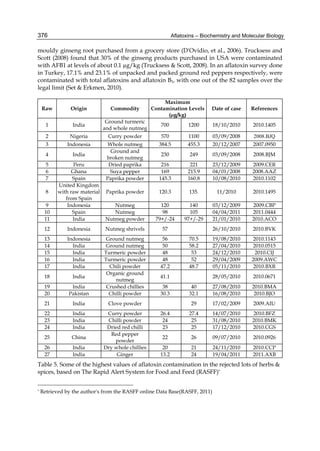
United States All foods except milk 
Milk 
AFB1, AFB2, AFG1, AFG2 
AFM1 
20 
0.5 
Canada Nuts and nut products AFB1, AFB2, AFG1, AFG2 15 
Mercosur (Brazil, 
Peanuts, maize, and maize products 
AFB1, AFB2, AFG1, AFG2 
Argentina, 
Paraguay and 
Fluid milk 
Uruguay) 
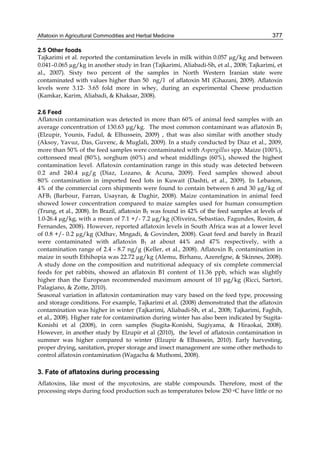
Powdered milk 
AFM1 
20 
0.5 
5 
Bosnia & 
Herzegovina 
Wheat, maize, rice and cereals 
Beans 
AFB1, AFG1 1 
5 
China Maize and maize products, peanut and 
peanut products, peanut oil, irradiated 
peanut 
Rice, irradiated rice, edible vegetable oil 
Soy bean sauce, grain paste, vinegar, other 
grains, beans, fermented foods, fermented 
bean products, starch products, fermented 
wine, red rice, butter cake, pastry biscuit and 
bread, food additive alpha-amylase, food 
additive glucoamylase preparation, salad oil 
AFB1 20 
10 
5 
India All food products AFB1, AFB2, AFG1, AFG2 
and AFM1 
30 
European Union Groundnuts, nuts and dried fruits, 
processed products intended for direct 
human consumption or as 
ingredients in foodstuffs 
AFB1 
AFB1, AFB2, AFG1, AFG2 
2 
4 
Australia and 
New Zealand 
Peanuts and tree nuts AFB1, AFB2, AFG1, AFG2 15 
Chile All foods 
Milk 
AFB1, AFB2, AFG1, AFG2 
AFM1 
5 
0.05 
Japan All foods AFB1 10 
Israel Nuts, peanuts, maize flour, figs and their 
products, and other foods 
Milk and milk products 
AFB1 
AFB1, AFB2, AFG1, AFG2 
AFM1 
5 
15 
0.05 
Italy Infusion plants 
Baby food 
AFB1 
AFB1, AFB2, AFG1, AFG2 
AFM1 
5 
10 
0.01 
Mexico Cereals and cereal products 
Corn flour for tortillas 
AFB1, AFB2, AFG1, AFG2 20 
12 
EU member states: Austria, Belgium, Denmark, Finland, France, Germany, Greece, Ireland, Italy, 
Luxembourg, the Netherlands, Portugal, Spain, Sweden, the United Kingdom 
Table 1. Limits for mycotoxin contamination in food products destined for human 
consumption in different countries.
Aflatoxins – Biochemistry and Molecular Biology 
110 
Source: Adapted from Mykkanen et al., 2005. 
Fig. 1. Pathways of aflatoxin B1 biotransformation and excretion in humans. 
(a) Experimental and human evidendence of excretion of this metabolite; (b) Scarce or no 
evidence available; (c) only experimental evidence available (no data for humans).
Biomarkers of Aflatoxin Exposure and Its Relationship with the Hepatocellular Carcinoma 
111 
3. Role of aflatoxins in the etiology of hepatocellular carcinoma 
Hepatocellular carcinoma (HCC) represents more than 80% of primary malignant tumors of 
the liver, and it is the 7th to 9th most common type of cancer worldwide affecting men and 
women, respectively. About 315,000 new cases of HCC are reported annually, a total of 4.1% 
of all malignant tumors in the world population. Although it is a relatively uncommon 
tumor, HCCs are aggressive, and mortality rates reach significant values, with about 312,000 
deaths a year, and maximal survival rates of 5% in 5 years. Occurrence of HCC is associated 
with some degree of chronic liver disease in 90% of the cases, and it is an important cause of 
death in cirrhosis patients. HCC incidence has been growing, and may be directly related to 
the frequency of hepatitis C virus infection and longer survival of cirrhosis patients (Yang & 
Roberts, 2010). 
HCC incidence in Africa and southeastern China is far greater than in the rest of the world. 
Besides known risk factors of western countries such as viral hepatitis and alcohol 
consumption, these populations are exposed to aflatoxin. The toxin is ingested in 
contaminated and stored foodstuffs, such as peanuts, maize, soybeans and rice. The 
association between AFB1 and HCC is based on the ability of the toxin to induce a specific 
mutation of gene p53 (Bressac et al., 1991). 
In Brazil, HCC is not included among the ten most common types of cancers, probably 
because of underreporting. Estimates show that there are 2 to 3,000 diagnoses of the disease 
every year, with a national incidence of 1:100,000 inhabitants/year. Incidence of this 
neoplasm is greater in the north, northeast and southeast than in the south of the country. 
The greatest frequency occurs in the states of Amazonas, Bahia and Espírito Santo. (Pimenta 
& Massabki, 2010). In São Paulo, incidence is a little greater than the mean of the country, 
affecting about 2:100.000 inhabitants/year. In terms of mortality, HCC is the 7th death cause 
and is responsible for 4% of the deaths by cancer in Brazil, annually. HCC incidence rate in 
Brazil is associated with advanced cirrhosis in 71.2% of the cases, as observed in the rest of 
the world. However, serology for viral hepatitis is negative in 42% of the cases HCC, even 
with regional discrepancies (Gonçalves et al., 1997). This difference may be related to the 
exposure to AFB1. This relationship, however, was not analyzed in the whole country. 
Apparently, HCC progress is not an occasional event. Hepatocarcinogenesis seems to be a 
multifactorial process in which extrinsic stimuli induce gene changes in mature hepatocytes, 
leading to successive proliferation and cell death cycles that culminate in the production of 
monoclonal populations. Several lines of evidence suggest that hepatocarcinogenesis may 
begin in preneoplastic lesions, such as regenerative macronodules and low or high grade 
dysplastic nodules. Accumulation of genetic changes and new mutations in preneoplastic 
lesions would probably cause HCC (Theise et al., 2002). 
In molecular terms, many derangements observed in HCC may be preferentially attributed to 
cirrhosis and inflammatory activity, and others are inherent to dysplastic nodules and to HCC 
itself. In early stages of chronic hepatitis, there are significant changes in the expression of 
growth factors, proteases and metalloproteinases, besides somatic changes, reduced apoptosis 
and increased expression of oncogenes and transcriptional factors. In general, these changes 
become more prominent and complex as the lesion progresses to fibrosis, cirrhosis, dysplastic 
nodules and, finally, HCC (Coleman, 2003). No tumor-suppressor gene exclusively associated 
with HCC has been identified. However, all molecular changes accumulated by chronic 
hepatitis and cirrhosis in repeated aggression / regeneration cycles, directly contribute to 
hepatocarcinogenesis (Fausto & Weber, 1993). Aneuploidy is also a common event in 
hepatocarcinogenesis. HCC is characterized by a considerable loss of heterozygosity, and 
includes several chromosomes, such as 1p, 4q, 6q, 8p, 8q, 9p, 13q, 16p, 16q, and 17p. Mutations
112 
in several critical genes , such p73, p53, Rb, APC, DLC-1 (deleted in liver cancer), p16, GSTP1, 
PTEN, IGF-2, BRCA2, SOCS-1, Smad2 and Smad4, -catenine, c-myc, and cyclin D1 were also 
identified (Fujimori et al., 1991; Tsuda et al., 1992). 
Impaired control of cell cycle is an important event in carcinogenesis. The first observations 
involving carcinogenesis and cyclins were related to detection of the incorporation of 
Hepatitis B virus DNA to cyclin A gene in HCC (Wang et al. 1990), and to amplification of 
cyclin D1 gene in some cell lineages of colon carcinoma (Leach et al., 1993). The p16/cyclin 
D1/RB pathway (retinoblastoma) may be considered the greatest cell cycle regulator. RB and 
p16 act as tumor supressor genes, and cyclin D1 as an oncogene (Weinberg, 1995; Ito et al., 
1999). Aberrant expression of both cyclin-dependent kinases (CDK) and CDK-inhibitors has 
an important role in HCC development. High expression of cyclin D1 in HCC is variable, 
ranging from 6 to 76% in different studies. Among positive regulators of cell cycle, changes 
in cyclin D1, A and B1 expression compared with normal tissues have been associated with 
increased cell growth and development of neoplasms (Ito et al., 1999). 
Analysis of aberrant expression of cyclin D1, its biological role and its relationship with 
mutations in p53 in cases of HCC demonstrated that cyclin D1 of was normally expressed in 
healthy livers, but it was highly reduced in 40% of the livers affected by HCC (Peng et al., 
1998). Lower expression of cyclin D1 RNAm was associated with larger and less 
differentiated tumors. Increased expression of cyclin D1 was observed in only 5.6% of the 
cases. On the other hand, cyclin E shows increased expression in 56% of the HCC cases. 
Overexpression of cyclin E was associated with little differentiation and with invasiveness, 
but not with tumor volume. Thus, decreased expression of cyclin D1 and increased 
expression of cyclin E are intimately associated with mutation in p53. Besides, 
overexpression of cyclin E and concomitant loss of p53 function seem to contribute to HCC 
progression (Peng et al., 1998 ; Jung et al., 2001). 
There are three important inhibitors of cell cycle progression in the Cip/Kip family: p27KIP1, 
p21WAF1, and p57KIP2. The most comprehensively studied of these inhibitors, in terms of 
clinical significance in the evolution of human cancer, is p27KIP1. Expression of p27KIP1 is 
marked in non-proliferating cells, and it has important roles in the regulation of both 
quiescence and progression in G1 phase, by means of inhibition of cyclin / CDK complexes. 
Loss of p27KIP1 acts together with mutations of several oncogenes and suppressor genes, 
stimulating tumor growth. Reduced production of the protein synthesized by p27KIP1 is 
significantly involved in the stage and volume of primary tumors. Thus, p27KIP1 has been 
described as a crucial negative regulator of HCC progression. Its increased expression is 
considered an independent variable in favorable prognosis of HCC (Ito et al., 2001; 
Fiorentino et al., 2000). Reduced p21WAF1 expression is mainly related to mutation in gene 
p53 in HCC, and also contributes to hepatocarcinogenesis. However, p21WAF1 loss was not 
identified as an independent factor in HCC bad prognosis (Ito et al., 2001). Compared with 
healthy livers, expression of p57KIP2 is significantly decreased in HCC lesions. This decreased 
expression of p57KIP2 was associated with highly aggressive tumors, characterized by more 
advanced stages, little differentiation, larger size, portal invasion, intense cellular growth 
and low disease-free survival rates (Ito et al., 2001) 
In terms of frequency, the most common molecular changes observed in HCC cases are p53 
(20-70%), cyclin D (11%), p16Ink4 (0-50%), Rb (15%) and β-catenin (16-26%), from which only 
p53 mutation was reported to be associated with hepatitis B virus gene interaction and 
exposure to aflatoxin (Ozturk, 1999). 
Although mutations in p53 pathway have an important role in HCC pathogenesis in cases of 
cirrhosis, changes in cell cycle regulator genes p21waf1/cip1 and p27Kip1 are more involved in 
Aflatoxins – Biochemistry and Molecular Biology
Biomarkers of Aflatoxin Exposure and Its Relationship with the Hepatocellular Carcinoma 
113 
HCC cases unrelated to cirrhosis (Tretiakova et al., 2010). These cases could be, in part, 
attributed to aflatoxin. Therefore, other molecular changes in genes p21waf1/cip1 and p27Kip1 
should also be assessed in individuals exposed to aflatoxin. 
4. Biomarkers of aflatoxin exposure 
Biomarkers measure cellular, biological or molecular changes in biological tissues, cells or 
fluids, providing information on disease or exposure to a given substance. As biomarkers 
are used to measure or indicate biological processes, detection of specific biomarkers may 
aid identification, diagnosis and treatment of individuals who are affected and at risk, but 
still asymptomatic. Development of biomarkers for environmental agents should be based 
on specific knowledge on metabolism, formation of by-products and general mechanism of 
action (Groopman & Kensler, 1999). 
Biomarkers may be classified in four categories: internal dose, biologically effective dose, 
early biological response, and altered structure/function. (Figure 2). Internal dose is the 
amount of substance that is metabolized. Individual characteristics determine susceptibility 
to exposure, such as the ability to activate / detoxify carcinogens, ability to repair DNA 
changes, nutritional status and immunity, age, sex and socioeconomic status (WHO, 1993). 
Source: Adapted from Groopman & Kensler (1999) 
Fig. 2. Classification of biomarkers. 
Biomarkers of exposure and effect for aflatoxins have been validated in comprehensive studies 
in animals and humans. Dose-response relationship between AFM1 and AFB1-N7-guanine 
levels and incidence of liver tumors was first established in animals (Groopman et al., 1992b). 
Biomarkers were then evaluated in humans to determine sensitivity, specificity, accuracy and 
reliability parameters. Later validation in epidemiological studies evaluated intra and inter-subject 
variability, the relationship biomarker–external dose and the feasibility of using them 
in large population studies (Groopman et al., 1992a; Groopman et al., 1992c). 
In a study carried out in Shanghai, People’s Republic of China, 18,244 volunteers were 
followed up for three years. The analysis included individual interviews on eating habits, 
possible previous exposure to aflatoxins, and collection of urine samples (Ross et al., 1992; 
Qian et al., 1994). Cases and controls were compared to detect associations between 
aflatoxin markers, infection by Hepatitis B virus (HBV), and hepatocellular carcinoma. Data 
showed a 340% increase in the relative risk for HCC when aflatoxin biomarkers were 
detected in urine. Relative risk in individuals showing positive results for HBV was 730% 
greater. Subjects who showed aflatoxin markers in urine and were positive for HBV 
infection had a relative risk of developing HCC 5,900% greater. These data support the 
relationship between the two major causes of HCC: HBV infection and exposure to AFB1. 
Besides, when individual metabolites were stratified for HCC incidence, the presence of 
AFB1-N7-guanine adduct led to 200 to 300% increase in the relative risk of developing HCC.
114 
After the Shanghai study, a trial developed in Taiwan with about 15,000 volunteers also 
analyzed the relationship between HBV, exposure to AFB1, and incidence of HCC; the 
results of this trial confirmed the findings of the previous study (Yu et al., 1997). Risk of 
developing HCC along with AFB1 exposure was more pronounced among those individuals 
infected by HBV and with detectable levels of AFB1-N7-guanine in their urine. 
5. Occurrence of aflatoxin biomarkers in biological fluids 
In past decades, several studies reported the presence of aflatoxins, metabolites and 
biomarkers in urine (Table 2). Zhu et al. (1987) analyzed 252 urine samples from inhabitants 
of Guangxi province, People’s Republic of China, and reported a correlation between total 
daily ingestion of AFB1 and excretion of AFM1. Between 1.2 and 2.2 of AFB1 ingested daily 
was found in urine as AFM1, in levels ranging from 0 to 3.2 ng/mL. In a later study, the 
same urine samples were analyzed again and levels of AFB1-N7-guanine adduct were also 
correlated with AFB1 ingestion (Groopman et al., 1992c). Total amounts of AFB1-N7-guanine 
excreted in urine in a three-day period ranged from < 50 and 3250 ng and about 0.2% of 
AFB1 ingested was excreted in urine as AFB1-N7-guanine. In the same study, levels of the 
metabolite AFP1 did not show a significant statistical correlation between dietary exposure 
and excretion in urine, and the metabolite AFQ1 was observed in few samples. Percentage of 
AFB1 excreted in urine as any of these metabolites was 4.4% in women and 7.6% in men. 
In another study, also carried out in Guangxi province, AFB1-lysine adduct was determined in 
serum samples of 42 inhabitants and compared with AFB1 ingestion and AFM1 excretion in 
urine (Gan et al., 1988). Significant correlation coefficients were found between AFB1-lysine 
levels in serum and AFM1 in urine, and between AFB1-lysine in serum and dietary exposure to 
AFB1. It is estimated that 1.4 and 2.3% of AFB1 ingested is covalently bound to albumin. 
Qian et al. (1994) detected 55 cases of hepatocellular carcinoma. From these cases, urine 
samples of 50 individuals and 267 control samples were analyzed for levels of AFB1-N7- 
guanine, AFM1, AFP1 and AFB1. The metabolite detected in the greatest concentration was 
AFP1, (0.59-16.0 ng/mL), whereas AFM1 ranged from 0.17-5.2 ng/mL, and 0.3 to 1.81 
ng/mL for AFB1-N7-guanine adduct. 
Wild et al. (1992) carried out a study with 20 individuals in Gambia, West Africa, and also 
confirmed the validity of AFB1-lysine as a biomarker. Parallel evaluation of the same 
individuals by Groopman et al. (1992a) for AFB1-N7-guanine in urine, confirmed not only 
the correlation between this metabolite and AFB1, ingestion, but also demonstrated the 
correlation between levels of AFB1-lysine in serum and AFB1-N7-guanine in urine. AFG1 was 
the most frequent metabolite observed in urine, as a consequence of the high concentration 
of aflatoxin found in the foodstuffs consumed by the individuals analyzed, compared with 
other studies in which the diet analyzed did not have AFG1. Besides, metabolites AFQ1 and 
AFP1 were also determined, and AFM1 was observed in some samples. 
Levels of AFB1-N7-guanine adducts in urine (Groopman et al., 1992a; Groopman et al., 
1992c) and AFB1-lysine in blood (Gan et al., 1988) show the biological effective dose of 
aflatoxin to which the individual has been exposed. Concentration of AFB1-N7-guanine in 
urine shows exposure to AFB1 in a 1 to 2-day period, whereas concentration of AFB1-lysine 
in serum indicates 2 to 3-month exposure (Wild et al., 1992). 
Urinary and fecal excretion of metabolites AFQ1 e AFM1 and urinary excretion of AFB1-N7- 
guanine were evaluated in 83 university students in China (Mykkanen et al., 2005). Mean 
fecal AFQ1 concentration (137 ng/g, moist weight) was about 60 times greater than mean 
Aflatoxins – Biochemistry and Molecular Biology
Biomarkers of Aflatoxin Exposure and Its Relationship with the Hepatocellular Carcinoma 
115 
AFM1 concentration (2.3 ng/g, moist weight). In urine, mean AFQ1 concentration was 10.4 
ng/mL, and 0.04 ng/mL and 0.38 ng/mL for AFM1 and AFB1-N7-guanine, respectively. The 
authors emphasized that, compared with other studies, differences in concentrations and 
frequencies of AFQ1 and AFM1 in their study may be attributed to differences in age and 
diet of the subjects. Participants of this study were young adults, 18-24 years of age, whereas 
in previous trials, individuals were 25 to 65 years old. Expression of CYP3A enzymes, which 
produce AFQ1, decreases about 25-40% with age in animals and humans, and consumption 
of foodstuffs rich in flavonoids, such as green tea, may increase AFQ1 formation by 
activation of these enzymes. 
In Brazil, Scussel et al. (2006) evaluated the presence of AFB1-lysine adduct in blood samples of 
50 subjects in the city of Sao Paulo, in 1999. The adduct was detected in 62% of the samples, in 
a concentrations ranging from 0 – 57.3 pg AFB1-lysine/ mg blood albumin. Mean 
concentration in positive samples was 14.9 pg/mg. Sixty-five urine samples from inhabitants 
of the city of Piracicaba, state of Sao Paulo, were analyzed for AFM1 and 65% of them showed 
concentrations greater or equal to 1.8 pg/mL, with mean concentration of 5.96 pg/mL 
(Romero et al., 2010). Correlation between probable aflatoxin intake - estimated by means of 
questionnaires on the frequency of consumption – and AFM1 levels in urine were not 
significantly correlated. 
AFM1 is also excreted in milk during lactation, and several studies demonstrated the 
presence of this metabolite in human milk. In the Arab Emirates, AFM1 was detected in 
milk in concentrations ranging from 5 to 3400 pg/mL (Abdulrazzaq et al., 2003). In 
Australia, AFM1 levels ranged from 28 to 1031 pg/mL, and in Thailand, from 39 to 1736 
pg/mL (El-Nezami et al., 1995). In a study carried out in Gambia (Zarba et al., 1992), 0.09 to 
0.43 % AFB1 ingested in the diet was excreted in milk as AFM1. In Brazil, this metabolite was 
studied in samples collected from human milk banks. From 50 samples analyzed, only one 
was contaminated by AFM1 at a concentration of 0.024 ng/mL (Navas et al., 2005). In a 
recent study carried out with 160 lactating mothers in Iran, AFM1 was detected in 157 
samples, with concentrations ranging from 0.3 to 26.7 ng/kg (Sadeghi et al, 2009). 
Aflatoxins were also detected in samples of umbilical cord blood, demonstrating they can 
cross the placenta, starting exposure to this carcinogen in the uterus (Wild et al., 1991; 
Turner et al., 2007). 
Quantitative determination of several metabolites in complex matrices, such as serum and 
urine, requires specific and sensitive methods for a large number of samples. Particularly for 
AFB1-lysine adduct in serum, methods may include radioimmunoassay (RIA; Gan et al., 1988), 
enzyme linked imunosorbent assay (ELISA; Wild et al., 1992), or purification with 
immunoaffinity columns followed by separation by high performance liquid chromatography 
(HPLC) and detection by fluorescence (Wild et al., 1992; Wang et al., 1996). As all these 
methods require antibodies for detection and/or purification, results will necessarily reflect 
the capacity, specificity and/or sensitivity of the antibody (Wang et al., 2001). Results obtained 
using ELISA, RIA and fluorescence were significantly different (Sheabar et al., 1993; Wild et al., 
1990). ELISA is highly sensitive, but it is less specific and shows higher concentration of AFB1- 
lysine due to the concomitant detection of adducts from reactions with other amino acids and 
ingestion of aflatoxins of similar structure, such as AFG1. HPLC-fluorescence is specific for 
AFB1-lysine, but it is not sensitive enough for epidemiological studies. 
A recently developed method combines solid phase extraction and liquid chromatography-mass 
spectrometry (HPLC-MS/MS), showing high specificity and sensitivity (McCoy et al., 
2005). The method uses a stable isotope internal standard to correct recovery and equipment 
variability. This method showed to be adequate for routine quantification of adducts in 
human serum (Scholl et al., 2006b).
Aflatoxins – Biochemistry and Molecular Biology 
116
Biomarkers of Aflatoxin Exposure and Its Relationship with the Hepatocellular Carcinoma 
117
Aflatoxins – Biochemistry and Molecular Biology 
118
Biomarkers of Aflatoxin Exposure and Its Relationship with the Hepatocellular Carcinoma 
119 
Table 2. Aflatoxins and metabolites in human urine and serum. (a) The unit is expressed 
only in the first row; (b) Only one positive sample; (c) Lactobacillus rhamnosus LC705 and 
Propionibacterium freudenreichii subsp. shermanii (1:1, m:m), 2 – 5 x 10¹⁰ colony forming 
units/d. NS, not specified; GTP, green tea polyphenols; alb, albumin; crea, creatinine. 
Methods used to determine AFB1-N7-guanine adduct include immunoassays (Groopman et 
al., 1992a), HPLC with UV detection (Groopman et al., 1992c), or fluorescence (Wang et al., 
1999; Mykkanen et al., 2005). Egner et al. (2006) described a method using HPLC-MS/MS in 
the analysis of AFB1-N7-guanine in urine, also based on the use of stable isotype internal
120 
standard. Precision and accuracy were far superior than previous procedures. Together with 
the analysis of AFB1-lysin, determination of these two biomarkers in urine and serum 
samples is precise, accurate, specific and selective. Determination of residual aflatoxin and 
metabolites AFM1, AFP1 and AFQ1 in urine has been carried out using HPLC-fluorescence 
(Tang et al., 2008; Polychronaki et al., 2008; Romero et al., 2010). However, HPLC-MS/MS 
has recently been used successfully to determine AFB1, AFB2, AFG1, AFG2, AFM1 and AFP1 
in urine (Everley et al., 2007). 
6. Concluding remarks 
Current concepts derived from intensive research on biotransformation, mechanisms of 
toxicity and evidence of the role of aflatoxins in the etiology of human liver cancer were 
summarily presented in this chapter. AFB1 exerts its effects after conversion to the reactive 
compound AFB1-epoxide by means of cytochrome P450-dependent enzymes. This epoxide 
can form derivatives with cellular macromolecules, including proteins, RNA and DNA. 
Reaction with DNA occurs with guanines in codon 249 of tumor suppressor gene p53. 
Although mutations in p53 pathway have an important role in HCC pathogenesis other 
molecular changes in genes p21waf1/cip1 and p27Kip1 should also be assessed in individuals 
exposed to aflatoxin. 
Primary biotransformation of AFB1 also produces hydroxylated and less toxic derivatives, 
such as aflatoxins Q1 and P1. Intra and interspecies differences in the pathways of 
activation/detoxification are directly related to the susceptibility of animals to aflatoxin 
effects. In humans, individual biomonitoring of AFB1 metabolites such as AFB1-N7-guanine 
have demonstrated that aflatoxins constitute an important risk factor for hepatocellular 
carcinoma in highly exposed populations. Some of these studies also show synergism 
between aflatoxins and hepatitis B virus in the development of human HCC. Based on these 
concepts, and taking into account the frequent detection of aflatoxins in foodstuffs 
worldwide, further investigations are needed to assess the level of dietary exposure to these 
toxins and its impact on human health. 
7. References 
Abdulrazzaq, Y.M.; Osman, N.; Yousif, Z.M. & Al-Falahi, S. (2003). Aflatoxin M1 in breast-milk 
Aflatoxins – Biochemistry and Molecular Biology 
of UAE women. Annals of tropical paediatrics, Vol.23, No.3, (September 2003), 
pp.173-179, ISSN 0272-4936 
Aguillar, F.; Hussain, S.P. & Ceerutti, P. (1993). Aflatoxin B1 induces the transversion of G-T 
in codon 249 of the p53 tumor suppressor gene in human hepatocytes. Proceeding of 
the National Academic Sciences of the United States of America, Vol.90, No.18, 
(September 1993), pp.8586-8590, ISSN 0027:8424 
Aljicevic, M. & Hamzic, S. (2010). Aflatoxin in the urine of patients suffering from HCC and 
HBV. Healthmed, Vol.4, No.4, (January 2010), pp.852-856, ISSN 1840:2291 
Al-Saadany, A.; El-Hennawy, S.; Amra, H.; Iman Abd El-Reheim & Ezzat, S. (1993). A study 
of aflatoxins and Kwashiorkor in Benha. Benha Medical Journal, Vol.10, No.3, 
(September 1993), pp.125-138, ISSN 1110-208X 
Bressac, B.; Kew, M.; Wands, J. & Ozturk, M. (1991). Selective G-mutation to T-mutations of 
p53 gene in hepatocellular carcinoma in Southern Africa. Nature, Vol.350, No.6317, 
(April 1991), pp. 429-431, 1991, ISSN 0028-0836
Biomarkers of Aflatoxin Exposure and Its Relationship with the Hepatocellular Carcinoma 
121 
Busby, W.F. & Wogan, G.N (1984). Aflatoxins. In: Chemical carcinogens, Searle, C.E., , pp. 
945-1136, American Chemical Society, ISBN 0841208697 , Washington, D.C., USA 
Chu, F.S. (1991). Mycotoxins: food contamination, mechanism, carcinogenic potential and 
preventive measures. Mutatation Research, Vol.259, No. 3-4, (March-April 1991), 
pp.291-306, ISSN 0921-8262 
Coleman, W.B. (2003). Mechanisms of human hepatocarcinogenesis. Current Molecular 
Medicine, Vol. 3, No.6, (September 2003), pp. 573–588, 2003, ISSN 1566-5240 
Coulombe, R.A. (1991). Aflatoxins. In: Mycotoxins and phytoalexins, Sharma, R.P. & Salunkhe, 
p.103-143, CRC Press, ISBN 0849388333, Boca Raton 
Egner, P.A.; Groopman, J.D.; Wang, J.S.; Kensler, T.W. & Friesen, M.D. (2006). Quantification 
of Aflatoxin-B1-N7-Guanine in Human Urine by High-Performance Liquid 
Chromatography and Isotope Dilution Tandem Mass Spectrometry. Chemical 
Research in Toxicology, Vol.19, No.9, (September 2006), pp.1191-1195, ISSN 0893- 
228X 
Egner, P.A.; Yu, X.; Johnson, J.K.; Nathasingh, C.K.; Groopman, J.D.; Kensler, T.W. & 
Roebuck, B.D. (2003). Identification of aflatoxin M1-N7-guanine in liver and urine of 
tree shrews and rats following administration of aflatoxin B1. Chemical Research in 
Toxicology, Vol.16, No.9, (September 2003), pp.1174-1180, ISSN 0893-228X 
El-Nezami, H.; Nicoletti, G.; Neal, G.E.; Donohue, D.C. & Ahokas, J.T. (1995). Aflatoxin M1 
in human breast milk samples from Victoria, Australia and Thailand. Food and 
Chemical Toxicology, Vol.33, No.3, (March 1995), pp.173-179, ISSN 0278-6915 
El-Nezami, H.S.; Polychronaki, N.N.; Ma, J.; Zhu, H.; Ling, W.; Salminen, E.K.; Juvonen, 
R.O.; Salminen, S.J.; Poussa, T. & Mykkanen, M. (2006). Probiotic supplementation 
reduces a biomarker for increased risk of live cancer in young men from Southern 
China. The American Journal of Clinical Nutrition, Vol.83, No.5, (May 2006), pp.1199- 
1203, ISSN 0002-9165 
Essigmann, J.M.; Croy, R..G; Nadzan, A.M.; Busby, W.F.; Reinhold, V.N.; Buchi, G. & 
Wogan, G.N. (1977). Structural identification of the major DNA adduct formed by 
aflatoxin B1 in vitro. Proceedings of the National Academy of Sciences of the United 
States of America, Vol.74, No.5, pp.1870-1874, ISSN 0027-8424 
Essigmann, J.M.; Croy, R.G.; Bennett, R.A. & Wogan, G.N. (1982). Metabolic activation of 
aflatoxin B1: patterns of DNA adduct formation, removal, and excretion in relation 
to carcinogenesis. Drug Metabolism Reviews, Vol.13, No.4, pp. 581-602, ISSN 0360- 
2532 
Everley, R.A.; Ciner, F.L.; Zhang, D.; Scholl, P.F.; Groopman, J.D. & Croley, T.R. (2007). 
Measurement of aflatoxin and aflatoxin metabolites in urine by liquid 
chromatography–tandem mass spectrometry. Journal of Analytical Toxicology, 
Vol.31, No.3, (April 2007), pp.150-156, ISSN 0146-4760 
Fausto, N. & Webber, E.M. (1993). Control of liver growth. Critical Reviews in Eukaryotic Gene 
Expression, Vol.3, No.2 pp.117-135, ISSN 1045-4403 
Fiorentino, M.; Altimari, A.; D’Errico, A.; Cukor, B.; Barozzi, C.; Loda, M. & Grigioni, W.F. 
(2000). Acquired expression of p27 is a favorable prognostic indicator in patients 
with hepatocellular carcinoma. Clinical Cancer Research, Vol.6, No.10, (October 
2000), pp.3966-3972, ISSN 1078-0432 
Food and Agriculture Organization of the United Nations - FAO. (2004). Worldwide 
regulations for mycotoxins in food and feed in 2003. FAO Food and Nutrition 
Paper No. 81. pp. 1728–3264, Food and Agriculture Organization of the United 
Nations, ISBN 9251051623, Rome, Italy.
122 
Fujimori, M.; Tokino, T.; Hino, O.; Kitagawa, T.; Imamura, T.; Okamoto, E.; Mitsunobu, M.; 
Aflatoxins – Biochemistry and Molecular Biology 
Ishikawa, T.; Nakagama, H. & Harada, H. (1991). Allelotype study of primary 
hepatocellular carcinoma. Cancer Research, Vol.51, No.1, (January 1991), pp.89-93, 
ISSN 0008-5472 
Gan, L.S.; Skipper, P.L.; Peng, X.C.; Groopman, J.D.; Chen, J.S.; Wogan, G.N. & 
Tannenbaum, S.R. (1988). Serum albumin adducts in the molecular epidemiology of 
aflatoxin carcinogenesis: correlation with aflatoxin B1 intake and urinary excretion 
of aflatoxin M1. Carcinogenesis, Vol.9, No.7, (July 1988), pp.1323-1325, ISSN 0143- 
3334 
Gonçalves, C.S.; Pereira, F.E.L. & Gayotto, L.C.C. (1997). Hepatocellular carcinoma in Brazil: 
report of a national survey (Florianopolis, SC, 1995). Revista do Instituto de Medicina 
Tropical de São Paulo, Vol.39, No.3, (May-June 1997), pp.165-70, 1997, ISSN 0036-4665 
Gong, Y.Y.; Cardwell, K.; Hounsa, A.; Egal, S.; Turner, P.c.; Hall, A.J. & Wild, C.P. (2002). 
Dietary aflatoxin exposure and impaired growth in young children from Benin and 
Togo: cross sectional study. British Medical Journal, Vol.325, No.7354, (July 2002), 
pp.20-21, ISSN 0959-535X 
Groopman, J.D.; Hall, A.J.; Whittle, H.; Hudson, G.J.; Wogan, G.N.; Montesano, R. & Wild, 
C.P. (1992a). Molecular dosimetry of aflatoxin-N7-guanine in human urine obtained 
in The Gambia, West Africa. Cancer epidemiology, biomarkers & prevention, Vol. 1, 
No.3, (March-April 1992), pp.221-227, ISSN 1055-9965 
Groopman, J.D.; Hasler, J.A.; Trudel, L.J.; Pikul, A.; Donahue, P.R. & Wogan, G.N. (1992b). 
Molecular dosimetry in rat urine of aflatoxin-N7-guanine and other aflatoxin 
metabolites by multiple monoclonal antibody affinity chromatography and 
immunoaffinity/high performance liquid chromatography. Cancer Research, Vol.52, 
No.2, (January 1992), pp.267-274, ISSN 0008-5472 
Groopman, J.D. & Kensler, T.W. (1999). The light at the end of the tunnel for chemical-specific 
biomarkers: daylight or headlight? Carcinogenesis, Vol.20, No.1, (January 
1999), pp.1-11, ISSN 0143-3334 
Groopman, J.D.; Zhu, J.Q.; Donahue, P.R.; Pikul, A.; Zhang, L.S.; Chen, J.S. & Wogan, G.N. 
(1992c). Molecular dosimetry of urinary aflatoxin-DNA adducts in people living in 
Guangxi Autonomous Region, People's Republic of China. Cancer Research, Vol.52. 
No.1, (January 1992), pp.45-52, ISSN 00088-5472 
Guengerich, F.P. (1999). Cytochrome P-450 3A4: regulation and role in drug metabolism. 
Annual Review of Pharmacology Toxicology, Vol.39, pp.1-17, ISSN 0362-1642 
Hatem, N.L.; Hassab, H.M.; Abd Al-Rahman, E.M.; El-Deeb, S.A. & El-Sayed Ahmed, R.L. 
(2005). Prevalence of aflatoxins in blood and urine of Egyptian infants with 
protein-energy malnutrition. Food & Nutrition Bulletin, Vol.26, No.1, pp.49-56, ISSN 
0379-5721 
Hsieh, D.P.H & Atkinson, D.N. Bisfuranoid mycotoxins: their genotoxicity and 
carcinogenicity. (1991). Advances in Experimental Medicine and Biology, Vol.283, 
pp.525-532, ISSN 0306437376 
International Agency for Research on Cancer - IARC. (1993). Some Naturally Occurring 
Substances: Food Items and Constituents, Heterocyclicaromatic Amines and 
Mycotoxins. In: IARC monographs on the evaluation of carcinogenic risks to humans. pp. 
245–395, International Agency for Research on Cancer, ISBN 928321256-8, Lyon, 
France 
Ito, Y.; Matsuura, N.; Sakon, M.; Miyoshi, E.; Noda, K.; Takeda, T.; Umeshita, K.; Nagano, 
H.; Nakamori, S.; Dono, K.; Tsujimoto, M,; Nakahara, M.; Nakao, K.; Taniguchi, N. 
& Monden, M. (1999). Expression and prognostic roles of the G1-S modulators in
Biomarkers of Aflatoxin Exposure and Its Relationship with the Hepatocellular Carcinoma 
123 
hepatocellular carcinoma: P27 independently predicts the recurrence. Hepatology, 
Vol.30, No.1, (July 1999), pp.90-99, ISSN 0270-9139 
Ito, Y.; Takeda, T.; Sakon, M.; Tsujimoto, M.; Monden, M.; Matsuura, N. (2001). Expression 
of p57/Kip2 protein in hepatocellular carcinoma. Oncology, Vol.61, No.3, pp.221- 
225, ISSN 0030-2414 
Jiang, Y.; Jolly, P.E.; Ellis, W.O.; Wang, J.S.; Phillips, T.D. & Williams, J.H. (2005). Aflatoxin 
B1 albumin adduct levels and cellular immune status in Ghanaians. International 
Immunology, Vol.17, No.6, (June 2005), pp.807-814, ISSN 0953-8178 
Johnson, N.M.; Qian, G.; Xu, L.; Tietze, D.; Marroquin-Cardona, A.; Robinson, A.; 
Rodriguez, M.; Kaufman, L.; Cunningham, K.; Wittmer, J.; Guerra, F.; Donnelly, 
K.C; Williams, J.H.; Wang, J.-S. & Phillips, T.D. (2010). Aflatoxin and PAH exposure 
biomarkers in a U.S. population with a high incidence of hepatocellular carcinoma. 
Science of the Total Environment, Vol.408, No.23, (November 2010), pp.6027-6031, 
ISSN 0048-9697 
Jung, Y.J.; Lee, K.H.; Choi, D.W.; Han, C.J.; Jeong, S.H.; Kim, K.C.; Oh, J.W.; Park, T.K. & 
Kim, C.M. (2001). Reciprocal expressions of cyclin E and cyclin D1 in hepatocellular 
carcinoma. Cancer Letters, Vol.168, No.1, (July 2001), pp.57-63, ISSN 0304-3835 
Leach, F.S.; Elledge, S.J.; Sherr, C.J.; Willson, J.K.; Markowitz, S.; Kinzler, K.W. & Vogelstein, 
B. (1993). Amplification of cyclin genes in colorectal carcinomas. Cancer Research, 
Vol.53, No.9, (May 1993), pp.1986-1989, ISSN 00088-5472 
Leeson, S.; Diaz, G.J. & Summers, J.D. (1995). Poultry metabolic disorders and mycotoxins. 
Guelph, University Books, ISBN 096956001, Ontario, Canada 
McCoy, L., Scholl, P. F., Schleicher, R., Groopman, J. D., Powers, C. & Pfeiffer, C. M. (2005). 
Analysis of aflatoxin B1-lysine adducts in serum by isotope dilution liquid 
chromatography tandem mass spectrometry. Rapid communications in mass 
spectrometry, Vol.19, No.16, pp.2203-2210, ISSN 0951-4198 
Moss, M.O. Recent studies of mycotoxins. (1998). Journal of Applied Microbiology, Vol.84, 
Supplement, pp.62S-76S, ISSN 1364- 5072 
Mykkanen, H.; Zhu, H.; Salminen, E.; Juvonen, R.O.; Ling, W.; Ma, J.; Polychronaki, N.; 
Kemlainen, H.; Mykkanen, O.; Salminen, S. & El-Nezami, H. (2005). Fecal and 
urinary excretion of aflatoxin B1 metabolites (AFQ1, AFM1 and AFB-N7-guanine) in 
young Chinese males. International Journal of Cancer, Vol.115, No.6, (July 2005), 
pp.879-84, ISSN 0020-7136 
Navas, A.; Sabino, M. & Rodriguez-Amaya, D. B. Aflatoxin M1 and ochratoxin A in a human 
milk bank in the city of São Paulo, Brazil. (2005). Food Additives and Contaminants, 
Vol.22, No.5, (May 2005), pp. 57-462, ISSN 0265-203X 
Neal, G.E.; Eaton, D.L.; Judah, D.J. & Verma, A. Metabolism and toxicity of aflatoxins M1 
and B1 in human-derived in vitro systems. (1998). Toxicology and Applied 
Pharmacology, Vol.151, No.1, (July 1998), pp.152-158, ISSN 0041-008X 
Ozturk, M. (1999). Genetic aspects of hepatocellular carcinogenesis. Seminars in Liver Disease, 
Vol.19, No.3, pp.235-242, ISSN 0272-8087 
Peng, S.Y.; Chou, S.P. & Hsu, H.C. (1998). Association of downregulation of cyclin D1 and of 
overexpression of cyclin E with p53 mutation, high tumor grade and poor 
prognosis in hepatocellular carcinoma. Journal of Hepatology, Vol.29, No.2, (August 
1998), pp.281-289, ISSN 0168-8278 
Pimenta, J.R. & Massabki, P.S. (2010). Carcinoma hepatocelular: um panorama clínico. 
Revista da Sociedade Brasileira de Clínica Médica, Vol.8, pp.59-67, ISSN 1679-1010 
Polychronaki, N.; Wild, C.P.; Mykkanen, H.; Amra, H.; Abdel-Wahhab, M.; Sylla, A.; Diallo, 
M.; El-Nezami, H. & Turner, P.C. (2008). Urinary biomarkers of aflatoxin exposure
Aflatoxins – Biochemistry and Molecular Biology 
124 
in young children from Egypt and Guinea. Food and Chemical Toxicology, Vol.46, 
No.2, (February 2008), pp.519-526, ISSN 0278-6915 
Orsi, R.; Oliveira, C.A.F.; Dilkin, P.; Xavier, J; Direito, G.; Correa, B. (2007). Effects of oral 
administration of aflatoxin B1 and fumonisin B1 in rabbits (Oryctolagus cuniculus). 
Chemico-Biological Interactions, Vol. 170, No.3 (December 2007), pp. 201-208, ISSN 
0009-2797 
Qian, G.S.; Ross, R.K.; Yu, M.C.; Yuan, J.M.; Gao, Y.T.; Henderson, B.E.; Wogan, G.N. & 
Groopman, J.D. (1994). A follow-up study of urinary markers of aflatoxin exposure 
and liver cancer risk in Shanghai, People's Republic of China. Cancer epidemiology, 
biomarkers & prevention, Vol.3, No.1, (January February 1994), pp.3-10, ISSN 1055- 
9965 
Raney, K.D.; Shimada, T.; Kim, D.H.; Groopman, J.D.; Harris, T.M. & Guengerich, F.P. 
(1992). Oxidation of aflatoxins and sterigmatocystin by human liver microsomes: 
significance of aflatoxin Q1 as a detoxication product of aflatoxin B1. Chemical 
Research in Toxicology, Vol.5, No.2, (March-April 1992), pp.202-10, ISSN 0893-228X 
Romero, A.C.; Ferrreira, T.R.B.; Dias, C.T.S.; Calori-Domingues, M.A. & Gloria, E.M. (2010). 
Occurrence of AFM1 in urine samples of a Brazilian population and association 
with food consumption. Food Control, Vol.21, No. 4, (April 2010), pp.554-558, ISSN 
0956-7135 
Ross, R.K.; Yuan, J.M.; Yu, M.C.; Wogan, G.N.; Qian, G.S.; Tu, J.T.; Groopman, J.D.; Gao, Y,T. 
& Henderson, B.E. (1992). Urinary aflatoxin biomarkers and risk of hepatocellular 
carcinoma. Lancet, Vol.339, No.8799, (April 1992), pp.943-946, ISSN 0140-6736 
Sabbioni, G.; Skipper, P.L.; Buchi, G. & Tannenbaum, S.R. (1987). Isolation and 
characterization of the major serum albumin adduct formed by aflatoxin B1 in vivo 
in rats. Carcinogenesis, Vol.8, No.6, (June 1987), pp.819-824, ISSN 0143-3334 
Sadeghi, N.; Oveisi, M.R.; Jannat, B.; Hajimahmoodi, M.; Bonyani, H. & Jannat, F. (2009). 
Incidence of aflatoxin M1 in human breast milk in Tehran, Iran. Food Control, Vol.20, 
No.1, (January 2009), pp.75-78, ISSN 0956-7135 
Scholl, P.F.; Turner, P.C.; Sutcliffe, A.E.; Sylla, A.; Diallo, M.S.; Frisen, M.D.; Groopman, J.D. 
& Wild, C.P. (2006). Quantitative comparison of aflatoxin B1 serum albumin 
adducts in humans by isotope dilution mass spectrometry and ELISA. Cancer 
epidemiology, biomarkers & prevention, Vol.15, No.4, (April 2006), pp.823-826, ISSN 
1055-9965 
Scussel, V.M.; Haas, P.; Gong, Y. Y.; Turner, C. P. & Wild, C. P. (2006). Study of aflatoxin 
exposure in a Brazilian population using an aflatoxin-albumin biomarker. 11th 
International IUPAC Symposium on Mycotoxins and Phycotoxins. Proceedings, pp.197- 
202, ISBN 978-90-8686-007-4 
Sheabar, F.Z.; Groopman, J.D.; Qian, G.-S. & Wogan, G.N. (1993). Quantitative Analysis of 
Aflatoxin Albumin adducts. Carcinogenesis, Vol.14, No.6, (June 1993), pp. 1203-1208, 
ISSN 0143-3334 
Shuaib, F.M.B.; Jolly, P.E.; Ehiri, J.E.; Yatich, N.; Jiang, Y.; Funkhouser, E.; Person, S.D.; 
Wilson, C.; Ellis, W.O.; Wang, J-S. & Williams, J.H. (2010). Association between 
birth outcomes and aflatoxin B1 biomarker blood levels in pregnant women in 
Kumasi, Ghana. Tropical Medicine and International Health, Vol. 15, No.2, (February 
2010), pp.160-167, ISSN 1360-2276 
Sun, Z.; Lu, P.; Gail, M.H.; Pee D.; Zhang, Q.; Ming, L..; Wang, J.; Wu, Y.; Liu, G. & Zhu, Y. 
(1999). Increased risk of hepatocellular carcinoma in male hepatitis B surface 
antigen carriers with chronic hepatitis who have detectable urinary aflatoxin 
metabolite M1. Hepatology, Vol.30, No.2, (August 2010), pp.379-383, ISSN 0270-9139
Biomarkers of Aflatoxin Exposure and Its Relationship with the Hepatocellular Carcinoma 
125 
Sylla, A.; Diallo, M.S.; Castegnaro, J. & Wild, C.P. (1999). Interactions between hepatitis B 
virus infection and exposure to aflatoxins in the development of hepatocellular 
carcinoma: a molecular epidemiology approach. Mutatation Research, Vol.428, No.1- 
2, (July 1999), pp.187-196, ISSN 0027-5107 
Tang, L.; Meng, T.; Xu, L.; Luo, H.; Huang, T.; Yu, J.; Zhang, L.; Gao, W.; Cox, S.B. & Wang, 
J-S. (2008). Modulation of aflatoxin biomarkers in human blood and urine by green 
tea polyphenols intervention. Carcinogenesis, Vol.29, No.2 , (February 2008), pp.411- 
417, ISSN 0143-3334 
Tang, L.; Xu, L.; Afriyie-Gyawu, E.; Liu, W.; Wang, P.; Tang Y.; Wang, Z.; Huebner, H.J.; 
Ankrah, N.-A.; Ofori-Adjei, D.;. Williams, J.H.; Wang, J.-S. & Phillips, T.D. (2009). 
Aflatoxin-albumin adducts and correlation with decreased serum levels of vitamins 
A and E in an adult Ghanaian population. Food additives and contaminants, Vol.26, 
No.1, pp.108-118, ISSN 0265-203X 
Theise N.D.; Park Y.N. & Kojiro M. (2002). Dysplastic nodules and hepatocarcinogenesis. 
Clinics in Liver Disease, Vol.6, No.2, (May 2002), pp.497-512, ISSN 1089-3261 
Tretiakova, M.S.; Shabani-Rad, M.T.; Guggisberg, K.; Hart, J.; Anders, R.A. & Gao, Z.H. 
(2010). Genomic and immunophenotypical differences between hepatocellular 
carcinoma with and without cirrhosis. Histopathology, Vol.56, No.6, (May 2010), 
pp.683-693, ISSN 0309-0167 
Tsuda, H.; Oda, T.; Sakamoto, M. & Hirohashi, S. (1992). Different pattern of chromosomal 
allele loss in multiple hepatocellular carcinomas as evidence of their multifocal 
origin. Cancer Research. Vol.52, No.6, (March 1992), pp.1504-1509, ISSN 0008-5472 
Turner, P.C.; Collison, A.C.; Cheung, Y.B.; Gong, Y.Y.; Hall, A.J.; Prentice, A.M. & Wild, C.P. 
(2007). Aflatoxin exposure in utero causes growth faltering in Gambia infants. 
International Journal of Epidemiology, Vol.36, No.5, (October 2007), pp.1119-1125, 
ISSN 0300-5771 
Turner, P.C.; Mendy, M.; Whittle, H.; Fortuin, M.; Hall, A.J. & Wild, C.P. (2000). Hepatitis B 
infection and aflatoxin biomarker levels in Gambian children. Tropical Medicine & 
International Health, Vol.5, No.12, (December 2000), pp.837-841, ISSN 1360-2276 
Wang, J.; Chenivesse, X.; Henglein, B. & Brechot, C. (1990). Hepatitis B virus integration in a 
cyclin A gene in a hepatocellular carcinoma. Nature, Vol.343, No.6258 (February 
1990), pp.555-557, ISSN 0028-0836 
Wang, J.S.; Huang, T.; Su, J.; Liang, F.; Wei, Z.; Liang, Y.; Luo, H.; Kuang, S.Y.; Qian, G.S.; 
Sun, G.; He, X.; Kensler, T.W. & Groopman, J.D. (2001). Hepatocellular carcinoma 
and aflatoxin exposure in Zhuqing Village, Fusui County, People's Republic of 
China. Cancer epidemiology, biomarkers & prevention, Vol.10, No.2, (February 2001), 
pp.143-146, ISSN 1055-9965 
Wang, J.-S.; Shen, X.; He, X.; Zhu, Y.-R.; Zhang, B. C.; Wang, J.-B.; Qian, G.-S.; Kuang, S.-Y.; 
Zarba, A.; Egner, P. A.; Jacobson, L. P.; Munoz, A.; Helzlsouer, K. J.; Groopman, J. 
D. & Kensler, T. W. (1999). Protective alterations in phase 1 and 2 metabolism of 
aflatoxin B1 by oltipraz in residents of Qidong, People’s Republic of China. Journal 
of the national cancer institute, Vol.91, No.4, (February 1999), pp.347-354, ISSN 0027- 
8874 
Wang, L.Y.; Hatch, M,; Chen, C.J.; Levin, B.; You, S.L.; Lu, S.N.; Wu, M.H.; Wu, W.P.; Wang, 
L.W.; Wang, Q.; Huang, G.T.; Yang, P.M.; Lee, H.S. & Santella, R.M. (1996). 
Aflatoxin exposure and risk of hepatocellular carcinoma in Taiwan. International 
Journal of cancer, Vol.67, No.5, (September 1996), pp.620-625, ISSN 0020-7136 
Weinberg, R.A. (1995). The retinoblastoma protein and cell cycle control. Cell, Vol.81, No.3 
(May 1997), pp.323-330, ISSN 0092-8674
126 
Wild, C.P.; Fortuin, M.; Donato, F.; Whittle, H.C.; Hall, A.J.; Wolf, C.R. & Montesano, R. 
Aflatoxins – Biochemistry and Molecular Biology 
(1993). Aflatoxin, liver enzymes, and hepatitis B virus infection in Gambian 
children. Cancer epidemiology, biomarkers & prevention, Vol.2, No.6, (November– 
December 1993), pp.555-61, ISSN 1055-9965 
Wild, C.P.; Hudson, G.J.; Sabbioni, G.; Chapot, B.; Hall, A.J.; Wogan, G.N.; Whittle, H.; 
Montesano, R. & Groopman, J.D. (1992). Dietary intake of aflatoxins and the level of 
albumin-bound aflatoxin in peripheral blood in The Gambia, West Africa. Cancer 
epidemiology, biomarkers & prevention, Vol.1, No.3, (March-April 1992), pp.229-234, 
ISSN 1055-9965 
Wild, C.P.; Jiang, Y.-Z.; Sabbioni, G.; Chapot, B. & Montesano, R. (1990). Evaluation of 
methods for quantification of aflatoxin-albumin adducts and their application to 
human exposure assessment. Cancer Research, Vol.50, (January 1990), pp.245-250 
ISSN 0008-5472 
Wild, C.P.; Rasheed, F.N.; Jawla, M.F.; Hall, A.J.; Jansen, L.A. & Montesano, R. (1991). In-utero 
exposure to aflatoxin in West Africa. The Lancet, Vol. 337, No. 8756, (June 
1991), pp.1602, ISSN 0140-6736 
Wild, C.P.; Yin, F.; Turner, P.C.; Chemin, I.; Chapot, B.; Mendy, M.; Whittle, H.; Kirk, G.D. & 
Hall, A.J. (2000). Environmental and genetic determinants of aflatoxin-albumin 
adducts in the Gambia. International Journal of cancer, Vol.86, No. 1, (April 2000), 
pp.1-7, pp. ISSN 0020-7136 
Wilson R.; Ziprin, R.; Ragsdale, S. & Busbee, D. (1985). Uptake and vascular transport of 
ingested aflatoxin. Toxicology Letters, Vol.29, No.2-3, (December 1985), pp.169-176, 
ISSN 0378-4274 
Wogan, G.N.; Edward, G.S. & Shank, R.C. (1967). Excretion and tissue distribution of 
radioactivity from aflatoxin B1-C14 in rats. Cancer Research, Vol. 27, No.10P1, 1729- 
1736, ISSN 0008-5472 
World Health Organization (WHO). (1993). Biomarkers and risk assessment: concepts and 
principles, World Health Organization, ISBN 9241571551, Geneva 
World Health Organization (WHO). (2002). Evaluation of certain mycotoxins in food, World 
Health Organization, ISBN 9241209062, Geneva 
Yang, J.D. & Roberts, L.R. (2010). Hepatocellular carcinoma: A global view. Nature Review 
Natural Gastroenterology & Hepatology. Vol.7, No. 8, (August 2010), pp. 448-458, ISSN 
1759-5045 
Yu, M.W.; Lien, J.P.; Chiu, Y.H.; Santella, R.M.; Liaw, Y.F. & Chen, C.J. (1997). Effect of 
aflatoxin metabolism and DNA adduct formation on hepatocellular carcinoma 
among chronic hepatitis B carriers in Taiwan. Journal of Hepatology, Vol.27, No.2, 
(August 1997), pp.320–330, ISSN 0168-8278 
Zarba, A.; Wild, C.P.; Hall, A.J.; Montesano, R.; Hudson, G.J. & Groopman, J.D. (1992). 
Aflatoxin M1 in human breast milk from The Gambia, West Africa, quantified by 
combined monoclonal antibody immunoaffinity chromatography and HPLC. 
Carcinogenesis, Vol.13, No.5, (May 1992), pp.891-894, ISSN 0143-3334 
Zhu, J.Q.; Zhang, L.S.; Hu, X.; Xiao, Y.; Chen, J.S.; Xu, Y.C.; Fremy, J. & Chu, F.S. (1987). 
Correlation of dietary aflatoxin B1 levels with excretion of aflatoxin M1 in human 
urine. Cancer Research, Vol.47, No.7, (April 1987), pp.1848-1852, ISSN 0008-5472
7 
The Use of Proteomics as a 
Novel Tool in Aflatoxin Research 
E. Razzazi-Fazeli, M. Rizwan, C. Mayrhofer and K. Nöbauer 
University of Veterinary Medicine Vienna, 
Austria 
1. Introduction 
The field of system biology among the disciplines, genomics, transcriptomics, proteomics 
and other “omics” technologies, has become one of the important scientific fields nowadays 
and will play a major role in investigating biological processes on a global level. Huge 
financial, technological and organisation efforts are needed to perform system biology based 
approaches. Progresses in molecular biology have led to the sequencing of the whole 
genome of several organisms, ranging from bacteria to various mammals including human. 
While the term “genomics” has already been used for a long time, new technologies such as 
transcriptomics, proteomics and metabolomics have been introduced during the last two 
decades and are beginning to expand rapidly. In general the “omics technologies” deal with 
hundreds or thousands of genes and/or their products such as mRNA, proteins or 
metabolites. Genomics is the study of genes, their variation and function by sequencing and 
mapping them. Similarly, transcriptomics deals with information at the messenger RNA 
(mRNA) level in an organism, tissue or cells at a given time by providing quantitative or 
semi-quantitative data. The transcriptome is however, not a straight copy of the genome, 
since the sequence of RNA molecules can be altered due to differential splicing and RNA 
editing. In contrast to the genome, which is static, the transcriptome is changing depending 
on environmental signals. Although, genomics and transcriptomics provide huge amount of 
information for understanding biological processes, the knowledge regarding the products 
of genes and transcripts remained underutilized. While, in last three decades predominantly 
genes and gene expression profiles were investigated and genomics has become the major 
side in biosciences, the analysis of proteins in a global approach was neglected mostly. 
However, since the 1990s also proteomics has gained increasing interest in the field of 
biosciences. The term proteomics was mentioned for the first time in Siena/Italy by Marc 
Wilkins in 1994 on occasion of the symposium on “2D Electrophoresis: from protein maps to 
genomes" (Wilkins 1997). Proteomics is defined as the qualitative and quantitative 
comparison of proteins in a cell or organism under defined conditions at a given time point. 
In other words proteomics is a term coined to comprise a field that attempts to understand 
the expression, function and regulation of the entire set of proteins encoded by an organism 
(Liebler 2002). In addition, since the proteins within a cell are the functioning units, their 
expression is strongly influenced by the environmental signals such as drugs, toxins, stress, 
age and other surrounding conditions. It is a complementary technology to genomic as well 
as transcriptomic research (Wilkins et al., 2007). Proteomics aims to deliver statistically
128 
significant quantitative as well as qualitative data, which have to be validated by different 
methods like western blotting and additionally verified using transcriptomics data. 
Different strategies have been used within this new discipline such as analyzing the whole 
proteome, determining the interactome, investigating the secretome and verifying 
glycoproteome as well as the phosphoproteome etc. 
While Protein chemistry has long tradition, proteomics can be seen as the “child” of this 
discipline. However, there are major differences between traditional protein chemistry and 
its “child” proteomics: While protein chemistry is interested in only one or a set of proteins, 
its function and structure, proteomics deal with hundreds of proteins in complex mixtures 
and their discovery by database matching. Identification and quantification of proteins in a 
complex mixture is an analytical challenge. If comparing proteomics with genomics and 
transcriptomics fundamental discrepancy from methodological point of view can be 
distinguished. DNA and mRNA are physico-chemically homogenous molecules, whereas 
the researchers in case of proteins are confronted with a different situation. In the case of 
proteins neither amplification nor hybridization is possible. The proteins exhibit a fully 
different chemical behaviour like hydrophobicity and hydrophilicity as well as completely 
different concentration ranges of low and high abundant proteins ranging from millimol to 
atomol. Additionally, posttranslational modifications, proteolytic degradation and protein 
turnover lead to a much complex situation in the analysis of proteome compared to genome 
or transcriptome. Therefore selective and sensitive detection methods and a combination of 
different techniques are necessary to be able to perform reliable proteome analysis. As a 
consequence, the cost of instruments and the use of various methods are much higher. 
Another complementary OMICS technology is metabolomics, which deals with the 
separation, identification and quantitative determination of thousands of metabolites in 
biological samples. As a consequence the combination of all systems biology based data will 
lead to knowledge about the functional biology of whole-organism (Humphery-Smith & 
Hecker 2006). As other scientific fields proteomics has also found broad interest by 
mycotoxicologists and fungal biologist. Thus, in the last decades the field of fungal 
proteomics and related areas have been expanding rapidly (Fig. 1). 
Aflatoxins – Biochemistry and Molecular Biology 
200 
160 
120 
80 
40 
0 
2002 2003 2004 2005 2006 2007 2008 2009 2010 
Fig. 1. The number of new articles (including reviews) that have appeared in each of the past 
eight years related to fungal proteomics
The Use of Proteomics as a Novel Tool in Aflatoxin Research 
129 
2. Methods in proteome analysis 
The early development of proteomics goes back to the introduction of two dimensional 
gel electrophoresis (2-DE). The current methods of choice in proteomics are one- or two-dimensional 
polyacrylamide gel electrophoresis (1-DE or 2-DE ) followed by nanoHPLC 
combined with electrospray mass spectrometry (LC-ESI-MS) or matrix-assisted laser-desorption 
ionization / time of flight mass spectrometry (MALDI-TOF). Accordingly, two 
strategies for the analysis of proteome can be distinguished, namely “gel-based” and 
“gel-free” proteomics. In “gel-based” proteomics polyacrylamide gel electrophoresis 
(PAGE) in either one or two dimensions are used. (Fig.2). Mainly 2-DE in combination 
with either MALDI-TOF-TOF or nanoHPLC-MS-MS is applied. Due to high resolution 
power of 2-DE hundreds of proteins can be separated in a single gel. Additionally, 1-DE 
in combination with nanoHPLC-MS/MS is frequently used in proteomics (Chandramouli 
& Qian 2009). 
Fig. 2. Schematic illustration of strategies used in proteome analysis 
In contrast to the “gel-based” approach, the “gel-free” approach uses chromatographic 
separation of internal peptides derived from digested proteins. Ion-exchange (IE) and 
reverse-phase liquid chromatography (RP-HPLC) are used in two dimensional approaches 
to achieve high resolution separation of peptides (2D-LC), which is also a versatile and 
powerful tool. However, a “gel-based” proteomic approach is much cheaper than a “gel-free” 
one if taking the instrument cost into consideration. 
Despite the separation performance, the first step in a proteomics approach is the sample 
preparation, which is extremely crucial since the results are deeply influenced by this first 
step.
130 
2.1 Sample preparation strategies in fungal proteomics 
The aim of the sample preparation in proteomics is the effective extraction of all expressed 
proteins from an organism or tissue with the possible highest efficiency, by solubilizing 
them. Without appropriate extraction and solubilisation, further separation and analysis of 
proteins is definitely not possible and the proteomics approach will fail (Posch 2008). 
Especially in fungal proteomics, to our experiences, the appropriate sample preparation 
plays a key role in protein extraction from the cell. Filamentous fungi contain a rigid cell 
wall and the extraction of intracellular proteins is therefore difficult. The cell wall is 
involved in many important functions, such as physical protection, osmotic stability, 
selective permeability barrier, immobilized enzyme transport, cell to cell interactions, and 
morphogenesis. Additionally, the cell wall is involved in virulence, pathogenicity, 
antigenicity, immunomodulation and adhesion to host substrate in pathogen fungi (Chaffin 
et al., 1998). Most of the studies were reported on the cell wall of Saccharomyces cerevisiae (De 
Groot et al., 2005; Klis et al., 2006; Ruiz-Herrera et al., 2006), which is generally composed of 
glucans (with β-1,3 and β-1,6 linkage), chitin (N-acetylglucosamine polymers), and proteins. 
These proteins are often highly O- and/or N-mannosylated leading to an elevated 
complexity (Pitarch et al., 2008). Generally, the cell wall proteins are very difficult to analyze 
due to their low solubility, hydrophobic nature and low quantity. 
Cell lysis is necessary in order to extract the intracellular proteins from filamentous fungi. 
There are numerous cell lysis protocols used for extraction of proteins, which include: grinding 
with liquid nitrogen using mortar and pestle (Hernandez-Macedo et al., 2002; Grinyer et al., 
2005; Shimizu & Wariishi 2005; Shimizu et al., 2005; Fernandez-Acero et al., 2006; Kniemeyer et 
al., 2006; Yajima & Kav 2006), mechanical grinding using glass beads (Nandakumar & Marten 
2002), chemical lysis (Riezman et al., 1983), and enzymatic lysis (Conzelmann et al., 1988). In a 
review by Nandakumar & Marten, different lysis methods were compared to extract 
intracellular proteins of A. oryzae for 1-DE and 2-DE (Nandakumar & Marten 2002). The 
authors tested four lysis cell protocols: (i) boiling in strong alkali, (ii) boiling in sodium dodecyl 
sulfate (SDS), (iii) chemical lysis in Y-PER® reagent, and (iv) mechanical lysis via rapid 
agitation with glass beads in a Mini-BeadBeater®. The authors reported that the “mechanical 
lysis via rapid agitation with glass beads” method seems to be most suitable for the protein 
extraction and showed good patterns on 1-DE and 2-DE gel electrophoresis. 
Most of the protein extraction methods and lysis protocols applied to fungal proteomics 
were overtaken from plant proteomics with some modifications. Mainly detergents like SDS 
or 3-[(3-Cholamidopropyl) dimethylammonio]-1-propanesulfonate (CHAPS) as well as 
chaotropic agents (urea and thiourea) in combination with a reducing agents such as DTT 
are used. In order to prevent proteolytic degradation of proteins and thus, changes in the 
proteome pattern, protease activity has to be inhibited. Consequently it is necessary to add 
protease inhibitors to the lysis buffer. In general a combination of different protease 
inhibitors in form of a cocktail is recommended. Furthermore, the addition of carrier 
ampholytes improves the solubility of proteins (Westermeier et al., 2008). 
Major proteins of Aspergillus ochraceus were extracted with the help of a mortar and pestle in 
liquid nitrogen and were separated on 1-DE as well as 2-DE (Rizwan et al., 2010). Similarly, 
intracellular proteins from A. fumigatus were extracted by mortar and pestle using liquid 
nitrogen followed by brief sonication (Carberry et al., 2006). 
Aflatoxins – Biochemistry and Molecular Biology 
2.1.1 Protein precipitation 
During the cell lysis other interfering substances like phospholipids and nucleic acids can be 
co-extracted and will be visualized in the acidic part of the gel (Westermeier et al., 2008).
The Use of Proteomics as a Novel Tool in Aflatoxin Research 
131 
Therefore the crude extract should be purified prior to 2-DE. A very common strategy is to 
perform precipitation to remove the contaminants after cell lysis. Proteins can be easily and 
effectively precipitated by ammonium sulfate, chloroform/methanol, trichloroacetic acid 
(TCA) etc. In the case of TCA precipitation, TCA has to be removed by washing the pellets 
with acetone in order to prevent problems with isoelectric focusing (IEF). Sodium hydroxide 
treatment for short time resulted in improved solubilization as studied by (Nandakumar et 
al., 2003). Another advantage of precipitation is that other interfering substances like 
detergents and salts can be removed as well (Lopez 2007). In addition, precipitation leads to 
irreversible inactivation of proteases (Westermeier et al., 2008). Following the precipitation 
the proteins have to be again dissolved by adding chaotropic agents like urea and thiourea 
as well as detergents. Especially the addition of zwitterionic detergents like CHAPS were 
reported to facilitate the protein resolubilization (Kniemeyer et al., 2006). Mechin et al., 2003 
reported the most appropriate resolubilization mixture should consist of two detergents 
(CHAPS and SB3-10), two chaotropes (urea and thiourea), two reducing agents 
dithiothreitol (DTT) and tris(2-carboxyethyl)phosphine (TCEP) and two types of carrier 
ampholytes (pH 4-6.5 and pH 3-10 ranges). Despite advantages of precipitation in removing 
interfering substances, the procedure of precipitation and resolubilization rarely delivers 
100% recovery of all proteins resulting into changes in protein pattern (Lopez 2007). 
2.2 Two-dimensional gel electrophoresis in proteome expression analysis 
Decades after introducing 2-DE, this technique is still the most important and basic research 
tool used in protein chemistry. Moreover, the establishment of this technique contributed 
significantly in the development and establishment of proteomics. 2-DE was first introduced 
independently by (Klose, 1975) and (O’Farrell, 1975). Thereby proteins are separated based 
on their isoelectric points (pI) in the first dimension and on their molecular masses in the 
second dimension. Proteins have zwitterionic character due to their acidic and basic groups 
resulting in different charges depending on the pH of their environment. The pI is the pH at 
which the net charge of the protein is zero and no migration of the molecules in an electric 
field is possible. The technique of separating proteins by their pI is called isoelectric focusing 
(IEF). There are two possibilities to perform IEF, either by using carrier ampholytes 
generated pH gradients or applying immobilized pH gradient (IPG) (Smith 2009). While in 
the original method carrier ampholytes in thin gel rods in glass or plastic tubes were used, 
nowadays mainly IPG strips are used in the first dimension. IPGs consist of a pH gradient in 
gels prepared by co-polymerization of acrylamide monomers with acrylamide derivates 
containing carboxylic groups (Lopez 2007). In comparison with the carrier ampholytes 
based method, the IPG strips are more stable, highly reproducible and allow the focusing of 
acidic as well as basic proteins (Görg & Weiss 2000; Westermeier & Barnes 2004). 
Furthermore, IPGs exhibit a large separation capacity and no gradient drift. Meanwhile 
IPGs in different type of pH gradients and strip lengths are commercially available. The use 
of narrow-range gradients (pH 3–6, 4–7, 5–8, and 7–10) in various lengths (7, 11, 17, 18, and 
24 cm) will improve the resolution of protein separation. The prepared protein extracts can 
be then loaded by in-gel rehydration of IPGs or by cup loading procedure. Once the sample 
is loaded on the strips, the electric field is applied at 8000 or 10,000 V in a dedicated 
apparatus with an effective cooling system at 20°C temperature. 
Following equilibrating with the anionic detergent SDS, the strips are loaded onto a SDS-PAGE 
apparatus. SDS denatures and binds to the proteins building a complex with a net 
negative charge on each protein. The basic principle of the separation is that negatively
132 
charged proteins will migrate through the polyacrylamide toward the anode upon the 
application of an electric field. By applying electric current the proteins are separated 
based on their size or stokes radii (Laemmli 1970). Dependent on the percentage of 
polyacrylamide the logarithm of the molecular weight is a linear function of the distance 
of migration of the proteins. Thus, by using known marker proteins the molecular mass of 
the proteins can be estimated. Mostly a homogeneous gel is used in second dimension 
since the proteins are separated in a first dimension (Westermeier et al., 2008). Fig. 3 
shows a 2-D GE separation of whole protein extract from A. ochraceus NRRL 5175. The 
protein extract (350 μg) was subjected to IEF followed by SDS-PAGE and Coomassie blue 
staining. Numbers refer to protein identifications. As can be seen in Fig. 3 on the y-axis of 
the gel the molecular weight of the proteins appear and on the x-axis the pH gradient 
(pH 4-10). 
Aflatoxins – Biochemistry and Molecular Biology 
Fig. 3. Two dimensional Gel of the whole protein extract from A. ochraceus (Rizwan, 2010) 
After the electrophoretic separation, the proteins can be detected by different staining 
methods that exhibit various sensitivities. There are many dyes commercially available like 
coomassie blue, colloidal coomassie blue and silver nitrate with sensitivities of 50 ng 
protein/spot, 10 ng protein/spot and 0.5 ng protein/spot respectively (Chevalier 2010). 
Additionally, there are fluorescent dyes such as Deep Purple, Sypro Ruby etc., which show 
sensitivities of about 1 ng protein/spot. In the case of fluorescent dyes an appropriate 
fluorescent scanner has to be used to visualize the spots. MS-compatibility of silver staining 
is reached by doing the staining without glutaraldehyde.
The Use of Proteomics as a Novel Tool in Aflatoxin Research 
133 
The introduction of the "Difference in Gel Electrophoresis (2D-DIGE)" technique (GE 
Healthcare) was a major progress in semi quantitative gel based proteomics (Ünlü et al., 
1997). DIGE is a pre-electrophoretic multiplexed fluorescent staining method. Chemically 
modified cyanine dyes (CyDye) that have different excitation and emission wavelengths are 
used. The major advantage of 2D-DIGE is the ability to reduce, to a large extent, gel to gel 
variation. This is due to the fact that proteins of different proteome states (samples) migrate 
in the same gel and under same electrophoretic conditions. There are three different dyes 
Cy2, Cy3 and Cy5, which label the proteins by covalently binding to the lysine residues 
(minimal labeling). In minimal labeling only 400 pmol/L of dye is added to 50 μg of protein, 
which means that only 3 to 5% of the proteins will be labeled and 95–97% proteins remain 
unlabeled (Westermeier et al., 2008). 
Fig. 4. The principle of 2D-DIGE from (Westermeier et al., 2008). 
Mostly two samples (control and treated) in an experiment are labeled by Cy3 and Cy5. 
Additionally, aliquots of each sample are pooled and then labeled by Cy2 as internal 
standard (Fig 4, 5). In contrast to lysine minimal labeling, saturating labeling of cysteine 
residues by Cy3 and Cy5 can be performed, which is very sensitive (Sitek et al., 2005; 
Westermeier et al., 2008). After electrophoretic separation the gel can be visualized by a 
fluorescent scanner by exciting each of the dyes with a different wavelength. By using an 
appropriate software it is possible to obtain semi-quantitative comparison of different 
proteome patterns within the same gel. Another advantage of 2D-DIGE is its wide linear 
dynamic range and the possibility to visualize the spots by silver or Coomassie blue staining 
afterwards. 
A drawback is however, that only two different fluorescent reagents are commercially offered 
for “complete DIGE” and the costs of the reagents are rather high-priced for larger proteomics 
projects. Furthermore, limitations in loading capacity, quantitative reproducibility, difficulties 
in handling, and interfacing problems to mass spectrometry limit the analysis depth and 
comprehensiveness of the gel-based proteomics studies.
Aflatoxins – Biochemistry and Molecular Biology 
134 
Fig. 5. 2D-DIGE of proteins from A. ochraceus NRRL 5221 cultivated in malt extract (ME) 
and yeast extract (YES) broth. Green (Cy3): 5221 cultivated in ME, and red (Cy5): 5221 
cultivated in YES (25μg of protein extract was loaded). Yellow represent those proteins 
expressed in both cultures (Performed by Ingrid Miller, with friendly permission), 
(Rizwan, 2010) 
Overall, 2-DE was and is still the method with the highest resolution for separating complex 
mixture of proteins. One of the advantages of 2-DE is the possibility to extract the separated 
proteins and/or its internal peptides from the gel for MS-based identification. For 
biochemical characterization of proteins after 2-DE it is possible to detect them by 
performing western blotting. Beside the high separation capacity large amount of protein 
can be loaded onto the gel. 
In fact, the introduction of IPGs has tremendously facilitated the 2-DE technique. On the 
basis of IPGs and their commercial availability, 2-DE became more user friendly. In 
addition, sample loading capacity in 2-DE is satisfactory, however not unlimited. As an 
example the loading capacity of narrow-range IPGs is much higher than those of broad-range 
IPGs (Chevalier 2010). Nevertheless, 2-DE shows limitations and advantages like 
any other method. The detection of low-abundance proteins as well as high molecular 
weight proteins are major problems in 2-DE. Another drawback of 2-DE is the weakness 
of this technique when separating very alkaline proteins like ribosomal proteins or 
histones (Lopez 2007; Chevalier 2010). Additionally, there are also some innate limitations 
in reproducibility and dynamic range as well as the limitation of detecting post-translational 
modifications. 
Especially in the case of membrane proteins 2-DE has difficulties to resolve and separate 
proteins due to their hydrophobicity. Their poor solubility leads to “smearing” effects within 
the IPG strips (Liebler 2002). In these cases a different 2-DE strategy was performed by using 
16-benzyldimethyl-n-hexadecylammonium chloride (16-BAC) a cationic detergent in the first 
dimension followed by a SDS-PAGE separation in the second dimension (Zahedi et al., 2007).
The Use of Proteomics as a Novel Tool in Aflatoxin Research 
135 
Additionally, gel-free proteomic methods, such as the multidimensional protein 
identification technology are also becoming popular in proteomics. However, there is up to 
now no technology that matches 2-DE in its ability for routine parallel expression profiling 
of large sets of complex protein mixtures. 2-DE delivers a map of intact proteins, which 
reflects changes in protein expression level, isoforms, or post-translational modifications. 
Therefore 2-DE using IPGs combined with protein identification by mass spectrometry is at 
present the workhorse for the majority of current proteome projects. 
2.3 Mass spectrometry 
Mass spectrometry has revolutionized the analysis of biomolecules from the beginning of 
the 1990s. Without mass spectrometry (MS) the identification and characterization of 
proteins, glycans and many other biomolecules in a global approach would not be possible. 
The mass spectrometer consists of an interface, an ion source, mass analyzer and detector. 
After ionization of the molecules in the source the ions are separated based on their mass to 
charge ratio (m/z) in the mass analyzer and will be subsequently detected. The so called gas 
phase ions are accelerated in a field-free space, magnetic or electromagnetic fields towards 
the detector. Different mass analyzers such as time of flight (TOF), magnetic sectors, 
quadrupoles, quadrupole ion traps and linear ion traps are commonly used (Wilkins et al., 
2007; Faull et al., 2008). Other high resolution mass analyzers such as orbitrap and Fourier 
transform ion-cyclotron resonance (FTICR) are also used in proteomic studies. Hybrid 
instruments such as a combination of quadrupole/quadrupole and quadrupole/TOF or 
linear ion trap/orbitrap analyzer are applied routinely (Fig. 6). 
Fig. 6. Block diagram of a mass spectrometer in proteomic approach (modified from (Faull et 
al., 2008) 
Currently, the most commonly used ionization techniques for protein identification are 
MALDI and ESI in combination with tandem mass spectrometry (MS/MS). These are soft 
ionization methods which allow ionization of biomolecules without destroying them. The 
development of desorption ionization methods such as MALDI and the introduction of ESI 
in combination with HPLC have promoted mass spectrometry to an essential tool in 
proteomics (Karas et al., 1987; Karas 1988; Hillenkamp et al., 1990). With the help of the so 
called “biological mass spectrometry” it is possible not only to identify the proteins but also 
to determine the amino acid sequence and characterize the post-translational modifications
136 
of proteins. The development of both soft ionization methods was honored with the Nobel 
Prize for chemistry in the year 2002. 
Aflatoxins – Biochemistry and Molecular Biology 
2.3.1 Matrix Assisted Laser Desorption Ionization (MALDI) 
In MALDI, gas-phase ions are produced from large, non-volatile and thermally unstable 
compounds such as proteins. The ionization of biomolecules is facilitated by using 
appropriate matrices. The sample is mixed with these mostly low molecular weight 
compounds, for example α-cyano-4-hydroxy cinnamic acid or 2,5-dihydoxybenzoic acid, 
which have a strong absorption at the laser wavelength. The matrix along with the sample is 
then spotted on a target plate or mixed directly on the target. The matrix imparts a key role 
by strongly absorbing the laser light energy and causing, indirectly, the vaporization of the 
analyte when the laser pulses of known wavelength hit the crystals inside the source of the 
mass spectrometer (Fig. 7). The matrix also serves as a proton donor in positive ionization 
mode and receptor in negative ionization mode to ionize the analyte (Hillenkamp & Peter- 
Katalini 2007). The ionization depends critically on the matrix–analyte combination, not on 
the number of acidic or basic groups of the analyte (Beavis et al., 1990). The ions produced 
are then accelerated towards the analyzer by applying an electric field. In most cases time of 
flight (TOF) is used as the mass analyzer for MALDI. 
Fig. 7. Schematic illustration of the MALDI ionization. Modified from (Lottspeich & Zorbas 
2006) 
2.3.2 Electrospray Ionization (ESI) 
The basic principle of ESI involves the introduction of a continuous stream of liquid through 
a capillary to the ion source at atmospheric pressure (Cech & Enke 2001). An electric field is 
obtained by applying a voltage between the capillary tip and the counter-electrode, i.e. the 
mass spectrometer entrance. Droplets are generated and vaporized continuously towards 
the entrance. Droplet fission will occur when the repulsion between the charges on the
The Use of Proteomics as a Novel Tool in Aflatoxin Research 
137 
surface becomes too high, producing new smaller droplets, as shown in Fig. 8 (Wilkins et al., 
2007; Westermeier et al., 2008). The ESI interface can be coupled to HPLC, capillary or nano- 
HPLC (flow rates of 20 nl/min-200 μl/min) as well as to capillary electrophoresis. 
Generally, multiply charged molecular ions are generated in ESI reducing the mass of 
proteins of interest. Therefore large proteins can also be analyzed by ESI in mass 
spectrometers with limited dynamic range. 
Fig. 8. Principle of ionization in ESI interface 
In the last decade, nano electrospray has become the method of choice, when performing 
HPLC-MS/MS for separating internal peptides and identifying them. Nano electrospray 
was first introduced by (Wilm & Mann, 1996) and has found its main application field in 
proteomics. The use of nano flow has several advantages over the conventional LC. The 
sensitivity is much higher since the column I.D. and flow rate are reduced to 20–100 μm and 
50–600 nl/min respectively. Typically 300 nl/min for a 75 μm I.D. column are used in 
separation of peptides. Additionally the nano flow rate is highly compatible to MS since 
better ionization efficiency is achieved with reduced flows resulting in an improvement of 
mass spectrometric sensitivity. In contrast to 2-DE, the on-line nano-HPLC-MS can be easily 
automated. Recently, using dedicated nano ultra-performance LC (UPLC), columns with 
smaller particles (1–3 μm) can be used by pressures around 700 bar. Nowadays, the use of 
the reversed-phase nanoHPLC-ESI-MS/MS has become state of the art for the separation of 
complex peptide mixtures and identification of unknown proteins. Performing nano-HPLC, 
an appropriate nano spray source has to be exploited. 
If complex protein mixtures (shotgun proteomics) have to be analyzed by nano-HPLC-MS/ 
MS, a better peak resolution in HPLC needs to be achieved. In this case the combination 
of several chromatographic techniques is necessary. Two-dimensional nanoHPLC is 
performed using strong cation exchange chromatography in the first dimension and a 
reversed-phase chromatography in the second dimension (2D-LC). This separation strategy 
of peptides has become the key component of “gel free” proteomics, which is also called 
Multidimensional Protein Identification Technology (MudPIT). Nevertheless, 2D-LC is a 
highly sophisticated technique, which needs well trained human resources. For complex 
peptide mixtures the number of protein identifications can be increased by approximately 
25%, when using two dimensional nano-HPLC (Westermeier et al., 2008).
138 
2.3.3 Identification of proteins 
There are three different MS based methods used for global protein identification - 
“shotgun”, “bottom-up” and “top-down”–proteomics (Fig. 2). In “shotgun”–proteomics the 
whole cell lysate or tissue is digested and the internal peptides are then separated by high 
resolution one or two dimensional nanoHPLC coupled with ESI-MS/MS. In contrast, in 
“bottom-up”–proteomics the proteins are separated prior to proteolytic digestion and the 
internal peptides of proteins are used to search genomic databases for protein identification. 
In “top-down”–proteomics, the biological material will not undergo a proteolytic digestion 
(Wehr, 2006). Herein, the intact proteins are directly separated by HPLC and then CID is 
performed in order to obtain fragments of the proteins, which deliver sequence information. 
The intact masses of proteins together with MS/MS spectra are then used for identifying 
and characterizing proteins. In the “top-down”–approach special tailored software is 
needed. Additionally, high resolution separation methods combined with high resolution 
mass spectrometers are necessary to obtain reliable results in “top-down”–proteomics. The 
“bottom-up” approach is the most widely used strategy followed by “shotgun”–proteomics. 
The “top-down”–proteomics is employed much less than the other approaches. 
2.3.3.1 Sample pre-treatment prior to mass spectrometry 
Following separation by 1-DE or 2-DE and visualization of the bands/spots the proteins are 
either manually excised or picked by robots. Destaining prior to further steps is 
recommended. The spots/bands are washed and the proteins are reduced followed by 
alkylation. The gel pieces are dried using acetonitrile and the proteins are in-gel digested 
using proteases, mostly trypsin (Fig. 9). The resulting peptides are extracted from the gel 
and then analyzed by using off-line methods such as MALDI-TOF or are further separated 
by a chromatographic method such as nanoHPLC coupled with ESI-MS/MS. In case of 
MALDI analysis the peptide solution needs to be desalted using a miniaturized reverse 
phase chromatography. For shotgun proteomics the cell lysate is digested in solution 
including a reduction and alkylation step prior to the proteolytic digest. 
Aflatoxins – Biochemistry and Molecular Biology 
Fig. 9. Workflow and treatment of the gel spots prior to MS analysis.
The Use of Proteomics as a Novel Tool in Aflatoxin Research 
139 
2.3.3.2 Protein identification by MALDI-TOF/TOF 
For protein identification, peptide mass fingerprint (PMF) and tandem mass spectra have to 
be obtained. PMF is based on the determination of internal peptide masses, which are 
specific for each protein due to its sequence (Wilkins et al., 2007). It is a rapid and efficient 
strategy for identifying proteins which nevertheless shows also a number of limitations due 
to uncertainties. As a consequence MALDI-TOF/TOF instruments have been developed 
which are able to perform MS/MS. Nowadays it is very easy and fast to analyze post source 
decay (PSD) ions in order to evaluate the PMF identification results using this type of 
instruments. It is also possible to obtain sequence information or to perform de novo peptide 
sequencing by collision-induced dissociation (CID). 
2.3.3.3 Protein identification by on line LC-ESI-MS/MS 
In tandem mass spectrometry parent ions (ionized peptides) will be selected in a first 
analyzer (MS1) followed by CID with a neutral gas. The fragmented daughter ions will then 
be separated in a second analyzer (MS2) and detected afterwards (Fig. 11). In the case of 
peptides the CID will result in specific fragmentation of the polypeptide backbone 
(Westermeier et al., 2008). The singly charged peptide fragments deliver valuable sequence 
and structural information. An alternative to PMF is the identification of proteins based on 
“Peptide Fragment Fingerprinting” (PFF) by nanoHPLC-ESI-MS/MS. In this approach 
MS/MS spectra are taken into account (Wilkins et al., 2007). Also many post translational 
modifications like phosphorylation as well as glycosylation of proteins can be studied. In an 
ion trap the CID fragmentation can be performed in the same trap but hybrid instruments 
need to have a collision cell. 
Fig. 10. Schematic illustration of protein identification using MS and MS/MS mode from 
(Westermeier et al., 2008). 
2.3.3.4 Database search 
Peptide mass fingerprint or sequences obtained from tandem mass spectra will be matched 
to virtual protein sequence information in various databases such as Swiss-Prot, which
140 
contain information of annotated protein sequences. Search engines like Mascot or Sequest 
are used (http://www.matrixscience.com , http://fields.scripps.edu/sequest/). However, 
in the case of some fungi there are only few proteins available in protein databases so de 
novo peptide sequencing needs to be performed. With the obtained information protein 
homology searches such as MS homology, SPIDER, MS BLAST etc. can be carried out 
(Rizwan et al., 2010). 
In the last decade a number of instrumental progresses have led to enormous improvements 
in biological mass spectrometry. More sensitive instruments with higher resolution and 
mass accuracy have been introduced. Nevertheless, technical and biological variances 
should be taken into account, while performing proteomic techniques. 
3. Proteomic approaches in aflatoxin research 
Contaminations of agricultural commodities with aflatoxins are not only a serious health 
risk to humans and animals but also result in economic losses. Therefore, strategies were 
taken into account to reduce the post- and pre-harvest aflatoxin contamination. There are 
many factors like nutritional and/or environmental signals, which influence aflatoxin 
biosynthesis. It has been shown that also the production of aflatoxins is highly dependent 
not only on Aspergillus species but also on host plants (Bhatnagar et al., 2008). In addition, 
drought stress and pre-harvest aflatoxin contamination were studied by analyzing defense 
and stress-related proteins in plant tissue. In some studies Aspergillus flavus infection of corn 
was associated with the expression of stress-related proteins and antifungal proteins. There 
are some review papers dealing with the application of proteomics in studying fungal 
biology (Kim et al., 2008). Additionally, Bhatnagar et al. have reviewed the potential of 
OMICS technologies including genomics, proteomics, metabolomics for solving aflatoxin 
contamination problem (Bhatnagar et al., 2008). In a further mass spectrometry-based 
proteomics study fungal cell wall glycoproteins have been analysed (Yin et al., 2008). 
Nutritional factors as well as environmental influences play a significant role in effecting 
Aflatoxins – Biochemistry and Molecular Biology 
Year Aspergillus 
species 
No. of 
separated 
peptides 
No. of 
identified 
peptides 
Reference 
2001 A. fumigatus 19 9 (Bruneau et al., 2001) 
2002 A. nidulans 200 5 (Melin et al., 2002) 
2004 A. flavus 110 22 (Medina et al., 2004) 
2005 A. flavus >50 51 (Medina et al., 2005) 
A. nidulans NA 2 (Ström et al., 2005) 
2006 A. fumigatus 51 26 (Asif et al., 2006) 
A. oryzae >110 29 (Oda et al., 2006) 
A. fumigatus >800 37 (Kniemeyer et al., 2006) 
A. fumigatus 180 54 (Carberry et al., 2006) 
2007 A. nidulans 927 30 (Kim et al., 2007 b) 
2009 A. fumigatus - - (Kniemeyer et al., 2009) 
A. fumigatus >700 78 (Zhang et al., 2009) 
2010 A. ochraceus >500 26 (Rizwan et al., 2010) 
Table 1. Timetable of proteomics studies in Aspergillus species
The Use of Proteomics as a Novel Tool in Aflatoxin Research 
141 
aflatoxin biosynthesis. One of these factors is drought stress, which is an important factor in 
preharvest contamination of agricultural commodities with aflatoxins. The conventional 
breeding, genetic and system biology approaches are valuable tools in improving crop 
resistance to drought stress resulting on a better aflatoxin management and control 
strategies. Other approaches have applied proteomics for studying A. flavus secreted 
proteins, effect of environmental signals such as temperature on regulation of proteins in A. 
flavus and studying hepatocarcinogenicity of aflatoxins. In this part we discuss the potential 
of proteomics to investigate the aflatoxin problematic. 
3.1 Proteomics in studying host resistance mechanism to Aspergillus flavus 
One of the approaches in the field of aflatoxin research with regard to proteomics was to 
study the aflatoxin resistance proteins in host plants such as corn. The investigation on 
proteins associated with host resistance has been shown to be a possible strategy for 
controlling aflatoxin contamination of plants (Brown et al., 2010). An early paper was 
published by Chen and his co-workers analysing proteins of different corn genotypes, 
which were found to be resistant or susceptible to Aspergillus flavus (Chen et al., 1998). The 
authors have identified a protein with molecular weight of 14-kDa in relatively high 
concentrations in kernels of resistant corn genotypes. The protein showed 100% homology 
of N-terminal sequence to a corn trypsin inhibitor described in a previous work (Swartz et 
al., 1977). In susceptible hybrids the mentioned 14-kDa protein was not present or only in 
low concentrations. After the protein extraction and purification by an affinity column using 
type III trypsin, 1-DE was performed, showing high levels of a 14-kDa protein band in 
resistant genotypes. The authors suggested that the 14-kDa protein may be useful as a 
selectable marker for resistance to A. flavus. 
In a further study the same authors (Chen et al., 2002) performed a proteomics approach to 
identify potential markers in maize resistant to A. flavus. The authors used 2-DE to discover 
variations in kernel protein expression between genotypes resistant and susceptible. Eleven 
protein spots, that were upregulated or only present in the resistant maize, were subjected 
to ESI-MS/MS and conventional Edman degradation for peptide sequencing. From each 
spot 2 to 9 peptides were sequenced to positively identify the proteins. Based on peptide 
sequence homology, spots were identified as globulin 1 and 2, which can be categorized as 
storage proteins. Furthermore, late embryogenesis abundant proteins (LEA) associated with 
drought were identified. Additionally, heat, water, and osmotic-stress related proteins 
(aldose reductase, WSI18 and HSP16.9) could be identified. 
As A. flavus infects crops prior to harvest, the most explored strategy is the investigation of 
pre-harvest host resistance. One of the methods contributing to the development of host 
resistance is a kernel screening assay, which shows some advantages compared to 
traditional breeding methods. Brown et al., 2006 have reviewed efforts and methods dealing 
with resistance in corn. Using proteome analysis and subtractive approaches several 
proteins associated with resistance could be identified and characterised. Another review 
was published by Chen et al. dealing with the identification of aflatoxin resistance-related 
proteins and genes by using proteomics and RNAi gene silencing (Chen et al., 2009). 
The same group of authors has studied the negative correlation between the expression of 
pathogenesis-related protein (PR10) and the kernel resistance against A. flavus infection 
(Chen et al., 2010). Using an RNAi gene silencing vector in maize embryos the expression of 
PR10 was reduced in transgenic kernels. Changes in fungal colonization were detected and 
aflatoxin production was significantly increased. Interestingly, a proteomic approach was
142 
conducted in order to proof the RNAi-silenced kernels. The authors could observe a 
significant reduction in PR10 production on protein level in RNAi-silenced lines. 
In a previously published paper Brown et al., 2010 have reviewed different approaches to 
identify and characterize proteins associated with aflatoxin resistance in kernel. This review 
emphasizes that the use of proteomics enabled the identification of a number of aflatoxin 
resistance associated proteins. Some of them were mapped to chromosomal locations. 
Additionally, genomic approaches were applied and by QTL (quantitative trait locus) 
mapping some chromosomal regions, which are associated with low aflatoxin accumulation 
were found (Brown et al., 2010). The investigations on aflatoxin resistance associated 
proteins and the regulation of their expression will lead to development of aflatoxins 
resistant plants. In the future the resistance associated proteins can be used as novel 
breeding markers. 
In a further study Chen et al., 2007 have identified proteins in maize kernel endosperm, 
which are responsible for resistance to aflatoxin contamination. In resistant lines ten 
protein spots have been found to be more than two-fold upregulated in comparison to 
susceptible lines. The following proteins were identified by combination of 2-DE and ESI-MS/ 
Aflatoxins – Biochemistry and Molecular Biology 
MS: globulin-2 protein, late embryogenesis abundant proteins (LEA3 and LEA14), a 
stress-related peroxiredoxin antioxidant (PER1), heat-shock proteins (HSP17.2), a cold-regulated 
protein (COR), and an antifungal trypsin-inhibitor protein (TI) (Chen et al., 
2007). 
Another factor affecting the agricultural commodities is the drought stress. In fact the 
preharvest contamination of maize, peanuts and other products with aflatoxins has been 
observed to be higher especially in the drought years, having devastating economical loses. 
In a recently published review (Guo at al., 2008) have investigated the potential of genetics, 
genomics and proteomics in understanding the relationship between drought stress and 
preharvest aflatoxin contamination in agricultural products. In this paper, factors affecting 
aflatoxin production, host resistance and the tools used to study the responses to drought 
stress are reviewed. Furthermore, the application of corn proteomics and the relationship to 
host resistance are discussed. In addition, the function and expression of storage and stress-related 
proteins, which may enhance the stress tolerance of host plants, were highlighted. 
Different proteomic approaches revealed that resistant lines have elevated levels of stress-related 
proteins, antifungal and storage proteins in comparison to susceptible lines (Chen et 
al., 2002; Guo et al., 2008). 
Using proteomic tools a number of proteins could be separated by 2-DE and were further 
identified using mass spectrometry. Different categories of proteins were found, like 
resistance associated proteins which were divided into 3 groups: stress-responsive proteins, 
storage proteins and antifungal proteins indicating that storage and stress-responsive 
proteins may play an important role in enhancing stress-tolerance of host plant ( Chen et al., 
2002; Bhatnagar et al., 2008). 
Based on research done in this field, proteomic approaches can help scientists to understand 
mechanisms involved in host resistance as well as stress. The achieved results will lead to 
new strategies for improving plant resistance against fungal contamination. The discovery 
of storage and stress related proteins as biomarkers of plant tissues, with regard to 
aflatoxins, will help breeders to find appropriate strategies to improve plant resistance and 
stress tolerance of host plants.
The Use of Proteomics as a Novel Tool in Aflatoxin Research 
143 
3.2 Fungal proteomic approach studying secreted proteins in Aspergillus flavus 
Filamentous fungi normally secrete a broad spectrum of structural proteins and enzymes 
into their environment that play amongst others an important role in the nutrition of the 
mycelia. This fact is used in the biotechnology industry for the production of enzymes 
needed in food, feed and pharmaceutical industry. The analysis of secreted proteins of 
Aspergillus flavus was performed in order to investigate enzymes and other proteins in this 
fungus. Additionally, analysis of the fungal extracellular proteome can lead to a better 
understanding of the pathogenicity of these organisms. In general, proteomics of 
filamentous fungi is still a relatively new approach. There are only some papers dealing 
with secretome analysis of filamentous fungi. Most of them have focused on purification 
and characterisation of single proteins. However there are very little investigations on the 
global analysis of fungal extracellular proteome. 
One of the first papers applying a proteomic approach was published by Medina et al. The 
authors analyzed rutin-induced secreted proteins of A. flavus (Medina et al., 2004). In this 
study, proteomic analysis to identify the extracellular enzymes of A. flavus, grown on the 
flavonoid rutin as the only source of carbohydrates, were used. 1-DE and 2-DE were used to 
separate the secreted proteins. The protein spots were analysed by MALDI-TOF MS, where 
thereby 15 rutin-induced and 7 non-induced proteins could be identified. However, more 
than 90 protein spots had no positive matches in the database and remained unidentified. 
There is just very little genome sequence information available for A. flavus, making the 
protein identification difficult. 
In a further study Medina et al. have analyzed the secreted proteins from A. flavus (Medina 
et al., 2005), which was grown in rutin-containing, glucose-containing and dextrose-containing 
media. Culture broths from all three media were collected after 3, 7, 10 and 14 
days. After sample preparation, the proteins were separated by 1-DE and 2-DE. 
Differentially secreted proteins were then further analysed by a nano-HPLC system 
combined with an ion trap MS. Under three different substrate conditions, 51 unique 
proteins could be identified. 27% of them were proteins with known function involved in 
carbohydrate metabolism and 22% were proteins involved in proteolysis and peptidolysis. 
There were also two identified proteins in the category of redox enzymes and two proteins 
in the category of electron/proton transport proteins. Due to the lack of available genomic 
sequences and protein sequences in databases, most of the identifications were performed 
by using homology BLAST searching. The protein identification will be easier as soon as 
more genome sequences are available. 
Recently a review was published by (Bouws et al., 2008) dealing with different aspects, 
including the relevance of fungal secretome analysis in biotechnology with regards to 
secreted enzymes. This indicates that the study of secreted proteins will become an 
important field of fungal proteomics in the future. 
3.3 Quantitative proteomics using stable isotope labelling amino acids in cell culture 
(SILAC) as a new strategy in studying Aspergillus flavus biology 
The biosynthesis of mycotoxins in fungi has been shown to be highly dependent on their 
environment. It is due to the regulation of enzymes involved in biosynthesis pathways of 
these toxins. In an interesting study, changes in response to environmental stimuli were 
investigated in fungus A. flavus (Georgianna et al., 2008). In this approach temperature-dependent 
regulation of proteins in A. flavus were investigated by using stable isotope 
labelling of amino acids in the growing culture.
144 
Stable isotope labelling amino acids in cell culture (SILAC) is normally used for relative 
quantification of protein levels. Mostly the amino acids arginine or lysine are labelled by 
13C or 15N isotopes. As the proteolytic enzyme trypsin cleavages proteins on these two 
amino acids sides, at least some peptides will be labelled N-terminal. In this study authors 
have performed a modified SILAC procedure using 13C6-arginine for labelling. The effect 
of conducive (28°C) and non-conducive (37°C) temperatures for aflatoxin biosynthesis 
was studied. The cultures in two different approaches were compared: at 28 °C for 13C6- 
arginine versus to 37°C with 12C6-arginine and 28 °C for 13C6-arginine versus 28 °C for 
12C6-arginine. 
Fungal mycelium was harvested and proteins were extracted. After the sample 
preparation, 1-DE was performed to separate proteins. Each lane was divided into forty 
bands, which were cut from the gel. Proteins were in-gel digested with trypsin and the 
internal peptides were extracted from the gel. The resulting peptides were separated by 
nano-HPLC and were analysed using a high resolution mass spectrometer, a linear ion 
trap combined with a Fourier transform ion cyclotron resonance mass spectrometer (LTQ-FTICR- 
Aflatoxins – Biochemistry and Molecular Biology 
MS). At 28 °C about 18 proteins were found to be upregulated whereas at 37°C 31 
proteins were higher expressed. In this study a satisfactorily labelling efficiency of 78 ± 
6.6% was achieved and the fungal organism accumulated the labelled arginine very fast 
(Georgianna et al., 2008). 
Additionally, the authors performed a transcriptomics approach with the same fungal 
cultures in order to verify the proteomics results and studied the effect of temperature on 
gene transcription. RNA quantity was determined by RNA microarray and the correlation 
of gene transcription with protein expression data was studied. The protein expression was 
observed to have only a moderate correlation between transcript and protein levels for the 
same gene. At 37°C the changes in enzyme expression involved in aflatoxin biosynthesis 
were dependent on the repression of the transcription of aflatoxin pathway genes 
(Georgianna et al., 2008). 
In a further approach the same group of authors have performed “top-down”–proteomics 
combined with SILAC (Collier et al., 2008). Two cultures of A. flavus, one grown in a 
standard medium with 13C6-arginine, the other in medium with 12C6-arginine, at 28 °C for 
24 h, were prepared. Fungal mycelium was then separated by filtration and lysis was 
performed by grinding with liquid nitrogen. The lysates of both cultures were combined in 
a 1:1 mixture. The mixture of intact proteins was then analysed using a nano reversed-phase 
HPLC coupled to a LTQ-FTICR mass spectrometer. In total 1318 intact proteins or fragments 
were detected corresponding to 659 SILAC pairs of which 22 proteins could be identified. 
The authors have reported that an incorrect quantification was observed in the case of 
proteins with greater numbers of arginine, while proteins with fewer arginine had 
consistent quantification. The labelling efficiency was similar to previous study published 
by the same authors, being 75-85%. 
These initial approaches could clearly demonstrate the potential of quantitative proteomics 
using SILAC in studying the effects of environmental signals on fungal cells. It could be 
shown that changes in protein patterns are really measurable. However, additional 
investigations are needed in order to study the influence of different growth conditions, not 
only temperature, but also light, agricultural commodity or nutrition as well as antifungal 
agents on cell biochemistry.
The Use of Proteomics as a Novel Tool in Aflatoxin Research 
145 
3.4 Proteomics in studying aflatoxin induced hepatocarcinogenesis 
Aflatoxins have been shown to be potent carcinogens and liver toxins inducing 
hepatocellular carcinoma. The consumption of high amounts of aflatoxin over a long period 
are associated with liver cirrhosis and/or primary liver carcinomas (Seow et al., 2001; Reiter 
et al., 2009). Especially aflatoxin B1 is a potent carcinogenic agent which undergoes 
metabolic activation by cytochrom P450 isoenzymes. The products are the carcinogen 
aflatoxin B1-8,9-exo-peroxide and the DNA adduct N7-guanin- aflatoxin B1 (Li et al., 2008). 
A recent paper investigates the carcinogenic effect of aflatoxins on mammalian cells by 
analysing the different protein pattern of liver biopsies from animals exposed to aflatoxin 
B1. The liver proteomes before and after induced hepatocarcinogenesis were analysed in 
order to identify proteins responsible for hepatocellular carcinoma (Li et al., 2008). 
In this study hepatocellular carcinoma was induced in adult tree shrews (Tupaia belangeri 
chinensis). Liver tissue of control and treated animals as well as human liver tissues with and 
without hepatocellular carcinoma were analysed in the same way. The proteomic approach 
included the separation of proteins by 2-DE followed by MALDI-TOF/TOF mass 
spectrometric identification of internal peptides. About 1200 spots on every gel could be 
detected. Differentially expressed proteins were analysed and those proteins (123 spots), 
with more than two-fold altered expression levels, could be identified. The results revealed 
that the expression of peroxiredoxin II was upregulated in hepatocellular carcinoma tissue 
both in tree shrew and in human samples. The authors confirmed the proteomics results by 
RT-PCR and Western blot. Peroxiredoxins are antioxidant proteins, which protect the cell 
against oxidative stress (Li et al., 2008). 
Such findings contribute to better understanding the mechanism of hepatocarcinogenesis, 
when investigating the key proteins responsible for tumorigenesis. 
4. Conclusion 
The application of “OMICS” technologies especially proteomics in mycotoxin research and 
mycotoxicology is still at the beginning if compared to biomedical approaches. In the recent 
years there is however an enormous increase of publications in this field. In mycotoxicology, 
the study of effects of environmental signals on the expression of proteins will become one 
of the major issues, since mycotoxin production has been shown to be dependent on the 
growth and cultivation conditions. The complexicity of proteomics is quite higher than 
those of genomics due to the fact that the proteome changes according to environmental 
signals and other factors influencing the cell. Additionally, proteins are processed within the 
cell by post translational modification, ubiquitination and proteolytic degradation. 
Proteomic approaches require very expensive equipments and highly trained scientists. 
Many developments, especially in the field of mass spectrometry, will help to overcome 
problems regarding sensitivity and mass accuracy as well as mass resolution. It will also 
contribute to better and reliable protein identifications as well as quantification in 
proteomics. A further challenge is the systematic and efficient analysis of vast data, which 
needs suitable bioinformatic tools. 
In future the combination of major OMICS technologies like genomics, transcriptomics, 
proteomics and metabolomics will significantly accelerate the understanding of fungal cell 
life, its secondary metabolite machinery and cellular responses to its environment. As a 
consequence the achieved knowledge will help to prevent and/or reduce mycotoxin 
contamination in agricultural commodities.
146 
5. Acknowledgement 
The authors want to thank Ingrid Miller for performing 2D-DIGE as well as Monika 
Hideghetyova and Hossein Razzazi-Fazeli for technical assistance during preparation of this 
manuscript. 
6. References 
Asif, A. R., M. Oellerich, et al. (2006). Proteome of conidial surface associated proteins of 
Aflatoxins – Biochemistry and Molecular Biology 
Aspergillus fumigatus reflecting potential vaccine candidates and allergens. J 
Proteome Res Vol.5, No.4, pp.954-962 
Beavis, R., B. Chait, et al. (1990). Matrix-assisted lasser desorption/ionization. Physics 
Vol.66, pp.269 
Bhatnagar, D., K. Rajasekaran, et al. (2008). The 'omics' tools: genomics, proteomics, 
metabolomics and their potential for solving the aflatoxin contamination problem. 
World Mycotoxin Journal Vol.1, No.1, pp.3-12 
Bouws, H., A. Wattenberg, et al. (2008). Fungal secretomes—Nature’s toolbox for white 
biotechnology. Appl Microbiol Biotechnol Vol.80, No.3, pp.381-388 
Brown, R., Z. Chen, et al. (2006). Proteomics to identify resistance factors in corn-a review. 
Mycotoxin Research Vol.22, No.1, pp.22-26 
Brown, R. L., Z.-Y. Chen, et al. (2010). Discovery and Characterization of Proteins Associated 
with Aflatoxin-Resistance: Evaluating Their Potential as Breeding Markers. Toxins 
Vol.2, No.4, pp.919-933 
Bruneau, J. M., T. Magnin, et al. (2001). Proteome analysis of Aspergillus fumigatus 
identifies glycosylphosphatidylinositol-anchored proteins associated to the cell 
wall biosynthesis. Electrophoresis Vol.22, No.13, pp.2812-2823 
Carberry, S., C. M. Neville, et al. (2006). Analysis of major intracellular proteins of 
Aspergillus fumigatus by MALDI mass spectrometry: identification and 
characterisation of an elongation factor 1B protein with glutathione transferase 
activity. Biochem Biophys Res Commun Vol.341, No.4, pp.1096-1104 
Cech, N. B. and C. G. Enke (2001). Practical implications of some recent studies in 
electrospray ionization fundamentals. Mass Spectrom Rev Vol.20, No.6, pp.362-387 
Chaffin, W. L., J. L. Lopez-Ribot, et al. (1998). Cell wall and secreted proteins of Candida 
albicans: Identification, function, and expression. Microbiol Mol Biol Rev Vol.62, 
No.1, pp.130-180 
Chandramouli, K. and P. Y. Qian (2009). Proteomics: Challenges, Techniques and 
Possibilities to Overcome Biological Sample Complexity. Human Genomics and 
Proteomics: HGP Vol.2009, 
Chen, Z.-Y., R. L. Brown, et al. (2002). Identification of Unique or Elevated Levels of Kernel 
Proteins in Aflatoxin-Resistant Maize Genotypes Through Proteome Analysis. 
Phytopathology Vol.92, No.10, pp.1084-1094 
Chen, Z.-Y., R. L. Brown, et al. (2009). Identifying Aflatoxin Resistance-related 
Proteins/Genes through Proteomics and RNAi Gene Silencing. Peanut Science 
Vol.36, No.1, pp.35-41 
Chen, Z.-Y., R. L. Brown, et al. (1998). Resistance to Aspergillus flavus in Corn Kernels Is 
Associated with a 14-kDa Protein. Phytopathology Vol.88, No.4, pp.276-281
The Use of Proteomics as a Novel Tool in Aflatoxin Research 
147 
Chen, Z. Y., R. Brown, et al. (2007). Identification of maize kernel endosperm proteins 
associated with resistance to aflatoxin contamination by Aspergillus flavus. 
Phytopathology Vol.97, No.9, pp.1094-1103 
Chen, Z. Y., R. L. Brown, et al. (2010). PR10 expression in maize and its effect on host 
resistance against Aspergillus flavus infection and aflatoxin production. Mol Plant 
Pathol Vol.11, No.1, pp.69-81 
Chevalier, F. (2010). Review Highlights on the capacities of" Gel-based" proteomics. Proteome 
Science, Vol.8, No.23 
Collier, T. S., A. M. Hawkridge, et al. (2008). Top-down identification and quantification of 
stable isotope labeled proteins from Aspergillus flavus using online nano-flow 
reversed-phase liquid chromatography coupled to a LTQ-FTICR mass 
spectrometer. Analytical Chemistry Vol.80, No.13, pp.4994-5001 
Conzelmann, A., H. Riezman, et al. (1988). A major 125-kd membrane glycoprotein of 
Saccharomyces cerevisiae is attached to the lipid bilayer through an inositol-containing 
phospholipid. EMBO J Vol.7, No.7, pp.2233-2240 
De Groot, P. W., A. F. Ram, et al. (2005). Features and functions of covalently linked proteins 
in fungal cell walls. Fungal Genet Biol Vol.42, No.8, pp.657-675 
Faull, K. F., A. N. Dooley, et al. (2009). An Introduction to the Basic Principles and Concepts 
of Mass Spectrometry. In Whitelegge J. P. (Edited), Comprehensive Analytical 
Chemistry Vol.52, pp.2-44, Elsevier, Amsterdam 
Fernandez-Acero, F. J., I. Jorge, et al. (2006). Two-dimensional electrophoresis protein profile of 
the phytopathogenic fungus Botrytis cinerea. Proteomics Vol.6 Suppl 1, pp.S88-96 
Georgianna, D. R., A. M. Hawkridge, et al. (2008). Temperature-dependent regulation of 
proteins in Aspergillus flavus: whole organism stable isotope labeling by amino 
acids. Journal of Proteome Research Vol.7, No.7, pp.2973-2979 
Görg, A. and W. Weiss (2000). Proteome research: two-dimensional gel electrophoresis and 
identification methods. Springer verlag. 
Grinyer, J., S. Hunt, et al. (2005). Proteomic response of the biological control fungus 
Trichoderma atroviride to growth on the cell walls of Rhizoctonia solani. Curr Genet 
Vol.47, No.6, pp.381-388 
Guo, B., Z. Y. Chen, et al. (2008). Drought stress and preharvest aflatoxin contamination in 
agricultural commodity: genetics, genomics and proteomics. J Integr Plant Biol 
Vol.50, No.10, pp.1281-1291 
Hernandez-Macedo, M. L., A. Ferraz, et al. (2002). Iron-regulated proteins in Phanerochaete 
chrysosporium and Lentinula edodes: differential analysis by sodium dodecyl 
sulfate polyacrylamide gel electrophoresis and two-dimensional polyacrylamide 
gel electrophoresis profiles. Electrophoresis Vol.23, No.4, pp.655-661 
Hillenkamp, F., M. Karas, et al. (1990). Matrix assisted UV-laser desorption/ionization: A 
new approach to mass spectrometry of large biomolecules. Biological Mass 
Spectrometry, Burlingame et al.,(eds.), Elsvier Science Pub., Amsterdam, pp.49-60 
Hillenkamp, F. and J. Peter-Katalini (2007). MALDI MS: A practical guide to instrumentation, 
methods and applications. Vch Verlagsgesellschaft Mbh. 
Humphery-Smith, I. and M. Hecker (2006). Microbial proteomics: functional biology of whole 
organisms. Wiley-Interscience.
148 
Karas, M., D. Bachmann, et al. (1987). Matrix-assisted ultraviolet laser desorption of non-volatile 
Aflatoxins – Biochemistry and Molecular Biology 
compounds. International Journal of Mass Spectrometry and Ion Processes 
Vol.78, pp.53-68 
Karas, M. a. H., F (1988). Laser desorption ionization of proteins with molecular masses 
exceeding 10,000 Da. Analytical Chemistry Vol.60, No.20, pp.2299-2301 
Kim, Y., M. Nandakumar, et al. (2008). The state of proteome profiling in the fungal genus 
Aspergillus. Briefings in Functional Genomics & Proteomics Vol.7, No.2, pp.87-94 
Kim, Y., M. P. Nandakumar, et al. (2007). Proteome map of Aspergillus nidulans during 
osmoadaptation. Fungal Genet Biol Vol.44, No.9, pp.886-895 
Klis, F. M., A. Boorsma, et al. (2006). Cell wall construction in Saccharomyces cerevisiae. 
Yeast Vol.23, No.3, pp.185-202 
Klose, J. (1975). Protein mapping by combined isoelectric focusing and electrophoresis of 
mouse tissues. Human Genetics Vol.26, No.3, pp.231-243 
Kniemeyer, O., F. Lessing, et al. (2009). Proteome analysis for pathogenicity and new 
diagnostic markers for Aspergillus fumigatus. Medical Mycology Vol.47, supp 1, 
pp.248 - 254 
Kniemeyer, O., F. Lessing, et al. (2006). Optimisation of a 2-D gel electrophoresis protocol for 
the human-pathogenic fungus Aspergillus fumigatus. Curr Genet Vol.49, No.3, 
pp.178-189 
Laemmli, U. K. (1970). Cleavage of structural proteins during the assembly of the head of 
bacteriophage T4. Nature Vol.227, pp.680-685 
Li, Y., X. Qin, et al. (2008). Proteome analysis of aflatoxin B1 induced hepatocarcinogenesis 
in tree shrew (Tupaia belangeri chinensis) and functional identification of 
candidate protein peroxiredoxin II. Proteomics Vol.8, No.7, pp.1490-1501 
Liebler, D. C. (2002). Introduction to proteomics: tools for the new biology. Humana Pr Inc. 
Lopez, J. (2007). Two-dimensional electrophoresis in proteome expression analysis. Journal of 
chromatography B Vol.849, No.1-2, pp.190-202 
Lottspeich, F. and H. Zorbas (2006). Bioanalytik Elsevier Spektrum Verlag, München. 
Mechin, V., L. Consoli, et al. (2003). An efficient solubilization buffer for plant proteins 
focused in immobilized pH gradients. Proteomics Vol.3, No.7, pp.1299-1302 
Medina, M. L., P. A. Haynes, et al. (2005). Analysis of secreted proteins from Aspergillus 
flavus. Proteomics Vol.5, No.12, pp.3153-3161 
Medina, M. L., U. A. Kiernan, et al. (2004). Proteomic analysis of rutin-induced secreted 
proteins from Aspergillus flavus. Fungal Genet Biol Vol.41, No.3, pp.327-335 
Melin, P., J. Schnurer, et al. (2002). Proteome analysis of Aspergillus nidulans reveals proteins 
associated with the response to the antibiotic concanamycin A, produced by 
Streptomyces species. Mol Genet Genomics Vol.267, No.6, pp.695-702 
Nandakumar, M. P. and M. R. Marten (2002). Comparison of lysis methods and preparation 
protocols for one- and two-dimensional electrophoresis of Aspergillus oryzae 
intracellular proteins. Electrophoresis Vol.23, No.14, pp.2216-2222 
Nandakumar, M. P., J. Shen, et al. (2003). Solubilization of Trichloroacetic Acid (TCA) 
Precipitated Microbial Proteins via NaOH for Two-Dimensional Electrophoresis. 
J Proteome Res Vol.2, No.1, pp.89-93 
O'Farrell, P. H. (1975). High resolution two-dimensional electrophoresis of proteins. Journal 
of Biological Chemistry Vol.250, No.10, pp.4007
The Use of Proteomics as a Novel Tool in Aflatoxin Research 
149 
Oda, K., D. Kakizono, et al. (2006). Proteomic analysis of extracellular proteins from 
Aspergillus oryzae grown under submerged and solid-state culture conditions. 
Appl Environ Microbiol Vol.72, No.5, pp.3448-3457 
Pitarch, A., C. Nombela, et al. (2008). Cell Wall Fractionation for Yeast and Fungal 
Proteomics: Methods Mol Biol. Vol. 425, pp.217-239 
Posch, A. (2008). 2D Page: sample preparation and fractionation. Humana Press. 
Reiter, E., J. Zentek, et al. (2009). Review on sample preparation strategies and methods used 
for the analysis of aflatoxins in food and feed. Molecular nutrition & food research 
Vol.53, No.4, pp.508-524 
Riezman, H., T. Hase, et al. (1983). Import of proteins into mitochondria: a 70 kilodalton 
outer membrane protein with a large carboxy-terminal deletion is still transported 
to the outer membrane. EMBO J Vol.2, No.12, pp.2161-2168 
Rizwan, M., I. Miller, et al. (2010). Proteome analysis of Aspergillus ochraceus. Mycotoxin 
Research Vol.26, No.3, pp.171-180 
Rizwan, M. (2010). Proteome profiling of Aspergillus ochraceus by 2-D gel electrophoresis and 
MALDI-TOF/TOF mass spectrometry, Inaugural-Dissertation, University of 
Veterinary Medicine Vienna 
Ruiz-Herrera, J., M. V. Elorza, et al. (2006). Molecular organization of the cell wall of 
Candida albicans and its relation to pathogenicity. FEMS Yeast Res Vol.6, No.1, 
pp.14-29 
Seow, T. K., R. C. M. Y. Liang, et al. (2001). Hepatocellular carcinoma: from bedside to 
proteomics. Proteomics Vol.1, No.10, pp.1249-1263 
Shimizu, M. and H. Wariishi (2005). Development of a sample preparation method for 
fungal proteomics. FEMS Microbiol Lett Vol.247, No.1, pp.17-22 
Shimizu, M., N. Yuda, et al. (2005). Metabolic regulation at the tricarboxylic acid and 
glyoxylate cycles of the lignin-degrading basidiomycete Phanerochaete 
chrysosporium against exogenous addition of vanillin. Proteomics Vol.5, No.15, 
pp.3919-3931 
Sitek, B., J. Luttges, et al. (2005). Application of fluorescence difference gel electrophoresis 
saturation labelling for the analysis of microdissected precursor lesions of 
pancreatic ductal adenocarcinoma. Proteomics Vol.5, No.10, pp.2665-2679 
Smith, R. (2009). Two-dimensional electrophoresis: an overview. Methods Mol Bio. Vol.519, 
pp.1-16 
Ström, K., J. Schnurer, et al. (2005). Co-cultivation of antifungal Lactobacillus plantarum 
MiLAB 393 and Aspergillus nidulans, evaluation of effects on fungal growth and 
protein expression. FEMS Microbiol Lett Vol.246, No.1, pp.119-124 
Swartz, M. J., H. L. Mitchell, et al. (1977). Isolation and characterization of trypsin inhibitor 
from opaque-2 corn seeds. Journal of Biological Chemistry Vol.252, No.22, pp.8105- 
8107 
Unlü, M., M. E. Morgan, et al. (1997). Difference gel electrophoresis. A single gel method for 
detecting changes in protein extracts. Electrophoresis Vol.18, No.11, pp.2071-2077 
Westermeier, R. and N. Barnes (2004). Electrophoresis in practice. WILEY-VCH Verlag GmbH 
& Co. KGaA, Weinheim. 
Westermeier, R., T. Naven, et al. (2008). Proteomics in practice: a guide to successful experimental 
design. WILEY-VCH Verlag GmbH & Co. KGaA, Weinheim 
Wilkins, M. R. (1997). Proteome research: new frontiers in functional genomics. Springer Verlag.
150 
Wilkins, M. R., R. D. Appel, et al., Eds. (2007). Proteome research: concepts, technology and 
Aflatoxins – Biochemistry and Molecular Biology 
application, Springer Verlag. 
Wehr T. (2006), Top-Down versus Bottom-Up Approaches in Proteomics, LCGC North 
America, Volume 24, Issue 9 
Wilm, M. and M. Mann (1996). Analytical properties of the nanoelectrospray ion source. 
Analytical Chemistry Vol.68, No.1, pp.1-8 
Yajima, W. and N. N. Kav (2006). The proteome of the phytopathogenic fungus Sclerotinia 
sclerotiorum. Proteomics Vol.6, No.22, pp.5995-6007 
Yin, Q. Y., P. W. J. de Groot, et al. (2008). Mass spectrometry-based proteomics of fungal 
wall glycoproteins. Trends in Microbiology Vol.16, No.1, pp.20-26 
Zahedi, R. P., J. Moebius, et al. (2007). Two-dimensional BAC/SDS-PAGE for membrane 
proteomics. Subcellular Proteomics, Vol.43, pp.13-20 
Zhang, L., D. Feng, et al. (2009). Comparative proteomic analysis of an Aspergillus 
fumigatus mutant deficient in glucosidase I (AfCwh41). Microbiology Vol.155, No.7, 
pp.2157-2167
8 
Genetic Resistance to 
Drought in Maize and Its 
Relationship in Aflatoxins Production 
Ramón Gerardo Guevara-González et al.* 
CA Ingeniería de Biosistemas. División de Estudios de Posgrado. Facultad de Ingeniería. 
Universidad Autónoma de Querétaro. C.U. Cerro de las Campanas, S/N, Colonia Las 
Campanas. C.P. 76010. Santiago de Querétaro, Querétaro, 
México 
1. Introduction 
Maize (Zea mays L.) is one of the most important crops in the world. It is the third most 
important food grain crop in the developing world and is estimated that the demand for 
maize in developing countries will grow by 50%, from 558 million tons in 1995 to 837 
million tons in 2020. Much of this increased demand will be needed by domestic supply for 
developing countries, which will require intensifying production on existing agricultural 
land (Ribaut and Ragot, 2007). 
Drought is one of the prime abiotic stress in crops in the world. Crop yield losses due to 
drought stress are considerable. Particularly in maize, as an example, drought is the major 
stress affecting productivity in Africa leading up to 70% or total crop loss (Muoma et al., 
2010; Ashraf, 2010). Although a variety of approaches have been used to alleviate the 
problem of drought, plant breeding, either conventional breeding or genetic engineering, 
seems to be an efficient and economic means of tailoring crops to enable them to grow 
successfully in drought-prone environments (Ashraf, 2010). 
In turn, aflatoxins are found to contaminate a wide variety of important agricultural 
products such as corn, peanuts, tree nuts and cottonseed especially under extreme heat and 
drought conditions (Payne, 1998; Chen et al., 2003). Aflatoxin contamination significantly 
reduces the value of grain as an animal feed and export commodity (Chen et al., 2002). 
* Angela María Chapa-Oliver1, Laura Mejía-Teniente1, Irineo Torres-Pacheco1, 
Moises Alejandro Vazquez-Cruz1, Juan Jesús Cervantes-Landaverde2, 
Ricardo Ernesto Preciado-Ortiz3 and Ernesto Moreno- Martinez4 
1 CA Ingeniería de Biosistemas. División de Estudios de Posgrado. Facultad de Ingeniería, 
Universidad Autónoma de Querétaro. C.U. Cerro de las Campanas, S/N, Colonia Las Campanas, C.P. 76010, 
Santiago de Querétaro, Querétaro, México, 
2 Biotecnología, Facultad de Química. Universidad Autónoma de Querétaro. C.U. Cerro de las Campanas, S/N, 
Colonia Las Campanas. C.P. 76010. Santiago de Querétaro, Querétaro, México, 
3 Campo Experimental Bajío. Instituto Nacional de Investigaciones Forestales Agrícolas y Pecuarias. Km 6.5 
Carretera Celaya-San Miguel Allende, Celaya Gto. México, 
4 UNIGRAS, FES-Cuautitlán, UNAM, Cuautitlán Izcalli, Edo. de México, Apdo. Postal 25. México.
152 
Therefore; aflatoxins have emerged as a major concern in agriculture and health sectors 
because of their harmful effects on human and animal health as well as for ubiquitous 
presence of aflatoxigenic fungi in many agricultural commodities under field and storage 
conditions; It is a great problem throughout the world. Aflatoxins are toxic secondary 
metabolites produced by Aspergillus flavus and A. parasiticus. They are potent 
carcinogens and poses health hazards to humans and domestic animals (Tubajika and 
Damann, 2001). 
The production of aflatoxin is induced by Aspergillus species under high temperatures and 
low relative humidity (Widstrom et al., 2003). Infection of maize by Aspergillus flavus with 
the subsequent aflatoxin accumulation, it is why represents a serious risk in maize growing 
under drought conditions (Diener, et al.,1987; Payne etal., 1998). Drought can reduce the 
ability of maize to resist the invation of A. flavus, because it negatively affects the expression 
of genes encoding associated.resistance. 
Substantial effort has been made to identify corn genotypes that resist infection by A. flavus. 
Although the most desirable and effective control of A. flavus and aflatoxin contamination 
is through the development of genetically resistant maize genotypes, successful 
management of aflatoxin in the field will require host resistance combined with 
management strategies such as appropriate nitrogen fertilization, population densities, 
insect control, and irrigation (Tubajika and Damann, 2001). Field studies demonstrate that 
reduction of drought stress by irrigation reduces aflatoxin contamination in corn and 
peanut. Drought tolerant corn varieties were also found to produce significantly less 
aflatoxins in the field under drought conditions compared to aflatoxin-resistant controls; 
this suggests a possible association between drought tolerance and aflatoxin resistance in 
corn (Brown et al., 2004). 
Gene expression studies of plants in response to biotic or abiotic stress also found that 
disease resistance-related genes could be regulated by abiotic stress and vice versa. Further 
examination of host plant and pathogen interactions revealed that plant responses to abiotic 
stress and pathogen infections were mediated through several common regulatory genes or 
factors. The presence of “cross-talk” between responses to abiotic stress and biotic stress 
provides new approaches for enhancing host resistance to biotic stress through the up 
regulation of key signal transduction factors. Recent efforts to identify molecular and 
genetic markers for corn kernel resistance as well as studies in host plant-pathogen 
interactions have suggested a correlation between stress tolerance and plant disease 
resistance (Brown et al., 2004). 
2. Maiz drought tolerance 
Abiotic stress presents a major challenge in the quest for sustainable food production as this 
may reduce the potential yields by 70% in crop plants. Coping with plant environmental 
stress is the foundation of sustainable agriculture. Stress is a phenomenon that limits crop 
productivity or destroys biomass. Stress can be also biotic, caused by insects and diseases, or 
abiotic, which may include drought, flooding, salinity, metal toxicity, mineral deficiency, 
adverse pH, adverse temperature, and air pollution (Borlaug and Dowswell, 2005). 
Within abiotic stress, drought is regarded as the most damaging. Moreover, water limitation 
is one of the most important constraints for agriculture and recently, global warming may 
be worsening this situation in most agricultural regions (Gosal et al., 2009; Xoconostle- 
Cázares et al., 2010). 
Aflatoxins – Biochemistry and Molecular Biology
Genetic Resistance to Drought in Maize and Its Relationship in Aflatoxins Production 
153 
The complex nature of drought tolerance limits its management through conventional 
breeding methods (Gosal et al., 2009). For example, stress hydric in flower formation stage 
reduces the number of kernels per plant, whereas in the grain filling stage the size of the 
kernel is reduced (Zarco et al., 2005; Grant et al., 1989). 
Conventional breeding and genetic engineering, are becoming an art through which crop 
varieties of high quality and yield are being developed. Breeding for any desired trait 
undoubtedly requires a significant amount of genetic variation at intra-specific, inter-specific 
or inter-generic levels. The contributions of plant breeding to food production at 
global level have been enormous during the 20th century. There has been most important 
plant breeding break-through for almost all commercially important crops including major 
ones such as maize, wheat, rice, cotton, among others. However, relatively little breeding 
work has been carried out on improving crops for drought tolerance. (Ashraf, 2010). 
Through conventional breeding, genetic variability for drought tolerance among crops/crop 
cultivars or among sexually compatible plant species can be identified, and the genetic 
variation so identified can be introduced through different mating designs into 
cultivars/lines with good agronomic characteristics (Ashraf, 2010). Conventional breeders 
have made considerable strides in developing drought tolerant lines/cultivars of some 
important food crops. One of the breeding approach started in Mexico in the 1970s at the 
International Maize and Wheat Improvement Center (CIMMYT). This started with the 
intention of developing drought tolerant maize (Bänziger et al., 2004). In 1997, CIMMYT 
spanned its breeding program to southern Africa aimed at improving maize for the 
drought-hit areas. A number of maize hybrids developed by the CIMMYT scientists were 
found superior to all those developed by private enterprises. The maize hybrids were 
superior in terms of growth and grain yield under drought-prone environments (Bänziger et 
al., 2004). 
In 2006, plant breeders at the Crops Research Institute (CRI) based at Kumasi, Ghana, have 
developed a highly drought tolerant maize cultivar ‘Obatanpa GH’ in collaboration with the 
International Institute of Tropical Agriculture (IITA), Ibadan, the CIMMYT, Mexico, and the 
Sasakawa Global 2000. Similarly, 16 early maturing maize inbred lines (from TZEI 1 to TZEI 
16) resistant to a scrounging weed Striga hermonthica (Del.) Benth were produced by the 
IITA. All these lines were found to be highly resistant to water limited conditions (Ashraf, 
2010). 
Marker-assisted breeding (MAB) and transgenic approach are diverse biotechnologies. In 
MAB desirable genes can be tagged so they can be easily selected within the breeding 
population, whereas through the transgenic approach the desirable genes can be transferred 
from one species to another. A large number of genomic regions of a crop germplasm can be 
examined for their breeding value through MAB, which facilitates the breeder to pool genes 
of diverse origins (Vinh and Paterson, 2005). 
3. Molecular markers for drought tolerance identified in maize 
Given that the drought resistance or tolerance in maize is clearly a qualitative character 
(Zarco et al., 2005). Through MAB it is now possible to examine the usefulness of thousands 
of genomic regions of a crop germplasm under water limited regimes. By examining the 
breeding value of each of the genomic regions, the breeder can coalesce genes of 
multifarious origins in novel ways, which was not possible previously with conventional 
breeding tools and protocols (Ashraf, 2010).
154 
Given that the drought resistance or tolerance in maize is clearly a quantitative character 
(Zarco et al., 2005). But, like tolerance to other abiotic stress, drought stress is controlled by 
many minor genes (polygenes) that have additive effects in their expression (Thi Lang and 
Chi Buu, 2008. The loci on chromosomes housing such types of genes are now referred to as 
quantitative trait loci (QTL) (Ashraf, 2010). In a QTL analysis, phenotypic evaluation is 
carried out in a large number of plants from a segregating population for a variety of genetic 
markers. Then, the whole population, or only a part of it, is genotyped. Finally, appropriate 
statistical analysis is performed to pinpoint the loci controlling a trait (Asins, 2002). Due to 
the intricacy of the abiotic stress tolerance and the problems encountered in phenotypic 
based selection, the QTL mapping has been considered as imperative to the use of DNA 
markers for improving stress tolerance (Ashraf, 2010). 
Natural genetic variation of a crop can be exploited either via direct selection under stressful 
conditions (simulated or natural) or via mapping of QTL and subsequent marker-assisted 
selection (Ashraf et al., 2008). QTL mapping allows assessing the locations, numbers, 
magnitude of phenotypic effects, and pattern of gene action (Vinh and Paterson, 2005). The 
role of polygenes in controlling a trait has been widely assessed by traditional means, but 
the use of DNA markers and QTL mapping has made it convenient to dissect the complex 
traits (Ashraf, 2010). 
Recent molecular biology tools have undoubtedly led to the development of DNA markers 
that have been effectively used to identify QTL a number of traits in different crops. Ashraf 
et al. (2008) have listed a variety of DNA markers such as RFLPs, RAPDs, CAPS, PCRindels, 
AFLPs, microsatellites (SSRs), SNPs, and DNA sequences being currently in use to examine 
the inheritance of stress tolerance. QTL mapping for the drought tolerance trait has been 
done in different crops, the most notable being maize, wheat, barley, cotton, sorghum, and 
rice (Sari-Gorla et al., 1999; Ashraf, 2010). 
Associations between markers and traits were first reported in maize by Stuber and Moll 
(1972) using isozymes. The advent of abundant DNA-based molecular markers allowed the 
construction of genetic maps. In maize, a linkage analysis between the manifestation of 
some key characteristics like male and female flowering time, anthesis-silking interval, plant 
height, and molecular markers [RFLP, microsatellites (SSR) and AFLP] was carried out 
under different water regimes using a maize population consisting of 142 RILs derived from 
selfing the F1 population from a cross B73×H99. Linkage analysis showed that, the QTL 
identified for male flowering time and plant height were the same under well-watered and 
water-stressed conditions (Sari-Gorla et al., 1999). 
A marker-assisted backcross (MABC) selection program for improving grain yield under 
water limited conditions in tropical maize was conducted at CIMMYT, Mexico, which 
involved the crossing of drought resistant line Ac7643 with a drought susceptible line 
CML247. Marker-based selection was carried out stepwise on all four generations (from 
BC1F1 to BC2F3). After the four consecutive MABC cycles, the 70 BC2F3 individuals 
exhibiting the closest allelic composition at target and non-target loci were bred with two 
CIMMYT testers (CML254 and CML274). Thirty genotypes were selected on the basis of 
their performance in terms of grain yield and some key agronomic traits. However, the best 
five MABC-derived hybrids produced yield about 50% more than that of control hybrids, 
but in contrast, under mild water stress, there was no difference between MABC-derived 
hybrids and the control plants. This confirms that the expression of genetic variation for 
drought tolerance mainly depends on the severity of drought stress (Ribaut and Ragot, 
2007). 
Aflatoxins – Biochemistry and Molecular Biology
Genetic Resistance to Drought in Maize and Its Relationship in Aflatoxins Production 
155 
4. Correlations between drought and heat stress tolerance and resistance to 
Aspergillus infection in maize 
Some studies have shown that heat stress plays an important role in the susceptibility of 
corn to aflatoxin contamination (Payne, 1998; Abbas et al., 2002). Under these conditions 
stress the plant can result in high aflatoxin levels. Plant stress facilitates greater colonization 
of corn kernel and infection by A. flavus in the field. In general it appears that there is a 
relationship between temperature-moisture and fungal infection and consequently aflatoxin 
contamination. It has been reported that when conditions of high temperature and drought 
occur together during the growing season, increases growth of the fungus and toxin 
production in grains (Payne, 1998). In this direction, there are results that indicate that 
irrigating corn fields to reduce drought stress also reduced fungal infection and aflatoxin 
production (Jones et al. 1981) or lower soil temperature reduces aflatoxin contamination in 
peanut (Hill et al., 1983).There are another results that reinforce this notion in peanuts (Cole 
et al., 1985; Dorner et al. 1989). Studies on the influence of irrigation and subsoiling on 
infection and aflatoxin production in corn, have suggested that water stress appears to be a 
major factor affecting aflatoxin contamination (Payne et al. 1986). Even it has been found in 
peanuts an inverse relationship between the amount of water supplied and fungal 
colonization with aflatoxin production (Wotton and Strange 1987).On the other hand, 
Tubajika and Damann, (2000) found that corn drought tolerant lines all had significantly 
lower levels of ear rot and aflatoxin contamination compared to the aflatoxin resistant. In 
summary, available information suggests a possible association between drought tolerance 
and aflatoxin resistance in corn. But it has been difficult to detect genetic markers or 
chromosomal regions associated with kernel resistance quantitative trait loci (QTL) because 
enormous influence of environmental factors on phenotypic expression of resistance (Davis 
et al ., 1999, Paul et al., 2003). 
Chen et al., (2002) performed a proteomic approach to identify proteins whose level of 
expression was associated with kernel resistance against A. flavus infection and aflatoxin 
production. They compared resistant with susceptible genotypes using large format two-dimensional 
gel electrophoresis. Over a dozen proteins spots were identified and 
sequenced. These proteins were categorized as follows: storage proteins (globulin 1 and 
globulin 2), late embryogenesis abundant (LEA) proteins related to drought or desiccation 
(LEA3 and LEA14), water- or osmo-stress related proteins (WSI18 and aldose reductase), 
heat-stress related proteins (HSP16.9), and antifungal proteins which include a trypsin 
inhibitor (Chen et al., 2002). The majority of those proteins were stress-related proteins and 
highly hydrophilic storage proteins which suggest that kernel resistance may require high 
levels of these kinds of proteins (Brown et al., 2004). 
5. Stress-related proteins 
Recent studies have found higher levels of stress-related proteins and highly hydrophilic 
storage proteins in kernels of resistant genotypes compared with susceptible genotypes. 
This may enable resistant kernels to effectively induce an active defense response upon 
fungal attack, even under stress caused by heat or drought (Chen et al., 2004). 
Chen et al. (2004) conducted an study conducted in which a GLX-I protein was identified on 
the basis of peptide sequence analysis. This protein was expressed at higher levels in 
resistant maize kernel embryos in contrast with the susceptible ones. Sequence homology
156 
comparisons indicate that maize GLX-I belongs to the long-type glyoxalase family (280 to 
295 amino acids), which contains two highly homologous domains. GLX-I is present in 
many organisms, such as fungi, plants, and animals. It catalyzes the conversion of MG, a 
potent cytotoxic compound, to nontoxic D-lactate in the presence of glutathione and GLX-II 
(Johansen et al., 2000). MG is known to arrest growth and react with DNA and protein and 
increase sister chromatid exchanges (Payne, 1998). Recent studies found that, in addition to 
dehydrin and group 3 late embryogenesis abundant proteins, glx-I was induced during 
drought stress in Sporobolus stapfianus, and in response to salt and water stress in B. juncea 
and tomato, suggesting an important role for GLX-I in conferring tolerance to plants under 
those stress conditions (Payne, 1998; Chen et al., 2004). Levels of GLX-I activity were 
examined in dry, noninfected, and infected kernels of resistant and susceptible lines and it 
was found that resistant lines generally have higher constitutive levels of GLX-I activity 
than susceptible ones. In addition, the level of MG did not increase in resistant genotypes. 
This lack of increase could be due to the relatively higher levels of GLX-I activity observed 
in resistant infected kernels. An elevation in MG content in susceptible genotypes, combined 
with low GLX-I activities, could weaken the kernel’s ability to defend against fungal 
infection (Chen et al., 2004). 
6. Antifungal proteins 
Plants are exposed to a large number of pathogenic fungi. Although they do not have an 
immune system, plants have evolved a variety of potent defense mechanisms, including the 
synthesis of low-molecular-weight compounds, proteins, and peptides that have antifungal 
activity (Selitrennikoff, 2001). These proteins appear to be involved in either constitutive or 
induced resistance to fungal attack. Several classes of antifungal proteins involve inhibition 
of the synthesis of the fungal cell wall or disrupt cell wall structure and/or function; others 
perturb fungal membrane structure, resulting in fungal cell lysis (Selitrennikoff, 2001). 
Plants when exposed to pathogens such as fungi and viruses produce low-molecular-weight 
Aflatoxins – Biochemistry and Molecular Biology 
antimicrobial compounds called phytoalexins, antimicrobial peptides, and small 
proteins and up-regulate a number of antimicrobial proteins. These plant proteins, called 
pathogenesis-related (PR) proteins, have been classically divided into five groups, PR-1, - 
2, -3, -4, and -5, based on serological and amino acid sequence analyses (Van Loon, 1985). 
PR-1 proteins are accumulated to high levels after pathogen infection and are antifungal 
both in planta and in vitro (Niderman et al., 1995). PR-1 proteins have been found in rice, 
wheat, maize, tobacco, Arabidopsis thaliana barley, and many other plants (Selitrennikoff, 
2001). 
PR-2 proteins have (1,3) β-endoglucanase activity in vitro and have been grouped into three 
classes on the basis of amino acid sequence analysis. The antifungal activity of plant (1,3)β- 
glucanases is thought to occur by PR-2 proteins hydrolyzing the structural (1,3)β glucan 
present in the fungal cell wall, particularly at the hyphal apex of filamentous molds where 
glucan is most exposed, resulting in a cell wall that is weak. This weakened cell wall results 
in cell lysis and cell death (Belfa et al., 1996). 
A number of enzymatic assays have shown PR-3 (chitinases) proteins to have in vitro 
chitinase activity. Chitinases have been isolated from fungi, plants, and bacteria and have 
potent antifungal activity against a wide variety of human and plant pathogens. PR-3 
proteins are endochitinases that cleave cell wall chitin polymers in situ, resulting in a 
weakened cell wall and rendering fungal cells osmotically sensitive (Selitrennikoff, 2001).
Genetic Resistance to Drought in Maize and Its Relationship in Aflatoxins Production 
157 
PR-4 proteins are chitin-binding proteins PR-4 proteins have been isolated from potato, 
tobacco, barley, tomato, and many other plants. The antifungal activity of these kinds of 
proteins is likely the result of protein binding to nascent fungal cell wall β-chitin. By 
mechanisms not understood these results in disrupted cell polarity, with concomitant 
inhibition of growth (Bormann et al., 1999). 
PR-5 proteins are known as TL proteins several TL proteins cause cell permeability changes 
in fungal cells with a cell wall but have no or little effect on protoplasts. For example, 
zeamatin (a TL protein from corn) caused very rapid cell lysis of N. crassa, even at 4°C; lysis 
occurred primarily at subapical regions (Roberts and Selitrennikoff 1990). 
7. Biochemical pathways 
Biotic or abiotic stress alone was able to induce the expression of genes involved in both 
biotic and abiotic stress responses. Fungal infection represents a unique kind of stress to 
host plants. In response to such stress, plants not only induce specific antifungal genes, but 
also up regulate general stress-related genes (Brown et al., 2004). 
An increasing body of evidence suggests that a subset of plant responses to biotic and 
abiotic stress is shared, such as the generation of reactive oxygen species (ROS), the 
activation of mitogen-activated protein kinases (MAPKs), and hormone modulations 
(Brown et al., 2004). Plant–pathogen recognition causes the rapid activation of appropriate 
defenses. Some of the components in the signal transduction pathways have been identified 
and characterized. 
One of the mayor consequences of drought stress is the loss of protoplasmic water leanding 
to the concentration of ions such as Cl- and NO3-. At high concentrations these ions 
effectively inhibit metabolic functions (Hartung et al., 1998). Also, the concentrations of 
protoplasmic metabolites and the loss of water from the cell lead to the formation of a glassy 
state. Under this condition, the chances of molecular interactions can cause protein 
denaturation and membrane fusion (Hoekestra et al., 2001). To maintain cell turgor and 
metabolic functions under drought stress, plants generate reactive oxygen species (ROS), 
including hydrogen peroxide (Inze and Montagu,1995). ROS production is recognized as a 
common event in plant response to biotic and abiotic stress. The mechanism of how ROS 
leads to downstream responses is still not clear, however, the requirement of specific 
MAPKs has been implicated (Kovtun et al., 2000). Accumulation of hydrogen peroxide, 
eventually, induce the expression of detoxification and stress protection proteins as Heat 
Shock Proteins ( HSPs)( Kovtun et al., 2000). Some reports suggests that HSPs function as 
molecular chaperones which are involved in ATP-dependant protein unfolding or 
assembly/disassembly actions and prevent protein denaturation during stress (Pelham, 
1986). Termotolerance have been associated to expression of HSPs in maize (Preczewski et 
al., 2000) 
The mitogen activated protein kinase (MAPK) cascades are the major components 
downstream of receptors that transduce extracellular stimuli into intracellular responses 
(Zhang and Klessig, 2001). One of the mechanisms by which different stimuli converge onto 
one MAPK is believed to involve several unrelated kinases that function as MAPKKKs to 
initiate the MAPK cascade. Several plant kinases have been identified as MAPKKKs, 
including EDR1 and NPK1/ANPs (Zhang and Klessig, 2001) 
A variety of plant hormones, including salicylic acid (SA), jasmonate (JA), ethylene, and 
abscisic acid, have been implicated in mediating responses to a wide range of biotic and
158 
abiotic stress. The roles of these hormones are dependent upon the particular hostpathogen 
interaction (Diaz et al., 2002; Brown et al., 2004). The the effect of phytohormones is also 
regulated by other factors. For example, the MAPK kinase kinase, EDR1, negatively 
regulates SA-inducible defenses, whereas MAPK 4 appears to differentially regulate SA and 
JA signals. These findings also suggest that MAPK modulates cross-talk between different 
plant defense pathways (Hammond-Kosacky and Parkerz, 2003). 
Everything discussed in this article, on the complex role of drought in relation to aflatoxin 
corn contamination, shows the current research situation and paths toward solving this 
important and serious public health problem 
8. References 
Abbas HK, Williams WP, Windham GL, Pringle HC III, Xie W, Shier WT (2002). Aflatoxin 
Aflatoxins – Biochemistry and Molecular Biology 
and fumonisin contamination of commercial corn (Zea mays) hybrids in 
Mississippi. J. Agric. Food Chem. 50:5246-5254. 
Ashraf M, Athar HR, Harris PJC, Kwon TR (2008). Some prospective strategies for 
improving crop salt tolerance. Adv Agron 97:45-110. 
Ashraf M (2010). Inducing drought tolerance in plants: Recent advances. Biotechnology 
Advances 28:169-183. 
Bänziger M, Setimela PS, Hodson D, Vivek B (2004) Breeding for improved drought 
tolerance in maize adapted to southern Africa. Proceedings of the 4th International 
Crop Science Congress. Brisbane, Australia: Published on CDROM; 2004. 26 Sep – 1 
Oct. 
Beffa, R., and F. Meins, Jr. 1996. Pathogenesis-related function of plant β-1,3-glucanases 
investigated by antisense transformation—a review. Gene 179:97–103. 
Borlaug, N.E., and C. R. Dowswell. 2005. Feeding a world of ten billion people: A 21st 
century challenge. In proc. of “In the wake of double helix: From the green 
revolution to the gene revolution” 27–31st May 2003 Bologna, Italy. 
Bormann C, Baier D, Horr I, Raps C, Berger J, Jung G, Schwartz H (1999). Characterization of 
a novel, antifungal, chitin-binding protein Streptomyces tendae Tu901 that 
interferes with growth polarity. J. Bacteriol. 181:7421–7429. 
Brown RL, Chen ZY, Cleveland TE (2009). Evidence for an association in corn between stress 
tolerance and resitance to Aspergillus flavus infection and aflatoxins 
contamination. Afr. J. Biotechnol. 12:693-699. 
Chen ZY, Brown RL, Damann KE, Cleveland TE (2002). Identification of unique or elevated 
levels of kernel proteins in aflatoxin-resistant maize genotypes through proteome 
analysis. Phytopathology 92:1084-1094. 
Chen ZY, Brown RL, Damann KE, Cleveland TE (2004). Identification of a Maize Kernel 
Stress-Related Protein and Its Effect on Aflatoxin Accumulation. Phytopathology 
94:938-945. 
Diaz J, ten Have A, van Kan JA (2002). The role of ethylene and wound signaling in 
resistance of tomato to Botrytis cinerea. Plant Physiol. 129:1341-1351. 
Diener, U. L., Cole, R. J., Sanders, T. H., Payne, G. A., Lee, L. S., and Klich, M. A. 1987. 
Epidemiology of aflatoxin formation by Aspergillus flavus. Annu. Rev. 
Phytopathol. 25:249-270. 
Gosal SS, Wani SH, Kang MS (2009). Biotechnology and Drought Tolerance. Journal of Crop 
Improvement 23:19-54.
Genetic Resistance to Drought in Maize and Its Relationship in Aflatoxins Production 
159 
Hammond-Kosacky KE, Parkerz JE (2003). Deciphering plant–pathogen communication: 
fresh perspectives for molecular resistance breeding. Curr. Opin. in Biotechnol. 
14:177–193. 
Hartung W, Schiller P, Karl –Josef D (1998). Physiology of poikilohydric plants. Prog. Bot. 
59:299-327. 
Hoekstra F, Golovina J, Buitinik (2001). Mechanisms of plant dessication tolerance. Trends 
plant Sci. 6: 431-438. 
Inze D. and Montagu MV (1995). Oxidative stres in plants. Curr. Opin. Biotechnol., 6:153- 
158. 
Johansen KS, Svendsen II, Rasmussen SK (2000). Purification and cloning of the two domain 
glyoxalase I from wheat bran. Plant Sci. 155:11-20. 
Jones RK, Duncan HE, Hamilton PB (1981). Planting date, harvest date, and irrigation effects 
on infection and aflatoxin production by Aspergillus flavus in field corn. 
Phytopathology 71:810-816. 
Kovtun YWL, Chiu G, Tena and J. Sheen (2000). Functional analysis of oxidative stress-activated 
mitogen-activated protein kinase cascade in plants. Proc. Nat. Acad. Sci. 
USA. 97: 2940-2945. 
Moreno OJ, Kang MS (1999). Aflatoxins in maize: The problem and genetic solutions. Plant 
Breed.118:1-16. 
Muoma J, Ombori O, Jesse M. (2010). Signal Transduction: One of the Current Molecular 
Approaches in the Management of Drought Stress in the Sub-Saharan Region. 
Biotech. 9: 469-476. 
Niderman T, Genetet I, Buryere T, Gees R, Stintzi A, Legrand M, Fritig B, Mosinger E (1995). 
Pathogenesis-related PR-1 proteins are antifungal. Isolation and characterization of 
three 14-kilodalton proteins of tomato and of a basic PR-1 of tobacco with 
inhibitory activity against Phytophthora infestans. Plant Physiol. 108:17–27. 
Payne GA, Cassel DK, Adkins CR (1986). Reduction of aflatoxin contamination in corn by 
irrigation and tillage. Phytopathology 76:679-684. 
Payne GA (1998). Process of contamination by aflatoxin producing fungi and their impact on 
crops. In Sinha KK, Bhatnagar D (eds.), Mycotoxins in Agriculture and Food Safety. 
Marcel Dekker, New York, NY, pp. 279-306. 
Ribaut JM, Ragot M. (2007) Marker-assisted selection to improve drought adaptation in 
maize: the backcross approach, perspectives, limitations, and alternatives. J Exp Bot 
58:351–60. 
Roberts W, Selitrennikoff CP (1990). Zeamatin, an antifungal protein from maize with 
membrane-permeabilizing activity. J. Gen. Microbiol. 136:1771–1778. 
Sari-Gorla M, Krajewski P, Di Fonzo N, Villa M, Frova C (1999). Genetic analysis of drought 
tolerance in maize by molecular markers. II. Plant height and flowering. Theor 
Appl Genet 99:289–95. 
Selitrennikoff CP (2001). Antifungal proteins. Applied and Enviromental Microbiology. 
67:2883-2894. 
Stuber CW, Moll RH (1972). Frequency changes of isozyme alleles in a selection experiment 
for grain yield in maize (Zea mays L.). Crop Science 12:337–340. 
Thi Lang N, Chi Buu B (2008). Fine mapping for drought tolerance in rice (Oryza sativa L.). 
Omonrice 16:9-15.
160 
Thomann EB, Sollinger J, White C, Rivin CJ (1992). Accumulation of group 3 late 
Aflatoxins – Biochemistry and Molecular Biology 
embryogenesis abundant proteins in Zea mays embryos. Plant Physiol. 99:607-614. 
Tubajika KM, Damann KE (2001). Sources of Resistance to Aflatoxin Production in maize. J. 
Agric. Food Chem. 49:2652-2656. 
Van Loon LC (1985). Pathogenesis-related proteins. Plant Mol. Biol. 116: 111–116. 
Vinh NT, Paterson AH (2005). Genome mapping and its implication for stress resistance in 
plants. In: Ashraf M, Harris PJC, editors. Abiotic stresses: plant resistance through 
breeding and molecular approaches. 
Widstrom NW, Guo BZ, Wilson DM (2003). Integration of crop management and genetics 
for control of preharvest aflatoxin contamination of corn. J. Toxicol.Toxin Rev., 22: 
199-227. 
Xoconostle-Cázares B, Ramírez-Ortega FA, Flores-Elenes L, Ruíz-Medrano R (2010). 
Drought Tolerance in Crop Plants. Am. J. Plant Physiol., 5:241-256. 
Xu D, Duan X, Wang B, Hong B, Ho THD, Wu R (1996). Expression of a late embryogenesis 
abundant protein gene HVA1, from barley confers tolerance to water deficit and 
salt stress in transgenic rice. Plant Physiol. 110:249-257. 
Zhang S, Klessig DF (2001). MAPK cascades in plant defense signaling. Trends Plant 
Sci.6:520-527. 
Mahuku George. 2010. Varietal improvement for managing Aspergillus flavus and aflatoxin 
in maize International Mycotoxin Conference - MycoRed. 2010 Penang, Malaysia. 
Zarco Perelló Emiliano, González Hernández Victor A., López Peral ta María Cristina y 
Salinas Moreno Yolanda. 2005. Physiological markers for drough tolerance in maize 
( Zea Mays L.). Agrociencia 39: 517-528.
Part 3 
Pathogenesis and Toxicology
9 
The Molecular Pathogenesis of Aflatoxin 
with Hepatitis B Virus-Infection in 
Hepatocellular Carcinoma 
Hai-Xia Cao and Jian-Gao Fan 
Department of Gastroenterology, Xinhua Hospital, 
Shanghai Jiaotong University School of Medicine, Shanghai, 
China 
1. Introduction 
Hepatocellular carcinoma (HCC) is the fifth most common cancer worldwide and represents 
the third cause of mortality among deaths from cancer (Semela & Heim, 2011; EI-Serag & 
Rudolph, 2007; Yuen et al, 2009; Lodato et al, 2006; Hainaut & Boyle, 2008). There are 
upwards of 600, 000 new cases each year in Asia and sub-Saharan Africa, where populations 
suffer both from a high prevalence of hepatitis B virus (HBV) infection and largely 
uncontrolled aflatoxin exposure in food, and more than 200, 000 HCC-related deaths 
annually in the People’s Republic of China alone (Kew, 2002; Wang et al, 2002). Aflatoxins 
may play a causative role in 5%-28% of all global HCC cases (Liu & Wu, 2010). 
Aflatoxin is a kind of mycotoxins produced by the mold Aspergillus flavus, which can be 
found in legumes, corns, soybeans, rice, milk, and cheese throughout their lives. Aflatoxin 
B1 (AFB1) is regarded as a class I carcinogen by the World Health Organization (Henry et al, 
2001; López et al, 2002). Aflatoxin B1, the most commonly occurring and potent of the 
aflatoxins is associated with a specific AGG to AGT transversion mutation at codon 249 of 
the p53 gene in human HCC, providing mechanistic support to a causal link between 
exposure and disease (Goldman & Shields, 2003; Sugimura, 2000; Wild & Montesano, 2009). 
Prospective epidemiological studies have shown a more than multiplicative interaction 
between HBV and aflatoxins in terms of HCC risk. In this chapter, the available evidence for 
the mechanism of aflatoxin with HBV-infection in HCC will be reviewed. 
2. Mechanisms of aflatoxins in HCC 
Aflatoxins, first described in the early 1960s, are the most toxic and carcinogenic compounds 
among the known mycotoxins. They are produced by several Aspergillus species and 
consist of at least 16 structurally related furanocoumarins, of which AFB1, AFB2, AFG1, and 
AFG2 are the four most abundant aflatoxins. The designation B and G came from the Blue or 
Green fluorescence emitted by these compounds under long-wave ultraviolet light, 
respectively (McLean & Dutton, 1995). Human exposure to aflatoxins is mainly through 
consumption of contaminated staples, such as maize and pea-nuts. Contaminations are 
often the result of inappropriate storage of grain, which leads to the infestation by aflatoxin-
164 
producing fungi (Williams et al, 2004). Liver is the primary target organ for acute and 
chronic injury. Ingestion of high doses of aflatoxin over a short time period can result in 
acute aflatoxicosis, with symptoms such as hemorrhagic necrosis of the liver, bile duct 
proliferation, edema and lethargy (Williams et al, 2004). Chronic exposure to low or 
moderate doses of aflatoxin may lead to the development of HCC. 
AFB1 is a potent human carcinogen (IARC, 1993), which occurs in the low or sub 
micrograms per kilogram range and is regulated by legislation in the European Union (EU) 
at 2 μg/kg in foods for direct human consumption (European Community, 2006). Several 
studies have evaluated an association between the risk for HCC and exposure to AFB1. A 
prospective case-control study from China mainland showed that individuals with the 
presence of urinary aflatoxin biomarkers had a significantly increased risk of HCC after 
adjusting for HBV surface antigen (HBsAg) seropositivity and cigarette smoking (Qian et al, 
1994). These data were further supported by a community-based cohort study from Taiwan 
which found that elevated AFB1 exposure measured by detectable AFB1-albumin adducts 
was an independent risk factor for HCC after adjustment for other important confounding 
factors (odds risk : 5.5, 95% confidence interval : 1.2-24.5) ( Chen et al, 1996a). 
Aflatoxins – Biochemistry and Molecular Biology 
2.1 Metabolism of AFB1 
The cytochrome P450 (CYP) enzymes are a superfamily of hemeproteins that are important 
in the oxidative, peroxidative and reductive metabolism of endogenous compounds and 
participate in the chemical carcinogenesis process (Gonzalez & Lee, 1996). AFB1 is activated 
by CYP enzymes, mainly CYP 1A2 and 3A4, to form four major metabolites: AFM1, AFQ1, 
AFB1-endo-8, 9-epoxide and AFB1-exo-8, 9-epoxide. AFM1 and AFQ1 are polarmolecules; 
AFB1-endo-8, 9-epoxide reacts poorly with DNA (McLean & Dutton, 1995; Guengerich et al, 
1998; Iyer et al, 1994). The overall contribution of these enzymes to AFB1 metabolisms in 
vitro depends on the affinity of the enzyme but in vivo it also depends on expression levels 
in human liver where CYP 3A4 is predominant. Expression of CYP 1A1/2 and 3A4 in liver 
tissues of hepatocellular carcinoma cases and controls was detected and their relationship to 
HBV and AFB1-DNA adducts was also investigated (Pfeifer et al, 1993). For CYP 3A4, in 
contrast to control tissues, there was a significant association with AFB1-DNA adducts in 
tumor and adjacent non-tumor tissues in patients with HCC. Human beings show large 
interindividual variations in metabolism activities that lead to different susceptibilities to 
the genotoxic actions of carcinogens (Zhang et al, 2000). 
A model using human liver epithelial cell lines stably expressing cytochrome P450 cDNA 
revealed that CYP 1A2 and CYP 3A4 both contribute to the formation of AFB1-induced 
p53 mutation whereas CYP 2A6 does not appear to play a significant role (Macé et al, 
1997). In an in vitro study, inhibition of CYP 1A2 and CYP 3A4 by oltipraz, a drug which 
has been reported to inhibit AFB1 activation in human hepatocytes, was shown (Langouët 
et al, 1995). 
AFB1 can also be metabolized by NADPH-dependent reductase into a carcinogenic 
metabolite aflatoxicol (AFL) (Salhab & Edwards, 1977; Wong & Hsieh, 1976). AFL acts as a 
reservoir of AFB1, prolonging its lifetime in body, as it can be reconverted to AFB1, which 
then can be further metabolized. Formation of AFL does not decrease the toxicity of AFB1 
because it can also bind to DNA and is as potent carcinogen like AFB1 (Bailey et al, 1994). 
Glutathione S-transferase (GST) is a family of conjugation enzymes involved in the 
metabolism of exogenous and endogenous lipophilic compounds for their excretion and 
detoxification. For AFB1, the detoxification pathway is via GST-mediated conjugation with
The Molecular Pathogenesis of Aflatoxin with 
Hepatitis B Virus-Infection in Hepatocellular Carcinoma 
165 
reduced glutathione (GSH) to form AFB1 exo- and endo-epoxide GSH conjugates 
(Guengerich et al, 1998; Raney et al, 1992; Johnson WW, 1997a). Members of the GST family, 
such as GST-μ (GSTM1) and GST-θ (GSTT1), are important candidates for involvement in 
susceptibility to AFB-associated HCC, because they may regulate an individual’s ability to 
metabolize the ultimate carcinogen of aflatoxin, the exo-epoxide (Johnson WW, 1997a). 
Epidemiological studies have suggested that genetic polymorphisms in AFB1 metabolizing 
enzymes are factors in individual susceptibility to aflatoxin-related HCC (McGlynn et al, 
1995; Chen et al, 1996b). GSTM1 genotype can be categorized into two classes: the 
homozygous deletion genotype (GSTM1null genotype) and genotypes with one or two 
alleles present (GSTM1 non-null genotype); GSTT1 can also be deleted (Pemble et al, 1994; 
Rebbeck et al, 1999). Carriers of GSTM1 and GSTT1 homozygous null genotypes lack of the 
corresponding enzyme activities (Pemble et al, 1994). Chen et al (1996b) documented a 
biological gradient between serum AFB1-albumin adduct levels and HCC risk among 
chronic HBsAg carriers who had null GSTM1 and GSTT1 genotypes but not among those 
who had non-nullgenotypes in a Taiwan population. Wild et al (2000) reported an 
association between the GSTM1 null genotype and AFB1-albumin adducts in a Gambian 
population, although the association was restricted to people who were not infected with 
HBV. The effect of aflatoxin exposure on HCC risk was also more pronounced among 
chronic HBsAg carriers with the GSTT1 null genotype than those who were non-null (Sun et 
al, 2001). Based on the above studies conducted in different places and others not reviewed, 
whether or not there are interactions among AFB1, HBV infection and GSTs genotypes in 
the development of HCC is still controversial. 
2.2 Damage to DNA 
The main genotoxic product of AFB1 metabolites is AFB1-exo-8, 9-epoxide, an unstable 
metabolite which reacts with DNA, and forms adducts with a yield of 98% (Johnson & 
Guengerich, 1997). This reactivity is 1000-fold greater than that of its endo-isomer (Iyer et al, 
1994). AFB1-exo-epoxide can intercalate between the bases in DNA, and can form covalent 
bonds with DNA by electrophilic attack on the N7 position in guanines, leading to the 
formation of the adduct 8, 9-dihy-dro-8-(N7-guanyl)-9-hydroxyaflatoxin B1 (AFB1-N7-Gua). 
This adduct is fairly unstable due to a positive charge on the imidazole ring. As a result, 
AFB1-N7-Gua adducts undergo processing reactions that include either depurination to 
form an apurinic (AP) site, or opening of the imidazole ring to form a more stable, AFB1– 
formamidopyrimidine (AFB1–FAPY) adduct (Smela et al, 2001). It has been proposed that 
AFB1 can also cause DNA damage through production of reactive oxygen species (Petitjean 
et al, 2007). AFB1-DNA bulky adducts, including AFB1-N7-Gua and AFB1–FAPY, are 
repaired mainly by Nucleotide Excision Repair (NER) (Bedard & Massey, 2006) but all 
AFB1-DNA adducts are not repaired with the same efficiency. The AP site is repaired by 
Base Excision Repair (BER) (Bedard & Massey, 2006). AFB1-induced DNA lesions that 
escape DNA repair can result in mutations (Smela et al, 2001). AFB1-N7 -Gua, AFB1-FAPY 
and AP sites are all candidate precursors of mutations, predominantly induce G-T 
transversions. 
As this is the pathway of its toxicological effects, the two most extensively studied 
biomarkers are the urinary aflatoxin N-7-guanine adduct, which results from AFB1 reaction 
with DNA, and aflatoxin-lysine adduct, which is obtained by digestion of the aflatoxin– 
albumin adduct occurring in serum (Shephard, 2009). Early experimental studies around 
1980 demonstrated that the major aflatoxin-nucleic acid adduct, AFB1-N7-Gua, was excreted
166 
exclusively in the urine of exposed rats (Bennett et al, 1981; Egner et al, 2006). The serum 
aflatoxin-albumin adduct was also examined as a biomarker of exposure because the longer 
half-life of albumin would be expected to integrate exposures over longer time periods, i.e., 
months instead of days. Studies in experimental models found that the formation of 
aflatoxin-DNA adducts in liver, urinary excretion of the aflatoxin-nucleic acid adduct, and 
formation of the serum albumin adduct were highly correlated events (Groopman, 1994). 
Aflatoxins – Biochemistry and Molecular Biology 
2.3 AFB1 inducing p53 mutaion (G-T transversions) 
AFB1 covalently binds to guanine and cytosine residues of DNA both in vivo and in vitro 
and forms AFB1-DNA adducts, it also forms RNA and protein adducts impairing DNA, 
RNA and ultimately protein synthesis (Santella et al, 1998; Meneghini & Schumacher, 1977; 
Amstad & Cerutti, 1983). The presence of AFB1-DNA adducts can contribute to genetic 
alterations involved in the development of HCC. In 1977, Lin et al (1977) reported that 
adduct formation by metabolically activated reactive intermediates with hepatocyte DNA 
could lead to mutations in the host genome. The p53 tumor suppressor gene is the most 
frequently mutated gene in human cancers. Two groups found at the same time, that 
mutations of the p53 gene on chromosome 17 are frequent in HCC and a point mutation at 
the third position of codon 249 resulting in a G:C to T:A transversion was common in HCC 
tissues which were collected in China and Africa (Hsu et al, 1991; Bressac et al, 1991). 
This mutation is present in up to 50% of patients with HCC who are indigenous to 
geographic regions with high exposure to AFB1(Bressac et al, 1991; Coursaget et al, 1993; 
Hsu et al, 1991; Ming et al, 2002). In contrast, it is absent in patients with HCC from regions 
with low exposure to AFB1 as well as in cancers other than HCC(Aguilar et al, 1994; Challen 
et al, 1992). The mutant allele is defined as R249S and the mutant protein as p.R249S. R249S 
accounts for more than 90% of TP53 mutations found in HCC cases from regions with high 
aflatoxin exposure levels, including Qidong in China and several sub-Saharan African 
countries. This percentage drops to around 30–40% in Taiwan and Hong Kong, where 
aflatoxin exposure levels are considered to be moderate. Among HCCs from low exposure 
regions, such as the United States and Japan, R249S only accounts for less than 6% of TP53 
mutations(Petitjean et al, 2007). 
This hot spot mutation in HCC from regions with high levels of dietary aflatoxins links this 
genetic change to exposure to aflatoxins. In recent years, the p53 codon 249 mutation has 
also been detected in plasma or serum DNA of HCC patients(Kirk et al, 2000; Jackson et al, 
2001; Kuang et al, 2005). This mutated DNA may serve as a biomarker of exposure to AFB1 
and for detection of early HCC(Jackson et al, 2001). 
2.4 P53 mutation in HCC 
The crystal structure of the wild-type p53 core domain in complex with DNA reveals that 
the arginine at position 249 provides four essential bridges to other residues in the L2 and 
L3 loops of the DNA-binding surface, but does not make direct contacts with DNA(Cho et 
al, 1994). Replacement of the arginine by a serine thermodynamically destabilizes the core 
domain and impairs its DNA-binding capacity(Bullock et al, 2000). Nuclear Magnetic 
Resonance (NMR) showed that the general structure of p.R249S core domain was similar to 
that of wild-type p53, but that the mutant demonstrated local structural distortion around 
position 249 in the L3 loop, with increased flexibility of the beta-sandwich scaffold(Friedler 
et al, 2004). The presence of a serine at position 249 induces a reorientation of M243. In the 
wild-type core domain, M243 is exposed to solvent when the protein is not bound to DNA
The Molecular Pathogenesis of Aflatoxin with 
Hepatitis B Virus-Infection in Hepatocellular Carcinoma 
167 
but is buried within at the interface between p53 oligomers when complexed with target 
DNA. In T-p53C-R249S, M243 displaces M246 from its buried location within a hydrophobic 
pocket of the zinc-binding region, leading to the formation of a short alpha-helix and a local 
conformational change that displaces the DNA-contact residue R248. This effect may explain 
the loss of the DNA-binding capacity of p.R249S. 
p.R249S has lost DNA-binding and transactivation capacities towards most, if not all, 
promoters that contain p53 consensus binding sequence. In yeast assays, its residual activity 
towards p53-dependent promoters is of less than 20% of that of wild-type p53, similar to 
most other ‘‘hotspot” p53 mutants. At biological level, Ponchel and colleagues(1994) have 
reported an increase in colony formation but not of tumorigenicity in nude mice upon 
transfection of R249S in Hep3B (p53-null hepatoblastoma cells). Using non-immortalized 
human epithelial cells, Schleger and colleagues (1999) found that p.R249S expression 
increased the size but not the number of colonies in clonogenicity assays, but did not 
prolong the lifespan of the cells. Two studies have addressed the effects of transgenic 
expression of the murine homologous p.R246S in mouse liver. Yin and colleagues (1998) 
have reported enhanced cell cycle activity in the liver due to an increased entry into G1 
phase. Thus, none of the above mechanisms provide a convincing functional explanation for 
the apparent selection of p.R249S in aflatoxin-induced HCC. 
Tumor-derived p53 mutant proteins contribute to carcinogenesis through three overlapping 
mechanisms (Gouas et al, 2010): loss of wild-type p53 trans-activation function (loss of 
function); capacity to inhibit the activity of wild-type p53 (dominant-negative effect) and 
possible ‘gain-of-function’ effects, by which mutant proteins have acquired new, pro-oncogenic 
properties (Brosh & Rotter, 2009; Oren & Rotter, 2010). Several mechanisms 
underlying such gain-of-function effects have been described, including: transactivation of 
gene enhancing proliferation, inhibiting apoptosis or chemoresistance or increasing 
invasiveness, inflammation and angiogenesis (Brosh et al., 2009); interaction with various 
proteins, in particular TAp63 and TAp73, the products of two genes related to TP53 that exert 
differentiation and growth suppressive effects during development and morphogenesis 
(Bergamaschi et al, 2003; Gaiddon et al, 2001; Marin et al, 2000; Strano et al, 2002). It is not clear 
whether p.R249S exerts such gain-of-function effects which needs further studies. 
2.5 Others changes 
Moreover, it has been recently demonstrated that AFB1-albumin adducts in patients with 
HCC correlate significantly with the presence of plasma DNA hypermethylation and 
mutations in the p16 and p53 tumor suppressor genes (Zhang et al, 2006). AFB1-induced 
HCC in Fischer 344 rats showed activating mutations in codon 12 of K-ras but in human 
HCC, the incidence of point mutation of K-ras and N-ras oncogenes was low (Tsuda et al, 
1989). In an in vitro study, AFB1 interfered with the molecular mechanisms of cell cycle 
regulation (Ricordy et al, 2002). Gursoy-Yuzuqullu (2011) showed that genotoxic doses of 
AFB1 induce an incomplete and inefficient checkpoint response in human cells. This 
defective response may contribute to the mutagenic and carcinogenic potencies of aflatoxins. 
AFB1 also induced mitotic recombination (Stettler & Sengstag, 2001) and minisatellite 
rearrangements (Kaplanski et al, 1997). Mitotic recombination and genetic instability may 
therefore be alternative mechanisms by which aflatoxin contributes to genetic alterations in 
HCC (Wild & Turner 2002). 
Long and colleagues(2009) report that there were interactions between the genetic 
polymorphism of XPD codon 751 and AFB1-exposure years, and imply that this
168 
polymorphism may have functional significance in HCC induced by AFB1.While XPD 
protein, encoded by XPD gene, is a DNA-dependent ATPase/helicase that is associated with 
the TFIIH transcription-factor complex, and plays a role in NER pathway. During NER, XPD 
participates in the opening of the DNA helix to allow the excision of the DNA fragment 
containing the damaged base (Benhamou & Sarasin, 2002; Manuguerra et al, 2006). These 
results suggest that the genotypes of XPD with codon 751 Gln alleles may increase the risk 
of AFB1-related HCC and the NER pathway may play an important role in the mechanism 
of action of this genotoxin. 
3. Interaction between AFB and HBV in HCC 
The marked worldwide heterogeneity of HCC incidence in HBV-endemic regions might 
be related, at least in part, to aflatoxin exposure (Yu &Yuan 2004; Yuen et al, 2009; Lodato 
et al, 2006). It should be stressed that areas with high exposure to AFB1 are also 
characterized by a high prevalence of HBV infection. AFB1 is independent of the risk 
conferred by HBV, however concomitant exposure to both HBV and AFB1 markedly 
increases the risk of HCC. Ross et al (1992) formerly demonstrated a synergistic 
interaction between HBV and AFB1 in the development of liver cancer. Subsequently, Sun 
et al (1999) followed a cohort of Chinese men with chronic HBV for 10 years and found 
that the relative risk of HCC was significantly increased in subjects with detectable AFM1 
levels. Aflatoxin exposure in association with HBV infection induces a 60-fold increase in 
risk of HCC(RR: 59.4, 95% CI: 16.6-212.0), while aflatoxin alone increases the risk 
fourfold.( Yu &Yuan 2004; Ming et al, 2002; Turner et al, 2002). In a case-control study in 
The Gambia, the codon 249ser mutation was examined in the plasma of HCC cases, 
cirrhosis patients and controls. The presence of both the codon 249ser mutation and HBV 
infection was associated with an OR = 399 (95% CI: 48.6–3270) (Kirk et al, 2004; Kirk et al, 
2005). HBV transgenic mice overexpressing HBsAg in the liver showed more HCC than 
non-transgenic littermates when exposed to AFB1 (Sell & Heim, 1991). 
Aflatoxin exposures multiplicatively increase the risk of liver cancer in people chronically 
infected with hepatitis B virus (HBV), which illustrates the deleterious impact that even low 
toxin levels in the diet can have on human health (Qian et al, 1994; Ross et al, 1992; Wang LY 
et al, 1996). Ghebranious and Sell (1998) have investigated the induction of HCC in p.R246S 
transgenic mice: they found that the presence of p.R246S enhanced aflatoxin-induced 
formation of liver tumor in conjunction with a HBsAg transgene. 
Recently, a large-scale quantitative analysis of TP53 mutations in the serum of healthy 
individuals from The Gambia, a country with high aflatoxin exposure levels and endemic 
for HBV infection, has been performed. The study revealed the presence of R249S DNA in 
the serum or plasma of apparently healthy subjects, with a seasonal variation that 
recapitulated the known variation in exposure to aflatoxin. Moreover, the presence and 
mean concentrations of R249S DNA in the plasma or serum were significantly associated 
with HBV carriage, with 44% of carriers showing detectable levels of the mutation compared 
to only 24% of non-carriers. These results are consistent with the hypothesis that HBV 
infection may specifically contribute to the acquisition and/or the retention of R249S 
mutation in hepatocytes (Gouas et al, 2009). 
However, the biology underlying this statistical interaction is not fully understood. Several 
lines of evidence suggest that HBV infection may enhance the mutagenic effects of AFB1. 
First, the presence of the virus may interfere with AFB1 metabolism. The expression of 
Aflatoxins – Biochemistry and Molecular Biology
The Molecular Pathogenesis of Aflatoxin with 
Hepatitis B Virus-Infection in Hepatocellular Carcinoma 
169 
CYP450 enzymes that metabolize AFB1 is increased in HBsAg-transgenic mice (Kirby et al, 
1994). Moreover, Gambian children and adolescents chronically infected with HBV show 
higher concentrations of AFB1 adducts than uninfected individuals (Kew, 2003). Second, 
viral replication and chronic inflammation due to infection induces oxidative stress in 
hepatocytes, which may contribute to the mutation load at codon 249 (Hussain et al, 1994) 
.Third, HBV may also promote these mutations through indirect mechanisms, e.g. by 
inducing chronic inflammation which, in turn, increases hepatocyte turnover rate and the 
risk of acquisition of a mutation such as R249S. Another possible mechanism of interference 
between HBV and mutagenesis at codon 249 may occur at the level of cellular DNA repair. 
AFB1–DNA adducts, in particular, AFB1-N7-Gua and AFB1-FAPY, are repaired through the 
NER pathway. The viral antigen HBx can decrease NER efficiency, probably through 
physical interaction with wild-type p53 and/or with the components of the NER machinery, 
such as XPB and XPD DNA helicases (Jia et al, 1999). The inhibition of NER by HBx may 
therefore lead to the persistence of AFB1-DNA adducts, which increases the risk for 
mutations. However, this mechanism does not account for the specific retention of R249S, 
unless some form of sequence-specificity in preferential repair of DNA at other positions 
than the third base of codon 249 is concerned. The high rate of R249S mutation may also be 
the consequence of the fact that this mutant provides some kind of selective advantage to 
infected liver cells. This may lead to the clonal expansion of p.R249S-expressing hepatocytes 
and may increase the probability for further accumulation of other cancer-prone mutations. 
This property may be due to a special capacity of p.R249S to form complexes with selected 
viral antigens. It has been reported that the HBx protein physically associates with p53 and 
apparently blocks its normal function in vitro and in vivo (Feitelson et al, 1993; Wang XW et 
al, 1994). In agreement with this view, in mice carrying HBx transgene, the X protein may 
bind to p53 and induce its retention into the cytoplasm, thus functionally inactivating its 
function (Ueda et al, 1995; Lin Y et al, 1997). Whether this interaction is of relevance for 
mutant p53, and in particular for p.R249S, is not clear. Of note, those HBx transgenic mice 
have a higher levels of G: C–T:A transversions induced by AFB1 than AFB1-exposed wild-type 
mice (Madden et al, 2002). 
There maybe exists other mechanisms, including the predisposition of HBV-infected 
hepatocytes to aflatoxin induced DNA damage; an increase in susceptibility to chronic HBV 
infection in aflatoxin-exposed individuals; and oxidative stress exacerbated by co-exposure 
to aflatoxins and chronic hepatitis infection. Some epidemiological studies have clearly 
shown that two factors of importance in determining the risk of HCC in the natural history 
of HBV infection are the age at primary infection and the presence of serum HBeAg or HBV 
DNA, biomarkers of active viral replication, in patients with chronic active hepatitis (Yang 
et al, 2002). In addition, hepatitis B virus X (HBx) protein affects various cellular functions 
relevant to cancer development, namely p53 and oxidative DNA damage (Hussain et al, 
2007). This correlation may be indicative of AFB1 exposure itself inducing oxidative stress, 
HBV could predispose hepatocytes to the carcinogenic action of aflatoxins. For example, 
human liver epithelial cells, expressing wild-type p53 and transfected with HBx gene were 
more sensitive to the cytotoxic action of AFB1-8, 9-epoxide than were the parent cells (Sohn 
et al, 2000). The HBx expressing cells were also more prone to apoptosis and to induction of 
mutations at codon 249 of the p53 gene. Aflatoxin exposure may alter the effects of the 
hepatitis virus infection, perhaps affecting susceptibility to infection or viral replication. 
HepG2 cells transfected with re-circularised HBV and treated with AFB1 showed a 2-3-fold 
increase in HBsAg at 96 hours post-treatment (Banerjee et al, 2000). DNA damage can also
170 
increase viral DNA integration into the host genome (Dandri et al, 2002) and it is possible 
that AFB1 could exert this effect directly, or indirectly via the oxidative stress mentioned 
above. In addition, the recent study in Guangxi, China (Xu et al, 2010) found additive effects 
of HBV BCP mutations and high serum AFB1-lysine adduct level on the risk of developing 
HCC. 
A recent study provided the first evidence that cirrhosis may play a contributory role in the 
pathogenesis of AFB1-induced HCC (Jiang et al, 2010). Kuniholm (2008) and co-workers 
used an ultrasound-based method to diagnose the presence of cirrhosis in 97 black Africans. 
A score of at least 7 out of a possible 11 points on the ultrasound-based scale was the 
criterion for the diagnosis of cirrhosis. This method has 77.8% sensitivity and 92.5% 
specificity in comparison with liver biopsy in identifying cirrhosis in HBV-infected patients 
(Lin DY et al, 1993; Hung et al, 2003). Three hundred and ninety seven individuals with no 
evidence of liver disease and a normal serum AFB1 concentration served as controls. Long-term 
Aflatoxins – Biochemistry and Molecular Biology 
exposure to AFB1 was assessed in the patients with cirrhosis and the controls on the 
basis of two observations: A history of lifetime groundnut (peanut) intake or the finding in 
the serum of a genetic marker of heavy exposure to AFB1, the 249 ser p53 mutation. An 
increased relative risk of cirrhosis development of 2.8 (95% confidence interval 1.1-7.7) was 
calculated using a history of life-time dietary intake of groundnuts as the criterion for 
significant exposure, and of 3.8 (95% confdence interval 1.5-9.6) using the finding of the 249 
ser p53 mutation in serum as the criterion, allowing for the possible confounding effect of 
HBV and HCV infection in each instance. 
4. Conclusion 
Further understanding of the interaction of HBV infection, genetic variation and exposure to 
environmental chemical carcinogens will help to elucidate mechanisms of human 
hepatocarcinogenesis and develop more effective strategies for HCC prevention. At present, 
simple, low-technology, and inexpensive practices can result in a striking decrease in 
exposure to AFB1. 
5. References 
Aguilar F, Harris CC, Sun T, et al. (1994) Geographic variation of p53 mutational profle in 
nonmalignant human liver. Science, 1994 May 27; 264(5163): 1317-1319 
Amstad P, Cerutti P.(1983) DNA binding of aflatoxin B1 by co-oxygenation in mouse 
embryo fibroblasts C3H/10T1/2. Biochem Biophys Res Commun, 1983 May 16; 
112(3): 1034-1040 
Bailey GS, Loveland PM, Pereira C, et al.(1994) Quantitative carcinogenesis and dosimetry 
in rainbow trout for aflatoxin B1 and aflatoxicol, two aflatoxins that form the same 
DNA adduct. Mutat Res.1994 Aug;313(1):25-38 
Banerjee R., Caruccio L., Zhang Y.J, et al. (2000) Effects of carcinogen-induced transcription 
factors on the activation of hepatitis B virus expression in human hepatoblastoma 
HepG2 cells and its implication on hepatocellular carcinomas, .Hepatology 2000 
Aug 32(2):367–374. 
Bedard L.L., Massey T.E. (2006) Aflatoxin B1-induced DNA damage and its repair. Cancer 
Lett. 2006 Sep 28; 241(2):174–183.
The Molecular Pathogenesis of Aflatoxin with 
Hepatitis B Virus-Infection in Hepatocellular Carcinoma 
171 
Benhamou S, Sarasin A.(2002) ERCC2/XPD gene polymorphisms and cancer risk. 
Mutagenesis 2002 Nov; 17(6):463-469. 
Bennett RA, Essigmann JM, Wogan GN. (1981). Excretion of an aflatoxin-guanine adduct in 
the urine of aflatoxin B1-treated rats. Cancer Res. 1981 Feb;41(2):650–654 
Bergamaschi D, .Gasco M, Hiller L, et al. (2003) p53 polymorphism influences response in 
cancer chemotherapy via modulation of p73-dependent apoptosis. Cancer Cell, 
2003 Apr;3(4):387–402. 
Bressac B, Kew M, Wands J, et al.(1991) Selective G to T mutations of p53 gene in 
hepatocellular carcinoma from southern Africa. Nature. 1991 Apr 4; 350(6317): 429- 
431 
Brosh R, Rotter V.(2009) When mutants gain new powers: news from the mutant p53 field. 
Nat. Rev. Cancer.2009 Oct;9(10), :701–713. 
Bullock A.N, Henckel J., Fersht A.R.(2000) Quantitative analysis of residual folding and 
DNA binding in mutant p53 core domain: definition of mutant states for rescue in 
cancer therapy, Oncogene.2000 Mar 2; 19 (10):1245–1256. 
Challen C, Lunec J, Warren W, et al.(1992) Analysis of the p53 tumor-suppressor gene in 
hepatocellular carcinomas from Britain. Hepatology 1992 Dec; 16(6): 1362-1366 
Chen CJ, Wang LY, Lu SN, et al.(1996a) Elevated aflatoxin exposure and increased risk of 
hepatocellular carcinoma. Hepatology. 1996 Jul; 24(1): 38-42. 
Chen CJ, Yu MW, Liaw YF, et al.(1996b). Chronic hepatitis B carriers with null genotypes of 
glutathione S-transferase M1 and T1 polymorphisms who are exposed to aflatoxin 
are at increased risk of hepatocellular carcinoma. Am J Hum Genet. 1996 Jul; 59(1): 
128-134 
Cho Y, Gorina S, Jeffrey P.D., et al.(1994) Crystal structure of a p53 tumor suppressor-DNA 
complex: understanding tumorigenic mutations. Science. 1994 Jul 15;265 (5170) 
:346–355. 
Coursaget P, Depril N, Chabaud M, et al.(1993). High prevalence of mutations at codon 249 
of the p53 gene in hepatocellular carcinomas from Senegal. Br J Cancer. 1993 Jun; 
67(6): 1395-1397 
Dandri M, Burda M.R, Bürkle A, et al.(2002) Increase in de novo HBV DNA integrations in 
response to oxidative DNA damage or inhibition of poly(ADP-ribosyl)ation. 
Hepatology.2002 Jan;35 (1): 217–223. 
Egner PA, Groopman JD, Wang JS, et al.(2006). Quantification of aflatoxin-B1-N7-Guanine in 
human urine by high-performance liquid chromatography and isotope dilution 
tandem mass spectrometry. Chem Res Toxicol. 2006 Sep;19(9):1191–1195 
EI-Serag HB, Rudolph KL.(2007).Hepatocellular carcinoma: epidemiology and molecular 
carcinogenesis. Gastroenterology. 2007 Jun; 132(7): 2557–2576. 
European Commission Regulation (EC) No 1881/2006 of 19 December 2006. Off J Eur Union 
L364/5 
Feitelson M.A., Zhu M., . Duan L.X, et al.(1993).Hepatitis B x antigen and p53 are associated 
in vitro and in liver tissues from patients with primary hepatocellular carcinoma. 
Oncogene.1993 May;8(5): 1109–1117. 
Friedler A., DeDecker B.S, Freund S.M., et al.(2004) Structural distortion of p53 by the 
mutation R249S and its rescue by a designed peptide: implications for mutant 
conformation. J Mol Biol.2004 Feb 6; 336 (1): 187–196 
Gaiddon C., Lokshin M., Ahn J., et al. (2001) A subset of tumor-derived mutant forms of p53 
down-regulate p63 and p73 through a direct interaction with the p53 core domain. 
Mol Cell Biol. 2001 Mar; 21(5):1874–1887.
172 
Ghebranious N., Sell S.(1998).The mouse equivalent of the human p53ser249 mutation 
Aflatoxins – Biochemistry and Molecular Biology 
p53ser246 enhances aflatoxin hepatocarcinogenesis in hepatitis B surface antigen 
transgenic and p53 heterozygous null mice. Hepatology.1998 Apr; 27 (4): 967–973. 
Goldman R, Shields PG. (2003).Food mutagens. J Nutr. 2003 Mar;133 Suppl 3:965S–973S. 
Gonzalez FJ, Lee YH.(1996) Constitutive expression of hepatic cytochrome P450 genes. 
FASEB J. 1996 Aug; 10(10): 1112-1117 
Gouas D, Shi H, Hainaut P. (2009).The aflatoxin-induced TP53 mutation at codon 249 
(R249S): biomarker of exposure, early detection and target for therapy. Cancer Lett. 
2009 Dec 1;286(1):29-37 
Gouas DA, Shi H, Hautefeuille AH, et al.(2010) Effects of the TP53 p.R249S mutant on 
proliferation and clonogenic properties in human hepatocellular carcinoma cell 
lines: interaction with hepatitis B virus X protein. Carcinogenesis.2010 
Aug;31(8):1475-1482 
Gursoy-Yuzuqullu O, Yuzugullu H, Yilmaz M, et al.(2011) Aflatoxin genotoxicity is 
associated with a defective DNA damage response by passing p53 activation. Liver 
Int.2011 Apr; 31(4):561-571 
Groopman JD.1994. Molecular dosimetry methods for assessing human aflatoxin exposures. 
In The Toxicology of Aflatoxins: Human Health, Veterinary, and Agricultural 
Significance, ed. DL Eaton, JD Groopman, pp. 259–79. San Diego: Academic 
Guengerich FP, Johnson WW, Shimada T, et al. (1998) Activation and detoxication of 
aflatoxin B1. Mutat Res.1998 Jun 18;402 (1-2):121–128. 
Hainaut P, Boyle P. (2008).Curbing the liver cancer epidemic in Africa. Lancet. 2008 Feb 2; 
371(9610): 367–368. 
Henry S.H., Whitaker T., Rabbani I., et al. (2001) Aflatoxin M1: Joint ExpeCommittee on 
Food Additives (JECFA). Hamilton, Ontar Canada 
Hsu IC, Metcalf RA, Sun T, et al.(1991) Mutational hotspot in the p53 gene in human 
hepatocellular carcinomas. Nature. 1991 Apr 4; 350(6317): 427-428 
Hung CH, Lu SN, Wang JH, et al.(2003) Correlation between ultrasonographic and 
pathologic diagnoses of hepatitis B and C virus-related cirrhosis. J Gastroenterol. 
2003; 38(2): 153-157 
Hussain SP, Aguilar F, Amstad P, et al, Oxy-radical induced mutagenesis of hotspot codons 
248 and 249 of the human p53 gene, Oncogene.1994 Aug; 9 (8): 2277–2281. 
Hussain SP, Schwank J, Staib F, et al.(2007) TP53 mutations and hepatocellular carcinoma: 
insights into the etiology and pathogenesis of liver cancer. Oncogene.2007 Apr 2; 26 
(15): 2166–2176 
International Agency for Research on Cancer (1993) WHO IARC monographs on the 
evaluation of carcinogenic risks to humans. Some naturally occurring substances: 
food items and constituents, heterocyclic aromatic amines and 
mycotoxins.aflatoxins. IARC, Lyon 6:245–395 
Iyer RS, Coles BF, Raney KD, et al.(1994), DNA adduction by the potent carcinogen aflatoxin 
B1: mechanistic studies. J Am Chem Soc.1994, 116 (5) :1603–1609. 
Jackson PE, Qian GS, Friesen MD, et al.(2001) Specifc p53 mutations detected in plasma and 
tumors of hepatocellular carcinoma patients by electrospray ionization mass 
spectrometry. Cancer Res. 2001 Jan 1; 61(1): 33-35 
Jia L, Wang XW, Harris CC. (1999) Hepatitis B virus X protein inhibits nucleotide excision 
repair. Int J Cancer. 1999 Mar 15;80 (6) :875–879 
Jiang W, Wang XW, Unger T, et al.(2010). Cooperation of tumor-derived HBx mutants and 
p53-249(ser) mutant in regulating cell proliferation, anchorage-independent growth
The Molecular Pathogenesis of Aflatoxin with 
Hepatitis B Virus-Infection in Hepatocellular Carcinoma 
173 
and aneuploidy in a telomerase-immortalized normal human hepatocyte-derived 
cell line. Int J Cancer. 2010 Sep1;127(5):1011-1020 
Johnson WW, Ueng YF, Widersten M, et al.(1997) Conjugation of highly reactive aflatoxin B1 
exo-8, 9-epoxide catalyzed by rat and human glutathione transferases: estimation 
of kinetic parameters. Biochemistry. 1997 Mar 18; 36(11): 3056-3060 
Johnson WW, Guengerich FP. (1997) Reaction of aflatoxin B1 exo-8, 9-epoxide with DNA: 
kinetic analysis of covalent binding and DNA-induced hydrolysis. Proc Natl Acad 
Sci USA 1997 Jun 10;94 (12) :6121–6125. 
Kaplanski C, Chisari FV, Wild CP.(1997) Minisatellite rearrangements are increased in liver 
tumours induced by transplacental afatoxin B1 treatment of hepatitis B virus 
transgenic mice, but not in spontaneously arising tumours. Carcinogenesis 1997 
Apr; 18(4): 633-639 
Kew MC. (2002) Epidemiology of hepatocellular carcinoma. Toxicology 2002 Dec 27;(181- 
182):35–38 
Kew M.C. (2003) Synergistic interaction between aflatoxin B1 and hepatitis B virus in 
hepatocarcinogenesis. Liver Int. 2003 Dec;23 (6): 405–409. 
Kirby GM, Chemin I, Montesano R, et al.(1994) Induction of specific cytochrome P450s 
involved in aflatoxin B1 metabolism in hepatitis B virus transgenic mice. Mol 
Carcinog.1994 Oct;11 (2) :74–80. 
Kirk GD, Camus-Randon AM, Mendy M, et al. (2000) Ser-249 p53 mutations in plasma DNA 
of patients with hepatocellular carcinoma from The Gambia. J Natl Cancer Inst. 
2000 Jan 19; 92(2): 148-153 
Kirk GD, Lesi OA, Mendy M, et al.(2004) The Gambia liver cancer study: infection with 
hepatitis B and C and the risk of hepatocellular carcinoma in West Africa. 
Hepatology. 2004 Jan; 39 (1): 211–219. 
Kirk GD, Lesi OA, Mendy M, et al.(2005) 249(ser)TP53 mutation in plasma DNA, hepatitis B 
viral infection, and risk of hepatocellular carcinoma. Oncogene. 2005 Sep 1; 24 (38): 
5858–5867. 
Kuang SY, Lekawanvijit S, Maneekarn N, et al.(2005) Hepatitis B 1762T/1764A mutations, 
hepatitis C infection, and codon 249 p53 mutations in hepatocellular carcinomas 
from Thailand. Cancer Epidemiol Biomarkers Prev. 2005 Feb; 14(2): 380-384 
Kuniholm MH, Lesi OA, Mendy M, et al. (2008) Aflatoxin exposure and viral hepatitis in the 
etiology of liver cirrhosis in the Gambia, West Africa. Environ Health Perspect. 
2008 Nov; 116(11): 1553-1557 
Langouët S, Coles B, Morel F, et al. (1995) Inhibition of CYP1A2 and CYP3A4 by oltipraz 
results in reduction of aflatoxin B1 metabolism in human hepatocytes in primary 
culture. Cancer Res. 1995 Dec 1; 55(23): 5574-5579 
Lin DY, Sheen IS, Chiu CT, et al.(1993) Ultrasonographic changes of early liver cirrhosis in 
chronic hepatitis B: a longitudinal study. J Clin Ultrasound. 1993 Jun; 21(5): 303-308 
Lin JK, Miller JA, Miller EC. (1977) 2, 3-Dihydro-2-(guan-7-yl)-3-hydroxy-aflatoxin B1, a 
major acid hydrolysis product of aflatoxin B1-DNA or -ribosomal RNA adducts 
formed in hepatic microsome-mediated reactions and in rat liver in vivo. Cancer 
Res. 1977 Dec; 37(12): 4430-4438 
Lin Y, Nomura T, Yamashita T, et al.(1997) The transactivation and p53-interacting functions 
of hepatitis B virus X protein are mutually interfering but distinct. Cancer Res. 1997 
Nov 15;57 (22): 5137–5142. 
Liu Y, Wu F.(2010) Global burden of aflatoxin-induced hepatocellular carcinoma: a risk 
assessment. Environ Health Perspect. 2010 Jun; 118(6):818–824.
174 
Lodato F, Mazzella G, Festi D, et al.(2006).Hepatocellular carcinoma prevention: a 
Aflatoxins – Biochemistry and Molecular Biology 
worldwide emergence between the opulence of developed countries and the 
economic constraints of developing nations. World J. Gastroenterol. 2006 Dec 7; 
12(45): 7239–7249. 
Long XD, Ma Y, Zhou YF, et al. (2009) XPD codon 312 and 751 polymorphisms, and AFB1 
exposure, and hepatocellular carcinoma risk. BMC Cancer.2009 Nov 17;9:400 
López C, Ramos L, Bulacio L, et al. (2002) Aflatoxin B1 content in patients with hepatic 
diseases. Medicina.2002;62(4):313–316. 
Macé K, Aguilar F, Wang JS, et al.(1997) Aflatoxin B1-induced DNA adduct formation and 
p53 mutations in CYP450-expressing human liver cell lines. Carcinogenesis. 1997 
Jul; 18(7): 1291-1297 
Madden CR, Finegold MJ, Slagle BL. (2002) Altered DNA mutation spectrum in aflatoxin b1- 
treated transgenic mice that express the hepatitis B virus x protein. J Virol. 2002 
Nov;76 (22): 11770–11774. 
Manuguerra M, Saletta F, Karagas MR, et al.(2006) XRCC3 and XPD/ERCC2 single 
nucleotide polymorphisms and the risk of cancer: a HuGE review.Am J Epidemio. 
2006 Aug 15; 164(4):297-302 
Marin MC, Jost CA, Brooks LA, et al. (2000) A common polymorphism acts as an intragenic 
modifier of mutant p53 behaviour. Nat Genet. 2000 May; 25(1): 47–54. 
McGlynn KA, Rosvold EA, Lustbader ED, et al. (1995). Susceptibility to hepatocellular 
carcinoma is associated with gentic variation in the enzymatic detoxifcation of 
afatoxin B1. Proc Natl Acad Sci USA, 1995 Mar 14; 92(6): 2384-2387 
McLean M, Dutton MF.(1995) Cellular interactions and metabolism of aflatoxin: an update. 
Pharmacol. Ther.1995 Feb; 65 (2): 163–192. 
Meneghini R, Schumacher RI. (1977) Aflatoxin B1, a selective inhibitor of DNA synthesis in 
mammalian cells. Chem Biol Interact. 1977 Sep;18(3): 267-276 
Ming L, Thorgeirsson SS, Gail MH, et al.(2002) Dominant role of hepatitis B virus and 
cofactor role aflatoxin in hepatocarcinogenesis in Qidong, China. Hepatology. 2002 
Nov; 36(5): 1214–1220. 
Oren M, Rotter V. (2010) Mutant p53 gain-of-function in Cancer. Cold Spring Harb Perspect 
Biol.2010 Feb; 2(2):a001107 
Pemble S, Schiroeder KR, Spencer SR, et al.(1994) Human glutathione S-transferase theta 
(GSTT1): cDNA cloning and the characterization of a genetic polymorphism. 
Biochem J. 1994 May 15; 300(pt1): 271-276 
Petitjean A, Mathe E, Kato S, et al.(2007) Impact of mutant p53 functional properties on TP53 
mutation patterns and tumor phenotype: lessons from recent developments in the 
IARC TP53 database. Hum Mutat. 2007 Jun;28 (6):622–629. 
Pfeifer AM, Cole KE, Smoot DT, et al.(1993) Simian virus 40 large tumor antigen-immortalized 
normal human liver epithelial cells express hepatocyte characteristics 
and metabolize chemical carcinogens. Proc Natl Acad Sci USA 1993 Jun 1; 90(11): 
5123-5127 
Ponchel F, Puisieux A, Tabone E, et al.(1994) Hepatocarcinoma-specific mutant p53-249ser 
induces mitotic activity but has no effect on transforming growth factor beta 1- 
mediated apoptosis. Cancer Res. 1994 Apr 15;54 (8):2064–2068. 
Qian GS, Ross RK, Yu MC, et al.(1994). A follow-up study of urinary markers of aflatoxin 
exposure and liver cancer risk in Shanghai, People's Republic of China. Cancer 
Epidemiol Biomarkers Prev. 1994 Jan-Feb; 3(1): 3-10
The Molecular Pathogenesis of Aflatoxin with 
Hepatitis B Virus-Infection in Hepatocellular Carcinoma 
175 
Raney KD, Meyer DJ, Ketterer B, et al.(1992) Glutathione conjugation of aflatoxin B1 exo-and 
endo-epoxide by rat and human glutathione S-transferases. Chem Res Toxicol. 
1992 Jul-Aug;5(4): 470-478 
Rebbeck TR, Walker AH, Jaffe JM, et al.(1999) Glutathione S-transferase-mu (GSTM1) and - 
theta (GSTT1) genotypes in the etiology of prostate cancer. Cancer Epidemiol 
Biomarkers Prev. 1999 Apr; 8(4 Pt 1): 283-287 
Ricordy R, Gensabella G, Cacci E, et al.(2002) Impairment of cell cycle progression by 
aflatoxin B1 in human cell lines. Mutagenesis 2002 May; 17(3): 241-249 
Ross RK, Yuan JM, Yu MC, et al. (1992) Original article. Urinary aflatoxin biomarkers and 
risk of hepatocellular carcinoma. Lancet.1992 Apr 18; 339(8799):943–946 
Salhab AS, Edwards GS.(1977) Production of aflatoxicol from aflatoxin B1 by 
postmitochondrial liver fractions.J Toxicol Environ Health.1977 Jan;2(3):583-587 
Santella RM, Chen CJ, Zhang YJ, et al. (1998) Biological markers of aflatoxin B1 in 
hepatocellular cancer in Taiwan. In: Mendelsohn ML, Mohr LC and Peeters JP, 
editors. Biomarkers: medical and workplace applications. Washington, DC: Joseph 
Henry Press, 1998: 355-364 
Schleger C, Becker R, Oesch F, et al.(1999) The human p53 gene mutated at position 249 per 
se is not sufficient to immortalize human liver cells. Hepatology. 1999 Mar;29 (3): 
834–838 
Sell S, Hunt JM., Dunsford HA, et al.(1991) Synergy between hepatitis B virus expression 
and chemical hepatocarcinogens in transgenic mice. Cancer Res. 1991 Feb 15;51 (4) 
:1278–1285. 
Semela D, Heim M. (2011).Hepatocellular carcinoma. Ther Umsch. 2011 Apr;68(4):213-217. 
Shephard GS.(2009) Aflatoxin analysis at the beginning of the twenty-first century.Anal 
Bioanal Chem.2009 Nov;395(5):1215-1224 
Smela ME, Currier SS, Bailey EA, et al.(2001) The chemistry and biology of aflatoxin B(1): 
from mutational spectrometry to carcinogenesis. Carcinogenesis 2001 Apr;22 (4): 
535–545 
Sohn S, Jaitovitch-Groisman I, .Benlimame N, et al.(2000) Retroviral expression of the 
hepatitis B virus x gene promotes liver cell susceptibility to carcinogen-induced site 
specific mutagenesis. Mutat Res. 2000 Jun 30; 460 (1): 17–28. 
Stettler PM, Sengstag C.(2001) Liver carcinogen aflatoxin B1 as an inducer of mitotic 
recombination in a human cell line. Mol Carcinog 2001 Jul; 31(3): 125-138 
Strano S, Fontemaggi G, Costanzo A, et al. (2002) Physical interaction with human tumor-derived 
p53 mutants inhibits p63 activities. J Biol Chem.2002 May 24;277(21):18817– 
18826 
Sugimura T.(2000) Nutrition and dietary carcinogens. Carcinogenesis.2000 Mar;21(3):387- 
395. 
Sun CA, Wang LY, Chen CJ, et al.(2001) Genetic polymorphisms of glutathione S-transferases 
M1 and T1 associated with susceptibility to aflatoxin-related 
hepatocarcinogenesis among chronic hepatitis B carriers: a nested case-control 
study in Taiwan. Carcinogenesis. 2001 Aug; 22(8): 1289-1294 
Sun Z, Lu P, Gail MH, et al.(1999) Increased risk of hepatocellular carcinoma in male 
hepatitis B surface antigen carriers with chronic hepatitis who have detectable 
urinary aflatoxin metabolite M1. Hepatology.1999 Aug;30(2):379-383 
Tsuda H, Hirohashi S, Shimosato Y, et al.(1989) Low incidence of point mutation of c-Ki-ras 
and N-ras oncogenes in human hepatocellular carcinoma. Jpn J Cancer Res. 1989 
Mar; 80(3): 196-199
176 
Turner PC, Sylla A, Diallo MS, et al.(2002) The role of aflatoxins and hepatitis viruses in the 
Aflatoxins – Biochemistry and Molecular Biology 
etiopathogenesis of hepatocellular carcinoma: a basis for primary prevention in 
Guinea-Conakry, West Africa. J Gastroenterol Hepatol. 2002 Dec; 17 Suppl: S441– 
S448. 
Ueda H, Ullrich SJ, Gangemi JD, et al.(1995) Functional inactivation but not structural 
mutation of p53 causes liver cancer. Nat. Genet. 1995 Jan;9 (1): 41–47. 
Wang LY, Hatch M, Chen CJ, et al. (1996). Aflatoxin exposure and risk of hepatocellular 
carcinoma in Taiwan. Int J Cancer. 1996 Sep 4; 67(5):620–625 
Wang XW, Forrester K, Yeh H, et al.(1994) Hepatitis B virus X protein inhibits p53 sequence-specific 
DNA binding, transcriptional activity, and association with transcription 
factor ERCC3. Proc Natl Acad Sci USA.1994 Mar 15; 91 (6): 2230–2234. 
Wang XW, Hussain SP, Huo TI, et al.(2002) Molecular pathogenesis of human hepatocellular 
carcinoma. Toxicology. 2002 Dec 27;181-182:43–47 
Wild CP, Yin F, Turner PC, et al.(2000) Environmental and genetic determinants of 
aflatoxin-albumin adducts in the Gambia. Int J Cancer. 2000 Apr 1; 86(1): 1-7 
Wild CP, Turner PC.(2002) The toxicology of aflatoxins as a basis for public health decisions. 
Mutagenesis 2002 Nov; 17(6): 471-481. 
Wild CP, Montesano R.(2009) A model of interaction: Aflatoxins and hepatitis viruses in 
liver cancer aetiology and prevention. Cancer Lett. 2009 Dec 1;286(1):22-28 
Williams JH, Phillips TD, Jolly PE, et al. (2004) Human aflatoxicosis in developing countries: 
a review of toxicology, exposure, potential health consequences, and interventions. 
Am J Clin Nutr. 2004 Nov;80 (5): 1106–1122 
Wong JJ, Hsieh DP.(1976) Mutagenicity of aflatoxins related to their metabolism and 
carcinogenic potential.Proc Natl Acad Sci USA.1976 Jul;73(7):2241-2244 
Xu L, Qian G, Tang L, et al. (2010) Variations of hepatitis B virus and serum aflatoxin-lysine 
adduct on high risk of hepatocellular carcinoma in Southern Guangxi, China.J 
Hepatol.2010 Oct;53(4):671-676 
Yang HI, Lu SN, Liaw YF, et al.(2002) Hepatitis B e antigen and the risk of hepatocellular 
carcinoma. N Engl J Med. 2002 Jul 18:347 (2002) 168–174. 
Yin L, Ghebranious N, Chakraborty S, et al.(1998) Control of mouse hepatocyte proliferation 
and ploidy by p53 and p53ser246 mutation in vivo. Hepatology.1998 Jan; 27 (1) :73– 
80. 
Yu MC, Yuan JM. (2004) Environmental factors and risk for hepatocellular carcinoma. 
Gastroenterology 2004 Nov; 127(5 Suppl 1): S72–S78 
Yuen MF, Hou JL, Chutaputti A, et al.(2009). Hepatocellular carcinoma in Asia Pacific 
region. J Gastroenterol Hepatol.2009 Mar; 24(3): 346–353. 
Zhang YJ, Chen SY, Tsai WY, et al. (2000) Expression of cytochrome P450 1A1/2 and 3A4 in 
liver tissues of hepatocellular carcinoma cases and controls from Taiwan and their 
relationship to hepatitis B virus and aflatoxin B1- and 4-aminobiphenyl-DNA 
adducts. Biomarkers. 2000 July 1;5(4):295-306 
Zhang YJ, Rossner P Jr, Chen Y, et al. (2006)Aflatoxin B1 and polycyclic aromatic 
hydrocarbon adducts, p53 mutations and p16 methylation in liver tissue and 
plasma of hepatocellular carcinoma patients. Int J Cancer 2006 Sep1; 119(5): 985-991
10 
A Comprehensive Review of Male 
Reproductive Toxic Effects of Aflatoxin 
Mohammad A. Akbarsha1,3, Faisal Kunnathodi1 and Ali A. Alshatwi2 
1Department of Animal Science, Bharathidasan University, Tiruchirappalli, 
2Department of Food Science and Nutrition, 
College of Food Science and Agriculture, King Saud University, Riyadh, KSA 
3King Saud University, Riyadh, KSA 
1India 
2,3Saudi Arabia 
1. Introduction 
Aflatoxins, highly oxygenated, heterocyclic, difuranocoumarin compounds that could be 
present in human foods and animal feedstuffs, are an important group of mycotoxins 
produced by the fungi Aspergillus flavus, A. parasiticus and A. nomius (Diaz et al., 2008). 
Other species of Aspergillus such as A. bombycis, A. ochraceoroseus and A. pseudotamari may 
also produce aflatoxins (Bennett & Klich, 2003; Klich et al., 2000; Mishra & Das, 2003). On a 
worldwide scale, the aflatoxins are found in stored food commodities and oil seeds such as 
corn, peanuts, cottonseed, rice, wheat, oats, barley, sorghum, millet, sweet potatoes, 
potatoes, sesame, cacao beans, almonds, etc., which on consumption pose health hazards to 
animals, including aquaculture species of fish, and humans (Abdel-Wahab et al., 2008; 
Hussein & Brassel, 2001). Health effects occur in fish, companion animals, livestock, poultry 
and humans because aflatoxins are potent hepatotoxins, immunosuppressants, mutagens, 
carcinogens and teratogens. Public health concerns center on both primary poisoning from 
aflatoxins in commodities, food and feedstuffs, and relay poisoning from aflatoxins in milk 
(Coppock & Christian, 2007). There are four major natural aflatoxins (AFs), AFB1, AFB2, 
AFG1 and AFG2. The hierarchy of toxicity of different aflatoxins is in the order 
AFB1>AFG1>AFB2>AFG2. There are two additional metabolic products of aflatoxins B1 
and B2, viz., M1 and M2. More than 5 billion people in developing countries worldwide are 
at risk of chronic exposure to naturally occurring aflatoxins through contaminated foods 
(Shephard, 2003; Williams et al., 2004) and more so in the tropical regions, where the 
climatic conditions favour luxurious growth of Aspergillus spp, and people rely on 
commodities such as cereals, oilseeds, spices, tree nuts, milk, meat and dried fruits that are 
potentially contaminated by aflatoxins (Strosnider et al., 2006). 
Symptoms of aflatoxicosis include feed refusal, decreased feed efficiency, stunted growth, 
decreased milk production and impaired reproductive efficiency (Diekman & Green, 1992; 
Oguz & Kurtoglu, 2000; Pier, 1992; Raju & Devegowda, 2000). Aflatoxins in general, and 
AFB1 in particular, can induce DNA damage, gene mutation, sister-chromatid exchanges 
and other chromosomal anomalies, which account for their genotoxic, teratogenic and 
carcinogenic properties (Batt et al., 1980; International Agency for Research on Cancer
178 
[IARC], 1993; Ray-Chaudhuri et al., 1980). AFB1 can form adducts with DNA, RNA and 
protein, which form the major basis of the health risks (Sun et al., 2001; Williams et al., 2004). 
Epidemiological and experimental studies have implicated aflatoxins in male reproductive 
health, and the present review is an attempt to put together the knowledge in a 
comprehensive perspective. 
2. Aflatoxins in sperm and semen 
Aflatoxins or their metabolites can reach the testis (Bukovjan et al., 1992) and be present in 
the semen through this route (Ibeh et al., 1994; Picha et al., 1986; Uriah et al., 2001). 
Aflatoxins have been detected in boar sperm (Picha et al., 1986) and human semen (Ibeh et 
al., 1994). In a cross sectional study, Ibeh et al., (1994) found a relationship between aflatoxin 
levels in serum of infertile men compared to controls: 40% of semen from infertile men had 
aflatoxins and 50% of spermatozoa were abnormal, whereas 8% of semen from fertile 
individuals had aflatoxins and only 10-15% were abnormal. The concentrations of aflatoxins 
detected in the semen were consistently higher among infertile compared to the fertile men. 
This study was supported by experiments conducted in rats, and the results were in 
agreement with the observations in the human samples. Uriah et al., (2001) reported 
translocation of aflatoxin B1 in humans from blood to semen through the blood-testis 
barrier. In the boars, the highest AF residues in sperm were recorded in March to May and 
were related with aflatoxin concentration in the feed ration. The group of boars with fertility 
disorder had more AF in their sperm (up to 100 pmol-1), lower sperm concentration, 
impaired survival of spermatozoa and a large proportion of abnormal spermatozoa (Picha et 
al.,1986). When ram epididymal sperm were put in different concentrations of aflatoxin, on 
one-hour post-incubation in control group 81.25% of sperm cells were alive of which 82.88% 
were motile. The lowest motility (15.93%) was observed in 62.5 ppb aflatoxin-exposed 
sperm. Sperm viability did not change significantly after 2nd and 3rd hr incubation but 
significantly decreased in 4th and 5th hr post- incubation. The results of the experiment 
showed that aflatoxin could decrease motility of sperm obtained from ejaculation or 
epididymis (Tajik et al., 2007). Ibeh et al., (2000) cultured oocytes for in vitro fertilization 
(IVF) in IVF medium containing AFB1 and exposed to sperm cells. Epididymal sperm 
capacitated in IVF medium, with or without AFB1, were exposed to oocytes. AFB1 exposure 
significantly reduced the mean number of ova fertilized. Exposure of sperm to AF caused 
significant reduction in their motility. 
3. Some classical experimental studies on testicular effects of AFs 
One of the earliest reports indicating impairment of reproductive efficiency due to AF 
toxicity was that of Maryamma & Sivadas, (1975) who found that continuous feeding of a 
diet containing 0.7 ppm AF produced testicular degeneration in male goats. Subsequently, 
there have been other reports of AFB1 causing delay in physiological and behavioural sexual 
maturation (Ottinger & Doerr, 1980) and also delayed testicular development in juvenile 
Japanese quail (Doerr & Ottinger, 1980). Sharlin et al., (1980) found decreased semen 
volumes and testes weights, and disruption of the germinal epithelium in mature male 
white Leghorn chicks. Another study conducted by Sharlin et al., (1981) to investigate the 
relative importance of ingestion of aflatoxin versus decreased feed consumption led to the 
conclusion that even though decreased feed consumption did not produce symptoms of 
Aflatoxins – Biochemistry and Molecular Biology
A Comprehensive Review of Male Reproductive Toxic Effects of Aflatoxin 
179 
aflatoxicosis, it had accounted for 60% of the effects of aflatoxin on reproduction. AFB1 
toxicity leads to reduction in size and weight of testis, with mild testicular degeneration to 
complete disappearance of cellular components accompanied by interstitial cell proliferation 
and reduced estrogen concentration in rat (Gopal et al., 1980). 
Ikegwuonu et al., (1980) observed some degeneration in the testis of aflatoxin treated rats, 
accounting for the loss of germ cells. Further, the authors provided biochemical insight into 
the toxicity, and postulated inhibition of testicular ribose 5’-phosphate, which in turn might 
lead to the impairment of testicular nucleic acid synthesis. It was postulated that prolonged 
intake of aflatoxin leads to the disturbance of the ensemble of transaminases, particularly 
GOT and GPT activities, which can adversely affect testicular protein synthesis resulting in 
decrease of the testicular weight. Aflatoxin impairs protein biosynthesis by forming adducts 
with DNA, RNA and protein, inhibits RNA synthesis, DNA-dependent RNA polymerase 
activity, and causes degranulation of endoplasmic reticulum (Cullen & Newberne, 1994; 
Groopman et al., 1996). Reduction in protein content has also been reported in the testis of 
aflatoxin-treated mice (Nair & Verma, 2000), which could be responsible for the reduced 
enzyme activities. 
Piskac et al., (1982) showed that prolonged administration of aflatoxin to male rats and pigs 
resulted in different degrees of dystrophy leading to the destruction and atrophy of 
spermiogenic epithelium and oedema formation in the tissue. According to Hafez et al., 
(1982), aflatoxins affect sperm counts and morphology in buffalo bulls. The effect of dietary 
aflatoxin has also been reported to be clastogenic for meiotic chromosomes, and capable of 
inducing abnormalities in sperm head morphology and decreasing sperm count in mouse. 
In this case, the abnormal chromosomes were found to have both structural changes such as 
breaks, gaps, fragments, translocations, terminal associations as well as gross changes which 
include numerical changes, clumping and stickiness (Sinha & Prasad, 1990). 
Feeding of adult roosters with AF-contaminated diet produced several toxic manifestations 
which included atrophy of the testes, decrease in the diameter of the seminiferous tubules, 
decrease in the height of seminiferous epithelium, thickening in intertubular area of the 
testes, and increase in the abundance of interstitial cells. In some cases, there was no 
spermatogenesis in the testis (Ortatatli et al., 2002). Desquamation of seminiferous 
epithelium and degeneration of the desquamated or necrotic cells have been reported 
(Jayakumar et al., 1988; Sharlin et al., 1980). Ortatatli et al., (2002) observed focal lymphoid 
cell infiltration in testes in adult roosters fed AF-contaminated diet, which has already been 
reported to occur in other organs such as liver, kidney and pancreas due to aflatoxicosis 
(Dafalla et al., 1987; Esapda et al., 1997; Kiran et al., 1998). 
Evidence for impairment of Leydig cell function with a resultant drop in testosterone in 
testis preceding disruption of spermatogenesis in rats was provided by Egbunike et al., 
(1980, 1982). Recently, Abu El-Saad & Mahmoud, (2009) found decreased levels of FSH, LH 
and testosterone in AF-treated rat. However, no significant differences were observed in 
testosterone production and secretion by isolated testicular cells of control or aflatoxin 
treated male chickens when incubated in vitro with different concentrations of LH (Clarke & 
Ottinger, 1989). This could be due to the species differences in rate of exposure of aflatoxin 
(dietary vs. intraperitoneal) or potency of aflatoxin (aflatoxin mixture vs. purified aflatoxin 
B1). However, there was an unexpected suppression of testosterone production even in the 
presence of 1600ng/ml LH. The similar response of isolated testicular cells from both 
aflatoxin-treated and control males when exposed to varying amounts of LH indicated a 
lack of effect of dietary aflatoxin on the steroidogenic capacity of testicular cells in vitro.
180 
4. Gross histopathological changes in the testis of AFB1 treated mouse 
Aflatoxin B1 was tested for male reproductive toxic effects in our laboratory, and the 
observations were published in a series of papers. In addition to the already known ones, 
several newer manifestations were reported. One of our early studies (Faridha et al., 2006) 
aimed at finding gravimetric, histopathological and histometric changes in the testis of 
Swiss mouse in response to treatment of aflatoxin B1 (AFB1) in a chronic toxicity testing 
over different periods of time. AFB1, suspended in corn oil and ethanol, was administered 
through intra-peritoneal route to 90 day old Swiss mouse at a daily dose of 50ug/kg body 
weight for 7, 15, 35, 45 days. The testicles and seminal vesicles of the animals were subjected 
to histopathological analysis adopting paraffin/resin embedding and light microscopy. 
Computer-assisted histometric analysis of several parameters was also made. Gravimetric 
analysis of testicles and seminal vesicles revealed duration-dependent decrease in their 
respective weights (Table 1). In the mice treated for 15 days, the weight of testicles 
decreased significantly to 73%, in those treated for 35 days to 68% and in those treated for 
45 days to 51%. Weight of the seminal vesicles also decreased to 76% in mice treated for 
15 days, to 69% in those treated for 35 days and to 59% in those treated for 45 days 
Histopathological changes were observed in the testis of mice belonging to all the four 
experimental groups and the impact clearly reflected dependence on the duration of 
treatment. In general the trend was decrease in size of the seminiferous tubules (STs) 
(Table 2). 
Aflatoxins – Biochemistry and Molecular Biology 
Duration of 
Treatment 
Weight of testicles (mg) Weight of the seminal 
vesicles (mg) 
Control Experimental Control Experimental 
7 days 213±16 203±13 (95) 85±8 79±7 (93) 
15 days 217±14 158±12*(73) 84±9 64±6*(76) 
35 days 219±21 148±08*(68) 86±8 59±6*(69) 
45 days 220±19 112±06*(51) 88±7 52±6*(59) 
Table 1. Weight of the paired testicles and seminal vesicles of control and AFB1-treated mice 
(Mean ± SD). *p<0.01. Number in parenthesis, percentage of the control value. 
Duration of 
Treatment 
Perimeter (um) Diameter (um) 
Control AFB1-treated Control AFB1-treated 
7 days 444.69±10.64 389.92±16.34* 165.65±3.70 120.56±4.71* 
15 days 453.00±8.12 332.11±15.09* 164.76±3.19 103.98±8.45* 
35 days 462.39±5.34 309.10±19.92* 163.84±2.09 94.01±3.25* 
45 days 464.03±2.91 232.53±11.62* 164.56±2.32 81.44±5.71* 
Table 2. Perimeter and diameter of the seminiferous tubules of mice treated AFB1. Each 
value is mean ± SD of 25 measurements made at x400 with sections from the right testis of 5 
animals. *p<0.001 
Critical observation of the individual STs revealed almost total absence of elongating 
spermatids (Fig. 1A-D). Spermiated spermatozoa were invariably absent in the lumen. The 
height of the seminiferous epithelium (SE) either increased or decreased and, 
correspondingly, the lumen was either almost obliterated or increased. A duration-
A Comprehensive Review of Male Reproductive Toxic Effects of Aflatoxin 
181 
dependent appearance of uni- (Fig. 2A-D) and multinucleate (Fig. 3) giant cells was noticed. 
The SE of the mice treated for 15, 35 and 45 days possessed small to large vacuoles or empty 
spaces increasing in magnitude in relation to the duration of treatment. The vacuoles were 
empty or contained cell debris. Cell shrinkage and necrosis or pycnosis of the nuclei were 
also noticed. Giant cells were noticed in the epithelium as well as in the lumen, and they 
possessed vacuolated cytoplasm and pycnotic nuclei or nuclei with marginalized chromatin. 
Fig. 1. A-D. Seminiferous tubule of control and treated mice; A: Control; B: Treated (7days). 
Note loss of intercalary germ cells (arrowheads). C: Treated (15 days). Note loss of germ 
cells (arrowheads) from the epithelium. The Leydig cells are densely granulated and/or 
vacuolated. D: Same as C, a different tubule. Note absence of elongating spermatids and 
presence of uninucleate giant cells towards the lumen (arrowhead). Semithin sections, TBO 
staining. Scale bar 18μm.
Aflatoxins – Biochemistry and Molecular Biology 
182 
Fig. 2. A-D. Seminiferous epithelium of treated mice. A: Shows uninucleate giant cells 
(arrowheads) (which are spermatids) in the epithelium, damage to chromatin of pachytene 
spermatocytes, and loss of intercalary germ cells (asterisks). B: The uninucleate giant 
spermatid (arrowhead) is seen in the lumen of the seminiferous tubule. Necrosis of pachytene 
spermatocytes is also evident (asterisks). C: The UNGCs (arrowheads) are pachytene 
spermatocytes. Note doubling of size of the nucleus, compared to those which underlie them. 
The giant cells are in the process of being released, and one of them is vacuolated (asterisk). D: 
The giant cells (arrowheads) are in the process of being released into the lumen. In the area 
marked with asterisks, germ cells are totally lost. NE, necrosis; PS, pachytene spermatocytes; 
SC, Sertoli cell; SF, Sertoli cell fibrosis. Semithin sections, TBO staining. Scale bar, 4μm.
A Comprehensive Review of Male Reproductive Toxic Effects of Aflatoxin 
183 
Fig. 3. Seminiferous epithelium of a treated mouse showing a multinucleate giant cell (GC). 
The MNGC, with nuclei containing marginalized chromatin, lies towards the lumen. 
Note spermatocytes arrested in M2 (asterisk). Note abnormality in the entire adluminal 
compartment. The basal compartment is intact. Semithin section, TBO staining. 
Scale bar 4μm. 
Critical observation of the STs of AFB1-treated mice, particularly those in the 35 and 45 day 
treatment groups, revealed occurrence of pachytene spermatocytes or spermatids of size 
double that of the respective normal cells (Fig. 2A-D). Such cells are designated as 
uninucleate giant cells (UNGCs). They were present in the epithelium along the luminal 
profile (Figs. 1D, 2A-D), some projecting into the lumen but still adherent to the Sertoli cells 
or lying loose in the lumen. In several cases the UNGC possessed highly vacuolated 
cytoplasm, and the nucleus was altered in morphology. 
Another observation made in several of the STs of the AFB1-treated mice belonging to 15, 35 
and 45 day treatment groups was occurrence of multinucleate giant cells (MNGCs) or 
symplasts (diameter, 40-52 μm) (Fig. 3). Such cells possessed two to 16 nuclei. The nuclei 
were either intact or had marginalized chromatin. The cytoplasm indicated little to extensive 
vacuolation. One of the observations was appearance of large cells (diameter 20-30 μm) 
containing several micronuclei (Fig. 4). Such cells are designated as multiple (or meiotic) 
micronucleate giant cells (MMGCs). They were present in the epithelium as well as the 
lumen; when present in the epithelium, they were separated from the Sertoli cells to a great
184 
extent, indicating that they are released into the lumen and would result in the appearance 
of vacuoles in the epithelium. The micronuclei had the appearance of dot-like dense 
chromatoid bodies. In a few tubules UNGCs, MNGCs and MMGCs coexisted. Loss of germ 
cells in a few tubules was so acute that hardly any germ cell was present in the ad-luminal 
compartment, with the epithelium manifesting small to large vacuoles. In some of the 
tubules the Sertoli cells themselves, from above the level of the ectoplasmic specialization, 
i.e., the tight junctions of the blood-testis barrier had broken away and such broken portions 
were carrying with them the pachytene spermatocytes, rendering the epithelium 
comparable to Sertoli cell-only syndrome, though careful observation revealed the presence 
of spermatogonia (Fig. 5). The immature germ cells thus lost from the STs could be traced to 
the rete testis. 
Aflatoxins – Biochemistry and Molecular Biology 
Fig. 4. In this seminiferous tubule, chromatin of round spermatids (RS) is damaged and 
some RS are missing (asterisks). Two cells arrested in M2, with the chromosome pairs 
constituting the micronuclei, are shown (arrowheads). Semithin section, TBO staining. 
Scale bar, 4μm.
A Comprehensive Review of Male Reproductive Toxic Effects of Aflatoxin 
185 
Fig. 5. Pachytene spermatocytes including portions of Sertoli cells are being lost (arrows). 
But the body of the Sertoli cell and the few basal compartment germ cells are intact. Paraffin 
section, hematoxylin and eosin staining. Scale bar, 4 μm. 
5. Multinucleate giant cells (symplasts) and their origin 
Whereas the seminiferous tubules of control mice did not contain any multinucleate giant 
spermatid or symplastic spermatid (hereinafter referred to as symplasts), the 50 sections of 
seminiferous tubules of the treated mice counted for symplasts, 28 had 1–17 symplasts 
(Faridha et al., 2007). The symplasts possessed two to several nuclei (Fig. 3), and the maximum 
number of nuclei in a symplast was 16. The symplasts, mostly spherical, measured a diameter 
of 12–20 μm as compared to 6–8 μm of the normal step1 round spermatids. The nuclei of both 
the normal round spermatids and symplasts measured the same diameter, 5–7 μm. Though 
the nuclei had normal appearance in a few symplasts, the chromatin was either marginalized 
(Fig. 6A) or fragmented (Fig. 6B) in the others. In the symplasts, which possessed nuclei with 
normal morphology, the cytoplasm was intact whereas in those which possessed nuclei with 
pathological manifestations, the cytoplasm was mostly vacuolated (Fig. 6B, C). The constituent 
spermatids of the symplasts progressed in spermiogenesis only up to step 8, as seen in the 
development of acrosome, which indicated that the cells did not progress beyond this step 
(Fig. 6D) and were released from the Sertoli cells. 
The origin of symplasts was traced to the opening of cytoplasmic bridges connecting 
spermatids (Fig. 7). The bridge connecting normal spermatids measured 0.1–0.2 μm diameter 
and its lining had an electron-dense plaque extending to a short distance into the cells 
connected by the bridge. Towards the origin of symplasts, the perimeter of the bridge 
increased. In the constituent spermatids, the nuclear chromatin underwent marginalization, 
indicating apoptotic morphology. Subsequently, the cytoplasm of one of the constituent cells 
in the case of a prospective binucleate symplast or all the constituent cells excepting one in the 
case of a prospective multinucleate symplast was squeezed into the remaining cell. This 
resulted in one of the constituent cells becoming larger than the other(s), thus becoming 
cytoplasm-rich. This was followed by the entry of the nucleus/nuclei of the cytoplasm-poor 
cell(s) into the cytoplasm-rich cell. Even at this stage, the widened cytoplasmic bridge
Aflatoxins – Biochemistry and Molecular Biology 
186 
Fig. 6. Aspects of multinuceate giant cell of aflatoxin treated mice. A: A binucleate symplast 
(BI) with nuclei containing crescentic / marginalized chormatin (asterisks); and uniculceate 
giant cell (UN) also with nucleus containing marginalized chromatin (asterisks) and 
vacuolated cytoplasm. B: A multinucleate giant cell with the nuclei surrounded by compact 
cytoplasm. The normal round spermatids are in step 1 of spermiogenesis (1). C: A 
multinucleate giant cell (arrowhead) with pycnotic nuclei and vacuolated cytoplasm. The 
spermatids are in step 8 of spermiogenesis (8). D: Uninucleate and binucleate (arrowhead) 
giant spermatids at step 8 of spermiogenesis (8). A: Paraffin section, hematoxylin and eosin 
staining; B-D: Semithin section, TBO staining. Scale bar, 4 μm. 
persisted, and did not collapse totally. Since the perimeter of the widened cytoplasmic bridge 
was not large enough for the nucleus/nuclei of the cytoplasm-poor cell(s) to pass through, 
it/they responded with change to a thimble shape. During this penultimate stage of origin of 
symplast, the cytoplasm of the cytoplasm-poor cell(s) was almost bereft of organelles whereas 
that of the cytoplasm-rich cell was not only rich in organelles but vacuoles too. It was only
A Comprehensive Review of Male Reproductive Toxic Effects of Aflatoxin 
187 
after or consequent upon the cytoplasm-rich cell having become bi- or multinucleate, the 
symplast was established to its final spherical shape, with no trace of the cytoplasmic 
bridge(s). Though loss of integrity of the intercellular bridges between male germ cell clones 
has been suggested as the mechanism underlying the generation of symplastic spermatids 
induced due to cytochalasin D (Russell et al., 1987) and sys insertional mutation (MacGregor et 
al., 1990), this report was the first to provide unambiguous evidence for opening of the 
cytoplasmic bridges to lead to the formation of multinucleate spermatids, and substantiates 
the mechanism proposed earlier (MacGregor et al., 1990; Russell et al., 1987). 
Fig. 7. Transmission electron micrograph showing symplast formation. Note the widened 
cytoplasmic bridge (arrowheads). A cell on top is cytoplasm poor and the one at bottom is 
cytoplasm rich. Prominant mitochondria (MI), endoplasmic reticulum (arrows). Scale bar, 1 μm. 
Though the essential components of the vertebrate germ cell intercellular bridge have not been 
until now described, cytoskeletal proteins actin (Russell et al., 1987) and tubulin (MacGregor et 
al., 1990) have been demonstrated in the walls of the cytoplasmic bridges. Though both these 
proteins could be targets of agents that disrupt cytoplasmic bridges between spermatids, since 
cytochalasins, like AFs, are also of fungal origin, the target for AFB1 in the seminiferous 
epithelium could be actin microfilaments as has been proposed for cytochalasin D (Russell et 
al., 1987). Alternatively, AFB1 treatment would bring about oxidative damage to the cells (Abu 
El-Saad & Mahmoud, 2009) and the disruption of the cytoskeletal element in the cytoplasmic 
bridge would be a consequence of this damage (Lin et al., 2006).
188 
6. Multiple/meiotic micronucleate giant cells (MMGCs) and their origin 
The origin of MMGCs could be traced to meiotic metaphase I (M1) and metaphase II (M2) cells 
(Faisal et al., 2008a). It occurred due to failure of separation of chromosome bivalents in the case 
of M1 or failure of splitting of the centromere of replicated univalents in the case of M2, in both 
cases accompanied by or caused due to failure of the spindle apparatus. Delay in meiotic 
progression was indicated in the thorough asynchrony of the stages in the cycle of seminiferous 
epithelium. MMGCs invariably appeared detached from Sertoli cells. With the failure of spindle 
apparatus, the bivalents (in the case of M1) and the replicated univalents (in the case of M2) 
were arrested from progression towards completion of meiotic division (Fig. 8). 
Aflatoxins – Biochemistry and Molecular Biology 
Fig. 8. Failure of meiotic chromosomes (M2) to move to the poles due to problem in spindle 
fibers, resulting in meiotic microculei. Semithin section, TBO staining. Scale bar, 4 μm. 
Ultrastructural evidence for disruption of spindle fiber as the cause of micronucleation was 
also obtained. In the control mice, cells in early metaphase of second meiotic division had the 
chromosomes aligned in the equatorial plate and the spindle fibers appeared in the vicinity of 
the centrioles. Subsequently, the different chromosomes were closely aligned along the 
metaphasic plate, and the spindle fibers established connection with the centromeres. The 
separation of bivalents resulted in the univalents arriving at the poles, marking the telophase. 
In several of the M1 and M2 cells of AFB1-treated mice, not only the spindle fibers were 
absent, but the bivalents in the case of M1 and the replicated univalents in the case of M2 
tended to disaggregate, each becoming a micronucleus. Each micronucleus was formed from a 
bivalent of M1 cell or a replicated univalent of M2 cell (Figures, in Faisal et al., 2008a). 
Meiotic micronuclei are produced in the testicular germ cells by clastogenic or 
aneuploidogenic agents. Sinha & Prasad, (1990) provided evidence confirming the clastogenic 
property of AFB1. AFB1 is presumed to be aneuploidogenic also, and the concept of failure of 
spindle apparatus leads to the generation of meiotic micronuclei is further strengthened by the 
observation of intact kinetochore in the chromosomes. It was suggested that AFB1 affects 
assembly of tubulin into microtubules and/or brings about tubulin depolymerization, which 
would ultimately cause failure of pole-ward movement of the chromosomes.
A Comprehensive Review of Male Reproductive Toxic Effects of Aflatoxin 
189 
7. Manifestations in the epididymis to AFB1 treatment 
Little is known about the extent of the damaging effect of aflatoxins on the male 
reproductive tract, particularly the epididymis. Epididymis being the critical organ where in 
the spermatozoa arrive from the testis and undergo physiological maturation so as to 
become motile and fertilizable, any toxic manifestation here will explain why spermatozoa 
become morphologically abnormal and/or physiologically defective and unviable; 
alternatively, the epididymis would play a protective role so as to safeguard the 
spermatozoa. Agnes & Akbarsha, (2001) made a pioneering study on the effect of aflatoxin 
in mouse epididymis. Treatment of male mice with aflatoxin B1 through intra-peritoneal 
route, in a chronic toxicity testing, resulted in several histopathological changes in the 
epididymis. Light as well as transmission electron microscopic observations of the sections 
of epididymis of AFB1-treated mice revealed the presence of small or large vacuoles in the 
epithelial lining of all segments of the epididymis (Fig. 9). These vacuoles were enclosed in 
large pale epithelial cells which were quite different in organization from the other 
epididymal epithelial cell types (principal, clear, narrow, apical and basal cells, and intra-epithelial 
leucocytes). These cells were designated pale vacuolated epithelial cells (PVECs). 
The lumen of the vacuole contained spermatozoa and debris or an amorphous to dense 
PAS-positive material (Fig. 9), or all three materials. There were short microvilli extending 
from the cell into the vacuole. The vacuole appeared to arise as a result of the degeneration 
of a principal cell that led to fistula formation, during which the content of the ductal lumen 
and the principal cell fistula merged and spermatozoa from the ductal lumen entered into 
the fistula. The neighbouring intact principal cells bent over the degenerating principal cell, 
cutting off its continuity with the ductal lumen. The basal cell flanking the principal cell 
apparently developed into a PVEC and enclosed the disintegrating principal cell, including 
the spermatozoa that had entered it. 
Fig. 9. Section of epididymal duct at caput of a treated mouse showing a pale vacuolated 
epithelial cell (arrowhead) with a large vacuole containing a dense PAS positive material. 
Paraffin section, PAS and hematoxylin staining. Scale bar, 4 μm.
190 
Presumably, the PVEC acts upon the material enveloped, through digestion in the 
vacuole, followed by endocytotic uptake, lysosomal digestion and absorption. Hence, it 
was proposed that the PVEC develops from the basal cell as a protective device against 
the autoimmune response to spermatozoa in the context of pathological changes in the 
principal cells. Though the underlying mechanism of development of PVEC may be either 
due to androgen deprivation or direct toxicity of AFB1 to the epididymis, the onset of the 
development of PVEC is due to the pathological change in one or more of the principal 
cells. 
Subsequently, Faisal et al., (2008b) reported the presence of epididymosomes in the AFB1 
treated rats (Fig. 10). Epididymosomes, the apocrine secretions from the epithelium of 
epididymis, are found to be associated with a complex mixture of proteins and play a 
critical role in the transfer of proteins to sperm surface towards their post-testicular 
maturation (Frenette et al., 2006; Saez et al., 2003; Thimon et al., 2008). Two or more 
epididymal spermatozoa embedded in a dense matrix were observed. Such spermatozoa 
underwent disintegration to varying degrees (Fig. 11) starting with the outer membrane and 
then the mitochondrial sheath/fibrous sheath, microtubule doublets and ODFs, in that 
order. From the transmission electron micrographs, it was seen that when the lumen 
abounded with the defective spermatozoa, there was profuse discharge of epididymosomes. 
This was further strengthened by the observation of abundant matrix-entangled 
spermatozoa in the epididymal lumen (Fig. 11). Thus, it was suggested that the 
epididymosomes in this context are concerned with contributing the dense matrix and the 
enzymatic mechanism for degradation/dissolution of the defective spermatozoa, thereby 
excluding the normal sperm from the enzymatic degradation, which is an aspect of 
versatility of epididymis. 
Aflatoxins – Biochemistry and Molecular Biology 
Fig. 10. Section of epdididymal duct at initial segment of a treated mouse showing release of 
epididymosomes (arrowheads) from the principal cells (PC). The lumen contains 
epididymosomes (arrowheads) and a few sperm. Semithin section, TBO staining. 
Scale bar, 4 μm.
A Comprehensive Review of Male Reproductive Toxic Effects of Aflatoxin 
191 
Fig. 11. A transmission electron micrograph showing corpus epididymidal spermatozoa 
(arrowheads) embedded in a dense matrix (M). Note the disintegration of spermatozoa to 
various degrees. The dense matrix is surrounded by normal epidiymal plasma, in which 
normal spermatozoa are found. Scale bar, 1 μm. 
Epididymal epithelial cells are, by and large, terminally differentiated cells and do not 
usually divide unless in case of induction into mitosis. Under this background, we found in 
about 60% of AF treated mice and rats the principal cells of the initial segment of the 
epididymis were provoked into mitosis (Fig. 12A, B). Thus, AF could be a potent mitogenic 
agent, and potentially carcinogenic agent in respect of epididymis (Agnes, Faisal and 
Akbarsha, unpublished observation). 
8. Manifestations in sperm 
Agnes & Akbarsha, (2003) assessed the changes in the sperm. There was little change in the 
sperm concentration of mice treated AFB1 for 7 and 15 days, whereas in the mice treated for 35 
and 45 days there was a drastic reduction in sperm concentration. In the mice treated for 35 
days, this decreased to about 32% of the control and in those treated for 45 days it decreased to 
19%. Sperm motility also displayed the same trend, again in a duration-dependent manner. 
The percentage of sperm with abnormal morphology increased on AFB1 treatment in a 
manner dependent on the duration of the treatment. The various head abnormalities 
included head without the hook, unusual head shapes, vacuolation of the head and 
incomplete head. The major tail abnormality was bent or coiled tail. In each treatment group 
20–40% of the mice had sperm head detached from the flagellum. Also, a considerably high 
percentage of sperm had sticky flagellum. Several sperm remained fused in varying 
numbers over short to long distances and several sperm were agglutinated. More recent 
studies also reported low sperm concentration, reduction in sperm motility, increased sperm 
abnormal morphologies and, additionally, decrease in the viability of spermatozoa of mice 
treated with aflatoxin (Abu El-Saad & Mahmoud, 2009; Mathuria & Verma, 2008).
Aflatoxins – Biochemistry and Molecular Biology 
192 
Fig. 12. Sections of the initial segment of the epididymis of treated mice. A: Many mitotic 
cells (arrowheads) are shown. B: One of the cells in mitosis clearly shown. A, paraffin 
section, PAS and hematoxylin staining. Scale bar, 10 μm; B, semithin section, TBO staining. 
Scale bar, 4 μm. 
Another major observation was retention of predominant cytoplasmic droplet (CD) by the 
cauda epididymidal sperm of AFB1-treated mice (Fig. 13A). The quantitative assessment of 
retention of CD revealed that it increased in the duration-dependent manner of the 
treatment. In several such spermatozoa, large highly electron dense inclusions were found 
in the CD (Agnes & Akbarsha, 2003). Spermatozoa with two axonemes in a common 
cytoplasm were observed among which, in few cases, the axonemes contained the lamellar 
and vesicular elements of the CD (Fig. 13B). 
Apart from the impact on the sperm count, another important factor to be accounted for 
determining fertility status in the male is the motility of the sperm. In this study, sperm 
motility was found to be impaired. The factors affecting motility are to be looked at among the 
endogenous and exogenous factors namely machinery for motility and contribution of the 
epididymis towards the physiological maturation of the sperm, respectively (Cooper et al., 
1998). Considering these histopathological changes, it was speculated that AFB1 treatment 
through a direct effect on epididymis or indirectly through the Leydig cells, affects the 
epididymal function of physiological maturation of sperm, leading to an impairment of sperm 
motility. However, a direct effect of AFs on the epididymal sperm count can not be ruled out,
A Comprehensive Review of Male Reproductive Toxic Effects of Aflatoxin 
193 
since Ibeh et al., (1994) have shown AF to be present in the human semen, and Picha et al., 
(1986) reported high levels of AFB1 residues in the seminal plasma of boars. 
Fig. 13. Transmission electron micrographs showing cauda epididymidal spermatozoa 
retaining the cytoplasmic droplet (CD). A: Almost all the sperm retaining the cytoplasmic 
droplet. B: Two seprmatozoa retaining CD, which contains lamellar and vesicular elements, 
charateristic of CD. A: Scale bar, 2 μm; B: 0.2 μm.
194 
Another intriguing observation was extrusion of one or more outer dense fibres (ODFs) along 
with the respective microtubule doublets of the axoneme at the midpiece –principal piece 
junction and/or connecting piece of rat sperm (Fig. 14) (Faisal et al., 2008b). The ODFs took 
either of two following courses. In one course the ODFs were disorganized and lost their 
connection with the axoneme. In the second course ODFs underwent slow disintegration such 
that in some sections there was no trace of ODFs on one side but those on the other side were 
intact. The affected spermatozoa did not exhibit forward progressive motility but a few 
exhibited sideways lashing of the flagellum at the very early stages but, subsequently, the 
lashing also stopped. There were also sperm mid-piece sections without any trace of plasma 
membrane, mitochondrial sheath and even axoneme in some cases, leaving only the ODFs 
intact. In many spermatozoa ODFs, in varying numbers, also disintegrated. These sections 
were not revealing identity as belonging to sperm mid-piece (Faisal et al, 2008b). 
Aflatoxins – Biochemistry and Molecular Biology 
Fig. 14. Eosin and nigrossin stained spermatozoa of rat. A: Normal sperm, B: ODFs on one 
side are extruded (arrowhead) at the midpiece-principal piece junction, C: ODFs on one side 
extruded (arrowhead) at the connecting piece. Scale bar, 4 μm. 
The manifestations in the principal piece were different from the above. Here, the fibrous 
sheath and the plasma membrane were lifted off from the ODFs - axoneme complex. With 
the fibrous sheath (FS) remaining intact, the ODFs and the axonemal doublets on one side or 
all around the circumference disintegrated, and in the latter case the principal piece in 
transverse section appeared as an empty vesicle. In some transverse sections of 
spermatozoa, the ODFs on one side were missing but such missing ODFs were found 
outside the fibrous sheath, i.e., between the fibrous sheath and the sperm plasma membrane. 
9. Effect of AFB1–treatment on Leydig cells 
In the mice treated AFB1, two trends were noticed. In the mice treated AFB1 for 7 days the 
Leydig cells underwent hypertrophy, and dark dense vesicles accumulated in the cytoplasm
A Comprehensive Review of Male Reproductive Toxic Effects of Aflatoxin 
195 
(Fig. 15). In the mice treated for 15 and more days, there was a duration-dependent 
hyperplasia of the Leydig cells, distortion of shape of their nuclei and appearance in their 
cytoplasm of large vacuoles or dense granules. Histometric analysis of Leydig cells of AFB1- 
treated mice showed increase in the counts of Leydig cells per unit area and decrease in the 
Leydig cell nuclear diameter; the changes were dependent on the duration of treatment 
(Table 3) (Faridha et al., 2006). 
Fig. 15. Section of the testis of a treated mouse showing seminiferous tubules (ST), wtih various 
histopathological changes, and the interstitium (IN) showing Leydig cells which are dense, 
hypertrophied and densely vacuolated. Semithin section, TBO staining. Scale bar, 20 μm. 
Duration 
of 
treatment 
Counts per 103 um2 area Leydig cell perimeter 
(um) 
Leydig cell nuclear 
diameter (um) 
Control Treated Control Treated Control Treated 
7 days 20.93±1.32 14.15±2.86* 123.32±8.47 62.12±6.43* 5.52±0.63 4.68±0.43 
15 days 19.98±1.36 20.93±3.19 118.86±9.66 54.41±5.83* 5.36±0.86 3.47±0.64* 
35 days 20.32±1.86 28.86±2.68* 121.92±10.86 42.12±4.94* 5.62±0.81 3.16±0.67* 
45 days 20.18±1.43 33.70±3.92* 124.86±10.32 31.68±4.66* 5.43±0.48 2.45±0.52* 
Table 3. Leydig cell counts, perimeter and nuclear diameter of Leydig cells of AFB1-treated 
mice. Each value is mean ± SD of 25 measurements made at x400 with sections from the 
right testis of 5 animals. *p<0.001
196 
10. Effect of AFB1 on fertility in the male 
There was no change in the litter size of female mice mated with male mice treated AFB1 for 
7 days. In the 15 day treatment group there was a significant decrease in the litter size, 
whereas in 35 and 45 day treatment groups the females mated with the treated males did 
not deliver a litter (Table 4) (Faridha et al., 2006). It was earlier reported that a number of 
young pups had abnormalities such as stumpy tail and blindness of one eye, and there was 
greater mortality of the pups (Agnes & Akbarsha, 2003). 
Aflatoxins – Biochemistry and Molecular Biology 
Duration of AFB1 treatment Litter size 
Control Experiment 
7 days 9.8±1.46 9.8±1.79 
15 days 9.8±1.48 2.2±1.48 
35 days 9.9±1.72 Nil* 
45 days 9.2±2.28 Nil* 
Table 4. Results of fertility test of treatment group. 
11. Conclusions 
It has long been suspected, based on epidemiological studies on humans and animals, and 
experimental studies on fish, poultry, cattle, ram, boar, rat, mouse, etc., that dietary 
aflatoxins, on chronic exposure at small doses, could be causing disturbance to male 
reproductive mechanisms. In this background, a series of investigations were undertaken by 
the authors of this chapter and their students where in Swiss mouse and Wistar rat were 
treated with aflatoxin B1 through intra-peritoneal route, at a concentration of 20 μg per kg 
body weight per day (50 μg per kg bw in one study), in chronic male reproductive toxicity 
testing, for selected durations in relation to the duration of one spermatogenic cycle of the 
respective animals. The investigations led to the conclusion that aflatoxin B1 is severely toxic 
to male reproductive mechanisms. The manifestations include severe histopathological 
changes in the testis, affecting both spermatogenic and androgenic compartments. In the 
spermatogenic compartment the seminiferous epithelium is severely disrupted resulting in 
loss of germ cells to various degrees. This loss is preceded by hampering of division (mitotic 
as well as meiotic) of germ cells, resulting in uninucleate and symplastic giant cells. Meiotic 
micronucleate giant cells are also produced in large numbers. Tubulin of microtubules of the 
spindle apparatus appears to be the immediate target to aflatoxin in this case. The affected 
germ cells are prematurely released from the Sertoli cell. Thus spermatogenesis is severely 
hampered, resulting in decrease of sperm counts. Motility and viability of the spermatozoa 
are also impaired. Spermatozoa end up with a variety of abnormal morphologies. Leydig 
cells undergo hypertrophy and/or hyperplasia, and thorough cytoplasmic vacuolation, 
which indicate impairment of androgen secretion. The epididymis also undergoes 
histopathological changes, the most important of which is degeneration of principal cells of 
the epithelium, access of spermatozoa into these cells, and development of pale vacuolated 
epithelial cells to deal with such spermatozoa so as to circumvent an autoimmune response 
to the sperm antigens. Aflatoxin could also be mitogenic in the principal cells of initial 
segment of the epididymis, suggesting carcinogenic potential of aflatoxin in the epididymis. 
The fertility of the treated animals is highly compromised. Thus, chronic exposure of
A Comprehensive Review of Male Reproductive Toxic Effects of Aflatoxin 
197 
humans and animals to aflatoxins, which is possible through dietary contamination, 
particularly in the tropical climate of developing countries, can bring about deterioration of 
male reproductive health. 
12. Acknowledgments 
The authors are grateful to Dr. Agnes Victor Fernandez, Dr. A. Faridha, Dr. R. Girija, Ms. A. 
Radha, Mr. A. Riyasdeen, and Mr. Md Zeeshan for the technical help. The transmission 
electron microscopy facility of Christian Medical College and Hospital, Vellore, India, is 
gratefully acknowledged. The financial assistance through two major projects to Dr. M.A. 
Akbarsha, from the Department of Science and Technology, New Delhi, and the Senior 
Research Fellowship to Dr. Faisal Kunnathodi from Council for Scientific and Industrial 
Research, New Delhi, are acknowledged. Dr. M.A. Akbarsha and Dr. Ali A. Alshatwi thank 
King Saud University, Riyadh, for support in various forms. 
13. References 
Abdel-Wahab, M.; Mostafa, M.; Sabry, M.; el-Farrash, M. & Yousef, T. (2008). Aflatoxins as a 
risk factor for hepatocellular carcinoma in Egypt, Mansoura Gastroenterology 
Center study. Hepato-gastroenterology, Vol.55, No.86-87, (September-October 2008), 
pp. 1754-1759, ISSN 0172-6390 
Abu El-Saad, A.S. & Mahmoud, H.M. (2009). Phytic Acid Exposure Alters AflatoxinB1- 
induced Reproductive and Oxidative Toxicity in Albino Rats (Rattus norvegicus). 
Evidence Based Complementary and Alternative Medicine, Vol.6, No.3, (September 
2009), pp. 331-341, ISSN 1533-2101 
Agnes, V.F. & Akbarsha, M.A. (2001). Pale vacuolated epithelial cells in epididymis 
aflatoxin-treated mice. Reproduction, Vol.122, No.4, (October 2001), pp. 629–641, 
ISSN 1470-1626 
Agnes, V.F. & Akbarsha, M.A. (2003). Spermatotoxic effect of aflatoxin B(1) in albino mouse. 
Food and Chemical Toxicology, Vol.41, No.1, (January 2003), pp. 119–130, ISSN 0278- 
6915 
Batt, T.R.; Hsueh, J.L.; Chen, H.H. & Huang, C.C. (1980). Sister chromatid exchanges and 
chromosome aberrations in V79 cells induced by aflatoxin B1, B2, G1 and G2 with 
or without metabolic activation. Carcinogenesis, Vol.1, No.9, (September 1980), pp. 
759-763, ISSN 0143-3334 
Bennet, J.W. & Klich, M. (2003). Mycotoxins. Clinical Microbiology Reviews, Vol.16, No.3, (July 
2003), pp. 497-516, ISSN 0893-8512 
Bukovjan, K.; Hallmannová, A.; Karpenko, A. & Prosek, J. (1992). Detection of aflatoxin B1 
in tissues of free-living game animals (Lepus europaeus, Phasisnus colchicus, Capreolus 
capreolus, Anas platyrhynchos). Zentralblatt für Veterinärmedizin. Reihe B, Vol.39, No.9, 
(November 1992), pp. 695-708, ISSN 0514-7166 
Clarke, R.N. & Ottinger, M.A. (1989). Factors related to decreased testosterone 
concentrations in the peripheral circulation of the maturing male chicken (Gallus 
domesticus) fed aflatoxin . Animal Reproduction Science, Vol.18, No.1-3, (February 
1989), pp. 25-34, ISSN 0378-4320
198 
Cooper, N.J.; Holland, M.K. & Breed, W.G. (1998). Extratesticular sperm maturation in the 
Aflatoxins – Biochemistry and Molecular Biology 
brush-tail possum, Trichosurus vulpecula. Journal of Reproduction & Fertility 
Supplement, Vol.53, pp. 221-226 ISSN 1470-1626 
Coppock, R. W. & Christian, R.G. (2007). Aflatoxins, In: Veterinary Toxicology: Basic and 
Clinical Principles, R. Gupta, (Ed.), 117-133, ISBN 978-0-12-370467-2, Academic 
Press, USA 
Cullen, J.M. & Newberne, P.M. (1994). Acute hepatotoxicity of aflatoxins, In: Eaton, D.L., 
Groopman, J.D. (Eds.), 3-26, Toxicology of Aflatoxins, ISBN 0-12-228255-8, 
Academic Press, San Diego 
Dafalla, R.; Yagi, A.I. & Adam, S.E.I. (1987). Experimental aflatoxicosis in hybro-type chicks; 
sequential changes in growth and serum constituents and histopathological 
changes. Veterinary and Human Toxicology, Vol.29, No.3, (June 1987), pp. 222–225, 
ISSN 0145-6296 
Diaz, G.J.; Calabrese, E. & Blain, R. (2008). Aflatoxicosis in chickens (Gallus gallus): an 
example of hormesis?. Poultry Science, Vol.87, No.4, (April 2008), pp. 727-732, ISSN 
0032-5791 
Diekman, M. A. & Green, M. L. (1992). Mycotoxins and reproduction in domestic livestock. 
Journal of Animal Science, Vol.70, No. 5, (May 1992), pp. 1615-1627, ISSN 0021-8812 
Doerr, J.A. & Ottinger, M.A. (1980). Delayed reproductive development resulting from 
aflatoxicosis in juvenile Japanese quail. Poultry Science, Vol.59, No.9, (September 
1980), pp. 1995-2001, ISSN 0032-5791 
Egbunike, G.N.; Emerole, G.O.; Aire, T.A. & Ikegwuonu, F.I. (1980). FI Sperm production 
rates, sperm physiology and fertility in rats chronically treated with sub-lethal 
doses of aflatoxin B1. Andrologia, Vol.12, No.5,(September-October 1980),pp. 467- 
475, ISSN 0303-4569 
Egbunike, G.N. (1982). Steroidogenic and spermatogenic potentials of the male rat after 
acute treatment with aflatoxin B1. Andrologia, Vol.14, No.5, (September-October 
1982), pp. 440-446, ISSN 0303-4569 
Espada, Y.; Gopegui, R.R.; Cuadradas, C. & Cabanes, F.J. (1997). Fumonisin mycotoxicosis 
in broiler plasma proteins and coagulation modifications. Avian Diseases, Vol.41, 
No. 1, (January–March 1997), pp. 73–79, ISSN 1933-5334 
Faisal, K.; Faridha, A. & Akbarsha, M.A. (2008a). Induction of meiotic micronuclei in 
spermatocytes in vivo by aflatoxin B1: Light and transmission electron microscopic 
study in Swiss mouse. Reproductive Toxicology, Vol. 26, No.3-4, (November- 
December 2008), pp. 303-309, ISSN 0890-6238 
Faisal, K.; Periasamy, V.S.; Sahabudeen, S.; Radha, A.; Anandhi, R. & Akbarsha, M.A, 
(2008b). Spermatotoxic effect of aflatoxin B1 in rat: extrusion of outer dense fibers 
and axonemal microtubule doublets of sperm flagellum. Reproduction, Vol.135, 
No.3, (March 2008), pp. 303-310, ISSN 1470-1626 
Faridha, A.; Faisal, K. & Akbarsha, M.A. (2006). Duration-dependent histopathological and 
histometric changes in the testis of aflatoxin-treated mice. Journal of Endocrinology 
and Reproduction, Vol.10, No.2, (December 2006), pp. 117-133, ISSN 0971-913X 
Faridha, A.; Faisal. K., & Akbarsha, M.A. (2007). Aflatoxin treatment brings about 
generation of multinucleate giant spermatids (symplasts) through opening of
A Comprehensive Review of Male Reproductive Toxic Effects of Aflatoxin 
199 
cytoplasmic bridges: light and transmission electron microscopic study in Swiss 
mouse. Reproductive Toxicology, Vol. 24, No. 3-4, (November-December 2007), pp. 
403-408, ISSN 0890-6238. 
Frenette, G.; Thabet, M. & Sullivan, R. (2006). Polyol pathway in human epididymis and 
semen. Journal of Andrology, Vol.27, No.2, (March-April 2006),pp. 233-239, ISSN 
0196-3635 
Gopal, T.; Oehme, F.W.; Liao, T.F. & Chen, C.L. (1980). Effects of intratesticular aflatoxin B1 
on rat testes and blood estrogens. Toxicology Letters, Vol.5, No. 3-4, (March 1980), 
pp. 263-267, ISSN 0378-4274 
Groopman, J.D.; Wang, J.S. & Scholl, P. (1996). Molecular biomarkers for aflatoxins: from 
adducts to gene mutations to human liver cancer. Canadian Journal of Physiology and 
Pharmacology, Vol.74, No.2, (February 1996), pp. 203-209, ISSN 0008-4212 
Hafez, A.H.; Megalla, S.E. & Mahmed, A.A. (1982). Aflatoxin and aflatoxicosis. III. Effect of 
dietary aflatoxin on the morphology of buffalo bull spermatozoa. Mycopathologia, 
Vol.77, No.3, (March 1982), pp. 141-144, ISSN 0301-486X 
Hussein, H.S. & Brasel, J.M. (2001). Toxicity, metabolism, and impact of mycotoxins on 
humans and animals. Toxicology, Vol.167, No.2, (October 2001), pp. 101-134, ISSN 
0300-483X 
IARC. (1993). In: Food Items and Constituents, Heterocyclic Aromatic Amines and Mycotoxins 
Lyon, France 
Ibeh, I.N.; Saxena, D.K. & Uraih, N. (2000). Toxicity of aflatoxin: effects on spermatozoa, 
oocytes, and in vitro fertilization. Journal of Environmental Pathology, Toxicology and 
Oncology, Vol.19, No.4, pp. 357-361, ISSN 0731-8898 
Ibeh, I.N.; Uraih, N. & Ogonar, J.I. (1994). Dietary exposure to aflatoxin in human male 
infertility in Benin City, Nigeria. International Journal of Fertility and Menopausal 
Studies, Vol.39, No.4 (July-August 1994), pp. 208-214, ISSN 1069-3130 
Ikegwuonu, F.I.; Egbunike, G.N.; Emerole, G.O. & Aire, T.A. (1980). The effects of aflatoxin 
B1 on some testicular and kidney enzyme activity in rat. Toxicology, Vol. 17, No.1, 
pp. 9-16, ISSN 0300-483X 
Jayakumar, P.M.; Valsala, K.V. & Rajan , A. (1988). Experimental aflatoxicosis in the duck 
with special reference to pathology of the testis. Kerala Journal of Veterinary Science, 
Vol.19, No. 2, pp. 122–128, ISSN 0374-8774 
Kiran, M.M.; Demet, O.; Ortatatli, M. & Oguz, H. (1998). The preventive effect of polyvinyl– 
polypyrrolidone on aflatoxicosis in broilers. Avian Pathology, Vol. 27, No.3, pp. 250– 
255, ISSN 0307-9457 
Klich, M.A.; Mullaney, E.J.; Daly, C.B. & Cary, J.W. (2000). Molecular and physiological 
aspects of aflatoxin and sterigmatocystin biosynthesis by Aspergillus tamarii and 
A. ochraceoroseus. Applied Microbiology and Biotechnology, Vol.53, No.5, (May 2000), 
pp. 605-609, ISSN 0175-7598 
Lin, W.C.; Liao, Y.C.; Liau, M.C.; Lii, C.K. & Sheen, L.Y. (2006). Inhibitory effect of CDAII, a 
urinary preparation, on aflatoxin B (1)-induced oxidative stress and DNA damage 
in primary cultured rat hepatocytes. Food and Chemical Toxicology, Vol.44, No.4, 
(April 2006), pp. 546–51, ISSN 0278-6915
200 
MacGregor, G.R.; Russell, L.D.; Van Beek, M.E.; Hanten, G.R.; Kovac, M.J.; Kozak, C.A.; 
Aflatoxins – Biochemistry and Molecular Biology 
Meistrich, M.L. & Overbeek, P.A. (1990). Symplastic spermatids (sys): a recessive 
insertional mutation in mice causing a defect in spermatogenesis. Proceedings of the 
National Academy of Sciences, Vol.87, No.13, (July 1990), pp. 5016–5020, ISSN 0027- 
8424 
Mathuria, N. & Verma, R.J. (2008). Curcumin ameliorates aflatoxin-induced toxicity in mice 
spermatozoa. Fertility & Sterility, Vol. 90, No.3, (September 2008), pp. 775–780, ISSN 
0015-0282 
Maryamma, K.I. & Sivadas, C.G. (1975). Aflatoxicosis in goats (an experimental study). The 
Indian Veterinary Journal, Vol.52, pp. 385-392, ISSN 0019 - 6479 
Mishra, H. N. & Das, C. (2003). A review on biological control and metabolism of aflatoxin. 
Critical Reviews In Food Science And Nutrition, Vol.43, No.3, (January 2003), pp. 245- 
264, ISSN 1040-8398 
Nair, A. & Verma, R.J. (2000). Effect of aflatoxin on testis of mouse and amelioration by 
vitamin E. Indian Journal of Toxicology, Vol. 7, No.2, (March 2000), pp. 109-116 
Ortatatli, M.; Ciftci, M.K.; Tuzcu, M. & Kaya, A. (2002). The effects of aflatoxin on the 
reproductive system of roosters. Research in Veterinary Science, Vol.72, No.1, 
(February 2002), pp. 29-36, ISSN 0034-5288 
Oguz, H. & Kurtoglu, V. (2000). Effect of clinoptilolite on fattening performance of broiler 
chickens during experimental aflatoxicosis. British Poultry Science, Vol. 41, No.4, 
(September 2000), pp. 512–517, ISSN 0007-1668 
Ottinger, M. A. & Doerr, J. A. (1980). Early influence of aflatoxin upon sexual maturation in 
the male Japanese quail. Poultry Science, Vol. 59, No.8, (August 1980), pp. 1750– 
1754, ISSN 0032-5791 
Picha, J.; Cerovský, J. & Pichová, D. (1986). Fluctuation in the concentration of sex steroids 
and aflatoxin B1 in the seminal plasma of boars and its relation to sperm 
production. Veterinární Medicína, Vol.31, No.6, (June 1986), pp. 347-357, ISSN 0375- 
8427 
Pier, A.C. (1992). Major biological consequences of aflatoxicosis in animal production. 
Journal of Animal Science, Vol.70, No.12, (December 1992), pp. 3964-3967, ISSN 0021- 
8812 
Piskac, A.; Drábek, J.; Halouzka, R. & Groch, L. (1982). The effect of long term 
administration of aflatoxins on the health status of male rats and pigs with respect 
to morphological changes in the testes. Veterinární Medicína, Vol.27, No.2, (February 
1982), pp. 101-111, ISSN 0375-8427 
Raju, M.V. & Devegowda, G. (2000). Influence of esterified-glucomannan on performance 
and organ morphology, serum biochemistry and haematology in broilers exposed 
to individual and combined mycotoxicosis (aflatoxin, ochratoxin and T-2 toxin). 
British Poultry Science, Vol.41, No.5, (December 2000), pp. 640-650, ISSN 0007-1668 
Ray-Chaudhuri, R.; Kelley, S. & Iype, P.T. (1980). Induction of sister chromatid exchanges by 
carcinogens mediated through cultured rat liver epithelial cells. Carcinogenesis, 
Vol.1, No.9, (September 1980), pp. 779-786, ISSN 0143-3334 
Russell, L.D.; Vogl, A.W. & Weber, J.E. (1987). Actin localization in male germ cell 
intercellular bridges and the disruption of selected bridges by cytochalasinD. The
A Comprehensive Review of Male Reproductive Toxic Effects of Aflatoxin 
201 
American Journal of Anatomy. Vol.180, No.1, (September 1987), pp. 25–40, ISSN 0002- 
9106 
Saez, F.; Frenette, G. & Sullivan, R. (2003). Epididymosomes and prostasomes: their roles in 
posttesticular maturation of the sperm cells. Journal of Andrology, Vol.24, No.2, 
(March-April 2003), pp. 149-154, ISSN 0196-3635 
Sharlin, J.S.; Howarth, B. Jr. & Wyatt, R.D. (1980). Effect of dietary aflatoxin on reproductive 
performance of mature White Leghorn males. Poultry Science, Vol.59, No.6, (June 
1980), pp. 1311-1315, ISSN 0105-6263 
Sharlin, J.S.; Howarth, B. Jr.; Thompson, F.N. & Wyatt, R.D. (1981). Decreased reproductive 
potential and reduced feed consumption in mature white leghorn males fed 
aflatoxin. Poultry Science, Vol.60, No.12, (December 1981), pp. 2701- 2708, ISSN 
0105-6263 
Shephard, G.S. (2003). Aflatoxin and food safety: recent African perspectives. Toxin Reviews, 
Vol.22, No.2-3, (January 2003), pp. 267-286, ISSN 1556-9543 
Sinha, S. P. & Prasad, V. (1990). Effect of dietary concentration of crude aflatoxin on meiotic 
chromosomes, sperm morphology and sperm count in mice, Mus musculus. 
Proceedings of the Indian National Science Academy. Part B, Biological Sciences, Vol.56, 
No.3, pp. 269–276, ISSN 0073-6600 
Strosnider, H.; Azziz-Baumgartner,E.; Banziger, M.; Bhat, R.V.; Breiman, R.; Brune, M.N.; 
DeCock, K.; Dilley, A.; Groopman, J.; Hell, K.; Henry, S.H.; Jeffers, D.; Jolly, C.; Jolly, 
P.; Kibata, G.N.; Lewis, L.; Liu, X.; Luber, G.; McCoy, L.; Mensah, P.; Miraglia, M.; 
Misore, A.; Njapau, H.; Ong, C.N.; Onsongo, M.T.K.; Page, S.W.; Park, D.; Patel, M.; 
Phillips, T.; Pineiro, M.; Pronczuk, J.; Rogers, H.S.; Rubin, C.; Sabino, M.; 
Schaafsma, A.; Shephard, G.; Stroka, J.; Wild, C.; Williams, J.T. & Wilson, D. (2006). 
Workgroup report: public health strategies for reducing aflatoxin exposure in 
developing countries. Environmental Health Perspectives, Vol. 114, No.12, (December 
2006), pp. 1898-1903, ISSN 0091-6765 
Sun,C.A.; Wang, L.Y.; Chen, C.J.; Lu, S.L.; You, S.L.; Wang, L.W.; Wang, Q.; Wu, D.M. & 
Santella, R.M. (2001). Genetic polymorphisms of glutathione S-transferase M1 and 
T1 associated with susceptibility to aflatoxin-related hepatocarcinogenesis among 
chronic hepatitis B carriers: a nested case-control study in Taiwan. Carcinogenesis, 
Vol.22, No.8, (August 2001), pp. 1289–1294, ISSN 0143-3334 
Tajik, P.; Mirshokraee, P. & Khosravi, A. (2007). Effects of different concentrations of 
aflatoxin B on ram epididymal and ejaculatory sperm viability and motility in vitro. 
Pakistan Journal of Biological Sciences, Vol.10, No.24, (December 2007), pp. 4500-4504, 
ISSN 1028-8880 
Thimon, V.; Frenette, G.; Saez, F.; Thabet, M. & Sullivan, R. (2008). Protein composition of 
human epididymosomes collected during surgical vasectomy reversal: a proteomic 
and genomic approach. Human Reproduction, Vol.23, No.8, (August 2008), pp. 1698– 
1707, ISSN 0268-1161 
Uriah, N.; Ibeh, I.N. & Oluwafemi, F. (2001). A study on the impact of aflatoxin on human 
reproduction. African Journal of Reproductive Health, Vol.5, No.1, (April 2001), pp. 
106-110, ISSN 1118-4841
202 
Williams, J.H.; Phillips, T.D.; Jolly, P.E.; Stiles, J.K.; Jolly, C.M. & Aggarwal, D. (2004). 
Aflatoxins – Biochemistry and Molecular Biology 
Human aflatoxicosis in developing countries: a review of toxicology, exposure, 
potential health consequences, and interventions. The American Journal of Clinical 
Nutrition, Vol.80, No.5, (November 2004), pp. 1106-1122, ISSN 0002-9165
11 
Aflatoxicosis in Layer and Breeder Hens 
Milad Manafi 
Department of Animal Science, Malayer University, Malayer 
Iran 
1. Introduction 
During the past few decades there has been a steady increase in global production of 
poultry meat and eggs. Although the high nutritive value of eggs and poultry meat has 
resulted in increasing demand, food quality and safety factors are becoming increasingly 
significant in determining market value of poultry products. Poultry production is one of 
the fastest growing sectors of Iranian agriculture. Egg production is increasing at the rate of 
4-6 per cent per annum, while broiler production at the rate of 10-12 per cent. 
At present, Iran is the largest producer of poultry meat in neighboring countries and ninth 
largest producer in the world, thanks to a 753% growth in meat production from 195 
thousand ton in 1978 to 1468 1thousand ton in 2008-09. Broilers are the major source of meat 
supply in the country. About 270 million broilers are produced every year. Consequent to 
increased production, per capita consumption /availability has also increased from 7 eggs in 
1961 to 42 eggs in 2008. The per capita consumption of poultry meat has increased from 
5.4kg in 1978 to 21.8kg in 2008-09. This enormous growth and spurt in poultry production 
has put a tremendous pressure on proper feeding of poultry in order to sustain the poultry 
industry in Iran (Manafi, 2010). 
As mycotoxins are one of the major factors suppressing poultry productivity and also 
product quality, control of their impact is critical (Oguz, 2011). 
According to the United Nation’s Food and Agriculture Organization (FAO), approximately 
25% of world’s grain supply is contaminated with mycotoxins. The greatest economic 
impact of mycotoxin contamination is felt by crop and poultry producers, as well as food 
and feed producers. 
Contamination of poultry feeds with mycotoxins is one of the major problems associated with 
the feeding of poultry. Mycotoxins are the toxic metabolites synthesized by a certain naturally 
growing fungi on animal feed, feed ingredients and other agricultural crops. More than 350 
mycotoxins have been identified so far in feedstuffs. Aflatoxin is the most commonly occurring 
mycotoxin in Iran. Aflatoxins are a group of secondary metabolites produced by a certain 
species of fungus of the genus Aspergillus (especially A. flavus and A. parasiticus). These fungi 
are capable of growing and contaminating the grains and cereals at any time before and after 
the harvest, during storage, transportation and processing of feed ingredients and the 
formulated feeds after processing. The spores of the fungi remain dormant but when the level 
of moisture is more than 12 per cent with a temperature of 25-35°C, with humidity of 80 per 
cent and adequate aeration initiate their growth. Mycotoxins have adverse effect on both 
health and productivity in almost all species of domestic animals including poultry. In general,
204 
mycotoxicosis results in reduced feed intake, diminished feed conversion, decrease in 
production and subsequently increased susceptibility to various infections depending upon 
the type of toxins ingested (Xue et al., 2010). 
Aflatoxins – Biochemistry and Molecular Biology 
Mycotoxins Fungi 
Aspergillus toxins 
 Aflatoxins B1, B2, G1 and G2 Aspergillus flavus and Aspergillus parasiticus 
 Cyclopiazonic acid Aspergillus flavus 
 Ochratoxins Aspergillus ochraceus 
 Sterigmatocystin Aspergillus versicolor 
Pencillium Toxins: 
 Ochratoxins Penicillium viridicatum 
 Citrinin Pencillium citrinum 
Fusarium Toxins 
 T-2 Toxin, HT-2 Toxin, 
Fusarium tricinctum, 
Diacetoxyscirpenol ( DAS ), 
Fusarium solani 
Monoacetoxyscirpenol ( MAS ) 
 Deoxynivalenol ( DON, vomitoxin) Fusarium graminearum 
 Zearalenone Fusarium graminearum, Fusarium roseum 
 Fumonisins B1, B2 
Fusarium moniliforme 
Fusarium proliferatum 
 Moniliformin Fusarium moniliforme 
Ergot toxins 
 Ergopeptines Claviceps purpurea 
 Ergovaline Acremonium coenophialum 
Table 1. Significant mycotoxins and fungi (molds) in foods and feeds 
Aflatoxin contamination of feedstuffs has been reported to be of a wide range from 1 to 
900μg/kg in commonly used ingredients as well as mixed feed samples in developing 
countries (Mohanamba et al., 2007). Poultry industry suffers greater economic losses due to 
the greater susceptibility of the species in comparison with other animals to the toxin apart 
from continuing intermittent occurrences in feeds (Fraga et al., 2007; Thapa, 2008). 
2. Incidence of aflatoxin 
It is imperative that food contaminated with aflatoxin is considered unsafe for human and 
animal health. Aflatoxins occur over a wide variety of substrates of practical importance to 
poultry feeding (maize, groundnut/meal, cottonseed meal, sunflower extractions, rice, soya 
bean meal and compounded feeds.) Because of increasing awareness of the risk of aflatoxin 
contamination of foods and feeds, this has opened a new vista to conduct survey of feed 
stuffs which are commonly contaminated with aflatoxin. The details of the survey are 
presented in Table 2.
Aflatoxicosis in Layer and Breeder Hens 
205 
Author and year Ingredient Level (ppb) 
Shetty et al. (1987) Mixed poultry feed 30-1610 
Jelinek et al. (1989) Corn and corn products 
Peanuts 
0.1-1970 
0.2-5000 
Devegowda et al. (1990) 
Groundnut 
Maize 
Bajra 
48-900 
32-1000 
12-15 
Hegazy et al. (1991) Poultry feed 1-2000 
Devegowda & Arvind (1993) 
Maize 
Ground nut cake 
Others 
25-1002 
45-1500 
10-80 
Jindal et al. (1993) Poultry feeds > 300 
30-160 
Dhavan & Choudary (1995) Feed ingredients and mixed 
feeds High concentrations 
Sala & Ueno (1997) Maize 20-100 
Chandrasekharan (2000) Maize 21to 500 
Maize 
Pandey et al. (2001) 
Wheat 
Groundnut extraction 
948 
285 
225 
Chandrasekharan et al. (2002) Different feed samples 0 - 50 
Wang et al. (2003) Different feed samples 8.27 
Manafi, (2007) Poultry feeds 500 
Manafi et al. (2009) Mash Poultry feeds 450 
Manafi et al. (2010) Pelleted Poultry feeds 470 
Table 2. The results of surveys conducted by various investigators on natural occurrence of 
aflatoxins in various feeds and feed stuffs 
Results of the contamination monitoring program for mycotoxins from 1976 till date 
showing that, much of the monitored grain contained aflatoxin above 20ppb, higher than 
the regulatory limits in feeds of most countries (Jelinek et al., 1989). 
2.1 Safe/permissible level of mycotoxins in poultry feeds 
What is a safe level? Can a contaminated grain source be safely fed to other animals if not 
poultry? What will be the economic impact of a given level of contamination? These are 
some of the questions commonly asked by people involved in poultry and livestock 
farming. 
Strictly speaking there is no safe level. With reference to mycotoxins the risk directly 
depends on the level of the major mycotoxins in the feed and also on the co-occurrence and 
levels of other mycotoixns. 
In order to reduce the toxic and economical impact of mycotoxins, several countries regulate 
the levels of certain mycotoxins in foods and feeds. Worldwide food and feed legislation 
safeguards the health of consumers and the economic interests of animal producers and 
traders. Virtually all countries with fully developed market economies have regulations 
with the exception of some African countries.
206 
Since the main consumers of poultry products are humans, it becomes relevant to also view 
the problem of mycotoxins residues in poultry products from a human health standpoint. 
Aflatoxins – Biochemistry and Molecular Biology 
Mycotoxin Poultry production Carry over in 
Meat and Eggs 
Aflatoxin B1 + Liver 
Ochratoxin A + Hatching eggs 
Cyclopiazonic acid + Meat and eggs 
Deoxynivalenol + Hatching Eggs 
Zearalenone + Eggs 
T-2 toxin - - 
Diacetoxyscripenol - - 
Fusarochromanone 
(Fusarium toxin) + Hatching Eggs 
Aurofusarin (pigment) + Eggs 
Table 3. Occurrence of mycotoxin residues in poultry products 
3. Toxicity and mode of action 
Aflatoxin B1 is found to be highly toxic (6.1mg/kg body weight) to chicken as compared to 
other Aflatoxins. Chronic aflatoxicosis resulting from regular low level dietary intake of 
aflatoxin caused reduced weight gain, decrease in feed intake and poor feed efficiency. The 
important biochemical effects of aflatoxin B1 are inhibition of DNA replication and RNA 
synthesis (Kichou & Walser, 1994). Hsieh (1985) reported inhibition of elongation and/or 
termination of the translational process of protein synthesis, interference in successive steps 
in mitochondrial respiratory chain, alteration in immune response and exert carcinogenic, 
teratogenic and mutagenic effects by reacting with nucleophillic sites in macromolecular 
components. Further, it was stated that aflatoxin is accumulated in liver and the high 
content of microsomal cytochrome P-450 enzymes of hepatic cells favors the formation of 
DNA- aflatoxin adducts. Hence, liver is the major target organ for the aflatoxin toxicity. 
Among avian species, the most susceptible are ducks and turkeys followed by pheasants, 
chickens and quails (Diaz et al., 1995). 
4. Aflatoxicosis 
Aflatoxicosis caused by consumption of aflatoxins represents one of the most serious 
diseases to man, as well as poultry, livestock and other animals. 
Aflatoxicosis in poultry is characterized by hemorrhages, anorexia, mortality, decreased 
feed efficiency and production, pathological changes in the liver, kidney and bile duct. The 
economic loss in the poultry industry due to aflatoxicosis is estimated to run upto millions 
of dollars (Raju et al., 2005). 
5. Aflatoxicosis in commercial layers 
The most prominent manifestations of experimental aflatoxicosis in layers are reduced egg 
production and egg weight, increased liver fat and alterations in some serum biochemical 
parameters.
Aflatoxicosis in Layer and Breeder Hens 
207 
Sims et al. (1970) fed ad libitum aflatoxin -contaminated diet having levels of 2.00 to 8.00ppm 
aflatoxin B1 for 17 days and observed a significant reduction in egg production. Egg weight 
was not affected and also they could not detect any fluorescent metabolites in the eggs or 
liver of hens fed dietary aflatoxin. 
Hamilton & Garlich (1971) fed the Single Comb White Leghorn hens with 1.25-200ppm 
dietary aflatoxin for three weeks and reported a dose related decrease in egg production and 
egg size, but shell thickness was not affected. The lipid content of liver was significantly 
increased in aflatoxin fed hens (5.00ppm) when compared with the control group. 
Garlich et al. (1973) reported that the White Leghorn hens receiving 20.00ppm of aflatoxin in 
their diet for seven days did not adversely affect egg production but plasma calcium, 
protein, cholesterol and triglycerides were all decreased. In this study, delayed adverse 
effect of aflatoxin on egg production was observed. Once the hens were returned to a control 
diet for recovery, egg production began to decline significantly from the first day of the 
recovery period. Egg production reached to a minimum of 35 per cent, seven days later and 
then returned to the level of the control group, 19 days after the withdrawal of the 
contaminated diet. This delayed effect on egg production emphasizes the severe 
epidemiological problem of mycotoxins. Under field conditions, the feed causing the 
problem can be totally consumed before its adverse effects are noticed to undertake any 
therapeutic measure to solve the problem. 
Huff et al. (1975) investigated the effect of graded levels of dietary aflatoxin up to 10.00ppm 
on layers. After four weeks, liver size and liver lipid content were increased, while egg 
production and egg size were decreased. Dry weight and lipid content of the yolk were not 
affected but yolk and plasma carotenoid concentrations were elevated. 
McDaniel et al. (1979) reported that feeding of 200ppb aflatoxin in the diets did not 
significantly alter shell thickness of eggs obtained from layers. They concluded a trend with 
the known phenomenon of inverse relationship between age of bird and egg shell thickness. 
Boulton et al. (1981) recorded a significant reduction in HI titers in layer breeders at 500ppb 
levels of aflatoxin. 
Iqbal et al. (1983) fed the White Leghorn layers up to 5.00ppm dietary aflatoxin for three 
periods each consisting of 28 days. They reported that feeding 1.00ppm level of aflatoxin 
resulted in a significant reduction in hen day egg production and 2.00ppm level onwards 
feed efficiency was adversely affected. Congested and haemorrhagic livers, enlarged 
spleens, and immature ova with congestion were commonly seen. However, none of the 
levels affected feed consumption, body weight, egg weight, shell percentage, Haugh unit 
scores and serum protein levels. According to Dalvi & McGowan (1984), chronic aflatoxin 
toxicity in birds was characterized by drop in egg production. Washburn et al. (1985) 
reported that dietary aflatoxin at 5.00ppm fed for three weeks had no detrimental effect on 
shell strength but egg weight was significantly reduced. 
Johri & Sadagopan (1989) reported a significant reduction in hen day egg production of 
laying quails when fed with 0.50 or 0.75ppm aflatoxin. Johri et al. (1990) studied the effect of 
low levels of dietary aflatoxin (0.00-0.75ppm) in Japanese quail fed toxic diet for 100 d and 
reported that egg production, protein utilization and body weight were adversely affected 
by 0.50 and 0.75ppm, whereas feed consumption and hatchability of fertile eggs were 
adversely affected by 0.30ppm. At 0.75ppm level, fertility of eggs and serum total protein 
decreased and serum glutamic pyruvic transaminase (ALT) increased. 
Aflatoxin when added at 0 and 10ppm, with tryptophan to a layer ration, showed significant 
reduction in egg production percentage (Rogers et al., 1991). Rao &Joshi (1993) included
208 
1.25, 2.50, 5 and 10ppm aflatoxin B1 in layer rations for four weeks and found decreased egg 
production in birds receiving 5 and 10ppm of aflatoxin B1. 
Fernandez et al. (1994) reported a significant reduction in egg production and oral lesions in 
layer chicken treated with 120ppb onwards for varying periods. 
Azzam & Gabal, (1998) reported a significant reduction in egg production of commercial 
layers fed with high levels of aflatoxin for six weeks. 
Kubena et al. (1999) studied the effect of diets containing 50 or 100mg/kg moniliformin fed 
to White Leghorn laying hens for 420 d and observed that egg production was reduced by 
approximately 50 per cent by the end of the second 28-d laying period. Egg weights were 
reduced by the 100mg/kg toxin. The hens in toxin-treated group also had significantly 
lower body weight than the other treatments. Mortality was minimal except in hens fed 
with 100mg toxin/kg diet. 
Mukhopadhy et al. (2000) have also reported a significant reduction in egg production in 
commercial layers exposed to 500ppb aflatoxin given for 90 days. 
Ginzberg et al. (2000) reported that the yolk color in the group fed on 5 per cent of Spirulina 
algae was 2.4 times darker compared to the control laying hens. 
Nimruz (2002) found that yolk color index of layers was significantly improved by the 
addition of Spirulina in feed. He concluded that Zeaxanthin content in the yolk tended to 
increase significantly with the dosage of Spirulina. 
Kim et al. (2003) found reduction in serum calcium, phosphorous and ALT and increase in 
gamma glutamyl transferase (GGT) levels in laying hens by dietary levels of 500ppb of 
aflatoxin given from week 67 in laying hens. 
Chowdhury & Smith (2004) reported decrease in feed efficiency when layers fed Fusarium 
mycotoxins contaminated diets compared with control groups. 
Ogido et al. (2004) reported an increase in feed consumption and decrease in egg weight in 
Japanese quails fed with combination of 50ppb of aflatoxin B1 and 10ppm of fumonisin B1 
for 140d. 
Verma et al. (2004) reported decrease in hen day egg production, egg weight, feed 
consumption, shape index, albumen index and Haugh unit due to feeding 1ppm of 
aflatoxinB1 for 42 d to White Leghorn hens aged 42 weeks. 
Svetlana Grigorova (2005) reported that when adding 2 per cent and 10 per cent of dry 
biomass from fresh water algae of Chlorella genus in the combined forages for laying hens, 
the yolk pigmentation became significantly more intensive by 2.5 units by the Roche’s scale. 
Ninety-six laying hens fed with 2.50ppm of aflatoxin B1 for four weeks by Zaghini et al. 
(2005) showed decrease in egg weight, egg shell weight and increased protein percentage in 
albumen. They reported that aflatoxin influenced color parameters, which was attributed to 
interference of aflatoxin B1 with lipid metabolism and pigmentary substances deposition in 
yolk. Further, no aflatoxin B1 or aflatoxin M1 residues were found in eggs of the 
experimental groups. 
Pandey & Chauhan (2007) reported that feeding of aflatoxin B1 at the dose rate of 2.50, 3.13, 
3.91mg/kg to the White Leghorn layers from first week to 40 weeks of age did not affect the 
body weight but resulted in decreased feed consumption, reduction in both egg production 
and egg weight at 3.91mg/kg level and caused 11-47 per cent dose-dependent mortality. 
They also reported that feeding aflatoxin B1 at the dose rate of 2.50, 3.19 and 3.91mg/kg to 
the White Leghorn layers resulted in paleness of breast muscles, discolored livers, enlarged 
and pale kidney. Enlarged hearts and lungs were noticed at 3.13 and 3.19mg/kg levels. 
However, there were no changes in the intestine and spleen at all levels, but the Bursa of 
Aflatoxins – Biochemistry and Molecular Biology
Aflatoxicosis in Layer and Breeder Hens 
209 
Fabricius was oedematous and enlarged at 3.91mg/kg level. Lymphoid depletion and 
lymphocytolysis and reticuloendothelial cell hyperplasia in the spleen were also observed in 
all the toxin fed groups. 
Denli et al. (2008) reported a reduced daily feed consumption, egg mass, and serum 
triglyceride concentrations, while increase in the relative liver weight, the serum activity of 
alkaline phosphatase, and the serum concentration of uric acid in twenty-eight Hisex Brown 
laying hens of 47 weeks of age fed with ochratoxin A for 3 weeks when compared those fed 
with the control diet. 
Thapa (2008) reported a significant reduction in egg production of layers fed with varying 
levels of aflatoxin for three periods. 
6. Aflatoxicosis in breeders 
When aflatoxin (20.00ppm) was incorporated into feed of mature broiler breeder males for 
four weeks, no alteration in spermatozoa counts, semen volume, or semen DNA, RNA or 
protein content was recorded (Briggs et al., 1974). 
Howarth & Wyatt (1976) fed broiler breeder hens 5 and 10ppm of aflatoxin in their diet for 
four weeks and reported no reduction in fertility, whereas hatchability of fertile eggs 
declined significantly from 95.00 per cent in the control to 68.90 and 48.50 per cent, 
respectively in 5 and 10ppm aflatoxin fed groups. Egg production decreased significantly 
during weeks three and four after initiation of toxin feeding in hens fed with 10 and 5ppm 
aflatoxin, respectively. They also observed enlarged fatty and friable liver and enlarged 
spleens by feeding aflatoxin at the dose levels of 0.00, 5.00 and 10.00ppm. Further, they did 
not observe any latent effect of aflatoxin or its metabolites on the performance of the 
surviving chicks hatched from broiler breeder hens, fed with 0.00, 5.00 and 100μg/kg of 
aflatoxin for four weeks. 
Sharlin et al. (1981) reported decreased semen volume and testes weight and disruption of 
the germinal epithelium in mature White Leghorn males fed with 20.00ppm aflatoxin for 
five weeks. They also noticed decrease in feed intake and body weight. However, there was 
no effect on per cent fertile eggs or per cent hatchability of fertile eggs from hens artificially 
inseminated with spermatozoa from the treated males. 
When laying hens and mature cocks were fed diets containing 8.10ppm aflatoxin B1 or 
1.60ppm aflatoxin G1 for three weeks, egg production ceased. Histological examination of 
the ovaries showed follicular atresia. On the contrary, no testicular lesions were seen in the 
males (Hafez et al., 1982). 
Jayakumar et al. (1988) fed aflatoxin B1 at rate of 25μg/duck, daily for three months and 
noticed reduced fertility and hatchability. Khan et al. (1989) injected 26.00, 81.00 and 216.00 
ng/egg of aflatoxin B1 and reported that lethal dose was 216.00 ng/egg and it caused 
mortality of chick embryo by the fourth day of incubation. 
Tiwari et al. (1989) compared the hatchability of chicks hatched from aflatoxin containing 
eggs and concluded that it was low in comparison to chicks hatched from aflatoxin free 
eggs. Further, they studied the post-hatch performance of chicks hatched from aflatoxin 
containing eggs and observed lower weight gains and impaired defense system in chicks fed 
on normal diet. 
In a study by Abdelhamid & Dorra (1990) where the maternal diet contained 100.00ppb of 
aflatoxin, citrinin or patulin for six weeks, the chicks had significantly higher weight than 
the control.
210 
Rao (1990) observed a drastic deterioration in semen quality of breeder cocks fed with 
1.000ppm aflatoxin. The traits affected were semen volume, semen concentration, motility 
and abnormalities. 
Stephen et al. (1991) reported a significant drop in egg production in layer chicken fed with 
5.00 and 10.00ppm aflatoxin for three weeks. 
Nelson-oritiz & Qureshi (1992) assessed single dose exposure of six day-old embryos to 
0.100, 0.500 and 1.00μl of aflatoxin B1 and concluded that rate of mortality of the embryos 
was dose related. Chick embryos, administered different levels of aflatoxin or ochratoxin on 
the chorio-allontoic membrane showed decreased weight and length. Further, abnormalities 
like everted viscera, exposed brain, crossed beak, underdeveloped eyes and head and 
twisted limbs were observed. 
Bergsjo et al. (1993) reported chick developmental anomalies when laying hens were fed 
diets containing 4.90mg of DON/kg of feed for 10 weeks. 
Diaz & Sugahara (1995) reported that birds fed aflatoxin at 0.66 or 3.00μg/kg diet did not 
show any adverse effect on chick performance. 
Muthiah (1996) conducted an experiment to study the effect of graded dietary levels of 
aflatoxin B1 (0.00, 0.50, 1.00 and 1.50ppm) on the reproductive performance of layer 
breeders. He reported that the sperm motility and concentration were not affected while the 
percentage of sperm abnormality increased when aflatoxin B1 was included in the diet of 
breeder cocks. The feed consumption was significantly decreased and egg production 
declined in proportion to the level of aflatoxin B1 incorporation in the diets. There was no 
effect on fertility but hatchability was affected. The chicks hatched from breeder hens, 
received graded levels of aflatoxin in their diets did not show any effects on body weight, 
weight gain, mortality and feed consumption during the 0-8 weeks post-hatch performance 
period. 
Cotter & Weinner (1997) reported lowered hatchability in broiler breeder hens fed with four 
levels viz., 0.00, 308.00, 610.00 and 1834.00ppb of aflatoxin. 
Brake et al. (1999) conducted an experiment by feeding diets with different levels of 
diacetoxyscirpenol (DAS) (ranging from 0.00 to 20.00mg/kg) to broiler breeders between 67 
to 69 wk of age. They observed no effect on egg production, when DAS was fed upto the 
level of 5.00ppm. Furher, they have demonstrated that feeding diets contaminated with 
10.00 and 20.00mg of DON per kg of feed decreased the fertility in broiler breeder males, 
though there was no difference in the volume of semen produced. 
Brake et al. (2000) reported that there were dose-related decreases in body weight and feed 
consumption indicating feed refusal, as well as dose-related increases in the extent of mouth 
lesions of broiler breeders fed with 0.00, 5.00, 10.00, or 20.00mg DAS/kg diet from 24 to 25 
wk of age. 
Stanley et al. (2004) reported that feeding aflatoxin at the rate of 3mg/kg to 35 week’s old 
Cobb broiler breeder hens for three weeks significantly reduced serum total protein, 
albumin, calcium and phosphorus levels. 
Sypecka et al. (2004), reported that only trace amounts of Fusarium mycotoxins are 
transferred into the eggs of laying hens, which are unlikely to be of significance with respect 
to embryonic mortality. 
Yegani et al. (2006) reported no effect in feed consumption, body weight, and egg production. 
However, increase in early embryonic mortality (1 to 7d) in eggs from birds fed contaminated 
grains with deoxynivalenol (12.60mg/kg of feed) was observed in broiler breeder hens. They 
also reported that the ratio of chick weight to egg weight was not affected. Weight gains of 
Aflatoxins – Biochemistry and Molecular Biology
Aflatoxicosis in Layer and Breeder Hens 
211 
chicks fed a standard broiler starter diet at 7, 14, and 21 d of age were also not significantly 
affected by previous dietary treatments for the dam. Feeding of contaminated diets did not 
affect semen volume, sperm concentration, viability, and motility. There was no effect of diet 
on the relative weights of liver, spleen, kidney and testes. 
Histological evidence of adverse effects of aflatoxin on the germinal epithelium of the testes 
was reported in immature chickens dosed with 200μg of aflatoxin/day/chick for 35 days 
(Mohan et al., 2008). 
Manafi et al. (2009) reported the aflatoxin fed at the levels of 300, 400 and 500ppb for three 
periods, each with duration of three weeks to broiler breeders from 28 to 36 weeks of age. 
Inclusion of 500ppb aflatoxin in the diet significantly (P≤0.05) affected feed consumption, 
feed efficiency, egg production, egg weight, fertility, hatchability, embryonic mortality, GGT 
and ALT levels in the serum, organ lesion scores (liver, kidney, proventriculus and gizzard), 
relative weights of heart as well as liver, antibody titers against Newcastle and Infectious 
bursal diseases when compared to that of control. The results indicated no significant 
(P≥0.05) effect of aflatoxin on body weight, shell thickness, Haugh unit, residue in eggs, 
sperm count, per cent live sperm, yolk color index and relative weight of spleen when 
compared to that of control. 
Serum alkaline phosphatase levels were significantly higher, serum alkaline 
aminotransferase (P=0.068) and gamma-glutamyltransferase (P=0.067) levels tended to 
increase (P<0.05) in 58-wk-old Ross 308 broiler breeders fed with 100 μg aflatoxin-contaminated 
diet than those of hens fed the uncontaminated diet (Matur et al., 2010). 
7. Aflatoxin residue in eggs 
Although the concentration of mycotoxins and their metabolites are generally much lower 
in eggs than in animal feeds and are not likely to cause acute intoxications in humans. 
However, the residues of carcinogenic mycotoxins such as aflatoxin B1 and M1, (aflatoxin M1 
is a polar metabolite of aflatoxin B1) and ochratoxin A, when present in animal products are 
a threat to human health and must be monitored. The limit for aflatoxin B1 in complete feeds 
is 0.02mg/kg. 
Trucsksess et al. (1983) were able to detect aflatoxin B1 and M1 residues in eggs of hens fed 
contaminated feed. After 7 days of withdrawal only trace amounts remained in eggs. 
According to Wolzak et al. (1985) clearance of aflatoxin occurs faster from the albumen than 
from the yolk. 
Aflatoxin and some of their metabolites can be carried over from feed to eggs in ration 
ranging from 5,000:1 to 66,200:1 and even to 125,000:1, whereas in other trials no measurable 
residual aflatoxin B1 or its metabolites were found in eggs (Oliveira et al., 2002). 
Zaghini et al. (2005) reported that no traces of aflatoxin B1 or aflatoxin M1 residues were 
found in eggs of layer hens supplemented with diet containing 2.50ppm aflatoxin B1. 
In another study, Salwa & Anwer (2009) reported no traces of aflatoxin in the eggs of layers 
fed with 25.00, 50.00 and 100ppb of aflatoxin in their diet for 60 days. 
8. Counteraction of aflatoxicosis 
The infestation of agricultural products, intended for human and animal consumption with 
toxigenic fungi that are capable of producing highly toxic metabolites has been a worldwide 
problem. Increased efforts are being undertaken to develop cost effective and safe
212 
procedures and products to effectively deal with the decontamination and remediation of 
mycotoxin contamination in feedstuffs. The available approaches were reviewed by 
Trenholm et al. (1996) and Devegowda et al. (2003). 
The methods aimed at preventing or reducing the level of mycotoxin contamination were 
classified as preventive or curative. The following approaches were recommended: 
1. Prevention of the initial growth of moulds and subsequent production of mycotoxin. 
2. Detection of mycotoxin in feed and selective removal of contaminated portions. 
3. Inactivation or destruction of the toxin by physical, chemical and biological means. 
4. Utilization of mycotoxin resistant genetic resources. 
Aflatoxins – Biochemistry and Molecular Biology 
8.1 Physical methods 
According to Park & Liang (1993) Mycotoxins (aflatoxin, ochratoxin, T-2 toxin and citrinin) 
are highly soluble in organic solvents. Their extraction from the feed stuffs using several 
solvents or mixture of solvents has been proved to be highly effective. 
Scott (1989) opined that thermal treatment appears to have little effect on the toxin content 
as mycotoxins are heat resistant. Irradiation of feed stuffs may reduce the toxin content 
considerably. Exposure of contaminated feed ingredients to sunlight may also prove to be 
effective. These methods have little practical applicability. 
The utilization of mycotoxin-binding adsorbents, which do not get absorbed from the GIT 
and instead bind physically with mycotoxin, is the most applied physical method of 
protecting animals against the harmful effects of mycotoxin contaminated feed and has 
gained considerable attention in recent times. The efficiency of the adsorption depends on 
the chemical structure of both the adsorbent and the mycotoxin. Before applying this 
technique for routine use, it is essential to establish that the adsorbent does not remove 
essential nutrients from the diet (Manafi et al., 2009). 
Clays like hydrated sodium calcium aluminosilicates, activated carbon, bentonite, clays and 
special polymers are made of two or more mineral-oxide layers. These layers are stacked 
parallel units of silica and alumina sheets. The silica form tetrahedral sheets and the alumina 
forms octahedral sheets. Some of these clay particles have the ability to absorb moisture and 
will expand while others do not. The difference is due to clay chemistry and the elements 
(cations) that are components of the layers. 
8.2 Herbal methods 
Application of some herbal extracts of plant origin like turmeric (Curcuma longa), garlic 
(Allium sativum) and asafetida (Ferula asafetida) have shown to counteract aflatoxicosis in 
animals and poultry through their antioxidant activity. 
Several herbal products contain antioxidant substances capable of scavenging free radicals 
and enhancing antioxidant enzymes. Nyandieka et al. (1990) reported that use of ethanolic 
extract of Cassia senna, (herb) as laxative inhibited the mutagenic effects of aflatoxin B1. 
Feeding of the extract of Azadirachta indica prevented metabolic activation of aflatoxin B1 to 
its epoxide derivative. Hepatic antioxidant status of rats was enhanced by feeding of a 
phenolic-lignin enriched extract of the fruit Schisandra chinensis and provided hepato 
protection against aflatoxin B1. 
Oxidative changes (increased peroxides, reduced antioxidant enzyme activity) in liver and 
kidney due to aflatoxin B1 were reversed in rats by feeding a root/rhyzome extract of 
Picrorhiza kurroa (Picroliv) and a seed extract of Silybum marianum (Silymarin) (Weiss, 2002). 
Similarly, Rosamarinic acid, a phenolic component of Boragnaceae species of plants (sage,
Aflatoxicosis in Layer and Breeder Hens 
213 
basil, and mint) reduced free radical oxygen formation, and inhibited protein/DNA 
synthesis as well as apoptosis of human hepatoma cells caused by aflatoxin B1 and 
ochratoxin A (Manafi et al., 2009). 
According to Gowda & Ledoux (2008) ellagic acid, a phenolic compound of strawberries 
and grapes showed anticarcinogenic activity and inhibited aflatoxin B1 mutagenicity. S-methyl 
methane thiosulfonate present in cabbage and onion suppressed chromosomal 
aberrations due to aflatoxin B1 in rat bone marrow cells. Diterpenes, cafestol and kahweol 
present in green and roasted coffee beans prevented the covalent binding of aflatoxin B1 to 
DNA by modulation of the carcinogenesis enzyme system. 
Iqbal et al. (1983) observed chemoprotective effect of piperine (1-piperoyl piperidine), an 
alkaloid of pepper against aflatoxin by inhibiting cytochrome P 450 bioactivation of 
aflatoxin B1. The protective effect of chlorophylline (a derivative of the green pigment 
chlorophyll) against aflatoxin B1 was also observed. The toxic effects of aflatoxin in chicken 
was reversed by the administration of an alcoholic extract of African nut meg. The carbonyl 
functional groups of the curcuminoids are thought to be responsible for their antimutagenic 
and anticarcinogenic action. Further, strong inhibitory effect of curcumin on superoxide 
anion generation was noticed. 
8.3 Use of enzymes 
The enzymes are believed to break the functional atomic group of the mycotoxin molecule 
and thereby render them nontoxic (Kumar et al., 1993). Enzymes viz., carboxyesterase 
present in the microsomal fraction of the liver, esterase and epoxidase are being tried for 
their practical applicability in the field conditions (Pasteiner, 1997). 
8.4 Nutritional manipulations 
Increasing the crude protein content and supplementation of additional levels of riboflavin, 
pyridoxine, folic acid and choline showed protective effect against aflatoxicosis (Ehrich et 
al., 1986). Anti-oxidants like BHT and -napthoflavone, vitamin C and vitamin E offer 
protection against aflatoxin induced genotoxicity in in vitro studies (Johri et al., 1990). 
Increase in dietary protein levels and supplementation of L-phenylalanine was revealed to 
be effective against aflatoxicosis and ochratoxicosis. Devegowda et al. (1998) reported that 
the supplementation of the diet with selenium and methionine partially alleviated the 
adverse effects of aflatoxin respectively. 
8.5 Nutritional manipulations 
Increasing the crude protein content and supplementation of additional levels of riboflavin, 
pyridoxine, folic acid and choline showed protective effect against aflatoxicosis (Ehrich et 
al., 1986). Anti-oxidants like BHT and -napthoflavone, vitamin C and vitamin E offer 
protection against aflatoxin induced genotoxicity in in vitro studies (Johri et al., 1990). 
Increase in dietary protein levels and supplementation of L-phenylalanine was revealed to 
be effective against aflatoxicosis and ochratoxicosis. Devegowda et al. (1998) reported that 
the supplementation of the diet with selenium and methionine partially alleviated the 
adverse effects of aflatoxin respectively. 
8.6 Biological methods 
With the awareness of potential harmful effects of chemicals used for counteracting 
mycotoxins and the cost involvement with their usage has prompted the scientists to look
214 
for alternative methods which are applicable and safe. A rapid explosion in the field of feed 
industry through the biotechnological methods has opened a new possibility of degradation 
of mycotoxins by microorganisms. Several yeasts, moulds and bacterial strains posses the 
ability either to destroy or transform mycotoxins successfully (Phillips et al., 1988). 
Aflatoxins – Biochemistry and Molecular Biology 
8.6.1 Bacterial degradation 
Acid producing bacteria’s such as Lactobacillus plantarum and Lactobacillus acidophilus were 
found to detoxify aflatoxin in maize. Rumen bacteria were found to degrade ochratoxin A 
(OA), T-2 toxin and zearalenone (ZEA) (Linderfelser & Ceigler, 1970). 
He et al. (1992) detoxified moldy maize diet containing 5.00ppm vomitoxin, microbially 
through incubation with the contents of large intestine of chickens having a detoxified 
vomitoxin of 2.10ppm. 
8.6.2 Protozoan degradation 
Tetrahymena pyriformis at a dose rate of 22x106 cells detoxified aflatoxin B1, by converting it 
into its hydroxyl products to an extent of 5 per cent in 24 hours and 67 per cent in 48 hours 
(Robertson et al., 1970). Intact rumen fluid containing various protozoa was reported to 
metabolize T-2 toxin and ochratoxin while no effect on aflatoxin was noted (Kiessling et al., 
1984). 
8.6.3 Fungal degradation 
Some of the species of fungi have been found to detoxify aflatoxin. An intracellular 
substance was found to be responsible for A. flavus and A. parasiticus to degrade the formed 
toxins in a culture when their mycelium was subjected to fragmentation. The peroxidase 
enzymes produced by the fungal mycelium, which can catalyze hydrogen peroxide into free 
radicals, reacts with aflatoxin (Dvorak, 1989). 
8.6.4 Degradation by yeast 
Yeasts are being primarily used as growth promoters in poultry and animal feeds. Besides 
their beneficial effects on feed utilization and rich concentration of many vitamins, certain 
species and strains of yeasts have been observed to detoxify mycotoxins through its 
degradation (Cooney, 1980). 
In the early 1990s, a commercially yeast culture preparation of Saccharomyces cerevisiae1026, 
which was earlier noted as digestive aid and a growth promoter, was found to improve 
hatchability (McDaniel, 1991) and broiler body weights (Stanley et al., 1993). Further 
investigations lead to the establishment of yeast culture preparation’s ability to adsorb 
aflatoxins in poultry feeds (Devegowda et al., 1995). 
Supplementation of live cells of Saccharmyces cerevisiae1026 was found to be beneficial in 
counteracting the adverse effect of several mycotoxins (Stanley et al., 1993). It has also 
improved serum total protein and HI titer against Newcastle disease in aflatoxin fed broilers 
(Devegowda et al., 1996). In an another study, inactivated yeast at 0.2 per cent in the diet 
was found to alleviate the growth depression effects of aflatoxin up to 200ppb level 
(Devegowda et al., 1998). 
Mycotoxin binding ability of Maannanoligosaccharides has been demonstrated in various in 
vitro trials (Devegowda et al., 1998) and in vivo trials (Raju & Devegowda, 2000; Swamy et 
al., 2004).
Aflatoxicosis in Layer and Breeder Hens 
215 
9. Conclusion 
The addition of aflatoxin in layer and breeder hens could lead to aflatoxicosis which can 
adversely affect the performance and reproductive efficacy of the birds. Aflatoxicosis in 
poultry is characterized by hemorrhages, anorexia, mortality, decreased feed efficiency and 
production, pathological changes in the liver, kidney and bile duct. The economic loss in the 
poultry industry due to aflatoxicosis is estimated to run up to millions of dollars. In 
commercial Layers, the most prominent manifestations of experimental aflatoxicosis are 
reduced egg production and egg weight, increased liver fat and alterations in some serum 
biochemical parameters.In case of breeder hens, many of parameters like changes in body 
weight, feed consumption, feed conversion ratio, egg production, egg weight, shell 
thickness, Haugh unit score, yolk color index, fertility, hatchability and embryonic mortality 
and some of biochemical and immunological parameters like serum levels of GGT and ALT, 
visceral organ weight and organ lesions and serum antibody titers for ND and IBD could be 
altered due to aflatoxicosis. This chapter briefly reviews the impact of aflatoxicosis in 
commercial layer and breeder hens. 
10. References 
Abdelhamid, A.M. & Dorra, T.M. (1990). Study on effects of feeding laying hens on separate 
mycotoxins (aflatoxin, patulin, or citrinin) contaminated diets on the egg quality 
and tissue constituents. Arch. Tierernahr., 40: 305-315. 
Azzam, A.H. & Gabal, M.A. (1998). Aflatoxin and immunity in layer hens. Avian Path., 27: 
570-577. 
Bergsjo, B., Herstad, O. & Nafstad, I. (1993). Effects of feeding deoxynivalenol-contaminated 
oats on reproductive performance in White Leghorn hens. Br. Poult. Sci., 34: 147– 
159. 
boulton, S.L., dick, J.W. & hughes, B.L. (1981). Effects of dietary aflatoxin and ammonia – 
inactivated aflatoxin on Newcastle disease antibody titers in layer – breeders. Avian 
Dis., 26: 1-6. 
Brake, J., Hamilton, P.B. & Kittrell, R.S. (1999). Effect of the trichothecene mycotoxin 
diacetoxyscirpenol on fertility and hatchability of broiler breeders. Poult. Sci., 78: 
1690–1694. 
Brake, J., Hamilton, P.B. & Kittrell. (2000). Effects of the trichothecene mycotoxin 
diacetoxyscirpenol on feed consumption, body weight and oral lesions of broiler 
breeders. Poult. Sci., 79; 856-863. 
Briggs, D.M., Wyatt, R.D. & Hamilton, P.B. (1974). The effect of dietary aflatoxin on semen 
characteristics of mature broiler breeder males. Poult. Sci., 53: 2115-2119. 
Chandrashekharan, D. (2000). Mycotoxins: A threat to livestock and public health, Personal 
Communication. 
Chandrashekharan, D., Sudaram, T.K. & Natrajan, A. (2002). Mycotoxin scenario in India 
and control strategies. IV Biennial Conference and Exhibition, Kolkata, pp. 34-41. 
Chowdhury, S.R. & SMITH, T.K., 2004. Effects of feeding blends of grains naturally 
contaminated with Fusarium mycotoxins on performance and metabolism of laying 
hens. Poult. Sci., 83: 1849–1856. 
Cooney, D.D. (1980). Activated charcoal: antidotal and other medical uses. Marcel Dekker 
Inc., New York, USA.
216 
Cotter, P.F. & Weinner, J. (1997). Bio-MOS modulates the phyto haemagglutinin wattle 
Aflatoxins – Biochemistry and Molecular Biology 
reaction in commercial pullets. Proc. 18th Annual Meeting of Southern Poultry Science 
Society, Atlanta, GA, USA, S36 (Abst.). 
Dalvi, R.R. & McGowan, C. (1984). Experimented induction of chronic aflatoxicosis in 
chickens by purified charcoal, phenobarbital and reduced glutathione. Poult. Sci., 
63: 485-491. 
Denli, M., Blandon, J.C., Guynot, M.E., Salado, S. & Perez, J.F. (2008). Efficacy of a new 
ochratoxin-binding agent (OcraTox) to counteract the deleterious effects of 
ochratoxin A in laying hens. Poult. Sci., 87: 2266-2272 
Devegowda, G., Barmase, B.S. & Devurkar, U. (1990). Surveillance of aflatoxin 
contamination in feed ingredients and feeds in and around Bangalore during 1988- 
1989. Proc. XIII Annual Conf. of Indian Poult. Sci. Assoc., Bombay, 20-22. 
Devegowda, G. & Arvind, B.I.R. (1993). Survey of aflatoxin B1 contamination of feedstuffs. 
In: Proc. 6th Anim. Nutr. Res. Workers Conf., Bhubaneswar, pp. 194. 
Devegowda, G., Aravind, B.I.R. & Morton, M.G. (1996). Saccharmyces cerevisiae and 
mannanoligosaccharides to counteract aflatoxicosis in broilers. In: Proc. Australian 
Poult. Sci. Symp., Sydney, Australia, 8: 103-106. 
Devegowda, G., Raju, M.V.L.N. & Swamy, H.V.L.N. (1998). Mycotoxins: Novel solutions 
for their counteraction. feedstuffs. 70: (50): 12-16. 
Devegowda, G., Aravind, K.L., Murthy, T.N.K. & Reddy, B.N. (2003). Mycotoxins: Economic 
risk and control-The biological solution. In: Proc. of 3rd international poultry show and 
seminar organized by WPSA, Dhaka, Bangladesh. pp: 94-98. 
Dhavan, A.S. & Choudary, M.R. (1995). Incidence of aflatoxins in animal feed stuffs: A 
decade’s scenario in India. J.A.O.A.C. 78: 693-698. 
Diaz, G.J. & Sugahara, M. (1995). Individual and combined effects of aflatoxin and 
gizzerosine in broiler chickens. Br. Poult. Sci., 36: 729-736. 
Dvorak, M. (1989). Ability of bentonite and natural zeolite to adsorb aflatoxin from liquid 
media. Vet. Med. (Praha). 34: 733-741. 
Ehrich, M., Driscoll, C. & Larsen, C. (1986). Ability of ethoxiquin and butylated 
hydroxytoluene to counteract deleterious effects of dietary aflatoxin in chicks. 
Avian Dis., 30: 802-807. 
Fernandez, A., Verde, M.T., Gascon, M., Ramos, J., Gomez, J., Luco, D.F. & Chavez, G. 
(1994). Variations of clinical biochemical parameters of laying hens and broiler 
chickens fed aflatoxin containing feed. Avian Path., 23: 37-47. 
Garlich, J.D., Tung, H.T. & Hamilton, O.B. (1973). The effects of short term feeding of 
aflatoxin on egg production and some plasma constituents of the laying hen. Poult. 
Sci., 52: 2206-2211. 
Ginzberg A., Cohen, M., Sod-Moriah, U.A., Shany, S., Rosenshtrauch, A. & Arad, S.M. 
(2000). Chickens fed with biomass of the red microalga Porphyridium sp. Have 
reduced blood cholesterol level and modified fatty acid composition in egg yolk. J. 
Appl. Phyc., 12: 325-330. 
Gowda, N.K.S. & Ledoux, D.R. (2008). Use of antioxidants in amelioration of mycotoxin 
toxicity: a review. Anim. Nutr. Food Tech., 8: 1-11. 
Hafez, A.H., Megalla, S.E., Abdel Fattah, H.M. & Kamel, Y.Y. (1982). Aflatoxin and 
aflatoxicosis. Effect of aflatoxin on ovaries and testicles in mature domestic fowls. 
Mycopathologia, 77: 137-139.
Aflatoxicosis in Layer and Breeder Hens 
217 
Hamilton, P.B. & Garlich, J.D. (1971). Aflatoxin as a possible cause of fatty liver syndrome in 
laying hens. Poult. Sci., 50: 800-804. 
He, P., Young, L.G. & Forsberg, C. (1992). Microbial transformation of deoxynivalenol 
(vomitoxin). App. Environ. Microbiol., 58: 3857-3863. 
Hegazy, S.M., Azzam, A. & Gabal, M.A. (1991). Interaction of naturally occurring aflatoxins 
in poultry feed and immunization against fowl cholera. Poult. Sci., 70: 2425-2428. 
Howarth, B. JR. & Wyatt, R.D. (1976). Effect of dietary aflatoxin on fertility, hatchability and 
progeny performance of broiler breeder hens. App. Envi. Micro., 31: 680-684. 
Hsieh, D.P.H. (1985). An assessment of liver cancer risk posed by aflatoxin B1 in western 
world. In: Trichothecenes and other mycotoxins. 11: 369-383. 
Huff, W.E., Wyatt, R.D. & Hamilton, P.B. (1975). Effects of dietary aflatoxin on certain egg 
yolk parameters. Poult. Sci., 54: 2014-2018. 
Iqbal, Q.K., Rao, P.V. & Reddy, S.J. (1983). Dose-response relationship of experimentally 
induced aflatoxicosis in commercial layers. Indian J. Anim. Sci., 53: 1277-1280. 
Jayakumar, P.M., Valsala, K.V. & Rajan, A. (1988). Experimental aflatoxicosis in the duck 
with special reference to pathology of the testes. J. Vet. Sci., 19: 122-128. 
Jelinek, C.F., Ponland, A.E. & Wood, G.E. (1989). Worldwide occurrence of mycotoxins in 
foods and feeds – An update. J.A.O.A.C., 72: 223-230. 
Jindal , N., Mahipal, S.K. & Mahajan, N.K. (1993). Effect of hydrated sodium calcium 
aluminosilicate on prevention of aflatoxicosis in broilers. Indian J. Anim. Sci., 63: 
649-652. 
Johri, T.S. & Sadagopan, V.R. (1989). Aflatoxin occurrence in feed stuffs and its effect on 
poultry production. J. Toxical. Toxin Rev., 8:281-287. 
Johri, T.S., Agrawal, R. & Sadagopan, V.R. (1990). Effects of low dietary levels of aflatoxin on 
laying quails (Coturnix coturnix japonica) and their response to dietary 
modifications. Indian J. Anim. Sci., 60: 355-359. 
Khan, B.A., Hussain, S.S. & Ahmad, M.A. (1989). Toxicity of aflatoxin B1 to chick embryo. 
Pak. J. Scientific and Industrial Res., 32: 353-354. 
Kichou, F. & Walser, M.M. (1994). Effects of aflatoxin B1 on chicken chondrocytes in culture. 
Avian Dis., 38: 11-15. 
Kiessling, K.H., Petersson, H., Sandholm, K. & Olsen, M. (1984). Metabolism of aflatoxin, 
ochratoxin, zearalenone and three trichothecenes by intact rumen fluid, rumen 
protozoa and rumen bacteria. Appl. Env. Microbiol., 47: 1070-1073. 
Kim, J.G., Lee, L.W., Kim, P.G., Roh, W.S. & Shintani, H. (2003). Reduction of aflatoxins by 
Korean soybean paste and its effect on cytotoxicity and reproductive toxicity. Part 
3. Inhibitory effects of Korean soybean paste (Doenjang) on aflatoxin toxicity in 
laying hens and aflatoxin accumulation in their eggs. J. Food Protec., 66: 866-873. 
Kubena, L.F., Harvey, R.B., Buckley, S.A. Bailey, R.H. & Rottinghaus, G.E. (1999). Effects of 
long-term feeding of diets containing moniliformin, supplied by Fusarium fujikuroi 
culture material, and fumonisin, supplied by Fusarium moniliforme culture material, 
to laying hens. Poult. Sci., 78: 1499-1505. 
Kumar, A.A., Chanda, S.K., Rao, A.T., Biscoi, P.C. & Mishra, P.K. (1993). Clinico-pathological 
changes in experimental aflatoxicosis in quails. Indian J. Poult. Sci., 
28:150-153. 
Linderfelser, L.A. & Ciegler, A. (1970). Studies on aflatoxin detoxification in shelled corn by 
ensiling. J. Agri. Food Chem., 18: 640-643.
218 
Manafi, M., Umakantha, B. & Pirany, N. (2007). Efficacy of graded levels of high grade 
Aflatoxins – Biochemistry and Molecular Biology 
Bentonite (Ashafeed) to lessen individual and combined toxicities of T-2 toxin and 
Aflatoxin. In: Proc. 16th World Vet. Poult. Conf., Beijing, China. pp. 304-305. 
Manafi, M. (2009). Comparative Efficacy of Bentonite, Spirulina platensis and Glucomannan 
Mycotoxin Binders on Aflatoxicosis in Broiler Breeders and Carry Over Effects on 
Progeny Performance. Ph.D. thesis submitted to Karnataka Veterinary, Animal and 
Fisheries Sciences University, Bangalore, India. 
Manafi, M. (2010). Effect of AFlatoxicosis in Hatching Eggs Quality and Immune Status in 
Broiler Breeders. In: World Poult. Sci. J. (Spp.), 66: 704-705. 
Matur, E., Ergul, E., Akyazi, I., Eraslan, E. & Ciraklit, Z. T. (2010). The effects Saccharomyces 
cerevisiae extract on the weight of some organs, liver and pancreatic digestive 
enzyme activity in breeder hens fed diets contaminated with aflatoxins. Poult. Sci., 
89:2213-2220. 
McDaniel, G., Ronald, D.A. & Coleman, M.A. (1979). The effect of egg shell quality on 
hatchability and embryonic mortality. Poult. Sci., 58:10-13. 
Mohan, K., Jayakumar, K., Narayana Swamy, H.D. Shridhar, N. B. Bayer M.D. & Manafi, M. 
(2008). Hepatotoxicity of Acetaminophen in Chickens. Journal of Veterinary 
Pharmacology and Toxicology. 7(1-2): 48-49. 
Mohanamba, T., Rao, M. R. & Habibi, S.M.M. (2007). Aflatoxin contamination in animal 
feeds. Indian Vet. J., 84: 416. 
Mukhopadhy, H.K., Paul, W.M. Dorairajan, N. & Chandran, N.D.J. (2000). Drop in egg 
production due to aflatoxin B1 contamination in feed. Int. J. Anim. Sci., 15: 123-126. 
Muthiah, J. (1996). Studies on the effect of aflatoxin B1 on reproduction performance of egg 
type breeders and their amelioration. Ph.D. thesis submitted to Tamil Nadu 
Veterinary and Animal Science University, Madras, India. 
Nelson-Oritz, D.L. & Qureshi, M.A. (1992). Effects of AFB1 embryonic exposure on chicken 
mononuclear phagocytic cell functions. Dev. Corp. Immunal., 16: 187-196. 
Nimruz R. (2002). A new natural source of carotenoids for poultry. Inter. Feeding, 41:50-51 
Nyandieka, H.S., Wakhis, J. & Kilonzo, M.M. (1990). Association of reduction of AF B1– 
induced liver tumors by antioxidants with increased activity of microsomal 
enzymes. Indian J. Med. Res., 92: 332-336. 
Ogido, R, Oliveira, C., Ledoux, D., Rottinghaus, G., Correa, B., Butkeraitis, T., Reis, P., 
Goncales, E. & Albuquerque, R. (2004). Effects of prolonged administration of 
aflatoxin B1 and fumonisin B1 in laying Japanese quail. Poult. Sci., 83: 1953-1958. 
Oguz, H. (2011). A review from experimental trials on detoxification of aflatoxin in poultry 
feed. Eurasian J. Vet. Sci., 27 (1): 1-12. 
Oliveira, C.A.F., Rosmaninho, J.F., Butkeraitis, P., Correa, B., Reis, T.A., Guerra, J.L., 
Albuquerque, S.R. & Moro, M.E.G. (2002). Effect of low levels of dietary aflatoxin B1 
on laying of Japanese quail. Poult. Sci., 81: 976-980. 
Pandey, I., Chauhan, S.S. & Singh, K.S. (2001). Studies on the infestation of aflatoxin B1 in 
poultry feeds in the Tarai region of U.P., Indian J. Poult. Sci., 36: 221-223. 
Pandey, I. & Chauhan, S.S. (2007). Studies on production performance and toxin residues in 
tissues and eggs of layer chickens fed on diets with various concentrations of 
aflatoxin B1. Br. Poult. Sci., 48: 713-723. 
Pasteiner, S. (1997). Copying with mycotoxin contaminated feed stuffs. Feed Int., 18: 12-16.
Aflatoxicosis in Layer and Breeder Hens 
219 
Park, D.L. & Liang, B. (1993). Perspectives on aflatoxin control for human food and animal 
feeds. Trends Food Sci. Tech., 4: 334-342. 
Phillips, T.D., Kubena, L.F., Harvey, R.B., Taylor & Heidelbaugh, N.D. (1988). Hydrated 
sodium calcium aluminosilicate: a high affinity sorbent for aflatoxin. Poult. Sci., 67: 
243-247. 
Raju, M.V.L.N. & Devegowda, G. (2000). Influence of esterified glucomannan on 
performance and organic morphology, serum biochemistry and hematology in 
broilers exposed to individual and combined mycotoxicosis (aflatoxin, ochratoxin 
and T-2 toxin). Br. Poult. Sci., 41: 640-650. 
Raju, M.V.L.N., Rama RAO, S.V., Radhika, K. & Chawak, M.M. (2005). Dietary 
supplementation of Spirulina and its effects on broiler chicken exposed to 
aflatoxicosis, Indian J. Poult. Sci., 40: 36-40. 
Rao, R.E. (1990). CFTRI Manual Lecture, pp.12. 
Rao, V.N & Joshi, H.C. (1993). Effect of certain drugs on acutely induced aflatoxicosis in 
chicken. Indian Vet. J., 70: 344-347. 
Robertson, J.A., Tennisson, D.J. & Boudreaox, G.J. (1970). Isolation and structure of the 
biologically reduced aflatoxin B1. J.A.O.A.C., 18: 1090-1091. 
Rogers, S.R., Pesti, G.M. & Wyatt, R.D. (1991). Effect of tryptophan supplementation on 
aflatoxicosis in laying hens. Poult. Sci., 70: 307-312. 
Sala, N. & Ueno, Y. (1997). Comparative toxicities of trichothecenes. In: Mycotoxins in 
Human and Animal Health. Eds: Rodrick, J.V., Hesseltine, C.A. and Mehlman, 
M.A., Prof. Conf. Hum. Anim. Health, Univ. of Maryland, USA, pp. 295-307. 
Salwa, A. & Anwer, W. 2009. Effect of naturally contaminated feed with aflatoxin on 
performance of laying hens and the carry over of aflatoxin B1 residues in table eggs. 
Pak. J. Nutr., 8: 181-186. 
Scott, P.M. (1989). The Natural occurrence of trichothecenes. In: Trichothecene mycotoxicosis: 
pathophysiologic effects. 1: 1-26. 
Sharlin, J.S., Howarth, B., Thompson, JR. F.N. & Wyatt, R.D. (1981). Decreased reproductive 
potential and reduced consumption in mature WL males fed aflatoxin. Poult. Sci., 
60: 2071-2708. 
Shetty, S.N., Asuzu, I.U. & Anika, S.M. (1987). Aflatoxin contamination of animal feedstuffs 
in Anambra State. Trop. Vet., 5: 21-25. 
Sims, W.M., Kellys, JR.D.C. and Sanford, P.E. (1970). A study of aflatoxicosis in laying hens. 
Poult. Sci., 49:1082-1084. 
Stanley, V.G., Ojo, R., Woldensenbet, S. & Hutchinson, D.H. (1993). The use of Saccharmyces 
cerevisiae to suppress the effects of aflatoxicosis in broiler chicks. Poult. Sci., 72: 
1867-1872. 
Stanley, V.G., Winsman, M., Dunckley, C., Daley, M. Kruger, W.F., Sefton, A.E. & Hinton, A. 
(2004). Impact of yeast culture residue on the supplementation of dietary aflatoxin 
in performance of broiler breeder hens. J. Appl. Poult. Res., 13: 533-539. 
Stephen, R., Pesti, G.M. & Wyatt, D. (1991). Effect of tryptophan supplementation and 
aflatoxicosis in laying hens. Poult. Sci., 70: 307-312. 
Svetlana Grigorova (2005). Dry biomass of fresh water algae of chlorella genus in the 
combined forages for laying hens. J. Cent. Euro. Agri., 6: 625-630.
220 
Swamy, H.V.L.N., Smith, T.K., Karrow, N.A. & Boermans, H.J. (2004). Effects of feeding 
Aflatoxins – Biochemistry and Molecular Biology 
blends of grains naturally contaminated with Fusarium mycotoxins on growth and 
immunological parameters of broiler chickens. Poult. Sci., 83: 533-543. 
Sypecka, Z., Kelly, M. & Brereton, P. (2004). Deoxynivalenol and zearalenone residues in 
eggs of laying hens fed with a naturally contaminated diet: Effects on egg 
production and estimation of transmission rates from feed to eggs. J. Agric. Food 
Chem., 52: 5463–5471. 
Thapa, N.K. (2008). Pathological effects of aflatoxicosis in layer chicken with special 
emphasis on reproductive pathology. M.V.Sc. Thesis submitted to Tamil Nadu 
Veterinary and Animal Sciences University. 
Tiwari, R.P., Virdi, J.S., Gupta, L.K., Saini, S.S. & Vadehra, D.V. (1989). Development of 
chicks exposed to aflatoxin B1 during embryogenesis. Indian J. Anim. Sci., 59: 1473- 
1478. 
Trenholm, H.L., Charmley, L.L. & Prelusky, D.B. (1996). Mycotoxin binding agents: An 
update on what we know. In: Biotechnology in the Feed Industry. Eds: Lyons, T.P. 
and Jacques, K.A., In: Proc. Alltech's 17th Annual Symp., KY, USA, pp. 327-349. 
Trucksess, M.W., Stoloff, L. & Young, K. (1983). Aflaoxicol and aflatoxins B1 and M1 in eggs 
and tissues of laying hens consuming aflatoxin contaminated feed. Poult. Sci., 62: 
2176-2182. 
Verma, J., Johri, T.S., Swan, B.K. & Ameena, S. (2004). Effect of graded levels of aflatoxin and 
their combination on the performance and immune response of broilers. Br. Poult. 
Sci., 45: 512-518. 
Wang, R., Miao, R., Chong, N., Sawatwiroj, K., Dawson, S., Fu & Feng, D., 2003. Feed and 
feed ingredient mycotoxin contamination in China: A survey. In: Proc. of Alltech’s 
17th Annual Asia Pacific Lecture Tour. 
Washburn, K.W., Wyatt, R.D., Potts, P.L. & Lanze, G.M., 1985. Effects and mechanism of 
aflatoxin variation in shell strength. Poult. Sci., 64: 1302-1305. 
Weiss, W.P. (2002). Amntioxidants nutrients and milk quality. In: Roche symposium, pacific 
Northwest nutrition conference, Vancouver, British Columbia, Canada. 
Wolzak, A., Pearson, A.M., Coleman, T.H., Pestka, J.J. & Gray, J.I. (1985). Aflatoxin 
deposition and clearance in the eggs of laying hens. Food Chem. Toxixo., 32: 1057- 
1061. 
Xue, C.Y., Wang, G.H., Chen, F., Zhang, X.B. & Cao, Y.C. (2010). Immunopathological 
Effects of Ochratoxin A and T-2 Toxin Combination on Broilers. Poult. Sci., 89: 1162- 
1166. 
Yegani, M., Smith, T. K., Leeson, S. & Boermans, H.J. (2006). Effects of Feeding Grains 
Naturally Contaminated with Fusarium Mycotoxins on Performance and 
Metabolism of Broiler Breeders. Poult. Sci., 85: 1541-1549. 
Zaghini, A., Martelli, G., Ronchada, P. & Rizzi, L. (2005). Mannanoligosaccharides and 
aflatoxin B1 and M1 residues in fed of laying hens. Effect on egg quality, aflatoxin B1 
and M1 residue in eggs and aflatoxin B1 levels in liver. Poult. Sci., 84: 825-832.
12 
Aflatoxins and Aflatoxicosis in 
Human and Animals 
D. Dhanasekaran1, S. Shanmugapriya1, 
N. Thajuddin1 and A. Panneerselvam2 
1Department of Microbiology, School of Life Sciences, 
Bharathidasan University, Tiruchirappalli, 
2P.G. & Research Department of Botany & Microbiology, 
A.V.V.M. Sri Pushpam College, (Autonomous), Poondi, Thanjavur District, Tamil Nadu 
India 
1. Introduction 
Moldy feed toxicosis was recognized as a serious livestock problem in the 1950's but it was 
only in 1960 during the investigations in the United Kingdom of moldy feed toxicosis which 
was called Turkey “x” disease, that A. flavus and A. parasiticus were identified as the 
organisms responsible for the elaboration of the toxin in the feed. The earliest symptoms of 
the disease are lithargy and muscular weakness followed by death. The term aflatoxin now 
refers to group of bisfuranocoumarin metabolites isolated from strains of A. flavus group of 
fungi. The toxic material derived from the fungus A. flavus was given the name "aflatoxin" in 
1962 (Sargeant et al., 1963). 
Aflatoxins fluoresce strongly in ultra violet light. The major members are designated as B1, 
B2, G1 and G2. B1 and B2 fluoresces blue, while Gl and G2 fluoresces green. In some animal 
species in dairy cattle, aflatoxin B1 and B2 are partially metabolized to the hydroxylated 
derivates namely M1 and M2, respectively. 
Aflatoxin P1 is a urinary metabolite of Bl in monkeys. All aflatoxins absorb UV light in the 
range of 362-363nm, a characteristic used in preliminary identification. The growth of 
toxigenic molds and elaboration of the toxin occurs if moisture conditions are ideal 
following harvest and storage. 
Although initially aflatoxin was detected in the peanut meal it is now known that a variety 
of cereals, and other plant products are susceptible to fungal invasion and mycotoxin 
production. The occurrence of aflatoxins in agricultural commodities depends on such 
factors as region, season and the conditions under which a particular crop is grown, 
harvested or stored. 
Because of the wide spread nature of fungi producing aflatoxins in food materials, 
international agencies have now permitted the presence of 20 ppb of aflatoxin in food 
materials as the maximum permissible level. In 1993 aflatoxin by the World Health 
Organization (WHO) for cancer research institutions designated as a Class 1 carcinogen, is a 
highly poisonous toxic substances. Aflatoxin is harmful to human and animal liver tissue
222 
has damaging effects, serious, can lead to liver cancer or even death. In the natural food 
contaminated with aflatoxin B1 is most common, is also its most toxic and carcinogenic. 
2. Occurence of aflatoxin in food and feed 
Aflatoxin found in soil, plants and animals, all kinds of nuts, especially peanuts and walnuts. 
In soybean, rice (Fouzia Begum & Samajpati, 2000), corn, pasta, condiments, milk, dairy 
products, edible oil products are also often found aflatoxin. Aflatoxins often occur in crops in 
the field prior to harvest. Post harvest contamination can occur if crop drying is delayed and 
during storage of the crop if water is allowed to exceed critical values for the mould growth. 
Insect or rodent infestations facilitate mould invasion of some stored commodities. 
Aflatoxins are found occasionally in milk, cheese, peanuts, cottonseed (Fig. 1), nuts, 
almonds, figs, spices, and a variety of other foods and feeds. Milk, eggs, and meat products 
are sometimes contaminated because of the animal consumption of aflatoxin contaminated 
feed. Cottonseed, Brazil nuts, copra, various tree nuts and pistachio nuts are the other 
commodities quite susceptible to the invasion of aflatoxin producing fungi. 
Aflatoxins – Biochemistry and Molecular Biology 
Fig. 1. Contamination of cotton seeds 
2.1 Types of aflatoxins 
Although 17 aflatoxins have been isolated (WHO, 1979), only 4 of them are well known and 
studied extensively from toxicological point of view. Being intensely fluorescent in 
ultraviolet light the four are designated by letters B1, B2, G1 and G2 representing their blue 
and green fluorescence in UV light. Two other familiar aflatoxins are M1 and M2. Because of 
their presence in milk of animals previously exposed to B1 and B2. Of all the above-named 
aflatoxins, aflatoxin B I (AFB1) is the most acutely toxic to various species. 
Toxigenic A. flavus isolates generally produce only aflatoxins B1 and B2, whereas A. 
parasiticus isolates generally produce aflatoxins B1, B2, G1 and G2 (Davis and Diener, 1983). 
Other metabolites B2a, aflatoxicol, aflatoxicol H1 and aflatoxins P1 and Q1 have been 
identified (FDA, 1979). Aflatoxin M1 is a metabolite of aflatoxin B1 in humans and animals. 
Aflatoxin M2 is a metabolite of aflatoxin B1 in milk of cattle fed on contaminated foods. 
Although aflatoxins B1, B2 and G1 are common in the same food sample, AFB1 
predominates (60-80% of the total aflatoxin content). Generally AFB2, AFG1 and AFG2 do 
not occur in the absence of AFB1. In most cases AFG1 is found in higher concentrations than 
AFB2 and AFG2 (Weidenborner, 2001).
Aflatoxins and Aflatoxicosis in Human and Animals 
223 
2.2 Favorable conditions for aflatoxin biosynthesis production 
The formation of aflatoxins is influenced by physical, chemical and biological factors. The 
physical factors include temperature and moisture. The chemical factors include the 
composition of the air and the nature of the substrate. Biological factors are those associated 
with the host species (Hesseltine, 1983). 
Specific nutrients, such as minerals (especially zinc), vitamins, fatty acids, amino acids and 
energy source (preferably in the form of starch) are required for aflatoxins formation (Wyatt, 
1991). Large yield of aflatoxins are associated with high carbohydrate concentrations, such 
as wheat rice and to a lesser extent in oilseeds such as cottonseed, soyabean and peanuts 
(Diener and Davis, 1968). 
The limiting temperatures for the production of aflatoxins by A. flavus and A. parasiticus are 
reported as 12 to 41°C, with optimum production occurring between 25 and 32°C (Lillehoj, 
1983). Synthesis of aflatoxins in feeds are increased at temperatures above 27°C (80 F), 
humidity levels greater than 62% and moisture levels in the feed above 14% (Royes and 
Yanong, 2002). 
2.3 Causes of aflatoxin 
Crops grown under warm and moist weather in tropical or subtropical countries are 
especially more prone to aflatoxin contamination than those in temperate zones. 
Groundnuts and groundnut meal are by far the two agricultural commodities that seem to 
have the highest risk of aflatoxin contamination. Although these commodities are important 
as substrates, fungal growth and aflatoxin contamination are the consequence of interactions 
among the fungus, the host and the environment. The appropriate combination of these 
factors determines the infestation and colonization of the substrate and the type and amount 
of aflatoxin produced. 
Water stress, high-temperature stress and insect damage of the host plant are major 
determining factors in mould infestation and toxin production. Similarly, specific crop 
growth stages, poor fertility, high crop densities and weed competition have been associated 
with increased mould growth and toxin production. The moisture content of the substrate 
and temperature are the main factors regulating the fungal growth and toxin formation. A 
moisture content of 18% for starchy cereal grains and 9-10% for oil-rich nuts and seeds has 
been established for maximum production of the toxin (WHO, 1979). On the other hand, the 
minimum, optimum and maximum temperatures for aflatoxin production have been 
reported to be 120 - 270C and 400-420C respectively. Frequent contamination of corn and 
other commodities with high levels of aflatoxins has been a serious problem all over the 
world resulting in significant economic losses to farmers and a health hazard to farm 
animals and humans as well. 
2.4 Structure of aflatoxin 
In 1963, Asao et al.; Van Dorp et al. and Van der Zijden characterized the chemical and 
physical nature of the aflatoxins B1, B2, G1 and G2. Chemically, aflatoxins are 
difurocoumarolactones (difurocoumarin derivatives). Their structure consists of a bifuran 
ring fused to a coumarin nucleus with a pentenone ring (in B and M aflatoxins) or a six-membered 
lactone ring in G aflatoxins (Fig. 2). The four compounds are separated by the 
color of their fluorescence under long wave (Devero, 1999) ultraviolet illumination (B=blue,
224 
G= green). Two other aflatoxins M1 and M2 were isolated from urine and milk and identified 
as mammalian metabolites of AFB1 and AFB2 (Patterson et al., 1978). 
Aflatoxins – Biochemistry and Molecular Biology 
Fig. 2. Structure of aflatoxin 
2.4.1 Physical properties 
These four compounds were originally isolated by groups of investigators in England 
(Nesbitt et al.,1962, Sargeant et al., 1961). The molecular formula of aflatoxin B1 was 
established as C17H1206 and of aflatoxin G1 as C17H1207; aflatoxins B2 and G2 were found to 
be the dihydro derivatives of the parent compounds, C17H1406 and C17H1407 (Hartley et al., 
1963). Some physical properties of the compounds are summarized in following Table 1. 
Aflatoxin Molecular 
Formula 
Molecular 
Weight 
Melting Point 
C [α]D23 
B1 
B2 
G1 
G2 
C16H12O6 
C17H14O6 
C17H12O7 
C17H14O7 
312 
314 
328 
330 
268-269* 
286-289* 
244-246* 
237-240* 
-559 
-492 
-533 
-473 
*Decomposes 
Table 1. Physical properties of aflatoxin
Aflatoxins and Aflatoxicosis in Human and Animals 
225 
The spectral characteristics of the aflatoxins have been determined by several investigators 
and are summarized in Table 2. The ultraviolet absorption spectra are very similar, each 
showing maxima at 223, 265 and 363 mμ. The molar extinction coefficients at the latter two 
peaks, however, demonstrate that B1 and G2 absorb more intensely than G1 and B2 at these 
two wavelengths. Because of the close similarities in structural configuration, the infrared 
absorption spectra of the four compounds are also very similar, as illustrated. The 
fluorescence emission maximum for B1 and B2 has been reported to be 425 mμ and that for 
G1 and G2 is 450 mμ. The intensity of light emission, however, varies greatly among the 
four compounds, a property of significance in the estimation of concentrations of the 
compounds by fluorescence techniques. 
Aflatoxin 
Ultraviolet 
absorption ( ) Infrared absorption (cm-1) max 
vCHCl3 
Fluorescence 
emission 
265 (mμ) 
mμ 363 mμ 
B1 
B2 
G1 
G2 
13400 
9200 
10000 
11200 
21800 
14700 
16100 
19300 
1760 
1760 
1760 
1760 
1684 
1685 
1695 
1694 
1632 
1625 
1630 
1627 
1598 
1600 
1595 
1597 
1562 
425 
425 
450 
450 
Table 2. Spectral properties of aflatoxin 
2.4.2 Chemical properties 
The chemical reactivity and behavior of the aflatoxins has received relatively little 
systematic study beyond work associated with structure elucidation. However, it has been 
shown (Asao et al., 1963) that catalytic hydrogenation of aflatoxin B1 to completion results in 
the uptake of 3 moles of hydrogen with the production of the tetrahydrodeoxy derivative. 
Interruption of the hydrogenation procedure after the uptake of 1 mole of hydrogen results 
in the production of aflatoxin B2 in quantitative yield. 
Aflatoxin B1 has also been reported to react additively with a hydroxyl group under the 
catalytic influence of a strong acid (Andrellos et al., 1964). Treatment with formic acid-thionyl 
chloride, acetic acid thionyl chloride or trifluroacetic acid results in addition 
products of greatly altered chromatographic properties, but relatively unchanged 
fluorescence characteristics. Ozonolysis results in fragmentation of aflatoxin B1 and the 
products of this reaction include levulinic, succinic, malonic and glutaric acids (Van Drop et 
al., 1963). The presence of the lactone ring makes the compound labile to alkaline hydrolysis, 
and partial recyclization after acidification of the hydrolysis product has been reported (De 
Iongh et al., 1962). 
Although few systematic studies have been carried out on the stability of the aflatoxins, the 
general experience would seem to indicate that some degradation takes place under several 
conditions. The compounds appear partially to decompose, for example, upon standing in 
methanolic solution, and this process is greatly accelerated in the presence of light or heat. 
Substantial degradation also occurs on chromatograms exposed to air and ultraviolet or 
visible light. These processes may give rise to some of the nonaflatoxin fluorescent 
compounds typically seen in chromatograms of culture extracts. The nature of the 
decomposition products is still unknown, and the chemical reactions involved in their 
formation remain to be established (Wogan et al., 1966).
226 
2.5 Biological effects of the aflatoxins 
The discovery of this group of compounds as contaminants of animal feeds and the 
potential public health hazards involved, have stimulated considerable research effort 
concerned with their effects in various biological assay systems. The toxic properties of 
the aflatoxins manifest themselves differently depending on the test system, dose and 
duration of exposure. Thus, they have been shown to be lethal to animals and animal cells 
in culture when administered acutely in sufficiently large doses and to cause histological 
changes in animals when smaller doses were administered subacutely. Chronic exposure 
for extended periods has resulted in tumor induction in several animal species (Wogan et 
al., 1966). 
Aflatoxins – Biochemistry and Molecular Biology 
2.5.1 Aflatoxin and animal diseases 
Aflatoxin poisoning (Aflatoxicosis) mainly on animal liver injury, the injured individual 
species of animals, age, gender and nutritional status vary. The aflatoxin can cause liver 
dysfunction, reduced milk production and egg production and to reduced immunity of 
animals. Susceptible to the infection of harmful microorganisms. In addition, long-term 
consumption of food containing low concentrations of aflatoxin in feed can also result in 
embryo toxicity. Usually young animals are more sensitive to aflatoxin. The clinical 
manifestations of aflatoxin are digestive disorders, reduced fertility, reduced feed efficiency 
and anemia. Aflatoxins not only the decline in milk production, but also the transformation 
of the milk containing aflatoxin M1 and M2. According to the U.S. agricultural economy 
scientists to statistics, the consumption of aflatoxin contaminated feed, make at least 10% of 
the U.S. livestock industry suffered economic losses. 
2.5.2 Metabolism and mechanisms of action of aflatoxin B1 
The absorption from the gastrointestinal tract should be complete since very small doses, 
even in the presence of food, can cause toxicity. After the absorption, highest concentration 
of the toxin is found in the liver (Mintzlaff et al., 1974). Once in liver, aflatoxin B1 is 
metabolized by microsomal enzymes to different metabolites through hydroxylation, 
hydration, demethylation and epoxidation (Fig. 3). Thus hydroxylation of AFB1 at C4 or C22 
produces, AFM1 and AFQ1, respectively. Hydration of the C2 – C3 double bond results in 
the formation of AFB2a which is rapidly formed in certain avian species (Patterson and 
Roberts, 1970). AFP1 results from o-demethylation while the AFB1 – epoxide is formed by 
epoxidation at the 2,3 double bond. Aflatoxicol is the only metabolite of AFB1 produced by 
a soluble cytoplasmic reductase enzyme system. 
The liver is the target organ for toxic effects of aflatoxin B1. As a result, metabolism of 
proteins, carbohydrates and lipids in liver is seriously impaired by AFB1. The toxin inhibits 
RNA polymerase and subsequent protein synthesis at a faster rate in ducks than in rats 
probably because of faster liver metabolism of AFB1 in ducks than in rats (Smith, 1965). In 
day-old chicks, AFB1 reduces the activity of liver UDP glucose-glycogen transglucosylase 
resulting in depletion of hepatic glycogen stores (Shankaran et al., 1970). On the other hand, 
there is lipid accumulation in the liver of chickens and ducklings exposed to aflatoxin 
(Carnaghan et al., 1966; Shank and Wogan, 1966). With regard to its toxic effects on liver 
microsomal enzymes, AFB1 is known to decrease microsomal glucose-6-phosphatase 
activity (Shankaran et al., 1970) whereas stimulation of microsomal enzyme activity by 
inducers seems to be unaffected by AFB1 (Kato et al., 1970). In fact, pretreatment with the 
toxin actually stimulates its own metabolism in the rat when this is assayed in vitro
Aflatoxins and Aflatoxicosis in Human and Animals 
227 
(Schabort and Steyn, 1969). Since aflatoxin inhibits protein synthesis, it is conceivable why 
aflatoxin reduces resistance of poultry to infection with Pasteurella multocida, salmonella sp., 
Marek disease virus, Coccidia and Candida albicans (Smith et al., 1969; Hamilton and Harris, 
1971). Another effect of aflatoxin is that it causes anticoagulation of blood. This is probably 
because AFB1 inhibits synthesis of factors II and VII involved in prothrombin synthesis and 
clotting mechanism (Bababunmi and Bassir, 1969). 
Fig. 3. Metabolism of aflatoxin in liver 
Aflatoxin molecules in the double-furan ring structure, the structure is an important toxicity. 
Studies show that aflatoxin cytotoxic effects of toxins, is an interference RNA and DNA 
synthesis of information, thereby interfere with cell protein synthesis, resulting in systemic 
damage to animals (Nibbelink, 1988). Huangguang Qi et al., (1993) research indicates that 
aflatoxin B1 to form with the tRNA adduct, aflatoxin-tRNA adduct can inhibit tRNA 
binding activity of some amino acids on protein synthesis in the essential amino acids such 
as lysine, leucine, arginine and glycine and tRNA binding, have different inhibitory effect, 
thereby vCHCl3 interfering with the translation level of protein biosynthesis, affect cell 
max 
metabolism. 
Aflatoxin B1 is excreted in urine and feces, and also in milk of lactating animals either 
unchanged or as various metabolites (Nabney et al., 1967; Allcroft et al., 1968). Only one 
milk metabolite, namely AFM1, appears to be the major metabolite of AFB1 that has 
shown appreciable oral toxicity (Holzapfel et al., 1966). Its toxicity is considered to be 
nearly as potent as AFB1. Even so this metabolite may be detoxified by conjugation with 
taurocholic and glucuronic acids prior to excretion in the bile or brine (DeIongh et al., 
1964; Bassir and Osiyemi, 1967). In this respect, two other metabolites of AFB1, namely, 
AFP1 and AFQ1 are similar in that they also undergo this type of detoxication (Dalezios et 
al., 1971; Buchi et al., 1973; Masri et al., 1974). Both of these metabolites are several-fold 
less toxic than AFB1. For example, toxicity tests showed that AFP1 causes some mortality 
in newborn mice at 150 mg/kg as compared to the LD50 of 9.5 mg/kg for AFB1 under 
comparable conditions.
228 
2.6 Aflatoxin and human health 
Human health hazards by aflatoxin were mainly due to people eating aflatoxin contaminated 
food. For the prevention of this pollution is very difficult, the reason is due to fungi in the food 
or food materials in the presence of a very common. The state health department has been 
heavily polluted enterprises to use against the grain for food production and supervision of 
enterprises to develop the implementation of the relevant standards. But with lower 
concentrations of aflatoxin food and food cannot be controlled. In developing countries, 
consumption of aflatoxin contaminated food and incidence of cancer was positively correlated. 
Asian and African research institutions, disease research showed that aflatoxin in food and 
liver cells cancer (Liver Cell Cancer, LCC) showed positive correlation. For a long time with 
low concentrations of aflatoxin consumption of food was the leading cause liver cancer, 
stomach cancer, colon cancer and other diseases. In 1988, International Agency for Research on 
Cancer (IARC) classified the aflatoxin B1 as a human carcinogen. 
The median lethal dose of aflatoxin Bl 0.36 mg / kg body weight is a special range of highly 
toxic poison (aflatoxin animal half of the lethal dose is found in the strongest carcinogens). 
Its carcinogenicity is 900 times more than dimethylnitrosamine induced liver cancer in the 
large capacity 75 times higher than the 3,4-benzopyrene, a large 4000-fold. It is mainly to 
induce liver cancer in animals, can also induce cancer, renal cancer, colorectal cancer and 
breast, ovary, small intestine and other sites of cancer. 
Aflatoxins – Biochemistry and Molecular Biology 
2.7 Aflatoxicosis 
The disease caused by the consumption of substances or foods contaminated with aflatoxin 
is called aflatoxicosis. 
2.7.1 Aflatoxicosis in humans 
2.7.2 Human exposure conditions 
Two pathways of the dietary exposure have been identified: 
a. Direct ingestion of aflatoxins (mainly B1) in contaminated foods of plant origin such as 
maize nuts and their products. 
b. Ingestion of aflatoxins carried over from feed into milk and milk products including 
cheese and powdered milk, where they appear mainly as aflatoxin M1. In addition 
to the carryover into milk, residues of aflatoxins may be present in the tissues of 
animals that consume contaminated feed (WHO, 1979). Aflatoxin residues have been 
found in animal tissues, eggs and poultry following the experimental ingestion of 
aflatoxin-contaminated feed (Rodricks and stoloff, 1977). Contamination of milk, egg 
and meat can result from animal consumption of mycotoxin contaminated feed. 
Aflatoxins, ochratoxin and some trichothecences have been given considerable 
attention, because they are either carcinogenic or economic concern in animal health 
(CAST, 1989). 
Aflatoxin M1 is believed to be associated with casein (protein) fraction of milk. Cream and 
butter contain lower concentration of M1 than the milk from which these products are made, 
while, cheese contains higher concentration of M1 about 3-5 times the M1 in the original 
milk (Kiemeier and Buchner, 1977; Stoloff, 1980; Brackett and Marth, 1982). 
The expression of aflatoxin related diseases in humans may be influenced by factors such as 
age, sex, nutritional status, and concurrent exposure to other causative agents such as viral 
hepatitis (HBV) or parasite infestation.
Aflatoxins and Aflatoxicosis in Human and Animals 
229 
2.8 Effect on human health 
2.8.1 Acute toxicity 
The disease was characterized by high fever, high colored urine, vomiting, and edema of 
feet, Jaundice, rapidly developing ascitis, portal hypertension and a high mortality rate. The 
disease was confirmed to the very poor, who were forced by economic circumstances to 
consume badly molded corn containing aflatoxins between 6.25 -15.6 ppm, an average daily 
intake per person of 2-6 mg of aflatoxins (Krishnamachari et al., 1975a and 1975b; Keeler and 
Tu, 1983). 
2.8.2 Chronic toxicity 
Long exposure to aflatoxins in the diet increases risk with a synergistic effect from increased 
alcohol consumption. Af1atoxin B1 has also been implicated as a cause of human hepatic cell 
carcinoma (HCC). Aflatoxin B1 also chemically binds to DNA and caused structural DNA 
alterations with the result of genomic mutation (Groopman et al, 1985). 
Ingestion of aflatoxin, viral diseases, and hereditary factors has been suggested as possible 
aetiological agents of childhood cirrhosis. There are evidences to indicate that children 
exposed to aflatoxin breast milk and dietary items such as unrefined groundnut oil, may 
develop cirrhosis. Malnourished children are also prone to childhood cirrhosis on 
consumption of contaminated food. Several investigators have suggested aflatoxin as an 
aetiological agent of Reye’s syndrome in children in Thailand, New Zealand etc. Though 
there is no conclusive evidence as yet. Epidemiological studies have shown the involvement 
of aflatoxins in Kwashiorkor mainly in malnourished children. The diagnostic features of 
Kwashiorkor are edema, damage to liver etc. These out breaks of aflatoxicosis in man have 
been attributed to ingestion of contaminated food such as maize, groundnut etc. Hence it is 
very important to reduce the dietary intake of aflatoxins. 
2.9 Aflatoxicosis in animals 
Aflatoxin can cause oncogenesis, chronic toxicity or peracute signs depending on the 
species, age of animal, dose and duration of aflatoxin exposure (Smith, 2002). All animal 
species are susceptible to aflatoxicosis, but outbreak occurs mostly in pigs, sheep and 
cattle (Radostits et al., 2000). Beef and dairy cattle are more susceptible to aflatoxicosis 
than sheep or horses. Young animals of all species are more susceptible than mature 
animals to the effects of aflatoxin. Pregnant and growing animals are less susceptible than 
young animals, but more susceptible than mature animals (Cassel et al., 1988). Nursing 
animals may be affected by exposure to aflatoxin metabolites secreted in the milk (Jones et 
al., 1994). For most species, oral LD50 values of aflatoin B1 vary from 0.03 to 18 mg/kg 
body weight. 
2.10 Effects on animal health 
There are differences in species with respect to their susceptibility to aflatoxins, but in 
general, most animals, including humans, are affected in the same manner. 
2.10.1 Acute toxicity 
Acute toxicity is less likely than chronic toxicity. Studies have shown that ducklings are the 
species most susceptible to acute poisoning by aflatoxins. The LD50 of a day old duckling is 
0.3mg/kg bodyweight.
Aflatoxins – Biochemistry and Molecular Biology 
230 
Species Oral LD50/Lethal dose 
(mg/Kg) 
Chick embryo 
Duckling 
Turkey poultry 
Chicken, New Hampshire 
Chicken, Rhode Island 
Sheep 
Rat(male) 
Rat(female) 
Rabbit 
Cat 
Pig 
Guinea pig 
Hamster 
Mouse 
Baboon 
0.025 
0.3 
0.5 
2.0 
6.3 
5.0 
7.2 
17.9 
0.3 
0.6 
0.6 
1.4 
10.2 
9.0 
2.0 
Table 3. Comparative LD50 or lethal values for Aflatoxin B1 (Edds, 1973 &WHO, 1979). 
The principal target organ for aflatoxins is the liver. After the invasion of aflatoxins into the 
liver, lipids infiltrate hepatocytes and leads to necrosis or liver cell death. The main reason 
for this is that aflatoxin metabolites react negatively with different cell proteins, which leads 
to inhibition of carbohydrate and lipid metabolism and protein synthesis. In correlation with 
the decrease in liver function, there is a derangement of the blood clotting mechanism, 
icterus (jaundice), and a decrease in essential serum proteins synthesized by the liver. Other 
general signs of aflatoxicosis are edema of the lower extremities, abdominal pain, and 
vomiting. 
2.10.2 Chronic toxicity 
Animals which consume sub-lethal quantities of aflatoxin for several days or weeks develop 
a sub acute toxicity syndrome which commonly includes moderate to severe liver damage. 
Even with low levels of aflatoxins in the diet, there will be a decrease in growth rate, 
lowered milk or egg production and immunosupression. There is some observed 
carcinogenicity, mainly related to aflatoxin B1. Liver damage is apparent due to the yellow 
color that is characteristic of jaundice, and the gall bladder will become swollen. 
Immunosuppression is due to the reactivity of aflatoxins with T-cells, decrease in Vitamin K 
activities and a decrease in phagocytic activity in macrophages. 
2.10.3 Cellular effects 
Aflatoxins are inhibitors of nucleic acid synthesis because they have a high affinity for nucleic 
acids and polynucleotides. They attach to guanine residues and form nucleic acid adducts. 
Aflatoxins also have been shown to decrease protein synthesis, lipid metabolism, and 
mitochondrial respiration. They also cause an accumulation of lipids in the liver, causing a 
fatty liver. This is due to impaired transport of lipids out of the liver after they are synthesized. 
This leads to high fecal fat content. Carcinogenisis has been observed in rats, ducks, mice, 
trout, and subhuman primates and it is rarely seen in poultry or ruminants. Trout are the most 
susceptible. In fact, 1ppb of aflatoxin B1 will cause liver cancer in trout. Carcinogenisis occurs
Aflatoxins and Aflatoxicosis in Human and Animals 
231 
due to the formation of 8,9-epoxide, which binds to DNA and alters gene expression. There is a 
correlation with the presence of aflatoxins and increased liver cancer in individuals that are 
hepatitis B carriers. Animals of different species vary in their susceptibility to acute aflatoxin 
poisoning with LD50 values ranging from 0.3 to 17.9 mg/kg (Table 4). 
In fact duckling liver metabolized aflatoxin very rapidly in vitro (Patterson and Allcroft, 
1970), although the species is sufficiently susceptible for day old birds to be used widely in a 
sensitive bioassay for the toxin (Patterson, 1973). Studies indicated that rabbit, duckling and 
guinea-pig constitute a "fast metabolizing group" being apparently capable of handling an 
LD50 dose in under 12 minutes. Chick, mouse, pig and sheep fall into an intermediate group, 
metabolizing an LD50 dose in a few hours. So far, the rat is the only example of a "slow 
metabolizing group" in which LD50 dose would probably disappear from the liver over a 
period of days (Patterson, 1973). 
Factors that influence aflatoxin toxicity residue levels in animal species include: species and 
breeds of animals and poultry, levels and duration of exposure, nutrition and health of 
animals, age, sex and diseases, drugs and other mycotoxins (FDA, 1979). 
Toxin Animal Age/Size LD50(mg/kg) 
AFB1 
Duckling 
Day old 
0.37 
AFB2 1.69(84.8μg/50gm 
duckling) 
AFG1 0.79 
AFG2 2.5(172.5μg/duckling) 
AFM1 0.8(16.6μg/duckling) 
AFB1 
Rabbit 0.3-0.5 
Cat 0.55 
Pig 6.0-7.0 kg 0.62 
Turkey 0.5-1.0 
Dog Puppies 0.5-1.0 
Cattle Young calves 0.5-1.0 
Guinea pig 
Young foals 
1.4-2.0 
Horse 2.0 
Sheep 2.0 
Monkey 2.2 
Chickens 6.5-16.5 
Mouse 9.0 
Hamster 10.2 
Rat, male, 
21 days 5.5 
female 
7.4 
Rat male 100 gm 17.9 
Table 4. A comparison of single oral LD50 values for AFB1 in various species. (Agag, 2004) 
2.10.4 Aflatoxicosis in ruminants 
Aflatoxin ingested in the feed by cattle is physically bound to ruminal contents, and as little 
as 2-5% reach the intestine. Levels of AFB1 in excess of 100 μg/kg of feed are considered to 
be poisonous for cattle (Radostits et al., 2000). The effects of aflatoxin fed to cattle depend on 
the level of aflatoxin in the ration, the length of feeding period and the age of animal (Jones 
et al., 1994).
232 
2.10.5 Calves 
The LD50 dosage of AFB1 in calves has been estimated to be 0.5-1.5 mg/kg. Affected calves 
had anorexia, depression, jaundice, photosensitization of unpigmented skin, submandibular 
edema, severe keratocojunctivitis and diarrhea with dysentery. Collapse and death 
followed. Postmortem findings showed hemorrhages in subcutaneous tissues, skeletal 
muscles, lymph nodes, pericardium, beneath the epicardium and serosa of the alimentary 
tract. The liver was pale and carcass jaundiced. Histopathological examination of the liver 
revealed that hepatocytes were markedly enlarged, especially in the periportal areas and 
occasional hepatocyte nuclei were up to 5 times the diameter of their companions. 
Hepatocyte cytoplasm was finely vacuolated, many of these vacuoles containing fat. Serum 
enzymes of hepatic origin and bilirubin were elevated. 
In calves who have consumed contaminated rations for several weeks, the onset of clinical 
signs is rapid. The most consistent features are blindness, circling and falling down, with 
twitching of the ears and grinding of the teeth. Severe tenesmus and erosion of the rectum 
are seen in most cases, and death of some cases (Humphreys, 1988). 
Aflatoxins – Biochemistry and Molecular Biology 
2.10.6 Dairy and beef cattle 
The signs most commonly reported with acute toxicosis in cattle include anorexia, 
depression, dramatic drop in milk production, weight loss, lethargy, ascitis, icterus, 
tenesmus, abdominal pain (animals may stretch or kick at their abdomen), bloody diarrhea, 
abortion, hepatoencephalopathy, photosensitization and bleeding (Colvin et al., 1984; Cook 
et al., 1986; Ray et al., 1986; Eaton and Groopman, 1994; Reagor, 1996). Other signs associated 
with acute aflatoxicosis include blindness, walking in circles, ear twitching, frothy at the 
mouth, keratoconjunctivitis and rectal prolapse (Radostits et al., 2000). 
Hepatic damage is a constant finding in acute aflatoxicosis. Lesions include fatty 
degeneration, megalocytosis and single-cell necrosis with increasing fibrosis, biliary 
proliferation and veno occlusive lesions as the disease progresses (Burnside et al., 1957; 
Morehouse, 1981; Colvin et al., 1984). 
In additions, chronic aflatoxicosis may impair reproductive efficiency including abnormal 
estrous cycle (too short and too long) and abortions, induce immunosuppression and 
increase susceptibility to disease (Cassel et al., 1988). The immunotoxic effect of AFB1 was 
expressed via the cell-mediated immune system (Raisbeck et al., 1991). 
Other symptoms including decreased milk production, birth of smaller and healthy calves, 
diarrhea, acute mastitis, respiratory disorders, prolapsed rectum and hair loss are also 
observed in chronically exposed dairy cattle (Guthrie, 1979). High aflatoxin levels (4 ppm) 
can cause milk production to drop within one week while, lower levels (0.4 ppm) can cause 
production drop in 3 to 4 weeks (Hutjens, 1983). 
Another character of aflatoxin exposure in dairy cattle is the conversion to AFM1 in milk 
(Price et al., 1985). Experiments have shown that milk will be free of aflatoxin after 96 hours 
of feeding non-contaminated feed. The level of aflatoxin in the feed and milk at the stating 
point will influence clearance time (Lynch, 1972; Hutjens, 1983). 
The concentration of AFM1 in milk seems to depend more on intake of AFB1 than on milk 
yield (Vander Linde et al., 1965). However, the toxin content of milk appears to increase 
rapidly when milk yield is reduced as a result of high toxin intake (Masri et al., 1969). Rate of 
metabolism by the liver and rate of excretion by other routes (urine and feces) are also likely 
to influence the toxin level in milk (Applebaum et al., 1982).
Aflatoxins and Aflatoxicosis in Human and Animals 
233 
Decreased performance (i.e. rate of gain, milk production) is one of the most sensitive 
indicators of aflatoxicosis (Richard et al., 1983). The ultimate cause of this effect is probably 
multifactorial, involving not only nutritional interactions, but also the compounding 
influences of anorexia, deranged hepatic protein and lipid metabolism and disturbances in 
hormonal metabolism (Raisbeck et al., 1991). Aflatoxins have shown to affect rumen motility 
(Cook et al., 1986) and rumen function by decreasing cellulose digestion, volatile fatty acid 
production and proteolysis (Fehr and Delag, 1970; Bodine and Mertins, 1983). 
2.10.7 Sheep and goats 
Anorexia, depression and icterus were observed in sheep and goats exposed to aflatoxin. 
The goats also developed a nasal discharge and dark brown urine was noted in the sheep 
(Hatch et al., 1971; Samarajeewa, et al., 1975; Abdelsalam et al., 1989). 
Anorexia and diarrhea occurred in sheep given aflatoxin at a rate of 0.23mg/kg. These signs 
were accompanied by excessive salivation, tachypnea and pyrexia at dosages of 0.59 mg/kg 
or more. Heavy mucous diarrhea and dysentery were observed in sheep dosed at a rate of 
1.28 to 2.0mg/kg. Sheep that died within 24 hours of dosing had marked centrilobular 
necrosis of the liver. Sheep that survived until the 7th day after dosing had periportal 
congestion of the liver, widely dilated sinusoids and necrosis of liver cells (Armbrecht et al., 
1970). 
Acutely intoxicated sheep with 4mg/kg showed anorexia, diarrhea, excessive salivation, 
rumen atony, scour, rectal prolapse, fever and death (Wylie and Morehouse, 1978). 
2.10.8 AFB1 toxicity in equine species 
The existing information on aflatoxicosis in the horse is inconclusive, although a total 
dietary concentration of 500–1000 μg/kg has been shown to induce clinical changes and 
liver damage, depending on the duration of exposure (Meerdink, 2002). The target organ in 
horses, as in all affected animals, is the liver, where the toxin induces centrilobular necrosis 
(Stoloff and Trucksess, 1979). Horses suffering from aflatoxicosis exhibit non-specific clinical 
signs, such as inappetence, depression, fever, tremor, ataxia and cough (Larsson et al., 2003). 
Necropsy findings include yellow–brown liver with centrilobular necrosis, icterus, 
haemorrhage, tracheal exudates and brown urine (Angsubhakorn et al., 1981; Cysewski et 
al., 1982; Bortell et al., 1983; Vesonder et al., 1991). 
Clinical signs of toxicity were observed in adult male Shetland ponies given a daily oral 
dose of 0.075 (over 36 or 39 days), 0.15 (over 25 or 32 days) and 0.3 mg/kg (over 12 or 16 
days) of partially purified aflatoxin (47% AFB1 activity) (Cysewski et al., 1982). Daily 
clinical observations revealed the appearance of depression, inappetence and weakness 5– 
7 days before the onset of severe illness and death. The onset of signs was generally dose 
related and appeared first in the ponies given 0.3mg/kg. Prothrombin time, 
sulfabromophthalein clearance time, total plasma bilirubin and the icteric index increased 
markedly before death. An increase in the plasma activity of aspartate amino transferase 
(AST) was observed. The AST activity grew significantly and generally remained at 
elevated levels in all animals. At the time of necropsy, pathological changes, such as 
generalised icterus, haemorrhage, a brown to tan liver, dark reddish brown urine and 
dark brown kidneys, were consistently observed. Microscopic lesions, including 
centrilobular fatty change, hepatic cell necrosis and periportal fibrosis, were observed in 
all ponies (Cysewski et al., 1982).
234 
2.10.9 Aflatoxicosis in equine species: Case reports 
The first case of probable equine aflatoxicosis in which a 15-year-old Arabian stallion died, 
was reported by Greene and Oehme (1976). The reported symptoms included anorexia, 
icterus and rapid weight loss immediately prior to death. On post mortem examination, the 
liver was described as being black, of firm consistency and enlarged. 
Histopathological examination revealed marked centrilobular hepatic necrosis and necrotic 
areas were engorged with erythrocytes. Kupffer cells were prominent and many contained 
phagocytosed haemosiderin, which was the likely cause of the black coloured liver. Bile-duct 
Aflatoxins – Biochemistry and Molecular Biology 
hyperplasia, congestion of renal vessels and adrenal cortex were found. Samples of the 
feed revealed AFB1 levels of 58.4 μg/kg, which exceeded the limit recommended by the 
FDA of 20 μg/kg (Greene and Oehme, 1976). 
Two outbreaks of aflatoxicosis in two separate horse farms in different geographical areas of 
the world were later reported by Angsubhakorn et al. (1981). The first episode occurred in a 
horse breeding farm outside Bangkok, Thailand and started a few days after the 
introduction of a new lot of feed prepared from stored ground corn and stored peanut meal. 
A number of young animals had clinical signs of illness and 12 yearling colts died. At post 
mortem examination, a swollen fatty liver, pale swollen kidneys and hemorrhagic enteritis 
were found. A few animals necropsied soon after death, had pale hearts, focal myocardial 
necrosis and epicardial petechiae. When the cranial cavity was opened, the brain was seen to 
be swollen and the gyri compressed. 
The second episode occurred in a farm for riding mares in southern Georgia, USA, in the 
autumn of 1978. After the introduction of a new mixed ration, a number of horses reduced 
their feed intake over a period of 3–4 days and showed signs of clinical illness. Within 5 
days of the onset of clinical signs, two 2 year old horses and one 7 year old mare died. 
Necropsy findings were similar to those observed in the episode in Thailand. The swollen, 
fatty liver, epi- and endo-cardial petechiae; pale, mottled myocardium; swollen kidneys 
(although the paleness was more pronounced in the Georgia horses), haemorrhagic enteritis 
and variable mesenteric oedema. 
Hematological and serum chemical examinations revealed hypoglycaemia, hyperlipidaemia 
and depletion of lymphocytes. The increase in haematocrit and the number of red blood 
cells was probably due in part to dehydration. The diagnosis of aflatoxicosis in these two 
episodes was based on histological examinations and isolation of the toxin from the feed 
and animal tissues. Microscopically, the lesions of the Georgia horses appeared the same as 
those seen in the Thai horses. Assay of liver specimens from two of the Georgia horses 
confirmed the presence of AFB1 in both samples and the results showed that AFB1 was 
metabolized and rapidly cleared from the liver and other tissues. 
Peanut meal and corn were found to be the sources of aflatoxins in Thailand where 
representative samples of the mixed ration contained approximately 0.2 mg of AFB1 and 
0.2 mg of AFB2 per kg (Caloni and Cortinovis, 2011). 
2.10.10 Aflatoxins and COPD 
Larsson et al. (2003) suggested a possible link between chronic obstructive pulmonary 
disease (COPD) and inhaled mycotoxins. A.fumigatus and Mycropolyspora faeni are potential 
causes of COPD in horses (Halliwell et al., 1993), which is characterised by asthma like 
symptoms, such as chronic cough, nasal discharge, expiratory dyspnoea and reduced 
exercise tolerance (Gillespie and Tyler, 1969; Cook, 1976). The olfactory and respiratory 
mucosa of horses may be exposed to mycotoxins and other xenobiotics via inhalation of
Aflatoxins and Aflatoxicosis in Human and Animals 
235 
contaminated feed-dust particles (Sorensson et al., 1981; Burg and Shotwell, 1984). The 
inhaled aflatoxins and other xenobiotics may be activated by CYP-enzymes in the epithelial 
linings of the respiratory tract and contribute to the aetiology of COPD (Larsson et al., 2003; 
Tydèn et al., 2008). 
2.10.11 Canine 
Canine aflatoxicosis was first reported in 1952 by Seibold and Bailey who described a liver 
disease called hepatitis “x” which was observed in dogs fed moldy contaminated feed. Dogs 
and cats are extremely sensitive to aflatoxins. The LD50 of AFB1 in dogs is 0.5-1.5 mg/kg and 
in cats is 0.3-0.6 mg/kg (Rumbeiha, 2001). Feed containing AFB1 concentrations of 60 ppb or 
greater have caused outbreaks of aflatoxicosis in companion animals. As with other toxic 
compounds, sensitivity depends on individual susceptibility which in turn depends on age, 
hormonal status (pregnancy), nutritional status, among other factors (Rumbeiha, 2001). 
Dogs exposed to aflatoxin developed the typical anorexia, depression, icterus, prostration 
and blood in the feces, but also may have hemorrhages, melena and pulmonary edema 
(FDA, 1979; Liggett et al., 1986; Bastianello et al., 1987; Thornburg and Raisbeck, 1988). 
Moreover, vomiting, increased water consumption, polyuria, polydipsia, jaundice and 
elevation of serum liver enzymes in acute aflatoxicosis in dogs and cats (Rumbeiha, 2001). 
At neuopsy, the liver is swollen, petechial hemorrhages are observed on the gums, along the 
gastrointestinal tract, in the lungs, pleura, epicardium and urinary bladder. The 
hemorrhages are associated with a yellow, reddish-yellow, or orange discoloration of the 
liver, icterus of the conjunctiva, oral mucosa, serous membranes and in body fat (Chaffee et 
al., 1969; FDA, 1979; Rumbeiha, 2001). Lymphoid depletion and necrosis of the thymus, 
spleen and lymph nodes, gross uterine and placental hemorrhage and congestion and 
hemorrhage in the adrenal cortex were also reported (Newberne et al., 1966). 
In subacute aflatoxicosis, affected dogs and cats will present with lethargy, anorexia, 
polyuria, polydipsia, elevated liver enzymes and jaundice. In chronic aflatoxicosis, dogs and 
cats will have clinical signs similar to subacute aflatoxicosis, with prominent jaundice. 
Chronic aflatoxicosis may cause also immunosuppression, followed by non-specific clinical 
signs, including increased susceptibility to viral, bacterial, fungal or parasitic infections 
(Rumbeiha, 2001). 
Histologically, there is severe fatty degeneration with distinct vacuolation of hepatocytes, 
bile canaliculi are distended with bile, portal and central veins are congested with bile, and 
portal and central veins are congested in acute cases. In subacute cases, the distinct feature is 
bile duct proliferation and there is evidence of liver regeneration. In chronic cases, there is 
extensive liver fibrosis and bile duct proliferation (Rumbeiha, 2001). 
2.10.12 Pigs 
Young swine are extremely sensitive to aflatoxins but susceptibility decreased with age 
(Diekman et al., 1992). The toxicity of aflatoxin is both-dose related and time related and age 
is an important factor in susceptibility (Lawlor and Lynch, 2001). Sows and boars normally 
tolerate levels > 0.5 ppm in the feed for short periods but, when fed for extended periods, 
contamination levels in the feed should not exceed 0.1 ppm (Blaney and Williams, 1991). 
Levels in excess of 0.5 ppm in the dites of lactating sows will depress growth rates in 
suckling pigs due to aflatoxin in milk. For growing and finishing pigs residues will build up 
in the liver at concentrations of even less than 0.1 ppm in the feed (Osweiler, 1992). The LD50 
in young pigs dosage was determined to be 0.8 mg/kg (Jones and Jones, 1978). The clinical
236 
syndrome in pigs include rough coat, depression, anorexia, decreased feed conversion, 
decreased rate of gain, weight loss, muscular weakness and shivering, tremors, bloody rectal 
discharge and icterus (Sisk et al., 1968; Jones and Jones, 1978; Hoerr and D' Andrea, 1983; 
Radostits et al., 2000). Aflatoxins also suppress the immune system and thus make pigs more 
susceptible to bacterial viral or parasitic diseases (Diekman et al., 1992). 
At necropsy, the livers from swine receiving toxic levels of AFB1 in their ration vary in close 
from tan to pale yellow with atrophic gall bladders, the livers contain increased fibrous 
connective tissue with resistance to cutting. There is icterus and petechial hemorrhages on 
the heart and massive hemorrhage into the ileum or throughout the digestive tract. 
Microscopic lesions include irregular shaped cells, centrilobular congestion, karyorrhexis 
and pyknosis, vacuolation, disappearance of nuclei, bile duct proliferation and extensive 
connective tissue in the inter and intralobular areas (FDA, 1979). 
Aflatoxins – Biochemistry and Molecular Biology 
2.11 Aflatoxicosis in poultry 
Aflatoxicosis have produced severe economic losses in the poultry industry affecting 
ducklings, broilers, layers, turkeys and quail (CAST, 1989). Susceptibility of poultry to 
aflatoxins varies among species, breeds and genetic lines. Comparative toxicological studies 
in avian species have shown that ducklings and turkey poultry are the most sensitive 
species to aflatoxins. Goslings, quails and pheasants show intermediate sensitivity while 
chickens appear to be the most resistant (Leeson et al., 1995). The susceptibility ranges from 
ducklings > turkey poults > goslings > pheasant chicks > chickens (Muller et al., 1970). 
Ducklings are 5 to 15 times more sensitive to the effects of aflatoxins than are laying hens, 
but when laying hen strains are compared, certain strains of hens may be as much as 3 times 
more sensitive than other strains (Jones et al., 1994). In comparing sensitivity of different 
strains of leghorn chicks (Table 5), it was found there is up to a 2.5 difference in the LD50 
dose at 6 weeks of age (FDA, 1979) 
Strain LD50 mg/kg 
A 
B 
C 
D 
E 
F 
6.5 
7.25 
9.25 
9.50 
11.50 
16.50 
Table 5. Sensitivity in different leghorn strains of chicks 
In poultry, aflatoxin impairs all important production parameters including weight gain, 
feed intake, feed conversion efficiency, pigmentation, processing yield, egg production, 
male and female reproductive performance. Some influences are direct effects of 
intoxication, while others are indirect, such as from reduced feed intake (Calnek et al., 1997). 
The direct and indirect effects of aflatoxicosis include increased mortality from heat stress 
(broiler breeders, Dafalla et al., 1987a), decreased egg production in leghorns, (Bryden et al., 
1980), anemia, hemorrhages and liver condemnations (Lamont, 1979), paralysis and 
lameness (Okoye et al., 1988), impaired performance in broilers, (Jones et al., 1982), increased 
mortality rate in ducks, (Bryden et al., 1980), impaired ambulation and paralysis in quail, 
(Wilson et al., 1975), impaired immunization in turkeys, (Hegazy et al., 1991), and increased 
susceptibility to infectious diseases (Bryden et al., 1980 and Calnek et al., 1997).
Aflatoxins and Aflatoxicosis in Human and Animals 
237 
2.11.1 Chickens 
Susceptibility of chickens to toxic effects of AFB1 varies with several factors such as breed, 
strain, age, nutritional status, amount of toxin intake and also the capacity of liver 
microsomal enzymes to detoxify AFB1 (Edds, 1973; Veltmann, 1984). Acute toxicity of 
aflatoxins in chickens may be characterized by hemorrhage in many tissues and liver 
necrosis with icterus. 
Although number of field cases of aflatoxicosis in chickens has been diagnosed in various 
countries, the most severe spontaneous outbreak occurred in North Carolina, in which 50% 
of a flock of laying hens died within 48 hr of being fed highly toxic maize containing 100 
ppm aflatoxin (Hamilton, 1971). The necropsy revealed that liver damage was the most 
important lesion showing paleness, occasional white pinhead-sized foci and petechial 
hemorrhages while gallbladder and bile ducts were distended. 
Levels of aflatoxin B1 in moldy feed normally vary from 0 to 10 ppm. At low levels of feed 
contamination, exposed chickens show, in general, weakness, failure to gain weight with 
concomitant decline in feed efficiency and egg production (Smith and Hamilton, 1970; Doerr 
et al.,1983). Hepatic damage is manifested by enlarged and putty-colored liver, petechial 
hemorrhages, marked vacuolation of hepatic cells and bile duct proliferation. Feed levels of 
AFB1 as low as 250-500 ppb given to New Hampshire chickens have been reported to result 
in liver damage, decreased hemoglobin, and hypoproteinemia (Brown and Abrams, 1965). 
Experimental trials with naturally contaminated feed containing aflatoxin levels ranging 
from 1-1.5 ppm have caused growth retardation in chickens. Mortality was low but marked 
hepatic damage was manifested by enlarged and hemorrhagic liver (Carnaghan et al., 1966). 
Relatively, high dietary levels of aflatoxin B1 (0-10 ppm) given to Rock type broiler chickens 
have been reported to cause substantial decrease in weight gain, feed efficiency and hepatic 
microsomal drug metabolizing enzymes with concomitant increase in serum glutamic 
oxalacetic transaminase activity reflecting liver damage (Dalvi and McGowan, 1984; Dalvi 
and Ademoyero, 1984). 
Metabolic alterations caused by aflatoxins in chickens result in elevated lipid levels(Tung et 
al., 1972; Donaldson et al., 1972), disruptions in hepatic protein synthesis (Tung et al.,1975) 
which result in several blood coagulation disorders (Doerr et al.,1976; Bababunmi and Bassir, 
1982), immunosuppression and decreased plasma amino acid concentrations (Voight et al., 
1980). 
2.11.2 Ducks 
Lethal aflatoxicosis in ducklings occurred as inappetance, reduced growth, abnormal 
vocalizations, feather picking, purple discoloration of legs and feet and lameness. Ataxia, 
convulsions and opisthotonus preceded death (Asplin and Carnaghan, 1961). 
At necropsy, livers and kidneys were enlarged and pale. With chronicity, ascitis and 
hydropericardium developed accompanied by shrunken firm nodular liver, distention of 
the gall bladder and hemorrhages (Asplin and Carnagham, 1961; Calnek et al., 1997), 
distended abdomen due to liver tumors and secondary ascitis (Hetzel et al., 1984). 
Microscopic lesions in the liver were fatty change in hepatocytes, proliferation of bile 
ductules and extensive fibrosis accompanied by vascular and degenerative lesions in 
pancreas and kidney (Asplin and Carnagham, 1961 and Calnek et al., 1997). Bile duct 
hyperplasia and bile duct carcinoma are also reported (Hetzel et al., 1984) in aflatoxicated 
Campbell ducks.
238 
2.11.3 Turkeys 
The initial clinical signs reported during the outbreak of Turkey “x" disease were anorexia 
and weight loss followed by depression, ataxia and recumbency. Affected birds died with in 
a week or two and at the time of death frequency had opisthotonus characterized by arched 
neck, head down back and legs extended backwards (Hamilton et al., 1972). 
Along with decreased feed conversion and weight gain, reduced spontaneous activity, 
unsteady gait, recumbency, anemia and death (Siller and Ostler, 1961; Wannop, 1961; 
Giambrone et al., 1985 ; Richard et al., 1987). 
At necropsy, the body condition was generally good but there was generalized congestion 
and edema. The liver and kidney were congested, enlarged and firm, the gall bladder was 
full, and the duodenum was distended with catarrhal content (Siller and Ostler, 1961; 
Wannop, 1961; Calnek et al., 1997). 
Aflatoxins – Biochemistry and Molecular Biology 
2.11.4 Broilers 
Decreased water and feed intake, weight loss, dullness, stunting, ruffled feathers, poor 
appearance and paleness, trembling, ataxia, lameness, paralysis of the legs and wings 
gasping, prostration and death are frequency seen in experimental and natural outbreak of 
aflatoxicosis in broilers (Asuzu and Shetty, 1986; Okoye et al., 1988; Rao and Joshi, 1993 ; 
Leeson et al., 1995). 
The most characteristic gross lesions appeared in the livers which were enlarged, pale 
yellow to grayish brown and had a prominent reticular pattern. Petecheal hemorrhages 
were observed on the surface of some livers. Gall bladders were enlarged and bile duct 
distended and there were blood in the intestinal lumen (Archibald et al., 1962; Azuzu and 
Shetty, 1986). The liver, spleen and kidney were increased in size, whereas the bursa of 
fabricius and thymus were decreased (Smith and Hamilton, 1970; Huff and Doerr, 1980). 
Lethal aflatoxicosis can cause either dark red or yellow discoloration of the liver due to 
congestion or fat accumulation, respectively (Slowik et al., 1985). At chronicity livers became 
shrunken, firm and nodular and gall bladder was distended (Asplin and Carnaghan, 1961). 
The kidneys of affected birds appeared enlarged and congested (Tung et al., 1973) and the 
spleen will be enlarged and mottled in appearance (Tung et al., 1975 a). 
Histopathology of the liver revealed congestion of hepatic sinusoids, fecal hemorrhages, 
centro-lobular fatty cytoplasmic vacuolation and necrosis, biliary hyperplasia and nodular 
lymphoid infiltration. In the kidney, the epithelial cells of many tubules were vacuolated 
(Dafalla et al., 1987 b). Azuza and Shetty (1986) and Okoye et al., (1988) observed severe 
degeneration of hepatocytes, dilation of central veins, bile duct proliferation and 
lymphocytic depletion in lymphoid organs in field outbreaks of aflatoxicosis in broilers. 
2.11.5 Laying hens 
Reduced egg production and egg weight, enlarged liver and increased liver fat are the most 
prominent manifestations of experimental aflatoxicosis in layers (Nesheim and Lvy, 1971; 
Hamilton and Garlich, 1973; Leeson et al., 1995). High mortality and dramatic reduction of 
egg production were reported to occur during a natural outbreak (Hamilton, 1971). Egg size, 
egg weight and yolk as percent of total egg size are decreased (Huff et al., 1975). In Japanese 
quail, decreased feed conversion, egg production, egg weight, hatchability and exterior and 
interior egg quality were detected (Sawhney et al., 1973a & b). Dhanasekaran et al., (2009) 
reported that histopathological analysis of aflatoxin ingested hens reveals that lesions were
Aflatoxins and Aflatoxicosis in Human and Animals 
239 
observed in tissues of liver, kidney, intestine (Plate 1). Jayabharathi and Mohamudha 
parveen (2010) tested the aflatoxicosis in hens. Haematological analysis showed the 
decreased haemoglobin than the control group (Plate2). 
Control Hens with various organs Test Hens with accumulation of 
fatty layer 
Lung (Control) Lung (Test) 
Plate 1. Organal view of Hens with Aflatoxicosis 
Normal lung cells (Control) Mild infiltration by L and P (Test)
Aflatoxins – Biochemistry and Molecular Biology 
240 
Dense infiltration by L and P (Test) Infiltration by granular structures 
suspicious of carcinoma 
Normal Intestinal mucosa (Control) Atypical granular structures some with 
enlarged nuclei (Test) 
Stomach cells (Control) Infiltration of glandular structure (Test) 
Renal tissue with abnormalities (Test) Intestine mildly dilated glandular 
structure (Test) 
Plate 2. Histopathological analysis of various organs of hens with aflotoxicosis
Aflatoxins and Aflatoxicosis in Human and Animals 
241 
2.12 Reproduction and hatchability 
Aflatoxins causes delayed maturation of both males and females (Doerr, 1979; Doerr and 
Ottinger, 1980). Aflatoxicosis in white leghorn males resulted in decreased feed 
consumption, body weight, testes weight and semen volume (Sharlin et al., 1980), and 
decreased plasma testosterone values (Sharlin et al., 1980). While in broiler breeder males 
reduction in body weight and mild anemia with no alterations in semen characteristics were 
observed (Wyatt, 1991; Briggs et al., 1974). 
In mature laying hens experiencing aflatoxicosis, enlarged and fatty liver and marked 
decrease in egg production were observed (Hamilton and Garlich, 1972). Severe decline in 
hatchability was recorded in mature broiler breeder hens after consumption of aflatoxin 
(Howarth and Wyatt, 1976). Hatchability declines before egg production and is the most 
sensitive parameter of aflatoxicosis in broiler breeder hens (Howarth and Wyatt, 1976). 
The immediate and severe decline in hatchability was found to arise from an increase in 
early embryonic mortality rather than infertility of the hens. The cause of the increased 
embryonic mortality is the transfer of toxic metabolites from the diet of the hen to the egg 
(Wyatt, 1991). The delayed response in egg production is thought to occur due to reducing 
synthesis and transport of yolk precursors in the liver (Huff et al., 1975). 
2.13 Immunosuppression 
Aflatoxin induces immunosuppression and increases susceptibility of toxicated birds to 
bacterial, viral and parasitic infections. Immunosuppression caused by AFB1 has been 
demonstrated in chickens and turkeys as well as laboratory animals (Sharma, 1993). 
Aflatoxin decreases the concentrations of immunoglobulins IgM, IgG and IgA in birds 
(Giambrone et al., 1978a & b). The presence of low levels of AFB1 in the feed appears to 
decrease vaccinal immunity and may therefore lead to the occurrence of disease even in 
properly vaccinated flocks (Leeson et al., 1995). 
Thaxton et al., (1974) recorded reduced antibody production following injection of sheep red 
blood cells in chickens experiencing aflatoxicosis. Batra et al., (1991) found that chickens fed 
AFB1 and vaccinated against Marek's disease showed a significantly higher frequency of 
gross and microscopical lesions of Marek's disease than did chickens fed aflatoxin-free diet. 
Cell-mediated immune response and effector cell function are also affected during 
aflatoxicosis (Leeson et al.,1995). Aflatoxin decrease complement activity in chickens 
(Campbell et al., 1983 and Stewart et al., 1985) and turkeys (Corrier, 1991). Since complement 
is required for normal phagocytosis, impairment in complement activity may partially 
explain impairment of phagocytosis in chickens experiencing aflatoxicosis (Gewurz and 
Suyehira, 1976; Wyatt, 1991). 
Chang and Hamilton (1979a) demonstrated reduced chemotactic ability of leucocytes, 
impaired phagocytosis of heterophils and impaired cellular and serum factors required for 
optimal phayocytosis in aflatoxicated chickens. Although thrombocytic counts are 
depressed by dietary aflatoxin (Mohiuddin et al., 1986) their phagocytic activity is not 
affected by aflatoxin (Chang and Hamilton, 1979b). However, other phagocytic cells 
(heterophils, macrophages and monocytes) were affected by dietary aflatoxin (Chang and 
Hamilton, 1979a). 
Chickens receiving aflatoxin-contaminated diets showed higher susceptibility to Marek's 
disease (Edds and Bortell, 1983), infectious bursal disease virus (Giambrone et al., 1978a & b), 
congenitally acquired salmonellosis (Wyatt and Hamilton, 1975) and duodenal and cecal 
coccidiosis (Edds et al., 1973) than chickens receiving aflatoxin free diet.
242 
From the aforementioned, it is postulated that aflatoxin interferes with normal function of B 
and T lymphocytes, rather than causing destruction of these cells (Wyatt, 1991). The 
impairment of protein synthesis caused by dietary aflatoxin could account for the lack of 
humoral immunity without the necessity of B and T cell destruction (Wyatt, 1991). 
Regardless the atrophy of the bursa of fabricius and thymus gland, the apparent alteration 
of splenic function is also of diagnostic significance and implies alteration in the 
immunocompetence of birds with aflatoxicosis (Richard et al., 1975). 
Aflatoxins – Biochemistry and Molecular Biology 
2.14 Hematological and biochemical alterations 
Aflatoxin causes hematopoietic suppression and anemia observed as decreases in total 
erythrocytes, packed-cell volume and hemoglobin (Reddy et al.,1984; Huff et al., 1986; 
Mohiuddin et al., 1986). Total leucocytes are increased and differential leucocytic counts 
vary among studies with concurrent lymphopenia (Tung et al., 1975a; Lanza et al., 1980), 
monocytoses and heterophilia (Wannop, 1961). 
Aflatoxin is known to produce hemolytic anemia by decreasing the circulating mature 
erythrocytes. Lysis of erythrocytes will result in above the normal levels of cellular debris in 
circulation (Tung et al., 1975a) and consequently the spleen appear congested because of an 
unusually high concentration of inorganic iron and debris from the circulation (Wyatt, 
1991). 
Several biochemical parameters are affected by aflatoxin exposure. Aflatoxin decreases total 
serum proteins, alpha, beta and gamma globulins, with IgG being more sensitive than IgM 
(Tung et al., 1975a). Total serum proteins contents are depressed due to reduced values of 
alpha and beta globulins and albumen, while gamma globulins are affected more variably 
(Pier, 1973). 
Serum lipoproteins, cholesterol, triglycerides, uric acid and calcium are also decreased 
(Garlich et al., 1973; Doerr et al., 1983; Reddy et al.,1984; Huff et al., 1986). The activity of 
serum or plasma enzymes has been extensively used as a measure of aflatoxin activity in 
chickens. Increased activities of sorbitol dehydrogenase, glutamic dehydrogenase, lactate 
dehydrogenase, alkaline phosphatase, acid phosphatase, aspartate aminotransferase and 
alanine aminotransferase were reported in aflatoxicated chickens (Dafalla et al., 1987b; Rao 
and Joshi, 1993; Leeson et al., 1995). The increase in the levels of serum enzymes measured 
was interpreted as a consequence of hepatocyte degeneration and subsequent leakage of 
enzymes (Leeson et al., 1995). 
Aflatoxin has also shown to alter both the extrinsic and common clotting pathways in 
chickens. Aflatoxins causes biochemical changes in thromboplastin clotting factors V, VII 
and X and reduces plasma prothrombin and fibrinogen (Doerr et al., 1976), and 
consequently increases whole blood clotting and prothrombin times (Doerr et al., 1974). The 
elevated prothrombin time was considered to be the result of impaired hepatic synthesis of 
clotting factors caused by the toxication of aflatoxin on the liver cells (Huff et al., 1983). 
The activity of some digestive enzymes, the absorption of carotenoid compounds from the 
gastrointestinal tract, and the metabolism of lipids can be altered by aflatoxin exposure 
(Leeson et al., 1995). Dietary aflatoxin produced a malabsorption syndrome characterized by 
steatorrhea, hypocarotenoidemia and decreased concentrations of bile salts and pancreatic 
lipase, trypsin, amylase and Rnase (Osbrone et al.,1982). In another experiment, the specific 
activities of pancreatic chymotrypsin, amylase and lipase, but not trypsin were increased 
significantly by aflatoxin (Richardson and Hamilton, 1987).
Aflatoxins and Aflatoxicosis in Human and Animals 
243 
The effect of aflatoxin on the renal function of broiler chickens was reported by Glahn 
(1993). Aflatoxin treated birds showed decreased fractional excretion of phosphate, total 
plasma calcium concentration, decreased total plasma proteins, plasma 25-hydroxyl vitamin 
D and plasma 1, 25-dihydroxy vitamin D. 
2.15 Wild life 
Birds, fishes and mammals vary among species in susceptibility to aflatoxins. Birds such as 
bobwhite quail and wild turkey appear to be more susceptible than mammals (Horn et al., 
1989). It is difficult to document the extent to which wildlife species are affected because 
wild animals are free roaming and elusive. In many cases, predators and scavengers may 
consume dead or dying animals before the dead animals are found by humans (Stewart and 
Larson, 2002). 
Clinical signs of aflatoxicosis in wildlife vary according to the dose received, the time 
period of exposure, and species of animal. Toxic effects can be divided into acute, 
subacute and chronic exposures (Stewart and Larson, 2002). Acute effects reflect severe 
liver disease. Animals may be anemic and may exhibit difficulty in breathing. Sudden 
death with no clinical signs may occur. Subacute effects may allow animals to live for a 
longer period of time. These animals have yellow eyes, mucous membranes, or yellowed 
skin along with abnormalities in blood clotting. Bruising, nose bleeds and hemorrhaging 
may be observed. Chronic effects are generally related to impaired liver function. 
Long-term, low-level consumption of aflatoxins may result in reduced feed efficiency, 
weight loss, lack of as appetite and increased receptivity to secondary infectious diseases. 
Lesions may occur in the liver and other organs and fluid may accumulate in the body 
cavity. 
2.15.1 Fish 
Fish have been found susceptible to aflatoxin and trichothecenes. Aflatoxicosis is most 
prevalent among fishes. The extent of lesions caused by consumption of aflatoxins depends 
upon the age and species of the fish. Fry are more susceptible to aflatoxicosis than adults 
and some species of fish are more sensitive to aflatoxins than others (Royes and Yanong, 
2002). Rainbow trout are the most sensitive species to aflatoxin. Feeding trout diets 
containing less than 1 ppb will cause liver tumors in 20 months. (Horn et al., 1989). Diet 
containing AFB1 at 0.4 ppb for 15 months had a 14% chance of developing tumors. Feeding 
trout a diet containing 20 ppb for 8 months resulted in 58% occurrence of liver tumors and 
continued feeding for 12 months resulted in 83% incidence of tumors (Royes and Yanong, 
2002). 
Deaths quickly occur in 50% of stock if dietary levels of 500 to 1000 ppb are consumed. 
Warm water fishes such as channel catfish (Ictalurs punctatus) are much less sensitive than 
rainbow trout, and the level required to cause 50% mortality is approximately 30 times that 
of rainbow trout (Horn et al., 1989). Channel catfish fed a diet containing purified AFB1 at 
10.000 ppb for 10 weeks exhibited decreased growth rate and moderate internal lesions 
(Royes and Yanong, 2002). 
Initial findings associated with aflatoxicosis in fishes include pale gills, impaired blood 
clotting, poor growth rates or lack of weight gain. Prolonged feeding of low concentrations 
of AFB1 causes liver tumors, which appear as pale yellow lesions and which can spread to 
the kidney. Increased in mortality may be observed (Royes and Yanong, 2002).
244 
Aflatoxin can also depress the immune system indirect through their effect on enextial 
nutrients in the diet, making fish more susceptible to bacterial, viral and parasitic diseases. 
Moreover, aflatoxin can cause slow growth rate and reduced weight of the finished product 
of warm-water fish (Royes and Yanong, 2002). 
3. Conclusion 
This chapter describes the food sources of aflatoxin contamination and their diseases in 
human and animals such as cattles, poultry, fish and other wild animals. Quality of food 
and feed plays the most important role in the farming as its share is 70%. Good quality food 
and resistant strain of animals can lead to greater production and more profit for the 
poultry, dairy, fishery former. However, the acute shortage of chicken, mutton, fish meat 
has pushed its prices steeply upwards. It is suggested that use of chicks, cow, sheep, fish, 
dog, horses are resistant to aflatoxicosis, would help in minimizing problem of poor growth 
rate and poor feed conversion which perhaps are the two most important factors in animal 
management. 
4. References 
Abdelsalam, E. B.; Eltayeb, A.F.; Noreidin, A.A. & Abdulmagid, A. M.(1989). Aflatoxicosis in 
Aflatoxins – Biochemistry and Molecular Biology 
fattening sheep. Vet. Rec, Vol. 124, pp. 487-488. 
Agag, B.I. (2004). Mycotoxins in foods and feeds 1-Aflatoxins. Ass Univ. Bull. Environ. Res, 
Vol.7, No.1, pp.173-205 
Allcroft, R.; Roberts, B. A. & Lloyd, M. K. (1968). Excretion of aflatoxin in a lactating cow. 
Food Cosmet. Toxicol, Vol.6, pp.619- 625 
Andrellos, P. J. & Reid, G.B (1964). Confirmatory tests for aflatoxin B. J. Assoc. Offic. Ag, 
Chemists Vol.47, pp.801-803. 
Angsubhakorn, S.; Poomvises, P. Romruen, K. & Newbern, P.M. (1981). Aflatoxicosis in 
horses. Am, Vet. Med. Asso,. Vol.178, pp.274-278. 
Applebaum, R.S.; Brackett, R.E., Wiseman, D.W., & Marth, E.H. (1982). Aflatoxin toxicity to 
dairy cattle and occurrence in milk and milk products. J. Food. Pro, Vol.45, No.8, 
pp.752-777. 
Archibald, R.; Smith, H.J. & Smith, J.D. (1962). Brazilian groundnut toxicosis in Canadian 
broiler chickens. Can. Vet. J, Vol.3. pp.322-325. 
Armbrecht, B.H.; Shalkop, W.T. Rollins, L.D. Pohland, A.E. & Stoloff, L. (1970). Acute 
toxicity of AFB1 in weathers. Nature, Lond. Vol.225, pp.1062-1063 
Asao, T. G.; Buchi, M. M, Abdel kader, S. B, Chang, E. L, Wick, & Wogan G.N. (1963). 
Aflatoxins B and G. J. Am. Chem. So, Vol.85, pp.1706-1707 
Asplin, F.D.& Carnaghan, R.B. (1961). The toxicity of certain groundnut meals for poultry 
with special reference to their effect on ducklings and chickens. Vet. Res, Vol.3, pp. 
1215-1219. 
Asuzu, I.U. & Shetty, S.N. (1986). Acute aflatoxicosis in broiler chicken in Nsuka, Nigeria. 
Trop. Vet, Vol.4, pp.79-80 
Bababunmi, E. A.& Bassir, O. (1969). The effect of aflatoxin on blood clotting in the rat. Brit. 
J. Pharmacol, Vol.37, pp.497-500
Aflatoxins and Aflatoxicosis in Human and Animals 
245 
Bassir, O. & Osiyemi, F. (1967). Biliary excretion of aflatoxin in the rat after a single dose. 
Nature, Vol.215, pp.882 
Bastianello, S.S.; Nesbit, J.W. Willians, M.C. & Lange, A.L. (1987). Pathological findings in a 
natural outbreak of aflatoxicosis in dogs. Ondersteport J. Vet. Res, Vol.54, pp.635- 
640. 
Batra, P.; Pruthi, A.K. & Sadana, J.R. (1991). Effect of AFB1 of the efficacy of turkey herpes 
virus vaccine against Marek's disease. Res. Vet. Sc, Vol.51, pp.115-119 
Blaney, B.K. & Williams, K.C. (1991). Effective use in livestock feeds of mouldy and weather 
damaged grain containing mycotoxins. Case histories and economic assessments 
pertaining to pig and poultry industries of Queensland. Aust. J. Agric. Res,Vol.42, 
pp.993-1012 
Bodine, A.B. & Mrtens, D.R. (1983). Toxicology, metabolism and physiological effects of 
aflatoxin in the bovine. pp.46-50. In: U.L. Diener; R.L. Asquith and J.W. Dickens 
Eds. Aflatoxin and A. flavus in corn. AAES, Auburn Univ., Alabama. 
Bortell, R.; Asquith, R.L. Edds, G.T. Simpson, C.F. Aller, W.W. (1983). Acute experimentally 
induced aflatoxicosis in the weanling pony. American Journal of Veterinary Research, 
Vol.44, pp.2110–2114 
Brackett, R.E. & Marth, E.H. (1982). Association of AFM1 with casein.Z. Lebensm Unters 
Forsch, Vol.174, pp.439 
Briggs, D.M.; Wyatt, R.D.& Hamilton, P.B. (1974).The effect of dietary aflatoxin on semen 
characteristics of mature broiler breeder males. Poult. Sci, Vol.53, pp.2115-2119 
Brown, J.M.M. & Abrams, L. (1965). Biochemical studies on aflatoxicosis. Onderstepoort, 
J. Vet. Res., Vol. 32, pp. 119-146. 
Bryden, W.L.; Lioyd, A.B. & Cumming, R.B. (1980). Aflatoxin contamination of Australian 
animal feeds and suspected cases of mycotoxicosis. Aust. Vet. J, Vol.56, pp.176-180 
Buchi, G.; Spitzner, D. Paglialunga, S. & Wogan, G. N. (1973). Synthesis and toxicity 
evaluation of aflatoxin P1. Life Sci, Vol .3, pp.1143-1149 
Burg, W.R.& Shotwell, O.L. (1984). Aflatoxin levels in airborne dust generated from 
contaminated corn during harvest and at an elevator in 1980. Journal of the 
Association of Official Analytical Chemists Vol.67, pp.309–312 
Burnside, J.E.; Sipple, W.L. Forgacs, J, Carll, W.T, Atwood, M.B. & Doll, E.R. (1957). A 
disease of swine and cattle caused by eating moldy corn. II. Experimental 
production with pure cultures of molds. Am. J. Vet. Res, Vol.18, pp.817 
Calnek, B.C.; Barnes, H.J. MCDougald, L.R. & Saif, Y.M. (1997). Diseases of poultry. 10th ed., 
pp.951-979. Mosby-Wolfe, Iowa state Univ. press, Ames, Iowa, USA. 
Caloni, F. & Cortinovis.C (2011). Toxicological effects of aflatoxins in horses. The veterinary 
journal. Vol.188, pp. 270-273 
Campbell, T.C. & Hayes, J.R. (1976). Toxicol. Appl. Pharmacol, Vol.35, pp.199-222. Cited by 
Hsieh (1983). 
Carnaghan, R. B. A.; Lewis, G. Patterson, D. S. P. & Allcroft R. (1966). Biochemical and 
pathological aspects of groundnut poisoning in chickens. Pathol. Vet.3, pp.601-615 
Cassel, E.K.; Barao, S.M. and Carmal, D.K. (1988). Aflatoxicosis and ruminants. Texas Vet. 
Med. Diagnostic lab, Tesas college. The national dairy database (1992) NDB, Health, 
Test, Hf100200. TxT
246 
CAST, Council for Agric. Sci. and Technol. (1989). Mycotoxins economic and health risks. 
Aflatoxins – Biochemistry and Molecular Biology 
Task force report No.116 
Chaffee, V.W.; Edds, G.T. Himes, J.A. & Neal, F.C. (1969). Aflatoxicosis in dogs. Am. J. Vet. 
Re.,Vol.30, pp.1737-1749 
Chang, C.F. & Hamilton, P.B. (1979a). Impaired phagocytosis by heterophils from chickens 
during aflatoxicosis. Toxicol. Appl. Pharmacol, vol.6, pp.459 
Chang, C.F. & Hamilton, P.B. (1979b). Refractory phagocytosis by chicken thrombocytes 
during aflatoxicosis. Poult. Sci, Vol.58, pp.559-561 
Colvin, B.M.; Harrison, L.R. Grosser, H.S. & Hall, R.F. (1984). Aflatoxicosis in feeder cattle. J. 
Am. Vet. Med. Assoc.Vol.184. pp.956. 
Cook, W.O.; Richard, J.L. Osweiller, G.D. & Trampel, D.W. (1986). Clinical and pathological 
changes in acute bovine aflatoxicosis. Rumen motility and tissue and fluid 
concentrations of aflatoxins B1 and M1. Am. J. Vet. Res, Vol.47, pp.1817-1825 
Cook, W.R. ( 1976). Chronic bronchitis and alveolar emphysema in the horse. Veterinary 
Record,Vol.99, pp.448–451 
Corrier, D.E. (1991). Mycotoxicosis: Mechanism of immunosuppression. Vet. Immunol. 
Immuno Pathol, Vol.30, pp.73-87 
Cysewski, S.J.; Pier, A.C. Baetz, A.L.& Cheville, N.F. (1982). Experimental equine 
aflatoxicosis. Toxicology and Applied Pharmacology, Vol.65, pp. 354–365 
Dafalla, R.; Hassan, Y.M. & Adam, S.E.I. (1987a). Fatty and hemorrhagic liver and kidney 
syndrome in breeding hens caused by AFB1 and heat stress in the Sudan. Vet. Hum. 
Toxicol, Vol.29, pp.222-226 
Dafalla, R.; Yagi, A.I. & Adam, S.E.I. (1987b). Experimental aflatoxicosis in Hybro-type 
chicks: Sequential changes in growth and serum constituents and histopathological 
changes. Vet. Human Toxicol,Vol.29, pp.222-225 
Dalezios, J. I.; Wogan, G. N. & Weinhreb, S. M. (1971). Aflatoxin P1: A new aflatoxin 
metabolite in monkeys. Science ,Vol.171, pp.584-585 
Dalvi, R.R. & McGowan, C. (1984). Experimental induction of chronic aflatoxicosis in 
chickens by purified aflatoxins B1 and its reversal by activated charcoal, 
Phenobarbital and reduced glutathione. Poult. Sci, Vol. 63, PP. 485-491. 
Dalvi, R.R. & Ademoyero,A.A. (1984). Toxic effects of aflatoxins B1 in chickens given feed 
contaminated with aspergillus flavus and reduction of the toxicity by activated 
charcoal and some chemical agents. Avia. dis, Vol. 28, PP. 61-69. 
De Iongh, H.; Beerthuls, R. K. Vles, R. 0. Barrett, C. B. & Ord, W. 0. (1962). Investigation of 
the factor in groundnut meal responsible for Turkey “x” disease. Biochim. Biophys. 
Acta, Vol.65, pp.548-551 
DeIongh, H., Vles, R. O. & VanPelt, J. G. (1964). Milk of mammals fed an aflatoxin 
containing diet. Nature, Vol. 202, pp.466-467 
Devero, A. (1999). Aflatoxins: The effects on human and animal health. Biol, 4900; Fall, 1999 
Dhanasekaran, D.; Panneerselvam, A. & Thajuddin,N. (2009). Evaluation of Aflatoxicosis in 
hens fed with commercial poultry feed. Turk. J. Vet. Anim. Sci, Vol.33, No.5. pp.385- 
391 
Diekman, A.; Coffey, M.T. Purkhiser, E.D. Reeves, D.E. & Young, L.G. (1992). Mycotoxins 
and swine performance. CES, PTH-129, Purdue Univ., West Lafayette, Indian.
Aflatoxins and Aflatoxicosis in Human and Animals 
247 
Diener, U.L.& Davis, N.D. (1968): "Effect of environment on aflatoxin production in peanuts. 
Tropical science, Vol.10, pp.22-25 
Doerr, J.A. & Ottinger, M.A. (1980). Delayed reproductive development resulting from 
aflatoxicosis in Juvenile Japanese quail. Poult. Sci, Vol.59, pp.1995-2001 
Doerr, J.A. & Ottinger, M.A. (1980). Delayed reproductive development resulting from 
aflatoxicosis in Juvenile Japanese quail. Poult. Sci., Vol.59, 1995- 2001. 
Doerr, J.A. (1979). Mycotoxicosis and avian hematosis. Diss. Abstr. B Sci. Eng., 4127. 
Doerr, J.A.; Huff, W.E. Wabeck, C.J. Chaloupka, G.W. May, J.D. & Merkley, J.W. (1983). 
Effects of low level chronic aflatoxicosis in broiler chickens. Poult. Sci,Vol.62, 
pp.1971-1977 
Doerr, J.A.; Huff, W.E. Wyatt, R.D. & Hamilton, P.B. (1974). Survey of T-2 toxin, ochratoxin 
and aflatoxin for their effects on the coagulation of blood in young broiler chickens. 
Poult. Sci, Vol.53, pp.1729 
Doerr, J.A.; Wyatt, R.D. & Hamilton, P.B. (1976). Impairment of coagulation function during 
aflatoxicosis in young chickens. Toxicol. Appl. Phormacol, Vol.35, pp.437 
Donaldson, W, E.; Tung, H.T. & Hamilton, P.B. (1072). Depression of fatty acid synthesis in 
chick liver (Gallus domesticus) by aflatoxins. Comp. Biochem. Physiol, Vol.41, pp. 843- 
847. 
Eaton, D.L. and Groopman, J.D. (1994). The toxicology of aflatoxins. Human health, 
veterinary and agricultural significance. pp. 6-8 Academic press, San Diego, Ca. 
Edds, G.T. & Bortell, R.A. (1983). Biological effects of aflatoxins-poultry. pp. 56-61. In:L U.L. 
Diener, R.L. Asquity and J.W. Dickens Eds. Aflatoxin and A. flavus in corn AAES, 
Auburn Univ, Alabama 
Edds, G.T.; Nair, N.P. & Simpson, C.F. (1973). Effect of AFB1 on resistance in poultry against 
cecal coccidiosis and Marek's disease. Am. J. Vet. Res, Vol.34, pp.819-826 
FDA, Food and Drug Administration (1979). Conference on mycotoxins in animal feeds and 
grains related to animal health. Rockville, Maryland 
Fehr, P.M. & Delage, J. (1970). Effect de l'aflatoxine sur les fermentations du rumen. Can. 
Nutr. Diet, Vol.5, pp59-61 
Fouzia Begum. & Samajpati.N(2000). Mycotoxins production on rice, pulses and oilseeds. 
Naturwissenschaften, Vol.87, pp.275-277 
Garlich, J.D.; Tung, H.T. & Hamilton, P.B. (1973). The effects of short term feeding of 
aflatoxin on egg production and some plasma constituents of laying hens. Poult. 
Sci, Vol.52, pp.2206. 
Gewurz, H. & Suyehira, L.A. (1976). Manual of clinical immunology. Rose, N.R. and Friedman, 
H.R. Eds., American Society of Microbiologists, Washongton, D.C., 36. 
Giambrone, J.J.; Diener, U.I. Davis, N.D. Panangala, V.S. & Hoerr, F.J. (1985). Effects of 
aflatoxin on young turkeys and broiler chickens. Poult. Sci, Vol.64, pp.1678-1684 
Giambrone, J.J.; Ewert, D.L. Wyatt, R.D. & Eidson, C.S. (1978a). Effect of aflatoxin on the 
humoral and cell-mediated immune systems of chicken. Am. J. Vet. Res,Vol.39, pp. 
305 
Giambrone, J.J.; Partadiredja, M. Eidson, C.S. Kleven, S.H. and Wyatt, R.D. (1978b). 
Interaction of aflatoxin with infectious bursal disease virus infection in young 
chickens. Avian Dis,Vol.22, pp.431
248 
Gillespie, J.R.& Tyler, W.S. (1969). Chronic alveolar emphysema in the horse. Advances in 
Aflatoxins – Biochemistry and Molecular Biology 
Veterinary Science and Comparative Medicine, Vol.13, pp.59–99 
Glahn, R.P. (1993). Mycotoxins and the avian kidney: Assessment of physiological 
function.wld. Poult. Sci. J, Vol.49, pp.242-250 
Greene, H.J.& Oehme, F.W. (1976). A possible case of equine aflatoxicosis. Clinical Toxicology, 
Vol.9, pp.251–254 
Groopman, J.D.; Donahue, P.R. Zhu, J. Chen, J. & Wogan, G.N. (1985). Aflatoxin metabolism 
in humans. Detection of metabolites and nucleic acid adducts in urine by affinity 
chromatography. Proc. Natl. Acad. Sci., USA, Vol.82, pp.6492-6497 
Guthrie, L.D. (1979). Effect of aflatoxin in corn on production and reproduction in dairy 
cattle. J. Dairy Sci, Vol.62, pp.134 
Halliwell, R.E.W.; McGorum, B.C. Irving, P. & Dixon, P.M. (1993). Local and systemic 
antibody production in horses affected with chronic obstructive pulmonary 
disease. Veterinary Immunology and Immunopatholog, Vol.38, pp. 201–215 
Hamilton, P. B.& Harris, J. R. (1971). Interaction of aflatoxicosis with Candida albicans: 
infections and other stresses in chickens. Poult. Sci, Vol. 50, pp.906-912 
Hamilton, P.B. & Garlich, J.D. (1972). Failure of vitamin supplementation to alter the fatty 
liver syndrome by aflatoxin. Poult. Sci, Vol.51, pp.688 
Hamilton, P.B. (1971). A natural and extremely severe occurrence of aflatoxicosis in laying 
hens. Poult. Sci, Vol.50, pp.1880-1882 
Hartley, R. D.; Nesbitt, B. F. & O'Kelly, J. (1963). Toxic metabolites of Aspergillus flavus. 
Nature, Vol.198, pp.1056-1058 
Hatch, R.C.; Clark, J.D. Jain, A.V. & Mahaffey, E.A. (1971). Experimentally induced acute 
aflatoxicosis in goats treated with ethyl maleate glutathione precursors or 
thiosulfate. Am. J. Vet. Res, Vol.40, pp.405-411 
Hegazy, S.M.; Azzam, A. & Gabal, M.A. (1991). Interaction of naturally occurring aflatoxins 
in poultry feed and immunization against fowl cholera. Poult. Sci, Vol.70, pp. 2425- 
2428 
Hesseltine, C.W. (1983). Introduction, definition and history of mycotoxins of importance to 
animal production. In: Interactions of mycotoxins in animal production. National 
Academy of Science, Washington, DC. 
Hetzel, D.J.S.; Hoffmann, D. Van De Ven, J. & Soeripto, S. (1984). Mortality rate and liver 
histopathology in four breeds of ducks following long term exposure to low levels 
of aflatoxins. Sing. Vet. J, Vol.8, pp6-14 
Holzapfel, C. W.; Steyn, P. S. & Purchase, I. F. H. (1966). Isolation and structure of aflatoxins 
M I and M 2. Tetrahedron Lett,Vol. 25, pp.2799-2803 
Horn, C.W.; Boleman, L.L. Coffman, C,G. Deton, J.H. & Lawhorn, D.B. (1989). Mycotoxins in 
feed and food producing crops college state Texas. Texas Vet. Med. Diagnostic, The 
National Dairy Database (1992) 
Horr, F.J. & D'Andrea, G.H. (1983). Biological effects of aflatoxin in swine. pp.51-55. In: U.L. 
Diener; R.L. Asquith and J.D. Dickens Eds. Aflatoxin and A. flavus in corn AAES, 
Aubura Univ. Alabama
Aflatoxins and Aflatoxicosis in Human and Animals 
249 
Howarth, B.Jr. & Wyatt, R.D. (1976). Effect of dietary aflatoxin on fertility, hatchability and 
progeny performance of broiler breeder hens. Appl. Environ. Microbiol, Vol.31, 
pp.680-684 
Huff, W.E. & Doerr, J.A. (1980). Synergism between aflatoxin and OA in broiler chickens. 
Poult. Sci, Vol.60, pp.55 
Huff, W.E.; Doerr, J.A. Wabeck, C.J. Chaloupka, O.W. May, J.D. & Merkley, J.W. (1983). 
Individual and combined effects of aflatoxin and ochratoxin A on bruising in 
broiler chickens. Poult. Sci, Vol.62, pp.1764-1771 
Huff, W.E.; Kubena, R.B. Harvey, R.H. Corrier, D.E. & Mollenhaur, H.H. (1986). Progression 
of aflatoxicosis in broiler chickens. Poult. Sci, Vol.65, pp.1891-1899 
Huff, W.E.; Wyatt, R.D. & Hamilton, P.B. (1975). Effects of dietary aflatoxin on certain egg 
yolk parameters. Poult. Sci, Vol.54, pp.2014-2018 
Humphreys, D.J. (1988). Veterinary toxicology.3rd ed. pp. 286, Bailiere Trindell, London 
Hutjens, M. (1983). Aflatoxin contaminated feed and dairy. In: J. Jacobsen, Aflatoxin 83. Texas 
Vet. Med. Diagnostic lab., Texas collage. 
Jayabarathi, P. & Mohamudha Parveen, R. (2010). Biochemical and histopathological 
analysis of aflatoxicosis in Growing hens fed with commercial poultry feed. 
International Journal of Pharmaceutical Sciences Review and Research , Vol.3, No.2, pp. 
127-130 
Jones, F.T.; Beth, M. Genter, M.M. Hagler, W.M. Hansen, J.A. Mowrewy, B.A. Poore, M.H. & 
Whitlow, L.W. (1994). Understanding and coping with effects of mycotoxins in 
livestock feed and forage. Electronic publication No. DRO-29, NCCES, North 
Carolina State Univ., Raleigh, North Carolina. 
Jones, F.T.; Hagler, W.H. & Hamilton, P.B. (1982). Association of low levels of aflatoxin in 
feeds with productivity losses in commercial broiler operations. Poult. Sci, Vol.6, 
pp. 861-868 
Jones, N.R. & Jones, B.D. (1978). Aflatoxins. Voeding, Vol.30, pp.330 
Kato, R., Takaoka, A. Onoda, K. & Omori, Y. (1970). Different effect of aflatoxin on the 
induction of tryptophan oxygenase and of microsomal hydroxylase system. J. 
Biochem, (Tokyo). Vol.68, pp.589-592 
Keeler, R.F. & Tu, A.T. (1983). Handbook of natural toxins. Vol. I. Plant and fungal toxin, pp.308, 
New York, Marcal Dekker, Ine 
Kiemeier, F. & Buchner, M. (1977). Zur verteilung van aflatoxin M1 auf Molke and Bruch bei 
der Kasehersteilung. Z. Lebensm. Unters. Forsch, Vol.164, pp.87 
Krishnamachari, K.A.; Bhat, R.V. Nagarajan, V. & Tilak, T.B. (1975a). Investigations into 
outbreak of hepatitis in parts of Western India. Indian J. Med. Res, Vol.63, pp.1036- 
1049 
Krishnamachari, K.A.; Nagarajan, V.; Bhat, R.V. & Tilak, T.B. (1975b). Hepatitis due to 
aflatoxicosis. An outbreak in Western India. Lencet i. pp.1061-1062 
Lamont, M.H. (1979). Cases of suspected mycotoxicosis as reported by veterinary 
investigation centers. Proc. Mycotoxins Anim. Dis, Vol.3, pp.38-39 
Lanza, G.M.; Washburn, K.W. & Wyatt, R.D. (1980). Strain variation in hematological 
response of broilers to dietary aflatoxin. Poult. Sci, Vol.59, pp.2686-2691
250 
Larsson, P., Persson, E., Tydén, E. & Tjälve, H. (2003). Cell-specific activation of aflatoxin B1 
Aflatoxins – Biochemistry and Molecular Biology 
correlates with presence of some cytochrome P450 enzymes in olfactory and 
respiratory tissues in horse. Research in Veterinary Science, Vol.74, pp.227–233 
Lawlor, P.G. & Lynch, P.B. (2001). Mycotoxins in pig feeds. 2: clinical aspects. Irish Vet. J, 
Vol.54, No.4, pp.172-176 
Leeson, S.; Diaz, G.J. & Summers, J.D. (1995). Poultry metabolic disorders and mycotixns. pp. 
249-298, University Books, Guelph, Ontario, Canada 
Liggett, A.D.; Colvin, B.M. Beaver, R.W. & Wilson, D.M. (1986). Canine aflatoxicosis: A 
continuing problem. Vet. Hum. Toxicol, Vol.28, pp.428-430 
Lillehoj, E.B. (1983). Effect of environmental and cultural factors of aflatoxin contamination 
of developing corn kernels. In: V.L. Diener, R.L. Asquith and J.W. Dickens (Eds). 
Aflatoxin and A. flavus in corn. Southern Coop Serv. Bull. 279, Craftmaster, 
Opelika, Ala, 112P. 
Lynch, G.P. (1972). Mycotoxins in feedstuffs and their effect on dairy cattle. J. Dairy Sci, 
Vol.55, pp.1243-1255 
Masri, M. S.; Booth, A. N. and Hsieh, D. P. H. (1974). Comparative metabolic conversion of 
aflas B1 to aflatoxin M1 and aflatoxin Q by monkey, rat, and chicken. Life Sci, 
Vol.15, pp.203-212 
Masri, M.S.; Catcia, V.C. & Page, J.R. (1969). AFM content of milk from cows fed known 
amounts of aflatoxin. Vet. Rec, Vol.84, pp.146-147 
Meerdink, G.L. (2002). Mycotoxins. Clinical Techniques in Equine Practice 1. pp.89–93 
Mintzlaff, H. J., Lotzsch, R. Tauchmann, F. Meyer, W. & Leistner, L. (1974). Aflatoxin 
residues in the liver of broiler chicken given aflatoxin-containing feed. 
Fleischwirtschaft, Vol.54, pp.774-778 
Mohiuddin, S.M.; Reddy, M.V. Reddy, M.M. & Ramakrishna, K. (1986). Studies on 
phagocytic activity and haematological changes in aflatoxicosis in poultry. Indian 
Vet. J, Vol.63, pp.442-445 
Morchouse, L.G. (1981). Mycotoxins-their toxicology and principle lesions. Proc. U.S. Anim. 
Health Assoc. pp.232. 
Muller, R.D.; Carlson, C.W. Semeniuk, G. & Harshfield, G.S. (1970). The response of chicks, 
duckling, goslings, pheasants and poults to graded levels of aflatoxins. Poult. Sci, 
Vol.49, pp.1346-1350 
Nabney, J.; Burbage, M. B. Allcroft, R. and Lewis, G. (1967). Metabolism of aflatoxin in 
sheep. Excretion pattern in the lactating ewe. Food Cosmet. Toxicol.Vol.5. pp.11-17 
Nesbitt, B.; O’Kelly, K.; Sargeant, K. & Sheridan, A. (1962). Toxic metabolites of Aspergillus 
flavus. Nature, Vol.195, pp.1062-1063 
Newberne, P.M.; Russo, R. and Wogan, G.N. (1966). Acute toxicity of AFB1 in the dog. 
Pathol. Vet. Vol.3. pp.331-340. 
Nibbelink, S.K. (1986). Aflatoxicosis in food animals. A clinical review. Iowa State Univ.Vet. 
Vol.48, pp. 28-31. 
Nesheim, M.C. & Ivy, C.A. (1971). Effect of aflatoxin on egg production and liver fat in 
laying hens. Cornell Nutr. Conf. Buffalo, pp. 126-129. 
Okoye, J.O.A.; Asuzu, I.U. & Gugnani, J.C. (1988). Paralysis and lameness associated with 
aflatoxicosis in broilers. Avian Pathol, Vol.17, pp.731-734
Aflatoxins and Aflatoxicosis in Human and Animals 
251 
Osborne, D.J.; Huff, W.E. Hamilton, P.B. & Burtmeister, H.R. (1982). Comparison of 
ochratoxin, aflatoxin and T-2 toxin for their effects on selected parameters related to 
digestion and evidence for specific metabolism of carotenoids in chickens. Poult. 
Sci, Vol.61, pp.1646-1652. 
Osweiller, G.D. (1992). Mycotoxins. In: Diseases of swine.7th ed. pp.735-743. Edited by A.D. 
Leman, B.E. Straw, W.L. Mengeling, S.D.; Allaire & D.J. Taylor Wolfe publishing, 
London 
Patterson, D.S.P. & Roberts, B.A. (1970). The formation of aflatoxin B2a and G2a and their 
degradation products during the in vitro detoxification of aflatoxin by livers of 
certain avian and mammalian species. Food cosmet. Toxicol, Vol. 8, pp. 527-538. 
Patterson, D.S.P. & Allcroft, R. (1970). Metabolism of aflatoxins in susceptible and resistant 
animal species. Fd. Cosmet. Toxicol, Vol.8, pp.43 
Patterson, D.S.; Galaney, E.M. & Roberts, B.A.(1978). The estimation of AFM1 in milk using 
2-dimensional TLC. Fd.Cosmet toxicol, Vol.16, pp.49-50 
Pier, A.C. (1973). Effects of aflatoxin on immunity. J. Amer. Vet. Med. Assoc, Vol.163, pp.1268- 
1269 
Pier, A.C.; Cysewski, S.J. Richard, J.L. Baetz, A.L. & Mitchell, L. (1976). Proc. U.S., Anim. 
Hlth. Assoc, Vol.80, pp.130. In: Mackenzie et al. (1981) 
Price, R.L.; Paulson, J.H. Lough, O.E. Gingg, C. & Kurtz, A.G. (1985). Aflatoxin conversion 
by dairy cattle consuming naturally contaminated whole cottonseed. J. Fd. Prot, 
Vol.48, pp.11-15 
Radostits, O.M.; Gay, C.C. Blood, D.C. & Hinchcliff, K.W. (2000). Veterinary medicine, 
pp.1684-1688, W.B. Saunders Co. Ltd., London. 
Raisbeck, M.F.; Rottinghaus, G.E. & Kendall, J.D. (1991). Effects of naturally occurring 
mycotoxins on ruminants. pp. 647-677. 
Rao, V.N. & Joshi, H.C. (1993). Effect of certain drugs on acute induced aflatoxicosis in 
chicken (4 mg AFB1/ kg b.wt.). Ind. Vet. J, Vol 70, pp.344-347 
Ray, A.C.; Abbitt, B. Cotter, S.R. Murphy, M.J.; Reagor, J.C. Robinson, R.M. West, J.E. and 
Whitford, H.W. (1986). Bovine abortion and death associated with consumption of 
aflatoxin contaminated peanuts. J. Am. Vet. Med. Assoc, Vol.184, pp.956 
Reagor, J.C. (1996). Implications of mycotoxins in horses. WEVR, 96, Cybersteed, Ine. 
Reddy, D.N.; Rao, P.V. Reddy, V.R. and Yadgiri, B. (1984). Effect of selected levels of dietary 
aflatoxin on the performance of broiler chickens. Indian, J. Anim. Sci,Vol.54, pp.68- 
73 
Richard, J.L.; Pier, A.C. Stubblefiels, R.D. Shotwell, O.L. Lyon, R.L. and Cutlip, R.C. (1983). 
Effect of feeding cornnaturally contaminated with aflatoxin on feed efficiency, on 
physiology, immunologic and pathologic changes and in tissue residues in steers. 
Am. J. Vet. Re, Vol.44, pp.1294 
Richard, L.J.; Stubblefield, R.D. Lyon, R.L. Peden, W.M. Thurston, J.R. & Rimler, R.B. (1987). 
Distribution and clearance of aflatoxin B1 and M1 in turkeys fed diets containing 50 
or 150 ppb aflatoxin from naturally contaminated corn. Avian Dis, Vol.30, pp.788- 
793
252 
Richard, T.L.; Thurston, J.R. & Pier, A.C. (1975). Mycotoxin-induced alterations in immunity. In: 
Aflatoxins – Biochemistry and Molecular Biology 
Microbiology, Schlessinger, D. Ed., American Society of Microbiologist, 
Washington, D.C. 
Richardson, K.E. & Hamilton, P.B. (1987). Enhanced production of pancreatic digestive 
enzymes during aflatoxicosis in egg-type chickens. Poult. Sci, Vol.66, pp.1470-1478 
Rodricks, J.V. & Stoloff, L. (1977). Mycotoxins in human and animal health. Pathotox 
publishers, park forest, south, 1L, pp.67-69 
Royes, J.B. & Yanong, R.P. (2002). Molds in fish feeds and aflatoxicosis. Copyright by the 
University of Florida, Institute of Agric. Sci. (UF/ IFAS) 
Rumbeiha, W. (2001). Mycotoxicosis in pets. DCPAH-Newsletter.Vol.18, No. 2. 
Samarajeewa, U.; Arseculeratne, S.N. & Tennekoon, G.E. (1975). Spontaneous and 
experimental aflatoxicosis in goats. Res. Vet. Sci, Vol.19, pp.269-277 
Sargeant, K.; Carraghan, R.B. & Allcroft, R. (1963).Toxic products in groundnuts. Chemistry 
and origin. Chem. And Ind, pp.53-55 
Sargeant, K.; Sheridan, J.; O’Kelly, J. & Carnaghan, R. B. A. (1961). Toxicity associated with 
certain samples of groundnuts. Nature, Vol.192, pp.1096-1097 
Sawhney, D.S.; Vadehra, D.V. & Baker, R.C. (1973a). Aflatoxicosis in the laying Japanese 
quail. Poult. Sci, Vol.52, pp.485-493 
Sawhney, D.S.; Vadehra, D.V. & Baker, R.C. (1973b). The metabolism of 14C aflatoxins in 
laying hens. Poult. Sci, Vol.52, pp.1302-1309 
Schabort, J. C. & Steyn, M. (1969). Substrate and Phenobarbital inducible aflatoxin-4- 
hydroxylation and aflatoxin metabolism by rat liver microsomes. Biochem. 
Pharmacol, Vol.1, pp.2241-2252 
Shank, R. C. & Wogan, G. N. (1966). Acute effects of aflatoxin B1 on liver composition and 
metabolism in the rat and duckling. Toxicol. Appl. Pharmacol, Vol.9, pp.468-476. 
Shank, R.C. (1977). Environmental cancer. pp.291-318. In: H.F. Kraybill and M.A. Mehlman 
(eds.), John Wiley sons Ltd New York. 
Shankaran, R.; Raj H. G. & Venkatasubramanian T. A. (1970). Effect of aflatoxin on 
carbohydrate metabolism in chick liver. Enzymlogia, Vol.39, pp.371-378 
Sharlin, J.S.; Howarth, B.Jr. Thompson, E.N. and Wyatt, R.D. (1981). Decreased reproductive 
potential and reduced feed consumption in nature white leghorn males fed 
aflatoxin. Poult. Sci, Vol.60, pp.2701 
Sharma, R.P. (1993). Immunotoxicity of mycotoxins. J. Dairy Sci, Vol.76, pp.892-897 
Siller, W.G. & Ostler, D.C. (1961). The histopathology of an entero-hepatic syndrome of 
turkey poults. Vet. Rec, Vol.73, pp.134-138 
Sisk, D.B.; Carlton, W.W. and Curtin, T.M. (1968). Experimental aflatoxicosis in young 
swine. Am. J. Vet. Res, Vol.29, pp.207-215 
Slowik, J.; Graczyk, S. and Madej, J.A. (1985). The effect of single dose of AFB1 on the value 
of nuclear index of blood lymphocytes and on histopathological changes in the 
liver, bursa of fabricious, suprarenal glands and spleen in ducklings. Folia 
Histochem. Cytobiol Vol.3. pp.71-80. 
Smith, B.P. (2002). Large animal internal medicine. 3rd ed. pp.1627-1637. Mosby, Inc. USA. 
Smith, J. W.; Prince, W. R. & Hamilton, P. B. (1969). Relationship of aflatoxicosis to 
Salmonella gallirarem infections of chickens. Appl. Micobiol, Vol.18, pp.946-947
Aflatoxins and Aflatoxicosis in Human and Animals 
253 
Smith, J.E. & Hamilton, P.B. (1970). Aflatoxicosis in the broiler chicken. Poult. Sci, Vol.49, 
pp.207 
Smith, R. H. (1965). The inhibition of amino acid activation in liver and E. coli preparations 
by aflatoxin in vivo. Biochem. J, Vol.95, pp.438-448 
Sorensson, W.G.; Simpson, J.P. Peach, M.J. Thedell, T.D. & Olenchock, S.A. (1981). Aflatoxin 
in respirable dust particles. Journal of Toxicology and Environmental Health, Vol.7, 
pp.669–672 
Stewart, D. & Larson, E. (2002). Aflatoxicosis in wildlife. Information Sheet 1582 Mississippi 
State Univ. Extension Service., Cooperating with U.S. Dept. of Agriculture. 
Stewart, R.G.; Skeeles, J.K. Wyatt, R.D. Brown, J. Page, R.K. Russell, I.D. & Lukert, P.D. 
(1985). The effect of aflatoxin on complement activity in broiler chickens. Poult. Sci, 
Vol.64, pp.616-619 
Stoloff, L. & Trucksess, M.W. (1979). Distribution of aflatoxins B1 and M1 in contaminated 
calf and pig livers. Journal of the Association of Official Analytical Chemists, Vol.62, 
pp1361–1362 
Stoloff, L. (1980). Aflatoxin M1 in perspective. J. Food Prot, Vol.43, pp.226 
Thaxton, J.P.; Tung, H.T. & Hamilton, P.B. (1974). Immunosuppression in chickens by 
aflatoxin. Poult. Sci, Vol.53, pp.721 
Tung, H.T.; Cook, F.W. Wyatt, R.D. & Hamilton, P.B. (1975a). The anemia caused by 
aflatoxin. Poult. Sci, Vol.54, pp.1962-1969 
Tung, H.T.; Wyatt, R.D. Thaxton, P. & Hamilton, P.B. (1973). Impairment of kidney function 
during aflatoxicosis. Poult. Sci, Vol.52, pp.873 
Tung, H.T.; Wyatt, R.D. Thaxon, P. and Hamilton, P.B. (1975b). Concentrations of serum 
proteins during aflatoxicosis. Toxicol. Appl. Pharmacol, Vol.34, pp.320-326 
Tydèn, E.; Olsèn, L. Tallkvist, J. Tjälve, H.& Larsson, P. (2008). Cytochrome P450 3A, 
NADPH cytochrome P450 reductase and cytochrome b in the upper airways in 
horse. Research in Veterinary Science, Vol.85, pp.80–85 
Van der Linde, L.A.; Van der Frens, A.M. & Van Esch, G.J. (1965). Experiments with cows fed 
groundnut meal containing aflatoxin. pp. 247. In: G.N. Wogan, ed. Mycotoxins in 
foodstuffs. MIT Press, Cambridge, mass. 
Van Der Zijden, A. S. M.; Koelensmid, W. A. A. Boldingh, J. Barrett, C. B. Ord, W. 0. W. 0. 
& Philip, J. (1962). Isolation in crystalline form of a toxin responsible for turkey X 
disease. Nature, Vol.195, pp.1060-1062 
Van dorp, D. A.; Van Der Zijden, A. S. M. Beerthuis, R. K. Sparreboom, S. Ord, K. De Jong, 
& Keuning, R. (1963). Dihydroaflatoxin B, a metabolite of Aspergillus flavus 
Remarks on the structure of aflatoxin B. Rec. Trav. Chim, Vol.82, pp.587-592 
Van dorp, D. A.; Van der zijden, A. S. M.; Beerthuis, R. K.; Sparreboom, S.; Ord, W. 0.; De 
jong, K.& Keuning, R..(1963) Dihydroaflatoxin B, a metabolite of Aspergillus flavus. 
Remarks on the structure of aflatoxin B. Rec. Trav. Chim. Vol. 82, pp.587-592 
Veltmann, J. R. (1984). Reducing effects of mycotoxins through nutrition. Poult. Digest, pp. 
190-194. 
Vesonder, R.; Haliburton, J. Stubblefield, R. Gilmore, W. & Peterson, S. (1991). Aspergillus 
flavus and aflatoxin B1, B2 and M1 in corn associated with equine death. Archives of 
Environmental Contamination and Toxicology, Vol.20, pp.151–153
254 
Voight, M. N.; Wyatt, R.D.; Ayers, J.C. and Koehler, P. (1980). Abnormal concentrations of B 
Aflatoxins – Biochemistry and Molecular Biology 
vitamin and amino acids in plasma, bile and liver of chicks with aflatoxicosis. Appl. 
Environ. Microbiol, Vol. 40, pp. 870-875 
Wannop, C.C. (1961). The histopathology of turkey "x" disease in great Britain. Avian Dis, 
Vol.5, pp. 371-381 
Weidenborner, M. (2001). Encyclopedia of food mycotoxins."Spronger Publisher Berlin, New 
York, London. 
WHO, World Health Organization (1979). Environmental Health Criteria, Safety evaluation 
of certain food additives. pp. 1-127 
Wilson, H.R.; Douglas, C.R. Harms, R.H. & Edds, G.T. (1975). Reduction of aflatoxin effects 
on quail. Poult. Sci, Vol.54, pp.923-925 
Wogan, N. (1966). Chemical nature and biological effects of the Aflatoxins. Bacteriological 
Review, Vol.30, No.2, pp.460-470 
Wyatt, R.D. & Hamilton, P.B. (1975). Interaction between aflatoxicosis and a natural 
infection of chickens with Salmonella. Appl. Microbiol, Vol.30, pp.870-872 
Wyatt, R.D. (1991). Poultry, pp.553-578, In: Smith, J.E. and Henderson, R.S. (1991). 
Wylie, T.D. & Morehouse, L.G. (1978). Mycotoxic fungi, mycotoxins and mycotoxicosis. Vol.2, 
pp.414-427. Marcel Dekker, INC, USA
13 
Aflatoxins and Their Impact on 
Human and Animal Health: 
An Emerging Problem 
Eva G. Lizárraga-Paulín1, 
Ernesto Moreno-Martínez2 and Susana P. Miranda-Castro1 
1Laboratorio de Biotecnología, Facultad de Estudios Superiores Cuautitlán, 
UNAM. Cuautitlán Izcalli, Estado de México, 
2Unidad de Investigación en Granos y Semillas, Facultad de Estudios Superiores 
Cuautitlán, CAT, UNAM. Cuautitlán Izcalli, Estado de México, 
México 
1. Introduction 
Aspergillus is a fungus that essentially belongs to grains storage flora. It grows optimally at 
25 °C with a minimum necessary water activity of 0.75. It starts to produce secondary 
metabolites at 10-12 ºC, but the most toxic ones are produced at 25°C with a water activity of 
0.95 (Hesseltine 1976). Those toxic secondary metabolites named aflatoxins (AF) is a group 
of mycotoxins produced by a large number of Aspergillus species, basically by three 
phylogenetically distinct sections. The main producers are A. flavus, and A. parasiticus, but it 
has been demonstrated that A. nomius, A. pseudotamarii, A. parvisclerotigenus, and A.bombycis 
of section Flavi, A. ochraceoroseus and A. rambellii from section Ochraceorosei and Emericella 
astellata and E. venezuelensis from Nidulatans section also generate aflatoxins (IARC 2002; 
Frisvad et. al., 2005). All of them contaminate a large fraction of the world’s food, including 
maize, rice, sorghum, barley, rye, wheat, peanut, groundnut, soya, cottonseed, and other 
derivative products made from these primary feedstuffs in low-income countries (Rizzi et 
al., 2003; Saleemullah et al., 2006; Strosnider et. al., 2006; Masoero et. al., 2007; Caloni, 2010). 
Although aflatoxins have been a problem throughout history, until 1960 they have been 
recognized as significant contaminants within agriculture, because in this year they were 
initially isolated and identified as the causative toxins in “Turkey-X-disease” after 100,000 
turkeys died in England from an acute necrosis of the liver and hyperplasia of the bile duct 
after consuming groundnuts infected with Aspergillus flavus (Asao et. al., 1965; D’Mello, 
1997; Strosnider et. al., 2006). 
Williams et al. estimated in 2004 that 4.5 billion of the world’s population is exposed to 
aflatoxins because they are also everywhere. Some essential factors that affect aflatoxin 
contamination include the climate of the region, the genotype of the crop planted, the soil type, 
the minimum and maximum daily temperatures, and the daily net evaporation (Strosnider et. 
al., 2006). Moreover, aflatoxin contamination is also promoted by stress or damage to the crop 
due to drought before harvest, the insect activity, a poor timing of harvest, the heavy rains 
during and after harvest, and an inadequate drying of the crop before storage. Levels of 
humidity, temperature, and aeration during storage are also important factors that are
256 
intimately related with the actual problems of climate changes and environmental warming 
around the whole world (Cotty & Jaime-García, 2007; Paterson & Lima, 2010). 
There have been identified 18 types of aflatoxins, nevertheless, the naturally occurring 
and well-known ones are aflatoxin B1 (AFB1), aflatoxin B2 (AFB2), aflatoxin G1 (AFG1) 
and aflatoxin G2 (AFG2) (Gimeno, 2004; Saleemullah et. al., 2006; Strosnider et. al., 2006). 
These names were given due to their blue (B) or green (G) fluorescence properties under 
ultraviolet light and their migration patterns during chromatography (Wogan & Busby, 
1980; Dikeman & Green, 1992). The International Agency for Research on Cancer (IARC, 
2000) has classified aflatoxin B1 as a group 1 carcinogen (that means carcinogenic to 
humans) since 1987, and a group 1 carcinogenic agent since 1993 due to the exposure to 
hepatitis B virus (Castegnaro & McGregor, 1998). AFB1 is the most prevalent aflatoxin 
usually found in cases of aflatoxicosis, and is responsible for acute toxicity, chronic 
toxicity, carcinogenicity, teratogenicity, genotoxicity and immunotoxicity. AFM1 is a 
metabolic derivate of AFB1, and AFM2 is a metabolic derivate of AFB2; both come from 
the metabolism of some animals, and are normally found in milk and urine (Gimeno, 
2004; Strosnider et. al., 2006). 
The B-toxins are characterized by the fusion of a cyclopentenone ring to the lactone ring of 
the coumarin structure, while G- toxins contain an additional fused lactone ring. Aflatoxin 
B1 and to a lesser extent AFG1, are responsible for the biological potency of aflatoxin-contaminated 
Aflatoxins – Biochemistry and Molecular Biology 
feed. These two toxins possess an unsaturated bond at the 8,9 position on the 
terminal furan ring. Aflatoxin B2 and AFG2 are essentially biologically inactive unless these 
toxins are first metabolically oxidized to AFB1 and AFG1 in vivo (Verma, 2004). AFM1 and 
AFM2 are hydroxylated derivatives of AFB1 and AFB2 that may be found in milk, milk 
products or meat (hence the designation M1). They are formed by the metabolism of B1 and 
B2 in the body of the animals following absorption of contaminated feeds (Gimeno, 2004; 
Verma, 2004; Wild & Gong, 2010). 
In animals, aflatoxins impair growth and are immunosuppressive. B aflatoxin has been 
reported to induce liver and kidney tumors in rodents, and there has been found a possible 
link to increased esophageal cancer. Aflatoxins have been recently considered as an 
important sanitary problem because it has been demonstrated that human exposure to 
mycotoxins may result from consumption of plant derived foods that are contaminated with 
toxins and their metabolites (which are present in animal products such as milk, meat, 
visceral organs and eggs) or exposure to air and dust containing toxins (Jarvis, 2002). It has 
been reported that aflatoxins, once ingested (because of their low molecular weight), are 
rapidly adsorbed in the gastro-intestinal tract through a non-described passive mechanism, 
and then quickly appear as metabolites in blood after just 15 minutes and in milk as soon as 
12 hours post-feeding (Yiannikouris & Jouany, 2002; Moschini et. al., 2006). Aflatoxins are 
hepatocarcinogenic particularly in conjunction with chronic hepatitis B virus infection, and 
cause aflatoxicosis in episodic poisoning outbreaks. Recent studies also suggest that the B 
aflatoxins may cause neural tube defects in populations that consume maize as a staple food 
(Wild & Gong, 2010). 
Due to this important global issue, some organizations and institutions have been purposing 
a great number of practical primary and secondary prevention strategies, especially for 
developing countries, in order to reduce the risks given by this public problem, but they 
could be beneficial if political wills and financial investments are applied to what remains a 
largely ignored worldwide health matter.
Aflatoxins and Their Impact on Human and Animal Health: An Emerging Problem 
257 
2. Aflatoxins in food products from contaminated grains 
In many low-income countries, mycotoxins, and particularly aflatoxins, affect staple foods 
including cereals (maize, wheat and rice principally) and their derivates; oilseeds (cotton, 
peanut, rapeseed, coconut, sunflowers and others), cassava, groundnuts and other nuts, and 
a great variety of foods which are consumed by humans like dry fruits, delicatessen 
products, spices, wines, legumes, fruits, milk and milk derivates (Gimeno, 2004; Wild & 
Gong 2010). Maize and groundnuts are major sources of human exposure because of their 
greater susceptibility to contamination and frequent consumption throughout the world. 
Table 1 shows some of the most important commodities affected by aflatoxins producer 
species, according to a review made by Abdin and collaborators in 2010. 
Type of 
aflatoxin Producer fungal species Affected commodities 
B 
(B1, B2) 
A. flavus, A. parasiticus, A. tamarii, 
A. pseudotamarii, A. bombycis, A. 
parvisclerotigenus, A. nomius, A. 
minisclerotigenes, A. oryzae, A. 
toxicarius, A. versicolor, A. rambellii, 
A. arachidicola, A. ochraceoroseus, 
Emericella astellata, E. venezuelensis. 
Cotton seed, peanuts, peanut butter, 
pea, sorghum, rice, pistachio, maize, 
oilseed rape, maize flour, sunflower 
seed, figs, spices, meats, dairy 
products, fruit juices (apple, guava) 
G 
(G1, G2) 
A. parasiticus, A. nomius, A. 
bombycis, A. pseudotamarii, A. 
terreus, A. versicolor, A. arachidicola, 
A. toxicarius, A. minisclerotigenes. 
Peanuts, cotton seed, sunflower seed, 
tree nuts, pistachio, peanut butter, 
maize flour, pea, cereals, corn, figs, 
meats, spices, dairy products, fruit 
juices (apple, guava) 
Table 1. Major commodities affected by aflatoxins (Taken from Abdin et. al., 2010.) 
Aflatoxins are most prevalent in latitudes between 40° N and 40° S of the equator, but the 
greatest health risk lies within developing countries in tropical regions, which rely on these 
commodities as their staple food source (Strosnider et. al., 2006). Even, in some processed 
typical food like Mexican pozol, there have been found large amounts of aflatoxins, being 
the AFB2 the more prevalent and abundant toxin, suggesting that AFB2 is more resistant 
than AFB1 to the alkaline conditions given during hard processes like nixtamalization 
(Kamimura, 1989; Méndez & Moreno, 2004). 
In wealthy grain-producing countries of the world, economic resources exist to ensure that 
regulations to limit aflatoxin exposure in the food supply are implemented. Furthermore, in 
markets of grain commodities, the prices of corn and groundnuts are often dictated by 
aflatoxin content, which contributes to lower levels of exposure in wealthy countries. Thus, 
a result of these regulations and market forces is that people in economically developing 
countries are exposed to far higher levels of aflatoxins in the diet (Groopman et. al., 2008). 
The presence of aflatoxins in food means a risk for both animals and human beings. This is 
because not only grains (generally consumed by people), but also whole plants and grasses 
from which they emerge, could be contaminated by mycotoxins. This is a serious threat for 
animals, particularly livestock, because the herbaceous food they consume (commonly 
known as ensilage or forage) contains a large amount of aflatoxins, particularly if field was 
contaminated. A potentially hazardous feed is ground high-moisture corn, unless it is
258 
treated with adequate preservatives (e.g., propionates); the moisture content promotes the 
growth of the toxigenic molds and grinding of the kernel destroys the natural barrier to 
infestation. Hay (unless it contains a large complement of cereal grain infested in the field) is 
rarely if ever a source of appreciable aflatoxin (however, hay and forage may be sources of 
other mycotoxins such as ergot alkaloids, sporodesmin, slaframine, etc.). The fungus must 
gain access to susceptible parts of the plant (e.g., the corn kernel, cotton seed, etc.) before it 
grows and elaborates aflatoxins. Seasonal peaks in aflatoxin content are seen in key years 
when drought-damaged plants or insect-damaged crops are rendered more susceptible to 
fungal invasion. Wet harvest seasons also may contribute to high levels of aflatoxin in 
certain crops. Aflatoxin sometimes develops in crops stored at levels of moisture content > 
15% or properly dried crops stored in leaky bins (Pier, 1992). 
Grains for animal feed in the United States are allowed 300 ppb aflatoxin, because this 
concentration not only provides protection against acute aflatoxicosis but also is low enough 
to allow most of the grain produced to be traded. In these animal feeding situations, the 
long-term risk of cancer is not a concern, except for the most susceptible species. 
Consequently, veterinary research has examined higher levels of exposure but for shorter 
time periods. This research provides most of the information on the toxicities of aflatoxin at 
intermediate rates of exposure (100–500 ppb) and is the most potentially relevant 
information that is appropriate for the human situation in developing countries where no 
control of aflatoxin is exercised. However, the differences between species in response to 
aflatoxin introduce a measure of speculation into the extension of farm animal–derived 
information to the human situation (Williams et. al., 2004). 
3. Aflatoxins in food products from contaminated animals 
Aflatoxins M1 and M2 (whose names are derived from milk aflatoxins, and then related to 
meat aflatoxins too), are thermo-resistant hydroxylated metabolites produced by lactating 
animals consuming aflatoxin contaminated feeds. The ingested AFB1 and AFB2 are 
metabolized by livestock into AFM1 and AFM2 respectively, with estimated conversion 
ratio of 1–3% between AFB1 and AFM1 (Barbieri et. al., 1994; Ali et. al., 1999; Herzallah, 
2009). The accepted limits of AFB1 and total aflatoxins in foods are 5 and 10 μg/kg, 
respectively, in more than 75 countries around the world whilst they are 2 and 4 μg/kg in 
the European Union (López et. al., 2003; Van Egmond & Jonker, 2004). 
The most alarming problem through time has been the presence of aflatoxin contaminated 
milk, because cows and goats (the major producers of drinking milk) are largely affected 
when eating contaminated forage all around the world (Helferich et. al., 1986; López et. al., 
2003). By the way, it is important to consider that AFM1 concentrations in milk vary not 
only in the cow breed, but also in the concentration of AFB1 in the diet, the amount and 
duration of consumption of contaminated food and the animal health. 
There have been found differences between the amounts of AFM´s produced by different 
bovine species. In a review, Gimeno (2004) reports that in dairy cows, the relationship between 
the concentration of AFB1 in the final consumed ration and AFM1 excreted in breast milk 
could be 300:1; nevertheless this relation is only an approximation because the range is from 
34:1 to 1600:1. In Holstein dairy cows consuming final rations with 80, 86, 470, 557, 1493 and 
1089 μg of AFB1/Kg (ppb) on dry substance, there were found in milk AFM1 concentrations of 
1.5, 0.245, 13.7, 4.7, 12.4 and 20.2 mg/L (ppb) respectively. On the other hand, when diet of 
Brindle cows was contaminated with 540 ppb of AFB1, 0.92 ppb of AFM1 was produced. In 
Aflatoxins – Biochemistry and Molecular Biology
Aflatoxins and Their Impact on Human and Animal Health: An Emerging Problem 
259 
other cows, the values of contamination in the diet ranged between 64 and 1799 ppb of AFB1 
giving some residues in milk between 0.35 and 14.2 ppb of AFM1. With an intake of AFB1 for 
2-60 mg / cow / day, AFM1 residues in milk could range between 1 and 50 pp. 
It is known that cows can transform AFB1 into AFM1 within 12-24 hours after ingestion of 
contaminated food. Even at six hours after ingestion, AFM1 residues can appear in milk, 
and the highest levels are reached after a few days. When the intake of AFB1 is stopped, the 
AFM1 concentration in the milk decreases to an undetectable level after 72 hours (Gimeno, 
2004; Özdemir, 2007). 
Many studies have dealt with the transfer of AFB1 in milk as AFM1 when lactating animals 
ingested contaminated feed continuously, especially in cows. It has been suggested that an 
increase in AFM1 occurs due to Staphylococcus aureus infection and other bacterial infections 
related with somatic cells diseases (Veldman et. al., 1992; Masoero et. al., 2007). In contrast, 
little research has been conducted on the transfer of AFM1 into milk as a result of a single 
assumption of AFB1. From a practical standpoint, the use of highly contaminated feed by 
dairy farmers is unlikely; however, a single accidental feeding of contaminated feed may 
happen and can lead to milk AFM1 content above tolerance levels (Mazzete et. al., 2009). 
As mentioned before, goats are a clue target of aflatoxins too, so they have been studied as a 
good model for understanding the generating toxins metabolism (Smith et. al., 1994; 
Mazzete et. al., 2009). Mazzette and collaborators found that AFB1 ingested by lactating 
goats is quickly transferred to milk as AFM1. The maximum concentration of AFM1 was 
reached at 3-6 hours after the single oral administration of pure AFB1. Nevertheless, it 
showed a negative exponential trend and the toxin was no longer detected after 72 hours 
from administration. Therefore, an occasional oral assumption of AFB1 can lead to a 
transient contamination of AFM1 in goat’s milk. 
Milk has derivates that are consumed principally by humans. Among them we can find 
cheeses, butter, yogurt, cream and butterfat. The AFM1 distribution in some dairy foods 
made from contaminated milk is approximately: 40-60% in cheese, 10% in butterfat and <2% 
in buttermilk. AFM1 is highly soluble in water, so it is incomprehensible why this toxin is 
deposited in the cheese but not in the milk whey (Yusef & Marth, 1989). 
Aflatoxins are not only present in cow, goat and sheep milk and derivates even after 
pasteurizing processes, there have also been found in other food animal products like turkey 
and hen eggs. Residues of aflatoxins and their metabolites in foodstuff animal tissues (like 
beef and sheep meat) may be a source of aflatoxin contamination in human foods (Rodricks 
& Stoloff, 1977; Herzallah, 2009); nevertheless, milk has been the most studied food, because 
of its implication in human nutrition at all growing stages. 
4. Major human diseases caused by aflatoxins consumption 
Populations of developing countries are the most susceptible to aflatoxicosis illness. This is 
because security blankets in crops at pre-harvest and post-harvest level are not as strict as in 
developed countries. The same occurs with milk derivates, because developing countries have 
not accepted and assumed amenities as quick as developed countries. It has been estimated 
that more than 5 billion people in developing countries worldwide are at risk of chronic 
exposure to aflatoxins through contaminated foods (Shephard, 2003; Williams et. al., 2004). 
Because of being an alarming number, aflatoxins have been recently considered as an 
important public health issue. Adult humans usually have a high tolerance of aflatoxin, and, in 
the reported acute poisonings, there are usually children who die (Cullen & Newberne, 1994).
260 
The adverse effects of aflatoxins in humans and animals have been categorized in two 
general forms: 
a. Acute aflatoxicosis. 
It is produced when moderate to high levels of aflatoxins are consumed. Specific, acute 
episodes of disease include hemorrhage, acute liver damage which manifests as severe 
hepatotoxicity with a case fatality rate of approximately 25%, edema, absorption and/or 
metabolism of nutrients and alteration in digestion. The early symptoms of hepatotoxicity 
from aflatoxicosis can include anorexia, malaise, and low-grade fever. Acute high-level 
exposure can progress to potentially lethal hepatitis with vomiting, abdominal pain, 
jaundice, fulminant hepatic failure and death (Walderhaug, 1992; Cullen & Newberne, 1994; 
Strosnider et. al., 2006). 
b. Chronic aflatoxicosis. 
It results from ingestion of low to moderate levels of aflatoxins. The effects are usually 
subclinical and difficult to recognize. Some of the common symptoms are impaired food 
conversion and slower rates of growth with or without the production of an overt aflatoxin 
syndrome (Walderhaug, 1992). 
There have been memorable clinic cases that had woken up the interest of scientists on 
investigating deeply the mode of action of aflatoxins in humans and take matters into. One 
of the most peculiar cases occurred in 1976, with a 68 old british chemical engineer who 
worked for three months on a method of sterilizing Brazilian peanutmeal which was 
contaminated by Aspergillus flavus. Three months after finishing this work he became ill with 
high fever and began to expectorate thick, white sputum. X-ray examination showed 
cavitation in the left lower lobe of the lung. At first the process was considered to be due to 
tuberculosis, and later to mycotic disease. After two months further lesions developed in 
both lungs. The condition of the patient became worse and he died 11 months after the onset 
of his illness. Necropsy showed enlarged, heavy lungs diffusely infiltrated with firm yellow-white 
Aflatoxins – Biochemistry and Molecular Biology 
or reddish lesions, mitotic figures were rare, the picture was of pulmonary 
adenomatosis, no metastases or tumors in other organs were found and bacteriological 
examination was negative. A sample of lung tissue was taken for chemical investigation. 
Thin-layer chromatography of the extract showed a blue fluorescent spot in 365 nm UV light 
similar to that of a commercial sample of aflatoxin B1, the same color change as standard B1 
when treated with 50% H2SO4, and an RF value identical to that of the commercial aflatoxin 
sample B1. A colleague of this patient who had been doing the same work died three years 
before of pulmonary adenomatosis, but no chemical investigations were done in his case. 
The conclusion was that his illness was caused by the inhalation of A. flavus spores that, 
together with another factors lead to chronic damage to the lung, determining that 
aflatoxicosis is an opportunistic disease. Also, there is evidence that air-borne particles of 
dust contaminated by aflatoxins contribute to the development of pulmonary cancer 
(Dvorackova, 1976). 
Aflatoxicosis is not only caused by inhalation, but also, as mentioned before, is caused by 
aflatoxin ingestion. In places like Brazil and Abu Dhabi, there have been found lots of cases 
in which infants were exposed to aflatoxin M1 from mother’s breast milk. Aflatoxins have 
also been found in infant formula (Aksit et. al., 1997; Saad et. al.,1995; Navas et. al., 2005). 
There are lots of earlier studies reporting the presence of aflatoxins and derivatives in 
human urine, blood, and human cord blood that apparently can enter the developing fetus 
in humans and animals (Denning et. al., 1990).
Aflatoxins and Their Impact on Human and Animal Health: An Emerging Problem 
261 
The 80’s and 90’s were globally fatal decades. In India, at least 400 people were affected by 
eating infected corn, and 104 of them died. In Kenya, 12 people were also killed by high 
consumption of aflatoxins (Mehan & Mc Donald, 1991). In Southeast Asia, 19 patients after 
eating rice and pasta became jaundiced and sick within hours; 17 of them presented 
symptoms of hepatitis, and in total, 14 died because of liver failure and 7 because of renal 
failure. In biopsies, there were found high concentrations of aflatoxin in liver, lungs and 
other organs (Hendrickse, 1999). 
It has been well documented that chronic aflatoxin exposure causes Hepatocellular 
Carcinoma (HCC), generally in association with hepatitis B virus (HBV) or other risk factors. 
That’s why the International Agency for Research on Cancer (IARC) recognized aflatoxins 
as carcinogenic in 1976 (Chen et. al., 2001; Henry et. al., 2002; Omer et. al., 2004; Qian et. al., 
1994; Wang et. al., 1996). HCC is the sixth most prevalent cancer worldwide. Developing 
countries have a higher incidence rate, with approximately 82% of the 600,000 new cases 
each year occurring in developing countries (Parkin et. al., 2005). 
Unsafe sex associated with aflatoxicosis has been identified as a risk factor largely because 
of the HIV epidemic. Whereas the risk is behavioral, the disease is viral, and the progress of 
the epidemic is determined by disease transmission, rate of disease progress, and 
opportunistic infections. The disease of HIV is complicated, and the ways in which the virus 
interacts with another immunocompromising agent is also likely to be complicated. The 
animal data on immune suppression and nutritional interference has shown aflatoxicosis 
symptoms to be similar to HIV infection symptoms, differing mainly in that the removal of 
aflatoxin from the diet reverses the symptoms. The animal data on immune suppression 
suggest that the parameters of the epidemiologic model are likely to be modulated by 
aflatoxin at some level of exposure, either directly or indirectly through the known toxicities 
of aflatoxin. Nutrition is also a general area in which aflatoxin exposure can be expected to 
modulate HIV (Williams et. al., 2004). 
5. Major animal diseases caused by aflatoxins consumption 
Effects of aflatoxin consumption are similar in all animals; however, the susceptibility varies 
by species, age, and individual variation. Symptoms of acute aflatoxicosis consist of 
depression, anorexia, weight loss, disease, gastrointestinal bleeding, pulmonary edema and 
liver damage. Signs of acute hepatic injury are seen as coagulopathy, increased capillary 
fragility, hemorrhage, and prolonged clotting times. Blood pigments may appear in the 
urine and mucous membranes are icteric. The liver shows gross changes caused by 
centralobular congestion and hemorrhage and fatty changes of surviving hepatocytes. Death 
of the animal may occur within hours or a few days. Symptoms of prolonged exposure to 
moderate to aflatoxins may be reflected in a decline in feed consumption and production 
(growth and production of eggs and milk). It can also affect the quality of milk and milk 
products, and represent a risk for the presence of AFM1 as derived from AFB1 consumed by 
lactating females. In chronic aflatoxin poisoning, most of the effects are still referable to 
hepatic injury, but on a milder scale. The most sensitive clinical sign of chronic aflatoxicosis 
is reduced rate of growth of young animals. Other signs include prolonged clotting time, 
increases in serum glutamic oxalacetic trans-aminase, ornithine carbamyl transferase, and 
cholic acid levels. Hepatic pathology includes a yellow to brassy color, enlarged gall 
bladder, dilute bile, histologic signs of fatty changes in the hepatocytes, and bile duct 
proliferation. Frequently the signs of chronic aflatoxins are so protean that the condition
262 
goes undiagnosed for long periods. Chronic aflatoxin poisoning, however, is the manner in 
which animals are most frequently affected and the economic consequences are often 
considerable (Pier, 1992; Denli & Pérez, 2006). 
AFB1 is absorbed via the gastrointestinal tract into the portal blood system and is carried to 
the liver where it is metabolized. A portion of aflatoxin is activated and set in hepatic 
tissues. Some water-soluble conjugated metabolites of AFB1 are excreted into the bile and go 
to the stool. Other water-soluble conjugated metabolites, AFB1 degradation products and 
non conjugated metabolites are excreted into the blood circulatory system and distributed 
systemically. Eventually, these residues are referred to milk, eggs, muscle and edible tissues 
(Dennis & Hsieh, 1981). AFM1 is one of those metabolic derivatives that taint milk. Other 
metabolites are formed from AFB1, including aflatoxicol (18 times less toxic than AFB1) and 
aflatoxin B2a (not toxic). The animal organism usually produces those metabolic products as 
an autodetoxification system (Gimeno, 2004). 
AFB1 mainly affects birds, pigs and other monogastric animals. Ruminants are less 
vulnerable to aflatoxin ingestion. In monogastric animals, clinical symptoms may occur after 
consumption of feed contaminated with concentrations above 50 ppb while the symptoms 
in cattle occurs at concentrations above 1.5 to 2.23 mg/kg. Depending on the presence of 
other concurrent factors, small amounts of AFB1 (greater than 20 ppb) can cause toxic 
effects. In these conditions, an aflatoxin level above 100 ppb may be also toxic in ruminants 
(Denli & Pérez, 2006). 
Experimental animal evidence suggests that chronic exposure to aflatoxins may lead to 
impaired immunity and reduced uptake of nutrients from the diet too (Hall & Wild, 1994; 
Miller & Wilson, 1994). Furthermore, diseases caused by aflatoxins can cause subclinical 
losses in production, and increase the risk and incidence of other diseases (Denli & Pérez, 
2006). 
Below, we describe some of the most important diseases that some animal species develop 
when they eat aflatoxin contaminated food or, in some cases, inhale the fungal spores from 
the air. Those data are summarized in Table 2. 
Aflatoxins – Biochemistry and Molecular Biology 
5.1 Horses 
There have been reported some cases of aflatoxicosis on horses since 1976. The reported 
symptoms included anorexia, icterus and rapid weight loss immediately prior to death. On 
post mortem examination, the liver was described as being black, of firm consistency and 
enlarged. Histopathological examination revealed marked centrilobular hepatic necrosis 
and necrotic areas were engorged with erythrocytes. Kupffer cells were prominent and 
many contained phagocytosed haemosiderin, which was the likely cause of the black 
coloured liver. Bile-duct hyperplasia, congestion of renal vessels and adrenal cortex were 
found. Samples of the feed revealed AFB1 levels of 58.4 μg/kg, which exceeded the limit 
recommended by the FDA (20 μg/kg) (Greene & Oehme, 1976). Other reports mention that 
AFB1 content in horse feeds was also within tolerable limits (10 μg/kg), with an average 
AFB1 concentration of 1.98 ± 0.71 μg/ kg (Greene & Oehme, 1976; Basalan et. al., 2004; 
Caloni & Cortinoivis, 2010). 
It is thought that a possible link between chronic obstructive pulmonary disease (COPD) 
and inhaled mycotoxins exist. A. fumigatus and Mycropolyspora faeni are potential causes 
of COPD in horses, which is characterized by asthma-like symptoms, such as chronic cough, 
nasal discharge, expiratory dyspnoea and reduced exercise tolerance. The olfactory and
Aflatoxins and Their Impact on Human and Animal Health: An Emerging Problem 
263 
respiratory mucosa of horses may be exposed to mycotoxins and other xenobiotics via 
inhalation of contaminated feed-dust particles (for a complete review see Caloni & 
Cortinovis, 2010). 
The existing information on aflatoxicosis in horses is inconclusive, although a total dietary 
concentration of 500–1000 μg/kg has been shown to induce clinical changes and liver 
damage, depending on the duration of exposure (Meerdink, 2002). Horses suffering from 
aflatoxicosis exhibit non-specific clinical signs, such as inappetence, depression, fever, 
tremor, ataxia and cough. Necropsy findings include, as intoxication by feeding, yellow– 
brown liver with centrilobular necrosis, icterus, hemorrhage, tracheal exudates and brown 
urine (Caloni & Cortinoivis, 2010). 
5.2 Chickens 
Broiler-type chickens are considered to be more resistant to aflatoxin toxicity than are other 
poultry species (Arafa et. al., 1981). In the poultry industry, AFB1 is called "the silent 
murderer" because its chronic consumption at levels below 20 ppb does not induce evident 
clinical symptoms; however, it reduces the absorption of food and causes 
immunosuppression. The final result is a low productivity, because birds show a low 
growth and low stance. Additionally, due to induced immunosuppression, birds are much 
more susceptible to opportunistic infectious agents and respond poorly to vaccination 
programs (AgroBioTek, 2009). 
Some studies conducted on the 1960’s decade, showed that aflatoxins ingestions caused 
periportal fatty infiltrations, increase in connective tissue and hemorrhages in most of sick 
chickens (Newberne & Butler, 1969). Later, in 1984, Chen and collaborators made an study 
un which they fed some broiler chicken with aflatoxins contaminated food, and 3 hours after 
the withdrawal of the contaminated feed, measurable amounts of AFB1 and AFB2 were 
found in all of the tissues of the birds that had been fed the aflatoxin-contaminated ration. 
The highest levels were found in the gizzards, followed by the livers in second place, and 
kidney contained the third highest levels. The capacity of the liver and kidneys to 
concentrate aflatoxins is probably associated with their important role in the metabolism 
and elimination of xenobiotics. After four days on an aflatoxin-free diet, there were no 
detectable levels of aflatoxins in any of the tissues. This suggests that four days on an 
aflatoxin-free diet before slaughter is adequate to remove detectable levels of free aflatoxins 
and their metabolites from the tissues of chickens that had previously been fed a highly 
contaminated diet. These aflatoxin residues are rapidly cleared from the tissues alter 
removal of the contaminated food (Chen et. al., 1984). 
It has been demonstrated that broiler chickens fed with a diet rich in aflatoxins record 
significantly lower performances, growth and survival rate than controls. That’s why 
lowered growth rate and increase of mortality have been associated with contaminated 
feeding broiler diets (Oguz & Kutoglu, 2000). In 2010, Okiki and collaborators confirmed 
this, because they found that chickens fed with aflatoxin decreased their growth rate and 
showed a weight loss of up to 400g when compared with controls after having been fed for 
56 days with contaminated food. 
5.3 Pigs 
In pigs, aflatoxin also induces a low growth rate and increases the expression of 
opportunistic infections to cause immunosuppression (Gimeno, 2004). Since old times, major
264 
lesions have been identified in liver, which turns swollen, congested, and friable; liver 
surface shows occasional petechiae and animals surviving beyond 24 hours often had ascites 
and hydrothorax. The gall bladder seems edematous and the mucosa turns petechiated and 
ecchymotic (Newberne & Butler, 1969). 
In some studies with guinea pigs, it was found that aflatoxins cause acute gastrointestinal 
effects too (Luzi et. al., 2002). In a study conducted in 1982, swine with a rich-aflatoxins diet 
presented a peracute toxicity that caused collapse and deaths within several hours while acute 
toxicity caused deaths within 12 hours; subacute toxicity deaths occurred after 3 weeks on a 
toxic ration. Anorexia and ill thrift affecting only growing animals were seen with chronic 
toxicity. Extensive centrilobular liver necrosis and haemorrhage occurred with peracute 
toxicity and in cases of acute poisoning there was hepatic centrilobular cellular infiltration, 
hepatocyte swelling and bile stasis. With subacute toxicity hepatocyte vacuolation together 
with bile stasis and bile ductule hyperplasia was seen (Ketterer et. al., 1982). 
Although aflatoxicosis in pigs is a big health problem, it has not been considered as 
important as fumonisin toxicosis, which nowadays is the biggest swine threat in this specie 
(Mallman & Dilkin, 2007; D’Mello et. al., 1999; Placinta et. al., 1999; Straw et. al., 1999). 
Aflatoxins – Biochemistry and Molecular Biology 
5.4 Cattle 
The first case of poisoning in cattle by groundnut was reported in 1961. Calves (3-9months 
of age), had eaten for at least six weeks a compounded aflatoxin contaminated groundnut. 
Livers of animals exhibited areas of fibrosis with biliary proliferation and venocclusive 
disease. In other reported cases, it was found an increase in connective tissue too, and 
degeneration of centrilobular hepatic cells was described. Icterus, weight loss and dead were 
reported (For a review look for Newberne & Butler, 1969). 
Milk from cattle is mainly affected because of the infection mechanism it suffers. 
Pathological, hematological and plasma enzymatic studies were made on milk cattle 
affected by chronic aflatoxicosis caused by the prolonged feeding of concentrate feed 
mixtures containing contaminated groundnut cake having aflatoxin B1 (110 μg/kg 
groundnut cake at the time of sampling), B2, G1 and G2. Clinical and necropsy observations 
on liver included proliferation of connective tissue along portal triads leaving small group 
of hepatocytes intact. Liver function tests showed liver damage in three of the four affected 
animals studied (Vaid et. al., 1981) 
In dairy cattle, aflatoxin B1 in contaminated food consumed is metabolized and processed in 
approximately 5% of aflatoxin M1, which is secreted in milk. Although the transformation 
from B1 to aflatoxin M1 turns it about 1,000 times less toxic, M1 levels in milk are regulated 
to 0.5 ppb, because the milk is consumed primarily by children and is at the stage of 
development when immune system is more susceptible to the suppressive effects of 
aflatoxin. Therefore, milk with aflatoxin M1 levels above 0.5 ppb is not fit for human 
consumption (Gimeno, 2004). 
Goats, because of being one of the major fonts of milk production as in cows, are very 
susceptible to present liver damages and milk contaminations. 
5.5 Other species 
Species described above have been the most studied ones because they are the basis of 
human feeding, and furthermore, they are the ones who imply the most economic gain 
worldwide. Nevertheless, there are other specific susceptible species to be affected by 
aflatoxins like turkeys (Richard et. al., 1986; Mckenzie et. al., 1998, Klein et. al., 2002) ducks
Aflatoxins and Their Impact on Human and Animal Health: An Emerging Problem 
265 
(Ostrowski-Meissner,, 1983; Cova et. al., 1990; Bintvihok, 2001), sheep, rats, mouse, frogs, 
dogs, cats, rabbits and monkeys to name a few (Newberne & Butler, 1969) 
SPECIE DISEASE SYNTOMPHS REFERENCES 
Horses 
When eating: 
Liver damage, centrilobular hepatic necrosis 
phagocytosed haemosiderin in Kupffer cells, 
bile-duct hyperplasia, congestion of renal 
vessels and adrenal cortex. 
When inhaling: 
Chronic obstructive pulmonary disease (COPD), 
yellow–brown liver with centrilobular necrosis, 
icterus hemorrhage, tracheal exudates and 
brown urine. 
When eating: 
Anorexia, icterus, rapid 
weight loss and dead. 
When inhaling: 
Chronic cough, nasal 
discharge, expiratory 
dyspnoea reduced 
exercise tolerance, 
inappetence, 
depression, fever, 
tremor, ataxia, cough 
and dead. 
Greene & Oehme, 
1976; Meerdink, 
2002; 
Basalan et al., 2004; 
Caloni & 
Cortinovis, 2010. 
Chickens 
Immunosuppression, liver and kidney damage, 
periportal fatty infiltrations, increase in 
connective tissue, hemorrhages, susceptibility to 
opportunistic infectious agents and poor 
response to vaccination programs. 
Low productivity, low 
growth, low weight, 
low stance, but no 
evident clinical 
symptoms and death. 
Newberne & 
Butler, 1969; Arafa 
et al. 1981; Chen et 
al., 1984; Oguz & 
Kutoglu, 2000; 
Okiki et al. 2010. 
Swine 
Immunosuppression, expression of 
opportunistic infections, liver swollen, liver 
congestion, hydrothorax, edematous gall 
bladder, petechiated and ecchymotic mucosa, 
extensive centrilobular liver necrosis, 
haemorrhage, hepatic centrilobular cellular 
infiltration, hepatocyte swelling, bile stasis, 
hepatocyte vacuolation and bile ductule 
hyperplasia. 
Low growth rate, 
gastrointestinal 
problems, anoroexia, ill 
thrift and dead. 
Newberne and & 
Butler, 1969; 
Ketterer et al, 1982; 
Luzi et al, 2002; 
Gimeno, 2004. 
Cattle 
Fibrosis with biliary proliferation in livers, 
venocclusive disease increase in connective 
tissue, degeneration of centrilobular hepatic 
cells, proliferation of connective tissue, 
generalized liver damage and 
immunosupression. 
Icterus, rapid weight 
loss and dead. 
Newberne and & 
Butler, 1969 Vaid et 
al. 1981) (Gimeno 
2004. 
Other 
Animals 
Pulmonary edema, generalized liver damage, 
coagulopathy, capillary fragility, hemorrhage, 
prolonged clotting times, urine pigmentation, 
icterus and hepatic injury. 
Depression, anorexia, 
weight loss, bleeding, 
decline in feed 
consumption and 
production, 
gastrointestinal 
damage and death. 
Newberne & 
Butler, 1969; 
Ostrowski- 
Meissner, 1983; 
Richard et al, 1986; 
Cova et al. 1990; 
Mckenzie et al, 
1998; Klein et al, 
2002; Bintvihok 
2001. 
Table 2. Major diseases caused by aflatoxicosis in some animal species. 
6. Aflatoxins metabolism and mutagenesis 
Most of the research for understanding the metabolism and mutagenesis of aflatoxins inside 
the consumer organism have been done using different animals as models. Those
266 
investigations have let us know that aflatoxin B1 may not itself be a toxic molecule but is 
metabolized in the animal body in a complex network of reactions and it is the result of this 
metabolism which determines both the acute and chronic toxicity (Moss, 2002). 
When AFB1 is ingested, once inside the body, it is absorbed by the intestine and carried to 
the liver. There, AFB1 is activated and metabolized by cytochromes p450 (CYP) of 
hepatocytes to AFB1-8,9-exo-epoxide and AFB1-8,9-endo-epoxide. CYP3A4, 3A5, 3A7 and 
1A2 are the enzymes involved in aflatoxin metabolism. Aflatoxin undergoes enzymatic 
conversion by the microsomal mixed function oxidase (MFO) primarily present in the liver, 
but probably also present in the lungs, kidneys and elsewhere. The overall contribution of 
these enzymes to AFB1 metabolism in vivo will depend on affinity and expression; CYP3A4 
appears to be the most important, with the relative contribution of CYP3A5 varying by 
individual. Polymorphisms identified in the CYP3A5 promoter region have been associated 
with different levels of aflatoxin biomarkers, suggesting that this interindividual variation 
could influence susceptibility to aflatoxin. Given the fact that aflatoxin is known to cross the 
placenta, it is also of interest that CYP3A7, a major CYP in human fetal liver, has the 
capacity to activate AFB1 to 8,9-epoxide (Hendrickse, 1991; Moss, 2002; Wild & Turner, 2002; 
Kamdem et. al., 2006). 
AFB1-8,9-exo-epoxide is highly unstable when joining to the nitrogen of guanine, which 
binds to DNA to form the predominant 8,9-dihydro-8-(N7-guanyl)-9-hydroxy-AFB1 (AFB1– 
N7-Gua) adduct. AFB1–N7-Gua adduct confers the mutagenic properties of the compound. 
This may be the most important product from the carcinogenic point of view. The binding of 
the exo-epoxide to guanine reflects the geometry of intercalation between base pairs in the 
DNA helix; 5’ intercalation appears to facilitate adduct formation by positioning the epoxide 
for in-line nucleophilic reaction with the N7 guanine. The epoxide ring is positioned above 
the plane and in trans to the 5a and 9a protons in the endo-epoxide, hindering reaction, but 
in the exo-epoxide, the epoxide ring is positioned below the plane and in cis to the 5a and 9a 
protons, assisting reaction (Wild & Turner, 2002; Verma, 2004). 
The 8,9-epoxide is not only known to react with DNA, but also to do so at the guanine 
residues of specific sites, one of these being the third base position of codon 249 of the p53 
gene. A considerable insight into the nature of this reaction is provided by the chemical 
synthesis of aflatoxin B1 epoxide and its use in reactions with model oligodeoxynucleotides. 
Indeed, there is evidence that a dose-dependent relationship between dietary aflatoxin B1 
intake and codon 249ser p53 mutations was observed in hepatocellular carcinoma from 
Asia, Africa and North America (Moss, 2002). 
Cytochrome p450 3A4 can activate and detoxicate AFB1. Only the 8,9-exoepoxide appears to 
be mutagenic and others are detoxification products. The putative AFB1 epoxide is 
generally accepted as the active electrophilic form of AFB1 that may attack nucleophilic 
nitrogen, oxygen and sulphur heteroatoms in cellular constituents (Verma, 2004). 
Both humans and animals possess enzymes systems, which are capable of reducing the 
damage to DNA and other cellular constituents caused by the 8,9-epoxide. For example, 
glutathione-S-transferase mediates the reaction (termed conjugation) of the 8,9-epoxide to 
the endogenous compound glutathione. This essentially neutralizes its toxic potential. The 
exo and endo-epoxides can also undergo rapid non-enzymatic hydrolysis to AFB1-8,9- 
dihydrodiol that in turn is subject to slow, base-catalysed ring opening to a dialdehyde 
phenolate ion. The dihydrodiol can react with the e-amino group of lysine in serum albumin 
resulting in aflatoxin–albumin adducts, used as biomarkers. A further metabolic step 
involves aflatoxin aldehyde reductase catalysing the nicotinamide adenine dinucleotide 
Aflatoxins – Biochemistry and Molecular Biology
Aflatoxins and Their Impact on Human and Animal Health: An Emerging Problem 
267 
phosphate (NADPH) dependent reduction of the dialdehydic phenolate ion to a dialcohol. 
Animal species such as the mouse that are resistant to aflatoxin carcinogenesis have 3-5 
times more glutathione-S-transferase activity than susceptible species such as the rat. 
Humans have less glutathione-S-transferase activity or 8,9-epoxide conjugation than rats or 
mice suggesting that humans are less capable of detoxifying this important metabolite 
(Guengerich, 1996; Verma, 2004; Johnson et. al., 2008). 
In addition to errors in DNA transcription due to its binding to AFB1 exo-8-9- epoxide, it 
can be configured a similar adduct when binding to albumin or lysine; that’s why this two 
compounds are used at clinical level to determine the consumption of AFB1. AFM1 also 
been detected in urine, indicating that this toxin is also capable of reacting with DNA and 
form adducts (Unusan, 2006). In circulation, aflatoxin binds with plasma proteins (especially 
albumin) to form an aflatoxin-albumin adduct. The protein adduct by binding with 8,9- 
epoxy aflatoxin, initially forms dihydrodiol with sequential oxidation to dialdehyde and 
condensation with the S-amino group of lysine. This protein adduct is a completely 
modified aflatoxin structure retaining only the coumarin and cyclopentenone rings of the 
parent compound. These adduct represent the cumulative dose of aflatoxin intake over 
previous weeks. The average half-life of albumin in people is about 20 days. Therefore, an 
accumulated dose of aflatoxin will be present in albumin long after the dietary exposure has 
ceased. This is a property not found for DNA adduct because the half-life of DNA adduct is 
about 12 hour and then rapidly excreted in urine (Verma, 2004). 
In a next phase, the challenge is to stabilize and inactivate the epoxide, hydrolyzing and 
conjugating it with glutathione to form AFB1-Glutathione (AFB-SG) that will be excreted in 
urine. In this metabolic stage are also originated three major hydroxylated metabolites: 
AFQ1, AFP1 and AFM1, which begin to distribute systemically and can be found in milk, 
eggs and tissues from intoxicated animals. Another important derivative from AFB1 
metabolism is aflatoxicol, which extends the presence of AFB1 in the organism; it comes 
from reducing AFB1, and it can be reoxidized back to AFB1 by NADHP (Arangurén & 
Argüelles, 2009). 
In an extensive review made by Verma in 2004, he mentions that aflatoxin concentration 
recorded in the serum of human beings varies with the amount and duration of aflatoxin-ingested 
and the physiological state of the body. Unmetabolized (B1, B2, G1 and G2) and 
metabolized forms (aflatoxicol, M1 and M2) of aflatoxins are excreted in the urine, stool, 
milk and saliva. Aflatoxin excreted/secreted through saliva might be getting absorbed in 
gastrointestinal tract and passing again to the blood stream. This explains a sort of recycling 
of aflatoxin in the body. Aflatoxin (0.35-3.5 μg/ml) exposure to hepatocytes in vitro caused 
pronounced swelling, polymorphic condition, bleb formation and cell lysis. Aflatoxin B1 is 
reported to induce cytotoxicity and transformation in culture cells. The earliest effect of 
aflatoxin is to reduce protein biosynthesis by forming adducts with DNA, RNA and protein, 
to inhibit RNA synthesis and DNA dependent RNA polymerase activity and to cause 
degranulation of the endoplasmic reticulum. Some of this information can be well 
understood in Figure 1. 
In summary, once the toxin has entered the liver cell, the agency causing tissue injury in 
particular animal species is dictated by the rate and pattern of aflatoxin metabolism. When it 
is metabolized slowly, the untransformed toxin activates the molecular species that cause 
chronic liver damage as the most probable result. When it is metabolized rapidly, 
metabolites are the ones involved in diseases. Acute liver damage may be caused by the 
intracellular formation of aflatoxin hemiacetal in many species (Patterson, 1973).
Aflatoxins – Biochemistry and Molecular Biology 
268 
Fig. 1. Biomarkers of aflatoxin exposure in an internal dose and a biologically effective dose. 
Biomarkers of exposure include aflatoxin M1, the internal dose includes the aflatoxin-mercapturic 
acid and aflatoxin- albumin adduct, and the biologically effective dose is 
reflected by the excretion of the aflatoxin-N7-gua- nine adduct formed by depurination 
leading to an apurinic (AP) site in DNA (Taken from Groopman et. al., 2008). 
7. Biomarkers and immunoassays 
Since the chemical structures of the major aflatoxin-DNA and aflatoxin-protein adducts 
were identified, an extensive research has been conducted to validate these structures for 
biomarker applications. Groopman and collaborators, in their review published in 2008, 
mention that early experimental studies around 1980 demonstrated that the major aflatoxin-nucleic 
acid adduct, AFB1- N7-Gua, was excreted exclusively in the urine of exposed rats. 
The serum aflatoxin-albumin adduct was also examined as a biomarker of exposure because 
the longer half-life of albumin would be expected to integrate exposures over longer time 
periods, i.e., months instead of days. Studies in experimental models found that the 
formation of aflatoxin-DNA adducts in liver, urinary excretion of aflatoxin-nucleic acid 
adduct and formation of the serum albumin adduct were highly correlated events. These 
investigations provided the rationale for exploring the application of these biomarkers in 
human studies. An immunoaffinity clean-up/HPLC procedure was developed for aflatoxin 
metabolites in urine samples. With this approach, initial validation studies investigated the 
dose-dependent excretion of urinary aflatoxin biomarkers in rats after a single aflatoxin B1 
(AFB1) exposure. Investigators found a linear relationship between AFB1 dose and excretion 
of the AFB1-N7-Gua adduct in urine over the initial 24 hours period. Subsequent studies in
Aflatoxins and Their Impact on Human and Animal Health: An Emerging Problem 
269 
rodents that assessed the formation of aflatoxin macromolecular adducts after chronic 
administration also supported the use of DNA and protein adducts as molecular measures 
of exposure. For example, in rats treated with relatively low doses of AFB1 (3.5 μg) twice 
daily for 24 days there was an accumulation of aflatoxin binding to peripheral blood 
albumin followed by steady-state levels, which illustrated the potential for this biomarker 
(aflatoxin-albumin adduct) to integrate exposure over time. Many different analytical 
methods are now available for quantitation of chemical adducts in biological samples, each 
with unique specificity and sensitivity (Santella, 1999; Poirier, 2004; Wogan et. al., 2004; 
Scholl et. al., 2006). 
Initial studies of aflatoxin biomarkers in human populations began in the Philippines, where 
investigators demonstrated that an oxidative metabolite of aflatoxin, AFM1, could be 
measured in urine as an internal dose marker. Subsequent works conducted in China and 
Gambia (areas with high incidences of HCC) determined that the levels of urinary aflatoxin 
biomarkers followed a dose-dependent relationship with aflatoxin intake. However, as in 
the earlier experimental studies, this relationship was dependent on the specific urinary 
marker under study; for example, AFB1-N7-Gua and AFM1 showed strong correlations 
with intake, whereas urinary AFP1, a different oxidative metabolite, showed no such link. In 
other studies, levels of aflatoxin-albumin adducts were measured and there was observed a 
highly significant association between intake of aflatoxin and level of adduct. This kind of 
studies, to measure dietary aflatoxin intake and biomarkers at the individual level, is crucial 
to validate a biomarker for exposure assessment and is often over-looked in molecular 
epidemiology. In Gambia, there was observed that urinary aflatoxin metabolites reflected 
day-to-day variations in aflatoxin intake, whereas the aflatoxin-albumin adducts integrated 
exposure over the week-long study. Data from these initial cross-sectional biomarker studies 
demonstrated short-term dose-response relationships for a number of the aflatoxin 
metabolites, including the major nucleic acid adduct, serum aflatoxin-albumin adduct, and 
AFM1. This supported the validity of these exposure biomarkers for use in epidemiological 
studies, including investigations of intervention strategies and studies of the mechanisms 
underlying susceptibility (Groopman et. al., 2008). 
Thin layer chromatography (TLC), High Performance Liquid Chromatography (HPLC), 
minicolumns, immunoassays such as Enzyme-Linked Immunosorbent Assay (ELISA) and 
Immunoaffinity Columns (IAC) are employed in testing biological samples like blood, 
serum, plasma, urine, stool, breastmilk and other body exudates. Taking cost, speed of 
analysis, availability of personnel and facilities as well as the characteristics of the tests 
(sensitivity, specificity and reproducibility), TLC, HPLC, ELISA and other immunoassays 
have been identified as the preferred methods for aflatoxins detection. Since mycotoxins 
were added to the list of materials covered by international conventions relating to bio-terrorism, 
maintaining standards has become a major issue (WHO, 2005). 
Nevertheless, information regarding the interpretation and application of AFB1 adducts and 
urine immunoassay is also limited. Aflatoxin metabolites or adducts in urine and serum 
indicate exposure, but do not necessarily equate to adverse health effects. Some studies have 
examined the correlation of aflatoxin intakes to biomarker levels (Reviewed by Strosinder et. 
al., 2006). Aflatoxin B1 adducts and urine immunoassay for epidemiologic studies, biomarkers 
in serum and urine provide a better estimate of aflatoxin exposure than food analysis. 
Aflatoxin metabolites in urine reflect recent exposure (i.e. 2-3 days) whereas the measurement 
of aflatoxin albumin adducts in blood reflects exposure over a longer period (i.e. 2-3 months); 
these analysis are labor-intensive and expensive (Groopman et. al., 1994; FAO, 2005).
270 
More research is needed to further elucidate the correlation between aflatoxin levels in 
biologic specimens and adverse health effects. Research must also clarify the relationship 
between aflatoxin levels in biologic specimens and levels in food. 
8. Permissible worldwide aflatoxin levels 
Aflatoxins are considered unavoidable contaminants of food and feed, even where good 
manufacturing practices have been followed. The FDA has established specific guidelines on 
acceptable levels of aflatoxins in human food and animal feed by establishing action levels 
that allow for the removal of violative lots from commerce. However, it is very difficult to 
accurately estimate aflatoxins concentration in a large quantity of material because of the 
variability associated with testing procedures; hence, the true aflatoxin concentration in a lot 
cannot be determined with 100% certainty. Table 3 summarizes some FDA action levels for 
aflatoxins (Cornell University, 2009). 
Aflatoxins are regulated quite differently than food additives and other chemical substances 
included in food. In developed countries, human populations are protected because regular 
surveillance keeps contaminated foods out of the food supply. Unfortunately, in countries 
where populations are facing starvation, or where regulations are either nonexistent or 
unenforced, routine ingestion of aflatoxin is very common (FAO, 1997). 
However, not only the FDA in USA, but also some European countries have been establishing 
special committees and commissions to create and recommend guidelines, test standardized 
assay protocols, and maintain up-to-date information on regulatory statutes of aflatoxins and 
other mycotoxins. Those guidelines are developed from epidemiological data and 
extrapolations from animal models, taking into account the inherent uncertainties associated 
with both types of analysis. Estimates of “safe doses” are usually stated as a “tolerable daily 
intake”. For example, in the United States, the Food and Drug Administration guideline is 20 
ppb total aflatoxin in food destined for human consumption and 100 ppb is the limit for 
breeding cattle and mature poultry (FDA, 1998; Bennett et. al., 2007). 
Aflatoxins – Biochemistry and Molecular Biology 
Commodity Level (ng/g) 
All products, except milk, designated for humans 20 
Milk 0.5 
Corn for immature animals and dairy cattle 20 
Corn for breeding beef cattle, swine and mature poultry 100 
Corn for finishing swine 200 
Corn for finishing beef cattle 300 
Cottonseed meal (as feed ingredient) 300 
All feedstuff other than corn 20 
Table 3. FDA action levels for aflatoxins (Taken from Cornell University,2009) 
According to Tedesco et al, (2008), few countries regulate AFB1 in feedstuffs for dairy cattle. 
Limiting AFB1 in animal feeds is the most effective means of controlling aflatoxin M1 in 
milk. A limit of 5 μg AFB1/kg feed for dairy cow and a limit of 20 μg AFB1/kg in feed for 
cattle, sheep, goats, swine and poultry are applied in the European Union countries. This
Aflatoxins and Their Impact on Human and Animal Health: An Emerging Problem 
271 
limit is applied by countries in the European Free Trade Association (EFTA), in many of the 
candidate EU countries and sporadically outside Europe. A limit of 20 μg AFB1/kg feed for 
dairy animals and a limit of 100 μg AFB1/kg intended for breeding beef cattle, breeding 
swine, or mature poultry is applied in the United States, Africa and Latin America. 
Regulations for AFM1 existed in 60 countries at the end of 2003, a more than threefold 
increase as compared to 1995 (FAO, 2005). EU, EFTA, candidate EU countries and some 
other countries in Africa, Asia and Latin America, apply a maximum level of 0.05 μg 
AFM1/kg in milk and a maximum level of 0.025 μg AFM1/kg in infant formula. A limit of 
0.5 μg AFM1/kg in milk is applied in the United States, several Asian, European countries 
and in Latin America, where it is also established as a harmonized MERCOSUR (a trading 
block consisting of Argentina, Brazil, Paraguay and Uruguay) limit. 
The Codex Committed on Food Additives and Contaminants (CCFAC) contain the result of 
discussions envisaged for the maximum level of AFM1 contamination. Given the public 
health concerns, the EU continues to maintain the maximum level of 0.05 ppb in milk AFM1 
and 0.025 ppb in dairy foods for infants (CCFAC, 1999, 2000, 2001). This contradicts the 
regulations in America, where 0.5 ppb is an aflatoxin permissible level. 
According to aflatoxins levels in human and animal health, Gimeno reviewed in 2004 that, 
after studies presented by the World Health Organization in 2005, it is known that the risk 
of liver cancer is almost null if concentrations of 0.05 ppb to 0.5 ppb are present; but 
exposure to any level of genotoxic carcinogens as AFM1, may pose a health risk to 
consumers, especially for children, so, the exposure level should be zero for a zero risk to 
liver cancer that may be caused by aflatoxins in general. Countries which defended an 
AFM1 maximum level of 0.5 ppb argue that those concentrations they could cause adverse 
economic consequences due to the difficulty of milk exports to countries that accept only a 
maximum level of 0.05 ppb. Delegates from some other countries argue that the level of 0.05 
ppb is difficult to achieve in most regions of the world, so, a level of 0.5 ppb is enough to 
promote public health protection. 
The Codex Alimentarius Comitee has reported some recommendations to institutions and 
consumers in general if AFB1 is detected. Some of the most important ones are: 
1. In all cases, be sure that the level of aflatoxin B1 in the finished feed is suitable for its 
intended purpose (i.e., according to the maturity and animal species which are going to 
be fed) and if it conforms to codes and guidelines or qualified veterinary advices. 
2. Consider the restriction of contaminated feed with aflatoxin B1 to a percentage of daily 
rations, so that the daily intake of AFB1 does not lead the presence of significant 
residues of AFM1 in milk. 
3. If the feed restriction cannot be put into effect, the use of contaminated feed could be 
diverted to non-dairy animals. 
Nevertheless, it is important to unify regulations of permissible aflatoxin levels in order to 
homogenize the consumption laws and amenities worldwide, in order to avoid risks and 
health problems derived from importing and exporting contaminated food. 
9. Treatment and prevention of diseases caused by aflatoxins 
As it has been mentioned before, most aflatoxicosis results from eating contaminated foods. 
Unfortunately, except for supportive therapy (e.g., diet and hydration) there are almost no 
treatments for aflatoxin exposure. However, there have been described few and specific 
methods for veterinary management of mycotoxicosis; for example, there is evidence that
272 
some strains of Lactobacillus effectively bind dietary mycotoxins. Similarly, clay-based 
enterosorbents have been used to bind aflatoxins in the gastrointestinal tract. It has been 
demonstrated that selenium supplementation modifies the negative effects of aflatoxin B1 in 
Japanese quail, while butylated hydroxytoluene gives some protection in turkeys. Oltipraz, 
a drug originally used to treat schistosomiasis, has been tested in human populations in 
China with some apparent success (Bennett et al, 2007). In Figure 2 we reproduce an 
overview for preventing acute aflatoxicosis in countries in development purposed in 2006. 
Aflatoxins – Biochemistry and Molecular Biology 
Emergency preparedness and ongoing activities 
Expand food stores and develop distribution infrastructure 
Develop and distribute education materials and increase awareness 
Build laboratory analytic and clinical capacity 
Surveillance and monitoring 
Weather Food Animal Health Human 
Triggers 
Insufficient food 
Increase in 
aflatoxin 
contamination of 
Aflatoxin-related 
death or illness in 
animals 
Level 1 Response 
Heightened human surveillance 
Heightened food monitoring 
Level 2 Response 
Pre-harvest 
drought and/or 
increased net 
evaporation 
Heavy rain 
harvest and post-harvest 
food 
Presence of 
aflatoxin 
biomarkers 
Increase in acute 
jaundice 
Aflatoxin-related 
deaths 
Retrieval and disposal of contaminated food 
Food replacement 
Supplement health care resources 
Fig. 2. Overview of preparedness, surveillance, and response activities for preventing acute 
aflatoxicosis in countries in development (Strosnider et. al.,2006).
Aflatoxins and Their Impact on Human and Animal Health: An Emerging Problem 
273 
Methods for controlling aflatoxin exposure are largely prophylactic. In a primary prevention 
trial, the goal is to reduce exposure to aflatoxins in the diet. A range of interventions 
includes planting pest-resistant varieties of staple crops, attempting to lower mold growth 
in harvested crops, improving storage methods following harvest, and using trapping 
agents that block the uptake of unavoidably ingested aflatoxins. In secondary prevention 
trials, one goal is to modulate the metabolism of ingested aflatoxin to enhance detoxification 
processes, thereby reducing internal dose and subsequent risk (Groopman, 2008). The 
aflatoxin problem sits at the interface of agriculture, health and economics, whose detailed 
explanation is presented below: 
9.1 Agricultural sector 
It consists principally in a good agricultural practice, including an appropriate drying of 
crops after harvest and avoidance of moisture during storage. 
Pre-harvest interventions 
Although the initial focus of research was on the prevention of contamination in storage, it 
was established in about 1970 that fungal contamination could start in the field before 
harvest. For peanuts, environmental conditions such as drought during the grain growth 
stage, insect damage in the field, variety and soil characteristics have proven to be 
determining factors in pre-harvest contamination. These conditions are now sufficiently well 
understood for computer simulation models to describe the risk of contamination of major 
crops (Williams et. al., 2004). Pre-harvest would be the most effective point of control 
because this is the point at which the crop is first infected by the toxin-producing fungus 
(Wild & Turner, 2002) 
According to extensive reviews (Cotty & Bhatnagar, 1994; Williams et. al., 2004; Strosnider 
et. al., 2006; Bennett et. al., 2007; Wild & Gong, 2010), the presence and growth of 
Aspergillus on pre-harvested crops can be reduced through agricultural practices such as 
proper irrigation and pest management. Pre-harvest interventions include choosing crops 
with resistance to abiotic stresses (like drought, temperature and moisture content) and 
reducing crop stresses in general, developing host resistance through plant breeding, and 
choosing varieties that are genetically more resistant to fungal growth and aflatoxins 
production, diseases and pests. However, these processes may not be economically feasible 
in many high risk regions. The use of staple crops resistant to fungal colonization or 
genetically modified crops that inhibit fungal invasions (transgenic crops), joined to the 
elimination of inoculum sources (such as infected debris from the previous harvest) may 
prevent infection of the crop. Years before, the use of fungicides, pesticides and insecticides 
were a good way for controlling infections, but nowadays, the use of biocontrol agents is the 
most appropriated in order to avoid consumers chemical intoxications. For example, 
biopesticides consisting of a nonaflatoxigenic strain of Aspergillus may competitively 
exclude toxic strains from infecting crops, but the allergenic and human health aspects of the 
atoxigenic strain need still to be evaluated. 
Post-harvest interventions 
Post-harvest interventions can be practiced at three stages: drying level, storage level and in 
food preparation; nevertheless, the last mentioned is not practiced as commonly as the first 
ones, which are properly physicochemical methods practiced by grain producers. 
Before storage, properly drying crops can prevent the development of aflatoxins. Sorting 
and disposing of visibly moldy or damaged kernels before storage is an effective method for
274 
reducing, but not eliminating, the development of aflatoxins (Fandohan et. al., 2005; Turner 
et. al., 2005). Moisture, insect and rodent control during storage can prevent damage to the 
crop, which would promote aflatoxin development. 
Aflatoxins often accumulate during food storage and therefore post-harvest control at the 
subsistence farm aims to minimize fungal growth and aflatoxin production. The growth of 
Aspergillus is influenced most critically by temperature, moisture content and storage time. 
Studies conducted in Guinea, revealed a high HCC incidence and aflatoxin exposure mainly 
attributable to contamination of groundnuts following storage. A primary prevention study 
is underway where the intervention incorporates a package of post-harvest procedures, 
including improved sun drying prior to storage, drying on cloth rather than directly on the 
earth, removal of visibly mouldy nuts by hand sorting, storage in jute sacks rather than 
plastic, use of wooden pallets for storage to avoid contact with the earth and to improve 
ventilation and, finally, use of insecticides to control insect damage and spread of fungal 
spores. The outcomes of the study are being determined by measuring both food levels of 
the toxin and, more importantly, blood AF–albumin biomarker levels at three time points 
post-harvest. Primary intervention strategies to reduce mycotoxin exposures at the post-harvest 
Aflatoxins – Biochemistry and Molecular Biology 
level may have a significant impact in high exposure populations, but are unlikely 
to eliminate exposure. In addition, these approaches cannot be targeted specifically to high 
risk individuals. Therefore, intervention strategies also encompass chemoprevention, using 
compounds that interfere with the absorption or metabolism of aflatoxins once ingested 
(Reviewed by Wild & Turner, 2002). From here derives the health sector. 
9.2 Health sector 
It refers basically to those kinds of food we can eat and how hygienically does food is 
prepared. 
Chemoprotection is one of the major used post-harvest techniques, and consists in the use of 
chemicals (e.g. oltipraz [4-methyl-5-(2- pyrazinyl)-1,2-dithiole-3-thione], chloro- phylin) or 
dietary intervention (e.g., eating broccoli sprouts, drinking green tea) to alter the 
susceptibility of humans to carcinogens, and has been considered as a strategy to reduce the 
risk of HCC in populations with high exposures to aflatoxins (Strosnider, 2006). The dietary 
intervention is maybe the easiest way to prevent cancer disease; however, for many 
communities in developing countries a change in diet is simply not feasible because they do 
not have the culture of eating a balanced diet, joined to a great skepticism about eating 
organic food, and moreover, that money isn´t enough to buy non-staple food. 
Finally, is important to consider that simple food preparation methods such as sorting, 
washing, crushing, and grain dehulling, may reduce aflatoxin levels (Fandohan et. al., 2005; 
Park, 2002). In the case of maize, the fight against the fungal species has focused mainly 
through processes such as nixtamalization in which product aflatoxins are eliminated 
(Méndez & Moreno, 2009), or by the addition of low concentrations of Sodium Hydroxide 
which achieves the elimination of a large amount of aflatoxins (Carrillo 2003). Aflatoxin 
may be prevented by packing the dried products in polyethylene or propylene bags 
(Siriacha, et. al., 1990). 
Most efforts to address the mycotoxin problem involve analytic detection, government 
regulation, and diversion of mycotoxin-contaminated commodities from the food supply. 
Basic research on the biosynthesis and molecular biology of aflatoxins has been a priority 
because a full understanding of the fundamental biological processes may yield new control 
strategies for the abolition of aflatoxin contamination of food crops.
Aflatoxins and Their Impact on Human and Animal Health: An Emerging Problem 
275 
9.3 Economical sector 
This is maybe the post complicated treatment and preventive sector, because it includes the 
government security blankets to face this global problem. Because of the global threat that 
aflatoxicosis represents, the World Health Organization has started to respond and highlight 
the need for action (Strosnider et. al., 2006). However, aflatoxins and mycotoxins in general 
have not been widely prioritized from a public health perspective in low-income countries. 
This is because knowledge of mycotoxins and the full range and scale of their adverse health 
effects is incomplete and the known risks are poorly communicated to governments in 
regions where the contamination is greatest (Wild & Gong, 2010). Matters that have to be 
considered by government to avoid diseases from aflatoxicosis are: an opportune and non-expensive 
analytic detection, unifying worldwide government regulations, deviation of 
aflatoxin-contaminated commodities from the food supply, improving research on the 
biosynthesis and molecular biology of aflatoxins, and designing new control strategies for 
the abolition of aflatoxin contamination of food crops, inter alia. 
10. Conclusions 
Aflatoxins are not only a big problem at crop production level, but also it has become a 
global health issue because of the consequences that the consumption of this toxin generates 
in animals and human beings. Diverse worldwide established groups have the challenge of 
identifying public health strategies, which complement the agricultural ones in order to 
reduce aflatoxin exposure, especially in developing countries. Although there have been 
documented extensive researches about how to prevent and control aflatoxicosis, 
populations of developing countries know just a little about aflatoxin exposure and the 
resulting health effects. 
It is known that acute aflatoxicosis is preventable, and chronic exposure can be reduced, 
even without a complete understanding of the public health problem caused by aflatoxins. 
Efforts to reduce aflatoxin exposure require the commitment of sufficient resources and the 
collaboration between the agriculture and public health communities as well as local, 
regional, national, and international governments. 
Because of the recent investigations conducted in this area, it is important to take actions to 
prevent damage and diseases; that´s why, at first, governments supported by scientific 
research groups should report publicly the risks that aflatoxins consumption means by 
quantifying the human health impacts and the burden of disease due to the toxin exposure; 
then, they should compile inventory and worldwide statistics in order to evaluate the 
efficacy of the current intervention strategies. It is also important to increase disease 
surveillance, food monitoring, laboratory detection of mycotoxins and public health 
response capacity of affected regions. Public health services should offer immediate 
attention to aflatoxicosis diagnoses and opportunistic diseases caused by them in order to 
reduce mortality rates in humans and animals. Finally, it is important to develop response 
protocols to be used in an event of an outbreak of acute aflatoxicosis, which could become in 
an epidemic stage. 
11. Acknowledgements 
To PAPIIT program No. IT220411-3 “Estudio fitopatológico, bioquímico y molecular de la 
respuesta contra estreses bióticos y abióticos en plántulas de maíz”, for financial support.
276 
To CONACYT, Clave: 106133, “Mecanismos genéticos involucrados en la herencia y 
variación de la interacción patógeno y hospedero en la contaminación del maíz con 
aflatoxinas en el almacén y en el campo”, for financial support. 
12. References 
Abdin MZ, Ahmad MM & Javed S. (2010) Advances in molecular detection of Aspergillus: 
Aflatoxins – Biochemistry and Molecular Biology 
an update. Archives of microbiology, 192(6):409-25. 
AgroBioTek International. (2009). Las Micotoxinas en la Agroindustria – Aflatoxinas. 
AgroBioTek Dominicana. http://www.agrobiotek.com 
Aksit S, Caglayan S, Yaprak I & Kansoy S. (1997) Aflatoxin: Is it neglected threat for 
formula-fed infants? Acta Pediátrica Japónica, 39:34-36 
Ali N, Hashim NH & Yoshizawa T. (1999) Evaluation and application of a simple and rapid 
method for the analysis of aflatoxins in commercial foods from Malaysia and the 
Philipines. Food Additives and Contaminants, 16:273–280. 
Arafa AS, Bloomer RJ, Wilson HR, Simpson CF & Harms RH. (1981) Susceptibility of 
various poultry species to dietary aflatoxin. British Poultry Science, 22:431-436. 
Arangurén EM, Argüelles MJ. (2009) Detección de aflatoxina M1 en quesos frescos 
comercializados en el municipio de Yopal, Casnare, mediante la técnica de Elisa. 
Thesis, Pontificia Universidad Javeriana, Bogotá, Colombia, 25pp. 
Asao T, Buchi G, Abdel-Kader MM, Chang SB, Wick EL & Wogan GN. (1965) Aflatoxins B 
and G. Journal of American Chemical Society, 87:882-886 
Barbieri G, Bergamini C, Ori E & Pesca P. (1994). Aflatoxin M1 in parmesan cheese: HPLC 
determination. Journal of Food Science, 59:1313–1331. 
Basalan M, Hsmogullar SE, Hsmogullar AA & Flaz A. (2004) Fungi and aflatoxin B1 in horse 
and dog feeds in Western Turkey. Revue de Médecine Vétérinaire 156:248–252. 
Bennett JW, Kale S & Yu J. (2007) Aflatoxins: Background, Toxicology, and Molecular 
Biology. In: Simjee S. Infectious Disease: Foodborne Diseases. Humana Press Inc, 
Totowa NJ, pp 355-373. 
Bintvihok BA. (2001) Controlling aflatoxin danger to ducks and duck meat. Control, 
17(11):1-2. 
Caloni F & Cortinovis C. (2010) Toxicological effects of aflatoxins in horses. The Veterinary 
Journal, doi:10.1016/ j.tvjl.2010.06.002. 
Carrillo, L. (2003) Microbiología agrícola. En: Carrillo, L. Los hongos de los alimentos y 
forrajes. Universidad Nacional de Salta. Cap. 6, p.1-7. 
Castegnaro M & McGregor D. (1998) Carcinogenic risk assessment of mycotoxins. Revue de 
Médecine Vétérinaire, 149:671- 678. 
CCFAC (Codex Committe on Food Additives and Contaminants) (1999). Micotoxinas 
presentes en Alimentos y Piensos. Observaciones sobre el proyecto de nivel 
máximo para la aflatoxina M1 en la leche (Tema 16 del programa). 
http://www.fao.org/docrep/meeting/005/x7137s/x7137s0n.htm 
CCFAC (Codex Committe on Food Additives and Contaminants) (2000). Micotoxinas en los 
Alimentos y los Piensos. Observaciones sobre el proyecto de nivel máximo para la 
aflatoxina M1 en la leche (Tema 15 del programa). 
http://www.fao.org/docrep/meeting/005/y0474s/y0474s0m.htm 
CCFAC (Codex Committe on Food Additives and Contaminants). (2001). La Comisión 
Europea; Seguridad Alimentaria. Observaciones de la Comunidad Europea para la
Aflatoxins and Their Impact on Human and Animal Health: An Emerging Problem 
277 
Comision del Codex Alimentarius, 24º Reunión. 2-7 de Julio de 2001, Ginebra, 
Suiza. “Proyecto del nivel máximo para la aflatoxina M1 en la leche” (ALINORM 
01/12 A-apendice X)”. 
http://europa.eu.int/comm/foods/fs/ifsi/eupositions/cac/archives/cac_item10a 
_es.html 
Chen C, Pearson AM, Coleman TH, Gray JI, Pestka JJ & Aust SD. (1984) Tissue deposition 
and clearance of aflatoxins from broiler chickens fed a contaminated diet. Food and 
Chemical Toxicology, 22(6):447-51. 
Chen SY, Chen CJ, Chou SR, Hsieh LL, Wang LY, Tsai WY, Ahsan H & Santella RM. (2001) 
Association of aflatoxin B(1)-albumin adduct levels with hepatitis B surface antigen 
status among adolescents in Taiwan. Cancer Epidemiology, Biomarkers & 
Prevention, 10(11):1223–1226. 
Cornell University. (2009) Aflatoxins: Occurrence and Health Risks. In Plant Poisonous in 
Livestock. Cornell University, Department of Animal Science. 
http://www.ansci.cornell.edu/plants/toxicagents/aflatoxin/aflatoxin.htm 
Cotty PJ & Bhatnagar D. (1994) Variability among atoxigenic Aspergillus flavusstrains in 
ability to prevent aflatoxin contamination and production of aflatoxin biosynthetic 
pathway enzymes. Applied and Environmental Microbiology, 60(7):2248–2251. 
Cotty PJ & Jaime-Garcia, R. (2007) Influences of climate on aflatoxin producing fungi and 
aflatoxin contamination. International Journal of Food Microbiology, 119(1-2):109- 
115. 
Cova L, Wild C, Mehorota R, Turusov V, Shirai T, Lambert V, Jacuqet C & Tomatis L. (1990) 
Contribution of Aflatoxin B1 and Hepatitis B Virus Infection in the Induction of 
Liver Tumors in Ducks. Cancer Research, 50:2156-2163. 
Cullen JM & Newberne PM. (1994) Acute hepatotoxicity of aflatoxins. In: Eaton DL, 
Groopman JD, eds. The toxicology of aflatoxins: human health, veterinary, and 
agricultural significance, London, Academic Press, 1993:1–26. 
D’Mello JPF, Macdonald AMC. (1997) Mycotoxins. Animal Feed Science Technology, 69:155- 
166. 
D’Mello JPF, Placinta CM & Mcdonald AMC. (1999) Fusarium mycotoxins: a review of 
global implication for animal health, welfare and productivity. Animal Feed 
Science and Technology, 80:183-205. 
Denli M, Pérez JF. (2006) Contaminación por Micotoxinas en los piensos: Efectos, 
tratamiento y prevención. XXII Curso de ESpecialización FEDNA, p.1-18. 
Denning, DW, Allen R, Wilkinson AP & Morgan MRA. (1990) Transplacental transfer of 
aflatoxin in humans. Carcinogenesis, 11(6):1033-1035. 
Dennis P & Hsieh H. (1981) International Symposium and Workshop on Mycotoxins, Cairo, 
Dokki, Egypt, Proceedings International Symposium on Mycotoxins, p.151-165. 
Diekman MA & Green, ML. (1992) Mycotoxins and reproduction in domestic livestock. 
Journal of Animal Science, 70(5): 1615-27. 
Dvorackova I. (1976) Aflatoxin inhalation and alveolar cell carcinoma. Case Report. British 
Medical Journal. March 20, pp 691. 
Fandohan P, Gnonlonfin B, Hell K, Marasas WF & Wingfield MJ. (2005) Natural occurrence 
of Fusarium and subsequent fumonisin contamination in preharvest and stored 
maize in Benin, West Africa. International Journal of Food Microbiology, 99(2):173– 
183.
278 
Fandohan P, Zoumenou D, Hounhouigan DJ, Marasas WF, Wingfield MJ, Hell K. (2005) Fate 
Aflatoxins – Biochemistry and Molecular Biology 
of aflatoxins and fumon- isins during the processing of maize into food products in 
Benin. International Journal of Food Microbiology 98(3):249–259. 
FAO. (1997) Food and Agricultural Organization of the United Nations Food and Nutrition 
Paper 64. Worldwide Regulations for Mycotoxins. A Compendium, Rome. 
FDA. (1988) Food and Drug Administration, USA. (1988) Action levels for added poisonous 
or deleterious substances in food. Notice Fed. Register 53, 5043–5044. 
Frisvad JC, Smedsgaard J, Larsen TO & Samson RA. (2004) Mycotoxins, drugs and other 
extrolites produced by species in Penicillium subgenus Penicillium. Studies in 
Mycology, 49:201–242. 
Gimeno A. (2004) Aflatoxina M1 no leite. Riscos para a saúde pública, prevenção e controlo. 
Alimentação Animal (Revista de la Associação Portuguesa dos Industriais de 
Alimentos Compostos para Animais (IACA)), 49:32-44. 
Greene HJ & Oehme FW. (1976) A possible case of equine aflatoxicosis. Clinical Toxicology 
9, 251–254. 
Groopman JD, Wogan GN, Roebuck BD & Kensler TW. (1994) Molecular biomarkers for 
aflatoxins and their application to human cancer prevention. Cancer Research, 54,7- 
1907s-1911s. 
Groopman, JD, Kensler, TW & Wild CP. (2008) Protective Interventions to Prevent 
Aflatoxin-Induced Carcinogenesis in Developing Countries. Annual Review of 
Public Health, 29(1):187-203. 
Guengerich FP, Johnsen WW, Ueng YF, Yamazaki H, Shimada T. (1996) Involvement of 
cytochrome P450, glutathione S-transferase and epoxide hydrolase in the 
metabolism of aflatoxin B1 and relevance to risk of human liver cancer. 
Environmental Health Perspectives, 104: 557-562. 
Hall AJ & Wild CP (1994). Epidemiology of Aflatoxin-Related Disease. In: The Toxicology of 
Aflatoxins: Human Health, Veterinary, and Agricultural Significance. Eaton DL 
and Groopman JD eds. San Diego, CA, Academic Press, Inc.: 233-258. 
Helferich WG, Baldwin RL & Hsieh DPH. (1986) [14 C]-Aflatoxin B1 Metabolism in 
Lactating Goats and Rats. Journal of Animal Science, 62:697-705. 
Hendrickse R. (1999) Of sickturkeys, kwashiorkor, malaria, perinatal mortality, heroin 
addicts and food poisoning: Research on the influence of aflatoxins on child health 
in the tropics. Annals of Tropical Pediatrics, 19:229-36. 
Hendrickse RG. (1991) Clinical implications of food contaminated by aflatoxins. Annals 
Academy of Medicine Singapore, 20: 84-90. 
Henry SH, Bosch FX & Bowers JC. (2002) Aflatoxin, hepatitis and worldwide liver cancer 
risks. Advances in Experimental Medicine and Biology, 504:229–233. 
Herzallah, SM. (2009) Determination of aflatoxins in eggs, milk, meat and meat products 
using HPLC fluorescent and UV detectors. Food Chemistry, 114(3):1141-1146. . 
Hesseltine CW. (1976) Conditions Leading to Mycotoxin Contamination of Foods Feeds. In: 
Mycotoxins, Other Fungal Related Food Problems. Joseph V. Rodricks (Ed), 
American Chemical Society, Washington DC. pp.1-22. 
IARC. (2002) Some traditional herbal medicines, some mycotoxins, naphthalene and styrene. 
Summary of data reported and evaluation. IARC Monographs on the evaluation of 
the carcinogenic risk to humans. Vol. 82. International Agency for Research on 
Cancer, Lyon, France.
Aflatoxins and Their Impact on Human and Animal Health: An Emerging Problem 
279 
Jarvis BB. (2002) Chemistry and toxicology of molds isolated from water-damaged 
buildings, Mycotoxins and Food Safety. Advances in Experimental Medicine & 
Biology, 504:43–52 
Johnson DN, Egner PA, O'Brien G, Glassbrook N, Roebuck BD, Sutter T, Payne GA, Kensler 
TW & Groopman JD. (2008). Quantification of Urinary Aflatoxin B1 Dialdehyde 
Metabolites Formed by Aflatoxin Aldehyde Reductase Using Isotope Dilution 
Tandem Mass Spectrometry. Chemical Research in Toxicology, 21:752-760. 
Kamdem LK, Flockhart DA & Desta Z. (2006) Dominant contribution of P450 3A4 to the 
hepatic carcinogenic activation of aflatoxin B1. Chemical Research in Toxicology, 
19:577–586. 
Kamimura H. (1989) Removal of mycotoxins during food processing. In: Natori, S., 
Hashimoto, K., Ueno, Y. (eds.). Mycotoxins and Phycotoxins. Elsevier, Amsterdam, 
pp. 169–176. 
Ketterer PJ, Blaney BJ, Moore CJ, McInnes IS & Cook PW. (1982). Field cases of aflatoxicosis 
in pigs. Australian Veterinary Journal, 59(4):113-117. 
Klein PJ, Van Vleet TR, Hall JO & Coulombe RA (2002) Dietary Butylated Hydroxytoluene 
Protects against Aflatoxicosis in Turkeys. Toxicology and Applied Pharmacology, 
182(1):11-19. 
López CE, Ramos LL, Ramadan SS & Bulacio LC. (2003) Presence of aflatoxins M1 in milk 
for human consumption in Argentina. Food Control, 14:31–34. 
Luzi A, Cometa MF & Palmery M. (2002) Acute effects of aflatoxins on guinea pig isolated 
ileum. Toxicology in Vitro, 16:525-529. 
Mallman CA & Dilkin P. (2007) Fumonisinas. In: “Micotoxinas e Micotoxicoses em Suinos. 
Sociedade Vicente Pallotti- Editora, Santa María, Brasil, pp. 105-427. 
Masoero F, Gallo A, Moschini M, Piva G & Díaz D. (2007) Carryover of aflatoxin from feed 
to milk in dairy cows with low or high somatic cell counts. Animal, 1:1344–1350. 
Mazzette A, Decandia M, Acciaro M, Fenu, Francesconi AD & Battacone AH. (2009) 
Excretion of Aflatoxin M1 in milk of goats fed diet contaminated by Aflatoxin B1, 
Italian Journal of Animal Science, 8(2):631-633. 
Mckenzie KS, Kubena LF, Denvir AJ, Rogers TD, Hitchens GD & Bailey RH. (1998). 
Aflatoxicosis in Turkey Poults is Prevented by Treatment of Naturally 
Contaminated Corn with Ozone Generated by Electrolysis. Environment and 
Health, 77(8):1094-1102. 
Meerdink GL. (2002) Mycotoxins. Clinical Techniques in Equine Practice, 1:89–93. 
Mehan V & Mc Donald D. (1991) The groundnut aflatoxin problem: Review and Literature 
Database. Patanchercu India: International Crops Research Institute for the semi- 
Arid Tropics, pp. 64-115 
Méndez-Albores A & Moreno-Martínez E. (2009) Las Micotoxinas: Contaminantes naturales 
de los alimentos”. Revista Ciencia, julio-septiembre 2009:1-7. 
Méndez-Albores JA. (2004) Aflatoxins in pozol, a nixtamalized, maize-based food. 
International Journal of Food Microbiology, 94:211-215. 
Miller DM & Wilson DM. (1994) Veterinary Diseases Related to Aflatoxins. In: The 
Toxicology of Aflatoxins: Human Health, Veterinary, and Agricultural Significance. 
DL. Eaton and JD Groopman (eds) San Diego, CA, Academic Press, Inc.: 347-364.
280 
Moschini R, Sisterna M & Carmona M. (2006) Modelling of wheat black point incidence 
Aflatoxins – Biochemistry and Molecular Biology 
based on meteorological variables in the southern Argentinean Pampas region. 
Australian Journal of Agricultural Research 57:1151-1156. 
Moss M. (2002) Risk assessment for aflatoxins in foodstuffs. International Biodeterioration & 
Biodegradation, 50(3-4):137-142. 
Navas SA, Sabino M, Rodríguez-Amaya DB. (2005) Aflatoxin M1 and ochratoxin A in a 
human milk bank in the city of Sao Paulo, Brazil. Food Additives and 
Contaminants, 22(5):457–462. 
Newberne and, PM & Butler WH. (1969) Acute and Chronic Effects of Aflatoxin on the Liver 
of Domestic and Animals: A Review. Cancer Research, 29(January):236-250. 
Oguz H. & Kutoglu V. (2000) Effect of clinoptilolite on fattening performance of broiler 
chickens during experimental aflatoxicosis. British Poultry Science, 41:512- 517. 
Okiki, PA, Ojeizeh TI & Ogbimi AO. (2010) Effects of Feeding Diet Rich in Mycotoxins on 
the Health and Growth Performances of Broiler Chicken. International Journal of 
Poultry Science, 9(12):1136-1139. 
Omer RE, Kuijsten A, Kadaru AM, Kok FJ, Idris MO, El Khidir IM, et al, (2004) Population-attributable 
risk of dietary aflatoxins and hepatitis B virus infection with respect to 
hepatocellular carcinoma. Nutrition and Cancer, 48(1):15–21. 
Ostrowski-Meissner HT. (1983) Effect of contamination of diets with aflatoxins on growing 
ducks and chickens. Tropical animal health and production, 15(3):161-8. 
Özdemİr M. (2007) Determination of aflatoxin M 1 levels in goat milk consumed in Kilis 
province. Ankara Üniversitesi Veteriner Fakültesi Dergisi, 54:99-103. 
Park DL. (2002) Effect of processing on aflatoxin. Advances in Experimental Medicine and 
Biology, 504:173–179. 
Parkin, MD, Bray F, Ferlay J & Pisani P. (2005) Global cancer statistics, 2002. CA: A Cancer 
Journal for Clinicians, 55(2):74-108. 
Paterson RRM & Lima N. (2010) How will climate change affect mycotoxins in food? Food 
Research International, 43(7):1902-1914. 
Patterson DSP (1973). Metabolism as a Factor in Determining the Toxic Action of the 
Aflatoxins in Different Animal Species. Food and Cosmetics Toxicology 11:287-294. 
Pier A. (1992) Major Biological Consequences of Aflatoxicosis in Animal Production. Journal 
of Animal Science, 70:3964-3967. 
Placinta CM, D’Mello JPF & Macdonald AMC. (1999) A review of worldwide contamination 
of cereal grains and animal feed with mycotoxins. Animal Feed Science and 
Technology, 78:21-37. 
Poirier MC. (2004) Chemical-induced DNA damage and human cancer risk. Nature, 4:630– 
37 
Qian GS, Ross RK, Yu MC, Yuan JM, Gao YT, Henderson BE, et al. (1994) A follow-up study 
of urinary markers of aflatoxin exposure and liver cancer risk in Shanghai, People’s 
Republic of China. Cancer Epidemiology, Biomarkers & Prevention, 3(1):3–10. 
Richard JL, Stubblefield RD, Lyon BR, Peden WM, Thurston JR & Rimier RB. (1986) 
Distribution and clearance of aflatoxins B1 and M1 in turkeys fed diets containing 
50 or 150 ppb aflatoxin from naturally contaminated corn. Avian diseases, 
30(4):788-93.
Aflatoxins and Their Impact on Human and Animal Health: An Emerging Problem 
281 
Rizzi L, Simioli M, Roncada P & Zaghini A. (2003) Aflatoxin B1 and clinoptilolite in feed for 
laying hens. Effect on egg quality, mycotoxin residues in livers and hepatic mixed 
function oxidase activities. Journal of Food Protection, 66:860–865. 
Rodricks JV & Stoloff L. (1977) Aflatoxin residues from contaminated feed in edible tissues 
of feed producing animals. ]n: Mycotoxins in Human and Animal Health. Edited 
by J. V. Rodricks, C. W. Hesseltine & M. A. Mehlman. Pathotox Publishers Inc., 
Park Forest South, IL, pp. 67. 
Saad AM, Abdelgadir AM & Moss MO. (1995) Exposure of infants to aflatoxin M1 from 
mothers’ breast milk in Abu Dhabi, UAE. Food Additives and Contaminants 
12:255–261. 
Saleemullah AI, Khalil IA, Shah H. (2006) Aflatoxin contents of stored and artificially 
inoculated cereals and nuts. Food Chemistry, 98(2006):699-703. 
Santella RM. (1999) Immunological methods for detection of carcinogen-DNA damage in 
humans. Cancer Epidemiology, Biomarkers & Prevention, 8:733–39 
Scholl PF, Turner PC, Sutcliffe AE, Sylla A, Diallo MS, et al. (2006) Quantitative comparison 
of aflatoxinB1serum albumin adducts inhumansby isotope dilution mass 
spectrometry and ELISA. Cancer Epidemiology, Biomarkers & Prevention15:823– 
26. 
Shephard GS. (2003) Aflatoxin and food safety: recent African perspectives. Journal of 
Toxicology, 22(2&3):267–286. 
Siriacha P, Kawashima K, Saito M, Tonboon Ek P & Buangsuwon D. (1990) Prevention of 
Thai maize from the infection by Aspergillus flavus and aflatoxin contamination in 
various packages. Source Proceedings of the Japanese Association of 
Mycotoxicology. 32:41-46. 
Smith EE, Phillips TD, Ellis JA, Harvey RB, Kubena LF, Thompson J & Newton G. (1994) 
Dairy goat milk and effects on milk production and components Dietary Hydrated 
Sodium Calcium Aluminosilicate Reduction of Aflatoxin M1 Residue in Dairy Goat 
Milk and Effects on Milk Production and Components. Journal of Animal Science, 
72:677-682. 
Straw BE, D’Allaire S, Mengeling W & Taylor DJ. (1999) Disseases of Swine, Iowa State 
University Press. AMES, Iowa, USA, 8th Edition, pp. 731-742 
Strosnider H, Azziz-Baumgartner E, Banziger M, Bhat RV, Breiman R, et al. (2006). Public 
Health Strategies for Reducing Aflatoxin Exposure in Developing Countries: A 
Workgroup Report. Environmental Health Perspectives, 12:1898-1903. 
Tedesco, D, Barbieri C, Lugano S & Garavaglia L. (2008) Aflatoxin contamination risk: 
Bioactive natural compounds for animal health and healthy food. In B. F. A. Y. 
Sinyavskiy, ed. Impact of pollution on Animal Products. pp. 177-184. 
Turner PC, Sylla A, Gong YY, Diallo MS, Sutcliffe AE, Hall AJ, et al. (2005) Reduction in 
exposure to carcinogenic aflatoxins by postharvest intervention measures in West 
Africa: a community-based intervention study. Lancet 365(9475):1950–1956. 
Unusan N. (2006) Ocurrence of aflatoxin M1 in UHT milk in Turkey. Food Chemical 
Toxicology, 44:1897-1900. 
Vaid J, Dawra RK, Sharma OP & Negi SS. (1981) Chronic aflatoxicosis in cattle. Veterinary & 
Human Toxicology, 23(6):436-8
282 
Van Egmond HB & Jonker MA. (2004) Current situation on regulation for mycotoxins. In: T. 
Aflatoxins – Biochemistry and Molecular Biology 
Yoshizawa, S. Kumagai, & T. Goto (Eds.), New horizon of mycotoxicology for 
assuring food safety. Tokyo: Japanese Association of Mycotoxicology, pp. 1-15 
Veldman A, Meijs JAC, Borggreve GJ & Heeres-van der Tol J.J. (1992). Carry-over of 
aflatoxin from cows’ food to milk. Journal of Animal Production, 55:163-168. 
Verma RJ. (2004) Aflatoxin Cause DNA Damage. International Journal of Human Genetics, 
4(4):231-236. 
Walderhaug M. (1992). Ciguatera. Foodborne Pathogenic Microorganisms and Natural 
Toxins Handbook. Food and Drug Administration, U.S. 
Wang LY, Hatch M, Chen CJ, Levin B, You SL, Lu SN, et al. (1996) Aflatoxin exposure and 
risk of hepatocellular carcinoma in Taiwan. International Journal of Cancer 
67(5):620–625 
WHO (World Health Organization). (2005) Public Health Strategies for Preventing Aflatoxin 
Exposure. pp.1-26. 
Wild C & Gong Y. (2010) Mycotoxins and human disease: a largely ignored global health 
issue. Carcinogenesis, 31:71-82. 
Wild CP & Turner PC. (2002) The toxicology of aflatoxins as a basis for public health 
decisions. Mutagenesis, 17(6):471-81. 
Williams JH, Phillips TD, Jolly PE, Stiles JK, Jolly CM &Aggarwal D. (2004) Human 
aflatoxicosis in developing countries: a review of toxicology, exposure, potential 
health consequences, and interventions. American Journal of Clinical Nutrition, 
80(5):1106–1122. 
Wogan GN & Busby WF. (1980) Natural occurring carcinogens. In: Toxic Constituents in 
Plant Foodstuffs. Liener IE, ed. Academic Press NY, 502 pps. 
Wogan GN, Hecht SS, Felton JS, Conney AH & Loeb LA. (2004) Environmental and 
chemical carcinogenesis. Seminars in Cancer Biology, 14,473(868):733–739. 
Yiannikouris A & Jouany JP. (2002) Les mycotoxins dans les aliments des ruminants, leur 
devenir et leurs effets chez l’animal. INRA, Producción Animal, 15:3-16. 
Yousef AE & Marth EH. (1989) Stability and Degradation of Aflatoxin M1. In: Mycotoxins in 
Dairy Products. Hans P.Van Egmond (Ed.) Elsevier Applied Science, London and 
New York. Chapter 5, pp.127-161.
Part 4 
Miscellaneous
14 
Aflatoxins: Mechanisms of Inhibition by 
Antagonistic Plants and Microorganisms 
Mehdi Razzaghi-Abyaneh1, 
Masoomeh Shams-Ghahfarokhi2 and Perng-Kuang Chang3 
1Department of Mycology, Pasteur Institute of Iran, Tehran, 
2Department of Mycology, Faculty of Medical Sciences, 
Tarbiat Modares University, Tehran, 
3Southern Regional Research Center, Agricultural Research Service, 
U.S. Department of Agriculture, New Orleans, LA, 
1,2Iran 
3USA 
1. Introduction 
Aspergillus flavus and some other closely-related members of Aspergillus section Flavi 
especially A. parasiticus and A. nomius are common fungi that normally inhabit as saprobes 
in soils and on a wide variety of decaying organic matters (Samson, et al., 2000; Varga et al., 
2010). Besides being an etiological agent of systemic aspergillosis and allergic reactions, A. 
flavus has received major attention due to its ability to produce the carcinogenic aflatoxins 
(AFs) (Hedayati et al., 2007). AFs are a group of structurally related compounds found 
worldwide in a wide array of food and feed crops including maize, peanuts, tree nuts and 
oilseeds. AF contamination of agricultural crops is a major concern due to economical losses 
resulting from inferior crop quality, reduced animal productivity and impacts on trade and 
public health. It has been estimated that about one-fourth of global food supply is 
contaminated annually with AFB1, the most toxigenic among AFs. Hence, an action level of 
20 ppb for total AFs in foods for human consumption has been imposed by Food and Drug 
Administration (FDA) in the United States and by regulatory agencies in many other 
countries. The biosynthetic pathway of AF is one of the best known pathways of secondary 
metabolism in microorganisms (Trail et al., 1995). Our current understanding about 
chemistry and molecular biology of AF biosynthesis is a direct consequence of 
bioconversion experiments using several blocked mutants as well as successful cloning and 
characterization of the majority of the AF biosynthetic pathway genes (Georgianna and 
Payne, 2009). About 30 genes and related intermediates are involved in the production of 
AFs. To ensure global safety on food and feed supplies, extensive researches have been 
carried out to effectively control and manage AF contamination of crops. Conventional 
procedures have been used to prevent contamination process in crops before and after 
harvest, the majority of which are expensive, time consuming and with limited success. 
These technologies include crop rotation, use of fungicides, and alteration in planting time. 
The rapid expansion in our knowledge about inhibition of AF biosynthesis by plants and
286 
microorganisms has enable us to utilize them as potential AF biocontrol agents (Alinezhad 
et al., 2011; Holmes et al., 2008; Razzaghi-Abyaneh et al., 2008, 2009, 2010). A large number 
of compounds and extracts from natural sources including plants, bacteria, microalgae, 
fungi and actinomycetes have now been screened for the ability to inhibit toxigenic fungal 
growth and/or AF production. Substantial efforts have been carried out in identifying 
organisms inhibitory to AF biosynthesis through co-culture with AF-producing fungi with 
the aim of finding potential biocontrol agents as well as novel inhibitory metabolites. 
Despite the positive prospective in combating AF contamination, control of AF 
contamination of food and feed has not yet been achieved. Understanding the mechanisms 
by which plants and microorganisms and their bioactive metabolites affect AF biosynthesis 
is a major focus in the molecular biological study of AF. This endeavor would also help us to 
advance the knowledge about host plant-toxigenic fungus interactions, one of the most 
important aspects of AF contamination of crops. Genomics, proteomics and metabolomics 
studies have revealed novel inhibitory mechanisms on AF production by bioactive 
compounds from natural sources (Bhatnagar et al., 2008; Brown et al, 2010; Kim et al., 2008). 
In this review, we describe AF inhibitors from plants and microorganisms with an emphasis 
on their potential mechanisms of action at cellular and molecular levels. We highlight direct 
inhibition of AF biosynthesis via interfering with the signal transduction regulatory 
networks involved in gene expression and also by blocking activities of AF biosynthetic 
enzymes. We also address indirect inhibition of AF production by plants and organisms that 
affect toxin synthesis by the mechanisms including (i) down-regulation of fungal genes 
responsible for oxidative stress defense system which combats metabolic and environmental 
stressors, (ii) enhancement of plant defense mechanisms through genetic engineering and 
(iii) disruption of mitochondrial respiration which is critical for providing the first substrate 
of AF biosynthesis, acetyl-CoA. 
2. Aspergillus species producing G-type aflatoxins in addition to B-type 
aflatoxins 
Aspergilli that produce only B-type aflatoxins, i.e., AFB1 and AFB2 have been reported from 
species of three groups. They include many isolates of A. flavus and infrequent isolates of A. 
pseudotamarii in the section Flavi, rare isolates of Emericella astellata and E. venezuelensis 
(producing AFB1 only) from the genus Emericella (anamorph: Aspergillus section Nidulantes) 
and rare isolates of A. rambellii, and A. ochraceoroseus from a newly proposed section 
Ochraceorosei (Cary et al., 2005; Frisvad et al., 2005). Several aspergilli besides producing B-type 
Aflatoxins – Biochemistry and Molecular Biology 
aflatoxins produce the G-type aflatoxins, AFG1 and AFG2. Species currently recognized 
to produce both B- and G-type aflatoxins belong exclusively to section Flavi and include A. 
parasiticus, A. nomius, A. bombycis, A. minisclerotigenes, and A. arachidicola (Pildain et al., 2008; 
Varga et al., 2010). Isolates of A. toxicarious and A. parvisclerotigenus also have been 
mentioned in this category, but their species status needs further clarification. 
3. Plants: Target sites of inhibitory action on AF production 
The history of herbal medicine dates back thousands of years ago (Samuelsson 2004). 
Beneficial plants are widely distributed all over the world, and they are rich sources of 
useful secondary metabolites often as compounds with therapeutic roles in defense against a 
wide array of pathogens including viruses, bacteria and fungi, herbivores (both insects and
Aflatoxins: Mechanisms of Inhibition by Antagonistic Plants and Microorganisms 
287 
mammals) and environmental stresses like UV light and ozone (Bakkali et al. 2008; Korkina 
2007). Plant bioactive metabolites can be divided into major groups including terpens 
(terpenoids, isoterpenoids), phenylpropanoids (flavonoids, tannins, glycosides, and lignins), 
phenolics and nitrogen-containing compounds (alkaloids and heterocyclic aromatics). 
Search of natural sources for novel inhibitors of AF biosynthesis has been a subject of 
intense study and a variety of bioactive AF inhibitory compounds have been reported from 
medicinal plants (Review by Razzaghi-Abyaneh et al. 2010 and references therein). 
3.1 Phenylpropanoids from Anethum graveolens and Petroselinum crispum 
Anethum graveolens L. (dill) is a short-lived annual herb cultivated as a native plant in 
southwest and central Asia including Iran. Petroselinum crispum (parsley) is a bright green 
hairless biennial herbaceous plant in temperate climates, an annual herb in sub-tropical 
and tropical areas. It is native to the central Mediterranean region including Iran, 
southern Italy, Algeria and Tunisia and widely cultivated as a herb, a spice and a 
vegetable. Several biological activities of both A. graveolens and P. crispum (Apiaceae 
family) have been attributed to major constituents of the whole plants including 
monoterpenes, flavonoids, furanocumarins and phenylpropanoids (Crowden et al. 1969). 
Phenylpropanoids are a large class of plant phenols with a three-carbon side chain and a 
phenyl ring derived from phenylalanine, an initial precursor, through shikimic acid 
pathway (Korkina 2007). A large number of plant-derived phenolics including flavonoids, 
cumarins and lignins are by-products of phenylpropanoid metabolism (MacRae & 
Towers, 1984). Phenylpropanoids are involved in plant defense against pathogenic and 
symbiotic microorganisms through cell wall strengthening and repair, direct antimicrobial 
activity and coordinating signaling and chemotaxis pathways against naturally occurring 
stressors. They are known for a wide range of biological activities from antimicrobial to 
adaptogenic, neurotropic, immunostimulatory, antioxidant, antiulcer, anticancer and 
antiproliferative properties (Korkina 2007 and references therein). In a recent study, we 
reported the isolation of a phenylpropanoid compound named dillapiol, from leaf 
essential oil of A. graveolens as specific inhibitor of AFG1 production by A. parasiticus with 
an IC50 (50% inhibitory concentration) equal to 0.15 μM without obvious effect on fungal 
growth and AFB1 synthesis (Razzaghi-Abyaneh et al. 2007). Another phenylpropanoid, 
apiol, isolated from the seed essential oil of P. crispum in the same study showed similar 
effects to dillapiol with an IC50 value of 0.24 μM for AFG1. It is proposed that these 
phenylpropanoids may inhibit AFG1 biosynthesis via inhibition of CypA, a cytochrome 
P450 dependent monooxygenase involved in conversion of O-methylsterigmatocystin to 
AFG1 in AF biosynthetic pathway. More than 20 enzymes are involved in the formation of 
AFB1, AFB2, AFG1, and AFG2. Among them, six are P450 monooxygenases, which include 
OrdA, CypA, AvnA, CypX, VerA and VerB. AvnA is responsible for the conversion of 
averantin to 5’-hydroxyaverantin (Yu et al., 1997) and CypX for the conversion of averufin 
to hydroxyversicolorone (Wen et al., 2005). VerA and VerB are both involved in the 
conversion of versicolorin A to demethylsterigmatocystin (Keller et al., 1994; Keller et al., 
1995). Cytochrome P450 monooxygenases belong to the superfamily of proteins that 
contain a heme cofactor. The active site of a P450 is a heme-iron center. The iron is 
tethered to the P450 protein via a thiolate ligand derived from a cysteine residue. This 
cysteine heme-iron ligand signature, F[S/G/E] XGXRXCXG, is present at the N terminal 
portion of the six P450s involved in AF biosynthesis. It is believed that OrdA and CypA 
may correspond to the microsomal enzymes and NadA the cytosol enzyme that are
288 
involved in the formation of AFG1 and AFG2 (Yabe et al., 1999; Zeng et al., 2011). The 
CypA gene encodes a P450 monooxygenase, and its knockout in A. parasiticus abolished 
production of AFG1 and AFG2 but not AFB1 and AFB2. Fig. 1 shows that CypA likely 
catalyzes epoxidation of a closed ring intermediate of 370 Da (2) that is derived from 
HOMST epoxidized by OrdA followed by first cleavage of the A ring (Ehrlich et al., 2008). 
This separates AFG1 formation from AFB1 formation; the latter requires a second cleavage 
of the 370 Da intermediate to give an open-ring form (3, 388) followed by demethylation, 
reclosure, a decarboxylation/dehydration step (Udwary et al., 2002). Most recently, Zeng 
et al. (2011) confirmed in A. parasiticus that HOMST was converted to AFG1 and AFB1. Cai 
et al., 2008 showed that the nadA gene previously assigned to the adjacent sugar 
utilization gene cluster instead is required for the formation of AFG1 and AFG2. The nadA 
knockout mutants of A. parasiticus accumulate a new 360 Da precursor, NADA. As 
illustrated in the Fig. 1, OrdA performs two epoxidation reactions on the OMST aryl A-ring 
Aflatoxins – Biochemistry and Molecular Biology 
whereas CypA performs an epoxidation reaction on an alkene (non-aromatic) 
substrate. They likely have very different catalytic structures. The 370 Da (2) substrate has 
an O-methyl group situated next to the alkene where epoxidation by CypA occurs. This 
structure is similar to the moiety of dillapiol, apiol, and myristicin where O-methyl 
group(s) links to the planar methylenedioxyphenyl ring (Razzaghi-Abyaneh et al., 2007). 
These O-methyl containing phenylpropanoids like other polysubstrate monooxygenase 
inhibitors (Casida, 1970; MacRae & Towers, 1984) may be able to access and bind to the 
heme in the active site pocket of CypA but are unable to access or bind to the catalytic 
heme residue in OrdA, AvnA, CypX, VerA and VerB. This could explain why formation 
of AFG1 and AFG2 but not AFB1 and AFB2 was specifically inhibited by these types of 
compounds. The observed dosage effects may suggest that these inhibitory compounds 
compete for access with the 370 Da (2) substrate. 
O 
O 
O 
O 
O 
O 
O 
MeO 
MeO 
OMST 338 
O 
MeO 
MeO 
OH 
HOMST 354 
O 
O 
O 
O 
O 
O 
MeO 
O 
O 
O 
AFG1 328 
O 
MeO 
O 
MeO 
3 386 
O 
O 
O 
O 
O 
O 
MeO 
O 
O 
AFB1 312 
O 
H2O 
OrdA 
O 
OrdA CypA 
O 
O 
MeO 
MeO 
OH 
O 
1 370 
O 
O 
O 
O 
MeO 
O 
MeO 
2 370 
O 
O 
O 
OMe O 
O 
MeO 
O 
HO 
3 388 
NadA 
Fig. 1. Proposed pathway of aflatoxin G1 formation from HOMST. It is believed that apiols 
exert their specific inhibition on formation of AFG toxins by affecting the pathway specific 
gene product i.e. CypA or that the inhibition is a result of structural similarities of apiols to 
some pathway intermediates, which enable apiols to inhibit CypA via binding to the heme 
in the active site pocket of the protein.
Aflatoxins: Mechanisms of Inhibition by Antagonistic Plants and Microorganisms 
289 
3.2 Spiroethers from Matricaria recutita 
Matricaria recutita L. (syn: M. chamomilla L.; German chamomile) resides in the Asteraceae 
family and is one of the most widely used medicinal plants in the world (Salamon, 1992). It 
has a long history of application in herbal medicine which dates back ancient Greece and 
Rome periods where it was referenced by Hippocrates, Galen and Asclepius (Franke & 
Schilcher, 2005). The plant is an annual herb with erect branching and finely divided leaves 
growing to 50–90 cm tall. It has a stable natural monocyclic sesquiterpene alcohol named α- 
bisabolol as the main constituent (Tolouee et al., 2010). The plant has no reported toxic 
compounds and acute toxicity to human and animals. Consequently, it has been listed as 
generally recognized as safe (GRAS) by FDA (Bradley, 1993; Newall et al., 1996). A diverse 
range of pharmacological effects have been recognized for the plant including antimicrobial, 
anti-inflammatory, antioxidant, antispasmodic, antiviral, carminative, sedative and 
antiseptic properties. Other potentially active constituents are terpenoids, flavonoids, 
coumarins, and spiroethers which are believed to be responsible in part for the plant’s wide 
range of biological activities (Newall et al., 1996). By screening 110 commercial essential oils 
from different plants using a microbioassay technique, Yoshinari et al. (2008) found a novel 
biological activity from M. recutita that completely inhibited AFG1 production in A. 
parasiticus NRRL2999 at a concentration of 100 μg/ml. The components associated with the 
activity were identified as (E)- and (Z)-spiroethers (Martinez et al. 1987). Both compounds 
inhibited AFG1 production with IC50 values of 2.8 and 20.6 μM without affecting fungal 
growth. However, they increased AFB1 production in a concentration dependent manner. 
An in vitro feeding experiment with OMST as the substrate using A. parasiticus ATCC24690 
(norsolorinic acid accumulating mutant) in the presence of spiroethers showed that these 
compounds specifically inhibited the pathway from OMST to AFG1. In contrast, the mutant 
received only exogenous OMST produced both AFB1 and AFG1. Spiroethers have been 
implied to be able to inhibit human cytochrome P450 enzymes, CYP1A2 and CYP3A4 
(Ganzera et al., 2005). Yoshinari et al. (2008) suggested that a possible inhibitory mechanism 
of spiroethers on AFG1 production was on the activity of a cytochrome P450-dependent 
enzyme. In support of this notion, the authors further showed that spiroethers efficiently 
inhibited 3-acetyldeoxynivalenol by inhibiting TRI4, a key P450 monooxygenase involved in 
the early step of trichothecene biosynthesis. The target of spiroethers inhibition on AFG1 
formation likely is the aforementioned CypA, a P450 monooxygenase enzyme. 
3.3 Ageratum conyzoides: Possible role for precocenes 
Ageratum conyzoides is a species of invasive plants belonging to the family Asteraceae with 
high degree of environmental adaptability. It is native to tropical America, especially Brazil 
where it is commonly known as "Mentrasto". Several medicinal properties of this plant such 
as antimicrobial effects against different bacteria and fungi have been attributed to its main 
chemical constituents including terpenoids, flavonoids and phenolics (Kong et al., 2004). 
Nogueria et al. (2010) reported the complete inhibition of AFB1 production by A. flavus 
IMI190 by the essential oil of the plant's aerial parts (concentrations ≥ 0.1 μg/ml) along with 
retarded fungal growth. Electron microscopic examination on oil-treated fungal structures 
revealed ultrastructural changes mainly in plasma membrane and memberanous organelles 
especially the mitochondria. In the excellent two-branch model presented for subcellular 
compartmentalization, translocation, AF gene expression and aflatoxisome biogenesis, 
Chanda et al. (2009) proposed that acetyl-CoA molecules necessary for early steps of AF 
biosynthesis are originated from β-oxidation of short chain fatty acids inside mitochondria.
290 
Therefore, destruction of mitochondria resulting from exposure to A. conyzoides may account 
in part for its inhibitory effects on AFB1 production. Two dimethylchromenes i.e. precocenes 
I and II were identified as the main constituents in the essential oil of A. conyzoides 
(Nogueria et al., 2010). These compounds purified also from Matricaria recutita essential oil 
have been recently reported as potent inhibitors of trichothecene biosynthesis by Fusarium 
graminearum (Yaghchi et al., 2009). Inhibition of 3-acetyldeoxynivalenol, a precursor of 
deoxynivalenol, by precocene II might be a consequence of decreased mRNA levels of Tri4 
and some other genes encoding proteins required for deoxynivalenol biosynthesis. Whether 
a direct inhibition of AFB1 production by A. conyzoides is at the gene expression level by 
precocene II warrants further investigation. 
Aflatoxins – Biochemistry and Molecular Biology 
3.4 Caffeic acid: An example of antioxidant-based inhibition of AF biosynthesis 
Oxidative stress is an imbalanced state where excessive amounts of reactive oxygen species 
(ROS) overcome endogenous cell scavenging (antioxidant) capacity, leading to oxidation of 
a wide array of macromolecules such as enzymes, proteins, nucleic acids and lipids (Dai & 
Mumper, 2010). It has been shown that oxidative stress is a prerequisite and stimulatory 
factor for AF biosynthesis (Jayashree and Subramanyam, 2000; Reverberi et al., 2005). 
Oxidative stress is a result of exposure of fungal cells to ROS such as superoxide anion 
(O2· –), hydrogen peroxide (H2O2), hydroxyl radicals (HO˙) and lipoperoxides (LOOH), 
which are formed from unsaturated fatty acids. These molecules can be generated as by-products 
of cell respiration or as a consequence of fungal response to environmental 
stressors like infectious microorganisms. ROS production at physiological concentrations 
plays an important role in fungal developmental processes such as conidiation and 
differentiation (Reverberi et al., 2008 and references therein). If the ROS level exceeds the 
cell-scavenging capacity, it can damage cell membranes and cell metabolism. Under such 
conditions, fungal cells preserve themselves by activating free radical scavenging system 
composed of the antioxidant enzymes such as superoxide dismutase (SOD), catalase and 
glutathione peroxidase (GPX). It is believed that AF and its precursors produced by 
toxigenic fungi as a defense mechanism in response to abnormally elevated levels of ROS 
(Narasaiah et al., 2006; Reverberi et al., 2008). Reverberi et al. (2008) first described the role 
of a gene ApyapA from A. parasiticus in regulating cell differentiation and aflatoxin 
biosynthesis following ROS formation and the activation of antioxidant defense 
mechanisms. This gene is an orthologue of Yap1 from Saccharomyces cereviciae which 
modulates the expression of many antioxidant related genes. The authors proposed that 
consecutive events starting from A. parasiticus growth followed by oxidative burst, triggered 
the expression of ApyapA, modulation of antioxidant defense and finally led to initiation of 
AF biosynthesis. Many plants have antioxidant properties. Hence, they may exert inhibitory 
effects on AF biosynthesis by affecting oxidative stress responses in toxigenic fungi. Caffeic 
acid is one of the most important naturally occurring plant secondary metabolites with well 
known antioxidant activity. It decreases lipid peroxidation and GSH depletion resulting in 
reduced cell death (Lima et al., 2006). Caffeic acid is found in all plants because it is a key 
intermediate in the lignin biosynthesis. Recently, it has been used as a marker for the 
elucidation of antioxidant-based inhibition of AF biosynthesis (Kim et al. 2008). Addition of 
caffeic acid at a final concentration of 12 mM to fat-riched growth media reduced by >95% 
of AF production by A. flavus NRRL3357 without any obvious effect on fungal growth. 
Microarray-based gene expression profiling showed that expression of all genes in the AF 
biosynthetic cluster except for norB and the AF pathway regulatory gene, aflJ, were down-
Aflatoxins: Mechanisms of Inhibition by Antagonistic Plants and Microorganisms 
291 
regulated in caffeic acid-treated A. flavus compared with non-treated controls. Further 
microarray analysis of a number of genes involved in lipid metabolism, cell wall integrity 
and transport, and oxidative/antioxidative activities suggested a combination of events for 
the caffeic acid-induced inhibition of AF production by A. flavus (Kim et al., 2008). 
3.5 Plant-based naturally occurring phenolics 
Phenolics are the most abundant secondary metabolites of plants with more than 8,000 known 
structures ranging from simple compounds such as phenolic acids to complex structures such 
as tannins (Dai & Mumper, 2010). Phenolic acids, flavonoids, tannins, stilbenes and lignans are 
the main classes of plant phenolics. Besides the role in defense against UV, pathogens, 
parasites and predators, plant polyphenols have received special attention regarding their 
potent antioxidant properties which make them promising in suppressing oxidative stress 
associated disorders such as cancer. Inhibition of fungal growth and AF production by 
phenolics has been a subject of many studies (Hua et al., 1999; Kim et al., 2005, 2006; Razzaghi- 
Abyaneh et al., 2008). Hua et al. (1999) showed that plant phenolics i.e. acetosyringone, 
syringaldehyde and sinapinic acid efficiently inhibited the biosynthesis of AFB1 in A. flavus. 
Using a norsolorinic acid (NOR) accumulating mutant of A. flavus, they proposed that these 
phenolics exert their inhibitory effects on AFB1 biosynthesis at one or more early steps in the 
AF biosynthetic pathway. Razzaghi-Abyaneh et al. (2008) showed a novel biological activity 
from leaf essential oil of Satureja hortensis L. as strong inhibition of AF biosynthesis by A. 
parasiticus NRRL2999. The active substances purified by column chromatography were 
identified as phenolics, thymol and carvacrol. Bioassay with HPLC purified fractions revealed 
that both carvacrol and thymol effectively inhibited fungal growth. Inhibition of AFB1 and 
AFG1 production by these phenolics exhibited a dose-dependent manner at concentrations of 
0.041 to 1.32 mM throughout all two-fold dilutions. The IC50 values of the compounds for AFB1 
and AFG1 was as 0.50 and 0.06 mM. Since these phenolics are potent antioxidants, they likely 
exert their inhibitory activities on AF production through mediation of oxidative stress levels 
in the fungus. Kim et al. (2006), using a S. cerevisiae model system, demonstrated an effective 
synergism of natural phenolics with known antifungal chemicals such as carboxin and 
strobilurin. They showed that growth inhibition of A. flavus by the phenolics salicylic acid, 
thymol, vanillyl acetone, vanillin and cinnamic acid is via targeting the mitochondrial 
oxidative stress defense system. Since mitochondria are responsible for providing acetyl-CoA 
which is a main precursor for AF biosynthesis, disruption of mitochondrial respiration chain 
may account in part for the inhibitory effects of antifungal phenolics on AF production. 
3.6 Azadirachta indica: A global tree for global problems 
Azadirachta indica A. Juss (syn. Melia azadirachta L., Neem, Margosa) is a subtropical tree 
native to the drier areas of Asia and Africa. The plant is known for its medicinal, 
spermicidal, antiviral, antibacterial, antiprotozoal, insecticidal, insect repellent, antifungal 
and antinematode properties (Allameh et al., 2001; Bhatnagar et al., 1988). It is indigenous to 
the Indian subcontinent where it has been used in agriculture, medicine and cosmetics. 
Several active substances from different parts of the plant have been identified. Extracts 
from different parts contain terpenoids, desactylimbin, quercetin and sitosterol. It has been 
shown that aqueous extracts of leaves and seeds inhibit AF production by A. parasiticus at 
concentrations higher than 10% (v/v) without affecting fungal growth. Studies suggested 
that the inhibitory components of these extracts are non-volatile substances that affect the
292 
synthesis of enzymes in the early steps of AF biosynthetic pathway (Bhatnagar et al., 1988; 
Zeringue and Bhatnagar, 1990). Allameh et al. (2001) did not find a positive correlation 
between AF production and the activity of fatty acid synthase, a key enzyme involved in AF 
production on neem-treated A. parasiticus. Razzaghi-Abyaneh et al. (2005) showed that AF 
production at 96 h in cultures containing 50% neem leaf and seed extracts was inhibited by 
90 and 65%, respectively. Electron microscopy examination of treated fungus and non-treated 
Aflatoxins – Biochemistry and Molecular Biology 
controls revealed an association between decreased AF production and 
morphological changes suggesting that the integrity of cell barriers particularly cell wall is 
crucial in the regulation of AF biosynthesis and excretion. 
3.7 Caffeine: An alkaloid from cocoa and coffee beans 
Caffeine is a xanthine alkaloid which was isolated from coffee in 1820 by a German chemist, 
Friedlieb Ferdinand Runge. This compound also is found in different quantities in the beans, 
leaves and fruits of some plants, and acts as a natural pesticide against plant pathogens. 
Caffeine has been reported to inhibit fungal growth and mycotoxin (sterigmatocystin, 
citrinin, patulin and ochratoxin A) production by some Aspergillus and Penicillium species 
(Buchanan & Lewis, 1984 and references therein). Its mechanism of action was elucidated by 
Buchanan & Lewis (1984). They observed nearly complete inhibition of AF production along 
with a marked suppression (80-90%) in growth of A. parasiticus in submerged cultures 
containing 2 mg/ml caffeine. Based on the results of the feeding experiments with [U-C14] 
glucose and enzymatic assays, Buchanan & Levis proposed that caffeine blocks AF 
production by affecting respiratory system of fungal cells and by inhibiting glucose uptake 
which is necessary for the production of acetyl-CoA, the building block of AFs. It seems that 
caffeine inhibits glucose uptake by directly affecting glucose transport system rather than 
altering the level or activity of enzymes associated with the glucose metabolism. 
3.8 Gallic acid from walnuts 
Gallic acid is a phenolic compound and a key component of hydrolysable tannins found in 
different plant species such as walnuts, oat bark and tea leaves. It is synthesized from an 
early intermediate named 5-dehydroshikimate in shikimate pathway. Among diverse 
biological activities reported for gallic acid, antimicrobial, antioxidant and antitumor 
properties are involved in plant defense against environmental stressors and pathogens. 
Inhibition of AF prduction by gallic acid without obvious effect on fungal growth was first 
described by Cary et al. (2003). Investigation on the mechanisms of action of gallic acid has 
shown that the compound affects AF biosynthesis by i) inhibition of the expression of AF 
biosynthetic pathway genes nor1 and ver1 without affecting transcription of the regulatory 
gene i.e. aflR, ii) disruption of the signal transduction pathway of oxidative stress system 
and iii) suppression of expression of regulatory genes of AF biosynthetic pathway such as 
laeA, whose expression is triggered by oxidative stress (Cary et al., 2003; Kim et al., 2005; 
Mahoney & Molyneux, 2004). 
3.9 Salicylaldehyde: A volatile natural plant compound 
Salicylaldehyde is an aroma compound of Fagopyrum esculentum and other buckwheat 
which acts as a key precursor of a variety of chelating agents with commercial importance. 
Little has been documented about physiological roles and biological properties of this 
volatile compound. Recently, Kim et al. (2010) showed that salicylaldehyde inhibits AF
Aflatoxins: Mechanisms of Inhibition by Antagonistic Plants and Microorganisms 
293 
production in A. flavus and A. parasiticus by 13-45% at a concentration of 9.5 mM; it also 
caused retardation in fungal growth. Using the model of yeast gene deletion mutants, they 
suggested that the fungal antioxidant system is the molecular target of salicylaldehyde and 
that vacuolar detoxification plays an important role in fungal resistance to the inhibitory 
effects of salicylaldehyde. 
3.10 Carotenoids from maize and other plants 
A large number of plant carotenoids have been reported as inhibitors of AF biosynthesis 
(Norton, 1997 and references therein). Norton (1997) studied the effects of maize carotenoids 
on AF biosynthesis by A. flavus and found all 11 carotenoids tested except -tocopherol 
markedly suppressed AFB1 production. The compounds containing the -ionone ring i.e. - 
carotene, lutein and -ionone were the most active carotenoids capable of inhibiting >90% 
AFB1 production. Exposure of a norsolorinic acid (NOR) accumulating mutant of A. 
parasiticus SRRC162 to -carotene resulted in production of low levels of both NOR and AF, 
indicating that a target site(s) of -carotene likely are at early steps of AF pathway before 
NOR formation. Comparative analysis of chemical structures of tested carotenoids showed 
the conjugated tail and the double-bond arrangement of the ring to be the determinants of 
the AF inhibitory activities. Based on the structure/activity data, modification of cell 
membranes that indirectly affect cytosolic polyketide synthase and specific interaction with 
hydrophobic domains of AF pathway enzymes were postulated to result in the observed 
inhibition (Norton, 1997). 
3.11 Resistance associated proteins from maize kernel (RAPs) 
The information derived from genomics, proteomics and metabolomics has provided us a 
better understanding of how the AF producing fungi survive in the field and how they 
invade host plants and produce AF (Bhatnagar et al., 2008; Brown et al., 2010; Kim et al., 
2007; Rajasekaran et al., 2006). Published studies revealed that plants respond to fungal 
invasion and infection through: i) producing inhibitors to fungal cell wall degrading 
enzymes, ii) producing specific inhibitors against fungal growth and/or AF production, iii) 
producing ROS and stress responsive proteins, iv) increasing lignification and cell wall 
cross-linking and v) triggering host cell death at the site of infection (Bhatnagar et al., 2008; 
Liang et al., 2006). Among crops susceptible to AF contamination, maize has been the subject 
of several studies because of its importance as human staple and as animal feeds worldwide. 
Natural resistance to AF contamination has been noticed in maize genotypes during field 
screening. Comparative proteomics studies have identified maize kernel resistance 
associated proteins (RAPs) as promising breeding markers (Bhatnagar et al., 2008; Brown et 
al., 2010). RAPs were classified in three major groups including antifungal, storage and 
stress-responsive proteins. A RAP from maize kernel, the 14 kDa trypsin inhibitor, in 
resistance to fungal invasion and AF contamination has been confirmed (Brown et al., 2010 
and references therein). This trypsin inhibitor indirectly suppresses AF production by 
inhibiting -amylase of A. flavus, a fungal pathogenesis factor (Chen et al., 1998; Fakhoury & 
Woloshuk, 1999). Extracellular hydrolases of A. flavus including -amylase are responsible 
for degrading starch to glucose and maltose used for fungal growth. Fakhoury & Woloshuk 
(1999) first described Amy1 as -amylase gene of A. flavus and confirmed the role of - 
amylase in AF biosynthesis. They showed that -amylase produced by A. flavus generated 
sugar concentrations sufficient to induce AF biosynthesis. How different classes of RAPs
294 
contribute to resistance of maize to AF accumulation is a key question remains to be 
answered. 
4. Microorganisms and their bioactive metabolites 
Beneficial microorganisms especially bioactive fungi, bacteria and actinomycetes are cell 
factories that can produce a wide array of biologically active substances inhibitory to AF 
production. It has been reported that, on average, two or three antibiotics derived from 
microorganisms enter into the market each year (Clark, 1996). Hundreds of antifungal 
compounds also have been isolated from different fungi, bacteria and actinomycetes. 
Terrestrial actinomycetes especially those classified in the genus Streptomyces are rich 
sources of antifungal and AF inhibitory metabolites (Deshpande et al., 1988). Most recently, 
the roles of mycoviruses and RNA silencing in relation to AF control have gained special 
attention (Hammond et al., 2008; Schmidt 2009). 
Aflatoxins – Biochemistry and Molecular Biology 
4.1 Bacteria and actinomycetes 
4.1.1 Cyclo(L-Leucyl-L-Prolyl); A cyclic dipeptide from Achromobacter xylosoxidans 
Achromobacter xylosoxidans is a non-fermentative, gram-negative bacillus belonging to the 
family Alcaligenaceae. It has been associated with a variety of clinical cases ranging from 
superficial sepsis to potentially fatal nosocomial infections. A. xylosoxidans is a newly 
emerging microorganism isolated with increased frequency from the lungs of patients 
with cystic fibrosis, but information about its clinical relevance is limited (Saiman & 
Siegel, 2004). Yan et al. (2004) reported a new biological activity for an environmental 
strain of A. xylosoxidans that inhibited AF production by A. parasiticus. The inhibitory 
metabolite was successfully isolated by a combination of chromatographic techniques and 
identified as a heat and chemical resistant cyclic dipeptide, "cyclo(L-Leucyl-L-Prolyl)". 
This compound has also been reported from different organisms including Streptomyces 
sp., an ascomycete (Rosellinia necatrix), a marine sponge (Rhaphisia pallida) and Halobacillus 
litoralis, a marine bacterium (Yan et al., 2004 and references therein). By using a tip 
culture method, the IC50 value of the compound on AFB1 production was determined to 
be 200 μg/ml. It was inhibitory to A. parasiticus growth at a high concentration of 6000 
μg/ml. RT-PCR analyses showed that cyclo(L-Leucyl-L-Prolyl) inhibited AF biosynthesis 
by repressing transcription of AF pathway genes aflR, hexB, pksL1 and dmtA. The feeding 
experiment for conversion of sterigmatocystin (ST) to AF in the presence of the compound 
showed the loss of the most enzymes involved in the pathway from ST to AF. Cyclo(L-Leucyl- 
L-Prolyl) may direct or indirect affect the expression of the pathway regulatory 
gene, aflR. Further studies are needed in order to elucidate the underlying mechanisms of 
the inhibition. 
4.1.2 Dioctatin A from Streptomyces sp. SA-2581 
Dioctatin A was first isolated from Streptomyces sp. SA-2581 by Takeuchi et al. (1991) as an 
inhibitor of human dipeptidyl peptidase II, a property which accounts for 
immunosuppressive effects of the compound. Dioctatin A is a white powder with molecular 
formula of C12H39N3O4, molecular mass of 397.6 Da and a melting point of 263-265 ºC. 
Yoshinari et al. (2007) demonstrated that Dioctatin A also is a strong inhibitor of AF 
production by A. parasiticus. AF production was inhibited with an IC50 value at 4.0 μM 
without any obvious effect on fungal growth. Using RT-PCR, they showed that dioctatin A
Aflatoxins: Mechanisms of Inhibition by Antagonistic Plants and Microorganisms 
295 
inhibited the transcription of pksA, ver1 and omtA and significantly repressed the pathway 
regulatory gene, aflR. Besides inhibition in AFB1 and AFG1 production, an efficient 
suppression of conidiation was observed on solid medium accompanied by a concomitant 
reduction in the mRNA level of brlA, which encodes a conidiation-specific transcription 
factor. Based on the data about inhibition of ST biosynthesis and conidia formation in A. 
nidulans, they proposed that dioctatin A may target the G protein signaling pathway and 
thus results in inhibition of AF biosynthesis. Dioctatin A may be a good bioactive agent for 
the control of AF contamination based on several proven benefits including simple 
structure, no toxicity to mammals, inhibiting AF production in a model infection system on 
raw peanuts, inhibition of AF and conidiogenesis without affecting fungal growth (lowering 
the chance for spread of resistance), and targeting only secondary but not primary 
metabolism. 
4.1.3 Aflastatin A from Streptomyces sp. MRI142 
Aflastatin A was first isolated from solvent extracts of the mycelial cake of a soil isolate of 
Streptomyces sp. MRI142 (Ono et al., 1997). Using NMR and chemical degradation 
analyses, it was revealed that the compound has a skeleton of tetramic acid derivative 
with a highly oxygenated long alkyl chain (Ono et al., 1998). It is active against different 
yeasts, mycelial fungi and gram-positive but not gram-negative bacteria (Ono et al., 1997). 
Aflastatin A completely inhibited AF production by A. parasiticus NRRL2999 in liquid and 
solid cultures at a concentration of 0.5 μg/ml without affecting fungal growth (Ono et al., 
1997). Its inhibitory mechanism was studied by evaluating the effect on AF biosynthetic 
pathway and glucose metabolism in A. parasiticus (Kondo et al., 2001). Inhibition of NOR 
production was observed when A. parasiticus ATCC24690 was cultured on potato dextrose 
agar plates in the presence of 0.1% (v/v) of aflastatin A. Glucose metabolism and ethanol 
accumulation were accelerated with a marked suppression in transcription of related 
genes aldA and facA. RT-PCR of the AF biosynthesis genes showed a significant reduction 
in transcription of pksA, ver1, omtA and aflR when cells were exposed to this compound. 
Aflastatin A may suppress AF biosynthesis either directly via affecting aflR transcription 
or indirectly by causing a marked disturbance in the regulatory machinery of carbon 
metabolism. 
4.1.4 Blasticidins A and S from Streptomyces griseochromogenes 
Blasticidin A, a peptidyl nucleoside antibiotic, was first reported by Fukunaga et al. (1958) 
as an anti-phytopathogenic substance and its absolute configuration was determined by 
Sakuda et al. (2007). It is a potent inhibitor of AF biosynthesis by A. parasiticus (Sakuda et al., 
2000). Using two-dimensional differential gel electrophoresis (2D-DIGE) Yoshinari et al. 
(2010) showed that blasticidin A inhibited AF (total of B1 and G1) production and fungal 
growth with IC50 values of 0.25 and 1.6 μM, respectively. MALDI-TOF MS analysis of 
protein spots on the 2D-DIGE gel of blasticidin A-treated A. flavus showed decreased 
amounts of AF biosynthetic enzymes including Vbs, OmtB, OmtA, NorA, Ver-1 and Nor-1 
after 36 h treatment. Levels of other proteins with unknown functions were also decreased. 
It was suggested that protein synthesis in toxigenic fungi maybe the possible target site of 
blasticidin A. Blasticidin S, another peptidyl nucleoside antibiotic highly similar to 
blasticidin A, was reported in the same study as an inhibitor of AF production (IC50 = 28 
μM) with weak inhibitory effect on fungal growth (IC50 >1000 μM).
296 
4.2 Mushrooms and microfungi 
4.2.1 β-glucans and culture filtrates from Lentinula edodes and Trametes versicolor 
Mushrooms have received major attention with regard to their biological properties 
including healing effects against different diseases, antioxidant, anticancer, antiviral, and 
antibacterial properties and hepatoprotective effects against AF (Zjalic et al., 2006 and 
references therein). Recently, mushrooms have been explored as potential control agents for 
AF contamination (Reverberi et al., 2005; Zjalic et al., 2006). Reverberi et al. (2005) concluded 
that culture filtrate and purified β-glucans from Lentinula edodes, an edible basidiomycetous 
mushroom native to East Asia, significantly inhibited AF production by A. parasiticus 
without affecting fungal growth. Their RT-PCR analyses of treated A. parasiticus mycelia 
showed a delay in activation of AF biosynthetic pathway genes aflR and norA as well as a 
simultaneous activation of hsf2-like, a transcription factor involved in oxidative stress 
responses. They suggested that AF production inhibition by β-glucans and culture filtrate of 
L. edodes resulted from a stimulation of fungal anti-oxidant system that activates antioxidant 
enzymes such as SOD, catalase and glutathione peroxidase. As a consequence, a delay in AF 
gene transcription leads to a marked suppression of AF biosynthesis. Mushroom 
constituents have some advantages over chemicals and plants extracts including low 
toxicity, simple extraction procedures and easy production on waste materials. Therefore, L. 
edodes culture filtrate is a promising tool to control pre- and post-harvest AF contamination 
of crops. Zjalic et al. (2006) examined another industrially important mushroom, Trametes 
versicolor, for its antifungal activity against an AF producing A. parasiticus. They showed that 
lyophilized culture filtrates and purified exopolysaccharides of different strains of T. 
versicolor efficiently inhibited AF (B and G series) production in the range of 40-90% in 
submerged cultures and on maize and wheat seeds without affecting fungal growth. 
Antioxidant activity of T. versicolor culture filtrate possibly is associated with β-glucan, a free 
radical scavenging agent that suppresses AF biosynthesis. RT-PCR analyses of AF 
biosynthetic genes showed that T. versicolor filtrate also significantly inhibited expression of 
norA and markedly delayed aflR transcription. 
Aflatoxins – Biochemistry and Molecular Biology 
4.2.2 Wortmannin from Penicillium and other microfungi 
Wortmannin is a furanosteroid fungal metabolite produced by different mycelial fungi 
especially Penicillium funiculosum and Talaromyces wortmannii (Bräse et al., 2009). It is well 
known for its biological activity as a specific covalent inhibitor of phosphoinositide 3- 
kinases. These group of enzymes are responsible for regulating various cell survival 
signaling pathways including growth and proliferation, receptor mediated endocytosis, 
apoptosis and membrane trafficking in mammalian cells (Shepherd et al., 1988). Recently, 
Lee et al. (2007) showed that wortmannin at a concentration of 1 μM inhibited fungal 
growth, asexual sporulation, AF production and expression of AF pathway genes ver1 and 
nor1. The inhibition on AF biosynthesis appears to interfere the phopsphatidyl inositol 3- 
kinase-mediated signaling pathway similar to that described for mammalian hepatocytes by 
Rondione et al. (2000). In the model proposed, a cascade of events including blocking of the 
phopsphatidylinositol 3-kinase activity, inhibition of phosphodiesterase activation, 
accumulation of cAMP levels to higher than the physiological state, reduction of aflR 
expression and activity, and reduction of promoter activity of nor1 and ver1 genes occur in 
wortmannin-treated A. parasiticus which concertedly led to strong inhibition of AF 
production.
Aflatoxins: Mechanisms of Inhibition by Antagonistic Plants and Microorganisms 
297 
4.3 dsRNA viruses; RNA silencing as a mechanism for AF suppression 
Viruses, the fundamental component of life, are involved in modulating intracellular gene 
activities. They are unique among microorganisms in terms of adaptability, propagation of 
genomic materials and cellular metabolism. The history of interaction between viruses and 
aflatoxigenic fungi dates back more than 20 years ago when Schmidt and co-workers (1986) 
described the effects of viruses on AF production by A. flavus. Transfection experiments 
with naked and complete dsRNA virus from Penicillium chrysogenum (PcV) which shared 
similarities in structure and size to dsRNA materials of a non-toxigenic strain of A. flavus 
resulted in a stable suppression of AF biosynthesis by toxigenic A. flavus. The recent 
descriptions of RNA interference (Schmidt 2004) and the interaction of Aspergillus 
mycoviruses with their host via RNA interference (Hammond & Keller, 2008; Hammond et 
al., 2008) suggest that dsRNA virus from P. chrysogenum may degrades transcripts of AF 
genes by the RNA interference mechanism (Schmidt et al., 2009). However, further 
experiments using morphological traits revealed that the PcV-gene suppressing effect on AF 
biosynthesis is probably nonspecific because it also affected genes involved in both 
morphogenesis and secondary metabolism (Schmidt, 2004). Schmidt (2009) proposed that 
suppression of veA gene by PcV-induced siRNAs eventually led to the blocking of AF 
biosynthesis in the virus transfected A. flavus. 
5. Concluding remarks and future prospective 
Despite the rapid growth of our knowledge in genetics and molecular biology of AF 
biosynthesis in recent years, little has been documented on how we can practically combat 
the global problem of AF contamination of crops and agricultural commodities. The 
information derived from genomic resources such as whole genome sequence and 
expressed sequence tag (EST) of A. flavus, as well as from proteomics and metabolomics 
studies will provide us a better understanding of how AF-producing fungi survive in the 
field and how they invade host plants and produce the carcinogenic AFs. A large number 
of compounds originated from plants and microorganisms have been proven as strong 
inhibitors of AF biosynthesis. Recent advances in the identification of the target sites of 
these inhibitors have shown that they may act via i) interfering with the signal 
transduction regulatory networks involved in AF gene expression, ii) blocking activities 
of AF biosynthetic enzymes, iii) down-regulating fungal genes of the oxidative stress 
defense system that combats metabolic and environmental stressors, iv) inhibiting fungal 
pathogenesis factors and v) disrupting mitochondrial respiration, a critical process that 
provides acetyl-CoA for AF biosynthesis. Elucidation of the underlying mechanisms by 
which plants and microorganisms and their bioactive metabolites affect AF biosynthesis is 
a major focus in the current molecular biological studies of AF biosynthesis. This 
endeavor also will advance the knowledge on the complex host plant-toxigenic fungus 
interactions, which is one of the most important aspects in solving the AF contamination 
problem. 
6. Acknowledgements 
The authors wish to thank Dr. Kenneth Ehrlich for his kind contribution in preparing 
Fig. 1.
298 
7. References 
Alinezhad, S.; Kamalzadeh, A.; Shams-Ghahfarokhi, M.; Rezaee, M. B.; Jaimand, K.; 
Aflatoxins – Biochemistry and Molecular Biology 
Kawachi, M.; Zamani, Z.; Tolouei, R. & Razzaghi-Abyaneh, M. (2011). Search for 
novel antifungals from 49 indigenous medicinal plants: Foeniculum vulgare and 
Platycladus orientalis as strong inhibitors of aflatoxin production by Aspergillus 
parasiticus. Annals of Microbiology, doi: 10.1007/s13213-010-0194-1. 
Allameh, A.; Razzaghi-Abyaneh, M.; Shams, M.; Rezaee, M. B. & Jaimand, K. (2001). Effects 
of neem leaf extract on production of aflatoxins and activities of fatty acid 
synthetase, isocitrate dehydrogenase and glutathione S-transferase in Aspergillus 
parasiticus. Mycopathologia, 154, 79-84. 
Bakkali, F.; Averbeck, S.; Averbeck, D. & Idaomar, M. (2008). Biological effects of essential 
oils-A review. Food and Chemical Toxicology, 46, 446-475. 
Bhatnagar, D. & McCormic, S. P. (1988). The inhibitory effect of neem (Azadirachta indica) 
leaf extracts on aflatoxin synthesis in Aspergillus parasiticus. Journal of the American 
Oil Chemists Society, 65, 1166–1168. 
Bhatnagar, D.; Rajasekaran, K.; Payne, G. A.; Brown, R. L.; Yu, J. & Cleveland, T. E. (2008). 
The ‘omics’ tools: genomics, proteomics, metabolomics and their potential for 
solving the aflatoxin contamination problem. World Mycotoxin Journal, 1, 3-12. 
Bradley, P. (1993). The British Herbal Compendium: Vol. 1: A Handbook of Scientific Information 
on Widely Used Plant Drugs. British Herbal Medicine Association, London, UK. 
Bräse, S.; Encinas, A.; Keck, J. & Nising, C. F. (2009). Chemistry and biology of mycotoxins 
and related fungal metabolites. Chemical Reviews, 109, 3903-3990. 
Brown, R. L.; Chen, Z. –Y.; Warburton, M.; Luo, M.; Menkir, A.; Fakhoury, A. & Bhatnagar, 
D. (2010). Discovery and characterization of proteins associated with aflatoxin-resistance: 
Evaluation their potential as breeding markers. Toxins, 2, 919-933. 
Brown, R. L.; Cotty, P. J. & Cleveland, T. E. (1991). Reduction in aflatoxin content of maize 
by atoxigenic strains of Aspergillus flavus. Journal of Food Protection, 54, 623-626. 
Buchanan, R. l. & Lewis, D. F. (1984). Caffeine inhibition of aflatoxin synthesis: Probable site 
of action. Applied and Environmental Microbiology, 47, 1216-1220. 
Cai, J.; Zeng, H.; Shima, Y.; Hatabayashi, H.; Nakagawa, H.; Ito, Y.; Adachi, Y.; Nakajima, H. 
& Yabe, K. (2008). Involvement of the nadA gene in formation of G-group aflatoxins 
in Aspergillus parasiticus. Fungal Genetics and Biology, 45, 1081-1093. 
Cary, J. F.; Harris, P. Y.; Molyneux, R. J. & Mahoney, N.E. (2003). Inhibition of aflatoxin 
biosynthesis by gallic acid. In: Proceedings of the 3rd Fungal Genomics, 4th 
Fumonisin, and 16th Aflatoxin Elimination Workshop. 13–15 October, 2003, 
Savannah, GA., p 51. 
Cary, J. W.; Klich, M. A. & Beltz, S. B. (2005). Characterization of aflatoxin-producing fungi 
outside of Aspergillus section Flavi. Mycologia 97, 425-432. 
Chanda, A.; Roze, L. V.; Kang, S.; Artymovich, K. A.; Hicks, G. R.; Raikhel, N. V.; Calvo, A. 
M. & Linz, J. E. (2009). A key role for vesicles in fungal secondary metabolism. 
Proceedings of the National Academy of Sciences USA, 106, 19533-19538. 
Chang, P. –K. & Hua, S. –S. T. (2007). Nonaflatoxigenic Aspergillus flavus TX9-8 
competitively prevents aflatoxin accumulation by A. flavus isolates of large and 
small sclerotial morphotypes. International Journal of Food Microbiology, 114. 275-279.
Aflatoxins: Mechanisms of Inhibition by Antagonistic Plants and Microorganisms 
299 
Chen, Z. -Y.; Brown, R. L.; Lax, A. R.; Guo, B. Z.; Cleveland, T. E.; & Russin, J. S. (1998). 
Resistance to Aspergillus flavus in corn kernels is associated with a 14-kDa protein. 
Phytopathology, 88, 276-281. 
Clark, A. M. (1996). Natural products as a resource for new drugs, Pharmaceutical Research, 
13, 1133-1141. 
Crowden, R. K.; Harborne, J. B. & Heywood, V. H. (1969). Chemosystematics of the 
Umbelliferae–A general survey. Phytochemistry, 8, 1963-1984. 
Dai, J. & Mumper, R. J. (2010). Plant phenolics: extraction, analysis and their antioxidant and 
anticancer properties. Molecules, 15, 7313-7352. 
Deshpande, B. S.; Ambedkar, S. S. & Shewale, J. G. (1988). Biologically active secondary 
metabolites from Streptomyces. Enzyme and Microbial Technology, 10, 455-473. 
Donner, M.; Atehnkeng, J.; Sikora, R. A.; Bandyopadhyay, R. & Cotty, P. J. (2010). Molecular 
characterization of atoxigenic strains for biological control of aflatoxins in Nigeria. 
Food Additives and Contaminants, 27, 576-590. 
Dorner, J. W. (2004). Biological control of aflatoxin contamination of crops. Journal of 
Toxicology and Toxin Reviews, 23, 425–450. 
Ehrlich, K. C.; Scharfenstein, L. L. Jr.; Montalbano, B. G. & Chang, P. K. (2008). Are the genes 
nadA and norB involved in formation of aflatoxin G1? International Journal of 
Molecular Sciences, 9, 1717-1729. 
Fakhoury A. M. & Woloshuk, C. P. (1999). Amy1, the -amylase gene of Aspergillus flavus: 
involvement in aflatoxin biosynthesis in maize kernels. Phytopathology, 89, 908-914. 
Franke, R. & Schilcher, H. (2005). Chamomile: Industrial Profiles (Medicinal and Aromatic 
Plants). CRC Press, Boca Raton, FL, USA. 
Frisvad, J. C.; Skouboe, P. & Samson, R. A. (2005). Taxonomic comparison of three different 
groups of aflatoxin producers and a new efficient producer of aflatoxin B1, 
sterigmatocystin and 3-O-methylsterigmatocystin, Aspergillus rambellii sp. nov. 
Systematics and Applied Microbiology, 28, 442-453. 
Fukunaga, K.; Misato, T.; Ishii, I. & Asakawa, M. (1958). Blasticidin, a new anti-phytopathogenic 
fungal substance. Part I. Bulletin of the Chemical Society of Japan, 19, 
181–188. 
Ganzera, M.; Schneider, P. & Stuppner, H. (2005). Inhibitory effects of the essential oil of 
chamomile (Matricaria recutita L.) and its major constituents on human cytochrome 
P450 enzymes. Life Sciences, 78, 856–861. 
Garber, R. K. & Cotty, P. J. (1997). Formation of sclerotia and aflatoxins in developing cotton 
bolls infected by the S strain of Aspergillus flavus and potential for biocontrol with 
an atoxigenic strain. Phytopathology, 87, 940–945. 
Georgianna, D. R. & Payne, G. A. (2009). Genetic regulation of aflatoxin biosynthesis: From 
gene to genome. Fungal Genetics and Biology, 46, 113-125. 
Hammond, T. M.; Andrewski, M.D.; Roossninck, M. J. & Keller, N. P. (2008). Aspergillus 
mycoviruses are targets and suppressors of RNA silencing. Eukaryotic Cell, 7, 350– 
357. 
Hammond, T. M. & Keller, N. P. (2008). RNA silencing in the Aspergilli. Mycology Series, 26, 
197–209. 
Hedayati, M. T.; Pasqualetto, A. C.; Warn, P. A.; Bowyer, P. & Denning, D. W. (2007). 
Aspergillus flavus: human pathogen, allergen and mycotoxin producer. Microbiology, 
153, 1677-1692.
300 
Holmes, R. A.; Boston, R. S. & Payne, G.A. (2008). Diverse inhibitors of aflatoxin 
Aflatoxins – Biochemistry and Molecular Biology 
biosynthesis. Applied Microbiology and Biotechnology, 78, 559-572. 
Hua, S. -S. T. (2004). Application of a yeast, Pichia anomala strain WRL-076 to control 
Aspergillus flavus for reducing aflatoxin in pistachio and almond. Bulletin of 
International Organization for Biological and Integrated Control of Noxious Animals and 
Plants 27, 291–294. 
Hua, S. –S. T.; Grosjean, O.-K. & Baker, J. L. (1999). Inhibition of aflatoxin biosynthesis by 
phenolic compounds. Letters in Applied Micobiology, 29, 289-291. 
Jayashree, T. & Subramanyam, C. (2000). Oxidative stress as a prerequisite for aflatoxin 
production by Aspergillus parasiticus. Free Radical Biology & Medicine, 29, 981-985. 
Keller, N. P.; Kantz, N. J. & Adams, T. H. (1994). Aspergillus nidulans verA is required for 
production of the mycotoxin sterigmatocystin. Applied and Environmental 
Microbiology, 60, 1444-1450. 
Keller, N. P.; Segner, S.; Bhatnagar, D. & Adams, T. H. (1995). stcS, a putative P-450 
monooxygenase, is required for the conversion of versicolorin A to 
sterigmatocystin in Aspergillus nidulans. Applied and Environmental Microbiology, 61, 
3628-3632. 
Kim, J. H.; Campbell, B. C.; Yu, J.; Mahoney, N.; Chan, K. L.; Molyneux, R. J.; Bhatnagar, D. 
& Cleveland, T.E. (2005). Examination of fungal stress response genes using 
Saccharomyces cerevisiae as a model system: targeting genes affecting aflatoxin 
biosynthesis by Aspergillus flavus Link. Applied Microbiology and Biotechnology, 67, 
807–815. 
Kim, J. H.; Mahoney, N.; Chan, K. L.; Molyneux, R. & Campbell, b. C. (2006) Controlling 
Food-contaminating fungi by targeting antioxidant stress-response system with 
natural phenolic compounds. Applied Microbiology and Biotechnology, 70, 735-739. 
Kim, J. H.; Yu, J.; Mahoney, N.; Chan, K. L.; Molyneux, R. J.; Varga, J.; Bhatnagar, D.; 
Cleveland, T. E.; Nierman, W. C. & Campbell, B. C. (2008). Elucidation of the 
functional genomics of antioxidant-based inhibition of aflatoxin biosynthesis. 
International Journal of Food Microbiology, 122, 49-60. 
Kim, J. H.; Campbell, B. C.; Mahoney, N.; Chan, K. L. & Molyneux, R. J. (2010). 
Chemosensitization of aflatoxigenic fungi to antimycin A and strobilurin using 
salicylaldehyde, a volatile natural compound targeting cellular antioxidant system. 
Mycopathologia, doi: 10.1007/s11046-010-9356-8. 
Kim, Y. H.; Woloshuk, C. P.; Cho, E. H.; Bae, J. M.; Song, Y.-S. & Huh, G. H. (2007) Cloning 
and functional expression of the gene encoding an inhibitor against Aspergillus 
flavus -amylase, a novel seed lectin from Lablab purpureus (Dolichos lablab).Plant Cell 
Reports, 26, 395-405. 
Kondo, T., Sakurada, M., Okamoto, S., Ono, M., Tsukigi, H., Suzuki, A., Nagasawa, H. & 
Sakuda, S. (2001). Effects of aflastatin A, an inhibitor of aflatoxin production, on 
aflatoxin biosynthetic pathway and glucose metabolism in Aspergillus parasiticus. 
The Journal of Antibiotics (Tokyo), 54, 650–657. 
Kong, C.; Hu, F.; Xu, X.; Liang, W. & Zhang, C. (2004). Allelopathic plants. XV. Ageratum 
conyzoides L. Allelopathy Journal, 14, 1–12. 
Korkina, L. G. (2007). Phenylpropanoids as naturally occurring antioxidants: from plant 
defense to human health. Cellular and Molecular Biology, 53, 15-25.
Aflatoxins: Mechanisms of Inhibition by Antagonistic Plants and Microorganisms 
301 
Lee, J. –W.; Roze, L. V. & Linz, J. E. (2007). Evidence that a wortmannin-sensitive signal 
transduction pathway regulates aflatoxin biosynthesis. Mycologia, 99, 562-568. 
Liang, X. Q.; Luo, M. & Guo, B. Z. (2006). Resistance mechanisms to Aspergillus flavus 
infection and aflatoxin contamination in peanut (Arachis hypogaea). Plant Pathology 
Journal, 5, 115-124. 
Lima, C.F.; Fernandes-Ferreira, M. & Pereira-Wilson, C. (2006). Phenolic compounds protect 
HepG2 cells from oxidative damage: relevance of glutathione levels. Life Sciences, 
79, 2056–2068. 
MacRae, W. D. & Towers, G. H. N. (1984). Biological activities of lignans. Phytochemistry 23, 
1207-1220. 
Mahoney N, Molyneux RJ (2004) Phytochemical inhibition of aflatoxigenicity in Aspergillus 
flavus by constituents of walnut (Juglans regia). Journal of Agricultural and Food 
Chemistry, 52, 1882–1889. 
Martinez, V.; Barbera, O.; Sanchez-Parareda, J. & Marco, J. A. (1987). Phenolic and acetylenic 
metabolites from Artemisia assoana. Phytochemistry, 26, 2619–2624. 
Narasaiah, K. W.; Sashidhar, R. B. & Subramanyam, C. (2006) Biochemical analysis of 
oxidative stress in the production of aflatoxin and its precursor intermediates. 
Mycopathologia, 162, 179–189. 
Newall, C. A.; Anderson, L. A. & Phillipson, J. D. (1996). Herbal Medicines: a guide for 
healthcare professionals. Pharmaceutical Press, London. 
Nogueira, J. H. C.; Gonçalez, E.; Galleti, S. R.; Facanali, R.; Marques, M. O. M. & Felício, J. D. 
(2010) Ageatum conyzoides essential oil as aflatoxin suppressor of Aspergillus flavus. 
International Journal of Food Microbiology, 137, 55-60. 
Norton, R. A. (1997). Effect of carotenoids on aflatoxin B1 synthesis by Aspergillus flavus. 
Phytopathology, 87, 814-821. 
Ono, M.; Sakuda, S.; Suzuki, A. & Isogai, A. (1997). Aflastatin A, a novel inhibitor of 
aflatoxin production by aflatoxigenic fungi. The Journal of Antibiotics (Tokyo), 50, 
111–118. 
Ono, M.; Sakuda, S.; Ikeda, H.; Furihata, K.; Nakayama, J.; Suzuki, A. & Isogai, A. (1998). 
Structures and biosynthesis of aflastatins: novel inhibitors of aflatoxin production 
by Aspergillus parasiticus. The Journal of Antibiotics (Tokyo), 51, 1019–1028. 
Pildain, M. B.; Frisvad, J. C.; Vaamonde, G.; Cabral, D.; Varga, J. & Samson, R. A. (2008). 
Two novel aflatoxin-producing Aspergillus species from Argentinean peanuts. 
International Journal of Systematic and Evolutionary Microbiology, 58, 725-735. 
Rajasekaran, K.; Cary, J. W. & Cleveland, T. E. (2006) Prevention of preharvest aflatoxin 
contamination through genetic engineering of crops. Mycotoxin Research, 22, 118- 
124. 
Razzaghi-Abyaneh, M,; Allameh, A,; Tiraihi, T,; Shams-Ghahfarokhi, M. & Ghorbanian, 
M. (2005). Morphological alterations in toxigenic Aspergillus parasiticus exposed to 
neem (Azadirachta indica) leaf and seed aqueous extracts. Mycopathologia, 159, 565- 
570. 
Razzaghi-Abyaneh, M.; Yoshinari, T.; Shams-Ghahfarokhi, M.; Rezaee, M. B.; Nagasawa, H. 
& Sakuda, S. (2007). Dillapiol and apiol as specific inhibitors of the biosynthesis of 
aflatoxin G1 in Aspergillus parasiticus. Bioscience, Biotechnology and Biochemistry, 71, 
2329-2332.
302 
Razzaghi-Abyaneh, M.; Shams-Ghahfarokhi, M,; Yoshinari, T,; Rezaee, M. B,; Nagasawa, H. 
Aflatoxins – Biochemistry and Molecular Biology 
& Sakuda, S. (2008). Inhibitory effects of Satureja hortensis L. essential oil on growth 
and aflatoxin production by Aspergillus parasiticus. International Journal of Food 
Microbiology, 123, 228-233. 
Razzaghi-Abyaneh, M.; Shams-Ghahfarokhi, M.; Rezaee, M. B.; Jaimand, S.; Alinezhad, S.; 
Saberi, R. & Yoshinari, T. (2009). Chemical composition and antiaflatoxigenic 
activity of Carum carvi L., Thymus vulgaris and Citrus aurantifolia essential oils. Food 
Control, 20, 1018-1024. 
Razzaghi-Abyaneh, M.; Shams-Ghahfarokhi, M.; Rezaee, M. B. & Sakuda, S. (2010). Natural 
Aflatoxin Inhibitors From Medicinal Plants, In: Mycotoxins in Food, Feed and 
Bioweapons, Rai, M. & Varma, A. (ed.), 329-352, Springer-Verlag, Berlin, Heidelberg. 
Reverberi, M.; Fabbri, A. A.; Zjalic, S.; Ricelli, A.; Punelli, F. & Fanelli, C. (2005). Antioxidant 
enzymes stimulation in Aspergillus parasiticus by Lentinula edodes inhibits aflatoxin 
production. Applied Microbiology and Biotechnology, 69, 207–215. 
Reverberi, M.; Zjalic, s.; Ricelli, A.; Punelli, F.; Camera, E.; Fabbri, C.; Picardo, M.; Fanelli, C. 
& Fabbri, A. A. (2008). Modulation of antioxidant defence in Aspergillus parasiticus 
is involved in aflatoxin biosynthesis: a role for the ApyapA gene. Eukaryotic Cell, 7, 
988-1000. 
Rondinone, C. M.; Carvalho, E.; Rahn, T.; Manganiello, V. C.; Degerman, E. & Smith, U. P. 
(2000). Phosphorylation of PDE3B by phosphatidylinositol 3-kinase associated with 
the insulin receptor. Journal of Biological Chemistry, 275, 10093–10098. 
Saiman, L. & Siegel J. (2004). Infection control in cystic fibrosis. Clinical Microbiology Reviews, 
17, 57–71. 
Sakuda, S.; Ono, M.; Ikeda, H.; Nakamura, T.; Inagaki, Y.; Kawachi, R.; Nakayama, J.; 
Suzuki, A.; Isogai, A. & Nagasawa, H. (2000a). Blasticidin A as an inhibitor of 
aflatoxin production by Aspergillus parasiticus. The Journal of Antibiotics (Tokyo), 53, 
1265–1271. 
Salamon, I. (1992). Chamomile, a medicinal plant. The Herb, Spice, and Medicinal Plant Digest, 
10, 1–4. 
Samson, A. R., Hoekstra, E. S.; Frisvad, J. C. & Filtenborg, O. (2000). Introduction to Food and 
Airborne Fungi, (Sixth edn.), CBS-Utrecht, The Netherlands. 
Samuelsson, G. (2004). Drugs of Natural Origin: a Textbook of Pharmacognosy, 5th Swedish 
Pharmaceutical Press, Stockholm. 
Schmidt, F. R.; Davis, N. D.; Diener, U. L. & Lemke, P. A. (1983). Cycloheximide induction of 
aflatoxin synthesis in a nontoxigenic strain of Aspergillus flavus. Nature 
Biotechnology, 1, 794–795. 
Schmidt, F. R.; Lemke, P. A. & Esser, K. (1986). Viral influences on aflatoxin formation by 
Aspergillus flavus. Applied Microbiology and Biotechnology, 24, 248–258. 
Schmidt, F. R. (2004). RNA interference detected 20 years ago? Nature Biotechnology, 22, 267– 
268. 
Schmidt, F. R. (2009). The RNA interference-virus interplay: tools of nature for gene 
modulation, morphogenesis, evolution and a possible mean for aflatoxin control. 
Applied Microbiology and Biotechnology, 83, 611-615. 
Shepherd, P. R.; Withers, D. J. & Siddle, K. (1988). Phosphoinositide 3-kinase: the key switch 
mechanism in insulin signaling. Biochemical Journal, 333, 471–490.
Aflatoxins: Mechanisms of Inhibition by Antagonistic Plants and Microorganisms 
303 
Takeuchi, T.; Aoyanagi, T.; Okami, Y.; Osanawa, H.; Iinuma, H. & Ogawa, K. (1991). Novel 
aminopeptidase-inhibiting dioctatins and their manufacture with Streptomyces 
species. Japanese Patent JP 03077857 A2 19910403 Heisei. 
Tolouee, M.; Alinezhad, S.; Saberi, R.; Eslamifar, A.; Zad, S. J.; Jaimand, K.; Taeb, J.; Rezaee, 
M. B.; Kawachi, M.; Shams-Ghahfarokhi, M. & Razzaghi-Abyaneh, M. (2010). Effect 
of Matricaria chamomilla L. flower essential oil on the growth and ultrastructure of 
Aspergillus niger van Tieghem. International Journal of Food Microbiology, 139, 127-133. 
Trail, F.; Mahanti, N. & Linz, J. (1995). Molecular biology of aflatoxin biosynthesis. 
Microbiology, 141, 755-765. 
Udwary, D. W.; Casillas, L. K. & Townsend, C. A. (2002). Synthesis of 11-hydroxyl O-methylsterigmatocystin 
and the role of a cytochrome P-450 in the final step of 
aflatoxin biosynthesis. Journal of the American Chemical Society, 124, 5294-5303. 
Varga, J.; Frisvad, J. C. & Samson, R. A. (2010). A reappraisal of fungi producing aflatoxins. 
World Mycotoxin Journal, 2, 263-277. 
Wen, Y.; Hatabayashi, H.; Arai, H.; Kitamoto, H. K. & Yabe, K. (2005). Function of the cypX 
and moxY genes in aflatoxin biosynthesis in Aspergillus parasiticus. Applied and 
Environmental Microbiology, 71, 3192-3198. 
Yabe, K.; Nakamura, M. & Hamasaki, T. (1999). Enzymatic formation of G-group aflatoxins 
and biosynthetic relationship between G- and B-group aflatoxins. Applied and 
Environmental Microbiology, 65, 3867-3872. 
Yaguchi, A.; Yoshinari, T.; Tsuyuki, R.; Takahashi, H.; Nakajima, T.; Sugita-Konishi, Y.; 
Nagasawa, H. & Sakuda, S. (2009). Isolation and identification of precocenes and 
piperitone from essential oils as specific inhibitors of trichothecene production by 
Fusarium graminearum. Journal of Agricultural and Food Chemistry, 57, 846-851. 
Yan, P. –S.; Song, Y.; Sakuno, E.; Nakajima, H.; Nakagawa, H. & Yabe, K. (2004). Cyclo(L-Leucyl- 
L-Prolyl) produced by Achromobacter xylosoxidans inhibits aflatoxin production 
by Aspergillus parasiticus. Applied and Environmental Microbiology, 70, 7466-7473. 
Yoshinari, T.; Akiyama, T.; Nakamura, K.; Kondo, T.; Takahashi, Y.; Muraoka, Y.; 
Nonomura, Y.; Nagasawa, H. & Sakuda, S. (2007). Dioctatin A is a strong inhibitor 
of aflatoxin production by Aspergillus parasiticus. Microbiology, 153, 2774-2780. 
Yoshinari, T.; Yaguchi, A.; Takahashi-Ando, N.; Kimura, M.; Takahashi, H.; Nakajima, T.; 
Sugita-Konichi, Y.; Nagasawa, H. & Sakuda, S. (2008). Spiroethers of German 
chamomile inhibit production of aflatoxin G and trichothecene mycotoxin by 
inhibiting cytochrome P450 monooxygenases involved in their biosynthesis. FEMS 
Microbiology Letters, 284, 184-190. 
Yoshinari, T.; Noda, Y.; Yoda, K.; Sezaki, H.; Nagasawa, H. & Sakuda, A. (2010). Inhibitory 
activity of blasticidin A, a strong aflatoxin production inhibitor, on protein 
synthesis of yeast: selective inhibition of aflatoxin production by protein synthesis 
inhibitors. The Journal of Antibiotics, 63, 309-314. 
Yu, J.; Chang, P. -K.; Cary, J. W.; Bhatnagar, D. & Cleveland, T. E. (1997). avnA, a gene 
encoding a cytochrome P-450 monooxygenase, is involved in the conversion of 
averantin to averufin in aflatoxin biosynthesis in Aspergillus parasiticus. Applied and 
Environmental Microbiology, 63, 1349-1356. 
Zeng, H.; Hatabayashi, H.; Nakagawa, H.; Cai, J.; Suzuki, R.; Sakuno, E.; Tanaka, T.; Ito, Y.; 
Ehrlich, K. C.; Nakajima, H. & Yabe, K. (2011). Conversion of 11-hydroxy-O-methylsterigmatocystin 
to aflatoxin G1 in Aspergillus parasiticus. Applied 
Microbiology and Biotechnology. Doi: 10.1007/s00253-010-2999-z.
304 
Zeringue, H. J. Jr. & Bhatnagar, D. (1990). Inhibition of aflatoxin production in Aspergillus 
Aflatoxins – Biochemistry and Molecular Biology 
flavus infected cotton bolls after treatment with neem (Azadirachta indica) leaf 
extracts. Journal of the Americal Oil Chemists Society, 67, 215–216. 
Zjalic, S.; Reverberi, M.; Ricelli, A.; Mario-Granito, V.; Fanelli, K. & Fabbri, A. A. (2006). 
Trametes versicolor: A possible tool for aflatoxin control. International Journal of Food 
Microbiology, 107, 243-249.
15 
The Evolutionary 
Dynamics in the Research on 
Aflatoxins During the 2001-2010 Decade 
Martín G. Theumer and Héctor R. Rubinstein 
Centro de Investigaciones en Bioquímica Clínica e Inmunología (CIBICI), CONICET, 
Departamento de Bioquímica Clínica, Facultad de Ciencias Químicas, 
Universidad Nacional de Córdoba, 
Argentina 
1. Introduction 
The interest on aflatoxins began in the late fifties and the early sixties, after more than 100 
000 young turkeys’ deaths were registered in the course of a few months in 1960 on poultry 
farms in England. Since the deaths were caused by an apparently new disease, it was termed 
"Turkey X disease". Shortly after, it was observed that the disease also affected ducklings 
and young pheasants with high rates of mortalities. The disease was initially suspected to be 
induced by toxins of fungal origin, and later was proved to be caused by aflatoxins, fungal 
secondary metabolites synthesized by toxigenic stocks of Aspergillus spp. This discovery has 
led to a growing awareness of the potential hazards of these substances as potential 
inducers of illnesses and even death in humans and other mammals (Kensler et al., 2011). 
Thus, the “Turkey X disease” outbreak is widely considered as the initial step in the era of 
the aflatoxins research. 
The genus Aspergillus is an extremely common contaminant in stored products in tropical 
and subtropical regions; mainly grains, nuts and spices, and several Aspergillus species are 
frequently involved in its decomposition. These molds, and consequently the food 
contamination with mycotoxins that they synthesize, are ubiquitous in warm regions. 
Despite this, because the cold-climate countries import grain of geographical areas with 
tropical and subtropical climates, aflatoxins have gained importance worldwide. Moreover, 
nowadays the technological processes of food production fail to completely eliminate 
aflatoxins and therefore are part of food for humans and farm animals, thus favoring the 
diet-mediated intake of aflatoxins (Park, 2002). 
The scientific literature on aflatoxins includes more than 8000 research articles, and the 
toxicological data regarding these compounds led to the International Agency for Research 
on Cancer to classify 1993 the naturally occurring aflatoxins as Group 1 (carcinogenic to 
humans), and the aflatoxin M1 (AFM1, an oxidative metabolic product of AFB1) as Group 
2B (possibly carcinogenic to humans) (IARC, 1993). 
In this chapter it is attempted to describe somehow the information generated in the 
aflatoxins field in the past decade on the basis of an exhaustive categorization of the 
publications retrieved by entering the keyword “aflatoxin” in the PubMed search engine
306 
(http://www.ncbi.nlm.nih.gov/sites/entrez?db=pubmed) of the United States National 
Library of Medicine web page, a database of biomedical literature widely used around the 
world. The initial searching criteria included all the articles published (print or electronic) 
between 2001/01/01 and 2010/12/31. 
2. Quantitative characterization of the research on aflatoxins through the 
2001-2010 period 
2.1 Number of publications 
Two thousands two hundreds and six results were retrieved by inserting the searching 
criteria specified above. These results were then further classified according to the year of 
publication (print or electronic), in order to evaluate the behavior of the research on the 
aflatoxins area throughout the decade. The figure 1 shows the evolution of the number of 
annual contributions. 
Aflatoxins – Biochemistry and Molecular Biology 
Fig. 1. The behavior in the research on aflatoxins in the 2001-2010 decade, assessed by the 
number of publications by year. 
The average number of contributions in the full period was 220 articles by year. Assessed by 
the number of annual publications, the research on the aflatoxins field decreased annually 
from years 2001 through 2004; however this tendency was reverted according to the number 
of contributions registered in 2005, when the interest in the aflatoxins research increased till 
to the end of the decade, with 267 contributions registered in 2010.
The Evolutionary Dynamics in the Research on Aflatoxins During the 2001-2010 Decade 
307 
2.2 Type of articles 
The PubMed search engine also offers the possibility of filtering the requested information 
according to the type of contribution. Thus the searching results may include only clinical 
trials (phases I to IV), letters, original or corrected and republished journal articles, reviews, case 
reports, or congresses, for instance. This tool allows a fast characterization of the type of 
contribution on a specific issue. With regards to the specific field of the aflatoxins, the main 
publication type was original journal articles, as depicted in figure 2. The number of reviews 
was fluctuating in the 2001-2010 decade, and the number of journal articles published in the 
period showed a similar behavior to that of the total annual contributions. 
Fig. 2. The behavior in the research on aflatoxins in the 2001-2010 decade, assessed by the 
annual number of every main type of contribution. 
The case reports are of special interest in mycotoxicology, since they may provide evidence 
for the linking of symptoms with diseases induced by fungal metabolites, or even may 
introduce new insights on the possible mechanisms of pathogenesis occurring in the natural 
poisonings with fungal toxins, for instance. 
A total of 317 cases of acute aflatoxicosis were reported in Kenya by 20 July 2004, with a case 
fatality rate of 39%. The 2004 outbreak resulted from widespread aflatoxin contamination of 
locally grown maize, which occurred during storage of the maize under damp conditions 
(Probst et al., 2007). 
Mwanda and co-workers (2005) reported a 17-year-old schoolboy case of aflatoxicosis, 
highlighting the salient clinical findings in order to increase the index of suspicion, enhance 
early diagnosis and improve management of such cases.
308 
Case reports of probable aflatoxicosis in animals were also informed in 2004 and 2006. 
Osman et. al (2004) reported the death of twenty young female adult one-humped racing 
camels (Camelus dromedarius) kept in camps scattered outside Al Ain city and aged between 
3- and 6-years-old, after a short clinical illness. On the other hand, in the USA more than 100 
dogs apparently died as a result of the toxic effects of contaminated products, as it was 
suggested by medical history, clinical signs, progression of disease, and necropsy findings 
(Stenske et al., 2006). 
Abstracts of Congresses such as the 3rd Fungal Genomics, 4th Fumonisin, and 16th 
Aflatoxin Elimination Workshops, 2003, Savannah, Georgia, USA; the Workshop on 
Aflatoxin and fumonisin elimination and fungal genomics, 2002, San Antonio, Texas, USA; 
and the Aflatoxin/Fumonisin Elimination and Fungal Genomics Workshops, 2001, Phoenix, 
Arizona, USA; were also published in the 2001-2010 decade. 
Aflatoxins – Biochemistry and Molecular Biology 
2.3 Main contributors 
A further analysis of journal articles and reviews retrieved by the PubMed search engine 
was carried out in order to determine the countries with a mayor contribution to the 
aflatoxins research field, and the results are depicted in figs. 3 and 4. 
Fig. 3. Main contributor countries in the aflatoxins research, according to the number of 
articles published in the 2001-2010 decade. 
According to the information provided by PubMed, the contributions in the research field of 
aflatoxins in the 2001-2010 decade were carried out in the following countries, alphabetically 
listed: Albania, Algeria, Argentina, Australia, Austria, Bangladesh, Belgium, Benin, 
Botswana, Brazil, Brunei, Bulgaria, Burundi, Cameroon, Canada, China, Colombia, Croatia, 
Cuba, Czech Republic, Denmark, Ecuador, Egypt, Ethiopia, Finland, France, The Gambia, 
Germany, Ghana, Greece, Hong Kong, Hungary, India, Indonesia, Iran, Iraq, Ireland, Israel, 
Italy, Japan, Kenya, North Korea, South Korea, Kuwait, Lebanon, Malawi, Malaysia, Mexico, 
Morocco, Nepal, Netherlands, New Zealand, Nigeria, Norway, Oman, Pakistan, Philippines, 
Poland, Portugal, Qatar, Romania, Russia, Samoa, Saudi Arabia, Serbia and Montenegro, 
Sierra Leone, Slovakia, Slovenia, South Africa, Spain, Sri Lanka, Sudan, Sweden, 
Switzerland, Taiwan, Tanzania, Thailand, Trinidad and Tobago, Tunisia, Turkey, Uganda, 
Ukraine, United Arab Emirates, United Kingdom, United States, Venezuela, Vietnam, 
Zambia.
The Evolutionary Dynamics in the Research on Aflatoxins During the 2001-2010 Decade 
309 
Fig. 4. The dynamic of the five main contributor countries in the aflatoxins research, 
according to the number of articles published by year in the 2001-2010 decade.
310 
The United States of America did the main contribution of original journal articles and reviews 
published in the aflatoxins research field in the whole period (fig. 3), which was related to 
highest annual contributions of this country from 2001 to 2010 (fig. 4). China, India, Japan and 
Italy were also quantitatively important contributors in the full period, with 6.53, 5.85, 5.58 and 
5.49% of the total publications, respectively. These five countries contributed with more than a 
half of the articles related to aflatoxins within the decade. Detailed information on the top-five 
countries with the highest annual number of publications is shown in fig. 4. 
3. Qualitative characterization of the research on aflatoxins through the 
2001-2010 period 
3.1 General overview 
The articles related to aflatoxins in the 2001-2010 decade were further classified qualitatively 
according to the focusing of the work into the following five main sub-areas of interest: 
i. those oriented in the study of the plants commonly infected by aflatoxin-producing 
Aflatoxins – Biochemistry and Molecular Biology 
Aspergillus spp.; 
ii. those where the main objective was to elucidate some issue related to the fungal 
physiology and its relationship with the environment; 
iii. those where the interest was in the strategies for preservation and prevention of food 
contamination with aflatoxins; 
iv. those focused in the elucidation of the physiological and biochemical disturbances 
associated with the exposure of cells/organisms to the aflatoxins, and the potential 
exogenous interventions to prevent them; 
v. those concerning to the analytical methods commonly applied to detect and quantify 
aflatoxins in commodities or its by-products, for instance. 
The fig. 5 shows the percentage of articles focused in every sub-area mentioned above. 
More than a half of the publications in the 2001-2010 decade were oriented on topics related 
to the toxicology of aflatoxins. The same percentage of publications was focused in the 
fungal physiology and its relationship with the environment, and in the strategies for 
preservation and prevention of food contamination with aflatoxins. The minor proportion of 
the total contributions were concerning to the plants commonly infected by aflatoxin-producing 
Aspergillus spp. 
Plants, 2% 
Fungus, 16% 
Foods, 16% 
Methods, 14% 
Toxicology, 52% 
Fig. 5. Distribution of the total contributions in the decade into the main five focusing sub-areas 
in the research on aflatoxins.
The Evolutionary Dynamics in the Research on Aflatoxins During the 2001-2010 Decade 
311 
The same classification of the articles into the five sub-areas of interest was carried out in 
order to identify possible inter-annuals variations in the percentages of articles in every sub-area. 
The results of this categorization are shown in the table 1. 
Year Sub-area of interest 
Plants Fungi Food Toxicology Methods 
2001 3,6 10,0 15,9 58,2 12,3 
2002 2,5 13,2 18,3 57,9 8,1 
2003 0,5 13,4 16,0 62,9 7,2 
2004 1,7 19,1 12,7 56,1 10,4 
2005 1,9 17,2 17,6 51,1 12,2 
2006 3,3 14,0 17,6 52,0 13,1 
2007 1,8 21,0 15,6 42,4 19,2 
2008 1,3 18,6 17,7 48,9 13,5 
2009 1,2 18,2 14,9 43,0 22,7 
2010 1,9 12,5 17,4 50,8 17,4 
Table 1. Annual distribution of the contributions focusing into the main five sub-areas of 
interest in the research on aflatoxins. 
The data are expressed as percentages of the total number of publications in the specified year. 
The outstanding finding of this classification was the increasing proportion of the 
publicationsin the second part of the decade focusing in different aspects of the analytical 
methods. This could be related at least in part, to the increasing demand of new methods to 
detect simultaneously co-contamination of foods with several micotoxins, which also should 
be ideally feasible of applying to different matrices. 
3.2 Approaches in the articles regarding to plants 
Most of the work carried out in this sub-area aimed to pinpoint the biochemical basis of the 
susceptibility or resistance of plants to their infection with aflatoxin-producing fungus, and 
its subsequent contamination with this mycotoxin. Some examples of the advances in this 
area are mentioned below. 
Baker et al. (2009a) used a proteomic approach in order to identify proteins that may be 
associated with the resistance of maize to the fungus. The authors identified a higher 
expression of a protein (ZmCORp) in maize resistant to A. flavus infection. The fungistatic 
activity exhibited by this protein was related with its inhibitory effect on the conidia 
germination and mycelia growth, concluding that ZmCORp may play an important role in 
enhancing kernel resistance to A. flavus infection and aflatoxin accumulation. 
Trypsin inhibitors may also play a role in the susceptibility/resistance of maize to 
Aspergillus spp. infection. Baker et al. (2009b) observed that an overexpressed trypsin 
inhibitor reduced the germination of conidia as well as the mycelia growth from several 
maize pathogens, although the effect of this trypsin inhibitor on fungal growth was weaker 
than the previously reported for other trypsin inhibitors. 
A proteomic approach performed by Chen and co-workers (2006) led to the identification of 
a pathogenesis-related protein (PR-10) which is expressed fivefold higher in maize resistant 
lines. It was also observed that the expression of this protein was induced upon A. flavus 
infection in a resistant but not in a susceptible genotype, thus suggesting the participation of 
this protein in kernel resistance to the infection by A. flavus.
312 
In a recent contribution, Gao and collaborators (2009) studied the potential interference of 
plant-derived oxylipins (a set of substances produced by the oxidation of polyunsaturated 
fatty acids by plant and fungal lipoxygenases) in the fungal development and in the secondary 
metabolism. The authors found contrasting results with different fungal pathogens, suggesting 
that the modulation of the plant-pathogen interactions are pathogen specific. 
A novel PLD gene, encoding a putative phospholipase D, was identified in Arachis hypogea 
by Gu et al. (2006). The authors concluded that this PLD may be involved in drought 
sensitivity and tolerance response, and they also suggest the study of the PLD gene 
expression as a tool in germplasm screening for drought tolerance. 
Aflatoxins – Biochemistry and Molecular Biology 
3.3 Approaches in the articles regarding to fungus 
Several aspects were evaluated with regards to the fungi involved in the aflatoxins 
biosynthesis, including the molecular characterization of isolates in order to elucidate their 
phylogenetic relationships, the fungal biology and the genetic regulation leading to the 
mycotoxins production, the biochemical basis underlying the fungal reproduction, for 
instance. According to the publications registered in the 2001-2010 decade, much of the 
researchers’ attention was on the identification of physical, chemical or biological conditions 
that ultimately reduce the fungal-induced food alterations and their contamination with 
aflatoxins. A wide spectrum of physical, chemical and biological agents was tested in 
attempts to solve such problems. 
The essential oils from plants are complex mixtures of substances that in some cases exert 
strong biological activities against microorganisms. This property attracts the attention of 
researchers looking for new strategies of chemoprevention of the food contamination with 
mycotoxins. 
Gandomi et al. (2010) tested the effects of Zataria multiflora Boiss. essential oil (EO) on A. 
flavus. The EO suppressed the size of colonies as well as the fungal esporulation. Electronic 
microscopy revealed morphological alterations ranging from loss of turgidity and 
uniformity of mycelia at low concentrations of EO to evident destruction of the hyphae at 
higher concentration of EO, mechanisms that could be involved in the fungal growth and in 
the biosynthesis of aflatoxins. 
On the other hand, nine different oils were evaluated by Juglal and Govinden (2002) on the 
growth of A. parasiticus and Fusarium moniliforme. The highest growth inhibitory activity was 
found when clove oil (eugenol) was used, followed by cinnamon (cinnamic aldehyde), 
oregano (thymol and carvacol) and mace oils (myristin). Neem and eucalyptus oil (cineole) 
did not affect the fungal growth. Then, commonly occurring mycotoxigenic fungi could be 
controlled with clove oil (eugenol). 
In other study, Kumar et al. (2007) observed that the EO extracted from the leaves of 
Chenopodium ambrosioides Linn. completely inhibited the mycelial growth and the aflatoxin 
synthesis, also exerting a broad fungitoxic spectrum against several toxigenic and non-toxigenic 
funguses. 
Reverberi and co-workers (2005) studied the mechanisms underlying the aflatoxin-inhibiting 
effect of the Lentinula edodes culture filtrates. The authors reported that L. edodes 
lyophilised filtrates stimulate A. parasiticus anti-oxidant enzymes (superoxide dismutase, 
catalase, glutathione peroxidase) and aflatoxin inhibition was better correlated with beta-glucan 
content than with anti-oxidant activity of the filtrates. 
Several studies were performed with chemical substances purified from different sources. 
For instance, Cleveland et al. (2009) studied the effects of volatile compunds (including
The Evolutionary Dynamics in the Research on Aflatoxins During the 2001-2010 Decade 
313 
aldehydes, alcohols, ketones, and furans) produced upon exposure of soybean homogenates 
to lipase, on the A. flavus growth and aflatoxin production. They found that aldehydes 
inhibited up to 100% of the observed fungal growth and AFB1 production. 
Goncalez and co-workers (2001) studied the effects of four biflavonoids isolated from 
Ouratea species on the A. flavus development and production of aflatoxins. These authors 
observed that the four biflavonoids showed inhibitory activity on aflatoxin B1 and B2 
production, without alterations in the mycelial growth. 
Analytical and industrial grade food additives effects on toxigenic Aspergillus were also 
tested, in order to identify a potential use as preservatives in foods. Passone et al. (2007) 
assayed the effects of three-food grade antioxidants: butylated hydroxyanisole (BHA), 
butylated hydroxytoluene (BHT) and propyl paraben (PP) to prove their fungitoxic effect on 
Aspergillus section Flavi strains. The authors concluded that idustrial grade antioxidant 
mixtures could be used for controlling the growth of mycotoxigenic species. 
The biological control is a promising field to solve, at least in part, the problem of food 
contamination with aflatoxins. Several microorganisms could be use for this purpose, 
including bacteria and fungus. 
Kong et al. (2010) evaluated a strain of marine Bacillus with regards to its activity in 
reducing postharvest decay of peanut kernels caused by A. flavus, and demonstrated that 
this marine bacterium could be used as a biocontrol agent against postharvest fungal 
disease. 
Other bacteria such as Bacillus subtilis (Mohammadipour et al., 2009), isolations from almond 
flowers and mature nut fruits (Palumbo et al., 2006), and the Lactobacillus plantarum ATCC 
8014 (Xu et al., 2003) were evaluated for their potential biocontrolling activities against 
aflatoxin-producing Aspergillus. 
Studies with nontoxigenic strains of A. flavus and A. parasiticus separately and in 
combination were also conducted to determine the efficacy for reducing aflatoxin 
contamination in corn (Dorner, 2009) and peanuts (Dorner & Horn, 2007). Whereas the 
results of some of these experiments indicated that the treatment with nontoxigenic A. flavus 
strains could be more effective than with the A. parasiticus strains, others results were 
inconclusive. 
Penna & Etcheverry (2006) observed that the interaction of Kluyveromyces spp. with 
Aspergillus aflatoxigenic strains induced changes on conidia germination, mycelial growth 
and aflatoxin B1 accumulation. 
Since biological control can potentially have positive and negative effects on biodiversity, 
additional efforts are needed to clearly determine a minimum impact on nature by the 
introduction of such biological control strategies. 
3.4 Approaches in the articles regarding to foods 
Most of the articles classified within this category were surveys on the mycoflora and 
contamination of foods with aflatoxins. The fungal and aflatoxins contamination was 
reported in rice in Turkey (Aydin et al., 2010); in maize from south-western Nigeria 
(Bankole & Mabekoje, 2004), Brazil (Rocha et al., 2009) and northern Italy (Pietri et al., 2004); 
in domestic and imported beers in Canada (Mably et al., 2005); and in peanuts in the Cote 
d'Ivoire (Sangare-Tigori et al., 2006), between others. 
Since contamination of grains with mycotoxins is not efficiently eliminated by most of the 
food processing operations such as sorting, trimming, cleaning, milling, brewing, cooking, 
baking, frying, roasting, canning, flaking, alkaline cooking, nixtamalization, and extrusion;
314 
the fungal toxins are commonly found in grain by-products. Thus, the design of new 
technological food-processing methods that completely eliminate the mycotoxins is a field of 
growing interest for researchers worldwide. 
Castells et al. (2008) studied the distribution of aflatoxins in various corn processed fractions 
during industrial cornflake processing. These authors observed that the application of dry 
milling of corn led to a heterogeneous distribution of the two groups of mycotoxins in the 
different parts of the grain, with increased levels in fractions processed from outer layers 
(animal feed flour and corn flour) and decreased levels in fractions processed from inner 
portions, such as corn meal and flaking grits. 
The changes in concentration of aflatoxin M1 during manufacture of skim milk powder 
were assessed by Deveci & Sezgin (2006) in cow's milk contaminated artificially with 
aflatoxin M1 (AFM1) at two different levels. Pasteurization, concentration, and spray drying 
reduced the AFM1 contents with efficiencies dependant on the contamination levels. 
Park & Kim (2006) studied the effect of pressure cooking on aflatoxin residues in polished 
rice. They found aflatoxin losses of 78-88% after pressure cooking, which correlated with the 
reduction of aflatoxin-induced mutagenic potential. 
Interestingly, it was recently showed that raw material contamination with aflatoxins 
substantially affected the course of subsequent fermentation phases of maize mashes, 
influencing on characteristic factors such as alcohol concentration, productivity, yield and 
energy (Klosowski et al., 2010), and altering the composition of alcoholic fermentation 
volatile by-products in raw spirits (Klosowski & Mikulski, 2010). 
Notwithstanding the development of new technological strategies tending to reduce the 
food contamination with aflatoxins; the possible formation of mycotoxin degradation 
products (even more toxic that the mycotoxin itself), during the application of such 
technologies should be considered in all cases. Most of the food processes have variable 
effects on mycotoxins, with those that utilize the highest temperatures having greatest 
effects. 
Physical, chemical and biological methods of decontamination of aflatoxin-contaminated 
materials are another strategy feasible of application to avoid the toxicological effects of 
aflatoxins in human beings and in animals. Frequently, the physical reduction of the 
mycotoxin contents is achieved by the mechanical removal of highly contaminated fractions. 
Aly & Hathout (2011) suggested that the manufacture of hydrolyzed vegetable protein is a 
suitable method for decontamination of aflatoxin in highly contaminated grains, especially 
gluten fractions. This was concluded by the application of hydrochloric acid to aflatoxin B1 
contaminated corn gluten. 
Enzymes of diverse origins may also be a useful tool to reduce the aflatoxin contamination 
of different matrices, as it was suggested by Wang et al. (2011). In line with these 
observations, microorganisms may have advantages with respect to the use of a purified 
enzyme, since they provide a subset of metabolic pathways that potentially could reduce the 
aflatoxins levels (Guan et al., 2010). 
3.5 Approaches in the articles regarding to the toxicology of aflatoxins 
The determination of quantitative or qualitative value of risk related to the exposure of 
population to aflatoxins is a major concern, and is currently under evaluation in different 
geographic areas. Sugita-Konishi and co-workers (2010) evaluated the risk of exposure to 
aflatoxin B1 in Japan on the basis of the contamination of 24 foods from a 3-year retail 
market survey and data available on the food consumption by the population studied. 
Aflatoxins – Biochemistry and Molecular Biology
The Evolutionary Dynamics in the Research on Aflatoxins During the 2001-2010 Decade 
315 
Probabilistic approaches were used to estimate the aflatoxin B1 intake and the potential risk 
of cancer. The authors concluded that the current dietary intake of aflatoxin B1 in Japan has 
no appreciable effect on health. 
The main etiology of hepatocellular carcinoma (HCC) is chronic infection with hepatitis B 
and hepatitis C viruses. However, other important factors such as obesity, diabetes, non-alcoholic 
steatohepatitis and dietary exposures to food toxins like aflatoxins, were linked 
with the development of this disease. Emerging evidence suggests that the etiology of many 
cases of HCC is in fact multifactorial. A clear relationship between the exposure to high 
levels of aflatoxins and the prevalence of HCC was identified in several geographic areas; 
however the precise aflatoxin-virus interaction in the induction of this disease remains 
unclear. The current knowledge concerning the participation of aflatoxins in the induction 
of HCC was recently reviewed by Sanyal et al. (2010) and Whittaker et al. (2010). 
Biomarkers are currently used in the aflatoxins exposure assessment. They are classified as 
biomarkers of exposure (generally the aflatoxins itself or any of its metabolites, that can be 
measured in the body or after excretion from the body), effect (all the quantifiable changes 
that persists in an individual, which indicates the exposure to aflatoxins and may indicate a 
resulting health effect), and susceptibility (includes all natural characteristics of an organism 
that make it more susceptible to the effects of aflatoxins exposure). 
Johnson et al. (2010) studied the levels of biomarkers of exposure (serum AFB1-lysine 
adduct and urinary AFM1) in order to assess the aflatoxins exposure in a community with 
elevated incidence of hepatocellular carcinoma. The results of this survey suggest that the 
incidence and level of AF exposure were less than those observed in a high-risk population. 
Theumer et al. (2010) studied the changes in some biomarkers of effect by the co-exposure of 
spleen mononuclear cells to a mixture of aflatoxin B1 and fumonisins, and concluded that a 
possible protective effect of the fumonisins-AFB1 mixtures may exist with regards to the 
genotoxicity induced individually by the toxins. 
It was suggested that the CYP3A5 polymorphism found in the population of The Gambia, 
wich is associated with increased levels of the mutagenic AFB1-exo-8,9-epoxide particularly 
in individuals with low CYP3A4, may modulate individual risk of HCC (Wojnowski et al., 
2004), and thus could be potentially used as a biomarker of susceptibility to aflatoxins. 
Metabonomics and proteomics are promising approaches to elucidate the biochemical 
perturbations of metabolism caused by aflatoxins. An overview of biochemical 
consequences of AFB1 exposure and comprehensive insights into the metabolic aspects of 
AFB1-induced hepatotoxicity in rats was reported by Zhang et al. (2011), who studied the 
AFB1-induced metabonomic changes in multiple biological matrices (plasma, urine, and 
liver) of rats to understand the mammalian systems responses to aflatoxin B1 exposure. Li 
and co-workers (2008) performed a proteome analysis of aflatoxin B1-induced 
hepatocarcinogenesis in tree shrew (Tupaia belangeri chinensis) In order to explore the 
proteins responsible for HCC. They found a protein that differentially expressed in 
hepatocellular carcinoma (Peroxiredoxin II), with a probable important role in 
hepatocarcinogenesis, possibly through its function in regulating peroxidation and hereby 
providing a favorable microenvironment for cancer cell surviving and progressing. 
Several studies were conducted in the 2001-2010 decade to characterize the impact of 
aflatoxins in the production performance of animals. For instance, Pandey & Chauhan 
(2007) found alteration of several productive parameters, including weight gain, feed intake, 
feed gain ratio, age at sexual maturity, production and quality of eggs and retention of 
nutrients; in White Leghorn female chicks exposed to different levels of aflatoxins.
316 
The toxicity of aflatoxins to the central nervous, digestive, renal, reproductive and 
immunological systems was evaluated in multiple experimental designs with 
microorganisms, cell lines and primary cells from laboratory animal exposed to aflatoxins. 
The immunotoxic effects of aflatoxins were studied by Theumer et al. (2003) in subchronic 
mycotoxicoses in Wistar rats poisoned with aflatoxin B1 alone and mixed with fumonisins. 
Essential oils from plants, a wide spectrum of chemical substances, and microorganisms 
were co-administered with the aflatoxins with the aim of identify possible protective effects 
against the toxicity of afatoxins. Sghaier et al. (2010) found antimutagenic effects of the 
essential oil extracted from the aerial parts of Teucrium ramosissimum against aflatoxin B1, in 
the bacterial reverse mutation assay in Salmonella typhimurium TA98, TA100, and TA1535. In 
a similar experimental system, Polivkova and co-workers (2010) observed antimutagenic 
effects of lycopene and tomato puree, wich was related with a significant reduction of DNA 
damage in mice cells assessed by the micronucleus test. 
Probiotics microorganisms could be used in order to amelliorate the adverse effects of 
exposure to aflatoxins (Kabak et al., 2009), since it was suggested that whole microbiological 
cells or fractions of them could adsorb mycotoxins, including the aflatoxins. 
Aflatoxins – Biochemistry and Molecular Biology 
3.6 Approaches in the articles regarding to methodologies 
One of the leading advances in the 2001-2010 decade, concerning the analytical 
methodologies feasible of being applied in the field of aflatoxins, was the development of 
methods to quantify multiple mycotoxins including aflatoxins in several grains and 
byproducts. For instance, Zachariasova et al. (2010) developed and optimized a simple, 
high-throughput method for the control of 32 mycotoxins (Fusarium and Alternaria toxins, 
aflatoxins, ergot alkaloids, ochratoxins, and sterigmatocystin) in beer. 
Studies aimed to compare the performance of analytical methods were conducted by diverse 
laboratories. Zhang & Chen (2004) compared the post-column derivatization technique for the 
determination of aflatoxins B1, B2, G1 and G2 and the rapid procedure with fluorometric 
analysis for the determination of total aflatoxins, concluding that the later was not the suitable 
method for the determination of total aflatoxins in medicinal herbs and plant extracts. 
Rahamani et al. (2010) described the method validation for quantitative analysis of 
aflatoxins, ochratoxin A and zearalenone in cereals using HPLC with fluorescence detector; 
and concluded that it is suitable for the simultaneous determination of aflatoxins, ochratoxin 
A and zearalenone in cereals and is suitable for routine analysis. 
The potential pre-analytical sources of error in the quantification of aflatoxins in foods were 
also considered in the 2001-2010 decade. Gallo et al. (2010) highlighted the possibility of 
underestimating the food contamination with aflatoxins by inefficient extraction procedures 
in cattle feed containing adsorbents. Brera and co-workers (2010) emphasized the use of 
proper sampling methods throughout the agri-food chain when it comes to effectively 
detecting contaminants in foods and feeds. 
4. Acknowledgment 
This work was partially supported by grants from Secretaría de Ciencia y Técnica de la 
Universidad Nacional de Córdoba (SeCyT-UNC), Agencia Nacional de Ciencia y Tecnología 
grants PICT 2005 Nº 15-32256 and PICT 2010 N° 1232, and Ministerio de Ciencia y 
Tecnología de la provincia de Córdoba grant 0279-005429/2006. Martin G. Theumer is career 
investigator of the National Research Council of Argentina (CONICET).
The Evolutionary Dynamics in the Research on Aflatoxins During the 2001-2010 Decade 
317 
5. References 
Aly, S.E. & Hathout, A.S. (2011). Fate of aflatoxin B(1) in contaminated corn gluten during 
acid hydrolysis. Journal of the Science of Food and Agriculture Vol. 91, No. 3, (Feb), pp. 
421-427, ISSN 1097-0010 (Electronic), 0022-5142 (Linking) 
Aydin, A., Aksu, H. & Gunsen, U. (2010). Mycotoxin levels and incidence of mould in 
Turkish rice. Environ Monit Assess, (Sep 9), ISSN 1573-2959 (Electronic), 0167-6369 
(Linking) 
Baker, R.L., Brown, R.L., Chen, Z.Y., Cleveland, T.E. & Fakhoury, A.M. (2009a). A maize 
lectin-like protein with antifungal activity against Aspergillus flavus. Journal of Food 
Protection Vol. 72, No. 1, (Jan), pp. 120-127, ISSN 0362-028X (Print), 0362-028X 
(Linking) 
Baker, R.L., Brown, R.L., Chen, Z.Y., Cleveland, T.E. & Fakhoury, A.M. (2009b). A maize 
trypsin inhibitor (ZmTIp) with limited activity against Aspergillus flavus. Journal of 
Food Protection Vol. 72, No. 1, (Jan), pp. 185-188, ISSN 0362-028X (Print), 0362-028X 
(Linking) 
Bankole, S.A. & Mabekoje, O.O. (2004). Occurrence of aflatoxins and fumonisins in 
preharvest maize from south-western Nigeria. Food Additives and Contaminants Vol. 
21, No. 3, (Mar), pp. 251-255, ISSN 0265-203X (Print), 0265-203X (Linking) 
Brera, C., De Santis, B., Prantera, E., Debegnach, F., Pannunzi, E., Fasano, F., Berdini, C., 
Slate, A.B., Miraglia, M. & Whitaker, T.B. (2010). Effect of sample size in the 
evaluation of "in-field" sampling plans for aflatoxin B(1) determination in corn. 
Journal of Agricultural and Food Chemis ry Vol. 58, No. 15, (Aug 11), pp. 8481-8489, 
ISSN 1520-5118 (Electronic), 0021-8561 (Linking) 
Castells, M., Marin, S., Sanchis, V. & Ramos, A.J. (2008). Distribution of fumonisins and 
aflatoxins in corn fractions during industrial cornflake processing. International 
Journal of Food Microbiology Vol. 123, No. 1-2, (Mar 31), pp. 81-87, ISSN 0168-1605 
(Print), 0168-1605 (Linking) 
Cleveland, T.E., Carter-Wientjes, C.H., De Lucca, A.J. & Boue, S.M. (2009). Effect of soybean 
volatile compounds on Aspergillus flavus growth and aflatoxin production. J Food 
Sci Vol. 74, No. 2, (Mar), pp. H83-87, ISSN 1750-3841 (Electronic), 0022-1147 
(Linking) 
Chen, Z.Y., Brown, R.L., Rajasekaran, K., Damann, K.E. & Cleveland, T.E. (2006). 
Identification of a Maize Kernel Pathogenesis-Related Protein and Evidence for Its 
Involvement in Resistance to Aspergillus flavus Infection and Aflatoxin 
Production. Phytopathology Vol. 96, No. 1, (Jan), pp. 87-95, ISSN 0031-949X (Print), 
0031-949X (Linking) 
Deveci, O. & Sezgin, E. (2006). Changes in concentration of aflatoxin M1 during manufacture 
and storage of skim milk powder. Journal of Food Protection Vol. 69, No. 3, (Mar), pp. 
682-685, ISSN 0362-028X (Print), 0362-028X (Linking) 
Dorner, J.W. (2009). Biological control of aflatoxin contamination in corn using a 
nontoxigenic strain of Aspergillus flavus. Journal of Food Protection Vol. 72, No. 4, 
(Apr), pp. 801-804, ISSN 0362-028X (Print), 0362-028X (Linking) 
Dorner, J.W. & Horn, B.W. (2007). Separate and combined applications of nontoxigenic 
Aspergillus flavus and A. parasiticus for biocontrol of aflatoxin in peanuts.
Aflatoxins – Biochemistry and Molecular Biology 
318 
Mycopathologia Vol. 163, No. 4, (Apr), pp. 215-223, ISSN 0301-486X (Print), 0301- 
486X (Linking) 
Gallo, A., Masoero, F., Bertuzzi, T., Piva, G. & Pietri, A. (2010). Effect of the inclusion of 
adsorbents on aflatoxin B1 quantification in animal feedstuffs. Food Addit Contam 
Part A Chem Anal Control Expo Risk Assess Vol. 27, No. 1, (Jan), pp. 54-63, ISSN 1944- 
0057 (Electronic), 1944-0057 (Linking) 
Gandomi, H., Misaghi, A., Akhondzadeh Basti, A., Hamedi, H. & Ramezani Shirvani, Z. 
(2010). Effect of Zataria multiflora Boiss. essential oil on colony morphology and 
ultrastructure of Aspergillus flavus. Mycoses, (Oct 11), ISSN 1439-0507 (Electronic), 
0933-7407 (Linking) 
Gao, X., Brodhagen, M., Isakeit, T., Brown, S.H., Gobel, C., Betran, J., Feussner, I., Keller, 
N.P. & Kolomiets, M.V. (2009). Inactivation of the lipoxygenase ZmLOX3 increases 
susceptibility of maize to Aspergillus spp. Molecular Plant-Microbe Interactions Vol. 
22, No. 2, (Feb), pp. 222-231, ISSN 0894-0282 (Print), 0894-0282 (Linking) 
Goncalez, E., Felicio, J.D. & Pinto, M.M. (2001). Biflavonoids inhibit the production of 
aflatoxin by Aspergillus flavus. Brazilian Journal of Medical and Biological Research 
Vol. 34, No. 11, (Nov), pp. 1453-1456, ISSN 0100-879X (Print), 0100-879X (Linking) 
Guan, S., Zhao, L., Ma, Q., Zhou, T., Wang, N., Hu, X. & Ji, C. (2010). In Vitro Efficacy of 
Myxococcus fulvus ANSM068 to Biotransform Aflatoxin B(1). Int J Mol Sci Vol. 11, 
No. 10, pp. 4063-4079, ISSN 1422-0067 (Electronic), 1422-0067 (Linking) 
Guo, B.Z., Xu, G., Cao, Y.G., Holbrook, C.C. & Lynch, R.E. (2006). Identification and 
characterization of phospholipase D and its association with drought 
susceptibilities in peanut (Arachis hypogaea). Planta Vol. 223, No. 3, (Feb), pp. 512- 
520, ISSN 0032-0935 (Print), 0032-0935 (Linking) 
IARC, 1993. IARC Monographs on the evaluation of carcinogenic risks to humans., Some 
naturally occurring substances: Food items and constituents, heterocyclic aromatic 
amines and mycotoxins. Aflatoxins, International Agency for Research on Cancer, 
Lyon, pp. 249-395 
Johnson, N.M., Qian, G., Xu, L., Tietze, D., Marroquin-Cardona, A., Robinson, A., 
Rodriguez, M., Kaufman, L., Cunningham, K., Wittmer, J., Guerra, F., Donnelly, 
K.C., Williams, J.H., Wang, J.S. & Phillips, T.D. (2010). Aflatoxin and PAH exposure 
biomarkers in a U.S. population with a high incidence of hepatocellular carcinoma. 
Science of the Total Environment Vol. 408, No. 23, (Nov 1), pp. 6027-6031, ISSN 1879- 
1026 (Electronic), 0048-9697 (Linking) 
Juglal, S., Govinden, R. & Odhav, B. (2002). Spice oils for the control of co-occurring 
mycotoxin-producing fungi. Journal of Food Protection Vol. 65, No. 4, (Apr), pp. 683- 
687, ISSN 0362-028X (Print), 0362-028X (Linking) 
Kabak, B., Brandon, E.F., Var, I., Blokland, M. & Sips, A.J. (2009). Effects of probiotic bacteria 
on the bioaccessibility of aflatoxin B(1) and ochratoxin A using an in vitro digestion 
model under fed conditions. Journal of Environmental Science and Health. Part B: 
Pesticides, Food Contaminants, and Agricultural Wastes Vol. 44, No. 5, (Jun), pp. 472- 
480, ISSN 1532-4109 (Electronic), 0360-1234 (Linking)
The Evolutionary Dynamics in the Research on Aflatoxins During the 2001-2010 Decade 
319 
Kensler, T.W., Roebuck, B.D., Wogan, G.N. & Groopman, J.D. (2011). Aflatoxin: a 50-year 
odyssey of mechanistic and translational toxicology. Toxicological Sciences Vol. 120 
Suppl 1, (Mar), pp. S28-48, ISSN 1096-0929 (Electronic), 1096-0929 (Linking) 
Klosowski, G. & Mikulski, D. (2010). The effect of raw material contamination with 
mycotoxins on the composition of alcoholic fermentation volatile by-products in 
raw spirits. Bioresour Technol Vol. 101, No. 24, (Dec), pp. 9723-9727, ISSN 1873-2976 
(Electronic), 0960-8524 (Linking) 
Klosowski, G., Mikulski, D., Grajewski, J. & Blajet-Kosicka, A. (2010). The influence of raw 
material contamination with mycotoxins on alcoholic fermentation indicators. 
Bioresour Technol Vol. 101, No. 9, (May), pp. 3147-3152, ISSN 1873-2976 (Electronic), 
0960-8524 (Linking) 
Kong, Q., Shan, S., Liu, Q., Wang, X. & Yu, F. (2010). Biocontrol of Aspergillus flavus on 
peanut kernels by use of a strain of marine Bacillus megaterium. International 
Journal of Food Microbiology Vol. 139, No. 1-2, (Apr 30), pp. 31-35, ISSN 1879-3460 
(Electronic), 0168-1605 (Linking) 
Kumar, R., Mishra, A.K., Dubey, N.K. & Tripathi, Y.B. (2007). Evaluation of Chenopodium 
ambrosioides oil as a potential source of antifungal, antiaflatoxigenic and 
antioxidant activity. International Journal of Food Microbiology Vol. 115, No. 2, (Apr 
10), pp. 159-164, ISSN 0168-1605 (Print), 0168-1605 (Linking) 
Li, Y., Qin, X., Cui, J., Dai, Z., Kang, X., Yue, H., Zhang, Y., Su, J., Cao, J., Ou, C., Yang, C., 
Duan, X. & Liu, Y. (2008). Proteome analysis of aflatoxin B1-induced 
hepatocarcinogenesis in tree shrew (Tupaia belangeri chinensis) and functional 
identification of candidate protein peroxiredoxin II. Proteomics Vol. 8, No. 7, (Apr), 
pp. 1490-1501, ISSN 1615-9861 (Electronic), 1615-9853 (Linking) 
Mably, M., Mankotia, M., Cavlovic, P., Tam, J., Wong, L., Pantazopoulos, P., Calway, P. & 
Scott, P.M. (2005). Survey of aflatoxins in beer sold in Canada. Food Additives and 
Contaminants Vol. 22, No. 12, (Dec), pp. 1252-1257, ISSN 0265-203X (Print), 0265- 
203X (Linking) 
Mohammadipour, M., Mousivand, M., Salehi Jouzani, G. & Abbasalizadeh, S. (2009). 
Molecular and biochemical characterization of Iranian surfactin-producing Bacillus 
subtilis isolates and evaluation of their biocontrol potential against Aspergillus 
flavus and Colletotrichum gloeosporioides. Canadian Journal of Microbiology Vol. 55, 
No. 4, (Apr), pp. 395-404, ISSN 0008-4166 (Print), 0008-4166 (Linking) 
Mwanda, O.W., Otieno, C.F. & Omonge, E. (2005). Acute aflatoxicosis: case report. East 
African Medical Journal Vol. 82, No. 6, (Jun), pp. 320-324, ISSN 0012-835X (Print), 
0012-835X (Linking) 
Osman, N., El-Sabban, F.F., Al Khawli, A. & Mensah-Brown, E.P. (2004). Effect of foodstuff 
contamination by aflatoxin on the one-humped camel (Camelus dromedarius) in Al 
Ain, United Arab Emirates. Aust Vet J Vol. 82, No. 12, (Dec), pp. 759-761, ISSN 0005- 
0423 (Print), 0005-0423 (Linking) 
Palumbo, J.D., Baker, J.L. & Mahoney, N.E. (2006). Isolation of bacterial antagonists of 
Aspergillus flavus from almonds. Microbial Ecology Vol. 52, No. 1, (Jul), pp. 45-52, 
ISSN 0095-3628 (Print), 0095-3628 (Linking)
320 
Pandey, I. & Chauhan, S.S. (2007). Studies on production performance and toxin residues in 
Aflatoxins – Biochemistry and Molecular Biology 
tissues and eggs of layer chickens fed on diets with various concentrations of 
aflatoxin AFB1. British Poultry Science Vol. 48, No. 6, (Dec), pp. 713-723, ISSN 1466- 
1799 (Electronic), 0007-1668 (Linking) 
Park, D.L. (2002). Effect of processing on aflatoxin. Advances in Experimental Medicine and 
Biology Vol. 504, pp. 173-179, ISSN 0065-2598 (Print), 0065-2598 (Linking) 
Park, J.W. & Kim, Y.B. (2006). Effect of pressure cooking on aflatoxin B1 in rice. Journal of 
Agricultural and Food Chemis ry Vol. 54, No. 6, (Mar 22), pp. 2431-2435, ISSN 0021- 
8561 (Print), 0021-8561 (Linking) 
Passone, M.A., Resnik, S. & Etcheverry, M.G. (2007). Antiaflatoxigenic property of food 
grade antioxidants under different conditions of water activity in peanut grains. 
International Journal of Food Microbiology Vol. 118, No. 1, (Aug 15), pp. 8-14, ISSN 
0168-1605 (Print), 0168-1605 (Linking) 
Penna, M.L. & Etcheverry, M. (2006). Impact on growth and aflatoxin B1 accumulation by 
Kluyveromyces isolates at different water activity conditions. Mycopathologia Vol. 
162, No. 5, (Nov), pp. 347-353, ISSN 0301-486X (Print), 0301-486X (Linking) 
Pietri, A., Bertuzzi, T., Pallaroni, L. & Piva, G. (2004). Occurrence of mycotoxins and 
ergosterol in maize harvested over 5 years in Northern Italy. Food Additives and 
Contaminants Vol. 21, No. 5, (May), pp. 479-487, ISSN 0265-203X (Print), 0265-203X 
(Linking) 
Polivkova, Z., Smerak, P., Demova, H. & Houska, M. (2010). Antimutagenic effects of 
lycopene and tomato puree. J Med Food Vol. 13, No. 6, (Dec), pp. 1443-1450, ISSN 
1557-7600 (Electronic), 1096-620X (Linking) 
Probst, C., Njapau, H. & Cotty, P.J. (2007). Outbreak of an acute aflatoxicosis in Kenya in 
2004: identification of the causal agent. Applied and Environmental Microbiology Vol. 
73, No. 8, (Apr), pp. 2762-2764, ISSN 0099-2240 (Print), 0099-2240 (Linking) 
Rahmani, A., Jinap, S. & Soleimany, F. (2010). Validation of the procedure for the 
simultaneous determination of aflatoxins ochratoxin A and zearalenone in cereals 
using HPLC-FLD. Food Addit Contam Part A Chem Anal Control Expo Risk Assess Vol. 
27, No. 12, (Dec), pp. 1683-1693, ISSN 1944-0057 (Electronic), 1944-0057 (Linking) 
Reverberi, M., Fabbri, A.A., Zjalic, S., Ricelli, A., Punelli, F. & Fanelli, C. (2005). Antioxidant 
enzymes stimulation in Aspergillus parasiticus by Lentinula edodes inhibits 
aflatoxin production. Applied Microbiology and Biotechnology Vol. 69, No. 2, (Nov), 
pp. 207-215, ISSN 0175-7598 (Print), 0175-7598 (Linking) 
Rocha, L.O., Nakai, V.K., Braghini, R., Reis, T.A., Kobashigawa, E. & Correa, B. (2009). 
Mycoflora and co-occurrence of fumonisins and aflatoxins in freshly harvested corn 
in different regions of Brazil. Int J Mol Sci Vol. 10, No. 11, (Nov), pp. 5090-5103, 
ISSN 1422-0067 (Electronic), 1422-0067 (Linking) 
Sangare-Tigori, B., Moukha, S., Kouadio, H.J., Betbeder, A.M., Dano, D.S. & Creppy, E.E. 
(2006). Co-occurrence of aflatoxin B1, fumonisin B1, ochratoxin A and zearalenone 
in cereals and peanuts from Cote d'Ivoire. Food Additives and Contaminants Vol. 23, 
No. 10, (Oct), pp. 1000-1007, ISSN 0265-203X (Print), 0265-203X (Linking)
The Evolutionary Dynamics in the Research on Aflatoxins During the 2001-2010 Decade 
321 
Sanyal, A.J., Yoon, S.K. & Lencioni, R. (2010). The etiology of hepatocellular carcinoma and 
consequences for treatment. The Oncologist Vol. 15 Suppl 4, pp. 14-22, ISSN 1549- 
490X (Electronic), 1083-7159 (Linking) 
Sghaier, M.B., Boubaker, J., Neffati, A., Limem, I., Skandrani, I., Bhouri, W., Bouhlel, I., 
Kilani, S., Chekir-Ghedira, L. & Ghedira, K. (2010). Antimutagenic and antioxidant 
potentials of Teucrium ramosissimum essential oil. Chem Biodivers Vol. 7, No. 7, 
(Jul), pp. 1754-1763, ISSN 1612-1880 (Electronic), 1612-1872 (Linking) 
Stenske, K.A., Smith, J.R., Newman, S.J., Newman, L.B. & Kirk, C.A. (2006). Aflatoxicosis in 
dogs and dealing with suspected contaminated commercial foods. J Am Vet Med 
Assoc Vol. 228, No. 11, (Jun 1), pp. 1686-1691, ISSN 0003-1488 (Print), 0003-1488 
(Linking) 
Sugita-Konishi, Y., Sato, T., Saito, S., Nakajima, M., Tabata, S., Tanaka, T., Norizuki, H., Itoh, 
Y., Kai, S., Sugiyama, K., Kamata, Y., Yoshiike, N. & Kumagai, S. (2010). Exposure 
to aflatoxins in Japan: risk assessment for aflatoxin B1. Food Addit Contam Part A 
Chem Anal Control Expo Risk Assess Vol. 27, No. 3, (Mar), pp. 365-372, ISSN 1944- 
0057 (Electronic), 1944-0057 (Linking) 
Theumer, M.G., Canepa, M.C., Lopez, A.G., Mary, V.S., Dambolena, J.S. & Rubinstein, H.R. 
(2010). Subchronic mycotoxicoses in Wistar rats: assessment of the in vivo and in 
vitro genotoxicity induced by fumonisins and aflatoxin B(1), and oxidative stress 
biomarkers status. Toxicology Vol. 268, No. 1-2, (Jan 31), pp. 104-110, ISSN 1879-3185 
(Electronic), 0300-483X (Linking) 
Theumer, M.G., Lopez, A.G., Masih, D.T., Chulze, S.N. & Rubinstein, H.R. (2003). 
Immunobiological effects of AFB1 and AFB1-FB1 mixture in experimental 
subchronic mycotoxicoses in rats. Toxicology Vol. 186, No. 1-2, (Apr 15), pp. 159-170, 
ISSN 0300-483X (Print), 0300-483X (Linking) 
Wang, J., Ogata, M., Hirai, H. & Kawagishi, H. (2011). Detoxification of aflatoxin B1 by 
manganese peroxidase from the white-rot fungus Phanerochaete sordida YK-624. 
FEMS Microbiology Letters Vol. 314, No. 2, (Jan), pp. 164-169, ISSN 1574-6968 
(Electronic), 0378-1097 (Linking) 
Whittaker, S., Marais, R. & Zhu, A.X. (2010). The role of signaling pathways in the 
development and treatment of hepatocellular carcinoma. Oncogene Vol. 29, No. 36, 
(Sep 9), pp. 4989-5005, ISSN 1476-5594 (Electronic), 0950-9232 (Linking) 
Wojnowski, L., Turner, P.C., Pedersen, B., Hustert, E., Brockmoller, J., Mendy, M., Whittle, 
H.C., Kirk, G. & Wild, C.P. (2004). Increased levels of aflatoxin-albumin adducts are 
associated with CYP3A5 polymorphisms in The Gambia, West Africa. 
Pharmacogenetics Vol. 14, No. 10, (Oct), pp. 691-700, ISSN 0960-314X (Print), 0960- 
314X (Linking) 
Xu, J., Wang, H., Ji, R. & Luo, X. (2003). [Study on the effect of the growth and aflatoxin 
production by Aspergillus flavus parasiticus NRRL 2999 in the present of 
Lactobacillus plantarum ATCC 8014]. Wei Sheng Yan Jiu Vol. 32, No. 4, (Jul), pp. 
334-338, ISSN 1000-8020 (Print), 1000-8020 (Linking) 
Zachariasova, M., Cajka, T., Godula, M., Malachova, A., Veprikova, Z. & Hajslova, J. (2010). 
Analysis of multiple mycotoxins in beer employing (ultra)-high-resolution mass
Aflatoxins – Biochemistry and Molecular Biology 
322 
spectrometry. Rapid Communications in Mass Spectrometry Vol. 24, No. 22, (Nov 30), 
pp. 3357-3367, ISSN 1097-0231 (Electronic), 0951-4198 (Linking) 
Zhang, L., Ye, Y., An, Y., Tian, Y., Wang, Y. & Tang, H. (2011). Systems responses of rats to 
aflatoxin B1 exposure revealed with metabonomic changes in multiple biological 
matrices. J Proteome Res Vol. 10, No. 2, (Feb 4), pp. 614-623, ISSN 1535-3907 
(Electronic), 1535-3893 (Linking) 
Zhang, X.H. & Chen, J.M. (2004). [Comparison between the post-column derivatization with 
bromine by HPLC and the fluorometric analysis for determination of aflatoxins in 
medicinal herbs and plant extracts]. Yao Xue Xue Bao Vol. 39, No. 12, (Dec), pp. 997- 
1000, ISSN 0513-4870 (Print), 0513-4870 (Linking)
16 
Binding of Aflatoxin B1 
to Lactic Acid Bacteria and 
Saccharomyces cerevisiae in vitro: 
A Useful Model to Determine the 
Most Efficient Microorganism 
Romina P. Pizzolitto, Dante J. Bueno, María R. Armando, 
Lilia Cavaglieri, Ana M. Dalcero and Mario A. Salvano 
Universidad Nacional de Río Cuarto 
Argentina 
1. Introduction 
Mycotoxins are toxic fungal metabolites found as contaminants in many agricultural 
products. Feeds contaminated with mycotoxins have a health risk to animals and, as a 
consequence, may cause big economical losses due to the low efficacy of animal husbandry 
(Richard, 2007). In addition, directly or indirectly (animal by-products) contaminated foods 
may also have a health risk to humans (CAST, 2003; Hussein & Brasel, 2001; Wild, 2007). 
Aflatoxins (AFs), a group of potent mycotoxins with mutagnic, carcinogenic, teratogenic, 
hepatotoxic and immunosupresive properties, are of particular importance because of their 
major occurrence and adverse effects on animal and human health, generalized as 
“aflatoxicosis” (CAST, 2003; Hussein & Brasel, 2001; Magnoli et al., 2011). 
The AFs are produced by genus Aspergillus, mainly A. flavus, A. parasiticus and A. nomius, 
that grow on a variety of raw material during growth, harvest, storage and transportation of 
for example, the cereal used in the preparation of food and feed commodities (Ito et al., 
2001; Kurtzman et al., 1987; Payne, 1998; Pereyra et al., 2010). 
The investigation of strategies to prevent the presence of AFs in foods, as well as, to 
eliminate, inactivate or reduce the bio-availability of these mycotoxins in contaminated 
products include physical, chemical, and biological methods (Bueno et al., 2001; CAST, 2003; 
Kabak et al., 2006). Limitations such as the loss of nutritional and sensory qualities of the 
product, the expensive equipment required for these techniques and the impossibility to 
guarantee the desired results, have allowed us to consider the hipothesis that foods and 
feeds can always be potentially contaminated with aflatoxins. For instance, in the poultry 
industry aflatoxin B1 (AFB1) is almost an unavoidable feed contaminant and levels from 0- 
200 ng/g have been reported (Dalcero et al., 1997). 
On the other hand, it is known that lactic acid bacteria (LAB) and some yeast, principally 
Saccharomyces cerevisiae, are capable to bind AFs in liquid media, apparently to cell wall 
components, polysaccharides and peptidoglycans of LAB (Haskard et al., 2001; Latinen et 
al., 2004) and glucomannans of yeast (Karaman et al., 2005; Raju & Devegowda, 2000) and
324 
therefore could be used as potential mycotoxin decontaminating (Armando et al., 2011; El- 
Nezami et al., 1998; Haskard et al., 2000, 2001; Hernandez-Mendoza et al., 2009; Lee et al., 
2003; Peltonen et al., 2001; Shetty et al., 2007). The inclusion of appropriate microorganisms 
in the contaminated diet could prevent the absorption of mycotoxins during their passage in 
the gastrointestinal tract and eliminated in the faeces (Bueno et al., 2007; El-Nezami et al., 
2000; Gratz et al., 2004, 2007). Moreover, Kankaanpää et al. (2000) showed that the binding 
of AFB1 to the surface of LAB reduced their adhesive properties, and the accumulation of 
aflatoxins in the intestine may therefore be reduced via the increased excretion of an 
aflatoxin-bacteria complex. 
These considerations encouraged the recent emphasis on biological methods, but mainly 
focused on preventing AFs absorption in the gastrointestinal tract of the consumers, 
including these microorganisms in the diet and so prevent the aflatoxicosis effects. 
The first step in this direction is the selection of the most efficient microorganism for AFB1 
removing and while many researchers have assayed LAB and yeast with AFB1 binding 
abilities (Ciegler et al., 1966; El-Nezami et al., 1998; Gourama & Bullerman, 1995; Haskard et 
al., 2001; Line et al., 1994; Oatley et al., 2000) no clear mechanism for this effect has been 
provided. Thus, this selection frequently is performed using a single concentration of AFB1, 
but we demonstrated that the microorganism efficiency may change when the mycotoxin 
concentration is modified (Bueno et al., 2007; Pizzolitto, 2011), therefore the microorganism 
selected could not be the most competent. 
In this context, we investigated the nature of the interaction between different 
microorganisms and AFB1 molecule, which led us to develop a model to explain the 
binding of AFB1 by LAB and Saccharomyces cerevisiae strains. This model allows an 
estimation of two important parameters related to a microorganism's capacity for dietary 
decontamination: the number of binding sites for AFB1 in the surface microorganism (M) 
and the equilibrium constant of the process involved (Keq), both of them are useful in the 
selection of the most suitable microorganism in a wide range of AFB1 concentration 
(Bueno et al., 2007). 
In adittion, studies of viability of the microorganisms in the salivary and gastrointestinal 
tract, cell adhesion, autoaggregation, coaggregation and antimicrobial activity against 
pathogen strains, were also evaluated as a way to research potential beneficial properties on 
the host (Armando et al., 2011). 
Thus, in this chapter we describe the development and application of an in vitro 
methodology to evaluate the aflatoxin B1 binding ability, gastrointestinal tolerance and 
potential beneficial properties of Saccharomyces cerevisiae strains, useful to select the more 
appropriated microorganism to be assayed in expensive, complicated but necessary in vivo 
studies. 
2.1 Study of microorganism-aflatoxin B1 interaction 
To select accurately the most efficient microorganism to bind AFB1, is very important so as 
to protect against aflatoxicosis by inclusion of microorganisms in the diet. Usually, the 
methodology assayed has been a selection of several candidates using a unique mycotoxin 
concentration (Haskard et al., 2001; Hernandez-Mendoza et al., 2009; Peltonen et al., 2001; 
Shetty & Jespersen, 2006). Table 1, developed in our laboratory, is a clear example of this 
methodology and its analysis shows that the efficiency of the microorganisms is strain 
dependent, so that toxin removal ranged from 13 to 42% for LAB strains and 16 to 40% for 
the yeast strains tested. 
Aflatoxins – Biochemistry and Molecular Biology
Binding of Aflatoxin B1 to Lactic Acid Bacteria and 
Saccharomyces cerevisiae in vitro: A Useful Model to Determine the Most Efficient Microorganism 
325 
Microorganism Source % AFB1 bound ± SDa 
Lactobacillus acidophilus Po22 Poultry cecum 42.8 ± 1.7 
L. acidophilus Po7 Poultry 34.6 ± 1.6 
L. acidophilus 24 Dairy 32.6 ± 2.0 
L. casei 1 Dairy 27.6 ± 1.5 
L. fermentum 23 Human 34.6 ± 3.2 
L. acidophilus CRL 1014 ATCC collectionb 25.4 ± 1.7 
L. fermentum subsp. cellobiosus 408 Poultry 13.2 ± 9.8 
Saccharomyces cerevisiae RC016 Pig gut 15.8 ± 3.6 
S. cerevisiae RC012 Feedstuff 29.6 ± 2.4 
S. cerevisiae RC008 Feedstuff 20.6 ± 2.6 
S. cerevisiae RC009 Feedstuff 16.4 ± 1.2 
S. cerevisiae 01 Poultry faeces 28.6 ± 3.5 
S. cerevisiae 03 Poultry faeces 26.6 ± 2.9 
S. cerevisiae 05 Poultry faeces 33.4 ± 1.9 
S. cerevisiae 08 Poultry faeces 36.4 ± 2.7 
S. cerevisiae CECT 1891 STCC collectionc 40.0 ± 2.5 
a The percentage of AFB1 bound to cells was calculated as the difference between the total AFB1 (5 μg ml-1) 
and the amount of free AFB1 (supernatant). Values are means ± standard deviations for duplicate samples. 
bATCC, American Type Culture Collection, Manassas, VA, USA. 
c STCC, Spanish Type Culture Collection, University of Valencia, Valencia, Spain. 
Table 1. Percentage of AFB1 bound to cells upon exposure to viable microorganisms 
Bacteria, 2 x 10⁸ CFU ml-1 and yeast 1 x 10⁷ CFU ml-1 were incubated with 1 ml of AFB1 
(5 μg ml-1) in PBS for 30 min at 37°C. The microorganisms were then pelleted by 
centrifugation, and the supernatant was collected for free AFB1 analysis by HPLC 
according to Bueno et al. (2007). 
The same experiment, but using three different concentrations of aflatoxin B1, shows that the 
microorganism assayed to one concentration could not be the most efficient when the latter is 
changed (Table 2 and 3). Thus when AFB1 concentration was 50 ng ml-1, S. cerevisiae RC 016 
was the most effective strain, but S. cerevisiae 08 and S. cerevisiae CECT 1891 were the best when 
AFB1 concentration was increased at 100 ng ml-1, and with 500 ng ml-1 of AFB1 S. cerevisiae RC 
016 was again the most efficient strain. In addition, S. cerevisiae 01 and S. cerevisiae 03 removed 
AFB1 with similar ability when their concentrations were 50 and 100 ng ml-1; however S. 
cerevisiae 01 was more effective at 500 ng ml-1 (Table 2). Lactic acid bacteria strains also showed 
the same behaviour, because L. rhamnosus I, L. acidophilus 24 and L. casei subsp. rhamnosus were 
the best at 50, 100 and 500 ng ml-1 respectively (Table 3).
Aflatoxins – Biochemistry and Molecular Biology 
326 
Strains 
AFB1 concentration (ng ml-1) 
50 100 500 
AFB1 binding 
(ng ml-1) % (ng ml-1) % (ng ml-1) % 
S. cerevisiae CECT 1891 10.0 ± 4.3 20.0 57.6 ± 8.6 57.6 255.0 ± 32.1 51.0 
S. cerevisiae RC 008 33.8 ± 0.1 67.6 45.6 ± 7.1 45.6 197.9 ± 24.1 38.2 
S. cerevisiae RC 012 15.3 ± 1.6 29.6 21.5 ± 3.1 21.5 103.7 ± 9.4 20.2 
S. cerevisiae RC 009 8.4 ± 0.8 16.8 21.5 ± 0.8 21.5 159.3 ± 1.2 31.8 
S. cerevisiae RC 016 41.6 ± 1.9 82.0 49.1 ± 1.4 49.1 328.8 ± 5.2 65.7 
S. cerevisiae 01 19.3 ± 1.2 38.6 31.7 ± 1.2 31.7 164.0 ± 6.9 32.8 
S. cerevisiae 03 23.3 ± 2.9 46.6 34.5 ± 1.8 34.5 128.7 ± 5.8 25.7 
S. cerevisiae 05 16.7 ± 1.2 33.4 24.0 ± 1.7 24.0 92.0 ± 6.9 18.4 
S. cerevisiae 08 23.2 ± 2.8 46.4 58.9 ± 2.1 58.9 187.0 ± 18.2 37.4 
Cells (107 CFU ml-1) were suspended in PBS in the presence of AFB1 at the indicated concentration and 
incubated as described in Table 1. AFB1 analysis by HPLC was performed according to Trucksess et al. 
(1994). Data are means ± standard deviations from three experiments in duplicate. 
Table 2. Aflatoxin B1 remotion by Saccharomyces cerevisiae strains at three different mycotoxin 
concentrations 
Strains 
AFB1 concentration (ng ml-1) 
50 100 500 
AFB1 binding 
(ng ml-1) % (ng ml-1) % (ng ml-1) % 
Lactobacillus casei 
subsp. rhamnosus 18.0 ± 3.4 36.0 56.3 ± 5.4 56.3 338.0 ± 7.2 67.6 
L. rhamnosus I 35.8 ± 1.3 71.6 61.8 ± 3.1 61.8 254.7 ± 4.2 50.9 
L. fermentum 23 22.3 ± 1.2 44.6 41.0 ± 2.8 41.0 225.3 ± 10.8 45.1 
L. acidophilus 24 26.3 ± 1.9 52.6 82.5 ± 3.2 82.5 254.0 ± 25.9 50.8 
L. casei 1 13.8 ± 0.9 27.6 27.5 ± 1.3 27.5 59.0 ± 1.7 11.8 
Cells (5 x 10⁸ CFU ml-1). AFB1 binding to cells was performed as described in Table 2. Data are means ± 
standard deviations from three experiments in duplicate. 
Table 3. Aflatoxin B1 remotion by lactic acid bacteria strains at three different mycotoxin 
concentrations 
Therefore, as AFB1 concentration is highly variable in foods and feeds, the methods of 
selection using a unique aflatoxin B1 concentration may lead to erroneous results. Another
Binding of Aflatoxin B1 to Lactic Acid Bacteria and 
Saccharomyces cerevisiae in vitro: A Useful Model to Determine the Most Efficient Microorganism 
327 
very important condition to consider is how to quantify the concentration of employed 
microorganisms, CFU ml-1 or total cells ml-1, where to evaluate whether viable and 
nonviable cells remove AFB1 with the same efficiency becomes necessary. 
Thus, the solution to these problems will be to know the mechanism involved in cell-aflatoxin 
interaction, and probably will also allow us to find the microorganism able to 
protect against aflatoxicosis in a wide range of mycotoxin concentration. In this sense, one of 
the objectives of the present study was to develop a theoretical model able to explain the 
binding of AFB1 by LAB and Saccharomyces cerevisiae strains. With this purpose we studied 
as influences on the process involved the following conditions: microorganism-AFB1 time 
contact, aflatoxin B1 and microorganism concentration, cell viability, release of AFB1 bound 
by cells and importance of the microorganism cell wall. 
2.1.1 Microorganism-AFB1 time contact 
Table 4 summarizes some representative results (three LAB and three yeast strains) of the 
studies done in our laboratory when contact time between AFB1 and the microorganisms 
were tested. By varying the incubation time, no significant difference in the amount of 
AFB1 removed for LAB and yeast strains were observed. Furthermore, the process was 
fast, since in 1 minute the microorganism was able to bind the same amount of mycotoxin 
as in 6 h. 
Time 
(min) 
AFB1 Binding 
(ng ml-1) 
S. cerevisiae 
08 
S. cerevisiae 
RC016 
S. cerevisiae 
CECT 1891 
L. fermentum 
subsp. 
cellobiosus 408 
L. casei 1 L. acidophilus 
P22 
1 182.8 ± 18.2 318.5 ± 5.2 258.0 ± 14.2 61.5 ± 4.3 57.5 ± 2.2 89.4 ± 4.2 
5 194.0 ± 12.6 312.8 ± 6.7 245.5 ± 10.3 64.3 ± 5.1 54.3 ± 3.1 91.8 ± 3.3 
60 178.9 ± 15.7 332.0 ± 10.2 252.7 ± 15.6 62.8 ± 4.6 59.0 ± 4.2 88.9 ± 5.1 
360 193.2 ± 14.6 326.6 ± 12.1 267.2 ± 12.6 63.8 ± 3.5 56.8 ± 2.9 92.3 ± 4.7 
Table 4. Effect of incubation time on aflatoxin B1 binding by viable cells of yeasts and LAB 
AFB1 concentration: 0.5 μg ml-1. Cells number: yeasts 1 x 10⁷ CFU ml-1; LAB 5 x 10⁸ CFU 
ml-1. AFB1 binding was performed as described in Table 1, except that the incubation time 
varied as indicated in column 1. Data are means ± standard deviations from three 
experiments in duplicate. There is not significant differences (P<0.05) in the means 
values of each column. 
These results are in agreement with other authors (El-Nezami et al., 1998; Peltonen et al., 
2001) who have found no significant differences in AFB1 removal by E. coli, Propionibacterium 
and several LAB strains after 72 h of incubation with the toxin. As for yeast, our results are 
consistent with those reported by Shetty et al. (2007), who have not observed differences 
between 0.5 and 12 h of time contact.
328 
If the process needs so little time (one minute), it could suggest that neither the entrance of 
AFB1 into cell nor its metabolic conversion is necessary, therefore microorganism cell wall 
components may be involved in aflatoxin B1 remotion, as was suggested by various authors 
(Haskard et al., 2001; Karaman et al., 2005; Lahtinen et al., 2004; Raju & Devegowda, 2000). 
Aflatoxins – Biochemistry and Molecular Biology 
2.1.2 Mycotoxin and microorganisms concentration 
Effects of different AFB1 concentration on toxin removal by LAB and yeast strains are shown 
in figure 1. Regardless of the studied strain, mycotoxin binding was dependent of its solution 
concentration and was always lineal at low values of AFB1 and showed the transition to a 
plateau with higher toxin concentrations. The amount of toxin removed increased with 
increasing AFB1 concentration, but the percentage removed decreased with increasing toxin 
concentration, because the saturation started. This behaviour strongly suggests that the 
microorganisms have a limited number of sites to bind AFB1 either as free or occupied sites. 
0,0 2,5 5,0 7,5 10,0 12,5 15,0 17,5 20,0 
4,0 
3,5 
3,0 
2,5 
2,0 
1,5 
1,0 
0,5 
[AFB1] (ug ml-1) 
AFB1 bound (ug) 
45 
A B 
0,0 2,5 5,0 7,5 10,0 12,5 15,0 17,5 20,0 22 
40 
35 
30 
25 
20 
15 
10 
5 
% AFB1 bound 
[AFB1] (ug ml-1) 
Fig. 1. (A) Adsorption isotherms of AFB1 by Lactobacillus acidophilus 24 ( ) and Saccharomyces 
cerevisiae 01 ( ). Aliquots of 1 ml of cells (3 x 10⁸ CFU ml-1) for L. acidophilus 24 and (1 x 10⁷ 
CFU ml-1) for S. cerevisiae 01, were suspended in PBS in the presence of AFB1 at the following 
concentrations: 2.5; 5.0; 7.5; 10.0; 15.0 and 20.0 μg ml-1. AFB1 binding to cells was performed 
as described in Table 1. (B) AFB1 binding expressed as a percentage of the amount of 
mycotoxin present in the medium. Data are means from triplicate experiments. 
Lee et al. (2003) refer to AFB1 binding as a process of very high-affinity, linear relation with 
the toxin concentration used, and therefore, the amount of AFB1 bound should be 
“limitless”; in other words they conclude that the bacterial surface does not have a defined 
number of binding sites. Our results do not support this idea. An important difference could 
be the number of microorganisms used in the experiments (1010 for Lee et al. and 108 for us), 
including more than a hundred times higher than ours for similar concentrations of AFB1, so 
that the saturation phenomenon could not be observed. 
When a growing number of microorganisms were suspended in PBS in the presence of a 
fixed AFB1 concentration, we observed that the increase in bacterial or yeast concentration 
also reported an increase in AFB1 binding, but it was never sufficient to bind all toxins 
present in the medium. Figure 2 shows the results with Lactobacillus casei subsp. rhamnosus 
which are similar to those obtained with all LAB and yeast strains we analysed.
Binding of Aflatoxin B1 to Lactic Acid Bacteria and 
Saccharomyces cerevisiae in vitro: A Useful Model to Determine the Most Efficient Microorganism 
329 
Other authors, including El-Nezami et al. (1998), have also reported that removal of the 
toxin is cell number dependent and the bacterial increase was never sufficient to bind more 
than 90% of the toxin present in the environment. These results suggest that the process 
reached equilibrium between bound toxins (occupied sites) and unbound toxins (free sites) 
and therefore a reversible process could be involved in AFB1 decontamination. 
0,0 0,2 0,4 0,6 0,8 1,0 1,2 
700 
600 
500 
400 
300 
200 
100 
AFB 1 bound (ng ml -1) 
CFU ml-1 (x 1010ml-1) 
Cells, at the concentration indicated, were suspended in PBS in the presence of AFB1 at a concentration 
of 750 ng ml-1 and incubated for 30 min at 37°C. AFB1 binding to cells was performed as described in 
Table 2. Data are means ± standard deviations for triplicate samples. 
Fig. 2. Effect of bacterial concentration on AFB1 removal by Lactobacillus casei subsp. rhamnous 
2.1.3 Cell viability 
To further study the mechanism involved in AFB1 removing, we examined whether cell 
viability affects the AFB1 binding. Results in Table 5 did not show significant differences in 
remotion of the toxin by viable and nonviable cells (obtained by heat treatment). 
Our results are similar to those obtained by El-Nezami et al. (1998) and some of the tested 
strains by Haskard et al. (2001), but different from other authors as Lee et al. (2003) and 
Shetty et al. (2007) who reported that heat treatment of cells enhanced their binding 
abilities among 20-50%. However, this effect was not observed in our study with none of 
the microorganisms tested (seven LAB and nine yeast strains, nine of them including in 
table 5). Therefore, the fact that non viable and viable microorganisms are able to 
eliminate AFB1 with similar efficiency, suggests that the process involved does not require 
metabolic conversion of the toxin by cells and on the other hand, that the total 
microorganism number (cells ml-1) should be employed in the estimation of cellular 
concentration, instead of CFU ml-1. Additionally, these results are indicating that the 
inclusion of viable or nonviable microorganisms in the diet of animals would be equally 
effective against aflatoxicosis. This is very important because the possibility of using 
nonviable cells decreases the risks of their inclusion in the diet. Although the studies to 
ensure that these microorganisms are innocuous for animal health are not easy they 
become highly necessary.
Aflatoxins – Biochemistry and Molecular Biology 
330 
Strains 
AFB1 binding 
(ng ml-1) 
Viable Nonviable 
L. fermentum 23 41.8 ± 3.6 45.0 ± 1.1 
L. acidophilus 24 83.4 ± 3.5 78.7 ± 2.9 
L. casei subsp. rhamnosus 54.7 ± 6.5 56.3 ± 10.5 
L. rhamnosus I 61.8 ± 3.1 63.0 ± 2.1 
L. paracasei subsp. paracasei 72.4 ± 5.5 69.5 ± 4.5 
L. casei 1 27.5 ± 3.8 23.5 ± 1.1 
S. cerevisiae CECT 1891 55.2 ± 7.5 53.0 ± 5.4 
S. cerevisiae 08 58.9 ± 2.1 55.8 ± 2.3 
S. cerevisiae RC016 49.1 ± 1.4 52.4 ± 1.7 
Cells (107-108 cell ml-1) were suspended in PBS in the presence of AFB1 at a concentration of 100 ng ml-1 
and incubated for 30 min at 37°C. AFB1 binding to cells was performed as described in Table 2. Non 
viable cells were obtained by heat treatment (autoclaving for 20 min at 121°C) from the same sample of 
viable cells. Data are means ± standard deviations from three experiments in duplicate. There is not 
significant differences (P<0.05) in the means values of each row. 
Table 5. Aflatoxin B1 binding upon exposure to viable and nonviable cells 
2.1.4 Aflatoxin B1 released 
The stability of the complex aflatoxin B1-microorganism was studied by the application of 
repeated washings with PBS buffer (aqueous solvent) or acetonitrile (organic solvent in 
which AFB1 is very soluble) of the cellular pellets that previously bound the mycotoxin, 
additionally the effect of the variation in the washing time was included. 
Table 6 shows some representative results from all LAB and a yeast strains assayed in 
our laboratory. After five washings with PBS or acetonitrile, the AFB1 released was ≥ 90% 
for the organic solvent treatment and close to 50% for the PBS treatment; on the other hand, 
the washing time did not change the release percentages when it varied from 1 to 60 
minutes. 
These results suggest that the process involved is fast and reversible. Moreover they confirm 
that metabolic conversion of the toxin by cells did not take place, because the aflatoxin B1 
was released in the same chemical form from microorganisms. 
Reversibility of the process has previously been reported by other authors, for example, 
twelve LAB strains in both viable and non viable forms, tested by Haskard et al. (2001) 
exhibited reversible binding of AFB1 after five washings too. Moreover, they also noted that 
the release of bound toxin was dependent on the washing solution employed, because only 
6% to 11% of the bound AFB1 was released using water, but when the complex was 
suspended in methanol, acetonitrile, chloroform, or benzene 83% to 99% of the bound AFB1 
was released. Similar findings have been reported by Peltonen et al. (2001) and Hernandez- 
Mendoza et al. (2009), the latter authors showed that employing PBS around 20-30% of AFB1 
bound was released and suggested that the aflatoxin B1 is attached to the bacteria by weak, 
non covalent interactions that could be at least partially reversible.
Binding of Aflatoxin B1 to Lactic Acid Bacteria and 
Saccharomyces cerevisiae in vitro: A Useful Model to Determine the Most Efficient Microorganism 
331 
Time 
(min) 
AFB1 released (%) 
PBS Acetonitrile 
L. acidophilus 
P22 
L. fermentum 
subsp. 
cellobiosus 
408 
L. casei 1 S. cerevisiae 
CECT 1891 
L. acidophilus 
P22 
L. fermentum 
subsp. 
cellobiosus 
408 
L. casei 1 S. cerevisiae 
CECT 1891 
1 57.9 ±7.0 50.4 ± 3.5 42.3 ± 1.8 40.8 ± 2.1 98.3 ± 9.8 95.7 ± 5.6 94.4 ± 4.3 90.6 ± 4.1 
10 58.7 ± 8.8 51.9 ± 2.7 43.8 ± 2.1 39.7 ± 1.2 97.0 ± 4.5 89.6 ± 8.9 91.8 ± 4.8 92.4 ± 3.9 
60 61.0 ± 3.5 53.8 ± 3.9 44.1 ± 3.4 41.2 ± 1.5 98.4 ± 5.9 95.4 ± 5.8 95.9 ± 4.8 94.1 ± 4.2 
For the aflatoxin release assay, cells (107-108 cells ml-1) were incubated with AFB1 at a concentration of 
0.5 μg ml-1 for 30 min at 37°C and then centrifuged. Pelleted cells with bound AFB1 were suspended in 1 
ml of PBS or acetonitrile and incubated at the indicated times at 37°C with shaking. After that the 
microorganisms were pelleted by centrifugation, the supernatant containing the released AFB1 was 
collected by HPLC analysis as was performed in Table 2. This process was repeated five times. The 
AFB1 released (total from five washing) was expressed as a percentage of the total AFB1 bound. Data are 
means ± standard deviations from triplicate experiments. 
Table 6. Effects of different solvents and washing time on AFB1 released by 
microorganisms 
2.1.5 Importance of the microorganism cell wall 
Although bibliographic data suggest that structural components of the cell wall of yeasts 
and LAB, are responsible in AFB1-microorganism interaction (Karaman et al., 2005; Lahtinen 
et al., 2004), we designed an experiment to evaluate if yeast without cell wall (spheroplasts) 
are able to remove AFB1, in order to confirm this assertion. 
AFB1 binding 
Sample* 0.25 μg ml-1# 2.5 μg ml-1# 
(μg ml-1) (%) (μg ml-1) (%) 
Cells control 0.14 ± 0.01a 56.0 1.25 ± 0.10a 50.0 
Spheroplasts 0.02 ± 0.01b 8.0 0.05 ± 0.01b 2.0 
Supernatant of spheroplasts 0.02 ± 0.00b 8.0 0.08 ± 0.01c 3.2 
*Cells and spheroplasts: 107 ml-1. #AFB1 concentration in liquid media. The samples were suspended in 1 
ml PBS in the presence of AFB1 at a concentration of 0.25 μg ml-1 or 2.5 μg ml-1 and incubated for 30 min 
at 37°C. AFB1 binding was performed as described in Table 2. Data are means ± standard deviations 
from triplicate experiments. Means with different letters in the same column differ significantly 
(P<0.05). 
Table 7. Aflatoxin B1 binding by cells, spheroplasts and supernantant of spheroplasts of 
Saccharomyces cerevisiae CECT 1891 
The spheroplasts were obtained by the treatment with Zymolyase containing a protease 
activity with affinity for mannoproteins, and a β1,3 glucanase activity. The actions of both 
enzymatic activities were required to lyses yeast cell wall (Ovalle et al., 1998) and allowed us 
to obtain spheroplasts and the released products of the enzymatic breakdown, separately.
332 
Thus, to determine the AFB1 binding with three different samples: i) whole cells of 
S. cerevisiae CECT 1891 (cells control), ii) spheroplasts from cell control and iii) a concentrate 
of the supernatant from spheroplasts corresponding to 107 cells, was possible. 
As Table 7 shows, neither spheroplasts nor its supernatant were able to remove AFB1 from 
liquid medium, since very low uptake rates not even changed when the concentration of 
aflatoxin B1 in the medium was increased 10 times, suggesting that these binds were 
nonspecific. 
These results confirm that the compounds involved in AFB1 binding to yeast, are 
components of the cell wall and that it must keep its structure in order to remove AFB1 
effectively. Similar results were reported by Hernandez-Mendoza et al. (2009), who 
demonstrated that the data obtained in binding assays with bacterial cell wall indicated that 
these purified fragments effectively bind AFB1 as reported previously by Lahtinen et al. 
(2004). Furthermore, loss of the bacterial cell wall in response to treatments with enzymes 
showed a reduction in AFB1 binding capacity relative to that of whole cells. These results 
demonstrate the importance of cell wall integrity in binding AFB1 by LAB strains, and 
confirm the role of a cell wall-related physical phenomenon as opposed to a metabolic 
degradation reaction. 
Aflatoxins – Biochemistry and Molecular Biology 
2.1.6 Mechanism proposed for the interaction between Aflatoxin B1 with yeast and 
lactic acid bacteria strains 
According to an integrated synthesis of the results reported above, it is clear that: (i) the 
removal and release of toxins is a fast and reversible process, (ii) this process does not 
involve AFB1 chemical modification, (iii) the amount of AFB1 removed is toxin- and cell 
concentration-dependent, (iv) the same result is obtained with viable and nonviable (heat-treated) 
cells and (v) the cell wall of the microorganism integrity is necessary for the 
"binding" mechanism between AFB1 and the cells. Briefly, the process involved is, by nature, 
reversible and fast kinetic. Accordingly, this process can be analyzed as a PHISICAL 
ADSORPTION (physisorption), and probably the binding forces involved are a weak Van 
der Waals type, hydrogen bonds, or hydrophobic interaction. 
Following this an adsorption phenomenon to the external microorganism surface to explain 
AFB1 binding is proposed (Figure 3). This model considers the attachment of AFB1 
molecules to the microorganism surface. The relationship between the amounts of the AFB1 
at the microorganism surface as a function of its solution concentration is described by an 
adsorption isotherm. The shape of the isotherm shows linearity at low values of AFB1 and 
then shows the transition to a plateau (Figure 4A). This type of isotherm can be described by 
the following equation: 
Adsorption = M [AFB1]eq x Keq / 1 + [AFB1]eq Keq (Figure 3) 
where M is the maximum number of adsorption sites per microorganism, and Keq 
(expressed in liters per mole) is equivalent to the affinity (or cohesion force) of AFB1 
molecules for the adsorption sites. The linearized form of the isotherm is the double-reciprocal 
plot from the saturation curve (1/adsorption = 1/[AFB1]eq 1/M Keq + 1/M), as 
shown in Figure 4B. From the slope and interception of the resulting line, factors M and Keq 
can be determined. The most efficient microorganism would be that having maximal M and 
Keq values. Note that this physisorption model does not discriminate between viable and 
nonviable cells, i.e., cell concentrations should be determined by a hemocytometer instead of 
CFU per milliliter.
Binding of Aflatoxin B1 to Lactic Acid Bacteria and 
Saccharomyces cerevisiae in vitro: A Useful Model to Determine the Most Efficient Microorganism 
333 
AFB1 + S S-AFB1 
[S-AFB1] Xso 
Keq = = 
[AFB1] [S] [AFB1] Xsf 
Xso + Xsf = 1 and Ø = Xso 
Xsf = 1 – Ø and Keq = Ø / [AFB1] (1 –Ø) 
Ø = [AFB1] Keq / 1 + [AFB1] Keq 
M [AFB1] Keq 
Adsorption = M x Ø and Adsorption = 
1 + [AFB1] Keq 
1 / adsorption = 1 / [AFB1]eq 1 / M Keq + 1 / M 
Fig. 3. Theoretical model proposed to explain the adsorption process of AFB1 by LAB and S. 
cerevisiae. The equations permit the calculation of the total binding sites per microorganism 
(M) and the equilibrium constant (Keq) involved in the process. Sf is the amount of free sites 
in the surface cellular. So represents the occupied sites in the cell surface and is equivalent to 
S-AFB1, determined as the AFB1 bound to the cell. [AFB1] is the AFB1 concentration in the 
equilibrium condition of the system, determined as the free AFB1 in the medium. Xso (Ø) is 
the molar fraction of occupied sites (mol So/mol total). Xsf (1 - Ø) is the molar fraction of 
free sites (mol Sf/mol total). Adsorption is the amount of molecules of AFB1 bound per cell 
(M x Ø). 
Figure 4A shows the saturation curve of L. acidophilus Po22 and L. fermentum subsp. 
cellobiosus 408 when the process is considered physisorption and indicates that the two 
strains have similar AFB1 binding efficiency per bacterium, particularly for low 
concentrations of toxin. This result is different from the ones reported in Table 1 based only 
on viable bacteria (CFU ml-1) and assayed with a unique mycotoxin concentration, since L. 
acidophilus Po22 was more efficient in AFB1 binding (42.8%) than L. fermentum subsp. 
cellobiosus 408 (13.2%). However, we determined that in these assays Po22 strain had more 
dead cells than 408 strain, consequently Po22 had more total cells and showed higher 
percentage of AFB1 binding. In terms of our proposed adsorption model, L. fermentum 
subsp. cellobiosus 408 has lower M values but higher Keq values than L. acidophilus Po22 (Table 
8), and these two factors balance to give toxin adsorption efficiencies of 9.37 and 6.25 x 10¹⁰ 
respectively. 
According to adsorption model, a larger cell surface is associated with higher total sites per 
cell (M). To test this possibility, we measured AFB1 adsorption in three yeast strains and the 
saturation curves are shown in Figure 5. 
The adsorption of AFB1 by S. cerevisiae RC016 (from pig gut), S. cerevisiae RC008 (from 
feed stuff) and S. cerevisiae CECT 1891 (from culture collection) was dependent on the 
toxin concentration in the medium, which is similar to the results showed in Figure 1 by
334 
S. cerevisiae 01 and L. acidophilus 24. The data from Figure 5 were employed to construct 
the respective adsorption isotherms to obtain the M and Keq values for these systems, and 
they are shown in Table 8. The M values were 25- to 1,000-fold higher for the yeast strains 
than for the bacteria, whereas Keq values were similar, as differences never exceeded 
3 times. Thus, the yeast strains respect to bacterial strains, showed a ~50-300-fold higher 
efficiency to AFB1 removal from the medium, mainly for their high M values. 
Aflatoxins – Biochemistry and Molecular Biology 
2,5 
2,0 
1,5 
1,0 
0,5 
(bacteria molecule-1 ) ( X 10-6 ) 
1 / adsorption 
-5 0 5 10 15 20 25 
1 / [AFB1]eq 
(ml molecule-1) (x10-17) 
0,0 2,5 5,0 7,5 10,0 12,5 15,0 
5 
4 
3 
2 
1 
adsorption 
[AFB1]eq 
-1) (x1016) 
(molecule ml 
( molecules of AFB 1 bacteria -1 ) ( X106 ) 
A B 
Fig. 4. Adsorption isotherms of AFB1 by L. fermentum 408 ( ) and L. acidophilus Po22 ( ). 
Aliquots of 1 ml of cells (0.89 x 10⁹ cells for L. fermentum 408; 1.20 x 10⁹ cells for 
L. acidophilus Po22) were suspended in PBS in the presence of AFB1 at the following 
concentrations: 0.5; 1.0; 2.5; 5.0 and 10.0 μg ml-1. Then, the bacteria were incubated for 
30 min at 37°C and pelleted by centrifugation. The supernatant was collected for free 
AFB1 analysis by HPLC according to Bueno et al. (2007). AFB1 bound to cells was 
calculated as the difference between the total AFB1 and the amount of free AFB1. The 
adsorption was calculated as the ratio between the molecules of AFB1 bound to cells 
and the amount of cells in the incubation medium. The [AFB1]eq was equivalent to the 
free AFB1. (A) Saturation curve. (B) Inverse plot of the same data as (A). Data are means 
from triplicate experiments. 
Lee et al. (2003) described an adsorption process by three different bacteria strains, in viable 
and nonviable forms, as a function of AFB1 concentration. For comparative purposes, we 
applied our theoretical model to the data of Lee et al. (Table 8, lines 3 through 5), and the M 
and Keq values for their three LAB strains were calculated. L. rhamnosus LC- 705 had the 
most efficient AFB1 removal. However, all three strains were less efficient than P22 and 408, 
mainly because they had smaller M values. Strain LGG-V of Lee et al. was 10-fold less 
efficient than 408, since its M value was 10-fold smaller as well (Table 8). 
We proposed a theoretical model of adsorption applicable to microorganisms that bind 
AFB1 and this model allows an estimation of the number of aflatoxin B1 binding sites per 
microorganism (M), the system equilibrium constant (Keq), and the efficiency of cells to 
remove AFB1 from liquid medium (M x Keq). We analyzed three systems: two Lactobacillus 
strains (L. acidophilus Po22 and L. fermentum subsp. cellobiosus 408) no tested before, three
Binding of Aflatoxin B1 to Lactic Acid Bacteria and 
Saccharomyces cerevisiae in vitro: A Useful Model to Determine the Most Efficient Microorganism 
335 
0 5 10 15 20 
6 
5 
4 
3 
2 
1 
AFB1 bound (μg) 
[AFB1] (μg ml-1) 
Cells, at the concentration indicated, were suspended in 1 ml of PBS with different AFB1 concentrations 
(1; 5; 10; 15; 20 μg ml-1) and incubated for 30 min at 37°C. AFB1 binding to cells was performed as 
described in Fig. 1. Data are means ± standard deviations for triplicate samples. 
Fig. 5. AFB1 binding upon exposure to S. cerevisiae CECT 1891 (1 x 10⁷ cells ml-1) ( ), S. 
cerevisiae RC008 (4.8 x 10⁷ cells ml-1) ( ), S. cerevisiae RC016 (2.5 x 10⁷ cells ml-1) ( ). 
Strains M 
(1x10⁶ sites cell-1) 
Keq 
(1x10⁴ M-1) 
Efficiency 
(1x10¹⁰) 
L. acidophilus Po22 8.33 0.75 6.25 
L. fermentum subsp. cellobiosus 408 6.25 1.50 9.37 
LC705-NV 1.48 3.12 4.62 
PJS-NV 1.00 2.80 2.80 
LGG-V 0.64 1.40 0.89 
S. cerevisiae RC016 580.00 0.80 460.00 
S. cerevisiae RC008 200.00 2.20 440.00 
S. cerevisiae CECT 1891 1,000.00 3.12 3,120.00 
Table 8. Total binding sites per microorganism (M), equilibrium constant (Keq) and efficiency 
(M x Keq) for different strains. M, Keq and M x Keq for various microorganisms were 
calculated by linear regression by the following equation: 1/adsorption = (1/[AFB1]) x 1/M 
x Keq + 1/M, as described in Fig. 3. The data for linear regression construction were extracted 
from Fig. 4A for L. acidophilus Po22 and L. fermentum subsp. cellobiosus 408 strains, from Fig. 5 
for S. cerevisiae strains and from Fig. 1 from Lee et al. (2003) for LC705-NV (Lactobacillus 
rhamnosus strain, nonviable cells), PJS-NV (Propionibacterium freudenreichii subsp. Shermanii 
JS, nonviable cells), and LGG-V (L. rhamnosus GG, viable cells). 
yeast strains (S. cerevisiae RC016, S. cerevisiae RC008 and S. cerevisiae CECT 1891) no studied 
before either, and LAB studied by another laboratory (Lee et al. 2003). The most efficient 
microorganism was S. cerevisiae CECT 1891, mainly because binds more AFB1 per cell (Table 
8). As we mentioned before, in AFB1 binding to the yeast, the main components involved are 
cell wall glucomannans (Karaman et al., 2005), whereas cell wall peptidoglycans are 
responsible for AFB1 removal by LAB (Lahtinen et al., 2004). Unexpectedly, bacteria and
336 
yeast had a Keq value within the same order of magnitude, varying from 0.75 to 3.12 x 10⁴ 
M-1; in addition, S. cerevisiae CECT 1891 and LC705-NV had the same Keq (Table 8). High 
efficiency resulted from high M value rather than from any variation in the Keq value. These 
observations suggest that binding efficiency is a more quantitative phenomenon (large 
surface area) than a qualitative phenomenon (chemical structure involved in the 
interaction), and in this sense the analysis of the glucomannan and peptidoglycan chemical 
structures did not indicate major differences in the capacity to produce hydrophobic 
interactions or hydrogen bonds, which are presumably involved in the binding. The main 
application of the proposed model is its usefulness for the selection of the most efficient 
microorganism to remove AFB1. Sacharomyces cerevisiae CECT 1891 was clearly the most 
efficient microorganism in the present study because it had high values of M and Keq. When 
the election is between microorganisms with similar efficiencies (M x Keq)—for example, L. 
acidophilus P22 and LC705-NV or S. cerevisiae RC016 and S. cerevisiae RC008 (see Table 8)—the 
model suggests that the election should be the cell with the high Keq factor (LC705- NV and 
S. cerevisiae RC008, respectively). In fact, when a microorganism-AFB1 complex is exposed to 
consecutive washings, for example during gastrointestinal transit, the microorganism with 
the high value of Keq will release few toxins. This is consistent with the results of Lee et al. 
(2003), who determined the constants of AFB1 release for LC705-NV, PJS-NV, and LGG-V, 
which showed an inverse correlation with the respective Keq values calculated by us (Table 
8) and therefore the greatest constant of release of minor Keq factors. Our results for L. 
acidophilus P22 and S. cerevisiae CECT 1891 also show the same correlation, i.e., that L. 
acidophilus P22 has a greater constant of release of minor Keq factors than S. cerevisiae CECT 
1891 (Table 8) and releases a greater percentage of AFB1 than yeast strain does, when both 
are exposed to washings (Table 6). Therefore, it is clear that the microorganism with the 
greater Keq factor has less toxin releases and this fact will be very important during passage 
through the gastrointestinal tract, where mainly aflatoxins are absorbed (Gratz et al., 2004). 
When we analyzed the effect of mycotoxin and microorganism concentration, we remark 
the differences with the results obtained by Lee et al. (2003) who did not report saturability 
during the AFB1 binding process, and we suggest that the high cell concentration employed 
by these authors was responsible of this non-saturation. For the same reason, our 
experiments with yeast strains were made with concentrations of 107 cells per ml, 100 times 
less than for bacteria; otherwise, the saturation was hidden. 
Another important use of this adsorption model is its capacity to explain probable changes 
in the adsorption efficiency of the microorganisms (M x Keq) after physical, chemical, or 
genetic treatments on the microorganisms. In fact, we can determine whether such changes 
are induced by modifications of M, Keq, or both. This knowledge will help us to select the 
most efficient microorganisms for protection against AFB1. 
Although the results described come from in vitro experiments, some preliminary experiments 
in our laboratory (data not shown) suggest that the addition of S. cerevisiae CECT 1891 to 
poultry diet would help to prevent acute aflatoxicosis, chronic aflatoxicosis, or both. 
In summary, when experiments in vitro made with a definite microorganism concentration 
and variable AFB1 concentration show saturability, the adsorption model will be applicable 
and will allow a determination of M and Keq values, both of which are useful when selecting 
the most efficient microorganism to remove AFB1 in a wide range of mycotoxin concentration. 
2.2 Evaluation of the gastrointestinal tolerance and anti-pathogenic bacterial 
influence of Saccharomyces cerevisiae strains 
An interesting alternative to protect against aflatoxicosis, after the selection of the most 
efficient microorganism in AFB1 remotion is to research its potential beneficial properties on 
Aflatoxins – Biochemistry and Molecular Biology
Binding of Aflatoxin B1 to Lactic Acid Bacteria and 
Saccharomyces cerevisiae in vitro: A Useful Model to Determine the Most Efficient Microorganism 
337 
the host. While our proposed model above includes the possibility of using dead 
microorganisms and with the same aflatoxin B1 binding efficiency, the inclusion in the diet 
of viable cells would add other beneficial effects to the animal we want to protect. 
So, if the aim is to use living microorganisms, the first study to perform is to evaluate their 
tolerance to the gastrointestinal conditions, because acid in the stomach and bile salts in the gut 
are the first biological barriers to be overcome after ingestion (Gueimonde & Salminen, 2006). 
In recent years, much attention has been paid to the design of functional foods that contain 
probiotic microbial strains responsible for health benefits in the host (Kumura et al., 2004). 
Several authors have demonstrated the safety of Saccharomyces cerevisiae for nutritional and 
pharmaceutical use in animal feed in the European Economic Community and in Japan 
(Nitta & Kobayashi, 1999). Moreover, the Food and Drug Administration has given level of 
insurance or GRAS (generally regarded as safe) microorganism degree to Saccharomyces 
cerevisiae strains (http://www.fda.gov/Food/FoodIngredientsPackaging/ucm078956.htm). 
Microorganisms capable of withstanding the gastrointestinal transit (≥70% survival), have 
drawn attention to their possible use as probiotics (Lourens-Hattingh & Viljoen, 2001), and 
in this sense these microorganisms will be considered for further studies in order to evaluate 
their potential beneficial properties. 
We employed this strategy to study four Saccharomyces cerevisiae strains isolated from pig 
environment, previously analyzed for their AFB1 binding ability (Table 1 and 2), including 
assays for: i) gastrointestinal tolerance, ii) auto-aggregation, iii) cellular adhesion, iv) co-aggregation 
and v) antagonism to pig pathogens (Armando et al., 2011) 
2.2.1 Selection of Saccharomyces cerevisiae strains for their tolerance to 
gastrointestinal conditions 
The effect of simulated GI transit on viability of S. cerevisiae strains is presented in Table 9. 
All the yeast strains were able to survive under gastrointestinal conditions. In general, the 
strains retained viability through salivary (M2) conditions. Saccharomyces cerevisiae RC009 
strain showed an increase in viability during transit to gastric (M3) and intestinal (M4) 
conditions; whereas S. cerevisiae RC008 strain did not increase the cell density but 
maintained the number of viable cells throughout the gastrointestinal transit. Saccharomyces 
cerevisiae RC012 showed a small decrease in viability after passage intestinal conditions 
(M4). In contrast, the RC016 strain was able to grow at these conditions. 
Source S. cerevisiae 
Strains 
Viable count (log10 CFU ml-1) during simulated GI transit tolerance 
M1 M2 M3 M4 
Feedstuff RC008 6.4 ± 0.40 a 6.7 ± 0.17 a 6.5 ± 0.06 a 6.8 ± 0.11 a 
Feedstuff RC009 6.7 ± 0.23 b 6.4 ± 0.11 b 7.2 ± 0.17 a 7.5 ± 0.21 a 
Feedstuff RC012 6.4 ± 0.26 b 6.9 ± 0.15 b 6.4 ± 0.21 b 6.1 ± 0.26 c 
Pig gut RC016 7.3 ± 0.17 a 7.1 ± 0.15 b 5.8 ± 0.17 c 7.5 ± 0.06 a 
Results are shown as mean ± SD (standard deviation). M1: cell counts prior to assaying the GI transit 
tolerance. M2: salivary conditions tolerance assay. M3: gastric conditions tolerance assay. M4: intestinal 
conditions tolerance assay. Values with the same letter are not significantly different according to 
Fisher’s protected LSD test (p<0.0001). Statistical analysis compared means obtained from each yeast 
strain separately. 
Table 9. Effect of simulated gastrointestinal (GI) transit on viability of Saccharomyces 
cerevisiae strains
338 
The ability to survive gastrointestinal simulated conditions is an absolute need of probiotic 
microorganisms, and it is generally included among the criteria used to select potential 
probiotic strains (Morelli, 2000). In this work, all the assayed strains were able not only to 
resist gastrointestinal passage but also to grow under these conditions. Other authors have 
reported the same results with S. cerevisiae strains isolated from infant faeces and feta cheese 
(Psomas et al., 2001) and with S. cerevisiae var boulardii strain isolated from food (van der Aa 
Kuhle et al., 2005). However, the use of bacteria has demonstrated a very low recovery after 
being subjected to these gastrointestinal in vitro conditions (Gusils et al., 2002). Lin et al. 
(2007) reported a 2 or 3 log decrease in Lactobacillus fermentum strains isolated from swine 
and poultry. In agreement with our results, Pennacchia et al. (2008) reported that more than 
50% of S. cerevisiae strains exposed to simulated passage through the human GI tract, 
showed 70% survival. 
Aflatoxins – Biochemistry and Molecular Biology 
2.2.2 Auto-aggregation assay 
Table 10 shows the auto-aggregation ability of the tested S. cerevisiae strains. Results showed 
that RC008, RC009 and RC016 strains exhibited a strong auto-aggregation score while RC012 
strain exhibited weak auto-aggregation. This ability, or formation of multicellular clumps 
between microorganisms of the same strain, is a measure of the adhesion ability to epithelial 
cells and could be related to biofilm formation. The percentages of auto-aggregation 
obtained ranged from 85.3 to 97.9%, indicating that all strains showed an auto-aggregative 
phenotype. 
S. cerevisiae 
Strains OD600 (t0)1 OD600 (t1)2 [1- (OD600 t1 / OD600 t0)] x 100 % Aggregation 
Score3 
RC008 1.144 0.088 92.3 ++ 
RC009 1.173 0.025 97.9 ++ 
RC012 0.974 0.144 85.3 + 
RC016 1.099 0.079 92.9 ++ 
1Cells were harvested by centrifugation and suspended in PBS to optical density ~1 (O.D.) units at 
600 nm. 2Optical density of the upper suspension (O.D.) units at 600 nm after incubation at 37ºC for 2 h. 
3 (++) strong; (+) weak; (-) negative 
Table 10. Auto-aggregation ability of Saccharomyces cerevisiae strains 
2.2.3 Adhesion assay 
The number of yeast cells adhesive to 100 Vero cells at different inoculums sizes of S. 
cerevisiae is shown in Table 11. 
Results indicate that the adhesion ability of yeasts varied among strains according to the 
density of yeast cells. At 106 cells ml-1 the strains showed different adhesion ability: some of 
them had high adhesion capability while in others it was low. At 107 cells ml-1 all strains 
showed a similar strong adhesive ability to Vero cells. Adhesion ability of probiotcs to 
intestinal mucus and to enterocytes is an important prerequisite for transient colonization of 
the host intestinal tract. Adhesion to the mucosa is also considered to be an important factor 
for modulation of the immune system and for antagonistic activity against enteropathogens
Binding of Aflatoxin B1 to Lactic Acid Bacteria and 
Saccharomyces cerevisiae in vitro: A Useful Model to Determine the Most Efficient Microorganism 
339 
(Ouwehand et al., 2002). Some authors reported a strong relationship between auto-aggregation 
and adhesiveness (Del Re et al., 2000), in line with the results obtained by us. 
S. cerevisiae 
Strains Cells ml-1 Yeast cell number / 100 Vero cells 
Mean ± SD1 LSD test2 
RC008 106 18.5 ± 0.16 g 
107 154.0 ± 0.09 b 
RC009 106 107.3 ± 0.09 d 
107 178.2 ± 0.02 a 
RC012 106 109.5 ± 0.13 c 
107 154.8 ± 0.26 b 
RC016 106 48.9 ± 0.04 f 
107 105.9 ± 0.15 e 
Twenty randomized microscopic fields per coverslip were counted. Each adhesion assay was conducted 
in duplicate with cells from three successive passages. Adhesion was expressed as a mean of yeast 
adhering per 100 Vero cells. Controls without S. cerevisiae strains were included. 1Mean ± Standard 
Deviation (SD). 2Values corresponding to the same letter are not significantly different according to 
Fisher’s protected LSD test (P<0.05). 
Table 11. Adhesion of Saccharomyces cerevisiae strains to Vero cells 
2.2.4 Co-aggregation assay 
Co-aggregation among S. cerevisiae and pathogens is shown in Table 12. The results showed 
that the capacity of yeast to bind to a microorganism varies according to yeast strain and the 
microorganism involved. Some yeast strains varied from non co-aggregation to good co-aggregation 
ability when they interact with E. coli, Salmonella sp. or Enterobacter sp.. 
Saccharomyces cerevisiae RC016 strain was able to co-aggregate with all the pathogens tested, 
while the rest of the strains only co-aggregate with one of the pathogenic bacteria. 
S. cerevisiae 
Strains 
Co-aggregation score1 
E. coli Enterobacter sp. Salmonella sp. 
RC008 0 2 0 
RC009 0 0 1 
RC012 0 0 1 
RC016 1 1 1 
Yeast suspension (1 x 10⁷ CFU ml-1 in PBS) was mixed with each pathogen strain (1 x 10⁷ CFU ml-1 in 
PBS). Suspension was mixed and incubated for 4 h at 37ºC, under agitation at 200 rpm. Suspensions 
were observed by optic microscopy after Gram staining. 1The score is based upon a scale described by 
Mastromarino et al. (2002), from 0 for no aggregation to 3 for maximum aggregation. 
Table 12. Co-aggregation assay between Saccharomyces cerevisiae and pathogen strains 
Co-aggregation and inhibition of pathogens are some of the most important beneficial 
health claims of probiotics. The co-aggregation ability of probiotic strains might enable 
them to form a barrier that prevents colonization by pathogenic bacteria (Collado et al., 
2007).
340 
2.2.5 Antagonism to pig pathogens 
The antibacterial activity of yeast strains towards potential pathogenic bacteria was assayed 
(Table 13). Three of the tested S. cerevisiae were inhibitory against the pathogens studied. 
The RC008 and RC016 strains had the strongest antimicrobial activity; they were able to 
inhibit all the pathogens tested. 
Most yeast strains are able to produce diffusible antimicrobial substances that inhibit the 
growth of pathogens. It was reported that certain S. cerevisiae strains secrete a protein toxin 
that kills not only sensitive strains of the same species but also other yeasts (Kitamoto et al., 
1999). In our study, yeasts were able to inhibit pathogenic bacteria, but the nature of the 
antimicrobial substance is unknown. 
Aflatoxins – Biochemistry and Molecular Biology 
S. cerevisiae 
Strains 
Antimicrobial activity1 
Escherichia coli Salmonella enterica Enterobacter cloacae 
RC008 ++ ++ ++ 
RC009 - - - 
RC012 + + + 
RC016 ++ ++ ++ 
1 +: inhibition zone ≥ 3 mm and ≤ 9 mm; 
++: inhibition zone ≥ 10 mm and ≤ 15 mm; 
-: inhibition zone ≤ 3 mm. 
A central streak of each yeast strain was performed on Petri dishes containing YPD agar and incubated 
for 48 h at 37°C. Ten millilitres (10 ml) of additional liquid YPD agar were added to each plate and each 
pathogenic strain was streaked (perpendicularly) across the same agar plate. After 24 h incubation, 
antagonistic effect was determined by the appearance of clear zones surrounding the junctions of the 
streak lines. 
Table 13. Saccharomyces cerevisiae antimicrobial activity against pathogen strains 
In summary, the results let us predict that S. cerevisiae
aflatoxinas
aflatoxinas
aflatoxinas
aflatoxinas
aflatoxinas
aflatoxinas
aflatoxinas
aflatoxinas
aflatoxinas
aflatoxinas
aflatoxinas
aflatoxinas
aflatoxinas
aflatoxinas
aflatoxinas
aflatoxinas
aflatoxinas
aflatoxinas
aflatoxinas
aflatoxinas
aflatoxinas
aflatoxinas
aflatoxinas
aflatoxinas
aflatoxinas
aflatoxinas
aflatoxinas
aflatoxinas
aflatoxinas
aflatoxinas
aflatoxinas
aflatoxinas
aflatoxinas
aflatoxinas
aflatoxinas
aflatoxinas
aflatoxinas
aflatoxinas
aflatoxinas
aflatoxinas
aflatoxinas
aflatoxinas
aflatoxinas
aflatoxinas
aflatoxinas
aflatoxinas
aflatoxinas
aflatoxinas
aflatoxinas
aflatoxinas
aflatoxinas
aflatoxinas
aflatoxinas
aflatoxinas
aflatoxinas
aflatoxinas
aflatoxinas
aflatoxinas
aflatoxinas
aflatoxinas
aflatoxinas
aflatoxinas
aflatoxinas
aflatoxinas
aflatoxinas
aflatoxinas
aflatoxinas
aflatoxinas
aflatoxinas
aflatoxinas
aflatoxinas
aflatoxinas
aflatoxinas
aflatoxinas
aflatoxinas
aflatoxinas
aflatoxinas
aflatoxinas
aflatoxinas
aflatoxinas
aflatoxinas
aflatoxinas
aflatoxinas
aflatoxinas
aflatoxinas
aflatoxinas
aflatoxinas
aflatoxinas
aflatoxinas
aflatoxinas
aflatoxinas
aflatoxinas
aflatoxinas
aflatoxinas
aflatoxinas
aflatoxinas
aflatoxinas
aflatoxinas
aflatoxinas
aflatoxinas
aflatoxinas
aflatoxinas
aflatoxinas
aflatoxinas
aflatoxinas
aflatoxinas
aflatoxinas
aflatoxinas
aflatoxinas
aflatoxinas
aflatoxinas
aflatoxinas
aflatoxinas
aflatoxinas
aflatoxinas
aflatoxinas
aflatoxinas
aflatoxinas
aflatoxinas
aflatoxinas
aflatoxinas
aflatoxinas
aflatoxinas
aflatoxinas
aflatoxinas
aflatoxinas
aflatoxinas
aflatoxinas

aflatoxinas

  • 1.
    AFLATOXINS – BIOCHEMISTRYAND MOLECULAR BIOLOGY Edited by Ramón Gerardo Guevara-González
  • 2.
    Aflatoxins – Biochemistryand Molecular Biology Edited by Ramón Gerardo Guevara-González Published by InTech Janeza Trdine 9, 51000 Rijeka, Croatia Copyright © 2011 InTech All chapters are Open Access articles distributed under the Creative Commons Non Commercial Share Alike Attribution 3.0 license, which permits to copy, distribute, transmit, and adapt the work in any medium, so long as the original work is properly cited. After this work has been published by InTech, authors have the right to republish it, in whole or part, in any publication of which they are the author, and to make other personal use of the work. Any republication, referencing or personal use of the work must explicitly identify the original source. Statements and opinions expressed in the chapters are these of the individual contributors and not necessarily those of the editors or publisher. No responsibility is accepted for the accuracy of information contained in the published articles. The publisher assumes no responsibility for any damage or injury to persons or property arising out of the use of any materials, instructions, methods or ideas contained in the book. Publishing Process Manager Petra Nenadic Technical Editor Teodora Smiljanic Cover Designer Jan Hyrat Image Copyright Juan Gaertner, 2010. Used under license from Shutterstock.com First published September, 2011 Printed in Croatia A free online edition of this book is available at www.intechopen.com Additional hard copies can be obtained from orders@intechweb.org Aflatoxins – Biochemistry and Molecular Biology, Edited by Ramón Gerardo Guevara-González p. cm. ISBN 978-953-307-395-8
  • 3.
    free online editionsof InTech Books and Journals can be found at www.intechopen.com
  • 5.
    Contents Preface IX Part 1 Biosynthesis and Biotransformation 1 Chapter 1 Biotransformation of Aflatoxin B1 and Its Relationship with the Differential Toxicological Response to Aflatoxin in Commercial Poultry Species 3 Gonzalo J. Diaz and Hansen W. Murcia Chapter 2 Control of Aflatoxin Biosynthesis in Aspergilli 21 Kenneth C. Ehrlich, Perng-Kuang Chang, Jiujiang Yu, Jeffrey W. Cary and Deepak Bhatnagar Chapter 3 Aflatoxin Biosynthetic Pathway and Pathway Genes 41 Jiujiang Yu and Kenneth C. Ehrlich Chapter 4 Conserved Regulatory Mechanisms Controlling Aflatoxin and Sterigmatocystin Biosynthesis 67 Ana M. Calvo and Sourabh Dhingra Part 2 Biomarkers and Breeding 89 Chapter 5 Identification of Gene Markers in Aflatoxin-Resistant Maize Germplasm for Marker-Assisted Breeding 91 Robert L. Brown, Abebe Menkir, Zhi-Yuan Chen, Meng Luo and Deepak Bhatnagar Chapter 6 Biomarkers of Aflatoxin Exposure and Its Relationship with the Hepatocellular Carcinoma 107 Alessandra Vincenzi Jager, Fernando Silva Ramalho, Leandra Náira Zambelli and Carlos Augusto Fernandes Oliveira Chapter 7 The Use of Proteomics as a Novel Tool in Aflatoxin Research 127 E. Razzazi-Fazeli, M. Rizwan, C. Mayrhofer and K. Nöbauer
  • 6.
    VI Contents Chapter8 Genetic Resistance to Drought in Maize and Its Relationship in Aflatoxins Production 151 Ramón Gerardo Guevara-González, Angela María Chapa-Oliver, Laura Mejía-Teniente, Irineo Torres-Pacheco, Moises Alejandro Vazquez-Cruz, Juan Jesús Cervantes-Landaverde, Ricardo Ernesto Preciado-Ortiz and Ernesto Moreno- Martinez Part 3 Pathogenesis and Toxicology 161 Chapter 9 The Molecular Pathogenesis of Aflatoxin with Hepatitis B Virus-Infection in Hepatocellular Carcinoma 163 Hai-Xia Cao and Jian-Gao Fan Chapter 10 A Comprehensive Review of Male Reproductive Toxic Effects of Aflatoxin 177 Mohammad A. Akbarsha, Faisal Kunnathodi and Ali A. Alshatwi Chapter 11 Aflatoxicosis in Layer and Breeder Hens 203 Milad Manafi Chapter 12 Aflatoxins and Aflatoxicosis in Human and Animals 221 D. Dhanasekaran, S. Shanmugapriya, N. Thajuddin and A. Panneerselvam Chapter 13 Aflatoxins and Their Impact on Human and Animal Health: An Emerging Problem 255 Eva G. Lizárraga-Paulín, Ernesto Moreno-Martínez and Susana P. Miranda-Castro Part 4 Miscellaneous 283 Chapter 14 Aflatoxins: Mechanisms of Inhibition by Antagonistic Plants and Microorganisms 285 Mehdi Razzaghi-Abyaneh, Masoomeh Shams-Ghahfarokhi and Perng-Kuang Chang Chapter 15 The Evolutionary Dynamics in the Research on Aflatoxins During the 2001-2010 Decade 305 Martín G. Theumer and Héctor R. Rubinstein Chapter 16 Binding of Aflatoxin B1 to Lactic Acid Bacteria and Saccharomyces cerevisiae in vitro: A Useful Model to Determine the Most Efficient Microorganism 323 Romina P. Pizzolitto, Dante J. Bueno, María R. Armando, Lilia Cavaglieri, Ana M. Dalcero and Mario A. Salvano Chapter 17 The Population Dynamics of Aflatoxigenic Aspergilli 347 Geromy G. Moore, Shannon B. Beltz, Ignazio Carbone, Kenneth C. Ehrlich and Bruce W. Horn
  • 7.
    Contents VII Chapter18 Aflatoxin in Agricultural Commodities and Herbal Medicine 367 Mehrdad Tajkarimi, Mohammad Hossein Shojaee, Hassan Yazdanpanah and Salam A. Ibrahim Chapter 19 A Review of Aflatoxin M1, Milk, and Milk Products 397 Hamid Mohammadi Chapter 20 Aflatoxins: Contamination, Analysis and Control 415 Giniani Carla Dors, Sergiane Souza Caldas, Vivian Feddern, Renata Heidtmann Bemvenuti, Helen Cristina dos Santos Hackbart, Michele Moraes de Souza, Melissa dos Santos Oliveira, Jaqueline Garda-Buffon, Ednei Gilberto Primel and Eliana Badiale-Furlong Chapter 21 Estimated Daily Intake of Aflatoxin M1 in Thailand 439 Nongluck Ruangwises, Piyawat Saipan and Suthep Ruangwises Chapter 22 Influence of Soluble Feed Proteins and Clay Additive Charge Density on Aflatoxin Binding in Ingested Feeds 447 William F. Jaynes and Richard E. Zartman
  • 9.
    Preface Aflatoxins areproduced by Aspergillus flavi group species and are thought to be one of the most cancerous natural substances known. Economically and biologically the most important fungal species able to produce the aflatoxins are Aspergillus flavus and Aspergillus parasiticus. The biosynthesis of aflatoxins, as all secondary metabolites, is strongly dependent on growth conditions such as substrate composition or physical factors like pH, water activity, temperature or modified atmospheres. Depending on the particular combination of external growth parameters the biosynthesis of aflatoxin can either be completely inhibited, albeit normal growth is still possible or the biosynthesis pathway can be fully activated. Knowledge about these relationships enables an assessment of which parameter combinations can control aflatoxin biosynthesis or which are conducive to phenotypic aflatoxin production. All these aspects are fascinating and strongly growing in knowledge based on the work of excellent researchers as those invited to write every chapter presented in this book. Finally, this book is an attempt to provide a wide and current approach of top studies in aflatoxins biochemistry and molecular biology, as well as some general aspects to researchers interested in this field. Dr. Ramon Gerardo Guevara-Gonzalez Professor Biosystems Engineering Group School of Engineering Queretaro Autonomous University Queretaro, Qro, Mexico
  • 11.
    Part 1 Biosynthesisand Biotransformation
  • 13.
    1 Biotransformation ofAflatoxin B1 and Its Relationship with the Differential Toxicological Response to Aflatoxin in Commercial Poultry Species Gonzalo J. Diaz and Hansen W. Murcia Facultad de Medicina Veterinaria y de Zootecnia Universidad Nacional de Colombia, Bogotá D.C., Colombia 1. Introduction Aflatoxin B1 (AFB1) is a highly toxic compound (LD50 = 1-50 mg/kg) for most animal species, although it is extremely toxic (LD50 < 1 mg/kg) for some highly susceptible species such as pigs, dogs, cats, rainbow trouts, and ducklings. The toxic effects of AFB1 are both dose and time dependent and two distinct forms of aflatoxicosis, namely acute and chronic, can be distinguished depending on the level and length of time of aflatoxin exposure. In many species acute poisoning is characterized by an acute hepatotoxic disease that manifests itself with depression, anorexia, icterus, and hemorrhages. Histologic hepatic lesions include periportal necrosis associated with bile duct proliferation and oval cell hyperplasia. Chronic aflatoxicosis resulting from regular low-level dietary intake of aflatoxins causes unspecific signs such as reduced weight gain, reduced feed intake, and reduced feed conversion in pigs and poultry, and reduced milk yield in cows. Another effect of chronic exposure is aflatoxin-induced hepatocellular carcinoma, bile duct hyperplasia and hepatic steatosis (fatty liver). However, these effects are species-specific and not all animals exposed to aflatoxin develop liver cancer. For example, the only poultry species that develops hepatocellular carcinoma after AFB1 exposure is the duck. Differences in the susceptibility to acute and chronic AFB1 toxicosis have been observed among animals of different species. Animals having the highest sensitivity are the duckling, piglet, rabbit, dog and cat, while chickens, mice, hamsters, and chinchillas are relatively resistant. Further, mature animals are generally more resistant to AFB1 than young ones and females are more resistant than males. In general, in commercial poultry species, intake of feed contaminated with AFB1 results primarily in liver damage (the target organ of AFB1 is the liver), associated with immunosuppression, poor performance, and even mortality when the dietary levels are high enough. However, there is wide variability in specific species sensitivity to AFB1 and the susceptibility ranges from ducklings > turkey poults > goslings > pheasant chicks > quail chicks > chicks (Leeson et al., 1995). Even though there is still no clear explanation for this differential sensitivity, differences in susceptibility could be due to differences in AFB1 biotransformation pathways among species. The aim of the present chapter is to review the current knowledge on AFB1 biotransformation, with emphasis on
  • 14.
    4 commercial poultryspecies, and to correlate this information with the in vivo susceptibility to AFB1 in these species. 2. Biotransformation of aflatoxin B1 In general, the metabolism or biotransformation of xenobiotics (chemicals foreign to the organism) is a process aimed at converting the original molecules into more hydrophilic compounds readily excretable in the urine (by the kidney) or in the bile (by the liver). It has traditionally been conceptualized that this process occurs in two phases known as Phase I and Phase II, although some authors argue that this classification is no longer tenable and should be eliminated (Josephy et al., 2005). Phase I metabolism consists mainly of enzyme-mediated hydrolysis, reduction and oxidation reactions, while Phase II metabolism involves conjugation reactions of the original compound or the compound modified by a previous Phase I reaction. The current state of knowledge on the metabolism of AFB1 in different avian and mammalian species is summarized in Figure 1. As Figure 1 shows, a wide array of metabolites can be Aflatoxins – Biochemistry and Molecular Biology 5 4 O 3 2 O 9 8 O O O O CH3 OH O O O O O O CH3 O O O O O O OH O CH3 H O O O O O O CH3 HO H Aflatoxin B1 O O O O O OH O O O O O CH3 O O O UGT O O O CH3 OH HO N COOH H N 2 O O S O O O O O O CH3 OH COOH O O O O OH OH O CH3 H O O O O OH O CH3 O OH O O O O O CH3 OH O O O O O OH OH O O O O O O CH3 OH O O O HO O O O CH3 OH HO O O O O O O-Gluc OH O O O O O O-Gluc Aflatoxin B1 exo- 8,9-epoxide Aflatoxin Q1 Aflatoxin B2a Aflatoxin M1 Aflatoxin P1 Aflatoxicol CYP450s Aflatoxin B1 exo- 8,9-dihidrodiol Aflatoxin B1 exo-glutathion Spontaneous hydrolysis or EPHX GST-M1 (primates) GST-A1 (mouse) Cytosolic NADPH2 reductase Aflatoxicol H1 Aflatoxicol M1 CYP450 Aflatoxin M1-P1 AFAR Dialdehyde phenolate Dialcohol phenolate 9a 6a Aflatoxin M1-P1-glucuronide Aflatoxin P1-glucuronide UGT Cytosolic/red blood cell dehydrogenase Cytosolic NADPH2 reductase Cytosolic NADPH2 reductase Microsomal dehydrogenase Fig. 1. Biotransformation reactions of aflatoxin B1 in poultry and mammals, including humans. The main CYP450s involved in these reactions are CYP1A1, CYP1A2, CYP2A6 and CYP3A4. Not all reactions occur in a single species.
  • 15.
    Biotransformation of AflatoxinB1 and Its Relationship with the Differential Toxicological Response to Aflatoxin in Commercial Poultry Species 5 produced directly from AFB1 (by oxidation and reduction reactions) or indirectly by further biotransformation of the metabolites formed. However, not all of these reactions occur in a single species and, in fact, only a few of them have been reported in poultry. Most AFB1 Phase I reactions are oxidations catalyzed by cytochrome P450 (CYP450) enzymes, but one reaction is catalyzed by a cytosolic reductase, corresponding to the reduction of AFB1 to aflatoxicol (AFL). Phase II reactions are limited to conjugation of the metabolite AFB1-exo-8,9-epoxide (AFBO) with glutathione (GSH, γ-glutamyl-cysteinyl-glycine), and conjugation of aflatoxins P1 and M1-P1 with glucuronic acid. Conjugation of AFBO with GSH is a nucleophilic trapping process catalyzed by specific glutathione transferase (GST) enzymes. The AFBO may also be hydrolyzed by an epoxide hydrolase (EPHX) to form AFB1-exo-8,9-dihydrodiol, although this reaction may also occur spontaneously. The dihydrodiol is in equilibrium with the dialdehyde phenolate form, which can be reduced by AFB1 aldehyde reductase (AFAR), an enzyme that catalyzes the NADPH-dependent reduction of the dialdehyde to dialcohol phenolate (Guengerich et al., 2001). The translocation of xenobiotics across cell membranes by specific proteins known as transporters has been termed by some as “Phase III” metabolism. However, this process does not involve any modification of the xenobiotic structure and therefore it cannot be termed metabolism. This process, however, may have important implications on the toxic effect of a xenobiotic, particularly if the specific transporter involved in the translocation of the compound is not expressed normally, presents a genetic abnormality or becomes saturated. One transporter that has been identified as responsible for the translocation of a mycotoxin from the sinusoidal hepatic space into the hepatocyte is OATP (organic anion transporter polypeptide), which transports ochratoxin A (Diaz, 2000). However, no transporters for AFB1 have yet been described. 2.1 Phase I metabolism of aflatoxin B1 As mentioned before, the Phase I metabolism of AFB1 is carried out mainly by members of the CYP450 superfamily of enzymes. Their name comes from the absorption maximum at 450 nm when the reduced form complexes with carbon monoxide (Omura & Sato, 1964). CYP450s are membrane bound enzymes that can be isolated in the so-called microsomal fraction which is formed from endoplasmic reticulum when the cell is homogenized and fractionated by differential ultracentrifugation; microsomal vesicles are mainly fragments of the endoplasmic reticulum in which most of the enzyme activity is retained. The highest concentration of CYP450s involved in xenobiotic biotransformation is found in the endoplasmic reticulum of hepatocytes but CYP450s are present in virtually every tissue. CYP450s are classified into families identified by a number (e.g., 1, 2, 3, and 4), subfamilies identified by a letter (e.g., 2A, 2B, 2D, and 2E), and individual members identified by another number (e.g. CYP2A6, CYP2E1). Collectively, CYP450 enzymes participate in a variety of oxidative reactions with lipophilic xenobiotics and endogenous substrates including hydroxylation of an aliphatic or aromatic carbon, epoxidation of a double bond, heteroatom (S-, N- and I-) oxygenation and N-hydroxylation, heteroatom (O-, S-, and N-) dealkylation, oxidative group transfer, cleavage of esters, and dehydrogenation (Parkinson & Ogilvie, 2008). In regards to AFB1, CYP450s can hydroxylate, hydrate, O-demethylate, and epoxidate the molecule. 2.1.1 Hydroxylation and hydration of aflatoxin B1 CYP450s can produce at least three monohydroxylated metabolites from AFB1, namely aflatoxins M1 (AFM1), Q1 (AFQ1), and B2a (AFB2a) (Fig. 1). AFM1 was first isolated from the
  • 16.
    6 milk ofcows and rats fed AFB1-contaminated peanut meal and it was initially termed “milk toxin” (de Iongh et al., 1964). It was later discovered that AFM1 is not a metabolite exclusive of mammals and, in fact, it is produced by crude or isolated microsomal liver preparations from many non-mammalian species. For example, AFM1 was found in most tissues of chickens receiving a diet containing 2,057 ppb AFB1 for 35 days (Chen et al., 1984); the highest level was found in the liver and kidneys, which relates to the important role of these organs in the biotransformation and elimination of xenobiotics, respectively. AFQ1 results from the 3α-hydroxylation of AFB1 and it was first discovered as a major metabolite of AFB1 from monkey liver microsomal incubations (Masri et al., 1974). The predominant enzyme responsible for AFQ1 formation in human liver microsomes is CYP3A4 (Raney et al., 1992b) and AFQ1 is considered to be a major metabolite of AFB1 in humans and monkeys in vitro (Hsieh et al., 1974). Although AFQ1 has been detected as a minor metabolite of chicken and duck microsomal preparations (Leeson et al., 1995) it is considered to be a significant detoxication pathway of AFB1 (Raney et al., 1992b). In fact, AFQ1 is about 18 times less toxic for chicken embryos than AFB1 and it is not mutagenic in the Salmonella typhimurium TA 1538 test (Hsieh et al., 1974). The hydration of the vinyl ether double bond (C8-C9) of AFB1 produces the 8-hydroxy derivative or hemiacetal, also known as AFB2a. This metabolite was discovered in 1966 and, interestingly, it can be produced enzymatically (by both higher organisms and microbial metabolism), by photochemical degradation of AFB1, and by the treatment of AFB1 with acid (Lillehoj & Ciegler, 1969). The formation of the hemiacetal is difficult to assess in vitro because of strong protein binding, which probably involves the formation of Schiff bases with free amino groups (Patterson & Roberts, 1972). The ability of certain species to metabolize AFB1 into its hemiacetal at higher rates than others constitutes an important aspect of the resistance to the toxin, since the toxicity of AFB2a is much lower than that of the parent compound. For instance, AFB2a has been shown to be not toxic to chicken embryos at levels 100 times the LD50 of AFB1 (Leeson et al., 1995), and the administration of 1.2 mg of AFB2a to one-day-old ducklings does not produce the adverse effects caused by the same dose of AFB1 (Lillehoj & Ciegler, 1969). It has been generally considered that the monohydroxylated metabolites of AFB1 are “detoxified” forms of the toxin, which is probably the case for aflatoxins B2a and Q1; however, AFM1 cannot be considered a detoxication product of AFB1. AFM1 is cytotoxic and carcinogenic in several experimental models and in ducklings its acute toxicity is similar to that of AFB1 (12 and 16 μg/duckling for AFB1 and AFM1, respectively). Also in ducklings, both AFB1 and AFM1 induce similar liver lesions; however, AFB1 induces only mild degenerative changes in the renal convoluted tubules whereas AFM1 causes both degenerative changes and necrosis of the tubules (Purchase, 1967). Aflatoxins – Biochemistry and Molecular Biology 2.1.2 O-Demethylation of aflatoxin B1 Another CYP450-mediated reaction of rat, mouse, guinea pig and rabbit livers is the 4-O-demethylation of AFB1. The phenolic product formed was initially isolated from monkey urine (Dalezios et al., 1971) and named aflatoxin P1 (the P comes from the word primate). AFP1 can be hydroxylated at the 9a position to form 4,9a-dihydroxyaflatoxin B1 (AFM1-P1, see Fig. 1), although this compound can also originate from AFM1 (Eaton et al., 1988). AFP1 is generally considered a detoxication product, mainly because it is efficiently conjugated with glucuronic acid (Holeski et al., 1987). There is no evidence that AFP1 or its 9a-hydroxy derivative are produced by any avian species (Leeson et al., 1995).
  • 17.
    Biotransformation of AflatoxinB1 and Its Relationship with the Differential Toxicological Response to Aflatoxin in Commercial Poultry Species 7 2.1.3 Epoxidation of aflatoxin B1 Another metabolic pathway of the vinyl ether double bond present in the AFB1 furofuran ring is its epoxidation. The resultant product, AFB1-exo-8,9-epoxide (AFBO), is an unstable, highly reactive compound, with a half-life of about one second in neutral aqueous buffer (Johnson et al., 1996), that exerts its toxic effects by binding with cellular components, particularly protein, DNA and RNA nucleophilic sites. AFBO is considered to be the active form responsible for the carcinogenicity and mutagenicity of AFB1 (Guengerich et al., 1998). The endo-8,9-epoxide of AFB1 can also be formed by rat and human microsomes (Raney et al., 1992a), but this form of the epoxide is not reactive. Once AFBO is formed it may be hydrolyzed, either catalytically or spontaneously, to form AFB1-8,9-dihydrodiol (AFB1-dhd) or it may be trapped with GSH. If AFB1-dhd is formed it may suffer a base-catalyzed furofuran ring opening to a dialdehyde (AFB1 α-hydroxydialdehyde), which is able to bind to lysine residues in proteins. The enzyme AFAR (see section 2) can protect against the dialdehyde by catalyzing its reduction to a dialcohol which is excreted in the urine either as the dialcohol itself or as a monoalcohol (Guengerich et al., 2001). AFAR activity, however, does not correlate with in vivo sensitivity to AFB1 in selected mammalian models (hamster, mouse, rat and pig) as it was demonstrated by Tulayakul et al. (2005). AFAR has been evidenced by immunoblot in the liver of turkeys (Klein et al., 2002) but its activity has not been investigated in this or any other avian species. 2.1.4 Reduction of aflatoxin B1 The C1 carbonyl group present in the cyclopentanone function of AFB1 can be reduced to a hydroxy group to form the corresponding cyclopentol AFL (Fig. 1). This reaction is not catalyzed by microsomal enzymes but by a cytosolic NADPH-dependent enzyme that in the case of the chicken has an estimated molecular weight of 46.5 KDa and is inhibited by the 17-ketosteroids androsterone, dehydroisoandrosterone and estrone (Chen et al., 1981). Formation of AFL was first reported in chicken, duck, turkey and rabbit liver cytosol (Patterson & Roberts, 1971), and it also occurs in quail (Lozano & Diaz, 2006). However, little or no activity has been observed in guinea pig, mouse or rat liver cytosol (Patterson & Roberts, 1971). AFL can be oxidized back to AFB1 by liver cytosol (Patterson & Roberts, 1972) and by red blood cells from several species (Kumagai et al., 1983). For this reason, AFL is considered to be a "storage" form of AFB1. The ratio of AFB1 reductase activity to AFL dehydrogenase activity in vitro has been observed to be higher in species that are extremely sensitive to acute aflatoxicosis (Wong & Hsieh, 1978), but the significance of this finding in poultry species remains to be determined. AFL cannot be considered a detoxified product of AFB1 since it is carcinogenic and mutagenic, it is acutely toxic to rabbits and it is correlated with susceptibility to AFB1 in some species (Kumagai et al., 1983). Further, AFL has the ability of inducing DNA adduct formation because the double bond between C–8 and C–9 is still present in this metabolite (Loveland et al., 1987). Conjugation of AFL with either glucuronic acid or sulfate would potentially be a true detoxication reaction because this step would prevent AFL from being reconverted to AFB1. 2.1.5 Reduction of aflatoxin B1 metabolites The hydroxylated metabolites AFM1 and AFQ1 can also undergo the cytosolic reduction of the C1 carbonyl group in a reaction analogous to the reduction of AFB1 to AFL. The reduced metabolites of AFM1 and AFQ1 have been named aflatoxicol M1 (Salhab et al., 1977; Loveland et al., 1983) and aflatoxicol H1 (Salhab & Hsieh, 1975), respectively. Aflatoxicol H1
  • 18.
    8 is amajor metabolite of AFB1 produced by human and rhesus monkey livers in vitro (Salhab & Hsieh, 1975). Aflatoxicol M1 can also be produced from AFL and it can be oxidized back to AFM1 by a carbon monoxide-insensitive dehydrogenase activity associated with human liver microsomes (Salhab et al., 1977). 2.2 Phase II metabolism of aflatoxin B1 The most studied Phase II biotransformation reaction of any AFB1 metabolite is the nucleophilic trapping process in which GSH reacts with the electrophilic metabolite AFBO. Conjugation of AFBO with GSH is catalyzed by glutathione transferases (GST, 2.5.1.18), a superfamily of enzymes responsible for a wide range of reactions in which the GSH thiolate anion participates as a nucleophile. These intracellular proteins are found in most aerobic eukaryotes and prokaryotes, and protect cells against chemically-induced toxicity and stress by catalyzing the conjugation of the thiol group of GSH and an electrophilic moiety in the substrate. GSTs are considered the single most important family of enzymes involved in the metabolism of alkylating compounds and are present in most tissues, with high concentrations in the liver, intestine, kidney, testis, adrenal, and lung (Josephy & Mannervik, 2006). The soluble GSTs are subdivided into classes based on sequence similarities, a classification system analogous to that of the CYP450s. The classes are designated by the names of the Greek letters: Alpha, Mu, Pi, and so on, abbreviated in Roman capitals: A, M, P, etc. Within the class, proteins are numbered using Arabic numerals (e.g. GST A1, GST A2, etc.) and specific members are identified by the two monomeric units comprising the enzyme (e.g. GST A1-1, GST A2-2, GST M1-1, etc.). The microsomal GSTs (MGSTs) and its related membrane-bound proteins are structurally different from the soluble GSTs, forming a separate superfamily known as MAPEG (membrane-associated proteins in eicosanoid and GSH metabolism). MGSTs are not involved in the metabolism of AFB1 metabolites. Another conjugation reaction reported for AFB1 metabolites is the conjugation of AFP1 and its 9a-hydroxy metabolite (aflatoxin M1-P1) with glucuronic acid. This conjugation has only been reported in rats and mice (Holeski et al., 1987; Eaton et al., 1988) and leads to the synthesis of detoxified products. Conjugation with glucuronic acid is catalyzed by enzymes known as UPD-glucuronosyltransferases (UGTs, Josephy & Mannevick, 2006), but the specific UGT involved in the conjugation of AFP1 and AFM1-P1 has not been described yet. 3. Biotransformation of aflatoxin B1 in poultry and its relationship with in vivo sensitivity The role of poultry in mycotoxin research in general and aflatoxin research in particular is historically highly relevant since aflatoxins were discovered after a toxic Brazilian peanut meal caused the death of more than 100,000 turkeys of different ages (4-16 weeks) in England during the summer of 1960 (Blount, 1961). This mycotoxicosis outbreak was the first one ever reported for any animal species and for any mycotoxin. Initially only turkeys were affected but later ducklings and pheasants were also killed by the same misterious “X disease“. Interestingly, no chickens were reported to have died from this new disease. Research conducted with poultry after the discovery of aflatoxins (reviewed by Leeson et al., 1995) has clearly shown that the Gallus sp. (which includes the modern commercial meat-type chickens and laying hens) is extremely resistant to aflatoxins while other commercial poultry species are highly sensitive. For instance, whereas ducklings and turkey poults exhibit 100% mortality at dietary levels of 1 ppm (Muller et al., 1970), chicks can tolerate 3 ppm in the diet without showing any observable adverse effects (Diaz & Sugahara, 1995). Interestingly, chickens are Aflatoxins – Biochemistry and Molecular Biology
  • 19.
    Biotransformation of AflatoxinB1 and Its Relationship with the Differential Toxicological Response to Aflatoxin in Commercial Poultry Species 9 not only highly resistant to the adverse effects of AFB1 but some studies have reported a modest enhancement in the body weight of chickens exposed to dietary aflatoxins, a finding that has been characterized as an hormetic-type dose-response relationship (Diaz et al., 2008). At the molecular level, at least four mechanisms of action could potentially play a role in the resistance to AFB1: low formation of the putative reactive metabolite (AFBO) and/or AFL, high detoxication of the AFBO and/or AFL formed, intestinal biotransformation of AFB1 before it can reach the liver (“first-pass action”), and increased AFB1 (or toxic metabolites) efflux from the cells. It is important to note that translocation of xenobiotics and their metabolites from the hepatocytes (efflux) mediated by specific basolateral and canalicular transporters (Diaz, 2000) -a process sometimes referred to as Phase III metabolism-, has not been investigated for AFB1 in any species. However, both Phase I and Phase II metabolism appear to have a profound effect on the differential in vivo response to AFB1 in commercial poultry species. The formation of AFBO (by CYP450s) and AFL (by a cytosolic reductase) as well as the scarce information available about detoxication of AFBO through nucleophilic trapping with GSH in poultry will be discussed below. 3.1 Phase I metabolism of aflatoxin B1 in commercial poultry species Research conducted by our group (Lozano & Diaz, 2006) showed that the microsomal and cytosolic biotransformation of AFB1 in chickens, quail, ducks and turkeys results in the formation of two major metabolites: AFBO (microsomes) and AFL (cytosol). The relative in vivo sensitivity to AFB1 in these species corresponds to ducks > turkeys > quail > chicken, and the aim of this work was to try to correlate the toxicological biochemical findings with the reported in vivo sensitivity. Using liver microsomal incubations it was demonstrated that turkeys produce the highest amount of AFBO (detected either as AFB1-dhd or AFB1-GSH) while chickens produce the least; duck and quails produce intermediate amounts (Fig. 2). AFB1 consumption (rate of AFB1 disappearance from the microsomal incubations) was also highest in turkeys, lowest in chickens and intermediate in quail and ducks. Interestingly, these two variables (AFBO production and AFB1 consumption) were highly correlated in the four species evaluated (Fig. 2). 3 90,0 AFB1-dhd production AFB1 consumption Turkey 2,5 2 1,5 1 0,5 0 0,8 0,7 0,6 0,5 0,4 0,3 0,2 0,1 0,0 Turkey Quail Duck Chicken AFB1 consumption (nmol AFB1 consumed/mg protein/minute) AFB1-dhd production (nmol AFB1-dhd/mg protein/minute) Avian species Quail Duck Chicken 80,0 70,0 60,0 50,0 40,0 30,0 20,0 10,0 0,0 0,0 0,5 1,0 1,5 2,0 2,5 3,0 AFB1-dhd production detected as AFB-GSH (nmol AFB-GSH/mg protein/minute) AFB1 consumption (nmol AFB1 consumed/mg protein/minute) Fig. 2. AFBO production (measured as AFB1-dhd) and AFB1 consumption in turkey, quail, duck and chicken microsomal incubations (left) and relationship between AFBO formation (measured as AFB1-GSH) and AFB1 consumption (right).
  • 20.
    10 Both biotransformationvariables (AFBO formation and AFB1 disappearance) correlate well with the in vivo sensitivity observed for turkeys, quail and chickens (turkeys being highly sensitive, chickens being the most resistant and quail having intermediate sensitivity). However, other factor(s) besides AFBO formation and AFB1 consumption must play a role in the extraordinary high sensitivity of ducks to AFB1 because these biochemical variables did not correlate with the in vivo sensitivity for this particular species [ducks exhibit the highest in vivo sensitivity to AFB1 among these poultry species, not turkeys, as Rawal et al. (2010a) affirm]. The cytosolic metabolism of AFB1 in the same four poultry species shows a different trend compared with the microsomal metabolism (Fig. 3). Turkeys are again the largest producers of the cytosolic metabolite AFL but are followed by ducks, chickens and quail (instead of quail, ducks and chickens as it is observed for microsomal metabolism). As discussed before (see section 2.1.4), AFL is a toxic metabolite of AFB1 and it cannot be considered a detoxication product; therefore, it would be expected that sensitive species produce more AFL than resistant ones. However, no correlation between AFL production and in vivo sensitivity was observed. For instance, quail produced the lowest amount of AFL and it exhibits intermediate sensitivity to AFB1, while ducks, which are the most sensitive species, produced much less AFL than turkeys. AFB1 consumption by cytosol (rate of AFB1 disappearance from cytosolic incubations) was highest for the chicken, followed by turkeys, ducks and quail and there was no correlation between AFL formation and AFB1 consumption (Fig. 3). Further, as it was observed for AFL formation, there was no correlation between AFB1 disappearance from cytosol and in vivo sensitivity to AFB1. Investigation of the potential conjugation reactions of AFL might clarify the role of AFL formation on the in vivo sensitivity to AFB1 in poultry. It is possible that the high resistance of chickens to AFB1 might be due to an efficient reduction of AFB1 to AFL followed by conjugation and elimination of the AFL conjugate. Interestingly, it has been demonstrated that chick liver possesses much higher AFB1 reductase activity than duckling or rat liver (Chen et al., 1981). Aflatoxins – Biochemistry and Molecular Biology 0,7 0,6 0,5 0,4 0,3 0,2 0,1 0 0,25 0,20 0,15 0,10 0,05 0,00 AFL production AFB1 consumption Turkey Quail Duck Chicken AFB1 consumption (nmol AFB1 consumed/mg proten/minute) AFL production (nmol AFL/mg protein/minute) Avian species Turkey Quail Duck Chicken 0,25 0,20 0,15 0,10 0,05 0,00 0,0 0,1 0,2 0,3 0,4 0,5 0,6 0,7 AFL production (nmol AFL/mg protein/minute) AFB1 consumption (nmol AFB1 consumed/mg protein/minute) Fig. 3. AFL production and AFB1 consumption in turkey, quail, duck and chicken cytosolic incubations (left) and relationship between AFL formation and AFB1 consumption (right).
  • 21.
    Biotransformation of AflatoxinB1 and Its Relationship with the Differential Toxicological Response to Aflatoxin in Commercial Poultry Species 11 Even though the studies of Klein et al. (2000) in turkeys, and Lozano & Diaz (2006) in turkeys, chickens, ducks and quail had clearly demonstrated that hepatic microsomes from poultry were capable of bioactivating AFB1 into AFBO, there was only scarce information on the specific CYP450 enzymes responsible for this biotransformation reaction and it was limited to turkeys (Klein et al., 2000; Yip & Coulombe, 2006). In contrast, in humans, at least three CYP450s had been identified as responsible for AFB1 bioactivation to AFBO (CYP1A2, CYP2A6 and CYP3A4) (Omiecinski et al., 1999; Hasler et al., 1999), and there was evidence that the CYP3A4 human enzyme was the most efficient (Guengerich & Shimada, 1998). In view of this lack of information a series of studies were conducted by our group (Diaz et al., 2010a, 2010b, 2010c) in order to investigate which specific avian CYP450 orthologs were responsible for the bioactivation of AFB1 into AFBO. These studies were conducted by using specific human CYP450 inhibitors (α- naphthoflavone for CYP1A1/2, furafylline for CYP1A2, 8-methoxypsoralen for CYP2A6 and troleandomycin for CYP3A4), by correlating AFBO formation with human prototype substrate activity (ethoxyresorufin O-deethylation for CYP1A1/2, methoxyresorufin O-deethylation for CYP1A2, coumarin 7-hydroxylation for CYP2A6 and nifedipine oxidation for CYP3A4) and by investigating the presence of ortholog proteins in avian liver by immunoblot using antibodies specific against human CYP1A1, CYP1A2, CYP2A6 and CYP3A4. These series of studies revealed that the avian CYP2A6 ortholog is the main CYP450 enzyme responsible for the bioactivation of AFB1 into its epoxide form in all poultry species investigated. Evidences for this conclusion include the fact that AFBO production was inhibited by the CYP2A6 inhibitor 8-methoxypsoralen and that a significant correlation existed between coumarin 7-hydroxylation and AFB1 epoxidation activity in all species studied (Table 1). The finding of a protein by immunoblot using rabbit anti-human CYP450 polyclonal antibodies directed against the human CYP2A6 enzyme confirmed the existence of an immunoreactive protein in all birds studied (the putative CYP2A6 avian ortholog). These studies demonstrated for the first time the existence of the CYP2A6 human ortholog in avian species and they were the first reporting the role of this enzyme in AFB1 bioactivation in avian liver. Poultry Species 7-Ethoxyresorufin- O-demethylation (CYP1A1/2) 7-Methoxyresorufin- O-demethylation (CYP1A2) Coumarin 7- hydroxilation (CYP2A6) Nifedipine oxidation (CYP3A4) Turkey 0.32 -0.76 0.90 0.73 Quail -0.09 0.21 0.78 0.07 Duck 0.81 0.82 0.68 0.88 Chicken 0.25 0.46 0.83 -0.24 Table 1. Pearson correlation coefficients for aflatoxin B1 epoxidation vs. prototype substrate activities of selected human CYP450 enzymes. Correlations in bold numbers are statistically significant (P ≤ 0.01). In turkeys, quail and chickens the CYP1A1 ortholog seems to have a minor role in AFB1 bioactivation, while in ducks there are evidences that AFB1 bioactivation is carried out not only by the CYP2A6 and CYP1A1 orthologs but also by the CYP3A4 and CYP1A2. The fact that four CYP450 enzymes are involved in AFB1 bioactivation in ducks could partially explain the high sensitivity of this species to AFB1. In turkey liver, AFB1 was
  • 22.
    12 reported tobe activated to AFBO by a CYP 1A ortholog (Klein et al., 2000) that later was identified as the turkey CYP1A5 on the basis of its 94.7% sequence identity to the CYP1A5 from chicken liver (Yip & Coulombe, 2006). This enzyme was suggested to correspond to the human ortholog CYP1A2 (Yip & Coulombe, 2006). However, using human prototype substrates and inhibitors, Diaz et al. (2010a) found evidence for AFB1 bioactivation by CYP1A1 but not by CYP1A2 in turkey liver microsomes. Interestingly, the turkey CYP1A5 has a high amino acid sequence homology not only with the human CYP1A2 (62%) but also with the human CYP1A1 (61%) as reported by the UniProtKB database (http://www.uniprot.org) and the National Center for Biotechnology Information database (http://www.ncbi.nlm.nih.gov). It is possible that the turkey CYP1A5 enzyme cloned by Yip & Coulombe (2006) may in fact correspond to the human CYP1A1 ortholog or, even more interesting, to both the CYP1A1 and 1A2 human orthologs. Murcia et al. (2011) found a very high correlation between EROD (CYP1A1/2) and MROD (CYP1A2) activities in turkey liver microsomes (r=0.88, P<0.01) a finding that suggests that CYP1A1 and CYP1A2 activities in turkey liver are catalyzed by the same enzyme (i.e., the avian CYP1A5). The role of CYP1A5 turkey activity on the bioactivation of AFB1 in turkeys is further supported by the work of Guarisco et al. (2008) who found that dietary supplementation of the antioxidant butylated hydroxytoluene (BHT) partially protected against the adverse effects of AFB1, an effect that was accompanied by a reduction in EROD and MROD activities in the liver. In regards to CYP3A4, Klein et al. (2000) found that this enzyme plays a minor role in the bioactivation of AFB1 in turkeys. This finding, however, could not be substantiated by Diaz et al. (2010a) who found no correlation between nifedipine oxidation (an indicator of CYP3A4 activity) and AFBO formation, and no effect on AFBO formation when the prototype inhibitor of human CYP3A4 activity troleandomycin was used. Induction of CYP3A4 activity by BHT in turkeys (as evidenced by increased nifedipine oxidation) was correlated with decreased in vivo adverse effects of AFB1 (Guarisco et al., 2008), which further supports the notion that CYP3A4 is not involved in AFB1 bioactivation in turkeys. This finding is of interest since CYP3A4 has been shown to be an activator of aflatoxins B1 and G1 in humans and other species (Parkinson & Ogilvie, 2008); however, in humans, CYP3A enzymes can form the AFBO only at relatively high substrate concentrations (Ramsdell et al., 1991). In contrast with turkeys, however, CYP3A4 does appear to play a role on AFB1 bioactivation in ducks (Diaz et al., 2010b). Duck microsomes show a high correlation between nifedipine oxidation and AFB1 epoxidation (Table 1) but the use of the specific human CYP3A4 inhibitor troleandomycin did not reduce AFBO production (Diaz et al., 2010b). A recent study reports the cloning of a turkey CYP3A37 expressed in E. coli able to biotransform AFB1 into AFQ1 (and to a lesser extent to AFBO) with an amino acid sequence homology of 76% compared with the human CYP3A4 (Rawal et al., 2010b). In this study the use of the inhibitors erythromycin (specific for human CYP3A1/4) and 17α- ethynylestradiol (specific for human CYP3A4) completely inhibited the production of AFBO. The results of the studies conducted with the CYP3A4 turkey ortholog indicate that the turkey enzyme is not sensitive to the CYP3A4 human inhibitor troleandomycin but that it is sensitive to erythromycin and 17α-ethynylestradiol. If this lack of sensitivity to troleandomycin also applies for the duck CYP3A4 ortholog, this could explain the results of Diaz et al. (2010b) previously described. In regards to the findings of Rawal et al. (2010b), it is important to note that the fact that a cloned gene expressed in a heterologous system (e.g. Aflatoxins – Biochemistry and Molecular Biology
  • 23.
    Biotransformation of AflatoxinB1 and Its Relationship with the Differential Toxicological Response to Aflatoxin in Commercial Poultry Species 13 E. coli) biotransforms AFB1 does not necessarily mean that this is a reflection of the situation in a biological system. Heterologously expressed enzymes typically exhibit a much different behavior than native ones. For instance, the enzyme affinity for nifedipine oxidation activity in turkey liver microsomes is much higher than that of the heterologously expressed turkey CYP3A37 (KM values of 21 and 98 μM, respectively) (Murcia et al., 2011; Rawal et al., 2010b). Both in vivo studies and in vitro hepatic microsomal metabolism suggest that the turkey ortholog of the human CYP3A4 is most likely not involved in AFB1 bioactivation. Large interspecies differences in enzyme kinetics and enzymatic constants for AFB1 epoxidation also exist among poultry species (Diaz et al., 2010a, 2010b, 2010c). Non-linear regression of these variables showed that turkey enzymes have the highest affinity and highest biotransformation rate of AFB1, as evidenced by the lowest KM and highest Vmax values compared with quail, duck and chicken enzymes (Fig. 4). This finding correlates well with the high in vivo sensitivity of turkeys to AFB1. In contrast, chicken enzymes showed the lowest affinity (highest KM) and lowest biotransformation rate (lowest Vmax), findings that also correlate well with the high resistance of chickens to AFB1. Quail, a species with intermediate sensitivity to AFB1, also exhibited intermediate values for enzyme affinity and catalytic rate. In ducks, however, the enzymatic parameters of AFB1 biotransformation could not explain their high sensitivity to AFB1 since they had the second lowest catalytic rate (Vmax) and the third lowest enzyme affinity (KM) for AFB1 (it was expected that ducks had the highest Vmax and lowest KM ). 7 6 5 4 3 2 1 0 220 200 180 160 140 120 100 80 60 40 20 0 Turkey Quail Duck Chicken Vmax (nmol AFB1-dhd/mg protein/min) KM (nmol AFB1) KM Vmax 6 5 4 3 2 1 0 0 50 100 150 200 250 AFB1 biotransformation (nmol AFBO/mg protein/min) AFB1 concentration (M) Turkey Quail Duck Chicken Fig. 4. Enzymatic constants KM and Vmax (left) and enzyme kinetics (right) of aflatoxin B1 epoxidation activity in liver microsomes of four poultry species. Information for some CYP450 enzymes in turkey, chicken and quail can be found in the databases mentioned before (i.e. UniProtKB and GeneBank). Sequences for turkey CYP1A5 and CYP3A37, chicken CYP1A1, CYP1A4, CYP1A5 and CYP3A80, and Japanese quail CYP1A1, CYP1A4 and CYP1A5 have been reported. Surprisingly, however, there are no sequences reported for CYP2A6 despite the biochemical evidence for its existence in birds. As expected, a comparison of the human and avian CYP450 enzymes reveals a higher similarity among avian orthologs compared to human orthologs. Differences in protein structure between avian and human CYP450 enzymes could explain the differential response of the avian CYP450 orthologs to the human prototype substrate and inhibitors, which, nevertheless, are still useful tools in the investigation of CYP450 enzymes in birds.
  • 24.
    14 3.2 Trappingand conjugation of aflatoxin B1 metabolites in commercial poultry species Even though the ability to bioactivate AFB1 into AFBO is critical in the toxicological response to AFB1, in some species it is the ability to trap AFBO with GSH which ultimately determines the degree of AFB1-induced liver damage. For instance, both rats and mice exhibit high bioactivation rates of AFB1; however, mice are resistant to the hepatic carcinogenic effects of AFB1 while rats develop hepatocellular carcinoma. The reason for this differential response lies in the constitutive expression of high levels of an Alpha-class GST that catalyzes the trapping of AFBO in the mouse that is only expressed at low levels in the rat (Esaki & Kumagai, 2002). In fact, the induction of this enzyme in the rat leads to resistance to the development of hepatic carcinoma. Interestingly, in non-human Aflatoxins – Biochemistry and Molecular Biology primates it is Mu-class GSTs the ones responsible for AFBO trapping with GSH (Wang et al., 2000). Turkeys are the only poultry species in which the role of GST-mediated trapping of AFBO with GSH has been investigated (Klein et al., 2000; 2002). At least six Alpha-class GSTs have been isolated, amplified and fully characterized from turkey, which exhibit similarities in sequence with human Alpha-class GSTs ranging from 53% to 90% (Kim et al., 2010). However, no soluble GST activity towards microsomally activated AFB1 has been found in liver cytosol from one-month old male turkeys (Klein et al., 2000), a finding that was later confirmed in male turkeys 9, 41, and 65 days of age (Klein et al., 2002). GSTs from the liver of one-day-old chicks (Chang et al., 1990) and nucleotide sequences of Alpha-class (Liu et al., 1993), Mu-class (Liu & Tam, 1991), Theta-class (Hsiao et al., 1995) and Sigma-class (Thomson et al., 1998) GSTs from chicken liver have been characterized, but there are no reports for their role in AFBO trapping with GSH. The role of other conjugation reactions on AFB1 metabolism in poultry is still uncertain. Liver UGT activity and sulphotransferase (SULT) activity have been reported in bobwhite quail (Maurice et al., 1991), and in chickens, ducks and geese (Bartlet & Kirinya, 1976). However, no research on glucuronic acid conjugation or sulfate conjugation of AFB1 metabolites has been conducted in any commercial poultry species. 4. Concluding remarks Research conducted recently has shown that there are clear differences in oxidative/reductive AFB1 metabolism that could explain the differential responses to AFB1 observed in vivo among turkeys, quail and chickens, but not ducks. The existence of a clear toxicological biochemical pattern that explains AFB1 sensitivity in three out of four species may be related to their different phylogenetic origins: Turkeys, quail and chickens are phylogenetically close to each other (all belong to the order Galliformes, family Phasianidae), but distant from ducks (order Anseriformes, family Anatidae). It is also interesting to note that while CYP2A6 (and to a lesser extent CYP1A1) is the major enzyme responsible for AFB1 bioactivation in the Galliformes studied, four enzymes (CYP1A1, 1A2, 2A6 and 3A4 ortholog activities) appear to be responsible for AFB1 bioactivation in ducks. In regards to conjugation reactions, it has been demonstrated that turkeys do not express the GSTs responsible for AFBO trapping. However, the role of AFBO trapping by GSH has not been investigated in other poultry species and no information on the possible conjugation reactions of AFL has been reported for any avian species, either. Another
  • 25.
    Biotransformation of AflatoxinB1 and Its Relationship with the Differential Toxicological Response to Aflatoxin in Commercial Poultry Species 15 pathway of AFBO metabolism that has not been investigated in poultry is the formation of AFB1-dhd and dialcohol (Fig. 1). Formation of AFB1-dhd may occur either spontaneously or through the action of a microsomal epoxide hydrolase (EPHX) and the possible role of EPHX in AFB1 biotransformation in birds is still unknown. The alternative pathway for AFB1-dhd, that is, the formation of an aflatoxin dialcohol through the action of the cytosolic enzyme AFAR, has not been investigated either. This topic is important to investigate since the dialcohol does not bind with proteins and therefore constitutes a true detoxication product. Extra-hepatic localization of enzymes responsible for the biotransformation of AFB1 may also play a role in the differential response to AFB1 in birds. For instance, in humans CYP3A4 is the major enzyme involved in AFB1 bioactivation (Ueng et al., 1995) and this enzyme is highly expressed not only in the liver but also in the gastrointestinal tract. This “first-pass” effect may affect the absorption of unaltered AFB1 and therefore its ability to reach its target organ in humans. Finally, the so-called Phase III metabolism (basolateral and canalicular transport of xenobiotics) has been shown to determine sensitivity or resistance to xenobiotics in several experimental models. For instance, collie dogs are extremely sensitive to ivermectin due to the low expression of the transporter protein MDR1 (Diaz, 2000). The role of the translocation of AFB1 and its metabolites on AFB1 sensitivity/resistance needs to be investigated. 5. Acknowledgment Thanks are due to the International Foundation for Science (Stockholm, Sweden) for partial funding of our research on in vitro metabolism of aflatoxin B1, to all people that have collaborated with this work (particularly Sandra Milena Cepeda and Amparo Cortés) and to the National University of Colombia in Bogotá, our second home. 6. References Bartlet, A.L. & Kirinya, L.M. (1976). Activities of mixed function oxidases, UDP-glucuronyl transferase and sulphate conjugation enzymes in Galliformes and Anseriformes. Quarterly Journal of Experimental Physiology and Cognate Medical Sciences, Vol.61, No.2, (April 1976), pp. 105-119, ISSN 0033-5541 Blount, W.P. (1961). Turkey "X" disease. Turkeys, (March-April 1961), pp. 52-61 Chang, L.H.; Chuang, L.F.; Tsai, C.P.; Tu, C.P.D. & Tam, M.F. (1990). Characterization of glutathione S-transferases from day-old chick livers. Biochemistry, Vol.29, No.3, (January 1990), pp. 744-750, ISSN 0006-2960 Chen, S.C.G.; Wei, R.D. & Hsieh, D.P.H. (1981). Purification and some properties of chicken-liver aflatoxin B1 reductase. Food and Cosmetics Toxicology, Vol.19, pp. 19- 24, ISSN 0278-6915 Chen, C.; Pearson, A.M.; Coleman, T.H.; Gray, J.I.; Pestka, J.J. & Aust, S.D. (1984). Tissue deposition and clearance of aflatoxins from broiler chickens fed a contaminated diet. Food and Chemical Toxicology, Vol.22, No.6, (June 1984), pp. 447-451, ISSN 0278-6915
  • 26.
    16 Dalezios, J.;Wogan, G.N. & Weinreb, S.M. (1971). Aflatoxin P-1: a new aflatoxin Aflatoxins – Biochemistry and Molecular Biology metabolite in monkeys. Science, Vol.171, No.3971, (February 1971), pp. 584-585, ISSN 0036-8075 De Iongh, H.; Vles, R.O. & Van Pelt, J.G. (1964). Milk of mammals fed an aflatoxin-containing diet. Nature, Vol.202 , (May 1964), pp. 466-467, ISSN 0028-0836 Diaz, G.J. & Sugahara, M. (1995). Individual and combined effects of aflatoxin and gizzerosine in broiler chickens. British Poultry Science, Vol.36, No.5, (December 1995), pp. 729-736, ISSN 0007-1668 Diaz, G.J. (2000). Basolateral and canalicular transport of xenobiotics in the hepatocyte : a review. Cytotechnology, Vol.34, No.3, (November 2000), pp. 225-236, ISSN 0920- 9069 Diaz, G.J.; Calabrese, E. & Blain, R. (2008). Aflatoxicosis in chickens (Gallus gallus): An example of hormesis?. Poultry Science, Vol.87, No.4, (April 2008), pp. 727-732, ISSN 0032-5791 Diaz, G.J.; Murcia, H.W. & Cepeda, S.M. (2010a). Bioactivation of aflatoxin B1 by turkey liver microsomes: responsible P450 enzymes. British Poultry Science, Vol.51, No.6, (December 2010), pp. 828-837, ISSN 0007-1668 Diaz, G.J.; Murcia, H.W. & Cepeda, S.M. (2010b). Cytochrome P450 enzymes involved in the metabolism of aflatoxin B1 in chickens and quail. Poultry Science, Vol.89, No.11, (November 2010), pp. 2461-2469, ISSN 0032-5791 Diaz, G.J.; Murcia, H.W. & Cepeda, S.M. (2010c). The role of selected cytochrome P450 enzymes on the bioactivation of aflatoxin B1 by duck liver microsomes. Avian Pathology, Vol.39, No.4, (August 2010), pp. 279-285, ISSN 0307-9457 Eaton, D.L.; Monroe, D.H.; Bellamy, G. & Kalman, D.A. (1988). Identification of a novel metabolite of aflatoxin B1 produced in vitro and in vivo in rats and mice. Chemical Research in Toxicology, Vol.1, No.2, (March 1988), pp. 108-114, ISSN 0893-228X Esaki, H. & Kumagai, S. (2002). Glutathione-S-transferase activity towards aflatoxin epoxide in livers of mastomys and other rodents. Toxicon, Vol.40, No.7, (July 2002), pp. 941-945, ISSN 0041-0101 Guarisco, J.A.; Hall, J.O. & Coulombe, R.A. (2008). Mechanisms of butylated hydroxytoluene chemoprevention of aflatoxicosis – inhibition of aflatoxin B1 metabolism. Toxicology and Applied Pharmacology, Vol.227, No.3, (March 2008), pp. 339-346, ISSN 0041-008X Guengerich, F.P. & Shimada, T. (1998). Activation of procarcinogens by human cytochrome P450 Enzymes. Mutation Research/Fundamental and Molecular Mechanismsof Mutagenesis, Vol.400, No.1-2, (May 1998), pp. 201-213, ISSN 0027- 5107 Guengerich, F.P.; Jonhson, W.W.; Shimada, T.; Ueng, Y.F.; Yamazaki, H. & Langouet, S. (1998). Activation and detoxication of aflatoxin B1. Mutatation Research/Fundamental and Molecular Mechanisms of Mutagenesis, Vol.402, No.1-2, (June 1998), pp. 121-128, ISSN 0027-5107 Guengerich, F.P.; Cai, H.; McMahon, M.; Hayes, J.D.; Sutter, T.R.; Groopman, J.D.; Deng, Z. & Harris, T.M. (2001). Reduction of aflatoxin B1 dialdehyde by rat and human
  • 27.
    Biotransformation of AflatoxinB1 and Its Relationship with the Differential Toxicological Response to Aflatoxin in Commercial Poultry Species 17 aldo-keto reductases. Chemical Research in Toxicology, Vol.14, No.6, (June 2001), pp. 727-737, ISSN 0893-228X Hasler, J.A.; Estabrook, R.; Murray, M.; Pikuleva, I.; Waterman, M.; Capdevila, J.; Holla, V.; Helvig, C.; Falck, J.R.; Farrell, G.; Kaminsky, L.S.; Spivack, S.D.; Boitier, E. & Beaune, P. (1999). Human cytochromes P450. Molecular Aspects of Medicine, Vol.20, No.1-2, (February-April 1999), pp. 1-137, ISSN 0098-2997 Holeski, C.J.; Eaton, D.L.; Monroe, D.H. & Bellamy, G.M. (1987). Effect of phenobarbital on the biliary excretion of aflatoxin P1-glucuronide and aflatoxin B1-S-glutathione in the rat. Xenobiotica, Vol.17, No.2, (February 1987), pp. 139-153, ISSN 0049-8254 Hsiao, C.D.; Martsen, E.O.; Lee, J.Y.; Tsai, S.P. & Ming, F.T. (1995). Amino acid sequencing, molecular cloning and modeling of the chick liver class-theta glutathione S-transferase CL1. Biochemical Journal, Vol.312, No.1, (November 1995), pp. 91-98, ISSN 0264-6021 Hsieh, D.P.H.; Salhab, A.S.; Wong, J.J. & Yang, S.L. (1974). Toxicity of aflatoxin Q1 as evaluated with the chicken embryo and bacterial auxotrophs. Toxicology and Applied Pharmacology, Vol.30, No.2, (November 1974), pp. 237-242, ISSN 0041- 008X Johnson, W.W.; Harris, T.M. & Guengerich, F.P. (1996). Kinetics and mechanism of hydrolysis of aflatoxin B1 exo-8,9-epoxide and rearrangement of the dihydrodiol. Journal of the American Chemical Society, Vol.118, No.35, (September 1996), pp. 8213-8220, ISSN 0002-7863 Josephy, P.D.; Guengerich, F.P. & Miners, J.O. (2005). “Phase I” and “Phase II” drug metabolism: Terminology that we should phase out? Drug Metabolism Reviews, Vol.37, No.4, (November 2005), pp. 575-580, ISSN 0360-2532 Josephy, P.D. & Mannervik, B. (2006). Molecular Toxicology, (2nd edition), Oxford University Press, ISBN 978-0-19-517620-9, New York, USA Kim, J.E.; Bauer, M.M.; Mendoza, K.M.; Reed, K.M. & Coulombe, R.A. (2010). Comparative genomics identifies new Alpha class genes within the avian glutathione S-transferase gene cluster. Gene, Vol.452, No.2, (March 2010), pp. 45- 53, ISSN 0378-1119 Klein, P.J.; Buckner, R.; Kelly, J. & Coulombe, R.A. (2000). Biochemical basis for the extreme sensitivity of turkeys to aflatoxin B1. Toxicology and Applied Pharmacology, Vol.165, No.1, (May 2000), pp. 45-52, ISSN 0041-008X Klein, P.J.; Van Vleet, T.R.; Hall, J.O. & Coulombe, R.A. (2002). Biochemical factors underlying the age-related sensitivity of turkeys to aflatoxin B1. Comparative Biochemistry and Physiology Part C, Vol.132, No.2, (June 2002), pp. 193-201, ISSN 1532-0456 Kumagai, S.; Nakano, N. & Aibara, K. (1983). Interactions of aflatoxin B1 and blood components of various species in vitro: Interconversion of aflatoxin B1 and aflatoxicol in the blood. Toxicology and Applied Pharmacology, Vol.67, No.2, (February 1983), pp. 292-301, ISSN 0041-008X Leeson, S.; Diaz, G.J. & Summers, J.D. (1995). Poultry metabolic disorders and mycotoxins. University Books, ISBN 0-9695600-1-1, Guelph, Canada
  • 28.
    18 Lillehoj, E.B.& Ciegler, A. (1969). Biological activity of aflatoxin B2a. Applied Microbiology, Aflatoxins – Biochemistry and Molecular Biology Vol.17, No.4, (April 1969), pp. 516-519, ISSN 0099-2240 Liu, L.F. & Tam, M.F. (1991). Nucleotide sequence of class μ glutathione S-transferase from chicken liver. Biochimica et Biophysica Acta (BBA) – Gene Structure and Expression, Vol.1090, No.3, (November 1991), pp. 343-344, ISSN 0167-4781 Liu, L.F.; Wu, S.H. & Tam, M.F. (1993). Nucleotide sequence of class-α glutathione S-transferases from chicken liver. Biochimica et Biophysica Acta (BBA) - Gene Structure and Expression, Vol.1216, No.2, (November 1993), pp. 332-334, ISSN 0167-4781 Loveland, P.M.; Coulombe, R.A.; Libbey, L.M.; Pawlowski, N.E.; Sinnhuber, R.O.; Nixon, J.E. & Bailey, G.S. (1983). Identification and mutagenicity of aflatoxicol-M1 produced by metabolism of aflatoxin B1 and aflatoxicol by liver fractions from rainbow trout (Salmo gairdneri) fed β-naphthoflavone. Food and Chemical Toxicology, Vol.21, No.5, (October 1983), pp. 557-562, ISSN 0278-6915 Loveland, P.M.; Wilcox, J.S.; Pawolowski, N.E. & Bailey, G.S. (1987). Metabolism and DNA binding of aflatoxicol and aflatoxin B1 in vivo and in isolated hepatocytes from rainbow trout (Salmo gairdneri). Carcinogenesis, Vol.8, No.8, (August 1978), pp. 1065-1070, ISSN 0143-3334 Lozano, M.C. & Diaz, G.J. (2006). Microsomal and cytosolic biotransformation of aflatoxin B1 in four poultry species. British Poultry Science, Vol.47, No.6, (December 2006), pp. 734-741, ISSN 0007-1668 Masri, M.S.; Haddon, W.F.; Lundin, R.E. & Hsieh, D.P.H. (1974). Aflatoxin Q1. A newly identified major metabolite of aflatoxin B1 in monkey liver. Journal of Agricultural and Food Chemistry, Vol.22, No.3, (May-June 1974), pp. 512-515, ISSN 0021-8561 Maurice, D.V.; Lightsey, S.F.; Kuo-Tung, H.; Rhoades, J.F. (1991). Comparison of glutathione S-transferase activity in the rat and birds: tissue distribution and rhythmicity in chicken (Gallus domesticus) liver. Comparative Biochemistry and Physiology B, Vol.100, No.3, (March 1991), pp. 471-474, ISSN 1096-4959 Muller, R.D.; Carlson, C.W.; Semeniuk, G. & Harshfield, G.S. (1970). The response of chicks, ducklings, goslings, pheasants and poults to graded levels of aflatoxin. Poultry Science, Vol.49, No.5, (September 1970), pp. 1346-1350, ISSN 0032-5791 Murcia, H.W.; Cepeda, S.M. & Diaz, G.J. (2011). Enzymatic activity in turkey, duck, quail and chicken liver microsomes against four prototype cytochrome P450 human substrates and aflatoxin B1 (submitted). Omiecinski, C.J.; Remmel, R.P. & Hosagrahara, V.P. (1999). Concise review of the cytochrome P450s and their roles in toxicology. Toxicological Sciences, Vol.48, No.2, (April 1999), pp. 151-156, ISSN 1096-6080 Omura, T. & Sato, R. (1964). The carbon monoxide-binding pigment of liver microsomes. I. Evidence for its hemoprotein nature. Journal of Biological Chemistry, Vol.239, No.7, (July 1964), pp. 2370-2378, ISSN 0021-9258 Parkinson, A. & Ogilvie, B.W. (2008). Biotransformation of xenobiotics, In: Casarett & Doull’s Toxicology – The basic science of poisons, Klaassen, C.D. (Ed.), pp. 161-304, McGraw Hill Medical, ISBN 978-0-07147051-3, New York, USA
  • 29.
    Biotransformation of AflatoxinB1 and Its Relationship with the Differential Toxicological Response to Aflatoxin in Commercial Poultry Species 19 Patterson, D.S.P. & Roberts, B.A. (1971). The in vitro reduction of aflatoxins B1 and B2 by soluble avian liver enzymes. Food and Cosmetics Toxicology, Vol.9, No.6, (November 1971), pp. 829-837, ISSN 0278-6915 Patterson, D.S.P. & Roberts. B.A. (1972). Aflatoxin metabolism in duck-liver homogenates: The relative importance of reversible cyclopentenone reduction and hemiacetal formation. Food and Cosmetics Toxicology, Vol.10, No.4, (July 1972), pp. 501-512, ISSN 0278-6915 Purchase, I.F.H. (1967). Acute toxicity of aflatoxins M1 and M2 in one-day-old ducklings. Food and Cosmetics Toxicology, Vol.5, No.1, (January 1967), pp. 339-342, ISSN 0278- 6915 Ramsdell, H.S.; Parkinson, A.; Eddy, A.C. & Eaton, D.L. (1991). Bioactivation of aflatoxin B1 by human liver microsomes: Role of cytochrome P450 IIIA enzymes. Toxicology and Applied Pharmacology, Vol.108, No.3, (May 1991), pp. 436-447, ISSN 0041-008X Raney, K.D.; Coles, B.; Guengerich, F.P. & Harris, T.M. (1992a). The endo-8,9-epoxide of aflatoxin B1: A new metabolite. Chemical Research in Toxicology, Vol.5, No.3, (May 1992), pp. 333-335, ISSN 0893-228X Raney, K.D.; Shimada, T.; Kim, D.H.; Groopman, J.D.; Harris, T.H. & Guengerich, F.P. (1992b). Oxidation of aflatoxins and sterigmatocystin by human liver microsomes: Significance of aflatoxin Q1 as a detoxication product of aflatoxin B1. Chemical Research in Toxicology, Vol.5, No.2, (March 1992), pp. 202-210, ISSN 0893-228X Rawal, S.; Kim, J.E. & Coulombe, R.A. (2010a). Aflatoxin B1 in poultry: toxicology, metabolism and prevention. Research in Veterinary Science, Vol.89, No.3, (December 2010), pp. 325-331, ISSN 0034-5288 Rawal, S.; Yip, S.S.M. & Coulombe, R.A. (2010b). Cloning, expression and functional characterization of cytochrome P450 3A37 from turkey liver with high aflatoxin B1 epoxidation activity. Chemical Research in Toxicology, Vol.23, No.8, (August 2010), pp. 1322-1329, ISSN 0893-228X Salhab, A.S. & Hsieh, D.P. (1975). Aflatoxicol H1: a major metabolite of aflatoxin B1 produced by human and rhesus monkeys in vitro. Research Communications in Chemical Pathology and Pharmacology, Vol.10, No.3, (March 1975), pp. 419-429, ISSN 0034-5164 Salhab, A.S.; Abramson, F.P.; Geelhoed, G.W. & Edwards, G.S. (1977). Aflatoxicol M1, a new metabolite of aflatoxicol. Xenobiotica, Vol.7, No.7, (July 1977), pp. 401-408, ISSN 0049-8254 Thomson, A.M.; Meyer, D.J. & Hayes, J.D. (1998). Sequence, catalytic properties and expression of chicken glutathione-dependent prostaglandin D2 synthase, a novel class sigma glutathione S-transferase. Biochemical Journal, Vol.333, No.2, (July 1998), pp. 317-325, ISSN 0264-6021 Tulayakul, P.; Sakuda, S.; Dong, K.S & Kumagai, S. (2005). Comparative activities of glutathione-S-transferase and dialdehyde reductase toward aflatoxin B1 in livers of experimental and farm animals. Toxicon, Vol.46, No.2 (August 2010), pp. 204- 209, ISSN 0041-0101
  • 30.
    20 Ueng, Y.F.;Shimada, T.; Yamazaki, H. & Guengerich, F.P. (1995). Oxidation of aflatoxin Aflatoxins – Biochemistry and Molecular Biology B1 by bacterial recombinant human cytochrome P450 enzymes. Chemical Research in Toxicology, Vol.8, No.2, (March 1995), pp. 218-225, ISSN 0893-228X Wang, C.; Bammler, T.K.; Guo, Y.; Kelly, E.J. & Eaton D.L. (2000). Mu-class GSTs are responsible for aflatoxin B1-8,9-epoxide-conjugating activity in the nonhuman primate Macaca fascicularis liver. Toxicological Sciences, Vol.56, No.1, (July 2000), pp. 26-36, ISSN 1096-6080 Wong, Z.A. & Hsieh, D.P. (1978) Aflatoxicol: major aflatoxin B1 metabolite in rat plasma. Science, Vol.200, No.4339, (April 1978), pp. 325-327, ISSN 0036-8075 Yip, S.S.M. & Coulombe, R.A. (2006). Molecular cloning and expression of a novel cytochrome P450 from turkey liver with aflatoxin B1 oxidizing activity. Chemical Research in Toxicology, Vol.19, No.1, (January 2006), pp. 30-37, ISSN 0893-228X
  • 31.
    2 Control ofAflatoxin Biosynthesis in Aspergilli Kenneth C. Ehrlich, Perng-Kuang Chang, Jiujiang Yu, Jeffrey W. Cary and Deepak Bhatnagar Southern Regional Research Center, New Orleans, Louisiana USA 1. Introduction Aflatoxins (AFs) are bisfurans that are polyketide-derived, toxic, and carcinogenic secondary metabolites produced by Aspergillus flavus on corn, peanuts, cottonseed, and tree nuts (Payne & Yu, 2010). While biosynthesis of these toxins has been extensively studied in vitro, much less is known about what causes the fungi to produce AFs under certain environmental conditions and only on certain plants. It is not yet known why wheat, soybean, and sorghum are resistant to AF contamination in the field whereas, under laboratory conditions A. flavus is able to colonize these plant tissues and produce AFs (Cleveland et al., 2009). AF biosynthesis is a complicated process involving many levels of transcriptional and post-transcriptional control (Abbas et al., 2009; Chanda et al., 2009; Georgianna & Payne, 2009; Schmidt-Heydt et al., 2009). In this review we provide an overview of what is currently known about how environmental and nutritional factors stimulate or inhibit AF production. Environmental and nutritional signals interact directly with cell surface receptors or transport proteins. Usually the interaction sets up a cascade of cellular responses including activation of heat shock proteins or other chaperonin-like messengers as well as protein kinases or other protein modifying enzymes. These, in turn, activate transcription factors residing in the cytoplasm to allow them to cross the nuclear membrane boundary or, in some cases, to activate a DNA-binding protein already in the nucleus. The DNA-binding protein then has to find the correct location in the targeted gene’s promoter and the region of chromatin containing the gene has to be in a transcriptionally competent (euchromatic) as opposed to an incompetent heterochromatic condensed state. Finding the correct location requires transcription-activating factors (TAFs) which either bind to chromatin and recruit the transcription factor to the DNA or bind to the transcription factor and guide it to the correct location. The stability of the transcription factor in the cell is another level of control of the transcriptional process. This stability is mediated by modification (ubiquitination or neddylation) (Busch et al., 2003). Recently, AF biosynthesis was shown to occur in dedicated peroxisomal vesicles (Roze et al., 2011). The ability to form and stabilize such vesicles could be critical to the coordination of the biosynthetic steps leading to AF formation. All of these processes are illustrated in Figure 1 and are discussed in more detail below.
  • 32.
    Aflatoxins – Biochemistryand Molecular Biology 22 Environmental and nutritional stimuli Receptor Proteins Import proteins TF activation or inactivation NsdC, D; EsdC; HLH-DBP Conidiophore development Transporters VelB VeA LaeA PKs HSPs Aflatoxisome AF Gene cluster AflR AflJ TAFs HdaA SET domain proteins Stabilization factors Activation of AflR CSN Proteolysis Aflatoxin prdn LaeA-VosA like Fig. 1. Model showing factors involved in regulation of AF production. The cell is shown as a square and the nucleus as a large oval. Abbreviations: HSP-heat shock proteins, PK-protein kinase, CSN-COP9 signalosome, HLH_DBP-helix-loop-helix DNA-binding protein, TF-transcription factor, TAF-transcription activating factor, HdaA-histone deacetylase. 2. Transcriptional control of aflatoxin biosynthesis 2.1 The role of the pathway-specific transcription factor, AflR Production of AF requires the coordinated transcription of about 30 clustered genes (Yu et al., 2004b). The genes for the 30 biosynthetic proteins are clustered within a 70-kb region of chromosome 3 (Fig. 2). In A. flavus the gene cluster is located 20 to 80 kb from the telomere depending on the A. flavus strain. The gene, aflR, encodes the sequence-specific Cys6Zn2 DNA-binding protein, AflR, which is responsible for transcriptional activation of most, if not all, AF structural genes (Chang et al., 1995; Ehrlich et al., 1998; Ehrlich et al., 1999b; Cary et al., 2000). AflR, as a typical Gal4-type transcription factor, has an N-terminal DNA binding domain and a C-terminal activation domain (Fig. 3). The DNA-binding domain recognizes the partially palindromic 11 bp double-strand motif, TCGSWNNSCGR (top strand only is shown, Fig. 3), in promoter regions of AF biosynthesis genes. The strongest binding, based on electrophoretic mobility shift assays, is to sequences with a perfect 8 bp palindrome in an 11-bp motif, TCGG/CNNNC/GCGA. Footprinting studies showed that the preferred binding occurred to sequences in which the palindrome is flanked on the 5’-end by additional thymine or adenine residues. The binding motifs for
  • 33.
    Control of AflatoxinBiosynthesis in Aspergilli 23 AflR almost always are within 200 bp of the gene’s translational start site. In the pksA promoter region an additional AflR-binding site was found to be the AflR binding site for a short gene hypC (formerly hypB1), which encodes an enzyme necessary for oxidation of the AF precursor metabolite, norsolorinic acid anthrone. omtB aflT moxY adhA norA ver-1 verA hypA ordB avfA vbs hypB2 - hexB hexA estA avnA aflJ aflR nor-1 pksA norB cypA ordA omtA cypX nadA hypB1 verB F U T C D A B R S H J E M N G L I O P Q K V W X Y Fig. 2. The AF cluster for Aspergillus flavus, A. parasiticus and A. nomius. Lettering on lower line is the current nomenclature for the genes using the afl designation(Yu et al., 2004a). His-rich Acidic domain C6 cluster His-Arg PacC PacC G1-3 G4,5 Pro-rich aflJ tsp AflR AbaA BrlA Ser-rich 3’-untranslated region Poly-A AbaA BrlA AflR NLD Linker G1-5=AreA-binding sites AflR protein aflR cds aflJ-aflR intergenic region Fig. 3. Schematic depiction of the aflR gene. Consensus sequence elements for DNA-binding proteins are indicated on the aflJ-aflR intergenic region with their approximate positions. However, the aflR gene in each of the AF-producing species has fewer sites than those shown. Abbreviations: NL-nuclear localization; tsp-translational start point In AflR a nuclear localization domain (RRARK) precedes the C6 cluster domain (CTSCASSKVRCTKEKPACARCIERGLAC) (Ehrlich et al., 1998). In many Gal4 type transcription factors the nuclear localization signal is within, not separate from, the C6 cluster as shown in Fig. 3). Furthermore many related C6 factors lack the underlined basic amino acids on the C-terminal side of the motif. A Blast search of A. flavus genome in the Aspergillus Comparative Database http://www.broadinstitute.org/annotation/genome/ aspergillus_group/MultiHome.html with this sequence found only six other proteins with an E value=0.007 or lower (AFL2G_06146; AFL2G_11313; AFL2G_00473; AFL2G_02725; AFL2G_04045; AFL2G_08639). Since there are over 178 C6 transcription factor proteins in the database for A. flavus (Table 1), six is a low number for such proteins with this “AflR” type of DNA recognition domain. The amino acids immediately C-terminal to the C6- cluster, the “linker region”, are presumed to determine DNA-binding specificity. This linker region (QYMVSKRMGRNPR) lacks basic amino acids at the N-terminal end of the region unlike the linker regions for many similar transcription factors, but possesses four basic amino acids in the C-terminal half of the motif. This set of amino acids may be a signature amino acid sequence that allows contact with the 11-bp TCGN5CGA DNA binding site recognized by AflR. A Blast search with this region gave only two close matches:
  • 34.
    24 AFL2G_11313 andAFL2G_06146. These may also bind to a TCGNxCGA DNA motif. The C-terminal activation domain for AflR, like those of other C6-type transcription factors in fungi, has a high number (8/28) of acidic amino acids and (5/28) basic amino acids and is otherwise not distinctive. The C-terminal 38 amino acid region (residues 408–444) also has runs of His and Arg, and acidic amino acids (HHPASPFSLLGFSGLEANLRHRLRAVSSDIIDYLHRE) and these are also part of the transcription factor activation domain (Xie et al., 2000). Some other features of the AflR protein may be important for its stability and its ability to interact with other proteins (Ehrlich et al., 2003). The AflR protein sequences of several different AF-producing Aspergilli (A. flavus AF70, A. pseudotamarii, and A. parasiticus contained a histidine-rich motif (HAHTQAHTHAHSH, aa 103-113 in A. flavus) on the carboxy-terminal side of the DNA-recognition domain. The length of this motif varies in size for the different species. Garnier plot analysis predicted that this region has a coiled rather than a helical or beta-sheet configuration. Such regions may be involved in pH-controlled protein-protein interactions unique to AflR. Similar His-rich regions are found in a number of eukaryotic transcription factors (Janknect et al., 1991). Differences in length of these repeats among AflRs could be important in modulating AflR’s activity at different pHs. In all AF-producing Aspergillus species, a proline-rich region was adjacent to this site on the C-terminal side. AflR in A. nomius isolates had 11-12 proline residues while A. flavus and A. parasiticus isolates had eight. A key distinguishing feature shared by A. nomius and A. bombycis isolates is a serine-rich sequence, NSSDSSGSSRSSSSSSNSP, approximately 100 amino acids from the AflR C-terminus and immediately preceding a conserved domain rich in acidic amino acids. Seven serine residues were present in the homologous region from A. pseudotamarii and four in A. flavus and A. parasiticus. The serine-rich region in AflRs from A. nomius and A. bombycis is a distinct PEST (proline, glutamine, serine, and threonine-rich region) sequence that may be a target for ubiquitin-mediated proteolysis (Rechsteiner, 1988). No comparable region exists in AflRs from other species. PEST scores for this region (RSSSSSSNSPTTVSEER) were +18 and +12 in A. nomius and A. bombycis, respectively, which are comparable to scores of +10 to +13 for known PEST domains in transcription factors (Suske, 1999). A. nomius isolates have a second PEST domain (HPPPPPQSDQPPH, PEST score = +15). Most proteins with PEST sequences are regulatory molecules that require fast turnover to avoid improper function. The PEST sequences in A. nomius and A. bombycis either may reflect regulatory mechanisms different from other AF-producing taxa or may be non-functional remnants of an ancestral mechanism to regulate cellular levels of AflR at the post-transcriptional level. Analysis of the promoter region of AflR (Figure 3; the figure shows the whole aflJ-aflR intergenic region) revealed several possible regulatory elements (Ehrlich et al., 1999a). A region from -93 to -123 (CATTTAGGCCTAAGTGCGAGGCAACGAAAAG) upstream of the translational start site is important for promoter activity. A partial AflR-binding site is present in this region (underlined) and may allow aflR expression to be self-regulated. The aflR promoter lacks a detectable TATA-box or CCAAT-box binding domains found in the promoter regions of many eukaryotic genes. The gene has been shown to be expressed even under conditions not conducive to AF biosynthesis. Therefore, low levels of AflR may be present in the cell, but after induction the levels increase and are able to activate the other genes in the gene cluster. When A. parasiticus is transformed with a plasmid containing aflR expressed under the control of the glycerolphosphate dehydrogense “housekeeping” Aflatoxins – Biochemistry and Molecular Biology
  • 35.
    Control of AflatoxinBiosynthesis in Aspergilli 25 promoter (gpdA), the fungi accumulate additional colored AF precursor metabolites, in particular, norsolorinic acid, indicating that higher levels of AflR cause increased expression of the early genes needed for production of the biosynthetic enzymes. 2.2 AflJ, a putative transcriptional co-activator of AF biosynthesis The gene bidirectionally transcribed from aflR also is necessary for AF production (Meyers et al., 1998; Du et al., 2007). aflJ and aflR share a 737 bp intergenic region (Fig. 3). Knockout mutants of aflJ are unable to produce AF or its precursors (Meyers et al., 1998). Although AflJ has no recognized regions in the protein corresponding to enzymatic or regulatory domain, it has three putative membrane-spanning helices and a microbodies targeting signal. A microbody is a cytoplasmic organelle of a more or less globular shape that contains degradative enzymes bound within a single membrane. Microbody types include peroxisomes, glyoxisomes, glycosomes and Woronin bodies. A BlastP search of the GenBank database revealed some proteins having a methyltransferase domain (PFAM00891) but with certain regions missing (Fig. 4). PFAM00891 is a member of the superfamily cl10454 and includes O-methyltransferases that utilize S-adenosylmethionine as the substrate. In spite of the homology to known methyltransferases, it is unlikely that AflJ functions in this way. All of the AF-producing species of Aspergillus, the sterigmatocystin (ST)-producers, such as A. nidulans, and the dothistromin-producer, Mycospaerella pini, contain similar genes encoding an aflJ homolog. A tBlastN search of the Aspergillus flavus genome with the AflJ protein sequence revealed five hits (AFL2G_11558, E=-22; AFL2G_11312, E=-20; AFL2G_11323, E=-20; AFL2G_11580, E =-10; AFL2G_11922, E=-9). AFL2G_11323 has an OMT domain and AFL2G_11312 is a polyketide synthase with a methyltransferase domain. There is still controversy about why ΔaflJ mutants fail to make AFs. In the original paper describing aflJ it was found that disruption of aflJ in A. flavus resulted in a failure to convert exogenously added pathway intermediates norsolorinic acid, sterigmatocystin, and O-methylsterigmatocystin to AF, indicating that these biosynthesis proteins were not made or were not active. The disrupted strain accumulated pksA, nor1, ver1, and omtA transcripts under conditions conducive to AF biosynthesis, but transcript levels for the early genes, pksA and nor-1, were significantly lower than in the parental strain (Du et al., 2007). Therefore, disruption of aflJ did not affect transcription of these genes. Although it was possible that ΔaflJ mutants failed to properly process RNA transcripts from AF cluster genes; recent studies found that the transcripts were processed normally (Du et al., 2007). AflJ was shown to bind to AflR at a region within AflR’s activation domain (Chang, 2003). Substitution of Arg429 and Arg431 in AflR with Leu residues abolished the binding. Deletions in targeted regions of AflJ, also prevented observable binding. AflJ stimulated the accumulation of AF and precursor metabolites in cultures when the transformant also contained a functional aflR gene. Transformants containing an extra copy of aflR but lacking an extra copy of aflJ had a reduced level of expression of aflR compared to transformants containing a second copy of both genes (Chang et al., 1995). Based on these results AflJ was classified as an AflR coactivator. From recent studies of Du, et al., aflJ was not found to be necessary for transcriptional activation of later genes (ver1 and omtA) nor for aflR, but did upregulate expression of the polyketide synthase gene, pksA and nor1, two early genes necessary for the beginning steps in AF biosynthesis (Du et al., 2007). AflJ’s transcription was regulated by AflR in A. flavus and A. parasiticus. An AflR-binding site near the
  • 36.
    Aflatoxins – Biochemistryand Molecular Biology 26 translational start site of aflJ (Fig. 2) may mediate this activation. One AF-producing species (A. nomius) lacks an AflR-binding site in this region and therefore transcription of aflJ may not be regulated by AflR in this species (Ehrlich et al., 2003). 192 192 138 67 50 51 51 84 AAP..... FF DT RRRS QQQQ V PPP SS RREEET DDDCCCCI SSE AAAAF GGL DFFF D VV GRYFFF AATFFFF A MMAT PPPT NNRR DDDL WWSS RRR Q AAET HHHT N DDD M A SSS DDRFFFF EE AAAAAA AAI LIII L QQL NNNNN V YYYY S AAAAA EE P SS .... TTTT .... DGG. Q AASSTTT N GGL EEEE FF GASSS G RRRAAAAA .. DS VVVV .. YETTTT .. PT DDDD .. DR GGGG W GFFF P .. .. QL RRRK RRC HGGGE TTTL TTTT QQST AAAA TT RSSSSE GGP AAAAS MMMMMMMF QQQQK K AA SSLLLLL S AAAAAAAA V a SS ASTTT PPPPPPPP M p AAVT AAA LL AI AAAY RSSSF V NDDDE TT Q EE SS AS AAAT MMLLLLL M FFFFFFFF f LLLL MMMR II AT. MMT W AAAA... DDDD... G LLL R... L Y LLLL... AAE S... A PPPP... P N QQE Q... TTT G... T VVV G... V FFFF... F QQS A... L KKA G... R SSSS... S V LLLL... A VVPP... N SSTT... HHHH... H AAA M... A VVV.... V HHH.... H GGG.... G PPS.... P V SS P.... PP R.... P EEE.... E CCS.... C LLL.... L FFF.... F N GGG.... R II A.... TTT.... T M FF V.... LL M.... A M PPL.... RRR..... VVV..... LL V..... RRR..... RR Q..... LLL..... RR Q..... CC D..... EE V..... PPP..... VVV..... GG N..... AAS..... III..... 290 290 229 157 126 127 127 159 QH NNR L II SS QI TTT C N AAYI SSS GG WWG T LL KKVP NNNV LL WI PPPT AASSIII E SS PP RRRP II E..... GGS AVVT V HHGP.... NNTT.... DDI L.... LL PS.... CC GA.... PPS R.... QQQT.... HHG D.... GG NH.... GGGA.... SS. D.... EE. Q.... AA. D.... KKPP.... AAS G.... EE SS.... D TTTL EEE QQQQQQQQ q VVI VVVVI LL VVIIII FFL FFFFF RR QR HHHS LL ALLLLL SS AA MMMA PPPPPPPP p FF GY HHHY QQLLLLL S QQQE A K PP AAAS DAAA LLI LLLLL AA MV MII A VV GR MMMI VVI ATTT C RVVVV T LL SSST SSS. N PPTT QQQ G SSSSSSS QQP QQQP R AAP APPP A GG HGGGGG D .... LII VVI VVVI S HHDEEEE H VVVVVVVV v VVII VVVV TTT CCCCL AAAS AVV MMP A NNNK R GGGG NDDG M LLI LLLL NNA NNNA H QQGAFFF E WWWWWWWW w NNDDDDDD MMVL VVVY D RRL RRRR AAA V TT RT S LLLLLLL TT VVVVVV DDEE QQQH EE DT QRRK VVVI TTT V N GGASLLL AAL DDDDT .... RSS A DDP DAAA R DDDS E S II SS DDGGGA SSL..... Q SSI GGGG VV GTTTT V NHHHG QQQK M R YY A R SS LLLLLLL YYYYYYYY y AAAAAAAA a GGAI SSSS WWWWF F LL QQQQRRRL RRRRRRRR r KK QH QQQG W VVVLLLL KKKKKKKE R PPPPPPP RR...... QQ...... QQ...... LL...... CC Q..... AAA..... 383 383 322 248 216 217 217 252 SSST SSST DDDDDDDD SS RR HHHR LLL VLLL Y SS RRRRRR A VVVC VVV AA MMSSSL G AAS AT AA RREEEEEE D AAT VVVV AAEE RTT V AA QRAAAI DD NHDDDG MMVVVVVI SST AAAS S RR GGGGGG TT PPPPPP AAS KKKE P SS PPPPPP SSLLLLLL .... LLLL MMVVLLL T D GGG R PPL LL AAA GGV TT ATTTTI LLI ALLLL II MIIIII R LLLLLLL RRRV MTT A AAS AAAAS RRP N DDT S C SS PPSSS NNQ NNNNQ NNT K AAA S RRRS AAAL A LLLLLLL VVVVVVVP EE QDSSS V VVL MFFFL N AAAAAAAA KK QQRRR. LLLLL VV. AAEEEEE. QQ MKT AA. AAVVLLL. VVT VVVVL RR QI... I MMSS... R TT RRSSSS II L..... EE K..... MMT STTT A AA WPSSSE D PPPSLLL SSL NI VV D QQ MAAAAT HHHH N V PPP SSSS PPP H PPPLLLL FF SS PPPL PPPP GGGV M III LLLL NNNR R H SS II VLLLLL LLIIIII L YYYYYYYY V y VVVVIII D AAAAAAA AAP AAAAA N LLLL RRRT VVVVVVVV RRRT QQQQQQQQ APPPP E P TT ....... L ....... A ....... R ....... H ....... A ....... AAAL GGGA TT GGGGGT SS ALLLL T NEEEI G LL RRRRRRRR K r TT STI VV QQQQR H GG WWVVVVVV N TT SSSSS II VI RRRE RRR HVVVP AA NP DDD RRS Q QQQS Y LLI NH QQR HHSEL PPL DAAAL G P LL PPPL AAA q PPT P v DDG DDDD a HHHHHHH d LL MFLLL M 438 438 378 311 278 284 284 351 F ....... Y ....... K ....... Y ....... S ....... M ....... G ....... A ....... T ....... L ....... N ....... K ....... G ....... G ....... P ....... Q ....... G ....... R ....... L ....... D ....... P ....... P ....... Q ....... P ....... S ....... K ..... PP ..... NNQ R ..... EE ..... TTF A ..... PP QQK L DDP .... S .... .... KLL A ALL F T A ... ... SSSS ... SSII YY. S DDDI P RR. GGGT L NNHA HHHV DDK GGGGV DDRPFFF G NNAAAAA G DDSS... A R VVP V... RREE... L ... QQQQR H YYYYYYY QQRK RKK R II VL VVVT GGGP G V EEE FFL FLLL AA GAAAAF III VVVVY VV AL TTT S AAAL TTTT M NNS NTTT A PPT RPPP A G SST ALLL RR HR HHHH VVI LLLL T RRRA K NNNA EEE D RRR MMT AVVVL VVVVVVVT VVVV AVVE LLLLLLLI GGC RRRRI DDGGGGGT ... A.... SS GGVVVV RRS GSSSL SS DA DDDK G RRRE KKK LLI VVVVE LL GA GGGG DDT NHHHD RRVVVVVS MLL L III A EEE DEEE K N DDDD V I E MMKVEEEE F ....... E ....... Q ....... R ....... NNT EEEE D LL PP MMMR GGR HRRRK GGEE DDDT NNNNNNNN TT ST AAAF V LLLLLLL QQQQQQQE LLL MLLL M M LLLLLLL n SS QELLL E GGT A .. DEEEI .. FLLLL .. DVVV TT NC HHR AF13AflJ AF70AflJ AnidAflJ Aterreus Afum Neosart Cimmitis missing AF13AflJ AF70AflJ AnidAflJ Aterreus Afum Neosart Cimmitis AF13AflJ AF70AflJ AnidAflJ Aterreus Afum Neosart Cimmitis AF13AflJ AF70AflJ AnidAflJ Aterreus Afum Neosart Cimmitis missing Fig. 4. Comparison of A. flavus AflJ sequence to those of non-aflatoxin producing species reveals partial homology to methyltransferase-2 family proteins. The bracketed proteins have O-methyltransferase domains. Regions bracketed at the bottom are the predicted methyltransferase domains. One hypothesis to explain AflJ’s role in transcription regulation is that, by binding to AflR, it allows AflR to interact with chromatin remodeling proteins such as LaeA (see below) (Ehrlich et al., 2011). Such interactions have been postulated to be necessary for opening up the chromatin region in which the AF cluster is located. Another possibility, that fits better with the likelihood that AflJ is a membrane-bound protein, as evidenced by the presence of transmembrane helices and its microbodies targeting signal, is that AflJ may be required for transmembrane transport of intermediates through intercellular compartments and, thereby, helps coordinate the localization of biosynthesis enzymes to a specialized organelle in the cell. The localization of AF biosynthesis has been postulated to occur in a dedicated peroxisomal vesicle, termed an aflatoxisome (Chanda et al., 2009). These two hypotheses will be discussed in more detail later in the paper. 2.3 Role of global transcriptional regulators In concert with all eukaryotes, fungi make use of many different types of transcription factors to regulate cellular processes. Most of the important types that are relevant to control of development and secondary metabolite production are listed in Table 1. Transcription factors, such as AflR, which activate single genes or genes only in a related biosynthetic pathway generally act downstream of signaling cascades and can be activated in response to biological or environmental stimuli. These transcription factors are to be distinguished from globally acting factors which control the transcription of multiple sets of genes, sometimes in unrelated or more distantly related metabolic pathways. For fungi nutritional stimuli such as the carbon or nitrogen source as well as environmental stimuli such as temperature
  • 37.
    Control of AflatoxinBiosynthesis in Aspergilli 27 and pH are especially important for control of AF biosynthesis (O'Brian et al., 2007; Wilkinson et al., 2007). These nutrients activate global transcription factors such as CreA (needed for control of expression of sugar utilization genes) and AreA (needed for control of expression of nitrate utilization genes) (Reverberi et al., 2010). PacC is a global transcription factor involved in pH regulation of transcription (Arst & Penalva, 2003). When AF is produced under conditions that stimulate the development of asexual reproductive structures (the conidiospore or sclerotium), the global transcription factors that are needed for activation of genes involved in formation of such structures (BrlA, AbaA, NsdC, NsdD, LreA, LreB) also can affect expression of genes in AF biosynthesis (Georgianna & Payne, 2009; Schmidt-Heydt et al., 2009). The globally acting transcription factors involved in AF synthesis recognize short GC-rich sequences in the promoters of key genes in the biosynthesis cluster. For AreA the consensus GC-rich recognition sequence is HGATAR, for CreA it is SYGGGG, for PacC it is GCCARG, for AbaA it is CATTCY, and for BrlA it is MRAGGGR. Usually more than one consensus domain is needed for strong transcriptional regulation (Gomez et al., 2003), but if the globally acting factor is close to the pathway specific transcription factor in the promoter it may be effective in activating transcription. Disruption of this type of transcription factor gene usually has a large effect on ability to utilize nutrients, morphology, or growth at certain pHs depending on the factor, but rarely results in complete loss of expression of the AF biosynthesis genes. However they may be strongly downregulated if the factor is missing. In the aflJ-aflR intergenic region (Figure 2), depending on the species, there are as many as five HGATAR sites, zero to two BrlA sites, one or more PacC sites, several AbaA sites, and one possible CreA site (not shown in Fig. 2). Types of transcription factors Approx. No. in A. flavus genome PFAM designation Examples Cys2His2 zinc finger (C2H2) 40 PF00096 BrlA, NsdC, PacC C6 transcription factor (Cys6Zn2) 178 PF00105 AflR, AlcR, NirA Helix-loop-helix (HLH) 10 PF00010 DevR, PalcA Helix-turn-helix 2 PF00046 AdaA, Rpc82 Basic leucine zipper (bZip) 17 PF00170 AtfA, NapA, CpcA Homeodomain (C4HC3) ring finger) 1 PF00319 PHD Winged helix 33 PF08279 Hpa3, GlcD, Sin3 GATA factors 6 PF00320 NsdD,AreA, LreA ATTS factor 1 PF01285 AbaA Table 1. Types of transcription factors in Aspergillus flavus. A. flavus genome size is 36.8 Mb (8 chromosomes) with 13,487 predicted genes. 2.4 Involvement of transcriptional coactivators in AF biosynthesis Besides globally acting transcription factors, which act in concert with a pathway-specific transcription factor to activate gene expression, proteins other than AflJ, are required for AF biosynthesis and, like AflJ, probably function as coactivators (Lewis & Reinberg, 2003; Daniel & Grant, 2007). Some of these proteins have been mentioned briefly above. The most important of these for AF biosynthesis are listed in Table 2.
  • 38.
    Aflatoxins – Biochemistryand Molecular Biology 28 Factor Putative conserved domains Putative role GenBank Accession # VeA Fibronectin attachment pfam 07174 Mediates AF activation by binding to LaeA AFLA_066460 VosA Topoisomerase related; pfam09770 Spore viability, possible transcription factor; similar motifs to VeA and VelB AFLA_026900 VelB Nucleoside diphosphatase Similar role to that of VeA, forms heterodimer with VosA and LaeA AFLA_081490 LaeA SAM-depdt Methyltransferase Global regulator of transcription of secondary metabolite genes; presumed to be involved in specific chromatin remodeling by methylating histones. AFLA_033290 LaeA-like SAM-depdt Methyltransferase Modulates effect of LaeA AFLA_035950 AflJ Microbodies signal Binds to AflR; possible co-activator Bre2 (CclA) SPRY Chromatin remodeling; histone lysine N-methyltransferase AFLA_089250 HdaA Histone deacetylase Histone deacetylase; controls heterochromatin formation AFLA_025220 DmtA Cytosine DNA methyltransferase Putative DNA cytosine methyltransferase, required for sexual development AFLA_056340 FluG glutamine synthetase Regulates BrlA activity for conidiophore development AFLA_101920 FlbA Pleckstrin, RGS Conidiophore development AFLA_134030 FlbC C2H2 transcription factor Regulates BrlA activity for conidiophore development AFLA_137320 FlbD MYB family DNA binding Regulates BrlA activity for conidiophore development AFLA_080170 MedA Transcriptional regulator Medusa genes, necessary for correct metulae development; proper temporal expression of BrlA AFLA_136410 RcoA (TupA) WD repeat Effects growth and sexual, asexual development & secondary metabolism; transcriptional repressor AFLA_054810 Table 2. Transcription-activating factors (TAFs) involved in aflatoxin biosynthesis 2.4.1 Role of velvet complex genes The velvet family of genes, so named because mutants have a velvet-like colony appearance, is involved in regulation of conidophore developmental and concomitantly secondary metabolite production (Calvo, 2008). The encoded proteins act upstream of BrlA, whose role is the regulation of transcription of genes needed for spore formation. A. nidulans has both a sexual and asexual stage (Note: Aspergillus species thought to only be able to reproduce asexually have now been shown to be capable of sexual reproduction as well). When grown in the light, the fungus reproduces asexually whereas in the dark it reproduces sexually. The velvet genes mediate the response to light and inhibit asexual development when the fungus is grown in the dark. Light activates a series of receptors including the red light receptor,
  • 39.
    Control of AflatoxinBiosynthesis in Aspergilli 29 FphA, and the blue light receptors, LreA and LreB, as well as the near UV light receptor, CryA. When activated FphA, LreA and LreB form a complex with VeA, and presumably affect its activity or allow it to enter the nucleus. CryA acts differently and affects veA expression (Bayram et al., 2008a). Wild-type strains of A. nidulans display light-dependent conidiation; strains bearing a mutation (veA1) conidiate vigorously regardless of illumination conditions (Mooney & Yager, 1990). VeA likely acts as a negative regulator of asexual development. The majority of A. nidulans strains used are derived from the veA1 mutant because of its increased conidiation. Whereas the veA1 mutation still permits ST formation in A. nidulans, deletion mutants of veA in A. nidulans or in A. flavus are unable to produce ST or AFs, respectively. VeA and VelB with LaeA (see below) form a tripartite complex. VelB and VosA also form a complex, at least in A. nidulans. Light-dependent conidiation in A. nidulans is mediated via VeA nuclear translocation (Stinnett et al., 2007) together with interaction of VeA with the phytochrome photoreceptor FphA (Purschwitz et al., 2009). A. flavus conidiates well regardless of the presence or absence of light. VosA VeA VelB VelC VosA VeA VelB VelC QQQ. QQQQ PPPP T RRRA EII AAAA RRRR V A ACCC MA GGGG GAF K GGS N E KKKR ADN GS.. T L S.. . A.. . DDD . RRR . RRR F PPP DDT VI V PPPP D SPPP DPPP DV CI VVI PE R Q L VLLL P VVVL RI L PY KT . E . S DD . D AF PPT QD S NEL P T ADE DKS LLI D T NDD Q GKI TT ND K L VII DEV ST D Q L 94 81 108 252 222 252 361 434 Conserved domain 1 Conserved domain 2 SSSS DVE RPPP N FFFF TT QH VVVV SFF Y P P NSP KKKK AAA S FFFF KKD PPPP GGGG ML AAI V M ET E D K SSSS TTT S F ST P LLLL SSS RRKE A SV FI FL C G AAAK DEL E QQQL GGGG ... F V CI V KRKE L VI L RRP III K T RRRR KRK E DDE G PV GG RRV T... K L I R MK. KRS G. RRRK G S GGG VE RR P RRNR KNK PT D. E DDD. DD. YY D. P D QY D. G. P I DD. EY. PE D. P RV.. R.. Fig. 5. Alignment of Velvet family proteins showing the two most conserved regions in the proteins. The velvet family consists of four proteins with two regions of homology (Figure 5). These proteins are VeA, a 574 amino acid protein with a nuclear localization domain and a possible transmembrane domain, VelB, a 361 amino acid protein lacking both of these domains, but containing a cluster of Asp residues at its C-terminus, VelC a 434 amino acid protein of unknown function, and VosA, a 449 amino acid protein with conserved domains suggestive of its being a DNA-binding or chromatin-binding protein. A conserved domain search in GenBank suggests that these proteins have domains typically found in proteins that affect chromatin formation, in particular a region called Asc-1, identified in VelC and VosA. ASC-1 homology or ASCH domains are a beta-barrel domain found in proteins that interact with RNA and could mediate the interaction between a transcription factor and the basal transcriptional machinery (Iyer et al., 2006). VosA, (viability of spores) was identified as a protein essential for asexual spore maturation (Ni & Yu, 2007). It may have a novel winged helix transcription activation domain near its C-terminus. It forms a complex with VelB (Sarikaya Bayram et al., 2010). VosA is required for trehalose biogenesis (Ni & Yu, 2007). Trehalose is a compound that helps to protect the spore from stress. Spores, for their long-term survival require high amounts of trehalose. It has been suggested that VosA may
  • 40.
    30 primarily controlthe activity of genes involved in the late process of sporulation, including trehalose biogenesis. VelB and VeA bind to LaeA ((Bayram et al., 2008b), see below). The competition for binding to VosA and LaeA makes VelB a partner in regulating the expression of genes involved in asexual sporulation and in secondary metabolite formation. The VeA-VelB heterodimeric complex of A. nidulans presumably forms in the cytoplasm and serves as the major pathway for VelB’s entry into the nucleus. VelB and VosA predominantly interact in the nucleus. The same interactions of the Velvet genes presumably apply to the role of these proteins in transcription control of AF biosynthesis and sporogenesis in A. flavus. Aflatoxins – Biochemistry and Molecular Biology 2.4.2 Role of LaeA Although there is much understanding from the literature on yeast of how Cys6Zn2 transcription factors function to activate gene expression, there is much less known about what activates the expression of these transcription factors. In a search for proteins that affect aflR expression in A. nidulans, a species that accumulates sterigmatocysin (ST), an AF precursor, a gene called laeA (Loss of AflR Expression), was isolated in which null mutants are unable to express AflR and lose the ability to make ST as well as other metabolites (Bok & Keller, 2004). laeA was predicted to encode a 375 amino acid protein with a S-adenosylmethionine- dependent methyltransferase domain typical of histone methyltansferases and argine methyltransferases. LaeA, however, lacked the SET and double loop domains typically found in such proteins and lacked a canonical nuclear localization signal, even though it was shown to reside in the nucleus. laeA expression, in A. nidulans was found to be downregulated by AflR, possibly because of AflR-binding sites in its promoter. No AflR-binding sites are present in the promoter of the A. flavus ortholog. Therefore, such regulation may be species-specific. The methyltransferase domain was shown to be required for LaeA’s function. laeA in A. nidulans was also shown to be negatively regulated by protein kinase A and RasA, two signal transduction proteins shown to be involved in regulation of secondary metabolite gene activity and conidial development (see below). laeA null mutants showed little difference in spore production compared to the wild type, suggesting that the primary role of LaeA is to regulate expression of secondary metabolite gene clusters. It was proposed that LaeA may function as a unique, fungal secondary metabolite-specific regulator of chromatin organization necessary for activation of the genes in such clusters, including aflR. In ΔlaeA mutants of A. nidulans silencing of aflR expression was found to be a consequence of the aflR being inside the cluster. When aflR was expressed in a locus outside the cluster, ST was produced even in the ΔlaeA mutants (Bok et al., 2006). Furthermore when a gene not associated with ST production was placed in the cluster, in the absence of functional LaeA, it was silenced. These results further suggested that chromosomal activity was mediated for secondary metabolite cluster genes by LaeA, and supported the hypothesis that LaeA plays a role in chromatin modification. In A. parasiticus ΔlaeA mutants, expression of aflR and other AF biosynthesis genes was also undetectable (Kale et al., 2007). Overexpression of laeA in strains having a functional copy of aflR increased aflR’s expression as well as the production of AFs. Furthermore, expression of veA was much lower in ΔlaeA mutants. Unlike A. nidulans, A. flavus ΔlaeA mutants showed decreased amounts of conidiation compared to the wild type and a complete absence of sclerotial production. In ΔlaeA mutants of A. nidulans, ST production was detected when a gene involved in heterochromatin maintenance encoding a histone deacetylase (hdaA), was disrupted. This
  • 41.
    Control of AflatoxinBiosynthesis in Aspergilli 31 result supported the role of LaeA in chromatin remodeling at the site of secondary metabolite gene clusters (Shwab et al., 2007). The coordinated involvement of both VeA and LaeA in secondary metabolite production was established when it was found that these two factors interact with each other and with VelB in the velvet family of light responsive factors. (Bayram et al., 2008b). VelB interacts with the N-terminus of VeA, whereas LaeA interacts with the C-terminus of VeA. It is assumed that VeA, with its functional nuclear localization domain, facilitates nuclear transport of VelB and LaeA, which lack such domains. Once in the nucleus they function as coactivators to specifically target genes at the secondary metabolite locus, presumably by either aiding in the chromatin remodeling preceding AflR binding to the promoters of cluster genes or by directly interacting with AflR or other pathway-specific DNA-binding proteins involved in secondary metabolite gene cluster activation. Since overexpression of AflR is able to relieve the block in gene expression caused by loss of LaeA, it is possible that AflR, alone or in conjunction with globally acting factors, initiates the chromatin remodeling necessary for expression of genes in the biosynthesis gene cluster. 2.5 Regulation by chromatin conformation In eukaryotes, DNA with the help of histones forms compact particles, the nucleosomes, where about 147 DNA base pairs make two turns around the histone protein octamer. DNA within nucleosomes is inaccessible to many transcription factors. Some transcription factors, so-called pioneering factors are still able to bind to their DNA recognition sites on the nucleosomal DNA. For most other transcription factors, the nucleosome must be opened up by specific chromatin remodeling proteins (Clapier & Cairns, 2009). Alternatively, the nucleosome can be partially unwrapped by destabilizing factors to allow temporal access to the transcription factor binding site. In many cases a transcription factor needs to compete for binding to its DNA binding site with other transcription factors and histone- or non-histone chromatin proteins. Pairs of transcription factors and other proteins can play antagonistic roles (activator versus repressor) in the regulation of the same gene. Many of the known gene clusters involved in secondary metabolite formation are located in subtelomeric chromosomal regions in which the chromatin is normally inactive (heterochromatic) due to di- or trimethylation of lysine-9 or lysine-27 of histone-3 (H3K9Me3; H3K27Me3) (Palmer & Keller, 2010). Trimethylation of lysine 4 in histone 3 is associated with active chromatin as is histone lysine acetylation. Generally histone deacetylases (HDAC’s) are involved in the formation of heterochromatin whereas histone methyltransferases are associated with either formation of euchromatin (active) or heterochromatin depending on the position of methylation (Jenuwein & Allis, 2001). The proposed function of LaeA is to loosen the chromatin specifically at certain gene clusters, such as the AF cluster, to make it accessible to global and pathway specific DNA binding transcription factors (Strauss & Reyes- Dominguez, 2010). The reason subtelomeric chromosomal regions are associated mainly with inactive chromatin is they are often repositories for foreign DNA, including transposons and retrotransposons (Shaaban et al., 2010). It is in the interest of the cell to prevent activity of the foreign DNA because it could lead to undesirable mutations of genes (by transposon insertion) critical for function of the organism. In Aspergillus species the specific chromatin remodeling factors besides LaeA, are ClrD, a H3K9 methyltransferase, Bre2 (CclA), a H3K4 methyltransferase (part of the COMPASS complex, a complex of proteins in yeast responsible for H3K4 methylation), and HdaA, a histone deacetylase (Palmer et al., 2008; Reyes-Dominguez et al., 2008). Another protein,
  • 42.
    32 HepA, encodesa heterochromatin protein (HP1), one of a family of proteins that bind di- or trimethylated H3K9, leading to gene silencing and heterochromatin formation (Reyes- Dominguez et al., 2010). Deletion mutants of these proteins have generally been associated with increased production of ST in A. nidulans except that deletion of laeA is associated with the loss of secondary metabolite production. In agreement with these gene disruption results, treatment of A. nidulans with the HDAC inhibitors, valproic acid or trichostatin A, increased metabolite production. The role of LaeA in the chromatin remodeling is unclear since it is still uncertain whether or not LaeA acts as a methyltransferase. One possibility is that it, along with associated transcription factors, act as a bridge connecting the basal transcriptional elements (the equivalent of a TATA binding protein) to the pathway specific transcription factor (AflR). Such a complex would resemble the SAGA (Spt-Ada-Gcn5 acetyltranferase) complex in yeast (Traven et al., 2006). Such complexes not only stabilize the transcription machinery, like a Mediator complex in yeast, but also actively recruit the RNA polymerase II to the transcription initiation site (Biddick et al., 2008). A schematic of these proposed interactions is shown in Figure 6. Aflatoxins – Biochemistry and Molecular Biology Mediator -like TAFs SAGA AflJ Aflatoxin cluster gene AflR AflR RNApol II TBP initiation factors Velvet proteins Global TFs CSN Fig. 6. Model of interactions of the aflatoxin cluster transcription regulatory factors with other proteins involved in the basal transcription machinery. Roles of SAGA and Mediator are described in a review by Traven, et al. (Traven et al., 2006). In higher eukaryotes DNA methylation has been shown to affect gene expression (Clark & Melki, 2002). Because the level of DNA methylation in Aspergillus species is very low, it was considered unlikely to be involved in control of gene activity (Gowher et al., 2001). The loss of AF production and the induction of a fluffy phenotype in A. parasiticus clones treated with 5- azacytosine, a DNA methyltransferase inhibitor, as well as the presence in the genome of a DNA methyltransferase with predicted cytosine methylase function, suggested that DNA methylation may indeed play an unrecognized role in development and secondary metabolism (Tamame et al., 1983; Lee et al., 2008). DNA methyltransferases may function as chromatin remodeling agents in the absence of cytosine methylation. In support of this hypothesis, disruption of the gene for the DNA methyltransferase, dmtA, in A. nidulans yielded mutants unable to undergo sexual development (Lee et al., 2008). When gene expression by the nonaflatoxigenic A. parasiticus clones obtained by either 5-azacytosine treatment or by serial mycelial transfer (Chang et al., 2007) was compared to gene expression by the parental strain, the most highly downregulated genes were genes predicted to be involved in cell receptor recognition, signaling or transport (Wilkinson, et al., unpublished results). Surprisingly, the genes in the AF cluster were still transcribed at normal levels. 3. Signaling factors involved in AF biosynthesis Transcription factors may be activated (or deactivated) through a signal-sensing domain by ligand binding, post-synthetic modifications, or proteolysis. The domain responsible for
  • 43.
    Control of AflatoxinBiosynthesis in Aspergilli 33 binding to a hormone or an elicitor is called the ligand binding domain (LBD) (Gomperts et al., 2009). This domain participates in several activities including hormone binding, homo- and/or heterodimerization, formation of a complex with a heat-shock protein, and transcriptional activation and repression. The binding of the ligand may affect the conformation and concomitantly the transcription factor’s ability to activate gene expression. Ligand binding and postsynthetic modifications, such as phosphorylation, myristylation, acetylation, also can influence where a transcription factor is located within a cell and whether the transcription factor is in its active state and is capable of binding to DNA, coregulatory proteins, or to other transcription factors, possibly as homo- or hetero-dimers. 3.1 Cell surface receptors –environmental signaling A large number of organic compounds either produced by plants or derived from other sources, such as antimicrobial agents, pesticides, and herbicides have been shown to either induce or inhibit AF production by various mechanisms, some still only poorly understood. An extensive list of inhibitors has been given in an early review (Zaika & Buchanan, 1987). The list of inhibitors compiled today is considerable longer (Holmes et al., 2008). Plant metabolites, such as gallic acid, neem leaf and fruit extracts, certain spice oils , anthocyanins, and related flavonoids have been shown to be inhibitory to fungal toxin production. Low-molecular- weight aldehydes, ketones, and alcohols from cotton leaf, corn, and soybean are also inhibitory. These plant metabolites probably affect the activity or biosynthesis of key developmental regulatory proteins. The plant oxylipins, 13-hydroperoxylinoleic acid and 9- hydroperoxy linoleic acid, affect development and toxin synthesis, likely through conversion of these molecules into psi factor (Tsitsigiannis et al., 2005). Most of these inhibitors directly impact the cellular signaling and regulatory networks necessary for activation of genes required for growth, development and AF production. 3.2 G protein signaling and protein kinases Development and secondary metabolism in fungi occurs in response to nutrient availability, light, oxidative stimuli, osmotic conditions or salt concentrations. These environmental signals are usually sensed at the cell surface and the signal transmitted to the nucleus by a series of secondary messengers such as diacylglycerol, inositol phosphates, divalent calcium, cyclicAMP or cyclic GMP, and chaperonins (heat shock factors that rapidly transmit stress signals). The secondary messenger transduces the signal from the membrane to cellular targets to mediate morphological changes necessary for reproduction or survival and production of secondary metabolites. Transduction of the activating or inhibiting signal depends on G-protein signaling. A G-protein-mediated signaling cascade in A. nidulans was found to regulate both asexual sporulation and sterigmatocystin (ST) production (Yu & Keller, 2005; Brodhagen & Keller, 2006). FadA, a subunit of a heterotrimeric G-protein involved in developmental regulation, promotes vegetative growth and represses both sexual/asexual development and ST production in A. nidulans, as well as AF production in A. flavus and A. parasiticus. (Calvo et al., 2002). Inhibition of FadA involves FlbA, a regulator of G-protein signaling (RGS). FlbA acts as a positive regulator of ST production (Hicks et al., 1997). FlbA appears to act upstream of AflR because AflR is unable to activate ST or AF biosynthesis in a ΔflbA mutant (Shimizu et al., 2003). The cAMP-dependent protein kinase PkaA functions downstream of FadA in this same signaling pathway. PkaA possibly prevents ST production in A. nidulans by inhibiting aflR
  • 44.
    34 expression andas well as inactivating AflR (Shimizu & Keller, 2001; Shimizu et al., 2003). FluG is another protein in the fluffy protein family that is involved in control of asexual sporulation and ST production (Lee & Adams, 1994b; Lee & Adams, 1994a; Lee & Adams, 1996). The signal produced by FluG activates ST biosynthesis indirectly by activating flbA which represses FadA signaling (Seo et al., 2003; Seo et al., 2006). Another signaling protein involved in ST production is the GTP-binding protein RasA. RasA inhibits ST biosynthesis presumably by repression of aflR expression, although the molecular details of this repression are still unknown (Shimizu et al., 2003). Regulation of AflR by RasA may be at the post-transcriptional level and may be mediated by PkaA phosphorylation (Shimizu et al., 2003). A number of other protein kinases have been implicated in transduction of the environmental signals including the TOR kinase and MAP kinases. The TOR kinase, characterized in yeast as responsible for regulating nutrient mediated growth signaling, has recently been implicated in the biosynthesis of a fungal secondary metabolite (Teichert et al., 2006). Nutrient regulation of AF and ST biosynthesis may be mediated by cAMP levels. cAMP has been shown to influence secondary metabolism in a number of species (Roze et al., 2004). Glucose and simple sugars in the growth medium act as inducers of AF biosynthesis, possibly by regulating levels of cAMP, and possibly by induction of the global transcription factor, CreA. Hormone-like signaling molecules, known as oxylipins, also contribute to regulation of secondary metabolites (Tsitsigiannis & Keller, 2006). These oxygenated lipid molecules mediate the balance of sexual to asexual spore production in aspergilli and are produced by fatty acid oxygenases encoded by ppo genes (Tsitsigiannis et al., 2004). 4. Specialized vesicles may be required for AF biosynthesis AF and most secondary metabolites are hydrophobic organic compounds. Compartmentalization of hydrophobic substrates has been seen as a common feature of secondary metabolite production (Sirikantaramas et al., 2009). Recently, evidence has been obtained that the enzymes involved in AF biosynthesis are organized into a specialized peroxisomal vesicle where different oxidative steps occur after formation of the polyketide (Chanda et al., 2009). Development of aflatoxisomes was enhanced by conditions known to induce AF biosynthesis. Formation of the vesicle was inversely correlated with downregulation of a gene (avaA) required for vacuole formation (Ohsumi et al., 2002). Coordination of vesicle development was shown to be, in part, mediated by VeA and possibly by other proteins of the Velvet family. The organization and stability of such an organelle, obviously, is important for production of AF even if all of the biosynthetic genes are correctly transcribed, processed, and translated into proteins. The role of dedicated vesicles in the formation of AF could explain why in some cases, where the genes for AF biosynthesis are expressed and presumably the enzymes are made, no AF or precursor metabolites are formed. An example of this possibility is given below. Previous research showed that 5-AC treatment and serial mycelial transfer in the absence of conidiation produced mutants with altered conidiophore development (a fluffy phenotype) (Tamame et al., 1983; Kale et al., 1994; Kale et al., 1996). Although these mutants were unable to produce AFs or precursor metabolites, as in some previous studies (Kale et al., 2007) they showed normal expression of most AF biosynthetic genes as well as normal expression of the aforementioned laeA and veA. A comparison of gene expression between these non-aflatoxigenic Aflatoxins – Biochemistry and Molecular Biology mutants and the parental strain by microarray analysis revealed that the most highly dysregulated genes were predicted to encode proteins targeted to cell membranes.
  • 45.
    Control of AflatoxinBiosynthesis in Aspergilli 35 Among these are genes predicted to encode a protein kinase, an opsin homolog [a protein that may bind a photoreactive chromophore (Shichida & Matsuyama, 2009)], an integrin-repeat protein, and a calcium-binding protein. Since mycelial growth is unaffected in these mutants it is possible that the treatments affect proper formation of the vesicles necessary for AF biogenesis. Furthermore, other genes predicted to encode membrane-bound proteins are proteins involved in transport or exocytosis: a GPI (glycosylphosphatidylinositol)- anchored protein a GABA permease, a MFS transporter. Downregulation of expression of genes encoding membrane-bound proteins described above could explain the loss of normal development of asexual structures required for proper conidial formation and this phenotypic change in the mutant cells could prevent the formation of the vesicle needed for AF biogenesis (Chanda et al., 2009). 5. Protein turnover and its effect on AF biosynthesis Another form of regulation that takes place post-translationally is control of transcription factor abundance by targeted degradation. Obviously if a transcription factor critical for a particular function is targeted for degradation, it no longer would be available for regulation of expression. As alluded to previously, some of the AflR proteins made by some Aspergillus species have PEST domains that may make these proteins destined for ubiquitin-mediated degradation (Rechsteiner, 1988). Ubiquitination is controlled by specialized ubiquitin ligases that reside in organelles called proteasomes. Another organelle related to the proteasome is called the COP9 Signalosome (CSN) (Busch et al., 2003). This multiprotein complex can both stabilize or destabilize other proteins by attaching or detaching a small protein (Nedd8) in a process called neddylation or deneddylation at the protein’s ubiquitination site. The CSN complex also contains kinases that affect the activity of other regulatory factors. In A. nidulans the COP9 signalosome was found to be a key regulator of light-dependent signaling and asexual and sexual development (Busch et al., 2003; He et al., 2005). The Aspergillus COP9 signalosome may control the abundance of the transcription factors that regulate these processes. Mutation of genes encoding csnD and csnE (components of CSN) (Busch et al., 2003) affects normal development in A. nidulans and pigmentation. In these mutants the abnormal mycelial pigmentation suggests that CSN regulates processes in both fungal development and secondary metabolism. When LaeA was used as the bait in a yeast two-hybrid assay with an A. parasiticus cDNA expression library as the prey, among the proteins binding to LaeA was COP9 signalosome complex subunit 5 (XM_001211499) (K. Ehrlich and B. M. Mack, unpublished data). This further suggests that the activity of LaeA may be modulated by specific interactions with CSN. 6. Conclusions Expression of the genes in the AF biosynthesis cluster is mainly controlled by the pathway specific Cys6Zn2 DNA binding protein, AflR. While AflR appears to be necessary for the activation, a number of coactivators are important for fine-tuning of the timing of AflR’s activity. These proteins, AflJ, LaeA, VeA, VelB and VosA, may form a complex in the nucleus to not only position AflR at the AF cluster genes but also alter the chromatin conformation in this locus in order to allow AflR and global transcriptional regulatory proteins to make contact with the basal transcription machinery. They may do this concomitantly with AflR binding or act to recruit AflR to the cluster. AflR expression is induced by simple sugars and inhibited by certain organic acids and aldehydes. Globally acting DNA-binding proteins are involved in
  • 46.
    36 transmitting thenutritional or environmental signal to the activation of the AF gene cluster. A signaling cascade involving cAMP-dependent protein kinase A plays a role in the activation. The regulatory models shown in Figures 1 and 6 resemble that for expression of developmentally regulated genes in yeast and other fungi. 7. References Abbas, H.K., Wilkinson, J.R., Zablotowicz, R.M., Accinelli, C., Abel, C.A., Bruns, H.A. & Aflatoxins – Biochemistry and Molecular Biology Weaver, M.A. (2009). Ecology of Aspergillus flavus, regulation of aflatoxin production, and management strategies to reduce aflatoxin contamination of corn, Toxin Reviews 28, 142-153. Arst, H.N. & Penalva, M.A. (2003). pH regulation in Aspergillus and parallels with higher eukaryotic regulatory systems, Trends Genet 19, 224-231. Bayram, O., Biesemann, C., Krappmann, S., Galland, P. & Braus, G.H. (2008a). More than a repair enzyme: Aspergillus nidulans photolyase-like CryA is a regulator of sexual development, Mol Biol Cell 19, 3254-3262. Bayram, O., Krappmann, S., Ni, M., Bok, J.W., Helmstaedt, K., Valerius, O., Braus-Stromeyer, S., Kwon, N.J., Keller, N.P., Yu, J.H. & Braus, G.H. (2008b). VelB/VeA/LaeA complex coordinates light signal with fungal development and secondary metabolism, Science 320, 1504-1506. Biddick, R.K., Law, G.L. & Young, E.T. (2008). Adr1 and Cat8 mediate coactivator recruitment and chromatin remodeling at glucose-regulated genes, PLoS One 3, e1436. Bok, J.W. & Keller, N.P. (2004). LaeA, a regulator of secondary metabolism in Aspergillus spp., Eukaryot. Cell. 3, 527-535. Bok, J.W., Noordermeer, D., Kale, S.P. & Keller, N.P. (2006). Secondary metabolic gene cluster silencing in Aspergillus nidulans, Mol. Microbiol. 61, 1636-1645. Brodhagen, M. & Keller, N.P. (2006). Signaling pathways connecting mycotoxin production and sporulation, Mol Plant Pathology 7, 285-301. Busch, S., Eckert, S.E., Krappmann, S. & Braus, G.H. (2003). The COP9 signalosome is an essential regulator of development in the filamentous fungus Aspergillus nidulans, Mol Microbiol 49, 717-730. Calvo, A.M. (2008). The VeA regulatory system and its role in morphological and chemical development in fungi, Fungal Genet Biol 45, 1053-1061. Calvo, A.M., Wilson, R.A., Bok, J.W. & Keller, N.P. (2002). Relationship between secondary metabolism and fungal development, Microbiol Mol Biol Rev 66, 447-459. Cary, J.W., Ehrlich, K.C., Wright, M., Chang, P.-K. & Bhatnagar, D. (2000). Generation of aflR disruption mutants of A. parasiticus, Appl. Microbiol. Biotechnol. 53, 680-684. Chanda, A., Roze, L.V., Kang, S., Artymovich, K.A., Hicks, G.R., Raikhel, N.V., Calvo, A.M. & Linz, J.E. (2009). A key role for vesicles in fungal secondary metabolism, Proc Natl Acad Sci U S A 106, 19533-19538. Chang, P.-K., Ehrlich, K.C., Yu, J., Bhatnagar, D. & Cleveland, T.E. (1995). Increased expression of Aspergillus parasiticus aflR, encoding a sequence-specific DNA-binding protein, relieves nitrate inhibition of aflatoxin biosynthesis, Appl. Environ. Microbiol. 61, 2372- 2377. Chang, P.K. (2003). The Aspergillus parasiticus protein AFLJ interacts with the aflatoxin pathway-specific regulator AFLR, Mol. Genet. Genomics 268, 711-719.
  • 47.
    Control of AflatoxinBiosynthesis in Aspergilli 37 Chang, P.K., Wilkinson, J.R., Horn, B.W., Yu, J., Bhatnagar, D. & Cleveland, T.E. (2007). Genes differentially expressed by Aspergillus flavus strains after loss of aflatoxin production by serial transfers, Appl Microbiol Biotechnol 77, 917-925. Clapier, C.R. & Cairns, B.R. (2009). The biology of chromatin remodeling complexes, Annu Rev Biochem 78, 273-304. Clark, S.J. & Melki, J. (2002). DNA methylation and gene silencing in cancer: which is the guilty party?, Oncogene 21, 5380-5387. Cleveland, T.E., Carter-Wientjes, C.H., De Lucca, A.J. & Boue, S.M. (2009). Effect of soybean volatile compounds on Aspergillus flavus growth and aflatoxin production, J Food Sci 74, H83-87. Daniel, J.A. & Grant, P.A. (2007). Multi-tasking on chromatin with the SAGA coactivator complexes, Mutat Res 618, 135-148. Du, W., Obrian, G.R. & Payne, G.A. (2007). Function and regulation of aflJ in the accumulation of aflatoxin early pathway intermediate in Aspergillus flavus, Food Addit Contam 24, 1043-1050. Ehrlich, K.C., Cary, J.W. & Montalbano, B.G. (1999a). Characterization of the promoter for the gene encoding the aflatoxin biosynthetic pathway regulatory protein AFLR, Biochim. Biophys. Acta. 1444, 412-417. Ehrlich, K.C., Mack, B.M., Cary, J.W., Bhatnagar, D. & Kale, S.P. (2011). A hypothesis to explain how LaeA specifically regulates certain secondary metabolite biosynthesis gene clusters, World Mycotoxin Journal 4, 53-58. Ehrlich, K.C., Montalbano, B.G., Bhatnagar, D. & Cleveland, T.E. (1998). Alteration of different domains in AFLR affects aflatoxin pathway metabolism in Aspergillus parasiticus transformants, Fungal Genet. Biol. 23, 279-287. Ehrlich, K.C., Montalbano, B.G. & Cary, J.W. (1999b). Binding of the C6-zinc cluster protein, AFLR, to the promoters of aflatoxin pathway biosynthesis genes in Aspergillus parasiticus, Gene 230, 249-257. Ehrlich, K.C., Montalbano, B.G. & Cotty, P.J. (2003). Sequence comparison of aflR from different Aspergillus species provides evidence for variability in regulation of aflatoxin production, Fungal Genet. Biol. 38, 63-74. Georgianna, D.R. & Payne, G.A. (2009). Genetic regulation of aflatoxin biosynthesis: from gene to genome, Fungal Genet Biol 46, 113-125. Gomez, D., Garcia, I., Scazzocchio, C. & Cubero, B. (2003). Multiple GATA sites: protein binding and physiological relevance for the regulation of the proline transporter gene of Aspergillus nidulans, Mol. Microbiol. 50, 277-289. Gomperts, B.D., Tatham, P.E.R. & Kramer, L.M. Signal transduction, 2nd ed. Academic Press, San Diego, 2009. Gowher, H., Ehrlich, K.C. & Jeltsch, A. (2001). DNA from Aspergillus flavus contains 5- methylcytosine, FEMS Microbiol. Lett. 205, 151-155. He, Q., Cheng, P., He, Q. & Liu, Y. (2005). The COP9 signalosome regulates the Neurospora circadian clock by controlling the stability of the SCFFWD-1 complex, Genes Dev 19, 1518-1531. Hicks, J.K., Yu, J.H., Keller, N.P. & Adams, T.H. (1997). Aspergillus sporulation and mycotoxin production both require inactivation of the FadA G alpha protein-dependent signaling pathway, EMBO J. 16, 4916-4923.
  • 48.
    38 Holmes, R.A.,Boston, R.S. & Payne, G.A. (2008). Diverse inhibitors of aflatoxin biosynthesis, Aflatoxins – Biochemistry and Molecular Biology Appl Microbiol Biotechnol 78, 559-572. Iyer, L.M., Burroughs, A.M. & Aravind, L. (2006). The ASCH superfamily: novel domains with a fold related to the PUA domain and a potential role in RNA metabolism, Bioinformatics 22, 257-263. Janknect, R., Sander, C. & Pongs, O. (1991). (HX)n repeats: a pH-controlled protein-protein interaction motif of eukaryotic transcription factors?, FEBS Lett. 295, 1-2. Jenuwein, T. & Allis, C.D. (2001). Translating the histone code, Science 293, 1074-1080. Kale, S.P., Bhatnagar, D. & Bennett, J.W. (1994). Isolation and characterization of morphological variants of Aspergillus parasiticus deficient in secondary metabolism production, Mycol. Res. 98, 645-652. Kale, S.P., Cary, J.W., Bhatnagar, D. & Bennett, J.W. (1996). Characterization of experimentally induced, nonaflatoxigenic variant strains of Aspergillus parasiticus, Appl. Environ. Microbiol. 62, 3399-3404. Kale, S.P., Cary, J.W., Hollis, N., Wilkinson, J.R., Bhatnagar, D., Yu, J., Cleveland, T.E. & Bennett, J.W. (2007). Analysis of aflatoxin regulatory factors in serial-transfer-induced non-aflatoxigenic Aspergillus parasiticus, Food Addit. Contam. 24, 1061-1069. Lee, B.N. & Adams, T.H. (1994a). The Aspergillus nidulans fluG gene is required for production of an extracellular developmental signal and is related to prokaryotic glutamine synthetase, Genes Dev 8, 641-651. Lee, B.N. & Adams, T.H. (1994b). Overexpression of flbA, an early regulator of Aspergillus asexual sporulation, leads to activation of brlA and premature initiation of development, Mol. Microbiol. 14, 323-334. Lee, B.N. & Adams, T.H. (1996). FluG and flbA function interdependently to initiate conidiophore development in Aspergillus nidulans through brlA beta activation, EMBO J. 15, 299-309. Lee, D.W., Freitag, M., Selker, E.U. & Aramayo, R. (2008). A cytosine methyltransferase homologue is essential for sexual development in Aspergillus nidulans, PLoS One 3, e2531. Lewis, B.A. & Reinberg, D. (2003). The mediator coactivator complex: functional and physical roles in transcriptional regulation, J Cell Sci 116, 3667-3675. Meyers, D.M., Obrian, G., Du, W.L., Bhatnagar, D. & Payne, G.A. (1998). Characterization of aflJ, a gene required for conversion of pathway intermediates to aflatoxin, Appl. Environ. Microbiol. 64, 3713-3717. Mooney, J.L. & Yager, L.N. (1990). Light is required for conidiation in Aspergillus nidulans, Genes Dev. 4, 1473-1482. Ni, M. & Yu, J.H. (2007). A novel regulator couples sporogenesis and trehalose biogenesis in Aspergillus nidulans, PLoS One 2, e970. doi:910.1371/journal.pone.0000970. O'Brian, G.R., Georgianna, D.R., Wilkinson, J.R., Yu, J., Abbas, H.K., Bhatnagar, D., Cleveland, T.E., Nierman, W. & Payne, G.A. (2007). The effect of elevated temperature on gene transcription and aflatoxin biosynthesis, Mycologia 99, 232-239. Ohsumi, K., Arioka, M., Nakajima, H. & Kitamoto, K. (2002). Cloning and characterization of a gene (avaA) from Aspergillus nidulans encoding a small GTPase involved in vacuolar biogenesis, Gene 291, 77-84. Palmer, J.M. & Keller, N.P. (2010). Secondary metabolism in fungi: does chromosomal location matter?, Curr Opin Microbiol 13, 431-436.
  • 49.
    Control of AflatoxinBiosynthesis in Aspergilli 39 Palmer, J.M., Perrin, R.M., Dagenais, T.R. & Keller, N.P. (2008). H3K9 methylation regulates growth and development in Aspergillus fumigatus, Eukaryot Cell 7, 2052-2060. Payne, G.A. & Yu, J. (2010). Ecology, development and gene regulation in Aspergillus flavus. In: Masayuki, M. & Gomi, K. (Eds.), Aspergillus: Molecular Biology and Genomics. Caister Academic Press, Norfolk, UK, pp. 157-171. Purschwitz, J., Muller, S. & Fischer, R. (2009). Mapping the interaction sites of Aspergillus nidulans phytochrome FphA with the global regulator VeA and the White Collar protein LreB, Molecular Genetics and Genomics 281, 35-42. Rechsteiner, M. (1988). Regulation of enzyme levels by proteolysis: the role of PEST regions, Adv. Enzyme Regulation 27, 135-151. Reverberi, M., Ricelli, A., Zjalic, S., Fabbri, A.A. & Fanelli, C. (2010). Natural functions of mycotoxins and control of their biosynthesis in fungi, Applied Microbiology and Biotechnology 87, 899-911. Reyes-Dominguez, Y., Bok, J.W., Berger, H., Shwab, E.K., Basheer, A., Gallmetzer, A., Scazzocchio, C., Keller, N. & Strauss, J. (2010). Heterochromatic marks are associated with the repression of secondary metabolism clusters in Aspergillus nidulans, Mol Microbiol 76, 1376-1386. Reyes-Dominguez, Y., Narendja, F., Berger, H., Gallmetzer, A., Fernandez-Martin, R., Garcia, I., Scazzocchio, C. & Strauss, J. (2008). Nucleosome positioning and histone H3 acetylation are independent processes in the Aspergillus nidulans prnD-prnB bidirectional promoter, Eukaryot Cell 7, 656-663. Roze, L.V., Beaudry, R.M., Keller, N.P. & Linz, J.E. (2004). Regulation of aflatoxin synthesis by FadA/cAMP/protein kinase A signaling in Aspergillus parasiticus, Mycopathologia 158, 219-232. Roze, L.V., Chanda, A. & Linz, J.E. (2011). Compartmentalization and molecular traffic in secondary metabolism: A new understanding of established cellular processes, Fungal Genet Biol 48, 35-48. Sarikaya Bayram, O., Bayram, O., Valerius, O., Park, H.S., Irniger, S., Gerke, J., Ni, M., Han, K.H., Yu, J.H. & Braus, G.H. (2010). LaeA control of velvet family regulatory proteins for light-dependent development and fungal cell-type specificity, PLoS Genet 6, e1001226. Schmidt-Heydt, M., Abdel-Hadi, A., Magan, N. & Geisen, R. (2009). Complex regulation of the aflatoxin biosynthesis gene cluster of Aspergillus flavus in relation to various combinations of water activity and temperature, Int J Food Microbiol 135, 231-237. Seo, J.A., Guan, Y. & Yu, J.H. (2003). Suppressor mutations bypass the requirement of fluG for asexual sporulation and sterigmatocystin production in Aspergillus nidulans., Genetics 165, 1083-1093. Seo, J.A., Guan, Y. & Yu, J.H. (2006). FluG-dependent asexual development in Aspergillus nidulans occurs via derepression, Genetics 172, 1535-1544. Shaaban, M., Palmer, J.M., El-Naggar, W.A., El-Sokkary, M.A., Habib, E.E. & Keller, N.P. (2010). Involvement of transposon-like elements in penicillin gene cluster regulation, Fungal Genetics and Biology 47, 423-432. Shichida, Y. & Matsuyama, T. (2009). Evolution of opsins and phototransduction, Philos Trans R Soc Lond B Biol Sci 364, 2881-2895.
  • 50.
    40 Shimizu, K.,Hicks, J.K., Huang, T.P. & Keller, N.P. (2003). Pka, Ras and RGS protein Aflatoxins – Biochemistry and Molecular Biology interactions regulate activity of AflR, a Zn(II)2Cys6 transcription factor in Aspergillus nidulans, Genetics. 165, 1095-1104. Shimizu, K. & Keller, N.P. (2001). Genetic involvement of a cAMP-dependent protein kinase in a G protein signaling pathway regulating morphological and chemical transitions in Aspergillus nidulans, Genetics. 157, 591-600. Sirikantaramas, S., Yamazaki, M. & Saito, K. (2009). A survival strategy: the coevolution of the camptothecin biosynthetic pathway and self-resistance mechanism, Phytochemistry 70, 1894-1898. Stinnett, S.M., Espeso, E.A., Cobeno, L., Araujo-Bazan, L. & Calvo, A.M. (2007). Aspergillus nidulans VeA subcellular localization is dependent on the importin A carrier and on light, Mol. Microbiol. 63, 242-255. Strauss, J. & Reyes-Dominguez, Y. (2010). Regulation of secondary metabolism by chromatin structure and epigenetic codes, Fungal Genet Biol 48, 62-69. Tamame, M., Antequera, F., Villanueva, J.R. & Santos, T. (1983). High-frequency conversion to a "fluffy" developmental phenotype in Aspergillus spp. by 5-azacytidine treatment: evidence for involvement of a single nuclear gene, Mol Cell Biol 3, 2287-2297. Teichert, S., Wottawa, M., Schonig, B. & Tudzynski, B. (2006). Role of the Fusarium fujikuroi TOR kinase in nitrogen regulation and secondary metabolism, Eukaryot Cell 5, 1807- 1819. Traven, A., Jelicic, B. & Sopta, M. (2006). Yeast Gal4: a transcriptional paradigm revisited, EMBO Reports 7, 496-499. Tsitsigiannis, D., Kowieski, T.M., Zarnowski, R. & Keller, N.P. (2004). Endogenous lipogenic regulators of spore balance in Aspergillus nidulans, Eukaryotic Cell 3, 1398-1411. Tsitsigiannis, D.I. & Keller, N.P. (2006). Oxylipins act as determinants of natural product biosynthesis and seed colonization in Aspergillus nidulans, Mol Microbiol 59, 882-892. Tsitsigiannis, D.I., Kowieski, T.M., Zarnowski, R. & Keller, N.P. (2005). Three putative oxylipin biosynthetic genes integrate sexual and asexual development in Aspergillus nidulans, Microbiology-Sgm 151, 1809-1821. Wilkinson, J.R., Yu, J., Abbas, H.K., Scheffler, B.E., Kim, H.S., Nierman, W.C., Bhatnagar, D. & Cleveland, T.E. (2007). Aflatoxin formation and gene expression in response to carbon source media shift in Aspergillus parasiticus, Food Addit Contam. 24, 1051-1060. Xie, Y., Denison, C., Yang, S.H., Fancy, D.A. & Kodadek, T. (2000). Biochemical characterization of the TATA-binding protein-Gal4 activation domain complex, J. Biol. Chem. 275, 31914-31920. Yu, J., Bhatnagar, D. & Cleveland, T.E. (2004a). Completed sequence of the aflatoxin pathway gene cluster in Aspergillus parasiticus, FEBS Lett. 564, 126-130. Yu, J., Chang, P.K., Ehrlich, K.C., Cary, J.W., Bhatnagar, D., Cleveland, T.E., Payne, G.A., Linz, J.E., Woloshuk, C.P. & Bennett, J.W. (2004b). Clustered pathway genes in aflatoxin biosynthesis, Appl Environ Microbiol 70, 1253-1262. Yu, J.H. & Keller, N. (2005). Regulation of secondary metabolism in filamentous fungi, Annual Review of Phytopathology 43, 437-458. Zaika, L.L. & Buchanan, R.L. (1987). Review of compounds affecting the synthesis or bioregulation of aflatoxins, J. Food Protection 50, 691-708.
  • 51.
    3 Aflatoxin Biosynthetic Pathway and Pathway Genes Jiujiang Yu and Kenneth C. Ehrlich USDA/ARS, Southern Regional Research Center, New Orleans, Louisiana USA 1. Introduction Among the over 185 known species within the genus Aspergillus, Aspergillus flavus is the most economically important because it produces the toxic and carcinogenic aflatoxins. Its non-aflatoxigenic relative A. oryzae is used extensively for food fermentations (Jelinek et al., 1989). It is one of the most abundant soil-borne molds on earth. A. flavus fungus is a saprobe mold that is capable of surviving on many organic nutrient sources like plant debris, tree leaves, decaying wood, animal fodder, cotton, compost piles, dead insects and animal carcasses, stored grains, and even immunocompromised humans and animals (Klich, 1998). It has the ability to survive temperatures ranging from 12°C to 48°C, but the optimal growth temperature ranges from 28°C to 37°C. Its ability to grow at relatively high temperatures contributes to its pathogenicity toward humans and other warm blooded animals. For most of its lifecycle, the fungus exists in the form of mycelium or asexual spores known as conidia. Under adverse conditions such as lack of adequated nutrients or water, the fungal mycelium will transform to resistant structures called sclerotia which can survive extremely harsh environmental conditions. The fungus overwinters either as spores, sclerotia, or as mycelium in debris. When conditions become favorable the sclerotia germinate directly to produce new colonies or conidiophores with conidia (Bennett et al., 1986; Cotty, 1988; Chang et al., 2002). Aflatoxins were first identified as the cause of a severe animal poisoning incident in England in 1960 called the Turkey X disease (Allcroft et al., 1961; Lancaster et al., 1961). A. flavus produces aflatoxin B1 and B2 whereas A. parasiticus, produces aflatoxins B1, B2, G1, and G2. These four major aflatoxins are named based on their blue (B) or green (G) fluorescence under ultraviolet light, and their relative mobility by thin-layer chromatography on silica gel. Aflatoxin M1 is a hydroxylated derivative metabolized from aflatoxin B1 by cows and secreted in milk (Van Egmond, 1989). In addition to aflatoxins B1 and B2, A. flavus also produces many other mycotoxins such as cyclopiazonic acid, kojic acid, beta-nitropropionic acid, aspertoxin, aflatrem and aspergillic acid (Goto et al., 1996). The disease caused by ingestion of aflatoxins in contaminated food or feed is called aflatoxicosis. Acute aflatoxicosis occurs when aflatoxins are consumed at moderate to high levels. Depending on the level and duration of exposure, aflatoxins possess both hepatotoxic and carcinogenic properties. Symptoms in humans include vomiting, abdominal pain, alteration in digestion, limb and pulmonary edema, convulsions, rapid progressive jaundice,
  • 52.
    42 swollen liver,high fever, coma, and death. The predominant damage is to the liver (Scholl & Groopman, 1995); (Fung & Clark, 2004; Lewis et al., 2005), but acute damage to the kidneys and heart have been found (Richard & Payne, 2003). In liver aflatoxins irreversibly bind to protein and DNA to form adducts such as aflatoxin B1-lysine in albumin and a guanyl-N7 adduct in DNA (Skipper & Tannenbaum, 1990). Disruption of the proteins and DNA bases in hepatocytes causes the toxicity (Tandon et al., 1978; Azziz-Baumgartner et al., 2005). Major outbreaks of acute aflatoxicosis from contaminated food in humans were reported in developing countries (Centers for Disease Control and Prevention, 2004; Lewis et al., 2005). For example, in western India in 1974, 108 persons died among 397 people affected with aflatoxin poisoning in more than 150 villages (Krishnamachari et al., 1975). A more recent incident of aflatoxin poisoning occurred in Kenya in July 2004 leading to the death of 125 people among 317 reported with illness due to consumption of aflatoxin contaminated maize (corn) (Centers for Disease Control and Prevention, 2004; Lewis et al., 2005). Acute toxicosis is not the only concern. World health authorities warn that low doses and long term dietary exposure to aflatoxins is also a major risk as chronic exposure can lead to hepatocellular carcinoma (Bressac et al., 1991; Hsu et al., 1991; Wogan, 1992; Fung & Clark, 2004). Among the four major types of aflatoxins, aflatoxin B1 is the most toxic and the most potent carcinogen in humans and animals including nonhuman primates, birds, fish, and rodents. Chronic exposure can result in suppressed immune response, malnutrition, proliferation of the bile duct, centrilobular necrosis and fatty infiltration of the liver, hepatic lesions, and even hepatomas. In animal models, aflatoxin B1 is modified into a more toxic and carcinogenic by-product during detoxification by a cytochrome P450 monooxygenase in liver (Ngindu et al., 1982; Hsieh, 1989; Eaton & Gallagher, 1994; Lewis et al., 2005). The epoxide form of aflatoxin binds to guanine residues in DNA, forms guanyl-N7 adducts, and induces mutations. One mutation, a G to T transversion (Baertschi et al., 1989; Bressac et al., 1991) at the third base of codon 249, a mutation hot spot of the p53 tumor suppressor gene, is generally believed to be the mechanism for initiating hepatocarcinoma formation (Busby & Wogan, 1981; Hsu et al., 1991; Ozturk, 1991; Coursaget et al., 1993). The p53 gene encodes a transcription factor involved in cell cycle regulation. It is commonly mutated in human liver cancers (Groopman et al., 1994). Aflatoxin B1 is also a potential immunosuppressive agent (Raisuddin et al., 1993). Chronic low level exposure of growing vertebrates to aflatoxins may enhance their susceptibility to infection and tumorigenesis (Raisuddin et al., 1993). AFB1 also affects other organs and tissues, such as the lungs and the entire respiratory system (Kelly et al., 1997). Human hepatocarcinomas are also associated with hepatitis B virus (HBV) and C virus (HCV) infections (Peers et al., 1987; Hsieh, 1989; Wild et al., 1992). Together with aflatoxins these viruses significantly increased the risk of hepatoma in hepatitis patients (Chen et al., 1996a; Chen et al., 1996b; McGlynn et al., 2003; Arsura & Cavin, 2005). In developing countries, many children are exposed to aflatoxin before birth (Turner et al., 2007), while nursing (Polychronaki et al., 2007) and after weaning (Gong et al., 2004). An association of hepatocellular carcinoma and dietary exposure with aflatoxins has been established from patients living in high-risk areas of China, Kenya, Mozambique, Phillippines, Swaziland, Thailand, Transkei of South Africa (Lancaster et al., 1961; Zuckerman et al., 1967; Wong et al., 1977; Hsieh et al., 1985; Zhu et al., 1987; Huang & Hsieh, 1988; Wilson, 1989; Wogan, 1992; Eaton & Gallagher, 1994; Lewis et al., 2005). Aspergillus flavus can grow in immunocompromised warm blooded mammals and can cause invasive and non-invasive aspergillosis in humans and animals (Denning et al., 1991; Denning, 1998; Mori et al., 1998; Denning et al., 2003). A. flavus is the second leading cause of Aflatoxins – Biochemistry and Molecular Biology
  • 53.
    Aflatoxin Biosynthetic Pathwayand Pathway Genes 43 aspergillosis slightly behind A. fumigatus. The incidence of aspergillosis caused by Aspergilli is rising due to the increase of immunocompromised patients in the population due to HIV infection (Denning, 1998; Nierman et al., 2005; Ronning et al., 2005). A. flavus is a weak and opportunistic plant pathogen, affecting many agricultural crops such as maize (corn), cotton, groundnuts (peanuts), as well as tree nuts such as Brazil nuts, pecans, pistachio nuts, and walnuts. Preharvest contamination of these crops with aflatoxins is common. A. flavus also causes the spoilage of post harvest grains during storage. Because A. flavus lacks host specificity (St Leger et al., 2000) and can attack seeds of both monocots and dicots, and seeds produced both above ground (corn) as well as below the ground (peanuts). Under weather conditions favorable for its growth, A. flavus can cause ear rot on maize, resulting in significant economic losses to farmers (Robens, 2001; Richard & Payne, 2003; Robens & Cardwell, 2005). 2. Economic significance Due to the toxic and carcinogenic properties of aflatoxins, only extremely low levels of aflatoxins in foods and feeds is allowed (Council for Agricultural Science and Technology, 2003; Fung & Clark, 2004). The International Agency for Research on Cancer (IARC) has designated aflatoxin as a human liver carcinogen (Van Egmond, 1989; van Egmond & Jonker, 2005; van Egmond et al., 2007). To minimize potential exposure to aflatoxins, maximum levels of aflatoxins in many commodities have been set at levels below 20 ppb by most countries (Van Egmond, 1989; van Egmond & Jonker, 2005; van Egmond et al., 2007). Regulatory guidelines of the U.S. Food and Drug Administration (FDA) specifically prevent the sale of commodities if contamination by aflatoxins exceeds 20 ppb total aflatoxins for interstate commerce of food and feedstuff and 0.5 ppb aflatoxin M1 in milk. The European Commission has set the limits on groundnuts subject to further processing at 15 ppb for total aflatoxins and 8 ppb for aflatoxin B1, and for nuts and dried fruits subject to further processing at 10 ppb for total aflatoxins and 5 ppb for aflatoxin B1. The aflatoxin standards for cereals, dried fruits, and nuts intended for direct human consumption are even more stringent, and the limit for total aflatoxins is 4 ppb and 2 ppb for aflatoxin B1 (van Egmond & Jonker, 2005). Aflatoxin contamination of agricultural commodities poses a potential risk to livestock and human health (Lancaster et al., 1961; Bennett & Lee, 1979; Bennett, 1987; Jelinek et al., 1989; Cleveland & Bhatnagar, 1992; Eaton & Groopman, 1994; Hall & Wild, 1994; Bhatnagar et al., 2002; Bennett & Klich, 2003; Richard & Payne, 2003). It is not only a serious food safety concern, but it has significant economic implications for the agricultural industry worldwide because of restrictions limiting the trade of contaminated crops. Since its discovery, extensive efforts have been made and expense incurred worldwide to monitor aflatoxin occurrence and to develop control strategies (Bennett, 1970; Bennett & Goldblatt, 1973; Bennett et al., 1976b; Papa, 1976; Papa, 1979; Papa, 1984). The hallmark discovery of a color mutant that accumulates the brick-red pigment, norsolorinic acid (NOR), in A. parasiticus marked a milestone in the understanding the chemistry of aflatoxin biosynthesis (Bennett et al., 1971; Bennett et al., 1976a; Bennett, 1979; Bennett et al., 1983). Since NOR is the earliest and the first stable aflatoxin precursor in the aflatoxin biosynthetic pathway (Hsieh et al., 1976; Dutton, 1988; Bennett et al., 1997), this discovery led to the identification of other key aflatoxin intermediates and established the primary metabolites in the aflatoxin pathway. It provided the opportunity to isolate the first aflatoxin pathway
  • 54.
    44 gene thatencodes a reductase for the conversion from NOR to eventually aflatoxins (Hsieh & Mateles, 1970; Hsieh et al., 1973; Hsieh et al., 1976; Chang et al., 1992)Dutton, 1982 #357;Dutton, 1985 #313}. After the cloning of several important aflatoxin pathway genes, a 75 kb aflatoxin pathway gene cluster was established in A. parasiticus and A. flavus (Yu et al., 1995a). Discovery of the cluster promoted renewed interest in understanding aflatoxin biosynthesis by scientists all over the world. Significant progress has been made in elucidating the biosynthetic pathway, the pathway intermediates, genes, corresponding enzymes, and regulatory mechanisms (Bennett & Lee, 1979; Bennett et al., 1981; Cleveland et al., 1987; Bennett & Papa, 1988; Bhatnagar et al., 1992; Chang et al., 1993; Keller et al., 1993; Chang et al., 1995a; Chang et al., 1999a; Ehrlich et al., 1999a; Bennett & Klich, 2003; Chang, 2004; Yu et al., 2004c; Crawford et al., 2008a; Ehrlich, 2009; Ehrlich & Yu, 2009). At least 27 enzymatic steps have been characterized or proposed to be involved in bioconversion of aflatoxin intermediates to aflatoxins (Ehrlich, 2009). In this chapter, we focus on the aflatoxin biosynthetic pathway and the function of aflatoxin cluster genes. For detailed historical information on the aflatoxin pathway genes and gene cluster discovery, please refer to previous reviews (Yabe & Nakajima, 2004; Yu et al., 2004a; Yu et al., 2004c; Yu et al., 2011). 3. Aflatoxin biosynthetic pathway and genes involved Attempts to decipher the aflatoxin biosynthetic pathway began shortly after the determination of the structure of these toxins (Goldblatt, 1969; Singh & Hsieh, 1977; FAO, 1995). The discovery of a colored mutant in A. parasiticus that accumulates norsolorinic acid (NOR) (Bennett et al., 1971; Lee et al., 1971; Bennett et al., 1997) paved the road for the establishment of aflatoxin biosynthetic pathway. With the rapid gene cloning and enzyme characterization, the enzymatic steps for biosynthesis of the 15 structurally defined aflatoxin pathway intermediates have been identified (Cleveland & Bhatnagar, 1987; Bhatnagar et al., 1989; Cleveland & Bhatnagar, 1990; Bhatnagar & Cleveland, 1991; Cleveland & Bhatnagar, 1991; Bhatnagar et al., 1992; Trail et al., 1995a; Yu et al., 1995a; Minto & Townsend, 1997; Townsend, 1997; Yu et al., 1997; Yu et al., 1998; Keller et al., 2000; Yu et al., 2004b; Crawford et al., 2008b). There are estimated to be 27 enzymatic steps in the aflatoxin biosynthesis (Ehrlich, 2009). As many as 30 genes are potentially involved in aflatoxin biosynthesis (Figure 1). The genes and corresponding enzymes have been extensively studied (Bennett et al., 1971; Lee et al., 1971; Yabe & Nakajima, 2004; Yu et al., 2004a; Yu et al., 2004c). In A. flavus and A. parasiticus the aflatoxin pathway genes are clustered within a 75-kb region of the fungal genome on chromosome III roughly 80 kb away from telomere (Wilson, 1989; Trail et al., 1995a; Trail et al., 1995b; Yu et al., 1995a; Townsend, 1997; Yu et al., 2004a; Yu et al., 2004c; Chang et al., 2005). 3.1 Acetate to norsolorinic acid (NOR) Norsolorinic acid (NOR) was confirmed to be the first stable aflatoxin precursor (Bennett et al., 1971; Bennett, 1981; Bennett et al., 1983). A hexanoyl starter unit is the initial substrate for aflatoxin formation (Hsieh & Mateles, 1970). Two fatty acid synthases (FAS) and a polyketide synthase (NR-PKS, PksA) are involved in the synthesis of the polyketide from a hexanoyl starter unit. Seven iterative, malonyl-derived ketide extensions are required to produce norsolorinic acid anthrone (noranthrone) (Wilson, 1989; Trail et al., 1995a; Trail et al., 1995b; Brown et al., 1996a; Brown et al., 1996b; Watanabe et al., 1996; Watanabe & Townsend, 2002; Yabe & Nakajima, 2004; Crawford et al., 2006; Crawford et al., 2008a; Aflatoxins – Biochemistry and Molecular Biology
  • 55.
    Aflatoxin Biosynthetic Pathwayand Pathway Genes 45 Crawford et al., 2008b). Mahanti et al. (Mahanti et al., 1996) cloned, by genetic complementation, a 7.5-kb large transcript which is required for NOR formation in a blocked A. parasiticus mutant. Its protein has high degree of similarity (67%) and identity (48%) to the beta-subunit of FASs (FAS1) of Saccharomyces cerevisiae and Yarrowia lipolytica. Metabolite feeding and gene disruption experiments further confirmed that uvm8 encodes a subunit of a novel fatty acid synthase (FAS) directly involved in the backbone formation of the polyketide precursor of NOR during aflatoxin biosynthesis, therefore, on the basis of its function, the uvm8 gene was renamed fas-1A. In the revised naming scheme, the fas-1A gene was renamed as fas-1, it encodes fatty acid synthase-1 in the aflatoxin biosynthetic pathway gene cluster (Figure 1). Another large transcript (fas-2A) which encodes an alpha-subunit of fatty acid synthase in the aflatoxin gene cluster was reported (Mahanti et al., 1996). The gene fas-1A and fas-2A were renamed fas-1 and fas-2. They encode two fatty acid synthases (FASα and FASβ) (Payne, 1998). In A. nidulans the involvement of FASs in sterigmatocystin (ST) biosynthesis was also confirmed and were named stcJ and stcK in the ST cluster (Brown et al., 1996a; Brown et al., 1996b). The biochemical evidence for the role of a fatty acid synthase and a polyketide synthase (PKS) in the biosynthesis of aflatoxin was demonstrated (Watanabe & Townsend, 1996). Further details on the early stage of aflatoxin biosynthesis involving fatty acid synthases and polyketide synthases were reported (Watanabe et al., 1996; Hitchman et al., 2001; Watanabe & Townsend, 2002; Crawford et al., 2006). The N-acetylcysteamine thioester of hexanoic acid was incorporated into NOR in a fas-1 disrupted transformant. A polyketide synthase gene (pksA) in A. parasiticus was demonstrated by gene disruption to be required for aflatoxin biosynthesis (Chang et al., 1995a). The predicted amino acid sequences of these PKSs contain the typical four conserved domains commonly found in other known PKS proteins: -ketoacyl synthase (KS), acyltransferase (AT), acyl carrier protein (ACP), and thioesterase (TE) (Chang et al., 1995a). Townsend’s group has dissected the functional domains of the PKS for aflatoxin biosynthesis (Crawford et al., 2008a; Crawford et al., 2008b; Crawford et al., 2008c). These include domains for the starter unit acyl transferase (SAT) which recognizes hexanoyl CoA and the N-acetylcysteamine thioester of hexanoic acid, the acyl carrier protein (ACP) , ketosynthase (KS), malonyl- CoA:ACP transacylase (MAT), product template (PT) allowing the iterative steps in forming the polyketide, and a thioesterase/Claisen-like cyclase (TE/CLC) (Crawford et al., 2008a). The predicted product converted by PksA is noranthrone. The conversion of noranthrone to NOR, the first stable intermediate in the pathway (Bennett et al., 1971; Lee et al., 1971; Papa, 1979; Bennett et al., 1981; Papa, 1982; Bennett et al., 1994; Bennett et al., 1997), is poorly defined, but it has been proposed to be catalyzed by a noranthrone oxidase, a monooxygenase, or to occur spontaneously (Dutton, 1988). Sequence analysis and enzymatic studies supports the contention that the hypC (a gene in the intergenic region of pksA and nor-1) gene product is the required noranthrone oxidase involved in the catalysis of the orxidation of norsolorinic acid anthrone to NOR (Ehrlich, 2009) The fas-1, fas-2, and pksA genes were renamed as aflA, aflB and aflC respectively (Wilson, 1989; Yu et al., 2004a; Yu et al., 2004c) (Figure 1). The aflA, aflB and aflC gene homologues in A. nidulans are stcJ, stcK, and stcA, respectively (Brown et al., 1996b). 3.2 Norsolorinic acid (NOR) to averantin (AVN) The first stable AF intermediate was identified as NOR produced in A. parasiticus uv-generated disruption mutants (Bennett et al., 1971; Lee et al., 1971; Detroy et al., 1973;
  • 56.
    46 Bennett etal., 1981) and in A. flavus (Papa, 1979; Papa, 1982) The NOR-accumulating mutants are leaky mutants whose aflatoxin biosynthesis is not completely blocked. By genetic complementation, the gene, aflD (nor-1), encoding a reductase was cloned (Chang et al., 1992). A recombinant Nor-1 protein expressed in E. coli catalyzed the reduction of NOR. Therefore, aflD (nor-1) encodes the ketoreductase needed for the conversion of the 1'-keto group in NOR to the 1'-hydroxyl group of AVN (Zhou & Linz, 1999). Disruption of the aflD (nor-1) gene also confirmed its involvement in conversion of NOR to AVN in aflatoxin biosynthesis (Trail et al., 1994). The aflD (nor-1) homologous gene in A. nidulans is stcE (Brown et al., 1996b). Genes homologous to aflD (nor-1), in the AF cluster, such as aflE (norA) and aflF (norB) are predicted to encode short chain aryl alcohol dehydrogenases. These proteins may also be able to catalyze the reduction of NOR to AVN depending on the reductive environment of the cell and may explain the leakiness of the nor-1 mutation if they are able to complement Nor-1’s function (Cary et al., 1996), Aflatoxins – Biochemistry and Molecular Biology 3.3 Averantin (AVN) to 5'-hydroxyaverantin (HAVN) Radioisotope incorporation experiments established the earliest evidence for the conversion of AVN to HAVN (Bennett et al., 1980; McCormick et al., 1987). In these studies, three enzymatic steps can account for the conversion of NOR to averufin (AVF) (Yabe et al., 1991a). They are (i) NOR to AVN catalyzed by a reductase, (ii) NOR to HAVN catalyzed by a monooxygenase, and (iii) HAVN to AVF catalyzed by a second dehydrogenase. It was also proposed that the oxidation reactions are reversible and that NADPH was the preferred cofactor (Yabe et al., 1991b). The gene previously named ord-1 encoding a P-450 monooxygenase was cloned and disrupted (Yu et al., 1997). Substrate feeding studies of the ord-1 mutant confirmed that HAVN is the intermediate in the conversion of AVN to AVF. The ord-1 gene, which has a high degree of sequence similarity to A. nidulans stcF (Brown et al., 1996b), was renamed aflG (avnA). 3.4 5'-Hydroxyaverantin (HAVN) to oxoaverantin (OAVN), and averufin (AVF) Numerous studies have established averufin as one of the key intermediates in aflatoxin formation (Lee et al., 1971; Hsieh, 1973; Lin & Hsieh, 1973; Lin et al., 1973; Fitzell et al., 1975; Singh & Hsieh, 1977; Keller et al., 2000). Several intermediates were reported to be involved in the conversion from AVN to AVF (Lin & Hsieh, 1973; Bhatnagar et al., 1992). One of these averufanin (AVNN), based on later studies was considered a shunt metabolite and not a genuine aflatoxin intermediate (Sakuno et al., 2003; Yabe & Nakajima, 2004). Chang et al. (Lee et al., 1971; Lin & Hsieh, 1973; Chang et al., 2000) characterized the cluster gene aflH (adhA) in A. parasiticus which encodes an alcohol dehydrogenase. It was showed that adhA deletion mutants accumulated predominantly HAVN and after prolonged growth the mutants were able to produce small amounts of AVNN consistant with AVNN being a shunt metabolite. Thus, HAVN might be converted directly to AVF or indirectly to AVF by an additional cytosolic enzyme. Sakuno et al. (Sakuno et al., 2003) characterized two cytosolic enzymes and a new aflatoxin intermediate named 5'-oxoaverantin (OAVN) as an intermediate between HAVN and AVF. The enzyme for the conversion from HAVN to OAVN is encoded by the aflH (adhA) gene. The adhA gene deletion mutant is leaky indicating that additional enzyme(s) or gene(s) may be involved in the conversion from OAVN to AVF. The enzymatic steps for aflatoxin biosynthesis and the possible involvement of additional enzymes have also been described (Townsend, 1997; Ehrlich, 2009; Ehrlich et
  • 57.
    Aflatoxin Biosynthetic Pathwayand Pathway Genes 47 al., 2010). Woloshuk and Payne (Woloshuk & Payne, 1994) identified an alcohol dehydrogenase gene, adh1, in A. flavus, expressed concurrently with aflatoxin pathway genes. No further report is made on the role of A. flavus adh1 gene in aflatoxin synthesis. The aflH (adhA) gene in A. flavus and the adhA gene in A. parasiticus share no significant homology at either the DNA or the amino acid level. 3.5 Averufin (AVF) to versiconal hemiacetal acetate (VHA) VHA was identified as an aflatoxin precursor formed by oxidation of AVF (Fitzell et al., 1977). The conversion of AVF to VHA involves the cytochrome P450 monooxidase, CypX, and another gene, aflI (avfA). Although aflI is required for the conversion, its oxidative role is unclear (Yu et al., 2000b). A. nidulans also has an aflI gene homolog (stcO) (Brown et al., 1996b; Yu et al., 2000b). Complementation of an averufin-accumulating mutant, A. parasiticus SRRC 165, with the aflI gene of A. flavus restored the strain’s ability to convert AVF to VHA and to produce aflatoxins (Yu et al., 2000b). It is likely that the aflI (avfA) encoded protein along with CypX gene product is involved in the ring-closure step in the formation of hydroxyversicolorone. It is possible that the avfA gene product is assocated with the P450 monooxygenase to carry out the conversion as no additional intermediates other that AVF result from the disruption of either gene. 3.6 Versiconal hemiacetal acetate (VHA) to versiconal (VHOH, also abbreviated as VAL) Several research groups have demonstrated that an esterase is involvement in the conversion of VHA to VHOH (VAL) (Schroeder et al., 1974; Yao & Hsieh, 1974; Bennett et al., 1976b; Fitzell et al., 1977; Hsieh et al., 1989; Yabe et al., 1991a; Yabe et al., 1991b; Kusumoto & Hsieh, 1996). The esterase was purified in A. parasiticus (Hsieh et al., 1989; Kusumoto & Hsieh, 1996). An esterase gene, aflJ (estA), in the aflatoxin gene cluster was identified (Yu et al., 2002). The homologous gene in the A. nidulans ST biosynthetic gene cluster is stcI. In the A. parasiticus aflJ (estA) deletion mutants, the accumulated metabolites were mainly VHA and versicolorin A (VERA) (Chang et al., 2004). A small amount of versiconol acetate (VOAc) and other downstream aflatoxin intermediates, including VHOH and versicolorin B also accumulated. A metabolic grid containing VHA, VOAc, VHOH, and versiconol (VOH) was previously described and it was suggested that the reactions from VHA to VHOH and from VOAc to VOH are catalyzed by the same esterase (Yabe et al., 1991a). Later, another metabolic grid containing versicolorone (VONE), VOAc, and VHA was identified (Yabe et al., 2003). Indeed, it has now been proven that the estA-encoded esterase catalyzes the conversion of both VHA to VHOH and VOAc to VOH during aflatoxin biosynthesis (Chang et al., 2004). 3.7 Versiconal (VHOH) to versicolorin B (VER B) The enzymatic evidence that VHOH is converted toVERB by a cyclase was first provided by Lin and Anderson (Lin & Anderson, 1992). This enzyme was identified as versicolorin B synthase and was studied intensively by Townsend’s laboratory (Zuckerman et al., 1967; Hsieh, 1973; McGuire et al., 1996; Silva et al., 1996; Silva & Townsend, 1997). The gene was cloned and named vbs (Zuckerman et al., 1967; Hsieh, 1973; Silva et al., 1996). The expected cyclase activity was demonstrated by the expressed recombinant protein of the vbs gene (Silva et al., 1996; Silva & Townsend, 1997). The VHOH cyclase (Lin & Anderson, 1992) and
  • 58.
    48 VER Bsynthase (McGuire et al., 1996) were independently isolated from A. parasiticus. The enzyme catalyzes the side chain cyclodehydration of racemic VHA to VER B. This is another key step in aflatoxin formation since it closes the bisfuran ring of aflatoxin, the moiety ultimately responsible for aflatoxin’s toxicity andcarcinogenicity. . The vbs gene was re-named Aflatoxins – Biochemistry and Molecular Biology aflK (vbs) a (Yu et al., 2004c). The homologous gene in the A. nidulans ST biosynthetic gene cluster is stcN. 3.8 Versicolorin B (VER B) to versicolorin A (VER A) VER B is a critical branch point leading to the formation of either AFB1/AFG1 or AFB2/AFG2. Similar to AFB2/AFG2, VER B contains a tetrahydrobisfuran ring and, like AFB1/AFG1, VERA contains a dihydrobisfuran ring. The conversion of VER B to VER A requires desaturation of the bisfuran ring of VER B by an unstable microsomal enzyme that requires NADPH (Yabe et al., 1993). Disruption of stcL in A. nidulans (Kelkar et al., 1997) abolished ST synthesis and resulted in the accumulation of VER B. The stcL gene encodes a cytochrome P-450 monooxygenase. The homologue, aflL (verB), is present in the aflatoxin gene cluster of A. parasiticus and A. flavus strains. Cultural conditions appear to markedly affect the activity of VER B desaturase and thereby, the final ratio of AFB1 to AFB2 and AFG1 to AFG2 (Yabe & Nakajima, 2004). 3.9 Versicolorin A (VER A) to demethylsterigmatocystin (DMST) and versicolorin B (VER B) to demethyldihydrosterigmatocystin (DMDHST) The formation of DMST and the biochemical conversion steps from VERA to DMST (and VerB to DHDMST) have been described in great detail (Henry & Townsend, 2005). The aflM (ver-1) gene (Skory et al., 1992), cloned by genetic complementation of VER A-accumulating A. parasiticus CS10, was shown to be responsible for the conversion of VER A to an intermediate that has not been isolated. The aflM (ver-1) gene was predicted to encode a ketoreductase, similar Nor-1. The ver-1 homologue, stcU, (previously named verA) was identified in A. nidulans (Keller et al., 1994). Double mutation of stcU and stcL resulted in accumulation of only VER A (Keller et al., 1994). The stcS gene (previously named verB), another cytochrome P-450 monooxygenase gene, was also identified and studies showed that it is also involved in the conversion of VER A to an intermediate in the formation of DMST (possibly the first intermediate, which is then acted upon by Ver-1). Disruption of stcS resulted in the accumulation of VER A as did disruption of Ver-1 (Keller et al., 1995). Thus, both stcU and stcS are required for the conversion of VER A to DMST. The stcS homologue in A. parasiticus, named aflN (verA), has also been identified (Yu et al., 2004a; Yu et al., 2004c). A third enzyme is required for the conversion: hypA (aflY). This gene is predicted to encode a Baeyer-Villiger monooxygenase. Disruption of this gene also led to accumulation of VERA suggesting that, like VER-1, it acts as part of an enzyme complex without allowing the formation of an intermediate. A fourth enzyme, OrdB has also been implicated in the conversion, and like AvfA, its homolog, may be a helper protein for the monooxygenase, CypX. 3.10 Demethylsterigmatocystin (DMST) to sterigmatocystin (ST) and demethyldihydrosterigmatocystin (DMDHST) to dihydrosterigmatocystin (DHST) Enzyme purification studies revealed that two O-methyltransferases, I and II, are involved in aflatoxin biosynthesis (Yabe et al., 1989). O-methyltransferase I catalyzes the transfer of
  • 59.
    Aflatoxin Biosynthetic Pathwayand Pathway Genes 49 the methyl from S-adenosylmethionine (SAM) to the hydroxyls of DMST and DHDMST to produce ST and DHST, respectively. This 43-kDa enzyme was purified from A. parasiticus and characterized (Yabe et al., 1998; Yabe et al., 1999). The corresponding gene, dmtA, was isolated from A. parasiticus based on a partial amino acid sequence of the purified enzyme (Motomura et al., 1999). Yu et al. (Yu et al., 2000b) concurrently isolated the same gene but named it aflO (omtB) (for O-methyltransferase B) from A. parasiticus, A. flavus and A. sojae. The predicted dmtA-encoded protein contains a consensus SAM-binding motif (Motomura et al., 1999). The aflO (omtB) homolog in A. nidulans was identified as stcP. This gene is required for the conversion of DMST to ST in A. nidulans as shown by gene disruption (Kelkar et al., 1996). 3.11 Sterigmatocystin (ST) to O-methylsterigmatocystin (OMST) and demethylsterigmatocystin (DMST) to dihydro-O-methylsterigmatocystin (DHOMST) The gene for O-methyltransferase required for the conversion of ST to OMST and DHST to DHOMST was first cloned (Yu et al., 1993) from A. parasiticus by reverse genetics using antibodies raised against the purified A. parasiticus O-methyltransferase A (Keller et al., 1993). This gene was initially named omt-1, then omtA and finally renamed aflP (omtA) (Yu et al., 1993). The recombinant enzyme was expressed in E. coli and its activity to convert ST to OMST was demonstrated by substrate feeding studies (Yu et al., 1993). O-methyltransferase A has strict substrate-specificity and cannot methylate DMST or DHDMST. Thus, the O-methyltransferases A encoded by aflP (omtA) is the enzyme responsible for the conversion of ST to OMST and DMST to DHOMST. The genomic DNA sequence of this gene (omtA) was cloned from A. parasiticus and A. flavus (Yu et al., 1995b). This aflP (omtA) gene homologue was also detected in other aflatoxigenic and non-aflatoxigenic Aspergillus species (Klich et al., 1995). The absence of the aflP orthologue in A. nidulans is the reason that A. nidulans produces ST as the end product instead of aflatoxins. 3.12 O-methylsterigmatocystin (OMST) to aflatoxin B1 (AFB1) and aflatoxin G1 (AFG1) and demethyldihydrosterigmatocystin (DMDHST) to aflatoxin B2 (AFB2) and aflatoxin G2 (AFG2) The relationship between B-group and G-group aflatoxin formation was proposed based on feeding experiments (Yabe et al., 1988). A P-450 monooxygenase gene in A. flavus named ord-1 was shown to be necessory for this reaction (Prieto et al., 1996; Prieto & Woloshuk, 1997). This P-450 monooxygenase gene, aflQ (ordA), was cloned in A. parasiticus and demonstrated in a yeast system that it is involved in the conversion of OMST to AFB1/AFG1, and DHOMST to AFB2/AFG2 (Yu et al., 1998). Whether aflQ (ordA) gene product, OrdA, catalyzes two successive monooxygenase reactions in the later steps of aflatoxin biosynthesis is not clear. Studies (Yu et al., 1998) suggested that additional enzyme(s) is required for the synthesis of G-group aflatoxins. After the cloning and characterization of the cypA gene, it is clear that cypA encoded a cytochrome P450 monooxygenase for the formation of G-group aflatoxins (Ehrlich et al., 2004). Most recently, the nadA gene, which was shown, by gene profiling studies using microarray, to be a member of the aflatoxin gene cluster (Price et al., 2006; Yu et al., 2011) rather than belonging to the adjoining sugar utilization cluster as originally proposed (Yu et al., 2000a), was found to play a role in AFG1/AFG2 formation. Yabe’s group recently disrupted the nadA gene and reported that NadA is a cytosolic enzyme for the conversion from a new aflatoxin intermediate named NADA, which is between OMST and AFG1, to
  • 60.
    50 AFG1 (Caiet al., 2008). The aflE (norA) gene was initially believed to be involved in the conversion of NOR due to certain degree of sequence similarity to the aflD (nor-1) gene (Cary et al., 1996). However, recent studies support the hypothesis that the aflE (norA) is involved in the final two steps in AFB1 formation (Ehrlich, 2009). In the same report, the transcript, hypB, a homolog of hypC, may be involved in one of the oxidation steps in the conversion of OMST to aflatoxins. A. flavus produces only AFB1 and AFB2, whereas A. parasiticus produces all four major aflatoxins, AFB1, AFB2, AFG1, and AFG2. Coincidentally, only the G-group aflatoxin producer, A. parasiticus, has intact nadA and norB genes. Preliminary data suggests that norB encodes another enzyme predominantly involved in AFG1/AFG2 formation (Ehrlich et al., 2008). 4. Regulation of aflatoxin biosynthesis The aflatoxin pathway genes are found to be clustered in the genome of A. flavus and A. parasiticus (Yu et al., 1995a; Woloshuk & Prieto, 1998; Yu et al., 2004a; Yu et al., 2004c). These genes are expressed concurrently except for the regulatory gene aflR. In this gene cluster, a positive-acting regulatory gene, aflR, is located in the middle of the gene cluster. Adjacent to aflR a divergently transcribed gene, aflS (aflJ), was also found to be involved in the regulation of transcription (Meyers et al., 1998; Chang, 2004). Other physically unrelated genes, such as laeA and veA, also have been shown to exhibit a “global” regulatory role on aflatoxin biosynthesis (Kato et al., 2003; Bok & Keller, 2004; Calvo et al., 2004; Perrin et al., 2007). Aflatoxins – Biochemistry and Molecular Biology 4.1 Regulation by aflR The aflR gene, encoding a 47 kDa sequence-specific zinc-finger DNA-binding protein is required for transcriptional activation of most, if not all, the structural genes of the aflatoxin gene cluster (Chang et al., 1993; Payne et al., 1993; Woloshuk et al., 1994; Chang et al., 1995b; Yu et al., 1996a; Yu et al., 1996b; Flaherty & Payne, 1997; Ehrlich et al., 1998; Chang et al., 1999a; Chang et al., 1999b). Like other Gal4-type regulatory proteins that bind to palindromic sequences, functional AflR probably binds as a dimer. It binds to the palindromic sequence 5'-TCGN5CGR-3' in the promoter regions of the structural genes (Ehrlich et al., 1999a; Ehrlich et al., 1999b). The AflR-binding motifs are found to be located from –80 to –600 bp, with the majority at the –100 to –200 bp, relative to the translation start site. AflR binds, in some cases, to a deviated sequence rather than the typical motif such as in the case of aflG (avnA). When there is more than one binding motif, only one of them is the preferred binding site such as in the case of aflC (pksA) (Ehrlich et al., 1999a; Ehrlich et al., 1999b). The more upstream motif is found to belong to another gene for turning on the expression of hypC (Ehrlich, unpublished observation). Deletion of aflR in A. parasiticus abolishes the expression of other aflatoxin pathway genes (Cary et al., 2000). Overexpression of aflR in A. flavus up-regulates aflatoxin pathway gene transcription and aflatoxin accumulation (Flaherty & Payne, 1997) in a fashion similar to that reported for A. parasiticus (Chang et al., 1995b). These results demonstrate that AflR is specifically involved in the regulation of aflatoxin biosynthesis. Indeed, all 23 upregulated genes, identified by transcription profiling using DNA microarray assays comparing wild-type and aflR-deleted A. parasiticus strains, have the consensus AflR binding motif in their promoter regions (Meyers et al., 1998; Price et al., 2006; Wilkinson et al., 2007a; Wilkinson et al., 2007b).
  • 61.
    Aflatoxin Biosynthetic Pathwayand Pathway Genes 51 4.2 Regulation by aflS (aflJ) The aflS (aflJ) gene, although not demonstrating significant homology with any other encoded proteins found in databases, is necessary for aflatoxin formation. In the A. parasiticus aflR transformants, the production of aflatoxin pathway intermediates was significantly enhanced in transformants that contained an additional aflR plus aflS (Chang et al., 1995b). Quantitative PCR showed that in the aflS knockout mutants, the lack of aflS transcript is associated with 5- to 20-fold reduction of expression of some aflatoxin pathway genes such as aflC (pksA), aflD (nor-1), aflM (ver-1), and aflP (omtA). The mutants lost the ability to synthesize aflatoxin intermediates and no aflatoxins were produced (Meyers et al., 1998). However, deletion of aflS (aflJ) did not have a discernible effect on aflR transcription, and vice versa. Du et al. (Du et al., 2007) showed that overexpression of A. flavus aflS (aflJ) did not result in elevated transcription of aflM (ver-1), aflP (omtA), or aflR, but it appears to have some effect on aflC (pksA), aflD (nor-1), aflA (fas-1), and aflB (fas-2) (Du et al., 2007), which are required for the biosynthesis of the early aflatoxin pathway intermediate, averantin. The mechanism(s) by which aflS modulates transcription of these pathway genes in concert with aflR is under investigation by gene profiling analysis using microarray technology. 4.3 Regulation by laeA The novel global regulatory gene, laeA (for lack of aflR expression), was first identified from A. nidulans (Bok & Keller, 2004). This gene is well conserved in fungi as shown by its presence in the genomes of all fungi so far sequenced. LaeA is a nuclear protein which contains an S-adenosylmethionine (SAM) binding motif and activates transcription of several other secondary metabolism gene clusters in addition to the AF cluster. Examples include the sterigmatocystin and penicillin clusters in A. nidulans, the gliotoxin cluster in A. fumigatus, and aflatoxin cluster in A. flavus (Bok & Keller, 2004; Bouhired et al., 2007). It also regulates genes required for virulence of A. fumigatus (Sugui et al., 2007). Perrin et al. (Perrin et al., 2007) carried out a whole-genome comparison of the transcriptional profiles of wild-type and laeA-deleted A. fumigatus strains and found that LaeA positively controls the expression of 20% to 40% of major classes of secondary metabolite biosynthesis genes. It also regulates some genes not associated with secondary metabolite clusters. Similar results were confirmed in gene expression profiling in A. flavus using microarrays to study the genetic mechanism of sclerotia formation (Yu, personal communication). The exact mechanism of how LaeA regulates secondary metabolism gene clusters is not yet known. Interestingly, when an unrelated gene such as argB was placed within the boundary of the ST gene cluster, it was co-regulated with other genes in the cluster. But, when a gene in the cluster, such as aflR was placed elsewhere in the genome, its regulation was not affected by LaeA (Bok et al., 2006). One proposed regulatory mechanism is that LaeA differentially methylates histone protein and it alters the chromatin structure for gene expression. Unlike the mentioned signaling factors, the primary role of LaeA is to regulate metabolic gene clusters, not sporulation, because laeA-deleted strains produced wild-type levels of conidia (Bok & Keller, 2004). Most recent analyses of nonaflatoxigenic A. parasiticus sec- (for secondary metabolism negative) variants generated through serial transfer of mycelia of the sec+ parents show that laeA was expressed in both sec+ and sec- strains (Kale et al., 2007). This result suggests that LaeA only exerts its effect on aflatoxin biosynthesis at a certain level and is independent of other regulatory pathways that are involved in fungal development.
  • 62.
    52 4.4 Regulationby veA The veA gene in A. nidulans (Mooney & Yager, 1990) is a gene initially found to be crucial for light-dependent conidiation. The light dependence is abolished by a mutation (veA1) which allows conidiation of A. nidulans to occur in the dark. A comparison of the light effect on sterigmatocystin production by A. nidulans veA+ and veA1 strains showed that both strains produced sterigmatocystin but the highest amount was produced by the veA+ strain grown in darkness. However, veA-deleted A. flavus and A. parasiticus strains completely lost the ability to produce aflatoxin regardless of the illumination conditions (Duran et al., 2007; Stinnett et al., 2007). Under normal growth conditions, some A. flavus and all A. parasiticus strains produce conidia in both dark and light conditions. Stinnett et al. (Stinnett et al., 2007) showed that VeA contains a bipartite nuclear localization signal (NLS) motif and its migration to the nucleus is light-dependent and requires the importin α carrier protein. In the dark VeA is located mainly in the nucleus; under light it is located both in cytoplasm and nucleus. VeA has no recognizable DNA-binding seuqences and likely exerts its effect on sterigmatosyctin and aflatoxin production through protein-protein Aflatoxins – Biochemistry and Molecular Biology interactions with other regulatory factors. Post-translational modifications such as phosphylation and dephosphorylation may modulate its activity. Lack of VeA production in the veA-deleted A. flavus and A. parasiticus strains consequently abolishes aflatoxin production because a threshold concentration of nuclear VeA might be necessary to initiate aflatoxin biosynthesis. Fig. 1. Aflatoxin pathway gene cluster in A. flavus. This figure shows the order and location of the 30 aflatoxin pathway genes plus an aflR antisense gene clustered together in about 80 kb DNA region. The old gene names are labeled on top of the line and the new gene names sysmatically renamed according to gene convention are labeled below the line (Yu et al., 2004c). The transcripts of hypA, hypB, hypC, hypD, hypE and aflRas are identified through Aspergillus flavus EST. Arrows indicate the direction of gene transcription. 5. Conclusions Aflatoxins are toxic and carcinogenic secondary metabolites produced mainly by Aspergillus flavus and Aspergillus parasiticus that contaminate preharvest crops and post harvest grains. Scientists worldwide have extensively studied biosynthesis of aflatoxins for more than 50 years. Aflatoxin biosynthesis is a complex process involving many intermediates and enzymes. Regulation of aflatoxin gene expression occurs at multiple levels and by multiple regulatory components. There are genetic factors, biotic and abiotic elements that affect aflatoxin formation. Recent studies have shed more light on the functions of the enzymes involved in each of the steps of aflatoxin biosynthesis, the genes encoding those enzymes,
  • 63.
    Aflatoxin Biosynthetic Pathwayand Pathway Genes 53 and the regulatory mechanisms of aflatoxin formation. Better understanding of the mechanisms of aflatoxin biosynthesis helps to identify natural inhibitors of fungal growth aflatoxin formation, and eventually will allow design of effective strategies to can reduce or eliminate aflatoxin contamination of food and feed commodities. 6. References Allcroft, R., Carnaghan, R.B.A., Sargeant, K. & O'Kelly, J. (1961). A toxic factor in Brazilian groundnut meal, Vet. Rec. 73, 428-429. Arsura, M. & Cavin, L.G. (2005). Nuclear factor-kappaB and liver carcinogenesis, Cancer Lett. 229, 157-169. Azziz-Baumgartner, E., Lindblade, K., Gieseker, K., Rogers, H.S., Kieszak, S., Njapau, H., Schleicher, R., McCoy, L.F., Misore, A., DeCock, K., Rubin, C. & Slutsker, L. (2005). Case-control study of an acute aflatoxicosis outbreak, Kenya, 2004, Aflatoxin Investigative Group. Environ. Health Perspect. 113, 1779-1783. Baertschi, S.W., Raney, K.D., Shimada, T., Harris, T.M. & Guengerich, F.P. (1989). Comparison rates of enzymatic oxidation of aflatoxin B1, aflatoxin G1, and sterigmatocystin and activities of the epoxides in forming guanyl-N adducts and inducing different genetic responses, Chem. Res. Toxicol. 2, 114-122. Bennett, J.W. (1970). Microbiological aspects of the aflatoxin problem, Amer Ass Feed Microscop Offic Proc 118-131. Bennett, J.W. (1979). Aflatoxins and anthraquinones from diploids of Aspergillus parasiticus, J. Gen. Microbiol. 113, 127-136. Bennett, J.W. (1981). Loss of norsolorinic acid and aflatoxin production by a mutant of Aspergillus parasiticus, J. Gen. Microbiol. 124, 429- 432. Bennett, J.W. (1987). Mycotoxins, mycotoxicoses, mycotoxicology and mycopathologia, Mycopathologia 100, 3-5. Bennett, J.W., Bhatnagar, D. & Chang, P.K. (1994). The molecular genetics of aflatoxin biosynthesis, FEMS Symp. 51-58. Bennett, J.W., Chang, P.K. & Bhatnagar, D. (1997). One gene to whole pathway: the role of norsolorinic acid in aflatoxin research, Adv. Appl. Microbiol. 45, 1-15. Bennett, J.W. & Goldblatt, L.A. (1973). The isolation of mutants of Aspergillus flavus and A. parasiticus with altered aflatoxin producing ability, Sabouraudia 11, 235-241. Bennett, J.W. & Klich, M. (2003). Mycotoxins, Clin. Microbiol. Rev. 16, 497-516. Bennett, J.W., Kronberg, F. & Gougis, G. (1976a). Pigmented isolates from anthraquinone-producing mutants of Aspergillus parasiticus, American Society for Microbiology 76, 6. Bennett, J.W., Kronberg, F.G., Goodman, L.A. & Seltman, M.A. (1983). Isolation of an anthraquinoe-accumulating mutant of Aspergillus parasiticus and partial characterization by dry column chromatography, Mycologia 75, 202-208. Bennett, J.W. & Lee, L.S. (1979). Mycotoxins - their biosynthesis in fungi: aflatoxins and other bisfuranoids, J Food Protection 42, 805-809. Bennett, J.W., Lee, L.S. & Cucullu, A.F. (1976b). Effect of dichlorvos on aflatoxin and versicolorin A production in Aspergillus parasiticus, Bot. Gaz. 137, 318-324. Bennett, J.W., Lee, L.S., Shoss, S.M. & Boudreaux, G.H. (1980). Identification of averantin as an aflatoxin B1 precursor: placement in the biosynthetic pathway, Appl. Environ. Microbiol. 39, 835-839.
  • 64.
    54 Bennett, J.W.,Lee, L.S. & Vinnett, C.H. (1971). The correlation of aflatoxin and norsolorinic Aflatoxins – Biochemistry and Molecular Biology acid production, J. American Oil Chemists Society 48, 368-370. Bennett, J.W., Leong, P.M., Kruger, S.J. & Keyes, D. (1986). Sclerotial and low aflatoxigenic morphological variants from haploid and diploid Aspergillus parasiticus Experientia 42, 848-851. Bennett, J.W. & Papa, K.E. (1988). The aflatoxigenic Aspergillus spp., Adv. Plant Pathol. 6, 265- 279. Bennett, J.W., Silverstein, R.B. & Kruger, S.J. (1981). Isolation and characterization of two nonaflatoxigenic classes of morphological variants of Aspergillus parasiticus, J. American Oil Chemists Society 952. Bhatnagar, D., Brown, R., Ehrlich, K. & Cleveland, T.E. (2002). Mycotoxins Contaminating Cereal Grain Crops: Their Occurrence and Toxicity. In: Khachatourians, G.G. & Arora, D.K. (Eds.), Applied Mycology and Biotechnology. Elsevier B.V., New York, pp. 171-196. Bhatnagar, D. & Cleveland, T.E. (1991). Aflatoxin biosynthesis: developments in chemistry, biochemistry, and genetics, Res. Bull. Iowa State Univ. Agric. Home Econ. Exp. Stn. 391-405. Bhatnagar, D., Cleveland, T.E. & Lillehoj, E.B. (1989). Enzymes in aflatoxin B1 biosynthesis: strategies for identifying pertinent genes, Mycopathologia 107, 75-83. Bhatnagar, D., Ehrlich, K.C. & Cleveland, T.E. (1992). Oxidation- reduction reactions in biosynthesis of secondary metabolites. In: Bhatnagar, D., Lillehoj, E.B. & Arora, D.K. (Eds.), Mycotoxins in Ecological Systems. Marcel Dekker, New York, pp. 255-285. Bok, J.-W. & Keller, N.P. (2004). LaeA, a regulator of secondary metabolism in Aspergillus spp., Eukaryot. Cell 3, 527-535. Bok, J.W., Noordermeer, D., Kale, S.P. & Keller, N.P. (2006). Secondary metabolic gene cluster silencing in Aspergillus nidulans, Mol. Microbiol. 61, 1636-1645. Bouhired, S., Weber, M., Kempf-Sontag, A., Keller, N.P. & Hoffmeister, D. (2007). Accurate prediction of the Aspergillus nidulans terrequinone gene cluster boundaries using the transcriptional regulator LaeA, Fungal Genet. Biol. 44, 1134-1145. Bressac, B., Kew, M., Wands, J. & Ozturk, M. (1991). Selective G to T mutations of p53 gene in hepatocellular carcinoma from southern Africa, Nature 350, 429-431. Brown, D.W., Adams, T.H. & Keller, N.P. (1996a). Aspergillus has distinct fatty acid synthases for primary and secondary metabolism, Proc. Natl. Acad. Sci. U. S. A. 93, 14873-14877. Brown, D.W., Yu, J.H., Kelkar, H.S., Fernandes, M., Nesbitt, T.C., Keller, N.P., Adams, T.H. & Leonard, T.J. (1996b). Twenty-five coregulated transcripts define a sterigmatocystin gene cluster in Aspergillus nidulans, Proc. Natl. Acad. Sci. U. S. A. 93, 1418-1422. Busby, W.F., Jr. & Wogan, G.N. (1981). Aflatoxins. In: Shank, R.C. (Ed.), Mycotoxins and N-nitrosocompounds: Environmental Risks. CRC Press, Boca Raton, pp. 3-45. Cai, J., Zeng, H., Shima, Y., Hatabayashi, H., Nakagawa, H., Ito, Y., Adachi, Y., Nakajima, H. & Yabe, K. (2008). Involvement of the nadA gene in formation of G-group aflatoxins in Aspergillus parasiticus, Fungal Genet Biol 45, 1081-1093.
  • 65.
    Aflatoxin Biosynthetic Pathwayand Pathway Genes 55 Calvo, A.M., Bok, J.-W., Brooks, W. & Keller, N.P. (2004). VeA is required for toxin and sclerotial production in Aspergillus parasiticus, Appl. Environ. Microbiol. 70, 4733- 4739. Cary, J.W., Ehrlich, K.C., Wright, M., Chang, P.K. & Bhatnagar, D. (2000). Generation of aflR disruption mutants of Aspergillus parasiticus, Appl. Microbiol. Biotechnol. 53, 680-684. Cary, J.W., Wright, M., Bhatnagar, D., Lee, R. & Chu, F.S. (1996). Molecular characterization of an Aspergillus parasiticus dehydrogenase gene, norA, located on the aflatoxin biosynthesis gene cluster, Appl. Environ. Microbiol. 62, 360-366. Centers for Disease Control and Prevention (2004). Outbreak of aflatoxin poisoning - eastern and central province, Kenya, MMWR Morb Mortal Weekly Report 53, 790-792. Chang, P.K. (2004). Lack of interaction between AFLR and AFLJ contributes to nonaflatoxigenicity of Aspergillus sojae, J. Biotechnol. 107, 245-253. Chang, P.K., Bennett, J.W. & Cotty, P.J. (2002). Association of aflatoxin biosynthesis and sclerotial development in Aspergillus parasiticus, Mycopathologia 153, 41-48. Chang, P.K., Cary, J.W., Bhatnagar, D., Cleveland, T.E., Bennett, J.W., Linz, J.E., Woloshuk, C.P. & Payne, G.A. (1993). Cloning of the Aspergillus parasiticus apa-2 gene associated with the regulation of aflatoxin biosynthesis, Appl. Environ. Microbiol. 59, 3273-3279. Chang, P.K., Cary, J.W., Yu, J., Bhatnagar, D. & Cleveland, T.E. (1995a). The Aspergillus parasiticus polyketide synthase gene pksA, a homolog of Aspergillus nidulans wA, is required for aflatoxin B1 biosynthesis, Mol. Gen. Genet. 248, 270-277. Chang, P.K., Ehrlich, K.C., Yu, J., Bhatnagar, D. & Cleveland, T.E. (1995b). Increased expression of Aspergillus parasiticus aflR, encoding a sequence-specific DNA-binding protein, relieves nitrate inhibition of aflatoxin biosynthesis, Appl. Environ. Microbiol. 61, 2372-2377. Chang, P.K., Horn, B.W. & Dorner, J.W. (2005). Sequence breakpoints in the aflatoxin biosynthesis gene cluster and flanking regions in nonaflatoxigenic Aspergillus flavus isolates, Fungal Genet. Biol. 42, 914-923. Chang, P.K., Skory, C.D. & Linz, J.E. (1992). Cloning of a gene associated with aflatoxin B1 biosynthesis in Aspergillus parasiticus, Curr. Genet. 21, 231-233. Chang, P.K., Yabe, K. & Yu, J. (2004). The Aspergillus parasiticus estA- encoded esterase converts versiconal hemiacetal acetate to versiconal and versiconol acetate to versiconol in aflatoxin biosynthesis, Appl. Environ. Microbiol. 70, 3593-3599. Chang, P.K., Yu, J., Bhatnagar, D. & Cleveland, T.E. (1999a). The carboxy-terminal portion of the aflatoxin pathway regulatory protein AFLR of Aspergillus parasiticus activates GAL1::lacZ gene expression in Saccharomyces cerevisiae, Appl. Environ. Microbiol. 65, 2508-2512. Chang, P.K., Yu, J., Bhatnagar, D. & Cleveland, T.E. (1999b). Repressor- AFLR interaction modulates aflatoxin biosynthesis in Aspergillus parasiticus, Mycopathologia 147, 105- 112. Chang, P.K., Yu, J., Ehrlich, K.C., Boue, S.M., Montalbano, B.G., Bhatnagar, D. & Cleveland, T.E. (2000). adhA in Aspergillus parasiticus is involved in conversion of 5'- hydroxyaverantin to averufin, Appl. Environ. Microbiol. 66, 4715-4719.
  • 66.
    56 Chen, C.J.,Wang, L.Y., Lu, S.N., Wu, M.H., You, S.L., Zhang, Y.J., Wang, L.W. & Santella, Aflatoxins – Biochemistry and Molecular Biology R.M. (1996a). Elevated aflatoxin exposure and increased risk of hepatocellular carcinoma, Hepatology 24, 38- 42. Chen, C.J., Yu, M.W., Liaw, Y.F., Wang, L.W., Chiamprasert, S., Matin, F., Hirvonen, A., Bell, D.A. & Santella, R.M. (1996b). Chronic hepatitis B carriers with null genotypes of glutathione S transferase MI and TI polymorphisms who are exposed to aflatoxin are at increased risk of hepatocellular carcinoma, Am. J. Human Genet. 59, 128-134. Cleveland, T.E. & Bhatnagar, D. (1987). Individual reaction requirements of two enzyme activities, isolated from Aspergillus parasiticus, which together catalyze conversion of sterigmatocystin to aflatoxin B1, Can. J. Microbiol. 33, 1108-1112. Cleveland, T.E. & Bhatnagar, D. (1990). Evidence for de novo synthesis of an aflatoxin pathway methyltransferase near the cessation of active growth and the onset of aflatoxin biosynthesis in Aspergillus parasiticus mycelia, Can. J. Microbiol. 36, 1-5. Cleveland, T.E. & Bhatnagar, D. (1991). Molecular regulation of aflatoxin biosynthesis. In: Bray, G.A. & Ryan, D.H. (Eds.), Proc Symp Mycotoxins Cancer Health, pp. 270-287. Cleveland, T.E. & Bhatnagar, D. (1992). Molecular strategies for reducing aflatoxin levels in crops before harvest. In: Bhatnagar, D. & Cleveland, T.E. (Eds.), Molecular Approaches to Improving Food Quality and Safety. Van Nostrand Reinhold, New York, pp. 205- 228. Cleveland, T.E., Lax, A.R., Lee, L.S. & Bhatnagar, D. (1987). Appearance of enzyme activities catalyzing conversion of sterigmatocystin to aflatoxin B1 in late-growth-phase Aspergillus parasiticus cultures, Appl. Environ. Microbiol. 53, 1711-1713. Cotty, P. (1988). Aflatoxin and sclerotial production by Aspergillus flavus: influence of pH, Phytopathol. 78, 1250-1253. Council for Agricultural Science and Technology (2003), Mycotoxins: Risk in plant, animal, and human systems, Ames, IA. Coursaget, P., Depril, N., Chabaud, M., Nandi, R., Mayelo, V., LeCann, P. & Yvonnet, B. (1993). High prevalence of mutations at codon 249 of the p53 gene in hyptocellular carcinomas from Senegal, Br. J. Cancer 67, 1395-1397. Crawford, J.M., Dancy, B.C., Hill, E.A., Udwary, D.W. & Townsend, C.A. (2006). Identification of a starter unit acyl-carrier protein transacylase domain in an iterative type I polyketide synthase, Proc. Natl. Acad. Sci. U. S. A. 103, 16728-16733. Crawford, J.M., Thomas, P.M., Scheerer, J.R., Vagstad, A.L., Kelleher, N.L. & Townsend, C.A. (2008a). Deconstruction of iterative multidomain polyketide synthase function, Science 320, 243-246. Crawford, J.M., Vagstad, A.L., Ehrlich, K.C. & Townsend, C.A. (2008b). Starter unit specificity directs genome mining of polyketide synthase pathways in fungi, Bioorg. Chem. 36, 16-22. Crawford, J.M., Vagstad, A.L., Whitworth, K.P., Ehrlich, K.C. & Townsend, C.A. (2008c). Synthetic strategy of nonreducing Iterative polyketide synthases and the origin of the classical "Starter-Unit Effect", Chembiochem. Denning, D.W. (1998). Invasive aspergillosis, Clin. Infect. Dis. 26, 781-805. Denning, D.W., Follansbee, S.E., Scolaro, M., Norris, S., Edelstein, H. & Stevens, D.A. (1991). Pulmonary aspergillosis in the acquired immunodeficiency syndrome, N. Engl. J. Med. 324, 654-662.
  • 67.
    Aflatoxin Biosynthetic Pathwayand Pathway Genes 57 Denning, D.W., Riniotis, K., Dobrashian, R. & Sambatakou, H. (2003). Chronic cavitary and fibrosing pulmonary and pleural aspergillosis: Case series, proposed nomenclature and review, Clin. Infect. Dis. 37, S265-280. Detroy, R.W., Freer, S. & Ciegler, A. (1973). Aflatoxin and anthraquinone biosynthesis by nitrosoguanidine-derived mutants of Aspergillus parasiticus, Can. J. Microbiol. 19, 1373-1378. Du, W., Obrian, G.R. & Payne, G.A. (2007). Function and regulation of aflJ in the accumulation of aflatoxin early pathway intermediate in Aspergillus flavus, J. Food Addit. Contam. 24, 1043-1050. Duran, R.M., Cary, J.W. & Calvo, A.M. (2007). Production of cyclopiazonic acid, aflatrem, and aflatoxin by Aspergillus flavus is regulated by veA, a gene necessary for sclerotial formation, Appl. Microbiol. Biotechnol. 73, 1158-1168. Dutton, M.F. (1988). Enzymes and aflatoxin biosynthesis, Microbiol. Rev. 52, 274-295. Eaton, D. & Gallagher, E. (1994). Mechanisms of aflatoxin carcinogenesis, Annu. Rev. Pharmacol. Toxicol. 34, 135-172. Eaton, D.L. & Groopman, J.D. The toxicology of aflatoxins: human health, veterinary, and agricultural significance. Academic Press, San Diego, CA, 1994. Ehrlich, K.C. (2009). Predicted roles of uncharacterized clustered genes in aflatoxin biosynthesis, Toxins 1, 37-58. Ehrlich, K.C., Cary, J.W. & Montalbano, B.G. (1999a). Characterization of the promoter for the gene encoding the aflatoxin biosynthetic pathway regulatory protein AFLR, Biochim. Biophys. Acta. 1444, 412-417. Ehrlich, K.C., Chang, P.-K., Scharfenstein, J.S.L., Cary, J.W., Crawford, J.M. & Townsend, C.A. (2010). Absence of the aflatoxin biosynthesis gene, norA, allows accumulation of deoxyaflatoxin B1 in Aspergillus flavus cultures, FEMS Microbiol. Lett. 305, 65-70. Ehrlich, K.C., Chang, P.K., Yu, J. & Cotty, P.J. (2004). Aflatoxin biosynthesis cluster gene cypA is required for G aflatoxin formation, Appl. Environ. Microbiol. 70, 6518-6524. Ehrlich, K.C., Montalbano, B.G., Bhatnagar, D. & Cleveland, T.E. (1998). Alteration of different domains in AFLR affects aflatoxin pathway metabolism in Aspergillus parasiticus transformants, Fungal Genet. Biol. 23, 279-287. Ehrlich, K.C., Montalbano, B.G. & Cary, J.W. (1999b). Binding of the C6- zinc cluster protein, AFLR, to the promoters of aflatoxin pathway biosynthesis genes in Aspergillus parasiticus, Gene 230, 249-257. Ehrlich, K.C., Scharfenstein, J.S.L., Montalbano, B.G. & Chang, P.-K. (2008). Are the genes nadA and norB involved in formation of aflatoxin G1, International Journal of Molecular Sciences 9, 1717- 1729. Ehrlich, K.C. & Yu, J. (2009). Aflatoxin-like gene clusters and how they evolved. In: Varma, A.K. & Rai, M.K. (Eds.), Mycotoxins in Food, Feed, and Bioweapons. Springer Verlag, Heidelberg, Dordrecht, London, New York, pp. 65-76. FAO (1995), Worldwide regulations for mycotoxins 1995, A Compendium. Italy, Rome. Fitzell, D.L., Hsieh, D.P., Yao, R.C. & La Mar, G.N. (1975). Biosynthesis of averufin from acetate by Aspergillus parasiticus, J. Agric. Food Chem. 23, 442-444. Fitzell, D.L., Singh, R., Hsieh, D.P. & Motell, E.L. (1977). Nuclear magnetic resonance identification of versiconal hemiacetal acetate as an intermediate in aflatoxin biosynthesis, J. Agric. Food. Chem. 25, 1193-1197.
  • 68.
    58 Flaherty, J.E.& Payne, G.A. (1997). Overexpression of aflR leads to upregulation of pathway Aflatoxins – Biochemistry and Molecular Biology gene expression and increased aflatoxin production in Aspergillus flavus, Appl. Environ. Microbiol. 63, 3995-4000. Fung, F. & Clark, R.F. (2004). Health effects of mycotoxins: a toxicological overview, J. Toxicol. Clin. Toxicol. 42, 217-234. Goldblatt, L.A. (1969). Aflatoxin-scientific background, control and implications. Acaderitic Press, New York. Gong, Y., Hounsa, A., Egal, S., Turner, P.C., Sutcliffe, A.E., Hall, A.J., Cardwell, K. & Wild, C.P. (2004). Postweaning exposure to aflatoxin results in impaired child growth: a longitudinal study in Benin, West Africa, Environ Health Perspect 112, 1134-1138. Goto, T., Wicklow, D.T. & Ito, Y. (1996). Aflatoxin and cyclopiazonic acid production by a sclerotium-producing Aspergillus tamarii strain, Appl. Environ. Microbiol. 62, 4036- 4038. Groopman, J.D., Wogan, G.N., Roebuck, B.D. & Kensler, T.W. (1994). Molecular biomarkers for aflatoxins and their application to human cancer prevention, Cancer Res. 54, 190- 191. Hall, A.J. & Wild, C.P. (1994). Epidemiology of aflatoxin-related disease. In: Eaton, D.L. & Groopman, J.D. (Eds.), The Toxicology of Aflatoxins: Human Health, Veterinary, and Agricultural Significance. Academic Press, San Diego, pp. 233-258. Henry, K.M. & Townsend, C.A. (2005). Ordering the reductive and cytochrome P450 oxidative steps in demethylsterigmatocystin formation yields general insights into the biosynthesis of aflatoxin and related fungal metabolites, J. Am. Chem. Soc. 127, 3724-3733. Hitchman, T.S., Schmidt, E.W., Trail, F., Rarick, M.D., Linz, J.E. & Townsend, C.A. (2001). Hexanoate synthase, a specialized type I fatty acid synthase in aflatoxin B1 biosynthesis, Bioorg. Chem. 29, 293-307. Hsieh, D.P. (1973). Inhibition of aflatoxin biosynthesis of dichlorvos, J. Agric. Food Chem. 21, 468-470. Hsieh, D.P., Cullen, J.M., Hsieh, L.S., Shao, Y. & Ruebner, B.H. (1985). Cancer risks posed by aflatoxin M1, Princess Takamatsu Symp. 16, 57-65. Hsieh, D.P., Lin, M.T. & Yao, R.C. (1973). Conversion of sterigmatocystin to aflatoxin B1 by Aspergillus parasiticus, Biochem. Biophys. Res. Commun. 52, 992-997. Hsieh, D.P., Lin, M.T., Yao, R.C. & Singh, R. (1976). Biosynthesis of aflatoxin. Conversion of norsolorinic acid and other hypothetical intermediates into aflatoxin B1, J. Agric. Food Chem. 24, 1170-1174. Hsieh, D.P. & Mateles, R.I. (1970). The relative contribution of acetate and glucose to aflatoxin biosynthesis, Biochem. Biophys. Acta. 208, 482- 486. Hsieh, D.P., Wan, C.C. & Billington, J.A. (1989). A versiconal hemiacetal acetate converting enzyme in aflatoxin biosynthesis, Mycopathologia 107, 121-126. Hsieh, D.P.H. (1989). Potential human health hazards of mycotoxins. In: Natori, S., Hashimoto, H. & Ueno, Y. (Eds.), Mycotoxins and Phycotoxins. Elsevier, Amsterdam, pp. 69-80. Hsu, I.C., Metcalf, R.A., Sun, T., Welsh, J.A., Wang, N.J. & Harris, C.C. (1991). Mutational hotspot in the p53 gene in human hepatocellular carcinomas, Nature 350, 427-428. Huang, J.H. & Hsieh, D.P. (1988). Comparative study of aflatoxins M1 and B1 production in solid-state and shaking liquid cultures, Proc. Natl. Sci. Counc. Repub. China 12, 34-42.
  • 69.
    Aflatoxin Biosynthetic Pathwayand Pathway Genes 59 Jelinek, C.F., Pohland, A.E. & Wood, G.E. (1989). Worldwide occurrence of mycotoxins in food and feeds--an update, J. Assoc. Off. Anal. Chem. 72, 223-230. Kale, S.P., Cary, J.W., Hollis, N., Wilkinson, J.R., Bhatnagar, D., Yu, J., Cleveland, T.E. & Bennett, J.W. (2007). Analysis of aflatoxin regulatory factors in serial transfer-induced non-aflatoxigenic Aspergillus parasiticus, J. Food Addit. Contam. 24, 1061- 1069. Kato, N., Brooks, W. & Calvo, A.M. (2003). The expression of sterigmatocystin and penicillin genes in Aspergillus nidulans is controlled by veA, a gene required for sexual development, Eukaryot. Cell 2, 1178-1186. Kelkar, H.S., Keller, N.P. & Adams, T.H. (1996). Aspergillus nidulans stcP encodes an O-methyltransferase that is required for sterigmatocystin biosynthesis, Appl. Environ. Microbiol. 62, 4296- 4298. Kelkar, H.S., Skloss, T.W., Haw, J.F., Keller, N.P. & Adams, T.H. (1997). Aspergillus nidulans stcL encodes a putative cytochrome P- 450 monooxygenase required for bisfuran desaturation during aflatoxin/sterigmatocystin biosynthesis, J. Biol. Chem. 272, 1589- 1594. Keller, N.P., Dischinger, H.C., Jr., Bhatnagar, D., Cleveland, T.E. & Ullah, A.H. (1993). Purification of a 40-kilodalton methyltransferase active in the aflatoxin biosynthetic pathway, Appl. Environ. Microbiol. 59, 479-484. Keller, N.P., Kantz, N.J. & Adams, T.H. (1994). Aspergillus nidulans verA is required for production of the mycotoxin sterigmatocystin, Appl. Environ. Microbiol. 60, 1444- 1450. Keller, N.P., Segnar, S., Bhatnagar, D. & Adams, T.H. (1995). stcS, a putative P-450 monooxygenase, is required for the conversion of versicolorin A to sterigmatocystin in Aspergillus nidulans, Appl. Environ. Microbiol. 61, 3628-3632. Keller, N.P., Watanabe, C.M., Kelkar, H.S., Adams, T.H. & Townsend, C.A. (2000). Requirement of monooxygenase-mediated steps for sterigmatocystin biosynthesis by Aspergillus nidulans, Appl. Environ. Microbiol. 66, 359-362. Kelly, J.D., Eaton, D.L., Guengerich, F.P. & Coulombe, R.A., Jr. (1997). Aflatoxin B1 activation in human lung, Toxicol. Appl. Pharmacol. 144, 88-95. Klich, M.A. (1998). Soil fungi of some low-altitude desert cotton fields and ability of their extracts to inhibit Aspergillus flavus, Mycopathologia 142, 97-100. Klich, M.A., Yu, J., Chang, P.K., Mullaney, E.J., Bhatnagar, D. & Cleveland, T.E. (1995). Hybridization of genes involved in aflatoxin biosynthesis to DNA of aflatoxigenic and non-aflatoxigenic aspergilli, Appl. Microbiol. Biotechnol. 44, 439-443. Krishnamachari, K.A., Bhat, R.V., Nagarajan, V. & Tilak, T.B. (1975). Hepatitis due to aflatoxicosis: an outbreak of hepatitis in parts of western India, Lancet. 1, 1061-1063. Kusumoto, K.I. & Hsieh, D.P.H. (1996). Purification and characterization of the esterases involved in aflatoxin biosynthesis in Aspergillus parasiticus, Can. J. Microbiol. 42, 804- 810. Lancaster, M.D., Jenkins, F.P. & Philip, J.M. (1961). Toxicity associated with certain samples of ground nuts, Nature 192, 1095-1096. Lee, L.S., Bennett, J.W., Goldblatt, L.A. & Lundin, R.E. (1971). Norsolorinic acid from a mutant strain of Aspergillus parasiticus, J. American Oil Chemists Society 48, 93-94.
  • 70.
    60 Lewis, L.,Onsongo, M., Njapau, H., Schurz-Rogers, H., Luber, G., Kieszak, S., Nyamongo, J., Aflatoxins – Biochemistry and Molecular Biology Backer, L., Dahiye, A.M., Misore, A., DeCock, K. & Rubin, C. (2005). Aflatoxin contamination of commercial maize products during an outbreak of acute aflatoxicosis in eastern and central Kenya, Environ Health Perspect 113, 1763- 1767. Lin, B.K. & Anderson, J.A. (1992). Purification and properties of versiconal cyclase from Aspergillus parasiticus, Arch. Biochem. Biophys. 293, 67-70. Lin, M.T. & Hsieh, D.P. (1973). Averufin in the biosynthesis of aflatoxin B, J. Am Chem. Soc. 95, 1668-1669. Lin, M.T., Hsieh, D.P., Yao, R.C. & Donkersloot, J.A. (1973). Conversion of averufin into aflatoxins by Aspergillus parasiticus, Biochemistry 12, 5167-5171. Mahanti, N., Bhatnagar, D., Cary, J.W., Joubran, J. & Linz, J.E. (1996). Structure and function of fas-1A, a gene encoding a putative fatty acid synthetase directly involved in aflatoxin biosynthesis in Aspergillus parasiticus, Appl. Environ. Microbiol. 62, 191-195. McCormick, S.P., Bhatnagar, D. & Lee, L.S. (1987). Averufanin is an aflatoxin B1 precursor between averantin and averufin in the biosynthetic pathway, Appl. Environ. Microbiol. 53, 14-16. McGlynn, K.A., Hunter, K., LeVoyer, T., Roush, J., Wise, P., Michielli, R.A., Shen, F.M., Evans, A.A., London, W.T. & Buetow, K.H. (2003). Susceptibility to aflatoxin B1- related primary hepatocellular carcinoma in mice and humans, Cancer Res. 63, 4594- 4601. McGuire, S.M., Silva, J.C., Casillas, E.G. & Townsend, C.A. (1996). Purification and characterization of versicolorin B synthase from Aspergillus parasiticus. Catalysis of the stereodifferentiating cyclization in aflatoxin biosynthesis essential to DNA interaction, Biochemistry 35, 11470-11486. Meyers, D.M., Obrian, G., Du, W.L., Bhatnagar, D. & Payne, G.A. (1998). Characterization of aflJ, a gene required for conversion of pathway intermediates to aflatoxin, Appl. Environ. Microbiol. 64, 3713-3717. Minto, R.E. & Townsend, C.A. (1997). Enzymology and molecular biology of aflatoxin biosynthesis, Chem. Rev. 97, 2537-2556. Mooney, J.L. & Yager, L.N. (1990). Light is required for conidiation in Aspergillus nidulans, Genes Dev. 4, 1473-1482. Mori, T., Matsumura, M., Yamada, K., Irie, S., Oshimi, K., Suda, K., Oguri, T. & Ichinoe, M. (1998). Systemic aspergillosis caused by an aflatoxin-producing strain of Aspergillus flavus, Med. Mycol. 36, 107-112. Motomura, M., Chihaya, N., Shinozawa, T., Hamasaki, T. & Yabe, K. (1999). Cloning and characterization of the O-methyltransferase I gene (dmtA) from Aspergillus parasiticus associated with the conversions of demethylsterigmatocystin to sterigmatocystin and dihydrodemethylsterigmatocystin to dihydrosterigmatocystin in aflatoxin biosynthesis, Appl. Environ. Microbiol. 65, 4987-4994. Ngindu, A., Johnson, B.K., Kenya, P.R., Ngira, J.A., Ocheng, D.M., Nandwa, H., Omondi, T.N., Jansen, A.J., Ngare, W., Kaviti, J.N., Gatei, D. & Siongok, T.A. (1982). Outbreak of acute hepatitis caused by aflatoxin poisoning in Kenya., Lancet. 1, 1346- 1348. Nierman, W.C., Pain, A., Anderson, M.J., Wortman, J.R., Kim, H.S., Arroyo, J., Berriman, M., Abe, K., Archer, D.B., Bermejo, C., Bennett, J., Bowyer, P., Chen, D., Collins, M.,
  • 71.
    Aflatoxin Biosynthetic Pathwayand Pathway Genes 61 Coulsen, R., Davies, R., Dyer, P.S., Farman, M., Fedorova, N., Fedorova, N., Feldblyum, T.V., Fischer, R., Fosker, N., Fraser, A., Garcia, J.L., Garcia, M.J., Goble, A., Goldman, G.H., Gomi, K., Griffith-Jones, S., Gwilliam, R., Haas, B., Haas, H., Harris, D., Horiuchi, H., Huang, J., Humphray, S., Jimenez, J., Keller, N., Khouri, H., Kitamoto, K., Kobayashi, T., Konzack, S., Kulkarni, R., Kumagai, T., Lafon, A., Latge, J.P., Li, W., Lord, A., Lu, C., Majoros, W.H., May, G.S., Miller, B.L., Mohamoud, Y., Molina, M., Monod, M., Mouyna, I., Mulligan, S., Murphy, L., O'Neil, S., Paulsen, I., Penalva, M.A., Pertea, M., Price, C., Pritchard, B.L., Quail, M.A., Rabbinowitsch, E., Rawlins, N., Rajandream, M.A., Reichard, U., Renauld, H., Robson, G.D., Rodriguez de Cordoba, S., Rodriguez-Pena, J.M., Ronning, C.M., Rutter, S., Salzberg, S.L., Sanchez, M., Sanchez-Ferrero, J.C., Saunders, D., Seeger, K., Squares, R., Squares, S., Takeuchi, M., Tekaia, F., Turner, G., Vazquez de Aldana, C.R., Weidman, J., White, O., Woodward, J., Yu, J.H., Fraser, C., Galagan, J.E., Asai, K., Machida, M., Hall, N., Barrell, B. & Denning, D.W. (2005). Genomic sequence of the pathogenic and allergenic filamentous fungus Aspergillus fumigatus, Nature 438, 1151-1156. Ozturk, M. (1991). p53 mutation in hepatocellular carcinoma after aflatoxin exposure, Lancet. 338, 1356-1359. Papa, G. (1982). Norsolorinic acid mutant of Aspergillus flavus, J. Gen. Microbiol. 128, 1345- 1348. Papa, K.E. (1976). Linkage groups in Aspergillus flavus, Mycologia 68, 159-165. Papa, K.E. (1979). Genetics of Aspergillus flavus: complementation and mapping of aflatoxin mutants, Genet. Res. 34, 1-9. Papa, K.E. (1984). Genetics of Aspergillus flavus: linkage of aflatoxin mutants, Can. J. Microbiol. 30, 68-73. Payne, G.A. (1998). Process of contamination by aflatoxin-producing fungi and their impacts on crops. In: Sinha, K.K. & Bhatnagar, D. (Eds.), Mycotoxins in Agriculture and Food Safety. Marcel Dekker, New York, pp. 279-306. Payne, G.A., Nystrom, G.J., Bhatnagar, D., Cleveland, T.E. & Woloshuk, C.P. (1993). Cloning of the afl-2 gene involved in aflatoxin biosynthesis from Aspergillus flavus, Appl. Environ. Microbiol. 59, 156-162. Peers, F., Bosch, X., Kaldor, J., Linsell, A. & Pluijmen, M. (1987). Aflatoxin exposure, hepatitis B virus infection and liver cancer in Swaziland, Int. J .Cancer 39, 545-553. Perrin, R.M., Fedorova, N.D., Bok, J.W., Cramer, R.A., Wortman, J.R., Kim, H.S., Nierman, W.C. & Keller, N.P. (2007). Transcriptional regulation of chemical diversity in Aspergillus fumigatus by LaeA, PLoS Pathog. 3, e50. Polychronaki, N., West, R.M., Turner, P.C., Amra, H., Abdel-Wahhab, M., Mykkänen, H. & El-Nezami, H. (2007). A longitudinal assessment of aflatoxin M1 excretion in breast milk of selected Egyptian mothers, Food Chem Toxicol 45, 1210-1215. Price, M.S., Yu, J., Nierman, W.C., Kim, H.S., Pritchard, B., Jacobus, C.A., Bhatnagar, D., Cleveland, T.E. & Payne, G.A. (2006). The aflatoxin pathway regulator AflR induces gene transcription inside and outside of the aflatoxin biosynthetic cluster, FEMS Microbiol. Lett. 255, 275-279.
  • 72.
    62 Prieto, R.& Woloshuk, C.P. (1997). ord1, an oxidoreductase gene responsible for conversion Aflatoxins – Biochemistry and Molecular Biology of O- methylsterigmatocystin to aflatoxin in Aspergillus flavus, Appl. Environ. Microbiol. 63, 1661-1666. Prieto, R., Yousibova, G.L. & Woloshuk, C.P. (1996). Identification of aflatoxin biosynthesis genes by genetic complementation in an Aspergillus flavus mutant lacking the aflatoxin gene cluster, Appl. Environ. Microbiol. 62, 3567-3571. Raisuddin, S., Singh, K.P., Zaidi, S.I., Paul, B.N. & Ray, P.K. (1993). Immunosuppressive effects of aflatoxin in growing rats, Mycopathologia 124, 189-194. Richard, J.L. & Payne, G.A. (2003), Mycotoxins: Risks in Plant, Animal and Human Systems, Council for Agricultural Science and Technology (CAST), Ames, IA. Robens, J.F. (2001). The costs of mycotoxin management to the USA: Management of aflatoxins in the United States, APSnet Feature http://www.apsnet.org/online/feature/mycotoxin/top.html 2-8. Robens, J.F. & Cardwell, K. (2005). The cost of mycotoxin management in the United States. In: Abbas, H.K. (Ed.), Aflatoxin and Food Safety. CRC Press, Boca Raton, FL, pp. 1-12. Ronning, C.M., Fedorova, N.D., Bowyer, P., Coulson, R., Goldman, G., Kim, H.S., Turner, G., Wortman, J.R., Yu, J., Anderson, M.J., Denning, D.W. & Nierman, W.C. (2005). Genomics of Aspergillus fumigatus, Rev. Iberoam Micol. (RIAM) 22, 223-228. Sakuno, E., Yabe, K. & Nakajima, H. (2003). Involvement of two cytosolic enzymes and a novel intermediate, 5'-oxoaverantin, in the pathway from 5'-hydroxyaverantin to averufin in aflatoxin biosynthesis, Appl. Environ. Microbiol. 69, 6418-6426. Scholl, P. & Groopman, J.D. (1995). Epidermiology of human exposures and its relationship to liver cancer. In: Eklund, M., Richard, J.L. & Mise, K. (Eds.), Molecular Approaches to Food Safety: Issues Involving Toxic Microorganisms. Alaken, Inc., Fort Collins, Co., pp. 169-182. Schroeder, H.W., Cole, R.J., Grigsby, R.D. & Hein, H., Jr. (1974). Inhibition of aflatoxin production and tentative identification of an aflatoxin intermediate "versiconal acetate" from treatment with dichlorvos, Appl. Microbiol. 27, 394-399. Silva, J.C., Minto, R.E., Barry, C.E., 3rd, Holland, K.A. & Townsend, C.A. (1996). Isolation and characterization of the versicolorin B synthase gene from Aspergillus parasiticus. Expansion of the aflatoxin B1 biosynthetic gene cluster, J. Biol. Chem. 271, 13600- 13608. Silva, J.C. & Townsend, C.A. (1997). Heterologous expression, isolation, and characterization of versicolorin B synthase from Aspergillus parasiticus. A key enzyme in the aflatoxin B1 biosynthetic pathway, J. Biol. Chem. 272, 804-813. Singh, R. & Hsieh, D.P. (1977). Aflatoxin biosynthetic pathway: elucidation by using blocked mutants of Aspergillus parasiticus, Arch. Biochem. Biophys. 178, 285-292. Skipper, P.L. & Tannenbaum, S.R. (1990). Protein adducts in the molecular dosimetry of chemical carcinogens, Carcinogenesis 11, 507-518. Skory, C.D., Chang, P.K., Cary, J. & Linz, J.E. (1992). Isolation and characterization of a gene from Aspergillus parasiticus associated with the conversion of versicolorin A to sterigmatocystin in aflatoxin biosynthesis, Appl. Environ. Microbiol. 58, 3527-3537. St Leger, R.J., Screen, S.E. & Shams-Pirzadeh, B. (2000). Lack of host specialization in Aspergillus flavus, Appl. Environ. Microbiol. 66, 320-324.
  • 73.
    Aflatoxin Biosynthetic Pathwayand Pathway Genes 63 Stinnett, S.M., Espeso, E.A., Cobeno, L., Araujo-Bazan, L. & Calvo, A.M. (2007). Aspergillus nidulans VeA subcellular localization is dependent on the importin alpha carrier and on light, Mol. Microbiol. 63, 242-255. Sugui, J.A., Pardo, J., Chang, Y.C., Zarember, K.A., Nardone, G., Galvez, E.M., Mullbacher, A., Gallin, J.I., Simon, M.M. & Kwon- Chung, K.J. (2007). Gliotoxin is a virulence factor of Aspergillus fumigatus: gliP deletion attenuates virulence in mice immunosuppressed with hydrocortisone, Eukaryot. Cell 6, 1562- 1569. Tandon, H.D., Tandon, B.N. & Ramalingaswami, V. (1978). Epidemic of toxic hepatitis in India of possible mycotoxic origin, Arch. Pathol. Lab. Med. 102, 372-376. Townsend, C.A. (1997). Progress towards a biosynthetic rationale of the aflatoxin pathway, Pure Appl. Chem. 58, 227-238. Trail, F., Chang, P.-K., Cary, J. & Linz, J.E. (1994). Structural and functional analysis of the nor-1 gene involved in the biosynthesis of aflatoxins by Aspergillus parasiticus, Appl. Environ. Microbiol. 60, 4078-4085. Trail, F., Mahanti, N. & Linz, J. (1995a). Molecular biology of aflatoxin biosynthesis, Microbiol. 141, 755-765. Trail, F., Mahanti, N., Rarick, M., Mehigh, R., Liang, S.H., Zhou, R. & Linz, J.E. (1995b). Physical and transcriptional map of an aflatoxin gene cluster in Aspergillus parasiticus and functional disruption of a gene involved early in the aflatoxin pathway, Appl. Environ. Microbiol. 61, 2665-2673. Turner, P.C., Collinson, A.C., Cheung, Y.B., Gong, Y., Hall, A.J., Prentice, A.M. & Wild, C.P. (2007). Aflatoxin exposure in utero causes growth faltering in Gambian infants, Int J Epidemiol 36, 1119-1125. van Egmond, H.P. (1989). Current situation on regulations for mycotoxins. Overview of tolerances and status of standard methods of sampling and analysis, J. Food Addit. Contam. 6, 139-188. van Egmond, H.P. & Jonker, M.A. (2005). Worldwide regulations on aflatoxins. In: Abbas, H.K. (Ed.). CRC Press, Taylor and Francis Group, Boca Raton, FL, pp. 77-93. van Egmond, H.P., Schothorst, R.C. & Jonker, M.A. (2007). Regulations relating to mycotoxins in food: Perspectives in a global and European context, Anal Bioanal Chem 389, 147-157. Watanabe, C.M. & Townsend, C.A. (1996). Incorporation of molecular oxygen in aflatoxin B1 biosynthesis, J. Org. Chem. 61, 1990-1993. Watanabe, C.M. & Townsend, C.A. (2002). Initial characterization of a type I fatty acid synthase and polyketide synthase multienzyme complex NorS in the biosynthesis of aflatoxin B1, Chem. Biol. 9, 981-988. Watanabe, C.M., Wilson, D., Linz, J.E. & Townsend, C.A. (1996). Demonstration of the catalytic roles and evidence for the physical association of type I fatty acid synthases and a polyketide synthase in the biosynthesis of aflatoxin B1, Chem. Biol. 3, 463-469. Wild, C.P., Shrestha, S.M., Anwar, W.A. & Montesano, R. (1992). Field studies of aflatoxin exposure, metabolism and induction of genetic alterations in relation to HBV infection and hepatocellular carcinoma in The Gambia and Thailand, Toxicol. Lett. 64-65, 455-461.
  • 74.
    64 Wilkinson, J.R.,Yu, J., Abbas, H.K., Scheffler, B.E., Kim, H.S., Nierman, W.C., Bhatnagar, D. Aflatoxins – Biochemistry and Molecular Biology & Cleveland, T.E. (2007a). Aflatoxin formation and gene expression in response to carbon source media shift in Aspergillus parasiticus, J. Food Addit. Contam. 24, 1051- 1060. Wilkinson, J.R., Yu, J., Bland, J.M., Nierman, W.C., Bhatnagar, D. & Cleveland, T.E. (2007b). Amino acid supplementation reveals differential regulation of aflatoxin biosynthesis in Aspergillus flavus NRRL 3357 and Aspergillus parasiticus SRRC 143, Appl. Microbiol. Biotechnol. 74, 1308-1319. Wilson, D.M. (1989). Analytical methods for aflatoxins in corn and peanuts, Arch. Environ. Contam. Toxicol. 18, 308-314. Wogan, G.N. (1992). Aflatoxins as risk factors for hepatocellular carcinoma in humans, Cancer Res. 52, 2114-2118. Woloshuk, C.P., Foutz, K.R., Brewer, J.F., Bhatnagar, D., Cleveland, T.E. & Payne, G.A. (1994). Molecular characterization of aflR, a regulatory locus for aflatoxin biosynthesis, Appl. Environ. Microbiol. 60, 2408-2414. Woloshuk, C.P. & Payne, G.A. (1994). The alcohol dehydrogenase gene adh1 is induced in Aspergillus flavus grown on medium conducive to aflatoxin biosynthesis, Appl. Environ. Microbiol. 60, 670-676. Woloshuk, C.P. & Prieto, R. (1998). Genetic organization and function of the aflatoxin B1 biosynthetic genes, FEMS Microbiol. Lett. 160, 169- 176. Wong, J.J., Singh, R. & Hsieh, D.P. (1977). Mutagenicity of fungal metabolites related to aflatoxin biosynthesis, Mutat. Res. 44, 447- 450. Yabe, K., Ando, Y. & Hamasaki, T. (1988). Biosynthetic relationship among aflatoxins B1, B2, G1, and G2, Appl. Environ. Microbiol. 54, 2101-2106. Yabe, K., Ando, Y. & Hamasaki, T. (1991a). A metabolic grid among versiconal hemiacetal acetate, versiconol acetate, versiconol and versiconal during aflatoxin biosynthesis, J. Gen. Microbiol. 137, 2469-2475. Yabe, K., Ando, Y., Hashimoto, J. & Hamasaki, T. (1989). Two distinct O-methyltransferases in aflatoxin biosynthesis, Appl. Environ. Microbiol. 55, 2172-2177. Yabe, K., Chihaya, N., Hamamatsu, S., Sakuno, E., Hamasaki, T., Nakajima, H. & Bennett, J.W. (2003). Enzymatic conversion of averufin to hydroxyversicolorone and elucidation of a novel metabolic grid involved in aflatoxin biosynthesis, Appl. Environ. Microbiol. 69, 66-73. Yabe, K., Matsushima, K., Koyama, T. & Hamasaki, T. (1998). Purification and characterization of O-methyltransferase I involved in conversion of demethylsterigmatocystin to sterigmatocystin and of dihydrodemethylsterigmatocystin to dihydrosterigmatocystin during aflatoxin biosynthesis, Appl. Environ. Microbiol. 64, 166-171. Yabe, K., Matsuyama, Y., Ando, Y., Nakajima, H. & Hamasaki, T. (1993). Stereochemistry during aflatoxin biosynthesis: conversion of norsolorinic acid to averufin, Appl. Environ. Microbiol. 59, 2486- 2492. Yabe, K. & Nakajima, H. (2004). Enzyme reactions and genes in aflatoxin biosynthesis, Appl. Microbiol. Biotechnol. 64, 745-755. Yabe, K., Nakamura, M. & Hamasaki, T. (1999). Enzymatic formation of G-group aflatoxins and biosynthetic relationship between G- and B- group aflatoxins, Appl. Environ. Microbiol. 65, 3867-3872.
  • 75.
    Aflatoxin Biosynthetic Pathwayand Pathway Genes 65 Yabe, K., Nakamura, Y., Nakajima, H., Ando, Y. & Hamasaki, T. (1991b). Enzymatic conversion of norsolorinic acid to averufin in aflatoxin biosynthesis, Appl. Environ. Microbiol. 57, 1340-1345. Yao, R.C. & Hsieh, D.P. (1974). Step of dichlorvos inhibition in the pathway of aflatoxin biosynthesis, Appl. Microbiol. 28, 52-57. Yu, J., Bhatnagar, D. & Cleveland, T.E. (2004a). Completed sequence of aflatoxin pathway gene cluster in Aspergillus parasiticus, FEBS Lett. 564, 126-130. Yu, J., Bhatnagar, D. & Cleveland, T.E. (2004b). Genetics and biochemistry of aflatoxin formation and genomics approach for eliminating aflatoxin contamination. In: Romeo, J.T. (Ed.), Recent Advances in Phytochemistry Elsevier, New York, pp. 224- 242. Yu, J., Cary, J.W., Bhatnagar, D., Cleveland, T.E., Keller, N.P. & Chu, F.S. (1993). Cloning and characterization of a cDNA from Aspergillus parasiticus encoding an O-methyltransferase involved in aflatoxin biosynthesis, Appl. Environ. Microbiol. 59, 3564-3571. Yu, J., Chang, P.K., Bhatnagar, D. & Cleveland, T.E. (2000a). Cloning of a sugar utilization gene cluster in Aspergillus parasiticus, Biochim. Biophys. Acta. 1493, 211-214. Yu, J., Chang, P.K., Bhatnagar, D. & Cleveland, T.E. (2002). Cloning and functional expression of an esterase gene in Aspergillus parasitcus, Mycopathologia 156, 227-234. Yu, J., Chang, P.K., Cary, J.W., Bhatnagar, D. & Cleveland, T.E. (1997). avnA, a gene encoding a cytochrome P-450 monooxygenase, is involved in the conversion of averantin to averufin in aflatoxin biosynthesis in Aspergillus parasiticus, Appl. Environ. Microbiol. 63, 1349-1356. Yu, J., Chang, P.K., Cary, J.W., Wright, M., Bhatnagar, D., Cleveland, T.E., Payne, G.A. & Linz, J.E. (1995a). Comparative mapping of aflatoxin pathway gene clusters in Aspergillus parasiticus and Aspergillus flavus, Appl. Environ. Microbiol. 61, 2365-2371. Yu, J., Chang, P.K., Ehrlich, K.C., Cary, J.W., Bhatnagar, D., Cleveland, T.E., Payne, G.A., Linz, J.E., Woloshuk, C.P. & Bennett, J.W. (2004c). Clustered pathway genes in aflatoxin biosynthesis, Appl. Environ. Microbiol. 70, 1253-1262. Yu, J., Chang, P.K., Ehrlich, K.C., Cary, J.W., Montalbano, B., Dyer, J.M., Bhatnagar, D. & Cleveland, T.E. (1998). Characterization of the critical amino acids of an Aspergillus parasiticus cytochrome P- 450 monooxygenase encoded by ordA that is involved in the biosynthesis of aflatoxins B1, G1, B2, and G2, Appl. Environ. Microbiol. 64, 4834- 4841. Yu, J., Chang, P.K., Payne, G.A., Cary, J.W., Bhatnagar, D. & Cleveland, T.E. (1995b). Comparison of the omtA genes encoding O-methyltransferases involved in aflatoxin biosynthesis from Aspergillus parasiticus and A. flavus, Gene 163, 121-125. Yu, J., Fedorova, F., Montalbano, B.G., Bhatnagar, D., Cleveland, T.E., Bennett, J.W. & Nierman, W.C. (2011). Mycotoxin gene expression in Aspergillus flavus in response to temperature as detected by RNA- Sequencing FEMS Microbiol. Lett. submitted. Yu, J., Woloshuk, C.P., Bhatnagar, D. & Cleveland, T.E. (2000b). Cloning and characterization of avfA and omtB genes involved in aflatoxin biosynthesis in three Aspergillus species, Gene 248, 157- 167.
  • 76.
    66 Yu, J.H.,Butchko, R.A., Fernandes, M., Keller, N.P., Leonard, T.J. & Adams, T.H. (1996a). Aflatoxins – Biochemistry and Molecular Biology Conservation of structure and function of the aflatoxin regulatory gene aflR from Aspergillus nidulans and A. flavus, Curr. Genet. 29, 549-555. Yu, J.H., Wieser, J. & Adams, T.H. (1996b). The Aspergillus FlbA RGS domain protein antagonizes G protein signaling to block proliferation and allow development, EMBO J. 15, 5184-5190. Zhou, R. & Linz, J.E. (1999). Enzymatic function of the nor-1 protein in aflatoxin biosynthesis in Aspergillus parasiticus, Appl. Environ. Microbiol. 65, 5639-5641. Zhu, J.Q., Zhang, L.S., Hu, X., Xiao, Y., Chen, J.S., Xu, Y.C., Fremy, J. & Chu, F.S. (1987). Correlation of dietary aflatoxin B1 levels with excretion of aflatoxin M1 in human urine, Cancer Res. 47, 1848-1852. Zuckerman, A.J., Rees, K.R., Inman, D. & Petts, V. (1967). Site of action of aflatoxin on human liver cells in culture, Nature 214, 814-815.
  • 77.
    4 Conserved Regulatory Mechanisms Controlling Aflatoxin and Sterigmatocystin Biosynthesis Ana M. Calvo and Sourabh Dhingra Northern Illinois University, USA 1. Introduction Filamentous fungi produce a wide array of compounds known as secondary metabolites or natural products (i.e. Adrio and Demain, 2003; Reverberi et al 2010; Brakhage and Schroeckh 2011). The exact function of these compounds is unknown but it is postulated that they provide fungi with an advantage in their ecological niche (Keller et al., 2005; Georgianna and Payne 2009). The broad group of natural products includes compounds such as antibiotics, pigments and also mycotoxins (Fig.1). Among mycotoxins, aflatoxins (AF), specifically AF B1, are the most potent carcinogenic natural compounds known, and they are mainly produced by the opportunistic plant pathogens Aspergillus flavus and Aspergillus parasiticus (Squire 1989; Sweeny and Dobson 1999; Payne and Brown, 1998). Other AF-producers among Aspergilli include Aspergillus nomius, Aspergillus ochraceoroseus, Aspergillus bombycis and Aspergillus pseudotamari (Cary and Ehrlich, 2006). Aspergillus flavus and Aspergillus parasiticus have the ability to colonize oil seed crops of agricultural importance, such as corn, cotton, peanuts, sorghum and tree nuts. Ingestion of aflatoxin contaminated food can cause hepatocellular carcinoma, immunotoxicity, and teratogenic effects (Dvorackova and Kusak, 1990; Trail et al., 1995; Wogan et al., 1992). Various developed countries have strict regulation on the amount of AF allowed in food commodities. Contaminated crops above the permitted limit have to be destroyed, resulting in economic losses. The annual estimated loss due to AF contamination is attributed at approximately $270 million in the USA alone (Richard and Payne, 2003). It is known that AF and a related mycotoxin called sterigmatocystin (ST) (Fig.2) are synthesized through the same conserved biosynthetic pathway, in which ST is the penultimate precursor. ST is produced by several Aspergillus species, including Aspergillus nidulans, one of the most characterized eukaryotic systems that has been used as a model organism for more than 60 years (Pontecorvo et al., 1953). The elevated number of characterized A. nidulans genes and mutant strains makes this model fungus ideal for genetic and molecular studies. There is a physical and genetic map of the eight chromosomes in A. nidulans. The whole A. nidulans genome has been sequenced and annotated, and has been compared with other Aspergillus genomes (David et al., 2008; Galagan et al., 2005). Structural and signaling pathway genes controlling ST production in A. nidulans are also found in AF-producer Aspergillus spp. (Hicks et al., 1997; reviewed by
  • 78.
    68 Calvo etal., 2002; Calvo, 2008). For these reasons this model system is especially productive in the study of the AF/ST gene clusters and regulatory pathways directing mycotoxin production. In this review we will focus on these common regulatory mechanisms governing AF and ST biosynthesis in A. flavus and A. parasiticus, and in A. nidulans. 2. AF/ST gene clusters ST/AF gene clusters remain some of the best characterized mycotoxin gene clusters. Both encode enzymes participating in 29 metabolic steps along with two regulatory proteins, AflR and AflS. (Cary et al., 2009). Both gene clusters extend to approximately 70 kb in the genome (Brown et al., 1996; Cary and Ehrlich, 2006; Ehrlich et al., 2005; Cary et al., 2009). The order and direction of genes in AF and ST clusters is conserved for all genes except four in AF pathway and three in ST which are inverted. It has been hypothesized that these differences might have been the result of gene reorganization from an ST-producing ancestor by recombination and duplications of near-telomeric regions where these clusters are found (Cary et al., 2009; Carbone et al., 2007). Based on phylogenetic analysis, the clusters may be 450 million years old (Galagan et al., 2005). The enzymatic reactions and chemistry involved in the AF/ST biosynthetic pathway have already been extensively covered in previous reviews (Bhatnagar et al., 2003; Bennett and Klich, 2003; Hicks et al., 2002; Huffman et al., 2010; Keller et al., 2005; Minto and Townsend, 1997; Payne and Brown, 1998; Yabe and Nakajima, 2004), and will not be addressed in this review. Beyond the genus Aspergillus, other fungi present semi-conserved pathways, for example Dothistroma septosporum, which produces a metabolite that resembles versicolorin B, a precursor of both ST and AF. This suggests further cluster conservation across fungal genera (Bradshaw and Zhang, 2006). Aflatoxins – Biochemistry and Molecular Biology Fig. 1. Chemical structures of the mycotoxins aflatoxin and sterigmatocystin.
  • 79.
    Conserved Regulatory MechanismsControlling Aflatoxin and Sterigmatocystin Biosynthesis 69 3. AflR and AflS In addition to the structural genes, two regulatory genes are also included in these clusters, aflR and aflS (formerly known as aflJ). The gene products AflR and AflS, are specific regulators for AF/ST gene cluster activation and for concomitant AF/ST production. AflR, encodes a transcription factor with a cysteine rich Gal4 type bi-nuclear zinc finger cluster (Chang et al., 1995; Yu et al., 1996). AflR has been shown to control most of the steps of the ST/AF biosynthetic pathway. AflR binds DNA at the consensus motif 5’TCGN5CGA3’ in the promoter of biosynthetic genes (Fernandes et al., 1998). More than one AflR binding site is common in promoters of AF genes (Cary et al., 2009; Cary et al., 2000). Despite the differences between A. nidulans and A. flavus AflR, the function is conserved (Yu et al., 1996). Deletion aflR (ΔaflR) strain in A. flavus and A. nidulans fails to produce AF and ST respectively. Additionally, heterologously expressed A. flavus aflR in the deletion A. nidulans ΔaflR strain is able to activate the ST gene cluster, supporting functional conservation (Yu et al., 1996). In A. parasiticus, a microarray comparison of ΔaflR and wild-type strains revealed eighteen genes involved in AF pathway to be differentially expressed (Price et al., 2006). Constitutive expression of aflR was shown to increase the transcript of AF cluster genes along with 50-fold greater aflatoxin production (Flaherty and Payne 1997). In addition to AflR, AflS also plays a role in the regulation of AF biosynthesis (Meyers et al., 1998; Chang et al., 1993; 2002; Chang, 2003). aflS lies next to aflR in the AF cluster. The gene products AflR and AflS were found to interact in A. parasiticus (Chang, 2003). Deletion of aflS has been shown to decrease expression of several biosynthetic genes in the cluster (Meyers et al., 1998), but does not alter aflR expression (Chang, 2003). The ΔaflS mutant still produces reduced but detectable levels of AF in A. parasiticus (Meyers et al., 1998). Interestingly, overexpression of aflS, particularly in combination with overexpression of aflR synergically increased expression of biosynthetic genes and AF production (Chang, 2003). Aspergillus sojae, is unable to produce AF in spite possessing the AF gene cluster in its genome; its aflR gene has a mutation that results in a truncated protein, which fails to interact with AflS (Chang, 2004). Our genomic sequence analysis indicates that aflS is also present in A. nidulans, and that it is located next to aflR in the ST gene cluster (Calvo et al., unpublished data). As in the case of aflS in the AF cluster, A. nidulans aflS transcriptional direction is opposite with respect to that of aflR, sharing an intergenic region of 599 bp. 4. Global regulation 4.1 VeA and VeA-interacting proteins Global regulatory mechanisms that control different cell functions, including morphogenesis and secondary metabolism tend to be conserved across fungal species. The velvet gene or veA is an example of global regulation. VeA is unique to fungi and is highly conserved in Ascomycetes (Myung et al., 2011). This regulator controls the morphological balance between sexual and asexual development (Kim et al., 2002; Li et al., 2006; Calvo, 2008). Interestingly, our laboratory showed for the first time that VeA also controls the production of numerous secondary metabolites, including ST and AF production in A. nidulans, and A. flavus and A. parasiticus (Kato et al., 2003; Calvo et al., 2004; Duran et al., 2007; Carry et al., 2007). In A. nidulans and later in A. flavus it has been demonstrated that
  • 80.
    70 veA isnecessary for aflR transcription, and therefore controls the expression of the ST/AF clustered genes (Kato et al., 2003; Duran et al., 2007). The effect of VeA on secondary metabolism is broad. In A. nidulans the production of other metabolites, including penicillin, is also affected by the absence of veA (Kato et al., 2003). In A. flavus, the biosynthesis of other mycotoxins is also veA-dependent, such as the case of cyclopiazonic acid and aflatrem, where we showed that expression of aflatrem genes requires a veA wild-type allele (Duran et al., 2007). VeA is also conserved across fungal genera, for example the veA homolog FvVE1 in Fusarium verticilliodies (Li et al., 2006; Myung et al., 2009), AcveA in Acremonium chrysogenum (Dreyer et al., 2007) and ve-1 in Neurospora crassa (Bayram et al., 2008). Studies in these organisms also link veA to secondary metabolism. The veA regulatory system has been extensively reviewed (Calvo, 2008). VeA is transported to the nucleus (Stinnett et al., 2007) where it forms interactions with other regulatory proteins that also influence morphogenesis, and secondary metabolism, including production of mycotoxin (Purschwitz et al., 2008; Calvo, 2008; Bayram et al., 2008; Bayram et al., 2010). In A. nidulans it has been shown that VeA interacts with a protein called LaeA (Bayram et al., 2008). laeA is also necessary for ST/AF production. Unlike veA, which has been shown to control A. nidulans asexual/sexual morphological development, laeA has a mild effect on morphogenesis, influencing Hülle cell numbers (Bayram et al., 2010). However, in A. flavus both veA and laeA have an important role in morphogenesis, being necessary for sclerotial production (Duran et al., 2007; Duran et al., 2009; Kale et al., 2008). LaeA is a putative methyl transferase, with an S-adenosylmethionine binding domain (Bok and Keller, 2004). In A. flavus it has been shown that laeA is a negative regulator of veA transcription (Kale et al., 2008). In addition, increased expression of veA (in a strain with multiple veA copies) results in decreased laeA expression (Amaike and Keller, 2009), suggesting a mutual negative transcriptional regulatory feedback control. In addition to transcriptional regulation between veA and laeA, recent studies also suggest posttranslational regulation (Bayram et al., 2010); a new form of the VeA protein with higher molecular weight has been detected in laeA strains, indicating that in the wild type, laeA prevents a modification of the VeA protein (Bayram et al., 2010). Another protein from the velvet family, VelB, has been shown to interact with VeA. The ΔvelB strain produces a reduced and delayed but still detectable amount of ST. VelB protein also interacts with VosA, a positive regulator of sporogenesis (Ni and Yu 2007; Bayram et al., 2010). Homologs of velB and vosA are present in A. flavus genome (data not shown). Other VeA-interacting proteins, such as the light-response mediating proteins FphA, LreA and LreB (Purschwitz et al., 2008), also influence morphological and metabolic changes in response to environmental stimuli affecting mycotoxin production (see section below corresponding to the effect of light). Aflatoxins – Biochemistry and Molecular Biology 4.2 G protein signalling Several cellular functions, including fungal growth, morphogenesis and secondary metabolism are governed by G-protein signalling pathways. For example, the A. nidulans fadA gene encodes an α subunit of an heterotrimeric G protein complex where FadA interacts with Gβ (SfaD) and Gγ (GpgA) subunits (Rosen et al., 1999; Seo et al., 2005). Mutations in FadA blocking the intrinsic GTPase activity results in a permanently active stage of this protein (Hicks et at., 1997). It is likely that activation of FadA upregulates
  • 81.
    Conserved Regulatory MechanismsControlling Aflatoxin and Sterigmatocystin Biosynthesis 71 adenylyl cyclase and cAMP-dependent kinase PKA. Activation of FadA or overexpression of PKA results in an increase in vegetative growth and reduction of asexual development,as well as reduction in ST production (Hicks et al., 1997; Shimizu and Keller, 2000). It has been shown that overexpression of PKA represses aflR expression (Shimizu and Keller, 2000). In addition to transcriptional regulation of ST genes, PKA also regulates ST production at posttranslational level. PKA negatively regulates the localization of AflR protein in the nucleus by phosphorylation (Shimizu et al., 2003). In A. parasiticus PKA also negatively regulates AF production (Roze et al., 2004). Additionally, expression of the FadA constitutive active form also resulted in a decrease of AF intermediates and a reduction in conidiation in A. parasiticus (Hicks et al., 1997). These findings strongly indicate a conservation of the FadA-PKA signaling pathway in regulating ST and AF production. Fig. 2. Aspergillus flavus (70S) and Aspergillus nidulans (FGSC 4) wild type strains. A) Point-inoculated cultures incubated for five days. B) Thin layer chromatography analysis of the mycotoxins aflatoxin and sterigmatocystin. The chemical analysis was carried out as previously described (Kato et al., 2003; Duran et al., 2007). Std. = Standard, AF = Aflatoxin, ST = Sterigmatocystin. 1-3 represent replicates. In the wild type, FadA is regulated by FluG, which activates transcription of flbA, encoding a GTPase activating protein that negatively regulates FadA (Lee and Adams, 1994; 1996; Seo et al., 2003. Both, fluG and flbA are necessary for ST production (Calvo et al., 2002). Homologs are also present in the A. flavus genome (data not shown). Further studies showed of role of the FadA-interacting proteins, SfaD and GpgA subunits, and PhnA, a positive regulator of Gβγ, as positive regulators of aflR and consequently ST biosynthesis (Seo and Yu, 2006).
  • 82.
    72 4.3 MpkBsignalling In eukaryotes Mitogen Activated Protein (MAP) kinases play a crucial role in signal transduction to the nucleus to control differentiation and cell growth (Banuett, 1998; Bradwell, 2006; Brown et al., 1996). For instance, in Saccharomyces cerevisiae, the MAP kinase FUS3 is known to regulate mating (Doi et al., 1994; Zhan et al., 1997). In A. nidulans and other filamentous fungi, homologs of FUS3 have been characterized (i.e. Atoui et al., 2008; Chen et al., 2004; Cousin et al., 2006; Di Petro et al., 2001; Jenczmionka et al., 2003; Li D. et al., 2005; Mey et al., 2002; Moriwaki et al., 2007; Rauyaree et al., 2005; Ruiz-Roldman et al., 2001; Takano et al., 2000; Xu et al., 1996;). Our laboratory has shown that the A. nidulans FUS3 homolog, mpkB, controls sexual development and secondary metabolism (Paoleti et al., 2007; Atoui et al., 2008). mpkB affects expression of laeA, a global regulator of secondary metabolism (See Section Global Regulation). The A. nidulans ΔmpkB strain presents decreased transcript levels of aflR and of ST structural genes, consequently the ΔmpkB mutant failed to produce ST. Production of other secondary metabolites such as the antibiotic penicillin and the anti-tumoral compound terrequinone A was also affected (Atoui et al., 2008). Since FUS3 homologs are also present in other fungal species, its role may be conserved in the AF-producing fungi. Aflatoxins – Biochemistry and Molecular Biology 4.4 Metabolic channeling Chanda et al. (2009) also showed the importance of aflatoxigenic vesicles called aflatoxisomes in aflatoxin biosynthesis, storage and transport in A. parasiticus. High vesicle numbers were directly linked to AF-inducing growth conditions and inversely linked to lower expression of vb1 (homolog of AvaA in A. nidulans) and vps16 (another protein of Class C Vps tethering complex blocked by Sortin3). The wild type strain of A. parasiticus showed decreased transcript levels of vb1 and vps16, whereas transcripts levels were constant in the ΔveA strain. This suggests a direct role for VeA in aflatoxisome production by down-regulating vb1 and vps16. 4.5 Chromosome remodeling Secondary metabolism gene clusters are often located in the chromosomal near-telomeric regions (Nierman et al., 2005; Rehmeyer et al., 2006), associated with epigenetic regulation. In 2004, Roze et al. identified CRE1 protein binding sites involved in the cAMP response. CRE1 protein recruits a histone acetyl transferase to the promoters of AF genes, resulting in acetylation of histones, specifically H4, favoring transcriptional activation (Shahbazian and Grunstein, 2007; Spencer and Davie, 1999; Daniel et al., 1998). Roze et al., (2007) showed the effect of histone H4 acetylation on transcript level of “early”, “middle” and “late” genes of the AF cluster that leads to aflatoxin in A. parasiticus.The proposed model involves the activation of cAMP/PKA pathway by a decrease of glucose sensed by G-protein couple receptors. Activation of PKA would lead to CRE1 protein binding and recruiting of the histone acetyl transferase. This is followed by histone acetylation and AF gene expression, enhanced by AflR binding to the accessible promoter regions. The effect of histone acetylation on mycotoxin production was further supported by A. nidulans studies, where deletion of the histone deacetylase gene, hdaA, lead to an increase in ST production by activation of transcription of ST genes. Deletion of hdhA also increased the production of other secondary metabolites such as penicillin (Shwab et al., 2007).
  • 83.
    Conserved Regulatory MechanismsControlling Aflatoxin and Sterigmatocystin Biosynthesis 73 5. Environmental factors 5.1 Light The effect of light on production of AF in A. flavus and A. parasiticus has been previously described (Joffe and Lisker, 1969; Bennett and Dunn et al., 1981). In these studies light-mediated regulation of mycotoxin production was conditioned by the incubation temperature. Light regulates morphological development as well as ST production in A. nidulans. A strain with a veA wild-type allele (veA+) develops asexually forming conidiophores in the light, while in the dark this fungus preferentially forms fruiting bodies called cleistothecia. A. nidulans produces more ST in the dark than in the light when cultured on glucose minimum medium. In the dark VeA is efficiently transported to the nucleus by the importin-KapA (Stinnett et al., 2007), leading to ST biosynthesis. Interestingly, A. nidulans veA1 mutants, with a truncated VeA protein missing the first 36 amino acids, produce less toxin compared to the veA+ strains (Stinnett et al., 2007). The truncation at the VeA N-terminal in veA1 strains results in alterations of the binding with KapA and VeA transport (Stinnett et al., 2007; Araujo-Bazan et al., 2009). Differential VeA localization was observed using blue and red light. Blue light had a similar effect to that with white light, decreasing VeA transport to nucleus, however, efficient nuclear localization was observed under red light, a result similar to that in dark conditions (Stinnett et al., 2007). This coincides with greater ST production under red light as compared to blue light. A red phytochrome-like protein, FphA, interacts directly with VeA in the nucleus (Purschwitz et al., 2008). Also, LreA and LreB, orthologs of the N. crassa blue collar protein CW1 and CW2 respectively, interact with VeA indirectly via FphA. Under light FphA negatively regulates VeA nuclear transport (Purschwitz et al., 2008). FphA and LreA/B proteins have opposite effects regulating secondary metabolism. ΔfphA strain of A. nidulans produced more ST than the wild type, whereas a reduction of toxin is observed in the ΔlreA and ΔlreB mutants. Homologs of fphA, lreB and lreA are present in the A. flavus genome, suggesting that the corresponding gene products could also be involved in AF regulation (data not shown). 5.2 Carbon source It has been shown that AF is produced from glucose derived acetyl-CoA (Buchanan and Lewis, 1984, Shantha and Murthy, 1981). Simple sugar like glucose, sucrose, fructose or sorbitol enhances AF production, while complex carbon sources like peptone, galactose, xylulose, mannitol and lactose are not conducive to AF biosynthesis (Calvo et al., 2002 and references therein). A microarray analysis conducted on A. parasiticus showed that AF genes were differentially expressed when comparing expression levels in YE (medium with low sugar) and YES (medium with sucrose) (Wilkinson et al., 2007). A 10-fold increase in AF was observed within 48 hours in YES medium. Interestingly, in a recent A. nidulans study we showed that the concentration of glucose is predominant to the effect of light on ST production (Atoui et al., 2010). Higher levels of ST were produced in the dark at low glucose concentration (1%) with respect to those produced in light cultures, however, more ST was observed in cultures exposed to light when higher amounts of glucose were added (i.e. 2%). These results also correlate with differential aflR expression levels in each case (Atoui et al., 2010). These findings indicate that the response to different environmental factors, such as light and carbon source on secondary metabolism occur integratively leading to an adaptation to a complex environment.
  • 84.
    74 5.3 Nitrogensource Nitrogen metabolism affects mycotoxin production. However the effect of nitrogen varies depending on the nitrogen source utilized. Whereas organic nitrogen sources induce AF production, nitrate as the sole nitrogen source in the medium is non-conducive to AF production (Georgianna and Payne, 2009). This differs from ST production in A. nidulans, where ST levels increase in medium with nitrate and are reduced when ammonia is used (Feng and Leonard, 1998). In A. parasiticus, Chang et al.(2000) reported a major nitrogen utilization regulatory factor called AreA. This protein has been previously well characterized in A. nidulans where it has been shown to be a member of the GATA family of transcription factors and mediates nitrogen metabolite repression (Wilson and Arst, 1998). Overexpression of aflR in A. parasiticus overcomes the nitrate inhibition of AF production suggesting that AreA regulatory effect on mycotoxin biosynthesis could be linked to aflR regulation (Chang et al., 1995). Later it was demonstrated that AreA is able to bind to the intergenic region between aflR and aflJ, where several GATA binding sites are located (Chang et al., 2000). Analysis of the effect of nitrate on AF biosynthesis and aflR and alfS expression in different A. flavus strains showed variability. This could be due variation in the number of AreA binding sites present in the intergenic region between aflR-aflJ (Ehrlich and Cotty, 2002). In addition, Marzluf (1997) suggests that nitrate utilization requiring induction and expression of several enzymes for reduction of nitrate to ammonium, could cause a delay in nitrogen utilization for AF biosynthesis. This may also be viewed as inhibition of biosynthesis (Ehrlich and Cotty, 2002). 5.4 Temperature The effect of temperature on ST and AF biosynthesis is not conserved. While AF is produced between 25-30°C, ST is produced at a higher temperature, 37°C. Surprisingly, Schmidt- Heydt et al. (2009) showed that aflS (aflJ) expression levels were high at 37°C, however only low amounts of AF were detected. In addition, a microarray analysis performed by OBrian et al. (2007), showed 144 genes to be differentially expressed when A. flavus was grown at 28°C compared to cultures at 37°C. Out of these, 103 genes were upregulated at 28°C, 25% of which are involved in secondary metabolism. In this case, not only aflJ(aflS) but also aflR expression levels were similar at both 28°C and 37°C. A SILAC study by Georgianna et al. (2008) on A. flavus revealed differences in protein levels at 28°C and at 37°C, while RNA transcripts did not change. This could be attributed to posttranslational regulation, where enzymes might not be present or as functional at the higher temperatures. This could also be attributed to the fact that in this study the authors only analyzed the cytosolic proteins, therefore concentration levels might vary due to different subcellular location or possible membrane interactions. Liu and Chu (1998) reported differences in AflR protein levels at 29°C when compared to those at 37°C using anti-AflR in A. parasiticus. AflR levels were 4 times lower at 37°C when compared to protein levels at 28°C. The difference in temperature-dependent AF production is most likely not related to phosphorylation of AflR by PKA, since the AflR subcellular localization does not change at 28°C or 37°C (Georgiana and Payne, 2009). 5.5 pH It has been reported that Aspergillus species produce more AF/ST at acidic pH as compared to alkaline pH (Keller et al., 1997), which in A. nidulans correlates with an increase in stcU Aflatoxins – Biochemistry and Molecular Biology
  • 85.
    Conserved Regulatory MechanismsControlling Aflatoxin and Sterigmatocystin Biosynthesis 75 expression in acidic environment. This may be attributed in part to the role of alkaline transcription factor PacC, a zinc finger transcription factor that binds to the consensus sequence 5’-GCCAAG-3’ (Tilburn et al., 1995). Under acidic condition PacC is in its inactive form whereas under alkaline conditions, PacC is proteolytically cleaved to gain its active form. In its active form PacC activates expression of alkali expressed genes and represses acidic expressed genes by binding to the consensus sequence in the promoter region (Tilburn et al., 1995). PacC binding sites have been reported in the promoter of aflR, and putative binding sites have also been found on various genes in the cluster of ST/AF (Ehrlich et al., 1999; Keller et al., 1997). Putative binding sites have also been found in the promoter region of veA in different Aspergilli (Calvo et al., unpublished data), which, as mentioned above, is necessary for ST/AF production (Kato et al., 2003; Calvo et al., 2004; Duran et al., 2007). Interestingly, PacC has antagonistic roles in controlling penicillin and mycotoxin production (Espeso et al., 1993). PacC-dependent penicillin production and expression of ipnA, gene encoding the isopenicillin N synthetase, increased under alkaline conditions when compared to acidic conditions. In contrast with the reports mentioned above, a recent study by Delgado-Virgen and Guzman-de-Pena (2009) showed increased ST production in alkaline pH with respect to the levels produced at acidic pH. According to this report, aflR transcript levels are elevated in the “alkalinity mimicking” pacCc14 mutant. This opposite effect with respect to previous reports could be due to differences in culture conditions utilized in these two studies (for example Keller et al. used complete minimal medium while Delgado-Virgen and Guzman-de- Pena used Käfer minimal medium). 5.6 Plant metabolites Fungal morphogenesis and secondary metabolism can be affected by plant-based compounds (Holmes et al., 2008). For example, volatile aldehydes, jasmonic acid and methyl jasmonate from the plant lipoxygenase pathway have been shown to reduce AF production (i.e. Zeringue and McCormick, 1990, Wright et al., 2000; Norton, 1999; Bhatnagar and MaCormick, 1988; Goodrich-Tanrikulu et al., 1995). Precursors of the lipoxygenase pathway called oxylipins, a family of oxidized polyenoic fatty acids, are found in different kingdoms, including plantae, fungi and monera (Tsitsgiannis and Keller, 2006). They might contribute to a communication established across kingdoms (Tsitsgiannis et al., 2004). In A. nidulans, oxylipin signal molecules called psi factors (Champe et al., 1987), are similar to 13S-hydroperoxy linoleic acid and 9S-hydroperoxy linolenic acid commonly found in plants (Calvo et al., 1999; Calvo et al., 2001; Tsitsigiannis et al., 2004). Both 9S-hydroperoxy linoleic acid and 13-hydroperoxy linolenic acid have been shown to differentially affect mycotoxin production; while the former has a stimulatory effect, the latter repressed its synthesis (Burow et al., 1997). Also, these fatty acids affect the balance between sclerotia/cleistothecial formation and conidiation in A. flavus, A. parasiticus and A. nidulans (Calvo et al., 1999). It is possible that these compounds of plant origin could mimic or interfere with the fungal psi factor regulatory mechanism. In A. nidulans, several oxylipin genes, ppoA, ppoB and ppoC, are responsible for synthesis of linoleic- and linolenic-derived psi factors. ST analysis of oxylipin deletion strains reveal that ΔppoB and ΔppoC strains produced more toxin than the control strain. On the other hand, ΔppoA strain produced less toxin than the wild type. ΔppoA, ΔppoC and ΔppoA, ΔppoB, ΔppoC double and triple mutants trains did not produce any detectable ST (Tsitsgiannis and Keller, 2006). The findings described indicate a direct correlation between presence of oxylipins and mycotoxin production.
  • 86.
    76 Other compoundssuch as ethylene and CO2 have been described to reduce AF production (Cary et al., 2009, and reference herein), while other molecules such as 2-ethyl-1-hexanol stimulate mycotoxin biosynthesis or affect it in a dose-dependent manner, such as the case of 2-buten-1-ol (Roze et al., 2007). Interestingly, ethylene, 2-ethyl-1-hexanol and 2-ethyl-1- hexanol have also been found to be produced by Aspergillus species, such as A. parasiticus and A. nidulans,where they could play a role as signal molecules (Roze et al., 2004; Roze et al., 2007). 5.7 Nitric oxide Other gaseous molecules have been described as signaling molecules in higher eukaryotes. Plamer et al. (1987) and Ignarro et al. (1987) showed that the endothelium-dependent relaxing factor (EDRF) was indeed nitric oxide (NO), produced from L-Arginine (Palmer et al., 1988). Hausladen and Gow et al. (1998) identified a flabohemoglobin ‘denitrosolase’ in E. coli able to metabolize NO to nitrate. Thus flabohemoglobins were showed to decrease nitrosative stress by detoxifying NO. At low levels, NO is an important signaling molecule controlling numerous cell functions in higher eukaryotes (Wendehenne et al., 2001, Romanov et al., 2008; Roselli et al., 1998; Masuda et al., 2001; Kim et al., 2007; Lamattina et al., 2003). However,until recently there were no studies of NO as a signaling molecule in fungi. In A. nidulans two flabohemoglobins, FhbA and FhbB, have been reported (Schinko et al., 2010). A recent study in our laboratory (Baidya et al., 2011) showed a link between NO and morphological development and ST production in A. nidulans. This was the first report of the effect of NO in morphogenesis and secondary metabolism in the fungal kingdom (Baidya et al., 2011). Deletion of fhbA results in an increase of sexual development and decrease of ST biosynthesis (Baidya et al., 2011). The reduction of ST was linked to a decrease of aflR expression. Homologs of fhbA and fhbB are present in the A. flavus genome (unpublished data). The implications of this study suggest a broader possible regulatory effect of NO that might also impact AF production as well as the production of other fungal metabolites. 6. Conclusion AF, commonly produced by A. flavus and A. parasiticus, is a potent mutagenic and carcinogenic natural compound that constitutes a health threat worldwide. To set the basis for the development of efficient control strategies to prevent or reduce the negative impact associated with AF contamination it is essential to uncover the regulatory networks that lead to mycotoxin biosynthesis in these fungi. In this review we have shown that studies in the model filamentous fungus A. nidulans have facilitated rapid progress in this field, revealing genetic mechanisms governing the production of the mycotoxin ST that are also found conserved in the regulation and production of AF by A. flavus or A. parasiticus. This, combined with the availability of new technologies leading to the genome sequencing of A. nidulans, A. flavus and other filamentous fungi, has further expanded our knowledge on AF/ST regulation and biosynthesis. The elucidation of the genetic mechanisms that operate in response to different environmental factors is of particular importance, since some of these responses are adaptations that allow these fungi to colonize plants leading to AF contamination of crops. Part of these response mechanisms to environmental cues involves the participation of proteins and formation of protein interactions that are unique to fungi, for example VeA and Aflatoxins – Biochemistry and Molecular Biology
  • 87.
    Conserved Regulatory MechanismsControlling Aflatoxin and Sterigmatocystin Biosynthesis 77 VeA-interacting proteins, initially characterized in A. nidulans. For these reasons these protein complexes constitute potential targets for control strategies to reduce the production of AF and possibly mycotoxin production in other fungi. Although there are some disparities in the regulation of ST and AF, most of the control mechanisms governing the synthesis of these mycotoxins are conserved. A. nidulans is an excellent model organism to elucidate the complexity of these regulatory networks and provide insight in remediating the impact of AF contamination. 7. References Adrio, J. L., and A. L. Demain. 2003. Fungal biotechnology. International Microbiology 6 (3):191-199. Amaike, S., and N. P. Keller. 2009. Distinct Roles for VeA and LaeA in Development and Pathogenesis of Aspergillus flavus. Eukaryotic Cell 8 (7):1051-1060. Andrianopoulos, A., S. Kourambas, J. A. Sharp, M. A. Davis, and M. J. Hynes. 1998. Characterization of the Aspergillus nidulans nmrA gene involved in nitrogen metabolite repression. Journal of Bacteriology 180 (7):1973-1977. Araujo-Bazan, L., S. Dhingra, J. Chu, J. Fernandez-Martinez, A. M. Calvo, and E. A. Espeso. 2009. Importin alpha is an essential nuclear import carrier adaptor required for proper sexual and asexual development and secondary metabolism in Aspergillus nidulans. Fungal Genetics and Biology 46 (6-7):506-515. Arst, H. N., and D. J. Cove. 1973. Nitrogen metabolite repression in Aspergillus-nidulans. Molecular & General Genetics 126 (2):111-141. Atoui, A., D. P. Bao, N. Kaur, W. S. Grayburn, and A. M. Calvo. 2008. Aspergillus nidulans natural product biosynthesis is regulated by mpkB, a putative pheromone response mitogen-activated protein kinase. Applied and Environmental Microbiology 74 (11):3596-3600. Atoui, A., C. Kastner, C. M. Larey, R. Thokala, O. Etxebeste, E. A. Espeso, R. Fischer, and A. M. Calvo. Cross-talk between light and glucose regulation controls toxin production and morphogenesis in Aspergillus nidulans. Fungal Genetics and Biology 47 (12):962-972. Baidya, S., J. W. Cary, W. S. Grayburn, and A. M. Calvo. 2011. Role of nitric oxide and flavohemoglobin homologous genes in Aspergillus nidulans sexual development and mycotoxin production. Applied Environmental Microbiology, June 3 [Epub ahead of print] Banuett, F. 1998. Signalling in the yeasts: An informational cascade with links to the filamentous fungi. Microbiology and Molecular Biology Reviews 62 (2):249-+. Bardwell, L. 2006. Mechanisms of MAPK signalling specificity. Biochemical Society Transactions 34:837-841. Bayram, O., S. Krappmann, M. Ni, J. W. Bok, K. Helmstaedt, O. Valerius, S. Braus- Stromeyer, N. J. Kwon, N. P. Keller, J. H. Yu, and G. H. Braus. 2008. VelB/VeA/LaeA complex coordinates light signal with fungal development and secondary metabolism. Science 320 (5882):1504-1506. Bayram, O., S. Krappmann, S. Seiler, N. Vogt, and G. H. Braus. 2008. Neurospora crassa ve-1 affects asexual conidiation. Fungal Genetics and Biology 45 (2):127-138.
  • 88.
    78 Bayram, O.S., O. Bayram, O. Valerius, H. S. Park, S. Irniger, J. Gerke, M. Ni, K. H. Han, J. H. Aflatoxins – Biochemistry and Molecular Biology Yu, and G. H. Braus. LaeA Control of Velvet Family Regulatory Proteins for Light- Dependent Development and Fungal Cell-Type Specificity. Plos Genetics 6 (12). Bennett, J. W., J. J. Dunn, and C. I. Goldsman. 1981. Influence of white-light on production of aflatoxins and anthraquinones in Aspergillus-parasiticus. Applied and Environmental Microbiology 41 (2):488-491. Bennett, J. W., and M. Klich. 2003. Mycotoxins. Clinical Microbiology Reviews 16 (3):497-+. Bhatnagar, D., K. C. Ehrlich, and T. E. Cleveland. 2003. Molecular genetic analysis and regulation of aflatoxin biosynthesis. Applied Microbiology and Biotechnology 61 (2):83- 93. Bhatnagar, D., and S. P. McCormick. 1988. The inhibitory effect of neem (azadirachta-indica) leaf extracts on aflatoxin synthesis in Aspergillus-parasiticus. Journal of the American Oil Chemists Society 65 (7):1166-1168. Bok, J. W., and N. P. Keller. 2004. LaeA, a regulator of secondary metabolism in Aspergillus spp. Eukaryotic Cell 3 (2):527-535. Bradshaw, R. E., and S. G. Zhang. 2006. Biosynthesis of dothistromin. Mycopathologia 162 (3):201-213. Brakhage, A. A., and V. Schroeckh. Fungal secondary metabolites - Strategies to activate silent gene clusters. Fungal Genetics and Biology 48 (1):15-22. Brown, D. W., J. H. Yu, H. S. Kelkar, M. Fernandes, T. C. Nesbitt, N. P. Keller, T. H. Adams, and T. J. Leonard. 1996. Twenty-five coregulated transcripts define a sterigmatocystin gene cluster in Aspergillus nidulans. Proceedings of the National Academy of Sciences of the United States of America 93 (4):1418-1422. Brown, M. P., C. S. Brown-Jenco, and G. A. Payne. 1999. Genetic and molecular analysis of aflatoxin biosynthesis. Fungal Genetics and Biology 26 (2):81-98. Buchanan, R. L., and D. F. Lewis. 1984. Regulation of aflatoxin biosynthesis - effect of glucose on activities of various glycolytic-enzymes. Applied and Environmental Microbiology 48 (2):306-310. Burow, G. B., T. C. Nesbitt, J. Dunlap, and N. P. Keller. 1997. Seed lipoxygenase products modulate Aspergillus mycotoxin biosynthesis. Molecular Plant-Microbe Interactions 10 (3):380-387. Calvo, A. M. 2008. The VeA regulatory system and its role in morphological and chemical development in fungi. Fungal Genetics and Biology 45 (7):1053-1061. Calvo, A. M., J. Bok, W. Brooks, and N. P. Keller. 2004. veA is required for toxin and sclerotial production in Aspergillus parasiticus. Applied and Environmental Microbiology 70 (8):4733-4739. Calvo, A. M., H. W. Gardner, and N. P. Keller. 2001. Genetic connection between fatty acid metabolism and sporulation in Aspergillus nidulans. Journal of Biological Chemistry 276 (28):25766-25774. Calvo, A. M., L. L. Hinze, H. W. Gardner, and N. P. Keller. 1999. Sporogenic effect of polyunsaturated fatty acids on development of Aspergillus spp. Applied and Environmental Microbiology 65 (8):3668-3673. Calvo, A. M., R. A. Wilson, J. W. Bok, and N. P. Keller. 2002. Relationship between secondary metabolism and fungal development. Microbiology and Molecular Biology Reviews 66 (3):447-+.
  • 89.
    Conserved Regulatory MechanismsControlling Aflatoxin and Sterigmatocystin Biosynthesis 79 Carbone, I., J. H. Ramirez-Prado, J. L. Jakobek, and B. W. Horn. 2007. Gene duplication, modularity and adaptation in the evolution of the aflatoxin gene cluster. Bmc Evolutionary Biology 7. Cary, J. W., and K. C. Ehrlich. 2006. Aflatoxigenicity in Aspergillus: molecular genetics, phylogenetic relationships and evolutionary implications. Mycopathologia 162 (3):167-177. Cary, J. W., B. G. Montalbano, and K. C. Ehrlich. 2000. Promoter elements involved in the expression of the Aspergillus parasiticus aflatoxin biosynthesis pathway gene avnA. Biochimica Et Biophysica Acta-Gene Structure and Expression 1491 (1-3):7-12. Cary, J. W., G. R. Obrian, D. M. Nielsen, W. Nierman, P. Harris-Coward, J. Y. D. Bhatnagar, T. E. Cleveland, G. A. Payne, and A. M. Calvo. 2007. Elucidation of veA-dependent genes associated with aflatoxin and sclerotial production in Aspergillus flavus by functional genomics. Applied Microbiology and Biotechnology 76 (5):1107-1118. Cary, J. W., L. Szerszen, and A. M. Calvo. 2009. Regulation of Aspergillus flavus Aflatoxin Biosynthesis and Development. In Mycotoxin Prevention and Control in Agriculture. Champe, S. P., P. Rao, and A. Chang. 1987. An endogenous inducer of sexual development in Aspergillus-nidulans. Journal of General Microbiology 133:1383-1387. Chanda, A., L. V. Roze, S. Kang, K. A. Artymovich, G. R. Hicks, N. V. Raikhel, A. M. Calvo, and J. E. Linz. 2009. A key role for vesicles in fungal secondary metabolism. Proceedings of the National Academy of Sciences of the United States of America 106 (46):19533-19538. Chang, P. K. 2003. The Aspergillus parasiticus protein AFLJ interacts with the aflatoxin pathway-specific regulator AFLR. Molecular Genetics and Genomics 268 (6):711-719. Chang, P. K. 2004. Lack of interaction between AFLR and AFLJ contributes to nonaflatoxigenicity of Aspergillus sojae. Journal of Biotechnology 107 (3):245-253. Chang, P. K., J. W. Bennett, and P. J. Cotty. 2002. Association of aflatoxin biosynthesis and sclerotial development in Aspergillus parasiticus. Mycopathologia 153 (1):41-48. Chang, P. K., J. W. Cary, D. Bhatnagar, T. E. Cleveland, J. W. Bennett, J. E. Linz, C. P. Woloshuk, and G. A. Payne. 1993. Cloning of the Aspergillus-parasiticus apa-2 gene associated with the regulation of aflatoxin biosynthesis. Applied and Environmental Microbiology 59 (10):3273-3279. Chang, P. K., K. C. Ehrlich, J. J. Yu, D. Bhatnagar, and T. E. Cleveland. 1995. Increased expression of Aspergillus-parasiticus aflR, encoding a sequence-specific dna-binding protein, relieves nitrate inhibition of aflatoxin biosynthesis. Applied and Environmental Microbiology 61 (6):2372-2377. Chang, P. K., K. Matsushima, T. Takahashi, J. J. Yu, K. Abe, D. Bhatnagar, G. F. Yuan, Y. Koyama, and T. E. Cleveland. 2007. Understanding nonaflatoxigenicity of Aspergillus sojae: a windfall of aflatoxin biosynthesis research. Applied Microbiology and Biotechnology 76:977-984. Chang, P. K., J. J. Yu, D. Bhatnagar, and T. E. Cleveland. 2000. Characterization of the Aspergillus parasiticus major nitrogen regulatory gene, areA. Biochimica Et Biophysica Acta-Gene Structure and Expression 1491 (1-3):263-266. Chen, C. B., A. Harel, R. Gorovoits, O. Yarden, and M. B. Dickman. 2004. MAPK regulation of sclerotial development in Sclerotinia sclerotiorum is linked with pH and cAMP sensing. Molecular Plant-Microbe Interactions 17 (4):404-413.
  • 90.
    80 Chiang, Y.M., B. R. Oakley, N. P. Keller, and C. C. C. Wang. Unraveling polyketide Aflatoxins – Biochemistry and Molecular Biology synthesis in members of the genus Aspergillus. Applied Microbiology and Biotechnology 86 (6):1719-1736. Cousin, A., R. Mehrabi, M. Guilleroux, M. Dufresne, T. Van der Lee, C. Waalwijk, T. Langin, and G. H. J. Kema. 2006. The MAP kinase-encoding gene MgFus3 of the non-appressorium phytopathogen Mycosphaerella graminicola is required for penetration and in vitro pycnidia formation. Molecular Plant Pathology 7 (4):269-278. Daniel, P. B., W. H. Walker, and J. F. Habener. 1998. Cyclic AMP signaling and gene regulation. Annual Review of Nutrition 18:353-383. David, H., I. S. Ozcelik, G. Hofmann, and J. Nielsen. 2008. Analysis of Aspergillus nidulans metabolism at the genome-scale. Bmc Genomics 9. Davis, N. D., U. L. Diener, and Agnihotr.Vp. 1967. Production of aflatoxins b1 and g1 in chemically defined medium. Mycopathologia Et Mycologia Applicata 31 (3-4):251-&. Delgado-Virgen, F., and D. Guzman-de-Pena. 2009. Mechanism of Sterigmatocystin Biosynthesis Regulation by pH in Aspergillus Nidulans. Brazilian Journal of Microbiology 40 (4):933-942. Di Pietro, A., F. I. Garcia-Maceira, E. Meglecz, and M. I. G. Roncero. 2001. A MAP kinase of the vascular wilt fungus Fusarium oxysporum is essential for root penetration and pathogenesis. Molecular Microbiology 39 (5):1140-1152. Doi, K., A. Gartner, G. Ammerer, B. Errede, H. Shinkawa, K. Sugimoto, and K. Matsumoto. 1994. Msg5, a novel protein phosphatase promotes adaptation to pheromone response in Saccharomyces-cerevisiae. Embo Journal 13 (1):61-70. Dreyer, J., H. Eichhorn, E. Friedlin, H. Kurnsteiner, and U. Kuck. 2007. A homologue of the Aspergillus velvet gene regulates both cephalosporin C biosynthesis and hyphal fragmentation in Acremonium chrysogenum. Applied and Environmental Microbiology 73 (10):3412-3422. Duran, R., J. W. Cary, and A. M. Calvo. 2009. The role of veA on Aspergillus flavus infection of peanuts, corn and cotton. Open Mycology Journal 3:27-36. Duran, R. M., J. W. Cary, and A. M. Calvo. 2007. Production of cyclopiazonic acid, aflatrem, and aflatoxin by Aspergillus flavus is regulated by veA, a gene necessary for sclerotial formation. Applied Microbiology and Biotechnology 73:1158-1168. Dvorackova, I., and V. Kusak. 1990. Hepatocellular carcinoma a 28-year necropsy review. Journal of Environmental Pathology Toxicology and Oncology 10 (4-5):220-224. Ehrlich, K. C., J. W. Cary, and B. G. Montalbano. 1999. Characterization of the promoter for the gene encoding the aflatoxin biosynthetic pathway regulatory protein AFLR. Biochimica Et Biophysica Acta-Gene Structure and Expression 1444 (3):412-417. Ehrlich, K. C., and P. J. Cotty. 2002. Variability in nitrogen regulation of aflatoxin production by Aspergillus flavus strains. Applied Microbiology and Biotechnology 60 (1-2):174-178. Ehrlich, K. C., J. Yu, and P. J. Cotty. 2005. Aflatoxin biosynthesis gene clusters and flanking regions. Journal of Applied Microbiology 99 (3):518-527. Espeso, E. A., J. Tilburn, H. N. Arst, and M. A. Penalva. 1993. pH regulation is a major determinant in expression of a fungal penicillin biosynthetic gene. Embo Journal 12 (10):3947-3956. Feng, G. H., and T. J. Leonard. 1998. Culture conditions control expression of the genes for aflatoxin and sterigmatocystin biosynthesis in Aspergillus parasiticus and A-nidulans. Applied and Environmental Microbiology 64 (6):2275-2277.
  • 91.
    Conserved Regulatory MechanismsControlling Aflatoxin and Sterigmatocystin Biosynthesis 81 Fernandes, M., N. P. Keller, and T. H. Adams. 1998. Sequence-specific binding by Aspergillus nidulans AflR, a C-6 zinc cluster protein regulating mycotoxin biosynthesis. Molecular Microbiology 28 (6):1355-1365. Flaherty, J. E., and G. A. Payne. 1997. Overexpression of aflR leads to upregulation of pathway gene transcription and increased aflatoxin production in Aspergillus flavus. Applied and Environmental Microbiology 63 (10):3995-4000. Galagan, J. E., S. E. Calvo, C. Cuomo, L. J. Ma, J. R. Wortman, S. Batzoglou, S. I. Lee, M. Basturkmen, C. C. Spevak, J. Clutterbuck, V. Kapitonov, J. Jurka, C. Scazzocchio, M. Farman, J. Butler, S. Purcell, S. Harris, G. H. Braus, O. Draht, S. Busch, C. D'Enfert, C. Bouchier, G. H. Goldman, D. Bell-Pedersen, S. Griffiths-Jones, J. H. Doonan, J. Yu, K. Vienken, A. Pain, M. Freitag, E. U. Selker, D. B. Archer, M. A. Penalva, B. R. Oakley, M. Momany, T. Tanaka, T. Kumagai, K. Asai, M. Machida, W. C. Nierman, D. W. Denning, M. Caddick, M. Hynes, M. Paoletti, R. Fischer, B. Miller, P. Dyer, M. S. Sachs, S. A. Osmani, and B. W. Birren. 2005. Sequencing of Aspergillus nidulans and comparative analysis with A. fumigatus and A. oryzae. Nature 438 (7071):1105-1115. Georgianna, D. R., A. M. Hawkridge, D. C. Muddiman, and G. A. Payne. 2008. Temperature-dependent regulation of proteins in Aspergillus flavus: Whole organism stable isotope labeling by amino acids. Journal of Proteome Research 7 (7):2973-2979. Georgianna, D. R., and G. A. Payne. 2009. Genetic regulation of aflatoxin biosynthesis: From gene to genome. Fungal Genetics and Biology 46 (2):113-125. Gidijala, L., Jakw Kiel, R. A. L. Bovenberg, I. J. Van Der Klei, and M. A. Van Den Berg. Biosynthesis of active pharmaceuticals: beta-lactam biosynthesis in filamentous fungi. In Biotechnology and Genetic Engineering Reviews, Vol 27. Loughborough: Nottingham University Press. Goodrich-Tanrikulu, M., K. Howe, A. Stafford, and M. A. Nelson. 1998. Changes in fatty acid composition of Neurospora crassa accompany sexual development and ascospore germination. Microbiology-Sgm 144:1713-1720. Han, K. H., J. A. Seo, and J. H. Yu. 2004. A putative G protein-coupled receptor negatively controls sexual development in Aspergillus nidulans. Molecular Microbiology 51 (5):1333-1345. Hausladen, A., A. J. Gow, and J. S. Stamler. 1998. Nitrosative stress: Metabolic pathway involving the flavohemoglobin. Proceedings of the National Academy of Sciences of the United States of America 95 (24):14100-14105. Hicks, Julie K., Kiminori Shimizu, and Nancy P. Keller. 2002. Genetics and biosynthesis of aflatoxins and sterigmatocystin. The Mycota: A comprehensive treatise on fungi as experimental systems for basic and applied research. Agricultural applications:55-69. Hicks, J. K., J. H. Yu, N. P. Keller, and T. H. Adams. 1997. Aspergillus sporulation and mycotoxin production both require inactivation of the FadA G alpha protein-dependent signaling pathway. Embo Journal 16 (16):4916-4923. Holmes, R. A., R. S. Boston, and G. A. Payne. 2008. Diverse inhibitors of aflatoxin biosynthesis. Applied Microbiology and Biotechnology 78 (4):559-572. Hsieh, D. P. H., and Mateles. 1970. Relative contribution of acetate and glucose to aflatoxin biosynthesis. Biochimica Et Biophysica Acta 208 (3):482-&.
  • 92.
    82 Huffman, J.,R. Gerber, and L. C. Du. Recent Advancements in the Biosynthetic Mechanisms Aflatoxins – Biochemistry and Molecular Biology for Polyketide-Derived Mycotoxins. Biopolymers 93 (9):764-776. Hynes, M. J. 1975. Studies on role of area gene in regulation of nitrogen catabolism in Aspergillus-nidulans. Australian Journal of Biological Sciences 28 (3):301-313. Ignarro, L. J., G. M. Buga, K. S. Wood, R. E. Byrns, and G. Chaudhuri. 1987. Endothelium-derived relaxing factor produced and released from artery and vein is nitric-oxide. Proceedings of the National Academy of Sciences of the United States of America 84 (24):9265-9269. Jenczmionka, N. J., F. J. Maier, A. P. Losch, and W. Schafer. 2003. Mating, conidiation and pathogenicity of Fusarium graminearum, the main causal agent of the head-blight disease of wheat, are regulated by the MAP kinase gpmk1. Current Genetics 43 (2):87-95. Joffe, A. Z., and N. Lisker. 1969. Effects of light, temperature, and ph value on aflatoxin production in vitro. Applied Microbiology 18 (3):517-&. Kachholz, T., and A. L. Demain. 1983. Nitrate repression of averufin and aflatoxin biosynthesis. Journal of Natural Products 46 (4):499-506. Kale, S. P., L. Milde, M. K. Trapp, J. C. Frisvad, N. P. Keller, and J. W. Bok. 2008. Requirement of LaeA for secondary metabolism and sclerotial production in Aspergillus flavus. Fungal Genetics and Biology 45 (10):1422-1429. Kato, N., W. Brooks, and A. M. Calvo. 2003. The expression of sterigmatocystin and penicillin genes in Aspergillus nidulans is controlled by veA, a gene required for sexual development. Eukaryotic Cell 2 (6):1178-1186. Keller, N. P., C. Nesbitt, B. Sarr, T. D. Phillips, and G. B. Burow. 1997. pH regulation of sterigmatocystin and aflatoxin biosynthesis in Aspergillus spp. Phytopathology 87 (6):643-648. Keller, N. P., G. Turner, and J. W. Bennett. 2005. Fungal secondary metabolism - From biochemistry to genomics. Nature Reviews Microbiology 3 (12):937-947. Kim, H. C., J. S. Byun, T. K. Lee, C. W. Jeong, M. Ahn, and T. Shin. 2007. Expression of nitric oxide synthase isoforms in the testes of pigs. Anatomia Histologia Embryologia-Journal of Veterinary Medicine Series C 36 (2):135-138. Kim, H. S., K. Y. Han, K. J. Kim, D. M. Han, K. Y. Jahng, and K. S. Chae. 2002. The veA gene activates sexual development in Aspergillus nidulans. Fungal Genetics and Biology 37 (1):72-80. Lafon, A., K. H. Han, J. A. Seo, J. H. Yu, and C. d'Enfert. 2006. G-protein and cAMP-mediated signaling in aspergilli: A genomic perspective. Fungal Genetics and Biology 43 (7):490-502. Lamattina, L., C. Garcia-Mata, M. Graziano, and G. Pagnussat. 2003. Nitric oxide: The versatility of an extensive signal molecule. Annual Review of Plant Biology 54:109- 136. Lamb, H. K., J. S. Ren, A. Park, C. Johnson, K. Leslie, S. Cocklin, P. Thompson, C. Mee, A. Cooper, D. K. Stammers, and A. R. Hawkins. 2004. Modulation of the ligand binding properties of the transcription repressor NmrA by GATA-containing DNA and site-directed mutagenesis. Protein Science 13 (12):3127-3138. Lee, B. N., and T. H. Adams. 1994. Overexpression of flbA, an early regulator of aspergillus asexual sporulation, leads to activation of brlA and premature initiation of development. Molecular Microbiology 14 (2):323-334.
  • 93.
    Conserved Regulatory MechanismsControlling Aflatoxin and Sterigmatocystin Biosynthesis 83 Lee, B. N., and T. H. Adams. 1996. fluG and flbA function interdependently to initiate conidiophore development in Aspergillus nidulans through brlA beta activation. Embo Journal 15 (2):299-309. Li, D., P. Bobrowicz, H. H. Wilkinson, and D. J. Ebbole. 2005. A mitogen-activated protein kinase pathway essential for mating and contributing to vegetative growth in Neurospora crassa. Genetics 170 (3):1091-1104. Li, S. J., K. Myung, D. Guse, B. Donkin, R. H. Proctor, W. S. Grayburn, and A. M. Calvo. 2006. FvVE1 regulates filamentous growth, the ratio of microconidia to macroconidia and cell wall formation in Fusarium verticillioides. Molecular Microbiology 62 (5):1418-1432. Liu, B. H., and F. S. Chu. 1998. Regulation of aflR and its product, AflR, associated with aflatoxin biosynthesis. Applied and Environmental Microbiology 64 (10):3718-3723. Marzluf, G. A. 1997. Genetic regulation of nitrogen metabolism in the fungi. Microbiology and Molecular Biology Reviews 61 (1):17-&. Masuda, M., T. Kubota, and T. Aso. 2001. Effects of nitric oxide on steroidogenesis in porcine granulosa cells during different stages of follicular development. European Journal of Endocrinology 144 (3):303-308. Mey, G., K. Held, J. Scheffer, K. B. Tenberge, and P. Tudzynski. 2002. CPMK2, an SLT2- homologous mitogen-activated protein (MAP) kinase, is essential for pathogenesis of Claviceps purpurea on rye: evidence for a second conserved pathogenesis-related MAP kinase cascade in phytopathogenic fungi. Molecular Microbiology 46 (2):305-318. Meyers, D. M., G. Obrian, W. L. Du, D. Bhatnagar, and G. A. Payne. 1998. Characterization of aflJ, a gene required for conversion of pathway intermediates to aflatoxin. Applied and Environmental Microbiology 64 (10):3713-3717. Minto, R. E., and C. A. Townsend. 1997. Enzymology and molecular biology of aflatoxin biosynthesis. Chemical Reviews 97 (7):2537-2555. Monahan, B. J., M. C. Askin, M. J. Hynes, and M. A. Davis. 2006. Differential expression of Aspergillus nidulans ammonium permease genes is regulated by GATA transcription factor AreA. Eukaryotic Cell 5 (2):226-237. Moriwaki, A., J. Kihara, C. Mori, and S. Arase. 2007. A MAP kinase gene, BMK1, is required for conidiation and pathogenicity in the rice leaf spot pathogen Bipolaris oryzae. Microbiological Research 162 (2):108-114. Morozov, I. Y., M. Galbis-Martinez, M. G. Jones, and M. X. Caddick. 2001. Characterization of nitrogen metabolite signalling in Aspergillus via the regulated degradation of areA mRNA. Molecular Microbiology 42 (1):269-277. Morozov, I. Y., M. G. Martinez, M. G. Jones, and M. X. Caddick. 2000. A defined sequence within the 3 ' UTR of the areA transcript is sufficient to mediate nitrogen metabolite signalling via accelerated deadenylation. Molecular Microbiology 37 (5):1248-1257. Myung, K., S. J. Li, R. A. E. Butchko, M. Busman, R. H. Proctor, H. K. Abbas, and A. M. Calvo. 2009. FvVE1 Regulates Biosynthesis of the Mycotoxins Fumonisins and Fusarins in Fusarium verticillioides. Journal of Agricultural and Food Chemistry 57 (11):5089-5094. Myung, K., N. C. Zitomer, M. Duvall, A. E. Glenn, R. T. Riley and A. M. Calvo. The conserved global regulator VeA is necessary for symptom production and
  • 94.
    Aflatoxins – Biochemistryand Molecular Biology 84 mycotoxin synthesis in maize seedlings by Fusarium verticillioides. Plant Pathology. article published online: 21 JUL 2011. DOI: 10.1111/j.1365-3059.2011.02504.x" Ni, M., and J. H. Yu. 2007. A Novel Regulator Couples Sporogenesis and Trehalose Biogenesis in Aspergillus nidulans. Plos One 2 (10). Nielsen, K. F., J. M. Mogensen, M. Johansen, T. O. Larsen, and J. C. Frisvad. 2009. Review of secondary metabolites and mycotoxins from the Aspergillus niger group. Analytical and Bioanalytical Chemistry 395 (5):1225-1242. Nierman, W. C., A. Pain, M. J. Anderson, J. R. Wortman, H. S. Kim, J. Arroyo, M. Berriman, K. Abe, D. B. Archer, C. Bermejo, J. Bennett, P. Bowyer, D. Chen, M. Collins, R. Coulsen, R. Davies, P. S. Dyer, M. Farman, N. Fedorova, N. Fedorova, T. V. Feldblyum, R. Fischer, N. Fosker, A. Fraser, J. L. Garcia, M. J. Garcia, A. Goble, G. H. Goldman, K. Gomi, S. Griffith-Jones, R. Gwilliam, B. Haas, H. Haas, D. Harris, H. Horiuchi, J. Huang, S. Humphray, J. Jimenez, N. Keller, H. Khouri, K. Kitamoto, T. Kobayashi, S. Konzack, R. Kulkarni, T. Kumagai, A. Lafton, J. P. Latge, W. X. Li, A. Lord, W. H. Majoros, G. S. May, B. L. Miller, Y. Mohamoud, M. Molina, M. Monod, I. Mouyna, S. Mulligan, L. Murphy, S. O'Neil, I. Paulsen, M. A. Penalva, M. Pertea, C. Price, B. L. Pritchard, M. A. Quail, E. Rabbinowitsch, N. Rawlins, M. A. Rajandream, U. Reichard, H. Renauld, G. D. Robson, S. R. de Cordoba, J. M. Rodriguez-Pena, C. M. Ronning, S. Rutter, S. L. Salzberg, M. Sanchez, J. C. Sanchez- Ferrero, D. Saunders, K. Seeger, R. Squares, S. Squares, M. Takeuchi, F. Tekaia, G. Turner, C. R. V. de Aldana, J. Weidman, O. White, J. Woodward, J. H. Yu, C. Fraser, J. E. Galagan, K. Asai, M. Machida, N. Hall, B. Barrell, and D. W. Denning. 2005. Genomic sequence of the pathogenic and allergenic filamentous fungus Aspergillus fumigatus. Nature 438 (7071):1151-1156. Norton, R. A. 1999. Inhibition of aflatoxin B-1 biosynthesis in Aspergillus flavus by anthocyanidins and related flavonoids. Journal of Agricultural and Food Chemistry 47 (3):1230-1235. Obrian, G. R., D. R. Georgianna, J. R. Wilkinson, J. Yu, H. K. Abbas, D. Bhatnagar, T. E. Cleveland, W. Nierman, and G. A. Payne. 2007. The effect of elevated temperature on gene transcription and aflatoxin biosynthesis. Mycologia 99 (2):232-239. Palmer, R. M. J., D. S. Ashton, and S. Moncada. 1988. Vascular endothelial-cells synthesize nitric-oxide from l-arginine. Nature 333 (6174):664-666. Palmer, R. M. J., A. G. Ferrige, and S. Moncada. 1987. Nitric-oxide release accounts for the biological-activity of endothelium-derived relaxing factor. Nature 327 (6122):524- 526. Paoletti, M., F. A. Seymour, M. J. C. Alcocer, N. Kaur, A. M. Caivo, D. B. Archer, and P. S. Dyer. 2007. Mating type and the genetic basis of self-fertility in the model fungus Aspergillus nidulans. Current Biology 17 (16):1384-1389. Payne, G. A., and M. P. Brown. 1998. Genetics and physiology of aflatoxin biosynthesis. Annual Review of Phytopathology 36:329-362. Perrin, R. M., N. D. Fedorova, J. W. Bok, R. A. Cramer, J. R. Wortman, H. S. Kim, W. C. Nierman, and N. P. Keller. 2007. Transcriptional regulation of chemical diversity in Aspergillus fumigatus by LaeA. Plos Pathogens 3 (4):508-517. Pontecorvo, G., J. A. Roper, L. M. Hemmons, K. D. Macdonald, and A. W. J. Bufton. 1953. The genetics of Aspergillus-nidulans. Advances in Genetics Incorporating Molecular Genetic Medicine 5:141-238.
  • 95.
    Conserved Regulatory MechanismsControlling Aflatoxin and Sterigmatocystin Biosynthesis 85 Price, M. S., J. J. Yu, W. C. Nierman, H. S. Kim, B. Pritchard, C. A. Jacobus, D. Bhatnagar, T. E. Cleveland, and G. A. Payne. 2006. The aflatoxin pathway regulator AfIR induces gene transcription inside and outside of the aflatoxin biosynthetic cluster. Fems Microbiology Letters 255 (2):275-279. Purschwitz, J., S. Mueller, C. Kastner, M. Schoser, H. Haas, E. A. Espeso, A. Atoui, A. M. Calvo, and R. Fischer. 2008. Functional and physical interaction of blue- and red-light sensors in Aspergillus nidulans. Current Biology 18 (4):255-259. Rauyaree, P., M. D. Ospina-Giraldo, S. Kang, R. G. Bhat, K. V. Subbarao, S. J. Grant, and K. F. Dobinson. 2005. Mutations in VMK1, a mitogen-activated protein kinase gene, affect microsclerotia formation and pathogenicity in Verticillium dahliae. Current Genetics 48 (2):109-116. Rehmeyer, C., W. X. Li, M. Kusaba, Y. S. Kim, D. Brown, C. Staben, R. Dean, and M. Farman. 2006. Organization of chromosome ends in the rice blast fungus, Magnaporthe oryzae. Nucleic Acids Research 34 (17):4685-4701. Reverberi, M., A. Ricelli, S. Zjalic, A. A. Fabbri, and C. Fanelli. Natural functions of mycotoxins and control of their biosynthesis in fungi. Applied Microbiology and Biotechnology 87 (3):899-911. Richard, J.L., and G.A. Payne. 2003. Mycotoxins: Risks in Plant and Animal Systems. Council for Agricultural Science and Technology. Romanov, G. A., S. N. Lomin, N. Y. Rakova, A. Heyl, and T. Schmulling. 2008. Does NO play a role in cytokinin signal transduction? Febs Letters 582 (6):874-880. Rosen, S., J. H. Yu, and T. H. Adams. 1999. The Aspergillus nidulans sfaD gene encodes a G protein beta subunit that is required for normal growth and repression of sporulation. Embo Journal 18 (20):5592-5600. Rosselli, M., P. J. Keller, and R. K. Dubey. 1998. Role of nitric oxide in the biology, physiology and pathophysiology of reproduction. Human Reproduction Update 4 (1):3-24. Roze, L. V., A. E. Arthur, S. Y. Hong, A. Chanda, and J. E. Linz. 2007. The initiation and pattern of spread of histone H4 acetylation parallel the order of transcriptional activation of genes in the aflatoxin cluster. Molecular Microbiology 66 (3):713-726. Roze, L. V., R. M. Beaudry, A. E. Arthur, A. M. Calvo, and J. E. Linz. 2007. Aspergillus volatiles regulate aflatoxin synthesis and asexual sporulation in Aspergillus parasiticus. Applied and Environmental Microbiology 73 (22):7268-7276. Roze, L. V., R. M. Beaudry, N. P. Keller, and J. E. Linz. 2004. Regulation of aflatoxin synthesis by FadA/cAMP/protein kinase A signaling in Aspergillus parasiticus. Mycopathologia 158 (2):219-232. Roze, L. V., A. M. Calvo, A. Gunterus, R. Beaudry, M. Kall, and J. E. Linz. 2004. Ethylene modulates development and toxin biosynthesis in Aspergillus possibly via an ethylene sensor-mediated signaling pathway. Journal of Food Protection 67 (3):438- 447. Roze, L. V., M. J. Miller, M. Rarick, N. Mahanti, and J. E. Linz. 2004. A novel cAMP-response element, CRE1, modulates expression of nor-1 in Aspergillus parasiticus. Journal of Biological Chemistry 279 (26):27428-27439. Ruiz-Roldan, M. C., F. J. Maier, and W. Schafer. 2001. PTK1, a mitogen-activated-protein kinase gene, is required for conidiation, appressorium formation, and
  • 96.
    Aflatoxins – Biochemistryand Molecular Biology 86 pathogenicity of Pyrenophora teres on barley. Molecular Plant-Microbe Interactions 14 (2):116-125. Scazzocchio, C. 2000. The fungal GATA factors. Current Opinion in Microbiology 3 (2):126-131. Schinko, T., H. Berger, W. Lee, A. Gallmetzer, K. Pirker, R. Pachlinger, I. Buchner, T. Reichenauer, U. Guldener, and J. Strauss. Transcriptome analysis of nitrate assimilation in Aspergillus nidulans reveals connections to nitric oxide metabolism. Molecular Microbiology 78 (3):720-738. Schmidt-Heydt, M., A. Abdel-Hadi, N. Magan, and R. Geisen. 2009. Complex regulation of the aflatoxin biosynthesis gene cluster of Aspergillus flavus in relation to various combinations of water activity and temperature. International Journal of Food Microbiology 135 (3):231-237. Seo, J. A., Y. J. Guan, and J. H. Yu. 2003. Suppressor mutations bypass the requirement of fluG for asexual sporulation and sterigmatocystin production in Aspergillus nidulans. Genetics 165 (3):1083-1093. Seo, J. A., K. H. Han, and J. H. Yu. 2005. Multiple roles of a heterotrimeric G-protein gamma-subunit in governing growth and development of Aspergillus nidulans. Genetics 171 (1):81-89. Seo, J. A., and J. H. Yu. 2006. The phosducin-like protein PhnA is required for G beta gamma-mediated signaling for vegetative growth, developmental control, and toxin biosynthesis in Aspergillus nidulans. Eukaryotic Cell 5 (2):400-410. Shahbazian, M. D., and M. Grunstein. 2007. Functions of site-specific histone acerylation and deacetylation. Annual Review of Biochemistry 76:75-100. Shantha, T., and V. S. Murthy. 1981. Influence of tricarboxylic-acid cycle intermediates and related metabolites on the biosynthesis of aflatoxin by resting cells of Aspergillus-flavus. Applied and Environmental Microbiology 42 (5):758-761. Shimizu, K., J. K. Hicks, T. P. Huang, and N. P. Keller. 2003. Pka, Ras and RGS protein interactions regulate activity of aflR, a Zn(II)2Cys6 transcription factor in Aspergillus nidulans. Genetics 165 (3):1095-1104. Shimizu, K., and N. P. Keller. 2001. Genetic involvement of a cAMP-dependent protein kinase in a g protein signaling pathway regulating morphological and chemical transitions in Aspergillus nidulans. Genetics 157 (2):591-600. Shwab, E. K., J. W. Bok, M. Tribus, J. Galehr, S. Graessle, and N. P. Keller. 2007. Histone deacetylase activity regulates chemical diversity in Aspergillus. Eukaryotic Cell 6 (9):1656-1664. Smith, C. A., D. Robertson, B. Yates, D. M. Nielsen, D. Brown, R. A. Dean, and G. A. Payne. 2008. The effect of temperature on Natural Antisense Transcript (NAT) expression in Aspergillus flavus. Current Genetics 54 (5):241-269. Spencer, V. A., and J. R. Davie. 1999. Role of covalent modifications of histones in regulating gene expression. Gene 240 (1):1-12. Squire, R. A. 1981. Ranking animal carcinogens - a proposed regulatory approach. Science 214 (4523):877-880. Stinnett, S. M., E. A. Espeso, L. Cobeno, L. Araujo-Bazan, and A. M. Calvo. 2007. Aspergillus nidulans VeA subcellular localization is dependent on the importin alpha carrier and on light. Molecular Microbiology 63 (1):242-255. Sweeney, M. J., and A. D. W. Dobson. 1999. Molecular biology of mycotoxin biosynthesis. Fems Microbiology Letters 175 (2):149-163.
  • 97.
    Conserved Regulatory MechanismsControlling Aflatoxin and Sterigmatocystin Biosynthesis 87 Takano, Y., T. Kikuchi, Y. Kubo, J. E. Hamer, K. Mise, and I. Furusawa. 2000. The Colletotrichum lagenarium MAP kinase gene CMK1 regulates diverse aspects of fungal pathogenesis. Molecular Plant-Microbe Interactions 13 (4):374-383. Tilburn, J., S. Sarkar, D. A. Widdick, E. A. Espeso, M. Orejas, J. Mungroo, M. A. Penalva, and H. N. Arst. 1995. The Aspergillus PacC zinc-finger transcription factor mediates regulation of both acid-expressed and alkaline-expressed genes by ambient pH. Embo Journal 14 (4):779-790. Trail, F., N. Mahanti, and J. Linz. 1995. Molecular-biology of aflatoxin biosynthesis. Microbiology-Uk 141:755-765. Tribus, M., J. Galehr, P. Trojer, G. Brosch, P. Loidl, F. Marx, H. Haas, and S. Graessle. 2005. HdaA, a major class 2 histone deacetylase of Aspergillus nidulans, affects growth under conditions of oxidative stress. Eukaryotic Cell 4 (10):1736-1745. Tsitsigiannis, D., T. M. Kowieski, R. Zarnowski, and N. P. Keller. 2004. Endogenous lipogenic regulators of spore balance in Aspergillus nidulans. Eukaryotic Cell 3 (6):1398-1411. Tsitsigiannis, D. I., and N. P. Keller. 2006. Oxylipins act as determinants of natural product biosynthesis and seed colonization in Aspergillus nidulans. Molecular Microbiology 59 (3):882-892. Wendehenne, D., A. Pugin, D. F. Klessig, and J. Durner. 2001. Nitric oxide: comparative synthesis and signaling in animal and plant cells. Trends in Plant Science 6 (4):177- 183. Wilkinson, J. R., J. Yu, H. K. Abbas, B. E. Scheffler, H. S. Kim, W. C. Nierman, D. Bhatnagar, and T. E. Cleveland. 2007. Aflatoxin formation and gene expression in response to carbon source media shift in Aspergillus parasiticus. Food Additives and Contaminants 24 (10):1051-1060. Wilson, R. A., and H. N. Arst. 1998. Mutational analysis of AREA, a transcriptional activator mediating nitrogen metabolite repression in Aspergillus nidulans and a member of the "streetwise" GATA family of transcription factors. Microbiology and Molecular Biology Reviews 62 (3):586-+. Wogan, G. N. 1992. Aflatoxins as risk-factors for hepatocellular-carcinoma in humans. Cancer Research 52 (7):S2114-S2118. Wright, M. S., D. M. Greene-McDowelle, H. J. Zeringue, D. Bhatnagar, and T. E. Cleveland. 2000. Effects of volatile aldehydes from Aspergillus-resistant varieties of corn on Aspergillus parasiticus growth and aflatoxin biosynthesis. Toxicon 38 (9):1215-1223. Xu, J. R., and J. E. Hamer. 1996. MAP kinase and cAMP signaling regulate infection structure formation and pathogenic growth in the rice blast fungus Magnaporthe grisea. Genes & Development 10 (21):2696-2706. Yu, J. H., R. A. E. Butchko, M. Fernandes, N. P. Keller, T. J. Leonard, and T. H. Adams. 1996. Conservation of structure and function of the aflatoxin regulatory gene aflR from Aspergillus nidulans and A-flavus. Current Genetics 29 (6):549-555. Yu, J. J., P. K. Chang, K. C. Ehrlich, J. W. Cary, D. Bhatnagar, T. E. Cleveland, G. A. Payne, J. E. Linz, C. P. Woloshuk, and J. W. Bennett. 2004. Clustered pathway genes in aflatoxin biosynthesis. Applied and Environmental Microbiology 70 (3):1253-1262. Zeringue, H. J., and S. P. McCormick. 1990. Aflatoxin production in cultures of Aspergillus-flavus incubated in atmospheres containing selected cotton leaf-derived volatiles. Toxicon 28 (4):445-448.
  • 98.
    88 Zhan, X.L., R. J. Deschenes, and K. L. Guan. 1997. Differential regulation of FUS3 MAP Aflatoxins – Biochemistry and Molecular Biology kinase by tyrosine-specific phosphatases PTP2/PTP3 and dual-specificity phosphatase MSG5 in Saccharomyces cerevisiae. Genes & Development 11 (13):1690- 1702.
  • 99.
    Part 2 Biomarkersand Breeding
  • 101.
    5 Identification ofGene Markers in Aflatoxin-Resistant Maize Germplasm for Marker-Assisted Breeding Robert L. Brown1, Abebe Menkir2, Zhi-Yuan Chen3, Meng Luo3 and Deepak Bhatnagar1 1USDA-ARS-SRRC, New Orleans, LA 2International Institute of Tropical Agriculture, Ibadan, 3Louisiana State University Agricultural Center, Baton, Rouge, LA 1,3USA 2Nigeria 1. Introduction Aflatoxins, the toxic and highly carcinogenic secondary metabolites of Aspergillus flavus, A. parasiticus are the most widely investigated of all mycotoxins due to their role in establishing the significance of mycotoxins in animal diseases, and to the regulation of their presence in food (Brown et al., 1998; Dorner et al., 1999). Aflatoxins pose serious health hazards to humans and domestic animals, because they frequently contaminate agricultural commodities (CAST, 1979; Diener et al., 1987). Presently, numerous countries have established or proposed regulations for controlling aflatoxins in food and feeds (Haumann, 1995); the US Food and Drug Administration (FDA) has limits of 20 ppb, total aflatoxins, on interstate commerce of food and feed, and 0.5 ppb of aflatoxin M1 on the sale of milk. However, many countries, especially in the developing world, experience contamination of domestic-grown commodities at alarmingly greater levels than does the U.S. Evidence of this was demonstrated in a study that revealed a strong association between exposure to aflatoxin and both stunting (a reflection of chronic malnutrition) and being underweight (a reflection of acute malnutrition) in West African children (Gong et al., 2002). Also, a 2004 outbreak of acute aflatoxicosis in Kenya, due to ingestion of contaminated maize, resulted in 125 deaths (Probst et al., 2007). Recognition of the need to control aflatoxin contamination of food and feed grains has elicited various approaches from researchers to eliminate this toxin from maize and other susceptible crops. The approach to enhance host resistance through conventional or molecular breeding gained renewed attention following the discovery of natural resistance to A. flavus infection and aflatoxin production in maize (Gardner et al., 1987; King & Scott, 1982; Widstrom et al., 1987; Scott & Zummo, 1988; Campbell & White, 1995; Brown et al., 1995, 1999). During the past two decades, maize genotypes with natural preharvest resistance to aflatoxin production have been identified through field screening (Scott & Zummo, 1988; Campbell & White, 1995; Warner et al., 1992). However, there is always a
  • 102.
    92 need tocontinually identify and utilize additional sources of maize genotypes with aflatoxin-resistance. An important contribution to the identification/investigation of kernel aflatoxin-resistance has been the development of a rapid laboratory screening assay. The kernel screening assay (KSA), was developed and used to study resistance to aflatoxin production in GT-MAS:gk kernels (Brown et al., 1993, 1995]. The KSA is designed to address the fact that aflatoxin buildup occurs in mature and not developing kernels. Although, other agronomic factors (e.g. husk tightness) are known to affect genetic resistance to aflatoxin accumulation in the field, the KSA measures seed-based resistance. The seed, of course, is the primary target of aflatoxigenic fungi, and is the edible portion of the crop. Therefore, seed-based resistance represents the core objective of maize host resistance. Towards this aim, the KSA has demonstrated proficiency in separating susceptible from resistant seed [Brown et al., 1993, 1995). This assay has several advantages, as compared to traditional field screening techniques (Brown et al., 1995): 1) it can be performed and repeated several times throughout the year and outside of the growing season; 2) it requires few kernels; 3) it can detect/identify different kernel resistance mechanisms; 4) it can dispute or confirm field evaluations (identify escapes); and 5) correlations between laboratory findings and inoculations in the field have been demonstrated. The KSA can, therefore, be a valuable complement to standard breeding practices for preliminary evaluation of germplasm. However, field trials are necessary for the final confirmation of resistance. One drawback to using the known resistant maize lines to develop commercial lines is their poor agronomic quality (Brown et al., 1999). To overcome this, markers need to be identified to facilitate the incorporation of aflatoxin-resistance into lines with commercially-acceptable genetic backgrounds. The expression of maize kernel proteins has been implicated in kernel resistance to A. flavus infection/aflatoxin production (Cordero et al., 1992, 1994; Guo, et al., 1996; Huang et al., 1997). Using reverse genetics to identify genes that are associated with aflatoxin-resistance may lead to the discovery of breeding markers. These protein/gene markers could be used to transfer resistance to good genetic backgrounds while excluding undesirable traits. The purpose of this review is to highlight the discovery of resistance-associated Aflatoxins – Biochemistry and Molecular Biology proteins (RAPs) and their potential as breeding markers. 2. Discovery of Resistance-Associated Proteins (RAPs) The development of the KSA by Brown et al. (Brown et al., 1995) facilitated the verification of maize kernel resistance under laboratory conditions in a short time. This accelerated the discovery of knowledge surrounding host resistance mechanisms. Using this assay, Brown et al. (Brown et al., 1993) discovered the existence of subpericarp resistance in maize kernels and that the expression of this resistance requires a live embryo, the latter indicating a potential role for kernel proteins in resistance. Guo et al. (1996) found that imbibition of kernels, before inoculation with A. flavus, significantly increased aflatoxin-resistance of susceptible maize genotypes. Further investigation revealed that susceptible genotypes were able to induce antifungal proteins upon fungal infection (Guo et al., 1996), suggesting that susceptible lines have the ability to induce an active defense mechanism after fungal infection. The usefulness of the KSA as an investigative tool is aided by the fact that KSA results correlate well with field results (Brown et al., 1995) and that aflatoxin buildup occurs
  • 103.
    Identification of GeneMarkers in Aflatoxin-Resistant Maize Germplasm for Marker-Assisted Breeding 93 after kernel maturity, a developmental phase where constitutive factors required for kernel resistance are highlighted by the KSA (Brown et al., 1995). Agronomic factors contributing to resistance have to be evaluated during field trials. Examination of kernel proteins of several maize genotypes revealed differences between genotypes resistant or susceptible to aflatoxin contamination (Guo et al., 1997, 1998). Imbibed susceptible kernels contained increased levels of germination-induced ribosome inactivating protein (RIP) and zeamatin; both proteins have demonstrated growth-inhibitory activity in vitro against A. flavus (Guo et al., 1998). In another study, two kernel proteins were identified from a resistant maize inbred line (Tex6), which may contribute to resistance to aflatoxin contamination (Huang et al., 1997). When a commercial maize hybrid was inoculated with toxgenic and atoxigenic strains of A. flavus at milk stage, one chitinase and one β-1,3-glucanase isoform were detected in maturing infected kernels, while another isoform was detected in maturing uninfected kernels (Ji et al., 2000). Lozovaya et al., 1998) reported that the presence of A. flavus caused an increase in β-1,3-glucanase activity in callus tissues from a resistant genotype, but not from a susceptible one. A more rapid and stronger induction of the PR-1 and PR-5 genes in maize leaves has also been observed in an incompatible interaction when compared to a compatible interaction upon pathogen infection (Morris et al., 1998). A 14 kDa trypsin inhibitor protein (TI) was found to express at high levels in resistant lines but at low levels or is missing in susceptible ones (Chen et al., 1998). This protein demonstrated antifungal activity against A. flavus and several other pathogenic fungi (Chen et al., 1999a), possibly through inhibition of fungal α-amylase activity and production (Chen et al., 1999b). This could limit the availability of simple sugars needed for fungal growth and aflatoxin production (Woloshuk et al., 1997). The above-studies indicate an important role for kernel proteins in disease resistance. Further investigation, supporting earlier work by Guo (1996), found that both constitutive and inducible proteins are required for kernel resistance to A. flavus infection and aflatoxin production (Chen et al., 2001). In fact, one major difference between resistant and susceptible genotypes is that resistant lines constitutively produce higher levels of antifungal proteins compared to susceptibles. Therefore, research on resistance genes/proteins has focused heavily on the identification of constitutively-produced kernel resistance-associated proteins or RAPs. 2.1 Using comparative proteomics for RAP discovery To assist in the further identification of RAPs, proteomics approaches have been employed. This increased protein resolution and detection sensitivity by 10 to 20 fold over conventional approaches and, thus, enhanced ability to identify more constitutively-expressed RAPs. Kernel proteins from several resistant and susceptible genotypes were compared using large format 2-D gel electrophoresis. A number of protein spots, either unique or 5-fold up-regulated in resistant lines, were detected, isolated from preparative 2-D gels and identified using ESI-MS/MS after in-gel digestion with trypsin (Chen et al., 2002, 2007a). These proteins can be grouped into three categories based on their peptide sequence homology: (1) storage proteins, such as globulins (GLB1, GLB2), and late embryogenesis abundant proteins (LEA3, LEA14); (2) stress-responsive proteins, such as aldose reductase (ALD), glyoxalase I (GLX I) and heat shock proteins, and (3) antifungal proteins, including TI. In total, 21 proteins upregulated in resistant versus susceptible lines have been identified using comparative proteomics (Table 1).
  • 104.
    94 Antifungals Stress-relatedStorage Zeamatin Aldose reductase (ALD) Globulin I Trypsin Inhibitor 14 kD Cold-regulated (ZmCORp) Globulin II Trypsin inhibitor 10 kD Water stress inducible Aflatoxins – Biochemistry and Molecular Biology (WSI) Cupin domain (Zmcup) Ribosome inactivating (RIP) Anionic peroxidase Late embryogenesis (LEAIII) B-1,3,-glucanase Small heat shock protein LEA 14 PR 10 Glyoxalase (GLX I) PR 10.1 Peroxiredoxin (PER1) Table 1. Resistance-associated proteins (RAPs) identified by proteomics1,2 No investigation has been conducted to determine the possible direct involvement of stress-related proteins in host fungal resistance. However, increased temperatures and drought, which often occur together, are major factors associated with aflatoxin contamination of maize kernels (Payne, 1998). Unique or higher levels of hydrophilic storage or stress-related proteins, such as the aforementioned, may put resistant lines at an advantage for the ability to synthesize proteins and defend against pathogens while under stress. Further studies including physiological and biochemical characterization, genetic mapping, plant transformation using RAP genes, RNAi gene silencing experiments and marker-assisted breeding should clarify the roles of stress-related RAPs in kernel resistance (Brown et al., 2003). To conduct the above-described comparative proteomics studies, composite profiles for resistance and for susceptibility were developed from 2 D gels of several resistant or susceptible maize lines. This was done to homogenize nonresistance-related differences among lines within each group, and, therefore, facilitate the identification of resistance-related proteins. In using the composite gel approach, only those proteins that were five-fold upregulated in resistant versus susceptible lines were studied to minimize the chance of identifying proteins unrelated to host resistance. An advancement in the aforementioned 2-D approach is the use of difference gel electrophoresis or DIGE in RAP discovery (Figure 1) (Luo et al., 2010). This represents an advancement because it eliminates side-by-side gel comparisons and therefore, gel-to-gel variability. Protein samples extracted from frozen embryo or endosperm are run on the same gel with an internal reference using CyDye DIGE fluorescent dyes for labeling (Minden et al., 2009). Treated samples are labeled by Cy5, control by Cy3 and the internal standard by Cy2. The internal standard consists of pooled protein from controls and treated samples. For IEF, Cy2-, Cy3-, and Cy5- labeled samples are mixed with an appropriate buffer and applied to an Immobiline DryStrip (pH 3-10). After the second dimension is completed, the CyDye-labeled gels are visualized using a fluorescent Image Reader. Other advantages of DIGE are that gel staining is unnecessary, quantifying protein spots using DIGE is easier and more accurate than the standard 2 D approach, and identified proteins of interest can be recovered from the same 2-D gel and used directly for downstream MS/MS analysis for mass finger printing or de novo peptide sequencing. 1 Table is adaptation and updated version of table from Cary et al., 2009 reference. 2 Each protein was up-regulated in aflatoxin-resistant versus –susceptible lines.
  • 105.
    Identification of GeneMarkers in Aflatoxin-Resistant Maize Germplasm for Marker-Assisted Breeding 95 Fig. 1. DIGE experiment involving two closely-related maize lines varying in aflatoxin accumulation. R= resistant; S= susceptible. Red image: probe labeled by Cy3 = S. Green image: probe labeled by Cy5 = R; Blue image: probe labeled by Cy2 = reference. Bottom image: Images overlapped highlighting Heat Shock Protein 17.2 (arrow), 6.5 fold more abundant in R sample vs. S sample. 2.1.1 Employing closely-related breeding lines to enhance RAP discovery Recently, the screening of progeny generated through a collaborative breeding program between IITA-Nigeria (International Institute of Tropical Agriculture) and the Southern Regional Research Center of USDA-ARS in New Orleans (SRRC) facilitated the identification of closely-related lines from the same backcross differing significantly in aflatoxin accumulation, and proteome analysis of these lines has been conducted (Menkir, et al., 2006; Brown et al., 2001; Chen et al., 2005, 2011). Investigating maize lines sharing close genetic backgrounds should enhance the identification of RAPs without the confounding effects experienced with lines of diverse genetic backgrounds. The IITA-SRRC collaboration has attempted to combine resistance traits of the U.S. resistant inbred lines with those of African lines, originally selected for resistance to ear rot diseases and for demonstrated potential aflatoxin-resistance (via KSA) (Menkir et al., 2006; Brown et al., 2001). Five elite tropical inbred lines from IITA adapted to the Savanna and mid-altitude ecological zones of West and Central Africa were crossed with four US resistant maize lines in Ibadan, Nigeria. The F1 crosses were backcrossed to their respective US inbred lines and
  • 106.
    96 self-pollinated thereafter.The resulting lines were selected through the S4 generation for resistance to foliar diseases and for desirable agronomic characteristics under conditions of severe natural infection in their respective areas of adaptation. Promising S5 lines were screened with the KSA and five pairs of closely-related lines were shown to be significantly different in aflatoxin resistance, while sharing as high as 97% genetic similarity (Chen et al., 2005, 2011). Using these lines in proteomic comparisons to identify RAPs has advantages: (1) gel comparisons and analyses become easier; and (2) protein differences between resistant and susceptible lines as low as twofold can be identified with confidence. In addition, the likelihood of identifying proteins that are directly involved in host resistance is increased. In a preliminary proteomics comparison of constitutive proteins between those African closely-related lines, a new category of resistance-associated proteins (putative regulatory proteins) was identified, including a serine/threonine protein kinase and a translation initiation factor 5A (Chen et al., 2011). The genes encoding these two resistance associated regulatory proteins are being cloned and their potential role in host resistance to A. flavus infection and aflatoxin production will be further investigated. Conducting proteomic analyses using lines from this program not only enhances chances of identifying genes important to resistance, but may have immediate practical value. The IITA-SRRC collaboration has recently registered and released six inbred lines with aflatoxin-resistance Aflatoxins – Biochemistry and Molecular Biology in good agronomic backgrounds, which also demonstrate good levels of resistance to southern maize blight and southern maize rust (Menkir et al., 2008). Resistance field trials for these lines on U.S. soil will be conducted; the ability to use resistance in these lines commercially will depend on having excellent markers, since seed companies desire insurance against the transfer of undesirable traits into their elite genetic backgrounds. The fact that this resistance is coming from good genetic backgrounds is also a safeguard against the transfer of undesirable traits. 2.1.2 Proteomic investigation of maize rachis and silk tissues A study was conducted to investigate the proteome of rachis tissue, maternal tissue that supplies nutrients to kernels (Pechanova, 2006). An interesting finding in this study is that after infection by A. flavus, rachis tissue of aflatoxin-resistant genotypes did not up-regulate PR proteins as these were already high in controls where they had strongly and constitutively accumulated during maturation. However, rachis tissue of aflatoxin-susceptible lines did not accumulate PR proteins to such an extent during maturation, but increased them in response to fungal infection. Given the relationship of the rachis to kernels, these results support findings of Chen et al. (2001), who demonstrated that higher constitutive levels of proteins in resistant versus susceptible kernels was a primary factor that determined kernel genetic resistance to aflatoxin contamination. Another study was conducted to identify proteins in maize silks that may be contributing to resistance against A. flavus infection/colonization [Peethambaran et al., 2010). Antifungal bioassays were performed using silk extracts from two aflatoxin-resistant and two– susceptible inbred lines. Silk extracts from resistant inbreds showed greater anti-fungal activity compared to susceptible inbreds. Comparative proteomic analysis of the two resistant and susceptible inbreds led to the identification of antifungal proteins including three chitinases that were differentially-expressed between resistant and susceptible lines. When tested for chitinase activity, silk proteins from extracts of resistant lines also showed significantly higher chitinase activity than that from susceptible lines. Differential expression of chitinases in maize resistant and susceptible inbred silks suggests that these proteins may contribute to resistance.
  • 107.
    Identification of GeneMarkers in Aflatoxin-Resistant Maize Germplasm for Marker-Assisted Breeding 97 3. Characterization of RAPs A literature review of the RAPs that have been identified indicates that storage and stress-related proteins may play important roles in enhancing stress tolerance of host plants. The expression of storage protein GLB1 and LEA3 has been reported to be stress-responsive and ABA-dependant (Thomann et al., 1992). Transgenic rice overexpressing a barley LEA3 protein HVA1 showed significantly increased tolerance to water deficit and salinity (Xu et al., 1996). The role of GLX I (Table 2) in stress-tolerance was first highlighted in an earlier study using transgenic tobacco plants overexpressing a Brassica juncea glyoxalase I (Veena et al., 1999). The substrate for glyoxalase I, methylglyoxal, is a potent cytotoxic compound produced spontaneously in all organisms under physiological conditions from glycolysis and photosynthesis intermediates, glyceraldehydes-3-phosphate and dihydroxyacetone phosphate. Methylglyoxal is an aflatoxin inducer even at low concentrations; experimental evidence indicates that induction is through upregulation of aflatoxin biosynthetic pathway transcripts including the AFLR regulatory gene (Chen et al., 2004). Therefore, glyoxalase I may be directly affecting resistance by removing its aflatoxin-inducing substrate, methylglyoxal. PER1, a 1-cys peroxiredoxin antioxidant identified in a proteomics investigation (Chen et al., 2007a), was demonstrated to be an abundant peroxidase (Table 2), and may play a role in the removal of reactive oxygen species. The PER1 protein overexpressed in Escherichia coli demonstrated peroxidase activity in vitro. It is possibly involved in removing reactive oxygen species produced when maize is growing under stress (Chen et al., 2007a). Another RAP that has been characterized further is the pathogenesis-related protein 10 (PR10) (Table 2). It showed high homology to PR10 from rice (85.6% identical) and sorghum (81.4% identical). It also shares 51.9% identity to intracellular pathogenesis-related proteins from lily (AAF21625) and asparagus (CAA10720), and low homology to a RNase from ginseng [48]. The PR10 overexpressed in E. coli exhibited ribonucleolytic and antifungal activities. In addition, an increase in the antifungal activity against A. flavus growth was observed in the leaf extracts of transgenic tobacco plants expressing maize PR10 gene compared to the control leaf extract (Chen et al., 2006). This evidence suggests that PR10 plays a role in kernel resistance by inhibiting fungal growth of A. flavus. Further, its expression during kernel development was induced in the resistant line GT-MAS:gk, but not in susceptible Mo17 in response to fungal inoculation (Chen et al., 2006). Recently, a new PR10 homologue was identified from maize (PR10.1) (Xie et al., 2010). PR10 was expressed at higher levels in all tissues compared to PR10.1, however, purified PR10.1 overexpressed in E. coli possessed 8-fold higher specific RNase activity than PR10 (Xie et al., 2010). This homologue may also play a role in resistance. Evidence supporting a role for PR10 in host resistance is also accumulating in other plants. A barley PR10 gene was found to be specifically induced in resistant cultivars upon infection by Rhynchosporium secalis, but not in near-isogenic susceptible plants (Steiner- Lange et al., 2003). In cowpea, a PR10 homolog was specifically up-regulated in resistant epidermal cells inoculated with the rust fungus Uromyces vignae Barclay (Mould et al., 2003). A PR10 transcript was also induced in rice during infection by Magnaporthe grisea (McGee et al., 2001). To directly demonstrate whether selected RAPs play a key role in host resistance against A. flavus infection, an RNA interference (RNAi) vector to silence the expression of endogenous
  • 108.
    98 RAP genes(such as PR10, GLX I and TI) in maize through genetic engineering was constructed (Chen et al., 2004b, 2010). The degree of silencing using RNAi constructs is greater than that obtained using either co-suppression or antisense constructs, especially when an intron is included (Wesley et al., 2001). Interference of double-stranded RNA with expression of specific genes has been widely described (Fire et al., 1998; Gura, 2000). Although the mechanism is still not well understood, RNAi provides an extremely powerful tool to study functions of unknown genes in many organisms. This posttranscriptional gene silencing (PTGS) is a sequence-specific RNA degradation process triggered by a dsRNA, which propagates systemically throughout the plant, leading to the degradation of homologous RNA encoded by endogenous genes, and transgenes. Both particle bombardment and Agrobacterium-mediated transformation methods were used to introduce the RNAi vectors into immature maize embryos. The former was used to provide a quick assessment of the efficacy of the RNAi vector in gene silencing. The latter, which can produce transgenic materials with fewer copies of foreign genes and is easier to regenerate, was chosen for generating transgenic kernels for evaluation of changes in aflatoxin-resistance. It was demonstrated using callus clones from particle bombardment that PR10 expression was reduced by an average of over 90% after the introduction of the RNAi vector Chen et al., 2010). The transgenic kernels also showed a significant increase in susceptibility to A. flavus infection and aflatoxin production. The data from this RNAi study clearly demonstrated a direct role for PR10 in maize host resistance to A. flavus infection and aflatoxin contamination (Chen et al., 2010). RNAi vectors to silence other RAP genes, such as GLX I and TI, have also been constructed, and introduced into immature maize embryos through both bombardment and Agrobacterium infection (Chen et al., 2007b). It will be very interesting to see the effect of silencing the expression of these genes in the transgenic kernels on host resistance to A. flavus infection and aflatoxin production. ZmCORp, a protein with a sequence similar to cold-regulated protein and identified in the above-proteomic studies, was shown to exhibit lectin-like hemagglutination activity against fungal conidia and sheep erythrocytes (Table 2) (Baker et al., 2009a). When tested against A. flavus, ZmCORp inhibited germination of conidia by 80% and decreased mycelial growth by 50%. Quantitative real-time RT-PCR revealed ZmCORp to be expressed 50% more in kernels of a resistant maize line versus a susceptible. ZmTIp, a 10 kDa trypsin inhibitor, had an impact on A. flavus growth, but not as great as the previously-mentioned 14 kDa TI (Baker et al., 2009b). Aflatoxins – Biochemistry and Molecular Biology 3.1 Mapping genes Chromosome regions associated with resistance to A. flavus infection and inhibition of aflatoxin production in maize have been identified through Restriction Fragment Length Polymorphism (RFLP) analysis in three “resistant” lines (R001, LB31, and Tex6) in an Illinois breeding program, after mapping populations were developed using B73 and/or Mo17 elite inbreds as the “susceptible” parents (White et al., 1995, 1998). Chromosome regions associated with inhibition of aflatoxin in studies considering all 3 resistant lines demonstrated that there are some chromosome regions in common. Regions on chromosome arms 2L, 3L, 4S, and 8S may prove promising for improving resistance in commercial lines through marker assisted breeding (White et al., 1998). In some cases, chromosomal regions were associated with resistance to Aspergillus ear rot and not aflatoxin
  • 109.
    Identification of GeneMarkers in Aflatoxin-Resistant Maize Germplasm for Marker-Assisted Breeding 99 inhibition, and vice versa, whereas other chromosomal regions were found to be associated with both traits. This suggests that these two traits may be at least partially under separate genetic control. QTL studies involving other populations have identified chromosome regions associated with low aflatoxin accumulation. In a study involving 2 populations from Tex6 x B73, conducted in 1996 and 1997, promising QTLs for low aflatoxin were detected in bins 3.05-6, 4.07-8, 5.01-2, 5.05-5, and 10.05-10.07 (Paul et al., 2003). Environment strongly influenced detection of QTLs for lower toxin in different years; QTLs for lower aflatoxin were attributed to both parental sources. In a study involving a cross between B73 and resistant inbred Oh516, QTL associated with reduced aflatoxin were identified on chromosomes 2, 3 and 7 (bins 2.01 to 2.03, 2.08, 3.08, and 7.06) (Busboom & White, 2004). QTLs contributing resistance to aflatoxin accumulation were also identified using a population created by B73 and resistant inbred Mp313E, on chromosome 4 of Mp313E (Brooks et al., 2005). This confirmed the findings of an earlier study involving Mp313E and susceptible Va35 (Davis et al., 2000). Another QTL in this study, which has similar effects to that on chromosome 4, was identified on chromosome 2 (Brooks et al., 2005). A recent study to identify aflatoxin-resistance QTL and linked markers for marker-assisted breeding was conducted using a population developed from Mp717, an aflatoxin-resistant maize inbred, and NC300, a susceptible inbred adapted to the southern US. QTL were identified on all chromosomes, except 4, 6, and 9; individual QTL accounted for up to 11% of phenotypic variance in aflatoxin accumulation (Warburton et al., 2009). RAP Gene Activity vs. A. flavus Resistance-related enzyme rx Mapping Bin Other Heat Shock a nda nda 1.03 PR – 10 +1 Rnase 1.03 knockout=Suscept TI-14 kDa +high Inhib. trypsin 2.06 Inhib. amylase WSI nda nda 3.07 Zeamatin +low Inhib. Trypsin 7.04 Heat Shock b nda nda 8.01 ZmCorp + Lectin 8.04 GLXI nda Forms D-lactate 10.3 knockout RIP + lytic nda PER 1 nda peroxidase nda B-1,3 glucanase + glucanase nda Table 2. Evidence supporting the candidacy of selected RAPs as breeding markers1 A number of RAP genes identified in the proteomics studies have been mapped to chromosomal location (Table 2) using the genetic sequence of B73 now available online 1 + denotes presence of activity; nda denotes no data available.
  • 110.
    100 (http://archive.maizesequence.org/index.html). Usingthe DNA sequence of the RAPs and blasting them against the B73 sequence allowed us to place each gene into a virtual bin, allowing us to pinpoint the chromosomal location to which each gene maps (Brown et al., 2010). The chromosomes involved include the above-mentioned chromosomes 1, 2, 3, 7, 8 and 10, some in bins closely located to those described above. This adds support to proteomic data and characterization results that suggest the involvement of 14 kDa TI, water stress inducible protein, zeamatin, one of the heat shock, cold-regulated, glyoxalase I and PR10 proteins in aflatoxin-resistance. From the above QTL investigations, it is observed that variation can exist in the chromosomal regions associated with Aspergillus ear rot and aflatoxin inhibition in different mapping populations. This suggests the presence of different genes for resistance in the different identified resistant germplasm. It will be important to map resistant lines investigated through proteomics or to obtain data from associative mapping panels regarding gene location. 4. Conclusion Host resistance as a strategy for eliminating aflatoxin contamination of maize is closer to being a reality due to the identification of genotypes with natural resistance to aflatoxin accumulation and the development of new inbred lines through breeding. However, to exploit this resistance for the benefit of maize growers, markers have to be identified to facilitate the transfer of resistance to elite proprietary backgrounds that have commercial value. The identification of resistance-associated proteins goes a long way towards providing the novel markers that will be indispensible to any commercial breeding undertaking. Characterization studies including RNAi gene silencing and gene mapping are instrumental in building a case for the involvement of selected RAPs in kernel resistance to aflatoxin contamination. Here, a listing of RAPs identified through comparative proteomics is presented along with evidence of the potential of selected RAPs as breeding markers. Investigations of RAPs, as discussed above, not only impact the development of commercially-useful resistant maize lines, but provide an expanding base of knowledge concerning nature’s requirements for creating a durable resistance against the opportunistic pathogen, A. flavus. It remains to be determined, how the different categories of proteins, antifungal, stress-related, storage and others contribute to the total picture of resistance. Future investigations (e.g., proteomics and microarray analysis) may also impact aflatoxin-resistance Aflatoxins – Biochemistry and Molecular Biology through the discovery of RAPs down-regulated in resistant lines, RAPs induced upon fungal infection and also factors involved in the regulation of RAPs. These discoveries will not only contribute to the development of aflatoxin-resistant maize lines, they may aid other susceptible crops and assist in meeting the challenges of other mycotoxin-producing fungi, while enhancing our understanding of host plant interactions with fungi. 5. Acknowledgement Research discussed in this review received support from the National Research Initiative Competitive Grants Program, USAID Linkage Program-IITA, Nigeria, USDA-ARS Office of International Research Programs (OIRP) -USAID Collaborative Support Program.
  • 111.
    Identification of GeneMarkers in Aflatoxin-Resistant Maize Germplasm for Marker-Assisted Breeding 101 6. References Baker, R., Brown, R.L., Cleveland, T.E., Chen, Z.-Y. & Fakhoury, A. (2009a). COR, a maize lectin-like protein with antifungal activity against Aspergillus flavus. Journal of Food Protection, Vol. 72, pp. 120–127 Baker, R., Brown, R.L., Cleveland, T.E., Chen, Z.-Y. & Fakhoury, A. (2009b). ZmTI, a maize trypsin inhibitor with limited activity against Aspergillus flavus. Journal of Food Protection, Vol. 72, pp. 85–188 Brooks, T.D., Williams, W.P., Windham, G.L., Wilcox, M.C. & Abbas, H. (2005). Quantitative trait loci contributing resistance to aflatoxin accumulation in maize inbred Mp313E. Crop Science, Vol. 45, 171–174 Brown, R.L., Cotty, P.J., Cleveland, T.E. & Widstrom, N.W. (1993). Living maize embryo influences accumulation of aflatoxin in maize kernels. Journal of Food Protection, Vol. 56, 967–971 Brown, R.L., Cleveland, T.E., Payne, G.A., Woloshuk, C.P., Campbell, K.W. & White, D.G. (1995). Determination of resistance to aflatoxin production in maize kernels and detection of fungal colonization using an Aspergillus flavus transformant expressing Escherichia coli β-glucuronidase. Phytopathology, Vol. 85, 983–989 Brown, R.L., Bhatnagar, D., Cleveland, T.E. & Cary, J.W. (1998). Recent advances in preventing mycotoxin contamination. In: Mycotoxins in Agriculture and Food Safety; K.K. Sinha, & D. Bhatnagar, (Eds), pp. 351-379, Marcel Dekker: New York, NY, USA Brown, R.L., Chen, Z.-Y., Cleveland, T.E. & Russin, J.S. (1999). Advances in the development of host resistance to aflatoxin contamination by Aspergillus flavus. Phytopathology, Vol. 89, pp. 13–117 Brown, R.L., Chen, Z.-Y., Menkir, A., Cleveland, T.E., Cardwell, K., Kling, J. & White D.G. (2001). Resistance to aflatoxin accumulation in kernels of maize inbreds selected for ear rot resistance in West and Central Africa. Journal of Food Protection, Vol. 64, pp. 396–400 Brown, R.L., Chen, Z.-Y., Menkir, A. & Cleveland, T.E. (2003). Using biotechnology to enhance host resistance to aflatoxin contamination of maize—A Mini-review. African Journal of Biotechnology, Vol. 2, pp. 557–562 Brown, R.L., Chen, Z.-Y., Warburton, M., Luo, M., Menkir, A., Fakhoury, A. & Bhatnagar, D. (2010). Discovery and characterization of proteins associated with aflatoxin-resistance: evaluating their potential as breeding markers. Toxins, Vol. 2, pp. 919- 933 Busboom, K.N. & White, D.G. (2004). Inheritance of resistance to aflatoxin production and Aspergillus ear rot of maize from the cross of inbreds B73 and Oh516. Phytopathology, Vol. 94, pp. 1107–1115 Campbell, K.W. & White, D.G. (1995). Evaluation of maize genotypes for resistance to aspergillus ear rot, kernel infection, and aflatoxin production. Plant Disease, Vol. 79, pp. 1039–1045
  • 112.
    102 Cary, J.W.,Rajasekaran, K., Yu, J., Brown, R.L., Bhatnagar, D. & Cleveland, T.E. (2009). Aflatoxins – Biochemistry and Molecular Biology Transgenic approaches for pre-harvest control of mycotoxin contamination in crop plants. World Mycotoxin Journal, Vol. 2, pp. 203–214 CAST. (1979). Aflatoxins and other mycotoxins: An agricultural perspective; CAST Report No. 80; Council for Agricultural Science and Technology: Ames, IA Chen, Z.-Y., Brown, R.L., Lax, A.R., Guo, B.Z., Cleveland, T.E. & Russin, J.S. (1998). Resistance to Aspergillus flavus in maize kernels is associated with a 14 kDa protein. Phytopathology, Vol. 88, pp. 276–281 Chen, Z.-Y., Brown, R.L., Lax, A.R., Cleveland, T.E. & Russin, J.S. (1999a). Inhibition plant pathogenic fungi by a maize trypsin inhibitor over-expressed in Escherichia coli. Applied and Environmental Microbiology, Vol. 65, pp. 1320–1324 Chen, Z.-Y., Brown, R.L., Russin, J.S., Lax, A.R. & Cleveland, T.E. (1999b). A maize trypsin inhibitor with antifungal activity inhibits Aspergillus flavus α-amylase. Phytopathology, Vol. 89, 902–907 Chen, Z.Y., Brown, R.L., Cleveland, T.E., Damann, K.E. & Russin, J.S. (2001). Comparison of constitutive and inducible maize kernel proteins of genotypes resistant or susceptible to aflatoxin production. Journal of Food Protection, Vol. 64, pp. 1785– 1792 Chen, Z.-Y., Brown, R.L., Damann, K.E. & Cleveland, T.E.(2002). Identification of unique or elevated levels of kernel proteins in aflatoxin-resistant maize genotypes through proteome analysis. Phytopathology, Vol. 92, pp. 1084–1094 Chen, Z.Y., Brown, R.L., Damann, K.E. & Cleveland, T.E.(2004). Identification of a maize kernel stress-related protein and its effect on aflatoxin accumulation. Phytopathology, Vol. 94, pp. 938–945 Chen, Z.Y., Brown, R.L., Cleveland, T.E. & Damann, K.E. (2004b). Investigating the roles of an aflatoxin resistance-associated protein in maize using RNAi. Phytopathology, Vol. 94, pp. S18 Chen, Z.Y., Brown, R.L., Menkir, A., Damann, K.E. & Cleveland, T.E. (2005). Proteome analysis of near isogenic maize lines differing in the level of resistance against Aspergillus flavus infection/aflatoxin production. Phytopathology, Vol. 95, pp. S19 Chen, Z.Y., Brown, R.L., Rajasekaran, K., Damann, K.E. & Cleveland, T.E. (2006). Evidence for involvement of a pathogenesis-related protein in maize resistance to Aspergillus flavus infection/aflatoxin production. Phytopathology, Vol. 96, pp. 87– 95 Chen, Z.Y., Brown, R.L., Damann, K.E. & Cleveland, T.E. (2007a) Identification of maize kernel endosperm proteins associated with resistance to aflatoxin contamination by Aspergillus flavus. Phytopathology, Vol. 97, pp. 1094–1103 Chen, Z.-Y.1, Brown, R.L.2, Damann, K.E.1 & Cleveland, T.E. 2 (2007b). 1Louisiana State University, Baton Rouge, LA; 2USDA-ARS-SRRC, New Orleans, LA. Unpublished work Chen, Z.-Y., Brown, R.L., Damann, K.E. & Cleveland, T.E. (2010). PR10 expression in maize and its effect on host resistance against Aspergillus flavus infection/aflatoxin production. Molecular Plant Pathology, Vol. 11, pp. 69–81
  • 113.
    Identification of GeneMarkers in Aflatoxin-Resistant Maize Germplasm for Marker-Assisted Breeding 103 Chen, Z.-Y., Brown, R. L., Menkir, A. & Cleveland, T.E. (2011) Identification of resistance-associated proteins in closely- related maize lines varying in aflatoxin accumulation. Molecular Breeding, Vol. 27, DOI 10. 1007/s11032-011-9597-3 Cordero, M.J., Raventós, D. & San Segundo, B. (1992). Induction of PR proteins in germinating maize seeds infected with the fungus Fusarium moniliforme. Physiological. and Molecular Plant Pathology, Vol. 41, pp. 189–200 Cordero, M.J., Raventos, D. & San Segundo, B. (1994). Differential expression and induction of chitinases and β-1,3-glucanases in response to fungal infection during germination of maize seeds. Molecular and Plant Microbe Interactions, Vol. 7, pp. 23–31 Davis, G.L., Windham, G.L. & Williams, W.P. (2000) QTL for aflatoxin reduction in maize. Proceedings of the Maize Genetics Conference Abstracts, Vol. 41, pp. P139, Coeur d’Alene, Idaho, March, 2000 Diener, U.L., Cole, R.J., Sanders, T.H., Payne, G.A. & Lee, L.S. (1987). Epidemiology of aflatoxin formation by Aspergillus flavus. Annual Review of Phytopathology, Vol. 25, pp. 249–270 Dorner, J.W., Cole, R.J. & Wicklow, D.T. (1999). Aflatoxin reduction in maize through field application of competitive fungi. Journal of Food Protection, Vol. 62, pp. 650– 656 Fire, A., Xu, S., Montgomery, M.K., Kostas, S.A., Driver, S.E. & Mello C.C. (1998). Potent and specific genetic interference by double stranded RNA in Caenorhabditis elegans. Nature, Vol. 391, pp. 806–811 Gardner, C.A.C., Darrah, L.L., Zuber, M.S. & Wallin, J.R. (1987). Genetic control of aflatoxin production in maize. Plant Disease, Vol. 71, pp. 426–429 Gong, Y.Y., Cardwell, K., Hounsa, A., Egal, S., Turner, P.C., Hall, A.J. & Wild, C.P. (2002). Dietary aflatoxin exposure and impaired growth in young children from Benin and Togo: cross sectional study. British Medical Journal, Vol. 325, pp. 20–21 Guo, B.Z., Russin, J.S., Cleveland, T.E., Brown, R.L. & Widstrom, N.W. (1996). Resistance to aflatoxin contamination in maize as influenced by relative humidity and kernel germination. Journal of Food Protection, Vol. 59, pp. 276–281 Guo, B.Z., Chen, Z.-Y., Brown, R.L., Lax, A.R., Cleveland, T.E., Russin, J.S., Mehta, A.D., Selitrennikoff, C.P. & Widstrom, N.W. (1997). Germination induces accumulation of specific proteins and antifungal activities in maize kernels. Phytopathology, Vol. 87, pp. 1174–1178 Guo, B.Z., Brown, R.L., Lax, A.R., Cleveland, T.E., Russin, J.S. & Widstrom, N.W. (1998). Protein profiles and antifungal activities of kernel extracts from maize genotypes resistant and susceptible to Aspergillus flavus. Journal of Food. Protection, Vol. 61, pp. 98–102 Gura, T. (2000). A silence that speaks volumes. Nature, Vol. 404, pp. 804–808, ISSN Haumann, F. (1995). Eradicating mycotoxins in food and feeds. Inform, Vol. 6,pp. 248– 256 Huang, Z., White, D.G. & Payne, G.A. (1997). Maize seed proteins inhibitory to Aspergillus flavus and aflatoxin biosynthesis. Phytopathology, Vol. 87,pp. 622–627
  • 114.
    104 Ji, C.,Norton, R.A., Wicklow, D.T. & Dowd, P.E. (2000). Isoform patterns of chitinase and Aflatoxins – Biochemistry and Molecular Biology β-1,3-glucanase in maturing maize kernels (Zea mays L.) associated with Aspergillus flavus milk stage infection. Journal of Agricultural and Food Chemistry, Vol. 48, pp. 507–511 King, S.B. & Scott, G.E. (1982). Screening maize single crosses for resistance to preharvest infection of kernels by Aspergillus flavus. Phytopathology, Vol. 72, pp. 942 Lozovaya, V.V., Waranyuwat, A. & Widholm, J.M. (1998). β-1,3-glucanase and resistance to Aspergillus flavus infection in maize. Crop Science, Vol. 38, pp. 1255–1260 Luo, M., Brown, R.L., Chen, Z.-Y., Menkir, A., and Bhatnagar, D. (2010). Identification of gene marker sets for screening maize lines for resistance to aflatoxin contamination. Proceedings of the 3rd International Conference of Plant Molecular Breeding, pp. 74, Beijing China, Sept. 5-9, 2010. McGee, J.D., Hamer, J.E. & Hodges, T.K. (2001). Characterization of a PR-10 pathogenesis-related gene family induced in rice during infection with Magnaporthe grisea. Molecular and Plant Microbe Interactions, Vol. 14, pp. 877–886 Menkir, A., Brown, R.L., Bandyopadhyay, R.., Chen, Z.-Y. & Cleveland, T.E. (2006). A USA-Africa collaborative strategy for identifying, characterizing, and developing maize germplasm with resistance to aflatoxin contamination. Mycopathologia, Vol. 162, pp. 225–232 Menkir, A., Brown, R.L., Bandyopadhyay, R. & Cleveland, T.E. (2008). Registration of six tropical maize germplasm lines with resistance to aflatoxin contamination. Journal of Plant Registrations Vol. 2, pp. 246–250 Minden, J.S., Dowd, S.R., Meyer, H.E., & Stuhler, K. (2009). Difference gel electrophoresis. Electrophoresis, Vol. 30, pp. S156-S161 Morris, S.W., Vernooij, B., Titatarn, S., Starrett, M., Thomas, S., Wiltse, C.C. Frederiksen, R.A.., Bhandhufalck, A. & Hulbert, S. (1998). Induced resistance response in maize. Molecular and Plant Microbe Interactions, Vol. 11, pp. 643–658 Mould, M.J., Xu, T., Barbara, M., Iscove, N.N. & Heath. M.C. (2003). cDNAs generated from individual epidermal cells reveal that differential gene expression predicting subsequent resistance or susceptibility to rust fungal infection occurs prior to the fungus entering the cell lumen. Molecular and. Plant Microbe Interactions, Vol. 16, pp. 835–845 Paul, C., Naidoo, G., Forbes, A., Mikkilineni, V., White, D. & Rocheford, T. (2003) Quantitative trait loci for low aflatoxin production in two related maize populations. Theoretical and Applied Genetics, Vol. 07, pp. 263–270 Payne, G.A. (1998). Process of contamination by aflatoxin-producing fungi and their impact on crops. In: Mycotoxins in Agriculture and Food Safety; K.K. Sinha, & D. Bhatnagar, (Eds), pp. 279-306, Marcel Dekker, New York, NY, USA, Pechanova, O. (2006). Proteomic analysis of maize rachis from inbred lines resistant and susceptible to Aspergillus flavus. Ph.D. Dissertation, Mississippi State University, USA, pp. 230. Peethambaran, B., Hawkins, L., Windham, G.L., Williams, W.P. & Luthe, D.S. (2010). Antifungal activity of maize silk proteins and role of chitinases in Aspergillus flavus resistance. Toxin Reviews, Vol. 29, pp. 27–39
  • 115.
    Identification of GeneMarkers in Aflatoxin-Resistant Maize Germplasm for Marker-Assisted Breeding 105 Probst, C., Njapau, H. & Cotty, P.J. (2007). Outbreak of an acute aflatoxicosis in Kenya in 2004: Identification of the causal agent. Applied and Environmental Microbiology, Vol. 73, pp. 2762–2764 Scott, G.E. & Zummo, N. (1988). Sources of resistance in maize to kernel infection by Aspergillus flavus in the field. Crop Science, Vol. 28, pp. 505–507 Steiner-Lange, S., Fischer, A., Boettcher, A., Rouhara, I., Liedgens, H., Schmelzer, E. & Knogge, W. (2003). Differential defense reactions in leaf tissues of barley in response to infection by Rhynchosporium secalis and to treatment with a fungal avirulence gene product. Molecular and Plant Microbe Interactions, Vol. 16, pp. 893– 902 Thomann, E.B., Sollinger, J., White, C. & Rivin, C.J. (1992). Accumulation of group 3 late embryogenesis abundant proteins in Zea mays embryos. Plant Physiology, Vol. 99, pp. 607–614 Veena, V., Reddy, S. & Sopory, S.K. (1999). Glyoxalase I from Brassica juncea: Molecular cloning, regulation and its over-expression confer tolerance in transgenic tobacco under stress. Plant Journal, Vol. 17, pp. 385–395 Warburton, M.L., Brooks, T.D., Krakowsky, M.D., Shan, X., Windham, G.L. & Williams, W.P. (2009). Identification and mapping of new sources of resistance to aflatoxin accumulation in maize. Crop Science, Vol. 49, pp. 1403–1408 Warner, S.A.J., Scott, R. & Draper, J. (1992). Characterization of a wound-induced transcript from the monocot asparagus that shares similarity with a class of intracellular pathogenesis-related (PR) proteins. Plant Molecular Biology, Vol. 19, pp. 555–561 Wesley, S.V., Helliwell, C.A., Smith, N.A., Wang, M.B., Rouse, D.T., Liu, Q., Gooding, P.S. Singh, S.P., Abbott, D., Stoutjesdijk, P.A., Robinson, S.P., Gleave, A.P., Green, A.G. & Waterhouse, P.M. (2001). Construct design for efficient, effective and high-throughput gene silencing in plants. Plant Journal, Vol. 27, pp. 581– 590 White, D.G., Rocheford, T.R., Kaufman, B. & Hamblin, A.M. (1995). Chromosome regions associated with resistance to Aspergillus flavus and inhibition of aflatoxin production in maize. Proceedings of the USDA-ARS Aflatoxin Elimination Workshop, pp. 8, Atlanta, GA, USA, October, 1995 White, D.G., Rocheford, T.R., Naidoo, G., Paul, C. & Hamblin, A.M. (1998). Inheritance of molecular markers associated with, and breeding for resistance to Aspergillus Ear Rot and aflatoxin production in maize using Tex6. Proceedings of the USDA-ARS Aflatoxin Elimination Workshop, pp. 4-6, St. Louis, MO, USA, October, 1998 Widstrom, N.W., McMillian, W.W. & Wilson, D.M. (1987). Segregation for resistance to aflatoxin contamination among seeds on an ear of hybrid maize. Crop Science, Vol. 27, pp. 961–963 Woloshuk, C.P., Cavaletto, J.R. & Cleveland, T.E. (1997). Inducers of aflatoxin biosynthesis from colonized maize kernels are generated by an amylase activity from Aspergillus flavus. Phytopathology, Vol. 87, pp. 164–169
  • 116.
    106 Xie, Y.R.,Chen, Z.-Y., Brown, R.L. & Bhatnagar, D. (2010). Expression and functional Aflatoxins – Biochemistry and Molecular Biology characterization of two pathogenesis-related protein10 genes from Zea mays. Journal of. Plant Physiology, Vol. 167, pp. 121–130 Xu, D., Duan, X., Wang, B., Hong, B., Ho, T.H.D. & Wu, R. (1996). Expression of a late embryogenesis abundant protein gene HVA1, from barley confers tolerance to water deficit and salt stress in transgenic rice. Plant Physiology, Vol. 110, pp. 249–257
  • 117.
    6 Biomarkers ofAflatoxin Exposure and Its Relationship with the Hepatocellular Carcinoma Alessandra Vincenzi Jager, Fernando Silva Ramalho, Leandra Náira Zambelli and Carlos Augusto Fernandes Oliveira Universidade de São Paulo Brazil 1. Introduction Mycotoxins are secondary metabolites produced by fungi that grow naturally in foodstuffs. They are able to generate a wide variety of toxic effects in vertebrates, including men (Coulombe, 1991). Toxigenic fungi may contaminate foodstuffs in the most different phases of production and processing, from cultivation to transport and storage. Mycotoxins show high chemical stability and may persist in the foodstuff even after fungi were removed by common manufacturing and packaging processes (Chu, 1991). Diseases caused by mycotoxins are called mycotoxicoses. They are diffuse syndromes that cause lesions mainly in organs such as liver, kidneys, epithelial tissue (skin and mucous membranes) and central nervous system, depending on the type of the toxin. Two or more toxins may also occur simultaneously, leading to intensified toxic effects on the susceptible organism (Orsi et al., 2007). Aflatoxins are mycotoxins produced by fungi in the genus Aspergillus, species A. flavus, A. parasiticus and A. nomius (Moss, 1998). These fungi are distributed worldwide, and their optimal growth conditions are relative humidity of 80-85% and temperature around 30ºC (Coulombe, 1991). Nowadays, 18 similar compounds are called aflatoxins. However, the most important in medical terms are types B1, B2, G1 e G2 (Coulombe, 1991). Aflatoxin B1 (AFB1), besides being the most frequently found in plant substrates, has the greatest toxigenic power. Aflatoxins B2 (AFB2), G1 (AFG1) and G2 (AFG2) have about 50, 20 and 10% of AFB1 toxigenic power, respectively (Leeson et al., 1995). AFB1 is a genotoxic compound, and is considered to be one of the most potent natural mutagens. Liver carcinogenesis is the most important effect of chronic aflatoxin exposure. This toxicity has been widely demonstrated – mainly in relation to AFB1 - in many animal species, including fish, birds, rodents, carnivores and primates (Busby & Wogan, 1984). Based on available studies, the International Agency for Research on Cancer (IARC) concluded, in 1987, that there was enough evidence to classify AFB1 in Group 1 - human carcinogen (Rothschild, 1992) One of the most important aspects in risk analysis of chemical substances is to determine the degree of human exposure (World Health Organization [WHO], 2002), a particularly difficult task for contaminants present in foodstuffs. However, it is possible to indirectly estimate the degree of exposure based on data on consumption of contaminated foodstuffs, and on the average occurrence of the toxin. In this estimation, the degree of exposure is
  • 118.
    108 measured interms of probable daily intake (PDI) per unit of body weight, and is generally expressed in ng/kg of body weigh (BW) / day. In risk analysis, PDI is compared with tolerable daily intake (TDI) determined in toxicological studies. In spite of the genotoxic characteristic of this toxin, there is no consensus on tolerable daily intake of AFB1. Taking into account aflatoxin toxicity and the lack of an established TDI, several countries determined regulations on maximum aflatoxin levels allowed in foodstuffs. Table 1 summarizes some data of a report by the Food and Agriculture Organization of the United Nations (FAO, 2004). It may be noted that the European Community and the Mercosur standardized their regulations, although some countries kept some food items with additional country regulations. Foodstuffs characteristic of each country, frequency of consumption of these items and climate characteristics apparently influence maximum limits adopted in each region, although there is a consensus that these limits should comply with the ALARA (as lowest as reasonable accepted) criterion recommended by the FAO (2004). 2. AFB1 biotransformation Biotransformation is a process by which the body transforms foreign substances (xenobiotics) in new chemical compounds (metabolites), that is, a process in which the initial compound is modified to be eliminated by the biological system (Guenguerich, 1999). After oral ingestion, AFB1 is efficiently absorbed and biotransformed before urinary and fecal excretion (Figure 1). Absorbed AFB1 and its metabolites are excreted in urine and feces. Breastfeeding mothers who consume contaminated foodstuffs may also shed aflatoxins metabolites in their milk. Studies in animals demonstrated that in normal conditions, 50% of AFB1 oral dose is quickly absorbed in the duodenum and reach the liver by the portal system (Wilson et al., 1985). AFB1 is concentrated in the liver and, in lesser amounts, in the kidneys. It may also be found in mesenteric venous blood as free AFB1 or as water-soluble metabolites (Wogan et al., 1967). Enzymes of the cytochrome P450 (CYP) family, CYP1A2, CYP3A4 and CYP2A6, are responsible for the biotransformation of absorbed aflatoxins (Essigmann et al., 1982). These enzymes convert AFB1 into its carcinogenic form, AFB-8,9-epoxide, which bonds covalently to DNA and serum albumin, producing AFB1-N7-guanine and lysine adducts, respectively (Essigmann et al. 1977; Sabbioni et al. 1987). The bond between AFB1 and DNA modifies the structure and biological activity of DNA, leading to the basic mutagenic and carcinogenic mechanisms of the toxin. Studies with rat livers showed that AFB1-N7-guanine adducts may be removed after they are formed, leaving apurinic sites in the DNA molecule (Hsieh et al., 1991). Vacant sites tend to be filled with adenine, causing a guanine to thymine transversion and generating a highly significant point of mutation (Aguillar et al., 1993). Besides being epoxided, AFB1 can be also oxidized into several other derivatives. The main hydroxylated metabolites are aflatoxin M1 (AFM1), aflatoxin Q1 (AFQ1), a demethylated metabolite, aflatoxin P1 (AFP1), and a reduced metabolite, aflatoxicol (Figure 1). AFM1 may be activated to form AFM1-8,9-epoxide, which binds to DNA and is excreted in urine as AFM1-N7-guanine (Egner et al, 2003). AFQ1 and AFP1 are not significantly oxidized by human microsomes, and are not considered to be genotoxic (Raney et. al, 1992). Metabolites AFM1, AFQ1 and AFP1 are not good substrates for epoxidation, are less genotoxic than AFB1, and consequently, are considered detoxification products. However, because of the high toxicity reported for AFM1, researchers should be cautious when labeling this compound a “detoxification product” (Neal et al., 1998). Aflatoxins – Biochemistry and Molecular Biology
  • 119.
    Biomarkers of AflatoxinExposure and Its Relationship with the Hepatocellular Carcinoma 109 Country Food Product Mycotoxin Limit (μg/kg) United States All foods except milk Milk AFB1, AFB2, AFG1, AFG2 AFM1 20 0.5 Canada Nuts and nut products AFB1, AFB2, AFG1, AFG2 15 Mercosur (Brazil, Peanuts, maize, and maize products AFB1, AFB2, AFG1, AFG2 Argentina, Paraguay and Fluid milk Uruguay) Powdered milk AFM1 20 0.5 5 Bosnia & Herzegovina Wheat, maize, rice and cereals Beans AFB1, AFG1 1 5 China Maize and maize products, peanut and peanut products, peanut oil, irradiated peanut Rice, irradiated rice, edible vegetable oil Soy bean sauce, grain paste, vinegar, other grains, beans, fermented foods, fermented bean products, starch products, fermented wine, red rice, butter cake, pastry biscuit and bread, food additive alpha-amylase, food additive glucoamylase preparation, salad oil AFB1 20 10 5 India All food products AFB1, AFB2, AFG1, AFG2 and AFM1 30 European Union Groundnuts, nuts and dried fruits, processed products intended for direct human consumption or as ingredients in foodstuffs AFB1 AFB1, AFB2, AFG1, AFG2 2 4 Australia and New Zealand Peanuts and tree nuts AFB1, AFB2, AFG1, AFG2 15 Chile All foods Milk AFB1, AFB2, AFG1, AFG2 AFM1 5 0.05 Japan All foods AFB1 10 Israel Nuts, peanuts, maize flour, figs and their products, and other foods Milk and milk products AFB1 AFB1, AFB2, AFG1, AFG2 AFM1 5 15 0.05 Italy Infusion plants Baby food AFB1 AFB1, AFB2, AFG1, AFG2 AFM1 5 10 0.01 Mexico Cereals and cereal products Corn flour for tortillas AFB1, AFB2, AFG1, AFG2 20 12 EU member states: Austria, Belgium, Denmark, Finland, France, Germany, Greece, Ireland, Italy, Luxembourg, the Netherlands, Portugal, Spain, Sweden, the United Kingdom Table 1. Limits for mycotoxin contamination in food products destined for human consumption in different countries.
  • 120.
    Aflatoxins – Biochemistryand Molecular Biology 110 Source: Adapted from Mykkanen et al., 2005. Fig. 1. Pathways of aflatoxin B1 biotransformation and excretion in humans. (a) Experimental and human evidendence of excretion of this metabolite; (b) Scarce or no evidence available; (c) only experimental evidence available (no data for humans).
  • 121.
    Biomarkers of AflatoxinExposure and Its Relationship with the Hepatocellular Carcinoma 111 3. Role of aflatoxins in the etiology of hepatocellular carcinoma Hepatocellular carcinoma (HCC) represents more than 80% of primary malignant tumors of the liver, and it is the 7th to 9th most common type of cancer worldwide affecting men and women, respectively. About 315,000 new cases of HCC are reported annually, a total of 4.1% of all malignant tumors in the world population. Although it is a relatively uncommon tumor, HCCs are aggressive, and mortality rates reach significant values, with about 312,000 deaths a year, and maximal survival rates of 5% in 5 years. Occurrence of HCC is associated with some degree of chronic liver disease in 90% of the cases, and it is an important cause of death in cirrhosis patients. HCC incidence has been growing, and may be directly related to the frequency of hepatitis C virus infection and longer survival of cirrhosis patients (Yang & Roberts, 2010). HCC incidence in Africa and southeastern China is far greater than in the rest of the world. Besides known risk factors of western countries such as viral hepatitis and alcohol consumption, these populations are exposed to aflatoxin. The toxin is ingested in contaminated and stored foodstuffs, such as peanuts, maize, soybeans and rice. The association between AFB1 and HCC is based on the ability of the toxin to induce a specific mutation of gene p53 (Bressac et al., 1991). In Brazil, HCC is not included among the ten most common types of cancers, probably because of underreporting. Estimates show that there are 2 to 3,000 diagnoses of the disease every year, with a national incidence of 1:100,000 inhabitants/year. Incidence of this neoplasm is greater in the north, northeast and southeast than in the south of the country. The greatest frequency occurs in the states of Amazonas, Bahia and Espírito Santo. (Pimenta & Massabki, 2010). In São Paulo, incidence is a little greater than the mean of the country, affecting about 2:100.000 inhabitants/year. In terms of mortality, HCC is the 7th death cause and is responsible for 4% of the deaths by cancer in Brazil, annually. HCC incidence rate in Brazil is associated with advanced cirrhosis in 71.2% of the cases, as observed in the rest of the world. However, serology for viral hepatitis is negative in 42% of the cases HCC, even with regional discrepancies (Gonçalves et al., 1997). This difference may be related to the exposure to AFB1. This relationship, however, was not analyzed in the whole country. Apparently, HCC progress is not an occasional event. Hepatocarcinogenesis seems to be a multifactorial process in which extrinsic stimuli induce gene changes in mature hepatocytes, leading to successive proliferation and cell death cycles that culminate in the production of monoclonal populations. Several lines of evidence suggest that hepatocarcinogenesis may begin in preneoplastic lesions, such as regenerative macronodules and low or high grade dysplastic nodules. Accumulation of genetic changes and new mutations in preneoplastic lesions would probably cause HCC (Theise et al., 2002). In molecular terms, many derangements observed in HCC may be preferentially attributed to cirrhosis and inflammatory activity, and others are inherent to dysplastic nodules and to HCC itself. In early stages of chronic hepatitis, there are significant changes in the expression of growth factors, proteases and metalloproteinases, besides somatic changes, reduced apoptosis and increased expression of oncogenes and transcriptional factors. In general, these changes become more prominent and complex as the lesion progresses to fibrosis, cirrhosis, dysplastic nodules and, finally, HCC (Coleman, 2003). No tumor-suppressor gene exclusively associated with HCC has been identified. However, all molecular changes accumulated by chronic hepatitis and cirrhosis in repeated aggression / regeneration cycles, directly contribute to hepatocarcinogenesis (Fausto & Weber, 1993). Aneuploidy is also a common event in hepatocarcinogenesis. HCC is characterized by a considerable loss of heterozygosity, and includes several chromosomes, such as 1p, 4q, 6q, 8p, 8q, 9p, 13q, 16p, 16q, and 17p. Mutations
  • 122.
    112 in severalcritical genes , such p73, p53, Rb, APC, DLC-1 (deleted in liver cancer), p16, GSTP1, PTEN, IGF-2, BRCA2, SOCS-1, Smad2 and Smad4, -catenine, c-myc, and cyclin D1 were also identified (Fujimori et al., 1991; Tsuda et al., 1992). Impaired control of cell cycle is an important event in carcinogenesis. The first observations involving carcinogenesis and cyclins were related to detection of the incorporation of Hepatitis B virus DNA to cyclin A gene in HCC (Wang et al. 1990), and to amplification of cyclin D1 gene in some cell lineages of colon carcinoma (Leach et al., 1993). The p16/cyclin D1/RB pathway (retinoblastoma) may be considered the greatest cell cycle regulator. RB and p16 act as tumor supressor genes, and cyclin D1 as an oncogene (Weinberg, 1995; Ito et al., 1999). Aberrant expression of both cyclin-dependent kinases (CDK) and CDK-inhibitors has an important role in HCC development. High expression of cyclin D1 in HCC is variable, ranging from 6 to 76% in different studies. Among positive regulators of cell cycle, changes in cyclin D1, A and B1 expression compared with normal tissues have been associated with increased cell growth and development of neoplasms (Ito et al., 1999). Analysis of aberrant expression of cyclin D1, its biological role and its relationship with mutations in p53 in cases of HCC demonstrated that cyclin D1 of was normally expressed in healthy livers, but it was highly reduced in 40% of the livers affected by HCC (Peng et al., 1998). Lower expression of cyclin D1 RNAm was associated with larger and less differentiated tumors. Increased expression of cyclin D1 was observed in only 5.6% of the cases. On the other hand, cyclin E shows increased expression in 56% of the HCC cases. Overexpression of cyclin E was associated with little differentiation and with invasiveness, but not with tumor volume. Thus, decreased expression of cyclin D1 and increased expression of cyclin E are intimately associated with mutation in p53. Besides, overexpression of cyclin E and concomitant loss of p53 function seem to contribute to HCC progression (Peng et al., 1998 ; Jung et al., 2001). There are three important inhibitors of cell cycle progression in the Cip/Kip family: p27KIP1, p21WAF1, and p57KIP2. The most comprehensively studied of these inhibitors, in terms of clinical significance in the evolution of human cancer, is p27KIP1. Expression of p27KIP1 is marked in non-proliferating cells, and it has important roles in the regulation of both quiescence and progression in G1 phase, by means of inhibition of cyclin / CDK complexes. Loss of p27KIP1 acts together with mutations of several oncogenes and suppressor genes, stimulating tumor growth. Reduced production of the protein synthesized by p27KIP1 is significantly involved in the stage and volume of primary tumors. Thus, p27KIP1 has been described as a crucial negative regulator of HCC progression. Its increased expression is considered an independent variable in favorable prognosis of HCC (Ito et al., 2001; Fiorentino et al., 2000). Reduced p21WAF1 expression is mainly related to mutation in gene p53 in HCC, and also contributes to hepatocarcinogenesis. However, p21WAF1 loss was not identified as an independent factor in HCC bad prognosis (Ito et al., 2001). Compared with healthy livers, expression of p57KIP2 is significantly decreased in HCC lesions. This decreased expression of p57KIP2 was associated with highly aggressive tumors, characterized by more advanced stages, little differentiation, larger size, portal invasion, intense cellular growth and low disease-free survival rates (Ito et al., 2001) In terms of frequency, the most common molecular changes observed in HCC cases are p53 (20-70%), cyclin D (11%), p16Ink4 (0-50%), Rb (15%) and β-catenin (16-26%), from which only p53 mutation was reported to be associated with hepatitis B virus gene interaction and exposure to aflatoxin (Ozturk, 1999). Although mutations in p53 pathway have an important role in HCC pathogenesis in cases of cirrhosis, changes in cell cycle regulator genes p21waf1/cip1 and p27Kip1 are more involved in Aflatoxins – Biochemistry and Molecular Biology
  • 123.
    Biomarkers of AflatoxinExposure and Its Relationship with the Hepatocellular Carcinoma 113 HCC cases unrelated to cirrhosis (Tretiakova et al., 2010). These cases could be, in part, attributed to aflatoxin. Therefore, other molecular changes in genes p21waf1/cip1 and p27Kip1 should also be assessed in individuals exposed to aflatoxin. 4. Biomarkers of aflatoxin exposure Biomarkers measure cellular, biological or molecular changes in biological tissues, cells or fluids, providing information on disease or exposure to a given substance. As biomarkers are used to measure or indicate biological processes, detection of specific biomarkers may aid identification, diagnosis and treatment of individuals who are affected and at risk, but still asymptomatic. Development of biomarkers for environmental agents should be based on specific knowledge on metabolism, formation of by-products and general mechanism of action (Groopman & Kensler, 1999). Biomarkers may be classified in four categories: internal dose, biologically effective dose, early biological response, and altered structure/function. (Figure 2). Internal dose is the amount of substance that is metabolized. Individual characteristics determine susceptibility to exposure, such as the ability to activate / detoxify carcinogens, ability to repair DNA changes, nutritional status and immunity, age, sex and socioeconomic status (WHO, 1993). Source: Adapted from Groopman & Kensler (1999) Fig. 2. Classification of biomarkers. Biomarkers of exposure and effect for aflatoxins have been validated in comprehensive studies in animals and humans. Dose-response relationship between AFM1 and AFB1-N7-guanine levels and incidence of liver tumors was first established in animals (Groopman et al., 1992b). Biomarkers were then evaluated in humans to determine sensitivity, specificity, accuracy and reliability parameters. Later validation in epidemiological studies evaluated intra and inter-subject variability, the relationship biomarker–external dose and the feasibility of using them in large population studies (Groopman et al., 1992a; Groopman et al., 1992c). In a study carried out in Shanghai, People’s Republic of China, 18,244 volunteers were followed up for three years. The analysis included individual interviews on eating habits, possible previous exposure to aflatoxins, and collection of urine samples (Ross et al., 1992; Qian et al., 1994). Cases and controls were compared to detect associations between aflatoxin markers, infection by Hepatitis B virus (HBV), and hepatocellular carcinoma. Data showed a 340% increase in the relative risk for HCC when aflatoxin biomarkers were detected in urine. Relative risk in individuals showing positive results for HBV was 730% greater. Subjects who showed aflatoxin markers in urine and were positive for HBV infection had a relative risk of developing HCC 5,900% greater. These data support the relationship between the two major causes of HCC: HBV infection and exposure to AFB1. Besides, when individual metabolites were stratified for HCC incidence, the presence of AFB1-N7-guanine adduct led to 200 to 300% increase in the relative risk of developing HCC.
  • 124.
    114 After theShanghai study, a trial developed in Taiwan with about 15,000 volunteers also analyzed the relationship between HBV, exposure to AFB1, and incidence of HCC; the results of this trial confirmed the findings of the previous study (Yu et al., 1997). Risk of developing HCC along with AFB1 exposure was more pronounced among those individuals infected by HBV and with detectable levels of AFB1-N7-guanine in their urine. 5. Occurrence of aflatoxin biomarkers in biological fluids In past decades, several studies reported the presence of aflatoxins, metabolites and biomarkers in urine (Table 2). Zhu et al. (1987) analyzed 252 urine samples from inhabitants of Guangxi province, People’s Republic of China, and reported a correlation between total daily ingestion of AFB1 and excretion of AFM1. Between 1.2 and 2.2 of AFB1 ingested daily was found in urine as AFM1, in levels ranging from 0 to 3.2 ng/mL. In a later study, the same urine samples were analyzed again and levels of AFB1-N7-guanine adduct were also correlated with AFB1 ingestion (Groopman et al., 1992c). Total amounts of AFB1-N7-guanine excreted in urine in a three-day period ranged from < 50 and 3250 ng and about 0.2% of AFB1 ingested was excreted in urine as AFB1-N7-guanine. In the same study, levels of the metabolite AFP1 did not show a significant statistical correlation between dietary exposure and excretion in urine, and the metabolite AFQ1 was observed in few samples. Percentage of AFB1 excreted in urine as any of these metabolites was 4.4% in women and 7.6% in men. In another study, also carried out in Guangxi province, AFB1-lysine adduct was determined in serum samples of 42 inhabitants and compared with AFB1 ingestion and AFM1 excretion in urine (Gan et al., 1988). Significant correlation coefficients were found between AFB1-lysine levels in serum and AFM1 in urine, and between AFB1-lysine in serum and dietary exposure to AFB1. It is estimated that 1.4 and 2.3% of AFB1 ingested is covalently bound to albumin. Qian et al. (1994) detected 55 cases of hepatocellular carcinoma. From these cases, urine samples of 50 individuals and 267 control samples were analyzed for levels of AFB1-N7- guanine, AFM1, AFP1 and AFB1. The metabolite detected in the greatest concentration was AFP1, (0.59-16.0 ng/mL), whereas AFM1 ranged from 0.17-5.2 ng/mL, and 0.3 to 1.81 ng/mL for AFB1-N7-guanine adduct. Wild et al. (1992) carried out a study with 20 individuals in Gambia, West Africa, and also confirmed the validity of AFB1-lysine as a biomarker. Parallel evaluation of the same individuals by Groopman et al. (1992a) for AFB1-N7-guanine in urine, confirmed not only the correlation between this metabolite and AFB1, ingestion, but also demonstrated the correlation between levels of AFB1-lysine in serum and AFB1-N7-guanine in urine. AFG1 was the most frequent metabolite observed in urine, as a consequence of the high concentration of aflatoxin found in the foodstuffs consumed by the individuals analyzed, compared with other studies in which the diet analyzed did not have AFG1. Besides, metabolites AFQ1 and AFP1 were also determined, and AFM1 was observed in some samples. Levels of AFB1-N7-guanine adducts in urine (Groopman et al., 1992a; Groopman et al., 1992c) and AFB1-lysine in blood (Gan et al., 1988) show the biological effective dose of aflatoxin to which the individual has been exposed. Concentration of AFB1-N7-guanine in urine shows exposure to AFB1 in a 1 to 2-day period, whereas concentration of AFB1-lysine in serum indicates 2 to 3-month exposure (Wild et al., 1992). Urinary and fecal excretion of metabolites AFQ1 e AFM1 and urinary excretion of AFB1-N7- guanine were evaluated in 83 university students in China (Mykkanen et al., 2005). Mean fecal AFQ1 concentration (137 ng/g, moist weight) was about 60 times greater than mean Aflatoxins – Biochemistry and Molecular Biology
  • 125.
    Biomarkers of AflatoxinExposure and Its Relationship with the Hepatocellular Carcinoma 115 AFM1 concentration (2.3 ng/g, moist weight). In urine, mean AFQ1 concentration was 10.4 ng/mL, and 0.04 ng/mL and 0.38 ng/mL for AFM1 and AFB1-N7-guanine, respectively. The authors emphasized that, compared with other studies, differences in concentrations and frequencies of AFQ1 and AFM1 in their study may be attributed to differences in age and diet of the subjects. Participants of this study were young adults, 18-24 years of age, whereas in previous trials, individuals were 25 to 65 years old. Expression of CYP3A enzymes, which produce AFQ1, decreases about 25-40% with age in animals and humans, and consumption of foodstuffs rich in flavonoids, such as green tea, may increase AFQ1 formation by activation of these enzymes. In Brazil, Scussel et al. (2006) evaluated the presence of AFB1-lysine adduct in blood samples of 50 subjects in the city of Sao Paulo, in 1999. The adduct was detected in 62% of the samples, in a concentrations ranging from 0 – 57.3 pg AFB1-lysine/ mg blood albumin. Mean concentration in positive samples was 14.9 pg/mg. Sixty-five urine samples from inhabitants of the city of Piracicaba, state of Sao Paulo, were analyzed for AFM1 and 65% of them showed concentrations greater or equal to 1.8 pg/mL, with mean concentration of 5.96 pg/mL (Romero et al., 2010). Correlation between probable aflatoxin intake - estimated by means of questionnaires on the frequency of consumption – and AFM1 levels in urine were not significantly correlated. AFM1 is also excreted in milk during lactation, and several studies demonstrated the presence of this metabolite in human milk. In the Arab Emirates, AFM1 was detected in milk in concentrations ranging from 5 to 3400 pg/mL (Abdulrazzaq et al., 2003). In Australia, AFM1 levels ranged from 28 to 1031 pg/mL, and in Thailand, from 39 to 1736 pg/mL (El-Nezami et al., 1995). In a study carried out in Gambia (Zarba et al., 1992), 0.09 to 0.43 % AFB1 ingested in the diet was excreted in milk as AFM1. In Brazil, this metabolite was studied in samples collected from human milk banks. From 50 samples analyzed, only one was contaminated by AFM1 at a concentration of 0.024 ng/mL (Navas et al., 2005). In a recent study carried out with 160 lactating mothers in Iran, AFM1 was detected in 157 samples, with concentrations ranging from 0.3 to 26.7 ng/kg (Sadeghi et al, 2009). Aflatoxins were also detected in samples of umbilical cord blood, demonstrating they can cross the placenta, starting exposure to this carcinogen in the uterus (Wild et al., 1991; Turner et al., 2007). Quantitative determination of several metabolites in complex matrices, such as serum and urine, requires specific and sensitive methods for a large number of samples. Particularly for AFB1-lysine adduct in serum, methods may include radioimmunoassay (RIA; Gan et al., 1988), enzyme linked imunosorbent assay (ELISA; Wild et al., 1992), or purification with immunoaffinity columns followed by separation by high performance liquid chromatography (HPLC) and detection by fluorescence (Wild et al., 1992; Wang et al., 1996). As all these methods require antibodies for detection and/or purification, results will necessarily reflect the capacity, specificity and/or sensitivity of the antibody (Wang et al., 2001). Results obtained using ELISA, RIA and fluorescence were significantly different (Sheabar et al., 1993; Wild et al., 1990). ELISA is highly sensitive, but it is less specific and shows higher concentration of AFB1- lysine due to the concomitant detection of adducts from reactions with other amino acids and ingestion of aflatoxins of similar structure, such as AFG1. HPLC-fluorescence is specific for AFB1-lysine, but it is not sensitive enough for epidemiological studies. A recently developed method combines solid phase extraction and liquid chromatography-mass spectrometry (HPLC-MS/MS), showing high specificity and sensitivity (McCoy et al., 2005). The method uses a stable isotope internal standard to correct recovery and equipment variability. This method showed to be adequate for routine quantification of adducts in human serum (Scholl et al., 2006b).
  • 126.
    Aflatoxins – Biochemistryand Molecular Biology 116
  • 127.
    Biomarkers of AflatoxinExposure and Its Relationship with the Hepatocellular Carcinoma 117
  • 128.
    Aflatoxins – Biochemistryand Molecular Biology 118
  • 129.
    Biomarkers of AflatoxinExposure and Its Relationship with the Hepatocellular Carcinoma 119 Table 2. Aflatoxins and metabolites in human urine and serum. (a) The unit is expressed only in the first row; (b) Only one positive sample; (c) Lactobacillus rhamnosus LC705 and Propionibacterium freudenreichii subsp. shermanii (1:1, m:m), 2 – 5 x 10¹⁰ colony forming units/d. NS, not specified; GTP, green tea polyphenols; alb, albumin; crea, creatinine. Methods used to determine AFB1-N7-guanine adduct include immunoassays (Groopman et al., 1992a), HPLC with UV detection (Groopman et al., 1992c), or fluorescence (Wang et al., 1999; Mykkanen et al., 2005). Egner et al. (2006) described a method using HPLC-MS/MS in the analysis of AFB1-N7-guanine in urine, also based on the use of stable isotype internal
  • 130.
    120 standard. Precisionand accuracy were far superior than previous procedures. Together with the analysis of AFB1-lysin, determination of these two biomarkers in urine and serum samples is precise, accurate, specific and selective. Determination of residual aflatoxin and metabolites AFM1, AFP1 and AFQ1 in urine has been carried out using HPLC-fluorescence (Tang et al., 2008; Polychronaki et al., 2008; Romero et al., 2010). However, HPLC-MS/MS has recently been used successfully to determine AFB1, AFB2, AFG1, AFG2, AFM1 and AFP1 in urine (Everley et al., 2007). 6. Concluding remarks Current concepts derived from intensive research on biotransformation, mechanisms of toxicity and evidence of the role of aflatoxins in the etiology of human liver cancer were summarily presented in this chapter. AFB1 exerts its effects after conversion to the reactive compound AFB1-epoxide by means of cytochrome P450-dependent enzymes. This epoxide can form derivatives with cellular macromolecules, including proteins, RNA and DNA. Reaction with DNA occurs with guanines in codon 249 of tumor suppressor gene p53. Although mutations in p53 pathway have an important role in HCC pathogenesis other molecular changes in genes p21waf1/cip1 and p27Kip1 should also be assessed in individuals exposed to aflatoxin. Primary biotransformation of AFB1 also produces hydroxylated and less toxic derivatives, such as aflatoxins Q1 and P1. Intra and interspecies differences in the pathways of activation/detoxification are directly related to the susceptibility of animals to aflatoxin effects. In humans, individual biomonitoring of AFB1 metabolites such as AFB1-N7-guanine have demonstrated that aflatoxins constitute an important risk factor for hepatocellular carcinoma in highly exposed populations. Some of these studies also show synergism between aflatoxins and hepatitis B virus in the development of human HCC. Based on these concepts, and taking into account the frequent detection of aflatoxins in foodstuffs worldwide, further investigations are needed to assess the level of dietary exposure to these toxins and its impact on human health. 7. References Abdulrazzaq, Y.M.; Osman, N.; Yousif, Z.M. & Al-Falahi, S. (2003). Aflatoxin M1 in breast-milk Aflatoxins – Biochemistry and Molecular Biology of UAE women. Annals of tropical paediatrics, Vol.23, No.3, (September 2003), pp.173-179, ISSN 0272-4936 Aguillar, F.; Hussain, S.P. & Ceerutti, P. (1993). Aflatoxin B1 induces the transversion of G-T in codon 249 of the p53 tumor suppressor gene in human hepatocytes. Proceeding of the National Academic Sciences of the United States of America, Vol.90, No.18, (September 1993), pp.8586-8590, ISSN 0027:8424 Aljicevic, M. & Hamzic, S. (2010). Aflatoxin in the urine of patients suffering from HCC and HBV. Healthmed, Vol.4, No.4, (January 2010), pp.852-856, ISSN 1840:2291 Al-Saadany, A.; El-Hennawy, S.; Amra, H.; Iman Abd El-Reheim & Ezzat, S. (1993). A study of aflatoxins and Kwashiorkor in Benha. Benha Medical Journal, Vol.10, No.3, (September 1993), pp.125-138, ISSN 1110-208X Bressac, B.; Kew, M.; Wands, J. & Ozturk, M. (1991). Selective G-mutation to T-mutations of p53 gene in hepatocellular carcinoma in Southern Africa. Nature, Vol.350, No.6317, (April 1991), pp. 429-431, 1991, ISSN 0028-0836
  • 131.
    Biomarkers of AflatoxinExposure and Its Relationship with the Hepatocellular Carcinoma 121 Busby, W.F. & Wogan, G.N (1984). Aflatoxins. In: Chemical carcinogens, Searle, C.E., , pp. 945-1136, American Chemical Society, ISBN 0841208697 , Washington, D.C., USA Chu, F.S. (1991). Mycotoxins: food contamination, mechanism, carcinogenic potential and preventive measures. Mutatation Research, Vol.259, No. 3-4, (March-April 1991), pp.291-306, ISSN 0921-8262 Coleman, W.B. (2003). Mechanisms of human hepatocarcinogenesis. Current Molecular Medicine, Vol. 3, No.6, (September 2003), pp. 573–588, 2003, ISSN 1566-5240 Coulombe, R.A. (1991). Aflatoxins. In: Mycotoxins and phytoalexins, Sharma, R.P. & Salunkhe, p.103-143, CRC Press, ISBN 0849388333, Boca Raton Egner, P.A.; Groopman, J.D.; Wang, J.S.; Kensler, T.W. & Friesen, M.D. (2006). Quantification of Aflatoxin-B1-N7-Guanine in Human Urine by High-Performance Liquid Chromatography and Isotope Dilution Tandem Mass Spectrometry. Chemical Research in Toxicology, Vol.19, No.9, (September 2006), pp.1191-1195, ISSN 0893- 228X Egner, P.A.; Yu, X.; Johnson, J.K.; Nathasingh, C.K.; Groopman, J.D.; Kensler, T.W. & Roebuck, B.D. (2003). Identification of aflatoxin M1-N7-guanine in liver and urine of tree shrews and rats following administration of aflatoxin B1. Chemical Research in Toxicology, Vol.16, No.9, (September 2003), pp.1174-1180, ISSN 0893-228X El-Nezami, H.; Nicoletti, G.; Neal, G.E.; Donohue, D.C. & Ahokas, J.T. (1995). Aflatoxin M1 in human breast milk samples from Victoria, Australia and Thailand. Food and Chemical Toxicology, Vol.33, No.3, (March 1995), pp.173-179, ISSN 0278-6915 El-Nezami, H.S.; Polychronaki, N.N.; Ma, J.; Zhu, H.; Ling, W.; Salminen, E.K.; Juvonen, R.O.; Salminen, S.J.; Poussa, T. & Mykkanen, M. (2006). Probiotic supplementation reduces a biomarker for increased risk of live cancer in young men from Southern China. The American Journal of Clinical Nutrition, Vol.83, No.5, (May 2006), pp.1199- 1203, ISSN 0002-9165 Essigmann, J.M.; Croy, R..G; Nadzan, A.M.; Busby, W.F.; Reinhold, V.N.; Buchi, G. & Wogan, G.N. (1977). Structural identification of the major DNA adduct formed by aflatoxin B1 in vitro. Proceedings of the National Academy of Sciences of the United States of America, Vol.74, No.5, pp.1870-1874, ISSN 0027-8424 Essigmann, J.M.; Croy, R.G.; Bennett, R.A. & Wogan, G.N. (1982). Metabolic activation of aflatoxin B1: patterns of DNA adduct formation, removal, and excretion in relation to carcinogenesis. Drug Metabolism Reviews, Vol.13, No.4, pp. 581-602, ISSN 0360- 2532 Everley, R.A.; Ciner, F.L.; Zhang, D.; Scholl, P.F.; Groopman, J.D. & Croley, T.R. (2007). Measurement of aflatoxin and aflatoxin metabolites in urine by liquid chromatography–tandem mass spectrometry. Journal of Analytical Toxicology, Vol.31, No.3, (April 2007), pp.150-156, ISSN 0146-4760 Fausto, N. & Webber, E.M. (1993). Control of liver growth. Critical Reviews in Eukaryotic Gene Expression, Vol.3, No.2 pp.117-135, ISSN 1045-4403 Fiorentino, M.; Altimari, A.; D’Errico, A.; Cukor, B.; Barozzi, C.; Loda, M. & Grigioni, W.F. (2000). Acquired expression of p27 is a favorable prognostic indicator in patients with hepatocellular carcinoma. Clinical Cancer Research, Vol.6, No.10, (October 2000), pp.3966-3972, ISSN 1078-0432 Food and Agriculture Organization of the United Nations - FAO. (2004). Worldwide regulations for mycotoxins in food and feed in 2003. FAO Food and Nutrition Paper No. 81. pp. 1728–3264, Food and Agriculture Organization of the United Nations, ISBN 9251051623, Rome, Italy.
  • 132.
    122 Fujimori, M.;Tokino, T.; Hino, O.; Kitagawa, T.; Imamura, T.; Okamoto, E.; Mitsunobu, M.; Aflatoxins – Biochemistry and Molecular Biology Ishikawa, T.; Nakagama, H. & Harada, H. (1991). Allelotype study of primary hepatocellular carcinoma. Cancer Research, Vol.51, No.1, (January 1991), pp.89-93, ISSN 0008-5472 Gan, L.S.; Skipper, P.L.; Peng, X.C.; Groopman, J.D.; Chen, J.S.; Wogan, G.N. & Tannenbaum, S.R. (1988). Serum albumin adducts in the molecular epidemiology of aflatoxin carcinogenesis: correlation with aflatoxin B1 intake and urinary excretion of aflatoxin M1. Carcinogenesis, Vol.9, No.7, (July 1988), pp.1323-1325, ISSN 0143- 3334 Gonçalves, C.S.; Pereira, F.E.L. & Gayotto, L.C.C. (1997). Hepatocellular carcinoma in Brazil: report of a national survey (Florianopolis, SC, 1995). Revista do Instituto de Medicina Tropical de São Paulo, Vol.39, No.3, (May-June 1997), pp.165-70, 1997, ISSN 0036-4665 Gong, Y.Y.; Cardwell, K.; Hounsa, A.; Egal, S.; Turner, P.c.; Hall, A.J. & Wild, C.P. (2002). Dietary aflatoxin exposure and impaired growth in young children from Benin and Togo: cross sectional study. British Medical Journal, Vol.325, No.7354, (July 2002), pp.20-21, ISSN 0959-535X Groopman, J.D.; Hall, A.J.; Whittle, H.; Hudson, G.J.; Wogan, G.N.; Montesano, R. & Wild, C.P. (1992a). Molecular dosimetry of aflatoxin-N7-guanine in human urine obtained in The Gambia, West Africa. Cancer epidemiology, biomarkers & prevention, Vol. 1, No.3, (March-April 1992), pp.221-227, ISSN 1055-9965 Groopman, J.D.; Hasler, J.A.; Trudel, L.J.; Pikul, A.; Donahue, P.R. & Wogan, G.N. (1992b). Molecular dosimetry in rat urine of aflatoxin-N7-guanine and other aflatoxin metabolites by multiple monoclonal antibody affinity chromatography and immunoaffinity/high performance liquid chromatography. Cancer Research, Vol.52, No.2, (January 1992), pp.267-274, ISSN 0008-5472 Groopman, J.D. & Kensler, T.W. (1999). The light at the end of the tunnel for chemical-specific biomarkers: daylight or headlight? Carcinogenesis, Vol.20, No.1, (January 1999), pp.1-11, ISSN 0143-3334 Groopman, J.D.; Zhu, J.Q.; Donahue, P.R.; Pikul, A.; Zhang, L.S.; Chen, J.S. & Wogan, G.N. (1992c). Molecular dosimetry of urinary aflatoxin-DNA adducts in people living in Guangxi Autonomous Region, People's Republic of China. Cancer Research, Vol.52. No.1, (January 1992), pp.45-52, ISSN 00088-5472 Guengerich, F.P. (1999). Cytochrome P-450 3A4: regulation and role in drug metabolism. Annual Review of Pharmacology Toxicology, Vol.39, pp.1-17, ISSN 0362-1642 Hatem, N.L.; Hassab, H.M.; Abd Al-Rahman, E.M.; El-Deeb, S.A. & El-Sayed Ahmed, R.L. (2005). Prevalence of aflatoxins in blood and urine of Egyptian infants with protein-energy malnutrition. Food & Nutrition Bulletin, Vol.26, No.1, pp.49-56, ISSN 0379-5721 Hsieh, D.P.H & Atkinson, D.N. Bisfuranoid mycotoxins: their genotoxicity and carcinogenicity. (1991). Advances in Experimental Medicine and Biology, Vol.283, pp.525-532, ISSN 0306437376 International Agency for Research on Cancer - IARC. (1993). Some Naturally Occurring Substances: Food Items and Constituents, Heterocyclicaromatic Amines and Mycotoxins. In: IARC monographs on the evaluation of carcinogenic risks to humans. pp. 245–395, International Agency for Research on Cancer, ISBN 928321256-8, Lyon, France Ito, Y.; Matsuura, N.; Sakon, M.; Miyoshi, E.; Noda, K.; Takeda, T.; Umeshita, K.; Nagano, H.; Nakamori, S.; Dono, K.; Tsujimoto, M,; Nakahara, M.; Nakao, K.; Taniguchi, N. & Monden, M. (1999). Expression and prognostic roles of the G1-S modulators in
  • 133.
    Biomarkers of AflatoxinExposure and Its Relationship with the Hepatocellular Carcinoma 123 hepatocellular carcinoma: P27 independently predicts the recurrence. Hepatology, Vol.30, No.1, (July 1999), pp.90-99, ISSN 0270-9139 Ito, Y.; Takeda, T.; Sakon, M.; Tsujimoto, M.; Monden, M.; Matsuura, N. (2001). Expression of p57/Kip2 protein in hepatocellular carcinoma. Oncology, Vol.61, No.3, pp.221- 225, ISSN 0030-2414 Jiang, Y.; Jolly, P.E.; Ellis, W.O.; Wang, J.S.; Phillips, T.D. & Williams, J.H. (2005). Aflatoxin B1 albumin adduct levels and cellular immune status in Ghanaians. International Immunology, Vol.17, No.6, (June 2005), pp.807-814, ISSN 0953-8178 Johnson, N.M.; Qian, G.; Xu, L.; Tietze, D.; Marroquin-Cardona, A.; Robinson, A.; Rodriguez, M.; Kaufman, L.; Cunningham, K.; Wittmer, J.; Guerra, F.; Donnelly, K.C; Williams, J.H.; Wang, J.-S. & Phillips, T.D. (2010). Aflatoxin and PAH exposure biomarkers in a U.S. population with a high incidence of hepatocellular carcinoma. Science of the Total Environment, Vol.408, No.23, (November 2010), pp.6027-6031, ISSN 0048-9697 Jung, Y.J.; Lee, K.H.; Choi, D.W.; Han, C.J.; Jeong, S.H.; Kim, K.C.; Oh, J.W.; Park, T.K. & Kim, C.M. (2001). Reciprocal expressions of cyclin E and cyclin D1 in hepatocellular carcinoma. Cancer Letters, Vol.168, No.1, (July 2001), pp.57-63, ISSN 0304-3835 Leach, F.S.; Elledge, S.J.; Sherr, C.J.; Willson, J.K.; Markowitz, S.; Kinzler, K.W. & Vogelstein, B. (1993). Amplification of cyclin genes in colorectal carcinomas. Cancer Research, Vol.53, No.9, (May 1993), pp.1986-1989, ISSN 00088-5472 Leeson, S.; Diaz, G.J. & Summers, J.D. (1995). Poultry metabolic disorders and mycotoxins. Guelph, University Books, ISBN 096956001, Ontario, Canada McCoy, L., Scholl, P. F., Schleicher, R., Groopman, J. D., Powers, C. & Pfeiffer, C. M. (2005). Analysis of aflatoxin B1-lysine adducts in serum by isotope dilution liquid chromatography tandem mass spectrometry. Rapid communications in mass spectrometry, Vol.19, No.16, pp.2203-2210, ISSN 0951-4198 Moss, M.O. Recent studies of mycotoxins. (1998). Journal of Applied Microbiology, Vol.84, Supplement, pp.62S-76S, ISSN 1364- 5072 Mykkanen, H.; Zhu, H.; Salminen, E.; Juvonen, R.O.; Ling, W.; Ma, J.; Polychronaki, N.; Kemlainen, H.; Mykkanen, O.; Salminen, S. & El-Nezami, H. (2005). Fecal and urinary excretion of aflatoxin B1 metabolites (AFQ1, AFM1 and AFB-N7-guanine) in young Chinese males. International Journal of Cancer, Vol.115, No.6, (July 2005), pp.879-84, ISSN 0020-7136 Navas, A.; Sabino, M. & Rodriguez-Amaya, D. B. Aflatoxin M1 and ochratoxin A in a human milk bank in the city of São Paulo, Brazil. (2005). Food Additives and Contaminants, Vol.22, No.5, (May 2005), pp. 57-462, ISSN 0265-203X Neal, G.E.; Eaton, D.L.; Judah, D.J. & Verma, A. Metabolism and toxicity of aflatoxins M1 and B1 in human-derived in vitro systems. (1998). Toxicology and Applied Pharmacology, Vol.151, No.1, (July 1998), pp.152-158, ISSN 0041-008X Ozturk, M. (1999). Genetic aspects of hepatocellular carcinogenesis. Seminars in Liver Disease, Vol.19, No.3, pp.235-242, ISSN 0272-8087 Peng, S.Y.; Chou, S.P. & Hsu, H.C. (1998). Association of downregulation of cyclin D1 and of overexpression of cyclin E with p53 mutation, high tumor grade and poor prognosis in hepatocellular carcinoma. Journal of Hepatology, Vol.29, No.2, (August 1998), pp.281-289, ISSN 0168-8278 Pimenta, J.R. & Massabki, P.S. (2010). Carcinoma hepatocelular: um panorama clínico. Revista da Sociedade Brasileira de Clínica Médica, Vol.8, pp.59-67, ISSN 1679-1010 Polychronaki, N.; Wild, C.P.; Mykkanen, H.; Amra, H.; Abdel-Wahhab, M.; Sylla, A.; Diallo, M.; El-Nezami, H. & Turner, P.C. (2008). Urinary biomarkers of aflatoxin exposure
  • 134.
    Aflatoxins – Biochemistryand Molecular Biology 124 in young children from Egypt and Guinea. Food and Chemical Toxicology, Vol.46, No.2, (February 2008), pp.519-526, ISSN 0278-6915 Orsi, R.; Oliveira, C.A.F.; Dilkin, P.; Xavier, J; Direito, G.; Correa, B. (2007). Effects of oral administration of aflatoxin B1 and fumonisin B1 in rabbits (Oryctolagus cuniculus). Chemico-Biological Interactions, Vol. 170, No.3 (December 2007), pp. 201-208, ISSN 0009-2797 Qian, G.S.; Ross, R.K.; Yu, M.C.; Yuan, J.M.; Gao, Y.T.; Henderson, B.E.; Wogan, G.N. & Groopman, J.D. (1994). A follow-up study of urinary markers of aflatoxin exposure and liver cancer risk in Shanghai, People's Republic of China. Cancer epidemiology, biomarkers & prevention, Vol.3, No.1, (January February 1994), pp.3-10, ISSN 1055- 9965 Raney, K.D.; Shimada, T.; Kim, D.H.; Groopman, J.D.; Harris, T.M. & Guengerich, F.P. (1992). Oxidation of aflatoxins and sterigmatocystin by human liver microsomes: significance of aflatoxin Q1 as a detoxication product of aflatoxin B1. Chemical Research in Toxicology, Vol.5, No.2, (March-April 1992), pp.202-10, ISSN 0893-228X Romero, A.C.; Ferrreira, T.R.B.; Dias, C.T.S.; Calori-Domingues, M.A. & Gloria, E.M. (2010). Occurrence of AFM1 in urine samples of a Brazilian population and association with food consumption. Food Control, Vol.21, No. 4, (April 2010), pp.554-558, ISSN 0956-7135 Ross, R.K.; Yuan, J.M.; Yu, M.C.; Wogan, G.N.; Qian, G.S.; Tu, J.T.; Groopman, J.D.; Gao, Y,T. & Henderson, B.E. (1992). Urinary aflatoxin biomarkers and risk of hepatocellular carcinoma. Lancet, Vol.339, No.8799, (April 1992), pp.943-946, ISSN 0140-6736 Sabbioni, G.; Skipper, P.L.; Buchi, G. & Tannenbaum, S.R. (1987). Isolation and characterization of the major serum albumin adduct formed by aflatoxin B1 in vivo in rats. Carcinogenesis, Vol.8, No.6, (June 1987), pp.819-824, ISSN 0143-3334 Sadeghi, N.; Oveisi, M.R.; Jannat, B.; Hajimahmoodi, M.; Bonyani, H. & Jannat, F. (2009). Incidence of aflatoxin M1 in human breast milk in Tehran, Iran. Food Control, Vol.20, No.1, (January 2009), pp.75-78, ISSN 0956-7135 Scholl, P.F.; Turner, P.C.; Sutcliffe, A.E.; Sylla, A.; Diallo, M.S.; Frisen, M.D.; Groopman, J.D. & Wild, C.P. (2006). Quantitative comparison of aflatoxin B1 serum albumin adducts in humans by isotope dilution mass spectrometry and ELISA. Cancer epidemiology, biomarkers & prevention, Vol.15, No.4, (April 2006), pp.823-826, ISSN 1055-9965 Scussel, V.M.; Haas, P.; Gong, Y. Y.; Turner, C. P. & Wild, C. P. (2006). Study of aflatoxin exposure in a Brazilian population using an aflatoxin-albumin biomarker. 11th International IUPAC Symposium on Mycotoxins and Phycotoxins. Proceedings, pp.197- 202, ISBN 978-90-8686-007-4 Sheabar, F.Z.; Groopman, J.D.; Qian, G.-S. & Wogan, G.N. (1993). Quantitative Analysis of Aflatoxin Albumin adducts. Carcinogenesis, Vol.14, No.6, (June 1993), pp. 1203-1208, ISSN 0143-3334 Shuaib, F.M.B.; Jolly, P.E.; Ehiri, J.E.; Yatich, N.; Jiang, Y.; Funkhouser, E.; Person, S.D.; Wilson, C.; Ellis, W.O.; Wang, J-S. & Williams, J.H. (2010). Association between birth outcomes and aflatoxin B1 biomarker blood levels in pregnant women in Kumasi, Ghana. Tropical Medicine and International Health, Vol. 15, No.2, (February 2010), pp.160-167, ISSN 1360-2276 Sun, Z.; Lu, P.; Gail, M.H.; Pee D.; Zhang, Q.; Ming, L..; Wang, J.; Wu, Y.; Liu, G. & Zhu, Y. (1999). Increased risk of hepatocellular carcinoma in male hepatitis B surface antigen carriers with chronic hepatitis who have detectable urinary aflatoxin metabolite M1. Hepatology, Vol.30, No.2, (August 2010), pp.379-383, ISSN 0270-9139
  • 135.
    Biomarkers of AflatoxinExposure and Its Relationship with the Hepatocellular Carcinoma 125 Sylla, A.; Diallo, M.S.; Castegnaro, J. & Wild, C.P. (1999). Interactions between hepatitis B virus infection and exposure to aflatoxins in the development of hepatocellular carcinoma: a molecular epidemiology approach. Mutatation Research, Vol.428, No.1- 2, (July 1999), pp.187-196, ISSN 0027-5107 Tang, L.; Meng, T.; Xu, L.; Luo, H.; Huang, T.; Yu, J.; Zhang, L.; Gao, W.; Cox, S.B. & Wang, J-S. (2008). Modulation of aflatoxin biomarkers in human blood and urine by green tea polyphenols intervention. Carcinogenesis, Vol.29, No.2 , (February 2008), pp.411- 417, ISSN 0143-3334 Tang, L.; Xu, L.; Afriyie-Gyawu, E.; Liu, W.; Wang, P.; Tang Y.; Wang, Z.; Huebner, H.J.; Ankrah, N.-A.; Ofori-Adjei, D.;. Williams, J.H.; Wang, J.-S. & Phillips, T.D. (2009). Aflatoxin-albumin adducts and correlation with decreased serum levels of vitamins A and E in an adult Ghanaian population. Food additives and contaminants, Vol.26, No.1, pp.108-118, ISSN 0265-203X Theise N.D.; Park Y.N. & Kojiro M. (2002). Dysplastic nodules and hepatocarcinogenesis. Clinics in Liver Disease, Vol.6, No.2, (May 2002), pp.497-512, ISSN 1089-3261 Tretiakova, M.S.; Shabani-Rad, M.T.; Guggisberg, K.; Hart, J.; Anders, R.A. & Gao, Z.H. (2010). Genomic and immunophenotypical differences between hepatocellular carcinoma with and without cirrhosis. Histopathology, Vol.56, No.6, (May 2010), pp.683-693, ISSN 0309-0167 Tsuda, H.; Oda, T.; Sakamoto, M. & Hirohashi, S. (1992). Different pattern of chromosomal allele loss in multiple hepatocellular carcinomas as evidence of their multifocal origin. Cancer Research. Vol.52, No.6, (March 1992), pp.1504-1509, ISSN 0008-5472 Turner, P.C.; Collison, A.C.; Cheung, Y.B.; Gong, Y.Y.; Hall, A.J.; Prentice, A.M. & Wild, C.P. (2007). Aflatoxin exposure in utero causes growth faltering in Gambia infants. International Journal of Epidemiology, Vol.36, No.5, (October 2007), pp.1119-1125, ISSN 0300-5771 Turner, P.C.; Mendy, M.; Whittle, H.; Fortuin, M.; Hall, A.J. & Wild, C.P. (2000). Hepatitis B infection and aflatoxin biomarker levels in Gambian children. Tropical Medicine & International Health, Vol.5, No.12, (December 2000), pp.837-841, ISSN 1360-2276 Wang, J.; Chenivesse, X.; Henglein, B. & Brechot, C. (1990). Hepatitis B virus integration in a cyclin A gene in a hepatocellular carcinoma. Nature, Vol.343, No.6258 (February 1990), pp.555-557, ISSN 0028-0836 Wang, J.S.; Huang, T.; Su, J.; Liang, F.; Wei, Z.; Liang, Y.; Luo, H.; Kuang, S.Y.; Qian, G.S.; Sun, G.; He, X.; Kensler, T.W. & Groopman, J.D. (2001). Hepatocellular carcinoma and aflatoxin exposure in Zhuqing Village, Fusui County, People's Republic of China. Cancer epidemiology, biomarkers & prevention, Vol.10, No.2, (February 2001), pp.143-146, ISSN 1055-9965 Wang, J.-S.; Shen, X.; He, X.; Zhu, Y.-R.; Zhang, B. C.; Wang, J.-B.; Qian, G.-S.; Kuang, S.-Y.; Zarba, A.; Egner, P. A.; Jacobson, L. P.; Munoz, A.; Helzlsouer, K. J.; Groopman, J. D. & Kensler, T. W. (1999). Protective alterations in phase 1 and 2 metabolism of aflatoxin B1 by oltipraz in residents of Qidong, People’s Republic of China. Journal of the national cancer institute, Vol.91, No.4, (February 1999), pp.347-354, ISSN 0027- 8874 Wang, L.Y.; Hatch, M,; Chen, C.J.; Levin, B.; You, S.L.; Lu, S.N.; Wu, M.H.; Wu, W.P.; Wang, L.W.; Wang, Q.; Huang, G.T.; Yang, P.M.; Lee, H.S. & Santella, R.M. (1996). Aflatoxin exposure and risk of hepatocellular carcinoma in Taiwan. International Journal of cancer, Vol.67, No.5, (September 1996), pp.620-625, ISSN 0020-7136 Weinberg, R.A. (1995). The retinoblastoma protein and cell cycle control. Cell, Vol.81, No.3 (May 1997), pp.323-330, ISSN 0092-8674
  • 136.
    126 Wild, C.P.;Fortuin, M.; Donato, F.; Whittle, H.C.; Hall, A.J.; Wolf, C.R. & Montesano, R. Aflatoxins – Biochemistry and Molecular Biology (1993). Aflatoxin, liver enzymes, and hepatitis B virus infection in Gambian children. Cancer epidemiology, biomarkers & prevention, Vol.2, No.6, (November– December 1993), pp.555-61, ISSN 1055-9965 Wild, C.P.; Hudson, G.J.; Sabbioni, G.; Chapot, B.; Hall, A.J.; Wogan, G.N.; Whittle, H.; Montesano, R. & Groopman, J.D. (1992). Dietary intake of aflatoxins and the level of albumin-bound aflatoxin in peripheral blood in The Gambia, West Africa. Cancer epidemiology, biomarkers & prevention, Vol.1, No.3, (March-April 1992), pp.229-234, ISSN 1055-9965 Wild, C.P.; Jiang, Y.-Z.; Sabbioni, G.; Chapot, B. & Montesano, R. (1990). Evaluation of methods for quantification of aflatoxin-albumin adducts and their application to human exposure assessment. Cancer Research, Vol.50, (January 1990), pp.245-250 ISSN 0008-5472 Wild, C.P.; Rasheed, F.N.; Jawla, M.F.; Hall, A.J.; Jansen, L.A. & Montesano, R. (1991). In-utero exposure to aflatoxin in West Africa. The Lancet, Vol. 337, No. 8756, (June 1991), pp.1602, ISSN 0140-6736 Wild, C.P.; Yin, F.; Turner, P.C.; Chemin, I.; Chapot, B.; Mendy, M.; Whittle, H.; Kirk, G.D. & Hall, A.J. (2000). Environmental and genetic determinants of aflatoxin-albumin adducts in the Gambia. International Journal of cancer, Vol.86, No. 1, (April 2000), pp.1-7, pp. ISSN 0020-7136 Wilson R.; Ziprin, R.; Ragsdale, S. & Busbee, D. (1985). Uptake and vascular transport of ingested aflatoxin. Toxicology Letters, Vol.29, No.2-3, (December 1985), pp.169-176, ISSN 0378-4274 Wogan, G.N.; Edward, G.S. & Shank, R.C. (1967). Excretion and tissue distribution of radioactivity from aflatoxin B1-C14 in rats. Cancer Research, Vol. 27, No.10P1, 1729- 1736, ISSN 0008-5472 World Health Organization (WHO). (1993). Biomarkers and risk assessment: concepts and principles, World Health Organization, ISBN 9241571551, Geneva World Health Organization (WHO). (2002). Evaluation of certain mycotoxins in food, World Health Organization, ISBN 9241209062, Geneva Yang, J.D. & Roberts, L.R. (2010). Hepatocellular carcinoma: A global view. Nature Review Natural Gastroenterology & Hepatology. Vol.7, No. 8, (August 2010), pp. 448-458, ISSN 1759-5045 Yu, M.W.; Lien, J.P.; Chiu, Y.H.; Santella, R.M.; Liaw, Y.F. & Chen, C.J. (1997). Effect of aflatoxin metabolism and DNA adduct formation on hepatocellular carcinoma among chronic hepatitis B carriers in Taiwan. Journal of Hepatology, Vol.27, No.2, (August 1997), pp.320–330, ISSN 0168-8278 Zarba, A.; Wild, C.P.; Hall, A.J.; Montesano, R.; Hudson, G.J. & Groopman, J.D. (1992). Aflatoxin M1 in human breast milk from The Gambia, West Africa, quantified by combined monoclonal antibody immunoaffinity chromatography and HPLC. Carcinogenesis, Vol.13, No.5, (May 1992), pp.891-894, ISSN 0143-3334 Zhu, J.Q.; Zhang, L.S.; Hu, X.; Xiao, Y.; Chen, J.S.; Xu, Y.C.; Fremy, J. & Chu, F.S. (1987). Correlation of dietary aflatoxin B1 levels with excretion of aflatoxin M1 in human urine. Cancer Research, Vol.47, No.7, (April 1987), pp.1848-1852, ISSN 0008-5472
  • 137.
    7 The Useof Proteomics as a Novel Tool in Aflatoxin Research E. Razzazi-Fazeli, M. Rizwan, C. Mayrhofer and K. Nöbauer University of Veterinary Medicine Vienna, Austria 1. Introduction The field of system biology among the disciplines, genomics, transcriptomics, proteomics and other “omics” technologies, has become one of the important scientific fields nowadays and will play a major role in investigating biological processes on a global level. Huge financial, technological and organisation efforts are needed to perform system biology based approaches. Progresses in molecular biology have led to the sequencing of the whole genome of several organisms, ranging from bacteria to various mammals including human. While the term “genomics” has already been used for a long time, new technologies such as transcriptomics, proteomics and metabolomics have been introduced during the last two decades and are beginning to expand rapidly. In general the “omics technologies” deal with hundreds or thousands of genes and/or their products such as mRNA, proteins or metabolites. Genomics is the study of genes, their variation and function by sequencing and mapping them. Similarly, transcriptomics deals with information at the messenger RNA (mRNA) level in an organism, tissue or cells at a given time by providing quantitative or semi-quantitative data. The transcriptome is however, not a straight copy of the genome, since the sequence of RNA molecules can be altered due to differential splicing and RNA editing. In contrast to the genome, which is static, the transcriptome is changing depending on environmental signals. Although, genomics and transcriptomics provide huge amount of information for understanding biological processes, the knowledge regarding the products of genes and transcripts remained underutilized. While, in last three decades predominantly genes and gene expression profiles were investigated and genomics has become the major side in biosciences, the analysis of proteins in a global approach was neglected mostly. However, since the 1990s also proteomics has gained increasing interest in the field of biosciences. The term proteomics was mentioned for the first time in Siena/Italy by Marc Wilkins in 1994 on occasion of the symposium on “2D Electrophoresis: from protein maps to genomes" (Wilkins 1997). Proteomics is defined as the qualitative and quantitative comparison of proteins in a cell or organism under defined conditions at a given time point. In other words proteomics is a term coined to comprise a field that attempts to understand the expression, function and regulation of the entire set of proteins encoded by an organism (Liebler 2002). In addition, since the proteins within a cell are the functioning units, their expression is strongly influenced by the environmental signals such as drugs, toxins, stress, age and other surrounding conditions. It is a complementary technology to genomic as well as transcriptomic research (Wilkins et al., 2007). Proteomics aims to deliver statistically
  • 138.
    128 significant quantitativeas well as qualitative data, which have to be validated by different methods like western blotting and additionally verified using transcriptomics data. Different strategies have been used within this new discipline such as analyzing the whole proteome, determining the interactome, investigating the secretome and verifying glycoproteome as well as the phosphoproteome etc. While Protein chemistry has long tradition, proteomics can be seen as the “child” of this discipline. However, there are major differences between traditional protein chemistry and its “child” proteomics: While protein chemistry is interested in only one or a set of proteins, its function and structure, proteomics deal with hundreds of proteins in complex mixtures and their discovery by database matching. Identification and quantification of proteins in a complex mixture is an analytical challenge. If comparing proteomics with genomics and transcriptomics fundamental discrepancy from methodological point of view can be distinguished. DNA and mRNA are physico-chemically homogenous molecules, whereas the researchers in case of proteins are confronted with a different situation. In the case of proteins neither amplification nor hybridization is possible. The proteins exhibit a fully different chemical behaviour like hydrophobicity and hydrophilicity as well as completely different concentration ranges of low and high abundant proteins ranging from millimol to atomol. Additionally, posttranslational modifications, proteolytic degradation and protein turnover lead to a much complex situation in the analysis of proteome compared to genome or transcriptome. Therefore selective and sensitive detection methods and a combination of different techniques are necessary to be able to perform reliable proteome analysis. As a consequence, the cost of instruments and the use of various methods are much higher. Another complementary OMICS technology is metabolomics, which deals with the separation, identification and quantitative determination of thousands of metabolites in biological samples. As a consequence the combination of all systems biology based data will lead to knowledge about the functional biology of whole-organism (Humphery-Smith & Hecker 2006). As other scientific fields proteomics has also found broad interest by mycotoxicologists and fungal biologist. Thus, in the last decades the field of fungal proteomics and related areas have been expanding rapidly (Fig. 1). Aflatoxins – Biochemistry and Molecular Biology 200 160 120 80 40 0 2002 2003 2004 2005 2006 2007 2008 2009 2010 Fig. 1. The number of new articles (including reviews) that have appeared in each of the past eight years related to fungal proteomics
  • 139.
    The Use ofProteomics as a Novel Tool in Aflatoxin Research 129 2. Methods in proteome analysis The early development of proteomics goes back to the introduction of two dimensional gel electrophoresis (2-DE). The current methods of choice in proteomics are one- or two-dimensional polyacrylamide gel electrophoresis (1-DE or 2-DE ) followed by nanoHPLC combined with electrospray mass spectrometry (LC-ESI-MS) or matrix-assisted laser-desorption ionization / time of flight mass spectrometry (MALDI-TOF). Accordingly, two strategies for the analysis of proteome can be distinguished, namely “gel-based” and “gel-free” proteomics. In “gel-based” proteomics polyacrylamide gel electrophoresis (PAGE) in either one or two dimensions are used. (Fig.2). Mainly 2-DE in combination with either MALDI-TOF-TOF or nanoHPLC-MS-MS is applied. Due to high resolution power of 2-DE hundreds of proteins can be separated in a single gel. Additionally, 1-DE in combination with nanoHPLC-MS/MS is frequently used in proteomics (Chandramouli & Qian 2009). Fig. 2. Schematic illustration of strategies used in proteome analysis In contrast to the “gel-based” approach, the “gel-free” approach uses chromatographic separation of internal peptides derived from digested proteins. Ion-exchange (IE) and reverse-phase liquid chromatography (RP-HPLC) are used in two dimensional approaches to achieve high resolution separation of peptides (2D-LC), which is also a versatile and powerful tool. However, a “gel-based” proteomic approach is much cheaper than a “gel-free” one if taking the instrument cost into consideration. Despite the separation performance, the first step in a proteomics approach is the sample preparation, which is extremely crucial since the results are deeply influenced by this first step.
  • 140.
    130 2.1 Samplepreparation strategies in fungal proteomics The aim of the sample preparation in proteomics is the effective extraction of all expressed proteins from an organism or tissue with the possible highest efficiency, by solubilizing them. Without appropriate extraction and solubilisation, further separation and analysis of proteins is definitely not possible and the proteomics approach will fail (Posch 2008). Especially in fungal proteomics, to our experiences, the appropriate sample preparation plays a key role in protein extraction from the cell. Filamentous fungi contain a rigid cell wall and the extraction of intracellular proteins is therefore difficult. The cell wall is involved in many important functions, such as physical protection, osmotic stability, selective permeability barrier, immobilized enzyme transport, cell to cell interactions, and morphogenesis. Additionally, the cell wall is involved in virulence, pathogenicity, antigenicity, immunomodulation and adhesion to host substrate in pathogen fungi (Chaffin et al., 1998). Most of the studies were reported on the cell wall of Saccharomyces cerevisiae (De Groot et al., 2005; Klis et al., 2006; Ruiz-Herrera et al., 2006), which is generally composed of glucans (with β-1,3 and β-1,6 linkage), chitin (N-acetylglucosamine polymers), and proteins. These proteins are often highly O- and/or N-mannosylated leading to an elevated complexity (Pitarch et al., 2008). Generally, the cell wall proteins are very difficult to analyze due to their low solubility, hydrophobic nature and low quantity. Cell lysis is necessary in order to extract the intracellular proteins from filamentous fungi. There are numerous cell lysis protocols used for extraction of proteins, which include: grinding with liquid nitrogen using mortar and pestle (Hernandez-Macedo et al., 2002; Grinyer et al., 2005; Shimizu & Wariishi 2005; Shimizu et al., 2005; Fernandez-Acero et al., 2006; Kniemeyer et al., 2006; Yajima & Kav 2006), mechanical grinding using glass beads (Nandakumar & Marten 2002), chemical lysis (Riezman et al., 1983), and enzymatic lysis (Conzelmann et al., 1988). In a review by Nandakumar & Marten, different lysis methods were compared to extract intracellular proteins of A. oryzae for 1-DE and 2-DE (Nandakumar & Marten 2002). The authors tested four lysis cell protocols: (i) boiling in strong alkali, (ii) boiling in sodium dodecyl sulfate (SDS), (iii) chemical lysis in Y-PER® reagent, and (iv) mechanical lysis via rapid agitation with glass beads in a Mini-BeadBeater®. The authors reported that the “mechanical lysis via rapid agitation with glass beads” method seems to be most suitable for the protein extraction and showed good patterns on 1-DE and 2-DE gel electrophoresis. Most of the protein extraction methods and lysis protocols applied to fungal proteomics were overtaken from plant proteomics with some modifications. Mainly detergents like SDS or 3-[(3-Cholamidopropyl) dimethylammonio]-1-propanesulfonate (CHAPS) as well as chaotropic agents (urea and thiourea) in combination with a reducing agents such as DTT are used. In order to prevent proteolytic degradation of proteins and thus, changes in the proteome pattern, protease activity has to be inhibited. Consequently it is necessary to add protease inhibitors to the lysis buffer. In general a combination of different protease inhibitors in form of a cocktail is recommended. Furthermore, the addition of carrier ampholytes improves the solubility of proteins (Westermeier et al., 2008). Major proteins of Aspergillus ochraceus were extracted with the help of a mortar and pestle in liquid nitrogen and were separated on 1-DE as well as 2-DE (Rizwan et al., 2010). Similarly, intracellular proteins from A. fumigatus were extracted by mortar and pestle using liquid nitrogen followed by brief sonication (Carberry et al., 2006). Aflatoxins – Biochemistry and Molecular Biology 2.1.1 Protein precipitation During the cell lysis other interfering substances like phospholipids and nucleic acids can be co-extracted and will be visualized in the acidic part of the gel (Westermeier et al., 2008).
  • 141.
    The Use ofProteomics as a Novel Tool in Aflatoxin Research 131 Therefore the crude extract should be purified prior to 2-DE. A very common strategy is to perform precipitation to remove the contaminants after cell lysis. Proteins can be easily and effectively precipitated by ammonium sulfate, chloroform/methanol, trichloroacetic acid (TCA) etc. In the case of TCA precipitation, TCA has to be removed by washing the pellets with acetone in order to prevent problems with isoelectric focusing (IEF). Sodium hydroxide treatment for short time resulted in improved solubilization as studied by (Nandakumar et al., 2003). Another advantage of precipitation is that other interfering substances like detergents and salts can be removed as well (Lopez 2007). In addition, precipitation leads to irreversible inactivation of proteases (Westermeier et al., 2008). Following the precipitation the proteins have to be again dissolved by adding chaotropic agents like urea and thiourea as well as detergents. Especially the addition of zwitterionic detergents like CHAPS were reported to facilitate the protein resolubilization (Kniemeyer et al., 2006). Mechin et al., 2003 reported the most appropriate resolubilization mixture should consist of two detergents (CHAPS and SB3-10), two chaotropes (urea and thiourea), two reducing agents dithiothreitol (DTT) and tris(2-carboxyethyl)phosphine (TCEP) and two types of carrier ampholytes (pH 4-6.5 and pH 3-10 ranges). Despite advantages of precipitation in removing interfering substances, the procedure of precipitation and resolubilization rarely delivers 100% recovery of all proteins resulting into changes in protein pattern (Lopez 2007). 2.2 Two-dimensional gel electrophoresis in proteome expression analysis Decades after introducing 2-DE, this technique is still the most important and basic research tool used in protein chemistry. Moreover, the establishment of this technique contributed significantly in the development and establishment of proteomics. 2-DE was first introduced independently by (Klose, 1975) and (O’Farrell, 1975). Thereby proteins are separated based on their isoelectric points (pI) in the first dimension and on their molecular masses in the second dimension. Proteins have zwitterionic character due to their acidic and basic groups resulting in different charges depending on the pH of their environment. The pI is the pH at which the net charge of the protein is zero and no migration of the molecules in an electric field is possible. The technique of separating proteins by their pI is called isoelectric focusing (IEF). There are two possibilities to perform IEF, either by using carrier ampholytes generated pH gradients or applying immobilized pH gradient (IPG) (Smith 2009). While in the original method carrier ampholytes in thin gel rods in glass or plastic tubes were used, nowadays mainly IPG strips are used in the first dimension. IPGs consist of a pH gradient in gels prepared by co-polymerization of acrylamide monomers with acrylamide derivates containing carboxylic groups (Lopez 2007). In comparison with the carrier ampholytes based method, the IPG strips are more stable, highly reproducible and allow the focusing of acidic as well as basic proteins (Görg & Weiss 2000; Westermeier & Barnes 2004). Furthermore, IPGs exhibit a large separation capacity and no gradient drift. Meanwhile IPGs in different type of pH gradients and strip lengths are commercially available. The use of narrow-range gradients (pH 3–6, 4–7, 5–8, and 7–10) in various lengths (7, 11, 17, 18, and 24 cm) will improve the resolution of protein separation. The prepared protein extracts can be then loaded by in-gel rehydration of IPGs or by cup loading procedure. Once the sample is loaded on the strips, the electric field is applied at 8000 or 10,000 V in a dedicated apparatus with an effective cooling system at 20°C temperature. Following equilibrating with the anionic detergent SDS, the strips are loaded onto a SDS-PAGE apparatus. SDS denatures and binds to the proteins building a complex with a net negative charge on each protein. The basic principle of the separation is that negatively
  • 142.
    132 charged proteinswill migrate through the polyacrylamide toward the anode upon the application of an electric field. By applying electric current the proteins are separated based on their size or stokes radii (Laemmli 1970). Dependent on the percentage of polyacrylamide the logarithm of the molecular weight is a linear function of the distance of migration of the proteins. Thus, by using known marker proteins the molecular mass of the proteins can be estimated. Mostly a homogeneous gel is used in second dimension since the proteins are separated in a first dimension (Westermeier et al., 2008). Fig. 3 shows a 2-D GE separation of whole protein extract from A. ochraceus NRRL 5175. The protein extract (350 μg) was subjected to IEF followed by SDS-PAGE and Coomassie blue staining. Numbers refer to protein identifications. As can be seen in Fig. 3 on the y-axis of the gel the molecular weight of the proteins appear and on the x-axis the pH gradient (pH 4-10). Aflatoxins – Biochemistry and Molecular Biology Fig. 3. Two dimensional Gel of the whole protein extract from A. ochraceus (Rizwan, 2010) After the electrophoretic separation, the proteins can be detected by different staining methods that exhibit various sensitivities. There are many dyes commercially available like coomassie blue, colloidal coomassie blue and silver nitrate with sensitivities of 50 ng protein/spot, 10 ng protein/spot and 0.5 ng protein/spot respectively (Chevalier 2010). Additionally, there are fluorescent dyes such as Deep Purple, Sypro Ruby etc., which show sensitivities of about 1 ng protein/spot. In the case of fluorescent dyes an appropriate fluorescent scanner has to be used to visualize the spots. MS-compatibility of silver staining is reached by doing the staining without glutaraldehyde.
  • 143.
    The Use ofProteomics as a Novel Tool in Aflatoxin Research 133 The introduction of the "Difference in Gel Electrophoresis (2D-DIGE)" technique (GE Healthcare) was a major progress in semi quantitative gel based proteomics (Ünlü et al., 1997). DIGE is a pre-electrophoretic multiplexed fluorescent staining method. Chemically modified cyanine dyes (CyDye) that have different excitation and emission wavelengths are used. The major advantage of 2D-DIGE is the ability to reduce, to a large extent, gel to gel variation. This is due to the fact that proteins of different proteome states (samples) migrate in the same gel and under same electrophoretic conditions. There are three different dyes Cy2, Cy3 and Cy5, which label the proteins by covalently binding to the lysine residues (minimal labeling). In minimal labeling only 400 pmol/L of dye is added to 50 μg of protein, which means that only 3 to 5% of the proteins will be labeled and 95–97% proteins remain unlabeled (Westermeier et al., 2008). Fig. 4. The principle of 2D-DIGE from (Westermeier et al., 2008). Mostly two samples (control and treated) in an experiment are labeled by Cy3 and Cy5. Additionally, aliquots of each sample are pooled and then labeled by Cy2 as internal standard (Fig 4, 5). In contrast to lysine minimal labeling, saturating labeling of cysteine residues by Cy3 and Cy5 can be performed, which is very sensitive (Sitek et al., 2005; Westermeier et al., 2008). After electrophoretic separation the gel can be visualized by a fluorescent scanner by exciting each of the dyes with a different wavelength. By using an appropriate software it is possible to obtain semi-quantitative comparison of different proteome patterns within the same gel. Another advantage of 2D-DIGE is its wide linear dynamic range and the possibility to visualize the spots by silver or Coomassie blue staining afterwards. A drawback is however, that only two different fluorescent reagents are commercially offered for “complete DIGE” and the costs of the reagents are rather high-priced for larger proteomics projects. Furthermore, limitations in loading capacity, quantitative reproducibility, difficulties in handling, and interfacing problems to mass spectrometry limit the analysis depth and comprehensiveness of the gel-based proteomics studies.
  • 144.
    Aflatoxins – Biochemistryand Molecular Biology 134 Fig. 5. 2D-DIGE of proteins from A. ochraceus NRRL 5221 cultivated in malt extract (ME) and yeast extract (YES) broth. Green (Cy3): 5221 cultivated in ME, and red (Cy5): 5221 cultivated in YES (25μg of protein extract was loaded). Yellow represent those proteins expressed in both cultures (Performed by Ingrid Miller, with friendly permission), (Rizwan, 2010) Overall, 2-DE was and is still the method with the highest resolution for separating complex mixture of proteins. One of the advantages of 2-DE is the possibility to extract the separated proteins and/or its internal peptides from the gel for MS-based identification. For biochemical characterization of proteins after 2-DE it is possible to detect them by performing western blotting. Beside the high separation capacity large amount of protein can be loaded onto the gel. In fact, the introduction of IPGs has tremendously facilitated the 2-DE technique. On the basis of IPGs and their commercial availability, 2-DE became more user friendly. In addition, sample loading capacity in 2-DE is satisfactory, however not unlimited. As an example the loading capacity of narrow-range IPGs is much higher than those of broad-range IPGs (Chevalier 2010). Nevertheless, 2-DE shows limitations and advantages like any other method. The detection of low-abundance proteins as well as high molecular weight proteins are major problems in 2-DE. Another drawback of 2-DE is the weakness of this technique when separating very alkaline proteins like ribosomal proteins or histones (Lopez 2007; Chevalier 2010). Additionally, there are also some innate limitations in reproducibility and dynamic range as well as the limitation of detecting post-translational modifications. Especially in the case of membrane proteins 2-DE has difficulties to resolve and separate proteins due to their hydrophobicity. Their poor solubility leads to “smearing” effects within the IPG strips (Liebler 2002). In these cases a different 2-DE strategy was performed by using 16-benzyldimethyl-n-hexadecylammonium chloride (16-BAC) a cationic detergent in the first dimension followed by a SDS-PAGE separation in the second dimension (Zahedi et al., 2007).
  • 145.
    The Use ofProteomics as a Novel Tool in Aflatoxin Research 135 Additionally, gel-free proteomic methods, such as the multidimensional protein identification technology are also becoming popular in proteomics. However, there is up to now no technology that matches 2-DE in its ability for routine parallel expression profiling of large sets of complex protein mixtures. 2-DE delivers a map of intact proteins, which reflects changes in protein expression level, isoforms, or post-translational modifications. Therefore 2-DE using IPGs combined with protein identification by mass spectrometry is at present the workhorse for the majority of current proteome projects. 2.3 Mass spectrometry Mass spectrometry has revolutionized the analysis of biomolecules from the beginning of the 1990s. Without mass spectrometry (MS) the identification and characterization of proteins, glycans and many other biomolecules in a global approach would not be possible. The mass spectrometer consists of an interface, an ion source, mass analyzer and detector. After ionization of the molecules in the source the ions are separated based on their mass to charge ratio (m/z) in the mass analyzer and will be subsequently detected. The so called gas phase ions are accelerated in a field-free space, magnetic or electromagnetic fields towards the detector. Different mass analyzers such as time of flight (TOF), magnetic sectors, quadrupoles, quadrupole ion traps and linear ion traps are commonly used (Wilkins et al., 2007; Faull et al., 2008). Other high resolution mass analyzers such as orbitrap and Fourier transform ion-cyclotron resonance (FTICR) are also used in proteomic studies. Hybrid instruments such as a combination of quadrupole/quadrupole and quadrupole/TOF or linear ion trap/orbitrap analyzer are applied routinely (Fig. 6). Fig. 6. Block diagram of a mass spectrometer in proteomic approach (modified from (Faull et al., 2008) Currently, the most commonly used ionization techniques for protein identification are MALDI and ESI in combination with tandem mass spectrometry (MS/MS). These are soft ionization methods which allow ionization of biomolecules without destroying them. The development of desorption ionization methods such as MALDI and the introduction of ESI in combination with HPLC have promoted mass spectrometry to an essential tool in proteomics (Karas et al., 1987; Karas 1988; Hillenkamp et al., 1990). With the help of the so called “biological mass spectrometry” it is possible not only to identify the proteins but also to determine the amino acid sequence and characterize the post-translational modifications
  • 146.
    136 of proteins.The development of both soft ionization methods was honored with the Nobel Prize for chemistry in the year 2002. Aflatoxins – Biochemistry and Molecular Biology 2.3.1 Matrix Assisted Laser Desorption Ionization (MALDI) In MALDI, gas-phase ions are produced from large, non-volatile and thermally unstable compounds such as proteins. The ionization of biomolecules is facilitated by using appropriate matrices. The sample is mixed with these mostly low molecular weight compounds, for example α-cyano-4-hydroxy cinnamic acid or 2,5-dihydoxybenzoic acid, which have a strong absorption at the laser wavelength. The matrix along with the sample is then spotted on a target plate or mixed directly on the target. The matrix imparts a key role by strongly absorbing the laser light energy and causing, indirectly, the vaporization of the analyte when the laser pulses of known wavelength hit the crystals inside the source of the mass spectrometer (Fig. 7). The matrix also serves as a proton donor in positive ionization mode and receptor in negative ionization mode to ionize the analyte (Hillenkamp & Peter- Katalini 2007). The ionization depends critically on the matrix–analyte combination, not on the number of acidic or basic groups of the analyte (Beavis et al., 1990). The ions produced are then accelerated towards the analyzer by applying an electric field. In most cases time of flight (TOF) is used as the mass analyzer for MALDI. Fig. 7. Schematic illustration of the MALDI ionization. Modified from (Lottspeich & Zorbas 2006) 2.3.2 Electrospray Ionization (ESI) The basic principle of ESI involves the introduction of a continuous stream of liquid through a capillary to the ion source at atmospheric pressure (Cech & Enke 2001). An electric field is obtained by applying a voltage between the capillary tip and the counter-electrode, i.e. the mass spectrometer entrance. Droplets are generated and vaporized continuously towards the entrance. Droplet fission will occur when the repulsion between the charges on the
  • 147.
    The Use ofProteomics as a Novel Tool in Aflatoxin Research 137 surface becomes too high, producing new smaller droplets, as shown in Fig. 8 (Wilkins et al., 2007; Westermeier et al., 2008). The ESI interface can be coupled to HPLC, capillary or nano- HPLC (flow rates of 20 nl/min-200 μl/min) as well as to capillary electrophoresis. Generally, multiply charged molecular ions are generated in ESI reducing the mass of proteins of interest. Therefore large proteins can also be analyzed by ESI in mass spectrometers with limited dynamic range. Fig. 8. Principle of ionization in ESI interface In the last decade, nano electrospray has become the method of choice, when performing HPLC-MS/MS for separating internal peptides and identifying them. Nano electrospray was first introduced by (Wilm & Mann, 1996) and has found its main application field in proteomics. The use of nano flow has several advantages over the conventional LC. The sensitivity is much higher since the column I.D. and flow rate are reduced to 20–100 μm and 50–600 nl/min respectively. Typically 300 nl/min for a 75 μm I.D. column are used in separation of peptides. Additionally the nano flow rate is highly compatible to MS since better ionization efficiency is achieved with reduced flows resulting in an improvement of mass spectrometric sensitivity. In contrast to 2-DE, the on-line nano-HPLC-MS can be easily automated. Recently, using dedicated nano ultra-performance LC (UPLC), columns with smaller particles (1–3 μm) can be used by pressures around 700 bar. Nowadays, the use of the reversed-phase nanoHPLC-ESI-MS/MS has become state of the art for the separation of complex peptide mixtures and identification of unknown proteins. Performing nano-HPLC, an appropriate nano spray source has to be exploited. If complex protein mixtures (shotgun proteomics) have to be analyzed by nano-HPLC-MS/ MS, a better peak resolution in HPLC needs to be achieved. In this case the combination of several chromatographic techniques is necessary. Two-dimensional nanoHPLC is performed using strong cation exchange chromatography in the first dimension and a reversed-phase chromatography in the second dimension (2D-LC). This separation strategy of peptides has become the key component of “gel free” proteomics, which is also called Multidimensional Protein Identification Technology (MudPIT). Nevertheless, 2D-LC is a highly sophisticated technique, which needs well trained human resources. For complex peptide mixtures the number of protein identifications can be increased by approximately 25%, when using two dimensional nano-HPLC (Westermeier et al., 2008).
  • 148.
    138 2.3.3 Identificationof proteins There are three different MS based methods used for global protein identification - “shotgun”, “bottom-up” and “top-down”–proteomics (Fig. 2). In “shotgun”–proteomics the whole cell lysate or tissue is digested and the internal peptides are then separated by high resolution one or two dimensional nanoHPLC coupled with ESI-MS/MS. In contrast, in “bottom-up”–proteomics the proteins are separated prior to proteolytic digestion and the internal peptides of proteins are used to search genomic databases for protein identification. In “top-down”–proteomics, the biological material will not undergo a proteolytic digestion (Wehr, 2006). Herein, the intact proteins are directly separated by HPLC and then CID is performed in order to obtain fragments of the proteins, which deliver sequence information. The intact masses of proteins together with MS/MS spectra are then used for identifying and characterizing proteins. In the “top-down”–approach special tailored software is needed. Additionally, high resolution separation methods combined with high resolution mass spectrometers are necessary to obtain reliable results in “top-down”–proteomics. The “bottom-up” approach is the most widely used strategy followed by “shotgun”–proteomics. The “top-down”–proteomics is employed much less than the other approaches. 2.3.3.1 Sample pre-treatment prior to mass spectrometry Following separation by 1-DE or 2-DE and visualization of the bands/spots the proteins are either manually excised or picked by robots. Destaining prior to further steps is recommended. The spots/bands are washed and the proteins are reduced followed by alkylation. The gel pieces are dried using acetonitrile and the proteins are in-gel digested using proteases, mostly trypsin (Fig. 9). The resulting peptides are extracted from the gel and then analyzed by using off-line methods such as MALDI-TOF or are further separated by a chromatographic method such as nanoHPLC coupled with ESI-MS/MS. In case of MALDI analysis the peptide solution needs to be desalted using a miniaturized reverse phase chromatography. For shotgun proteomics the cell lysate is digested in solution including a reduction and alkylation step prior to the proteolytic digest. Aflatoxins – Biochemistry and Molecular Biology Fig. 9. Workflow and treatment of the gel spots prior to MS analysis.
  • 149.
    The Use ofProteomics as a Novel Tool in Aflatoxin Research 139 2.3.3.2 Protein identification by MALDI-TOF/TOF For protein identification, peptide mass fingerprint (PMF) and tandem mass spectra have to be obtained. PMF is based on the determination of internal peptide masses, which are specific for each protein due to its sequence (Wilkins et al., 2007). It is a rapid and efficient strategy for identifying proteins which nevertheless shows also a number of limitations due to uncertainties. As a consequence MALDI-TOF/TOF instruments have been developed which are able to perform MS/MS. Nowadays it is very easy and fast to analyze post source decay (PSD) ions in order to evaluate the PMF identification results using this type of instruments. It is also possible to obtain sequence information or to perform de novo peptide sequencing by collision-induced dissociation (CID). 2.3.3.3 Protein identification by on line LC-ESI-MS/MS In tandem mass spectrometry parent ions (ionized peptides) will be selected in a first analyzer (MS1) followed by CID with a neutral gas. The fragmented daughter ions will then be separated in a second analyzer (MS2) and detected afterwards (Fig. 11). In the case of peptides the CID will result in specific fragmentation of the polypeptide backbone (Westermeier et al., 2008). The singly charged peptide fragments deliver valuable sequence and structural information. An alternative to PMF is the identification of proteins based on “Peptide Fragment Fingerprinting” (PFF) by nanoHPLC-ESI-MS/MS. In this approach MS/MS spectra are taken into account (Wilkins et al., 2007). Also many post translational modifications like phosphorylation as well as glycosylation of proteins can be studied. In an ion trap the CID fragmentation can be performed in the same trap but hybrid instruments need to have a collision cell. Fig. 10. Schematic illustration of protein identification using MS and MS/MS mode from (Westermeier et al., 2008). 2.3.3.4 Database search Peptide mass fingerprint or sequences obtained from tandem mass spectra will be matched to virtual protein sequence information in various databases such as Swiss-Prot, which
  • 150.
    140 contain informationof annotated protein sequences. Search engines like Mascot or Sequest are used (http://www.matrixscience.com , http://fields.scripps.edu/sequest/). However, in the case of some fungi there are only few proteins available in protein databases so de novo peptide sequencing needs to be performed. With the obtained information protein homology searches such as MS homology, SPIDER, MS BLAST etc. can be carried out (Rizwan et al., 2010). In the last decade a number of instrumental progresses have led to enormous improvements in biological mass spectrometry. More sensitive instruments with higher resolution and mass accuracy have been introduced. Nevertheless, technical and biological variances should be taken into account, while performing proteomic techniques. 3. Proteomic approaches in aflatoxin research Contaminations of agricultural commodities with aflatoxins are not only a serious health risk to humans and animals but also result in economic losses. Therefore, strategies were taken into account to reduce the post- and pre-harvest aflatoxin contamination. There are many factors like nutritional and/or environmental signals, which influence aflatoxin biosynthesis. It has been shown that also the production of aflatoxins is highly dependent not only on Aspergillus species but also on host plants (Bhatnagar et al., 2008). In addition, drought stress and pre-harvest aflatoxin contamination were studied by analyzing defense and stress-related proteins in plant tissue. In some studies Aspergillus flavus infection of corn was associated with the expression of stress-related proteins and antifungal proteins. There are some review papers dealing with the application of proteomics in studying fungal biology (Kim et al., 2008). Additionally, Bhatnagar et al. have reviewed the potential of OMICS technologies including genomics, proteomics, metabolomics for solving aflatoxin contamination problem (Bhatnagar et al., 2008). In a further mass spectrometry-based proteomics study fungal cell wall glycoproteins have been analysed (Yin et al., 2008). Nutritional factors as well as environmental influences play a significant role in effecting Aflatoxins – Biochemistry and Molecular Biology Year Aspergillus species No. of separated peptides No. of identified peptides Reference 2001 A. fumigatus 19 9 (Bruneau et al., 2001) 2002 A. nidulans 200 5 (Melin et al., 2002) 2004 A. flavus 110 22 (Medina et al., 2004) 2005 A. flavus >50 51 (Medina et al., 2005) A. nidulans NA 2 (Ström et al., 2005) 2006 A. fumigatus 51 26 (Asif et al., 2006) A. oryzae >110 29 (Oda et al., 2006) A. fumigatus >800 37 (Kniemeyer et al., 2006) A. fumigatus 180 54 (Carberry et al., 2006) 2007 A. nidulans 927 30 (Kim et al., 2007 b) 2009 A. fumigatus - - (Kniemeyer et al., 2009) A. fumigatus >700 78 (Zhang et al., 2009) 2010 A. ochraceus >500 26 (Rizwan et al., 2010) Table 1. Timetable of proteomics studies in Aspergillus species
  • 151.
    The Use ofProteomics as a Novel Tool in Aflatoxin Research 141 aflatoxin biosynthesis. One of these factors is drought stress, which is an important factor in preharvest contamination of agricultural commodities with aflatoxins. The conventional breeding, genetic and system biology approaches are valuable tools in improving crop resistance to drought stress resulting on a better aflatoxin management and control strategies. Other approaches have applied proteomics for studying A. flavus secreted proteins, effect of environmental signals such as temperature on regulation of proteins in A. flavus and studying hepatocarcinogenicity of aflatoxins. In this part we discuss the potential of proteomics to investigate the aflatoxin problematic. 3.1 Proteomics in studying host resistance mechanism to Aspergillus flavus One of the approaches in the field of aflatoxin research with regard to proteomics was to study the aflatoxin resistance proteins in host plants such as corn. The investigation on proteins associated with host resistance has been shown to be a possible strategy for controlling aflatoxin contamination of plants (Brown et al., 2010). An early paper was published by Chen and his co-workers analysing proteins of different corn genotypes, which were found to be resistant or susceptible to Aspergillus flavus (Chen et al., 1998). The authors have identified a protein with molecular weight of 14-kDa in relatively high concentrations in kernels of resistant corn genotypes. The protein showed 100% homology of N-terminal sequence to a corn trypsin inhibitor described in a previous work (Swartz et al., 1977). In susceptible hybrids the mentioned 14-kDa protein was not present or only in low concentrations. After the protein extraction and purification by an affinity column using type III trypsin, 1-DE was performed, showing high levels of a 14-kDa protein band in resistant genotypes. The authors suggested that the 14-kDa protein may be useful as a selectable marker for resistance to A. flavus. In a further study the same authors (Chen et al., 2002) performed a proteomics approach to identify potential markers in maize resistant to A. flavus. The authors used 2-DE to discover variations in kernel protein expression between genotypes resistant and susceptible. Eleven protein spots, that were upregulated or only present in the resistant maize, were subjected to ESI-MS/MS and conventional Edman degradation for peptide sequencing. From each spot 2 to 9 peptides were sequenced to positively identify the proteins. Based on peptide sequence homology, spots were identified as globulin 1 and 2, which can be categorized as storage proteins. Furthermore, late embryogenesis abundant proteins (LEA) associated with drought were identified. Additionally, heat, water, and osmotic-stress related proteins (aldose reductase, WSI18 and HSP16.9) could be identified. As A. flavus infects crops prior to harvest, the most explored strategy is the investigation of pre-harvest host resistance. One of the methods contributing to the development of host resistance is a kernel screening assay, which shows some advantages compared to traditional breeding methods. Brown et al., 2006 have reviewed efforts and methods dealing with resistance in corn. Using proteome analysis and subtractive approaches several proteins associated with resistance could be identified and characterised. Another review was published by Chen et al. dealing with the identification of aflatoxin resistance-related proteins and genes by using proteomics and RNAi gene silencing (Chen et al., 2009). The same group of authors has studied the negative correlation between the expression of pathogenesis-related protein (PR10) and the kernel resistance against A. flavus infection (Chen et al., 2010). Using an RNAi gene silencing vector in maize embryos the expression of PR10 was reduced in transgenic kernels. Changes in fungal colonization were detected and aflatoxin production was significantly increased. Interestingly, a proteomic approach was
  • 152.
    142 conducted inorder to proof the RNAi-silenced kernels. The authors could observe a significant reduction in PR10 production on protein level in RNAi-silenced lines. In a previously published paper Brown et al., 2010 have reviewed different approaches to identify and characterize proteins associated with aflatoxin resistance in kernel. This review emphasizes that the use of proteomics enabled the identification of a number of aflatoxin resistance associated proteins. Some of them were mapped to chromosomal locations. Additionally, genomic approaches were applied and by QTL (quantitative trait locus) mapping some chromosomal regions, which are associated with low aflatoxin accumulation were found (Brown et al., 2010). The investigations on aflatoxin resistance associated proteins and the regulation of their expression will lead to development of aflatoxins resistant plants. In the future the resistance associated proteins can be used as novel breeding markers. In a further study Chen et al., 2007 have identified proteins in maize kernel endosperm, which are responsible for resistance to aflatoxin contamination. In resistant lines ten protein spots have been found to be more than two-fold upregulated in comparison to susceptible lines. The following proteins were identified by combination of 2-DE and ESI-MS/ Aflatoxins – Biochemistry and Molecular Biology MS: globulin-2 protein, late embryogenesis abundant proteins (LEA3 and LEA14), a stress-related peroxiredoxin antioxidant (PER1), heat-shock proteins (HSP17.2), a cold-regulated protein (COR), and an antifungal trypsin-inhibitor protein (TI) (Chen et al., 2007). Another factor affecting the agricultural commodities is the drought stress. In fact the preharvest contamination of maize, peanuts and other products with aflatoxins has been observed to be higher especially in the drought years, having devastating economical loses. In a recently published review (Guo at al., 2008) have investigated the potential of genetics, genomics and proteomics in understanding the relationship between drought stress and preharvest aflatoxin contamination in agricultural products. In this paper, factors affecting aflatoxin production, host resistance and the tools used to study the responses to drought stress are reviewed. Furthermore, the application of corn proteomics and the relationship to host resistance are discussed. In addition, the function and expression of storage and stress-related proteins, which may enhance the stress tolerance of host plants, were highlighted. Different proteomic approaches revealed that resistant lines have elevated levels of stress-related proteins, antifungal and storage proteins in comparison to susceptible lines (Chen et al., 2002; Guo et al., 2008). Using proteomic tools a number of proteins could be separated by 2-DE and were further identified using mass spectrometry. Different categories of proteins were found, like resistance associated proteins which were divided into 3 groups: stress-responsive proteins, storage proteins and antifungal proteins indicating that storage and stress-responsive proteins may play an important role in enhancing stress-tolerance of host plant ( Chen et al., 2002; Bhatnagar et al., 2008). Based on research done in this field, proteomic approaches can help scientists to understand mechanisms involved in host resistance as well as stress. The achieved results will lead to new strategies for improving plant resistance against fungal contamination. The discovery of storage and stress related proteins as biomarkers of plant tissues, with regard to aflatoxins, will help breeders to find appropriate strategies to improve plant resistance and stress tolerance of host plants.
  • 153.
    The Use ofProteomics as a Novel Tool in Aflatoxin Research 143 3.2 Fungal proteomic approach studying secreted proteins in Aspergillus flavus Filamentous fungi normally secrete a broad spectrum of structural proteins and enzymes into their environment that play amongst others an important role in the nutrition of the mycelia. This fact is used in the biotechnology industry for the production of enzymes needed in food, feed and pharmaceutical industry. The analysis of secreted proteins of Aspergillus flavus was performed in order to investigate enzymes and other proteins in this fungus. Additionally, analysis of the fungal extracellular proteome can lead to a better understanding of the pathogenicity of these organisms. In general, proteomics of filamentous fungi is still a relatively new approach. There are only some papers dealing with secretome analysis of filamentous fungi. Most of them have focused on purification and characterisation of single proteins. However there are very little investigations on the global analysis of fungal extracellular proteome. One of the first papers applying a proteomic approach was published by Medina et al. The authors analyzed rutin-induced secreted proteins of A. flavus (Medina et al., 2004). In this study, proteomic analysis to identify the extracellular enzymes of A. flavus, grown on the flavonoid rutin as the only source of carbohydrates, were used. 1-DE and 2-DE were used to separate the secreted proteins. The protein spots were analysed by MALDI-TOF MS, where thereby 15 rutin-induced and 7 non-induced proteins could be identified. However, more than 90 protein spots had no positive matches in the database and remained unidentified. There is just very little genome sequence information available for A. flavus, making the protein identification difficult. In a further study Medina et al. have analyzed the secreted proteins from A. flavus (Medina et al., 2005), which was grown in rutin-containing, glucose-containing and dextrose-containing media. Culture broths from all three media were collected after 3, 7, 10 and 14 days. After sample preparation, the proteins were separated by 1-DE and 2-DE. Differentially secreted proteins were then further analysed by a nano-HPLC system combined with an ion trap MS. Under three different substrate conditions, 51 unique proteins could be identified. 27% of them were proteins with known function involved in carbohydrate metabolism and 22% were proteins involved in proteolysis and peptidolysis. There were also two identified proteins in the category of redox enzymes and two proteins in the category of electron/proton transport proteins. Due to the lack of available genomic sequences and protein sequences in databases, most of the identifications were performed by using homology BLAST searching. The protein identification will be easier as soon as more genome sequences are available. Recently a review was published by (Bouws et al., 2008) dealing with different aspects, including the relevance of fungal secretome analysis in biotechnology with regards to secreted enzymes. This indicates that the study of secreted proteins will become an important field of fungal proteomics in the future. 3.3 Quantitative proteomics using stable isotope labelling amino acids in cell culture (SILAC) as a new strategy in studying Aspergillus flavus biology The biosynthesis of mycotoxins in fungi has been shown to be highly dependent on their environment. It is due to the regulation of enzymes involved in biosynthesis pathways of these toxins. In an interesting study, changes in response to environmental stimuli were investigated in fungus A. flavus (Georgianna et al., 2008). In this approach temperature-dependent regulation of proteins in A. flavus were investigated by using stable isotope labelling of amino acids in the growing culture.
  • 154.
    144 Stable isotopelabelling amino acids in cell culture (SILAC) is normally used for relative quantification of protein levels. Mostly the amino acids arginine or lysine are labelled by 13C or 15N isotopes. As the proteolytic enzyme trypsin cleavages proteins on these two amino acids sides, at least some peptides will be labelled N-terminal. In this study authors have performed a modified SILAC procedure using 13C6-arginine for labelling. The effect of conducive (28°C) and non-conducive (37°C) temperatures for aflatoxin biosynthesis was studied. The cultures in two different approaches were compared: at 28 °C for 13C6- arginine versus to 37°C with 12C6-arginine and 28 °C for 13C6-arginine versus 28 °C for 12C6-arginine. Fungal mycelium was harvested and proteins were extracted. After the sample preparation, 1-DE was performed to separate proteins. Each lane was divided into forty bands, which were cut from the gel. Proteins were in-gel digested with trypsin and the internal peptides were extracted from the gel. The resulting peptides were separated by nano-HPLC and were analysed using a high resolution mass spectrometer, a linear ion trap combined with a Fourier transform ion cyclotron resonance mass spectrometer (LTQ-FTICR- Aflatoxins – Biochemistry and Molecular Biology MS). At 28 °C about 18 proteins were found to be upregulated whereas at 37°C 31 proteins were higher expressed. In this study a satisfactorily labelling efficiency of 78 ± 6.6% was achieved and the fungal organism accumulated the labelled arginine very fast (Georgianna et al., 2008). Additionally, the authors performed a transcriptomics approach with the same fungal cultures in order to verify the proteomics results and studied the effect of temperature on gene transcription. RNA quantity was determined by RNA microarray and the correlation of gene transcription with protein expression data was studied. The protein expression was observed to have only a moderate correlation between transcript and protein levels for the same gene. At 37°C the changes in enzyme expression involved in aflatoxin biosynthesis were dependent on the repression of the transcription of aflatoxin pathway genes (Georgianna et al., 2008). In a further approach the same group of authors have performed “top-down”–proteomics combined with SILAC (Collier et al., 2008). Two cultures of A. flavus, one grown in a standard medium with 13C6-arginine, the other in medium with 12C6-arginine, at 28 °C for 24 h, were prepared. Fungal mycelium was then separated by filtration and lysis was performed by grinding with liquid nitrogen. The lysates of both cultures were combined in a 1:1 mixture. The mixture of intact proteins was then analysed using a nano reversed-phase HPLC coupled to a LTQ-FTICR mass spectrometer. In total 1318 intact proteins or fragments were detected corresponding to 659 SILAC pairs of which 22 proteins could be identified. The authors have reported that an incorrect quantification was observed in the case of proteins with greater numbers of arginine, while proteins with fewer arginine had consistent quantification. The labelling efficiency was similar to previous study published by the same authors, being 75-85%. These initial approaches could clearly demonstrate the potential of quantitative proteomics using SILAC in studying the effects of environmental signals on fungal cells. It could be shown that changes in protein patterns are really measurable. However, additional investigations are needed in order to study the influence of different growth conditions, not only temperature, but also light, agricultural commodity or nutrition as well as antifungal agents on cell biochemistry.
  • 155.
    The Use ofProteomics as a Novel Tool in Aflatoxin Research 145 3.4 Proteomics in studying aflatoxin induced hepatocarcinogenesis Aflatoxins have been shown to be potent carcinogens and liver toxins inducing hepatocellular carcinoma. The consumption of high amounts of aflatoxin over a long period are associated with liver cirrhosis and/or primary liver carcinomas (Seow et al., 2001; Reiter et al., 2009). Especially aflatoxin B1 is a potent carcinogenic agent which undergoes metabolic activation by cytochrom P450 isoenzymes. The products are the carcinogen aflatoxin B1-8,9-exo-peroxide and the DNA adduct N7-guanin- aflatoxin B1 (Li et al., 2008). A recent paper investigates the carcinogenic effect of aflatoxins on mammalian cells by analysing the different protein pattern of liver biopsies from animals exposed to aflatoxin B1. The liver proteomes before and after induced hepatocarcinogenesis were analysed in order to identify proteins responsible for hepatocellular carcinoma (Li et al., 2008). In this study hepatocellular carcinoma was induced in adult tree shrews (Tupaia belangeri chinensis). Liver tissue of control and treated animals as well as human liver tissues with and without hepatocellular carcinoma were analysed in the same way. The proteomic approach included the separation of proteins by 2-DE followed by MALDI-TOF/TOF mass spectrometric identification of internal peptides. About 1200 spots on every gel could be detected. Differentially expressed proteins were analysed and those proteins (123 spots), with more than two-fold altered expression levels, could be identified. The results revealed that the expression of peroxiredoxin II was upregulated in hepatocellular carcinoma tissue both in tree shrew and in human samples. The authors confirmed the proteomics results by RT-PCR and Western blot. Peroxiredoxins are antioxidant proteins, which protect the cell against oxidative stress (Li et al., 2008). Such findings contribute to better understanding the mechanism of hepatocarcinogenesis, when investigating the key proteins responsible for tumorigenesis. 4. Conclusion The application of “OMICS” technologies especially proteomics in mycotoxin research and mycotoxicology is still at the beginning if compared to biomedical approaches. In the recent years there is however an enormous increase of publications in this field. In mycotoxicology, the study of effects of environmental signals on the expression of proteins will become one of the major issues, since mycotoxin production has been shown to be dependent on the growth and cultivation conditions. The complexicity of proteomics is quite higher than those of genomics due to the fact that the proteome changes according to environmental signals and other factors influencing the cell. Additionally, proteins are processed within the cell by post translational modification, ubiquitination and proteolytic degradation. Proteomic approaches require very expensive equipments and highly trained scientists. Many developments, especially in the field of mass spectrometry, will help to overcome problems regarding sensitivity and mass accuracy as well as mass resolution. It will also contribute to better and reliable protein identifications as well as quantification in proteomics. A further challenge is the systematic and efficient analysis of vast data, which needs suitable bioinformatic tools. In future the combination of major OMICS technologies like genomics, transcriptomics, proteomics and metabolomics will significantly accelerate the understanding of fungal cell life, its secondary metabolite machinery and cellular responses to its environment. As a consequence the achieved knowledge will help to prevent and/or reduce mycotoxin contamination in agricultural commodities.
  • 156.
    146 5. Acknowledgement The authors want to thank Ingrid Miller for performing 2D-DIGE as well as Monika Hideghetyova and Hossein Razzazi-Fazeli for technical assistance during preparation of this manuscript. 6. References Asif, A. R., M. Oellerich, et al. (2006). Proteome of conidial surface associated proteins of Aflatoxins – Biochemistry and Molecular Biology Aspergillus fumigatus reflecting potential vaccine candidates and allergens. J Proteome Res Vol.5, No.4, pp.954-962 Beavis, R., B. Chait, et al. (1990). Matrix-assisted lasser desorption/ionization. Physics Vol.66, pp.269 Bhatnagar, D., K. Rajasekaran, et al. (2008). The 'omics' tools: genomics, proteomics, metabolomics and their potential for solving the aflatoxin contamination problem. World Mycotoxin Journal Vol.1, No.1, pp.3-12 Bouws, H., A. Wattenberg, et al. (2008). Fungal secretomes—Nature’s toolbox for white biotechnology. Appl Microbiol Biotechnol Vol.80, No.3, pp.381-388 Brown, R., Z. Chen, et al. (2006). Proteomics to identify resistance factors in corn-a review. Mycotoxin Research Vol.22, No.1, pp.22-26 Brown, R. L., Z.-Y. Chen, et al. (2010). Discovery and Characterization of Proteins Associated with Aflatoxin-Resistance: Evaluating Their Potential as Breeding Markers. Toxins Vol.2, No.4, pp.919-933 Bruneau, J. M., T. Magnin, et al. (2001). Proteome analysis of Aspergillus fumigatus identifies glycosylphosphatidylinositol-anchored proteins associated to the cell wall biosynthesis. Electrophoresis Vol.22, No.13, pp.2812-2823 Carberry, S., C. M. Neville, et al. (2006). Analysis of major intracellular proteins of Aspergillus fumigatus by MALDI mass spectrometry: identification and characterisation of an elongation factor 1B protein with glutathione transferase activity. Biochem Biophys Res Commun Vol.341, No.4, pp.1096-1104 Cech, N. B. and C. G. Enke (2001). Practical implications of some recent studies in electrospray ionization fundamentals. Mass Spectrom Rev Vol.20, No.6, pp.362-387 Chaffin, W. L., J. L. Lopez-Ribot, et al. (1998). Cell wall and secreted proteins of Candida albicans: Identification, function, and expression. Microbiol Mol Biol Rev Vol.62, No.1, pp.130-180 Chandramouli, K. and P. Y. Qian (2009). Proteomics: Challenges, Techniques and Possibilities to Overcome Biological Sample Complexity. Human Genomics and Proteomics: HGP Vol.2009, Chen, Z.-Y., R. L. Brown, et al. (2002). Identification of Unique or Elevated Levels of Kernel Proteins in Aflatoxin-Resistant Maize Genotypes Through Proteome Analysis. Phytopathology Vol.92, No.10, pp.1084-1094 Chen, Z.-Y., R. L. Brown, et al. (2009). Identifying Aflatoxin Resistance-related Proteins/Genes through Proteomics and RNAi Gene Silencing. Peanut Science Vol.36, No.1, pp.35-41 Chen, Z.-Y., R. L. Brown, et al. (1998). Resistance to Aspergillus flavus in Corn Kernels Is Associated with a 14-kDa Protein. Phytopathology Vol.88, No.4, pp.276-281
  • 157.
    The Use ofProteomics as a Novel Tool in Aflatoxin Research 147 Chen, Z. Y., R. Brown, et al. (2007). Identification of maize kernel endosperm proteins associated with resistance to aflatoxin contamination by Aspergillus flavus. Phytopathology Vol.97, No.9, pp.1094-1103 Chen, Z. Y., R. L. Brown, et al. (2010). PR10 expression in maize and its effect on host resistance against Aspergillus flavus infection and aflatoxin production. Mol Plant Pathol Vol.11, No.1, pp.69-81 Chevalier, F. (2010). Review Highlights on the capacities of" Gel-based" proteomics. Proteome Science, Vol.8, No.23 Collier, T. S., A. M. Hawkridge, et al. (2008). Top-down identification and quantification of stable isotope labeled proteins from Aspergillus flavus using online nano-flow reversed-phase liquid chromatography coupled to a LTQ-FTICR mass spectrometer. Analytical Chemistry Vol.80, No.13, pp.4994-5001 Conzelmann, A., H. Riezman, et al. (1988). A major 125-kd membrane glycoprotein of Saccharomyces cerevisiae is attached to the lipid bilayer through an inositol-containing phospholipid. EMBO J Vol.7, No.7, pp.2233-2240 De Groot, P. W., A. F. Ram, et al. (2005). Features and functions of covalently linked proteins in fungal cell walls. Fungal Genet Biol Vol.42, No.8, pp.657-675 Faull, K. F., A. N. Dooley, et al. (2009). An Introduction to the Basic Principles and Concepts of Mass Spectrometry. In Whitelegge J. P. (Edited), Comprehensive Analytical Chemistry Vol.52, pp.2-44, Elsevier, Amsterdam Fernandez-Acero, F. J., I. Jorge, et al. (2006). Two-dimensional electrophoresis protein profile of the phytopathogenic fungus Botrytis cinerea. Proteomics Vol.6 Suppl 1, pp.S88-96 Georgianna, D. R., A. M. Hawkridge, et al. (2008). Temperature-dependent regulation of proteins in Aspergillus flavus: whole organism stable isotope labeling by amino acids. Journal of Proteome Research Vol.7, No.7, pp.2973-2979 Görg, A. and W. Weiss (2000). Proteome research: two-dimensional gel electrophoresis and identification methods. Springer verlag. Grinyer, J., S. Hunt, et al. (2005). Proteomic response of the biological control fungus Trichoderma atroviride to growth on the cell walls of Rhizoctonia solani. Curr Genet Vol.47, No.6, pp.381-388 Guo, B., Z. Y. Chen, et al. (2008). Drought stress and preharvest aflatoxin contamination in agricultural commodity: genetics, genomics and proteomics. J Integr Plant Biol Vol.50, No.10, pp.1281-1291 Hernandez-Macedo, M. L., A. Ferraz, et al. (2002). Iron-regulated proteins in Phanerochaete chrysosporium and Lentinula edodes: differential analysis by sodium dodecyl sulfate polyacrylamide gel electrophoresis and two-dimensional polyacrylamide gel electrophoresis profiles. Electrophoresis Vol.23, No.4, pp.655-661 Hillenkamp, F., M. Karas, et al. (1990). Matrix assisted UV-laser desorption/ionization: A new approach to mass spectrometry of large biomolecules. Biological Mass Spectrometry, Burlingame et al.,(eds.), Elsvier Science Pub., Amsterdam, pp.49-60 Hillenkamp, F. and J. Peter-Katalini (2007). MALDI MS: A practical guide to instrumentation, methods and applications. Vch Verlagsgesellschaft Mbh. Humphery-Smith, I. and M. Hecker (2006). Microbial proteomics: functional biology of whole organisms. Wiley-Interscience.
  • 158.
    148 Karas, M.,D. Bachmann, et al. (1987). Matrix-assisted ultraviolet laser desorption of non-volatile Aflatoxins – Biochemistry and Molecular Biology compounds. International Journal of Mass Spectrometry and Ion Processes Vol.78, pp.53-68 Karas, M. a. H., F (1988). Laser desorption ionization of proteins with molecular masses exceeding 10,000 Da. Analytical Chemistry Vol.60, No.20, pp.2299-2301 Kim, Y., M. Nandakumar, et al. (2008). The state of proteome profiling in the fungal genus Aspergillus. Briefings in Functional Genomics & Proteomics Vol.7, No.2, pp.87-94 Kim, Y., M. P. Nandakumar, et al. (2007). Proteome map of Aspergillus nidulans during osmoadaptation. Fungal Genet Biol Vol.44, No.9, pp.886-895 Klis, F. M., A. Boorsma, et al. (2006). Cell wall construction in Saccharomyces cerevisiae. Yeast Vol.23, No.3, pp.185-202 Klose, J. (1975). Protein mapping by combined isoelectric focusing and electrophoresis of mouse tissues. Human Genetics Vol.26, No.3, pp.231-243 Kniemeyer, O., F. Lessing, et al. (2009). Proteome analysis for pathogenicity and new diagnostic markers for Aspergillus fumigatus. Medical Mycology Vol.47, supp 1, pp.248 - 254 Kniemeyer, O., F. Lessing, et al. (2006). Optimisation of a 2-D gel electrophoresis protocol for the human-pathogenic fungus Aspergillus fumigatus. Curr Genet Vol.49, No.3, pp.178-189 Laemmli, U. K. (1970). Cleavage of structural proteins during the assembly of the head of bacteriophage T4. Nature Vol.227, pp.680-685 Li, Y., X. Qin, et al. (2008). Proteome analysis of aflatoxin B1 induced hepatocarcinogenesis in tree shrew (Tupaia belangeri chinensis) and functional identification of candidate protein peroxiredoxin II. Proteomics Vol.8, No.7, pp.1490-1501 Liebler, D. C. (2002). Introduction to proteomics: tools for the new biology. Humana Pr Inc. Lopez, J. (2007). Two-dimensional electrophoresis in proteome expression analysis. Journal of chromatography B Vol.849, No.1-2, pp.190-202 Lottspeich, F. and H. Zorbas (2006). Bioanalytik Elsevier Spektrum Verlag, München. Mechin, V., L. Consoli, et al. (2003). An efficient solubilization buffer for plant proteins focused in immobilized pH gradients. Proteomics Vol.3, No.7, pp.1299-1302 Medina, M. L., P. A. Haynes, et al. (2005). Analysis of secreted proteins from Aspergillus flavus. Proteomics Vol.5, No.12, pp.3153-3161 Medina, M. L., U. A. Kiernan, et al. (2004). Proteomic analysis of rutin-induced secreted proteins from Aspergillus flavus. Fungal Genet Biol Vol.41, No.3, pp.327-335 Melin, P., J. Schnurer, et al. (2002). Proteome analysis of Aspergillus nidulans reveals proteins associated with the response to the antibiotic concanamycin A, produced by Streptomyces species. Mol Genet Genomics Vol.267, No.6, pp.695-702 Nandakumar, M. P. and M. R. Marten (2002). Comparison of lysis methods and preparation protocols for one- and two-dimensional electrophoresis of Aspergillus oryzae intracellular proteins. Electrophoresis Vol.23, No.14, pp.2216-2222 Nandakumar, M. P., J. Shen, et al. (2003). Solubilization of Trichloroacetic Acid (TCA) Precipitated Microbial Proteins via NaOH for Two-Dimensional Electrophoresis. J Proteome Res Vol.2, No.1, pp.89-93 O'Farrell, P. H. (1975). High resolution two-dimensional electrophoresis of proteins. Journal of Biological Chemistry Vol.250, No.10, pp.4007
  • 159.
    The Use ofProteomics as a Novel Tool in Aflatoxin Research 149 Oda, K., D. Kakizono, et al. (2006). Proteomic analysis of extracellular proteins from Aspergillus oryzae grown under submerged and solid-state culture conditions. Appl Environ Microbiol Vol.72, No.5, pp.3448-3457 Pitarch, A., C. Nombela, et al. (2008). Cell Wall Fractionation for Yeast and Fungal Proteomics: Methods Mol Biol. Vol. 425, pp.217-239 Posch, A. (2008). 2D Page: sample preparation and fractionation. Humana Press. Reiter, E., J. Zentek, et al. (2009). Review on sample preparation strategies and methods used for the analysis of aflatoxins in food and feed. Molecular nutrition & food research Vol.53, No.4, pp.508-524 Riezman, H., T. Hase, et al. (1983). Import of proteins into mitochondria: a 70 kilodalton outer membrane protein with a large carboxy-terminal deletion is still transported to the outer membrane. EMBO J Vol.2, No.12, pp.2161-2168 Rizwan, M., I. Miller, et al. (2010). Proteome analysis of Aspergillus ochraceus. Mycotoxin Research Vol.26, No.3, pp.171-180 Rizwan, M. (2010). Proteome profiling of Aspergillus ochraceus by 2-D gel electrophoresis and MALDI-TOF/TOF mass spectrometry, Inaugural-Dissertation, University of Veterinary Medicine Vienna Ruiz-Herrera, J., M. V. Elorza, et al. (2006). Molecular organization of the cell wall of Candida albicans and its relation to pathogenicity. FEMS Yeast Res Vol.6, No.1, pp.14-29 Seow, T. K., R. C. M. Y. Liang, et al. (2001). Hepatocellular carcinoma: from bedside to proteomics. Proteomics Vol.1, No.10, pp.1249-1263 Shimizu, M. and H. Wariishi (2005). Development of a sample preparation method for fungal proteomics. FEMS Microbiol Lett Vol.247, No.1, pp.17-22 Shimizu, M., N. Yuda, et al. (2005). Metabolic regulation at the tricarboxylic acid and glyoxylate cycles of the lignin-degrading basidiomycete Phanerochaete chrysosporium against exogenous addition of vanillin. Proteomics Vol.5, No.15, pp.3919-3931 Sitek, B., J. Luttges, et al. (2005). Application of fluorescence difference gel electrophoresis saturation labelling for the analysis of microdissected precursor lesions of pancreatic ductal adenocarcinoma. Proteomics Vol.5, No.10, pp.2665-2679 Smith, R. (2009). Two-dimensional electrophoresis: an overview. Methods Mol Bio. Vol.519, pp.1-16 Ström, K., J. Schnurer, et al. (2005). Co-cultivation of antifungal Lactobacillus plantarum MiLAB 393 and Aspergillus nidulans, evaluation of effects on fungal growth and protein expression. FEMS Microbiol Lett Vol.246, No.1, pp.119-124 Swartz, M. J., H. L. Mitchell, et al. (1977). Isolation and characterization of trypsin inhibitor from opaque-2 corn seeds. Journal of Biological Chemistry Vol.252, No.22, pp.8105- 8107 Unlü, M., M. E. Morgan, et al. (1997). Difference gel electrophoresis. A single gel method for detecting changes in protein extracts. Electrophoresis Vol.18, No.11, pp.2071-2077 Westermeier, R. and N. Barnes (2004). Electrophoresis in practice. WILEY-VCH Verlag GmbH & Co. KGaA, Weinheim. Westermeier, R., T. Naven, et al. (2008). Proteomics in practice: a guide to successful experimental design. WILEY-VCH Verlag GmbH & Co. KGaA, Weinheim Wilkins, M. R. (1997). Proteome research: new frontiers in functional genomics. Springer Verlag.
  • 160.
    150 Wilkins, M.R., R. D. Appel, et al., Eds. (2007). Proteome research: concepts, technology and Aflatoxins – Biochemistry and Molecular Biology application, Springer Verlag. Wehr T. (2006), Top-Down versus Bottom-Up Approaches in Proteomics, LCGC North America, Volume 24, Issue 9 Wilm, M. and M. Mann (1996). Analytical properties of the nanoelectrospray ion source. Analytical Chemistry Vol.68, No.1, pp.1-8 Yajima, W. and N. N. Kav (2006). The proteome of the phytopathogenic fungus Sclerotinia sclerotiorum. Proteomics Vol.6, No.22, pp.5995-6007 Yin, Q. Y., P. W. J. de Groot, et al. (2008). Mass spectrometry-based proteomics of fungal wall glycoproteins. Trends in Microbiology Vol.16, No.1, pp.20-26 Zahedi, R. P., J. Moebius, et al. (2007). Two-dimensional BAC/SDS-PAGE for membrane proteomics. Subcellular Proteomics, Vol.43, pp.13-20 Zhang, L., D. Feng, et al. (2009). Comparative proteomic analysis of an Aspergillus fumigatus mutant deficient in glucosidase I (AfCwh41). Microbiology Vol.155, No.7, pp.2157-2167
  • 161.
    8 Genetic Resistanceto Drought in Maize and Its Relationship in Aflatoxins Production Ramón Gerardo Guevara-González et al.* CA Ingeniería de Biosistemas. División de Estudios de Posgrado. Facultad de Ingeniería. Universidad Autónoma de Querétaro. C.U. Cerro de las Campanas, S/N, Colonia Las Campanas. C.P. 76010. Santiago de Querétaro, Querétaro, México 1. Introduction Maize (Zea mays L.) is one of the most important crops in the world. It is the third most important food grain crop in the developing world and is estimated that the demand for maize in developing countries will grow by 50%, from 558 million tons in 1995 to 837 million tons in 2020. Much of this increased demand will be needed by domestic supply for developing countries, which will require intensifying production on existing agricultural land (Ribaut and Ragot, 2007). Drought is one of the prime abiotic stress in crops in the world. Crop yield losses due to drought stress are considerable. Particularly in maize, as an example, drought is the major stress affecting productivity in Africa leading up to 70% or total crop loss (Muoma et al., 2010; Ashraf, 2010). Although a variety of approaches have been used to alleviate the problem of drought, plant breeding, either conventional breeding or genetic engineering, seems to be an efficient and economic means of tailoring crops to enable them to grow successfully in drought-prone environments (Ashraf, 2010). In turn, aflatoxins are found to contaminate a wide variety of important agricultural products such as corn, peanuts, tree nuts and cottonseed especially under extreme heat and drought conditions (Payne, 1998; Chen et al., 2003). Aflatoxin contamination significantly reduces the value of grain as an animal feed and export commodity (Chen et al., 2002). * Angela María Chapa-Oliver1, Laura Mejía-Teniente1, Irineo Torres-Pacheco1, Moises Alejandro Vazquez-Cruz1, Juan Jesús Cervantes-Landaverde2, Ricardo Ernesto Preciado-Ortiz3 and Ernesto Moreno- Martinez4 1 CA Ingeniería de Biosistemas. División de Estudios de Posgrado. Facultad de Ingeniería, Universidad Autónoma de Querétaro. C.U. Cerro de las Campanas, S/N, Colonia Las Campanas, C.P. 76010, Santiago de Querétaro, Querétaro, México, 2 Biotecnología, Facultad de Química. Universidad Autónoma de Querétaro. C.U. Cerro de las Campanas, S/N, Colonia Las Campanas. C.P. 76010. Santiago de Querétaro, Querétaro, México, 3 Campo Experimental Bajío. Instituto Nacional de Investigaciones Forestales Agrícolas y Pecuarias. Km 6.5 Carretera Celaya-San Miguel Allende, Celaya Gto. México, 4 UNIGRAS, FES-Cuautitlán, UNAM, Cuautitlán Izcalli, Edo. de México, Apdo. Postal 25. México.
  • 162.
    152 Therefore; aflatoxinshave emerged as a major concern in agriculture and health sectors because of their harmful effects on human and animal health as well as for ubiquitous presence of aflatoxigenic fungi in many agricultural commodities under field and storage conditions; It is a great problem throughout the world. Aflatoxins are toxic secondary metabolites produced by Aspergillus flavus and A. parasiticus. They are potent carcinogens and poses health hazards to humans and domestic animals (Tubajika and Damann, 2001). The production of aflatoxin is induced by Aspergillus species under high temperatures and low relative humidity (Widstrom et al., 2003). Infection of maize by Aspergillus flavus with the subsequent aflatoxin accumulation, it is why represents a serious risk in maize growing under drought conditions (Diener, et al.,1987; Payne etal., 1998). Drought can reduce the ability of maize to resist the invation of A. flavus, because it negatively affects the expression of genes encoding associated.resistance. Substantial effort has been made to identify corn genotypes that resist infection by A. flavus. Although the most desirable and effective control of A. flavus and aflatoxin contamination is through the development of genetically resistant maize genotypes, successful management of aflatoxin in the field will require host resistance combined with management strategies such as appropriate nitrogen fertilization, population densities, insect control, and irrigation (Tubajika and Damann, 2001). Field studies demonstrate that reduction of drought stress by irrigation reduces aflatoxin contamination in corn and peanut. Drought tolerant corn varieties were also found to produce significantly less aflatoxins in the field under drought conditions compared to aflatoxin-resistant controls; this suggests a possible association between drought tolerance and aflatoxin resistance in corn (Brown et al., 2004). Gene expression studies of plants in response to biotic or abiotic stress also found that disease resistance-related genes could be regulated by abiotic stress and vice versa. Further examination of host plant and pathogen interactions revealed that plant responses to abiotic stress and pathogen infections were mediated through several common regulatory genes or factors. The presence of “cross-talk” between responses to abiotic stress and biotic stress provides new approaches for enhancing host resistance to biotic stress through the up regulation of key signal transduction factors. Recent efforts to identify molecular and genetic markers for corn kernel resistance as well as studies in host plant-pathogen interactions have suggested a correlation between stress tolerance and plant disease resistance (Brown et al., 2004). 2. Maiz drought tolerance Abiotic stress presents a major challenge in the quest for sustainable food production as this may reduce the potential yields by 70% in crop plants. Coping with plant environmental stress is the foundation of sustainable agriculture. Stress is a phenomenon that limits crop productivity or destroys biomass. Stress can be also biotic, caused by insects and diseases, or abiotic, which may include drought, flooding, salinity, metal toxicity, mineral deficiency, adverse pH, adverse temperature, and air pollution (Borlaug and Dowswell, 2005). Within abiotic stress, drought is regarded as the most damaging. Moreover, water limitation is one of the most important constraints for agriculture and recently, global warming may be worsening this situation in most agricultural regions (Gosal et al., 2009; Xoconostle- Cázares et al., 2010). Aflatoxins – Biochemistry and Molecular Biology
  • 163.
    Genetic Resistance toDrought in Maize and Its Relationship in Aflatoxins Production 153 The complex nature of drought tolerance limits its management through conventional breeding methods (Gosal et al., 2009). For example, stress hydric in flower formation stage reduces the number of kernels per plant, whereas in the grain filling stage the size of the kernel is reduced (Zarco et al., 2005; Grant et al., 1989). Conventional breeding and genetic engineering, are becoming an art through which crop varieties of high quality and yield are being developed. Breeding for any desired trait undoubtedly requires a significant amount of genetic variation at intra-specific, inter-specific or inter-generic levels. The contributions of plant breeding to food production at global level have been enormous during the 20th century. There has been most important plant breeding break-through for almost all commercially important crops including major ones such as maize, wheat, rice, cotton, among others. However, relatively little breeding work has been carried out on improving crops for drought tolerance. (Ashraf, 2010). Through conventional breeding, genetic variability for drought tolerance among crops/crop cultivars or among sexually compatible plant species can be identified, and the genetic variation so identified can be introduced through different mating designs into cultivars/lines with good agronomic characteristics (Ashraf, 2010). Conventional breeders have made considerable strides in developing drought tolerant lines/cultivars of some important food crops. One of the breeding approach started in Mexico in the 1970s at the International Maize and Wheat Improvement Center (CIMMYT). This started with the intention of developing drought tolerant maize (Bänziger et al., 2004). In 1997, CIMMYT spanned its breeding program to southern Africa aimed at improving maize for the drought-hit areas. A number of maize hybrids developed by the CIMMYT scientists were found superior to all those developed by private enterprises. The maize hybrids were superior in terms of growth and grain yield under drought-prone environments (Bänziger et al., 2004). In 2006, plant breeders at the Crops Research Institute (CRI) based at Kumasi, Ghana, have developed a highly drought tolerant maize cultivar ‘Obatanpa GH’ in collaboration with the International Institute of Tropical Agriculture (IITA), Ibadan, the CIMMYT, Mexico, and the Sasakawa Global 2000. Similarly, 16 early maturing maize inbred lines (from TZEI 1 to TZEI 16) resistant to a scrounging weed Striga hermonthica (Del.) Benth were produced by the IITA. All these lines were found to be highly resistant to water limited conditions (Ashraf, 2010). Marker-assisted breeding (MAB) and transgenic approach are diverse biotechnologies. In MAB desirable genes can be tagged so they can be easily selected within the breeding population, whereas through the transgenic approach the desirable genes can be transferred from one species to another. A large number of genomic regions of a crop germplasm can be examined for their breeding value through MAB, which facilitates the breeder to pool genes of diverse origins (Vinh and Paterson, 2005). 3. Molecular markers for drought tolerance identified in maize Given that the drought resistance or tolerance in maize is clearly a qualitative character (Zarco et al., 2005). Through MAB it is now possible to examine the usefulness of thousands of genomic regions of a crop germplasm under water limited regimes. By examining the breeding value of each of the genomic regions, the breeder can coalesce genes of multifarious origins in novel ways, which was not possible previously with conventional breeding tools and protocols (Ashraf, 2010).
  • 164.
    154 Given thatthe drought resistance or tolerance in maize is clearly a quantitative character (Zarco et al., 2005). But, like tolerance to other abiotic stress, drought stress is controlled by many minor genes (polygenes) that have additive effects in their expression (Thi Lang and Chi Buu, 2008. The loci on chromosomes housing such types of genes are now referred to as quantitative trait loci (QTL) (Ashraf, 2010). In a QTL analysis, phenotypic evaluation is carried out in a large number of plants from a segregating population for a variety of genetic markers. Then, the whole population, or only a part of it, is genotyped. Finally, appropriate statistical analysis is performed to pinpoint the loci controlling a trait (Asins, 2002). Due to the intricacy of the abiotic stress tolerance and the problems encountered in phenotypic based selection, the QTL mapping has been considered as imperative to the use of DNA markers for improving stress tolerance (Ashraf, 2010). Natural genetic variation of a crop can be exploited either via direct selection under stressful conditions (simulated or natural) or via mapping of QTL and subsequent marker-assisted selection (Ashraf et al., 2008). QTL mapping allows assessing the locations, numbers, magnitude of phenotypic effects, and pattern of gene action (Vinh and Paterson, 2005). The role of polygenes in controlling a trait has been widely assessed by traditional means, but the use of DNA markers and QTL mapping has made it convenient to dissect the complex traits (Ashraf, 2010). Recent molecular biology tools have undoubtedly led to the development of DNA markers that have been effectively used to identify QTL a number of traits in different crops. Ashraf et al. (2008) have listed a variety of DNA markers such as RFLPs, RAPDs, CAPS, PCRindels, AFLPs, microsatellites (SSRs), SNPs, and DNA sequences being currently in use to examine the inheritance of stress tolerance. QTL mapping for the drought tolerance trait has been done in different crops, the most notable being maize, wheat, barley, cotton, sorghum, and rice (Sari-Gorla et al., 1999; Ashraf, 2010). Associations between markers and traits were first reported in maize by Stuber and Moll (1972) using isozymes. The advent of abundant DNA-based molecular markers allowed the construction of genetic maps. In maize, a linkage analysis between the manifestation of some key characteristics like male and female flowering time, anthesis-silking interval, plant height, and molecular markers [RFLP, microsatellites (SSR) and AFLP] was carried out under different water regimes using a maize population consisting of 142 RILs derived from selfing the F1 population from a cross B73×H99. Linkage analysis showed that, the QTL identified for male flowering time and plant height were the same under well-watered and water-stressed conditions (Sari-Gorla et al., 1999). A marker-assisted backcross (MABC) selection program for improving grain yield under water limited conditions in tropical maize was conducted at CIMMYT, Mexico, which involved the crossing of drought resistant line Ac7643 with a drought susceptible line CML247. Marker-based selection was carried out stepwise on all four generations (from BC1F1 to BC2F3). After the four consecutive MABC cycles, the 70 BC2F3 individuals exhibiting the closest allelic composition at target and non-target loci were bred with two CIMMYT testers (CML254 and CML274). Thirty genotypes were selected on the basis of their performance in terms of grain yield and some key agronomic traits. However, the best five MABC-derived hybrids produced yield about 50% more than that of control hybrids, but in contrast, under mild water stress, there was no difference between MABC-derived hybrids and the control plants. This confirms that the expression of genetic variation for drought tolerance mainly depends on the severity of drought stress (Ribaut and Ragot, 2007). Aflatoxins – Biochemistry and Molecular Biology
  • 165.
    Genetic Resistance toDrought in Maize and Its Relationship in Aflatoxins Production 155 4. Correlations between drought and heat stress tolerance and resistance to Aspergillus infection in maize Some studies have shown that heat stress plays an important role in the susceptibility of corn to aflatoxin contamination (Payne, 1998; Abbas et al., 2002). Under these conditions stress the plant can result in high aflatoxin levels. Plant stress facilitates greater colonization of corn kernel and infection by A. flavus in the field. In general it appears that there is a relationship between temperature-moisture and fungal infection and consequently aflatoxin contamination. It has been reported that when conditions of high temperature and drought occur together during the growing season, increases growth of the fungus and toxin production in grains (Payne, 1998). In this direction, there are results that indicate that irrigating corn fields to reduce drought stress also reduced fungal infection and aflatoxin production (Jones et al. 1981) or lower soil temperature reduces aflatoxin contamination in peanut (Hill et al., 1983).There are another results that reinforce this notion in peanuts (Cole et al., 1985; Dorner et al. 1989). Studies on the influence of irrigation and subsoiling on infection and aflatoxin production in corn, have suggested that water stress appears to be a major factor affecting aflatoxin contamination (Payne et al. 1986). Even it has been found in peanuts an inverse relationship between the amount of water supplied and fungal colonization with aflatoxin production (Wotton and Strange 1987).On the other hand, Tubajika and Damann, (2000) found that corn drought tolerant lines all had significantly lower levels of ear rot and aflatoxin contamination compared to the aflatoxin resistant. In summary, available information suggests a possible association between drought tolerance and aflatoxin resistance in corn. But it has been difficult to detect genetic markers or chromosomal regions associated with kernel resistance quantitative trait loci (QTL) because enormous influence of environmental factors on phenotypic expression of resistance (Davis et al ., 1999, Paul et al., 2003). Chen et al., (2002) performed a proteomic approach to identify proteins whose level of expression was associated with kernel resistance against A. flavus infection and aflatoxin production. They compared resistant with susceptible genotypes using large format two-dimensional gel electrophoresis. Over a dozen proteins spots were identified and sequenced. These proteins were categorized as follows: storage proteins (globulin 1 and globulin 2), late embryogenesis abundant (LEA) proteins related to drought or desiccation (LEA3 and LEA14), water- or osmo-stress related proteins (WSI18 and aldose reductase), heat-stress related proteins (HSP16.9), and antifungal proteins which include a trypsin inhibitor (Chen et al., 2002). The majority of those proteins were stress-related proteins and highly hydrophilic storage proteins which suggest that kernel resistance may require high levels of these kinds of proteins (Brown et al., 2004). 5. Stress-related proteins Recent studies have found higher levels of stress-related proteins and highly hydrophilic storage proteins in kernels of resistant genotypes compared with susceptible genotypes. This may enable resistant kernels to effectively induce an active defense response upon fungal attack, even under stress caused by heat or drought (Chen et al., 2004). Chen et al. (2004) conducted an study conducted in which a GLX-I protein was identified on the basis of peptide sequence analysis. This protein was expressed at higher levels in resistant maize kernel embryos in contrast with the susceptible ones. Sequence homology
  • 166.
    156 comparisons indicatethat maize GLX-I belongs to the long-type glyoxalase family (280 to 295 amino acids), which contains two highly homologous domains. GLX-I is present in many organisms, such as fungi, plants, and animals. It catalyzes the conversion of MG, a potent cytotoxic compound, to nontoxic D-lactate in the presence of glutathione and GLX-II (Johansen et al., 2000). MG is known to arrest growth and react with DNA and protein and increase sister chromatid exchanges (Payne, 1998). Recent studies found that, in addition to dehydrin and group 3 late embryogenesis abundant proteins, glx-I was induced during drought stress in Sporobolus stapfianus, and in response to salt and water stress in B. juncea and tomato, suggesting an important role for GLX-I in conferring tolerance to plants under those stress conditions (Payne, 1998; Chen et al., 2004). Levels of GLX-I activity were examined in dry, noninfected, and infected kernels of resistant and susceptible lines and it was found that resistant lines generally have higher constitutive levels of GLX-I activity than susceptible ones. In addition, the level of MG did not increase in resistant genotypes. This lack of increase could be due to the relatively higher levels of GLX-I activity observed in resistant infected kernels. An elevation in MG content in susceptible genotypes, combined with low GLX-I activities, could weaken the kernel’s ability to defend against fungal infection (Chen et al., 2004). 6. Antifungal proteins Plants are exposed to a large number of pathogenic fungi. Although they do not have an immune system, plants have evolved a variety of potent defense mechanisms, including the synthesis of low-molecular-weight compounds, proteins, and peptides that have antifungal activity (Selitrennikoff, 2001). These proteins appear to be involved in either constitutive or induced resistance to fungal attack. Several classes of antifungal proteins involve inhibition of the synthesis of the fungal cell wall or disrupt cell wall structure and/or function; others perturb fungal membrane structure, resulting in fungal cell lysis (Selitrennikoff, 2001). Plants when exposed to pathogens such as fungi and viruses produce low-molecular-weight Aflatoxins – Biochemistry and Molecular Biology antimicrobial compounds called phytoalexins, antimicrobial peptides, and small proteins and up-regulate a number of antimicrobial proteins. These plant proteins, called pathogenesis-related (PR) proteins, have been classically divided into five groups, PR-1, - 2, -3, -4, and -5, based on serological and amino acid sequence analyses (Van Loon, 1985). PR-1 proteins are accumulated to high levels after pathogen infection and are antifungal both in planta and in vitro (Niderman et al., 1995). PR-1 proteins have been found in rice, wheat, maize, tobacco, Arabidopsis thaliana barley, and many other plants (Selitrennikoff, 2001). PR-2 proteins have (1,3) β-endoglucanase activity in vitro and have been grouped into three classes on the basis of amino acid sequence analysis. The antifungal activity of plant (1,3)β- glucanases is thought to occur by PR-2 proteins hydrolyzing the structural (1,3)β glucan present in the fungal cell wall, particularly at the hyphal apex of filamentous molds where glucan is most exposed, resulting in a cell wall that is weak. This weakened cell wall results in cell lysis and cell death (Belfa et al., 1996). A number of enzymatic assays have shown PR-3 (chitinases) proteins to have in vitro chitinase activity. Chitinases have been isolated from fungi, plants, and bacteria and have potent antifungal activity against a wide variety of human and plant pathogens. PR-3 proteins are endochitinases that cleave cell wall chitin polymers in situ, resulting in a weakened cell wall and rendering fungal cells osmotically sensitive (Selitrennikoff, 2001).
  • 167.
    Genetic Resistance toDrought in Maize and Its Relationship in Aflatoxins Production 157 PR-4 proteins are chitin-binding proteins PR-4 proteins have been isolated from potato, tobacco, barley, tomato, and many other plants. The antifungal activity of these kinds of proteins is likely the result of protein binding to nascent fungal cell wall β-chitin. By mechanisms not understood these results in disrupted cell polarity, with concomitant inhibition of growth (Bormann et al., 1999). PR-5 proteins are known as TL proteins several TL proteins cause cell permeability changes in fungal cells with a cell wall but have no or little effect on protoplasts. For example, zeamatin (a TL protein from corn) caused very rapid cell lysis of N. crassa, even at 4°C; lysis occurred primarily at subapical regions (Roberts and Selitrennikoff 1990). 7. Biochemical pathways Biotic or abiotic stress alone was able to induce the expression of genes involved in both biotic and abiotic stress responses. Fungal infection represents a unique kind of stress to host plants. In response to such stress, plants not only induce specific antifungal genes, but also up regulate general stress-related genes (Brown et al., 2004). An increasing body of evidence suggests that a subset of plant responses to biotic and abiotic stress is shared, such as the generation of reactive oxygen species (ROS), the activation of mitogen-activated protein kinases (MAPKs), and hormone modulations (Brown et al., 2004). Plant–pathogen recognition causes the rapid activation of appropriate defenses. Some of the components in the signal transduction pathways have been identified and characterized. One of the mayor consequences of drought stress is the loss of protoplasmic water leanding to the concentration of ions such as Cl- and NO3-. At high concentrations these ions effectively inhibit metabolic functions (Hartung et al., 1998). Also, the concentrations of protoplasmic metabolites and the loss of water from the cell lead to the formation of a glassy state. Under this condition, the chances of molecular interactions can cause protein denaturation and membrane fusion (Hoekestra et al., 2001). To maintain cell turgor and metabolic functions under drought stress, plants generate reactive oxygen species (ROS), including hydrogen peroxide (Inze and Montagu,1995). ROS production is recognized as a common event in plant response to biotic and abiotic stress. The mechanism of how ROS leads to downstream responses is still not clear, however, the requirement of specific MAPKs has been implicated (Kovtun et al., 2000). Accumulation of hydrogen peroxide, eventually, induce the expression of detoxification and stress protection proteins as Heat Shock Proteins ( HSPs)( Kovtun et al., 2000). Some reports suggests that HSPs function as molecular chaperones which are involved in ATP-dependant protein unfolding or assembly/disassembly actions and prevent protein denaturation during stress (Pelham, 1986). Termotolerance have been associated to expression of HSPs in maize (Preczewski et al., 2000) The mitogen activated protein kinase (MAPK) cascades are the major components downstream of receptors that transduce extracellular stimuli into intracellular responses (Zhang and Klessig, 2001). One of the mechanisms by which different stimuli converge onto one MAPK is believed to involve several unrelated kinases that function as MAPKKKs to initiate the MAPK cascade. Several plant kinases have been identified as MAPKKKs, including EDR1 and NPK1/ANPs (Zhang and Klessig, 2001) A variety of plant hormones, including salicylic acid (SA), jasmonate (JA), ethylene, and abscisic acid, have been implicated in mediating responses to a wide range of biotic and
  • 168.
    158 abiotic stress.The roles of these hormones are dependent upon the particular hostpathogen interaction (Diaz et al., 2002; Brown et al., 2004). The the effect of phytohormones is also regulated by other factors. For example, the MAPK kinase kinase, EDR1, negatively regulates SA-inducible defenses, whereas MAPK 4 appears to differentially regulate SA and JA signals. These findings also suggest that MAPK modulates cross-talk between different plant defense pathways (Hammond-Kosacky and Parkerz, 2003). Everything discussed in this article, on the complex role of drought in relation to aflatoxin corn contamination, shows the current research situation and paths toward solving this important and serious public health problem 8. References Abbas HK, Williams WP, Windham GL, Pringle HC III, Xie W, Shier WT (2002). Aflatoxin Aflatoxins – Biochemistry and Molecular Biology and fumonisin contamination of commercial corn (Zea mays) hybrids in Mississippi. J. Agric. Food Chem. 50:5246-5254. Ashraf M, Athar HR, Harris PJC, Kwon TR (2008). Some prospective strategies for improving crop salt tolerance. Adv Agron 97:45-110. Ashraf M (2010). Inducing drought tolerance in plants: Recent advances. Biotechnology Advances 28:169-183. Bänziger M, Setimela PS, Hodson D, Vivek B (2004) Breeding for improved drought tolerance in maize adapted to southern Africa. Proceedings of the 4th International Crop Science Congress. Brisbane, Australia: Published on CDROM; 2004. 26 Sep – 1 Oct. Beffa, R., and F. Meins, Jr. 1996. Pathogenesis-related function of plant β-1,3-glucanases investigated by antisense transformation—a review. Gene 179:97–103. Borlaug, N.E., and C. R. Dowswell. 2005. Feeding a world of ten billion people: A 21st century challenge. In proc. of “In the wake of double helix: From the green revolution to the gene revolution” 27–31st May 2003 Bologna, Italy. Bormann C, Baier D, Horr I, Raps C, Berger J, Jung G, Schwartz H (1999). Characterization of a novel, antifungal, chitin-binding protein Streptomyces tendae Tu901 that interferes with growth polarity. J. Bacteriol. 181:7421–7429. Brown RL, Chen ZY, Cleveland TE (2009). Evidence for an association in corn between stress tolerance and resitance to Aspergillus flavus infection and aflatoxins contamination. Afr. J. Biotechnol. 12:693-699. Chen ZY, Brown RL, Damann KE, Cleveland TE (2002). Identification of unique or elevated levels of kernel proteins in aflatoxin-resistant maize genotypes through proteome analysis. Phytopathology 92:1084-1094. Chen ZY, Brown RL, Damann KE, Cleveland TE (2004). Identification of a Maize Kernel Stress-Related Protein and Its Effect on Aflatoxin Accumulation. Phytopathology 94:938-945. Diaz J, ten Have A, van Kan JA (2002). The role of ethylene and wound signaling in resistance of tomato to Botrytis cinerea. Plant Physiol. 129:1341-1351. Diener, U. L., Cole, R. J., Sanders, T. H., Payne, G. A., Lee, L. S., and Klich, M. A. 1987. Epidemiology of aflatoxin formation by Aspergillus flavus. Annu. Rev. Phytopathol. 25:249-270. Gosal SS, Wani SH, Kang MS (2009). Biotechnology and Drought Tolerance. Journal of Crop Improvement 23:19-54.
  • 169.
    Genetic Resistance toDrought in Maize and Its Relationship in Aflatoxins Production 159 Hammond-Kosacky KE, Parkerz JE (2003). Deciphering plant–pathogen communication: fresh perspectives for molecular resistance breeding. Curr. Opin. in Biotechnol. 14:177–193. Hartung W, Schiller P, Karl –Josef D (1998). Physiology of poikilohydric plants. Prog. Bot. 59:299-327. Hoekstra F, Golovina J, Buitinik (2001). Mechanisms of plant dessication tolerance. Trends plant Sci. 6: 431-438. Inze D. and Montagu MV (1995). Oxidative stres in plants. Curr. Opin. Biotechnol., 6:153- 158. Johansen KS, Svendsen II, Rasmussen SK (2000). Purification and cloning of the two domain glyoxalase I from wheat bran. Plant Sci. 155:11-20. Jones RK, Duncan HE, Hamilton PB (1981). Planting date, harvest date, and irrigation effects on infection and aflatoxin production by Aspergillus flavus in field corn. Phytopathology 71:810-816. Kovtun YWL, Chiu G, Tena and J. Sheen (2000). Functional analysis of oxidative stress-activated mitogen-activated protein kinase cascade in plants. Proc. Nat. Acad. Sci. USA. 97: 2940-2945. Moreno OJ, Kang MS (1999). Aflatoxins in maize: The problem and genetic solutions. Plant Breed.118:1-16. Muoma J, Ombori O, Jesse M. (2010). Signal Transduction: One of the Current Molecular Approaches in the Management of Drought Stress in the Sub-Saharan Region. Biotech. 9: 469-476. Niderman T, Genetet I, Buryere T, Gees R, Stintzi A, Legrand M, Fritig B, Mosinger E (1995). Pathogenesis-related PR-1 proteins are antifungal. Isolation and characterization of three 14-kilodalton proteins of tomato and of a basic PR-1 of tobacco with inhibitory activity against Phytophthora infestans. Plant Physiol. 108:17–27. Payne GA, Cassel DK, Adkins CR (1986). Reduction of aflatoxin contamination in corn by irrigation and tillage. Phytopathology 76:679-684. Payne GA (1998). Process of contamination by aflatoxin producing fungi and their impact on crops. In Sinha KK, Bhatnagar D (eds.), Mycotoxins in Agriculture and Food Safety. Marcel Dekker, New York, NY, pp. 279-306. Ribaut JM, Ragot M. (2007) Marker-assisted selection to improve drought adaptation in maize: the backcross approach, perspectives, limitations, and alternatives. J Exp Bot 58:351–60. Roberts W, Selitrennikoff CP (1990). Zeamatin, an antifungal protein from maize with membrane-permeabilizing activity. J. Gen. Microbiol. 136:1771–1778. Sari-Gorla M, Krajewski P, Di Fonzo N, Villa M, Frova C (1999). Genetic analysis of drought tolerance in maize by molecular markers. II. Plant height and flowering. Theor Appl Genet 99:289–95. Selitrennikoff CP (2001). Antifungal proteins. Applied and Enviromental Microbiology. 67:2883-2894. Stuber CW, Moll RH (1972). Frequency changes of isozyme alleles in a selection experiment for grain yield in maize (Zea mays L.). Crop Science 12:337–340. Thi Lang N, Chi Buu B (2008). Fine mapping for drought tolerance in rice (Oryza sativa L.). Omonrice 16:9-15.
  • 170.
    160 Thomann EB,Sollinger J, White C, Rivin CJ (1992). Accumulation of group 3 late Aflatoxins – Biochemistry and Molecular Biology embryogenesis abundant proteins in Zea mays embryos. Plant Physiol. 99:607-614. Tubajika KM, Damann KE (2001). Sources of Resistance to Aflatoxin Production in maize. J. Agric. Food Chem. 49:2652-2656. Van Loon LC (1985). Pathogenesis-related proteins. Plant Mol. Biol. 116: 111–116. Vinh NT, Paterson AH (2005). Genome mapping and its implication for stress resistance in plants. In: Ashraf M, Harris PJC, editors. Abiotic stresses: plant resistance through breeding and molecular approaches. Widstrom NW, Guo BZ, Wilson DM (2003). Integration of crop management and genetics for control of preharvest aflatoxin contamination of corn. J. Toxicol.Toxin Rev., 22: 199-227. Xoconostle-Cázares B, Ramírez-Ortega FA, Flores-Elenes L, Ruíz-Medrano R (2010). Drought Tolerance in Crop Plants. Am. J. Plant Physiol., 5:241-256. Xu D, Duan X, Wang B, Hong B, Ho THD, Wu R (1996). Expression of a late embryogenesis abundant protein gene HVA1, from barley confers tolerance to water deficit and salt stress in transgenic rice. Plant Physiol. 110:249-257. Zhang S, Klessig DF (2001). MAPK cascades in plant defense signaling. Trends Plant Sci.6:520-527. Mahuku George. 2010. Varietal improvement for managing Aspergillus flavus and aflatoxin in maize International Mycotoxin Conference - MycoRed. 2010 Penang, Malaysia. Zarco Perelló Emiliano, González Hernández Victor A., López Peral ta María Cristina y Salinas Moreno Yolanda. 2005. Physiological markers for drough tolerance in maize ( Zea Mays L.). Agrociencia 39: 517-528.
  • 171.
    Part 3 Pathogenesisand Toxicology
  • 173.
    9 The MolecularPathogenesis of Aflatoxin with Hepatitis B Virus-Infection in Hepatocellular Carcinoma Hai-Xia Cao and Jian-Gao Fan Department of Gastroenterology, Xinhua Hospital, Shanghai Jiaotong University School of Medicine, Shanghai, China 1. Introduction Hepatocellular carcinoma (HCC) is the fifth most common cancer worldwide and represents the third cause of mortality among deaths from cancer (Semela & Heim, 2011; EI-Serag & Rudolph, 2007; Yuen et al, 2009; Lodato et al, 2006; Hainaut & Boyle, 2008). There are upwards of 600, 000 new cases each year in Asia and sub-Saharan Africa, where populations suffer both from a high prevalence of hepatitis B virus (HBV) infection and largely uncontrolled aflatoxin exposure in food, and more than 200, 000 HCC-related deaths annually in the People’s Republic of China alone (Kew, 2002; Wang et al, 2002). Aflatoxins may play a causative role in 5%-28% of all global HCC cases (Liu & Wu, 2010). Aflatoxin is a kind of mycotoxins produced by the mold Aspergillus flavus, which can be found in legumes, corns, soybeans, rice, milk, and cheese throughout their lives. Aflatoxin B1 (AFB1) is regarded as a class I carcinogen by the World Health Organization (Henry et al, 2001; López et al, 2002). Aflatoxin B1, the most commonly occurring and potent of the aflatoxins is associated with a specific AGG to AGT transversion mutation at codon 249 of the p53 gene in human HCC, providing mechanistic support to a causal link between exposure and disease (Goldman & Shields, 2003; Sugimura, 2000; Wild & Montesano, 2009). Prospective epidemiological studies have shown a more than multiplicative interaction between HBV and aflatoxins in terms of HCC risk. In this chapter, the available evidence for the mechanism of aflatoxin with HBV-infection in HCC will be reviewed. 2. Mechanisms of aflatoxins in HCC Aflatoxins, first described in the early 1960s, are the most toxic and carcinogenic compounds among the known mycotoxins. They are produced by several Aspergillus species and consist of at least 16 structurally related furanocoumarins, of which AFB1, AFB2, AFG1, and AFG2 are the four most abundant aflatoxins. The designation B and G came from the Blue or Green fluorescence emitted by these compounds under long-wave ultraviolet light, respectively (McLean & Dutton, 1995). Human exposure to aflatoxins is mainly through consumption of contaminated staples, such as maize and pea-nuts. Contaminations are often the result of inappropriate storage of grain, which leads to the infestation by aflatoxin-
  • 174.
    164 producing fungi(Williams et al, 2004). Liver is the primary target organ for acute and chronic injury. Ingestion of high doses of aflatoxin over a short time period can result in acute aflatoxicosis, with symptoms such as hemorrhagic necrosis of the liver, bile duct proliferation, edema and lethargy (Williams et al, 2004). Chronic exposure to low or moderate doses of aflatoxin may lead to the development of HCC. AFB1 is a potent human carcinogen (IARC, 1993), which occurs in the low or sub micrograms per kilogram range and is regulated by legislation in the European Union (EU) at 2 μg/kg in foods for direct human consumption (European Community, 2006). Several studies have evaluated an association between the risk for HCC and exposure to AFB1. A prospective case-control study from China mainland showed that individuals with the presence of urinary aflatoxin biomarkers had a significantly increased risk of HCC after adjusting for HBV surface antigen (HBsAg) seropositivity and cigarette smoking (Qian et al, 1994). These data were further supported by a community-based cohort study from Taiwan which found that elevated AFB1 exposure measured by detectable AFB1-albumin adducts was an independent risk factor for HCC after adjustment for other important confounding factors (odds risk : 5.5, 95% confidence interval : 1.2-24.5) ( Chen et al, 1996a). Aflatoxins – Biochemistry and Molecular Biology 2.1 Metabolism of AFB1 The cytochrome P450 (CYP) enzymes are a superfamily of hemeproteins that are important in the oxidative, peroxidative and reductive metabolism of endogenous compounds and participate in the chemical carcinogenesis process (Gonzalez & Lee, 1996). AFB1 is activated by CYP enzymes, mainly CYP 1A2 and 3A4, to form four major metabolites: AFM1, AFQ1, AFB1-endo-8, 9-epoxide and AFB1-exo-8, 9-epoxide. AFM1 and AFQ1 are polarmolecules; AFB1-endo-8, 9-epoxide reacts poorly with DNA (McLean & Dutton, 1995; Guengerich et al, 1998; Iyer et al, 1994). The overall contribution of these enzymes to AFB1 metabolisms in vitro depends on the affinity of the enzyme but in vivo it also depends on expression levels in human liver where CYP 3A4 is predominant. Expression of CYP 1A1/2 and 3A4 in liver tissues of hepatocellular carcinoma cases and controls was detected and their relationship to HBV and AFB1-DNA adducts was also investigated (Pfeifer et al, 1993). For CYP 3A4, in contrast to control tissues, there was a significant association with AFB1-DNA adducts in tumor and adjacent non-tumor tissues in patients with HCC. Human beings show large interindividual variations in metabolism activities that lead to different susceptibilities to the genotoxic actions of carcinogens (Zhang et al, 2000). A model using human liver epithelial cell lines stably expressing cytochrome P450 cDNA revealed that CYP 1A2 and CYP 3A4 both contribute to the formation of AFB1-induced p53 mutation whereas CYP 2A6 does not appear to play a significant role (Macé et al, 1997). In an in vitro study, inhibition of CYP 1A2 and CYP 3A4 by oltipraz, a drug which has been reported to inhibit AFB1 activation in human hepatocytes, was shown (Langouët et al, 1995). AFB1 can also be metabolized by NADPH-dependent reductase into a carcinogenic metabolite aflatoxicol (AFL) (Salhab & Edwards, 1977; Wong & Hsieh, 1976). AFL acts as a reservoir of AFB1, prolonging its lifetime in body, as it can be reconverted to AFB1, which then can be further metabolized. Formation of AFL does not decrease the toxicity of AFB1 because it can also bind to DNA and is as potent carcinogen like AFB1 (Bailey et al, 1994). Glutathione S-transferase (GST) is a family of conjugation enzymes involved in the metabolism of exogenous and endogenous lipophilic compounds for their excretion and detoxification. For AFB1, the detoxification pathway is via GST-mediated conjugation with
  • 175.
    The Molecular Pathogenesisof Aflatoxin with Hepatitis B Virus-Infection in Hepatocellular Carcinoma 165 reduced glutathione (GSH) to form AFB1 exo- and endo-epoxide GSH conjugates (Guengerich et al, 1998; Raney et al, 1992; Johnson WW, 1997a). Members of the GST family, such as GST-μ (GSTM1) and GST-θ (GSTT1), are important candidates for involvement in susceptibility to AFB-associated HCC, because they may regulate an individual’s ability to metabolize the ultimate carcinogen of aflatoxin, the exo-epoxide (Johnson WW, 1997a). Epidemiological studies have suggested that genetic polymorphisms in AFB1 metabolizing enzymes are factors in individual susceptibility to aflatoxin-related HCC (McGlynn et al, 1995; Chen et al, 1996b). GSTM1 genotype can be categorized into two classes: the homozygous deletion genotype (GSTM1null genotype) and genotypes with one or two alleles present (GSTM1 non-null genotype); GSTT1 can also be deleted (Pemble et al, 1994; Rebbeck et al, 1999). Carriers of GSTM1 and GSTT1 homozygous null genotypes lack of the corresponding enzyme activities (Pemble et al, 1994). Chen et al (1996b) documented a biological gradient between serum AFB1-albumin adduct levels and HCC risk among chronic HBsAg carriers who had null GSTM1 and GSTT1 genotypes but not among those who had non-nullgenotypes in a Taiwan population. Wild et al (2000) reported an association between the GSTM1 null genotype and AFB1-albumin adducts in a Gambian population, although the association was restricted to people who were not infected with HBV. The effect of aflatoxin exposure on HCC risk was also more pronounced among chronic HBsAg carriers with the GSTT1 null genotype than those who were non-null (Sun et al, 2001). Based on the above studies conducted in different places and others not reviewed, whether or not there are interactions among AFB1, HBV infection and GSTs genotypes in the development of HCC is still controversial. 2.2 Damage to DNA The main genotoxic product of AFB1 metabolites is AFB1-exo-8, 9-epoxide, an unstable metabolite which reacts with DNA, and forms adducts with a yield of 98% (Johnson & Guengerich, 1997). This reactivity is 1000-fold greater than that of its endo-isomer (Iyer et al, 1994). AFB1-exo-epoxide can intercalate between the bases in DNA, and can form covalent bonds with DNA by electrophilic attack on the N7 position in guanines, leading to the formation of the adduct 8, 9-dihy-dro-8-(N7-guanyl)-9-hydroxyaflatoxin B1 (AFB1-N7-Gua). This adduct is fairly unstable due to a positive charge on the imidazole ring. As a result, AFB1-N7-Gua adducts undergo processing reactions that include either depurination to form an apurinic (AP) site, or opening of the imidazole ring to form a more stable, AFB1– formamidopyrimidine (AFB1–FAPY) adduct (Smela et al, 2001). It has been proposed that AFB1 can also cause DNA damage through production of reactive oxygen species (Petitjean et al, 2007). AFB1-DNA bulky adducts, including AFB1-N7-Gua and AFB1–FAPY, are repaired mainly by Nucleotide Excision Repair (NER) (Bedard & Massey, 2006) but all AFB1-DNA adducts are not repaired with the same efficiency. The AP site is repaired by Base Excision Repair (BER) (Bedard & Massey, 2006). AFB1-induced DNA lesions that escape DNA repair can result in mutations (Smela et al, 2001). AFB1-N7 -Gua, AFB1-FAPY and AP sites are all candidate precursors of mutations, predominantly induce G-T transversions. As this is the pathway of its toxicological effects, the two most extensively studied biomarkers are the urinary aflatoxin N-7-guanine adduct, which results from AFB1 reaction with DNA, and aflatoxin-lysine adduct, which is obtained by digestion of the aflatoxin– albumin adduct occurring in serum (Shephard, 2009). Early experimental studies around 1980 demonstrated that the major aflatoxin-nucleic acid adduct, AFB1-N7-Gua, was excreted
  • 176.
    166 exclusively inthe urine of exposed rats (Bennett et al, 1981; Egner et al, 2006). The serum aflatoxin-albumin adduct was also examined as a biomarker of exposure because the longer half-life of albumin would be expected to integrate exposures over longer time periods, i.e., months instead of days. Studies in experimental models found that the formation of aflatoxin-DNA adducts in liver, urinary excretion of the aflatoxin-nucleic acid adduct, and formation of the serum albumin adduct were highly correlated events (Groopman, 1994). Aflatoxins – Biochemistry and Molecular Biology 2.3 AFB1 inducing p53 mutaion (G-T transversions) AFB1 covalently binds to guanine and cytosine residues of DNA both in vivo and in vitro and forms AFB1-DNA adducts, it also forms RNA and protein adducts impairing DNA, RNA and ultimately protein synthesis (Santella et al, 1998; Meneghini & Schumacher, 1977; Amstad & Cerutti, 1983). The presence of AFB1-DNA adducts can contribute to genetic alterations involved in the development of HCC. In 1977, Lin et al (1977) reported that adduct formation by metabolically activated reactive intermediates with hepatocyte DNA could lead to mutations in the host genome. The p53 tumor suppressor gene is the most frequently mutated gene in human cancers. Two groups found at the same time, that mutations of the p53 gene on chromosome 17 are frequent in HCC and a point mutation at the third position of codon 249 resulting in a G:C to T:A transversion was common in HCC tissues which were collected in China and Africa (Hsu et al, 1991; Bressac et al, 1991). This mutation is present in up to 50% of patients with HCC who are indigenous to geographic regions with high exposure to AFB1(Bressac et al, 1991; Coursaget et al, 1993; Hsu et al, 1991; Ming et al, 2002). In contrast, it is absent in patients with HCC from regions with low exposure to AFB1 as well as in cancers other than HCC(Aguilar et al, 1994; Challen et al, 1992). The mutant allele is defined as R249S and the mutant protein as p.R249S. R249S accounts for more than 90% of TP53 mutations found in HCC cases from regions with high aflatoxin exposure levels, including Qidong in China and several sub-Saharan African countries. This percentage drops to around 30–40% in Taiwan and Hong Kong, where aflatoxin exposure levels are considered to be moderate. Among HCCs from low exposure regions, such as the United States and Japan, R249S only accounts for less than 6% of TP53 mutations(Petitjean et al, 2007). This hot spot mutation in HCC from regions with high levels of dietary aflatoxins links this genetic change to exposure to aflatoxins. In recent years, the p53 codon 249 mutation has also been detected in plasma or serum DNA of HCC patients(Kirk et al, 2000; Jackson et al, 2001; Kuang et al, 2005). This mutated DNA may serve as a biomarker of exposure to AFB1 and for detection of early HCC(Jackson et al, 2001). 2.4 P53 mutation in HCC The crystal structure of the wild-type p53 core domain in complex with DNA reveals that the arginine at position 249 provides four essential bridges to other residues in the L2 and L3 loops of the DNA-binding surface, but does not make direct contacts with DNA(Cho et al, 1994). Replacement of the arginine by a serine thermodynamically destabilizes the core domain and impairs its DNA-binding capacity(Bullock et al, 2000). Nuclear Magnetic Resonance (NMR) showed that the general structure of p.R249S core domain was similar to that of wild-type p53, but that the mutant demonstrated local structural distortion around position 249 in the L3 loop, with increased flexibility of the beta-sandwich scaffold(Friedler et al, 2004). The presence of a serine at position 249 induces a reorientation of M243. In the wild-type core domain, M243 is exposed to solvent when the protein is not bound to DNA
  • 177.
    The Molecular Pathogenesisof Aflatoxin with Hepatitis B Virus-Infection in Hepatocellular Carcinoma 167 but is buried within at the interface between p53 oligomers when complexed with target DNA. In T-p53C-R249S, M243 displaces M246 from its buried location within a hydrophobic pocket of the zinc-binding region, leading to the formation of a short alpha-helix and a local conformational change that displaces the DNA-contact residue R248. This effect may explain the loss of the DNA-binding capacity of p.R249S. p.R249S has lost DNA-binding and transactivation capacities towards most, if not all, promoters that contain p53 consensus binding sequence. In yeast assays, its residual activity towards p53-dependent promoters is of less than 20% of that of wild-type p53, similar to most other ‘‘hotspot” p53 mutants. At biological level, Ponchel and colleagues(1994) have reported an increase in colony formation but not of tumorigenicity in nude mice upon transfection of R249S in Hep3B (p53-null hepatoblastoma cells). Using non-immortalized human epithelial cells, Schleger and colleagues (1999) found that p.R249S expression increased the size but not the number of colonies in clonogenicity assays, but did not prolong the lifespan of the cells. Two studies have addressed the effects of transgenic expression of the murine homologous p.R246S in mouse liver. Yin and colleagues (1998) have reported enhanced cell cycle activity in the liver due to an increased entry into G1 phase. Thus, none of the above mechanisms provide a convincing functional explanation for the apparent selection of p.R249S in aflatoxin-induced HCC. Tumor-derived p53 mutant proteins contribute to carcinogenesis through three overlapping mechanisms (Gouas et al, 2010): loss of wild-type p53 trans-activation function (loss of function); capacity to inhibit the activity of wild-type p53 (dominant-negative effect) and possible ‘gain-of-function’ effects, by which mutant proteins have acquired new, pro-oncogenic properties (Brosh & Rotter, 2009; Oren & Rotter, 2010). Several mechanisms underlying such gain-of-function effects have been described, including: transactivation of gene enhancing proliferation, inhibiting apoptosis or chemoresistance or increasing invasiveness, inflammation and angiogenesis (Brosh et al., 2009); interaction with various proteins, in particular TAp63 and TAp73, the products of two genes related to TP53 that exert differentiation and growth suppressive effects during development and morphogenesis (Bergamaschi et al, 2003; Gaiddon et al, 2001; Marin et al, 2000; Strano et al, 2002). It is not clear whether p.R249S exerts such gain-of-function effects which needs further studies. 2.5 Others changes Moreover, it has been recently demonstrated that AFB1-albumin adducts in patients with HCC correlate significantly with the presence of plasma DNA hypermethylation and mutations in the p16 and p53 tumor suppressor genes (Zhang et al, 2006). AFB1-induced HCC in Fischer 344 rats showed activating mutations in codon 12 of K-ras but in human HCC, the incidence of point mutation of K-ras and N-ras oncogenes was low (Tsuda et al, 1989). In an in vitro study, AFB1 interfered with the molecular mechanisms of cell cycle regulation (Ricordy et al, 2002). Gursoy-Yuzuqullu (2011) showed that genotoxic doses of AFB1 induce an incomplete and inefficient checkpoint response in human cells. This defective response may contribute to the mutagenic and carcinogenic potencies of aflatoxins. AFB1 also induced mitotic recombination (Stettler & Sengstag, 2001) and minisatellite rearrangements (Kaplanski et al, 1997). Mitotic recombination and genetic instability may therefore be alternative mechanisms by which aflatoxin contributes to genetic alterations in HCC (Wild & Turner 2002). Long and colleagues(2009) report that there were interactions between the genetic polymorphism of XPD codon 751 and AFB1-exposure years, and imply that this
  • 178.
    168 polymorphism mayhave functional significance in HCC induced by AFB1.While XPD protein, encoded by XPD gene, is a DNA-dependent ATPase/helicase that is associated with the TFIIH transcription-factor complex, and plays a role in NER pathway. During NER, XPD participates in the opening of the DNA helix to allow the excision of the DNA fragment containing the damaged base (Benhamou & Sarasin, 2002; Manuguerra et al, 2006). These results suggest that the genotypes of XPD with codon 751 Gln alleles may increase the risk of AFB1-related HCC and the NER pathway may play an important role in the mechanism of action of this genotoxin. 3. Interaction between AFB and HBV in HCC The marked worldwide heterogeneity of HCC incidence in HBV-endemic regions might be related, at least in part, to aflatoxin exposure (Yu &Yuan 2004; Yuen et al, 2009; Lodato et al, 2006). It should be stressed that areas with high exposure to AFB1 are also characterized by a high prevalence of HBV infection. AFB1 is independent of the risk conferred by HBV, however concomitant exposure to both HBV and AFB1 markedly increases the risk of HCC. Ross et al (1992) formerly demonstrated a synergistic interaction between HBV and AFB1 in the development of liver cancer. Subsequently, Sun et al (1999) followed a cohort of Chinese men with chronic HBV for 10 years and found that the relative risk of HCC was significantly increased in subjects with detectable AFM1 levels. Aflatoxin exposure in association with HBV infection induces a 60-fold increase in risk of HCC(RR: 59.4, 95% CI: 16.6-212.0), while aflatoxin alone increases the risk fourfold.( Yu &Yuan 2004; Ming et al, 2002; Turner et al, 2002). In a case-control study in The Gambia, the codon 249ser mutation was examined in the plasma of HCC cases, cirrhosis patients and controls. The presence of both the codon 249ser mutation and HBV infection was associated with an OR = 399 (95% CI: 48.6–3270) (Kirk et al, 2004; Kirk et al, 2005). HBV transgenic mice overexpressing HBsAg in the liver showed more HCC than non-transgenic littermates when exposed to AFB1 (Sell & Heim, 1991). Aflatoxin exposures multiplicatively increase the risk of liver cancer in people chronically infected with hepatitis B virus (HBV), which illustrates the deleterious impact that even low toxin levels in the diet can have on human health (Qian et al, 1994; Ross et al, 1992; Wang LY et al, 1996). Ghebranious and Sell (1998) have investigated the induction of HCC in p.R246S transgenic mice: they found that the presence of p.R246S enhanced aflatoxin-induced formation of liver tumor in conjunction with a HBsAg transgene. Recently, a large-scale quantitative analysis of TP53 mutations in the serum of healthy individuals from The Gambia, a country with high aflatoxin exposure levels and endemic for HBV infection, has been performed. The study revealed the presence of R249S DNA in the serum or plasma of apparently healthy subjects, with a seasonal variation that recapitulated the known variation in exposure to aflatoxin. Moreover, the presence and mean concentrations of R249S DNA in the plasma or serum were significantly associated with HBV carriage, with 44% of carriers showing detectable levels of the mutation compared to only 24% of non-carriers. These results are consistent with the hypothesis that HBV infection may specifically contribute to the acquisition and/or the retention of R249S mutation in hepatocytes (Gouas et al, 2009). However, the biology underlying this statistical interaction is not fully understood. Several lines of evidence suggest that HBV infection may enhance the mutagenic effects of AFB1. First, the presence of the virus may interfere with AFB1 metabolism. The expression of Aflatoxins – Biochemistry and Molecular Biology
  • 179.
    The Molecular Pathogenesisof Aflatoxin with Hepatitis B Virus-Infection in Hepatocellular Carcinoma 169 CYP450 enzymes that metabolize AFB1 is increased in HBsAg-transgenic mice (Kirby et al, 1994). Moreover, Gambian children and adolescents chronically infected with HBV show higher concentrations of AFB1 adducts than uninfected individuals (Kew, 2003). Second, viral replication and chronic inflammation due to infection induces oxidative stress in hepatocytes, which may contribute to the mutation load at codon 249 (Hussain et al, 1994) .Third, HBV may also promote these mutations through indirect mechanisms, e.g. by inducing chronic inflammation which, in turn, increases hepatocyte turnover rate and the risk of acquisition of a mutation such as R249S. Another possible mechanism of interference between HBV and mutagenesis at codon 249 may occur at the level of cellular DNA repair. AFB1–DNA adducts, in particular, AFB1-N7-Gua and AFB1-FAPY, are repaired through the NER pathway. The viral antigen HBx can decrease NER efficiency, probably through physical interaction with wild-type p53 and/or with the components of the NER machinery, such as XPB and XPD DNA helicases (Jia et al, 1999). The inhibition of NER by HBx may therefore lead to the persistence of AFB1-DNA adducts, which increases the risk for mutations. However, this mechanism does not account for the specific retention of R249S, unless some form of sequence-specificity in preferential repair of DNA at other positions than the third base of codon 249 is concerned. The high rate of R249S mutation may also be the consequence of the fact that this mutant provides some kind of selective advantage to infected liver cells. This may lead to the clonal expansion of p.R249S-expressing hepatocytes and may increase the probability for further accumulation of other cancer-prone mutations. This property may be due to a special capacity of p.R249S to form complexes with selected viral antigens. It has been reported that the HBx protein physically associates with p53 and apparently blocks its normal function in vitro and in vivo (Feitelson et al, 1993; Wang XW et al, 1994). In agreement with this view, in mice carrying HBx transgene, the X protein may bind to p53 and induce its retention into the cytoplasm, thus functionally inactivating its function (Ueda et al, 1995; Lin Y et al, 1997). Whether this interaction is of relevance for mutant p53, and in particular for p.R249S, is not clear. Of note, those HBx transgenic mice have a higher levels of G: C–T:A transversions induced by AFB1 than AFB1-exposed wild-type mice (Madden et al, 2002). There maybe exists other mechanisms, including the predisposition of HBV-infected hepatocytes to aflatoxin induced DNA damage; an increase in susceptibility to chronic HBV infection in aflatoxin-exposed individuals; and oxidative stress exacerbated by co-exposure to aflatoxins and chronic hepatitis infection. Some epidemiological studies have clearly shown that two factors of importance in determining the risk of HCC in the natural history of HBV infection are the age at primary infection and the presence of serum HBeAg or HBV DNA, biomarkers of active viral replication, in patients with chronic active hepatitis (Yang et al, 2002). In addition, hepatitis B virus X (HBx) protein affects various cellular functions relevant to cancer development, namely p53 and oxidative DNA damage (Hussain et al, 2007). This correlation may be indicative of AFB1 exposure itself inducing oxidative stress, HBV could predispose hepatocytes to the carcinogenic action of aflatoxins. For example, human liver epithelial cells, expressing wild-type p53 and transfected with HBx gene were more sensitive to the cytotoxic action of AFB1-8, 9-epoxide than were the parent cells (Sohn et al, 2000). The HBx expressing cells were also more prone to apoptosis and to induction of mutations at codon 249 of the p53 gene. Aflatoxin exposure may alter the effects of the hepatitis virus infection, perhaps affecting susceptibility to infection or viral replication. HepG2 cells transfected with re-circularised HBV and treated with AFB1 showed a 2-3-fold increase in HBsAg at 96 hours post-treatment (Banerjee et al, 2000). DNA damage can also
  • 180.
    170 increase viralDNA integration into the host genome (Dandri et al, 2002) and it is possible that AFB1 could exert this effect directly, or indirectly via the oxidative stress mentioned above. In addition, the recent study in Guangxi, China (Xu et al, 2010) found additive effects of HBV BCP mutations and high serum AFB1-lysine adduct level on the risk of developing HCC. A recent study provided the first evidence that cirrhosis may play a contributory role in the pathogenesis of AFB1-induced HCC (Jiang et al, 2010). Kuniholm (2008) and co-workers used an ultrasound-based method to diagnose the presence of cirrhosis in 97 black Africans. A score of at least 7 out of a possible 11 points on the ultrasound-based scale was the criterion for the diagnosis of cirrhosis. This method has 77.8% sensitivity and 92.5% specificity in comparison with liver biopsy in identifying cirrhosis in HBV-infected patients (Lin DY et al, 1993; Hung et al, 2003). Three hundred and ninety seven individuals with no evidence of liver disease and a normal serum AFB1 concentration served as controls. Long-term Aflatoxins – Biochemistry and Molecular Biology exposure to AFB1 was assessed in the patients with cirrhosis and the controls on the basis of two observations: A history of lifetime groundnut (peanut) intake or the finding in the serum of a genetic marker of heavy exposure to AFB1, the 249 ser p53 mutation. An increased relative risk of cirrhosis development of 2.8 (95% confidence interval 1.1-7.7) was calculated using a history of life-time dietary intake of groundnuts as the criterion for significant exposure, and of 3.8 (95% confdence interval 1.5-9.6) using the finding of the 249 ser p53 mutation in serum as the criterion, allowing for the possible confounding effect of HBV and HCV infection in each instance. 4. Conclusion Further understanding of the interaction of HBV infection, genetic variation and exposure to environmental chemical carcinogens will help to elucidate mechanisms of human hepatocarcinogenesis and develop more effective strategies for HCC prevention. At present, simple, low-technology, and inexpensive practices can result in a striking decrease in exposure to AFB1. 5. References Aguilar F, Harris CC, Sun T, et al. (1994) Geographic variation of p53 mutational profle in nonmalignant human liver. Science, 1994 May 27; 264(5163): 1317-1319 Amstad P, Cerutti P.(1983) DNA binding of aflatoxin B1 by co-oxygenation in mouse embryo fibroblasts C3H/10T1/2. Biochem Biophys Res Commun, 1983 May 16; 112(3): 1034-1040 Bailey GS, Loveland PM, Pereira C, et al.(1994) Quantitative carcinogenesis and dosimetry in rainbow trout for aflatoxin B1 and aflatoxicol, two aflatoxins that form the same DNA adduct. Mutat Res.1994 Aug;313(1):25-38 Banerjee R., Caruccio L., Zhang Y.J, et al. (2000) Effects of carcinogen-induced transcription factors on the activation of hepatitis B virus expression in human hepatoblastoma HepG2 cells and its implication on hepatocellular carcinomas, .Hepatology 2000 Aug 32(2):367–374. Bedard L.L., Massey T.E. (2006) Aflatoxin B1-induced DNA damage and its repair. Cancer Lett. 2006 Sep 28; 241(2):174–183.
  • 181.
    The Molecular Pathogenesisof Aflatoxin with Hepatitis B Virus-Infection in Hepatocellular Carcinoma 171 Benhamou S, Sarasin A.(2002) ERCC2/XPD gene polymorphisms and cancer risk. Mutagenesis 2002 Nov; 17(6):463-469. Bennett RA, Essigmann JM, Wogan GN. (1981). Excretion of an aflatoxin-guanine adduct in the urine of aflatoxin B1-treated rats. Cancer Res. 1981 Feb;41(2):650–654 Bergamaschi D, .Gasco M, Hiller L, et al. (2003) p53 polymorphism influences response in cancer chemotherapy via modulation of p73-dependent apoptosis. Cancer Cell, 2003 Apr;3(4):387–402. Bressac B, Kew M, Wands J, et al.(1991) Selective G to T mutations of p53 gene in hepatocellular carcinoma from southern Africa. Nature. 1991 Apr 4; 350(6317): 429- 431 Brosh R, Rotter V.(2009) When mutants gain new powers: news from the mutant p53 field. Nat. Rev. Cancer.2009 Oct;9(10), :701–713. Bullock A.N, Henckel J., Fersht A.R.(2000) Quantitative analysis of residual folding and DNA binding in mutant p53 core domain: definition of mutant states for rescue in cancer therapy, Oncogene.2000 Mar 2; 19 (10):1245–1256. Challen C, Lunec J, Warren W, et al.(1992) Analysis of the p53 tumor-suppressor gene in hepatocellular carcinomas from Britain. Hepatology 1992 Dec; 16(6): 1362-1366 Chen CJ, Wang LY, Lu SN, et al.(1996a) Elevated aflatoxin exposure and increased risk of hepatocellular carcinoma. Hepatology. 1996 Jul; 24(1): 38-42. Chen CJ, Yu MW, Liaw YF, et al.(1996b). Chronic hepatitis B carriers with null genotypes of glutathione S-transferase M1 and T1 polymorphisms who are exposed to aflatoxin are at increased risk of hepatocellular carcinoma. Am J Hum Genet. 1996 Jul; 59(1): 128-134 Cho Y, Gorina S, Jeffrey P.D., et al.(1994) Crystal structure of a p53 tumor suppressor-DNA complex: understanding tumorigenic mutations. Science. 1994 Jul 15;265 (5170) :346–355. Coursaget P, Depril N, Chabaud M, et al.(1993). High prevalence of mutations at codon 249 of the p53 gene in hepatocellular carcinomas from Senegal. Br J Cancer. 1993 Jun; 67(6): 1395-1397 Dandri M, Burda M.R, Bürkle A, et al.(2002) Increase in de novo HBV DNA integrations in response to oxidative DNA damage or inhibition of poly(ADP-ribosyl)ation. Hepatology.2002 Jan;35 (1): 217–223. Egner PA, Groopman JD, Wang JS, et al.(2006). Quantification of aflatoxin-B1-N7-Guanine in human urine by high-performance liquid chromatography and isotope dilution tandem mass spectrometry. Chem Res Toxicol. 2006 Sep;19(9):1191–1195 EI-Serag HB, Rudolph KL.(2007).Hepatocellular carcinoma: epidemiology and molecular carcinogenesis. Gastroenterology. 2007 Jun; 132(7): 2557–2576. European Commission Regulation (EC) No 1881/2006 of 19 December 2006. Off J Eur Union L364/5 Feitelson M.A., Zhu M., . Duan L.X, et al.(1993).Hepatitis B x antigen and p53 are associated in vitro and in liver tissues from patients with primary hepatocellular carcinoma. Oncogene.1993 May;8(5): 1109–1117. Friedler A., DeDecker B.S, Freund S.M., et al.(2004) Structural distortion of p53 by the mutation R249S and its rescue by a designed peptide: implications for mutant conformation. J Mol Biol.2004 Feb 6; 336 (1): 187–196 Gaiddon C., Lokshin M., Ahn J., et al. (2001) A subset of tumor-derived mutant forms of p53 down-regulate p63 and p73 through a direct interaction with the p53 core domain. Mol Cell Biol. 2001 Mar; 21(5):1874–1887.
  • 182.
    172 Ghebranious N.,Sell S.(1998).The mouse equivalent of the human p53ser249 mutation Aflatoxins – Biochemistry and Molecular Biology p53ser246 enhances aflatoxin hepatocarcinogenesis in hepatitis B surface antigen transgenic and p53 heterozygous null mice. Hepatology.1998 Apr; 27 (4): 967–973. Goldman R, Shields PG. (2003).Food mutagens. J Nutr. 2003 Mar;133 Suppl 3:965S–973S. Gonzalez FJ, Lee YH.(1996) Constitutive expression of hepatic cytochrome P450 genes. FASEB J. 1996 Aug; 10(10): 1112-1117 Gouas D, Shi H, Hainaut P. (2009).The aflatoxin-induced TP53 mutation at codon 249 (R249S): biomarker of exposure, early detection and target for therapy. Cancer Lett. 2009 Dec 1;286(1):29-37 Gouas DA, Shi H, Hautefeuille AH, et al.(2010) Effects of the TP53 p.R249S mutant on proliferation and clonogenic properties in human hepatocellular carcinoma cell lines: interaction with hepatitis B virus X protein. Carcinogenesis.2010 Aug;31(8):1475-1482 Gursoy-Yuzuqullu O, Yuzugullu H, Yilmaz M, et al.(2011) Aflatoxin genotoxicity is associated with a defective DNA damage response by passing p53 activation. Liver Int.2011 Apr; 31(4):561-571 Groopman JD.1994. Molecular dosimetry methods for assessing human aflatoxin exposures. In The Toxicology of Aflatoxins: Human Health, Veterinary, and Agricultural Significance, ed. DL Eaton, JD Groopman, pp. 259–79. San Diego: Academic Guengerich FP, Johnson WW, Shimada T, et al. (1998) Activation and detoxication of aflatoxin B1. Mutat Res.1998 Jun 18;402 (1-2):121–128. Hainaut P, Boyle P. (2008).Curbing the liver cancer epidemic in Africa. Lancet. 2008 Feb 2; 371(9610): 367–368. Henry S.H., Whitaker T., Rabbani I., et al. (2001) Aflatoxin M1: Joint ExpeCommittee on Food Additives (JECFA). Hamilton, Ontar Canada Hsu IC, Metcalf RA, Sun T, et al.(1991) Mutational hotspot in the p53 gene in human hepatocellular carcinomas. Nature. 1991 Apr 4; 350(6317): 427-428 Hung CH, Lu SN, Wang JH, et al.(2003) Correlation between ultrasonographic and pathologic diagnoses of hepatitis B and C virus-related cirrhosis. J Gastroenterol. 2003; 38(2): 153-157 Hussain SP, Aguilar F, Amstad P, et al, Oxy-radical induced mutagenesis of hotspot codons 248 and 249 of the human p53 gene, Oncogene.1994 Aug; 9 (8): 2277–2281. Hussain SP, Schwank J, Staib F, et al.(2007) TP53 mutations and hepatocellular carcinoma: insights into the etiology and pathogenesis of liver cancer. Oncogene.2007 Apr 2; 26 (15): 2166–2176 International Agency for Research on Cancer (1993) WHO IARC monographs on the evaluation of carcinogenic risks to humans. Some naturally occurring substances: food items and constituents, heterocyclic aromatic amines and mycotoxins.aflatoxins. IARC, Lyon 6:245–395 Iyer RS, Coles BF, Raney KD, et al.(1994), DNA adduction by the potent carcinogen aflatoxin B1: mechanistic studies. J Am Chem Soc.1994, 116 (5) :1603–1609. Jackson PE, Qian GS, Friesen MD, et al.(2001) Specifc p53 mutations detected in plasma and tumors of hepatocellular carcinoma patients by electrospray ionization mass spectrometry. Cancer Res. 2001 Jan 1; 61(1): 33-35 Jia L, Wang XW, Harris CC. (1999) Hepatitis B virus X protein inhibits nucleotide excision repair. Int J Cancer. 1999 Mar 15;80 (6) :875–879 Jiang W, Wang XW, Unger T, et al.(2010). Cooperation of tumor-derived HBx mutants and p53-249(ser) mutant in regulating cell proliferation, anchorage-independent growth
  • 183.
    The Molecular Pathogenesisof Aflatoxin with Hepatitis B Virus-Infection in Hepatocellular Carcinoma 173 and aneuploidy in a telomerase-immortalized normal human hepatocyte-derived cell line. Int J Cancer. 2010 Sep1;127(5):1011-1020 Johnson WW, Ueng YF, Widersten M, et al.(1997) Conjugation of highly reactive aflatoxin B1 exo-8, 9-epoxide catalyzed by rat and human glutathione transferases: estimation of kinetic parameters. Biochemistry. 1997 Mar 18; 36(11): 3056-3060 Johnson WW, Guengerich FP. (1997) Reaction of aflatoxin B1 exo-8, 9-epoxide with DNA: kinetic analysis of covalent binding and DNA-induced hydrolysis. Proc Natl Acad Sci USA 1997 Jun 10;94 (12) :6121–6125. Kaplanski C, Chisari FV, Wild CP.(1997) Minisatellite rearrangements are increased in liver tumours induced by transplacental afatoxin B1 treatment of hepatitis B virus transgenic mice, but not in spontaneously arising tumours. Carcinogenesis 1997 Apr; 18(4): 633-639 Kew MC. (2002) Epidemiology of hepatocellular carcinoma. Toxicology 2002 Dec 27;(181- 182):35–38 Kew M.C. (2003) Synergistic interaction between aflatoxin B1 and hepatitis B virus in hepatocarcinogenesis. Liver Int. 2003 Dec;23 (6): 405–409. Kirby GM, Chemin I, Montesano R, et al.(1994) Induction of specific cytochrome P450s involved in aflatoxin B1 metabolism in hepatitis B virus transgenic mice. Mol Carcinog.1994 Oct;11 (2) :74–80. Kirk GD, Camus-Randon AM, Mendy M, et al. (2000) Ser-249 p53 mutations in plasma DNA of patients with hepatocellular carcinoma from The Gambia. J Natl Cancer Inst. 2000 Jan 19; 92(2): 148-153 Kirk GD, Lesi OA, Mendy M, et al.(2004) The Gambia liver cancer study: infection with hepatitis B and C and the risk of hepatocellular carcinoma in West Africa. Hepatology. 2004 Jan; 39 (1): 211–219. Kirk GD, Lesi OA, Mendy M, et al.(2005) 249(ser)TP53 mutation in plasma DNA, hepatitis B viral infection, and risk of hepatocellular carcinoma. Oncogene. 2005 Sep 1; 24 (38): 5858–5867. Kuang SY, Lekawanvijit S, Maneekarn N, et al.(2005) Hepatitis B 1762T/1764A mutations, hepatitis C infection, and codon 249 p53 mutations in hepatocellular carcinomas from Thailand. Cancer Epidemiol Biomarkers Prev. 2005 Feb; 14(2): 380-384 Kuniholm MH, Lesi OA, Mendy M, et al. (2008) Aflatoxin exposure and viral hepatitis in the etiology of liver cirrhosis in the Gambia, West Africa. Environ Health Perspect. 2008 Nov; 116(11): 1553-1557 Langouët S, Coles B, Morel F, et al. (1995) Inhibition of CYP1A2 and CYP3A4 by oltipraz results in reduction of aflatoxin B1 metabolism in human hepatocytes in primary culture. Cancer Res. 1995 Dec 1; 55(23): 5574-5579 Lin DY, Sheen IS, Chiu CT, et al.(1993) Ultrasonographic changes of early liver cirrhosis in chronic hepatitis B: a longitudinal study. J Clin Ultrasound. 1993 Jun; 21(5): 303-308 Lin JK, Miller JA, Miller EC. (1977) 2, 3-Dihydro-2-(guan-7-yl)-3-hydroxy-aflatoxin B1, a major acid hydrolysis product of aflatoxin B1-DNA or -ribosomal RNA adducts formed in hepatic microsome-mediated reactions and in rat liver in vivo. Cancer Res. 1977 Dec; 37(12): 4430-4438 Lin Y, Nomura T, Yamashita T, et al.(1997) The transactivation and p53-interacting functions of hepatitis B virus X protein are mutually interfering but distinct. Cancer Res. 1997 Nov 15;57 (22): 5137–5142. Liu Y, Wu F.(2010) Global burden of aflatoxin-induced hepatocellular carcinoma: a risk assessment. Environ Health Perspect. 2010 Jun; 118(6):818–824.
  • 184.
    174 Lodato F,Mazzella G, Festi D, et al.(2006).Hepatocellular carcinoma prevention: a Aflatoxins – Biochemistry and Molecular Biology worldwide emergence between the opulence of developed countries and the economic constraints of developing nations. World J. Gastroenterol. 2006 Dec 7; 12(45): 7239–7249. Long XD, Ma Y, Zhou YF, et al. (2009) XPD codon 312 and 751 polymorphisms, and AFB1 exposure, and hepatocellular carcinoma risk. BMC Cancer.2009 Nov 17;9:400 López C, Ramos L, Bulacio L, et al. (2002) Aflatoxin B1 content in patients with hepatic diseases. Medicina.2002;62(4):313–316. Macé K, Aguilar F, Wang JS, et al.(1997) Aflatoxin B1-induced DNA adduct formation and p53 mutations in CYP450-expressing human liver cell lines. Carcinogenesis. 1997 Jul; 18(7): 1291-1297 Madden CR, Finegold MJ, Slagle BL. (2002) Altered DNA mutation spectrum in aflatoxin b1- treated transgenic mice that express the hepatitis B virus x protein. J Virol. 2002 Nov;76 (22): 11770–11774. Manuguerra M, Saletta F, Karagas MR, et al.(2006) XRCC3 and XPD/ERCC2 single nucleotide polymorphisms and the risk of cancer: a HuGE review.Am J Epidemio. 2006 Aug 15; 164(4):297-302 Marin MC, Jost CA, Brooks LA, et al. (2000) A common polymorphism acts as an intragenic modifier of mutant p53 behaviour. Nat Genet. 2000 May; 25(1): 47–54. McGlynn KA, Rosvold EA, Lustbader ED, et al. (1995). Susceptibility to hepatocellular carcinoma is associated with gentic variation in the enzymatic detoxifcation of afatoxin B1. Proc Natl Acad Sci USA, 1995 Mar 14; 92(6): 2384-2387 McLean M, Dutton MF.(1995) Cellular interactions and metabolism of aflatoxin: an update. Pharmacol. Ther.1995 Feb; 65 (2): 163–192. Meneghini R, Schumacher RI. (1977) Aflatoxin B1, a selective inhibitor of DNA synthesis in mammalian cells. Chem Biol Interact. 1977 Sep;18(3): 267-276 Ming L, Thorgeirsson SS, Gail MH, et al.(2002) Dominant role of hepatitis B virus and cofactor role aflatoxin in hepatocarcinogenesis in Qidong, China. Hepatology. 2002 Nov; 36(5): 1214–1220. Oren M, Rotter V. (2010) Mutant p53 gain-of-function in Cancer. Cold Spring Harb Perspect Biol.2010 Feb; 2(2):a001107 Pemble S, Schiroeder KR, Spencer SR, et al.(1994) Human glutathione S-transferase theta (GSTT1): cDNA cloning and the characterization of a genetic polymorphism. Biochem J. 1994 May 15; 300(pt1): 271-276 Petitjean A, Mathe E, Kato S, et al.(2007) Impact of mutant p53 functional properties on TP53 mutation patterns and tumor phenotype: lessons from recent developments in the IARC TP53 database. Hum Mutat. 2007 Jun;28 (6):622–629. Pfeifer AM, Cole KE, Smoot DT, et al.(1993) Simian virus 40 large tumor antigen-immortalized normal human liver epithelial cells express hepatocyte characteristics and metabolize chemical carcinogens. Proc Natl Acad Sci USA 1993 Jun 1; 90(11): 5123-5127 Ponchel F, Puisieux A, Tabone E, et al.(1994) Hepatocarcinoma-specific mutant p53-249ser induces mitotic activity but has no effect on transforming growth factor beta 1- mediated apoptosis. Cancer Res. 1994 Apr 15;54 (8):2064–2068. Qian GS, Ross RK, Yu MC, et al.(1994). A follow-up study of urinary markers of aflatoxin exposure and liver cancer risk in Shanghai, People's Republic of China. Cancer Epidemiol Biomarkers Prev. 1994 Jan-Feb; 3(1): 3-10
  • 185.
    The Molecular Pathogenesisof Aflatoxin with Hepatitis B Virus-Infection in Hepatocellular Carcinoma 175 Raney KD, Meyer DJ, Ketterer B, et al.(1992) Glutathione conjugation of aflatoxin B1 exo-and endo-epoxide by rat and human glutathione S-transferases. Chem Res Toxicol. 1992 Jul-Aug;5(4): 470-478 Rebbeck TR, Walker AH, Jaffe JM, et al.(1999) Glutathione S-transferase-mu (GSTM1) and - theta (GSTT1) genotypes in the etiology of prostate cancer. Cancer Epidemiol Biomarkers Prev. 1999 Apr; 8(4 Pt 1): 283-287 Ricordy R, Gensabella G, Cacci E, et al.(2002) Impairment of cell cycle progression by aflatoxin B1 in human cell lines. Mutagenesis 2002 May; 17(3): 241-249 Ross RK, Yuan JM, Yu MC, et al. (1992) Original article. Urinary aflatoxin biomarkers and risk of hepatocellular carcinoma. Lancet.1992 Apr 18; 339(8799):943–946 Salhab AS, Edwards GS.(1977) Production of aflatoxicol from aflatoxin B1 by postmitochondrial liver fractions.J Toxicol Environ Health.1977 Jan;2(3):583-587 Santella RM, Chen CJ, Zhang YJ, et al. (1998) Biological markers of aflatoxin B1 in hepatocellular cancer in Taiwan. In: Mendelsohn ML, Mohr LC and Peeters JP, editors. Biomarkers: medical and workplace applications. Washington, DC: Joseph Henry Press, 1998: 355-364 Schleger C, Becker R, Oesch F, et al.(1999) The human p53 gene mutated at position 249 per se is not sufficient to immortalize human liver cells. Hepatology. 1999 Mar;29 (3): 834–838 Sell S, Hunt JM., Dunsford HA, et al.(1991) Synergy between hepatitis B virus expression and chemical hepatocarcinogens in transgenic mice. Cancer Res. 1991 Feb 15;51 (4) :1278–1285. Semela D, Heim M. (2011).Hepatocellular carcinoma. Ther Umsch. 2011 Apr;68(4):213-217. Shephard GS.(2009) Aflatoxin analysis at the beginning of the twenty-first century.Anal Bioanal Chem.2009 Nov;395(5):1215-1224 Smela ME, Currier SS, Bailey EA, et al.(2001) The chemistry and biology of aflatoxin B(1): from mutational spectrometry to carcinogenesis. Carcinogenesis 2001 Apr;22 (4): 535–545 Sohn S, Jaitovitch-Groisman I, .Benlimame N, et al.(2000) Retroviral expression of the hepatitis B virus x gene promotes liver cell susceptibility to carcinogen-induced site specific mutagenesis. Mutat Res. 2000 Jun 30; 460 (1): 17–28. Stettler PM, Sengstag C.(2001) Liver carcinogen aflatoxin B1 as an inducer of mitotic recombination in a human cell line. Mol Carcinog 2001 Jul; 31(3): 125-138 Strano S, Fontemaggi G, Costanzo A, et al. (2002) Physical interaction with human tumor-derived p53 mutants inhibits p63 activities. J Biol Chem.2002 May 24;277(21):18817– 18826 Sugimura T.(2000) Nutrition and dietary carcinogens. Carcinogenesis.2000 Mar;21(3):387- 395. Sun CA, Wang LY, Chen CJ, et al.(2001) Genetic polymorphisms of glutathione S-transferases M1 and T1 associated with susceptibility to aflatoxin-related hepatocarcinogenesis among chronic hepatitis B carriers: a nested case-control study in Taiwan. Carcinogenesis. 2001 Aug; 22(8): 1289-1294 Sun Z, Lu P, Gail MH, et al.(1999) Increased risk of hepatocellular carcinoma in male hepatitis B surface antigen carriers with chronic hepatitis who have detectable urinary aflatoxin metabolite M1. Hepatology.1999 Aug;30(2):379-383 Tsuda H, Hirohashi S, Shimosato Y, et al.(1989) Low incidence of point mutation of c-Ki-ras and N-ras oncogenes in human hepatocellular carcinoma. Jpn J Cancer Res. 1989 Mar; 80(3): 196-199
  • 186.
    176 Turner PC,Sylla A, Diallo MS, et al.(2002) The role of aflatoxins and hepatitis viruses in the Aflatoxins – Biochemistry and Molecular Biology etiopathogenesis of hepatocellular carcinoma: a basis for primary prevention in Guinea-Conakry, West Africa. J Gastroenterol Hepatol. 2002 Dec; 17 Suppl: S441– S448. Ueda H, Ullrich SJ, Gangemi JD, et al.(1995) Functional inactivation but not structural mutation of p53 causes liver cancer. Nat. Genet. 1995 Jan;9 (1): 41–47. Wang LY, Hatch M, Chen CJ, et al. (1996). Aflatoxin exposure and risk of hepatocellular carcinoma in Taiwan. Int J Cancer. 1996 Sep 4; 67(5):620–625 Wang XW, Forrester K, Yeh H, et al.(1994) Hepatitis B virus X protein inhibits p53 sequence-specific DNA binding, transcriptional activity, and association with transcription factor ERCC3. Proc Natl Acad Sci USA.1994 Mar 15; 91 (6): 2230–2234. Wang XW, Hussain SP, Huo TI, et al.(2002) Molecular pathogenesis of human hepatocellular carcinoma. Toxicology. 2002 Dec 27;181-182:43–47 Wild CP, Yin F, Turner PC, et al.(2000) Environmental and genetic determinants of aflatoxin-albumin adducts in the Gambia. Int J Cancer. 2000 Apr 1; 86(1): 1-7 Wild CP, Turner PC.(2002) The toxicology of aflatoxins as a basis for public health decisions. Mutagenesis 2002 Nov; 17(6): 471-481. Wild CP, Montesano R.(2009) A model of interaction: Aflatoxins and hepatitis viruses in liver cancer aetiology and prevention. Cancer Lett. 2009 Dec 1;286(1):22-28 Williams JH, Phillips TD, Jolly PE, et al. (2004) Human aflatoxicosis in developing countries: a review of toxicology, exposure, potential health consequences, and interventions. Am J Clin Nutr. 2004 Nov;80 (5): 1106–1122 Wong JJ, Hsieh DP.(1976) Mutagenicity of aflatoxins related to their metabolism and carcinogenic potential.Proc Natl Acad Sci USA.1976 Jul;73(7):2241-2244 Xu L, Qian G, Tang L, et al. (2010) Variations of hepatitis B virus and serum aflatoxin-lysine adduct on high risk of hepatocellular carcinoma in Southern Guangxi, China.J Hepatol.2010 Oct;53(4):671-676 Yang HI, Lu SN, Liaw YF, et al.(2002) Hepatitis B e antigen and the risk of hepatocellular carcinoma. N Engl J Med. 2002 Jul 18:347 (2002) 168–174. Yin L, Ghebranious N, Chakraborty S, et al.(1998) Control of mouse hepatocyte proliferation and ploidy by p53 and p53ser246 mutation in vivo. Hepatology.1998 Jan; 27 (1) :73– 80. Yu MC, Yuan JM. (2004) Environmental factors and risk for hepatocellular carcinoma. Gastroenterology 2004 Nov; 127(5 Suppl 1): S72–S78 Yuen MF, Hou JL, Chutaputti A, et al.(2009). Hepatocellular carcinoma in Asia Pacific region. J Gastroenterol Hepatol.2009 Mar; 24(3): 346–353. Zhang YJ, Chen SY, Tsai WY, et al. (2000) Expression of cytochrome P450 1A1/2 and 3A4 in liver tissues of hepatocellular carcinoma cases and controls from Taiwan and their relationship to hepatitis B virus and aflatoxin B1- and 4-aminobiphenyl-DNA adducts. Biomarkers. 2000 July 1;5(4):295-306 Zhang YJ, Rossner P Jr, Chen Y, et al. (2006)Aflatoxin B1 and polycyclic aromatic hydrocarbon adducts, p53 mutations and p16 methylation in liver tissue and plasma of hepatocellular carcinoma patients. Int J Cancer 2006 Sep1; 119(5): 985-991
  • 187.
    10 A ComprehensiveReview of Male Reproductive Toxic Effects of Aflatoxin Mohammad A. Akbarsha1,3, Faisal Kunnathodi1 and Ali A. Alshatwi2 1Department of Animal Science, Bharathidasan University, Tiruchirappalli, 2Department of Food Science and Nutrition, College of Food Science and Agriculture, King Saud University, Riyadh, KSA 3King Saud University, Riyadh, KSA 1India 2,3Saudi Arabia 1. Introduction Aflatoxins, highly oxygenated, heterocyclic, difuranocoumarin compounds that could be present in human foods and animal feedstuffs, are an important group of mycotoxins produced by the fungi Aspergillus flavus, A. parasiticus and A. nomius (Diaz et al., 2008). Other species of Aspergillus such as A. bombycis, A. ochraceoroseus and A. pseudotamari may also produce aflatoxins (Bennett & Klich, 2003; Klich et al., 2000; Mishra & Das, 2003). On a worldwide scale, the aflatoxins are found in stored food commodities and oil seeds such as corn, peanuts, cottonseed, rice, wheat, oats, barley, sorghum, millet, sweet potatoes, potatoes, sesame, cacao beans, almonds, etc., which on consumption pose health hazards to animals, including aquaculture species of fish, and humans (Abdel-Wahab et al., 2008; Hussein & Brassel, 2001). Health effects occur in fish, companion animals, livestock, poultry and humans because aflatoxins are potent hepatotoxins, immunosuppressants, mutagens, carcinogens and teratogens. Public health concerns center on both primary poisoning from aflatoxins in commodities, food and feedstuffs, and relay poisoning from aflatoxins in milk (Coppock & Christian, 2007). There are four major natural aflatoxins (AFs), AFB1, AFB2, AFG1 and AFG2. The hierarchy of toxicity of different aflatoxins is in the order AFB1>AFG1>AFB2>AFG2. There are two additional metabolic products of aflatoxins B1 and B2, viz., M1 and M2. More than 5 billion people in developing countries worldwide are at risk of chronic exposure to naturally occurring aflatoxins through contaminated foods (Shephard, 2003; Williams et al., 2004) and more so in the tropical regions, where the climatic conditions favour luxurious growth of Aspergillus spp, and people rely on commodities such as cereals, oilseeds, spices, tree nuts, milk, meat and dried fruits that are potentially contaminated by aflatoxins (Strosnider et al., 2006). Symptoms of aflatoxicosis include feed refusal, decreased feed efficiency, stunted growth, decreased milk production and impaired reproductive efficiency (Diekman & Green, 1992; Oguz & Kurtoglu, 2000; Pier, 1992; Raju & Devegowda, 2000). Aflatoxins in general, and AFB1 in particular, can induce DNA damage, gene mutation, sister-chromatid exchanges and other chromosomal anomalies, which account for their genotoxic, teratogenic and carcinogenic properties (Batt et al., 1980; International Agency for Research on Cancer
  • 188.
    178 [IARC], 1993;Ray-Chaudhuri et al., 1980). AFB1 can form adducts with DNA, RNA and protein, which form the major basis of the health risks (Sun et al., 2001; Williams et al., 2004). Epidemiological and experimental studies have implicated aflatoxins in male reproductive health, and the present review is an attempt to put together the knowledge in a comprehensive perspective. 2. Aflatoxins in sperm and semen Aflatoxins or their metabolites can reach the testis (Bukovjan et al., 1992) and be present in the semen through this route (Ibeh et al., 1994; Picha et al., 1986; Uriah et al., 2001). Aflatoxins have been detected in boar sperm (Picha et al., 1986) and human semen (Ibeh et al., 1994). In a cross sectional study, Ibeh et al., (1994) found a relationship between aflatoxin levels in serum of infertile men compared to controls: 40% of semen from infertile men had aflatoxins and 50% of spermatozoa were abnormal, whereas 8% of semen from fertile individuals had aflatoxins and only 10-15% were abnormal. The concentrations of aflatoxins detected in the semen were consistently higher among infertile compared to the fertile men. This study was supported by experiments conducted in rats, and the results were in agreement with the observations in the human samples. Uriah et al., (2001) reported translocation of aflatoxin B1 in humans from blood to semen through the blood-testis barrier. In the boars, the highest AF residues in sperm were recorded in March to May and were related with aflatoxin concentration in the feed ration. The group of boars with fertility disorder had more AF in their sperm (up to 100 pmol-1), lower sperm concentration, impaired survival of spermatozoa and a large proportion of abnormal spermatozoa (Picha et al.,1986). When ram epididymal sperm were put in different concentrations of aflatoxin, on one-hour post-incubation in control group 81.25% of sperm cells were alive of which 82.88% were motile. The lowest motility (15.93%) was observed in 62.5 ppb aflatoxin-exposed sperm. Sperm viability did not change significantly after 2nd and 3rd hr incubation but significantly decreased in 4th and 5th hr post- incubation. The results of the experiment showed that aflatoxin could decrease motility of sperm obtained from ejaculation or epididymis (Tajik et al., 2007). Ibeh et al., (2000) cultured oocytes for in vitro fertilization (IVF) in IVF medium containing AFB1 and exposed to sperm cells. Epididymal sperm capacitated in IVF medium, with or without AFB1, were exposed to oocytes. AFB1 exposure significantly reduced the mean number of ova fertilized. Exposure of sperm to AF caused significant reduction in their motility. 3. Some classical experimental studies on testicular effects of AFs One of the earliest reports indicating impairment of reproductive efficiency due to AF toxicity was that of Maryamma & Sivadas, (1975) who found that continuous feeding of a diet containing 0.7 ppm AF produced testicular degeneration in male goats. Subsequently, there have been other reports of AFB1 causing delay in physiological and behavioural sexual maturation (Ottinger & Doerr, 1980) and also delayed testicular development in juvenile Japanese quail (Doerr & Ottinger, 1980). Sharlin et al., (1980) found decreased semen volumes and testes weights, and disruption of the germinal epithelium in mature male white Leghorn chicks. Another study conducted by Sharlin et al., (1981) to investigate the relative importance of ingestion of aflatoxin versus decreased feed consumption led to the conclusion that even though decreased feed consumption did not produce symptoms of Aflatoxins – Biochemistry and Molecular Biology
  • 189.
    A Comprehensive Reviewof Male Reproductive Toxic Effects of Aflatoxin 179 aflatoxicosis, it had accounted for 60% of the effects of aflatoxin on reproduction. AFB1 toxicity leads to reduction in size and weight of testis, with mild testicular degeneration to complete disappearance of cellular components accompanied by interstitial cell proliferation and reduced estrogen concentration in rat (Gopal et al., 1980). Ikegwuonu et al., (1980) observed some degeneration in the testis of aflatoxin treated rats, accounting for the loss of germ cells. Further, the authors provided biochemical insight into the toxicity, and postulated inhibition of testicular ribose 5’-phosphate, which in turn might lead to the impairment of testicular nucleic acid synthesis. It was postulated that prolonged intake of aflatoxin leads to the disturbance of the ensemble of transaminases, particularly GOT and GPT activities, which can adversely affect testicular protein synthesis resulting in decrease of the testicular weight. Aflatoxin impairs protein biosynthesis by forming adducts with DNA, RNA and protein, inhibits RNA synthesis, DNA-dependent RNA polymerase activity, and causes degranulation of endoplasmic reticulum (Cullen & Newberne, 1994; Groopman et al., 1996). Reduction in protein content has also been reported in the testis of aflatoxin-treated mice (Nair & Verma, 2000), which could be responsible for the reduced enzyme activities. Piskac et al., (1982) showed that prolonged administration of aflatoxin to male rats and pigs resulted in different degrees of dystrophy leading to the destruction and atrophy of spermiogenic epithelium and oedema formation in the tissue. According to Hafez et al., (1982), aflatoxins affect sperm counts and morphology in buffalo bulls. The effect of dietary aflatoxin has also been reported to be clastogenic for meiotic chromosomes, and capable of inducing abnormalities in sperm head morphology and decreasing sperm count in mouse. In this case, the abnormal chromosomes were found to have both structural changes such as breaks, gaps, fragments, translocations, terminal associations as well as gross changes which include numerical changes, clumping and stickiness (Sinha & Prasad, 1990). Feeding of adult roosters with AF-contaminated diet produced several toxic manifestations which included atrophy of the testes, decrease in the diameter of the seminiferous tubules, decrease in the height of seminiferous epithelium, thickening in intertubular area of the testes, and increase in the abundance of interstitial cells. In some cases, there was no spermatogenesis in the testis (Ortatatli et al., 2002). Desquamation of seminiferous epithelium and degeneration of the desquamated or necrotic cells have been reported (Jayakumar et al., 1988; Sharlin et al., 1980). Ortatatli et al., (2002) observed focal lymphoid cell infiltration in testes in adult roosters fed AF-contaminated diet, which has already been reported to occur in other organs such as liver, kidney and pancreas due to aflatoxicosis (Dafalla et al., 1987; Esapda et al., 1997; Kiran et al., 1998). Evidence for impairment of Leydig cell function with a resultant drop in testosterone in testis preceding disruption of spermatogenesis in rats was provided by Egbunike et al., (1980, 1982). Recently, Abu El-Saad & Mahmoud, (2009) found decreased levels of FSH, LH and testosterone in AF-treated rat. However, no significant differences were observed in testosterone production and secretion by isolated testicular cells of control or aflatoxin treated male chickens when incubated in vitro with different concentrations of LH (Clarke & Ottinger, 1989). This could be due to the species differences in rate of exposure of aflatoxin (dietary vs. intraperitoneal) or potency of aflatoxin (aflatoxin mixture vs. purified aflatoxin B1). However, there was an unexpected suppression of testosterone production even in the presence of 1600ng/ml LH. The similar response of isolated testicular cells from both aflatoxin-treated and control males when exposed to varying amounts of LH indicated a lack of effect of dietary aflatoxin on the steroidogenic capacity of testicular cells in vitro.
  • 190.
    180 4. Grosshistopathological changes in the testis of AFB1 treated mouse Aflatoxin B1 was tested for male reproductive toxic effects in our laboratory, and the observations were published in a series of papers. In addition to the already known ones, several newer manifestations were reported. One of our early studies (Faridha et al., 2006) aimed at finding gravimetric, histopathological and histometric changes in the testis of Swiss mouse in response to treatment of aflatoxin B1 (AFB1) in a chronic toxicity testing over different periods of time. AFB1, suspended in corn oil and ethanol, was administered through intra-peritoneal route to 90 day old Swiss mouse at a daily dose of 50ug/kg body weight for 7, 15, 35, 45 days. The testicles and seminal vesicles of the animals were subjected to histopathological analysis adopting paraffin/resin embedding and light microscopy. Computer-assisted histometric analysis of several parameters was also made. Gravimetric analysis of testicles and seminal vesicles revealed duration-dependent decrease in their respective weights (Table 1). In the mice treated for 15 days, the weight of testicles decreased significantly to 73%, in those treated for 35 days to 68% and in those treated for 45 days to 51%. Weight of the seminal vesicles also decreased to 76% in mice treated for 15 days, to 69% in those treated for 35 days and to 59% in those treated for 45 days Histopathological changes were observed in the testis of mice belonging to all the four experimental groups and the impact clearly reflected dependence on the duration of treatment. In general the trend was decrease in size of the seminiferous tubules (STs) (Table 2). Aflatoxins – Biochemistry and Molecular Biology Duration of Treatment Weight of testicles (mg) Weight of the seminal vesicles (mg) Control Experimental Control Experimental 7 days 213±16 203±13 (95) 85±8 79±7 (93) 15 days 217±14 158±12*(73) 84±9 64±6*(76) 35 days 219±21 148±08*(68) 86±8 59±6*(69) 45 days 220±19 112±06*(51) 88±7 52±6*(59) Table 1. Weight of the paired testicles and seminal vesicles of control and AFB1-treated mice (Mean ± SD). *p<0.01. Number in parenthesis, percentage of the control value. Duration of Treatment Perimeter (um) Diameter (um) Control AFB1-treated Control AFB1-treated 7 days 444.69±10.64 389.92±16.34* 165.65±3.70 120.56±4.71* 15 days 453.00±8.12 332.11±15.09* 164.76±3.19 103.98±8.45* 35 days 462.39±5.34 309.10±19.92* 163.84±2.09 94.01±3.25* 45 days 464.03±2.91 232.53±11.62* 164.56±2.32 81.44±5.71* Table 2. Perimeter and diameter of the seminiferous tubules of mice treated AFB1. Each value is mean ± SD of 25 measurements made at x400 with sections from the right testis of 5 animals. *p<0.001 Critical observation of the individual STs revealed almost total absence of elongating spermatids (Fig. 1A-D). Spermiated spermatozoa were invariably absent in the lumen. The height of the seminiferous epithelium (SE) either increased or decreased and, correspondingly, the lumen was either almost obliterated or increased. A duration-
  • 191.
    A Comprehensive Reviewof Male Reproductive Toxic Effects of Aflatoxin 181 dependent appearance of uni- (Fig. 2A-D) and multinucleate (Fig. 3) giant cells was noticed. The SE of the mice treated for 15, 35 and 45 days possessed small to large vacuoles or empty spaces increasing in magnitude in relation to the duration of treatment. The vacuoles were empty or contained cell debris. Cell shrinkage and necrosis or pycnosis of the nuclei were also noticed. Giant cells were noticed in the epithelium as well as in the lumen, and they possessed vacuolated cytoplasm and pycnotic nuclei or nuclei with marginalized chromatin. Fig. 1. A-D. Seminiferous tubule of control and treated mice; A: Control; B: Treated (7days). Note loss of intercalary germ cells (arrowheads). C: Treated (15 days). Note loss of germ cells (arrowheads) from the epithelium. The Leydig cells are densely granulated and/or vacuolated. D: Same as C, a different tubule. Note absence of elongating spermatids and presence of uninucleate giant cells towards the lumen (arrowhead). Semithin sections, TBO staining. Scale bar 18μm.
  • 192.
    Aflatoxins – Biochemistryand Molecular Biology 182 Fig. 2. A-D. Seminiferous epithelium of treated mice. A: Shows uninucleate giant cells (arrowheads) (which are spermatids) in the epithelium, damage to chromatin of pachytene spermatocytes, and loss of intercalary germ cells (asterisks). B: The uninucleate giant spermatid (arrowhead) is seen in the lumen of the seminiferous tubule. Necrosis of pachytene spermatocytes is also evident (asterisks). C: The UNGCs (arrowheads) are pachytene spermatocytes. Note doubling of size of the nucleus, compared to those which underlie them. The giant cells are in the process of being released, and one of them is vacuolated (asterisk). D: The giant cells (arrowheads) are in the process of being released into the lumen. In the area marked with asterisks, germ cells are totally lost. NE, necrosis; PS, pachytene spermatocytes; SC, Sertoli cell; SF, Sertoli cell fibrosis. Semithin sections, TBO staining. Scale bar, 4μm.
  • 193.
    A Comprehensive Reviewof Male Reproductive Toxic Effects of Aflatoxin 183 Fig. 3. Seminiferous epithelium of a treated mouse showing a multinucleate giant cell (GC). The MNGC, with nuclei containing marginalized chromatin, lies towards the lumen. Note spermatocytes arrested in M2 (asterisk). Note abnormality in the entire adluminal compartment. The basal compartment is intact. Semithin section, TBO staining. Scale bar 4μm. Critical observation of the STs of AFB1-treated mice, particularly those in the 35 and 45 day treatment groups, revealed occurrence of pachytene spermatocytes or spermatids of size double that of the respective normal cells (Fig. 2A-D). Such cells are designated as uninucleate giant cells (UNGCs). They were present in the epithelium along the luminal profile (Figs. 1D, 2A-D), some projecting into the lumen but still adherent to the Sertoli cells or lying loose in the lumen. In several cases the UNGC possessed highly vacuolated cytoplasm, and the nucleus was altered in morphology. Another observation made in several of the STs of the AFB1-treated mice belonging to 15, 35 and 45 day treatment groups was occurrence of multinucleate giant cells (MNGCs) or symplasts (diameter, 40-52 μm) (Fig. 3). Such cells possessed two to 16 nuclei. The nuclei were either intact or had marginalized chromatin. The cytoplasm indicated little to extensive vacuolation. One of the observations was appearance of large cells (diameter 20-30 μm) containing several micronuclei (Fig. 4). Such cells are designated as multiple (or meiotic) micronucleate giant cells (MMGCs). They were present in the epithelium as well as the lumen; when present in the epithelium, they were separated from the Sertoli cells to a great
  • 194.
    184 extent, indicatingthat they are released into the lumen and would result in the appearance of vacuoles in the epithelium. The micronuclei had the appearance of dot-like dense chromatoid bodies. In a few tubules UNGCs, MNGCs and MMGCs coexisted. Loss of germ cells in a few tubules was so acute that hardly any germ cell was present in the ad-luminal compartment, with the epithelium manifesting small to large vacuoles. In some of the tubules the Sertoli cells themselves, from above the level of the ectoplasmic specialization, i.e., the tight junctions of the blood-testis barrier had broken away and such broken portions were carrying with them the pachytene spermatocytes, rendering the epithelium comparable to Sertoli cell-only syndrome, though careful observation revealed the presence of spermatogonia (Fig. 5). The immature germ cells thus lost from the STs could be traced to the rete testis. Aflatoxins – Biochemistry and Molecular Biology Fig. 4. In this seminiferous tubule, chromatin of round spermatids (RS) is damaged and some RS are missing (asterisks). Two cells arrested in M2, with the chromosome pairs constituting the micronuclei, are shown (arrowheads). Semithin section, TBO staining. Scale bar, 4μm.
  • 195.
    A Comprehensive Reviewof Male Reproductive Toxic Effects of Aflatoxin 185 Fig. 5. Pachytene spermatocytes including portions of Sertoli cells are being lost (arrows). But the body of the Sertoli cell and the few basal compartment germ cells are intact. Paraffin section, hematoxylin and eosin staining. Scale bar, 4 μm. 5. Multinucleate giant cells (symplasts) and their origin Whereas the seminiferous tubules of control mice did not contain any multinucleate giant spermatid or symplastic spermatid (hereinafter referred to as symplasts), the 50 sections of seminiferous tubules of the treated mice counted for symplasts, 28 had 1–17 symplasts (Faridha et al., 2007). The symplasts possessed two to several nuclei (Fig. 3), and the maximum number of nuclei in a symplast was 16. The symplasts, mostly spherical, measured a diameter of 12–20 μm as compared to 6–8 μm of the normal step1 round spermatids. The nuclei of both the normal round spermatids and symplasts measured the same diameter, 5–7 μm. Though the nuclei had normal appearance in a few symplasts, the chromatin was either marginalized (Fig. 6A) or fragmented (Fig. 6B) in the others. In the symplasts, which possessed nuclei with normal morphology, the cytoplasm was intact whereas in those which possessed nuclei with pathological manifestations, the cytoplasm was mostly vacuolated (Fig. 6B, C). The constituent spermatids of the symplasts progressed in spermiogenesis only up to step 8, as seen in the development of acrosome, which indicated that the cells did not progress beyond this step (Fig. 6D) and were released from the Sertoli cells. The origin of symplasts was traced to the opening of cytoplasmic bridges connecting spermatids (Fig. 7). The bridge connecting normal spermatids measured 0.1–0.2 μm diameter and its lining had an electron-dense plaque extending to a short distance into the cells connected by the bridge. Towards the origin of symplasts, the perimeter of the bridge increased. In the constituent spermatids, the nuclear chromatin underwent marginalization, indicating apoptotic morphology. Subsequently, the cytoplasm of one of the constituent cells in the case of a prospective binucleate symplast or all the constituent cells excepting one in the case of a prospective multinucleate symplast was squeezed into the remaining cell. This resulted in one of the constituent cells becoming larger than the other(s), thus becoming cytoplasm-rich. This was followed by the entry of the nucleus/nuclei of the cytoplasm-poor cell(s) into the cytoplasm-rich cell. Even at this stage, the widened cytoplasmic bridge
  • 196.
    Aflatoxins – Biochemistryand Molecular Biology 186 Fig. 6. Aspects of multinuceate giant cell of aflatoxin treated mice. A: A binucleate symplast (BI) with nuclei containing crescentic / marginalized chormatin (asterisks); and uniculceate giant cell (UN) also with nucleus containing marginalized chromatin (asterisks) and vacuolated cytoplasm. B: A multinucleate giant cell with the nuclei surrounded by compact cytoplasm. The normal round spermatids are in step 1 of spermiogenesis (1). C: A multinucleate giant cell (arrowhead) with pycnotic nuclei and vacuolated cytoplasm. The spermatids are in step 8 of spermiogenesis (8). D: Uninucleate and binucleate (arrowhead) giant spermatids at step 8 of spermiogenesis (8). A: Paraffin section, hematoxylin and eosin staining; B-D: Semithin section, TBO staining. Scale bar, 4 μm. persisted, and did not collapse totally. Since the perimeter of the widened cytoplasmic bridge was not large enough for the nucleus/nuclei of the cytoplasm-poor cell(s) to pass through, it/they responded with change to a thimble shape. During this penultimate stage of origin of symplast, the cytoplasm of the cytoplasm-poor cell(s) was almost bereft of organelles whereas that of the cytoplasm-rich cell was not only rich in organelles but vacuoles too. It was only
  • 197.
    A Comprehensive Reviewof Male Reproductive Toxic Effects of Aflatoxin 187 after or consequent upon the cytoplasm-rich cell having become bi- or multinucleate, the symplast was established to its final spherical shape, with no trace of the cytoplasmic bridge(s). Though loss of integrity of the intercellular bridges between male germ cell clones has been suggested as the mechanism underlying the generation of symplastic spermatids induced due to cytochalasin D (Russell et al., 1987) and sys insertional mutation (MacGregor et al., 1990), this report was the first to provide unambiguous evidence for opening of the cytoplasmic bridges to lead to the formation of multinucleate spermatids, and substantiates the mechanism proposed earlier (MacGregor et al., 1990; Russell et al., 1987). Fig. 7. Transmission electron micrograph showing symplast formation. Note the widened cytoplasmic bridge (arrowheads). A cell on top is cytoplasm poor and the one at bottom is cytoplasm rich. Prominant mitochondria (MI), endoplasmic reticulum (arrows). Scale bar, 1 μm. Though the essential components of the vertebrate germ cell intercellular bridge have not been until now described, cytoskeletal proteins actin (Russell et al., 1987) and tubulin (MacGregor et al., 1990) have been demonstrated in the walls of the cytoplasmic bridges. Though both these proteins could be targets of agents that disrupt cytoplasmic bridges between spermatids, since cytochalasins, like AFs, are also of fungal origin, the target for AFB1 in the seminiferous epithelium could be actin microfilaments as has been proposed for cytochalasin D (Russell et al., 1987). Alternatively, AFB1 treatment would bring about oxidative damage to the cells (Abu El-Saad & Mahmoud, 2009) and the disruption of the cytoskeletal element in the cytoplasmic bridge would be a consequence of this damage (Lin et al., 2006).
  • 198.
    188 6. Multiple/meioticmicronucleate giant cells (MMGCs) and their origin The origin of MMGCs could be traced to meiotic metaphase I (M1) and metaphase II (M2) cells (Faisal et al., 2008a). It occurred due to failure of separation of chromosome bivalents in the case of M1 or failure of splitting of the centromere of replicated univalents in the case of M2, in both cases accompanied by or caused due to failure of the spindle apparatus. Delay in meiotic progression was indicated in the thorough asynchrony of the stages in the cycle of seminiferous epithelium. MMGCs invariably appeared detached from Sertoli cells. With the failure of spindle apparatus, the bivalents (in the case of M1) and the replicated univalents (in the case of M2) were arrested from progression towards completion of meiotic division (Fig. 8). Aflatoxins – Biochemistry and Molecular Biology Fig. 8. Failure of meiotic chromosomes (M2) to move to the poles due to problem in spindle fibers, resulting in meiotic microculei. Semithin section, TBO staining. Scale bar, 4 μm. Ultrastructural evidence for disruption of spindle fiber as the cause of micronucleation was also obtained. In the control mice, cells in early metaphase of second meiotic division had the chromosomes aligned in the equatorial plate and the spindle fibers appeared in the vicinity of the centrioles. Subsequently, the different chromosomes were closely aligned along the metaphasic plate, and the spindle fibers established connection with the centromeres. The separation of bivalents resulted in the univalents arriving at the poles, marking the telophase. In several of the M1 and M2 cells of AFB1-treated mice, not only the spindle fibers were absent, but the bivalents in the case of M1 and the replicated univalents in the case of M2 tended to disaggregate, each becoming a micronucleus. Each micronucleus was formed from a bivalent of M1 cell or a replicated univalent of M2 cell (Figures, in Faisal et al., 2008a). Meiotic micronuclei are produced in the testicular germ cells by clastogenic or aneuploidogenic agents. Sinha & Prasad, (1990) provided evidence confirming the clastogenic property of AFB1. AFB1 is presumed to be aneuploidogenic also, and the concept of failure of spindle apparatus leads to the generation of meiotic micronuclei is further strengthened by the observation of intact kinetochore in the chromosomes. It was suggested that AFB1 affects assembly of tubulin into microtubules and/or brings about tubulin depolymerization, which would ultimately cause failure of pole-ward movement of the chromosomes.
  • 199.
    A Comprehensive Reviewof Male Reproductive Toxic Effects of Aflatoxin 189 7. Manifestations in the epididymis to AFB1 treatment Little is known about the extent of the damaging effect of aflatoxins on the male reproductive tract, particularly the epididymis. Epididymis being the critical organ where in the spermatozoa arrive from the testis and undergo physiological maturation so as to become motile and fertilizable, any toxic manifestation here will explain why spermatozoa become morphologically abnormal and/or physiologically defective and unviable; alternatively, the epididymis would play a protective role so as to safeguard the spermatozoa. Agnes & Akbarsha, (2001) made a pioneering study on the effect of aflatoxin in mouse epididymis. Treatment of male mice with aflatoxin B1 through intra-peritoneal route, in a chronic toxicity testing, resulted in several histopathological changes in the epididymis. Light as well as transmission electron microscopic observations of the sections of epididymis of AFB1-treated mice revealed the presence of small or large vacuoles in the epithelial lining of all segments of the epididymis (Fig. 9). These vacuoles were enclosed in large pale epithelial cells which were quite different in organization from the other epididymal epithelial cell types (principal, clear, narrow, apical and basal cells, and intra-epithelial leucocytes). These cells were designated pale vacuolated epithelial cells (PVECs). The lumen of the vacuole contained spermatozoa and debris or an amorphous to dense PAS-positive material (Fig. 9), or all three materials. There were short microvilli extending from the cell into the vacuole. The vacuole appeared to arise as a result of the degeneration of a principal cell that led to fistula formation, during which the content of the ductal lumen and the principal cell fistula merged and spermatozoa from the ductal lumen entered into the fistula. The neighbouring intact principal cells bent over the degenerating principal cell, cutting off its continuity with the ductal lumen. The basal cell flanking the principal cell apparently developed into a PVEC and enclosed the disintegrating principal cell, including the spermatozoa that had entered it. Fig. 9. Section of epididymal duct at caput of a treated mouse showing a pale vacuolated epithelial cell (arrowhead) with a large vacuole containing a dense PAS positive material. Paraffin section, PAS and hematoxylin staining. Scale bar, 4 μm.
  • 200.
    190 Presumably, thePVEC acts upon the material enveloped, through digestion in the vacuole, followed by endocytotic uptake, lysosomal digestion and absorption. Hence, it was proposed that the PVEC develops from the basal cell as a protective device against the autoimmune response to spermatozoa in the context of pathological changes in the principal cells. Though the underlying mechanism of development of PVEC may be either due to androgen deprivation or direct toxicity of AFB1 to the epididymis, the onset of the development of PVEC is due to the pathological change in one or more of the principal cells. Subsequently, Faisal et al., (2008b) reported the presence of epididymosomes in the AFB1 treated rats (Fig. 10). Epididymosomes, the apocrine secretions from the epithelium of epididymis, are found to be associated with a complex mixture of proteins and play a critical role in the transfer of proteins to sperm surface towards their post-testicular maturation (Frenette et al., 2006; Saez et al., 2003; Thimon et al., 2008). Two or more epididymal spermatozoa embedded in a dense matrix were observed. Such spermatozoa underwent disintegration to varying degrees (Fig. 11) starting with the outer membrane and then the mitochondrial sheath/fibrous sheath, microtubule doublets and ODFs, in that order. From the transmission electron micrographs, it was seen that when the lumen abounded with the defective spermatozoa, there was profuse discharge of epididymosomes. This was further strengthened by the observation of abundant matrix-entangled spermatozoa in the epididymal lumen (Fig. 11). Thus, it was suggested that the epididymosomes in this context are concerned with contributing the dense matrix and the enzymatic mechanism for degradation/dissolution of the defective spermatozoa, thereby excluding the normal sperm from the enzymatic degradation, which is an aspect of versatility of epididymis. Aflatoxins – Biochemistry and Molecular Biology Fig. 10. Section of epdididymal duct at initial segment of a treated mouse showing release of epididymosomes (arrowheads) from the principal cells (PC). The lumen contains epididymosomes (arrowheads) and a few sperm. Semithin section, TBO staining. Scale bar, 4 μm.
  • 201.
    A Comprehensive Reviewof Male Reproductive Toxic Effects of Aflatoxin 191 Fig. 11. A transmission electron micrograph showing corpus epididymidal spermatozoa (arrowheads) embedded in a dense matrix (M). Note the disintegration of spermatozoa to various degrees. The dense matrix is surrounded by normal epidiymal plasma, in which normal spermatozoa are found. Scale bar, 1 μm. Epididymal epithelial cells are, by and large, terminally differentiated cells and do not usually divide unless in case of induction into mitosis. Under this background, we found in about 60% of AF treated mice and rats the principal cells of the initial segment of the epididymis were provoked into mitosis (Fig. 12A, B). Thus, AF could be a potent mitogenic agent, and potentially carcinogenic agent in respect of epididymis (Agnes, Faisal and Akbarsha, unpublished observation). 8. Manifestations in sperm Agnes & Akbarsha, (2003) assessed the changes in the sperm. There was little change in the sperm concentration of mice treated AFB1 for 7 and 15 days, whereas in the mice treated for 35 and 45 days there was a drastic reduction in sperm concentration. In the mice treated for 35 days, this decreased to about 32% of the control and in those treated for 45 days it decreased to 19%. Sperm motility also displayed the same trend, again in a duration-dependent manner. The percentage of sperm with abnormal morphology increased on AFB1 treatment in a manner dependent on the duration of the treatment. The various head abnormalities included head without the hook, unusual head shapes, vacuolation of the head and incomplete head. The major tail abnormality was bent or coiled tail. In each treatment group 20–40% of the mice had sperm head detached from the flagellum. Also, a considerably high percentage of sperm had sticky flagellum. Several sperm remained fused in varying numbers over short to long distances and several sperm were agglutinated. More recent studies also reported low sperm concentration, reduction in sperm motility, increased sperm abnormal morphologies and, additionally, decrease in the viability of spermatozoa of mice treated with aflatoxin (Abu El-Saad & Mahmoud, 2009; Mathuria & Verma, 2008).
  • 202.
    Aflatoxins – Biochemistryand Molecular Biology 192 Fig. 12. Sections of the initial segment of the epididymis of treated mice. A: Many mitotic cells (arrowheads) are shown. B: One of the cells in mitosis clearly shown. A, paraffin section, PAS and hematoxylin staining. Scale bar, 10 μm; B, semithin section, TBO staining. Scale bar, 4 μm. Another major observation was retention of predominant cytoplasmic droplet (CD) by the cauda epididymidal sperm of AFB1-treated mice (Fig. 13A). The quantitative assessment of retention of CD revealed that it increased in the duration-dependent manner of the treatment. In several such spermatozoa, large highly electron dense inclusions were found in the CD (Agnes & Akbarsha, 2003). Spermatozoa with two axonemes in a common cytoplasm were observed among which, in few cases, the axonemes contained the lamellar and vesicular elements of the CD (Fig. 13B). Apart from the impact on the sperm count, another important factor to be accounted for determining fertility status in the male is the motility of the sperm. In this study, sperm motility was found to be impaired. The factors affecting motility are to be looked at among the endogenous and exogenous factors namely machinery for motility and contribution of the epididymis towards the physiological maturation of the sperm, respectively (Cooper et al., 1998). Considering these histopathological changes, it was speculated that AFB1 treatment through a direct effect on epididymis or indirectly through the Leydig cells, affects the epididymal function of physiological maturation of sperm, leading to an impairment of sperm motility. However, a direct effect of AFs on the epididymal sperm count can not be ruled out,
  • 203.
    A Comprehensive Reviewof Male Reproductive Toxic Effects of Aflatoxin 193 since Ibeh et al., (1994) have shown AF to be present in the human semen, and Picha et al., (1986) reported high levels of AFB1 residues in the seminal plasma of boars. Fig. 13. Transmission electron micrographs showing cauda epididymidal spermatozoa retaining the cytoplasmic droplet (CD). A: Almost all the sperm retaining the cytoplasmic droplet. B: Two seprmatozoa retaining CD, which contains lamellar and vesicular elements, charateristic of CD. A: Scale bar, 2 μm; B: 0.2 μm.
  • 204.
    194 Another intriguingobservation was extrusion of one or more outer dense fibres (ODFs) along with the respective microtubule doublets of the axoneme at the midpiece –principal piece junction and/or connecting piece of rat sperm (Fig. 14) (Faisal et al., 2008b). The ODFs took either of two following courses. In one course the ODFs were disorganized and lost their connection with the axoneme. In the second course ODFs underwent slow disintegration such that in some sections there was no trace of ODFs on one side but those on the other side were intact. The affected spermatozoa did not exhibit forward progressive motility but a few exhibited sideways lashing of the flagellum at the very early stages but, subsequently, the lashing also stopped. There were also sperm mid-piece sections without any trace of plasma membrane, mitochondrial sheath and even axoneme in some cases, leaving only the ODFs intact. In many spermatozoa ODFs, in varying numbers, also disintegrated. These sections were not revealing identity as belonging to sperm mid-piece (Faisal et al, 2008b). Aflatoxins – Biochemistry and Molecular Biology Fig. 14. Eosin and nigrossin stained spermatozoa of rat. A: Normal sperm, B: ODFs on one side are extruded (arrowhead) at the midpiece-principal piece junction, C: ODFs on one side extruded (arrowhead) at the connecting piece. Scale bar, 4 μm. The manifestations in the principal piece were different from the above. Here, the fibrous sheath and the plasma membrane were lifted off from the ODFs - axoneme complex. With the fibrous sheath (FS) remaining intact, the ODFs and the axonemal doublets on one side or all around the circumference disintegrated, and in the latter case the principal piece in transverse section appeared as an empty vesicle. In some transverse sections of spermatozoa, the ODFs on one side were missing but such missing ODFs were found outside the fibrous sheath, i.e., between the fibrous sheath and the sperm plasma membrane. 9. Effect of AFB1–treatment on Leydig cells In the mice treated AFB1, two trends were noticed. In the mice treated AFB1 for 7 days the Leydig cells underwent hypertrophy, and dark dense vesicles accumulated in the cytoplasm
  • 205.
    A Comprehensive Reviewof Male Reproductive Toxic Effects of Aflatoxin 195 (Fig. 15). In the mice treated for 15 and more days, there was a duration-dependent hyperplasia of the Leydig cells, distortion of shape of their nuclei and appearance in their cytoplasm of large vacuoles or dense granules. Histometric analysis of Leydig cells of AFB1- treated mice showed increase in the counts of Leydig cells per unit area and decrease in the Leydig cell nuclear diameter; the changes were dependent on the duration of treatment (Table 3) (Faridha et al., 2006). Fig. 15. Section of the testis of a treated mouse showing seminiferous tubules (ST), wtih various histopathological changes, and the interstitium (IN) showing Leydig cells which are dense, hypertrophied and densely vacuolated. Semithin section, TBO staining. Scale bar, 20 μm. Duration of treatment Counts per 103 um2 area Leydig cell perimeter (um) Leydig cell nuclear diameter (um) Control Treated Control Treated Control Treated 7 days 20.93±1.32 14.15±2.86* 123.32±8.47 62.12±6.43* 5.52±0.63 4.68±0.43 15 days 19.98±1.36 20.93±3.19 118.86±9.66 54.41±5.83* 5.36±0.86 3.47±0.64* 35 days 20.32±1.86 28.86±2.68* 121.92±10.86 42.12±4.94* 5.62±0.81 3.16±0.67* 45 days 20.18±1.43 33.70±3.92* 124.86±10.32 31.68±4.66* 5.43±0.48 2.45±0.52* Table 3. Leydig cell counts, perimeter and nuclear diameter of Leydig cells of AFB1-treated mice. Each value is mean ± SD of 25 measurements made at x400 with sections from the right testis of 5 animals. *p<0.001
  • 206.
    196 10. Effectof AFB1 on fertility in the male There was no change in the litter size of female mice mated with male mice treated AFB1 for 7 days. In the 15 day treatment group there was a significant decrease in the litter size, whereas in 35 and 45 day treatment groups the females mated with the treated males did not deliver a litter (Table 4) (Faridha et al., 2006). It was earlier reported that a number of young pups had abnormalities such as stumpy tail and blindness of one eye, and there was greater mortality of the pups (Agnes & Akbarsha, 2003). Aflatoxins – Biochemistry and Molecular Biology Duration of AFB1 treatment Litter size Control Experiment 7 days 9.8±1.46 9.8±1.79 15 days 9.8±1.48 2.2±1.48 35 days 9.9±1.72 Nil* 45 days 9.2±2.28 Nil* Table 4. Results of fertility test of treatment group. 11. Conclusions It has long been suspected, based on epidemiological studies on humans and animals, and experimental studies on fish, poultry, cattle, ram, boar, rat, mouse, etc., that dietary aflatoxins, on chronic exposure at small doses, could be causing disturbance to male reproductive mechanisms. In this background, a series of investigations were undertaken by the authors of this chapter and their students where in Swiss mouse and Wistar rat were treated with aflatoxin B1 through intra-peritoneal route, at a concentration of 20 μg per kg body weight per day (50 μg per kg bw in one study), in chronic male reproductive toxicity testing, for selected durations in relation to the duration of one spermatogenic cycle of the respective animals. The investigations led to the conclusion that aflatoxin B1 is severely toxic to male reproductive mechanisms. The manifestations include severe histopathological changes in the testis, affecting both spermatogenic and androgenic compartments. In the spermatogenic compartment the seminiferous epithelium is severely disrupted resulting in loss of germ cells to various degrees. This loss is preceded by hampering of division (mitotic as well as meiotic) of germ cells, resulting in uninucleate and symplastic giant cells. Meiotic micronucleate giant cells are also produced in large numbers. Tubulin of microtubules of the spindle apparatus appears to be the immediate target to aflatoxin in this case. The affected germ cells are prematurely released from the Sertoli cell. Thus spermatogenesis is severely hampered, resulting in decrease of sperm counts. Motility and viability of the spermatozoa are also impaired. Spermatozoa end up with a variety of abnormal morphologies. Leydig cells undergo hypertrophy and/or hyperplasia, and thorough cytoplasmic vacuolation, which indicate impairment of androgen secretion. The epididymis also undergoes histopathological changes, the most important of which is degeneration of principal cells of the epithelium, access of spermatozoa into these cells, and development of pale vacuolated epithelial cells to deal with such spermatozoa so as to circumvent an autoimmune response to the sperm antigens. Aflatoxin could also be mitogenic in the principal cells of initial segment of the epididymis, suggesting carcinogenic potential of aflatoxin in the epididymis. The fertility of the treated animals is highly compromised. Thus, chronic exposure of
  • 207.
    A Comprehensive Reviewof Male Reproductive Toxic Effects of Aflatoxin 197 humans and animals to aflatoxins, which is possible through dietary contamination, particularly in the tropical climate of developing countries, can bring about deterioration of male reproductive health. 12. Acknowledgments The authors are grateful to Dr. Agnes Victor Fernandez, Dr. A. Faridha, Dr. R. Girija, Ms. A. Radha, Mr. A. Riyasdeen, and Mr. Md Zeeshan for the technical help. The transmission electron microscopy facility of Christian Medical College and Hospital, Vellore, India, is gratefully acknowledged. The financial assistance through two major projects to Dr. M.A. Akbarsha, from the Department of Science and Technology, New Delhi, and the Senior Research Fellowship to Dr. Faisal Kunnathodi from Council for Scientific and Industrial Research, New Delhi, are acknowledged. Dr. M.A. Akbarsha and Dr. Ali A. Alshatwi thank King Saud University, Riyadh, for support in various forms. 13. References Abdel-Wahab, M.; Mostafa, M.; Sabry, M.; el-Farrash, M. & Yousef, T. (2008). Aflatoxins as a risk factor for hepatocellular carcinoma in Egypt, Mansoura Gastroenterology Center study. Hepato-gastroenterology, Vol.55, No.86-87, (September-October 2008), pp. 1754-1759, ISSN 0172-6390 Abu El-Saad, A.S. & Mahmoud, H.M. (2009). Phytic Acid Exposure Alters AflatoxinB1- induced Reproductive and Oxidative Toxicity in Albino Rats (Rattus norvegicus). Evidence Based Complementary and Alternative Medicine, Vol.6, No.3, (September 2009), pp. 331-341, ISSN 1533-2101 Agnes, V.F. & Akbarsha, M.A. (2001). Pale vacuolated epithelial cells in epididymis aflatoxin-treated mice. Reproduction, Vol.122, No.4, (October 2001), pp. 629–641, ISSN 1470-1626 Agnes, V.F. & Akbarsha, M.A. (2003). Spermatotoxic effect of aflatoxin B(1) in albino mouse. Food and Chemical Toxicology, Vol.41, No.1, (January 2003), pp. 119–130, ISSN 0278- 6915 Batt, T.R.; Hsueh, J.L.; Chen, H.H. & Huang, C.C. (1980). Sister chromatid exchanges and chromosome aberrations in V79 cells induced by aflatoxin B1, B2, G1 and G2 with or without metabolic activation. Carcinogenesis, Vol.1, No.9, (September 1980), pp. 759-763, ISSN 0143-3334 Bennet, J.W. & Klich, M. (2003). Mycotoxins. Clinical Microbiology Reviews, Vol.16, No.3, (July 2003), pp. 497-516, ISSN 0893-8512 Bukovjan, K.; Hallmannová, A.; Karpenko, A. & Prosek, J. (1992). Detection of aflatoxin B1 in tissues of free-living game animals (Lepus europaeus, Phasisnus colchicus, Capreolus capreolus, Anas platyrhynchos). Zentralblatt für Veterinärmedizin. Reihe B, Vol.39, No.9, (November 1992), pp. 695-708, ISSN 0514-7166 Clarke, R.N. & Ottinger, M.A. (1989). Factors related to decreased testosterone concentrations in the peripheral circulation of the maturing male chicken (Gallus domesticus) fed aflatoxin . Animal Reproduction Science, Vol.18, No.1-3, (February 1989), pp. 25-34, ISSN 0378-4320
  • 208.
    198 Cooper, N.J.;Holland, M.K. & Breed, W.G. (1998). Extratesticular sperm maturation in the Aflatoxins – Biochemistry and Molecular Biology brush-tail possum, Trichosurus vulpecula. Journal of Reproduction & Fertility Supplement, Vol.53, pp. 221-226 ISSN 1470-1626 Coppock, R. W. & Christian, R.G. (2007). Aflatoxins, In: Veterinary Toxicology: Basic and Clinical Principles, R. Gupta, (Ed.), 117-133, ISBN 978-0-12-370467-2, Academic Press, USA Cullen, J.M. & Newberne, P.M. (1994). Acute hepatotoxicity of aflatoxins, In: Eaton, D.L., Groopman, J.D. (Eds.), 3-26, Toxicology of Aflatoxins, ISBN 0-12-228255-8, Academic Press, San Diego Dafalla, R.; Yagi, A.I. & Adam, S.E.I. (1987). Experimental aflatoxicosis in hybro-type chicks; sequential changes in growth and serum constituents and histopathological changes. Veterinary and Human Toxicology, Vol.29, No.3, (June 1987), pp. 222–225, ISSN 0145-6296 Diaz, G.J.; Calabrese, E. & Blain, R. (2008). Aflatoxicosis in chickens (Gallus gallus): an example of hormesis?. Poultry Science, Vol.87, No.4, (April 2008), pp. 727-732, ISSN 0032-5791 Diekman, M. A. & Green, M. L. (1992). Mycotoxins and reproduction in domestic livestock. Journal of Animal Science, Vol.70, No. 5, (May 1992), pp. 1615-1627, ISSN 0021-8812 Doerr, J.A. & Ottinger, M.A. (1980). Delayed reproductive development resulting from aflatoxicosis in juvenile Japanese quail. Poultry Science, Vol.59, No.9, (September 1980), pp. 1995-2001, ISSN 0032-5791 Egbunike, G.N.; Emerole, G.O.; Aire, T.A. & Ikegwuonu, F.I. (1980). FI Sperm production rates, sperm physiology and fertility in rats chronically treated with sub-lethal doses of aflatoxin B1. Andrologia, Vol.12, No.5,(September-October 1980),pp. 467- 475, ISSN 0303-4569 Egbunike, G.N. (1982). Steroidogenic and spermatogenic potentials of the male rat after acute treatment with aflatoxin B1. Andrologia, Vol.14, No.5, (September-October 1982), pp. 440-446, ISSN 0303-4569 Espada, Y.; Gopegui, R.R.; Cuadradas, C. & Cabanes, F.J. (1997). Fumonisin mycotoxicosis in broiler plasma proteins and coagulation modifications. Avian Diseases, Vol.41, No. 1, (January–March 1997), pp. 73–79, ISSN 1933-5334 Faisal, K.; Faridha, A. & Akbarsha, M.A. (2008a). Induction of meiotic micronuclei in spermatocytes in vivo by aflatoxin B1: Light and transmission electron microscopic study in Swiss mouse. Reproductive Toxicology, Vol. 26, No.3-4, (November- December 2008), pp. 303-309, ISSN 0890-6238 Faisal, K.; Periasamy, V.S.; Sahabudeen, S.; Radha, A.; Anandhi, R. & Akbarsha, M.A, (2008b). Spermatotoxic effect of aflatoxin B1 in rat: extrusion of outer dense fibers and axonemal microtubule doublets of sperm flagellum. Reproduction, Vol.135, No.3, (March 2008), pp. 303-310, ISSN 1470-1626 Faridha, A.; Faisal, K. & Akbarsha, M.A. (2006). Duration-dependent histopathological and histometric changes in the testis of aflatoxin-treated mice. Journal of Endocrinology and Reproduction, Vol.10, No.2, (December 2006), pp. 117-133, ISSN 0971-913X Faridha, A.; Faisal. K., & Akbarsha, M.A. (2007). Aflatoxin treatment brings about generation of multinucleate giant spermatids (symplasts) through opening of
  • 209.
    A Comprehensive Reviewof Male Reproductive Toxic Effects of Aflatoxin 199 cytoplasmic bridges: light and transmission electron microscopic study in Swiss mouse. Reproductive Toxicology, Vol. 24, No. 3-4, (November-December 2007), pp. 403-408, ISSN 0890-6238. Frenette, G.; Thabet, M. & Sullivan, R. (2006). Polyol pathway in human epididymis and semen. Journal of Andrology, Vol.27, No.2, (March-April 2006),pp. 233-239, ISSN 0196-3635 Gopal, T.; Oehme, F.W.; Liao, T.F. & Chen, C.L. (1980). Effects of intratesticular aflatoxin B1 on rat testes and blood estrogens. Toxicology Letters, Vol.5, No. 3-4, (March 1980), pp. 263-267, ISSN 0378-4274 Groopman, J.D.; Wang, J.S. & Scholl, P. (1996). Molecular biomarkers for aflatoxins: from adducts to gene mutations to human liver cancer. Canadian Journal of Physiology and Pharmacology, Vol.74, No.2, (February 1996), pp. 203-209, ISSN 0008-4212 Hafez, A.H.; Megalla, S.E. & Mahmed, A.A. (1982). Aflatoxin and aflatoxicosis. III. Effect of dietary aflatoxin on the morphology of buffalo bull spermatozoa. Mycopathologia, Vol.77, No.3, (March 1982), pp. 141-144, ISSN 0301-486X Hussein, H.S. & Brasel, J.M. (2001). Toxicity, metabolism, and impact of mycotoxins on humans and animals. Toxicology, Vol.167, No.2, (October 2001), pp. 101-134, ISSN 0300-483X IARC. (1993). In: Food Items and Constituents, Heterocyclic Aromatic Amines and Mycotoxins Lyon, France Ibeh, I.N.; Saxena, D.K. & Uraih, N. (2000). Toxicity of aflatoxin: effects on spermatozoa, oocytes, and in vitro fertilization. Journal of Environmental Pathology, Toxicology and Oncology, Vol.19, No.4, pp. 357-361, ISSN 0731-8898 Ibeh, I.N.; Uraih, N. & Ogonar, J.I. (1994). Dietary exposure to aflatoxin in human male infertility in Benin City, Nigeria. International Journal of Fertility and Menopausal Studies, Vol.39, No.4 (July-August 1994), pp. 208-214, ISSN 1069-3130 Ikegwuonu, F.I.; Egbunike, G.N.; Emerole, G.O. & Aire, T.A. (1980). The effects of aflatoxin B1 on some testicular and kidney enzyme activity in rat. Toxicology, Vol. 17, No.1, pp. 9-16, ISSN 0300-483X Jayakumar, P.M.; Valsala, K.V. & Rajan , A. (1988). Experimental aflatoxicosis in the duck with special reference to pathology of the testis. Kerala Journal of Veterinary Science, Vol.19, No. 2, pp. 122–128, ISSN 0374-8774 Kiran, M.M.; Demet, O.; Ortatatli, M. & Oguz, H. (1998). The preventive effect of polyvinyl– polypyrrolidone on aflatoxicosis in broilers. Avian Pathology, Vol. 27, No.3, pp. 250– 255, ISSN 0307-9457 Klich, M.A.; Mullaney, E.J.; Daly, C.B. & Cary, J.W. (2000). Molecular and physiological aspects of aflatoxin and sterigmatocystin biosynthesis by Aspergillus tamarii and A. ochraceoroseus. Applied Microbiology and Biotechnology, Vol.53, No.5, (May 2000), pp. 605-609, ISSN 0175-7598 Lin, W.C.; Liao, Y.C.; Liau, M.C.; Lii, C.K. & Sheen, L.Y. (2006). Inhibitory effect of CDAII, a urinary preparation, on aflatoxin B (1)-induced oxidative stress and DNA damage in primary cultured rat hepatocytes. Food and Chemical Toxicology, Vol.44, No.4, (April 2006), pp. 546–51, ISSN 0278-6915
  • 210.
    200 MacGregor, G.R.;Russell, L.D.; Van Beek, M.E.; Hanten, G.R.; Kovac, M.J.; Kozak, C.A.; Aflatoxins – Biochemistry and Molecular Biology Meistrich, M.L. & Overbeek, P.A. (1990). Symplastic spermatids (sys): a recessive insertional mutation in mice causing a defect in spermatogenesis. Proceedings of the National Academy of Sciences, Vol.87, No.13, (July 1990), pp. 5016–5020, ISSN 0027- 8424 Mathuria, N. & Verma, R.J. (2008). Curcumin ameliorates aflatoxin-induced toxicity in mice spermatozoa. Fertility & Sterility, Vol. 90, No.3, (September 2008), pp. 775–780, ISSN 0015-0282 Maryamma, K.I. & Sivadas, C.G. (1975). Aflatoxicosis in goats (an experimental study). The Indian Veterinary Journal, Vol.52, pp. 385-392, ISSN 0019 - 6479 Mishra, H. N. & Das, C. (2003). A review on biological control and metabolism of aflatoxin. Critical Reviews In Food Science And Nutrition, Vol.43, No.3, (January 2003), pp. 245- 264, ISSN 1040-8398 Nair, A. & Verma, R.J. (2000). Effect of aflatoxin on testis of mouse and amelioration by vitamin E. Indian Journal of Toxicology, Vol. 7, No.2, (March 2000), pp. 109-116 Ortatatli, M.; Ciftci, M.K.; Tuzcu, M. & Kaya, A. (2002). The effects of aflatoxin on the reproductive system of roosters. Research in Veterinary Science, Vol.72, No.1, (February 2002), pp. 29-36, ISSN 0034-5288 Oguz, H. & Kurtoglu, V. (2000). Effect of clinoptilolite on fattening performance of broiler chickens during experimental aflatoxicosis. British Poultry Science, Vol. 41, No.4, (September 2000), pp. 512–517, ISSN 0007-1668 Ottinger, M. A. & Doerr, J. A. (1980). Early influence of aflatoxin upon sexual maturation in the male Japanese quail. Poultry Science, Vol. 59, No.8, (August 1980), pp. 1750– 1754, ISSN 0032-5791 Picha, J.; Cerovský, J. & Pichová, D. (1986). Fluctuation in the concentration of sex steroids and aflatoxin B1 in the seminal plasma of boars and its relation to sperm production. Veterinární Medicína, Vol.31, No.6, (June 1986), pp. 347-357, ISSN 0375- 8427 Pier, A.C. (1992). Major biological consequences of aflatoxicosis in animal production. Journal of Animal Science, Vol.70, No.12, (December 1992), pp. 3964-3967, ISSN 0021- 8812 Piskac, A.; Drábek, J.; Halouzka, R. & Groch, L. (1982). The effect of long term administration of aflatoxins on the health status of male rats and pigs with respect to morphological changes in the testes. Veterinární Medicína, Vol.27, No.2, (February 1982), pp. 101-111, ISSN 0375-8427 Raju, M.V. & Devegowda, G. (2000). Influence of esterified-glucomannan on performance and organ morphology, serum biochemistry and haematology in broilers exposed to individual and combined mycotoxicosis (aflatoxin, ochratoxin and T-2 toxin). British Poultry Science, Vol.41, No.5, (December 2000), pp. 640-650, ISSN 0007-1668 Ray-Chaudhuri, R.; Kelley, S. & Iype, P.T. (1980). Induction of sister chromatid exchanges by carcinogens mediated through cultured rat liver epithelial cells. Carcinogenesis, Vol.1, No.9, (September 1980), pp. 779-786, ISSN 0143-3334 Russell, L.D.; Vogl, A.W. & Weber, J.E. (1987). Actin localization in male germ cell intercellular bridges and the disruption of selected bridges by cytochalasinD. The
  • 211.
    A Comprehensive Reviewof Male Reproductive Toxic Effects of Aflatoxin 201 American Journal of Anatomy. Vol.180, No.1, (September 1987), pp. 25–40, ISSN 0002- 9106 Saez, F.; Frenette, G. & Sullivan, R. (2003). Epididymosomes and prostasomes: their roles in posttesticular maturation of the sperm cells. Journal of Andrology, Vol.24, No.2, (March-April 2003), pp. 149-154, ISSN 0196-3635 Sharlin, J.S.; Howarth, B. Jr. & Wyatt, R.D. (1980). Effect of dietary aflatoxin on reproductive performance of mature White Leghorn males. Poultry Science, Vol.59, No.6, (June 1980), pp. 1311-1315, ISSN 0105-6263 Sharlin, J.S.; Howarth, B. Jr.; Thompson, F.N. & Wyatt, R.D. (1981). Decreased reproductive potential and reduced feed consumption in mature white leghorn males fed aflatoxin. Poultry Science, Vol.60, No.12, (December 1981), pp. 2701- 2708, ISSN 0105-6263 Shephard, G.S. (2003). Aflatoxin and food safety: recent African perspectives. Toxin Reviews, Vol.22, No.2-3, (January 2003), pp. 267-286, ISSN 1556-9543 Sinha, S. P. & Prasad, V. (1990). Effect of dietary concentration of crude aflatoxin on meiotic chromosomes, sperm morphology and sperm count in mice, Mus musculus. Proceedings of the Indian National Science Academy. Part B, Biological Sciences, Vol.56, No.3, pp. 269–276, ISSN 0073-6600 Strosnider, H.; Azziz-Baumgartner,E.; Banziger, M.; Bhat, R.V.; Breiman, R.; Brune, M.N.; DeCock, K.; Dilley, A.; Groopman, J.; Hell, K.; Henry, S.H.; Jeffers, D.; Jolly, C.; Jolly, P.; Kibata, G.N.; Lewis, L.; Liu, X.; Luber, G.; McCoy, L.; Mensah, P.; Miraglia, M.; Misore, A.; Njapau, H.; Ong, C.N.; Onsongo, M.T.K.; Page, S.W.; Park, D.; Patel, M.; Phillips, T.; Pineiro, M.; Pronczuk, J.; Rogers, H.S.; Rubin, C.; Sabino, M.; Schaafsma, A.; Shephard, G.; Stroka, J.; Wild, C.; Williams, J.T. & Wilson, D. (2006). Workgroup report: public health strategies for reducing aflatoxin exposure in developing countries. Environmental Health Perspectives, Vol. 114, No.12, (December 2006), pp. 1898-1903, ISSN 0091-6765 Sun,C.A.; Wang, L.Y.; Chen, C.J.; Lu, S.L.; You, S.L.; Wang, L.W.; Wang, Q.; Wu, D.M. & Santella, R.M. (2001). Genetic polymorphisms of glutathione S-transferase M1 and T1 associated with susceptibility to aflatoxin-related hepatocarcinogenesis among chronic hepatitis B carriers: a nested case-control study in Taiwan. Carcinogenesis, Vol.22, No.8, (August 2001), pp. 1289–1294, ISSN 0143-3334 Tajik, P.; Mirshokraee, P. & Khosravi, A. (2007). Effects of different concentrations of aflatoxin B on ram epididymal and ejaculatory sperm viability and motility in vitro. Pakistan Journal of Biological Sciences, Vol.10, No.24, (December 2007), pp. 4500-4504, ISSN 1028-8880 Thimon, V.; Frenette, G.; Saez, F.; Thabet, M. & Sullivan, R. (2008). Protein composition of human epididymosomes collected during surgical vasectomy reversal: a proteomic and genomic approach. Human Reproduction, Vol.23, No.8, (August 2008), pp. 1698– 1707, ISSN 0268-1161 Uriah, N.; Ibeh, I.N. & Oluwafemi, F. (2001). A study on the impact of aflatoxin on human reproduction. African Journal of Reproductive Health, Vol.5, No.1, (April 2001), pp. 106-110, ISSN 1118-4841
  • 212.
    202 Williams, J.H.;Phillips, T.D.; Jolly, P.E.; Stiles, J.K.; Jolly, C.M. & Aggarwal, D. (2004). Aflatoxins – Biochemistry and Molecular Biology Human aflatoxicosis in developing countries: a review of toxicology, exposure, potential health consequences, and interventions. The American Journal of Clinical Nutrition, Vol.80, No.5, (November 2004), pp. 1106-1122, ISSN 0002-9165
  • 213.
    11 Aflatoxicosis inLayer and Breeder Hens Milad Manafi Department of Animal Science, Malayer University, Malayer Iran 1. Introduction During the past few decades there has been a steady increase in global production of poultry meat and eggs. Although the high nutritive value of eggs and poultry meat has resulted in increasing demand, food quality and safety factors are becoming increasingly significant in determining market value of poultry products. Poultry production is one of the fastest growing sectors of Iranian agriculture. Egg production is increasing at the rate of 4-6 per cent per annum, while broiler production at the rate of 10-12 per cent. At present, Iran is the largest producer of poultry meat in neighboring countries and ninth largest producer in the world, thanks to a 753% growth in meat production from 195 thousand ton in 1978 to 1468 1thousand ton in 2008-09. Broilers are the major source of meat supply in the country. About 270 million broilers are produced every year. Consequent to increased production, per capita consumption /availability has also increased from 7 eggs in 1961 to 42 eggs in 2008. The per capita consumption of poultry meat has increased from 5.4kg in 1978 to 21.8kg in 2008-09. This enormous growth and spurt in poultry production has put a tremendous pressure on proper feeding of poultry in order to sustain the poultry industry in Iran (Manafi, 2010). As mycotoxins are one of the major factors suppressing poultry productivity and also product quality, control of their impact is critical (Oguz, 2011). According to the United Nation’s Food and Agriculture Organization (FAO), approximately 25% of world’s grain supply is contaminated with mycotoxins. The greatest economic impact of mycotoxin contamination is felt by crop and poultry producers, as well as food and feed producers. Contamination of poultry feeds with mycotoxins is one of the major problems associated with the feeding of poultry. Mycotoxins are the toxic metabolites synthesized by a certain naturally growing fungi on animal feed, feed ingredients and other agricultural crops. More than 350 mycotoxins have been identified so far in feedstuffs. Aflatoxin is the most commonly occurring mycotoxin in Iran. Aflatoxins are a group of secondary metabolites produced by a certain species of fungus of the genus Aspergillus (especially A. flavus and A. parasiticus). These fungi are capable of growing and contaminating the grains and cereals at any time before and after the harvest, during storage, transportation and processing of feed ingredients and the formulated feeds after processing. The spores of the fungi remain dormant but when the level of moisture is more than 12 per cent with a temperature of 25-35°C, with humidity of 80 per cent and adequate aeration initiate their growth. Mycotoxins have adverse effect on both health and productivity in almost all species of domestic animals including poultry. In general,
  • 214.
    204 mycotoxicosis resultsin reduced feed intake, diminished feed conversion, decrease in production and subsequently increased susceptibility to various infections depending upon the type of toxins ingested (Xue et al., 2010). Aflatoxins – Biochemistry and Molecular Biology Mycotoxins Fungi Aspergillus toxins  Aflatoxins B1, B2, G1 and G2 Aspergillus flavus and Aspergillus parasiticus  Cyclopiazonic acid Aspergillus flavus  Ochratoxins Aspergillus ochraceus  Sterigmatocystin Aspergillus versicolor Pencillium Toxins:  Ochratoxins Penicillium viridicatum  Citrinin Pencillium citrinum Fusarium Toxins  T-2 Toxin, HT-2 Toxin, Fusarium tricinctum, Diacetoxyscirpenol ( DAS ), Fusarium solani Monoacetoxyscirpenol ( MAS )  Deoxynivalenol ( DON, vomitoxin) Fusarium graminearum  Zearalenone Fusarium graminearum, Fusarium roseum  Fumonisins B1, B2 Fusarium moniliforme Fusarium proliferatum  Moniliformin Fusarium moniliforme Ergot toxins  Ergopeptines Claviceps purpurea  Ergovaline Acremonium coenophialum Table 1. Significant mycotoxins and fungi (molds) in foods and feeds Aflatoxin contamination of feedstuffs has been reported to be of a wide range from 1 to 900μg/kg in commonly used ingredients as well as mixed feed samples in developing countries (Mohanamba et al., 2007). Poultry industry suffers greater economic losses due to the greater susceptibility of the species in comparison with other animals to the toxin apart from continuing intermittent occurrences in feeds (Fraga et al., 2007; Thapa, 2008). 2. Incidence of aflatoxin It is imperative that food contaminated with aflatoxin is considered unsafe for human and animal health. Aflatoxins occur over a wide variety of substrates of practical importance to poultry feeding (maize, groundnut/meal, cottonseed meal, sunflower extractions, rice, soya bean meal and compounded feeds.) Because of increasing awareness of the risk of aflatoxin contamination of foods and feeds, this has opened a new vista to conduct survey of feed stuffs which are commonly contaminated with aflatoxin. The details of the survey are presented in Table 2.
  • 215.
    Aflatoxicosis in Layerand Breeder Hens 205 Author and year Ingredient Level (ppb) Shetty et al. (1987) Mixed poultry feed 30-1610 Jelinek et al. (1989) Corn and corn products Peanuts 0.1-1970 0.2-5000 Devegowda et al. (1990) Groundnut Maize Bajra 48-900 32-1000 12-15 Hegazy et al. (1991) Poultry feed 1-2000 Devegowda & Arvind (1993) Maize Ground nut cake Others 25-1002 45-1500 10-80 Jindal et al. (1993) Poultry feeds > 300 30-160 Dhavan & Choudary (1995) Feed ingredients and mixed feeds High concentrations Sala & Ueno (1997) Maize 20-100 Chandrasekharan (2000) Maize 21to 500 Maize Pandey et al. (2001) Wheat Groundnut extraction 948 285 225 Chandrasekharan et al. (2002) Different feed samples 0 - 50 Wang et al. (2003) Different feed samples 8.27 Manafi, (2007) Poultry feeds 500 Manafi et al. (2009) Mash Poultry feeds 450 Manafi et al. (2010) Pelleted Poultry feeds 470 Table 2. The results of surveys conducted by various investigators on natural occurrence of aflatoxins in various feeds and feed stuffs Results of the contamination monitoring program for mycotoxins from 1976 till date showing that, much of the monitored grain contained aflatoxin above 20ppb, higher than the regulatory limits in feeds of most countries (Jelinek et al., 1989). 2.1 Safe/permissible level of mycotoxins in poultry feeds What is a safe level? Can a contaminated grain source be safely fed to other animals if not poultry? What will be the economic impact of a given level of contamination? These are some of the questions commonly asked by people involved in poultry and livestock farming. Strictly speaking there is no safe level. With reference to mycotoxins the risk directly depends on the level of the major mycotoxins in the feed and also on the co-occurrence and levels of other mycotoixns. In order to reduce the toxic and economical impact of mycotoxins, several countries regulate the levels of certain mycotoxins in foods and feeds. Worldwide food and feed legislation safeguards the health of consumers and the economic interests of animal producers and traders. Virtually all countries with fully developed market economies have regulations with the exception of some African countries.
  • 216.
    206 Since themain consumers of poultry products are humans, it becomes relevant to also view the problem of mycotoxins residues in poultry products from a human health standpoint. Aflatoxins – Biochemistry and Molecular Biology Mycotoxin Poultry production Carry over in Meat and Eggs Aflatoxin B1 + Liver Ochratoxin A + Hatching eggs Cyclopiazonic acid + Meat and eggs Deoxynivalenol + Hatching Eggs Zearalenone + Eggs T-2 toxin - - Diacetoxyscripenol - - Fusarochromanone (Fusarium toxin) + Hatching Eggs Aurofusarin (pigment) + Eggs Table 3. Occurrence of mycotoxin residues in poultry products 3. Toxicity and mode of action Aflatoxin B1 is found to be highly toxic (6.1mg/kg body weight) to chicken as compared to other Aflatoxins. Chronic aflatoxicosis resulting from regular low level dietary intake of aflatoxin caused reduced weight gain, decrease in feed intake and poor feed efficiency. The important biochemical effects of aflatoxin B1 are inhibition of DNA replication and RNA synthesis (Kichou & Walser, 1994). Hsieh (1985) reported inhibition of elongation and/or termination of the translational process of protein synthesis, interference in successive steps in mitochondrial respiratory chain, alteration in immune response and exert carcinogenic, teratogenic and mutagenic effects by reacting with nucleophillic sites in macromolecular components. Further, it was stated that aflatoxin is accumulated in liver and the high content of microsomal cytochrome P-450 enzymes of hepatic cells favors the formation of DNA- aflatoxin adducts. Hence, liver is the major target organ for the aflatoxin toxicity. Among avian species, the most susceptible are ducks and turkeys followed by pheasants, chickens and quails (Diaz et al., 1995). 4. Aflatoxicosis Aflatoxicosis caused by consumption of aflatoxins represents one of the most serious diseases to man, as well as poultry, livestock and other animals. Aflatoxicosis in poultry is characterized by hemorrhages, anorexia, mortality, decreased feed efficiency and production, pathological changes in the liver, kidney and bile duct. The economic loss in the poultry industry due to aflatoxicosis is estimated to run upto millions of dollars (Raju et al., 2005). 5. Aflatoxicosis in commercial layers The most prominent manifestations of experimental aflatoxicosis in layers are reduced egg production and egg weight, increased liver fat and alterations in some serum biochemical parameters.
  • 217.
    Aflatoxicosis in Layerand Breeder Hens 207 Sims et al. (1970) fed ad libitum aflatoxin -contaminated diet having levels of 2.00 to 8.00ppm aflatoxin B1 for 17 days and observed a significant reduction in egg production. Egg weight was not affected and also they could not detect any fluorescent metabolites in the eggs or liver of hens fed dietary aflatoxin. Hamilton & Garlich (1971) fed the Single Comb White Leghorn hens with 1.25-200ppm dietary aflatoxin for three weeks and reported a dose related decrease in egg production and egg size, but shell thickness was not affected. The lipid content of liver was significantly increased in aflatoxin fed hens (5.00ppm) when compared with the control group. Garlich et al. (1973) reported that the White Leghorn hens receiving 20.00ppm of aflatoxin in their diet for seven days did not adversely affect egg production but plasma calcium, protein, cholesterol and triglycerides were all decreased. In this study, delayed adverse effect of aflatoxin on egg production was observed. Once the hens were returned to a control diet for recovery, egg production began to decline significantly from the first day of the recovery period. Egg production reached to a minimum of 35 per cent, seven days later and then returned to the level of the control group, 19 days after the withdrawal of the contaminated diet. This delayed effect on egg production emphasizes the severe epidemiological problem of mycotoxins. Under field conditions, the feed causing the problem can be totally consumed before its adverse effects are noticed to undertake any therapeutic measure to solve the problem. Huff et al. (1975) investigated the effect of graded levels of dietary aflatoxin up to 10.00ppm on layers. After four weeks, liver size and liver lipid content were increased, while egg production and egg size were decreased. Dry weight and lipid content of the yolk were not affected but yolk and plasma carotenoid concentrations were elevated. McDaniel et al. (1979) reported that feeding of 200ppb aflatoxin in the diets did not significantly alter shell thickness of eggs obtained from layers. They concluded a trend with the known phenomenon of inverse relationship between age of bird and egg shell thickness. Boulton et al. (1981) recorded a significant reduction in HI titers in layer breeders at 500ppb levels of aflatoxin. Iqbal et al. (1983) fed the White Leghorn layers up to 5.00ppm dietary aflatoxin for three periods each consisting of 28 days. They reported that feeding 1.00ppm level of aflatoxin resulted in a significant reduction in hen day egg production and 2.00ppm level onwards feed efficiency was adversely affected. Congested and haemorrhagic livers, enlarged spleens, and immature ova with congestion were commonly seen. However, none of the levels affected feed consumption, body weight, egg weight, shell percentage, Haugh unit scores and serum protein levels. According to Dalvi & McGowan (1984), chronic aflatoxin toxicity in birds was characterized by drop in egg production. Washburn et al. (1985) reported that dietary aflatoxin at 5.00ppm fed for three weeks had no detrimental effect on shell strength but egg weight was significantly reduced. Johri & Sadagopan (1989) reported a significant reduction in hen day egg production of laying quails when fed with 0.50 or 0.75ppm aflatoxin. Johri et al. (1990) studied the effect of low levels of dietary aflatoxin (0.00-0.75ppm) in Japanese quail fed toxic diet for 100 d and reported that egg production, protein utilization and body weight were adversely affected by 0.50 and 0.75ppm, whereas feed consumption and hatchability of fertile eggs were adversely affected by 0.30ppm. At 0.75ppm level, fertility of eggs and serum total protein decreased and serum glutamic pyruvic transaminase (ALT) increased. Aflatoxin when added at 0 and 10ppm, with tryptophan to a layer ration, showed significant reduction in egg production percentage (Rogers et al., 1991). Rao &Joshi (1993) included
  • 218.
    208 1.25, 2.50,5 and 10ppm aflatoxin B1 in layer rations for four weeks and found decreased egg production in birds receiving 5 and 10ppm of aflatoxin B1. Fernandez et al. (1994) reported a significant reduction in egg production and oral lesions in layer chicken treated with 120ppb onwards for varying periods. Azzam & Gabal, (1998) reported a significant reduction in egg production of commercial layers fed with high levels of aflatoxin for six weeks. Kubena et al. (1999) studied the effect of diets containing 50 or 100mg/kg moniliformin fed to White Leghorn laying hens for 420 d and observed that egg production was reduced by approximately 50 per cent by the end of the second 28-d laying period. Egg weights were reduced by the 100mg/kg toxin. The hens in toxin-treated group also had significantly lower body weight than the other treatments. Mortality was minimal except in hens fed with 100mg toxin/kg diet. Mukhopadhy et al. (2000) have also reported a significant reduction in egg production in commercial layers exposed to 500ppb aflatoxin given for 90 days. Ginzberg et al. (2000) reported that the yolk color in the group fed on 5 per cent of Spirulina algae was 2.4 times darker compared to the control laying hens. Nimruz (2002) found that yolk color index of layers was significantly improved by the addition of Spirulina in feed. He concluded that Zeaxanthin content in the yolk tended to increase significantly with the dosage of Spirulina. Kim et al. (2003) found reduction in serum calcium, phosphorous and ALT and increase in gamma glutamyl transferase (GGT) levels in laying hens by dietary levels of 500ppb of aflatoxin given from week 67 in laying hens. Chowdhury & Smith (2004) reported decrease in feed efficiency when layers fed Fusarium mycotoxins contaminated diets compared with control groups. Ogido et al. (2004) reported an increase in feed consumption and decrease in egg weight in Japanese quails fed with combination of 50ppb of aflatoxin B1 and 10ppm of fumonisin B1 for 140d. Verma et al. (2004) reported decrease in hen day egg production, egg weight, feed consumption, shape index, albumen index and Haugh unit due to feeding 1ppm of aflatoxinB1 for 42 d to White Leghorn hens aged 42 weeks. Svetlana Grigorova (2005) reported that when adding 2 per cent and 10 per cent of dry biomass from fresh water algae of Chlorella genus in the combined forages for laying hens, the yolk pigmentation became significantly more intensive by 2.5 units by the Roche’s scale. Ninety-six laying hens fed with 2.50ppm of aflatoxin B1 for four weeks by Zaghini et al. (2005) showed decrease in egg weight, egg shell weight and increased protein percentage in albumen. They reported that aflatoxin influenced color parameters, which was attributed to interference of aflatoxin B1 with lipid metabolism and pigmentary substances deposition in yolk. Further, no aflatoxin B1 or aflatoxin M1 residues were found in eggs of the experimental groups. Pandey & Chauhan (2007) reported that feeding of aflatoxin B1 at the dose rate of 2.50, 3.13, 3.91mg/kg to the White Leghorn layers from first week to 40 weeks of age did not affect the body weight but resulted in decreased feed consumption, reduction in both egg production and egg weight at 3.91mg/kg level and caused 11-47 per cent dose-dependent mortality. They also reported that feeding aflatoxin B1 at the dose rate of 2.50, 3.19 and 3.91mg/kg to the White Leghorn layers resulted in paleness of breast muscles, discolored livers, enlarged and pale kidney. Enlarged hearts and lungs were noticed at 3.13 and 3.19mg/kg levels. However, there were no changes in the intestine and spleen at all levels, but the Bursa of Aflatoxins – Biochemistry and Molecular Biology
  • 219.
    Aflatoxicosis in Layerand Breeder Hens 209 Fabricius was oedematous and enlarged at 3.91mg/kg level. Lymphoid depletion and lymphocytolysis and reticuloendothelial cell hyperplasia in the spleen were also observed in all the toxin fed groups. Denli et al. (2008) reported a reduced daily feed consumption, egg mass, and serum triglyceride concentrations, while increase in the relative liver weight, the serum activity of alkaline phosphatase, and the serum concentration of uric acid in twenty-eight Hisex Brown laying hens of 47 weeks of age fed with ochratoxin A for 3 weeks when compared those fed with the control diet. Thapa (2008) reported a significant reduction in egg production of layers fed with varying levels of aflatoxin for three periods. 6. Aflatoxicosis in breeders When aflatoxin (20.00ppm) was incorporated into feed of mature broiler breeder males for four weeks, no alteration in spermatozoa counts, semen volume, or semen DNA, RNA or protein content was recorded (Briggs et al., 1974). Howarth & Wyatt (1976) fed broiler breeder hens 5 and 10ppm of aflatoxin in their diet for four weeks and reported no reduction in fertility, whereas hatchability of fertile eggs declined significantly from 95.00 per cent in the control to 68.90 and 48.50 per cent, respectively in 5 and 10ppm aflatoxin fed groups. Egg production decreased significantly during weeks three and four after initiation of toxin feeding in hens fed with 10 and 5ppm aflatoxin, respectively. They also observed enlarged fatty and friable liver and enlarged spleens by feeding aflatoxin at the dose levels of 0.00, 5.00 and 10.00ppm. Further, they did not observe any latent effect of aflatoxin or its metabolites on the performance of the surviving chicks hatched from broiler breeder hens, fed with 0.00, 5.00 and 100μg/kg of aflatoxin for four weeks. Sharlin et al. (1981) reported decreased semen volume and testes weight and disruption of the germinal epithelium in mature White Leghorn males fed with 20.00ppm aflatoxin for five weeks. They also noticed decrease in feed intake and body weight. However, there was no effect on per cent fertile eggs or per cent hatchability of fertile eggs from hens artificially inseminated with spermatozoa from the treated males. When laying hens and mature cocks were fed diets containing 8.10ppm aflatoxin B1 or 1.60ppm aflatoxin G1 for three weeks, egg production ceased. Histological examination of the ovaries showed follicular atresia. On the contrary, no testicular lesions were seen in the males (Hafez et al., 1982). Jayakumar et al. (1988) fed aflatoxin B1 at rate of 25μg/duck, daily for three months and noticed reduced fertility and hatchability. Khan et al. (1989) injected 26.00, 81.00 and 216.00 ng/egg of aflatoxin B1 and reported that lethal dose was 216.00 ng/egg and it caused mortality of chick embryo by the fourth day of incubation. Tiwari et al. (1989) compared the hatchability of chicks hatched from aflatoxin containing eggs and concluded that it was low in comparison to chicks hatched from aflatoxin free eggs. Further, they studied the post-hatch performance of chicks hatched from aflatoxin containing eggs and observed lower weight gains and impaired defense system in chicks fed on normal diet. In a study by Abdelhamid & Dorra (1990) where the maternal diet contained 100.00ppb of aflatoxin, citrinin or patulin for six weeks, the chicks had significantly higher weight than the control.
  • 220.
    210 Rao (1990)observed a drastic deterioration in semen quality of breeder cocks fed with 1.000ppm aflatoxin. The traits affected were semen volume, semen concentration, motility and abnormalities. Stephen et al. (1991) reported a significant drop in egg production in layer chicken fed with 5.00 and 10.00ppm aflatoxin for three weeks. Nelson-oritiz & Qureshi (1992) assessed single dose exposure of six day-old embryos to 0.100, 0.500 and 1.00μl of aflatoxin B1 and concluded that rate of mortality of the embryos was dose related. Chick embryos, administered different levels of aflatoxin or ochratoxin on the chorio-allontoic membrane showed decreased weight and length. Further, abnormalities like everted viscera, exposed brain, crossed beak, underdeveloped eyes and head and twisted limbs were observed. Bergsjo et al. (1993) reported chick developmental anomalies when laying hens were fed diets containing 4.90mg of DON/kg of feed for 10 weeks. Diaz & Sugahara (1995) reported that birds fed aflatoxin at 0.66 or 3.00μg/kg diet did not show any adverse effect on chick performance. Muthiah (1996) conducted an experiment to study the effect of graded dietary levels of aflatoxin B1 (0.00, 0.50, 1.00 and 1.50ppm) on the reproductive performance of layer breeders. He reported that the sperm motility and concentration were not affected while the percentage of sperm abnormality increased when aflatoxin B1 was included in the diet of breeder cocks. The feed consumption was significantly decreased and egg production declined in proportion to the level of aflatoxin B1 incorporation in the diets. There was no effect on fertility but hatchability was affected. The chicks hatched from breeder hens, received graded levels of aflatoxin in their diets did not show any effects on body weight, weight gain, mortality and feed consumption during the 0-8 weeks post-hatch performance period. Cotter & Weinner (1997) reported lowered hatchability in broiler breeder hens fed with four levels viz., 0.00, 308.00, 610.00 and 1834.00ppb of aflatoxin. Brake et al. (1999) conducted an experiment by feeding diets with different levels of diacetoxyscirpenol (DAS) (ranging from 0.00 to 20.00mg/kg) to broiler breeders between 67 to 69 wk of age. They observed no effect on egg production, when DAS was fed upto the level of 5.00ppm. Furher, they have demonstrated that feeding diets contaminated with 10.00 and 20.00mg of DON per kg of feed decreased the fertility in broiler breeder males, though there was no difference in the volume of semen produced. Brake et al. (2000) reported that there were dose-related decreases in body weight and feed consumption indicating feed refusal, as well as dose-related increases in the extent of mouth lesions of broiler breeders fed with 0.00, 5.00, 10.00, or 20.00mg DAS/kg diet from 24 to 25 wk of age. Stanley et al. (2004) reported that feeding aflatoxin at the rate of 3mg/kg to 35 week’s old Cobb broiler breeder hens for three weeks significantly reduced serum total protein, albumin, calcium and phosphorus levels. Sypecka et al. (2004), reported that only trace amounts of Fusarium mycotoxins are transferred into the eggs of laying hens, which are unlikely to be of significance with respect to embryonic mortality. Yegani et al. (2006) reported no effect in feed consumption, body weight, and egg production. However, increase in early embryonic mortality (1 to 7d) in eggs from birds fed contaminated grains with deoxynivalenol (12.60mg/kg of feed) was observed in broiler breeder hens. They also reported that the ratio of chick weight to egg weight was not affected. Weight gains of Aflatoxins – Biochemistry and Molecular Biology
  • 221.
    Aflatoxicosis in Layerand Breeder Hens 211 chicks fed a standard broiler starter diet at 7, 14, and 21 d of age were also not significantly affected by previous dietary treatments for the dam. Feeding of contaminated diets did not affect semen volume, sperm concentration, viability, and motility. There was no effect of diet on the relative weights of liver, spleen, kidney and testes. Histological evidence of adverse effects of aflatoxin on the germinal epithelium of the testes was reported in immature chickens dosed with 200μg of aflatoxin/day/chick for 35 days (Mohan et al., 2008). Manafi et al. (2009) reported the aflatoxin fed at the levels of 300, 400 and 500ppb for three periods, each with duration of three weeks to broiler breeders from 28 to 36 weeks of age. Inclusion of 500ppb aflatoxin in the diet significantly (P≤0.05) affected feed consumption, feed efficiency, egg production, egg weight, fertility, hatchability, embryonic mortality, GGT and ALT levels in the serum, organ lesion scores (liver, kidney, proventriculus and gizzard), relative weights of heart as well as liver, antibody titers against Newcastle and Infectious bursal diseases when compared to that of control. The results indicated no significant (P≥0.05) effect of aflatoxin on body weight, shell thickness, Haugh unit, residue in eggs, sperm count, per cent live sperm, yolk color index and relative weight of spleen when compared to that of control. Serum alkaline phosphatase levels were significantly higher, serum alkaline aminotransferase (P=0.068) and gamma-glutamyltransferase (P=0.067) levels tended to increase (P<0.05) in 58-wk-old Ross 308 broiler breeders fed with 100 μg aflatoxin-contaminated diet than those of hens fed the uncontaminated diet (Matur et al., 2010). 7. Aflatoxin residue in eggs Although the concentration of mycotoxins and their metabolites are generally much lower in eggs than in animal feeds and are not likely to cause acute intoxications in humans. However, the residues of carcinogenic mycotoxins such as aflatoxin B1 and M1, (aflatoxin M1 is a polar metabolite of aflatoxin B1) and ochratoxin A, when present in animal products are a threat to human health and must be monitored. The limit for aflatoxin B1 in complete feeds is 0.02mg/kg. Trucsksess et al. (1983) were able to detect aflatoxin B1 and M1 residues in eggs of hens fed contaminated feed. After 7 days of withdrawal only trace amounts remained in eggs. According to Wolzak et al. (1985) clearance of aflatoxin occurs faster from the albumen than from the yolk. Aflatoxin and some of their metabolites can be carried over from feed to eggs in ration ranging from 5,000:1 to 66,200:1 and even to 125,000:1, whereas in other trials no measurable residual aflatoxin B1 or its metabolites were found in eggs (Oliveira et al., 2002). Zaghini et al. (2005) reported that no traces of aflatoxin B1 or aflatoxin M1 residues were found in eggs of layer hens supplemented with diet containing 2.50ppm aflatoxin B1. In another study, Salwa & Anwer (2009) reported no traces of aflatoxin in the eggs of layers fed with 25.00, 50.00 and 100ppb of aflatoxin in their diet for 60 days. 8. Counteraction of aflatoxicosis The infestation of agricultural products, intended for human and animal consumption with toxigenic fungi that are capable of producing highly toxic metabolites has been a worldwide problem. Increased efforts are being undertaken to develop cost effective and safe
  • 222.
    212 procedures andproducts to effectively deal with the decontamination and remediation of mycotoxin contamination in feedstuffs. The available approaches were reviewed by Trenholm et al. (1996) and Devegowda et al. (2003). The methods aimed at preventing or reducing the level of mycotoxin contamination were classified as preventive or curative. The following approaches were recommended: 1. Prevention of the initial growth of moulds and subsequent production of mycotoxin. 2. Detection of mycotoxin in feed and selective removal of contaminated portions. 3. Inactivation or destruction of the toxin by physical, chemical and biological means. 4. Utilization of mycotoxin resistant genetic resources. Aflatoxins – Biochemistry and Molecular Biology 8.1 Physical methods According to Park & Liang (1993) Mycotoxins (aflatoxin, ochratoxin, T-2 toxin and citrinin) are highly soluble in organic solvents. Their extraction from the feed stuffs using several solvents or mixture of solvents has been proved to be highly effective. Scott (1989) opined that thermal treatment appears to have little effect on the toxin content as mycotoxins are heat resistant. Irradiation of feed stuffs may reduce the toxin content considerably. Exposure of contaminated feed ingredients to sunlight may also prove to be effective. These methods have little practical applicability. The utilization of mycotoxin-binding adsorbents, which do not get absorbed from the GIT and instead bind physically with mycotoxin, is the most applied physical method of protecting animals against the harmful effects of mycotoxin contaminated feed and has gained considerable attention in recent times. The efficiency of the adsorption depends on the chemical structure of both the adsorbent and the mycotoxin. Before applying this technique for routine use, it is essential to establish that the adsorbent does not remove essential nutrients from the diet (Manafi et al., 2009). Clays like hydrated sodium calcium aluminosilicates, activated carbon, bentonite, clays and special polymers are made of two or more mineral-oxide layers. These layers are stacked parallel units of silica and alumina sheets. The silica form tetrahedral sheets and the alumina forms octahedral sheets. Some of these clay particles have the ability to absorb moisture and will expand while others do not. The difference is due to clay chemistry and the elements (cations) that are components of the layers. 8.2 Herbal methods Application of some herbal extracts of plant origin like turmeric (Curcuma longa), garlic (Allium sativum) and asafetida (Ferula asafetida) have shown to counteract aflatoxicosis in animals and poultry through their antioxidant activity. Several herbal products contain antioxidant substances capable of scavenging free radicals and enhancing antioxidant enzymes. Nyandieka et al. (1990) reported that use of ethanolic extract of Cassia senna, (herb) as laxative inhibited the mutagenic effects of aflatoxin B1. Feeding of the extract of Azadirachta indica prevented metabolic activation of aflatoxin B1 to its epoxide derivative. Hepatic antioxidant status of rats was enhanced by feeding of a phenolic-lignin enriched extract of the fruit Schisandra chinensis and provided hepato protection against aflatoxin B1. Oxidative changes (increased peroxides, reduced antioxidant enzyme activity) in liver and kidney due to aflatoxin B1 were reversed in rats by feeding a root/rhyzome extract of Picrorhiza kurroa (Picroliv) and a seed extract of Silybum marianum (Silymarin) (Weiss, 2002). Similarly, Rosamarinic acid, a phenolic component of Boragnaceae species of plants (sage,
  • 223.
    Aflatoxicosis in Layerand Breeder Hens 213 basil, and mint) reduced free radical oxygen formation, and inhibited protein/DNA synthesis as well as apoptosis of human hepatoma cells caused by aflatoxin B1 and ochratoxin A (Manafi et al., 2009). According to Gowda & Ledoux (2008) ellagic acid, a phenolic compound of strawberries and grapes showed anticarcinogenic activity and inhibited aflatoxin B1 mutagenicity. S-methyl methane thiosulfonate present in cabbage and onion suppressed chromosomal aberrations due to aflatoxin B1 in rat bone marrow cells. Diterpenes, cafestol and kahweol present in green and roasted coffee beans prevented the covalent binding of aflatoxin B1 to DNA by modulation of the carcinogenesis enzyme system. Iqbal et al. (1983) observed chemoprotective effect of piperine (1-piperoyl piperidine), an alkaloid of pepper against aflatoxin by inhibiting cytochrome P 450 bioactivation of aflatoxin B1. The protective effect of chlorophylline (a derivative of the green pigment chlorophyll) against aflatoxin B1 was also observed. The toxic effects of aflatoxin in chicken was reversed by the administration of an alcoholic extract of African nut meg. The carbonyl functional groups of the curcuminoids are thought to be responsible for their antimutagenic and anticarcinogenic action. Further, strong inhibitory effect of curcumin on superoxide anion generation was noticed. 8.3 Use of enzymes The enzymes are believed to break the functional atomic group of the mycotoxin molecule and thereby render them nontoxic (Kumar et al., 1993). Enzymes viz., carboxyesterase present in the microsomal fraction of the liver, esterase and epoxidase are being tried for their practical applicability in the field conditions (Pasteiner, 1997). 8.4 Nutritional manipulations Increasing the crude protein content and supplementation of additional levels of riboflavin, pyridoxine, folic acid and choline showed protective effect against aflatoxicosis (Ehrich et al., 1986). Anti-oxidants like BHT and -napthoflavone, vitamin C and vitamin E offer protection against aflatoxin induced genotoxicity in in vitro studies (Johri et al., 1990). Increase in dietary protein levels and supplementation of L-phenylalanine was revealed to be effective against aflatoxicosis and ochratoxicosis. Devegowda et al. (1998) reported that the supplementation of the diet with selenium and methionine partially alleviated the adverse effects of aflatoxin respectively. 8.5 Nutritional manipulations Increasing the crude protein content and supplementation of additional levels of riboflavin, pyridoxine, folic acid and choline showed protective effect against aflatoxicosis (Ehrich et al., 1986). Anti-oxidants like BHT and -napthoflavone, vitamin C and vitamin E offer protection against aflatoxin induced genotoxicity in in vitro studies (Johri et al., 1990). Increase in dietary protein levels and supplementation of L-phenylalanine was revealed to be effective against aflatoxicosis and ochratoxicosis. Devegowda et al. (1998) reported that the supplementation of the diet with selenium and methionine partially alleviated the adverse effects of aflatoxin respectively. 8.6 Biological methods With the awareness of potential harmful effects of chemicals used for counteracting mycotoxins and the cost involvement with their usage has prompted the scientists to look
  • 224.
    214 for alternativemethods which are applicable and safe. A rapid explosion in the field of feed industry through the biotechnological methods has opened a new possibility of degradation of mycotoxins by microorganisms. Several yeasts, moulds and bacterial strains posses the ability either to destroy or transform mycotoxins successfully (Phillips et al., 1988). Aflatoxins – Biochemistry and Molecular Biology 8.6.1 Bacterial degradation Acid producing bacteria’s such as Lactobacillus plantarum and Lactobacillus acidophilus were found to detoxify aflatoxin in maize. Rumen bacteria were found to degrade ochratoxin A (OA), T-2 toxin and zearalenone (ZEA) (Linderfelser & Ceigler, 1970). He et al. (1992) detoxified moldy maize diet containing 5.00ppm vomitoxin, microbially through incubation with the contents of large intestine of chickens having a detoxified vomitoxin of 2.10ppm. 8.6.2 Protozoan degradation Tetrahymena pyriformis at a dose rate of 22x106 cells detoxified aflatoxin B1, by converting it into its hydroxyl products to an extent of 5 per cent in 24 hours and 67 per cent in 48 hours (Robertson et al., 1970). Intact rumen fluid containing various protozoa was reported to metabolize T-2 toxin and ochratoxin while no effect on aflatoxin was noted (Kiessling et al., 1984). 8.6.3 Fungal degradation Some of the species of fungi have been found to detoxify aflatoxin. An intracellular substance was found to be responsible for A. flavus and A. parasiticus to degrade the formed toxins in a culture when their mycelium was subjected to fragmentation. The peroxidase enzymes produced by the fungal mycelium, which can catalyze hydrogen peroxide into free radicals, reacts with aflatoxin (Dvorak, 1989). 8.6.4 Degradation by yeast Yeasts are being primarily used as growth promoters in poultry and animal feeds. Besides their beneficial effects on feed utilization and rich concentration of many vitamins, certain species and strains of yeasts have been observed to detoxify mycotoxins through its degradation (Cooney, 1980). In the early 1990s, a commercially yeast culture preparation of Saccharomyces cerevisiae1026, which was earlier noted as digestive aid and a growth promoter, was found to improve hatchability (McDaniel, 1991) and broiler body weights (Stanley et al., 1993). Further investigations lead to the establishment of yeast culture preparation’s ability to adsorb aflatoxins in poultry feeds (Devegowda et al., 1995). Supplementation of live cells of Saccharmyces cerevisiae1026 was found to be beneficial in counteracting the adverse effect of several mycotoxins (Stanley et al., 1993). It has also improved serum total protein and HI titer against Newcastle disease in aflatoxin fed broilers (Devegowda et al., 1996). In an another study, inactivated yeast at 0.2 per cent in the diet was found to alleviate the growth depression effects of aflatoxin up to 200ppb level (Devegowda et al., 1998). Mycotoxin binding ability of Maannanoligosaccharides has been demonstrated in various in vitro trials (Devegowda et al., 1998) and in vivo trials (Raju & Devegowda, 2000; Swamy et al., 2004).
  • 225.
    Aflatoxicosis in Layerand Breeder Hens 215 9. Conclusion The addition of aflatoxin in layer and breeder hens could lead to aflatoxicosis which can adversely affect the performance and reproductive efficacy of the birds. Aflatoxicosis in poultry is characterized by hemorrhages, anorexia, mortality, decreased feed efficiency and production, pathological changes in the liver, kidney and bile duct. The economic loss in the poultry industry due to aflatoxicosis is estimated to run up to millions of dollars. In commercial Layers, the most prominent manifestations of experimental aflatoxicosis are reduced egg production and egg weight, increased liver fat and alterations in some serum biochemical parameters.In case of breeder hens, many of parameters like changes in body weight, feed consumption, feed conversion ratio, egg production, egg weight, shell thickness, Haugh unit score, yolk color index, fertility, hatchability and embryonic mortality and some of biochemical and immunological parameters like serum levels of GGT and ALT, visceral organ weight and organ lesions and serum antibody titers for ND and IBD could be altered due to aflatoxicosis. This chapter briefly reviews the impact of aflatoxicosis in commercial layer and breeder hens. 10. References Abdelhamid, A.M. & Dorra, T.M. (1990). Study on effects of feeding laying hens on separate mycotoxins (aflatoxin, patulin, or citrinin) contaminated diets on the egg quality and tissue constituents. Arch. Tierernahr., 40: 305-315. Azzam, A.H. & Gabal, M.A. (1998). Aflatoxin and immunity in layer hens. Avian Path., 27: 570-577. Bergsjo, B., Herstad, O. & Nafstad, I. (1993). Effects of feeding deoxynivalenol-contaminated oats on reproductive performance in White Leghorn hens. Br. Poult. Sci., 34: 147– 159. boulton, S.L., dick, J.W. & hughes, B.L. (1981). Effects of dietary aflatoxin and ammonia – inactivated aflatoxin on Newcastle disease antibody titers in layer – breeders. Avian Dis., 26: 1-6. Brake, J., Hamilton, P.B. & Kittrell, R.S. (1999). Effect of the trichothecene mycotoxin diacetoxyscirpenol on fertility and hatchability of broiler breeders. Poult. Sci., 78: 1690–1694. Brake, J., Hamilton, P.B. & Kittrell. (2000). Effects of the trichothecene mycotoxin diacetoxyscirpenol on feed consumption, body weight and oral lesions of broiler breeders. Poult. Sci., 79; 856-863. Briggs, D.M., Wyatt, R.D. & Hamilton, P.B. (1974). The effect of dietary aflatoxin on semen characteristics of mature broiler breeder males. Poult. Sci., 53: 2115-2119. Chandrashekharan, D. (2000). Mycotoxins: A threat to livestock and public health, Personal Communication. Chandrashekharan, D., Sudaram, T.K. & Natrajan, A. (2002). Mycotoxin scenario in India and control strategies. IV Biennial Conference and Exhibition, Kolkata, pp. 34-41. Chowdhury, S.R. & SMITH, T.K., 2004. Effects of feeding blends of grains naturally contaminated with Fusarium mycotoxins on performance and metabolism of laying hens. Poult. Sci., 83: 1849–1856. Cooney, D.D. (1980). Activated charcoal: antidotal and other medical uses. Marcel Dekker Inc., New York, USA.
  • 226.
    216 Cotter, P.F.& Weinner, J. (1997). Bio-MOS modulates the phyto haemagglutinin wattle Aflatoxins – Biochemistry and Molecular Biology reaction in commercial pullets. Proc. 18th Annual Meeting of Southern Poultry Science Society, Atlanta, GA, USA, S36 (Abst.). Dalvi, R.R. & McGowan, C. (1984). Experimented induction of chronic aflatoxicosis in chickens by purified charcoal, phenobarbital and reduced glutathione. Poult. Sci., 63: 485-491. Denli, M., Blandon, J.C., Guynot, M.E., Salado, S. & Perez, J.F. (2008). Efficacy of a new ochratoxin-binding agent (OcraTox) to counteract the deleterious effects of ochratoxin A in laying hens. Poult. Sci., 87: 2266-2272 Devegowda, G., Barmase, B.S. & Devurkar, U. (1990). Surveillance of aflatoxin contamination in feed ingredients and feeds in and around Bangalore during 1988- 1989. Proc. XIII Annual Conf. of Indian Poult. Sci. Assoc., Bombay, 20-22. Devegowda, G. & Arvind, B.I.R. (1993). Survey of aflatoxin B1 contamination of feedstuffs. In: Proc. 6th Anim. Nutr. Res. Workers Conf., Bhubaneswar, pp. 194. Devegowda, G., Aravind, B.I.R. & Morton, M.G. (1996). Saccharmyces cerevisiae and mannanoligosaccharides to counteract aflatoxicosis in broilers. In: Proc. Australian Poult. Sci. Symp., Sydney, Australia, 8: 103-106. Devegowda, G., Raju, M.V.L.N. & Swamy, H.V.L.N. (1998). Mycotoxins: Novel solutions for their counteraction. feedstuffs. 70: (50): 12-16. Devegowda, G., Aravind, K.L., Murthy, T.N.K. & Reddy, B.N. (2003). Mycotoxins: Economic risk and control-The biological solution. In: Proc. of 3rd international poultry show and seminar organized by WPSA, Dhaka, Bangladesh. pp: 94-98. Dhavan, A.S. & Choudary, M.R. (1995). Incidence of aflatoxins in animal feed stuffs: A decade’s scenario in India. J.A.O.A.C. 78: 693-698. Diaz, G.J. & Sugahara, M. (1995). Individual and combined effects of aflatoxin and gizzerosine in broiler chickens. Br. Poult. Sci., 36: 729-736. Dvorak, M. (1989). Ability of bentonite and natural zeolite to adsorb aflatoxin from liquid media. Vet. Med. (Praha). 34: 733-741. Ehrich, M., Driscoll, C. & Larsen, C. (1986). Ability of ethoxiquin and butylated hydroxytoluene to counteract deleterious effects of dietary aflatoxin in chicks. Avian Dis., 30: 802-807. Fernandez, A., Verde, M.T., Gascon, M., Ramos, J., Gomez, J., Luco, D.F. & Chavez, G. (1994). Variations of clinical biochemical parameters of laying hens and broiler chickens fed aflatoxin containing feed. Avian Path., 23: 37-47. Garlich, J.D., Tung, H.T. & Hamilton, O.B. (1973). The effects of short term feeding of aflatoxin on egg production and some plasma constituents of the laying hen. Poult. Sci., 52: 2206-2211. Ginzberg A., Cohen, M., Sod-Moriah, U.A., Shany, S., Rosenshtrauch, A. & Arad, S.M. (2000). Chickens fed with biomass of the red microalga Porphyridium sp. Have reduced blood cholesterol level and modified fatty acid composition in egg yolk. J. Appl. Phyc., 12: 325-330. Gowda, N.K.S. & Ledoux, D.R. (2008). Use of antioxidants in amelioration of mycotoxin toxicity: a review. Anim. Nutr. Food Tech., 8: 1-11. Hafez, A.H., Megalla, S.E., Abdel Fattah, H.M. & Kamel, Y.Y. (1982). Aflatoxin and aflatoxicosis. Effect of aflatoxin on ovaries and testicles in mature domestic fowls. Mycopathologia, 77: 137-139.
  • 227.
    Aflatoxicosis in Layerand Breeder Hens 217 Hamilton, P.B. & Garlich, J.D. (1971). Aflatoxin as a possible cause of fatty liver syndrome in laying hens. Poult. Sci., 50: 800-804. He, P., Young, L.G. & Forsberg, C. (1992). Microbial transformation of deoxynivalenol (vomitoxin). App. Environ. Microbiol., 58: 3857-3863. Hegazy, S.M., Azzam, A. & Gabal, M.A. (1991). Interaction of naturally occurring aflatoxins in poultry feed and immunization against fowl cholera. Poult. Sci., 70: 2425-2428. Howarth, B. JR. & Wyatt, R.D. (1976). Effect of dietary aflatoxin on fertility, hatchability and progeny performance of broiler breeder hens. App. Envi. Micro., 31: 680-684. Hsieh, D.P.H. (1985). An assessment of liver cancer risk posed by aflatoxin B1 in western world. In: Trichothecenes and other mycotoxins. 11: 369-383. Huff, W.E., Wyatt, R.D. & Hamilton, P.B. (1975). Effects of dietary aflatoxin on certain egg yolk parameters. Poult. Sci., 54: 2014-2018. Iqbal, Q.K., Rao, P.V. & Reddy, S.J. (1983). Dose-response relationship of experimentally induced aflatoxicosis in commercial layers. Indian J. Anim. Sci., 53: 1277-1280. Jayakumar, P.M., Valsala, K.V. & Rajan, A. (1988). Experimental aflatoxicosis in the duck with special reference to pathology of the testes. J. Vet. Sci., 19: 122-128. Jelinek, C.F., Ponland, A.E. & Wood, G.E. (1989). Worldwide occurrence of mycotoxins in foods and feeds – An update. J.A.O.A.C., 72: 223-230. Jindal , N., Mahipal, S.K. & Mahajan, N.K. (1993). Effect of hydrated sodium calcium aluminosilicate on prevention of aflatoxicosis in broilers. Indian J. Anim. Sci., 63: 649-652. Johri, T.S. & Sadagopan, V.R. (1989). Aflatoxin occurrence in feed stuffs and its effect on poultry production. J. Toxical. Toxin Rev., 8:281-287. Johri, T.S., Agrawal, R. & Sadagopan, V.R. (1990). Effects of low dietary levels of aflatoxin on laying quails (Coturnix coturnix japonica) and their response to dietary modifications. Indian J. Anim. Sci., 60: 355-359. Khan, B.A., Hussain, S.S. & Ahmad, M.A. (1989). Toxicity of aflatoxin B1 to chick embryo. Pak. J. Scientific and Industrial Res., 32: 353-354. Kichou, F. & Walser, M.M. (1994). Effects of aflatoxin B1 on chicken chondrocytes in culture. Avian Dis., 38: 11-15. Kiessling, K.H., Petersson, H., Sandholm, K. & Olsen, M. (1984). Metabolism of aflatoxin, ochratoxin, zearalenone and three trichothecenes by intact rumen fluid, rumen protozoa and rumen bacteria. Appl. Env. Microbiol., 47: 1070-1073. Kim, J.G., Lee, L.W., Kim, P.G., Roh, W.S. & Shintani, H. (2003). Reduction of aflatoxins by Korean soybean paste and its effect on cytotoxicity and reproductive toxicity. Part 3. Inhibitory effects of Korean soybean paste (Doenjang) on aflatoxin toxicity in laying hens and aflatoxin accumulation in their eggs. J. Food Protec., 66: 866-873. Kubena, L.F., Harvey, R.B., Buckley, S.A. Bailey, R.H. & Rottinghaus, G.E. (1999). Effects of long-term feeding of diets containing moniliformin, supplied by Fusarium fujikuroi culture material, and fumonisin, supplied by Fusarium moniliforme culture material, to laying hens. Poult. Sci., 78: 1499-1505. Kumar, A.A., Chanda, S.K., Rao, A.T., Biscoi, P.C. & Mishra, P.K. (1993). Clinico-pathological changes in experimental aflatoxicosis in quails. Indian J. Poult. Sci., 28:150-153. Linderfelser, L.A. & Ciegler, A. (1970). Studies on aflatoxin detoxification in shelled corn by ensiling. J. Agri. Food Chem., 18: 640-643.
  • 228.
    218 Manafi, M.,Umakantha, B. & Pirany, N. (2007). Efficacy of graded levels of high grade Aflatoxins – Biochemistry and Molecular Biology Bentonite (Ashafeed) to lessen individual and combined toxicities of T-2 toxin and Aflatoxin. In: Proc. 16th World Vet. Poult. Conf., Beijing, China. pp. 304-305. Manafi, M. (2009). Comparative Efficacy of Bentonite, Spirulina platensis and Glucomannan Mycotoxin Binders on Aflatoxicosis in Broiler Breeders and Carry Over Effects on Progeny Performance. Ph.D. thesis submitted to Karnataka Veterinary, Animal and Fisheries Sciences University, Bangalore, India. Manafi, M. (2010). Effect of AFlatoxicosis in Hatching Eggs Quality and Immune Status in Broiler Breeders. In: World Poult. Sci. J. (Spp.), 66: 704-705. Matur, E., Ergul, E., Akyazi, I., Eraslan, E. & Ciraklit, Z. T. (2010). The effects Saccharomyces cerevisiae extract on the weight of some organs, liver and pancreatic digestive enzyme activity in breeder hens fed diets contaminated with aflatoxins. Poult. Sci., 89:2213-2220. McDaniel, G., Ronald, D.A. & Coleman, M.A. (1979). The effect of egg shell quality on hatchability and embryonic mortality. Poult. Sci., 58:10-13. Mohan, K., Jayakumar, K., Narayana Swamy, H.D. Shridhar, N. B. Bayer M.D. & Manafi, M. (2008). Hepatotoxicity of Acetaminophen in Chickens. Journal of Veterinary Pharmacology and Toxicology. 7(1-2): 48-49. Mohanamba, T., Rao, M. R. & Habibi, S.M.M. (2007). Aflatoxin contamination in animal feeds. Indian Vet. J., 84: 416. Mukhopadhy, H.K., Paul, W.M. Dorairajan, N. & Chandran, N.D.J. (2000). Drop in egg production due to aflatoxin B1 contamination in feed. Int. J. Anim. Sci., 15: 123-126. Muthiah, J. (1996). Studies on the effect of aflatoxin B1 on reproduction performance of egg type breeders and their amelioration. Ph.D. thesis submitted to Tamil Nadu Veterinary and Animal Science University, Madras, India. Nelson-Oritz, D.L. & Qureshi, M.A. (1992). Effects of AFB1 embryonic exposure on chicken mononuclear phagocytic cell functions. Dev. Corp. Immunal., 16: 187-196. Nimruz R. (2002). A new natural source of carotenoids for poultry. Inter. Feeding, 41:50-51 Nyandieka, H.S., Wakhis, J. & Kilonzo, M.M. (1990). Association of reduction of AF B1– induced liver tumors by antioxidants with increased activity of microsomal enzymes. Indian J. Med. Res., 92: 332-336. Ogido, R, Oliveira, C., Ledoux, D., Rottinghaus, G., Correa, B., Butkeraitis, T., Reis, P., Goncales, E. & Albuquerque, R. (2004). Effects of prolonged administration of aflatoxin B1 and fumonisin B1 in laying Japanese quail. Poult. Sci., 83: 1953-1958. Oguz, H. (2011). A review from experimental trials on detoxification of aflatoxin in poultry feed. Eurasian J. Vet. Sci., 27 (1): 1-12. Oliveira, C.A.F., Rosmaninho, J.F., Butkeraitis, P., Correa, B., Reis, T.A., Guerra, J.L., Albuquerque, S.R. & Moro, M.E.G. (2002). Effect of low levels of dietary aflatoxin B1 on laying of Japanese quail. Poult. Sci., 81: 976-980. Pandey, I., Chauhan, S.S. & Singh, K.S. (2001). Studies on the infestation of aflatoxin B1 in poultry feeds in the Tarai region of U.P., Indian J. Poult. Sci., 36: 221-223. Pandey, I. & Chauhan, S.S. (2007). Studies on production performance and toxin residues in tissues and eggs of layer chickens fed on diets with various concentrations of aflatoxin B1. Br. Poult. Sci., 48: 713-723. Pasteiner, S. (1997). Copying with mycotoxin contaminated feed stuffs. Feed Int., 18: 12-16.
  • 229.
    Aflatoxicosis in Layerand Breeder Hens 219 Park, D.L. & Liang, B. (1993). Perspectives on aflatoxin control for human food and animal feeds. Trends Food Sci. Tech., 4: 334-342. Phillips, T.D., Kubena, L.F., Harvey, R.B., Taylor & Heidelbaugh, N.D. (1988). Hydrated sodium calcium aluminosilicate: a high affinity sorbent for aflatoxin. Poult. Sci., 67: 243-247. Raju, M.V.L.N. & Devegowda, G. (2000). Influence of esterified glucomannan on performance and organic morphology, serum biochemistry and hematology in broilers exposed to individual and combined mycotoxicosis (aflatoxin, ochratoxin and T-2 toxin). Br. Poult. Sci., 41: 640-650. Raju, M.V.L.N., Rama RAO, S.V., Radhika, K. & Chawak, M.M. (2005). Dietary supplementation of Spirulina and its effects on broiler chicken exposed to aflatoxicosis, Indian J. Poult. Sci., 40: 36-40. Rao, R.E. (1990). CFTRI Manual Lecture, pp.12. Rao, V.N & Joshi, H.C. (1993). Effect of certain drugs on acutely induced aflatoxicosis in chicken. Indian Vet. J., 70: 344-347. Robertson, J.A., Tennisson, D.J. & Boudreaox, G.J. (1970). Isolation and structure of the biologically reduced aflatoxin B1. J.A.O.A.C., 18: 1090-1091. Rogers, S.R., Pesti, G.M. & Wyatt, R.D. (1991). Effect of tryptophan supplementation on aflatoxicosis in laying hens. Poult. Sci., 70: 307-312. Sala, N. & Ueno, Y. (1997). Comparative toxicities of trichothecenes. In: Mycotoxins in Human and Animal Health. Eds: Rodrick, J.V., Hesseltine, C.A. and Mehlman, M.A., Prof. Conf. Hum. Anim. Health, Univ. of Maryland, USA, pp. 295-307. Salwa, A. & Anwer, W. 2009. Effect of naturally contaminated feed with aflatoxin on performance of laying hens and the carry over of aflatoxin B1 residues in table eggs. Pak. J. Nutr., 8: 181-186. Scott, P.M. (1989). The Natural occurrence of trichothecenes. In: Trichothecene mycotoxicosis: pathophysiologic effects. 1: 1-26. Sharlin, J.S., Howarth, B., Thompson, JR. F.N. & Wyatt, R.D. (1981). Decreased reproductive potential and reduced consumption in mature WL males fed aflatoxin. Poult. Sci., 60: 2071-2708. Shetty, S.N., Asuzu, I.U. & Anika, S.M. (1987). Aflatoxin contamination of animal feedstuffs in Anambra State. Trop. Vet., 5: 21-25. Sims, W.M., Kellys, JR.D.C. and Sanford, P.E. (1970). A study of aflatoxicosis in laying hens. Poult. Sci., 49:1082-1084. Stanley, V.G., Ojo, R., Woldensenbet, S. & Hutchinson, D.H. (1993). The use of Saccharmyces cerevisiae to suppress the effects of aflatoxicosis in broiler chicks. Poult. Sci., 72: 1867-1872. Stanley, V.G., Winsman, M., Dunckley, C., Daley, M. Kruger, W.F., Sefton, A.E. & Hinton, A. (2004). Impact of yeast culture residue on the supplementation of dietary aflatoxin in performance of broiler breeder hens. J. Appl. Poult. Res., 13: 533-539. Stephen, R., Pesti, G.M. & Wyatt, D. (1991). Effect of tryptophan supplementation and aflatoxicosis in laying hens. Poult. Sci., 70: 307-312. Svetlana Grigorova (2005). Dry biomass of fresh water algae of chlorella genus in the combined forages for laying hens. J. Cent. Euro. Agri., 6: 625-630.
  • 230.
    220 Swamy, H.V.L.N.,Smith, T.K., Karrow, N.A. & Boermans, H.J. (2004). Effects of feeding Aflatoxins – Biochemistry and Molecular Biology blends of grains naturally contaminated with Fusarium mycotoxins on growth and immunological parameters of broiler chickens. Poult. Sci., 83: 533-543. Sypecka, Z., Kelly, M. & Brereton, P. (2004). Deoxynivalenol and zearalenone residues in eggs of laying hens fed with a naturally contaminated diet: Effects on egg production and estimation of transmission rates from feed to eggs. J. Agric. Food Chem., 52: 5463–5471. Thapa, N.K. (2008). Pathological effects of aflatoxicosis in layer chicken with special emphasis on reproductive pathology. M.V.Sc. Thesis submitted to Tamil Nadu Veterinary and Animal Sciences University. Tiwari, R.P., Virdi, J.S., Gupta, L.K., Saini, S.S. & Vadehra, D.V. (1989). Development of chicks exposed to aflatoxin B1 during embryogenesis. Indian J. Anim. Sci., 59: 1473- 1478. Trenholm, H.L., Charmley, L.L. & Prelusky, D.B. (1996). Mycotoxin binding agents: An update on what we know. In: Biotechnology in the Feed Industry. Eds: Lyons, T.P. and Jacques, K.A., In: Proc. Alltech's 17th Annual Symp., KY, USA, pp. 327-349. Trucksess, M.W., Stoloff, L. & Young, K. (1983). Aflaoxicol and aflatoxins B1 and M1 in eggs and tissues of laying hens consuming aflatoxin contaminated feed. Poult. Sci., 62: 2176-2182. Verma, J., Johri, T.S., Swan, B.K. & Ameena, S. (2004). Effect of graded levels of aflatoxin and their combination on the performance and immune response of broilers. Br. Poult. Sci., 45: 512-518. Wang, R., Miao, R., Chong, N., Sawatwiroj, K., Dawson, S., Fu & Feng, D., 2003. Feed and feed ingredient mycotoxin contamination in China: A survey. In: Proc. of Alltech’s 17th Annual Asia Pacific Lecture Tour. Washburn, K.W., Wyatt, R.D., Potts, P.L. & Lanze, G.M., 1985. Effects and mechanism of aflatoxin variation in shell strength. Poult. Sci., 64: 1302-1305. Weiss, W.P. (2002). Amntioxidants nutrients and milk quality. In: Roche symposium, pacific Northwest nutrition conference, Vancouver, British Columbia, Canada. Wolzak, A., Pearson, A.M., Coleman, T.H., Pestka, J.J. & Gray, J.I. (1985). Aflatoxin deposition and clearance in the eggs of laying hens. Food Chem. Toxixo., 32: 1057- 1061. Xue, C.Y., Wang, G.H., Chen, F., Zhang, X.B. & Cao, Y.C. (2010). Immunopathological Effects of Ochratoxin A and T-2 Toxin Combination on Broilers. Poult. Sci., 89: 1162- 1166. Yegani, M., Smith, T. K., Leeson, S. & Boermans, H.J. (2006). Effects of Feeding Grains Naturally Contaminated with Fusarium Mycotoxins on Performance and Metabolism of Broiler Breeders. Poult. Sci., 85: 1541-1549. Zaghini, A., Martelli, G., Ronchada, P. & Rizzi, L. (2005). Mannanoligosaccharides and aflatoxin B1 and M1 residues in fed of laying hens. Effect on egg quality, aflatoxin B1 and M1 residue in eggs and aflatoxin B1 levels in liver. Poult. Sci., 84: 825-832.
  • 231.
    12 Aflatoxins andAflatoxicosis in Human and Animals D. Dhanasekaran1, S. Shanmugapriya1, N. Thajuddin1 and A. Panneerselvam2 1Department of Microbiology, School of Life Sciences, Bharathidasan University, Tiruchirappalli, 2P.G. & Research Department of Botany & Microbiology, A.V.V.M. Sri Pushpam College, (Autonomous), Poondi, Thanjavur District, Tamil Nadu India 1. Introduction Moldy feed toxicosis was recognized as a serious livestock problem in the 1950's but it was only in 1960 during the investigations in the United Kingdom of moldy feed toxicosis which was called Turkey “x” disease, that A. flavus and A. parasiticus were identified as the organisms responsible for the elaboration of the toxin in the feed. The earliest symptoms of the disease are lithargy and muscular weakness followed by death. The term aflatoxin now refers to group of bisfuranocoumarin metabolites isolated from strains of A. flavus group of fungi. The toxic material derived from the fungus A. flavus was given the name "aflatoxin" in 1962 (Sargeant et al., 1963). Aflatoxins fluoresce strongly in ultra violet light. The major members are designated as B1, B2, G1 and G2. B1 and B2 fluoresces blue, while Gl and G2 fluoresces green. In some animal species in dairy cattle, aflatoxin B1 and B2 are partially metabolized to the hydroxylated derivates namely M1 and M2, respectively. Aflatoxin P1 is a urinary metabolite of Bl in monkeys. All aflatoxins absorb UV light in the range of 362-363nm, a characteristic used in preliminary identification. The growth of toxigenic molds and elaboration of the toxin occurs if moisture conditions are ideal following harvest and storage. Although initially aflatoxin was detected in the peanut meal it is now known that a variety of cereals, and other plant products are susceptible to fungal invasion and mycotoxin production. The occurrence of aflatoxins in agricultural commodities depends on such factors as region, season and the conditions under which a particular crop is grown, harvested or stored. Because of the wide spread nature of fungi producing aflatoxins in food materials, international agencies have now permitted the presence of 20 ppb of aflatoxin in food materials as the maximum permissible level. In 1993 aflatoxin by the World Health Organization (WHO) for cancer research institutions designated as a Class 1 carcinogen, is a highly poisonous toxic substances. Aflatoxin is harmful to human and animal liver tissue
  • 232.
    222 has damagingeffects, serious, can lead to liver cancer or even death. In the natural food contaminated with aflatoxin B1 is most common, is also its most toxic and carcinogenic. 2. Occurence of aflatoxin in food and feed Aflatoxin found in soil, plants and animals, all kinds of nuts, especially peanuts and walnuts. In soybean, rice (Fouzia Begum & Samajpati, 2000), corn, pasta, condiments, milk, dairy products, edible oil products are also often found aflatoxin. Aflatoxins often occur in crops in the field prior to harvest. Post harvest contamination can occur if crop drying is delayed and during storage of the crop if water is allowed to exceed critical values for the mould growth. Insect or rodent infestations facilitate mould invasion of some stored commodities. Aflatoxins are found occasionally in milk, cheese, peanuts, cottonseed (Fig. 1), nuts, almonds, figs, spices, and a variety of other foods and feeds. Milk, eggs, and meat products are sometimes contaminated because of the animal consumption of aflatoxin contaminated feed. Cottonseed, Brazil nuts, copra, various tree nuts and pistachio nuts are the other commodities quite susceptible to the invasion of aflatoxin producing fungi. Aflatoxins – Biochemistry and Molecular Biology Fig. 1. Contamination of cotton seeds 2.1 Types of aflatoxins Although 17 aflatoxins have been isolated (WHO, 1979), only 4 of them are well known and studied extensively from toxicological point of view. Being intensely fluorescent in ultraviolet light the four are designated by letters B1, B2, G1 and G2 representing their blue and green fluorescence in UV light. Two other familiar aflatoxins are M1 and M2. Because of their presence in milk of animals previously exposed to B1 and B2. Of all the above-named aflatoxins, aflatoxin B I (AFB1) is the most acutely toxic to various species. Toxigenic A. flavus isolates generally produce only aflatoxins B1 and B2, whereas A. parasiticus isolates generally produce aflatoxins B1, B2, G1 and G2 (Davis and Diener, 1983). Other metabolites B2a, aflatoxicol, aflatoxicol H1 and aflatoxins P1 and Q1 have been identified (FDA, 1979). Aflatoxin M1 is a metabolite of aflatoxin B1 in humans and animals. Aflatoxin M2 is a metabolite of aflatoxin B1 in milk of cattle fed on contaminated foods. Although aflatoxins B1, B2 and G1 are common in the same food sample, AFB1 predominates (60-80% of the total aflatoxin content). Generally AFB2, AFG1 and AFG2 do not occur in the absence of AFB1. In most cases AFG1 is found in higher concentrations than AFB2 and AFG2 (Weidenborner, 2001).
  • 233.
    Aflatoxins and Aflatoxicosisin Human and Animals 223 2.2 Favorable conditions for aflatoxin biosynthesis production The formation of aflatoxins is influenced by physical, chemical and biological factors. The physical factors include temperature and moisture. The chemical factors include the composition of the air and the nature of the substrate. Biological factors are those associated with the host species (Hesseltine, 1983). Specific nutrients, such as minerals (especially zinc), vitamins, fatty acids, amino acids and energy source (preferably in the form of starch) are required for aflatoxins formation (Wyatt, 1991). Large yield of aflatoxins are associated with high carbohydrate concentrations, such as wheat rice and to a lesser extent in oilseeds such as cottonseed, soyabean and peanuts (Diener and Davis, 1968). The limiting temperatures for the production of aflatoxins by A. flavus and A. parasiticus are reported as 12 to 41°C, with optimum production occurring between 25 and 32°C (Lillehoj, 1983). Synthesis of aflatoxins in feeds are increased at temperatures above 27°C (80 F), humidity levels greater than 62% and moisture levels in the feed above 14% (Royes and Yanong, 2002). 2.3 Causes of aflatoxin Crops grown under warm and moist weather in tropical or subtropical countries are especially more prone to aflatoxin contamination than those in temperate zones. Groundnuts and groundnut meal are by far the two agricultural commodities that seem to have the highest risk of aflatoxin contamination. Although these commodities are important as substrates, fungal growth and aflatoxin contamination are the consequence of interactions among the fungus, the host and the environment. The appropriate combination of these factors determines the infestation and colonization of the substrate and the type and amount of aflatoxin produced. Water stress, high-temperature stress and insect damage of the host plant are major determining factors in mould infestation and toxin production. Similarly, specific crop growth stages, poor fertility, high crop densities and weed competition have been associated with increased mould growth and toxin production. The moisture content of the substrate and temperature are the main factors regulating the fungal growth and toxin formation. A moisture content of 18% for starchy cereal grains and 9-10% for oil-rich nuts and seeds has been established for maximum production of the toxin (WHO, 1979). On the other hand, the minimum, optimum and maximum temperatures for aflatoxin production have been reported to be 120 - 270C and 400-420C respectively. Frequent contamination of corn and other commodities with high levels of aflatoxins has been a serious problem all over the world resulting in significant economic losses to farmers and a health hazard to farm animals and humans as well. 2.4 Structure of aflatoxin In 1963, Asao et al.; Van Dorp et al. and Van der Zijden characterized the chemical and physical nature of the aflatoxins B1, B2, G1 and G2. Chemically, aflatoxins are difurocoumarolactones (difurocoumarin derivatives). Their structure consists of a bifuran ring fused to a coumarin nucleus with a pentenone ring (in B and M aflatoxins) or a six-membered lactone ring in G aflatoxins (Fig. 2). The four compounds are separated by the color of their fluorescence under long wave (Devero, 1999) ultraviolet illumination (B=blue,
  • 234.
    224 G= green).Two other aflatoxins M1 and M2 were isolated from urine and milk and identified as mammalian metabolites of AFB1 and AFB2 (Patterson et al., 1978). Aflatoxins – Biochemistry and Molecular Biology Fig. 2. Structure of aflatoxin 2.4.1 Physical properties These four compounds were originally isolated by groups of investigators in England (Nesbitt et al.,1962, Sargeant et al., 1961). The molecular formula of aflatoxin B1 was established as C17H1206 and of aflatoxin G1 as C17H1207; aflatoxins B2 and G2 were found to be the dihydro derivatives of the parent compounds, C17H1406 and C17H1407 (Hartley et al., 1963). Some physical properties of the compounds are summarized in following Table 1. Aflatoxin Molecular Formula Molecular Weight Melting Point C [α]D23 B1 B2 G1 G2 C16H12O6 C17H14O6 C17H12O7 C17H14O7 312 314 328 330 268-269* 286-289* 244-246* 237-240* -559 -492 -533 -473 *Decomposes Table 1. Physical properties of aflatoxin
  • 235.
    Aflatoxins and Aflatoxicosisin Human and Animals 225 The spectral characteristics of the aflatoxins have been determined by several investigators and are summarized in Table 2. The ultraviolet absorption spectra are very similar, each showing maxima at 223, 265 and 363 mμ. The molar extinction coefficients at the latter two peaks, however, demonstrate that B1 and G2 absorb more intensely than G1 and B2 at these two wavelengths. Because of the close similarities in structural configuration, the infrared absorption spectra of the four compounds are also very similar, as illustrated. The fluorescence emission maximum for B1 and B2 has been reported to be 425 mμ and that for G1 and G2 is 450 mμ. The intensity of light emission, however, varies greatly among the four compounds, a property of significance in the estimation of concentrations of the compounds by fluorescence techniques. Aflatoxin Ultraviolet absorption ( ) Infrared absorption (cm-1) max vCHCl3 Fluorescence emission 265 (mμ) mμ 363 mμ B1 B2 G1 G2 13400 9200 10000 11200 21800 14700 16100 19300 1760 1760 1760 1760 1684 1685 1695 1694 1632 1625 1630 1627 1598 1600 1595 1597 1562 425 425 450 450 Table 2. Spectral properties of aflatoxin 2.4.2 Chemical properties The chemical reactivity and behavior of the aflatoxins has received relatively little systematic study beyond work associated with structure elucidation. However, it has been shown (Asao et al., 1963) that catalytic hydrogenation of aflatoxin B1 to completion results in the uptake of 3 moles of hydrogen with the production of the tetrahydrodeoxy derivative. Interruption of the hydrogenation procedure after the uptake of 1 mole of hydrogen results in the production of aflatoxin B2 in quantitative yield. Aflatoxin B1 has also been reported to react additively with a hydroxyl group under the catalytic influence of a strong acid (Andrellos et al., 1964). Treatment with formic acid-thionyl chloride, acetic acid thionyl chloride or trifluroacetic acid results in addition products of greatly altered chromatographic properties, but relatively unchanged fluorescence characteristics. Ozonolysis results in fragmentation of aflatoxin B1 and the products of this reaction include levulinic, succinic, malonic and glutaric acids (Van Drop et al., 1963). The presence of the lactone ring makes the compound labile to alkaline hydrolysis, and partial recyclization after acidification of the hydrolysis product has been reported (De Iongh et al., 1962). Although few systematic studies have been carried out on the stability of the aflatoxins, the general experience would seem to indicate that some degradation takes place under several conditions. The compounds appear partially to decompose, for example, upon standing in methanolic solution, and this process is greatly accelerated in the presence of light or heat. Substantial degradation also occurs on chromatograms exposed to air and ultraviolet or visible light. These processes may give rise to some of the nonaflatoxin fluorescent compounds typically seen in chromatograms of culture extracts. The nature of the decomposition products is still unknown, and the chemical reactions involved in their formation remain to be established (Wogan et al., 1966).
  • 236.
    226 2.5 Biologicaleffects of the aflatoxins The discovery of this group of compounds as contaminants of animal feeds and the potential public health hazards involved, have stimulated considerable research effort concerned with their effects in various biological assay systems. The toxic properties of the aflatoxins manifest themselves differently depending on the test system, dose and duration of exposure. Thus, they have been shown to be lethal to animals and animal cells in culture when administered acutely in sufficiently large doses and to cause histological changes in animals when smaller doses were administered subacutely. Chronic exposure for extended periods has resulted in tumor induction in several animal species (Wogan et al., 1966). Aflatoxins – Biochemistry and Molecular Biology 2.5.1 Aflatoxin and animal diseases Aflatoxin poisoning (Aflatoxicosis) mainly on animal liver injury, the injured individual species of animals, age, gender and nutritional status vary. The aflatoxin can cause liver dysfunction, reduced milk production and egg production and to reduced immunity of animals. Susceptible to the infection of harmful microorganisms. In addition, long-term consumption of food containing low concentrations of aflatoxin in feed can also result in embryo toxicity. Usually young animals are more sensitive to aflatoxin. The clinical manifestations of aflatoxin are digestive disorders, reduced fertility, reduced feed efficiency and anemia. Aflatoxins not only the decline in milk production, but also the transformation of the milk containing aflatoxin M1 and M2. According to the U.S. agricultural economy scientists to statistics, the consumption of aflatoxin contaminated feed, make at least 10% of the U.S. livestock industry suffered economic losses. 2.5.2 Metabolism and mechanisms of action of aflatoxin B1 The absorption from the gastrointestinal tract should be complete since very small doses, even in the presence of food, can cause toxicity. After the absorption, highest concentration of the toxin is found in the liver (Mintzlaff et al., 1974). Once in liver, aflatoxin B1 is metabolized by microsomal enzymes to different metabolites through hydroxylation, hydration, demethylation and epoxidation (Fig. 3). Thus hydroxylation of AFB1 at C4 or C22 produces, AFM1 and AFQ1, respectively. Hydration of the C2 – C3 double bond results in the formation of AFB2a which is rapidly formed in certain avian species (Patterson and Roberts, 1970). AFP1 results from o-demethylation while the AFB1 – epoxide is formed by epoxidation at the 2,3 double bond. Aflatoxicol is the only metabolite of AFB1 produced by a soluble cytoplasmic reductase enzyme system. The liver is the target organ for toxic effects of aflatoxin B1. As a result, metabolism of proteins, carbohydrates and lipids in liver is seriously impaired by AFB1. The toxin inhibits RNA polymerase and subsequent protein synthesis at a faster rate in ducks than in rats probably because of faster liver metabolism of AFB1 in ducks than in rats (Smith, 1965). In day-old chicks, AFB1 reduces the activity of liver UDP glucose-glycogen transglucosylase resulting in depletion of hepatic glycogen stores (Shankaran et al., 1970). On the other hand, there is lipid accumulation in the liver of chickens and ducklings exposed to aflatoxin (Carnaghan et al., 1966; Shank and Wogan, 1966). With regard to its toxic effects on liver microsomal enzymes, AFB1 is known to decrease microsomal glucose-6-phosphatase activity (Shankaran et al., 1970) whereas stimulation of microsomal enzyme activity by inducers seems to be unaffected by AFB1 (Kato et al., 1970). In fact, pretreatment with the toxin actually stimulates its own metabolism in the rat when this is assayed in vitro
  • 237.
    Aflatoxins and Aflatoxicosisin Human and Animals 227 (Schabort and Steyn, 1969). Since aflatoxin inhibits protein synthesis, it is conceivable why aflatoxin reduces resistance of poultry to infection with Pasteurella multocida, salmonella sp., Marek disease virus, Coccidia and Candida albicans (Smith et al., 1969; Hamilton and Harris, 1971). Another effect of aflatoxin is that it causes anticoagulation of blood. This is probably because AFB1 inhibits synthesis of factors II and VII involved in prothrombin synthesis and clotting mechanism (Bababunmi and Bassir, 1969). Fig. 3. Metabolism of aflatoxin in liver Aflatoxin molecules in the double-furan ring structure, the structure is an important toxicity. Studies show that aflatoxin cytotoxic effects of toxins, is an interference RNA and DNA synthesis of information, thereby interfere with cell protein synthesis, resulting in systemic damage to animals (Nibbelink, 1988). Huangguang Qi et al., (1993) research indicates that aflatoxin B1 to form with the tRNA adduct, aflatoxin-tRNA adduct can inhibit tRNA binding activity of some amino acids on protein synthesis in the essential amino acids such as lysine, leucine, arginine and glycine and tRNA binding, have different inhibitory effect, thereby vCHCl3 interfering with the translation level of protein biosynthesis, affect cell max metabolism. Aflatoxin B1 is excreted in urine and feces, and also in milk of lactating animals either unchanged or as various metabolites (Nabney et al., 1967; Allcroft et al., 1968). Only one milk metabolite, namely AFM1, appears to be the major metabolite of AFB1 that has shown appreciable oral toxicity (Holzapfel et al., 1966). Its toxicity is considered to be nearly as potent as AFB1. Even so this metabolite may be detoxified by conjugation with taurocholic and glucuronic acids prior to excretion in the bile or brine (DeIongh et al., 1964; Bassir and Osiyemi, 1967). In this respect, two other metabolites of AFB1, namely, AFP1 and AFQ1 are similar in that they also undergo this type of detoxication (Dalezios et al., 1971; Buchi et al., 1973; Masri et al., 1974). Both of these metabolites are several-fold less toxic than AFB1. For example, toxicity tests showed that AFP1 causes some mortality in newborn mice at 150 mg/kg as compared to the LD50 of 9.5 mg/kg for AFB1 under comparable conditions.
  • 238.
    228 2.6 Aflatoxinand human health Human health hazards by aflatoxin were mainly due to people eating aflatoxin contaminated food. For the prevention of this pollution is very difficult, the reason is due to fungi in the food or food materials in the presence of a very common. The state health department has been heavily polluted enterprises to use against the grain for food production and supervision of enterprises to develop the implementation of the relevant standards. But with lower concentrations of aflatoxin food and food cannot be controlled. In developing countries, consumption of aflatoxin contaminated food and incidence of cancer was positively correlated. Asian and African research institutions, disease research showed that aflatoxin in food and liver cells cancer (Liver Cell Cancer, LCC) showed positive correlation. For a long time with low concentrations of aflatoxin consumption of food was the leading cause liver cancer, stomach cancer, colon cancer and other diseases. In 1988, International Agency for Research on Cancer (IARC) classified the aflatoxin B1 as a human carcinogen. The median lethal dose of aflatoxin Bl 0.36 mg / kg body weight is a special range of highly toxic poison (aflatoxin animal half of the lethal dose is found in the strongest carcinogens). Its carcinogenicity is 900 times more than dimethylnitrosamine induced liver cancer in the large capacity 75 times higher than the 3,4-benzopyrene, a large 4000-fold. It is mainly to induce liver cancer in animals, can also induce cancer, renal cancer, colorectal cancer and breast, ovary, small intestine and other sites of cancer. Aflatoxins – Biochemistry and Molecular Biology 2.7 Aflatoxicosis The disease caused by the consumption of substances or foods contaminated with aflatoxin is called aflatoxicosis. 2.7.1 Aflatoxicosis in humans 2.7.2 Human exposure conditions Two pathways of the dietary exposure have been identified: a. Direct ingestion of aflatoxins (mainly B1) in contaminated foods of plant origin such as maize nuts and their products. b. Ingestion of aflatoxins carried over from feed into milk and milk products including cheese and powdered milk, where they appear mainly as aflatoxin M1. In addition to the carryover into milk, residues of aflatoxins may be present in the tissues of animals that consume contaminated feed (WHO, 1979). Aflatoxin residues have been found in animal tissues, eggs and poultry following the experimental ingestion of aflatoxin-contaminated feed (Rodricks and stoloff, 1977). Contamination of milk, egg and meat can result from animal consumption of mycotoxin contaminated feed. Aflatoxins, ochratoxin and some trichothecences have been given considerable attention, because they are either carcinogenic or economic concern in animal health (CAST, 1989). Aflatoxin M1 is believed to be associated with casein (protein) fraction of milk. Cream and butter contain lower concentration of M1 than the milk from which these products are made, while, cheese contains higher concentration of M1 about 3-5 times the M1 in the original milk (Kiemeier and Buchner, 1977; Stoloff, 1980; Brackett and Marth, 1982). The expression of aflatoxin related diseases in humans may be influenced by factors such as age, sex, nutritional status, and concurrent exposure to other causative agents such as viral hepatitis (HBV) or parasite infestation.
  • 239.
    Aflatoxins and Aflatoxicosisin Human and Animals 229 2.8 Effect on human health 2.8.1 Acute toxicity The disease was characterized by high fever, high colored urine, vomiting, and edema of feet, Jaundice, rapidly developing ascitis, portal hypertension and a high mortality rate. The disease was confirmed to the very poor, who were forced by economic circumstances to consume badly molded corn containing aflatoxins between 6.25 -15.6 ppm, an average daily intake per person of 2-6 mg of aflatoxins (Krishnamachari et al., 1975a and 1975b; Keeler and Tu, 1983). 2.8.2 Chronic toxicity Long exposure to aflatoxins in the diet increases risk with a synergistic effect from increased alcohol consumption. Af1atoxin B1 has also been implicated as a cause of human hepatic cell carcinoma (HCC). Aflatoxin B1 also chemically binds to DNA and caused structural DNA alterations with the result of genomic mutation (Groopman et al, 1985). Ingestion of aflatoxin, viral diseases, and hereditary factors has been suggested as possible aetiological agents of childhood cirrhosis. There are evidences to indicate that children exposed to aflatoxin breast milk and dietary items such as unrefined groundnut oil, may develop cirrhosis. Malnourished children are also prone to childhood cirrhosis on consumption of contaminated food. Several investigators have suggested aflatoxin as an aetiological agent of Reye’s syndrome in children in Thailand, New Zealand etc. Though there is no conclusive evidence as yet. Epidemiological studies have shown the involvement of aflatoxins in Kwashiorkor mainly in malnourished children. The diagnostic features of Kwashiorkor are edema, damage to liver etc. These out breaks of aflatoxicosis in man have been attributed to ingestion of contaminated food such as maize, groundnut etc. Hence it is very important to reduce the dietary intake of aflatoxins. 2.9 Aflatoxicosis in animals Aflatoxin can cause oncogenesis, chronic toxicity or peracute signs depending on the species, age of animal, dose and duration of aflatoxin exposure (Smith, 2002). All animal species are susceptible to aflatoxicosis, but outbreak occurs mostly in pigs, sheep and cattle (Radostits et al., 2000). Beef and dairy cattle are more susceptible to aflatoxicosis than sheep or horses. Young animals of all species are more susceptible than mature animals to the effects of aflatoxin. Pregnant and growing animals are less susceptible than young animals, but more susceptible than mature animals (Cassel et al., 1988). Nursing animals may be affected by exposure to aflatoxin metabolites secreted in the milk (Jones et al., 1994). For most species, oral LD50 values of aflatoin B1 vary from 0.03 to 18 mg/kg body weight. 2.10 Effects on animal health There are differences in species with respect to their susceptibility to aflatoxins, but in general, most animals, including humans, are affected in the same manner. 2.10.1 Acute toxicity Acute toxicity is less likely than chronic toxicity. Studies have shown that ducklings are the species most susceptible to acute poisoning by aflatoxins. The LD50 of a day old duckling is 0.3mg/kg bodyweight.
  • 240.
    Aflatoxins – Biochemistryand Molecular Biology 230 Species Oral LD50/Lethal dose (mg/Kg) Chick embryo Duckling Turkey poultry Chicken, New Hampshire Chicken, Rhode Island Sheep Rat(male) Rat(female) Rabbit Cat Pig Guinea pig Hamster Mouse Baboon 0.025 0.3 0.5 2.0 6.3 5.0 7.2 17.9 0.3 0.6 0.6 1.4 10.2 9.0 2.0 Table 3. Comparative LD50 or lethal values for Aflatoxin B1 (Edds, 1973 &WHO, 1979). The principal target organ for aflatoxins is the liver. After the invasion of aflatoxins into the liver, lipids infiltrate hepatocytes and leads to necrosis or liver cell death. The main reason for this is that aflatoxin metabolites react negatively with different cell proteins, which leads to inhibition of carbohydrate and lipid metabolism and protein synthesis. In correlation with the decrease in liver function, there is a derangement of the blood clotting mechanism, icterus (jaundice), and a decrease in essential serum proteins synthesized by the liver. Other general signs of aflatoxicosis are edema of the lower extremities, abdominal pain, and vomiting. 2.10.2 Chronic toxicity Animals which consume sub-lethal quantities of aflatoxin for several days or weeks develop a sub acute toxicity syndrome which commonly includes moderate to severe liver damage. Even with low levels of aflatoxins in the diet, there will be a decrease in growth rate, lowered milk or egg production and immunosupression. There is some observed carcinogenicity, mainly related to aflatoxin B1. Liver damage is apparent due to the yellow color that is characteristic of jaundice, and the gall bladder will become swollen. Immunosuppression is due to the reactivity of aflatoxins with T-cells, decrease in Vitamin K activities and a decrease in phagocytic activity in macrophages. 2.10.3 Cellular effects Aflatoxins are inhibitors of nucleic acid synthesis because they have a high affinity for nucleic acids and polynucleotides. They attach to guanine residues and form nucleic acid adducts. Aflatoxins also have been shown to decrease protein synthesis, lipid metabolism, and mitochondrial respiration. They also cause an accumulation of lipids in the liver, causing a fatty liver. This is due to impaired transport of lipids out of the liver after they are synthesized. This leads to high fecal fat content. Carcinogenisis has been observed in rats, ducks, mice, trout, and subhuman primates and it is rarely seen in poultry or ruminants. Trout are the most susceptible. In fact, 1ppb of aflatoxin B1 will cause liver cancer in trout. Carcinogenisis occurs
  • 241.
    Aflatoxins and Aflatoxicosisin Human and Animals 231 due to the formation of 8,9-epoxide, which binds to DNA and alters gene expression. There is a correlation with the presence of aflatoxins and increased liver cancer in individuals that are hepatitis B carriers. Animals of different species vary in their susceptibility to acute aflatoxin poisoning with LD50 values ranging from 0.3 to 17.9 mg/kg (Table 4). In fact duckling liver metabolized aflatoxin very rapidly in vitro (Patterson and Allcroft, 1970), although the species is sufficiently susceptible for day old birds to be used widely in a sensitive bioassay for the toxin (Patterson, 1973). Studies indicated that rabbit, duckling and guinea-pig constitute a "fast metabolizing group" being apparently capable of handling an LD50 dose in under 12 minutes. Chick, mouse, pig and sheep fall into an intermediate group, metabolizing an LD50 dose in a few hours. So far, the rat is the only example of a "slow metabolizing group" in which LD50 dose would probably disappear from the liver over a period of days (Patterson, 1973). Factors that influence aflatoxin toxicity residue levels in animal species include: species and breeds of animals and poultry, levels and duration of exposure, nutrition and health of animals, age, sex and diseases, drugs and other mycotoxins (FDA, 1979). Toxin Animal Age/Size LD50(mg/kg) AFB1 Duckling Day old 0.37 AFB2 1.69(84.8μg/50gm duckling) AFG1 0.79 AFG2 2.5(172.5μg/duckling) AFM1 0.8(16.6μg/duckling) AFB1 Rabbit 0.3-0.5 Cat 0.55 Pig 6.0-7.0 kg 0.62 Turkey 0.5-1.0 Dog Puppies 0.5-1.0 Cattle Young calves 0.5-1.0 Guinea pig Young foals 1.4-2.0 Horse 2.0 Sheep 2.0 Monkey 2.2 Chickens 6.5-16.5 Mouse 9.0 Hamster 10.2 Rat, male, 21 days 5.5 female 7.4 Rat male 100 gm 17.9 Table 4. A comparison of single oral LD50 values for AFB1 in various species. (Agag, 2004) 2.10.4 Aflatoxicosis in ruminants Aflatoxin ingested in the feed by cattle is physically bound to ruminal contents, and as little as 2-5% reach the intestine. Levels of AFB1 in excess of 100 μg/kg of feed are considered to be poisonous for cattle (Radostits et al., 2000). The effects of aflatoxin fed to cattle depend on the level of aflatoxin in the ration, the length of feeding period and the age of animal (Jones et al., 1994).
  • 242.
    232 2.10.5 Calves The LD50 dosage of AFB1 in calves has been estimated to be 0.5-1.5 mg/kg. Affected calves had anorexia, depression, jaundice, photosensitization of unpigmented skin, submandibular edema, severe keratocojunctivitis and diarrhea with dysentery. Collapse and death followed. Postmortem findings showed hemorrhages in subcutaneous tissues, skeletal muscles, lymph nodes, pericardium, beneath the epicardium and serosa of the alimentary tract. The liver was pale and carcass jaundiced. Histopathological examination of the liver revealed that hepatocytes were markedly enlarged, especially in the periportal areas and occasional hepatocyte nuclei were up to 5 times the diameter of their companions. Hepatocyte cytoplasm was finely vacuolated, many of these vacuoles containing fat. Serum enzymes of hepatic origin and bilirubin were elevated. In calves who have consumed contaminated rations for several weeks, the onset of clinical signs is rapid. The most consistent features are blindness, circling and falling down, with twitching of the ears and grinding of the teeth. Severe tenesmus and erosion of the rectum are seen in most cases, and death of some cases (Humphreys, 1988). Aflatoxins – Biochemistry and Molecular Biology 2.10.6 Dairy and beef cattle The signs most commonly reported with acute toxicosis in cattle include anorexia, depression, dramatic drop in milk production, weight loss, lethargy, ascitis, icterus, tenesmus, abdominal pain (animals may stretch or kick at their abdomen), bloody diarrhea, abortion, hepatoencephalopathy, photosensitization and bleeding (Colvin et al., 1984; Cook et al., 1986; Ray et al., 1986; Eaton and Groopman, 1994; Reagor, 1996). Other signs associated with acute aflatoxicosis include blindness, walking in circles, ear twitching, frothy at the mouth, keratoconjunctivitis and rectal prolapse (Radostits et al., 2000). Hepatic damage is a constant finding in acute aflatoxicosis. Lesions include fatty degeneration, megalocytosis and single-cell necrosis with increasing fibrosis, biliary proliferation and veno occlusive lesions as the disease progresses (Burnside et al., 1957; Morehouse, 1981; Colvin et al., 1984). In additions, chronic aflatoxicosis may impair reproductive efficiency including abnormal estrous cycle (too short and too long) and abortions, induce immunosuppression and increase susceptibility to disease (Cassel et al., 1988). The immunotoxic effect of AFB1 was expressed via the cell-mediated immune system (Raisbeck et al., 1991). Other symptoms including decreased milk production, birth of smaller and healthy calves, diarrhea, acute mastitis, respiratory disorders, prolapsed rectum and hair loss are also observed in chronically exposed dairy cattle (Guthrie, 1979). High aflatoxin levels (4 ppm) can cause milk production to drop within one week while, lower levels (0.4 ppm) can cause production drop in 3 to 4 weeks (Hutjens, 1983). Another character of aflatoxin exposure in dairy cattle is the conversion to AFM1 in milk (Price et al., 1985). Experiments have shown that milk will be free of aflatoxin after 96 hours of feeding non-contaminated feed. The level of aflatoxin in the feed and milk at the stating point will influence clearance time (Lynch, 1972; Hutjens, 1983). The concentration of AFM1 in milk seems to depend more on intake of AFB1 than on milk yield (Vander Linde et al., 1965). However, the toxin content of milk appears to increase rapidly when milk yield is reduced as a result of high toxin intake (Masri et al., 1969). Rate of metabolism by the liver and rate of excretion by other routes (urine and feces) are also likely to influence the toxin level in milk (Applebaum et al., 1982).
  • 243.
    Aflatoxins and Aflatoxicosisin Human and Animals 233 Decreased performance (i.e. rate of gain, milk production) is one of the most sensitive indicators of aflatoxicosis (Richard et al., 1983). The ultimate cause of this effect is probably multifactorial, involving not only nutritional interactions, but also the compounding influences of anorexia, deranged hepatic protein and lipid metabolism and disturbances in hormonal metabolism (Raisbeck et al., 1991). Aflatoxins have shown to affect rumen motility (Cook et al., 1986) and rumen function by decreasing cellulose digestion, volatile fatty acid production and proteolysis (Fehr and Delag, 1970; Bodine and Mertins, 1983). 2.10.7 Sheep and goats Anorexia, depression and icterus were observed in sheep and goats exposed to aflatoxin. The goats also developed a nasal discharge and dark brown urine was noted in the sheep (Hatch et al., 1971; Samarajeewa, et al., 1975; Abdelsalam et al., 1989). Anorexia and diarrhea occurred in sheep given aflatoxin at a rate of 0.23mg/kg. These signs were accompanied by excessive salivation, tachypnea and pyrexia at dosages of 0.59 mg/kg or more. Heavy mucous diarrhea and dysentery were observed in sheep dosed at a rate of 1.28 to 2.0mg/kg. Sheep that died within 24 hours of dosing had marked centrilobular necrosis of the liver. Sheep that survived until the 7th day after dosing had periportal congestion of the liver, widely dilated sinusoids and necrosis of liver cells (Armbrecht et al., 1970). Acutely intoxicated sheep with 4mg/kg showed anorexia, diarrhea, excessive salivation, rumen atony, scour, rectal prolapse, fever and death (Wylie and Morehouse, 1978). 2.10.8 AFB1 toxicity in equine species The existing information on aflatoxicosis in the horse is inconclusive, although a total dietary concentration of 500–1000 μg/kg has been shown to induce clinical changes and liver damage, depending on the duration of exposure (Meerdink, 2002). The target organ in horses, as in all affected animals, is the liver, where the toxin induces centrilobular necrosis (Stoloff and Trucksess, 1979). Horses suffering from aflatoxicosis exhibit non-specific clinical signs, such as inappetence, depression, fever, tremor, ataxia and cough (Larsson et al., 2003). Necropsy findings include yellow–brown liver with centrilobular necrosis, icterus, haemorrhage, tracheal exudates and brown urine (Angsubhakorn et al., 1981; Cysewski et al., 1982; Bortell et al., 1983; Vesonder et al., 1991). Clinical signs of toxicity were observed in adult male Shetland ponies given a daily oral dose of 0.075 (over 36 or 39 days), 0.15 (over 25 or 32 days) and 0.3 mg/kg (over 12 or 16 days) of partially purified aflatoxin (47% AFB1 activity) (Cysewski et al., 1982). Daily clinical observations revealed the appearance of depression, inappetence and weakness 5– 7 days before the onset of severe illness and death. The onset of signs was generally dose related and appeared first in the ponies given 0.3mg/kg. Prothrombin time, sulfabromophthalein clearance time, total plasma bilirubin and the icteric index increased markedly before death. An increase in the plasma activity of aspartate amino transferase (AST) was observed. The AST activity grew significantly and generally remained at elevated levels in all animals. At the time of necropsy, pathological changes, such as generalised icterus, haemorrhage, a brown to tan liver, dark reddish brown urine and dark brown kidneys, were consistently observed. Microscopic lesions, including centrilobular fatty change, hepatic cell necrosis and periportal fibrosis, were observed in all ponies (Cysewski et al., 1982).
  • 244.
    234 2.10.9 Aflatoxicosisin equine species: Case reports The first case of probable equine aflatoxicosis in which a 15-year-old Arabian stallion died, was reported by Greene and Oehme (1976). The reported symptoms included anorexia, icterus and rapid weight loss immediately prior to death. On post mortem examination, the liver was described as being black, of firm consistency and enlarged. Histopathological examination revealed marked centrilobular hepatic necrosis and necrotic areas were engorged with erythrocytes. Kupffer cells were prominent and many contained phagocytosed haemosiderin, which was the likely cause of the black coloured liver. Bile-duct Aflatoxins – Biochemistry and Molecular Biology hyperplasia, congestion of renal vessels and adrenal cortex were found. Samples of the feed revealed AFB1 levels of 58.4 μg/kg, which exceeded the limit recommended by the FDA of 20 μg/kg (Greene and Oehme, 1976). Two outbreaks of aflatoxicosis in two separate horse farms in different geographical areas of the world were later reported by Angsubhakorn et al. (1981). The first episode occurred in a horse breeding farm outside Bangkok, Thailand and started a few days after the introduction of a new lot of feed prepared from stored ground corn and stored peanut meal. A number of young animals had clinical signs of illness and 12 yearling colts died. At post mortem examination, a swollen fatty liver, pale swollen kidneys and hemorrhagic enteritis were found. A few animals necropsied soon after death, had pale hearts, focal myocardial necrosis and epicardial petechiae. When the cranial cavity was opened, the brain was seen to be swollen and the gyri compressed. The second episode occurred in a farm for riding mares in southern Georgia, USA, in the autumn of 1978. After the introduction of a new mixed ration, a number of horses reduced their feed intake over a period of 3–4 days and showed signs of clinical illness. Within 5 days of the onset of clinical signs, two 2 year old horses and one 7 year old mare died. Necropsy findings were similar to those observed in the episode in Thailand. The swollen, fatty liver, epi- and endo-cardial petechiae; pale, mottled myocardium; swollen kidneys (although the paleness was more pronounced in the Georgia horses), haemorrhagic enteritis and variable mesenteric oedema. Hematological and serum chemical examinations revealed hypoglycaemia, hyperlipidaemia and depletion of lymphocytes. The increase in haematocrit and the number of red blood cells was probably due in part to dehydration. The diagnosis of aflatoxicosis in these two episodes was based on histological examinations and isolation of the toxin from the feed and animal tissues. Microscopically, the lesions of the Georgia horses appeared the same as those seen in the Thai horses. Assay of liver specimens from two of the Georgia horses confirmed the presence of AFB1 in both samples and the results showed that AFB1 was metabolized and rapidly cleared from the liver and other tissues. Peanut meal and corn were found to be the sources of aflatoxins in Thailand where representative samples of the mixed ration contained approximately 0.2 mg of AFB1 and 0.2 mg of AFB2 per kg (Caloni and Cortinovis, 2011). 2.10.10 Aflatoxins and COPD Larsson et al. (2003) suggested a possible link between chronic obstructive pulmonary disease (COPD) and inhaled mycotoxins. A.fumigatus and Mycropolyspora faeni are potential causes of COPD in horses (Halliwell et al., 1993), which is characterised by asthma like symptoms, such as chronic cough, nasal discharge, expiratory dyspnoea and reduced exercise tolerance (Gillespie and Tyler, 1969; Cook, 1976). The olfactory and respiratory mucosa of horses may be exposed to mycotoxins and other xenobiotics via inhalation of
  • 245.
    Aflatoxins and Aflatoxicosisin Human and Animals 235 contaminated feed-dust particles (Sorensson et al., 1981; Burg and Shotwell, 1984). The inhaled aflatoxins and other xenobiotics may be activated by CYP-enzymes in the epithelial linings of the respiratory tract and contribute to the aetiology of COPD (Larsson et al., 2003; Tydèn et al., 2008). 2.10.11 Canine Canine aflatoxicosis was first reported in 1952 by Seibold and Bailey who described a liver disease called hepatitis “x” which was observed in dogs fed moldy contaminated feed. Dogs and cats are extremely sensitive to aflatoxins. The LD50 of AFB1 in dogs is 0.5-1.5 mg/kg and in cats is 0.3-0.6 mg/kg (Rumbeiha, 2001). Feed containing AFB1 concentrations of 60 ppb or greater have caused outbreaks of aflatoxicosis in companion animals. As with other toxic compounds, sensitivity depends on individual susceptibility which in turn depends on age, hormonal status (pregnancy), nutritional status, among other factors (Rumbeiha, 2001). Dogs exposed to aflatoxin developed the typical anorexia, depression, icterus, prostration and blood in the feces, but also may have hemorrhages, melena and pulmonary edema (FDA, 1979; Liggett et al., 1986; Bastianello et al., 1987; Thornburg and Raisbeck, 1988). Moreover, vomiting, increased water consumption, polyuria, polydipsia, jaundice and elevation of serum liver enzymes in acute aflatoxicosis in dogs and cats (Rumbeiha, 2001). At neuopsy, the liver is swollen, petechial hemorrhages are observed on the gums, along the gastrointestinal tract, in the lungs, pleura, epicardium and urinary bladder. The hemorrhages are associated with a yellow, reddish-yellow, or orange discoloration of the liver, icterus of the conjunctiva, oral mucosa, serous membranes and in body fat (Chaffee et al., 1969; FDA, 1979; Rumbeiha, 2001). Lymphoid depletion and necrosis of the thymus, spleen and lymph nodes, gross uterine and placental hemorrhage and congestion and hemorrhage in the adrenal cortex were also reported (Newberne et al., 1966). In subacute aflatoxicosis, affected dogs and cats will present with lethargy, anorexia, polyuria, polydipsia, elevated liver enzymes and jaundice. In chronic aflatoxicosis, dogs and cats will have clinical signs similar to subacute aflatoxicosis, with prominent jaundice. Chronic aflatoxicosis may cause also immunosuppression, followed by non-specific clinical signs, including increased susceptibility to viral, bacterial, fungal or parasitic infections (Rumbeiha, 2001). Histologically, there is severe fatty degeneration with distinct vacuolation of hepatocytes, bile canaliculi are distended with bile, portal and central veins are congested with bile, and portal and central veins are congested in acute cases. In subacute cases, the distinct feature is bile duct proliferation and there is evidence of liver regeneration. In chronic cases, there is extensive liver fibrosis and bile duct proliferation (Rumbeiha, 2001). 2.10.12 Pigs Young swine are extremely sensitive to aflatoxins but susceptibility decreased with age (Diekman et al., 1992). The toxicity of aflatoxin is both-dose related and time related and age is an important factor in susceptibility (Lawlor and Lynch, 2001). Sows and boars normally tolerate levels > 0.5 ppm in the feed for short periods but, when fed for extended periods, contamination levels in the feed should not exceed 0.1 ppm (Blaney and Williams, 1991). Levels in excess of 0.5 ppm in the dites of lactating sows will depress growth rates in suckling pigs due to aflatoxin in milk. For growing and finishing pigs residues will build up in the liver at concentrations of even less than 0.1 ppm in the feed (Osweiler, 1992). The LD50 in young pigs dosage was determined to be 0.8 mg/kg (Jones and Jones, 1978). The clinical
  • 246.
    236 syndrome inpigs include rough coat, depression, anorexia, decreased feed conversion, decreased rate of gain, weight loss, muscular weakness and shivering, tremors, bloody rectal discharge and icterus (Sisk et al., 1968; Jones and Jones, 1978; Hoerr and D' Andrea, 1983; Radostits et al., 2000). Aflatoxins also suppress the immune system and thus make pigs more susceptible to bacterial viral or parasitic diseases (Diekman et al., 1992). At necropsy, the livers from swine receiving toxic levels of AFB1 in their ration vary in close from tan to pale yellow with atrophic gall bladders, the livers contain increased fibrous connective tissue with resistance to cutting. There is icterus and petechial hemorrhages on the heart and massive hemorrhage into the ileum or throughout the digestive tract. Microscopic lesions include irregular shaped cells, centrilobular congestion, karyorrhexis and pyknosis, vacuolation, disappearance of nuclei, bile duct proliferation and extensive connective tissue in the inter and intralobular areas (FDA, 1979). Aflatoxins – Biochemistry and Molecular Biology 2.11 Aflatoxicosis in poultry Aflatoxicosis have produced severe economic losses in the poultry industry affecting ducklings, broilers, layers, turkeys and quail (CAST, 1989). Susceptibility of poultry to aflatoxins varies among species, breeds and genetic lines. Comparative toxicological studies in avian species have shown that ducklings and turkey poultry are the most sensitive species to aflatoxins. Goslings, quails and pheasants show intermediate sensitivity while chickens appear to be the most resistant (Leeson et al., 1995). The susceptibility ranges from ducklings > turkey poults > goslings > pheasant chicks > chickens (Muller et al., 1970). Ducklings are 5 to 15 times more sensitive to the effects of aflatoxins than are laying hens, but when laying hen strains are compared, certain strains of hens may be as much as 3 times more sensitive than other strains (Jones et al., 1994). In comparing sensitivity of different strains of leghorn chicks (Table 5), it was found there is up to a 2.5 difference in the LD50 dose at 6 weeks of age (FDA, 1979) Strain LD50 mg/kg A B C D E F 6.5 7.25 9.25 9.50 11.50 16.50 Table 5. Sensitivity in different leghorn strains of chicks In poultry, aflatoxin impairs all important production parameters including weight gain, feed intake, feed conversion efficiency, pigmentation, processing yield, egg production, male and female reproductive performance. Some influences are direct effects of intoxication, while others are indirect, such as from reduced feed intake (Calnek et al., 1997). The direct and indirect effects of aflatoxicosis include increased mortality from heat stress (broiler breeders, Dafalla et al., 1987a), decreased egg production in leghorns, (Bryden et al., 1980), anemia, hemorrhages and liver condemnations (Lamont, 1979), paralysis and lameness (Okoye et al., 1988), impaired performance in broilers, (Jones et al., 1982), increased mortality rate in ducks, (Bryden et al., 1980), impaired ambulation and paralysis in quail, (Wilson et al., 1975), impaired immunization in turkeys, (Hegazy et al., 1991), and increased susceptibility to infectious diseases (Bryden et al., 1980 and Calnek et al., 1997).
  • 247.
    Aflatoxins and Aflatoxicosisin Human and Animals 237 2.11.1 Chickens Susceptibility of chickens to toxic effects of AFB1 varies with several factors such as breed, strain, age, nutritional status, amount of toxin intake and also the capacity of liver microsomal enzymes to detoxify AFB1 (Edds, 1973; Veltmann, 1984). Acute toxicity of aflatoxins in chickens may be characterized by hemorrhage in many tissues and liver necrosis with icterus. Although number of field cases of aflatoxicosis in chickens has been diagnosed in various countries, the most severe spontaneous outbreak occurred in North Carolina, in which 50% of a flock of laying hens died within 48 hr of being fed highly toxic maize containing 100 ppm aflatoxin (Hamilton, 1971). The necropsy revealed that liver damage was the most important lesion showing paleness, occasional white pinhead-sized foci and petechial hemorrhages while gallbladder and bile ducts were distended. Levels of aflatoxin B1 in moldy feed normally vary from 0 to 10 ppm. At low levels of feed contamination, exposed chickens show, in general, weakness, failure to gain weight with concomitant decline in feed efficiency and egg production (Smith and Hamilton, 1970; Doerr et al.,1983). Hepatic damage is manifested by enlarged and putty-colored liver, petechial hemorrhages, marked vacuolation of hepatic cells and bile duct proliferation. Feed levels of AFB1 as low as 250-500 ppb given to New Hampshire chickens have been reported to result in liver damage, decreased hemoglobin, and hypoproteinemia (Brown and Abrams, 1965). Experimental trials with naturally contaminated feed containing aflatoxin levels ranging from 1-1.5 ppm have caused growth retardation in chickens. Mortality was low but marked hepatic damage was manifested by enlarged and hemorrhagic liver (Carnaghan et al., 1966). Relatively, high dietary levels of aflatoxin B1 (0-10 ppm) given to Rock type broiler chickens have been reported to cause substantial decrease in weight gain, feed efficiency and hepatic microsomal drug metabolizing enzymes with concomitant increase in serum glutamic oxalacetic transaminase activity reflecting liver damage (Dalvi and McGowan, 1984; Dalvi and Ademoyero, 1984). Metabolic alterations caused by aflatoxins in chickens result in elevated lipid levels(Tung et al., 1972; Donaldson et al., 1972), disruptions in hepatic protein synthesis (Tung et al.,1975) which result in several blood coagulation disorders (Doerr et al.,1976; Bababunmi and Bassir, 1982), immunosuppression and decreased plasma amino acid concentrations (Voight et al., 1980). 2.11.2 Ducks Lethal aflatoxicosis in ducklings occurred as inappetance, reduced growth, abnormal vocalizations, feather picking, purple discoloration of legs and feet and lameness. Ataxia, convulsions and opisthotonus preceded death (Asplin and Carnaghan, 1961). At necropsy, livers and kidneys were enlarged and pale. With chronicity, ascitis and hydropericardium developed accompanied by shrunken firm nodular liver, distention of the gall bladder and hemorrhages (Asplin and Carnagham, 1961; Calnek et al., 1997), distended abdomen due to liver tumors and secondary ascitis (Hetzel et al., 1984). Microscopic lesions in the liver were fatty change in hepatocytes, proliferation of bile ductules and extensive fibrosis accompanied by vascular and degenerative lesions in pancreas and kidney (Asplin and Carnagham, 1961 and Calnek et al., 1997). Bile duct hyperplasia and bile duct carcinoma are also reported (Hetzel et al., 1984) in aflatoxicated Campbell ducks.
  • 248.
    238 2.11.3 Turkeys The initial clinical signs reported during the outbreak of Turkey “x" disease were anorexia and weight loss followed by depression, ataxia and recumbency. Affected birds died with in a week or two and at the time of death frequency had opisthotonus characterized by arched neck, head down back and legs extended backwards (Hamilton et al., 1972). Along with decreased feed conversion and weight gain, reduced spontaneous activity, unsteady gait, recumbency, anemia and death (Siller and Ostler, 1961; Wannop, 1961; Giambrone et al., 1985 ; Richard et al., 1987). At necropsy, the body condition was generally good but there was generalized congestion and edema. The liver and kidney were congested, enlarged and firm, the gall bladder was full, and the duodenum was distended with catarrhal content (Siller and Ostler, 1961; Wannop, 1961; Calnek et al., 1997). Aflatoxins – Biochemistry and Molecular Biology 2.11.4 Broilers Decreased water and feed intake, weight loss, dullness, stunting, ruffled feathers, poor appearance and paleness, trembling, ataxia, lameness, paralysis of the legs and wings gasping, prostration and death are frequency seen in experimental and natural outbreak of aflatoxicosis in broilers (Asuzu and Shetty, 1986; Okoye et al., 1988; Rao and Joshi, 1993 ; Leeson et al., 1995). The most characteristic gross lesions appeared in the livers which were enlarged, pale yellow to grayish brown and had a prominent reticular pattern. Petecheal hemorrhages were observed on the surface of some livers. Gall bladders were enlarged and bile duct distended and there were blood in the intestinal lumen (Archibald et al., 1962; Azuzu and Shetty, 1986). The liver, spleen and kidney were increased in size, whereas the bursa of fabricius and thymus were decreased (Smith and Hamilton, 1970; Huff and Doerr, 1980). Lethal aflatoxicosis can cause either dark red or yellow discoloration of the liver due to congestion or fat accumulation, respectively (Slowik et al., 1985). At chronicity livers became shrunken, firm and nodular and gall bladder was distended (Asplin and Carnaghan, 1961). The kidneys of affected birds appeared enlarged and congested (Tung et al., 1973) and the spleen will be enlarged and mottled in appearance (Tung et al., 1975 a). Histopathology of the liver revealed congestion of hepatic sinusoids, fecal hemorrhages, centro-lobular fatty cytoplasmic vacuolation and necrosis, biliary hyperplasia and nodular lymphoid infiltration. In the kidney, the epithelial cells of many tubules were vacuolated (Dafalla et al., 1987 b). Azuza and Shetty (1986) and Okoye et al., (1988) observed severe degeneration of hepatocytes, dilation of central veins, bile duct proliferation and lymphocytic depletion in lymphoid organs in field outbreaks of aflatoxicosis in broilers. 2.11.5 Laying hens Reduced egg production and egg weight, enlarged liver and increased liver fat are the most prominent manifestations of experimental aflatoxicosis in layers (Nesheim and Lvy, 1971; Hamilton and Garlich, 1973; Leeson et al., 1995). High mortality and dramatic reduction of egg production were reported to occur during a natural outbreak (Hamilton, 1971). Egg size, egg weight and yolk as percent of total egg size are decreased (Huff et al., 1975). In Japanese quail, decreased feed conversion, egg production, egg weight, hatchability and exterior and interior egg quality were detected (Sawhney et al., 1973a & b). Dhanasekaran et al., (2009) reported that histopathological analysis of aflatoxin ingested hens reveals that lesions were
  • 249.
    Aflatoxins and Aflatoxicosisin Human and Animals 239 observed in tissues of liver, kidney, intestine (Plate 1). Jayabharathi and Mohamudha parveen (2010) tested the aflatoxicosis in hens. Haematological analysis showed the decreased haemoglobin than the control group (Plate2). Control Hens with various organs Test Hens with accumulation of fatty layer Lung (Control) Lung (Test) Plate 1. Organal view of Hens with Aflatoxicosis Normal lung cells (Control) Mild infiltration by L and P (Test)
  • 250.
    Aflatoxins – Biochemistryand Molecular Biology 240 Dense infiltration by L and P (Test) Infiltration by granular structures suspicious of carcinoma Normal Intestinal mucosa (Control) Atypical granular structures some with enlarged nuclei (Test) Stomach cells (Control) Infiltration of glandular structure (Test) Renal tissue with abnormalities (Test) Intestine mildly dilated glandular structure (Test) Plate 2. Histopathological analysis of various organs of hens with aflotoxicosis
  • 251.
    Aflatoxins and Aflatoxicosisin Human and Animals 241 2.12 Reproduction and hatchability Aflatoxins causes delayed maturation of both males and females (Doerr, 1979; Doerr and Ottinger, 1980). Aflatoxicosis in white leghorn males resulted in decreased feed consumption, body weight, testes weight and semen volume (Sharlin et al., 1980), and decreased plasma testosterone values (Sharlin et al., 1980). While in broiler breeder males reduction in body weight and mild anemia with no alterations in semen characteristics were observed (Wyatt, 1991; Briggs et al., 1974). In mature laying hens experiencing aflatoxicosis, enlarged and fatty liver and marked decrease in egg production were observed (Hamilton and Garlich, 1972). Severe decline in hatchability was recorded in mature broiler breeder hens after consumption of aflatoxin (Howarth and Wyatt, 1976). Hatchability declines before egg production and is the most sensitive parameter of aflatoxicosis in broiler breeder hens (Howarth and Wyatt, 1976). The immediate and severe decline in hatchability was found to arise from an increase in early embryonic mortality rather than infertility of the hens. The cause of the increased embryonic mortality is the transfer of toxic metabolites from the diet of the hen to the egg (Wyatt, 1991). The delayed response in egg production is thought to occur due to reducing synthesis and transport of yolk precursors in the liver (Huff et al., 1975). 2.13 Immunosuppression Aflatoxin induces immunosuppression and increases susceptibility of toxicated birds to bacterial, viral and parasitic infections. Immunosuppression caused by AFB1 has been demonstrated in chickens and turkeys as well as laboratory animals (Sharma, 1993). Aflatoxin decreases the concentrations of immunoglobulins IgM, IgG and IgA in birds (Giambrone et al., 1978a & b). The presence of low levels of AFB1 in the feed appears to decrease vaccinal immunity and may therefore lead to the occurrence of disease even in properly vaccinated flocks (Leeson et al., 1995). Thaxton et al., (1974) recorded reduced antibody production following injection of sheep red blood cells in chickens experiencing aflatoxicosis. Batra et al., (1991) found that chickens fed AFB1 and vaccinated against Marek's disease showed a significantly higher frequency of gross and microscopical lesions of Marek's disease than did chickens fed aflatoxin-free diet. Cell-mediated immune response and effector cell function are also affected during aflatoxicosis (Leeson et al.,1995). Aflatoxin decrease complement activity in chickens (Campbell et al., 1983 and Stewart et al., 1985) and turkeys (Corrier, 1991). Since complement is required for normal phagocytosis, impairment in complement activity may partially explain impairment of phagocytosis in chickens experiencing aflatoxicosis (Gewurz and Suyehira, 1976; Wyatt, 1991). Chang and Hamilton (1979a) demonstrated reduced chemotactic ability of leucocytes, impaired phagocytosis of heterophils and impaired cellular and serum factors required for optimal phayocytosis in aflatoxicated chickens. Although thrombocytic counts are depressed by dietary aflatoxin (Mohiuddin et al., 1986) their phagocytic activity is not affected by aflatoxin (Chang and Hamilton, 1979b). However, other phagocytic cells (heterophils, macrophages and monocytes) were affected by dietary aflatoxin (Chang and Hamilton, 1979a). Chickens receiving aflatoxin-contaminated diets showed higher susceptibility to Marek's disease (Edds and Bortell, 1983), infectious bursal disease virus (Giambrone et al., 1978a & b), congenitally acquired salmonellosis (Wyatt and Hamilton, 1975) and duodenal and cecal coccidiosis (Edds et al., 1973) than chickens receiving aflatoxin free diet.
  • 252.
    242 From theaforementioned, it is postulated that aflatoxin interferes with normal function of B and T lymphocytes, rather than causing destruction of these cells (Wyatt, 1991). The impairment of protein synthesis caused by dietary aflatoxin could account for the lack of humoral immunity without the necessity of B and T cell destruction (Wyatt, 1991). Regardless the atrophy of the bursa of fabricius and thymus gland, the apparent alteration of splenic function is also of diagnostic significance and implies alteration in the immunocompetence of birds with aflatoxicosis (Richard et al., 1975). Aflatoxins – Biochemistry and Molecular Biology 2.14 Hematological and biochemical alterations Aflatoxin causes hematopoietic suppression and anemia observed as decreases in total erythrocytes, packed-cell volume and hemoglobin (Reddy et al.,1984; Huff et al., 1986; Mohiuddin et al., 1986). Total leucocytes are increased and differential leucocytic counts vary among studies with concurrent lymphopenia (Tung et al., 1975a; Lanza et al., 1980), monocytoses and heterophilia (Wannop, 1961). Aflatoxin is known to produce hemolytic anemia by decreasing the circulating mature erythrocytes. Lysis of erythrocytes will result in above the normal levels of cellular debris in circulation (Tung et al., 1975a) and consequently the spleen appear congested because of an unusually high concentration of inorganic iron and debris from the circulation (Wyatt, 1991). Several biochemical parameters are affected by aflatoxin exposure. Aflatoxin decreases total serum proteins, alpha, beta and gamma globulins, with IgG being more sensitive than IgM (Tung et al., 1975a). Total serum proteins contents are depressed due to reduced values of alpha and beta globulins and albumen, while gamma globulins are affected more variably (Pier, 1973). Serum lipoproteins, cholesterol, triglycerides, uric acid and calcium are also decreased (Garlich et al., 1973; Doerr et al., 1983; Reddy et al.,1984; Huff et al., 1986). The activity of serum or plasma enzymes has been extensively used as a measure of aflatoxin activity in chickens. Increased activities of sorbitol dehydrogenase, glutamic dehydrogenase, lactate dehydrogenase, alkaline phosphatase, acid phosphatase, aspartate aminotransferase and alanine aminotransferase were reported in aflatoxicated chickens (Dafalla et al., 1987b; Rao and Joshi, 1993; Leeson et al., 1995). The increase in the levels of serum enzymes measured was interpreted as a consequence of hepatocyte degeneration and subsequent leakage of enzymes (Leeson et al., 1995). Aflatoxin has also shown to alter both the extrinsic and common clotting pathways in chickens. Aflatoxins causes biochemical changes in thromboplastin clotting factors V, VII and X and reduces plasma prothrombin and fibrinogen (Doerr et al., 1976), and consequently increases whole blood clotting and prothrombin times (Doerr et al., 1974). The elevated prothrombin time was considered to be the result of impaired hepatic synthesis of clotting factors caused by the toxication of aflatoxin on the liver cells (Huff et al., 1983). The activity of some digestive enzymes, the absorption of carotenoid compounds from the gastrointestinal tract, and the metabolism of lipids can be altered by aflatoxin exposure (Leeson et al., 1995). Dietary aflatoxin produced a malabsorption syndrome characterized by steatorrhea, hypocarotenoidemia and decreased concentrations of bile salts and pancreatic lipase, trypsin, amylase and Rnase (Osbrone et al.,1982). In another experiment, the specific activities of pancreatic chymotrypsin, amylase and lipase, but not trypsin were increased significantly by aflatoxin (Richardson and Hamilton, 1987).
  • 253.
    Aflatoxins and Aflatoxicosisin Human and Animals 243 The effect of aflatoxin on the renal function of broiler chickens was reported by Glahn (1993). Aflatoxin treated birds showed decreased fractional excretion of phosphate, total plasma calcium concentration, decreased total plasma proteins, plasma 25-hydroxyl vitamin D and plasma 1, 25-dihydroxy vitamin D. 2.15 Wild life Birds, fishes and mammals vary among species in susceptibility to aflatoxins. Birds such as bobwhite quail and wild turkey appear to be more susceptible than mammals (Horn et al., 1989). It is difficult to document the extent to which wildlife species are affected because wild animals are free roaming and elusive. In many cases, predators and scavengers may consume dead or dying animals before the dead animals are found by humans (Stewart and Larson, 2002). Clinical signs of aflatoxicosis in wildlife vary according to the dose received, the time period of exposure, and species of animal. Toxic effects can be divided into acute, subacute and chronic exposures (Stewart and Larson, 2002). Acute effects reflect severe liver disease. Animals may be anemic and may exhibit difficulty in breathing. Sudden death with no clinical signs may occur. Subacute effects may allow animals to live for a longer period of time. These animals have yellow eyes, mucous membranes, or yellowed skin along with abnormalities in blood clotting. Bruising, nose bleeds and hemorrhaging may be observed. Chronic effects are generally related to impaired liver function. Long-term, low-level consumption of aflatoxins may result in reduced feed efficiency, weight loss, lack of as appetite and increased receptivity to secondary infectious diseases. Lesions may occur in the liver and other organs and fluid may accumulate in the body cavity. 2.15.1 Fish Fish have been found susceptible to aflatoxin and trichothecenes. Aflatoxicosis is most prevalent among fishes. The extent of lesions caused by consumption of aflatoxins depends upon the age and species of the fish. Fry are more susceptible to aflatoxicosis than adults and some species of fish are more sensitive to aflatoxins than others (Royes and Yanong, 2002). Rainbow trout are the most sensitive species to aflatoxin. Feeding trout diets containing less than 1 ppb will cause liver tumors in 20 months. (Horn et al., 1989). Diet containing AFB1 at 0.4 ppb for 15 months had a 14% chance of developing tumors. Feeding trout a diet containing 20 ppb for 8 months resulted in 58% occurrence of liver tumors and continued feeding for 12 months resulted in 83% incidence of tumors (Royes and Yanong, 2002). Deaths quickly occur in 50% of stock if dietary levels of 500 to 1000 ppb are consumed. Warm water fishes such as channel catfish (Ictalurs punctatus) are much less sensitive than rainbow trout, and the level required to cause 50% mortality is approximately 30 times that of rainbow trout (Horn et al., 1989). Channel catfish fed a diet containing purified AFB1 at 10.000 ppb for 10 weeks exhibited decreased growth rate and moderate internal lesions (Royes and Yanong, 2002). Initial findings associated with aflatoxicosis in fishes include pale gills, impaired blood clotting, poor growth rates or lack of weight gain. Prolonged feeding of low concentrations of AFB1 causes liver tumors, which appear as pale yellow lesions and which can spread to the kidney. Increased in mortality may be observed (Royes and Yanong, 2002).
  • 254.
    244 Aflatoxin canalso depress the immune system indirect through their effect on enextial nutrients in the diet, making fish more susceptible to bacterial, viral and parasitic diseases. Moreover, aflatoxin can cause slow growth rate and reduced weight of the finished product of warm-water fish (Royes and Yanong, 2002). 3. Conclusion This chapter describes the food sources of aflatoxin contamination and their diseases in human and animals such as cattles, poultry, fish and other wild animals. Quality of food and feed plays the most important role in the farming as its share is 70%. Good quality food and resistant strain of animals can lead to greater production and more profit for the poultry, dairy, fishery former. However, the acute shortage of chicken, mutton, fish meat has pushed its prices steeply upwards. It is suggested that use of chicks, cow, sheep, fish, dog, horses are resistant to aflatoxicosis, would help in minimizing problem of poor growth rate and poor feed conversion which perhaps are the two most important factors in animal management. 4. References Abdelsalam, E. B.; Eltayeb, A.F.; Noreidin, A.A. & Abdulmagid, A. M.(1989). Aflatoxicosis in Aflatoxins – Biochemistry and Molecular Biology fattening sheep. Vet. Rec, Vol. 124, pp. 487-488. Agag, B.I. (2004). Mycotoxins in foods and feeds 1-Aflatoxins. Ass Univ. Bull. Environ. Res, Vol.7, No.1, pp.173-205 Allcroft, R.; Roberts, B. A. & Lloyd, M. K. (1968). Excretion of aflatoxin in a lactating cow. Food Cosmet. Toxicol, Vol.6, pp.619- 625 Andrellos, P. J. & Reid, G.B (1964). Confirmatory tests for aflatoxin B. J. Assoc. Offic. Ag, Chemists Vol.47, pp.801-803. Angsubhakorn, S.; Poomvises, P. Romruen, K. & Newbern, P.M. (1981). Aflatoxicosis in horses. Am, Vet. Med. Asso,. Vol.178, pp.274-278. Applebaum, R.S.; Brackett, R.E., Wiseman, D.W., & Marth, E.H. (1982). Aflatoxin toxicity to dairy cattle and occurrence in milk and milk products. J. Food. Pro, Vol.45, No.8, pp.752-777. Archibald, R.; Smith, H.J. & Smith, J.D. (1962). Brazilian groundnut toxicosis in Canadian broiler chickens. Can. Vet. J, Vol.3. pp.322-325. Armbrecht, B.H.; Shalkop, W.T. Rollins, L.D. Pohland, A.E. & Stoloff, L. (1970). Acute toxicity of AFB1 in weathers. Nature, Lond. Vol.225, pp.1062-1063 Asao, T. G.; Buchi, M. M, Abdel kader, S. B, Chang, E. L, Wick, & Wogan G.N. (1963). Aflatoxins B and G. J. Am. Chem. So, Vol.85, pp.1706-1707 Asplin, F.D.& Carnaghan, R.B. (1961). The toxicity of certain groundnut meals for poultry with special reference to their effect on ducklings and chickens. Vet. Res, Vol.3, pp. 1215-1219. Asuzu, I.U. & Shetty, S.N. (1986). Acute aflatoxicosis in broiler chicken in Nsuka, Nigeria. Trop. Vet, Vol.4, pp.79-80 Bababunmi, E. A.& Bassir, O. (1969). The effect of aflatoxin on blood clotting in the rat. Brit. J. Pharmacol, Vol.37, pp.497-500
  • 255.
    Aflatoxins and Aflatoxicosisin Human and Animals 245 Bassir, O. & Osiyemi, F. (1967). Biliary excretion of aflatoxin in the rat after a single dose. Nature, Vol.215, pp.882 Bastianello, S.S.; Nesbit, J.W. Willians, M.C. & Lange, A.L. (1987). Pathological findings in a natural outbreak of aflatoxicosis in dogs. Ondersteport J. Vet. Res, Vol.54, pp.635- 640. Batra, P.; Pruthi, A.K. & Sadana, J.R. (1991). Effect of AFB1 of the efficacy of turkey herpes virus vaccine against Marek's disease. Res. Vet. Sc, Vol.51, pp.115-119 Blaney, B.K. & Williams, K.C. (1991). Effective use in livestock feeds of mouldy and weather damaged grain containing mycotoxins. Case histories and economic assessments pertaining to pig and poultry industries of Queensland. Aust. J. Agric. Res,Vol.42, pp.993-1012 Bodine, A.B. & Mrtens, D.R. (1983). Toxicology, metabolism and physiological effects of aflatoxin in the bovine. pp.46-50. In: U.L. Diener; R.L. Asquith and J.W. Dickens Eds. Aflatoxin and A. flavus in corn. AAES, Auburn Univ., Alabama. Bortell, R.; Asquith, R.L. Edds, G.T. Simpson, C.F. Aller, W.W. (1983). Acute experimentally induced aflatoxicosis in the weanling pony. American Journal of Veterinary Research, Vol.44, pp.2110–2114 Brackett, R.E. & Marth, E.H. (1982). Association of AFM1 with casein.Z. Lebensm Unters Forsch, Vol.174, pp.439 Briggs, D.M.; Wyatt, R.D.& Hamilton, P.B. (1974).The effect of dietary aflatoxin on semen characteristics of mature broiler breeder males. Poult. Sci, Vol.53, pp.2115-2119 Brown, J.M.M. & Abrams, L. (1965). Biochemical studies on aflatoxicosis. Onderstepoort, J. Vet. Res., Vol. 32, pp. 119-146. Bryden, W.L.; Lioyd, A.B. & Cumming, R.B. (1980). Aflatoxin contamination of Australian animal feeds and suspected cases of mycotoxicosis. Aust. Vet. J, Vol.56, pp.176-180 Buchi, G.; Spitzner, D. Paglialunga, S. & Wogan, G. N. (1973). Synthesis and toxicity evaluation of aflatoxin P1. Life Sci, Vol .3, pp.1143-1149 Burg, W.R.& Shotwell, O.L. (1984). Aflatoxin levels in airborne dust generated from contaminated corn during harvest and at an elevator in 1980. Journal of the Association of Official Analytical Chemists Vol.67, pp.309–312 Burnside, J.E.; Sipple, W.L. Forgacs, J, Carll, W.T, Atwood, M.B. & Doll, E.R. (1957). A disease of swine and cattle caused by eating moldy corn. II. Experimental production with pure cultures of molds. Am. J. Vet. Res, Vol.18, pp.817 Calnek, B.C.; Barnes, H.J. MCDougald, L.R. & Saif, Y.M. (1997). Diseases of poultry. 10th ed., pp.951-979. Mosby-Wolfe, Iowa state Univ. press, Ames, Iowa, USA. Caloni, F. & Cortinovis.C (2011). Toxicological effects of aflatoxins in horses. The veterinary journal. Vol.188, pp. 270-273 Campbell, T.C. & Hayes, J.R. (1976). Toxicol. Appl. Pharmacol, Vol.35, pp.199-222. Cited by Hsieh (1983). Carnaghan, R. B. A.; Lewis, G. Patterson, D. S. P. & Allcroft R. (1966). Biochemical and pathological aspects of groundnut poisoning in chickens. Pathol. Vet.3, pp.601-615 Cassel, E.K.; Barao, S.M. and Carmal, D.K. (1988). Aflatoxicosis and ruminants. Texas Vet. Med. Diagnostic lab, Tesas college. The national dairy database (1992) NDB, Health, Test, Hf100200. TxT
  • 256.
    246 CAST, Councilfor Agric. Sci. and Technol. (1989). Mycotoxins economic and health risks. Aflatoxins – Biochemistry and Molecular Biology Task force report No.116 Chaffee, V.W.; Edds, G.T. Himes, J.A. & Neal, F.C. (1969). Aflatoxicosis in dogs. Am. J. Vet. Re.,Vol.30, pp.1737-1749 Chang, C.F. & Hamilton, P.B. (1979a). Impaired phagocytosis by heterophils from chickens during aflatoxicosis. Toxicol. Appl. Pharmacol, vol.6, pp.459 Chang, C.F. & Hamilton, P.B. (1979b). Refractory phagocytosis by chicken thrombocytes during aflatoxicosis. Poult. Sci, Vol.58, pp.559-561 Colvin, B.M.; Harrison, L.R. Grosser, H.S. & Hall, R.F. (1984). Aflatoxicosis in feeder cattle. J. Am. Vet. Med. Assoc.Vol.184. pp.956. Cook, W.O.; Richard, J.L. Osweiller, G.D. & Trampel, D.W. (1986). Clinical and pathological changes in acute bovine aflatoxicosis. Rumen motility and tissue and fluid concentrations of aflatoxins B1 and M1. Am. J. Vet. Res, Vol.47, pp.1817-1825 Cook, W.R. ( 1976). Chronic bronchitis and alveolar emphysema in the horse. Veterinary Record,Vol.99, pp.448–451 Corrier, D.E. (1991). Mycotoxicosis: Mechanism of immunosuppression. Vet. Immunol. Immuno Pathol, Vol.30, pp.73-87 Cysewski, S.J.; Pier, A.C. Baetz, A.L.& Cheville, N.F. (1982). Experimental equine aflatoxicosis. Toxicology and Applied Pharmacology, Vol.65, pp. 354–365 Dafalla, R.; Hassan, Y.M. & Adam, S.E.I. (1987a). Fatty and hemorrhagic liver and kidney syndrome in breeding hens caused by AFB1 and heat stress in the Sudan. Vet. Hum. Toxicol, Vol.29, pp.222-226 Dafalla, R.; Yagi, A.I. & Adam, S.E.I. (1987b). Experimental aflatoxicosis in Hybro-type chicks: Sequential changes in growth and serum constituents and histopathological changes. Vet. Human Toxicol,Vol.29, pp.222-225 Dalezios, J. I.; Wogan, G. N. & Weinhreb, S. M. (1971). Aflatoxin P1: A new aflatoxin metabolite in monkeys. Science ,Vol.171, pp.584-585 Dalvi, R.R. & McGowan, C. (1984). Experimental induction of chronic aflatoxicosis in chickens by purified aflatoxins B1 and its reversal by activated charcoal, Phenobarbital and reduced glutathione. Poult. Sci, Vol. 63, PP. 485-491. Dalvi, R.R. & Ademoyero,A.A. (1984). Toxic effects of aflatoxins B1 in chickens given feed contaminated with aspergillus flavus and reduction of the toxicity by activated charcoal and some chemical agents. Avia. dis, Vol. 28, PP. 61-69. De Iongh, H.; Beerthuls, R. K. Vles, R. 0. Barrett, C. B. & Ord, W. 0. (1962). Investigation of the factor in groundnut meal responsible for Turkey “x” disease. Biochim. Biophys. Acta, Vol.65, pp.548-551 DeIongh, H., Vles, R. O. & VanPelt, J. G. (1964). Milk of mammals fed an aflatoxin containing diet. Nature, Vol. 202, pp.466-467 Devero, A. (1999). Aflatoxins: The effects on human and animal health. Biol, 4900; Fall, 1999 Dhanasekaran, D.; Panneerselvam, A. & Thajuddin,N. (2009). Evaluation of Aflatoxicosis in hens fed with commercial poultry feed. Turk. J. Vet. Anim. Sci, Vol.33, No.5. pp.385- 391 Diekman, A.; Coffey, M.T. Purkhiser, E.D. Reeves, D.E. & Young, L.G. (1992). Mycotoxins and swine performance. CES, PTH-129, Purdue Univ., West Lafayette, Indian.
  • 257.
    Aflatoxins and Aflatoxicosisin Human and Animals 247 Diener, U.L.& Davis, N.D. (1968): "Effect of environment on aflatoxin production in peanuts. Tropical science, Vol.10, pp.22-25 Doerr, J.A. & Ottinger, M.A. (1980). Delayed reproductive development resulting from aflatoxicosis in Juvenile Japanese quail. Poult. Sci, Vol.59, pp.1995-2001 Doerr, J.A. & Ottinger, M.A. (1980). Delayed reproductive development resulting from aflatoxicosis in Juvenile Japanese quail. Poult. Sci., Vol.59, 1995- 2001. Doerr, J.A. (1979). Mycotoxicosis and avian hematosis. Diss. Abstr. B Sci. Eng., 4127. Doerr, J.A.; Huff, W.E. Wabeck, C.J. Chaloupka, G.W. May, J.D. & Merkley, J.W. (1983). Effects of low level chronic aflatoxicosis in broiler chickens. Poult. Sci,Vol.62, pp.1971-1977 Doerr, J.A.; Huff, W.E. Wyatt, R.D. & Hamilton, P.B. (1974). Survey of T-2 toxin, ochratoxin and aflatoxin for their effects on the coagulation of blood in young broiler chickens. Poult. Sci, Vol.53, pp.1729 Doerr, J.A.; Wyatt, R.D. & Hamilton, P.B. (1976). Impairment of coagulation function during aflatoxicosis in young chickens. Toxicol. Appl. Phormacol, Vol.35, pp.437 Donaldson, W, E.; Tung, H.T. & Hamilton, P.B. (1072). Depression of fatty acid synthesis in chick liver (Gallus domesticus) by aflatoxins. Comp. Biochem. Physiol, Vol.41, pp. 843- 847. Eaton, D.L. and Groopman, J.D. (1994). The toxicology of aflatoxins. Human health, veterinary and agricultural significance. pp. 6-8 Academic press, San Diego, Ca. Edds, G.T. & Bortell, R.A. (1983). Biological effects of aflatoxins-poultry. pp. 56-61. In:L U.L. Diener, R.L. Asquity and J.W. Dickens Eds. Aflatoxin and A. flavus in corn AAES, Auburn Univ, Alabama Edds, G.T.; Nair, N.P. & Simpson, C.F. (1973). Effect of AFB1 on resistance in poultry against cecal coccidiosis and Marek's disease. Am. J. Vet. Res, Vol.34, pp.819-826 FDA, Food and Drug Administration (1979). Conference on mycotoxins in animal feeds and grains related to animal health. Rockville, Maryland Fehr, P.M. & Delage, J. (1970). Effect de l'aflatoxine sur les fermentations du rumen. Can. Nutr. Diet, Vol.5, pp59-61 Fouzia Begum. & Samajpati.N(2000). Mycotoxins production on rice, pulses and oilseeds. Naturwissenschaften, Vol.87, pp.275-277 Garlich, J.D.; Tung, H.T. & Hamilton, P.B. (1973). The effects of short term feeding of aflatoxin on egg production and some plasma constituents of laying hens. Poult. Sci, Vol.52, pp.2206. Gewurz, H. & Suyehira, L.A. (1976). Manual of clinical immunology. Rose, N.R. and Friedman, H.R. Eds., American Society of Microbiologists, Washongton, D.C., 36. Giambrone, J.J.; Diener, U.I. Davis, N.D. Panangala, V.S. & Hoerr, F.J. (1985). Effects of aflatoxin on young turkeys and broiler chickens. Poult. Sci, Vol.64, pp.1678-1684 Giambrone, J.J.; Ewert, D.L. Wyatt, R.D. & Eidson, C.S. (1978a). Effect of aflatoxin on the humoral and cell-mediated immune systems of chicken. Am. J. Vet. Res,Vol.39, pp. 305 Giambrone, J.J.; Partadiredja, M. Eidson, C.S. Kleven, S.H. and Wyatt, R.D. (1978b). Interaction of aflatoxin with infectious bursal disease virus infection in young chickens. Avian Dis,Vol.22, pp.431
  • 258.
    248 Gillespie, J.R.&Tyler, W.S. (1969). Chronic alveolar emphysema in the horse. Advances in Aflatoxins – Biochemistry and Molecular Biology Veterinary Science and Comparative Medicine, Vol.13, pp.59–99 Glahn, R.P. (1993). Mycotoxins and the avian kidney: Assessment of physiological function.wld. Poult. Sci. J, Vol.49, pp.242-250 Greene, H.J.& Oehme, F.W. (1976). A possible case of equine aflatoxicosis. Clinical Toxicology, Vol.9, pp.251–254 Groopman, J.D.; Donahue, P.R. Zhu, J. Chen, J. & Wogan, G.N. (1985). Aflatoxin metabolism in humans. Detection of metabolites and nucleic acid adducts in urine by affinity chromatography. Proc. Natl. Acad. Sci., USA, Vol.82, pp.6492-6497 Guthrie, L.D. (1979). Effect of aflatoxin in corn on production and reproduction in dairy cattle. J. Dairy Sci, Vol.62, pp.134 Halliwell, R.E.W.; McGorum, B.C. Irving, P. & Dixon, P.M. (1993). Local and systemic antibody production in horses affected with chronic obstructive pulmonary disease. Veterinary Immunology and Immunopatholog, Vol.38, pp. 201–215 Hamilton, P. B.& Harris, J. R. (1971). Interaction of aflatoxicosis with Candida albicans: infections and other stresses in chickens. Poult. Sci, Vol. 50, pp.906-912 Hamilton, P.B. & Garlich, J.D. (1972). Failure of vitamin supplementation to alter the fatty liver syndrome by aflatoxin. Poult. Sci, Vol.51, pp.688 Hamilton, P.B. (1971). A natural and extremely severe occurrence of aflatoxicosis in laying hens. Poult. Sci, Vol.50, pp.1880-1882 Hartley, R. D.; Nesbitt, B. F. & O'Kelly, J. (1963). Toxic metabolites of Aspergillus flavus. Nature, Vol.198, pp.1056-1058 Hatch, R.C.; Clark, J.D. Jain, A.V. & Mahaffey, E.A. (1971). Experimentally induced acute aflatoxicosis in goats treated with ethyl maleate glutathione precursors or thiosulfate. Am. J. Vet. Res, Vol.40, pp.405-411 Hegazy, S.M.; Azzam, A. & Gabal, M.A. (1991). Interaction of naturally occurring aflatoxins in poultry feed and immunization against fowl cholera. Poult. Sci, Vol.70, pp. 2425- 2428 Hesseltine, C.W. (1983). Introduction, definition and history of mycotoxins of importance to animal production. In: Interactions of mycotoxins in animal production. National Academy of Science, Washington, DC. Hetzel, D.J.S.; Hoffmann, D. Van De Ven, J. & Soeripto, S. (1984). Mortality rate and liver histopathology in four breeds of ducks following long term exposure to low levels of aflatoxins. Sing. Vet. J, Vol.8, pp6-14 Holzapfel, C. W.; Steyn, P. S. & Purchase, I. F. H. (1966). Isolation and structure of aflatoxins M I and M 2. Tetrahedron Lett,Vol. 25, pp.2799-2803 Horn, C.W.; Boleman, L.L. Coffman, C,G. Deton, J.H. & Lawhorn, D.B. (1989). Mycotoxins in feed and food producing crops college state Texas. Texas Vet. Med. Diagnostic, The National Dairy Database (1992) Horr, F.J. & D'Andrea, G.H. (1983). Biological effects of aflatoxin in swine. pp.51-55. In: U.L. Diener; R.L. Asquith and J.D. Dickens Eds. Aflatoxin and A. flavus in corn AAES, Aubura Univ. Alabama
  • 259.
    Aflatoxins and Aflatoxicosisin Human and Animals 249 Howarth, B.Jr. & Wyatt, R.D. (1976). Effect of dietary aflatoxin on fertility, hatchability and progeny performance of broiler breeder hens. Appl. Environ. Microbiol, Vol.31, pp.680-684 Huff, W.E. & Doerr, J.A. (1980). Synergism between aflatoxin and OA in broiler chickens. Poult. Sci, Vol.60, pp.55 Huff, W.E.; Doerr, J.A. Wabeck, C.J. Chaloupka, O.W. May, J.D. & Merkley, J.W. (1983). Individual and combined effects of aflatoxin and ochratoxin A on bruising in broiler chickens. Poult. Sci, Vol.62, pp.1764-1771 Huff, W.E.; Kubena, R.B. Harvey, R.H. Corrier, D.E. & Mollenhaur, H.H. (1986). Progression of aflatoxicosis in broiler chickens. Poult. Sci, Vol.65, pp.1891-1899 Huff, W.E.; Wyatt, R.D. & Hamilton, P.B. (1975). Effects of dietary aflatoxin on certain egg yolk parameters. Poult. Sci, Vol.54, pp.2014-2018 Humphreys, D.J. (1988). Veterinary toxicology.3rd ed. pp. 286, Bailiere Trindell, London Hutjens, M. (1983). Aflatoxin contaminated feed and dairy. In: J. Jacobsen, Aflatoxin 83. Texas Vet. Med. Diagnostic lab., Texas collage. Jayabarathi, P. & Mohamudha Parveen, R. (2010). Biochemical and histopathological analysis of aflatoxicosis in Growing hens fed with commercial poultry feed. International Journal of Pharmaceutical Sciences Review and Research , Vol.3, No.2, pp. 127-130 Jones, F.T.; Beth, M. Genter, M.M. Hagler, W.M. Hansen, J.A. Mowrewy, B.A. Poore, M.H. & Whitlow, L.W. (1994). Understanding and coping with effects of mycotoxins in livestock feed and forage. Electronic publication No. DRO-29, NCCES, North Carolina State Univ., Raleigh, North Carolina. Jones, F.T.; Hagler, W.H. & Hamilton, P.B. (1982). Association of low levels of aflatoxin in feeds with productivity losses in commercial broiler operations. Poult. Sci, Vol.6, pp. 861-868 Jones, N.R. & Jones, B.D. (1978). Aflatoxins. Voeding, Vol.30, pp.330 Kato, R., Takaoka, A. Onoda, K. & Omori, Y. (1970). Different effect of aflatoxin on the induction of tryptophan oxygenase and of microsomal hydroxylase system. J. Biochem, (Tokyo). Vol.68, pp.589-592 Keeler, R.F. & Tu, A.T. (1983). Handbook of natural toxins. Vol. I. Plant and fungal toxin, pp.308, New York, Marcal Dekker, Ine Kiemeier, F. & Buchner, M. (1977). Zur verteilung van aflatoxin M1 auf Molke and Bruch bei der Kasehersteilung. Z. Lebensm. Unters. Forsch, Vol.164, pp.87 Krishnamachari, K.A.; Bhat, R.V. Nagarajan, V. & Tilak, T.B. (1975a). Investigations into outbreak of hepatitis in parts of Western India. Indian J. Med. Res, Vol.63, pp.1036- 1049 Krishnamachari, K.A.; Nagarajan, V.; Bhat, R.V. & Tilak, T.B. (1975b). Hepatitis due to aflatoxicosis. An outbreak in Western India. Lencet i. pp.1061-1062 Lamont, M.H. (1979). Cases of suspected mycotoxicosis as reported by veterinary investigation centers. Proc. Mycotoxins Anim. Dis, Vol.3, pp.38-39 Lanza, G.M.; Washburn, K.W. & Wyatt, R.D. (1980). Strain variation in hematological response of broilers to dietary aflatoxin. Poult. Sci, Vol.59, pp.2686-2691
  • 260.
    250 Larsson, P.,Persson, E., Tydén, E. & Tjälve, H. (2003). Cell-specific activation of aflatoxin B1 Aflatoxins – Biochemistry and Molecular Biology correlates with presence of some cytochrome P450 enzymes in olfactory and respiratory tissues in horse. Research in Veterinary Science, Vol.74, pp.227–233 Lawlor, P.G. & Lynch, P.B. (2001). Mycotoxins in pig feeds. 2: clinical aspects. Irish Vet. J, Vol.54, No.4, pp.172-176 Leeson, S.; Diaz, G.J. & Summers, J.D. (1995). Poultry metabolic disorders and mycotixns. pp. 249-298, University Books, Guelph, Ontario, Canada Liggett, A.D.; Colvin, B.M. Beaver, R.W. & Wilson, D.M. (1986). Canine aflatoxicosis: A continuing problem. Vet. Hum. Toxicol, Vol.28, pp.428-430 Lillehoj, E.B. (1983). Effect of environmental and cultural factors of aflatoxin contamination of developing corn kernels. In: V.L. Diener, R.L. Asquith and J.W. Dickens (Eds). Aflatoxin and A. flavus in corn. Southern Coop Serv. Bull. 279, Craftmaster, Opelika, Ala, 112P. Lynch, G.P. (1972). Mycotoxins in feedstuffs and their effect on dairy cattle. J. Dairy Sci, Vol.55, pp.1243-1255 Masri, M. S.; Booth, A. N. and Hsieh, D. P. H. (1974). Comparative metabolic conversion of aflas B1 to aflatoxin M1 and aflatoxin Q by monkey, rat, and chicken. Life Sci, Vol.15, pp.203-212 Masri, M.S.; Catcia, V.C. & Page, J.R. (1969). AFM content of milk from cows fed known amounts of aflatoxin. Vet. Rec, Vol.84, pp.146-147 Meerdink, G.L. (2002). Mycotoxins. Clinical Techniques in Equine Practice 1. pp.89–93 Mintzlaff, H. J., Lotzsch, R. Tauchmann, F. Meyer, W. & Leistner, L. (1974). Aflatoxin residues in the liver of broiler chicken given aflatoxin-containing feed. Fleischwirtschaft, Vol.54, pp.774-778 Mohiuddin, S.M.; Reddy, M.V. Reddy, M.M. & Ramakrishna, K. (1986). Studies on phagocytic activity and haematological changes in aflatoxicosis in poultry. Indian Vet. J, Vol.63, pp.442-445 Morchouse, L.G. (1981). Mycotoxins-their toxicology and principle lesions. Proc. U.S. Anim. Health Assoc. pp.232. Muller, R.D.; Carlson, C.W. Semeniuk, G. & Harshfield, G.S. (1970). The response of chicks, duckling, goslings, pheasants and poults to graded levels of aflatoxins. Poult. Sci, Vol.49, pp.1346-1350 Nabney, J.; Burbage, M. B. Allcroft, R. and Lewis, G. (1967). Metabolism of aflatoxin in sheep. Excretion pattern in the lactating ewe. Food Cosmet. Toxicol.Vol.5. pp.11-17 Nesbitt, B.; O’Kelly, K.; Sargeant, K. & Sheridan, A. (1962). Toxic metabolites of Aspergillus flavus. Nature, Vol.195, pp.1062-1063 Newberne, P.M.; Russo, R. and Wogan, G.N. (1966). Acute toxicity of AFB1 in the dog. Pathol. Vet. Vol.3. pp.331-340. Nibbelink, S.K. (1986). Aflatoxicosis in food animals. A clinical review. Iowa State Univ.Vet. Vol.48, pp. 28-31. Nesheim, M.C. & Ivy, C.A. (1971). Effect of aflatoxin on egg production and liver fat in laying hens. Cornell Nutr. Conf. Buffalo, pp. 126-129. Okoye, J.O.A.; Asuzu, I.U. & Gugnani, J.C. (1988). Paralysis and lameness associated with aflatoxicosis in broilers. Avian Pathol, Vol.17, pp.731-734
  • 261.
    Aflatoxins and Aflatoxicosisin Human and Animals 251 Osborne, D.J.; Huff, W.E. Hamilton, P.B. & Burtmeister, H.R. (1982). Comparison of ochratoxin, aflatoxin and T-2 toxin for their effects on selected parameters related to digestion and evidence for specific metabolism of carotenoids in chickens. Poult. Sci, Vol.61, pp.1646-1652. Osweiller, G.D. (1992). Mycotoxins. In: Diseases of swine.7th ed. pp.735-743. Edited by A.D. Leman, B.E. Straw, W.L. Mengeling, S.D.; Allaire & D.J. Taylor Wolfe publishing, London Patterson, D.S.P. & Roberts, B.A. (1970). The formation of aflatoxin B2a and G2a and their degradation products during the in vitro detoxification of aflatoxin by livers of certain avian and mammalian species. Food cosmet. Toxicol, Vol. 8, pp. 527-538. Patterson, D.S.P. & Allcroft, R. (1970). Metabolism of aflatoxins in susceptible and resistant animal species. Fd. Cosmet. Toxicol, Vol.8, pp.43 Patterson, D.S.; Galaney, E.M. & Roberts, B.A.(1978). The estimation of AFM1 in milk using 2-dimensional TLC. Fd.Cosmet toxicol, Vol.16, pp.49-50 Pier, A.C. (1973). Effects of aflatoxin on immunity. J. Amer. Vet. Med. Assoc, Vol.163, pp.1268- 1269 Pier, A.C.; Cysewski, S.J. Richard, J.L. Baetz, A.L. & Mitchell, L. (1976). Proc. U.S., Anim. Hlth. Assoc, Vol.80, pp.130. In: Mackenzie et al. (1981) Price, R.L.; Paulson, J.H. Lough, O.E. Gingg, C. & Kurtz, A.G. (1985). Aflatoxin conversion by dairy cattle consuming naturally contaminated whole cottonseed. J. Fd. Prot, Vol.48, pp.11-15 Radostits, O.M.; Gay, C.C. Blood, D.C. & Hinchcliff, K.W. (2000). Veterinary medicine, pp.1684-1688, W.B. Saunders Co. Ltd., London. Raisbeck, M.F.; Rottinghaus, G.E. & Kendall, J.D. (1991). Effects of naturally occurring mycotoxins on ruminants. pp. 647-677. Rao, V.N. & Joshi, H.C. (1993). Effect of certain drugs on acute induced aflatoxicosis in chicken (4 mg AFB1/ kg b.wt.). Ind. Vet. J, Vol 70, pp.344-347 Ray, A.C.; Abbitt, B. Cotter, S.R. Murphy, M.J.; Reagor, J.C. Robinson, R.M. West, J.E. and Whitford, H.W. (1986). Bovine abortion and death associated with consumption of aflatoxin contaminated peanuts. J. Am. Vet. Med. Assoc, Vol.184, pp.956 Reagor, J.C. (1996). Implications of mycotoxins in horses. WEVR, 96, Cybersteed, Ine. Reddy, D.N.; Rao, P.V. Reddy, V.R. and Yadgiri, B. (1984). Effect of selected levels of dietary aflatoxin on the performance of broiler chickens. Indian, J. Anim. Sci,Vol.54, pp.68- 73 Richard, J.L.; Pier, A.C. Stubblefiels, R.D. Shotwell, O.L. Lyon, R.L. and Cutlip, R.C. (1983). Effect of feeding cornnaturally contaminated with aflatoxin on feed efficiency, on physiology, immunologic and pathologic changes and in tissue residues in steers. Am. J. Vet. Re, Vol.44, pp.1294 Richard, L.J.; Stubblefield, R.D. Lyon, R.L. Peden, W.M. Thurston, J.R. & Rimler, R.B. (1987). Distribution and clearance of aflatoxin B1 and M1 in turkeys fed diets containing 50 or 150 ppb aflatoxin from naturally contaminated corn. Avian Dis, Vol.30, pp.788- 793
  • 262.
    252 Richard, T.L.;Thurston, J.R. & Pier, A.C. (1975). Mycotoxin-induced alterations in immunity. In: Aflatoxins – Biochemistry and Molecular Biology Microbiology, Schlessinger, D. Ed., American Society of Microbiologist, Washington, D.C. Richardson, K.E. & Hamilton, P.B. (1987). Enhanced production of pancreatic digestive enzymes during aflatoxicosis in egg-type chickens. Poult. Sci, Vol.66, pp.1470-1478 Rodricks, J.V. & Stoloff, L. (1977). Mycotoxins in human and animal health. Pathotox publishers, park forest, south, 1L, pp.67-69 Royes, J.B. & Yanong, R.P. (2002). Molds in fish feeds and aflatoxicosis. Copyright by the University of Florida, Institute of Agric. Sci. (UF/ IFAS) Rumbeiha, W. (2001). Mycotoxicosis in pets. DCPAH-Newsletter.Vol.18, No. 2. Samarajeewa, U.; Arseculeratne, S.N. & Tennekoon, G.E. (1975). Spontaneous and experimental aflatoxicosis in goats. Res. Vet. Sci, Vol.19, pp.269-277 Sargeant, K.; Carraghan, R.B. & Allcroft, R. (1963).Toxic products in groundnuts. Chemistry and origin. Chem. And Ind, pp.53-55 Sargeant, K.; Sheridan, J.; O’Kelly, J. & Carnaghan, R. B. A. (1961). Toxicity associated with certain samples of groundnuts. Nature, Vol.192, pp.1096-1097 Sawhney, D.S.; Vadehra, D.V. & Baker, R.C. (1973a). Aflatoxicosis in the laying Japanese quail. Poult. Sci, Vol.52, pp.485-493 Sawhney, D.S.; Vadehra, D.V. & Baker, R.C. (1973b). The metabolism of 14C aflatoxins in laying hens. Poult. Sci, Vol.52, pp.1302-1309 Schabort, J. C. & Steyn, M. (1969). Substrate and Phenobarbital inducible aflatoxin-4- hydroxylation and aflatoxin metabolism by rat liver microsomes. Biochem. Pharmacol, Vol.1, pp.2241-2252 Shank, R. C. & Wogan, G. N. (1966). Acute effects of aflatoxin B1 on liver composition and metabolism in the rat and duckling. Toxicol. Appl. Pharmacol, Vol.9, pp.468-476. Shank, R.C. (1977). Environmental cancer. pp.291-318. In: H.F. Kraybill and M.A. Mehlman (eds.), John Wiley sons Ltd New York. Shankaran, R.; Raj H. G. & Venkatasubramanian T. A. (1970). Effect of aflatoxin on carbohydrate metabolism in chick liver. Enzymlogia, Vol.39, pp.371-378 Sharlin, J.S.; Howarth, B.Jr. Thompson, E.N. and Wyatt, R.D. (1981). Decreased reproductive potential and reduced feed consumption in nature white leghorn males fed aflatoxin. Poult. Sci, Vol.60, pp.2701 Sharma, R.P. (1993). Immunotoxicity of mycotoxins. J. Dairy Sci, Vol.76, pp.892-897 Siller, W.G. & Ostler, D.C. (1961). The histopathology of an entero-hepatic syndrome of turkey poults. Vet. Rec, Vol.73, pp.134-138 Sisk, D.B.; Carlton, W.W. and Curtin, T.M. (1968). Experimental aflatoxicosis in young swine. Am. J. Vet. Res, Vol.29, pp.207-215 Slowik, J.; Graczyk, S. and Madej, J.A. (1985). The effect of single dose of AFB1 on the value of nuclear index of blood lymphocytes and on histopathological changes in the liver, bursa of fabricious, suprarenal glands and spleen in ducklings. Folia Histochem. Cytobiol Vol.3. pp.71-80. Smith, B.P. (2002). Large animal internal medicine. 3rd ed. pp.1627-1637. Mosby, Inc. USA. Smith, J. W.; Prince, W. R. & Hamilton, P. B. (1969). Relationship of aflatoxicosis to Salmonella gallirarem infections of chickens. Appl. Micobiol, Vol.18, pp.946-947
  • 263.
    Aflatoxins and Aflatoxicosisin Human and Animals 253 Smith, J.E. & Hamilton, P.B. (1970). Aflatoxicosis in the broiler chicken. Poult. Sci, Vol.49, pp.207 Smith, R. H. (1965). The inhibition of amino acid activation in liver and E. coli preparations by aflatoxin in vivo. Biochem. J, Vol.95, pp.438-448 Sorensson, W.G.; Simpson, J.P. Peach, M.J. Thedell, T.D. & Olenchock, S.A. (1981). Aflatoxin in respirable dust particles. Journal of Toxicology and Environmental Health, Vol.7, pp.669–672 Stewart, D. & Larson, E. (2002). Aflatoxicosis in wildlife. Information Sheet 1582 Mississippi State Univ. Extension Service., Cooperating with U.S. Dept. of Agriculture. Stewart, R.G.; Skeeles, J.K. Wyatt, R.D. Brown, J. Page, R.K. Russell, I.D. & Lukert, P.D. (1985). The effect of aflatoxin on complement activity in broiler chickens. Poult. Sci, Vol.64, pp.616-619 Stoloff, L. & Trucksess, M.W. (1979). Distribution of aflatoxins B1 and M1 in contaminated calf and pig livers. Journal of the Association of Official Analytical Chemists, Vol.62, pp1361–1362 Stoloff, L. (1980). Aflatoxin M1 in perspective. J. Food Prot, Vol.43, pp.226 Thaxton, J.P.; Tung, H.T. & Hamilton, P.B. (1974). Immunosuppression in chickens by aflatoxin. Poult. Sci, Vol.53, pp.721 Tung, H.T.; Cook, F.W. Wyatt, R.D. & Hamilton, P.B. (1975a). The anemia caused by aflatoxin. Poult. Sci, Vol.54, pp.1962-1969 Tung, H.T.; Wyatt, R.D. Thaxton, P. & Hamilton, P.B. (1973). Impairment of kidney function during aflatoxicosis. Poult. Sci, Vol.52, pp.873 Tung, H.T.; Wyatt, R.D. Thaxon, P. and Hamilton, P.B. (1975b). Concentrations of serum proteins during aflatoxicosis. Toxicol. Appl. Pharmacol, Vol.34, pp.320-326 Tydèn, E.; Olsèn, L. Tallkvist, J. Tjälve, H.& Larsson, P. (2008). Cytochrome P450 3A, NADPH cytochrome P450 reductase and cytochrome b in the upper airways in horse. Research in Veterinary Science, Vol.85, pp.80–85 Van der Linde, L.A.; Van der Frens, A.M. & Van Esch, G.J. (1965). Experiments with cows fed groundnut meal containing aflatoxin. pp. 247. In: G.N. Wogan, ed. Mycotoxins in foodstuffs. MIT Press, Cambridge, mass. Van Der Zijden, A. S. M.; Koelensmid, W. A. A. Boldingh, J. Barrett, C. B. Ord, W. 0. W. 0. & Philip, J. (1962). Isolation in crystalline form of a toxin responsible for turkey X disease. Nature, Vol.195, pp.1060-1062 Van dorp, D. A.; Van Der Zijden, A. S. M. Beerthuis, R. K. Sparreboom, S. Ord, K. De Jong, & Keuning, R. (1963). Dihydroaflatoxin B, a metabolite of Aspergillus flavus Remarks on the structure of aflatoxin B. Rec. Trav. Chim, Vol.82, pp.587-592 Van dorp, D. A.; Van der zijden, A. S. M.; Beerthuis, R. K.; Sparreboom, S.; Ord, W. 0.; De jong, K.& Keuning, R..(1963) Dihydroaflatoxin B, a metabolite of Aspergillus flavus. Remarks on the structure of aflatoxin B. Rec. Trav. Chim. Vol. 82, pp.587-592 Veltmann, J. R. (1984). Reducing effects of mycotoxins through nutrition. Poult. Digest, pp. 190-194. Vesonder, R.; Haliburton, J. Stubblefield, R. Gilmore, W. & Peterson, S. (1991). Aspergillus flavus and aflatoxin B1, B2 and M1 in corn associated with equine death. Archives of Environmental Contamination and Toxicology, Vol.20, pp.151–153
  • 264.
    254 Voight, M.N.; Wyatt, R.D.; Ayers, J.C. and Koehler, P. (1980). Abnormal concentrations of B Aflatoxins – Biochemistry and Molecular Biology vitamin and amino acids in plasma, bile and liver of chicks with aflatoxicosis. Appl. Environ. Microbiol, Vol. 40, pp. 870-875 Wannop, C.C. (1961). The histopathology of turkey "x" disease in great Britain. Avian Dis, Vol.5, pp. 371-381 Weidenborner, M. (2001). Encyclopedia of food mycotoxins."Spronger Publisher Berlin, New York, London. WHO, World Health Organization (1979). Environmental Health Criteria, Safety evaluation of certain food additives. pp. 1-127 Wilson, H.R.; Douglas, C.R. Harms, R.H. & Edds, G.T. (1975). Reduction of aflatoxin effects on quail. Poult. Sci, Vol.54, pp.923-925 Wogan, N. (1966). Chemical nature and biological effects of the Aflatoxins. Bacteriological Review, Vol.30, No.2, pp.460-470 Wyatt, R.D. & Hamilton, P.B. (1975). Interaction between aflatoxicosis and a natural infection of chickens with Salmonella. Appl. Microbiol, Vol.30, pp.870-872 Wyatt, R.D. (1991). Poultry, pp.553-578, In: Smith, J.E. and Henderson, R.S. (1991). Wylie, T.D. & Morehouse, L.G. (1978). Mycotoxic fungi, mycotoxins and mycotoxicosis. Vol.2, pp.414-427. Marcel Dekker, INC, USA
  • 265.
    13 Aflatoxins andTheir Impact on Human and Animal Health: An Emerging Problem Eva G. Lizárraga-Paulín1, Ernesto Moreno-Martínez2 and Susana P. Miranda-Castro1 1Laboratorio de Biotecnología, Facultad de Estudios Superiores Cuautitlán, UNAM. Cuautitlán Izcalli, Estado de México, 2Unidad de Investigación en Granos y Semillas, Facultad de Estudios Superiores Cuautitlán, CAT, UNAM. Cuautitlán Izcalli, Estado de México, México 1. Introduction Aspergillus is a fungus that essentially belongs to grains storage flora. It grows optimally at 25 °C with a minimum necessary water activity of 0.75. It starts to produce secondary metabolites at 10-12 ºC, but the most toxic ones are produced at 25°C with a water activity of 0.95 (Hesseltine 1976). Those toxic secondary metabolites named aflatoxins (AF) is a group of mycotoxins produced by a large number of Aspergillus species, basically by three phylogenetically distinct sections. The main producers are A. flavus, and A. parasiticus, but it has been demonstrated that A. nomius, A. pseudotamarii, A. parvisclerotigenus, and A.bombycis of section Flavi, A. ochraceoroseus and A. rambellii from section Ochraceorosei and Emericella astellata and E. venezuelensis from Nidulatans section also generate aflatoxins (IARC 2002; Frisvad et. al., 2005). All of them contaminate a large fraction of the world’s food, including maize, rice, sorghum, barley, rye, wheat, peanut, groundnut, soya, cottonseed, and other derivative products made from these primary feedstuffs in low-income countries (Rizzi et al., 2003; Saleemullah et al., 2006; Strosnider et. al., 2006; Masoero et. al., 2007; Caloni, 2010). Although aflatoxins have been a problem throughout history, until 1960 they have been recognized as significant contaminants within agriculture, because in this year they were initially isolated and identified as the causative toxins in “Turkey-X-disease” after 100,000 turkeys died in England from an acute necrosis of the liver and hyperplasia of the bile duct after consuming groundnuts infected with Aspergillus flavus (Asao et. al., 1965; D’Mello, 1997; Strosnider et. al., 2006). Williams et al. estimated in 2004 that 4.5 billion of the world’s population is exposed to aflatoxins because they are also everywhere. Some essential factors that affect aflatoxin contamination include the climate of the region, the genotype of the crop planted, the soil type, the minimum and maximum daily temperatures, and the daily net evaporation (Strosnider et. al., 2006). Moreover, aflatoxin contamination is also promoted by stress or damage to the crop due to drought before harvest, the insect activity, a poor timing of harvest, the heavy rains during and after harvest, and an inadequate drying of the crop before storage. Levels of humidity, temperature, and aeration during storage are also important factors that are
  • 266.
    256 intimately relatedwith the actual problems of climate changes and environmental warming around the whole world (Cotty & Jaime-García, 2007; Paterson & Lima, 2010). There have been identified 18 types of aflatoxins, nevertheless, the naturally occurring and well-known ones are aflatoxin B1 (AFB1), aflatoxin B2 (AFB2), aflatoxin G1 (AFG1) and aflatoxin G2 (AFG2) (Gimeno, 2004; Saleemullah et. al., 2006; Strosnider et. al., 2006). These names were given due to their blue (B) or green (G) fluorescence properties under ultraviolet light and their migration patterns during chromatography (Wogan & Busby, 1980; Dikeman & Green, 1992). The International Agency for Research on Cancer (IARC, 2000) has classified aflatoxin B1 as a group 1 carcinogen (that means carcinogenic to humans) since 1987, and a group 1 carcinogenic agent since 1993 due to the exposure to hepatitis B virus (Castegnaro & McGregor, 1998). AFB1 is the most prevalent aflatoxin usually found in cases of aflatoxicosis, and is responsible for acute toxicity, chronic toxicity, carcinogenicity, teratogenicity, genotoxicity and immunotoxicity. AFM1 is a metabolic derivate of AFB1, and AFM2 is a metabolic derivate of AFB2; both come from the metabolism of some animals, and are normally found in milk and urine (Gimeno, 2004; Strosnider et. al., 2006). The B-toxins are characterized by the fusion of a cyclopentenone ring to the lactone ring of the coumarin structure, while G- toxins contain an additional fused lactone ring. Aflatoxin B1 and to a lesser extent AFG1, are responsible for the biological potency of aflatoxin-contaminated Aflatoxins – Biochemistry and Molecular Biology feed. These two toxins possess an unsaturated bond at the 8,9 position on the terminal furan ring. Aflatoxin B2 and AFG2 are essentially biologically inactive unless these toxins are first metabolically oxidized to AFB1 and AFG1 in vivo (Verma, 2004). AFM1 and AFM2 are hydroxylated derivatives of AFB1 and AFB2 that may be found in milk, milk products or meat (hence the designation M1). They are formed by the metabolism of B1 and B2 in the body of the animals following absorption of contaminated feeds (Gimeno, 2004; Verma, 2004; Wild & Gong, 2010). In animals, aflatoxins impair growth and are immunosuppressive. B aflatoxin has been reported to induce liver and kidney tumors in rodents, and there has been found a possible link to increased esophageal cancer. Aflatoxins have been recently considered as an important sanitary problem because it has been demonstrated that human exposure to mycotoxins may result from consumption of plant derived foods that are contaminated with toxins and their metabolites (which are present in animal products such as milk, meat, visceral organs and eggs) or exposure to air and dust containing toxins (Jarvis, 2002). It has been reported that aflatoxins, once ingested (because of their low molecular weight), are rapidly adsorbed in the gastro-intestinal tract through a non-described passive mechanism, and then quickly appear as metabolites in blood after just 15 minutes and in milk as soon as 12 hours post-feeding (Yiannikouris & Jouany, 2002; Moschini et. al., 2006). Aflatoxins are hepatocarcinogenic particularly in conjunction with chronic hepatitis B virus infection, and cause aflatoxicosis in episodic poisoning outbreaks. Recent studies also suggest that the B aflatoxins may cause neural tube defects in populations that consume maize as a staple food (Wild & Gong, 2010). Due to this important global issue, some organizations and institutions have been purposing a great number of practical primary and secondary prevention strategies, especially for developing countries, in order to reduce the risks given by this public problem, but they could be beneficial if political wills and financial investments are applied to what remains a largely ignored worldwide health matter.
  • 267.
    Aflatoxins and TheirImpact on Human and Animal Health: An Emerging Problem 257 2. Aflatoxins in food products from contaminated grains In many low-income countries, mycotoxins, and particularly aflatoxins, affect staple foods including cereals (maize, wheat and rice principally) and their derivates; oilseeds (cotton, peanut, rapeseed, coconut, sunflowers and others), cassava, groundnuts and other nuts, and a great variety of foods which are consumed by humans like dry fruits, delicatessen products, spices, wines, legumes, fruits, milk and milk derivates (Gimeno, 2004; Wild & Gong 2010). Maize and groundnuts are major sources of human exposure because of their greater susceptibility to contamination and frequent consumption throughout the world. Table 1 shows some of the most important commodities affected by aflatoxins producer species, according to a review made by Abdin and collaborators in 2010. Type of aflatoxin Producer fungal species Affected commodities B (B1, B2) A. flavus, A. parasiticus, A. tamarii, A. pseudotamarii, A. bombycis, A. parvisclerotigenus, A. nomius, A. minisclerotigenes, A. oryzae, A. toxicarius, A. versicolor, A. rambellii, A. arachidicola, A. ochraceoroseus, Emericella astellata, E. venezuelensis. Cotton seed, peanuts, peanut butter, pea, sorghum, rice, pistachio, maize, oilseed rape, maize flour, sunflower seed, figs, spices, meats, dairy products, fruit juices (apple, guava) G (G1, G2) A. parasiticus, A. nomius, A. bombycis, A. pseudotamarii, A. terreus, A. versicolor, A. arachidicola, A. toxicarius, A. minisclerotigenes. Peanuts, cotton seed, sunflower seed, tree nuts, pistachio, peanut butter, maize flour, pea, cereals, corn, figs, meats, spices, dairy products, fruit juices (apple, guava) Table 1. Major commodities affected by aflatoxins (Taken from Abdin et. al., 2010.) Aflatoxins are most prevalent in latitudes between 40° N and 40° S of the equator, but the greatest health risk lies within developing countries in tropical regions, which rely on these commodities as their staple food source (Strosnider et. al., 2006). Even, in some processed typical food like Mexican pozol, there have been found large amounts of aflatoxins, being the AFB2 the more prevalent and abundant toxin, suggesting that AFB2 is more resistant than AFB1 to the alkaline conditions given during hard processes like nixtamalization (Kamimura, 1989; Méndez & Moreno, 2004). In wealthy grain-producing countries of the world, economic resources exist to ensure that regulations to limit aflatoxin exposure in the food supply are implemented. Furthermore, in markets of grain commodities, the prices of corn and groundnuts are often dictated by aflatoxin content, which contributes to lower levels of exposure in wealthy countries. Thus, a result of these regulations and market forces is that people in economically developing countries are exposed to far higher levels of aflatoxins in the diet (Groopman et. al., 2008). The presence of aflatoxins in food means a risk for both animals and human beings. This is because not only grains (generally consumed by people), but also whole plants and grasses from which they emerge, could be contaminated by mycotoxins. This is a serious threat for animals, particularly livestock, because the herbaceous food they consume (commonly known as ensilage or forage) contains a large amount of aflatoxins, particularly if field was contaminated. A potentially hazardous feed is ground high-moisture corn, unless it is
  • 268.
    258 treated withadequate preservatives (e.g., propionates); the moisture content promotes the growth of the toxigenic molds and grinding of the kernel destroys the natural barrier to infestation. Hay (unless it contains a large complement of cereal grain infested in the field) is rarely if ever a source of appreciable aflatoxin (however, hay and forage may be sources of other mycotoxins such as ergot alkaloids, sporodesmin, slaframine, etc.). The fungus must gain access to susceptible parts of the plant (e.g., the corn kernel, cotton seed, etc.) before it grows and elaborates aflatoxins. Seasonal peaks in aflatoxin content are seen in key years when drought-damaged plants or insect-damaged crops are rendered more susceptible to fungal invasion. Wet harvest seasons also may contribute to high levels of aflatoxin in certain crops. Aflatoxin sometimes develops in crops stored at levels of moisture content > 15% or properly dried crops stored in leaky bins (Pier, 1992). Grains for animal feed in the United States are allowed 300 ppb aflatoxin, because this concentration not only provides protection against acute aflatoxicosis but also is low enough to allow most of the grain produced to be traded. In these animal feeding situations, the long-term risk of cancer is not a concern, except for the most susceptible species. Consequently, veterinary research has examined higher levels of exposure but for shorter time periods. This research provides most of the information on the toxicities of aflatoxin at intermediate rates of exposure (100–500 ppb) and is the most potentially relevant information that is appropriate for the human situation in developing countries where no control of aflatoxin is exercised. However, the differences between species in response to aflatoxin introduce a measure of speculation into the extension of farm animal–derived information to the human situation (Williams et. al., 2004). 3. Aflatoxins in food products from contaminated animals Aflatoxins M1 and M2 (whose names are derived from milk aflatoxins, and then related to meat aflatoxins too), are thermo-resistant hydroxylated metabolites produced by lactating animals consuming aflatoxin contaminated feeds. The ingested AFB1 and AFB2 are metabolized by livestock into AFM1 and AFM2 respectively, with estimated conversion ratio of 1–3% between AFB1 and AFM1 (Barbieri et. al., 1994; Ali et. al., 1999; Herzallah, 2009). The accepted limits of AFB1 and total aflatoxins in foods are 5 and 10 μg/kg, respectively, in more than 75 countries around the world whilst they are 2 and 4 μg/kg in the European Union (López et. al., 2003; Van Egmond & Jonker, 2004). The most alarming problem through time has been the presence of aflatoxin contaminated milk, because cows and goats (the major producers of drinking milk) are largely affected when eating contaminated forage all around the world (Helferich et. al., 1986; López et. al., 2003). By the way, it is important to consider that AFM1 concentrations in milk vary not only in the cow breed, but also in the concentration of AFB1 in the diet, the amount and duration of consumption of contaminated food and the animal health. There have been found differences between the amounts of AFM´s produced by different bovine species. In a review, Gimeno (2004) reports that in dairy cows, the relationship between the concentration of AFB1 in the final consumed ration and AFM1 excreted in breast milk could be 300:1; nevertheless this relation is only an approximation because the range is from 34:1 to 1600:1. In Holstein dairy cows consuming final rations with 80, 86, 470, 557, 1493 and 1089 μg of AFB1/Kg (ppb) on dry substance, there were found in milk AFM1 concentrations of 1.5, 0.245, 13.7, 4.7, 12.4 and 20.2 mg/L (ppb) respectively. On the other hand, when diet of Brindle cows was contaminated with 540 ppb of AFB1, 0.92 ppb of AFM1 was produced. In Aflatoxins – Biochemistry and Molecular Biology
  • 269.
    Aflatoxins and TheirImpact on Human and Animal Health: An Emerging Problem 259 other cows, the values of contamination in the diet ranged between 64 and 1799 ppb of AFB1 giving some residues in milk between 0.35 and 14.2 ppb of AFM1. With an intake of AFB1 for 2-60 mg / cow / day, AFM1 residues in milk could range between 1 and 50 pp. It is known that cows can transform AFB1 into AFM1 within 12-24 hours after ingestion of contaminated food. Even at six hours after ingestion, AFM1 residues can appear in milk, and the highest levels are reached after a few days. When the intake of AFB1 is stopped, the AFM1 concentration in the milk decreases to an undetectable level after 72 hours (Gimeno, 2004; Özdemir, 2007). Many studies have dealt with the transfer of AFB1 in milk as AFM1 when lactating animals ingested contaminated feed continuously, especially in cows. It has been suggested that an increase in AFM1 occurs due to Staphylococcus aureus infection and other bacterial infections related with somatic cells diseases (Veldman et. al., 1992; Masoero et. al., 2007). In contrast, little research has been conducted on the transfer of AFM1 into milk as a result of a single assumption of AFB1. From a practical standpoint, the use of highly contaminated feed by dairy farmers is unlikely; however, a single accidental feeding of contaminated feed may happen and can lead to milk AFM1 content above tolerance levels (Mazzete et. al., 2009). As mentioned before, goats are a clue target of aflatoxins too, so they have been studied as a good model for understanding the generating toxins metabolism (Smith et. al., 1994; Mazzete et. al., 2009). Mazzette and collaborators found that AFB1 ingested by lactating goats is quickly transferred to milk as AFM1. The maximum concentration of AFM1 was reached at 3-6 hours after the single oral administration of pure AFB1. Nevertheless, it showed a negative exponential trend and the toxin was no longer detected after 72 hours from administration. Therefore, an occasional oral assumption of AFB1 can lead to a transient contamination of AFM1 in goat’s milk. Milk has derivates that are consumed principally by humans. Among them we can find cheeses, butter, yogurt, cream and butterfat. The AFM1 distribution in some dairy foods made from contaminated milk is approximately: 40-60% in cheese, 10% in butterfat and <2% in buttermilk. AFM1 is highly soluble in water, so it is incomprehensible why this toxin is deposited in the cheese but not in the milk whey (Yusef & Marth, 1989). Aflatoxins are not only present in cow, goat and sheep milk and derivates even after pasteurizing processes, there have also been found in other food animal products like turkey and hen eggs. Residues of aflatoxins and their metabolites in foodstuff animal tissues (like beef and sheep meat) may be a source of aflatoxin contamination in human foods (Rodricks & Stoloff, 1977; Herzallah, 2009); nevertheless, milk has been the most studied food, because of its implication in human nutrition at all growing stages. 4. Major human diseases caused by aflatoxins consumption Populations of developing countries are the most susceptible to aflatoxicosis illness. This is because security blankets in crops at pre-harvest and post-harvest level are not as strict as in developed countries. The same occurs with milk derivates, because developing countries have not accepted and assumed amenities as quick as developed countries. It has been estimated that more than 5 billion people in developing countries worldwide are at risk of chronic exposure to aflatoxins through contaminated foods (Shephard, 2003; Williams et. al., 2004). Because of being an alarming number, aflatoxins have been recently considered as an important public health issue. Adult humans usually have a high tolerance of aflatoxin, and, in the reported acute poisonings, there are usually children who die (Cullen & Newberne, 1994).
  • 270.
    260 The adverseeffects of aflatoxins in humans and animals have been categorized in two general forms: a. Acute aflatoxicosis. It is produced when moderate to high levels of aflatoxins are consumed. Specific, acute episodes of disease include hemorrhage, acute liver damage which manifests as severe hepatotoxicity with a case fatality rate of approximately 25%, edema, absorption and/or metabolism of nutrients and alteration in digestion. The early symptoms of hepatotoxicity from aflatoxicosis can include anorexia, malaise, and low-grade fever. Acute high-level exposure can progress to potentially lethal hepatitis with vomiting, abdominal pain, jaundice, fulminant hepatic failure and death (Walderhaug, 1992; Cullen & Newberne, 1994; Strosnider et. al., 2006). b. Chronic aflatoxicosis. It results from ingestion of low to moderate levels of aflatoxins. The effects are usually subclinical and difficult to recognize. Some of the common symptoms are impaired food conversion and slower rates of growth with or without the production of an overt aflatoxin syndrome (Walderhaug, 1992). There have been memorable clinic cases that had woken up the interest of scientists on investigating deeply the mode of action of aflatoxins in humans and take matters into. One of the most peculiar cases occurred in 1976, with a 68 old british chemical engineer who worked for three months on a method of sterilizing Brazilian peanutmeal which was contaminated by Aspergillus flavus. Three months after finishing this work he became ill with high fever and began to expectorate thick, white sputum. X-ray examination showed cavitation in the left lower lobe of the lung. At first the process was considered to be due to tuberculosis, and later to mycotic disease. After two months further lesions developed in both lungs. The condition of the patient became worse and he died 11 months after the onset of his illness. Necropsy showed enlarged, heavy lungs diffusely infiltrated with firm yellow-white Aflatoxins – Biochemistry and Molecular Biology or reddish lesions, mitotic figures were rare, the picture was of pulmonary adenomatosis, no metastases or tumors in other organs were found and bacteriological examination was negative. A sample of lung tissue was taken for chemical investigation. Thin-layer chromatography of the extract showed a blue fluorescent spot in 365 nm UV light similar to that of a commercial sample of aflatoxin B1, the same color change as standard B1 when treated with 50% H2SO4, and an RF value identical to that of the commercial aflatoxin sample B1. A colleague of this patient who had been doing the same work died three years before of pulmonary adenomatosis, but no chemical investigations were done in his case. The conclusion was that his illness was caused by the inhalation of A. flavus spores that, together with another factors lead to chronic damage to the lung, determining that aflatoxicosis is an opportunistic disease. Also, there is evidence that air-borne particles of dust contaminated by aflatoxins contribute to the development of pulmonary cancer (Dvorackova, 1976). Aflatoxicosis is not only caused by inhalation, but also, as mentioned before, is caused by aflatoxin ingestion. In places like Brazil and Abu Dhabi, there have been found lots of cases in which infants were exposed to aflatoxin M1 from mother’s breast milk. Aflatoxins have also been found in infant formula (Aksit et. al., 1997; Saad et. al.,1995; Navas et. al., 2005). There are lots of earlier studies reporting the presence of aflatoxins and derivatives in human urine, blood, and human cord blood that apparently can enter the developing fetus in humans and animals (Denning et. al., 1990).
  • 271.
    Aflatoxins and TheirImpact on Human and Animal Health: An Emerging Problem 261 The 80’s and 90’s were globally fatal decades. In India, at least 400 people were affected by eating infected corn, and 104 of them died. In Kenya, 12 people were also killed by high consumption of aflatoxins (Mehan & Mc Donald, 1991). In Southeast Asia, 19 patients after eating rice and pasta became jaundiced and sick within hours; 17 of them presented symptoms of hepatitis, and in total, 14 died because of liver failure and 7 because of renal failure. In biopsies, there were found high concentrations of aflatoxin in liver, lungs and other organs (Hendrickse, 1999). It has been well documented that chronic aflatoxin exposure causes Hepatocellular Carcinoma (HCC), generally in association with hepatitis B virus (HBV) or other risk factors. That’s why the International Agency for Research on Cancer (IARC) recognized aflatoxins as carcinogenic in 1976 (Chen et. al., 2001; Henry et. al., 2002; Omer et. al., 2004; Qian et. al., 1994; Wang et. al., 1996). HCC is the sixth most prevalent cancer worldwide. Developing countries have a higher incidence rate, with approximately 82% of the 600,000 new cases each year occurring in developing countries (Parkin et. al., 2005). Unsafe sex associated with aflatoxicosis has been identified as a risk factor largely because of the HIV epidemic. Whereas the risk is behavioral, the disease is viral, and the progress of the epidemic is determined by disease transmission, rate of disease progress, and opportunistic infections. The disease of HIV is complicated, and the ways in which the virus interacts with another immunocompromising agent is also likely to be complicated. The animal data on immune suppression and nutritional interference has shown aflatoxicosis symptoms to be similar to HIV infection symptoms, differing mainly in that the removal of aflatoxin from the diet reverses the symptoms. The animal data on immune suppression suggest that the parameters of the epidemiologic model are likely to be modulated by aflatoxin at some level of exposure, either directly or indirectly through the known toxicities of aflatoxin. Nutrition is also a general area in which aflatoxin exposure can be expected to modulate HIV (Williams et. al., 2004). 5. Major animal diseases caused by aflatoxins consumption Effects of aflatoxin consumption are similar in all animals; however, the susceptibility varies by species, age, and individual variation. Symptoms of acute aflatoxicosis consist of depression, anorexia, weight loss, disease, gastrointestinal bleeding, pulmonary edema and liver damage. Signs of acute hepatic injury are seen as coagulopathy, increased capillary fragility, hemorrhage, and prolonged clotting times. Blood pigments may appear in the urine and mucous membranes are icteric. The liver shows gross changes caused by centralobular congestion and hemorrhage and fatty changes of surviving hepatocytes. Death of the animal may occur within hours or a few days. Symptoms of prolonged exposure to moderate to aflatoxins may be reflected in a decline in feed consumption and production (growth and production of eggs and milk). It can also affect the quality of milk and milk products, and represent a risk for the presence of AFM1 as derived from AFB1 consumed by lactating females. In chronic aflatoxin poisoning, most of the effects are still referable to hepatic injury, but on a milder scale. The most sensitive clinical sign of chronic aflatoxicosis is reduced rate of growth of young animals. Other signs include prolonged clotting time, increases in serum glutamic oxalacetic trans-aminase, ornithine carbamyl transferase, and cholic acid levels. Hepatic pathology includes a yellow to brassy color, enlarged gall bladder, dilute bile, histologic signs of fatty changes in the hepatocytes, and bile duct proliferation. Frequently the signs of chronic aflatoxins are so protean that the condition
  • 272.
    262 goes undiagnosedfor long periods. Chronic aflatoxin poisoning, however, is the manner in which animals are most frequently affected and the economic consequences are often considerable (Pier, 1992; Denli & Pérez, 2006). AFB1 is absorbed via the gastrointestinal tract into the portal blood system and is carried to the liver where it is metabolized. A portion of aflatoxin is activated and set in hepatic tissues. Some water-soluble conjugated metabolites of AFB1 are excreted into the bile and go to the stool. Other water-soluble conjugated metabolites, AFB1 degradation products and non conjugated metabolites are excreted into the blood circulatory system and distributed systemically. Eventually, these residues are referred to milk, eggs, muscle and edible tissues (Dennis & Hsieh, 1981). AFM1 is one of those metabolic derivatives that taint milk. Other metabolites are formed from AFB1, including aflatoxicol (18 times less toxic than AFB1) and aflatoxin B2a (not toxic). The animal organism usually produces those metabolic products as an autodetoxification system (Gimeno, 2004). AFB1 mainly affects birds, pigs and other monogastric animals. Ruminants are less vulnerable to aflatoxin ingestion. In monogastric animals, clinical symptoms may occur after consumption of feed contaminated with concentrations above 50 ppb while the symptoms in cattle occurs at concentrations above 1.5 to 2.23 mg/kg. Depending on the presence of other concurrent factors, small amounts of AFB1 (greater than 20 ppb) can cause toxic effects. In these conditions, an aflatoxin level above 100 ppb may be also toxic in ruminants (Denli & Pérez, 2006). Experimental animal evidence suggests that chronic exposure to aflatoxins may lead to impaired immunity and reduced uptake of nutrients from the diet too (Hall & Wild, 1994; Miller & Wilson, 1994). Furthermore, diseases caused by aflatoxins can cause subclinical losses in production, and increase the risk and incidence of other diseases (Denli & Pérez, 2006). Below, we describe some of the most important diseases that some animal species develop when they eat aflatoxin contaminated food or, in some cases, inhale the fungal spores from the air. Those data are summarized in Table 2. Aflatoxins – Biochemistry and Molecular Biology 5.1 Horses There have been reported some cases of aflatoxicosis on horses since 1976. The reported symptoms included anorexia, icterus and rapid weight loss immediately prior to death. On post mortem examination, the liver was described as being black, of firm consistency and enlarged. Histopathological examination revealed marked centrilobular hepatic necrosis and necrotic areas were engorged with erythrocytes. Kupffer cells were prominent and many contained phagocytosed haemosiderin, which was the likely cause of the black coloured liver. Bile-duct hyperplasia, congestion of renal vessels and adrenal cortex were found. Samples of the feed revealed AFB1 levels of 58.4 μg/kg, which exceeded the limit recommended by the FDA (20 μg/kg) (Greene & Oehme, 1976). Other reports mention that AFB1 content in horse feeds was also within tolerable limits (10 μg/kg), with an average AFB1 concentration of 1.98 ± 0.71 μg/ kg (Greene & Oehme, 1976; Basalan et. al., 2004; Caloni & Cortinoivis, 2010). It is thought that a possible link between chronic obstructive pulmonary disease (COPD) and inhaled mycotoxins exist. A. fumigatus and Mycropolyspora faeni are potential causes of COPD in horses, which is characterized by asthma-like symptoms, such as chronic cough, nasal discharge, expiratory dyspnoea and reduced exercise tolerance. The olfactory and
  • 273.
    Aflatoxins and TheirImpact on Human and Animal Health: An Emerging Problem 263 respiratory mucosa of horses may be exposed to mycotoxins and other xenobiotics via inhalation of contaminated feed-dust particles (for a complete review see Caloni & Cortinovis, 2010). The existing information on aflatoxicosis in horses is inconclusive, although a total dietary concentration of 500–1000 μg/kg has been shown to induce clinical changes and liver damage, depending on the duration of exposure (Meerdink, 2002). Horses suffering from aflatoxicosis exhibit non-specific clinical signs, such as inappetence, depression, fever, tremor, ataxia and cough. Necropsy findings include, as intoxication by feeding, yellow– brown liver with centrilobular necrosis, icterus, hemorrhage, tracheal exudates and brown urine (Caloni & Cortinoivis, 2010). 5.2 Chickens Broiler-type chickens are considered to be more resistant to aflatoxin toxicity than are other poultry species (Arafa et. al., 1981). In the poultry industry, AFB1 is called "the silent murderer" because its chronic consumption at levels below 20 ppb does not induce evident clinical symptoms; however, it reduces the absorption of food and causes immunosuppression. The final result is a low productivity, because birds show a low growth and low stance. Additionally, due to induced immunosuppression, birds are much more susceptible to opportunistic infectious agents and respond poorly to vaccination programs (AgroBioTek, 2009). Some studies conducted on the 1960’s decade, showed that aflatoxins ingestions caused periportal fatty infiltrations, increase in connective tissue and hemorrhages in most of sick chickens (Newberne & Butler, 1969). Later, in 1984, Chen and collaborators made an study un which they fed some broiler chicken with aflatoxins contaminated food, and 3 hours after the withdrawal of the contaminated feed, measurable amounts of AFB1 and AFB2 were found in all of the tissues of the birds that had been fed the aflatoxin-contaminated ration. The highest levels were found in the gizzards, followed by the livers in second place, and kidney contained the third highest levels. The capacity of the liver and kidneys to concentrate aflatoxins is probably associated with their important role in the metabolism and elimination of xenobiotics. After four days on an aflatoxin-free diet, there were no detectable levels of aflatoxins in any of the tissues. This suggests that four days on an aflatoxin-free diet before slaughter is adequate to remove detectable levels of free aflatoxins and their metabolites from the tissues of chickens that had previously been fed a highly contaminated diet. These aflatoxin residues are rapidly cleared from the tissues alter removal of the contaminated food (Chen et. al., 1984). It has been demonstrated that broiler chickens fed with a diet rich in aflatoxins record significantly lower performances, growth and survival rate than controls. That’s why lowered growth rate and increase of mortality have been associated with contaminated feeding broiler diets (Oguz & Kutoglu, 2000). In 2010, Okiki and collaborators confirmed this, because they found that chickens fed with aflatoxin decreased their growth rate and showed a weight loss of up to 400g when compared with controls after having been fed for 56 days with contaminated food. 5.3 Pigs In pigs, aflatoxin also induces a low growth rate and increases the expression of opportunistic infections to cause immunosuppression (Gimeno, 2004). Since old times, major
  • 274.
    264 lesions havebeen identified in liver, which turns swollen, congested, and friable; liver surface shows occasional petechiae and animals surviving beyond 24 hours often had ascites and hydrothorax. The gall bladder seems edematous and the mucosa turns petechiated and ecchymotic (Newberne & Butler, 1969). In some studies with guinea pigs, it was found that aflatoxins cause acute gastrointestinal effects too (Luzi et. al., 2002). In a study conducted in 1982, swine with a rich-aflatoxins diet presented a peracute toxicity that caused collapse and deaths within several hours while acute toxicity caused deaths within 12 hours; subacute toxicity deaths occurred after 3 weeks on a toxic ration. Anorexia and ill thrift affecting only growing animals were seen with chronic toxicity. Extensive centrilobular liver necrosis and haemorrhage occurred with peracute toxicity and in cases of acute poisoning there was hepatic centrilobular cellular infiltration, hepatocyte swelling and bile stasis. With subacute toxicity hepatocyte vacuolation together with bile stasis and bile ductule hyperplasia was seen (Ketterer et. al., 1982). Although aflatoxicosis in pigs is a big health problem, it has not been considered as important as fumonisin toxicosis, which nowadays is the biggest swine threat in this specie (Mallman & Dilkin, 2007; D’Mello et. al., 1999; Placinta et. al., 1999; Straw et. al., 1999). Aflatoxins – Biochemistry and Molecular Biology 5.4 Cattle The first case of poisoning in cattle by groundnut was reported in 1961. Calves (3-9months of age), had eaten for at least six weeks a compounded aflatoxin contaminated groundnut. Livers of animals exhibited areas of fibrosis with biliary proliferation and venocclusive disease. In other reported cases, it was found an increase in connective tissue too, and degeneration of centrilobular hepatic cells was described. Icterus, weight loss and dead were reported (For a review look for Newberne & Butler, 1969). Milk from cattle is mainly affected because of the infection mechanism it suffers. Pathological, hematological and plasma enzymatic studies were made on milk cattle affected by chronic aflatoxicosis caused by the prolonged feeding of concentrate feed mixtures containing contaminated groundnut cake having aflatoxin B1 (110 μg/kg groundnut cake at the time of sampling), B2, G1 and G2. Clinical and necropsy observations on liver included proliferation of connective tissue along portal triads leaving small group of hepatocytes intact. Liver function tests showed liver damage in three of the four affected animals studied (Vaid et. al., 1981) In dairy cattle, aflatoxin B1 in contaminated food consumed is metabolized and processed in approximately 5% of aflatoxin M1, which is secreted in milk. Although the transformation from B1 to aflatoxin M1 turns it about 1,000 times less toxic, M1 levels in milk are regulated to 0.5 ppb, because the milk is consumed primarily by children and is at the stage of development when immune system is more susceptible to the suppressive effects of aflatoxin. Therefore, milk with aflatoxin M1 levels above 0.5 ppb is not fit for human consumption (Gimeno, 2004). Goats, because of being one of the major fonts of milk production as in cows, are very susceptible to present liver damages and milk contaminations. 5.5 Other species Species described above have been the most studied ones because they are the basis of human feeding, and furthermore, they are the ones who imply the most economic gain worldwide. Nevertheless, there are other specific susceptible species to be affected by aflatoxins like turkeys (Richard et. al., 1986; Mckenzie et. al., 1998, Klein et. al., 2002) ducks
  • 275.
    Aflatoxins and TheirImpact on Human and Animal Health: An Emerging Problem 265 (Ostrowski-Meissner,, 1983; Cova et. al., 1990; Bintvihok, 2001), sheep, rats, mouse, frogs, dogs, cats, rabbits and monkeys to name a few (Newberne & Butler, 1969) SPECIE DISEASE SYNTOMPHS REFERENCES Horses When eating: Liver damage, centrilobular hepatic necrosis phagocytosed haemosiderin in Kupffer cells, bile-duct hyperplasia, congestion of renal vessels and adrenal cortex. When inhaling: Chronic obstructive pulmonary disease (COPD), yellow–brown liver with centrilobular necrosis, icterus hemorrhage, tracheal exudates and brown urine. When eating: Anorexia, icterus, rapid weight loss and dead. When inhaling: Chronic cough, nasal discharge, expiratory dyspnoea reduced exercise tolerance, inappetence, depression, fever, tremor, ataxia, cough and dead. Greene & Oehme, 1976; Meerdink, 2002; Basalan et al., 2004; Caloni & Cortinovis, 2010. Chickens Immunosuppression, liver and kidney damage, periportal fatty infiltrations, increase in connective tissue, hemorrhages, susceptibility to opportunistic infectious agents and poor response to vaccination programs. Low productivity, low growth, low weight, low stance, but no evident clinical symptoms and death. Newberne & Butler, 1969; Arafa et al. 1981; Chen et al., 1984; Oguz & Kutoglu, 2000; Okiki et al. 2010. Swine Immunosuppression, expression of opportunistic infections, liver swollen, liver congestion, hydrothorax, edematous gall bladder, petechiated and ecchymotic mucosa, extensive centrilobular liver necrosis, haemorrhage, hepatic centrilobular cellular infiltration, hepatocyte swelling, bile stasis, hepatocyte vacuolation and bile ductule hyperplasia. Low growth rate, gastrointestinal problems, anoroexia, ill thrift and dead. Newberne and & Butler, 1969; Ketterer et al, 1982; Luzi et al, 2002; Gimeno, 2004. Cattle Fibrosis with biliary proliferation in livers, venocclusive disease increase in connective tissue, degeneration of centrilobular hepatic cells, proliferation of connective tissue, generalized liver damage and immunosupression. Icterus, rapid weight loss and dead. Newberne and & Butler, 1969 Vaid et al. 1981) (Gimeno 2004. Other Animals Pulmonary edema, generalized liver damage, coagulopathy, capillary fragility, hemorrhage, prolonged clotting times, urine pigmentation, icterus and hepatic injury. Depression, anorexia, weight loss, bleeding, decline in feed consumption and production, gastrointestinal damage and death. Newberne & Butler, 1969; Ostrowski- Meissner, 1983; Richard et al, 1986; Cova et al. 1990; Mckenzie et al, 1998; Klein et al, 2002; Bintvihok 2001. Table 2. Major diseases caused by aflatoxicosis in some animal species. 6. Aflatoxins metabolism and mutagenesis Most of the research for understanding the metabolism and mutagenesis of aflatoxins inside the consumer organism have been done using different animals as models. Those
  • 276.
    266 investigations havelet us know that aflatoxin B1 may not itself be a toxic molecule but is metabolized in the animal body in a complex network of reactions and it is the result of this metabolism which determines both the acute and chronic toxicity (Moss, 2002). When AFB1 is ingested, once inside the body, it is absorbed by the intestine and carried to the liver. There, AFB1 is activated and metabolized by cytochromes p450 (CYP) of hepatocytes to AFB1-8,9-exo-epoxide and AFB1-8,9-endo-epoxide. CYP3A4, 3A5, 3A7 and 1A2 are the enzymes involved in aflatoxin metabolism. Aflatoxin undergoes enzymatic conversion by the microsomal mixed function oxidase (MFO) primarily present in the liver, but probably also present in the lungs, kidneys and elsewhere. The overall contribution of these enzymes to AFB1 metabolism in vivo will depend on affinity and expression; CYP3A4 appears to be the most important, with the relative contribution of CYP3A5 varying by individual. Polymorphisms identified in the CYP3A5 promoter region have been associated with different levels of aflatoxin biomarkers, suggesting that this interindividual variation could influence susceptibility to aflatoxin. Given the fact that aflatoxin is known to cross the placenta, it is also of interest that CYP3A7, a major CYP in human fetal liver, has the capacity to activate AFB1 to 8,9-epoxide (Hendrickse, 1991; Moss, 2002; Wild & Turner, 2002; Kamdem et. al., 2006). AFB1-8,9-exo-epoxide is highly unstable when joining to the nitrogen of guanine, which binds to DNA to form the predominant 8,9-dihydro-8-(N7-guanyl)-9-hydroxy-AFB1 (AFB1– N7-Gua) adduct. AFB1–N7-Gua adduct confers the mutagenic properties of the compound. This may be the most important product from the carcinogenic point of view. The binding of the exo-epoxide to guanine reflects the geometry of intercalation between base pairs in the DNA helix; 5’ intercalation appears to facilitate adduct formation by positioning the epoxide for in-line nucleophilic reaction with the N7 guanine. The epoxide ring is positioned above the plane and in trans to the 5a and 9a protons in the endo-epoxide, hindering reaction, but in the exo-epoxide, the epoxide ring is positioned below the plane and in cis to the 5a and 9a protons, assisting reaction (Wild & Turner, 2002; Verma, 2004). The 8,9-epoxide is not only known to react with DNA, but also to do so at the guanine residues of specific sites, one of these being the third base position of codon 249 of the p53 gene. A considerable insight into the nature of this reaction is provided by the chemical synthesis of aflatoxin B1 epoxide and its use in reactions with model oligodeoxynucleotides. Indeed, there is evidence that a dose-dependent relationship between dietary aflatoxin B1 intake and codon 249ser p53 mutations was observed in hepatocellular carcinoma from Asia, Africa and North America (Moss, 2002). Cytochrome p450 3A4 can activate and detoxicate AFB1. Only the 8,9-exoepoxide appears to be mutagenic and others are detoxification products. The putative AFB1 epoxide is generally accepted as the active electrophilic form of AFB1 that may attack nucleophilic nitrogen, oxygen and sulphur heteroatoms in cellular constituents (Verma, 2004). Both humans and animals possess enzymes systems, which are capable of reducing the damage to DNA and other cellular constituents caused by the 8,9-epoxide. For example, glutathione-S-transferase mediates the reaction (termed conjugation) of the 8,9-epoxide to the endogenous compound glutathione. This essentially neutralizes its toxic potential. The exo and endo-epoxides can also undergo rapid non-enzymatic hydrolysis to AFB1-8,9- dihydrodiol that in turn is subject to slow, base-catalysed ring opening to a dialdehyde phenolate ion. The dihydrodiol can react with the e-amino group of lysine in serum albumin resulting in aflatoxin–albumin adducts, used as biomarkers. A further metabolic step involves aflatoxin aldehyde reductase catalysing the nicotinamide adenine dinucleotide Aflatoxins – Biochemistry and Molecular Biology
  • 277.
    Aflatoxins and TheirImpact on Human and Animal Health: An Emerging Problem 267 phosphate (NADPH) dependent reduction of the dialdehydic phenolate ion to a dialcohol. Animal species such as the mouse that are resistant to aflatoxin carcinogenesis have 3-5 times more glutathione-S-transferase activity than susceptible species such as the rat. Humans have less glutathione-S-transferase activity or 8,9-epoxide conjugation than rats or mice suggesting that humans are less capable of detoxifying this important metabolite (Guengerich, 1996; Verma, 2004; Johnson et. al., 2008). In addition to errors in DNA transcription due to its binding to AFB1 exo-8-9- epoxide, it can be configured a similar adduct when binding to albumin or lysine; that’s why this two compounds are used at clinical level to determine the consumption of AFB1. AFM1 also been detected in urine, indicating that this toxin is also capable of reacting with DNA and form adducts (Unusan, 2006). In circulation, aflatoxin binds with plasma proteins (especially albumin) to form an aflatoxin-albumin adduct. The protein adduct by binding with 8,9- epoxy aflatoxin, initially forms dihydrodiol with sequential oxidation to dialdehyde and condensation with the S-amino group of lysine. This protein adduct is a completely modified aflatoxin structure retaining only the coumarin and cyclopentenone rings of the parent compound. These adduct represent the cumulative dose of aflatoxin intake over previous weeks. The average half-life of albumin in people is about 20 days. Therefore, an accumulated dose of aflatoxin will be present in albumin long after the dietary exposure has ceased. This is a property not found for DNA adduct because the half-life of DNA adduct is about 12 hour and then rapidly excreted in urine (Verma, 2004). In a next phase, the challenge is to stabilize and inactivate the epoxide, hydrolyzing and conjugating it with glutathione to form AFB1-Glutathione (AFB-SG) that will be excreted in urine. In this metabolic stage are also originated three major hydroxylated metabolites: AFQ1, AFP1 and AFM1, which begin to distribute systemically and can be found in milk, eggs and tissues from intoxicated animals. Another important derivative from AFB1 metabolism is aflatoxicol, which extends the presence of AFB1 in the organism; it comes from reducing AFB1, and it can be reoxidized back to AFB1 by NADHP (Arangurén & Argüelles, 2009). In an extensive review made by Verma in 2004, he mentions that aflatoxin concentration recorded in the serum of human beings varies with the amount and duration of aflatoxin-ingested and the physiological state of the body. Unmetabolized (B1, B2, G1 and G2) and metabolized forms (aflatoxicol, M1 and M2) of aflatoxins are excreted in the urine, stool, milk and saliva. Aflatoxin excreted/secreted through saliva might be getting absorbed in gastrointestinal tract and passing again to the blood stream. This explains a sort of recycling of aflatoxin in the body. Aflatoxin (0.35-3.5 μg/ml) exposure to hepatocytes in vitro caused pronounced swelling, polymorphic condition, bleb formation and cell lysis. Aflatoxin B1 is reported to induce cytotoxicity and transformation in culture cells. The earliest effect of aflatoxin is to reduce protein biosynthesis by forming adducts with DNA, RNA and protein, to inhibit RNA synthesis and DNA dependent RNA polymerase activity and to cause degranulation of the endoplasmic reticulum. Some of this information can be well understood in Figure 1. In summary, once the toxin has entered the liver cell, the agency causing tissue injury in particular animal species is dictated by the rate and pattern of aflatoxin metabolism. When it is metabolized slowly, the untransformed toxin activates the molecular species that cause chronic liver damage as the most probable result. When it is metabolized rapidly, metabolites are the ones involved in diseases. Acute liver damage may be caused by the intracellular formation of aflatoxin hemiacetal in many species (Patterson, 1973).
  • 278.
    Aflatoxins – Biochemistryand Molecular Biology 268 Fig. 1. Biomarkers of aflatoxin exposure in an internal dose and a biologically effective dose. Biomarkers of exposure include aflatoxin M1, the internal dose includes the aflatoxin-mercapturic acid and aflatoxin- albumin adduct, and the biologically effective dose is reflected by the excretion of the aflatoxin-N7-gua- nine adduct formed by depurination leading to an apurinic (AP) site in DNA (Taken from Groopman et. al., 2008). 7. Biomarkers and immunoassays Since the chemical structures of the major aflatoxin-DNA and aflatoxin-protein adducts were identified, an extensive research has been conducted to validate these structures for biomarker applications. Groopman and collaborators, in their review published in 2008, mention that early experimental studies around 1980 demonstrated that the major aflatoxin-nucleic acid adduct, AFB1- N7-Gua, was excreted exclusively in the urine of exposed rats. The serum aflatoxin-albumin adduct was also examined as a biomarker of exposure because the longer half-life of albumin would be expected to integrate exposures over longer time periods, i.e., months instead of days. Studies in experimental models found that the formation of aflatoxin-DNA adducts in liver, urinary excretion of aflatoxin-nucleic acid adduct and formation of the serum albumin adduct were highly correlated events. These investigations provided the rationale for exploring the application of these biomarkers in human studies. An immunoaffinity clean-up/HPLC procedure was developed for aflatoxin metabolites in urine samples. With this approach, initial validation studies investigated the dose-dependent excretion of urinary aflatoxin biomarkers in rats after a single aflatoxin B1 (AFB1) exposure. Investigators found a linear relationship between AFB1 dose and excretion of the AFB1-N7-Gua adduct in urine over the initial 24 hours period. Subsequent studies in
  • 279.
    Aflatoxins and TheirImpact on Human and Animal Health: An Emerging Problem 269 rodents that assessed the formation of aflatoxin macromolecular adducts after chronic administration also supported the use of DNA and protein adducts as molecular measures of exposure. For example, in rats treated with relatively low doses of AFB1 (3.5 μg) twice daily for 24 days there was an accumulation of aflatoxin binding to peripheral blood albumin followed by steady-state levels, which illustrated the potential for this biomarker (aflatoxin-albumin adduct) to integrate exposure over time. Many different analytical methods are now available for quantitation of chemical adducts in biological samples, each with unique specificity and sensitivity (Santella, 1999; Poirier, 2004; Wogan et. al., 2004; Scholl et. al., 2006). Initial studies of aflatoxin biomarkers in human populations began in the Philippines, where investigators demonstrated that an oxidative metabolite of aflatoxin, AFM1, could be measured in urine as an internal dose marker. Subsequent works conducted in China and Gambia (areas with high incidences of HCC) determined that the levels of urinary aflatoxin biomarkers followed a dose-dependent relationship with aflatoxin intake. However, as in the earlier experimental studies, this relationship was dependent on the specific urinary marker under study; for example, AFB1-N7-Gua and AFM1 showed strong correlations with intake, whereas urinary AFP1, a different oxidative metabolite, showed no such link. In other studies, levels of aflatoxin-albumin adducts were measured and there was observed a highly significant association between intake of aflatoxin and level of adduct. This kind of studies, to measure dietary aflatoxin intake and biomarkers at the individual level, is crucial to validate a biomarker for exposure assessment and is often over-looked in molecular epidemiology. In Gambia, there was observed that urinary aflatoxin metabolites reflected day-to-day variations in aflatoxin intake, whereas the aflatoxin-albumin adducts integrated exposure over the week-long study. Data from these initial cross-sectional biomarker studies demonstrated short-term dose-response relationships for a number of the aflatoxin metabolites, including the major nucleic acid adduct, serum aflatoxin-albumin adduct, and AFM1. This supported the validity of these exposure biomarkers for use in epidemiological studies, including investigations of intervention strategies and studies of the mechanisms underlying susceptibility (Groopman et. al., 2008). Thin layer chromatography (TLC), High Performance Liquid Chromatography (HPLC), minicolumns, immunoassays such as Enzyme-Linked Immunosorbent Assay (ELISA) and Immunoaffinity Columns (IAC) are employed in testing biological samples like blood, serum, plasma, urine, stool, breastmilk and other body exudates. Taking cost, speed of analysis, availability of personnel and facilities as well as the characteristics of the tests (sensitivity, specificity and reproducibility), TLC, HPLC, ELISA and other immunoassays have been identified as the preferred methods for aflatoxins detection. Since mycotoxins were added to the list of materials covered by international conventions relating to bio-terrorism, maintaining standards has become a major issue (WHO, 2005). Nevertheless, information regarding the interpretation and application of AFB1 adducts and urine immunoassay is also limited. Aflatoxin metabolites or adducts in urine and serum indicate exposure, but do not necessarily equate to adverse health effects. Some studies have examined the correlation of aflatoxin intakes to biomarker levels (Reviewed by Strosinder et. al., 2006). Aflatoxin B1 adducts and urine immunoassay for epidemiologic studies, biomarkers in serum and urine provide a better estimate of aflatoxin exposure than food analysis. Aflatoxin metabolites in urine reflect recent exposure (i.e. 2-3 days) whereas the measurement of aflatoxin albumin adducts in blood reflects exposure over a longer period (i.e. 2-3 months); these analysis are labor-intensive and expensive (Groopman et. al., 1994; FAO, 2005).
  • 280.
    270 More researchis needed to further elucidate the correlation between aflatoxin levels in biologic specimens and adverse health effects. Research must also clarify the relationship between aflatoxin levels in biologic specimens and levels in food. 8. Permissible worldwide aflatoxin levels Aflatoxins are considered unavoidable contaminants of food and feed, even where good manufacturing practices have been followed. The FDA has established specific guidelines on acceptable levels of aflatoxins in human food and animal feed by establishing action levels that allow for the removal of violative lots from commerce. However, it is very difficult to accurately estimate aflatoxins concentration in a large quantity of material because of the variability associated with testing procedures; hence, the true aflatoxin concentration in a lot cannot be determined with 100% certainty. Table 3 summarizes some FDA action levels for aflatoxins (Cornell University, 2009). Aflatoxins are regulated quite differently than food additives and other chemical substances included in food. In developed countries, human populations are protected because regular surveillance keeps contaminated foods out of the food supply. Unfortunately, in countries where populations are facing starvation, or where regulations are either nonexistent or unenforced, routine ingestion of aflatoxin is very common (FAO, 1997). However, not only the FDA in USA, but also some European countries have been establishing special committees and commissions to create and recommend guidelines, test standardized assay protocols, and maintain up-to-date information on regulatory statutes of aflatoxins and other mycotoxins. Those guidelines are developed from epidemiological data and extrapolations from animal models, taking into account the inherent uncertainties associated with both types of analysis. Estimates of “safe doses” are usually stated as a “tolerable daily intake”. For example, in the United States, the Food and Drug Administration guideline is 20 ppb total aflatoxin in food destined for human consumption and 100 ppb is the limit for breeding cattle and mature poultry (FDA, 1998; Bennett et. al., 2007). Aflatoxins – Biochemistry and Molecular Biology Commodity Level (ng/g) All products, except milk, designated for humans 20 Milk 0.5 Corn for immature animals and dairy cattle 20 Corn for breeding beef cattle, swine and mature poultry 100 Corn for finishing swine 200 Corn for finishing beef cattle 300 Cottonseed meal (as feed ingredient) 300 All feedstuff other than corn 20 Table 3. FDA action levels for aflatoxins (Taken from Cornell University,2009) According to Tedesco et al, (2008), few countries regulate AFB1 in feedstuffs for dairy cattle. Limiting AFB1 in animal feeds is the most effective means of controlling aflatoxin M1 in milk. A limit of 5 μg AFB1/kg feed for dairy cow and a limit of 20 μg AFB1/kg in feed for cattle, sheep, goats, swine and poultry are applied in the European Union countries. This
  • 281.
    Aflatoxins and TheirImpact on Human and Animal Health: An Emerging Problem 271 limit is applied by countries in the European Free Trade Association (EFTA), in many of the candidate EU countries and sporadically outside Europe. A limit of 20 μg AFB1/kg feed for dairy animals and a limit of 100 μg AFB1/kg intended for breeding beef cattle, breeding swine, or mature poultry is applied in the United States, Africa and Latin America. Regulations for AFM1 existed in 60 countries at the end of 2003, a more than threefold increase as compared to 1995 (FAO, 2005). EU, EFTA, candidate EU countries and some other countries in Africa, Asia and Latin America, apply a maximum level of 0.05 μg AFM1/kg in milk and a maximum level of 0.025 μg AFM1/kg in infant formula. A limit of 0.5 μg AFM1/kg in milk is applied in the United States, several Asian, European countries and in Latin America, where it is also established as a harmonized MERCOSUR (a trading block consisting of Argentina, Brazil, Paraguay and Uruguay) limit. The Codex Committed on Food Additives and Contaminants (CCFAC) contain the result of discussions envisaged for the maximum level of AFM1 contamination. Given the public health concerns, the EU continues to maintain the maximum level of 0.05 ppb in milk AFM1 and 0.025 ppb in dairy foods for infants (CCFAC, 1999, 2000, 2001). This contradicts the regulations in America, where 0.5 ppb is an aflatoxin permissible level. According to aflatoxins levels in human and animal health, Gimeno reviewed in 2004 that, after studies presented by the World Health Organization in 2005, it is known that the risk of liver cancer is almost null if concentrations of 0.05 ppb to 0.5 ppb are present; but exposure to any level of genotoxic carcinogens as AFM1, may pose a health risk to consumers, especially for children, so, the exposure level should be zero for a zero risk to liver cancer that may be caused by aflatoxins in general. Countries which defended an AFM1 maximum level of 0.5 ppb argue that those concentrations they could cause adverse economic consequences due to the difficulty of milk exports to countries that accept only a maximum level of 0.05 ppb. Delegates from some other countries argue that the level of 0.05 ppb is difficult to achieve in most regions of the world, so, a level of 0.5 ppb is enough to promote public health protection. The Codex Alimentarius Comitee has reported some recommendations to institutions and consumers in general if AFB1 is detected. Some of the most important ones are: 1. In all cases, be sure that the level of aflatoxin B1 in the finished feed is suitable for its intended purpose (i.e., according to the maturity and animal species which are going to be fed) and if it conforms to codes and guidelines or qualified veterinary advices. 2. Consider the restriction of contaminated feed with aflatoxin B1 to a percentage of daily rations, so that the daily intake of AFB1 does not lead the presence of significant residues of AFM1 in milk. 3. If the feed restriction cannot be put into effect, the use of contaminated feed could be diverted to non-dairy animals. Nevertheless, it is important to unify regulations of permissible aflatoxin levels in order to homogenize the consumption laws and amenities worldwide, in order to avoid risks and health problems derived from importing and exporting contaminated food. 9. Treatment and prevention of diseases caused by aflatoxins As it has been mentioned before, most aflatoxicosis results from eating contaminated foods. Unfortunately, except for supportive therapy (e.g., diet and hydration) there are almost no treatments for aflatoxin exposure. However, there have been described few and specific methods for veterinary management of mycotoxicosis; for example, there is evidence that
  • 282.
    272 some strainsof Lactobacillus effectively bind dietary mycotoxins. Similarly, clay-based enterosorbents have been used to bind aflatoxins in the gastrointestinal tract. It has been demonstrated that selenium supplementation modifies the negative effects of aflatoxin B1 in Japanese quail, while butylated hydroxytoluene gives some protection in turkeys. Oltipraz, a drug originally used to treat schistosomiasis, has been tested in human populations in China with some apparent success (Bennett et al, 2007). In Figure 2 we reproduce an overview for preventing acute aflatoxicosis in countries in development purposed in 2006. Aflatoxins – Biochemistry and Molecular Biology Emergency preparedness and ongoing activities Expand food stores and develop distribution infrastructure Develop and distribute education materials and increase awareness Build laboratory analytic and clinical capacity Surveillance and monitoring Weather Food Animal Health Human Triggers Insufficient food Increase in aflatoxin contamination of Aflatoxin-related death or illness in animals Level 1 Response Heightened human surveillance Heightened food monitoring Level 2 Response Pre-harvest drought and/or increased net evaporation Heavy rain harvest and post-harvest food Presence of aflatoxin biomarkers Increase in acute jaundice Aflatoxin-related deaths Retrieval and disposal of contaminated food Food replacement Supplement health care resources Fig. 2. Overview of preparedness, surveillance, and response activities for preventing acute aflatoxicosis in countries in development (Strosnider et. al.,2006).
  • 283.
    Aflatoxins and TheirImpact on Human and Animal Health: An Emerging Problem 273 Methods for controlling aflatoxin exposure are largely prophylactic. In a primary prevention trial, the goal is to reduce exposure to aflatoxins in the diet. A range of interventions includes planting pest-resistant varieties of staple crops, attempting to lower mold growth in harvested crops, improving storage methods following harvest, and using trapping agents that block the uptake of unavoidably ingested aflatoxins. In secondary prevention trials, one goal is to modulate the metabolism of ingested aflatoxin to enhance detoxification processes, thereby reducing internal dose and subsequent risk (Groopman, 2008). The aflatoxin problem sits at the interface of agriculture, health and economics, whose detailed explanation is presented below: 9.1 Agricultural sector It consists principally in a good agricultural practice, including an appropriate drying of crops after harvest and avoidance of moisture during storage. Pre-harvest interventions Although the initial focus of research was on the prevention of contamination in storage, it was established in about 1970 that fungal contamination could start in the field before harvest. For peanuts, environmental conditions such as drought during the grain growth stage, insect damage in the field, variety and soil characteristics have proven to be determining factors in pre-harvest contamination. These conditions are now sufficiently well understood for computer simulation models to describe the risk of contamination of major crops (Williams et. al., 2004). Pre-harvest would be the most effective point of control because this is the point at which the crop is first infected by the toxin-producing fungus (Wild & Turner, 2002) According to extensive reviews (Cotty & Bhatnagar, 1994; Williams et. al., 2004; Strosnider et. al., 2006; Bennett et. al., 2007; Wild & Gong, 2010), the presence and growth of Aspergillus on pre-harvested crops can be reduced through agricultural practices such as proper irrigation and pest management. Pre-harvest interventions include choosing crops with resistance to abiotic stresses (like drought, temperature and moisture content) and reducing crop stresses in general, developing host resistance through plant breeding, and choosing varieties that are genetically more resistant to fungal growth and aflatoxins production, diseases and pests. However, these processes may not be economically feasible in many high risk regions. The use of staple crops resistant to fungal colonization or genetically modified crops that inhibit fungal invasions (transgenic crops), joined to the elimination of inoculum sources (such as infected debris from the previous harvest) may prevent infection of the crop. Years before, the use of fungicides, pesticides and insecticides were a good way for controlling infections, but nowadays, the use of biocontrol agents is the most appropriated in order to avoid consumers chemical intoxications. For example, biopesticides consisting of a nonaflatoxigenic strain of Aspergillus may competitively exclude toxic strains from infecting crops, but the allergenic and human health aspects of the atoxigenic strain need still to be evaluated. Post-harvest interventions Post-harvest interventions can be practiced at three stages: drying level, storage level and in food preparation; nevertheless, the last mentioned is not practiced as commonly as the first ones, which are properly physicochemical methods practiced by grain producers. Before storage, properly drying crops can prevent the development of aflatoxins. Sorting and disposing of visibly moldy or damaged kernels before storage is an effective method for
  • 284.
    274 reducing, butnot eliminating, the development of aflatoxins (Fandohan et. al., 2005; Turner et. al., 2005). Moisture, insect and rodent control during storage can prevent damage to the crop, which would promote aflatoxin development. Aflatoxins often accumulate during food storage and therefore post-harvest control at the subsistence farm aims to minimize fungal growth and aflatoxin production. The growth of Aspergillus is influenced most critically by temperature, moisture content and storage time. Studies conducted in Guinea, revealed a high HCC incidence and aflatoxin exposure mainly attributable to contamination of groundnuts following storage. A primary prevention study is underway where the intervention incorporates a package of post-harvest procedures, including improved sun drying prior to storage, drying on cloth rather than directly on the earth, removal of visibly mouldy nuts by hand sorting, storage in jute sacks rather than plastic, use of wooden pallets for storage to avoid contact with the earth and to improve ventilation and, finally, use of insecticides to control insect damage and spread of fungal spores. The outcomes of the study are being determined by measuring both food levels of the toxin and, more importantly, blood AF–albumin biomarker levels at three time points post-harvest. Primary intervention strategies to reduce mycotoxin exposures at the post-harvest Aflatoxins – Biochemistry and Molecular Biology level may have a significant impact in high exposure populations, but are unlikely to eliminate exposure. In addition, these approaches cannot be targeted specifically to high risk individuals. Therefore, intervention strategies also encompass chemoprevention, using compounds that interfere with the absorption or metabolism of aflatoxins once ingested (Reviewed by Wild & Turner, 2002). From here derives the health sector. 9.2 Health sector It refers basically to those kinds of food we can eat and how hygienically does food is prepared. Chemoprotection is one of the major used post-harvest techniques, and consists in the use of chemicals (e.g. oltipraz [4-methyl-5-(2- pyrazinyl)-1,2-dithiole-3-thione], chloro- phylin) or dietary intervention (e.g., eating broccoli sprouts, drinking green tea) to alter the susceptibility of humans to carcinogens, and has been considered as a strategy to reduce the risk of HCC in populations with high exposures to aflatoxins (Strosnider, 2006). The dietary intervention is maybe the easiest way to prevent cancer disease; however, for many communities in developing countries a change in diet is simply not feasible because they do not have the culture of eating a balanced diet, joined to a great skepticism about eating organic food, and moreover, that money isn´t enough to buy non-staple food. Finally, is important to consider that simple food preparation methods such as sorting, washing, crushing, and grain dehulling, may reduce aflatoxin levels (Fandohan et. al., 2005; Park, 2002). In the case of maize, the fight against the fungal species has focused mainly through processes such as nixtamalization in which product aflatoxins are eliminated (Méndez & Moreno, 2009), or by the addition of low concentrations of Sodium Hydroxide which achieves the elimination of a large amount of aflatoxins (Carrillo 2003). Aflatoxin may be prevented by packing the dried products in polyethylene or propylene bags (Siriacha, et. al., 1990). Most efforts to address the mycotoxin problem involve analytic detection, government regulation, and diversion of mycotoxin-contaminated commodities from the food supply. Basic research on the biosynthesis and molecular biology of aflatoxins has been a priority because a full understanding of the fundamental biological processes may yield new control strategies for the abolition of aflatoxin contamination of food crops.
  • 285.
    Aflatoxins and TheirImpact on Human and Animal Health: An Emerging Problem 275 9.3 Economical sector This is maybe the post complicated treatment and preventive sector, because it includes the government security blankets to face this global problem. Because of the global threat that aflatoxicosis represents, the World Health Organization has started to respond and highlight the need for action (Strosnider et. al., 2006). However, aflatoxins and mycotoxins in general have not been widely prioritized from a public health perspective in low-income countries. This is because knowledge of mycotoxins and the full range and scale of their adverse health effects is incomplete and the known risks are poorly communicated to governments in regions where the contamination is greatest (Wild & Gong, 2010). Matters that have to be considered by government to avoid diseases from aflatoxicosis are: an opportune and non-expensive analytic detection, unifying worldwide government regulations, deviation of aflatoxin-contaminated commodities from the food supply, improving research on the biosynthesis and molecular biology of aflatoxins, and designing new control strategies for the abolition of aflatoxin contamination of food crops, inter alia. 10. Conclusions Aflatoxins are not only a big problem at crop production level, but also it has become a global health issue because of the consequences that the consumption of this toxin generates in animals and human beings. Diverse worldwide established groups have the challenge of identifying public health strategies, which complement the agricultural ones in order to reduce aflatoxin exposure, especially in developing countries. Although there have been documented extensive researches about how to prevent and control aflatoxicosis, populations of developing countries know just a little about aflatoxin exposure and the resulting health effects. It is known that acute aflatoxicosis is preventable, and chronic exposure can be reduced, even without a complete understanding of the public health problem caused by aflatoxins. Efforts to reduce aflatoxin exposure require the commitment of sufficient resources and the collaboration between the agriculture and public health communities as well as local, regional, national, and international governments. Because of the recent investigations conducted in this area, it is important to take actions to prevent damage and diseases; that´s why, at first, governments supported by scientific research groups should report publicly the risks that aflatoxins consumption means by quantifying the human health impacts and the burden of disease due to the toxin exposure; then, they should compile inventory and worldwide statistics in order to evaluate the efficacy of the current intervention strategies. It is also important to increase disease surveillance, food monitoring, laboratory detection of mycotoxins and public health response capacity of affected regions. Public health services should offer immediate attention to aflatoxicosis diagnoses and opportunistic diseases caused by them in order to reduce mortality rates in humans and animals. Finally, it is important to develop response protocols to be used in an event of an outbreak of acute aflatoxicosis, which could become in an epidemic stage. 11. Acknowledgements To PAPIIT program No. IT220411-3 “Estudio fitopatológico, bioquímico y molecular de la respuesta contra estreses bióticos y abióticos en plántulas de maíz”, for financial support.
  • 286.
    276 To CONACYT,Clave: 106133, “Mecanismos genéticos involucrados en la herencia y variación de la interacción patógeno y hospedero en la contaminación del maíz con aflatoxinas en el almacén y en el campo”, for financial support. 12. References Abdin MZ, Ahmad MM & Javed S. (2010) Advances in molecular detection of Aspergillus: Aflatoxins – Biochemistry and Molecular Biology an update. Archives of microbiology, 192(6):409-25. AgroBioTek International. (2009). Las Micotoxinas en la Agroindustria – Aflatoxinas. AgroBioTek Dominicana. http://www.agrobiotek.com Aksit S, Caglayan S, Yaprak I & Kansoy S. (1997) Aflatoxin: Is it neglected threat for formula-fed infants? Acta Pediátrica Japónica, 39:34-36 Ali N, Hashim NH & Yoshizawa T. (1999) Evaluation and application of a simple and rapid method for the analysis of aflatoxins in commercial foods from Malaysia and the Philipines. Food Additives and Contaminants, 16:273–280. Arafa AS, Bloomer RJ, Wilson HR, Simpson CF & Harms RH. (1981) Susceptibility of various poultry species to dietary aflatoxin. British Poultry Science, 22:431-436. Arangurén EM, Argüelles MJ. (2009) Detección de aflatoxina M1 en quesos frescos comercializados en el municipio de Yopal, Casnare, mediante la técnica de Elisa. Thesis, Pontificia Universidad Javeriana, Bogotá, Colombia, 25pp. Asao T, Buchi G, Abdel-Kader MM, Chang SB, Wick EL & Wogan GN. (1965) Aflatoxins B and G. Journal of American Chemical Society, 87:882-886 Barbieri G, Bergamini C, Ori E & Pesca P. (1994). Aflatoxin M1 in parmesan cheese: HPLC determination. Journal of Food Science, 59:1313–1331. Basalan M, Hsmogullar SE, Hsmogullar AA & Flaz A. (2004) Fungi and aflatoxin B1 in horse and dog feeds in Western Turkey. Revue de Médecine Vétérinaire 156:248–252. Bennett JW, Kale S & Yu J. (2007) Aflatoxins: Background, Toxicology, and Molecular Biology. In: Simjee S. Infectious Disease: Foodborne Diseases. Humana Press Inc, Totowa NJ, pp 355-373. Bintvihok BA. (2001) Controlling aflatoxin danger to ducks and duck meat. Control, 17(11):1-2. Caloni F & Cortinovis C. (2010) Toxicological effects of aflatoxins in horses. The Veterinary Journal, doi:10.1016/ j.tvjl.2010.06.002. Carrillo, L. (2003) Microbiología agrícola. En: Carrillo, L. Los hongos de los alimentos y forrajes. Universidad Nacional de Salta. Cap. 6, p.1-7. Castegnaro M & McGregor D. (1998) Carcinogenic risk assessment of mycotoxins. Revue de Médecine Vétérinaire, 149:671- 678. CCFAC (Codex Committe on Food Additives and Contaminants) (1999). Micotoxinas presentes en Alimentos y Piensos. Observaciones sobre el proyecto de nivel máximo para la aflatoxina M1 en la leche (Tema 16 del programa). http://www.fao.org/docrep/meeting/005/x7137s/x7137s0n.htm CCFAC (Codex Committe on Food Additives and Contaminants) (2000). Micotoxinas en los Alimentos y los Piensos. Observaciones sobre el proyecto de nivel máximo para la aflatoxina M1 en la leche (Tema 15 del programa). http://www.fao.org/docrep/meeting/005/y0474s/y0474s0m.htm CCFAC (Codex Committe on Food Additives and Contaminants). (2001). La Comisión Europea; Seguridad Alimentaria. Observaciones de la Comunidad Europea para la
  • 287.
    Aflatoxins and TheirImpact on Human and Animal Health: An Emerging Problem 277 Comision del Codex Alimentarius, 24º Reunión. 2-7 de Julio de 2001, Ginebra, Suiza. “Proyecto del nivel máximo para la aflatoxina M1 en la leche” (ALINORM 01/12 A-apendice X)”. http://europa.eu.int/comm/foods/fs/ifsi/eupositions/cac/archives/cac_item10a _es.html Chen C, Pearson AM, Coleman TH, Gray JI, Pestka JJ & Aust SD. (1984) Tissue deposition and clearance of aflatoxins from broiler chickens fed a contaminated diet. Food and Chemical Toxicology, 22(6):447-51. Chen SY, Chen CJ, Chou SR, Hsieh LL, Wang LY, Tsai WY, Ahsan H & Santella RM. (2001) Association of aflatoxin B(1)-albumin adduct levels with hepatitis B surface antigen status among adolescents in Taiwan. Cancer Epidemiology, Biomarkers & Prevention, 10(11):1223–1226. Cornell University. (2009) Aflatoxins: Occurrence and Health Risks. In Plant Poisonous in Livestock. Cornell University, Department of Animal Science. http://www.ansci.cornell.edu/plants/toxicagents/aflatoxin/aflatoxin.htm Cotty PJ & Bhatnagar D. (1994) Variability among atoxigenic Aspergillus flavusstrains in ability to prevent aflatoxin contamination and production of aflatoxin biosynthetic pathway enzymes. Applied and Environmental Microbiology, 60(7):2248–2251. Cotty PJ & Jaime-Garcia, R. (2007) Influences of climate on aflatoxin producing fungi and aflatoxin contamination. International Journal of Food Microbiology, 119(1-2):109- 115. Cova L, Wild C, Mehorota R, Turusov V, Shirai T, Lambert V, Jacuqet C & Tomatis L. (1990) Contribution of Aflatoxin B1 and Hepatitis B Virus Infection in the Induction of Liver Tumors in Ducks. Cancer Research, 50:2156-2163. Cullen JM & Newberne PM. (1994) Acute hepatotoxicity of aflatoxins. In: Eaton DL, Groopman JD, eds. The toxicology of aflatoxins: human health, veterinary, and agricultural significance, London, Academic Press, 1993:1–26. D’Mello JPF, Macdonald AMC. (1997) Mycotoxins. Animal Feed Science Technology, 69:155- 166. D’Mello JPF, Placinta CM & Mcdonald AMC. (1999) Fusarium mycotoxins: a review of global implication for animal health, welfare and productivity. Animal Feed Science and Technology, 80:183-205. Denli M, Pérez JF. (2006) Contaminación por Micotoxinas en los piensos: Efectos, tratamiento y prevención. XXII Curso de ESpecialización FEDNA, p.1-18. Denning, DW, Allen R, Wilkinson AP & Morgan MRA. (1990) Transplacental transfer of aflatoxin in humans. Carcinogenesis, 11(6):1033-1035. Dennis P & Hsieh H. (1981) International Symposium and Workshop on Mycotoxins, Cairo, Dokki, Egypt, Proceedings International Symposium on Mycotoxins, p.151-165. Diekman MA & Green, ML. (1992) Mycotoxins and reproduction in domestic livestock. Journal of Animal Science, 70(5): 1615-27. Dvorackova I. (1976) Aflatoxin inhalation and alveolar cell carcinoma. Case Report. British Medical Journal. March 20, pp 691. Fandohan P, Gnonlonfin B, Hell K, Marasas WF & Wingfield MJ. (2005) Natural occurrence of Fusarium and subsequent fumonisin contamination in preharvest and stored maize in Benin, West Africa. International Journal of Food Microbiology, 99(2):173– 183.
  • 288.
    278 Fandohan P,Zoumenou D, Hounhouigan DJ, Marasas WF, Wingfield MJ, Hell K. (2005) Fate Aflatoxins – Biochemistry and Molecular Biology of aflatoxins and fumon- isins during the processing of maize into food products in Benin. International Journal of Food Microbiology 98(3):249–259. FAO. (1997) Food and Agricultural Organization of the United Nations Food and Nutrition Paper 64. Worldwide Regulations for Mycotoxins. A Compendium, Rome. FDA. (1988) Food and Drug Administration, USA. (1988) Action levels for added poisonous or deleterious substances in food. Notice Fed. Register 53, 5043–5044. Frisvad JC, Smedsgaard J, Larsen TO & Samson RA. (2004) Mycotoxins, drugs and other extrolites produced by species in Penicillium subgenus Penicillium. Studies in Mycology, 49:201–242. Gimeno A. (2004) Aflatoxina M1 no leite. Riscos para a saúde pública, prevenção e controlo. Alimentação Animal (Revista de la Associação Portuguesa dos Industriais de Alimentos Compostos para Animais (IACA)), 49:32-44. Greene HJ & Oehme FW. (1976) A possible case of equine aflatoxicosis. Clinical Toxicology 9, 251–254. Groopman JD, Wogan GN, Roebuck BD & Kensler TW. (1994) Molecular biomarkers for aflatoxins and their application to human cancer prevention. Cancer Research, 54,7- 1907s-1911s. Groopman, JD, Kensler, TW & Wild CP. (2008) Protective Interventions to Prevent Aflatoxin-Induced Carcinogenesis in Developing Countries. Annual Review of Public Health, 29(1):187-203. Guengerich FP, Johnsen WW, Ueng YF, Yamazaki H, Shimada T. (1996) Involvement of cytochrome P450, glutathione S-transferase and epoxide hydrolase in the metabolism of aflatoxin B1 and relevance to risk of human liver cancer. Environmental Health Perspectives, 104: 557-562. Hall AJ & Wild CP (1994). Epidemiology of Aflatoxin-Related Disease. In: The Toxicology of Aflatoxins: Human Health, Veterinary, and Agricultural Significance. Eaton DL and Groopman JD eds. San Diego, CA, Academic Press, Inc.: 233-258. Helferich WG, Baldwin RL & Hsieh DPH. (1986) [14 C]-Aflatoxin B1 Metabolism in Lactating Goats and Rats. Journal of Animal Science, 62:697-705. Hendrickse R. (1999) Of sickturkeys, kwashiorkor, malaria, perinatal mortality, heroin addicts and food poisoning: Research on the influence of aflatoxins on child health in the tropics. Annals of Tropical Pediatrics, 19:229-36. Hendrickse RG. (1991) Clinical implications of food contaminated by aflatoxins. Annals Academy of Medicine Singapore, 20: 84-90. Henry SH, Bosch FX & Bowers JC. (2002) Aflatoxin, hepatitis and worldwide liver cancer risks. Advances in Experimental Medicine and Biology, 504:229–233. Herzallah, SM. (2009) Determination of aflatoxins in eggs, milk, meat and meat products using HPLC fluorescent and UV detectors. Food Chemistry, 114(3):1141-1146. . Hesseltine CW. (1976) Conditions Leading to Mycotoxin Contamination of Foods Feeds. In: Mycotoxins, Other Fungal Related Food Problems. Joseph V. Rodricks (Ed), American Chemical Society, Washington DC. pp.1-22. IARC. (2002) Some traditional herbal medicines, some mycotoxins, naphthalene and styrene. Summary of data reported and evaluation. IARC Monographs on the evaluation of the carcinogenic risk to humans. Vol. 82. International Agency for Research on Cancer, Lyon, France.
  • 289.
    Aflatoxins and TheirImpact on Human and Animal Health: An Emerging Problem 279 Jarvis BB. (2002) Chemistry and toxicology of molds isolated from water-damaged buildings, Mycotoxins and Food Safety. Advances in Experimental Medicine & Biology, 504:43–52 Johnson DN, Egner PA, O'Brien G, Glassbrook N, Roebuck BD, Sutter T, Payne GA, Kensler TW & Groopman JD. (2008). Quantification of Urinary Aflatoxin B1 Dialdehyde Metabolites Formed by Aflatoxin Aldehyde Reductase Using Isotope Dilution Tandem Mass Spectrometry. Chemical Research in Toxicology, 21:752-760. Kamdem LK, Flockhart DA & Desta Z. (2006) Dominant contribution of P450 3A4 to the hepatic carcinogenic activation of aflatoxin B1. Chemical Research in Toxicology, 19:577–586. Kamimura H. (1989) Removal of mycotoxins during food processing. In: Natori, S., Hashimoto, K., Ueno, Y. (eds.). Mycotoxins and Phycotoxins. Elsevier, Amsterdam, pp. 169–176. Ketterer PJ, Blaney BJ, Moore CJ, McInnes IS & Cook PW. (1982). Field cases of aflatoxicosis in pigs. Australian Veterinary Journal, 59(4):113-117. Klein PJ, Van Vleet TR, Hall JO & Coulombe RA (2002) Dietary Butylated Hydroxytoluene Protects against Aflatoxicosis in Turkeys. Toxicology and Applied Pharmacology, 182(1):11-19. López CE, Ramos LL, Ramadan SS & Bulacio LC. (2003) Presence of aflatoxins M1 in milk for human consumption in Argentina. Food Control, 14:31–34. Luzi A, Cometa MF & Palmery M. (2002) Acute effects of aflatoxins on guinea pig isolated ileum. Toxicology in Vitro, 16:525-529. Mallman CA & Dilkin P. (2007) Fumonisinas. In: “Micotoxinas e Micotoxicoses em Suinos. Sociedade Vicente Pallotti- Editora, Santa María, Brasil, pp. 105-427. Masoero F, Gallo A, Moschini M, Piva G & Díaz D. (2007) Carryover of aflatoxin from feed to milk in dairy cows with low or high somatic cell counts. Animal, 1:1344–1350. Mazzette A, Decandia M, Acciaro M, Fenu, Francesconi AD & Battacone AH. (2009) Excretion of Aflatoxin M1 in milk of goats fed diet contaminated by Aflatoxin B1, Italian Journal of Animal Science, 8(2):631-633. Mckenzie KS, Kubena LF, Denvir AJ, Rogers TD, Hitchens GD & Bailey RH. (1998). Aflatoxicosis in Turkey Poults is Prevented by Treatment of Naturally Contaminated Corn with Ozone Generated by Electrolysis. Environment and Health, 77(8):1094-1102. Meerdink GL. (2002) Mycotoxins. Clinical Techniques in Equine Practice, 1:89–93. Mehan V & Mc Donald D. (1991) The groundnut aflatoxin problem: Review and Literature Database. Patanchercu India: International Crops Research Institute for the semi- Arid Tropics, pp. 64-115 Méndez-Albores A & Moreno-Martínez E. (2009) Las Micotoxinas: Contaminantes naturales de los alimentos”. Revista Ciencia, julio-septiembre 2009:1-7. Méndez-Albores JA. (2004) Aflatoxins in pozol, a nixtamalized, maize-based food. International Journal of Food Microbiology, 94:211-215. Miller DM & Wilson DM. (1994) Veterinary Diseases Related to Aflatoxins. In: The Toxicology of Aflatoxins: Human Health, Veterinary, and Agricultural Significance. DL. Eaton and JD Groopman (eds) San Diego, CA, Academic Press, Inc.: 347-364.
  • 290.
    280 Moschini R,Sisterna M & Carmona M. (2006) Modelling of wheat black point incidence Aflatoxins – Biochemistry and Molecular Biology based on meteorological variables in the southern Argentinean Pampas region. Australian Journal of Agricultural Research 57:1151-1156. Moss M. (2002) Risk assessment for aflatoxins in foodstuffs. International Biodeterioration & Biodegradation, 50(3-4):137-142. Navas SA, Sabino M, Rodríguez-Amaya DB. (2005) Aflatoxin M1 and ochratoxin A in a human milk bank in the city of Sao Paulo, Brazil. Food Additives and Contaminants, 22(5):457–462. Newberne and, PM & Butler WH. (1969) Acute and Chronic Effects of Aflatoxin on the Liver of Domestic and Animals: A Review. Cancer Research, 29(January):236-250. Oguz H. & Kutoglu V. (2000) Effect of clinoptilolite on fattening performance of broiler chickens during experimental aflatoxicosis. British Poultry Science, 41:512- 517. Okiki, PA, Ojeizeh TI & Ogbimi AO. (2010) Effects of Feeding Diet Rich in Mycotoxins on the Health and Growth Performances of Broiler Chicken. International Journal of Poultry Science, 9(12):1136-1139. Omer RE, Kuijsten A, Kadaru AM, Kok FJ, Idris MO, El Khidir IM, et al, (2004) Population-attributable risk of dietary aflatoxins and hepatitis B virus infection with respect to hepatocellular carcinoma. Nutrition and Cancer, 48(1):15–21. Ostrowski-Meissner HT. (1983) Effect of contamination of diets with aflatoxins on growing ducks and chickens. Tropical animal health and production, 15(3):161-8. Özdemİr M. (2007) Determination of aflatoxin M 1 levels in goat milk consumed in Kilis province. Ankara Üniversitesi Veteriner Fakültesi Dergisi, 54:99-103. Park DL. (2002) Effect of processing on aflatoxin. Advances in Experimental Medicine and Biology, 504:173–179. Parkin, MD, Bray F, Ferlay J & Pisani P. (2005) Global cancer statistics, 2002. CA: A Cancer Journal for Clinicians, 55(2):74-108. Paterson RRM & Lima N. (2010) How will climate change affect mycotoxins in food? Food Research International, 43(7):1902-1914. Patterson DSP (1973). Metabolism as a Factor in Determining the Toxic Action of the Aflatoxins in Different Animal Species. Food and Cosmetics Toxicology 11:287-294. Pier A. (1992) Major Biological Consequences of Aflatoxicosis in Animal Production. Journal of Animal Science, 70:3964-3967. Placinta CM, D’Mello JPF & Macdonald AMC. (1999) A review of worldwide contamination of cereal grains and animal feed with mycotoxins. Animal Feed Science and Technology, 78:21-37. Poirier MC. (2004) Chemical-induced DNA damage and human cancer risk. Nature, 4:630– 37 Qian GS, Ross RK, Yu MC, Yuan JM, Gao YT, Henderson BE, et al. (1994) A follow-up study of urinary markers of aflatoxin exposure and liver cancer risk in Shanghai, People’s Republic of China. Cancer Epidemiology, Biomarkers & Prevention, 3(1):3–10. Richard JL, Stubblefield RD, Lyon BR, Peden WM, Thurston JR & Rimier RB. (1986) Distribution and clearance of aflatoxins B1 and M1 in turkeys fed diets containing 50 or 150 ppb aflatoxin from naturally contaminated corn. Avian diseases, 30(4):788-93.
  • 291.
    Aflatoxins and TheirImpact on Human and Animal Health: An Emerging Problem 281 Rizzi L, Simioli M, Roncada P & Zaghini A. (2003) Aflatoxin B1 and clinoptilolite in feed for laying hens. Effect on egg quality, mycotoxin residues in livers and hepatic mixed function oxidase activities. Journal of Food Protection, 66:860–865. Rodricks JV & Stoloff L. (1977) Aflatoxin residues from contaminated feed in edible tissues of feed producing animals. ]n: Mycotoxins in Human and Animal Health. Edited by J. V. Rodricks, C. W. Hesseltine & M. A. Mehlman. Pathotox Publishers Inc., Park Forest South, IL, pp. 67. Saad AM, Abdelgadir AM & Moss MO. (1995) Exposure of infants to aflatoxin M1 from mothers’ breast milk in Abu Dhabi, UAE. Food Additives and Contaminants 12:255–261. Saleemullah AI, Khalil IA, Shah H. (2006) Aflatoxin contents of stored and artificially inoculated cereals and nuts. Food Chemistry, 98(2006):699-703. Santella RM. (1999) Immunological methods for detection of carcinogen-DNA damage in humans. Cancer Epidemiology, Biomarkers & Prevention, 8:733–39 Scholl PF, Turner PC, Sutcliffe AE, Sylla A, Diallo MS, et al. (2006) Quantitative comparison of aflatoxinB1serum albumin adducts inhumansby isotope dilution mass spectrometry and ELISA. Cancer Epidemiology, Biomarkers & Prevention15:823– 26. Shephard GS. (2003) Aflatoxin and food safety: recent African perspectives. Journal of Toxicology, 22(2&3):267–286. Siriacha P, Kawashima K, Saito M, Tonboon Ek P & Buangsuwon D. (1990) Prevention of Thai maize from the infection by Aspergillus flavus and aflatoxin contamination in various packages. Source Proceedings of the Japanese Association of Mycotoxicology. 32:41-46. Smith EE, Phillips TD, Ellis JA, Harvey RB, Kubena LF, Thompson J & Newton G. (1994) Dairy goat milk and effects on milk production and components Dietary Hydrated Sodium Calcium Aluminosilicate Reduction of Aflatoxin M1 Residue in Dairy Goat Milk and Effects on Milk Production and Components. Journal of Animal Science, 72:677-682. Straw BE, D’Allaire S, Mengeling W & Taylor DJ. (1999) Disseases of Swine, Iowa State University Press. AMES, Iowa, USA, 8th Edition, pp. 731-742 Strosnider H, Azziz-Baumgartner E, Banziger M, Bhat RV, Breiman R, et al. (2006). Public Health Strategies for Reducing Aflatoxin Exposure in Developing Countries: A Workgroup Report. Environmental Health Perspectives, 12:1898-1903. Tedesco, D, Barbieri C, Lugano S & Garavaglia L. (2008) Aflatoxin contamination risk: Bioactive natural compounds for animal health and healthy food. In B. F. A. Y. Sinyavskiy, ed. Impact of pollution on Animal Products. pp. 177-184. Turner PC, Sylla A, Gong YY, Diallo MS, Sutcliffe AE, Hall AJ, et al. (2005) Reduction in exposure to carcinogenic aflatoxins by postharvest intervention measures in West Africa: a community-based intervention study. Lancet 365(9475):1950–1956. Unusan N. (2006) Ocurrence of aflatoxin M1 in UHT milk in Turkey. Food Chemical Toxicology, 44:1897-1900. Vaid J, Dawra RK, Sharma OP & Negi SS. (1981) Chronic aflatoxicosis in cattle. Veterinary & Human Toxicology, 23(6):436-8
  • 292.
    282 Van EgmondHB & Jonker MA. (2004) Current situation on regulation for mycotoxins. In: T. Aflatoxins – Biochemistry and Molecular Biology Yoshizawa, S. Kumagai, & T. Goto (Eds.), New horizon of mycotoxicology for assuring food safety. Tokyo: Japanese Association of Mycotoxicology, pp. 1-15 Veldman A, Meijs JAC, Borggreve GJ & Heeres-van der Tol J.J. (1992). Carry-over of aflatoxin from cows’ food to milk. Journal of Animal Production, 55:163-168. Verma RJ. (2004) Aflatoxin Cause DNA Damage. International Journal of Human Genetics, 4(4):231-236. Walderhaug M. (1992). Ciguatera. Foodborne Pathogenic Microorganisms and Natural Toxins Handbook. Food and Drug Administration, U.S. Wang LY, Hatch M, Chen CJ, Levin B, You SL, Lu SN, et al. (1996) Aflatoxin exposure and risk of hepatocellular carcinoma in Taiwan. International Journal of Cancer 67(5):620–625 WHO (World Health Organization). (2005) Public Health Strategies for Preventing Aflatoxin Exposure. pp.1-26. Wild C & Gong Y. (2010) Mycotoxins and human disease: a largely ignored global health issue. Carcinogenesis, 31:71-82. Wild CP & Turner PC. (2002) The toxicology of aflatoxins as a basis for public health decisions. Mutagenesis, 17(6):471-81. Williams JH, Phillips TD, Jolly PE, Stiles JK, Jolly CM &Aggarwal D. (2004) Human aflatoxicosis in developing countries: a review of toxicology, exposure, potential health consequences, and interventions. American Journal of Clinical Nutrition, 80(5):1106–1122. Wogan GN & Busby WF. (1980) Natural occurring carcinogens. In: Toxic Constituents in Plant Foodstuffs. Liener IE, ed. Academic Press NY, 502 pps. Wogan GN, Hecht SS, Felton JS, Conney AH & Loeb LA. (2004) Environmental and chemical carcinogenesis. Seminars in Cancer Biology, 14,473(868):733–739. Yiannikouris A & Jouany JP. (2002) Les mycotoxins dans les aliments des ruminants, leur devenir et leurs effets chez l’animal. INRA, Producción Animal, 15:3-16. Yousef AE & Marth EH. (1989) Stability and Degradation of Aflatoxin M1. In: Mycotoxins in Dairy Products. Hans P.Van Egmond (Ed.) Elsevier Applied Science, London and New York. Chapter 5, pp.127-161.
  • 293.
  • 295.
    14 Aflatoxins: Mechanismsof Inhibition by Antagonistic Plants and Microorganisms Mehdi Razzaghi-Abyaneh1, Masoomeh Shams-Ghahfarokhi2 and Perng-Kuang Chang3 1Department of Mycology, Pasteur Institute of Iran, Tehran, 2Department of Mycology, Faculty of Medical Sciences, Tarbiat Modares University, Tehran, 3Southern Regional Research Center, Agricultural Research Service, U.S. Department of Agriculture, New Orleans, LA, 1,2Iran 3USA 1. Introduction Aspergillus flavus and some other closely-related members of Aspergillus section Flavi especially A. parasiticus and A. nomius are common fungi that normally inhabit as saprobes in soils and on a wide variety of decaying organic matters (Samson, et al., 2000; Varga et al., 2010). Besides being an etiological agent of systemic aspergillosis and allergic reactions, A. flavus has received major attention due to its ability to produce the carcinogenic aflatoxins (AFs) (Hedayati et al., 2007). AFs are a group of structurally related compounds found worldwide in a wide array of food and feed crops including maize, peanuts, tree nuts and oilseeds. AF contamination of agricultural crops is a major concern due to economical losses resulting from inferior crop quality, reduced animal productivity and impacts on trade and public health. It has been estimated that about one-fourth of global food supply is contaminated annually with AFB1, the most toxigenic among AFs. Hence, an action level of 20 ppb for total AFs in foods for human consumption has been imposed by Food and Drug Administration (FDA) in the United States and by regulatory agencies in many other countries. The biosynthetic pathway of AF is one of the best known pathways of secondary metabolism in microorganisms (Trail et al., 1995). Our current understanding about chemistry and molecular biology of AF biosynthesis is a direct consequence of bioconversion experiments using several blocked mutants as well as successful cloning and characterization of the majority of the AF biosynthetic pathway genes (Georgianna and Payne, 2009). About 30 genes and related intermediates are involved in the production of AFs. To ensure global safety on food and feed supplies, extensive researches have been carried out to effectively control and manage AF contamination of crops. Conventional procedures have been used to prevent contamination process in crops before and after harvest, the majority of which are expensive, time consuming and with limited success. These technologies include crop rotation, use of fungicides, and alteration in planting time. The rapid expansion in our knowledge about inhibition of AF biosynthesis by plants and
  • 296.
    286 microorganisms hasenable us to utilize them as potential AF biocontrol agents (Alinezhad et al., 2011; Holmes et al., 2008; Razzaghi-Abyaneh et al., 2008, 2009, 2010). A large number of compounds and extracts from natural sources including plants, bacteria, microalgae, fungi and actinomycetes have now been screened for the ability to inhibit toxigenic fungal growth and/or AF production. Substantial efforts have been carried out in identifying organisms inhibitory to AF biosynthesis through co-culture with AF-producing fungi with the aim of finding potential biocontrol agents as well as novel inhibitory metabolites. Despite the positive prospective in combating AF contamination, control of AF contamination of food and feed has not yet been achieved. Understanding the mechanisms by which plants and microorganisms and their bioactive metabolites affect AF biosynthesis is a major focus in the molecular biological study of AF. This endeavor would also help us to advance the knowledge about host plant-toxigenic fungus interactions, one of the most important aspects of AF contamination of crops. Genomics, proteomics and metabolomics studies have revealed novel inhibitory mechanisms on AF production by bioactive compounds from natural sources (Bhatnagar et al., 2008; Brown et al, 2010; Kim et al., 2008). In this review, we describe AF inhibitors from plants and microorganisms with an emphasis on their potential mechanisms of action at cellular and molecular levels. We highlight direct inhibition of AF biosynthesis via interfering with the signal transduction regulatory networks involved in gene expression and also by blocking activities of AF biosynthetic enzymes. We also address indirect inhibition of AF production by plants and organisms that affect toxin synthesis by the mechanisms including (i) down-regulation of fungal genes responsible for oxidative stress defense system which combats metabolic and environmental stressors, (ii) enhancement of plant defense mechanisms through genetic engineering and (iii) disruption of mitochondrial respiration which is critical for providing the first substrate of AF biosynthesis, acetyl-CoA. 2. Aspergillus species producing G-type aflatoxins in addition to B-type aflatoxins Aspergilli that produce only B-type aflatoxins, i.e., AFB1 and AFB2 have been reported from species of three groups. They include many isolates of A. flavus and infrequent isolates of A. pseudotamarii in the section Flavi, rare isolates of Emericella astellata and E. venezuelensis (producing AFB1 only) from the genus Emericella (anamorph: Aspergillus section Nidulantes) and rare isolates of A. rambellii, and A. ochraceoroseus from a newly proposed section Ochraceorosei (Cary et al., 2005; Frisvad et al., 2005). Several aspergilli besides producing B-type Aflatoxins – Biochemistry and Molecular Biology aflatoxins produce the G-type aflatoxins, AFG1 and AFG2. Species currently recognized to produce both B- and G-type aflatoxins belong exclusively to section Flavi and include A. parasiticus, A. nomius, A. bombycis, A. minisclerotigenes, and A. arachidicola (Pildain et al., 2008; Varga et al., 2010). Isolates of A. toxicarious and A. parvisclerotigenus also have been mentioned in this category, but their species status needs further clarification. 3. Plants: Target sites of inhibitory action on AF production The history of herbal medicine dates back thousands of years ago (Samuelsson 2004). Beneficial plants are widely distributed all over the world, and they are rich sources of useful secondary metabolites often as compounds with therapeutic roles in defense against a wide array of pathogens including viruses, bacteria and fungi, herbivores (both insects and
  • 297.
    Aflatoxins: Mechanisms ofInhibition by Antagonistic Plants and Microorganisms 287 mammals) and environmental stresses like UV light and ozone (Bakkali et al. 2008; Korkina 2007). Plant bioactive metabolites can be divided into major groups including terpens (terpenoids, isoterpenoids), phenylpropanoids (flavonoids, tannins, glycosides, and lignins), phenolics and nitrogen-containing compounds (alkaloids and heterocyclic aromatics). Search of natural sources for novel inhibitors of AF biosynthesis has been a subject of intense study and a variety of bioactive AF inhibitory compounds have been reported from medicinal plants (Review by Razzaghi-Abyaneh et al. 2010 and references therein). 3.1 Phenylpropanoids from Anethum graveolens and Petroselinum crispum Anethum graveolens L. (dill) is a short-lived annual herb cultivated as a native plant in southwest and central Asia including Iran. Petroselinum crispum (parsley) is a bright green hairless biennial herbaceous plant in temperate climates, an annual herb in sub-tropical and tropical areas. It is native to the central Mediterranean region including Iran, southern Italy, Algeria and Tunisia and widely cultivated as a herb, a spice and a vegetable. Several biological activities of both A. graveolens and P. crispum (Apiaceae family) have been attributed to major constituents of the whole plants including monoterpenes, flavonoids, furanocumarins and phenylpropanoids (Crowden et al. 1969). Phenylpropanoids are a large class of plant phenols with a three-carbon side chain and a phenyl ring derived from phenylalanine, an initial precursor, through shikimic acid pathway (Korkina 2007). A large number of plant-derived phenolics including flavonoids, cumarins and lignins are by-products of phenylpropanoid metabolism (MacRae & Towers, 1984). Phenylpropanoids are involved in plant defense against pathogenic and symbiotic microorganisms through cell wall strengthening and repair, direct antimicrobial activity and coordinating signaling and chemotaxis pathways against naturally occurring stressors. They are known for a wide range of biological activities from antimicrobial to adaptogenic, neurotropic, immunostimulatory, antioxidant, antiulcer, anticancer and antiproliferative properties (Korkina 2007 and references therein). In a recent study, we reported the isolation of a phenylpropanoid compound named dillapiol, from leaf essential oil of A. graveolens as specific inhibitor of AFG1 production by A. parasiticus with an IC50 (50% inhibitory concentration) equal to 0.15 μM without obvious effect on fungal growth and AFB1 synthesis (Razzaghi-Abyaneh et al. 2007). Another phenylpropanoid, apiol, isolated from the seed essential oil of P. crispum in the same study showed similar effects to dillapiol with an IC50 value of 0.24 μM for AFG1. It is proposed that these phenylpropanoids may inhibit AFG1 biosynthesis via inhibition of CypA, a cytochrome P450 dependent monooxygenase involved in conversion of O-methylsterigmatocystin to AFG1 in AF biosynthetic pathway. More than 20 enzymes are involved in the formation of AFB1, AFB2, AFG1, and AFG2. Among them, six are P450 monooxygenases, which include OrdA, CypA, AvnA, CypX, VerA and VerB. AvnA is responsible for the conversion of averantin to 5’-hydroxyaverantin (Yu et al., 1997) and CypX for the conversion of averufin to hydroxyversicolorone (Wen et al., 2005). VerA and VerB are both involved in the conversion of versicolorin A to demethylsterigmatocystin (Keller et al., 1994; Keller et al., 1995). Cytochrome P450 monooxygenases belong to the superfamily of proteins that contain a heme cofactor. The active site of a P450 is a heme-iron center. The iron is tethered to the P450 protein via a thiolate ligand derived from a cysteine residue. This cysteine heme-iron ligand signature, F[S/G/E] XGXRXCXG, is present at the N terminal portion of the six P450s involved in AF biosynthesis. It is believed that OrdA and CypA may correspond to the microsomal enzymes and NadA the cytosol enzyme that are
  • 298.
    288 involved inthe formation of AFG1 and AFG2 (Yabe et al., 1999; Zeng et al., 2011). The CypA gene encodes a P450 monooxygenase, and its knockout in A. parasiticus abolished production of AFG1 and AFG2 but not AFB1 and AFB2. Fig. 1 shows that CypA likely catalyzes epoxidation of a closed ring intermediate of 370 Da (2) that is derived from HOMST epoxidized by OrdA followed by first cleavage of the A ring (Ehrlich et al., 2008). This separates AFG1 formation from AFB1 formation; the latter requires a second cleavage of the 370 Da intermediate to give an open-ring form (3, 388) followed by demethylation, reclosure, a decarboxylation/dehydration step (Udwary et al., 2002). Most recently, Zeng et al. (2011) confirmed in A. parasiticus that HOMST was converted to AFG1 and AFB1. Cai et al., 2008 showed that the nadA gene previously assigned to the adjacent sugar utilization gene cluster instead is required for the formation of AFG1 and AFG2. The nadA knockout mutants of A. parasiticus accumulate a new 360 Da precursor, NADA. As illustrated in the Fig. 1, OrdA performs two epoxidation reactions on the OMST aryl A-ring Aflatoxins – Biochemistry and Molecular Biology whereas CypA performs an epoxidation reaction on an alkene (non-aromatic) substrate. They likely have very different catalytic structures. The 370 Da (2) substrate has an O-methyl group situated next to the alkene where epoxidation by CypA occurs. This structure is similar to the moiety of dillapiol, apiol, and myristicin where O-methyl group(s) links to the planar methylenedioxyphenyl ring (Razzaghi-Abyaneh et al., 2007). These O-methyl containing phenylpropanoids like other polysubstrate monooxygenase inhibitors (Casida, 1970; MacRae & Towers, 1984) may be able to access and bind to the heme in the active site pocket of CypA but are unable to access or bind to the catalytic heme residue in OrdA, AvnA, CypX, VerA and VerB. This could explain why formation of AFG1 and AFG2 but not AFB1 and AFB2 was specifically inhibited by these types of compounds. The observed dosage effects may suggest that these inhibitory compounds compete for access with the 370 Da (2) substrate. O O O O O O O MeO MeO OMST 338 O MeO MeO OH HOMST 354 O O O O O O MeO O O O AFG1 328 O MeO O MeO 3 386 O O O O O O MeO O O AFB1 312 O H2O OrdA O OrdA CypA O O MeO MeO OH O 1 370 O O O O MeO O MeO 2 370 O O O OMe O O MeO O HO 3 388 NadA Fig. 1. Proposed pathway of aflatoxin G1 formation from HOMST. It is believed that apiols exert their specific inhibition on formation of AFG toxins by affecting the pathway specific gene product i.e. CypA or that the inhibition is a result of structural similarities of apiols to some pathway intermediates, which enable apiols to inhibit CypA via binding to the heme in the active site pocket of the protein.
  • 299.
    Aflatoxins: Mechanisms ofInhibition by Antagonistic Plants and Microorganisms 289 3.2 Spiroethers from Matricaria recutita Matricaria recutita L. (syn: M. chamomilla L.; German chamomile) resides in the Asteraceae family and is one of the most widely used medicinal plants in the world (Salamon, 1992). It has a long history of application in herbal medicine which dates back ancient Greece and Rome periods where it was referenced by Hippocrates, Galen and Asclepius (Franke & Schilcher, 2005). The plant is an annual herb with erect branching and finely divided leaves growing to 50–90 cm tall. It has a stable natural monocyclic sesquiterpene alcohol named α- bisabolol as the main constituent (Tolouee et al., 2010). The plant has no reported toxic compounds and acute toxicity to human and animals. Consequently, it has been listed as generally recognized as safe (GRAS) by FDA (Bradley, 1993; Newall et al., 1996). A diverse range of pharmacological effects have been recognized for the plant including antimicrobial, anti-inflammatory, antioxidant, antispasmodic, antiviral, carminative, sedative and antiseptic properties. Other potentially active constituents are terpenoids, flavonoids, coumarins, and spiroethers which are believed to be responsible in part for the plant’s wide range of biological activities (Newall et al., 1996). By screening 110 commercial essential oils from different plants using a microbioassay technique, Yoshinari et al. (2008) found a novel biological activity from M. recutita that completely inhibited AFG1 production in A. parasiticus NRRL2999 at a concentration of 100 μg/ml. The components associated with the activity were identified as (E)- and (Z)-spiroethers (Martinez et al. 1987). Both compounds inhibited AFG1 production with IC50 values of 2.8 and 20.6 μM without affecting fungal growth. However, they increased AFB1 production in a concentration dependent manner. An in vitro feeding experiment with OMST as the substrate using A. parasiticus ATCC24690 (norsolorinic acid accumulating mutant) in the presence of spiroethers showed that these compounds specifically inhibited the pathway from OMST to AFG1. In contrast, the mutant received only exogenous OMST produced both AFB1 and AFG1. Spiroethers have been implied to be able to inhibit human cytochrome P450 enzymes, CYP1A2 and CYP3A4 (Ganzera et al., 2005). Yoshinari et al. (2008) suggested that a possible inhibitory mechanism of spiroethers on AFG1 production was on the activity of a cytochrome P450-dependent enzyme. In support of this notion, the authors further showed that spiroethers efficiently inhibited 3-acetyldeoxynivalenol by inhibiting TRI4, a key P450 monooxygenase involved in the early step of trichothecene biosynthesis. The target of spiroethers inhibition on AFG1 formation likely is the aforementioned CypA, a P450 monooxygenase enzyme. 3.3 Ageratum conyzoides: Possible role for precocenes Ageratum conyzoides is a species of invasive plants belonging to the family Asteraceae with high degree of environmental adaptability. It is native to tropical America, especially Brazil where it is commonly known as "Mentrasto". Several medicinal properties of this plant such as antimicrobial effects against different bacteria and fungi have been attributed to its main chemical constituents including terpenoids, flavonoids and phenolics (Kong et al., 2004). Nogueria et al. (2010) reported the complete inhibition of AFB1 production by A. flavus IMI190 by the essential oil of the plant's aerial parts (concentrations ≥ 0.1 μg/ml) along with retarded fungal growth. Electron microscopic examination on oil-treated fungal structures revealed ultrastructural changes mainly in plasma membrane and memberanous organelles especially the mitochondria. In the excellent two-branch model presented for subcellular compartmentalization, translocation, AF gene expression and aflatoxisome biogenesis, Chanda et al. (2009) proposed that acetyl-CoA molecules necessary for early steps of AF biosynthesis are originated from β-oxidation of short chain fatty acids inside mitochondria.
  • 300.
    290 Therefore, destructionof mitochondria resulting from exposure to A. conyzoides may account in part for its inhibitory effects on AFB1 production. Two dimethylchromenes i.e. precocenes I and II were identified as the main constituents in the essential oil of A. conyzoides (Nogueria et al., 2010). These compounds purified also from Matricaria recutita essential oil have been recently reported as potent inhibitors of trichothecene biosynthesis by Fusarium graminearum (Yaghchi et al., 2009). Inhibition of 3-acetyldeoxynivalenol, a precursor of deoxynivalenol, by precocene II might be a consequence of decreased mRNA levels of Tri4 and some other genes encoding proteins required for deoxynivalenol biosynthesis. Whether a direct inhibition of AFB1 production by A. conyzoides is at the gene expression level by precocene II warrants further investigation. Aflatoxins – Biochemistry and Molecular Biology 3.4 Caffeic acid: An example of antioxidant-based inhibition of AF biosynthesis Oxidative stress is an imbalanced state where excessive amounts of reactive oxygen species (ROS) overcome endogenous cell scavenging (antioxidant) capacity, leading to oxidation of a wide array of macromolecules such as enzymes, proteins, nucleic acids and lipids (Dai & Mumper, 2010). It has been shown that oxidative stress is a prerequisite and stimulatory factor for AF biosynthesis (Jayashree and Subramanyam, 2000; Reverberi et al., 2005). Oxidative stress is a result of exposure of fungal cells to ROS such as superoxide anion (O2· –), hydrogen peroxide (H2O2), hydroxyl radicals (HO˙) and lipoperoxides (LOOH), which are formed from unsaturated fatty acids. These molecules can be generated as by-products of cell respiration or as a consequence of fungal response to environmental stressors like infectious microorganisms. ROS production at physiological concentrations plays an important role in fungal developmental processes such as conidiation and differentiation (Reverberi et al., 2008 and references therein). If the ROS level exceeds the cell-scavenging capacity, it can damage cell membranes and cell metabolism. Under such conditions, fungal cells preserve themselves by activating free radical scavenging system composed of the antioxidant enzymes such as superoxide dismutase (SOD), catalase and glutathione peroxidase (GPX). It is believed that AF and its precursors produced by toxigenic fungi as a defense mechanism in response to abnormally elevated levels of ROS (Narasaiah et al., 2006; Reverberi et al., 2008). Reverberi et al. (2008) first described the role of a gene ApyapA from A. parasiticus in regulating cell differentiation and aflatoxin biosynthesis following ROS formation and the activation of antioxidant defense mechanisms. This gene is an orthologue of Yap1 from Saccharomyces cereviciae which modulates the expression of many antioxidant related genes. The authors proposed that consecutive events starting from A. parasiticus growth followed by oxidative burst, triggered the expression of ApyapA, modulation of antioxidant defense and finally led to initiation of AF biosynthesis. Many plants have antioxidant properties. Hence, they may exert inhibitory effects on AF biosynthesis by affecting oxidative stress responses in toxigenic fungi. Caffeic acid is one of the most important naturally occurring plant secondary metabolites with well known antioxidant activity. It decreases lipid peroxidation and GSH depletion resulting in reduced cell death (Lima et al., 2006). Caffeic acid is found in all plants because it is a key intermediate in the lignin biosynthesis. Recently, it has been used as a marker for the elucidation of antioxidant-based inhibition of AF biosynthesis (Kim et al. 2008). Addition of caffeic acid at a final concentration of 12 mM to fat-riched growth media reduced by >95% of AF production by A. flavus NRRL3357 without any obvious effect on fungal growth. Microarray-based gene expression profiling showed that expression of all genes in the AF biosynthetic cluster except for norB and the AF pathway regulatory gene, aflJ, were down-
  • 301.
    Aflatoxins: Mechanisms ofInhibition by Antagonistic Plants and Microorganisms 291 regulated in caffeic acid-treated A. flavus compared with non-treated controls. Further microarray analysis of a number of genes involved in lipid metabolism, cell wall integrity and transport, and oxidative/antioxidative activities suggested a combination of events for the caffeic acid-induced inhibition of AF production by A. flavus (Kim et al., 2008). 3.5 Plant-based naturally occurring phenolics Phenolics are the most abundant secondary metabolites of plants with more than 8,000 known structures ranging from simple compounds such as phenolic acids to complex structures such as tannins (Dai & Mumper, 2010). Phenolic acids, flavonoids, tannins, stilbenes and lignans are the main classes of plant phenolics. Besides the role in defense against UV, pathogens, parasites and predators, plant polyphenols have received special attention regarding their potent antioxidant properties which make them promising in suppressing oxidative stress associated disorders such as cancer. Inhibition of fungal growth and AF production by phenolics has been a subject of many studies (Hua et al., 1999; Kim et al., 2005, 2006; Razzaghi- Abyaneh et al., 2008). Hua et al. (1999) showed that plant phenolics i.e. acetosyringone, syringaldehyde and sinapinic acid efficiently inhibited the biosynthesis of AFB1 in A. flavus. Using a norsolorinic acid (NOR) accumulating mutant of A. flavus, they proposed that these phenolics exert their inhibitory effects on AFB1 biosynthesis at one or more early steps in the AF biosynthetic pathway. Razzaghi-Abyaneh et al. (2008) showed a novel biological activity from leaf essential oil of Satureja hortensis L. as strong inhibition of AF biosynthesis by A. parasiticus NRRL2999. The active substances purified by column chromatography were identified as phenolics, thymol and carvacrol. Bioassay with HPLC purified fractions revealed that both carvacrol and thymol effectively inhibited fungal growth. Inhibition of AFB1 and AFG1 production by these phenolics exhibited a dose-dependent manner at concentrations of 0.041 to 1.32 mM throughout all two-fold dilutions. The IC50 values of the compounds for AFB1 and AFG1 was as 0.50 and 0.06 mM. Since these phenolics are potent antioxidants, they likely exert their inhibitory activities on AF production through mediation of oxidative stress levels in the fungus. Kim et al. (2006), using a S. cerevisiae model system, demonstrated an effective synergism of natural phenolics with known antifungal chemicals such as carboxin and strobilurin. They showed that growth inhibition of A. flavus by the phenolics salicylic acid, thymol, vanillyl acetone, vanillin and cinnamic acid is via targeting the mitochondrial oxidative stress defense system. Since mitochondria are responsible for providing acetyl-CoA which is a main precursor for AF biosynthesis, disruption of mitochondrial respiration chain may account in part for the inhibitory effects of antifungal phenolics on AF production. 3.6 Azadirachta indica: A global tree for global problems Azadirachta indica A. Juss (syn. Melia azadirachta L., Neem, Margosa) is a subtropical tree native to the drier areas of Asia and Africa. The plant is known for its medicinal, spermicidal, antiviral, antibacterial, antiprotozoal, insecticidal, insect repellent, antifungal and antinematode properties (Allameh et al., 2001; Bhatnagar et al., 1988). It is indigenous to the Indian subcontinent where it has been used in agriculture, medicine and cosmetics. Several active substances from different parts of the plant have been identified. Extracts from different parts contain terpenoids, desactylimbin, quercetin and sitosterol. It has been shown that aqueous extracts of leaves and seeds inhibit AF production by A. parasiticus at concentrations higher than 10% (v/v) without affecting fungal growth. Studies suggested that the inhibitory components of these extracts are non-volatile substances that affect the
  • 302.
    292 synthesis ofenzymes in the early steps of AF biosynthetic pathway (Bhatnagar et al., 1988; Zeringue and Bhatnagar, 1990). Allameh et al. (2001) did not find a positive correlation between AF production and the activity of fatty acid synthase, a key enzyme involved in AF production on neem-treated A. parasiticus. Razzaghi-Abyaneh et al. (2005) showed that AF production at 96 h in cultures containing 50% neem leaf and seed extracts was inhibited by 90 and 65%, respectively. Electron microscopy examination of treated fungus and non-treated Aflatoxins – Biochemistry and Molecular Biology controls revealed an association between decreased AF production and morphological changes suggesting that the integrity of cell barriers particularly cell wall is crucial in the regulation of AF biosynthesis and excretion. 3.7 Caffeine: An alkaloid from cocoa and coffee beans Caffeine is a xanthine alkaloid which was isolated from coffee in 1820 by a German chemist, Friedlieb Ferdinand Runge. This compound also is found in different quantities in the beans, leaves and fruits of some plants, and acts as a natural pesticide against plant pathogens. Caffeine has been reported to inhibit fungal growth and mycotoxin (sterigmatocystin, citrinin, patulin and ochratoxin A) production by some Aspergillus and Penicillium species (Buchanan & Lewis, 1984 and references therein). Its mechanism of action was elucidated by Buchanan & Lewis (1984). They observed nearly complete inhibition of AF production along with a marked suppression (80-90%) in growth of A. parasiticus in submerged cultures containing 2 mg/ml caffeine. Based on the results of the feeding experiments with [U-C14] glucose and enzymatic assays, Buchanan & Levis proposed that caffeine blocks AF production by affecting respiratory system of fungal cells and by inhibiting glucose uptake which is necessary for the production of acetyl-CoA, the building block of AFs. It seems that caffeine inhibits glucose uptake by directly affecting glucose transport system rather than altering the level or activity of enzymes associated with the glucose metabolism. 3.8 Gallic acid from walnuts Gallic acid is a phenolic compound and a key component of hydrolysable tannins found in different plant species such as walnuts, oat bark and tea leaves. It is synthesized from an early intermediate named 5-dehydroshikimate in shikimate pathway. Among diverse biological activities reported for gallic acid, antimicrobial, antioxidant and antitumor properties are involved in plant defense against environmental stressors and pathogens. Inhibition of AF prduction by gallic acid without obvious effect on fungal growth was first described by Cary et al. (2003). Investigation on the mechanisms of action of gallic acid has shown that the compound affects AF biosynthesis by i) inhibition of the expression of AF biosynthetic pathway genes nor1 and ver1 without affecting transcription of the regulatory gene i.e. aflR, ii) disruption of the signal transduction pathway of oxidative stress system and iii) suppression of expression of regulatory genes of AF biosynthetic pathway such as laeA, whose expression is triggered by oxidative stress (Cary et al., 2003; Kim et al., 2005; Mahoney & Molyneux, 2004). 3.9 Salicylaldehyde: A volatile natural plant compound Salicylaldehyde is an aroma compound of Fagopyrum esculentum and other buckwheat which acts as a key precursor of a variety of chelating agents with commercial importance. Little has been documented about physiological roles and biological properties of this volatile compound. Recently, Kim et al. (2010) showed that salicylaldehyde inhibits AF
  • 303.
    Aflatoxins: Mechanisms ofInhibition by Antagonistic Plants and Microorganisms 293 production in A. flavus and A. parasiticus by 13-45% at a concentration of 9.5 mM; it also caused retardation in fungal growth. Using the model of yeast gene deletion mutants, they suggested that the fungal antioxidant system is the molecular target of salicylaldehyde and that vacuolar detoxification plays an important role in fungal resistance to the inhibitory effects of salicylaldehyde. 3.10 Carotenoids from maize and other plants A large number of plant carotenoids have been reported as inhibitors of AF biosynthesis (Norton, 1997 and references therein). Norton (1997) studied the effects of maize carotenoids on AF biosynthesis by A. flavus and found all 11 carotenoids tested except -tocopherol markedly suppressed AFB1 production. The compounds containing the -ionone ring i.e. - carotene, lutein and -ionone were the most active carotenoids capable of inhibiting >90% AFB1 production. Exposure of a norsolorinic acid (NOR) accumulating mutant of A. parasiticus SRRC162 to -carotene resulted in production of low levels of both NOR and AF, indicating that a target site(s) of -carotene likely are at early steps of AF pathway before NOR formation. Comparative analysis of chemical structures of tested carotenoids showed the conjugated tail and the double-bond arrangement of the ring to be the determinants of the AF inhibitory activities. Based on the structure/activity data, modification of cell membranes that indirectly affect cytosolic polyketide synthase and specific interaction with hydrophobic domains of AF pathway enzymes were postulated to result in the observed inhibition (Norton, 1997). 3.11 Resistance associated proteins from maize kernel (RAPs) The information derived from genomics, proteomics and metabolomics has provided us a better understanding of how the AF producing fungi survive in the field and how they invade host plants and produce AF (Bhatnagar et al., 2008; Brown et al., 2010; Kim et al., 2007; Rajasekaran et al., 2006). Published studies revealed that plants respond to fungal invasion and infection through: i) producing inhibitors to fungal cell wall degrading enzymes, ii) producing specific inhibitors against fungal growth and/or AF production, iii) producing ROS and stress responsive proteins, iv) increasing lignification and cell wall cross-linking and v) triggering host cell death at the site of infection (Bhatnagar et al., 2008; Liang et al., 2006). Among crops susceptible to AF contamination, maize has been the subject of several studies because of its importance as human staple and as animal feeds worldwide. Natural resistance to AF contamination has been noticed in maize genotypes during field screening. Comparative proteomics studies have identified maize kernel resistance associated proteins (RAPs) as promising breeding markers (Bhatnagar et al., 2008; Brown et al., 2010). RAPs were classified in three major groups including antifungal, storage and stress-responsive proteins. A RAP from maize kernel, the 14 kDa trypsin inhibitor, in resistance to fungal invasion and AF contamination has been confirmed (Brown et al., 2010 and references therein). This trypsin inhibitor indirectly suppresses AF production by inhibiting -amylase of A. flavus, a fungal pathogenesis factor (Chen et al., 1998; Fakhoury & Woloshuk, 1999). Extracellular hydrolases of A. flavus including -amylase are responsible for degrading starch to glucose and maltose used for fungal growth. Fakhoury & Woloshuk (1999) first described Amy1 as -amylase gene of A. flavus and confirmed the role of - amylase in AF biosynthesis. They showed that -amylase produced by A. flavus generated sugar concentrations sufficient to induce AF biosynthesis. How different classes of RAPs
  • 304.
    294 contribute toresistance of maize to AF accumulation is a key question remains to be answered. 4. Microorganisms and their bioactive metabolites Beneficial microorganisms especially bioactive fungi, bacteria and actinomycetes are cell factories that can produce a wide array of biologically active substances inhibitory to AF production. It has been reported that, on average, two or three antibiotics derived from microorganisms enter into the market each year (Clark, 1996). Hundreds of antifungal compounds also have been isolated from different fungi, bacteria and actinomycetes. Terrestrial actinomycetes especially those classified in the genus Streptomyces are rich sources of antifungal and AF inhibitory metabolites (Deshpande et al., 1988). Most recently, the roles of mycoviruses and RNA silencing in relation to AF control have gained special attention (Hammond et al., 2008; Schmidt 2009). Aflatoxins – Biochemistry and Molecular Biology 4.1 Bacteria and actinomycetes 4.1.1 Cyclo(L-Leucyl-L-Prolyl); A cyclic dipeptide from Achromobacter xylosoxidans Achromobacter xylosoxidans is a non-fermentative, gram-negative bacillus belonging to the family Alcaligenaceae. It has been associated with a variety of clinical cases ranging from superficial sepsis to potentially fatal nosocomial infections. A. xylosoxidans is a newly emerging microorganism isolated with increased frequency from the lungs of patients with cystic fibrosis, but information about its clinical relevance is limited (Saiman & Siegel, 2004). Yan et al. (2004) reported a new biological activity for an environmental strain of A. xylosoxidans that inhibited AF production by A. parasiticus. The inhibitory metabolite was successfully isolated by a combination of chromatographic techniques and identified as a heat and chemical resistant cyclic dipeptide, "cyclo(L-Leucyl-L-Prolyl)". This compound has also been reported from different organisms including Streptomyces sp., an ascomycete (Rosellinia necatrix), a marine sponge (Rhaphisia pallida) and Halobacillus litoralis, a marine bacterium (Yan et al., 2004 and references therein). By using a tip culture method, the IC50 value of the compound on AFB1 production was determined to be 200 μg/ml. It was inhibitory to A. parasiticus growth at a high concentration of 6000 μg/ml. RT-PCR analyses showed that cyclo(L-Leucyl-L-Prolyl) inhibited AF biosynthesis by repressing transcription of AF pathway genes aflR, hexB, pksL1 and dmtA. The feeding experiment for conversion of sterigmatocystin (ST) to AF in the presence of the compound showed the loss of the most enzymes involved in the pathway from ST to AF. Cyclo(L-Leucyl- L-Prolyl) may direct or indirect affect the expression of the pathway regulatory gene, aflR. Further studies are needed in order to elucidate the underlying mechanisms of the inhibition. 4.1.2 Dioctatin A from Streptomyces sp. SA-2581 Dioctatin A was first isolated from Streptomyces sp. SA-2581 by Takeuchi et al. (1991) as an inhibitor of human dipeptidyl peptidase II, a property which accounts for immunosuppressive effects of the compound. Dioctatin A is a white powder with molecular formula of C12H39N3O4, molecular mass of 397.6 Da and a melting point of 263-265 ºC. Yoshinari et al. (2007) demonstrated that Dioctatin A also is a strong inhibitor of AF production by A. parasiticus. AF production was inhibited with an IC50 value at 4.0 μM without any obvious effect on fungal growth. Using RT-PCR, they showed that dioctatin A
  • 305.
    Aflatoxins: Mechanisms ofInhibition by Antagonistic Plants and Microorganisms 295 inhibited the transcription of pksA, ver1 and omtA and significantly repressed the pathway regulatory gene, aflR. Besides inhibition in AFB1 and AFG1 production, an efficient suppression of conidiation was observed on solid medium accompanied by a concomitant reduction in the mRNA level of brlA, which encodes a conidiation-specific transcription factor. Based on the data about inhibition of ST biosynthesis and conidia formation in A. nidulans, they proposed that dioctatin A may target the G protein signaling pathway and thus results in inhibition of AF biosynthesis. Dioctatin A may be a good bioactive agent for the control of AF contamination based on several proven benefits including simple structure, no toxicity to mammals, inhibiting AF production in a model infection system on raw peanuts, inhibition of AF and conidiogenesis without affecting fungal growth (lowering the chance for spread of resistance), and targeting only secondary but not primary metabolism. 4.1.3 Aflastatin A from Streptomyces sp. MRI142 Aflastatin A was first isolated from solvent extracts of the mycelial cake of a soil isolate of Streptomyces sp. MRI142 (Ono et al., 1997). Using NMR and chemical degradation analyses, it was revealed that the compound has a skeleton of tetramic acid derivative with a highly oxygenated long alkyl chain (Ono et al., 1998). It is active against different yeasts, mycelial fungi and gram-positive but not gram-negative bacteria (Ono et al., 1997). Aflastatin A completely inhibited AF production by A. parasiticus NRRL2999 in liquid and solid cultures at a concentration of 0.5 μg/ml without affecting fungal growth (Ono et al., 1997). Its inhibitory mechanism was studied by evaluating the effect on AF biosynthetic pathway and glucose metabolism in A. parasiticus (Kondo et al., 2001). Inhibition of NOR production was observed when A. parasiticus ATCC24690 was cultured on potato dextrose agar plates in the presence of 0.1% (v/v) of aflastatin A. Glucose metabolism and ethanol accumulation were accelerated with a marked suppression in transcription of related genes aldA and facA. RT-PCR of the AF biosynthesis genes showed a significant reduction in transcription of pksA, ver1, omtA and aflR when cells were exposed to this compound. Aflastatin A may suppress AF biosynthesis either directly via affecting aflR transcription or indirectly by causing a marked disturbance in the regulatory machinery of carbon metabolism. 4.1.4 Blasticidins A and S from Streptomyces griseochromogenes Blasticidin A, a peptidyl nucleoside antibiotic, was first reported by Fukunaga et al. (1958) as an anti-phytopathogenic substance and its absolute configuration was determined by Sakuda et al. (2007). It is a potent inhibitor of AF biosynthesis by A. parasiticus (Sakuda et al., 2000). Using two-dimensional differential gel electrophoresis (2D-DIGE) Yoshinari et al. (2010) showed that blasticidin A inhibited AF (total of B1 and G1) production and fungal growth with IC50 values of 0.25 and 1.6 μM, respectively. MALDI-TOF MS analysis of protein spots on the 2D-DIGE gel of blasticidin A-treated A. flavus showed decreased amounts of AF biosynthetic enzymes including Vbs, OmtB, OmtA, NorA, Ver-1 and Nor-1 after 36 h treatment. Levels of other proteins with unknown functions were also decreased. It was suggested that protein synthesis in toxigenic fungi maybe the possible target site of blasticidin A. Blasticidin S, another peptidyl nucleoside antibiotic highly similar to blasticidin A, was reported in the same study as an inhibitor of AF production (IC50 = 28 μM) with weak inhibitory effect on fungal growth (IC50 >1000 μM).
  • 306.
    296 4.2 Mushroomsand microfungi 4.2.1 β-glucans and culture filtrates from Lentinula edodes and Trametes versicolor Mushrooms have received major attention with regard to their biological properties including healing effects against different diseases, antioxidant, anticancer, antiviral, and antibacterial properties and hepatoprotective effects against AF (Zjalic et al., 2006 and references therein). Recently, mushrooms have been explored as potential control agents for AF contamination (Reverberi et al., 2005; Zjalic et al., 2006). Reverberi et al. (2005) concluded that culture filtrate and purified β-glucans from Lentinula edodes, an edible basidiomycetous mushroom native to East Asia, significantly inhibited AF production by A. parasiticus without affecting fungal growth. Their RT-PCR analyses of treated A. parasiticus mycelia showed a delay in activation of AF biosynthetic pathway genes aflR and norA as well as a simultaneous activation of hsf2-like, a transcription factor involved in oxidative stress responses. They suggested that AF production inhibition by β-glucans and culture filtrate of L. edodes resulted from a stimulation of fungal anti-oxidant system that activates antioxidant enzymes such as SOD, catalase and glutathione peroxidase. As a consequence, a delay in AF gene transcription leads to a marked suppression of AF biosynthesis. Mushroom constituents have some advantages over chemicals and plants extracts including low toxicity, simple extraction procedures and easy production on waste materials. Therefore, L. edodes culture filtrate is a promising tool to control pre- and post-harvest AF contamination of crops. Zjalic et al. (2006) examined another industrially important mushroom, Trametes versicolor, for its antifungal activity against an AF producing A. parasiticus. They showed that lyophilized culture filtrates and purified exopolysaccharides of different strains of T. versicolor efficiently inhibited AF (B and G series) production in the range of 40-90% in submerged cultures and on maize and wheat seeds without affecting fungal growth. Antioxidant activity of T. versicolor culture filtrate possibly is associated with β-glucan, a free radical scavenging agent that suppresses AF biosynthesis. RT-PCR analyses of AF biosynthetic genes showed that T. versicolor filtrate also significantly inhibited expression of norA and markedly delayed aflR transcription. Aflatoxins – Biochemistry and Molecular Biology 4.2.2 Wortmannin from Penicillium and other microfungi Wortmannin is a furanosteroid fungal metabolite produced by different mycelial fungi especially Penicillium funiculosum and Talaromyces wortmannii (Bräse et al., 2009). It is well known for its biological activity as a specific covalent inhibitor of phosphoinositide 3- kinases. These group of enzymes are responsible for regulating various cell survival signaling pathways including growth and proliferation, receptor mediated endocytosis, apoptosis and membrane trafficking in mammalian cells (Shepherd et al., 1988). Recently, Lee et al. (2007) showed that wortmannin at a concentration of 1 μM inhibited fungal growth, asexual sporulation, AF production and expression of AF pathway genes ver1 and nor1. The inhibition on AF biosynthesis appears to interfere the phopsphatidyl inositol 3- kinase-mediated signaling pathway similar to that described for mammalian hepatocytes by Rondione et al. (2000). In the model proposed, a cascade of events including blocking of the phopsphatidylinositol 3-kinase activity, inhibition of phosphodiesterase activation, accumulation of cAMP levels to higher than the physiological state, reduction of aflR expression and activity, and reduction of promoter activity of nor1 and ver1 genes occur in wortmannin-treated A. parasiticus which concertedly led to strong inhibition of AF production.
  • 307.
    Aflatoxins: Mechanisms ofInhibition by Antagonistic Plants and Microorganisms 297 4.3 dsRNA viruses; RNA silencing as a mechanism for AF suppression Viruses, the fundamental component of life, are involved in modulating intracellular gene activities. They are unique among microorganisms in terms of adaptability, propagation of genomic materials and cellular metabolism. The history of interaction between viruses and aflatoxigenic fungi dates back more than 20 years ago when Schmidt and co-workers (1986) described the effects of viruses on AF production by A. flavus. Transfection experiments with naked and complete dsRNA virus from Penicillium chrysogenum (PcV) which shared similarities in structure and size to dsRNA materials of a non-toxigenic strain of A. flavus resulted in a stable suppression of AF biosynthesis by toxigenic A. flavus. The recent descriptions of RNA interference (Schmidt 2004) and the interaction of Aspergillus mycoviruses with their host via RNA interference (Hammond & Keller, 2008; Hammond et al., 2008) suggest that dsRNA virus from P. chrysogenum may degrades transcripts of AF genes by the RNA interference mechanism (Schmidt et al., 2009). However, further experiments using morphological traits revealed that the PcV-gene suppressing effect on AF biosynthesis is probably nonspecific because it also affected genes involved in both morphogenesis and secondary metabolism (Schmidt, 2004). Schmidt (2009) proposed that suppression of veA gene by PcV-induced siRNAs eventually led to the blocking of AF biosynthesis in the virus transfected A. flavus. 5. Concluding remarks and future prospective Despite the rapid growth of our knowledge in genetics and molecular biology of AF biosynthesis in recent years, little has been documented on how we can practically combat the global problem of AF contamination of crops and agricultural commodities. The information derived from genomic resources such as whole genome sequence and expressed sequence tag (EST) of A. flavus, as well as from proteomics and metabolomics studies will provide us a better understanding of how AF-producing fungi survive in the field and how they invade host plants and produce the carcinogenic AFs. A large number of compounds originated from plants and microorganisms have been proven as strong inhibitors of AF biosynthesis. Recent advances in the identification of the target sites of these inhibitors have shown that they may act via i) interfering with the signal transduction regulatory networks involved in AF gene expression, ii) blocking activities of AF biosynthetic enzymes, iii) down-regulating fungal genes of the oxidative stress defense system that combats metabolic and environmental stressors, iv) inhibiting fungal pathogenesis factors and v) disrupting mitochondrial respiration, a critical process that provides acetyl-CoA for AF biosynthesis. Elucidation of the underlying mechanisms by which plants and microorganisms and their bioactive metabolites affect AF biosynthesis is a major focus in the current molecular biological studies of AF biosynthesis. This endeavor also will advance the knowledge on the complex host plant-toxigenic fungus interactions, which is one of the most important aspects in solving the AF contamination problem. 6. Acknowledgements The authors wish to thank Dr. Kenneth Ehrlich for his kind contribution in preparing Fig. 1.
  • 308.
    298 7. References Alinezhad, S.; Kamalzadeh, A.; Shams-Ghahfarokhi, M.; Rezaee, M. B.; Jaimand, K.; Aflatoxins – Biochemistry and Molecular Biology Kawachi, M.; Zamani, Z.; Tolouei, R. & Razzaghi-Abyaneh, M. (2011). Search for novel antifungals from 49 indigenous medicinal plants: Foeniculum vulgare and Platycladus orientalis as strong inhibitors of aflatoxin production by Aspergillus parasiticus. Annals of Microbiology, doi: 10.1007/s13213-010-0194-1. Allameh, A.; Razzaghi-Abyaneh, M.; Shams, M.; Rezaee, M. B. & Jaimand, K. (2001). Effects of neem leaf extract on production of aflatoxins and activities of fatty acid synthetase, isocitrate dehydrogenase and glutathione S-transferase in Aspergillus parasiticus. Mycopathologia, 154, 79-84. Bakkali, F.; Averbeck, S.; Averbeck, D. & Idaomar, M. (2008). Biological effects of essential oils-A review. Food and Chemical Toxicology, 46, 446-475. Bhatnagar, D. & McCormic, S. P. (1988). The inhibitory effect of neem (Azadirachta indica) leaf extracts on aflatoxin synthesis in Aspergillus parasiticus. Journal of the American Oil Chemists Society, 65, 1166–1168. Bhatnagar, D.; Rajasekaran, K.; Payne, G. A.; Brown, R. L.; Yu, J. & Cleveland, T. E. (2008). The ‘omics’ tools: genomics, proteomics, metabolomics and their potential for solving the aflatoxin contamination problem. World Mycotoxin Journal, 1, 3-12. Bradley, P. (1993). The British Herbal Compendium: Vol. 1: A Handbook of Scientific Information on Widely Used Plant Drugs. British Herbal Medicine Association, London, UK. Bräse, S.; Encinas, A.; Keck, J. & Nising, C. F. (2009). Chemistry and biology of mycotoxins and related fungal metabolites. Chemical Reviews, 109, 3903-3990. Brown, R. L.; Chen, Z. –Y.; Warburton, M.; Luo, M.; Menkir, A.; Fakhoury, A. & Bhatnagar, D. (2010). Discovery and characterization of proteins associated with aflatoxin-resistance: Evaluation their potential as breeding markers. Toxins, 2, 919-933. Brown, R. L.; Cotty, P. J. & Cleveland, T. E. (1991). Reduction in aflatoxin content of maize by atoxigenic strains of Aspergillus flavus. Journal of Food Protection, 54, 623-626. Buchanan, R. l. & Lewis, D. F. (1984). Caffeine inhibition of aflatoxin synthesis: Probable site of action. Applied and Environmental Microbiology, 47, 1216-1220. Cai, J.; Zeng, H.; Shima, Y.; Hatabayashi, H.; Nakagawa, H.; Ito, Y.; Adachi, Y.; Nakajima, H. & Yabe, K. (2008). Involvement of the nadA gene in formation of G-group aflatoxins in Aspergillus parasiticus. Fungal Genetics and Biology, 45, 1081-1093. Cary, J. F.; Harris, P. Y.; Molyneux, R. J. & Mahoney, N.E. (2003). Inhibition of aflatoxin biosynthesis by gallic acid. In: Proceedings of the 3rd Fungal Genomics, 4th Fumonisin, and 16th Aflatoxin Elimination Workshop. 13–15 October, 2003, Savannah, GA., p 51. Cary, J. W.; Klich, M. A. & Beltz, S. B. (2005). Characterization of aflatoxin-producing fungi outside of Aspergillus section Flavi. Mycologia 97, 425-432. Chanda, A.; Roze, L. V.; Kang, S.; Artymovich, K. A.; Hicks, G. R.; Raikhel, N. V.; Calvo, A. M. & Linz, J. E. (2009). A key role for vesicles in fungal secondary metabolism. Proceedings of the National Academy of Sciences USA, 106, 19533-19538. Chang, P. –K. & Hua, S. –S. T. (2007). Nonaflatoxigenic Aspergillus flavus TX9-8 competitively prevents aflatoxin accumulation by A. flavus isolates of large and small sclerotial morphotypes. International Journal of Food Microbiology, 114. 275-279.
  • 309.
    Aflatoxins: Mechanisms ofInhibition by Antagonistic Plants and Microorganisms 299 Chen, Z. -Y.; Brown, R. L.; Lax, A. R.; Guo, B. Z.; Cleveland, T. E.; & Russin, J. S. (1998). Resistance to Aspergillus flavus in corn kernels is associated with a 14-kDa protein. Phytopathology, 88, 276-281. Clark, A. M. (1996). Natural products as a resource for new drugs, Pharmaceutical Research, 13, 1133-1141. Crowden, R. K.; Harborne, J. B. & Heywood, V. H. (1969). Chemosystematics of the Umbelliferae–A general survey. Phytochemistry, 8, 1963-1984. Dai, J. & Mumper, R. J. (2010). Plant phenolics: extraction, analysis and their antioxidant and anticancer properties. Molecules, 15, 7313-7352. Deshpande, B. S.; Ambedkar, S. S. & Shewale, J. G. (1988). Biologically active secondary metabolites from Streptomyces. Enzyme and Microbial Technology, 10, 455-473. Donner, M.; Atehnkeng, J.; Sikora, R. A.; Bandyopadhyay, R. & Cotty, P. J. (2010). Molecular characterization of atoxigenic strains for biological control of aflatoxins in Nigeria. Food Additives and Contaminants, 27, 576-590. Dorner, J. W. (2004). Biological control of aflatoxin contamination of crops. Journal of Toxicology and Toxin Reviews, 23, 425–450. Ehrlich, K. C.; Scharfenstein, L. L. Jr.; Montalbano, B. G. & Chang, P. K. (2008). Are the genes nadA and norB involved in formation of aflatoxin G1? International Journal of Molecular Sciences, 9, 1717-1729. Fakhoury A. M. & Woloshuk, C. P. (1999). Amy1, the -amylase gene of Aspergillus flavus: involvement in aflatoxin biosynthesis in maize kernels. Phytopathology, 89, 908-914. Franke, R. & Schilcher, H. (2005). Chamomile: Industrial Profiles (Medicinal and Aromatic Plants). CRC Press, Boca Raton, FL, USA. Frisvad, J. C.; Skouboe, P. & Samson, R. A. (2005). Taxonomic comparison of three different groups of aflatoxin producers and a new efficient producer of aflatoxin B1, sterigmatocystin and 3-O-methylsterigmatocystin, Aspergillus rambellii sp. nov. Systematics and Applied Microbiology, 28, 442-453. Fukunaga, K.; Misato, T.; Ishii, I. & Asakawa, M. (1958). Blasticidin, a new anti-phytopathogenic fungal substance. Part I. Bulletin of the Chemical Society of Japan, 19, 181–188. Ganzera, M.; Schneider, P. & Stuppner, H. (2005). Inhibitory effects of the essential oil of chamomile (Matricaria recutita L.) and its major constituents on human cytochrome P450 enzymes. Life Sciences, 78, 856–861. Garber, R. K. & Cotty, P. J. (1997). Formation of sclerotia and aflatoxins in developing cotton bolls infected by the S strain of Aspergillus flavus and potential for biocontrol with an atoxigenic strain. Phytopathology, 87, 940–945. Georgianna, D. R. & Payne, G. A. (2009). Genetic regulation of aflatoxin biosynthesis: From gene to genome. Fungal Genetics and Biology, 46, 113-125. Hammond, T. M.; Andrewski, M.D.; Roossninck, M. J. & Keller, N. P. (2008). Aspergillus mycoviruses are targets and suppressors of RNA silencing. Eukaryotic Cell, 7, 350– 357. Hammond, T. M. & Keller, N. P. (2008). RNA silencing in the Aspergilli. Mycology Series, 26, 197–209. Hedayati, M. T.; Pasqualetto, A. C.; Warn, P. A.; Bowyer, P. & Denning, D. W. (2007). Aspergillus flavus: human pathogen, allergen and mycotoxin producer. Microbiology, 153, 1677-1692.
  • 310.
    300 Holmes, R.A.; Boston, R. S. & Payne, G.A. (2008). Diverse inhibitors of aflatoxin Aflatoxins – Biochemistry and Molecular Biology biosynthesis. Applied Microbiology and Biotechnology, 78, 559-572. Hua, S. -S. T. (2004). Application of a yeast, Pichia anomala strain WRL-076 to control Aspergillus flavus for reducing aflatoxin in pistachio and almond. Bulletin of International Organization for Biological and Integrated Control of Noxious Animals and Plants 27, 291–294. Hua, S. –S. T.; Grosjean, O.-K. & Baker, J. L. (1999). Inhibition of aflatoxin biosynthesis by phenolic compounds. Letters in Applied Micobiology, 29, 289-291. Jayashree, T. & Subramanyam, C. (2000). Oxidative stress as a prerequisite for aflatoxin production by Aspergillus parasiticus. Free Radical Biology & Medicine, 29, 981-985. Keller, N. P.; Kantz, N. J. & Adams, T. H. (1994). Aspergillus nidulans verA is required for production of the mycotoxin sterigmatocystin. Applied and Environmental Microbiology, 60, 1444-1450. Keller, N. P.; Segner, S.; Bhatnagar, D. & Adams, T. H. (1995). stcS, a putative P-450 monooxygenase, is required for the conversion of versicolorin A to sterigmatocystin in Aspergillus nidulans. Applied and Environmental Microbiology, 61, 3628-3632. Kim, J. H.; Campbell, B. C.; Yu, J.; Mahoney, N.; Chan, K. L.; Molyneux, R. J.; Bhatnagar, D. & Cleveland, T.E. (2005). Examination of fungal stress response genes using Saccharomyces cerevisiae as a model system: targeting genes affecting aflatoxin biosynthesis by Aspergillus flavus Link. Applied Microbiology and Biotechnology, 67, 807–815. Kim, J. H.; Mahoney, N.; Chan, K. L.; Molyneux, R. & Campbell, b. C. (2006) Controlling Food-contaminating fungi by targeting antioxidant stress-response system with natural phenolic compounds. Applied Microbiology and Biotechnology, 70, 735-739. Kim, J. H.; Yu, J.; Mahoney, N.; Chan, K. L.; Molyneux, R. J.; Varga, J.; Bhatnagar, D.; Cleveland, T. E.; Nierman, W. C. & Campbell, B. C. (2008). Elucidation of the functional genomics of antioxidant-based inhibition of aflatoxin biosynthesis. International Journal of Food Microbiology, 122, 49-60. Kim, J. H.; Campbell, B. C.; Mahoney, N.; Chan, K. L. & Molyneux, R. J. (2010). Chemosensitization of aflatoxigenic fungi to antimycin A and strobilurin using salicylaldehyde, a volatile natural compound targeting cellular antioxidant system. Mycopathologia, doi: 10.1007/s11046-010-9356-8. Kim, Y. H.; Woloshuk, C. P.; Cho, E. H.; Bae, J. M.; Song, Y.-S. & Huh, G. H. (2007) Cloning and functional expression of the gene encoding an inhibitor against Aspergillus flavus -amylase, a novel seed lectin from Lablab purpureus (Dolichos lablab).Plant Cell Reports, 26, 395-405. Kondo, T., Sakurada, M., Okamoto, S., Ono, M., Tsukigi, H., Suzuki, A., Nagasawa, H. & Sakuda, S. (2001). Effects of aflastatin A, an inhibitor of aflatoxin production, on aflatoxin biosynthetic pathway and glucose metabolism in Aspergillus parasiticus. The Journal of Antibiotics (Tokyo), 54, 650–657. Kong, C.; Hu, F.; Xu, X.; Liang, W. & Zhang, C. (2004). Allelopathic plants. XV. Ageratum conyzoides L. Allelopathy Journal, 14, 1–12. Korkina, L. G. (2007). Phenylpropanoids as naturally occurring antioxidants: from plant defense to human health. Cellular and Molecular Biology, 53, 15-25.
  • 311.
    Aflatoxins: Mechanisms ofInhibition by Antagonistic Plants and Microorganisms 301 Lee, J. –W.; Roze, L. V. & Linz, J. E. (2007). Evidence that a wortmannin-sensitive signal transduction pathway regulates aflatoxin biosynthesis. Mycologia, 99, 562-568. Liang, X. Q.; Luo, M. & Guo, B. Z. (2006). Resistance mechanisms to Aspergillus flavus infection and aflatoxin contamination in peanut (Arachis hypogaea). Plant Pathology Journal, 5, 115-124. Lima, C.F.; Fernandes-Ferreira, M. & Pereira-Wilson, C. (2006). Phenolic compounds protect HepG2 cells from oxidative damage: relevance of glutathione levels. Life Sciences, 79, 2056–2068. MacRae, W. D. & Towers, G. H. N. (1984). Biological activities of lignans. Phytochemistry 23, 1207-1220. Mahoney N, Molyneux RJ (2004) Phytochemical inhibition of aflatoxigenicity in Aspergillus flavus by constituents of walnut (Juglans regia). Journal of Agricultural and Food Chemistry, 52, 1882–1889. Martinez, V.; Barbera, O.; Sanchez-Parareda, J. & Marco, J. A. (1987). Phenolic and acetylenic metabolites from Artemisia assoana. Phytochemistry, 26, 2619–2624. Narasaiah, K. W.; Sashidhar, R. B. & Subramanyam, C. (2006) Biochemical analysis of oxidative stress in the production of aflatoxin and its precursor intermediates. Mycopathologia, 162, 179–189. Newall, C. A.; Anderson, L. A. & Phillipson, J. D. (1996). Herbal Medicines: a guide for healthcare professionals. Pharmaceutical Press, London. Nogueira, J. H. C.; Gonçalez, E.; Galleti, S. R.; Facanali, R.; Marques, M. O. M. & Felício, J. D. (2010) Ageatum conyzoides essential oil as aflatoxin suppressor of Aspergillus flavus. International Journal of Food Microbiology, 137, 55-60. Norton, R. A. (1997). Effect of carotenoids on aflatoxin B1 synthesis by Aspergillus flavus. Phytopathology, 87, 814-821. Ono, M.; Sakuda, S.; Suzuki, A. & Isogai, A. (1997). Aflastatin A, a novel inhibitor of aflatoxin production by aflatoxigenic fungi. The Journal of Antibiotics (Tokyo), 50, 111–118. Ono, M.; Sakuda, S.; Ikeda, H.; Furihata, K.; Nakayama, J.; Suzuki, A. & Isogai, A. (1998). Structures and biosynthesis of aflastatins: novel inhibitors of aflatoxin production by Aspergillus parasiticus. The Journal of Antibiotics (Tokyo), 51, 1019–1028. Pildain, M. B.; Frisvad, J. C.; Vaamonde, G.; Cabral, D.; Varga, J. & Samson, R. A. (2008). Two novel aflatoxin-producing Aspergillus species from Argentinean peanuts. International Journal of Systematic and Evolutionary Microbiology, 58, 725-735. Rajasekaran, K.; Cary, J. W. & Cleveland, T. E. (2006) Prevention of preharvest aflatoxin contamination through genetic engineering of crops. Mycotoxin Research, 22, 118- 124. Razzaghi-Abyaneh, M,; Allameh, A,; Tiraihi, T,; Shams-Ghahfarokhi, M. & Ghorbanian, M. (2005). Morphological alterations in toxigenic Aspergillus parasiticus exposed to neem (Azadirachta indica) leaf and seed aqueous extracts. Mycopathologia, 159, 565- 570. Razzaghi-Abyaneh, M.; Yoshinari, T.; Shams-Ghahfarokhi, M.; Rezaee, M. B.; Nagasawa, H. & Sakuda, S. (2007). Dillapiol and apiol as specific inhibitors of the biosynthesis of aflatoxin G1 in Aspergillus parasiticus. Bioscience, Biotechnology and Biochemistry, 71, 2329-2332.
  • 312.
    302 Razzaghi-Abyaneh, M.;Shams-Ghahfarokhi, M,; Yoshinari, T,; Rezaee, M. B,; Nagasawa, H. Aflatoxins – Biochemistry and Molecular Biology & Sakuda, S. (2008). Inhibitory effects of Satureja hortensis L. essential oil on growth and aflatoxin production by Aspergillus parasiticus. International Journal of Food Microbiology, 123, 228-233. Razzaghi-Abyaneh, M.; Shams-Ghahfarokhi, M.; Rezaee, M. B.; Jaimand, S.; Alinezhad, S.; Saberi, R. & Yoshinari, T. (2009). Chemical composition and antiaflatoxigenic activity of Carum carvi L., Thymus vulgaris and Citrus aurantifolia essential oils. Food Control, 20, 1018-1024. Razzaghi-Abyaneh, M.; Shams-Ghahfarokhi, M.; Rezaee, M. B. & Sakuda, S. (2010). Natural Aflatoxin Inhibitors From Medicinal Plants, In: Mycotoxins in Food, Feed and Bioweapons, Rai, M. & Varma, A. (ed.), 329-352, Springer-Verlag, Berlin, Heidelberg. Reverberi, M.; Fabbri, A. A.; Zjalic, S.; Ricelli, A.; Punelli, F. & Fanelli, C. (2005). Antioxidant enzymes stimulation in Aspergillus parasiticus by Lentinula edodes inhibits aflatoxin production. Applied Microbiology and Biotechnology, 69, 207–215. Reverberi, M.; Zjalic, s.; Ricelli, A.; Punelli, F.; Camera, E.; Fabbri, C.; Picardo, M.; Fanelli, C. & Fabbri, A. A. (2008). Modulation of antioxidant defence in Aspergillus parasiticus is involved in aflatoxin biosynthesis: a role for the ApyapA gene. Eukaryotic Cell, 7, 988-1000. Rondinone, C. M.; Carvalho, E.; Rahn, T.; Manganiello, V. C.; Degerman, E. & Smith, U. P. (2000). Phosphorylation of PDE3B by phosphatidylinositol 3-kinase associated with the insulin receptor. Journal of Biological Chemistry, 275, 10093–10098. Saiman, L. & Siegel J. (2004). Infection control in cystic fibrosis. Clinical Microbiology Reviews, 17, 57–71. Sakuda, S.; Ono, M.; Ikeda, H.; Nakamura, T.; Inagaki, Y.; Kawachi, R.; Nakayama, J.; Suzuki, A.; Isogai, A. & Nagasawa, H. (2000a). Blasticidin A as an inhibitor of aflatoxin production by Aspergillus parasiticus. The Journal of Antibiotics (Tokyo), 53, 1265–1271. Salamon, I. (1992). Chamomile, a medicinal plant. The Herb, Spice, and Medicinal Plant Digest, 10, 1–4. Samson, A. R., Hoekstra, E. S.; Frisvad, J. C. & Filtenborg, O. (2000). Introduction to Food and Airborne Fungi, (Sixth edn.), CBS-Utrecht, The Netherlands. Samuelsson, G. (2004). Drugs of Natural Origin: a Textbook of Pharmacognosy, 5th Swedish Pharmaceutical Press, Stockholm. Schmidt, F. R.; Davis, N. D.; Diener, U. L. & Lemke, P. A. (1983). Cycloheximide induction of aflatoxin synthesis in a nontoxigenic strain of Aspergillus flavus. Nature Biotechnology, 1, 794–795. Schmidt, F. R.; Lemke, P. A. & Esser, K. (1986). Viral influences on aflatoxin formation by Aspergillus flavus. Applied Microbiology and Biotechnology, 24, 248–258. Schmidt, F. R. (2004). RNA interference detected 20 years ago? Nature Biotechnology, 22, 267– 268. Schmidt, F. R. (2009). The RNA interference-virus interplay: tools of nature for gene modulation, morphogenesis, evolution and a possible mean for aflatoxin control. Applied Microbiology and Biotechnology, 83, 611-615. Shepherd, P. R.; Withers, D. J. & Siddle, K. (1988). Phosphoinositide 3-kinase: the key switch mechanism in insulin signaling. Biochemical Journal, 333, 471–490.
  • 313.
    Aflatoxins: Mechanisms ofInhibition by Antagonistic Plants and Microorganisms 303 Takeuchi, T.; Aoyanagi, T.; Okami, Y.; Osanawa, H.; Iinuma, H. & Ogawa, K. (1991). Novel aminopeptidase-inhibiting dioctatins and their manufacture with Streptomyces species. Japanese Patent JP 03077857 A2 19910403 Heisei. Tolouee, M.; Alinezhad, S.; Saberi, R.; Eslamifar, A.; Zad, S. J.; Jaimand, K.; Taeb, J.; Rezaee, M. B.; Kawachi, M.; Shams-Ghahfarokhi, M. & Razzaghi-Abyaneh, M. (2010). Effect of Matricaria chamomilla L. flower essential oil on the growth and ultrastructure of Aspergillus niger van Tieghem. International Journal of Food Microbiology, 139, 127-133. Trail, F.; Mahanti, N. & Linz, J. (1995). Molecular biology of aflatoxin biosynthesis. Microbiology, 141, 755-765. Udwary, D. W.; Casillas, L. K. & Townsend, C. A. (2002). Synthesis of 11-hydroxyl O-methylsterigmatocystin and the role of a cytochrome P-450 in the final step of aflatoxin biosynthesis. Journal of the American Chemical Society, 124, 5294-5303. Varga, J.; Frisvad, J. C. & Samson, R. A. (2010). A reappraisal of fungi producing aflatoxins. World Mycotoxin Journal, 2, 263-277. Wen, Y.; Hatabayashi, H.; Arai, H.; Kitamoto, H. K. & Yabe, K. (2005). Function of the cypX and moxY genes in aflatoxin biosynthesis in Aspergillus parasiticus. Applied and Environmental Microbiology, 71, 3192-3198. Yabe, K.; Nakamura, M. & Hamasaki, T. (1999). Enzymatic formation of G-group aflatoxins and biosynthetic relationship between G- and B-group aflatoxins. Applied and Environmental Microbiology, 65, 3867-3872. Yaguchi, A.; Yoshinari, T.; Tsuyuki, R.; Takahashi, H.; Nakajima, T.; Sugita-Konishi, Y.; Nagasawa, H. & Sakuda, S. (2009). Isolation and identification of precocenes and piperitone from essential oils as specific inhibitors of trichothecene production by Fusarium graminearum. Journal of Agricultural and Food Chemistry, 57, 846-851. Yan, P. –S.; Song, Y.; Sakuno, E.; Nakajima, H.; Nakagawa, H. & Yabe, K. (2004). Cyclo(L-Leucyl- L-Prolyl) produced by Achromobacter xylosoxidans inhibits aflatoxin production by Aspergillus parasiticus. Applied and Environmental Microbiology, 70, 7466-7473. Yoshinari, T.; Akiyama, T.; Nakamura, K.; Kondo, T.; Takahashi, Y.; Muraoka, Y.; Nonomura, Y.; Nagasawa, H. & Sakuda, S. (2007). Dioctatin A is a strong inhibitor of aflatoxin production by Aspergillus parasiticus. Microbiology, 153, 2774-2780. Yoshinari, T.; Yaguchi, A.; Takahashi-Ando, N.; Kimura, M.; Takahashi, H.; Nakajima, T.; Sugita-Konichi, Y.; Nagasawa, H. & Sakuda, S. (2008). Spiroethers of German chamomile inhibit production of aflatoxin G and trichothecene mycotoxin by inhibiting cytochrome P450 monooxygenases involved in their biosynthesis. FEMS Microbiology Letters, 284, 184-190. Yoshinari, T.; Noda, Y.; Yoda, K.; Sezaki, H.; Nagasawa, H. & Sakuda, A. (2010). Inhibitory activity of blasticidin A, a strong aflatoxin production inhibitor, on protein synthesis of yeast: selective inhibition of aflatoxin production by protein synthesis inhibitors. The Journal of Antibiotics, 63, 309-314. Yu, J.; Chang, P. -K.; Cary, J. W.; Bhatnagar, D. & Cleveland, T. E. (1997). avnA, a gene encoding a cytochrome P-450 monooxygenase, is involved in the conversion of averantin to averufin in aflatoxin biosynthesis in Aspergillus parasiticus. Applied and Environmental Microbiology, 63, 1349-1356. Zeng, H.; Hatabayashi, H.; Nakagawa, H.; Cai, J.; Suzuki, R.; Sakuno, E.; Tanaka, T.; Ito, Y.; Ehrlich, K. C.; Nakajima, H. & Yabe, K. (2011). Conversion of 11-hydroxy-O-methylsterigmatocystin to aflatoxin G1 in Aspergillus parasiticus. Applied Microbiology and Biotechnology. Doi: 10.1007/s00253-010-2999-z.
  • 314.
    304 Zeringue, H.J. Jr. & Bhatnagar, D. (1990). Inhibition of aflatoxin production in Aspergillus Aflatoxins – Biochemistry and Molecular Biology flavus infected cotton bolls after treatment with neem (Azadirachta indica) leaf extracts. Journal of the Americal Oil Chemists Society, 67, 215–216. Zjalic, S.; Reverberi, M.; Ricelli, A.; Mario-Granito, V.; Fanelli, K. & Fabbri, A. A. (2006). Trametes versicolor: A possible tool for aflatoxin control. International Journal of Food Microbiology, 107, 243-249.
  • 315.
    15 The Evolutionary Dynamics in the Research on Aflatoxins During the 2001-2010 Decade Martín G. Theumer and Héctor R. Rubinstein Centro de Investigaciones en Bioquímica Clínica e Inmunología (CIBICI), CONICET, Departamento de Bioquímica Clínica, Facultad de Ciencias Químicas, Universidad Nacional de Córdoba, Argentina 1. Introduction The interest on aflatoxins began in the late fifties and the early sixties, after more than 100 000 young turkeys’ deaths were registered in the course of a few months in 1960 on poultry farms in England. Since the deaths were caused by an apparently new disease, it was termed "Turkey X disease". Shortly after, it was observed that the disease also affected ducklings and young pheasants with high rates of mortalities. The disease was initially suspected to be induced by toxins of fungal origin, and later was proved to be caused by aflatoxins, fungal secondary metabolites synthesized by toxigenic stocks of Aspergillus spp. This discovery has led to a growing awareness of the potential hazards of these substances as potential inducers of illnesses and even death in humans and other mammals (Kensler et al., 2011). Thus, the “Turkey X disease” outbreak is widely considered as the initial step in the era of the aflatoxins research. The genus Aspergillus is an extremely common contaminant in stored products in tropical and subtropical regions; mainly grains, nuts and spices, and several Aspergillus species are frequently involved in its decomposition. These molds, and consequently the food contamination with mycotoxins that they synthesize, are ubiquitous in warm regions. Despite this, because the cold-climate countries import grain of geographical areas with tropical and subtropical climates, aflatoxins have gained importance worldwide. Moreover, nowadays the technological processes of food production fail to completely eliminate aflatoxins and therefore are part of food for humans and farm animals, thus favoring the diet-mediated intake of aflatoxins (Park, 2002). The scientific literature on aflatoxins includes more than 8000 research articles, and the toxicological data regarding these compounds led to the International Agency for Research on Cancer to classify 1993 the naturally occurring aflatoxins as Group 1 (carcinogenic to humans), and the aflatoxin M1 (AFM1, an oxidative metabolic product of AFB1) as Group 2B (possibly carcinogenic to humans) (IARC, 1993). In this chapter it is attempted to describe somehow the information generated in the aflatoxins field in the past decade on the basis of an exhaustive categorization of the publications retrieved by entering the keyword “aflatoxin” in the PubMed search engine
  • 316.
    306 (http://www.ncbi.nlm.nih.gov/sites/entrez?db=pubmed) ofthe United States National Library of Medicine web page, a database of biomedical literature widely used around the world. The initial searching criteria included all the articles published (print or electronic) between 2001/01/01 and 2010/12/31. 2. Quantitative characterization of the research on aflatoxins through the 2001-2010 period 2.1 Number of publications Two thousands two hundreds and six results were retrieved by inserting the searching criteria specified above. These results were then further classified according to the year of publication (print or electronic), in order to evaluate the behavior of the research on the aflatoxins area throughout the decade. The figure 1 shows the evolution of the number of annual contributions. Aflatoxins – Biochemistry and Molecular Biology Fig. 1. The behavior in the research on aflatoxins in the 2001-2010 decade, assessed by the number of publications by year. The average number of contributions in the full period was 220 articles by year. Assessed by the number of annual publications, the research on the aflatoxins field decreased annually from years 2001 through 2004; however this tendency was reverted according to the number of contributions registered in 2005, when the interest in the aflatoxins research increased till to the end of the decade, with 267 contributions registered in 2010.
  • 317.
    The Evolutionary Dynamicsin the Research on Aflatoxins During the 2001-2010 Decade 307 2.2 Type of articles The PubMed search engine also offers the possibility of filtering the requested information according to the type of contribution. Thus the searching results may include only clinical trials (phases I to IV), letters, original or corrected and republished journal articles, reviews, case reports, or congresses, for instance. This tool allows a fast characterization of the type of contribution on a specific issue. With regards to the specific field of the aflatoxins, the main publication type was original journal articles, as depicted in figure 2. The number of reviews was fluctuating in the 2001-2010 decade, and the number of journal articles published in the period showed a similar behavior to that of the total annual contributions. Fig. 2. The behavior in the research on aflatoxins in the 2001-2010 decade, assessed by the annual number of every main type of contribution. The case reports are of special interest in mycotoxicology, since they may provide evidence for the linking of symptoms with diseases induced by fungal metabolites, or even may introduce new insights on the possible mechanisms of pathogenesis occurring in the natural poisonings with fungal toxins, for instance. A total of 317 cases of acute aflatoxicosis were reported in Kenya by 20 July 2004, with a case fatality rate of 39%. The 2004 outbreak resulted from widespread aflatoxin contamination of locally grown maize, which occurred during storage of the maize under damp conditions (Probst et al., 2007). Mwanda and co-workers (2005) reported a 17-year-old schoolboy case of aflatoxicosis, highlighting the salient clinical findings in order to increase the index of suspicion, enhance early diagnosis and improve management of such cases.
  • 318.
    308 Case reportsof probable aflatoxicosis in animals were also informed in 2004 and 2006. Osman et. al (2004) reported the death of twenty young female adult one-humped racing camels (Camelus dromedarius) kept in camps scattered outside Al Ain city and aged between 3- and 6-years-old, after a short clinical illness. On the other hand, in the USA more than 100 dogs apparently died as a result of the toxic effects of contaminated products, as it was suggested by medical history, clinical signs, progression of disease, and necropsy findings (Stenske et al., 2006). Abstracts of Congresses such as the 3rd Fungal Genomics, 4th Fumonisin, and 16th Aflatoxin Elimination Workshops, 2003, Savannah, Georgia, USA; the Workshop on Aflatoxin and fumonisin elimination and fungal genomics, 2002, San Antonio, Texas, USA; and the Aflatoxin/Fumonisin Elimination and Fungal Genomics Workshops, 2001, Phoenix, Arizona, USA; were also published in the 2001-2010 decade. Aflatoxins – Biochemistry and Molecular Biology 2.3 Main contributors A further analysis of journal articles and reviews retrieved by the PubMed search engine was carried out in order to determine the countries with a mayor contribution to the aflatoxins research field, and the results are depicted in figs. 3 and 4. Fig. 3. Main contributor countries in the aflatoxins research, according to the number of articles published in the 2001-2010 decade. According to the information provided by PubMed, the contributions in the research field of aflatoxins in the 2001-2010 decade were carried out in the following countries, alphabetically listed: Albania, Algeria, Argentina, Australia, Austria, Bangladesh, Belgium, Benin, Botswana, Brazil, Brunei, Bulgaria, Burundi, Cameroon, Canada, China, Colombia, Croatia, Cuba, Czech Republic, Denmark, Ecuador, Egypt, Ethiopia, Finland, France, The Gambia, Germany, Ghana, Greece, Hong Kong, Hungary, India, Indonesia, Iran, Iraq, Ireland, Israel, Italy, Japan, Kenya, North Korea, South Korea, Kuwait, Lebanon, Malawi, Malaysia, Mexico, Morocco, Nepal, Netherlands, New Zealand, Nigeria, Norway, Oman, Pakistan, Philippines, Poland, Portugal, Qatar, Romania, Russia, Samoa, Saudi Arabia, Serbia and Montenegro, Sierra Leone, Slovakia, Slovenia, South Africa, Spain, Sri Lanka, Sudan, Sweden, Switzerland, Taiwan, Tanzania, Thailand, Trinidad and Tobago, Tunisia, Turkey, Uganda, Ukraine, United Arab Emirates, United Kingdom, United States, Venezuela, Vietnam, Zambia.
  • 319.
    The Evolutionary Dynamicsin the Research on Aflatoxins During the 2001-2010 Decade 309 Fig. 4. The dynamic of the five main contributor countries in the aflatoxins research, according to the number of articles published by year in the 2001-2010 decade.
  • 320.
    310 The UnitedStates of America did the main contribution of original journal articles and reviews published in the aflatoxins research field in the whole period (fig. 3), which was related to highest annual contributions of this country from 2001 to 2010 (fig. 4). China, India, Japan and Italy were also quantitatively important contributors in the full period, with 6.53, 5.85, 5.58 and 5.49% of the total publications, respectively. These five countries contributed with more than a half of the articles related to aflatoxins within the decade. Detailed information on the top-five countries with the highest annual number of publications is shown in fig. 4. 3. Qualitative characterization of the research on aflatoxins through the 2001-2010 period 3.1 General overview The articles related to aflatoxins in the 2001-2010 decade were further classified qualitatively according to the focusing of the work into the following five main sub-areas of interest: i. those oriented in the study of the plants commonly infected by aflatoxin-producing Aflatoxins – Biochemistry and Molecular Biology Aspergillus spp.; ii. those where the main objective was to elucidate some issue related to the fungal physiology and its relationship with the environment; iii. those where the interest was in the strategies for preservation and prevention of food contamination with aflatoxins; iv. those focused in the elucidation of the physiological and biochemical disturbances associated with the exposure of cells/organisms to the aflatoxins, and the potential exogenous interventions to prevent them; v. those concerning to the analytical methods commonly applied to detect and quantify aflatoxins in commodities or its by-products, for instance. The fig. 5 shows the percentage of articles focused in every sub-area mentioned above. More than a half of the publications in the 2001-2010 decade were oriented on topics related to the toxicology of aflatoxins. The same percentage of publications was focused in the fungal physiology and its relationship with the environment, and in the strategies for preservation and prevention of food contamination with aflatoxins. The minor proportion of the total contributions were concerning to the plants commonly infected by aflatoxin-producing Aspergillus spp. Plants, 2% Fungus, 16% Foods, 16% Methods, 14% Toxicology, 52% Fig. 5. Distribution of the total contributions in the decade into the main five focusing sub-areas in the research on aflatoxins.
  • 321.
    The Evolutionary Dynamicsin the Research on Aflatoxins During the 2001-2010 Decade 311 The same classification of the articles into the five sub-areas of interest was carried out in order to identify possible inter-annuals variations in the percentages of articles in every sub-area. The results of this categorization are shown in the table 1. Year Sub-area of interest Plants Fungi Food Toxicology Methods 2001 3,6 10,0 15,9 58,2 12,3 2002 2,5 13,2 18,3 57,9 8,1 2003 0,5 13,4 16,0 62,9 7,2 2004 1,7 19,1 12,7 56,1 10,4 2005 1,9 17,2 17,6 51,1 12,2 2006 3,3 14,0 17,6 52,0 13,1 2007 1,8 21,0 15,6 42,4 19,2 2008 1,3 18,6 17,7 48,9 13,5 2009 1,2 18,2 14,9 43,0 22,7 2010 1,9 12,5 17,4 50,8 17,4 Table 1. Annual distribution of the contributions focusing into the main five sub-areas of interest in the research on aflatoxins. The data are expressed as percentages of the total number of publications in the specified year. The outstanding finding of this classification was the increasing proportion of the publicationsin the second part of the decade focusing in different aspects of the analytical methods. This could be related at least in part, to the increasing demand of new methods to detect simultaneously co-contamination of foods with several micotoxins, which also should be ideally feasible of applying to different matrices. 3.2 Approaches in the articles regarding to plants Most of the work carried out in this sub-area aimed to pinpoint the biochemical basis of the susceptibility or resistance of plants to their infection with aflatoxin-producing fungus, and its subsequent contamination with this mycotoxin. Some examples of the advances in this area are mentioned below. Baker et al. (2009a) used a proteomic approach in order to identify proteins that may be associated with the resistance of maize to the fungus. The authors identified a higher expression of a protein (ZmCORp) in maize resistant to A. flavus infection. The fungistatic activity exhibited by this protein was related with its inhibitory effect on the conidia germination and mycelia growth, concluding that ZmCORp may play an important role in enhancing kernel resistance to A. flavus infection and aflatoxin accumulation. Trypsin inhibitors may also play a role in the susceptibility/resistance of maize to Aspergillus spp. infection. Baker et al. (2009b) observed that an overexpressed trypsin inhibitor reduced the germination of conidia as well as the mycelia growth from several maize pathogens, although the effect of this trypsin inhibitor on fungal growth was weaker than the previously reported for other trypsin inhibitors. A proteomic approach performed by Chen and co-workers (2006) led to the identification of a pathogenesis-related protein (PR-10) which is expressed fivefold higher in maize resistant lines. It was also observed that the expression of this protein was induced upon A. flavus infection in a resistant but not in a susceptible genotype, thus suggesting the participation of this protein in kernel resistance to the infection by A. flavus.
  • 322.
    312 In arecent contribution, Gao and collaborators (2009) studied the potential interference of plant-derived oxylipins (a set of substances produced by the oxidation of polyunsaturated fatty acids by plant and fungal lipoxygenases) in the fungal development and in the secondary metabolism. The authors found contrasting results with different fungal pathogens, suggesting that the modulation of the plant-pathogen interactions are pathogen specific. A novel PLD gene, encoding a putative phospholipase D, was identified in Arachis hypogea by Gu et al. (2006). The authors concluded that this PLD may be involved in drought sensitivity and tolerance response, and they also suggest the study of the PLD gene expression as a tool in germplasm screening for drought tolerance. Aflatoxins – Biochemistry and Molecular Biology 3.3 Approaches in the articles regarding to fungus Several aspects were evaluated with regards to the fungi involved in the aflatoxins biosynthesis, including the molecular characterization of isolates in order to elucidate their phylogenetic relationships, the fungal biology and the genetic regulation leading to the mycotoxins production, the biochemical basis underlying the fungal reproduction, for instance. According to the publications registered in the 2001-2010 decade, much of the researchers’ attention was on the identification of physical, chemical or biological conditions that ultimately reduce the fungal-induced food alterations and their contamination with aflatoxins. A wide spectrum of physical, chemical and biological agents was tested in attempts to solve such problems. The essential oils from plants are complex mixtures of substances that in some cases exert strong biological activities against microorganisms. This property attracts the attention of researchers looking for new strategies of chemoprevention of the food contamination with mycotoxins. Gandomi et al. (2010) tested the effects of Zataria multiflora Boiss. essential oil (EO) on A. flavus. The EO suppressed the size of colonies as well as the fungal esporulation. Electronic microscopy revealed morphological alterations ranging from loss of turgidity and uniformity of mycelia at low concentrations of EO to evident destruction of the hyphae at higher concentration of EO, mechanisms that could be involved in the fungal growth and in the biosynthesis of aflatoxins. On the other hand, nine different oils were evaluated by Juglal and Govinden (2002) on the growth of A. parasiticus and Fusarium moniliforme. The highest growth inhibitory activity was found when clove oil (eugenol) was used, followed by cinnamon (cinnamic aldehyde), oregano (thymol and carvacol) and mace oils (myristin). Neem and eucalyptus oil (cineole) did not affect the fungal growth. Then, commonly occurring mycotoxigenic fungi could be controlled with clove oil (eugenol). In other study, Kumar et al. (2007) observed that the EO extracted from the leaves of Chenopodium ambrosioides Linn. completely inhibited the mycelial growth and the aflatoxin synthesis, also exerting a broad fungitoxic spectrum against several toxigenic and non-toxigenic funguses. Reverberi and co-workers (2005) studied the mechanisms underlying the aflatoxin-inhibiting effect of the Lentinula edodes culture filtrates. The authors reported that L. edodes lyophilised filtrates stimulate A. parasiticus anti-oxidant enzymes (superoxide dismutase, catalase, glutathione peroxidase) and aflatoxin inhibition was better correlated with beta-glucan content than with anti-oxidant activity of the filtrates. Several studies were performed with chemical substances purified from different sources. For instance, Cleveland et al. (2009) studied the effects of volatile compunds (including
  • 323.
    The Evolutionary Dynamicsin the Research on Aflatoxins During the 2001-2010 Decade 313 aldehydes, alcohols, ketones, and furans) produced upon exposure of soybean homogenates to lipase, on the A. flavus growth and aflatoxin production. They found that aldehydes inhibited up to 100% of the observed fungal growth and AFB1 production. Goncalez and co-workers (2001) studied the effects of four biflavonoids isolated from Ouratea species on the A. flavus development and production of aflatoxins. These authors observed that the four biflavonoids showed inhibitory activity on aflatoxin B1 and B2 production, without alterations in the mycelial growth. Analytical and industrial grade food additives effects on toxigenic Aspergillus were also tested, in order to identify a potential use as preservatives in foods. Passone et al. (2007) assayed the effects of three-food grade antioxidants: butylated hydroxyanisole (BHA), butylated hydroxytoluene (BHT) and propyl paraben (PP) to prove their fungitoxic effect on Aspergillus section Flavi strains. The authors concluded that idustrial grade antioxidant mixtures could be used for controlling the growth of mycotoxigenic species. The biological control is a promising field to solve, at least in part, the problem of food contamination with aflatoxins. Several microorganisms could be use for this purpose, including bacteria and fungus. Kong et al. (2010) evaluated a strain of marine Bacillus with regards to its activity in reducing postharvest decay of peanut kernels caused by A. flavus, and demonstrated that this marine bacterium could be used as a biocontrol agent against postharvest fungal disease. Other bacteria such as Bacillus subtilis (Mohammadipour et al., 2009), isolations from almond flowers and mature nut fruits (Palumbo et al., 2006), and the Lactobacillus plantarum ATCC 8014 (Xu et al., 2003) were evaluated for their potential biocontrolling activities against aflatoxin-producing Aspergillus. Studies with nontoxigenic strains of A. flavus and A. parasiticus separately and in combination were also conducted to determine the efficacy for reducing aflatoxin contamination in corn (Dorner, 2009) and peanuts (Dorner & Horn, 2007). Whereas the results of some of these experiments indicated that the treatment with nontoxigenic A. flavus strains could be more effective than with the A. parasiticus strains, others results were inconclusive. Penna & Etcheverry (2006) observed that the interaction of Kluyveromyces spp. with Aspergillus aflatoxigenic strains induced changes on conidia germination, mycelial growth and aflatoxin B1 accumulation. Since biological control can potentially have positive and negative effects on biodiversity, additional efforts are needed to clearly determine a minimum impact on nature by the introduction of such biological control strategies. 3.4 Approaches in the articles regarding to foods Most of the articles classified within this category were surveys on the mycoflora and contamination of foods with aflatoxins. The fungal and aflatoxins contamination was reported in rice in Turkey (Aydin et al., 2010); in maize from south-western Nigeria (Bankole & Mabekoje, 2004), Brazil (Rocha et al., 2009) and northern Italy (Pietri et al., 2004); in domestic and imported beers in Canada (Mably et al., 2005); and in peanuts in the Cote d'Ivoire (Sangare-Tigori et al., 2006), between others. Since contamination of grains with mycotoxins is not efficiently eliminated by most of the food processing operations such as sorting, trimming, cleaning, milling, brewing, cooking, baking, frying, roasting, canning, flaking, alkaline cooking, nixtamalization, and extrusion;
  • 324.
    314 the fungaltoxins are commonly found in grain by-products. Thus, the design of new technological food-processing methods that completely eliminate the mycotoxins is a field of growing interest for researchers worldwide. Castells et al. (2008) studied the distribution of aflatoxins in various corn processed fractions during industrial cornflake processing. These authors observed that the application of dry milling of corn led to a heterogeneous distribution of the two groups of mycotoxins in the different parts of the grain, with increased levels in fractions processed from outer layers (animal feed flour and corn flour) and decreased levels in fractions processed from inner portions, such as corn meal and flaking grits. The changes in concentration of aflatoxin M1 during manufacture of skim milk powder were assessed by Deveci & Sezgin (2006) in cow's milk contaminated artificially with aflatoxin M1 (AFM1) at two different levels. Pasteurization, concentration, and spray drying reduced the AFM1 contents with efficiencies dependant on the contamination levels. Park & Kim (2006) studied the effect of pressure cooking on aflatoxin residues in polished rice. They found aflatoxin losses of 78-88% after pressure cooking, which correlated with the reduction of aflatoxin-induced mutagenic potential. Interestingly, it was recently showed that raw material contamination with aflatoxins substantially affected the course of subsequent fermentation phases of maize mashes, influencing on characteristic factors such as alcohol concentration, productivity, yield and energy (Klosowski et al., 2010), and altering the composition of alcoholic fermentation volatile by-products in raw spirits (Klosowski & Mikulski, 2010). Notwithstanding the development of new technological strategies tending to reduce the food contamination with aflatoxins; the possible formation of mycotoxin degradation products (even more toxic that the mycotoxin itself), during the application of such technologies should be considered in all cases. Most of the food processes have variable effects on mycotoxins, with those that utilize the highest temperatures having greatest effects. Physical, chemical and biological methods of decontamination of aflatoxin-contaminated materials are another strategy feasible of application to avoid the toxicological effects of aflatoxins in human beings and in animals. Frequently, the physical reduction of the mycotoxin contents is achieved by the mechanical removal of highly contaminated fractions. Aly & Hathout (2011) suggested that the manufacture of hydrolyzed vegetable protein is a suitable method for decontamination of aflatoxin in highly contaminated grains, especially gluten fractions. This was concluded by the application of hydrochloric acid to aflatoxin B1 contaminated corn gluten. Enzymes of diverse origins may also be a useful tool to reduce the aflatoxin contamination of different matrices, as it was suggested by Wang et al. (2011). In line with these observations, microorganisms may have advantages with respect to the use of a purified enzyme, since they provide a subset of metabolic pathways that potentially could reduce the aflatoxins levels (Guan et al., 2010). 3.5 Approaches in the articles regarding to the toxicology of aflatoxins The determination of quantitative or qualitative value of risk related to the exposure of population to aflatoxins is a major concern, and is currently under evaluation in different geographic areas. Sugita-Konishi and co-workers (2010) evaluated the risk of exposure to aflatoxin B1 in Japan on the basis of the contamination of 24 foods from a 3-year retail market survey and data available on the food consumption by the population studied. Aflatoxins – Biochemistry and Molecular Biology
  • 325.
    The Evolutionary Dynamicsin the Research on Aflatoxins During the 2001-2010 Decade 315 Probabilistic approaches were used to estimate the aflatoxin B1 intake and the potential risk of cancer. The authors concluded that the current dietary intake of aflatoxin B1 in Japan has no appreciable effect on health. The main etiology of hepatocellular carcinoma (HCC) is chronic infection with hepatitis B and hepatitis C viruses. However, other important factors such as obesity, diabetes, non-alcoholic steatohepatitis and dietary exposures to food toxins like aflatoxins, were linked with the development of this disease. Emerging evidence suggests that the etiology of many cases of HCC is in fact multifactorial. A clear relationship between the exposure to high levels of aflatoxins and the prevalence of HCC was identified in several geographic areas; however the precise aflatoxin-virus interaction in the induction of this disease remains unclear. The current knowledge concerning the participation of aflatoxins in the induction of HCC was recently reviewed by Sanyal et al. (2010) and Whittaker et al. (2010). Biomarkers are currently used in the aflatoxins exposure assessment. They are classified as biomarkers of exposure (generally the aflatoxins itself or any of its metabolites, that can be measured in the body or after excretion from the body), effect (all the quantifiable changes that persists in an individual, which indicates the exposure to aflatoxins and may indicate a resulting health effect), and susceptibility (includes all natural characteristics of an organism that make it more susceptible to the effects of aflatoxins exposure). Johnson et al. (2010) studied the levels of biomarkers of exposure (serum AFB1-lysine adduct and urinary AFM1) in order to assess the aflatoxins exposure in a community with elevated incidence of hepatocellular carcinoma. The results of this survey suggest that the incidence and level of AF exposure were less than those observed in a high-risk population. Theumer et al. (2010) studied the changes in some biomarkers of effect by the co-exposure of spleen mononuclear cells to a mixture of aflatoxin B1 and fumonisins, and concluded that a possible protective effect of the fumonisins-AFB1 mixtures may exist with regards to the genotoxicity induced individually by the toxins. It was suggested that the CYP3A5 polymorphism found in the population of The Gambia, wich is associated with increased levels of the mutagenic AFB1-exo-8,9-epoxide particularly in individuals with low CYP3A4, may modulate individual risk of HCC (Wojnowski et al., 2004), and thus could be potentially used as a biomarker of susceptibility to aflatoxins. Metabonomics and proteomics are promising approaches to elucidate the biochemical perturbations of metabolism caused by aflatoxins. An overview of biochemical consequences of AFB1 exposure and comprehensive insights into the metabolic aspects of AFB1-induced hepatotoxicity in rats was reported by Zhang et al. (2011), who studied the AFB1-induced metabonomic changes in multiple biological matrices (plasma, urine, and liver) of rats to understand the mammalian systems responses to aflatoxin B1 exposure. Li and co-workers (2008) performed a proteome analysis of aflatoxin B1-induced hepatocarcinogenesis in tree shrew (Tupaia belangeri chinensis) In order to explore the proteins responsible for HCC. They found a protein that differentially expressed in hepatocellular carcinoma (Peroxiredoxin II), with a probable important role in hepatocarcinogenesis, possibly through its function in regulating peroxidation and hereby providing a favorable microenvironment for cancer cell surviving and progressing. Several studies were conducted in the 2001-2010 decade to characterize the impact of aflatoxins in the production performance of animals. For instance, Pandey & Chauhan (2007) found alteration of several productive parameters, including weight gain, feed intake, feed gain ratio, age at sexual maturity, production and quality of eggs and retention of nutrients; in White Leghorn female chicks exposed to different levels of aflatoxins.
  • 326.
    316 The toxicityof aflatoxins to the central nervous, digestive, renal, reproductive and immunological systems was evaluated in multiple experimental designs with microorganisms, cell lines and primary cells from laboratory animal exposed to aflatoxins. The immunotoxic effects of aflatoxins were studied by Theumer et al. (2003) in subchronic mycotoxicoses in Wistar rats poisoned with aflatoxin B1 alone and mixed with fumonisins. Essential oils from plants, a wide spectrum of chemical substances, and microorganisms were co-administered with the aflatoxins with the aim of identify possible protective effects against the toxicity of afatoxins. Sghaier et al. (2010) found antimutagenic effects of the essential oil extracted from the aerial parts of Teucrium ramosissimum against aflatoxin B1, in the bacterial reverse mutation assay in Salmonella typhimurium TA98, TA100, and TA1535. In a similar experimental system, Polivkova and co-workers (2010) observed antimutagenic effects of lycopene and tomato puree, wich was related with a significant reduction of DNA damage in mice cells assessed by the micronucleus test. Probiotics microorganisms could be used in order to amelliorate the adverse effects of exposure to aflatoxins (Kabak et al., 2009), since it was suggested that whole microbiological cells or fractions of them could adsorb mycotoxins, including the aflatoxins. Aflatoxins – Biochemistry and Molecular Biology 3.6 Approaches in the articles regarding to methodologies One of the leading advances in the 2001-2010 decade, concerning the analytical methodologies feasible of being applied in the field of aflatoxins, was the development of methods to quantify multiple mycotoxins including aflatoxins in several grains and byproducts. For instance, Zachariasova et al. (2010) developed and optimized a simple, high-throughput method for the control of 32 mycotoxins (Fusarium and Alternaria toxins, aflatoxins, ergot alkaloids, ochratoxins, and sterigmatocystin) in beer. Studies aimed to compare the performance of analytical methods were conducted by diverse laboratories. Zhang & Chen (2004) compared the post-column derivatization technique for the determination of aflatoxins B1, B2, G1 and G2 and the rapid procedure with fluorometric analysis for the determination of total aflatoxins, concluding that the later was not the suitable method for the determination of total aflatoxins in medicinal herbs and plant extracts. Rahamani et al. (2010) described the method validation for quantitative analysis of aflatoxins, ochratoxin A and zearalenone in cereals using HPLC with fluorescence detector; and concluded that it is suitable for the simultaneous determination of aflatoxins, ochratoxin A and zearalenone in cereals and is suitable for routine analysis. The potential pre-analytical sources of error in the quantification of aflatoxins in foods were also considered in the 2001-2010 decade. Gallo et al. (2010) highlighted the possibility of underestimating the food contamination with aflatoxins by inefficient extraction procedures in cattle feed containing adsorbents. Brera and co-workers (2010) emphasized the use of proper sampling methods throughout the agri-food chain when it comes to effectively detecting contaminants in foods and feeds. 4. Acknowledgment This work was partially supported by grants from Secretaría de Ciencia y Técnica de la Universidad Nacional de Córdoba (SeCyT-UNC), Agencia Nacional de Ciencia y Tecnología grants PICT 2005 Nº 15-32256 and PICT 2010 N° 1232, and Ministerio de Ciencia y Tecnología de la provincia de Córdoba grant 0279-005429/2006. Martin G. Theumer is career investigator of the National Research Council of Argentina (CONICET).
  • 327.
    The Evolutionary Dynamicsin the Research on Aflatoxins During the 2001-2010 Decade 317 5. References Aly, S.E. & Hathout, A.S. (2011). Fate of aflatoxin B(1) in contaminated corn gluten during acid hydrolysis. Journal of the Science of Food and Agriculture Vol. 91, No. 3, (Feb), pp. 421-427, ISSN 1097-0010 (Electronic), 0022-5142 (Linking) Aydin, A., Aksu, H. & Gunsen, U. (2010). Mycotoxin levels and incidence of mould in Turkish rice. Environ Monit Assess, (Sep 9), ISSN 1573-2959 (Electronic), 0167-6369 (Linking) Baker, R.L., Brown, R.L., Chen, Z.Y., Cleveland, T.E. & Fakhoury, A.M. (2009a). A maize lectin-like protein with antifungal activity against Aspergillus flavus. Journal of Food Protection Vol. 72, No. 1, (Jan), pp. 120-127, ISSN 0362-028X (Print), 0362-028X (Linking) Baker, R.L., Brown, R.L., Chen, Z.Y., Cleveland, T.E. & Fakhoury, A.M. (2009b). A maize trypsin inhibitor (ZmTIp) with limited activity against Aspergillus flavus. Journal of Food Protection Vol. 72, No. 1, (Jan), pp. 185-188, ISSN 0362-028X (Print), 0362-028X (Linking) Bankole, S.A. & Mabekoje, O.O. (2004). Occurrence of aflatoxins and fumonisins in preharvest maize from south-western Nigeria. Food Additives and Contaminants Vol. 21, No. 3, (Mar), pp. 251-255, ISSN 0265-203X (Print), 0265-203X (Linking) Brera, C., De Santis, B., Prantera, E., Debegnach, F., Pannunzi, E., Fasano, F., Berdini, C., Slate, A.B., Miraglia, M. & Whitaker, T.B. (2010). Effect of sample size in the evaluation of "in-field" sampling plans for aflatoxin B(1) determination in corn. Journal of Agricultural and Food Chemis ry Vol. 58, No. 15, (Aug 11), pp. 8481-8489, ISSN 1520-5118 (Electronic), 0021-8561 (Linking) Castells, M., Marin, S., Sanchis, V. & Ramos, A.J. (2008). Distribution of fumonisins and aflatoxins in corn fractions during industrial cornflake processing. International Journal of Food Microbiology Vol. 123, No. 1-2, (Mar 31), pp. 81-87, ISSN 0168-1605 (Print), 0168-1605 (Linking) Cleveland, T.E., Carter-Wientjes, C.H., De Lucca, A.J. & Boue, S.M. (2009). Effect of soybean volatile compounds on Aspergillus flavus growth and aflatoxin production. J Food Sci Vol. 74, No. 2, (Mar), pp. H83-87, ISSN 1750-3841 (Electronic), 0022-1147 (Linking) Chen, Z.Y., Brown, R.L., Rajasekaran, K., Damann, K.E. & Cleveland, T.E. (2006). Identification of a Maize Kernel Pathogenesis-Related Protein and Evidence for Its Involvement in Resistance to Aspergillus flavus Infection and Aflatoxin Production. Phytopathology Vol. 96, No. 1, (Jan), pp. 87-95, ISSN 0031-949X (Print), 0031-949X (Linking) Deveci, O. & Sezgin, E. (2006). Changes in concentration of aflatoxin M1 during manufacture and storage of skim milk powder. Journal of Food Protection Vol. 69, No. 3, (Mar), pp. 682-685, ISSN 0362-028X (Print), 0362-028X (Linking) Dorner, J.W. (2009). Biological control of aflatoxin contamination in corn using a nontoxigenic strain of Aspergillus flavus. Journal of Food Protection Vol. 72, No. 4, (Apr), pp. 801-804, ISSN 0362-028X (Print), 0362-028X (Linking) Dorner, J.W. & Horn, B.W. (2007). Separate and combined applications of nontoxigenic Aspergillus flavus and A. parasiticus for biocontrol of aflatoxin in peanuts.
  • 328.
    Aflatoxins – Biochemistryand Molecular Biology 318 Mycopathologia Vol. 163, No. 4, (Apr), pp. 215-223, ISSN 0301-486X (Print), 0301- 486X (Linking) Gallo, A., Masoero, F., Bertuzzi, T., Piva, G. & Pietri, A. (2010). Effect of the inclusion of adsorbents on aflatoxin B1 quantification in animal feedstuffs. Food Addit Contam Part A Chem Anal Control Expo Risk Assess Vol. 27, No. 1, (Jan), pp. 54-63, ISSN 1944- 0057 (Electronic), 1944-0057 (Linking) Gandomi, H., Misaghi, A., Akhondzadeh Basti, A., Hamedi, H. & Ramezani Shirvani, Z. (2010). Effect of Zataria multiflora Boiss. essential oil on colony morphology and ultrastructure of Aspergillus flavus. Mycoses, (Oct 11), ISSN 1439-0507 (Electronic), 0933-7407 (Linking) Gao, X., Brodhagen, M., Isakeit, T., Brown, S.H., Gobel, C., Betran, J., Feussner, I., Keller, N.P. & Kolomiets, M.V. (2009). Inactivation of the lipoxygenase ZmLOX3 increases susceptibility of maize to Aspergillus spp. Molecular Plant-Microbe Interactions Vol. 22, No. 2, (Feb), pp. 222-231, ISSN 0894-0282 (Print), 0894-0282 (Linking) Goncalez, E., Felicio, J.D. & Pinto, M.M. (2001). Biflavonoids inhibit the production of aflatoxin by Aspergillus flavus. Brazilian Journal of Medical and Biological Research Vol. 34, No. 11, (Nov), pp. 1453-1456, ISSN 0100-879X (Print), 0100-879X (Linking) Guan, S., Zhao, L., Ma, Q., Zhou, T., Wang, N., Hu, X. & Ji, C. (2010). In Vitro Efficacy of Myxococcus fulvus ANSM068 to Biotransform Aflatoxin B(1). Int J Mol Sci Vol. 11, No. 10, pp. 4063-4079, ISSN 1422-0067 (Electronic), 1422-0067 (Linking) Guo, B.Z., Xu, G., Cao, Y.G., Holbrook, C.C. & Lynch, R.E. (2006). Identification and characterization of phospholipase D and its association with drought susceptibilities in peanut (Arachis hypogaea). Planta Vol. 223, No. 3, (Feb), pp. 512- 520, ISSN 0032-0935 (Print), 0032-0935 (Linking) IARC, 1993. IARC Monographs on the evaluation of carcinogenic risks to humans., Some naturally occurring substances: Food items and constituents, heterocyclic aromatic amines and mycotoxins. Aflatoxins, International Agency for Research on Cancer, Lyon, pp. 249-395 Johnson, N.M., Qian, G., Xu, L., Tietze, D., Marroquin-Cardona, A., Robinson, A., Rodriguez, M., Kaufman, L., Cunningham, K., Wittmer, J., Guerra, F., Donnelly, K.C., Williams, J.H., Wang, J.S. & Phillips, T.D. (2010). Aflatoxin and PAH exposure biomarkers in a U.S. population with a high incidence of hepatocellular carcinoma. Science of the Total Environment Vol. 408, No. 23, (Nov 1), pp. 6027-6031, ISSN 1879- 1026 (Electronic), 0048-9697 (Linking) Juglal, S., Govinden, R. & Odhav, B. (2002). Spice oils for the control of co-occurring mycotoxin-producing fungi. Journal of Food Protection Vol. 65, No. 4, (Apr), pp. 683- 687, ISSN 0362-028X (Print), 0362-028X (Linking) Kabak, B., Brandon, E.F., Var, I., Blokland, M. & Sips, A.J. (2009). Effects of probiotic bacteria on the bioaccessibility of aflatoxin B(1) and ochratoxin A using an in vitro digestion model under fed conditions. Journal of Environmental Science and Health. Part B: Pesticides, Food Contaminants, and Agricultural Wastes Vol. 44, No. 5, (Jun), pp. 472- 480, ISSN 1532-4109 (Electronic), 0360-1234 (Linking)
  • 329.
    The Evolutionary Dynamicsin the Research on Aflatoxins During the 2001-2010 Decade 319 Kensler, T.W., Roebuck, B.D., Wogan, G.N. & Groopman, J.D. (2011). Aflatoxin: a 50-year odyssey of mechanistic and translational toxicology. Toxicological Sciences Vol. 120 Suppl 1, (Mar), pp. S28-48, ISSN 1096-0929 (Electronic), 1096-0929 (Linking) Klosowski, G. & Mikulski, D. (2010). The effect of raw material contamination with mycotoxins on the composition of alcoholic fermentation volatile by-products in raw spirits. Bioresour Technol Vol. 101, No. 24, (Dec), pp. 9723-9727, ISSN 1873-2976 (Electronic), 0960-8524 (Linking) Klosowski, G., Mikulski, D., Grajewski, J. & Blajet-Kosicka, A. (2010). The influence of raw material contamination with mycotoxins on alcoholic fermentation indicators. Bioresour Technol Vol. 101, No. 9, (May), pp. 3147-3152, ISSN 1873-2976 (Electronic), 0960-8524 (Linking) Kong, Q., Shan, S., Liu, Q., Wang, X. & Yu, F. (2010). Biocontrol of Aspergillus flavus on peanut kernels by use of a strain of marine Bacillus megaterium. International Journal of Food Microbiology Vol. 139, No. 1-2, (Apr 30), pp. 31-35, ISSN 1879-3460 (Electronic), 0168-1605 (Linking) Kumar, R., Mishra, A.K., Dubey, N.K. & Tripathi, Y.B. (2007). Evaluation of Chenopodium ambrosioides oil as a potential source of antifungal, antiaflatoxigenic and antioxidant activity. International Journal of Food Microbiology Vol. 115, No. 2, (Apr 10), pp. 159-164, ISSN 0168-1605 (Print), 0168-1605 (Linking) Li, Y., Qin, X., Cui, J., Dai, Z., Kang, X., Yue, H., Zhang, Y., Su, J., Cao, J., Ou, C., Yang, C., Duan, X. & Liu, Y. (2008). Proteome analysis of aflatoxin B1-induced hepatocarcinogenesis in tree shrew (Tupaia belangeri chinensis) and functional identification of candidate protein peroxiredoxin II. Proteomics Vol. 8, No. 7, (Apr), pp. 1490-1501, ISSN 1615-9861 (Electronic), 1615-9853 (Linking) Mably, M., Mankotia, M., Cavlovic, P., Tam, J., Wong, L., Pantazopoulos, P., Calway, P. & Scott, P.M. (2005). Survey of aflatoxins in beer sold in Canada. Food Additives and Contaminants Vol. 22, No. 12, (Dec), pp. 1252-1257, ISSN 0265-203X (Print), 0265- 203X (Linking) Mohammadipour, M., Mousivand, M., Salehi Jouzani, G. & Abbasalizadeh, S. (2009). Molecular and biochemical characterization of Iranian surfactin-producing Bacillus subtilis isolates and evaluation of their biocontrol potential against Aspergillus flavus and Colletotrichum gloeosporioides. Canadian Journal of Microbiology Vol. 55, No. 4, (Apr), pp. 395-404, ISSN 0008-4166 (Print), 0008-4166 (Linking) Mwanda, O.W., Otieno, C.F. & Omonge, E. (2005). Acute aflatoxicosis: case report. East African Medical Journal Vol. 82, No. 6, (Jun), pp. 320-324, ISSN 0012-835X (Print), 0012-835X (Linking) Osman, N., El-Sabban, F.F., Al Khawli, A. & Mensah-Brown, E.P. (2004). Effect of foodstuff contamination by aflatoxin on the one-humped camel (Camelus dromedarius) in Al Ain, United Arab Emirates. Aust Vet J Vol. 82, No. 12, (Dec), pp. 759-761, ISSN 0005- 0423 (Print), 0005-0423 (Linking) Palumbo, J.D., Baker, J.L. & Mahoney, N.E. (2006). Isolation of bacterial antagonists of Aspergillus flavus from almonds. Microbial Ecology Vol. 52, No. 1, (Jul), pp. 45-52, ISSN 0095-3628 (Print), 0095-3628 (Linking)
  • 330.
    320 Pandey, I.& Chauhan, S.S. (2007). Studies on production performance and toxin residues in Aflatoxins – Biochemistry and Molecular Biology tissues and eggs of layer chickens fed on diets with various concentrations of aflatoxin AFB1. British Poultry Science Vol. 48, No. 6, (Dec), pp. 713-723, ISSN 1466- 1799 (Electronic), 0007-1668 (Linking) Park, D.L. (2002). Effect of processing on aflatoxin. Advances in Experimental Medicine and Biology Vol. 504, pp. 173-179, ISSN 0065-2598 (Print), 0065-2598 (Linking) Park, J.W. & Kim, Y.B. (2006). Effect of pressure cooking on aflatoxin B1 in rice. Journal of Agricultural and Food Chemis ry Vol. 54, No. 6, (Mar 22), pp. 2431-2435, ISSN 0021- 8561 (Print), 0021-8561 (Linking) Passone, M.A., Resnik, S. & Etcheverry, M.G. (2007). Antiaflatoxigenic property of food grade antioxidants under different conditions of water activity in peanut grains. International Journal of Food Microbiology Vol. 118, No. 1, (Aug 15), pp. 8-14, ISSN 0168-1605 (Print), 0168-1605 (Linking) Penna, M.L. & Etcheverry, M. (2006). Impact on growth and aflatoxin B1 accumulation by Kluyveromyces isolates at different water activity conditions. Mycopathologia Vol. 162, No. 5, (Nov), pp. 347-353, ISSN 0301-486X (Print), 0301-486X (Linking) Pietri, A., Bertuzzi, T., Pallaroni, L. & Piva, G. (2004). Occurrence of mycotoxins and ergosterol in maize harvested over 5 years in Northern Italy. Food Additives and Contaminants Vol. 21, No. 5, (May), pp. 479-487, ISSN 0265-203X (Print), 0265-203X (Linking) Polivkova, Z., Smerak, P., Demova, H. & Houska, M. (2010). Antimutagenic effects of lycopene and tomato puree. J Med Food Vol. 13, No. 6, (Dec), pp. 1443-1450, ISSN 1557-7600 (Electronic), 1096-620X (Linking) Probst, C., Njapau, H. & Cotty, P.J. (2007). Outbreak of an acute aflatoxicosis in Kenya in 2004: identification of the causal agent. Applied and Environmental Microbiology Vol. 73, No. 8, (Apr), pp. 2762-2764, ISSN 0099-2240 (Print), 0099-2240 (Linking) Rahmani, A., Jinap, S. & Soleimany, F. (2010). Validation of the procedure for the simultaneous determination of aflatoxins ochratoxin A and zearalenone in cereals using HPLC-FLD. Food Addit Contam Part A Chem Anal Control Expo Risk Assess Vol. 27, No. 12, (Dec), pp. 1683-1693, ISSN 1944-0057 (Electronic), 1944-0057 (Linking) Reverberi, M., Fabbri, A.A., Zjalic, S., Ricelli, A., Punelli, F. & Fanelli, C. (2005). Antioxidant enzymes stimulation in Aspergillus parasiticus by Lentinula edodes inhibits aflatoxin production. Applied Microbiology and Biotechnology Vol. 69, No. 2, (Nov), pp. 207-215, ISSN 0175-7598 (Print), 0175-7598 (Linking) Rocha, L.O., Nakai, V.K., Braghini, R., Reis, T.A., Kobashigawa, E. & Correa, B. (2009). Mycoflora and co-occurrence of fumonisins and aflatoxins in freshly harvested corn in different regions of Brazil. Int J Mol Sci Vol. 10, No. 11, (Nov), pp. 5090-5103, ISSN 1422-0067 (Electronic), 1422-0067 (Linking) Sangare-Tigori, B., Moukha, S., Kouadio, H.J., Betbeder, A.M., Dano, D.S. & Creppy, E.E. (2006). Co-occurrence of aflatoxin B1, fumonisin B1, ochratoxin A and zearalenone in cereals and peanuts from Cote d'Ivoire. Food Additives and Contaminants Vol. 23, No. 10, (Oct), pp. 1000-1007, ISSN 0265-203X (Print), 0265-203X (Linking)
  • 331.
    The Evolutionary Dynamicsin the Research on Aflatoxins During the 2001-2010 Decade 321 Sanyal, A.J., Yoon, S.K. & Lencioni, R. (2010). The etiology of hepatocellular carcinoma and consequences for treatment. The Oncologist Vol. 15 Suppl 4, pp. 14-22, ISSN 1549- 490X (Electronic), 1083-7159 (Linking) Sghaier, M.B., Boubaker, J., Neffati, A., Limem, I., Skandrani, I., Bhouri, W., Bouhlel, I., Kilani, S., Chekir-Ghedira, L. & Ghedira, K. (2010). Antimutagenic and antioxidant potentials of Teucrium ramosissimum essential oil. Chem Biodivers Vol. 7, No. 7, (Jul), pp. 1754-1763, ISSN 1612-1880 (Electronic), 1612-1872 (Linking) Stenske, K.A., Smith, J.R., Newman, S.J., Newman, L.B. & Kirk, C.A. (2006). Aflatoxicosis in dogs and dealing with suspected contaminated commercial foods. J Am Vet Med Assoc Vol. 228, No. 11, (Jun 1), pp. 1686-1691, ISSN 0003-1488 (Print), 0003-1488 (Linking) Sugita-Konishi, Y., Sato, T., Saito, S., Nakajima, M., Tabata, S., Tanaka, T., Norizuki, H., Itoh, Y., Kai, S., Sugiyama, K., Kamata, Y., Yoshiike, N. & Kumagai, S. (2010). Exposure to aflatoxins in Japan: risk assessment for aflatoxin B1. Food Addit Contam Part A Chem Anal Control Expo Risk Assess Vol. 27, No. 3, (Mar), pp. 365-372, ISSN 1944- 0057 (Electronic), 1944-0057 (Linking) Theumer, M.G., Canepa, M.C., Lopez, A.G., Mary, V.S., Dambolena, J.S. & Rubinstein, H.R. (2010). Subchronic mycotoxicoses in Wistar rats: assessment of the in vivo and in vitro genotoxicity induced by fumonisins and aflatoxin B(1), and oxidative stress biomarkers status. Toxicology Vol. 268, No. 1-2, (Jan 31), pp. 104-110, ISSN 1879-3185 (Electronic), 0300-483X (Linking) Theumer, M.G., Lopez, A.G., Masih, D.T., Chulze, S.N. & Rubinstein, H.R. (2003). Immunobiological effects of AFB1 and AFB1-FB1 mixture in experimental subchronic mycotoxicoses in rats. Toxicology Vol. 186, No. 1-2, (Apr 15), pp. 159-170, ISSN 0300-483X (Print), 0300-483X (Linking) Wang, J., Ogata, M., Hirai, H. & Kawagishi, H. (2011). Detoxification of aflatoxin B1 by manganese peroxidase from the white-rot fungus Phanerochaete sordida YK-624. FEMS Microbiology Letters Vol. 314, No. 2, (Jan), pp. 164-169, ISSN 1574-6968 (Electronic), 0378-1097 (Linking) Whittaker, S., Marais, R. & Zhu, A.X. (2010). The role of signaling pathways in the development and treatment of hepatocellular carcinoma. Oncogene Vol. 29, No. 36, (Sep 9), pp. 4989-5005, ISSN 1476-5594 (Electronic), 0950-9232 (Linking) Wojnowski, L., Turner, P.C., Pedersen, B., Hustert, E., Brockmoller, J., Mendy, M., Whittle, H.C., Kirk, G. & Wild, C.P. (2004). Increased levels of aflatoxin-albumin adducts are associated with CYP3A5 polymorphisms in The Gambia, West Africa. Pharmacogenetics Vol. 14, No. 10, (Oct), pp. 691-700, ISSN 0960-314X (Print), 0960- 314X (Linking) Xu, J., Wang, H., Ji, R. & Luo, X. (2003). [Study on the effect of the growth and aflatoxin production by Aspergillus flavus parasiticus NRRL 2999 in the present of Lactobacillus plantarum ATCC 8014]. Wei Sheng Yan Jiu Vol. 32, No. 4, (Jul), pp. 334-338, ISSN 1000-8020 (Print), 1000-8020 (Linking) Zachariasova, M., Cajka, T., Godula, M., Malachova, A., Veprikova, Z. & Hajslova, J. (2010). Analysis of multiple mycotoxins in beer employing (ultra)-high-resolution mass
  • 332.
    Aflatoxins – Biochemistryand Molecular Biology 322 spectrometry. Rapid Communications in Mass Spectrometry Vol. 24, No. 22, (Nov 30), pp. 3357-3367, ISSN 1097-0231 (Electronic), 0951-4198 (Linking) Zhang, L., Ye, Y., An, Y., Tian, Y., Wang, Y. & Tang, H. (2011). Systems responses of rats to aflatoxin B1 exposure revealed with metabonomic changes in multiple biological matrices. J Proteome Res Vol. 10, No. 2, (Feb 4), pp. 614-623, ISSN 1535-3907 (Electronic), 1535-3893 (Linking) Zhang, X.H. & Chen, J.M. (2004). [Comparison between the post-column derivatization with bromine by HPLC and the fluorometric analysis for determination of aflatoxins in medicinal herbs and plant extracts]. Yao Xue Xue Bao Vol. 39, No. 12, (Dec), pp. 997- 1000, ISSN 0513-4870 (Print), 0513-4870 (Linking)
  • 333.
    16 Binding ofAflatoxin B1 to Lactic Acid Bacteria and Saccharomyces cerevisiae in vitro: A Useful Model to Determine the Most Efficient Microorganism Romina P. Pizzolitto, Dante J. Bueno, María R. Armando, Lilia Cavaglieri, Ana M. Dalcero and Mario A. Salvano Universidad Nacional de Río Cuarto Argentina 1. Introduction Mycotoxins are toxic fungal metabolites found as contaminants in many agricultural products. Feeds contaminated with mycotoxins have a health risk to animals and, as a consequence, may cause big economical losses due to the low efficacy of animal husbandry (Richard, 2007). In addition, directly or indirectly (animal by-products) contaminated foods may also have a health risk to humans (CAST, 2003; Hussein & Brasel, 2001; Wild, 2007). Aflatoxins (AFs), a group of potent mycotoxins with mutagnic, carcinogenic, teratogenic, hepatotoxic and immunosupresive properties, are of particular importance because of their major occurrence and adverse effects on animal and human health, generalized as “aflatoxicosis” (CAST, 2003; Hussein & Brasel, 2001; Magnoli et al., 2011). The AFs are produced by genus Aspergillus, mainly A. flavus, A. parasiticus and A. nomius, that grow on a variety of raw material during growth, harvest, storage and transportation of for example, the cereal used in the preparation of food and feed commodities (Ito et al., 2001; Kurtzman et al., 1987; Payne, 1998; Pereyra et al., 2010). The investigation of strategies to prevent the presence of AFs in foods, as well as, to eliminate, inactivate or reduce the bio-availability of these mycotoxins in contaminated products include physical, chemical, and biological methods (Bueno et al., 2001; CAST, 2003; Kabak et al., 2006). Limitations such as the loss of nutritional and sensory qualities of the product, the expensive equipment required for these techniques and the impossibility to guarantee the desired results, have allowed us to consider the hipothesis that foods and feeds can always be potentially contaminated with aflatoxins. For instance, in the poultry industry aflatoxin B1 (AFB1) is almost an unavoidable feed contaminant and levels from 0- 200 ng/g have been reported (Dalcero et al., 1997). On the other hand, it is known that lactic acid bacteria (LAB) and some yeast, principally Saccharomyces cerevisiae, are capable to bind AFs in liquid media, apparently to cell wall components, polysaccharides and peptidoglycans of LAB (Haskard et al., 2001; Latinen et al., 2004) and glucomannans of yeast (Karaman et al., 2005; Raju & Devegowda, 2000) and
  • 334.
    324 therefore couldbe used as potential mycotoxin decontaminating (Armando et al., 2011; El- Nezami et al., 1998; Haskard et al., 2000, 2001; Hernandez-Mendoza et al., 2009; Lee et al., 2003; Peltonen et al., 2001; Shetty et al., 2007). The inclusion of appropriate microorganisms in the contaminated diet could prevent the absorption of mycotoxins during their passage in the gastrointestinal tract and eliminated in the faeces (Bueno et al., 2007; El-Nezami et al., 2000; Gratz et al., 2004, 2007). Moreover, Kankaanpää et al. (2000) showed that the binding of AFB1 to the surface of LAB reduced their adhesive properties, and the accumulation of aflatoxins in the intestine may therefore be reduced via the increased excretion of an aflatoxin-bacteria complex. These considerations encouraged the recent emphasis on biological methods, but mainly focused on preventing AFs absorption in the gastrointestinal tract of the consumers, including these microorganisms in the diet and so prevent the aflatoxicosis effects. The first step in this direction is the selection of the most efficient microorganism for AFB1 removing and while many researchers have assayed LAB and yeast with AFB1 binding abilities (Ciegler et al., 1966; El-Nezami et al., 1998; Gourama & Bullerman, 1995; Haskard et al., 2001; Line et al., 1994; Oatley et al., 2000) no clear mechanism for this effect has been provided. Thus, this selection frequently is performed using a single concentration of AFB1, but we demonstrated that the microorganism efficiency may change when the mycotoxin concentration is modified (Bueno et al., 2007; Pizzolitto, 2011), therefore the microorganism selected could not be the most competent. In this context, we investigated the nature of the interaction between different microorganisms and AFB1 molecule, which led us to develop a model to explain the binding of AFB1 by LAB and Saccharomyces cerevisiae strains. This model allows an estimation of two important parameters related to a microorganism's capacity for dietary decontamination: the number of binding sites for AFB1 in the surface microorganism (M) and the equilibrium constant of the process involved (Keq), both of them are useful in the selection of the most suitable microorganism in a wide range of AFB1 concentration (Bueno et al., 2007). In adittion, studies of viability of the microorganisms in the salivary and gastrointestinal tract, cell adhesion, autoaggregation, coaggregation and antimicrobial activity against pathogen strains, were also evaluated as a way to research potential beneficial properties on the host (Armando et al., 2011). Thus, in this chapter we describe the development and application of an in vitro methodology to evaluate the aflatoxin B1 binding ability, gastrointestinal tolerance and potential beneficial properties of Saccharomyces cerevisiae strains, useful to select the more appropriated microorganism to be assayed in expensive, complicated but necessary in vivo studies. 2.1 Study of microorganism-aflatoxin B1 interaction To select accurately the most efficient microorganism to bind AFB1, is very important so as to protect against aflatoxicosis by inclusion of microorganisms in the diet. Usually, the methodology assayed has been a selection of several candidates using a unique mycotoxin concentration (Haskard et al., 2001; Hernandez-Mendoza et al., 2009; Peltonen et al., 2001; Shetty & Jespersen, 2006). Table 1, developed in our laboratory, is a clear example of this methodology and its analysis shows that the efficiency of the microorganisms is strain dependent, so that toxin removal ranged from 13 to 42% for LAB strains and 16 to 40% for the yeast strains tested. Aflatoxins – Biochemistry and Molecular Biology
  • 335.
    Binding of AflatoxinB1 to Lactic Acid Bacteria and Saccharomyces cerevisiae in vitro: A Useful Model to Determine the Most Efficient Microorganism 325 Microorganism Source % AFB1 bound ± SDa Lactobacillus acidophilus Po22 Poultry cecum 42.8 ± 1.7 L. acidophilus Po7 Poultry 34.6 ± 1.6 L. acidophilus 24 Dairy 32.6 ± 2.0 L. casei 1 Dairy 27.6 ± 1.5 L. fermentum 23 Human 34.6 ± 3.2 L. acidophilus CRL 1014 ATCC collectionb 25.4 ± 1.7 L. fermentum subsp. cellobiosus 408 Poultry 13.2 ± 9.8 Saccharomyces cerevisiae RC016 Pig gut 15.8 ± 3.6 S. cerevisiae RC012 Feedstuff 29.6 ± 2.4 S. cerevisiae RC008 Feedstuff 20.6 ± 2.6 S. cerevisiae RC009 Feedstuff 16.4 ± 1.2 S. cerevisiae 01 Poultry faeces 28.6 ± 3.5 S. cerevisiae 03 Poultry faeces 26.6 ± 2.9 S. cerevisiae 05 Poultry faeces 33.4 ± 1.9 S. cerevisiae 08 Poultry faeces 36.4 ± 2.7 S. cerevisiae CECT 1891 STCC collectionc 40.0 ± 2.5 a The percentage of AFB1 bound to cells was calculated as the difference between the total AFB1 (5 μg ml-1) and the amount of free AFB1 (supernatant). Values are means ± standard deviations for duplicate samples. bATCC, American Type Culture Collection, Manassas, VA, USA. c STCC, Spanish Type Culture Collection, University of Valencia, Valencia, Spain. Table 1. Percentage of AFB1 bound to cells upon exposure to viable microorganisms Bacteria, 2 x 10⁸ CFU ml-1 and yeast 1 x 10⁷ CFU ml-1 were incubated with 1 ml of AFB1 (5 μg ml-1) in PBS for 30 min at 37°C. The microorganisms were then pelleted by centrifugation, and the supernatant was collected for free AFB1 analysis by HPLC according to Bueno et al. (2007). The same experiment, but using three different concentrations of aflatoxin B1, shows that the microorganism assayed to one concentration could not be the most efficient when the latter is changed (Table 2 and 3). Thus when AFB1 concentration was 50 ng ml-1, S. cerevisiae RC 016 was the most effective strain, but S. cerevisiae 08 and S. cerevisiae CECT 1891 were the best when AFB1 concentration was increased at 100 ng ml-1, and with 500 ng ml-1 of AFB1 S. cerevisiae RC 016 was again the most efficient strain. In addition, S. cerevisiae 01 and S. cerevisiae 03 removed AFB1 with similar ability when their concentrations were 50 and 100 ng ml-1; however S. cerevisiae 01 was more effective at 500 ng ml-1 (Table 2). Lactic acid bacteria strains also showed the same behaviour, because L. rhamnosus I, L. acidophilus 24 and L. casei subsp. rhamnosus were the best at 50, 100 and 500 ng ml-1 respectively (Table 3).
  • 336.
    Aflatoxins – Biochemistryand Molecular Biology 326 Strains AFB1 concentration (ng ml-1) 50 100 500 AFB1 binding (ng ml-1) % (ng ml-1) % (ng ml-1) % S. cerevisiae CECT 1891 10.0 ± 4.3 20.0 57.6 ± 8.6 57.6 255.0 ± 32.1 51.0 S. cerevisiae RC 008 33.8 ± 0.1 67.6 45.6 ± 7.1 45.6 197.9 ± 24.1 38.2 S. cerevisiae RC 012 15.3 ± 1.6 29.6 21.5 ± 3.1 21.5 103.7 ± 9.4 20.2 S. cerevisiae RC 009 8.4 ± 0.8 16.8 21.5 ± 0.8 21.5 159.3 ± 1.2 31.8 S. cerevisiae RC 016 41.6 ± 1.9 82.0 49.1 ± 1.4 49.1 328.8 ± 5.2 65.7 S. cerevisiae 01 19.3 ± 1.2 38.6 31.7 ± 1.2 31.7 164.0 ± 6.9 32.8 S. cerevisiae 03 23.3 ± 2.9 46.6 34.5 ± 1.8 34.5 128.7 ± 5.8 25.7 S. cerevisiae 05 16.7 ± 1.2 33.4 24.0 ± 1.7 24.0 92.0 ± 6.9 18.4 S. cerevisiae 08 23.2 ± 2.8 46.4 58.9 ± 2.1 58.9 187.0 ± 18.2 37.4 Cells (107 CFU ml-1) were suspended in PBS in the presence of AFB1 at the indicated concentration and incubated as described in Table 1. AFB1 analysis by HPLC was performed according to Trucksess et al. (1994). Data are means ± standard deviations from three experiments in duplicate. Table 2. Aflatoxin B1 remotion by Saccharomyces cerevisiae strains at three different mycotoxin concentrations Strains AFB1 concentration (ng ml-1) 50 100 500 AFB1 binding (ng ml-1) % (ng ml-1) % (ng ml-1) % Lactobacillus casei subsp. rhamnosus 18.0 ± 3.4 36.0 56.3 ± 5.4 56.3 338.0 ± 7.2 67.6 L. rhamnosus I 35.8 ± 1.3 71.6 61.8 ± 3.1 61.8 254.7 ± 4.2 50.9 L. fermentum 23 22.3 ± 1.2 44.6 41.0 ± 2.8 41.0 225.3 ± 10.8 45.1 L. acidophilus 24 26.3 ± 1.9 52.6 82.5 ± 3.2 82.5 254.0 ± 25.9 50.8 L. casei 1 13.8 ± 0.9 27.6 27.5 ± 1.3 27.5 59.0 ± 1.7 11.8 Cells (5 x 10⁸ CFU ml-1). AFB1 binding to cells was performed as described in Table 2. Data are means ± standard deviations from three experiments in duplicate. Table 3. Aflatoxin B1 remotion by lactic acid bacteria strains at three different mycotoxin concentrations Therefore, as AFB1 concentration is highly variable in foods and feeds, the methods of selection using a unique aflatoxin B1 concentration may lead to erroneous results. Another
  • 337.
    Binding of AflatoxinB1 to Lactic Acid Bacteria and Saccharomyces cerevisiae in vitro: A Useful Model to Determine the Most Efficient Microorganism 327 very important condition to consider is how to quantify the concentration of employed microorganisms, CFU ml-1 or total cells ml-1, where to evaluate whether viable and nonviable cells remove AFB1 with the same efficiency becomes necessary. Thus, the solution to these problems will be to know the mechanism involved in cell-aflatoxin interaction, and probably will also allow us to find the microorganism able to protect against aflatoxicosis in a wide range of mycotoxin concentration. In this sense, one of the objectives of the present study was to develop a theoretical model able to explain the binding of AFB1 by LAB and Saccharomyces cerevisiae strains. With this purpose we studied as influences on the process involved the following conditions: microorganism-AFB1 time contact, aflatoxin B1 and microorganism concentration, cell viability, release of AFB1 bound by cells and importance of the microorganism cell wall. 2.1.1 Microorganism-AFB1 time contact Table 4 summarizes some representative results (three LAB and three yeast strains) of the studies done in our laboratory when contact time between AFB1 and the microorganisms were tested. By varying the incubation time, no significant difference in the amount of AFB1 removed for LAB and yeast strains were observed. Furthermore, the process was fast, since in 1 minute the microorganism was able to bind the same amount of mycotoxin as in 6 h. Time (min) AFB1 Binding (ng ml-1) S. cerevisiae 08 S. cerevisiae RC016 S. cerevisiae CECT 1891 L. fermentum subsp. cellobiosus 408 L. casei 1 L. acidophilus P22 1 182.8 ± 18.2 318.5 ± 5.2 258.0 ± 14.2 61.5 ± 4.3 57.5 ± 2.2 89.4 ± 4.2 5 194.0 ± 12.6 312.8 ± 6.7 245.5 ± 10.3 64.3 ± 5.1 54.3 ± 3.1 91.8 ± 3.3 60 178.9 ± 15.7 332.0 ± 10.2 252.7 ± 15.6 62.8 ± 4.6 59.0 ± 4.2 88.9 ± 5.1 360 193.2 ± 14.6 326.6 ± 12.1 267.2 ± 12.6 63.8 ± 3.5 56.8 ± 2.9 92.3 ± 4.7 Table 4. Effect of incubation time on aflatoxin B1 binding by viable cells of yeasts and LAB AFB1 concentration: 0.5 μg ml-1. Cells number: yeasts 1 x 10⁷ CFU ml-1; LAB 5 x 10⁸ CFU ml-1. AFB1 binding was performed as described in Table 1, except that the incubation time varied as indicated in column 1. Data are means ± standard deviations from three experiments in duplicate. There is not significant differences (P<0.05) in the means values of each column. These results are in agreement with other authors (El-Nezami et al., 1998; Peltonen et al., 2001) who have found no significant differences in AFB1 removal by E. coli, Propionibacterium and several LAB strains after 72 h of incubation with the toxin. As for yeast, our results are consistent with those reported by Shetty et al. (2007), who have not observed differences between 0.5 and 12 h of time contact.
  • 338.
    328 If theprocess needs so little time (one minute), it could suggest that neither the entrance of AFB1 into cell nor its metabolic conversion is necessary, therefore microorganism cell wall components may be involved in aflatoxin B1 remotion, as was suggested by various authors (Haskard et al., 2001; Karaman et al., 2005; Lahtinen et al., 2004; Raju & Devegowda, 2000). Aflatoxins – Biochemistry and Molecular Biology 2.1.2 Mycotoxin and microorganisms concentration Effects of different AFB1 concentration on toxin removal by LAB and yeast strains are shown in figure 1. Regardless of the studied strain, mycotoxin binding was dependent of its solution concentration and was always lineal at low values of AFB1 and showed the transition to a plateau with higher toxin concentrations. The amount of toxin removed increased with increasing AFB1 concentration, but the percentage removed decreased with increasing toxin concentration, because the saturation started. This behaviour strongly suggests that the microorganisms have a limited number of sites to bind AFB1 either as free or occupied sites. 0,0 2,5 5,0 7,5 10,0 12,5 15,0 17,5 20,0 4,0 3,5 3,0 2,5 2,0 1,5 1,0 0,5 [AFB1] (ug ml-1) AFB1 bound (ug) 45 A B 0,0 2,5 5,0 7,5 10,0 12,5 15,0 17,5 20,0 22 40 35 30 25 20 15 10 5 % AFB1 bound [AFB1] (ug ml-1) Fig. 1. (A) Adsorption isotherms of AFB1 by Lactobacillus acidophilus 24 ( ) and Saccharomyces cerevisiae 01 ( ). Aliquots of 1 ml of cells (3 x 10⁸ CFU ml-1) for L. acidophilus 24 and (1 x 10⁷ CFU ml-1) for S. cerevisiae 01, were suspended in PBS in the presence of AFB1 at the following concentrations: 2.5; 5.0; 7.5; 10.0; 15.0 and 20.0 μg ml-1. AFB1 binding to cells was performed as described in Table 1. (B) AFB1 binding expressed as a percentage of the amount of mycotoxin present in the medium. Data are means from triplicate experiments. Lee et al. (2003) refer to AFB1 binding as a process of very high-affinity, linear relation with the toxin concentration used, and therefore, the amount of AFB1 bound should be “limitless”; in other words they conclude that the bacterial surface does not have a defined number of binding sites. Our results do not support this idea. An important difference could be the number of microorganisms used in the experiments (1010 for Lee et al. and 108 for us), including more than a hundred times higher than ours for similar concentrations of AFB1, so that the saturation phenomenon could not be observed. When a growing number of microorganisms were suspended in PBS in the presence of a fixed AFB1 concentration, we observed that the increase in bacterial or yeast concentration also reported an increase in AFB1 binding, but it was never sufficient to bind all toxins present in the medium. Figure 2 shows the results with Lactobacillus casei subsp. rhamnosus which are similar to those obtained with all LAB and yeast strains we analysed.
  • 339.
    Binding of AflatoxinB1 to Lactic Acid Bacteria and Saccharomyces cerevisiae in vitro: A Useful Model to Determine the Most Efficient Microorganism 329 Other authors, including El-Nezami et al. (1998), have also reported that removal of the toxin is cell number dependent and the bacterial increase was never sufficient to bind more than 90% of the toxin present in the environment. These results suggest that the process reached equilibrium between bound toxins (occupied sites) and unbound toxins (free sites) and therefore a reversible process could be involved in AFB1 decontamination. 0,0 0,2 0,4 0,6 0,8 1,0 1,2 700 600 500 400 300 200 100 AFB 1 bound (ng ml -1) CFU ml-1 (x 1010ml-1) Cells, at the concentration indicated, were suspended in PBS in the presence of AFB1 at a concentration of 750 ng ml-1 and incubated for 30 min at 37°C. AFB1 binding to cells was performed as described in Table 2. Data are means ± standard deviations for triplicate samples. Fig. 2. Effect of bacterial concentration on AFB1 removal by Lactobacillus casei subsp. rhamnous 2.1.3 Cell viability To further study the mechanism involved in AFB1 removing, we examined whether cell viability affects the AFB1 binding. Results in Table 5 did not show significant differences in remotion of the toxin by viable and nonviable cells (obtained by heat treatment). Our results are similar to those obtained by El-Nezami et al. (1998) and some of the tested strains by Haskard et al. (2001), but different from other authors as Lee et al. (2003) and Shetty et al. (2007) who reported that heat treatment of cells enhanced their binding abilities among 20-50%. However, this effect was not observed in our study with none of the microorganisms tested (seven LAB and nine yeast strains, nine of them including in table 5). Therefore, the fact that non viable and viable microorganisms are able to eliminate AFB1 with similar efficiency, suggests that the process involved does not require metabolic conversion of the toxin by cells and on the other hand, that the total microorganism number (cells ml-1) should be employed in the estimation of cellular concentration, instead of CFU ml-1. Additionally, these results are indicating that the inclusion of viable or nonviable microorganisms in the diet of animals would be equally effective against aflatoxicosis. This is very important because the possibility of using nonviable cells decreases the risks of their inclusion in the diet. Although the studies to ensure that these microorganisms are innocuous for animal health are not easy they become highly necessary.
  • 340.
    Aflatoxins – Biochemistryand Molecular Biology 330 Strains AFB1 binding (ng ml-1) Viable Nonviable L. fermentum 23 41.8 ± 3.6 45.0 ± 1.1 L. acidophilus 24 83.4 ± 3.5 78.7 ± 2.9 L. casei subsp. rhamnosus 54.7 ± 6.5 56.3 ± 10.5 L. rhamnosus I 61.8 ± 3.1 63.0 ± 2.1 L. paracasei subsp. paracasei 72.4 ± 5.5 69.5 ± 4.5 L. casei 1 27.5 ± 3.8 23.5 ± 1.1 S. cerevisiae CECT 1891 55.2 ± 7.5 53.0 ± 5.4 S. cerevisiae 08 58.9 ± 2.1 55.8 ± 2.3 S. cerevisiae RC016 49.1 ± 1.4 52.4 ± 1.7 Cells (107-108 cell ml-1) were suspended in PBS in the presence of AFB1 at a concentration of 100 ng ml-1 and incubated for 30 min at 37°C. AFB1 binding to cells was performed as described in Table 2. Non viable cells were obtained by heat treatment (autoclaving for 20 min at 121°C) from the same sample of viable cells. Data are means ± standard deviations from three experiments in duplicate. There is not significant differences (P<0.05) in the means values of each row. Table 5. Aflatoxin B1 binding upon exposure to viable and nonviable cells 2.1.4 Aflatoxin B1 released The stability of the complex aflatoxin B1-microorganism was studied by the application of repeated washings with PBS buffer (aqueous solvent) or acetonitrile (organic solvent in which AFB1 is very soluble) of the cellular pellets that previously bound the mycotoxin, additionally the effect of the variation in the washing time was included. Table 6 shows some representative results from all LAB and a yeast strains assayed in our laboratory. After five washings with PBS or acetonitrile, the AFB1 released was ≥ 90% for the organic solvent treatment and close to 50% for the PBS treatment; on the other hand, the washing time did not change the release percentages when it varied from 1 to 60 minutes. These results suggest that the process involved is fast and reversible. Moreover they confirm that metabolic conversion of the toxin by cells did not take place, because the aflatoxin B1 was released in the same chemical form from microorganisms. Reversibility of the process has previously been reported by other authors, for example, twelve LAB strains in both viable and non viable forms, tested by Haskard et al. (2001) exhibited reversible binding of AFB1 after five washings too. Moreover, they also noted that the release of bound toxin was dependent on the washing solution employed, because only 6% to 11% of the bound AFB1 was released using water, but when the complex was suspended in methanol, acetonitrile, chloroform, or benzene 83% to 99% of the bound AFB1 was released. Similar findings have been reported by Peltonen et al. (2001) and Hernandez- Mendoza et al. (2009), the latter authors showed that employing PBS around 20-30% of AFB1 bound was released and suggested that the aflatoxin B1 is attached to the bacteria by weak, non covalent interactions that could be at least partially reversible.
  • 341.
    Binding of AflatoxinB1 to Lactic Acid Bacteria and Saccharomyces cerevisiae in vitro: A Useful Model to Determine the Most Efficient Microorganism 331 Time (min) AFB1 released (%) PBS Acetonitrile L. acidophilus P22 L. fermentum subsp. cellobiosus 408 L. casei 1 S. cerevisiae CECT 1891 L. acidophilus P22 L. fermentum subsp. cellobiosus 408 L. casei 1 S. cerevisiae CECT 1891 1 57.9 ±7.0 50.4 ± 3.5 42.3 ± 1.8 40.8 ± 2.1 98.3 ± 9.8 95.7 ± 5.6 94.4 ± 4.3 90.6 ± 4.1 10 58.7 ± 8.8 51.9 ± 2.7 43.8 ± 2.1 39.7 ± 1.2 97.0 ± 4.5 89.6 ± 8.9 91.8 ± 4.8 92.4 ± 3.9 60 61.0 ± 3.5 53.8 ± 3.9 44.1 ± 3.4 41.2 ± 1.5 98.4 ± 5.9 95.4 ± 5.8 95.9 ± 4.8 94.1 ± 4.2 For the aflatoxin release assay, cells (107-108 cells ml-1) were incubated with AFB1 at a concentration of 0.5 μg ml-1 for 30 min at 37°C and then centrifuged. Pelleted cells with bound AFB1 were suspended in 1 ml of PBS or acetonitrile and incubated at the indicated times at 37°C with shaking. After that the microorganisms were pelleted by centrifugation, the supernatant containing the released AFB1 was collected by HPLC analysis as was performed in Table 2. This process was repeated five times. The AFB1 released (total from five washing) was expressed as a percentage of the total AFB1 bound. Data are means ± standard deviations from triplicate experiments. Table 6. Effects of different solvents and washing time on AFB1 released by microorganisms 2.1.5 Importance of the microorganism cell wall Although bibliographic data suggest that structural components of the cell wall of yeasts and LAB, are responsible in AFB1-microorganism interaction (Karaman et al., 2005; Lahtinen et al., 2004), we designed an experiment to evaluate if yeast without cell wall (spheroplasts) are able to remove AFB1, in order to confirm this assertion. AFB1 binding Sample* 0.25 μg ml-1# 2.5 μg ml-1# (μg ml-1) (%) (μg ml-1) (%) Cells control 0.14 ± 0.01a 56.0 1.25 ± 0.10a 50.0 Spheroplasts 0.02 ± 0.01b 8.0 0.05 ± 0.01b 2.0 Supernatant of spheroplasts 0.02 ± 0.00b 8.0 0.08 ± 0.01c 3.2 *Cells and spheroplasts: 107 ml-1. #AFB1 concentration in liquid media. The samples were suspended in 1 ml PBS in the presence of AFB1 at a concentration of 0.25 μg ml-1 or 2.5 μg ml-1 and incubated for 30 min at 37°C. AFB1 binding was performed as described in Table 2. Data are means ± standard deviations from triplicate experiments. Means with different letters in the same column differ significantly (P<0.05). Table 7. Aflatoxin B1 binding by cells, spheroplasts and supernantant of spheroplasts of Saccharomyces cerevisiae CECT 1891 The spheroplasts were obtained by the treatment with Zymolyase containing a protease activity with affinity for mannoproteins, and a β1,3 glucanase activity. The actions of both enzymatic activities were required to lyses yeast cell wall (Ovalle et al., 1998) and allowed us to obtain spheroplasts and the released products of the enzymatic breakdown, separately.
  • 342.
    332 Thus, todetermine the AFB1 binding with three different samples: i) whole cells of S. cerevisiae CECT 1891 (cells control), ii) spheroplasts from cell control and iii) a concentrate of the supernatant from spheroplasts corresponding to 107 cells, was possible. As Table 7 shows, neither spheroplasts nor its supernatant were able to remove AFB1 from liquid medium, since very low uptake rates not even changed when the concentration of aflatoxin B1 in the medium was increased 10 times, suggesting that these binds were nonspecific. These results confirm that the compounds involved in AFB1 binding to yeast, are components of the cell wall and that it must keep its structure in order to remove AFB1 effectively. Similar results were reported by Hernandez-Mendoza et al. (2009), who demonstrated that the data obtained in binding assays with bacterial cell wall indicated that these purified fragments effectively bind AFB1 as reported previously by Lahtinen et al. (2004). Furthermore, loss of the bacterial cell wall in response to treatments with enzymes showed a reduction in AFB1 binding capacity relative to that of whole cells. These results demonstrate the importance of cell wall integrity in binding AFB1 by LAB strains, and confirm the role of a cell wall-related physical phenomenon as opposed to a metabolic degradation reaction. Aflatoxins – Biochemistry and Molecular Biology 2.1.6 Mechanism proposed for the interaction between Aflatoxin B1 with yeast and lactic acid bacteria strains According to an integrated synthesis of the results reported above, it is clear that: (i) the removal and release of toxins is a fast and reversible process, (ii) this process does not involve AFB1 chemical modification, (iii) the amount of AFB1 removed is toxin- and cell concentration-dependent, (iv) the same result is obtained with viable and nonviable (heat-treated) cells and (v) the cell wall of the microorganism integrity is necessary for the "binding" mechanism between AFB1 and the cells. Briefly, the process involved is, by nature, reversible and fast kinetic. Accordingly, this process can be analyzed as a PHISICAL ADSORPTION (physisorption), and probably the binding forces involved are a weak Van der Waals type, hydrogen bonds, or hydrophobic interaction. Following this an adsorption phenomenon to the external microorganism surface to explain AFB1 binding is proposed (Figure 3). This model considers the attachment of AFB1 molecules to the microorganism surface. The relationship between the amounts of the AFB1 at the microorganism surface as a function of its solution concentration is described by an adsorption isotherm. The shape of the isotherm shows linearity at low values of AFB1 and then shows the transition to a plateau (Figure 4A). This type of isotherm can be described by the following equation: Adsorption = M [AFB1]eq x Keq / 1 + [AFB1]eq Keq (Figure 3) where M is the maximum number of adsorption sites per microorganism, and Keq (expressed in liters per mole) is equivalent to the affinity (or cohesion force) of AFB1 molecules for the adsorption sites. The linearized form of the isotherm is the double-reciprocal plot from the saturation curve (1/adsorption = 1/[AFB1]eq 1/M Keq + 1/M), as shown in Figure 4B. From the slope and interception of the resulting line, factors M and Keq can be determined. The most efficient microorganism would be that having maximal M and Keq values. Note that this physisorption model does not discriminate between viable and nonviable cells, i.e., cell concentrations should be determined by a hemocytometer instead of CFU per milliliter.
  • 343.
    Binding of AflatoxinB1 to Lactic Acid Bacteria and Saccharomyces cerevisiae in vitro: A Useful Model to Determine the Most Efficient Microorganism 333 AFB1 + S S-AFB1 [S-AFB1] Xso Keq = = [AFB1] [S] [AFB1] Xsf Xso + Xsf = 1 and Ø = Xso Xsf = 1 – Ø and Keq = Ø / [AFB1] (1 –Ø) Ø = [AFB1] Keq / 1 + [AFB1] Keq M [AFB1] Keq Adsorption = M x Ø and Adsorption = 1 + [AFB1] Keq 1 / adsorption = 1 / [AFB1]eq 1 / M Keq + 1 / M Fig. 3. Theoretical model proposed to explain the adsorption process of AFB1 by LAB and S. cerevisiae. The equations permit the calculation of the total binding sites per microorganism (M) and the equilibrium constant (Keq) involved in the process. Sf is the amount of free sites in the surface cellular. So represents the occupied sites in the cell surface and is equivalent to S-AFB1, determined as the AFB1 bound to the cell. [AFB1] is the AFB1 concentration in the equilibrium condition of the system, determined as the free AFB1 in the medium. Xso (Ø) is the molar fraction of occupied sites (mol So/mol total). Xsf (1 - Ø) is the molar fraction of free sites (mol Sf/mol total). Adsorption is the amount of molecules of AFB1 bound per cell (M x Ø). Figure 4A shows the saturation curve of L. acidophilus Po22 and L. fermentum subsp. cellobiosus 408 when the process is considered physisorption and indicates that the two strains have similar AFB1 binding efficiency per bacterium, particularly for low concentrations of toxin. This result is different from the ones reported in Table 1 based only on viable bacteria (CFU ml-1) and assayed with a unique mycotoxin concentration, since L. acidophilus Po22 was more efficient in AFB1 binding (42.8%) than L. fermentum subsp. cellobiosus 408 (13.2%). However, we determined that in these assays Po22 strain had more dead cells than 408 strain, consequently Po22 had more total cells and showed higher percentage of AFB1 binding. In terms of our proposed adsorption model, L. fermentum subsp. cellobiosus 408 has lower M values but higher Keq values than L. acidophilus Po22 (Table 8), and these two factors balance to give toxin adsorption efficiencies of 9.37 and 6.25 x 10¹⁰ respectively. According to adsorption model, a larger cell surface is associated with higher total sites per cell (M). To test this possibility, we measured AFB1 adsorption in three yeast strains and the saturation curves are shown in Figure 5. The adsorption of AFB1 by S. cerevisiae RC016 (from pig gut), S. cerevisiae RC008 (from feed stuff) and S. cerevisiae CECT 1891 (from culture collection) was dependent on the toxin concentration in the medium, which is similar to the results showed in Figure 1 by
  • 344.
    334 S. cerevisiae01 and L. acidophilus 24. The data from Figure 5 were employed to construct the respective adsorption isotherms to obtain the M and Keq values for these systems, and they are shown in Table 8. The M values were 25- to 1,000-fold higher for the yeast strains than for the bacteria, whereas Keq values were similar, as differences never exceeded 3 times. Thus, the yeast strains respect to bacterial strains, showed a ~50-300-fold higher efficiency to AFB1 removal from the medium, mainly for their high M values. Aflatoxins – Biochemistry and Molecular Biology 2,5 2,0 1,5 1,0 0,5 (bacteria molecule-1 ) ( X 10-6 ) 1 / adsorption -5 0 5 10 15 20 25 1 / [AFB1]eq (ml molecule-1) (x10-17) 0,0 2,5 5,0 7,5 10,0 12,5 15,0 5 4 3 2 1 adsorption [AFB1]eq -1) (x1016) (molecule ml ( molecules of AFB 1 bacteria -1 ) ( X106 ) A B Fig. 4. Adsorption isotherms of AFB1 by L. fermentum 408 ( ) and L. acidophilus Po22 ( ). Aliquots of 1 ml of cells (0.89 x 10⁹ cells for L. fermentum 408; 1.20 x 10⁹ cells for L. acidophilus Po22) were suspended in PBS in the presence of AFB1 at the following concentrations: 0.5; 1.0; 2.5; 5.0 and 10.0 μg ml-1. Then, the bacteria were incubated for 30 min at 37°C and pelleted by centrifugation. The supernatant was collected for free AFB1 analysis by HPLC according to Bueno et al. (2007). AFB1 bound to cells was calculated as the difference between the total AFB1 and the amount of free AFB1. The adsorption was calculated as the ratio between the molecules of AFB1 bound to cells and the amount of cells in the incubation medium. The [AFB1]eq was equivalent to the free AFB1. (A) Saturation curve. (B) Inverse plot of the same data as (A). Data are means from triplicate experiments. Lee et al. (2003) described an adsorption process by three different bacteria strains, in viable and nonviable forms, as a function of AFB1 concentration. For comparative purposes, we applied our theoretical model to the data of Lee et al. (Table 8, lines 3 through 5), and the M and Keq values for their three LAB strains were calculated. L. rhamnosus LC- 705 had the most efficient AFB1 removal. However, all three strains were less efficient than P22 and 408, mainly because they had smaller M values. Strain LGG-V of Lee et al. was 10-fold less efficient than 408, since its M value was 10-fold smaller as well (Table 8). We proposed a theoretical model of adsorption applicable to microorganisms that bind AFB1 and this model allows an estimation of the number of aflatoxin B1 binding sites per microorganism (M), the system equilibrium constant (Keq), and the efficiency of cells to remove AFB1 from liquid medium (M x Keq). We analyzed three systems: two Lactobacillus strains (L. acidophilus Po22 and L. fermentum subsp. cellobiosus 408) no tested before, three
  • 345.
    Binding of AflatoxinB1 to Lactic Acid Bacteria and Saccharomyces cerevisiae in vitro: A Useful Model to Determine the Most Efficient Microorganism 335 0 5 10 15 20 6 5 4 3 2 1 AFB1 bound (μg) [AFB1] (μg ml-1) Cells, at the concentration indicated, were suspended in 1 ml of PBS with different AFB1 concentrations (1; 5; 10; 15; 20 μg ml-1) and incubated for 30 min at 37°C. AFB1 binding to cells was performed as described in Fig. 1. Data are means ± standard deviations for triplicate samples. Fig. 5. AFB1 binding upon exposure to S. cerevisiae CECT 1891 (1 x 10⁷ cells ml-1) ( ), S. cerevisiae RC008 (4.8 x 10⁷ cells ml-1) ( ), S. cerevisiae RC016 (2.5 x 10⁷ cells ml-1) ( ). Strains M (1x10⁶ sites cell-1) Keq (1x10⁴ M-1) Efficiency (1x10¹⁰) L. acidophilus Po22 8.33 0.75 6.25 L. fermentum subsp. cellobiosus 408 6.25 1.50 9.37 LC705-NV 1.48 3.12 4.62 PJS-NV 1.00 2.80 2.80 LGG-V 0.64 1.40 0.89 S. cerevisiae RC016 580.00 0.80 460.00 S. cerevisiae RC008 200.00 2.20 440.00 S. cerevisiae CECT 1891 1,000.00 3.12 3,120.00 Table 8. Total binding sites per microorganism (M), equilibrium constant (Keq) and efficiency (M x Keq) for different strains. M, Keq and M x Keq for various microorganisms were calculated by linear regression by the following equation: 1/adsorption = (1/[AFB1]) x 1/M x Keq + 1/M, as described in Fig. 3. The data for linear regression construction were extracted from Fig. 4A for L. acidophilus Po22 and L. fermentum subsp. cellobiosus 408 strains, from Fig. 5 for S. cerevisiae strains and from Fig. 1 from Lee et al. (2003) for LC705-NV (Lactobacillus rhamnosus strain, nonviable cells), PJS-NV (Propionibacterium freudenreichii subsp. Shermanii JS, nonviable cells), and LGG-V (L. rhamnosus GG, viable cells). yeast strains (S. cerevisiae RC016, S. cerevisiae RC008 and S. cerevisiae CECT 1891) no studied before either, and LAB studied by another laboratory (Lee et al. 2003). The most efficient microorganism was S. cerevisiae CECT 1891, mainly because binds more AFB1 per cell (Table 8). As we mentioned before, in AFB1 binding to the yeast, the main components involved are cell wall glucomannans (Karaman et al., 2005), whereas cell wall peptidoglycans are responsible for AFB1 removal by LAB (Lahtinen et al., 2004). Unexpectedly, bacteria and
  • 346.
    336 yeast hada Keq value within the same order of magnitude, varying from 0.75 to 3.12 x 10⁴ M-1; in addition, S. cerevisiae CECT 1891 and LC705-NV had the same Keq (Table 8). High efficiency resulted from high M value rather than from any variation in the Keq value. These observations suggest that binding efficiency is a more quantitative phenomenon (large surface area) than a qualitative phenomenon (chemical structure involved in the interaction), and in this sense the analysis of the glucomannan and peptidoglycan chemical structures did not indicate major differences in the capacity to produce hydrophobic interactions or hydrogen bonds, which are presumably involved in the binding. The main application of the proposed model is its usefulness for the selection of the most efficient microorganism to remove AFB1. Sacharomyces cerevisiae CECT 1891 was clearly the most efficient microorganism in the present study because it had high values of M and Keq. When the election is between microorganisms with similar efficiencies (M x Keq)—for example, L. acidophilus P22 and LC705-NV or S. cerevisiae RC016 and S. cerevisiae RC008 (see Table 8)—the model suggests that the election should be the cell with the high Keq factor (LC705- NV and S. cerevisiae RC008, respectively). In fact, when a microorganism-AFB1 complex is exposed to consecutive washings, for example during gastrointestinal transit, the microorganism with the high value of Keq will release few toxins. This is consistent with the results of Lee et al. (2003), who determined the constants of AFB1 release for LC705-NV, PJS-NV, and LGG-V, which showed an inverse correlation with the respective Keq values calculated by us (Table 8) and therefore the greatest constant of release of minor Keq factors. Our results for L. acidophilus P22 and S. cerevisiae CECT 1891 also show the same correlation, i.e., that L. acidophilus P22 has a greater constant of release of minor Keq factors than S. cerevisiae CECT 1891 (Table 8) and releases a greater percentage of AFB1 than yeast strain does, when both are exposed to washings (Table 6). Therefore, it is clear that the microorganism with the greater Keq factor has less toxin releases and this fact will be very important during passage through the gastrointestinal tract, where mainly aflatoxins are absorbed (Gratz et al., 2004). When we analyzed the effect of mycotoxin and microorganism concentration, we remark the differences with the results obtained by Lee et al. (2003) who did not report saturability during the AFB1 binding process, and we suggest that the high cell concentration employed by these authors was responsible of this non-saturation. For the same reason, our experiments with yeast strains were made with concentrations of 107 cells per ml, 100 times less than for bacteria; otherwise, the saturation was hidden. Another important use of this adsorption model is its capacity to explain probable changes in the adsorption efficiency of the microorganisms (M x Keq) after physical, chemical, or genetic treatments on the microorganisms. In fact, we can determine whether such changes are induced by modifications of M, Keq, or both. This knowledge will help us to select the most efficient microorganisms for protection against AFB1. Although the results described come from in vitro experiments, some preliminary experiments in our laboratory (data not shown) suggest that the addition of S. cerevisiae CECT 1891 to poultry diet would help to prevent acute aflatoxicosis, chronic aflatoxicosis, or both. In summary, when experiments in vitro made with a definite microorganism concentration and variable AFB1 concentration show saturability, the adsorption model will be applicable and will allow a determination of M and Keq values, both of which are useful when selecting the most efficient microorganism to remove AFB1 in a wide range of mycotoxin concentration. 2.2 Evaluation of the gastrointestinal tolerance and anti-pathogenic bacterial influence of Saccharomyces cerevisiae strains An interesting alternative to protect against aflatoxicosis, after the selection of the most efficient microorganism in AFB1 remotion is to research its potential beneficial properties on Aflatoxins – Biochemistry and Molecular Biology
  • 347.
    Binding of AflatoxinB1 to Lactic Acid Bacteria and Saccharomyces cerevisiae in vitro: A Useful Model to Determine the Most Efficient Microorganism 337 the host. While our proposed model above includes the possibility of using dead microorganisms and with the same aflatoxin B1 binding efficiency, the inclusion in the diet of viable cells would add other beneficial effects to the animal we want to protect. So, if the aim is to use living microorganisms, the first study to perform is to evaluate their tolerance to the gastrointestinal conditions, because acid in the stomach and bile salts in the gut are the first biological barriers to be overcome after ingestion (Gueimonde & Salminen, 2006). In recent years, much attention has been paid to the design of functional foods that contain probiotic microbial strains responsible for health benefits in the host (Kumura et al., 2004). Several authors have demonstrated the safety of Saccharomyces cerevisiae for nutritional and pharmaceutical use in animal feed in the European Economic Community and in Japan (Nitta & Kobayashi, 1999). Moreover, the Food and Drug Administration has given level of insurance or GRAS (generally regarded as safe) microorganism degree to Saccharomyces cerevisiae strains (http://www.fda.gov/Food/FoodIngredientsPackaging/ucm078956.htm). Microorganisms capable of withstanding the gastrointestinal transit (≥70% survival), have drawn attention to their possible use as probiotics (Lourens-Hattingh & Viljoen, 2001), and in this sense these microorganisms will be considered for further studies in order to evaluate their potential beneficial properties. We employed this strategy to study four Saccharomyces cerevisiae strains isolated from pig environment, previously analyzed for their AFB1 binding ability (Table 1 and 2), including assays for: i) gastrointestinal tolerance, ii) auto-aggregation, iii) cellular adhesion, iv) co-aggregation and v) antagonism to pig pathogens (Armando et al., 2011) 2.2.1 Selection of Saccharomyces cerevisiae strains for their tolerance to gastrointestinal conditions The effect of simulated GI transit on viability of S. cerevisiae strains is presented in Table 9. All the yeast strains were able to survive under gastrointestinal conditions. In general, the strains retained viability through salivary (M2) conditions. Saccharomyces cerevisiae RC009 strain showed an increase in viability during transit to gastric (M3) and intestinal (M4) conditions; whereas S. cerevisiae RC008 strain did not increase the cell density but maintained the number of viable cells throughout the gastrointestinal transit. Saccharomyces cerevisiae RC012 showed a small decrease in viability after passage intestinal conditions (M4). In contrast, the RC016 strain was able to grow at these conditions. Source S. cerevisiae Strains Viable count (log10 CFU ml-1) during simulated GI transit tolerance M1 M2 M3 M4 Feedstuff RC008 6.4 ± 0.40 a 6.7 ± 0.17 a 6.5 ± 0.06 a 6.8 ± 0.11 a Feedstuff RC009 6.7 ± 0.23 b 6.4 ± 0.11 b 7.2 ± 0.17 a 7.5 ± 0.21 a Feedstuff RC012 6.4 ± 0.26 b 6.9 ± 0.15 b 6.4 ± 0.21 b 6.1 ± 0.26 c Pig gut RC016 7.3 ± 0.17 a 7.1 ± 0.15 b 5.8 ± 0.17 c 7.5 ± 0.06 a Results are shown as mean ± SD (standard deviation). M1: cell counts prior to assaying the GI transit tolerance. M2: salivary conditions tolerance assay. M3: gastric conditions tolerance assay. M4: intestinal conditions tolerance assay. Values with the same letter are not significantly different according to Fisher’s protected LSD test (p<0.0001). Statistical analysis compared means obtained from each yeast strain separately. Table 9. Effect of simulated gastrointestinal (GI) transit on viability of Saccharomyces cerevisiae strains
  • 348.
    338 The abilityto survive gastrointestinal simulated conditions is an absolute need of probiotic microorganisms, and it is generally included among the criteria used to select potential probiotic strains (Morelli, 2000). In this work, all the assayed strains were able not only to resist gastrointestinal passage but also to grow under these conditions. Other authors have reported the same results with S. cerevisiae strains isolated from infant faeces and feta cheese (Psomas et al., 2001) and with S. cerevisiae var boulardii strain isolated from food (van der Aa Kuhle et al., 2005). However, the use of bacteria has demonstrated a very low recovery after being subjected to these gastrointestinal in vitro conditions (Gusils et al., 2002). Lin et al. (2007) reported a 2 or 3 log decrease in Lactobacillus fermentum strains isolated from swine and poultry. In agreement with our results, Pennacchia et al. (2008) reported that more than 50% of S. cerevisiae strains exposed to simulated passage through the human GI tract, showed 70% survival. Aflatoxins – Biochemistry and Molecular Biology 2.2.2 Auto-aggregation assay Table 10 shows the auto-aggregation ability of the tested S. cerevisiae strains. Results showed that RC008, RC009 and RC016 strains exhibited a strong auto-aggregation score while RC012 strain exhibited weak auto-aggregation. This ability, or formation of multicellular clumps between microorganisms of the same strain, is a measure of the adhesion ability to epithelial cells and could be related to biofilm formation. The percentages of auto-aggregation obtained ranged from 85.3 to 97.9%, indicating that all strains showed an auto-aggregative phenotype. S. cerevisiae Strains OD600 (t0)1 OD600 (t1)2 [1- (OD600 t1 / OD600 t0)] x 100 % Aggregation Score3 RC008 1.144 0.088 92.3 ++ RC009 1.173 0.025 97.9 ++ RC012 0.974 0.144 85.3 + RC016 1.099 0.079 92.9 ++ 1Cells were harvested by centrifugation and suspended in PBS to optical density ~1 (O.D.) units at 600 nm. 2Optical density of the upper suspension (O.D.) units at 600 nm after incubation at 37ºC for 2 h. 3 (++) strong; (+) weak; (-) negative Table 10. Auto-aggregation ability of Saccharomyces cerevisiae strains 2.2.3 Adhesion assay The number of yeast cells adhesive to 100 Vero cells at different inoculums sizes of S. cerevisiae is shown in Table 11. Results indicate that the adhesion ability of yeasts varied among strains according to the density of yeast cells. At 106 cells ml-1 the strains showed different adhesion ability: some of them had high adhesion capability while in others it was low. At 107 cells ml-1 all strains showed a similar strong adhesive ability to Vero cells. Adhesion ability of probiotcs to intestinal mucus and to enterocytes is an important prerequisite for transient colonization of the host intestinal tract. Adhesion to the mucosa is also considered to be an important factor for modulation of the immune system and for antagonistic activity against enteropathogens
  • 349.
    Binding of AflatoxinB1 to Lactic Acid Bacteria and Saccharomyces cerevisiae in vitro: A Useful Model to Determine the Most Efficient Microorganism 339 (Ouwehand et al., 2002). Some authors reported a strong relationship between auto-aggregation and adhesiveness (Del Re et al., 2000), in line with the results obtained by us. S. cerevisiae Strains Cells ml-1 Yeast cell number / 100 Vero cells Mean ± SD1 LSD test2 RC008 106 18.5 ± 0.16 g 107 154.0 ± 0.09 b RC009 106 107.3 ± 0.09 d 107 178.2 ± 0.02 a RC012 106 109.5 ± 0.13 c 107 154.8 ± 0.26 b RC016 106 48.9 ± 0.04 f 107 105.9 ± 0.15 e Twenty randomized microscopic fields per coverslip were counted. Each adhesion assay was conducted in duplicate with cells from three successive passages. Adhesion was expressed as a mean of yeast adhering per 100 Vero cells. Controls without S. cerevisiae strains were included. 1Mean ± Standard Deviation (SD). 2Values corresponding to the same letter are not significantly different according to Fisher’s protected LSD test (P<0.05). Table 11. Adhesion of Saccharomyces cerevisiae strains to Vero cells 2.2.4 Co-aggregation assay Co-aggregation among S. cerevisiae and pathogens is shown in Table 12. The results showed that the capacity of yeast to bind to a microorganism varies according to yeast strain and the microorganism involved. Some yeast strains varied from non co-aggregation to good co-aggregation ability when they interact with E. coli, Salmonella sp. or Enterobacter sp.. Saccharomyces cerevisiae RC016 strain was able to co-aggregate with all the pathogens tested, while the rest of the strains only co-aggregate with one of the pathogenic bacteria. S. cerevisiae Strains Co-aggregation score1 E. coli Enterobacter sp. Salmonella sp. RC008 0 2 0 RC009 0 0 1 RC012 0 0 1 RC016 1 1 1 Yeast suspension (1 x 10⁷ CFU ml-1 in PBS) was mixed with each pathogen strain (1 x 10⁷ CFU ml-1 in PBS). Suspension was mixed and incubated for 4 h at 37ºC, under agitation at 200 rpm. Suspensions were observed by optic microscopy after Gram staining. 1The score is based upon a scale described by Mastromarino et al. (2002), from 0 for no aggregation to 3 for maximum aggregation. Table 12. Co-aggregation assay between Saccharomyces cerevisiae and pathogen strains Co-aggregation and inhibition of pathogens are some of the most important beneficial health claims of probiotics. The co-aggregation ability of probiotic strains might enable them to form a barrier that prevents colonization by pathogenic bacteria (Collado et al., 2007).
  • 350.
    340 2.2.5 Antagonismto pig pathogens The antibacterial activity of yeast strains towards potential pathogenic bacteria was assayed (Table 13). Three of the tested S. cerevisiae were inhibitory against the pathogens studied. The RC008 and RC016 strains had the strongest antimicrobial activity; they were able to inhibit all the pathogens tested. Most yeast strains are able to produce diffusible antimicrobial substances that inhibit the growth of pathogens. It was reported that certain S. cerevisiae strains secrete a protein toxin that kills not only sensitive strains of the same species but also other yeasts (Kitamoto et al., 1999). In our study, yeasts were able to inhibit pathogenic bacteria, but the nature of the antimicrobial substance is unknown. Aflatoxins – Biochemistry and Molecular Biology S. cerevisiae Strains Antimicrobial activity1 Escherichia coli Salmonella enterica Enterobacter cloacae RC008 ++ ++ ++ RC009 - - - RC012 + + + RC016 ++ ++ ++ 1 +: inhibition zone ≥ 3 mm and ≤ 9 mm; ++: inhibition zone ≥ 10 mm and ≤ 15 mm; -: inhibition zone ≤ 3 mm. A central streak of each yeast strain was performed on Petri dishes containing YPD agar and incubated for 48 h at 37°C. Ten millilitres (10 ml) of additional liquid YPD agar were added to each plate and each pathogenic strain was streaked (perpendicularly) across the same agar plate. After 24 h incubation, antagonistic effect was determined by the appearance of clear zones surrounding the junctions of the streak lines. Table 13. Saccharomyces cerevisiae antimicrobial activity against pathogen strains In summary, the results let us predict that S. cerevisiae