Affording College Now 
Module Three: 
Savings and Investing for College 
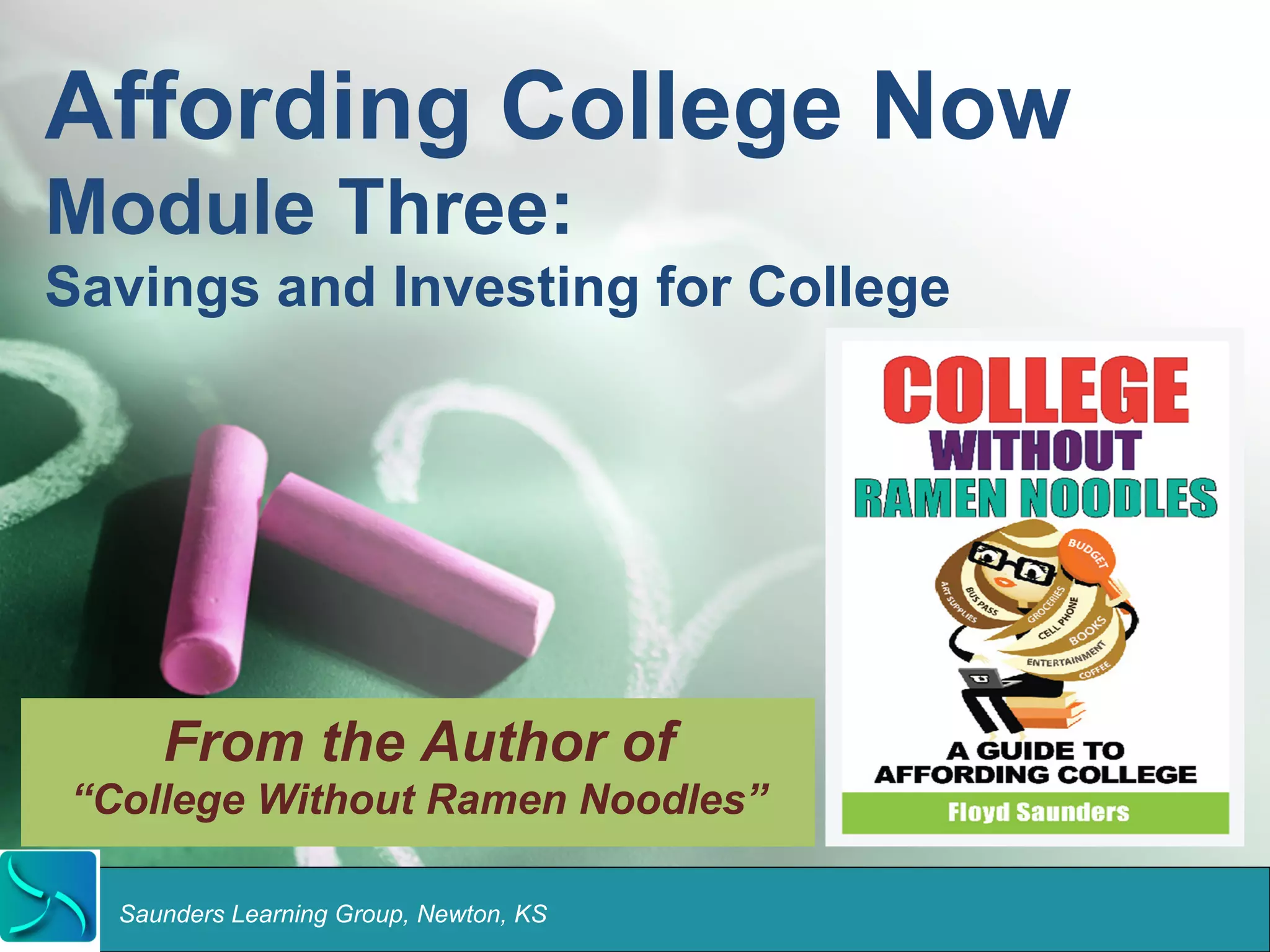
From the Author of 
“College Without Ramen Noodles” 
Saunders Learning Group, Newton, KS
Yes, You Can Go To College 
Saunders Learning Group, Newton, KS 
2
1. Why College 
2. Cost of College 
3. SAVING AND INVESTING 
FOR COLLEGE 
4. Financial Aid 
5. Making College Affordable 
Saunders Learning Group, Newton, KS
Myth Busting 
Common College 
Savings Myths: 
Myth: “All college savings plans are the same.” 
Fact: College savings plans differ is a variety of ways (tax benefits, 
investment returns and flexibility) 
Myth: “I’ll borrow money for college, I can better afford it later” 
Fact: It will cost more to borrow and pay interest than invest and 
earn interest. 
Myth: “It’s too early to start saving for college” 
Fact: The magic of compound interest is a power you want to use, starting 
early and saving regularly will help make college affordable. 
Saunders Learning Group, Newton, KS
Current Trends 
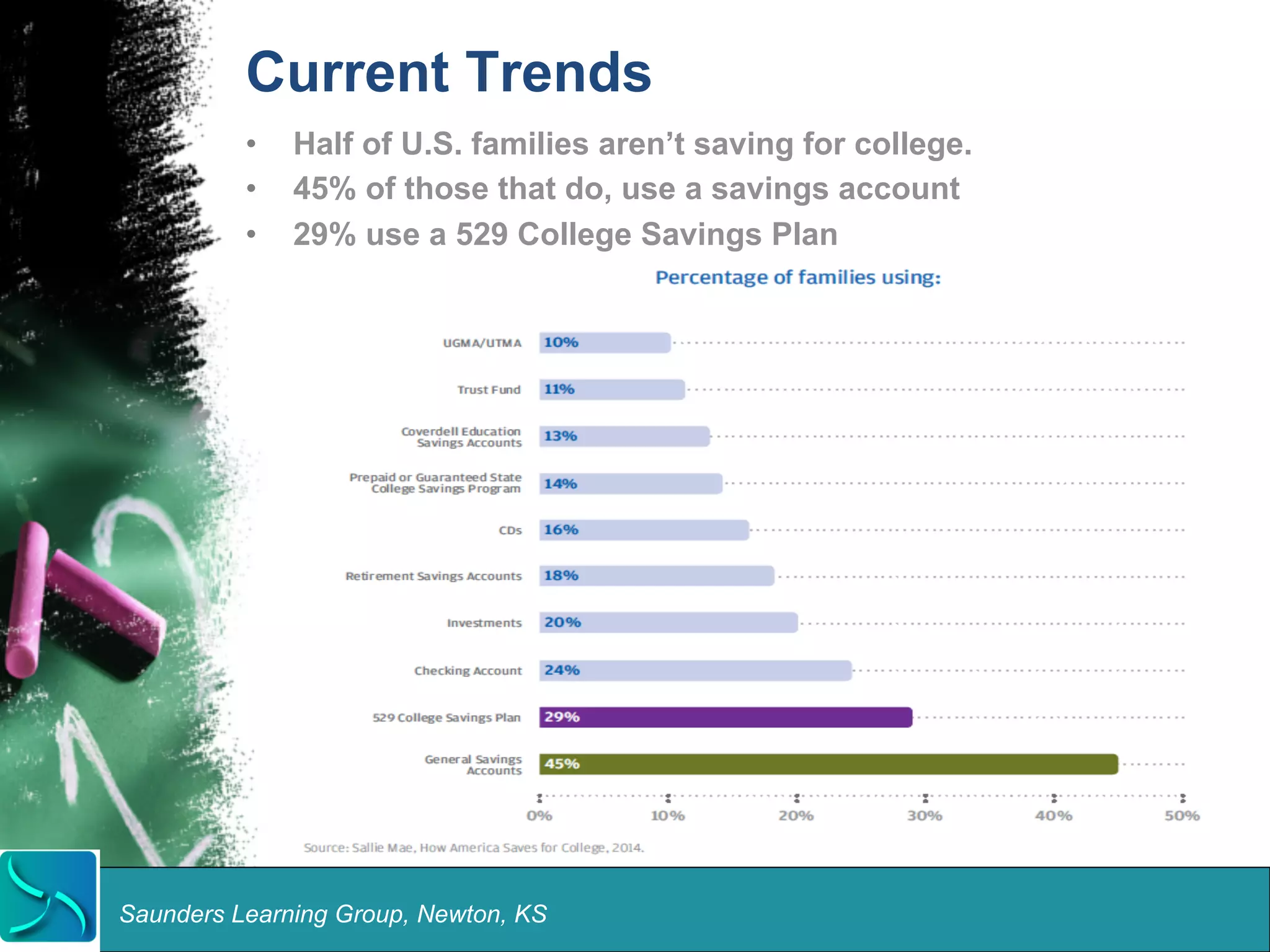
• Half of U.S. families aren’t saving for college. 
• 45% of those that do, use a savings account 
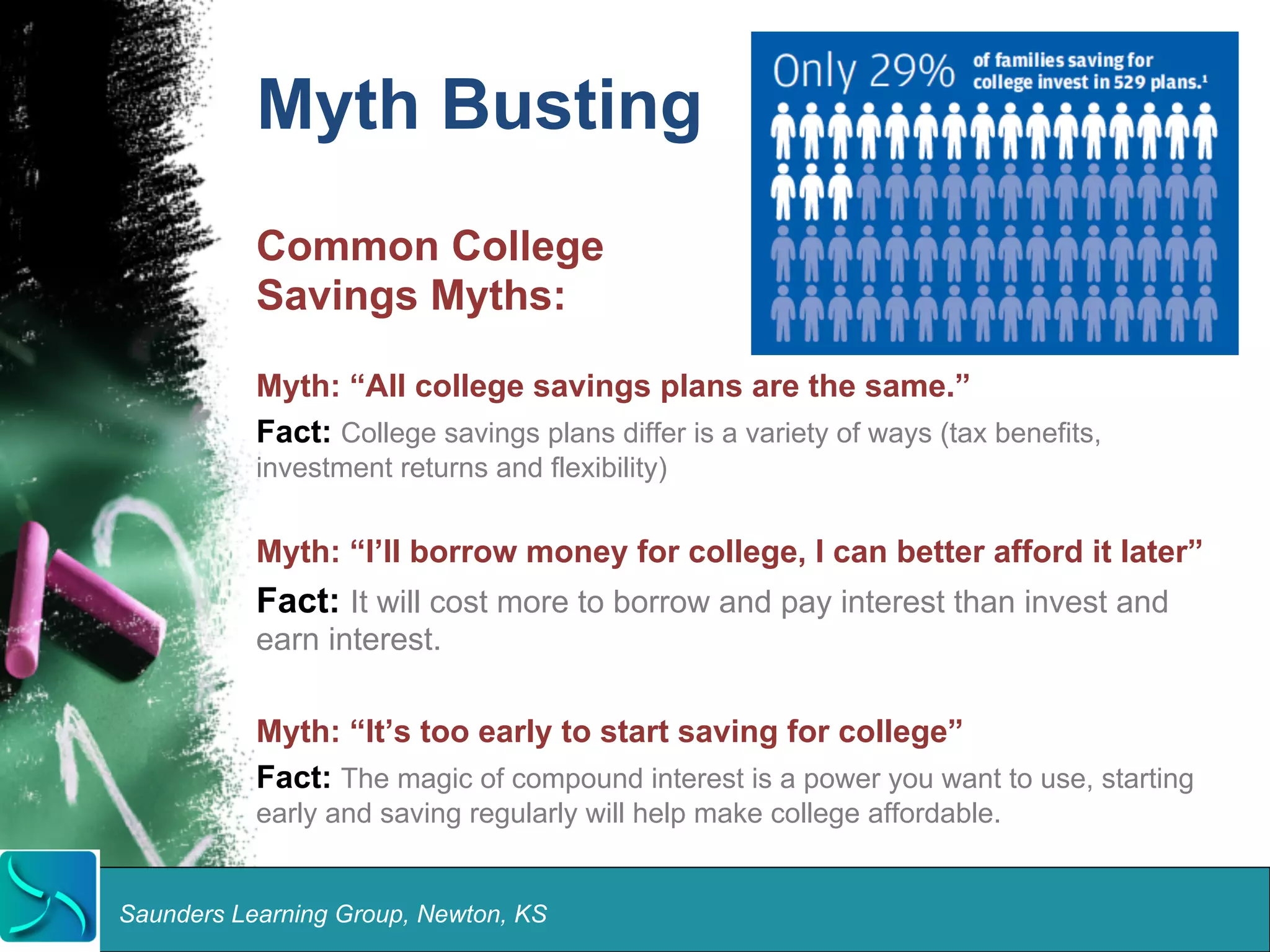
• 29% use a 529 College Savings Plan 
Saunders Learning Group, Newton, KS
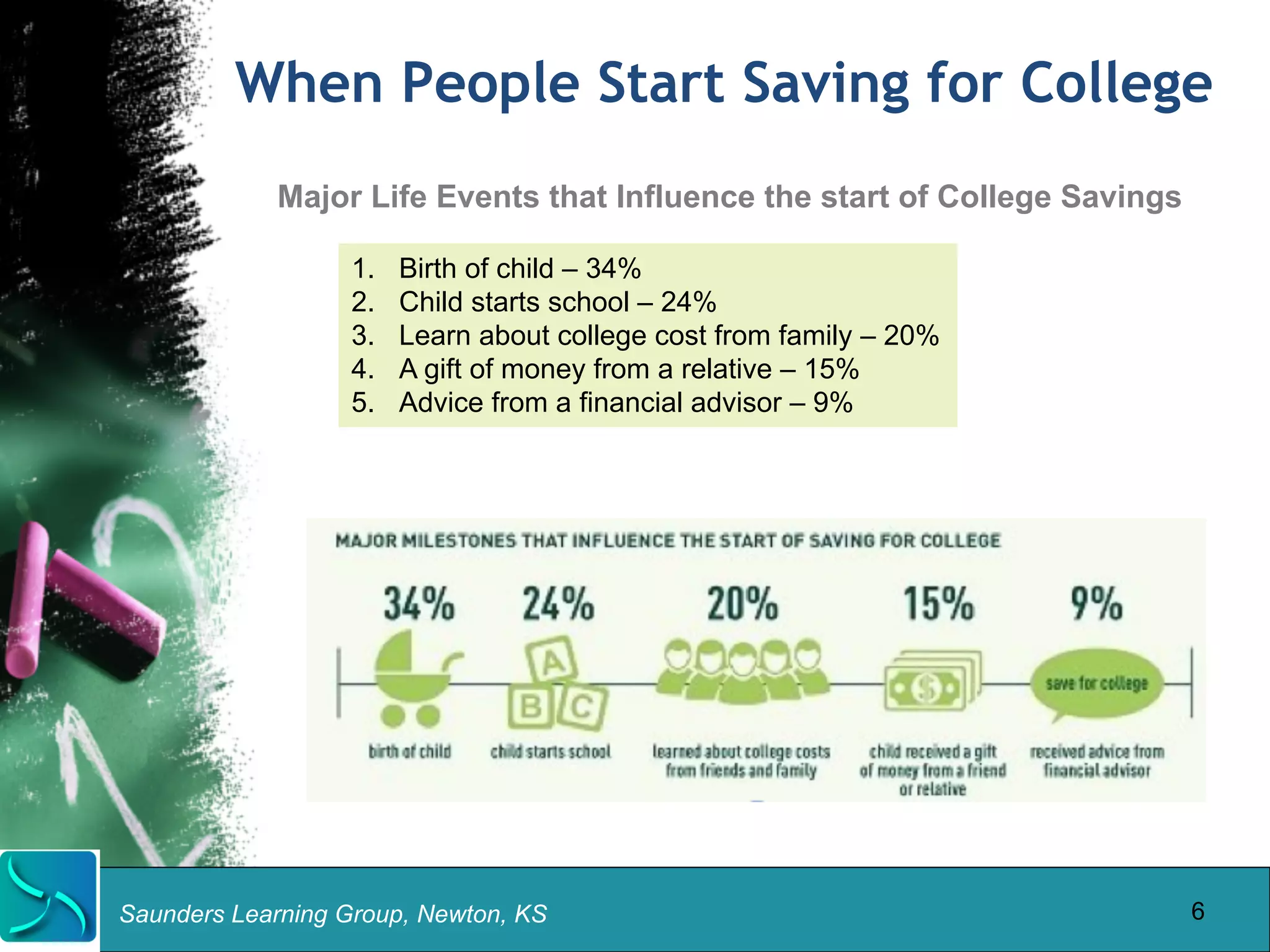
When People Start Saving for College 
Saunders Learning Group, Newton, KS 
6 
Major Life Events that Influence the start of College Savings 
1. Birth of child – 34% 
2. Child starts school – 24% 
3. Learn about college cost from family – 20% 
4. A gift of money from a relative – 15% 
5. Advice from a financial advisor – 9%
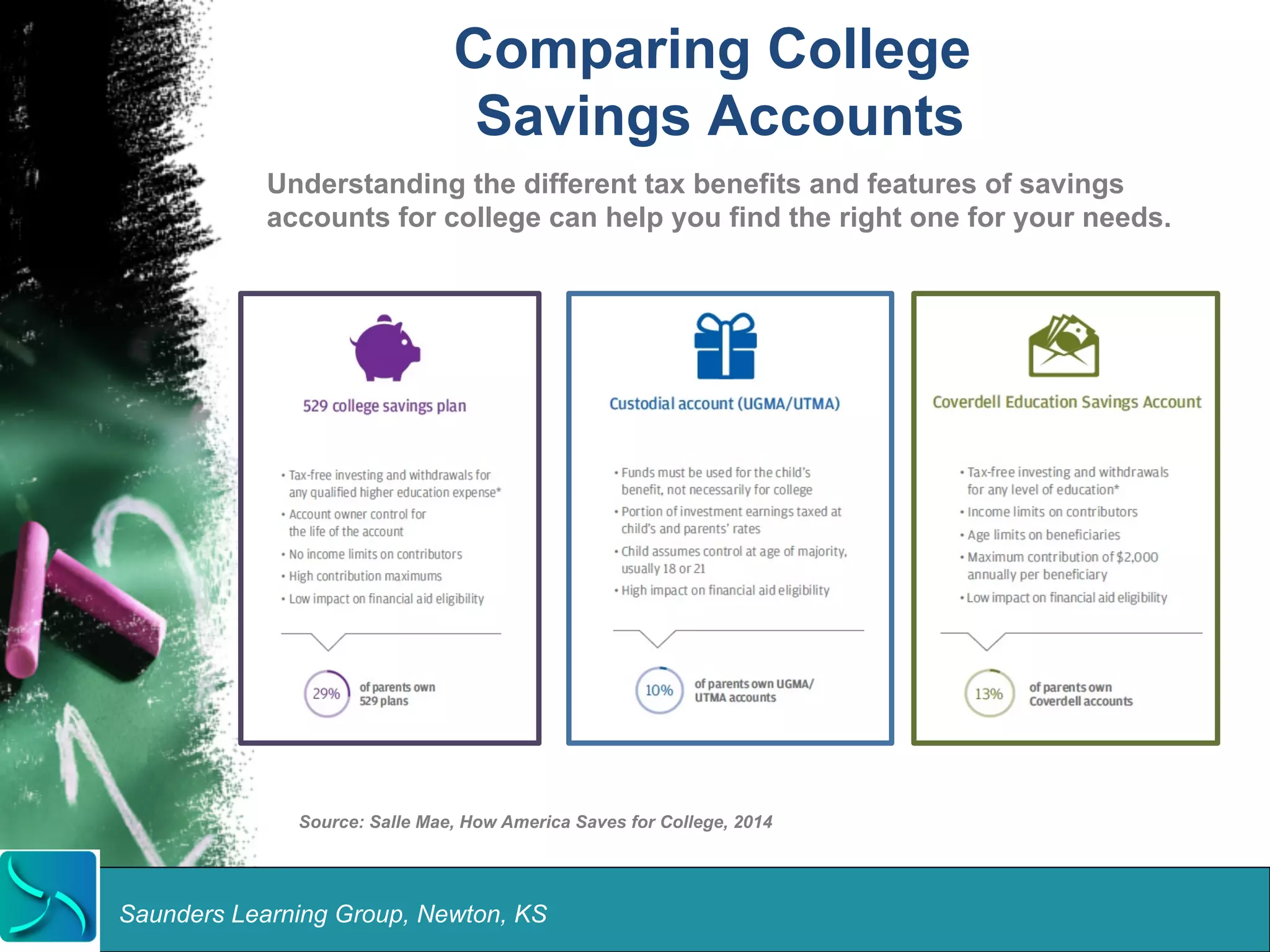
Comparing College 
Savings Accounts 
Understanding the different tax benefits and features of savings 
accounts for college can help you find the right one for your needs. 
Source: Salle Mae, How America Saves for College, 2014 
Saunders Learning Group, Newton, KS
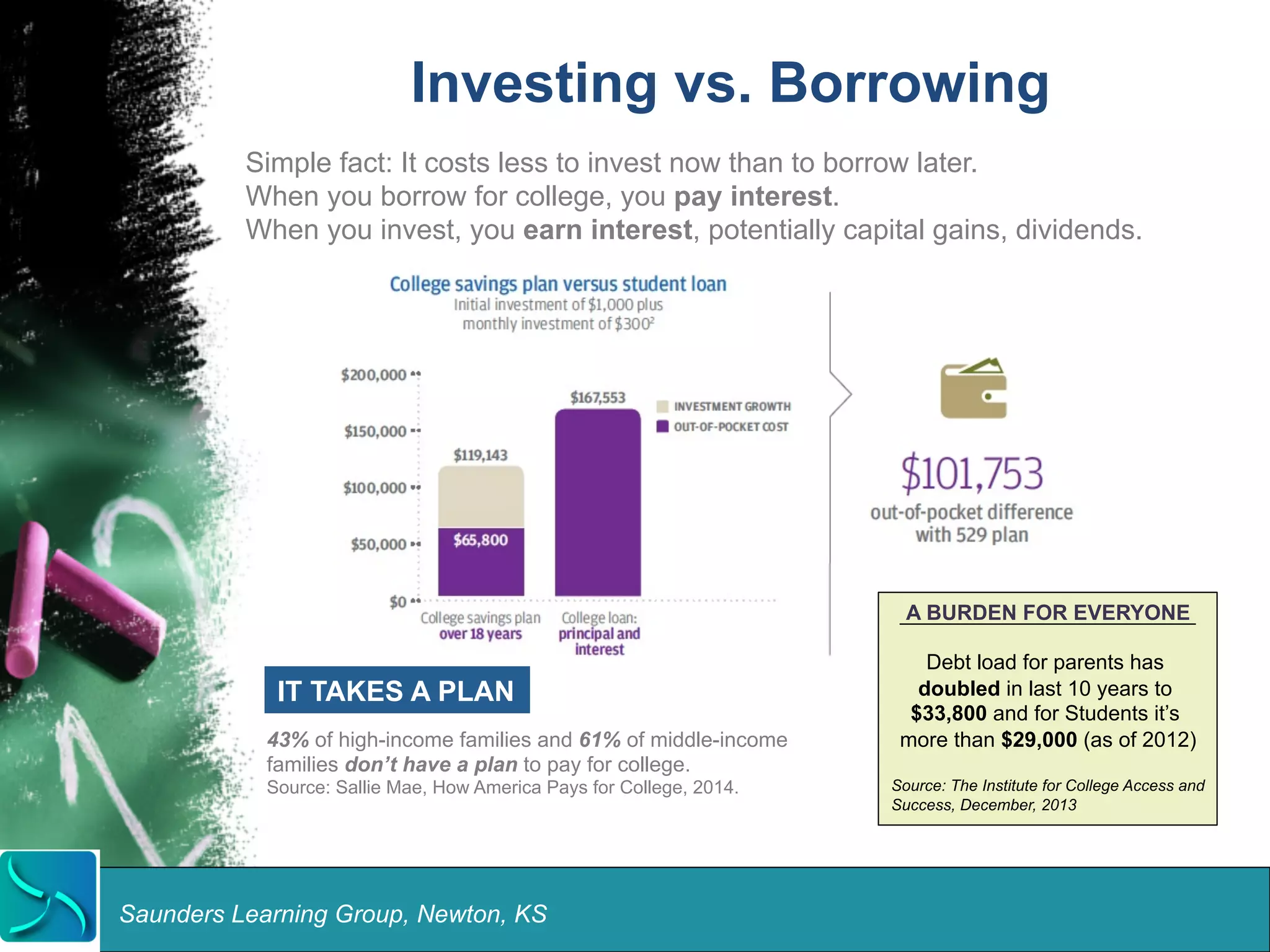
Investing vs. Borrowing 
Simple fact: It costs less to invest now than to borrow later. 
When you borrow for college, you pay interest. 
When you invest, you earn interest, potentially capital gains, dividends. 
43% of high-income families and 61% of middle-income 
families don’t have a plan to pay for college. 
Source: Sallie Mae, How America Pays for College, 2014. 
Saunders Learning Group, Newton, KS 
A BURDEN FOR EVERYONE 
Debt load for parents has 
doubled in last 10 years to 
$33,800 and for Students it’s 
more than $29,000 (as of 2012) 
Source: The Institute for College Access and 
Success, December, 2013 
IT TAKES A PLAN
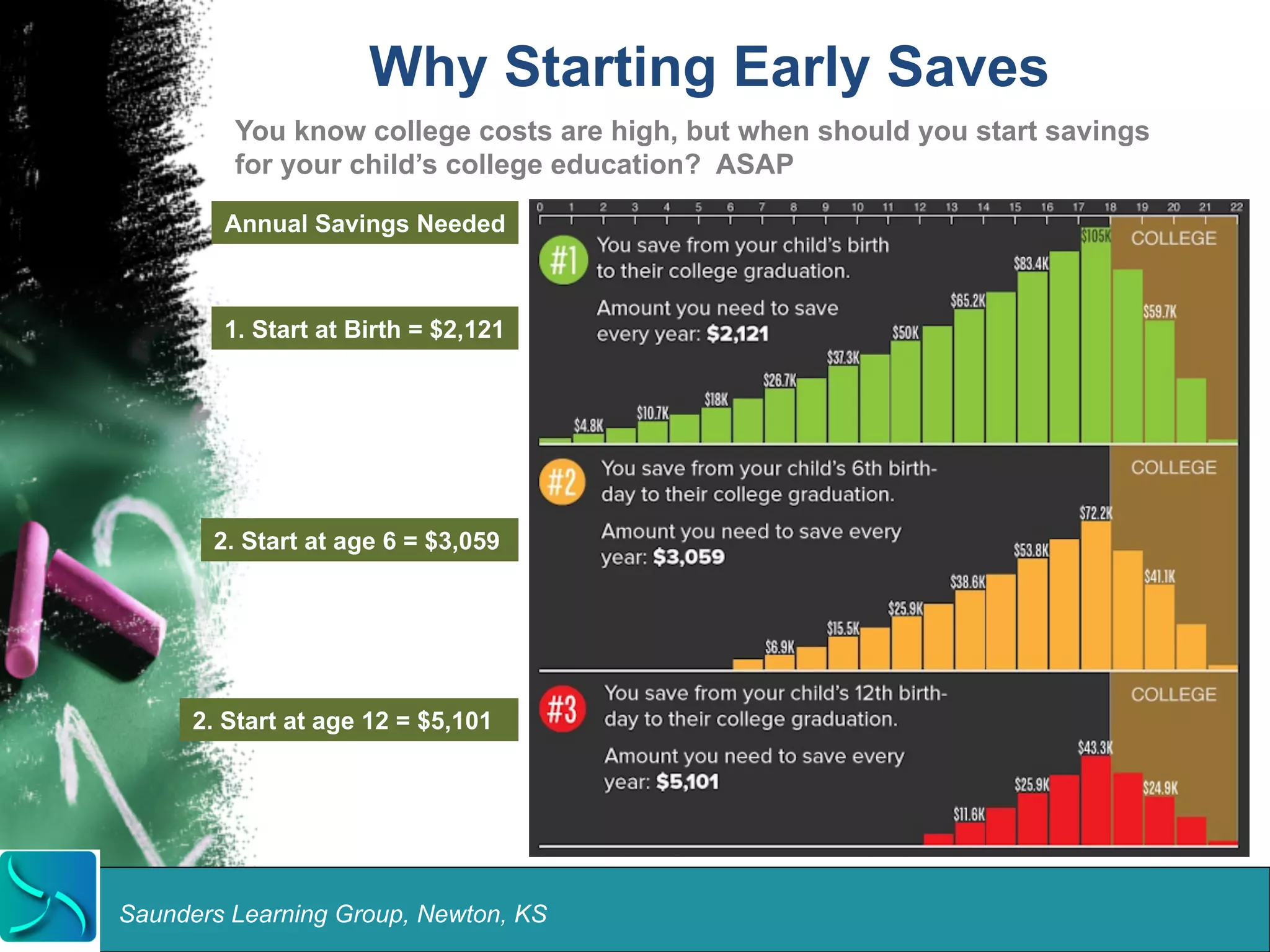
Why Starting Early Saves 
You know college costs are high, but when should you start savings 
for your child’s college education? ASAP 
Annual Savings Needed 
1. Start at Birth = $2,121 
2. Start at age 6 = $3,059 
2. Start at age 12 = $5,101 
Saunders Learning Group, Newton, KS
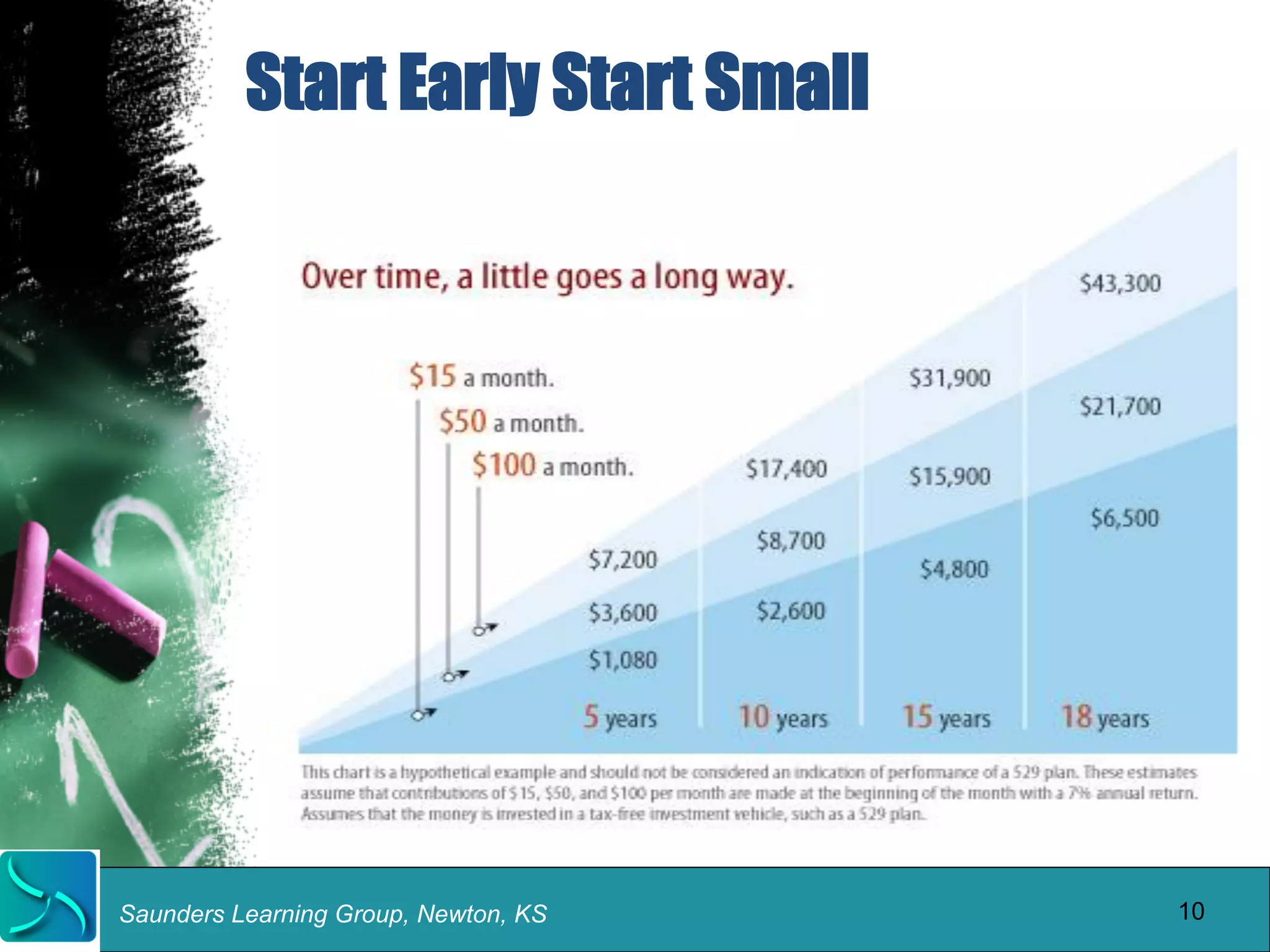
Start Early Start Small 
Saunders Learning Group, Newton, KS 
10
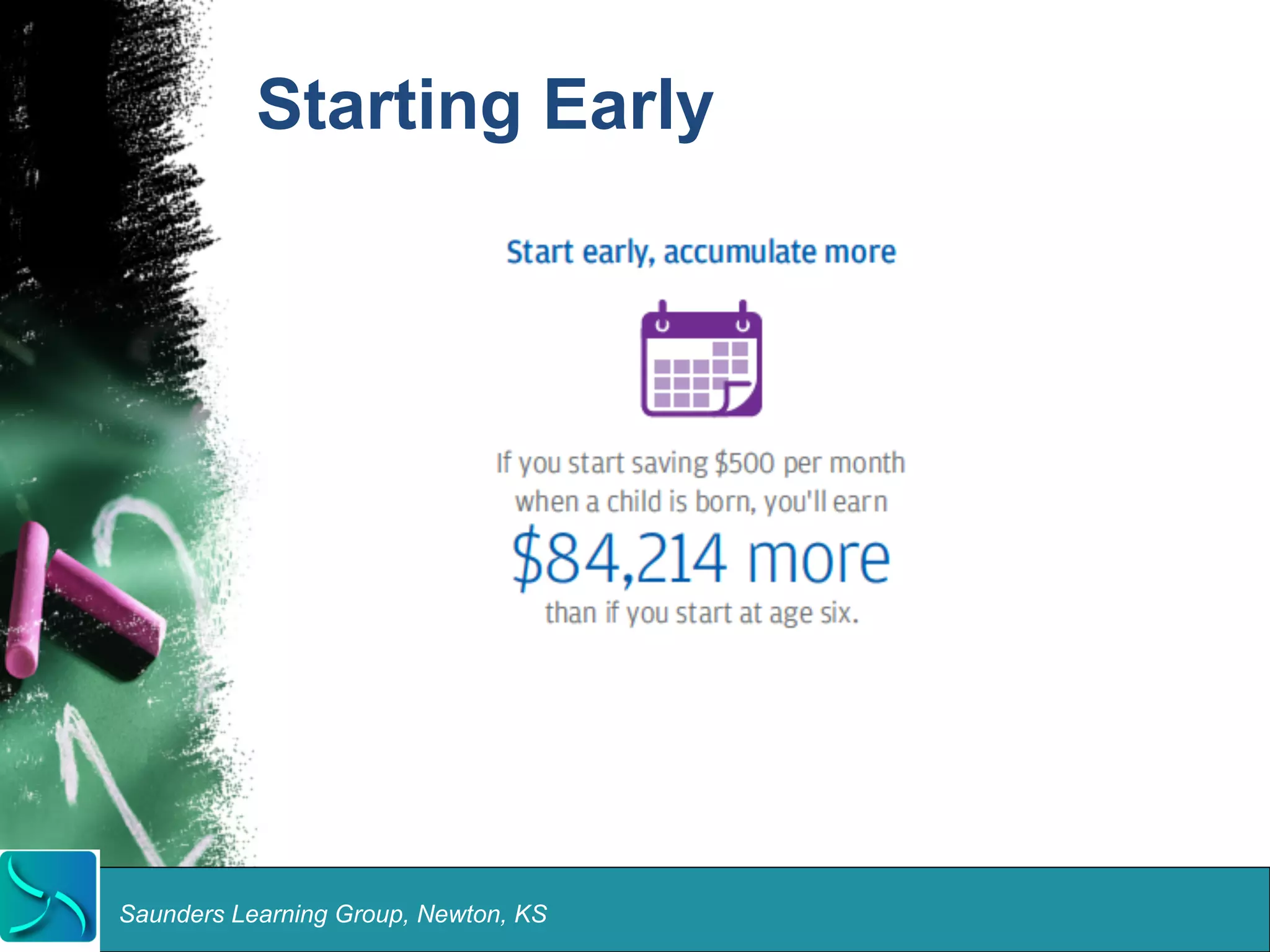
Starting Early 
Saunders Learning Group, Newton, KS
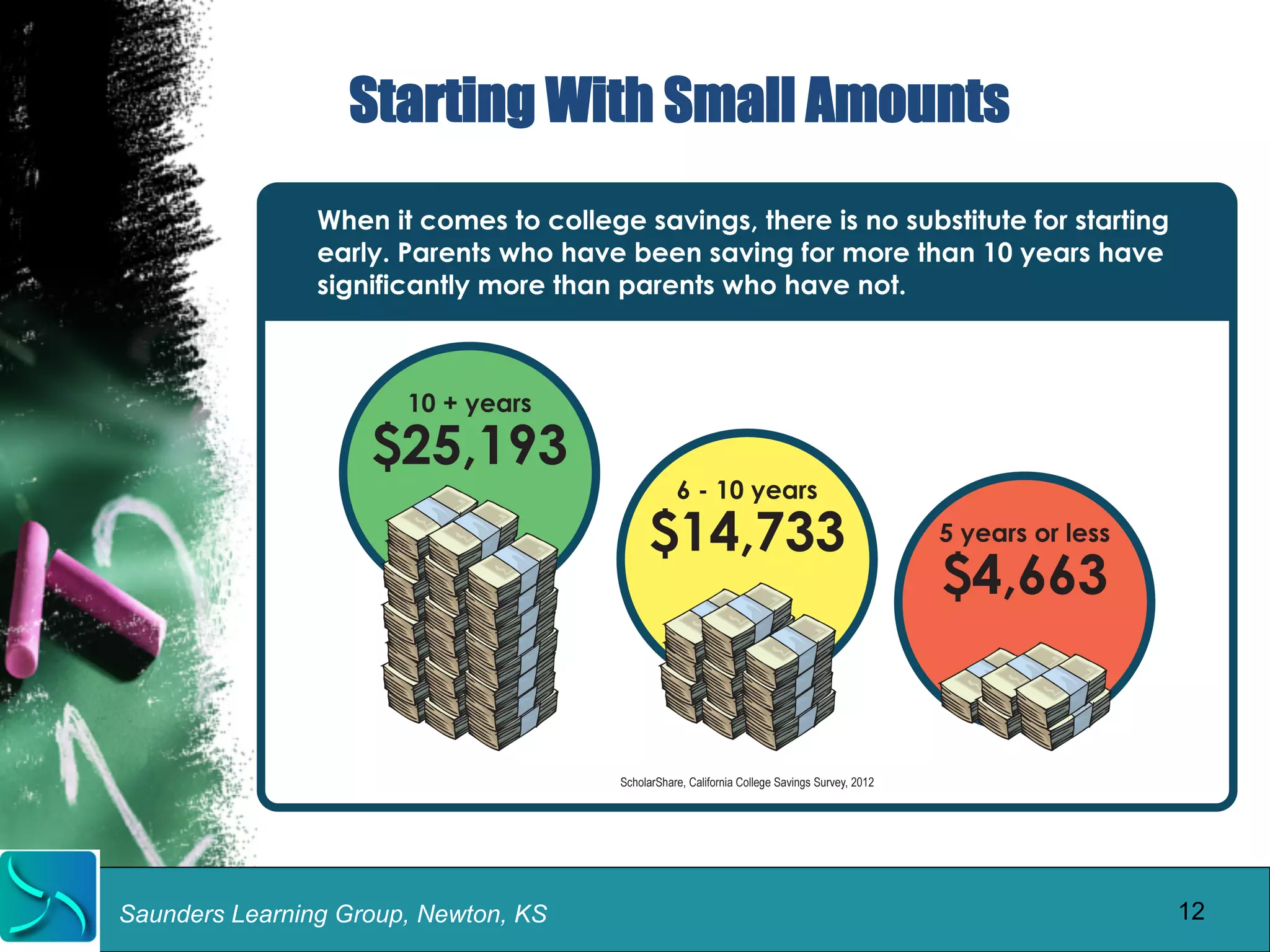
Starting With Small Amounts 
Saunders Learning Group, Newton, KS 
12
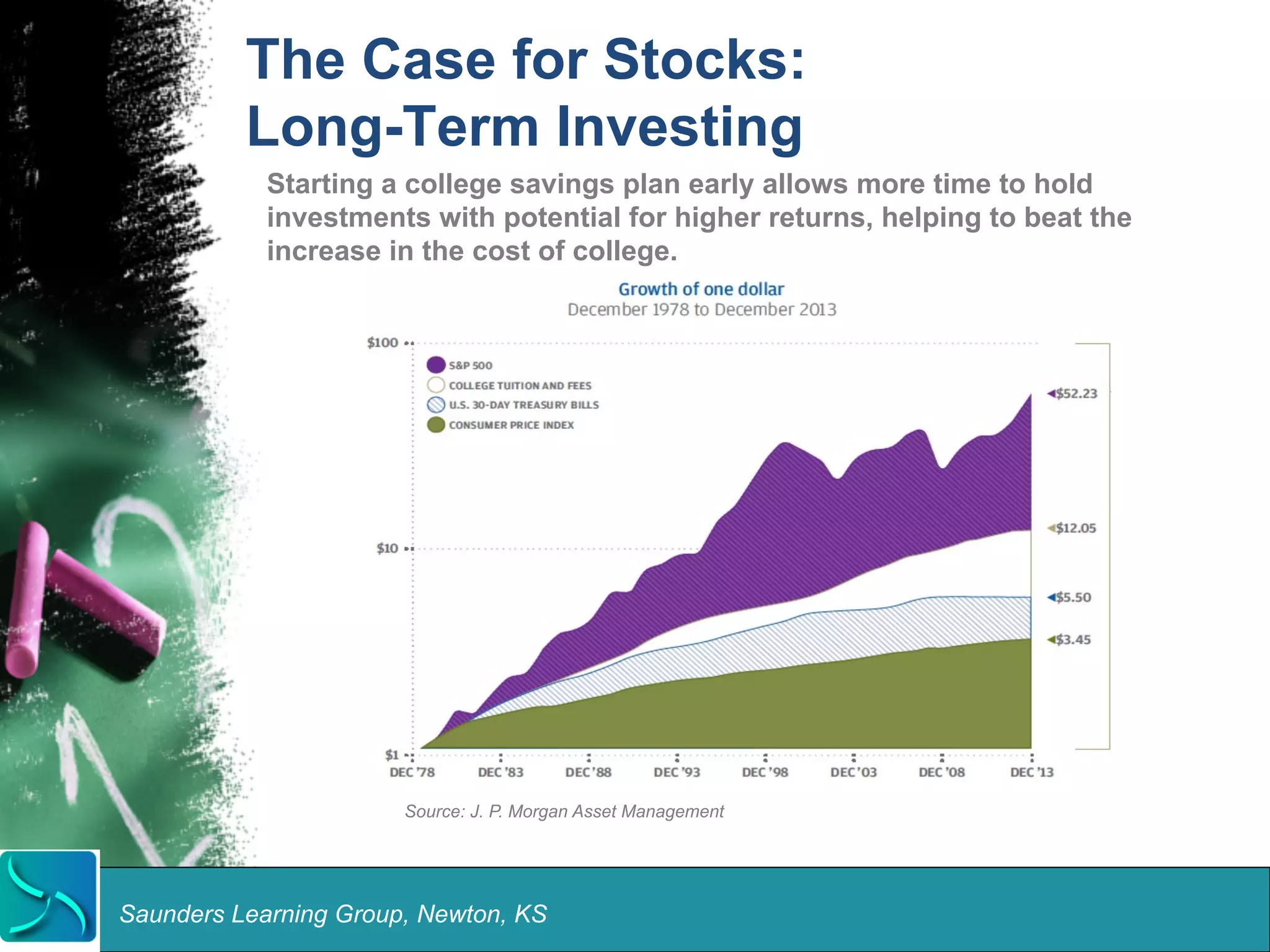
The Case for Stocks: 
Long-Term Investing 
Starting a college savings plan early allows more time to hold 
investments with potential for higher returns, helping to beat the 
increase in the cost of college. 
Source: J. P. Morgan Asset Management 
Saunders Learning Group, Newton, KS
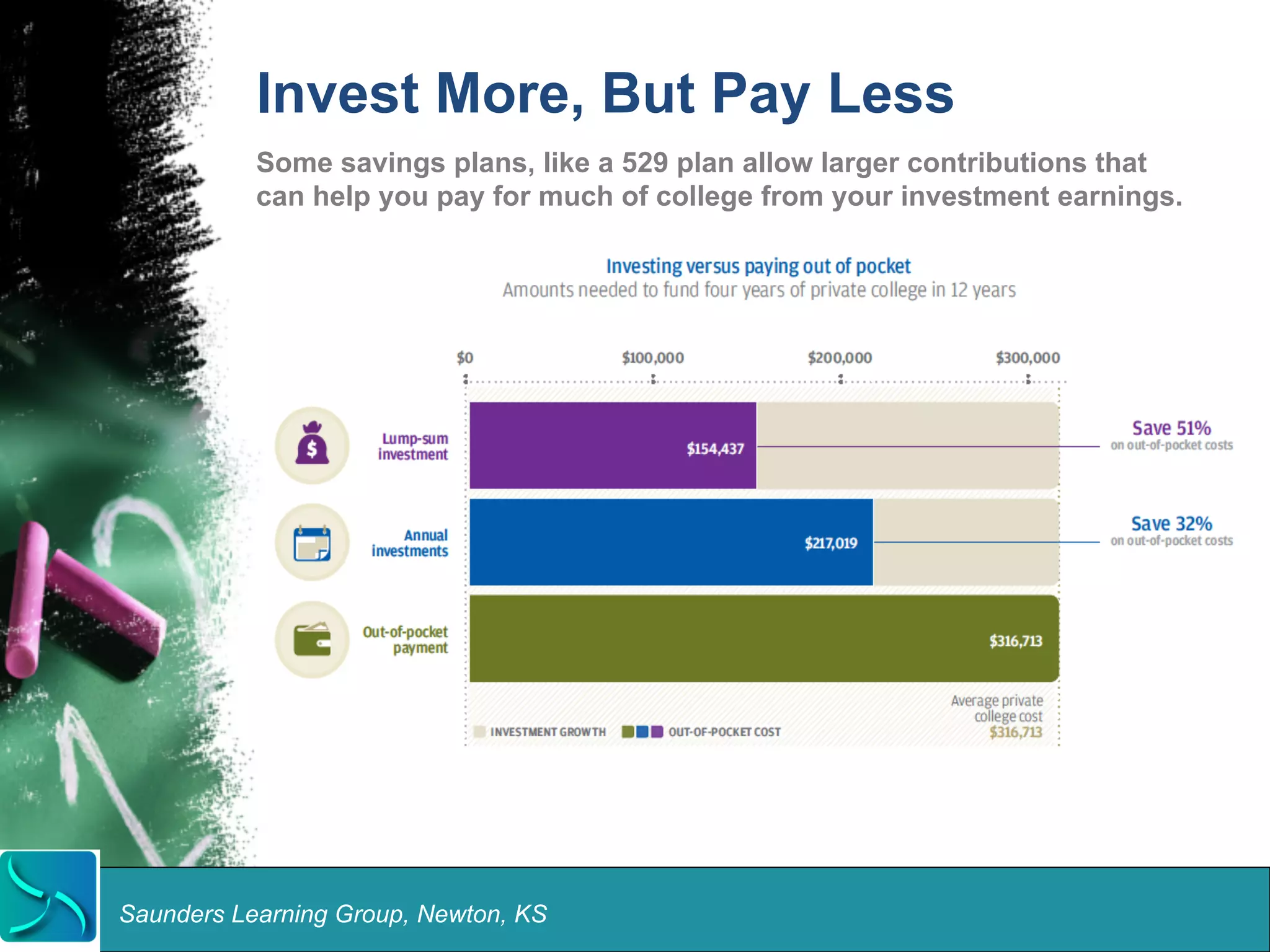
Invest More, But Pay Less 
Some savings plans, like a 529 plan allow larger contributions that 
can help you pay for much of college from your investment earnings. 
Saunders Learning Group, Newton, KS
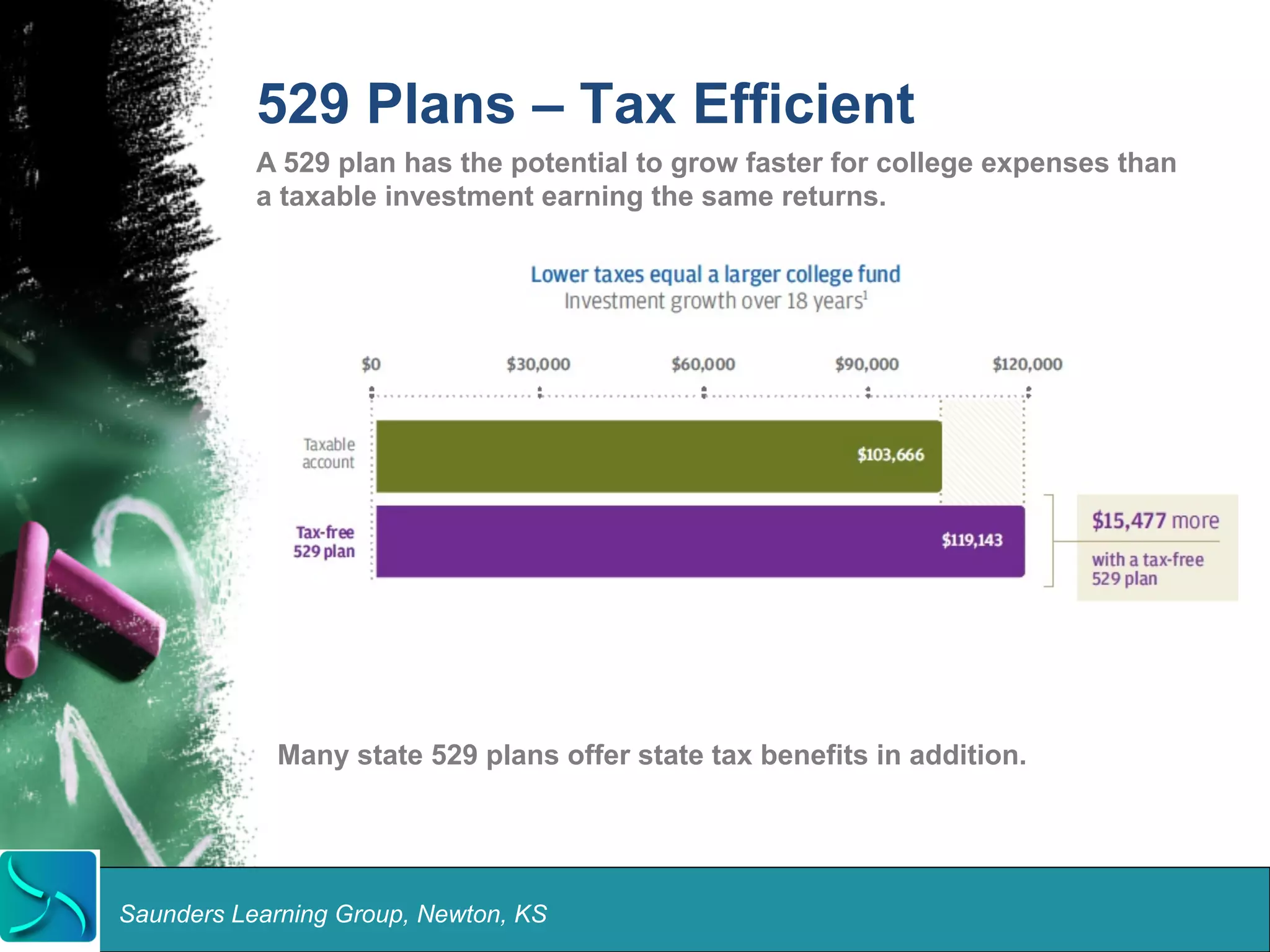
529 Plans – Tax Efficient 
A 529 plan has the potential to grow faster for college expenses than 
a taxable investment earning the same returns. 
Many state 529 plans offer state tax benefits in addition. 
Saunders Learning Group, Newton, KS
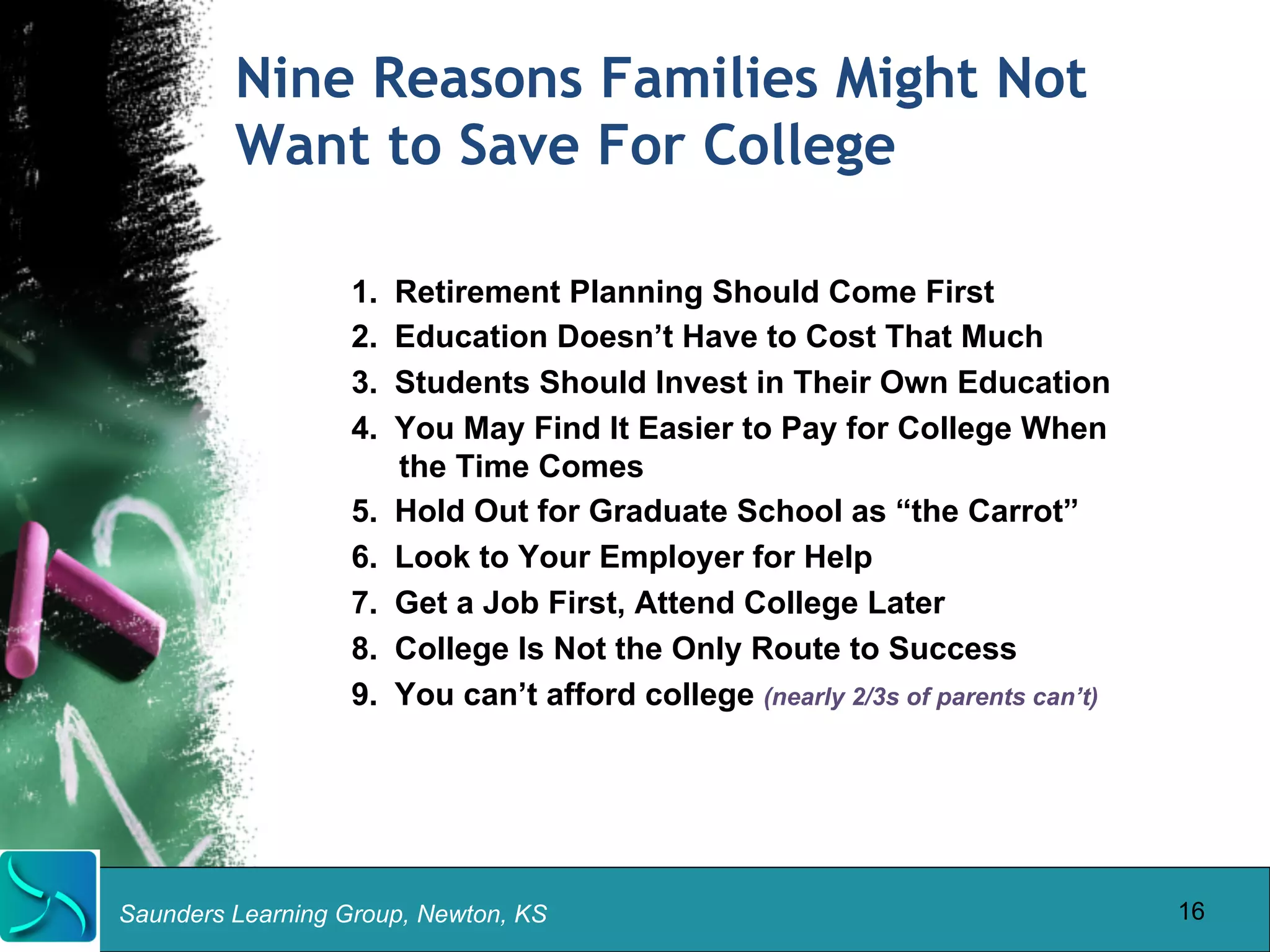
Nine Reasons Families Might Not 
Want to Save For College 
1. Retirement Planning Should Come First 
2. Education Doesn’t Have to Cost That Much 
3. Students Should Invest in Their Own Education 
4. You May Find It Easier to Pay for College When 
the Time Comes 
5. Hold Out for Graduate School as “the Carrot” 
6. Look to Your Employer for Help 
7. Get a Job First, Attend College Later 
8. College Is Not the Only Route to Success 
9. You can’t afford college (nearly 2/3s of parents can’t) 
Saunders Learning Group, Newton, KS 
16
QUESTIONS? 
Saunders Learning Group, Newton, KS
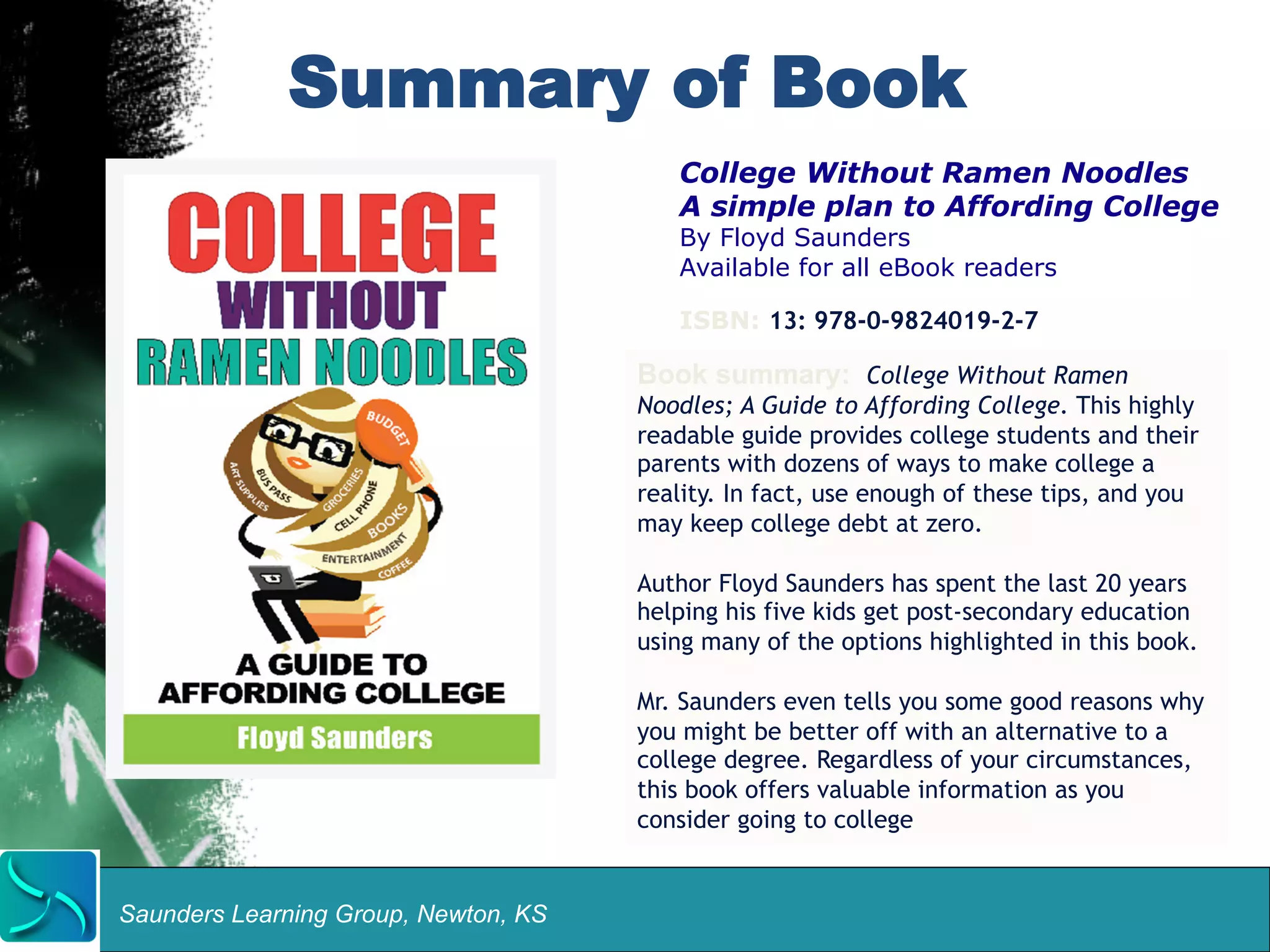
Summary of Book 
Saunders Learning Group, Newton, KS 
College Without Ramen Noodles 
A simple plan to Affording College 
By Floyd Saunders 
Available for all eBook readers 
ISBN: 13: 978-0-9824019-2-7 
Book summary: College Without Ramen 
Noodles; A Guide to Affording College. This highly 
readable guide provides college students and their 
parents with dozens of ways to make college a 
reality. In fact, use enough of these tips, and you 
may keep college debt at zero. 
Author Floyd Saunders has spent the last 20 years 
helping his five kids get post-secondary education 
using many of the options highlighted in this book. 
Mr. Saunders even tells you some good reasons why 
you might be better off with an alternative to a 
college degree. Regardless of your circumstances, 
this book offers valuable information as you 
consider going to college
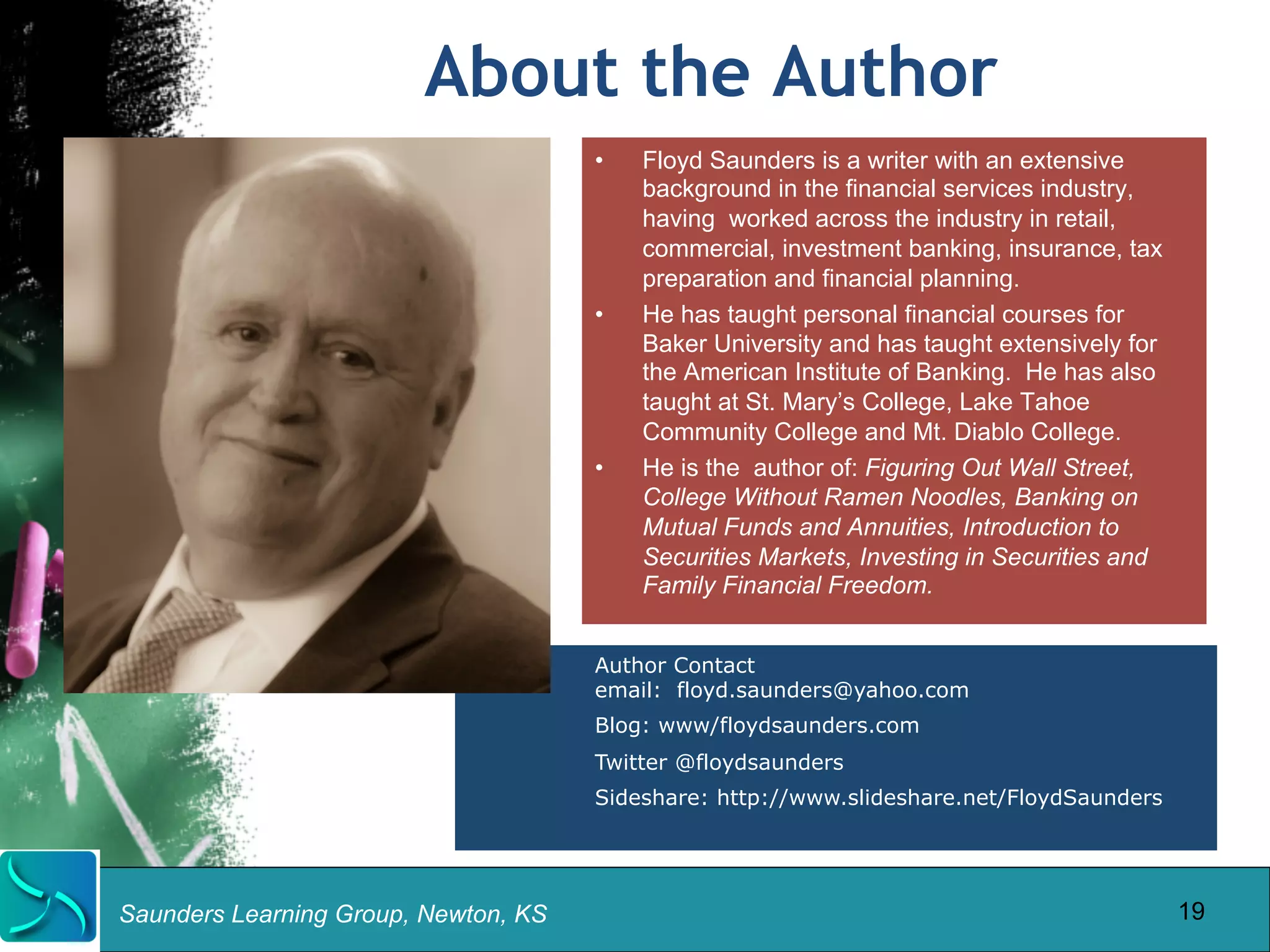
About the Author 
Saunders Learning Group, Newton, KS 
• Floyd Saunders is a writer with an extensive 
background in the financial services industry, 
having worked across the industry in retail, 
commercial, investment banking, insurance, tax 
preparation and financial planning. 
• He has taught personal financial courses for 
Baker University and has taught extensively for 
the American Institute of Banking. He has also 
taught at St. Mary’s College, Lake Tahoe 
Community College and Mt. Diablo College. 
• He is the author of: Figuring Out Wall Street, 
College Without Ramen Noodles, Banking on 
Mutual Funds and Annuities, Introduction to 
Securities Markets, Investing in Securities and 
Family Financial Freedom. 
Author Contact 
email: floyd.saunders@yahoo.com 
Blog: www/floydsaunders.com 
Twitter @floydsaunders 
Sideshare: http://www.slideshare.net/FloydSaunders 
19

Affording college module 3 saving for college

  • 1.
    Affording College Now Module Three: Savings and Investing for College From the Author of “College Without Ramen Noodles” Saunders Learning Group, Newton, KS
  • 2.
    Yes, You CanGo To College Saunders Learning Group, Newton, KS 2
  • 3.
    1. Why College 2. Cost of College 3. SAVING AND INVESTING FOR COLLEGE 4. Financial Aid 5. Making College Affordable Saunders Learning Group, Newton, KS
  • 4.
    Myth Busting CommonCollege Savings Myths: Myth: “All college savings plans are the same.” Fact: College savings plans differ is a variety of ways (tax benefits, investment returns and flexibility) Myth: “I’ll borrow money for college, I can better afford it later” Fact: It will cost more to borrow and pay interest than invest and earn interest. Myth: “It’s too early to start saving for college” Fact: The magic of compound interest is a power you want to use, starting early and saving regularly will help make college affordable. Saunders Learning Group, Newton, KS
  • 5.
    Current Trends •Half of U.S. families aren’t saving for college. • 45% of those that do, use a savings account • 29% use a 529 College Savings Plan Saunders Learning Group, Newton, KS
  • 6.
    When People StartSaving for College Saunders Learning Group, Newton, KS 6 Major Life Events that Influence the start of College Savings 1. Birth of child – 34% 2. Child starts school – 24% 3. Learn about college cost from family – 20% 4. A gift of money from a relative – 15% 5. Advice from a financial advisor – 9%
  • 7.
    Comparing College SavingsAccounts Understanding the different tax benefits and features of savings accounts for college can help you find the right one for your needs. Source: Salle Mae, How America Saves for College, 2014 Saunders Learning Group, Newton, KS
  • 8.
    Investing vs. Borrowing Simple fact: It costs less to invest now than to borrow later. When you borrow for college, you pay interest. When you invest, you earn interest, potentially capital gains, dividends. 43% of high-income families and 61% of middle-income families don’t have a plan to pay for college. Source: Sallie Mae, How America Pays for College, 2014. Saunders Learning Group, Newton, KS A BURDEN FOR EVERYONE Debt load for parents has doubled in last 10 years to $33,800 and for Students it’s more than $29,000 (as of 2012) Source: The Institute for College Access and Success, December, 2013 IT TAKES A PLAN
  • 9.
    Why Starting EarlySaves You know college costs are high, but when should you start savings for your child’s college education? ASAP Annual Savings Needed 1. Start at Birth = $2,121 2. Start at age 6 = $3,059 2. Start at age 12 = $5,101 Saunders Learning Group, Newton, KS
  • 10.
    Start Early StartSmall Saunders Learning Group, Newton, KS 10
  • 11.
    Starting Early SaundersLearning Group, Newton, KS
  • 12.
    Starting With SmallAmounts Saunders Learning Group, Newton, KS 12
  • 13.
    The Case forStocks: Long-Term Investing Starting a college savings plan early allows more time to hold investments with potential for higher returns, helping to beat the increase in the cost of college. Source: J. P. Morgan Asset Management Saunders Learning Group, Newton, KS
  • 14.
    Invest More, ButPay Less Some savings plans, like a 529 plan allow larger contributions that can help you pay for much of college from your investment earnings. Saunders Learning Group, Newton, KS
  • 15.
    529 Plans –Tax Efficient A 529 plan has the potential to grow faster for college expenses than a taxable investment earning the same returns. Many state 529 plans offer state tax benefits in addition. Saunders Learning Group, Newton, KS
  • 16.
    Nine Reasons FamiliesMight Not Want to Save For College 1. Retirement Planning Should Come First 2. Education Doesn’t Have to Cost That Much 3. Students Should Invest in Their Own Education 4. You May Find It Easier to Pay for College When the Time Comes 5. Hold Out for Graduate School as “the Carrot” 6. Look to Your Employer for Help 7. Get a Job First, Attend College Later 8. College Is Not the Only Route to Success 9. You can’t afford college (nearly 2/3s of parents can’t) Saunders Learning Group, Newton, KS 16
  • 17.
  • 18.
    Summary of Book Saunders Learning Group, Newton, KS College Without Ramen Noodles A simple plan to Affording College By Floyd Saunders Available for all eBook readers ISBN: 13: 978-0-9824019-2-7 Book summary: College Without Ramen Noodles; A Guide to Affording College. This highly readable guide provides college students and their parents with dozens of ways to make college a reality. In fact, use enough of these tips, and you may keep college debt at zero. Author Floyd Saunders has spent the last 20 years helping his five kids get post-secondary education using many of the options highlighted in this book. Mr. Saunders even tells you some good reasons why you might be better off with an alternative to a college degree. Regardless of your circumstances, this book offers valuable information as you consider going to college
  • 19.
    About the Author Saunders Learning Group, Newton, KS • Floyd Saunders is a writer with an extensive background in the financial services industry, having worked across the industry in retail, commercial, investment banking, insurance, tax preparation and financial planning. • He has taught personal financial courses for Baker University and has taught extensively for the American Institute of Banking. He has also taught at St. Mary’s College, Lake Tahoe Community College and Mt. Diablo College. • He is the author of: Figuring Out Wall Street, College Without Ramen Noodles, Banking on Mutual Funds and Annuities, Introduction to Securities Markets, Investing in Securities and Family Financial Freedom. Author Contact email: floyd.saunders@yahoo.com Blog: www/floydsaunders.com Twitter @floydsaunders Sideshare: http://www.slideshare.net/FloydSaunders 19

Editor's Notes

  • #3 Yes, You Should Go to College You Will Be Healthier More Lucrative Career Options You Will Enjoy Your Career More Access to Jobs With Better Benefits Indirect financial benefits